Have Fun Storming the NaNo!

It’s November, which means it’s also National Novel Writing Month!

nanowrimo

I’ve participated in NaNo several times over the years, but I’m sitting this one out. Not because I’m not writing, but because I’m still knee deep in working on the first book of the Unari Trilogy. I’m just not in a good spot to start something new right now.

But, to all of you participating in NaNoWriMo, whether you’re at it for the first time or you’re a seasoned veteran – good luck! Fifty thousand words are only a month away!

have-fun-storming-the-castle

The Second Book Problem

The old saw goes that, with notable exceptions, sequels never live up to their predecessors. This is a particular issue when it comes to trilogies, as the middle installment often suffers from what some writers and critics call the “second book problem.” What is this, exactly? I think it breaks down into two separate issues.

The first issue is peculiar to speculative fiction, although I could see it coming up in other areas. That is the simple fact that the first volume of a sci-fi or fantasy trilogy is going to have to do some heavy lifting on world building – Is the story set in our world or a completely different one? Are we playing by the physical rules we know (with certain extrapolations) or is scientific accuracy out the window? Are the characters human or not? All of that can (probably should) produce a sense of wonder and awe in the reader as the world unfolds. The initial introduction to Westeros or the Culture or post-apocalyptic Canada should leave the reader a little bit shocked.

That’s gone by the time the second book rolls around. Certainly, a writer should deepen and make more interesting the world in which their story is being told in a second volume, but it’s difficult to capture the initial “wow” factor a second time around. Kings that once ruled the world on the backs of flying, fire-breathing dragons? Awesome shit! The genealogy of those kings, as important as that may be? Not so much.

The second issue is that, just like the middle point of any story, the second part of a trilogy can have a plot that seems to drag a bit. The initial flush of excites as the plot unwinds in the first volume is gone, but the satisfying conclusion of the entire tale in the final volume is still a ways off. At best there’s a lot of clever table setting and some interesting side plots; at worst, there’s a lot of wheel spinning.

“Wait a sec,” you might be thinking, “didn’t you write a trilogy? Aren’t you writing another one? Do you think you’ve solved the second book problem, smart guy?”

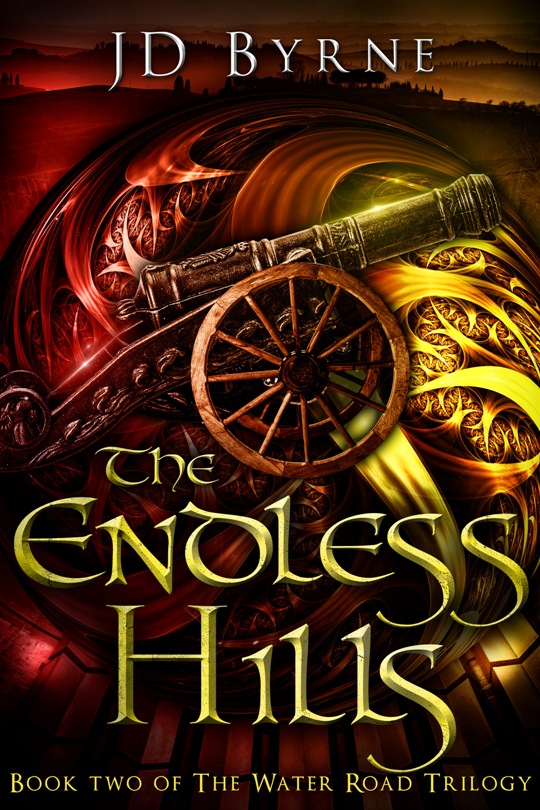
TEH Cover (540x810)

Probably not, but that’s ultimately a question for readers to answer. I tried to make The Endless Hills work as a middle volume by broadening the number of characters to provide a wider view of the conflict that flamed to life in The Water Road. I hope that helped with the second issue, but I’m not so certain about the first.

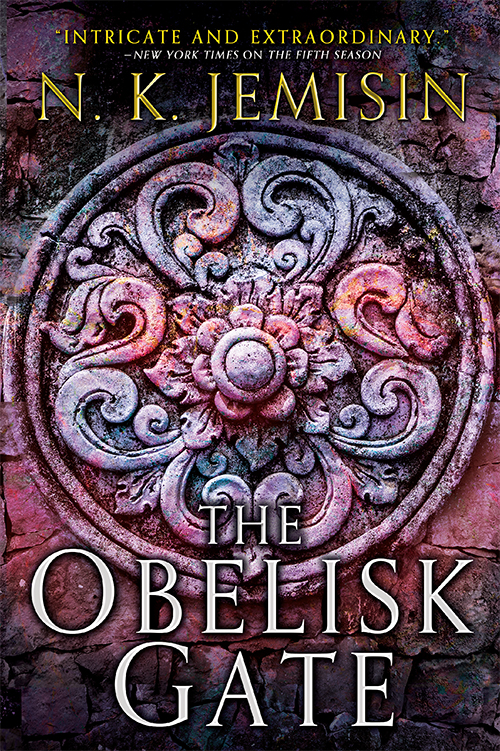
What seems true, however, is that even really excellent writers still fall victim to the second book problem. The hottest writer in fantasy right now is N.K. Jemisin, whose brilliant The Fifth Season I noted a couple of months back. The third book of that trilogy, The Stone Sky (which I’m now deep in the middle of), just won a Hugo, making Jemisin the first writer to win the award three years (and three books) in a row. Still and all, The Obelisk Gate, the second book in the trilogy, can’t help but sag a bit. The world, which gets a lot of depth and shading, isn’t “holy shit!” anymore and one character’s story falls into the “table setting” genre pretty well. It’s still amazingly good (did I mention three Hugos in a row?), but it shows that even someone as talented as Jemisin isn’t immune from second book syndrome.

Jemisin_ObeliskGate_TP

So what makes the exceptions to the rule stand out? Maybe it’s because the next installment was a step down or maybe there’s enough new and different in the second installment to keep the freshness alive. Or, maybe, when a trilogy or series is all said and done we tend to brush over the criticisms of the middle parts the way we kind of brush over the middle parts themselves. It may be inherent to the trilogy format itself. I’m not sure, which is kind of a problem for a writer. Like most things, keeping the issue in mind and trying to deal with it is probably the best course, and keeping in mind that it bedevils just about everyone.

Ideas Will Always Be Free Range

I have a file on my computer that’s full of “what if?” ideas that occur to me from time to time. Most of them will never find their way into an actual story – there’s a fair gulf between “cool idea” and “cool story.” In light of that, it can be cool to see one of those ideas show up on the big screen completely independent of your having it.

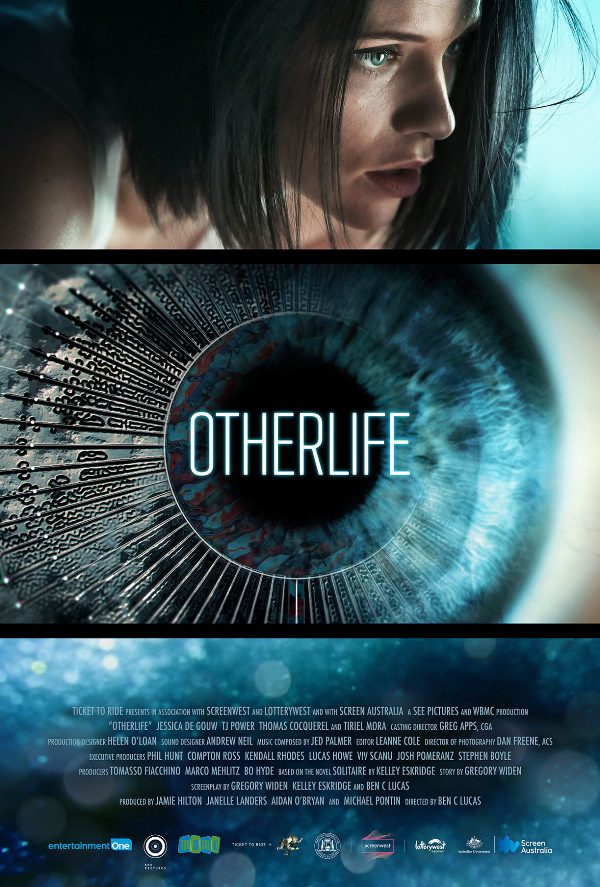
The Australian film OtherLife is based on a nifty “what if” question – what if, via a process involving programmable biotech (don’t call it drugs) dropped into a person’s eye, that person could experience rich and full “memories” of experiences in the blink of an eye? Think of the ability to cram an entire vacation into a few seconds! Actually, that sounds kind of shitty and easily manipulated, but it’s still a cool idea.

Otherlife

In the film the tech’s creator, Ren, is having problems with the system as it gets ready to go public. To help the company with funding, her partner wants to explore a Government-proposed use of the tech – to make criminals experience a long time of confinement without actually having to incarcerate them. Ren is furious (since her motives are purely altruistic and personal) and balks at the idea, of course. Things spiral out from there to a not all that interesting conclusion.

Mostly because that idea – of incarceration by memory – is a really interesting one. You may have guessed by now that’s the one that I wrote down in my “what if?” file years ago. But the film isn’t really interested in exploring the ideas behind that setup, instead using it to jump start the plot and put Ren through a very weird experience. It’s interesting enough to watch, but doesn’t really stick with you for very long, putting thrills and twists ahead of deep thought and head scratching.

Newbie writers sometimes worry about either not having an “original” idea or that if they discuss their own idea in public it will get “stolen.” Fact is, neither of those things is a problem. Ideas are only the beginning. It’s what you do with them that matters, how the characters you create are affected by them. OtherLife takes the “memories of punishment” idea and does one thing with it. If I ever get back to it I’ll do something very different. The world’s big enough for both (and more!) and all the richer for it, too.

Which is funny, because watching Otherlife gave me another neat idea! It has to do with people disappearing and then reappearing and what that does to them and those around them. It’s now sitting in my “what if?” file, quietly tucked away. Maybe one day it’ll become something worth developing.

Things Change

Sometimes I think this should be the theme song of writers:

I mean, even the most devoted planner would have to admit that no lengthy project finishes precisely the way it was planned. Things always change. As my ancestor (why not?) once said, “the best laid schemes o’ Mice an’ Men / Gang aft agley.”

I’ve written before about my current work in progress, The Orb of Triska. My intention was for it to be the first of a seven-book series called Empire Falls. Good news! Editing continues apace and I’m really liking where things are going. But, as I said . . . things change.

The plan was for each book in the series to be about the length of Moore Hollow. At about 85,000 words it’s long enough, but not nearly as long as most fantasy novels these days. All of The Water Road books are north of 130,000, for comparison (for another comparison, A Game of Thrones weighs in at 292,000 – and it’s the shortest of that series!). I thought more, shorter books would work better for this story and planned out each volume accordingly.

Then, between editing passes, I started thinking about it again. The series is going to follow three characters and the stories for two of them didn’t really break into that many parts. It was more like three parts. And the other character, who had a more discrete series of adventures, could be easily reworked into three parts, too. In other words, the bones for another trilogy are there. So, I decided to retool a bit.

Empire Falls the proposed seven-book series is dead. Long live The Unari Trilogy! Each of those will be about the length of The Water Road novels. I don’t think anything major will have to be left out, but everything should flow a lot better in three bigger chunks.

That’s where I am these days. You have to be flexible as a writer. Sometimes the best way to do something isn’t the way you thought it should be done in the first place.

Change

Birth of an Idea

Some authors hate the “where do you get your ideas?” question. I’ve never really figured out why. I can see why readers might be disappointed with the answers, since they’re much more mundane than they might hope. There is no communication with the muse, no blinding flash of insight, just a keen eye and brain that perpetually asks, “what if?” And the realization having a pen handy is almost always a good idea:

So in service of explaining how that works, I thought I’d describe the process I recently went through were a new story idea crystallized in my mind. It’s as good an example as any of the truth that inspiration is out there everywhere, if you know what to do with it.

Right now in my lawyer day job I have a case pending in the court of appeals where one of the issues involves whether my client had served too much time in prison and might be entitled to credit for that. In my brief I made a couple references to him “banking time.” When the Government responded, for some reason, it turned the word around and repeatedly referenced a “time bank,” which it argued didn’t really exit (it does).

Beyond the fury at the allegation I was making shit up, the phrase “time bank” got lodged in my brain. There was something about it that seemed absurd and specific in a way that “banking time” didn’t.

With “time bank” lodged in my brain like a stepped-on Lego, I went into brainstorming mode, which to my neighbors looks like mowing my yard. I do some of my best thinking about writing while I mow, since it’s not like my mind is taken up with other things. So I turned over this concept in my mind, over and over again – what, precisely is a “time bank”? And how would it differ from a memory bank?

I came up with three different ideas, one sort of modern science fictional, one utterly fantastical, and one kind of in between. Thinking them over I found myself drawn the first, the modern one, and began thinking about how characters might interact with this “time bank.”

The working title is “Down and Out at the Time Bank,” a tale of a poor schmuck who gets in way above his head, but probably comes out of it just fine. Short story or something longer? Don’t know yet, as I’ve got to put it on the back burner while I work on other things. But it’s there, lurking in my ideas file, waiting for me to come back to it.

So, thank you, unnamed Assistant United States Attorney. You’ll win the case in the end (‘cause y’all almost always do), but at least you gave me something worthwhile I can take away from it.

And that, ladies and gents, is where story ideas come from!

On Death In Fiction

Riffing on the two sides of the debate in the wake of Infinity War – either all those deaths don’t matter because we know they’re coming back or it matters because the people in universe don’t know that. What do writers owe their readers?

This post was inspired by events that take place in Avengers: Infinity War. If you’ve not seen it yet and want to remain unspoiled, be warned, I’ll be talking about major stuff that happens.

Spoilers

With that said . . .

Holy shit, that movie killed a lot of people. I’m not even talking about anonymous nobodies, set dressing to be collateral damage for the big final battle. I’m talking beloved characters, some major, deaths that could be universe shattering, even if we, as savvy modern media consumers do better.

The deaths basically come in bunches. Loki and Heimdahl meet their end at the very beginning, while Gomorra is sacrificed about midway. But the big shit hits the fan when bad guy Thanos gets all the Infinity Stones and snaps his fat fingers, disappearing half the beings in the universe. Among those who disappear into dust (like vampires on Buffy . . ., but they float up to hebbin, rather than down to the ground) are Black Panther and Spider Man. Serious shit.

Or is it? It doesn’t take a crystal ball to see that there’s no way Marvel is going to let all those characters stay dead. The MCU is an impressive feat of storytelling, but it’s first and foremost a money-making property. Black Panther and Spider Man already have other movies in the pipeline – you think they’re going to dump those for the sake of the story? Fat chance.

Which has led to an interesting discussion on line about the end of the movie. On one side are the people who say these deaths (at least the dusty ones, maybe the others) don’t really mean anything because we, the audience know they aren’t permanent. On the other are people who insist that they do have meaning because the other characters in the MCU don’t know these characters will come back and so it’s a big deal for them. Who’s right?

Maybe neither, at least completely. Some of it depends on what the creator is trying to do. If it’s just shock the audience, it’s a pretty hollow means to do so, but that’s not the only thing you accomplish when you kill a character.

Go back to the aforementioned Buffy the Vampire Slayer. Buffy dies at the end of the fifth season, sacrificing herself to save the world (again). It’s no shock that the next season of the show was not a Buffy free zone – she came back from the dead in the first two episodes. That was to be expected. But the show worked through that in very interesting ways. Most importantly, Buffy’s friends thought by bringing her back they pulled her from hell, when in fact she was in heaven (or at least at peace). In other words, it mattered for the rest of the season (and the show, really) that Buffy had died and then gotten better. It wasn’t a simple reset button.

To pull a somewhat vague, non-spoilerly, example from my own writing, I have a book where a major character dies at the end. That death resonates through the next book, motivating what other characters do. I didn’t kill that person off just for a “gasp” moment or to make sure readers know that nobody in that world is safe.

On the other hand, the recently completed season of Agents of Shield ended with an emotional death that, it turns out, really wasn’t, except the people in the universe completely knew it (even if viewers, myself included, were scratching their heads for a bit). That’s just cheap manipulation and is a hollow exercise.

Then there’s always the Deadpool take – announce you’re going to die in the opening credits, show said death twice, have a prolonged death scene later in the film, then wink it away post-credits. But would you expect anything less from that fucker?

Which path will the next Avengers movie take? Too soon to tell, of course (except, I think it’s safe to say, not the Deadpool avenue), but one hopes it’s closer to the Buffy example.

The bottom line, as a writer, is that death, like anything else when it comes to plot, is a tool. As with any tool, it can be used well or poorly. But given the emotional heft that death can have, folks should think long and hard about deploying it as a simple plot point. As with all things – think it out first.

Lessons Learned from Swimming Blindly Through the Aural Seas

When I write I have some idea of where I’m going. As you can see from my experiment with trying to go free form, I need some structure when I write. Nonetheless, when I write I’m acting with intention and purpose – I see where I want to go and try to get there.

When I make music, it’s almost completely the opposite. Essentially, music comes about in one of two ways. First, I get a flash of inspiration when a riff or rhythm or something pops into my head (and, hopefully, onto the computer). Second, I take whatever winds up on “tape” and fiddle around with it, adding things, taking things away, and generally just figuring out what works. I very rarely come to a song idea with a clear conception of what the end product should be.

In other words, when I write, it’s like setting out to sea in a boat, with charts, a destination, and a plan on how to get there. When I make music, it’s more like diving in head first and seeing where the tide sees fit to deposit me. Swimming blindly, if you will.

That’s not to say that the drifting, searching musical creation doesn’t require making choices. Sometimes, those choices are relevant when it comes to thinking about writing, too.

I’ve been thinking about this lately after finishing a new song with the deviously serious title of “Dummy Tickle” (it’s embedded below). I have no idea where that title came from, because this song, all not-quite-four minutes of it, began five years ago.

Which brings me to lesson number one I’ve learned from making music – creativity takes time.

The DAW I use has a metadata field that lets you put just about anything you want in it. I always put (1) when I started the song; (2) when I finished “writing” it; and (3) when I got it in final form (mixed down, etc.). It’s a very rare thing when a song goes from idea to completion in a week or a month. Usually it takes a while, but not five years.

What was I doing with “Dummy Tickle” for five years? I’d like to say I tried out dozens of different things to try and bring the basic idea (that lazy, bouncy bass line and equally laid back melody) to bigger, better life. Nothing really clicked, nothing seemed right. I let it go for a while, but every time I went back and listened to unfinished tracks I thought “there’s something there” and marked it down as something to finish.

Finally, a few weeks ago, something clicked. I don’t know precisely what or why then – maybe a session of playing with the puppies trigger up some kind of endorphin rush or something. How couldn’t they?

Pups
Anyway, the damn burst and I started making progress. It just took some time to get there. Patience really is a virtue, especially when it comes to creative things.

Still, it wasn’t a matter of just banging out a few more notes and being done with things. I was in need of ideas for a transition, a middle section, and started playing around with a couple of chord progressions.

Then I hit on the second lesson I’ve learned from “Dummy Tickle” – sometimes, simpler is better.

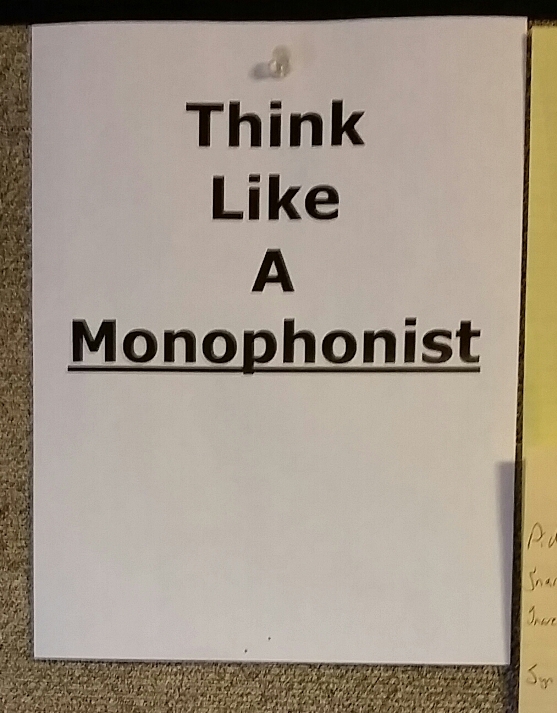
I have a sign tacked to the wall in my studio:

Monphonist Pic

I put it up when I realized that a lot of the early electronic music I like – from ethereal Tangerine Dream to the synth-pop of The Human League and OMD – was done by people with access only to monophonic synthesizers (that is, ones that can make only one sound at a time). That is, they can only make one note at a time. By contrast, without even getting into the virtual synths in my arsenal, I can bring to bear 150 voices! At once! I only have 10 fingers, after all.

My point is I tend to think in chords, even thought single notes are often what’s called for. After struggling to find the right sequence for this song, I backed off and gave it a fresh look. And I looked at my sign. The heart of this song was that simple bass line, the simple melody. Don’t mess that up by building it up unnecessarily. Take the simple route. Thus, that middle section was composed entirely of monophonic lines weaving together – as was the rest of the song.

None of this is Earth shattering. Still, as creators sometimes it’s easy to get wrapped up in the vision of more – more words, more notes, more colors – until you disappear up your own backside in search of your next complexity fix. Sometimes you have to step back and think about what works for the song, book, or whatever it is you’re making. Some of them are just simple little things that don’t have airs on being anything more.

“Dummy Tickle” is like that. A little goof of a tune, a good mood wrought by bouncy synths. Enjoy!

In Praise of Not Finishing Books

As a writer, the idea of people starting to read a book but not finishing it intuitively honks me off. After all, the author went through the trouble to create an entire package that, at least on some level, appealed to you – give them a chance to redeem whatever fault you’ve found in the end! But if I’m honest, as a reader, I’d push back against that – hard.

I wouldn’t be alone. A few years ago eBook platform Kobo (on which all my books are available, by the way), released some data that compared their best seller list with the list of books that readers most often finished. Not surprisingly, some of the best sellers were also some of the least finished. I love the cynical take on this from The Guardian, with respect to Donna Tart’s The Goldfinch (2014’s Pulitzer Prize winner: 37th best selling, only finished by 44% of readers):

Most-unfinished book of the year isn’t a title anyone would hope to win. But her core fans probably read the book to the end, as did a whole raft of new readers, which propelled her up the bestseller charts. And those readers who didn’t finish it still paid for it, so Donna Tartt can mop up those tears with crisp tenners, which will surely ease the pain.

Still, it’s a bit disheartening to know that so many people couldn’t even finish what you’ve written.

Alas, I occasionally find myself in that category as a reader. Even though I see every book I read (or listen to) as a learning experience when it comes to writing, sometimes I still can’t stick it out to the end (witness my “unfinished” shelf at Goodreads, to which I just had to add Jim Butcher’s The Aeronaut’s Windlass, alas). Thus I’m on board with this piece over at Electric Literature that, without shame, promotes non finishing books:

There are many factors that go into whether or when a reader finishes a book. I imagine many people’s reading habits are, like mine, scattered. I have at least a dozen in-progress books on my nightstand — and several more on my phone and e-reader. Readers stop reading a book they enjoy when they put it down and forget to come back. Readers finish books they hate when they are assigned it for book clubs or else they want to hate-read and laugh about with their friends. (Certainly a large percentage of Fifty Shades readers fall into that second category.) Just as a half-read book isn’t necessarily a failure, a completed book is not necessarily a success.

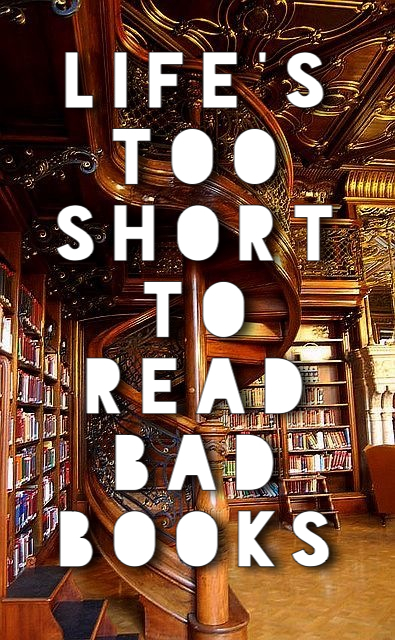
This makes a lot of sense. I said before, in other contexts, that reaction to art is inherently personal. What rocks one person to the core of the their soul will make another yawn. That’s neither right nor wrong, it’s just the way things work. So there’s really no reason to expect everybody to love a book so much that everyone who starts it finishes it. As the saying (attributed to James Joyce) goes:

LifeTooShort

Ultimately, the job of keeping a reader engaged with a book is the author’s. It’s a responsibility we should take seriously. But we shouldn’t forget that readers come to our works in all kinds of ways and for all sorts of reasons. No book is going to connect with all of them, just like some books you’ve read didn’t connect with you. We have to accept that sometimes saying “this isn’t for me” and moving on is best for everybody involved.

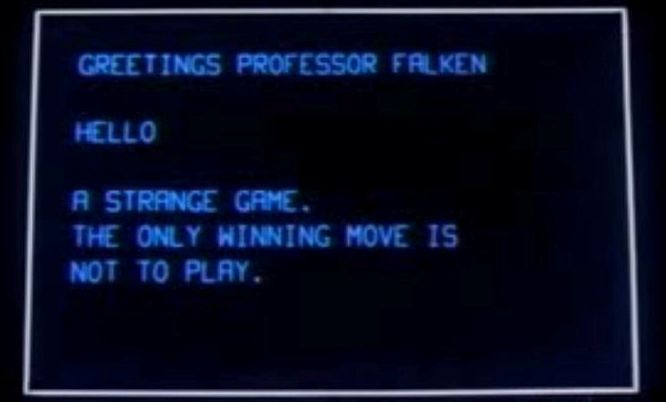
Remember the lesson of the WOPR:

WOPR

It applies to books, too.

Author Interview – Eliot Parker

A few words with mystery writer Eliot Parker, current president of West Virginia Writers, Inc.

Who are you? Where are you? What kind of stuff do you write?

I’m Eliot Parker. I am a West Virginia native. I live in Huntington, West Virginia. I write mystery/thriller novels and short stories.

Tell us about your most recent book, story, or other project

My latest novel is titled Code for Murder. It features Cleveland Homicide Detective Stacy Tavitt who is looking for the killer of Cleveland Browns football player Devon Baker. With little forensic evidence connecting anyone to the case, Stacy sets out to find the killer. When potential suspects in the case are murdered, Stacy realizes Devon Baker’s killer may be more familiar to her than she realizes.

CodeforMurderCover

In what genre do you primarily write? Why did you choose that one?

 I write in the mystery/thriller genre. I got interested in that genre when I was a kid. The first series of books I really enjoyed were the Encyclopedia Brown young adult books. I also loved the Scholastic “Choose Your Mystery” book series where you (as the reader) could choose the decisions and actions that characters made throughout the book. The fun part was going back and reading the book and making different choices to see what happened to the characters. From then, I was hooked as a mystery/thriller reader and those same passions for that genre carry over into my writing.

I’ve asked this question of another writer who works in your genres, so I’ll ask it again to see if you agree – what’s the difference between “mystery” and “thriller”? Aren’t all thrillers about figuring out the mystery of what’s happening?

To me, a thriller can be defined as a story in which the audience is waiting for something significant to happen.  A mystery is a story of revelation, with the action more mental than physical.
Eliot

Tell us briefly about your writing process, from once you’ve got an idea down to having a finished product ready for publication.

I write a little bit each day, five days a week. I use post-it-notes to help me organize characters, plot, setting, etc. I usually get up early in the mornings and write for 30-45 minutes. On weekends, I write more and holiday and summer breaks from school (I teach at Mountwest Community and Technical College) allow me to write more. It takes me about a year-and-a-half to get the first draft of a novel completed.

How complete is a “first draft” (since it’s a year and a half in the making)? What goes on after you reach that point?

A first draft for me is one that is complete. It has the exposition, the climax, and the resolution written. This doesn’t mean that all of the writing is great. In fact, a good bit of it will end up taken out of the book or revised significantly. However, when those three parts are complete, I know I have a first draft. After that point, I step away from the manuscript for several weeks (sometimes months). This allows my mind to remove itself from the characters, plot, etc. of the book. Then, when I go back and read it again with fresh eyes, I feel like I am approaching the story completely new, much like a new reader might do.

Who is the favorite character you’ve created? Why?

I love all of my characters. Choosing a favorite character is like asking a parent to choose their favorite child. However, my favorite character is Ronan McCullough. He appeared in my novel Fragile Brilliance. I love him because is tough, reckless, but principled. He is my favorite character because it’s so easy for me to get inside his head and his voice when I start writing. I don’t always have that same strong connection with other characters I have created.
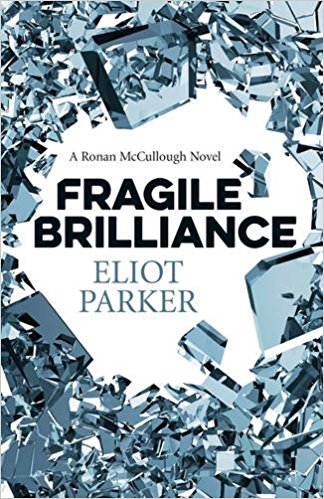
FragileCover

What’s the weirdest subject you’ve had to research as a  that you never would have otherwise?

 In the sequel to Fragile Brilliance, titled A Knife’s Edge, I researched innovative technology being developed that allows law enforcement and hospitals to diagnose a host of illness and physical conditions with just one drop of blood, instead of the vials of blood that are required now. I learned more about blood, blood testing, and the process of analyzing blood through my research. I would never have sought out that information on my own if it wasn’t for the book. Blood freaks me out!

What’s the one thing you’ve learned, the hard way, as a writer that you’d share to help others avoid?

 The real part of writing is revision. Writers should know that the first draft is just that, the beginning of the process. Don’t be afraid or surprised to find yourself having to toss out at least 1/3 of what is written and then heavily revise the other 2/3. It’s that process of intense, detailed revision where the novel really finds is core truth and the characters really become what you envision them to be as a writer.

If you won $1 million (tax free, to keep the numbers round and juicy), how would it change your writing life?

 Absolutely! I would quit my job and be a writer full-time. I am working on that now, anyway, minus the lottery winnings.

What’s the last great book you read or new author you discovered?

 The last great book I read was Call Me By Your Name by Andre Aciman. It’s a powerful, moving story about love, saying goodbye, and the pain that comes when we cannot be with the one person that we love more than anything else in the world.

What do you think you’re next project will be?

 I finished the third revision of the next Ronan McCullough novel, titled A Knife’s Edge. It will be out in early 2019. I also have an outline finished for the next Stacy Tavitt novel. I am also working on compiling some short stories that have been published in literary magazines (and some that have not) for a short story collection.

Do you approach your short stories different from your novels (in terms of planning, revising, etc.)? If so, how?

I approach my short stories in the same manner that I do my novels. The only difference is that with short stories, the time spent with those characters and that setting is much shorter.