Thoughts on Rewatching “L.A. Confidential”

Recently, the Rewatchables podcast covered L.A. Confidential, one of my favorites

In that episode they discussed the two failed attempts to build a network TV show out from the movie (which seems like a fool’s errand). The second of those, which only made it so far as a pilot, starred (among others) Walton Goggins as Sgt. Jack Vincennes, the role played by Kevin Spacey (I know) in the movie. I told my wife about this, as she’s a big Goggins fan, and she looked at me puzzled and said that she’d never seen L.A. Confidential.

Naturally, I had to remedy this! A good excuse to revisit a great movie and see if there was anything new to take away from it. Turns out, there was.

Very briefly, L.A. Confidential is the story of three cops in 1950s Los Angeles trying to solve a grizzly mass murder that arises in the wake of a power vacuum in the city’s organized crime ranks. There’s Bud White (Russell Crowe), who’s spun up by abusers of women and used as dumb muscle by superiors. There’s Edmund Exley (Guy Pearce), the political animal “college boy” who has ideals of what the “new” LAPD could be. Then there’s Vincennes, kind of a celebrity cop who works as a consultant on a “Dragnet”-style TV show and has a profitable relationship with the purveyor of one of the local tabloids. They’re all drawn together by a massacre that’s initially written off as the work of young (black) hoods, but winds up going straight to the rot of the city.

What particularly stood out to me this time were the scenes where the three cops talk about why they wanted to become cops.

White’s is a post-coital conversation with Lynn (Oscar-winner Kim Basinger), a high-class call girl who’s boss is definitely involved the city’s corruption, when she asks about a scar on his shoulder. White explains that he got it from his father, when White tried to intervene and stop him from beating on his mother. White’s father tied him to a radiator and beat his mother to death in front of him and then escaped. When Lynn asks if he became a cop to “get even,” White says “maybe” and then that he “used to” like it.

For Exley, it comes during a conversation with Vincennes. He tells the story of how his father (also a cop) was shot and the perpetrator never caught. Exley dubbed the guy “Rollo Tomasi,” just to give a name to the people who get away with it. He wanted to be a cop to go after the people who think they can get away with it (notably, this comes after telling a reporter earlier that it was to “help people”). Exley then asks Vincennes why he wanted to be a cop.

Vincennes – aka “Hollywood Jack” – says he can’t remember anymore.

As a public defender I’m awfully cynical about cops. I see too much bad behavior that goes not just unpunished but rewarded. But it’s worth remembering that all but the worst power trippers in uniform probably got there for noble motives – wanting to help people, protect the vulnerable, and do justice. But even the best intentions don’t mesh well with a system that’s all about the accretion and deployment of power and authority over others.

Not for nothing do none of the three main cops come out of L.A. Confidential in great shape. Vincennes is killed, straight up, by the crooked police captain. White is reduced to a mute, broken man with no future in policing. Even Exley, while he comes out of the whole thing with another promotion where he might actually do some good in the department had to extrajudicially kill the crooked captain to get there (the same one who earlier had chided Exley for not being capable of doing “the right thing” when it came to it).

My wife asked, after the movie was over, how I could like a movie so much that was, after all, about crooked cops. I think the answer is that the movie doesn’t valorize them and it shows the destructive power of a corrupt system that people enter into even with the best of intentions. The moral shouldn’t be that, in the end, Exley did what he had to regardless of the rules. It should be about the toll it took on his soul, his humanity, and his values in the process.

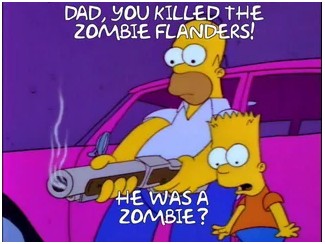
That’s the thing about great movies – you find interesting new ways to think about them with every viewing. Plus, this makes me laugh every time:
On Confronting Expectations

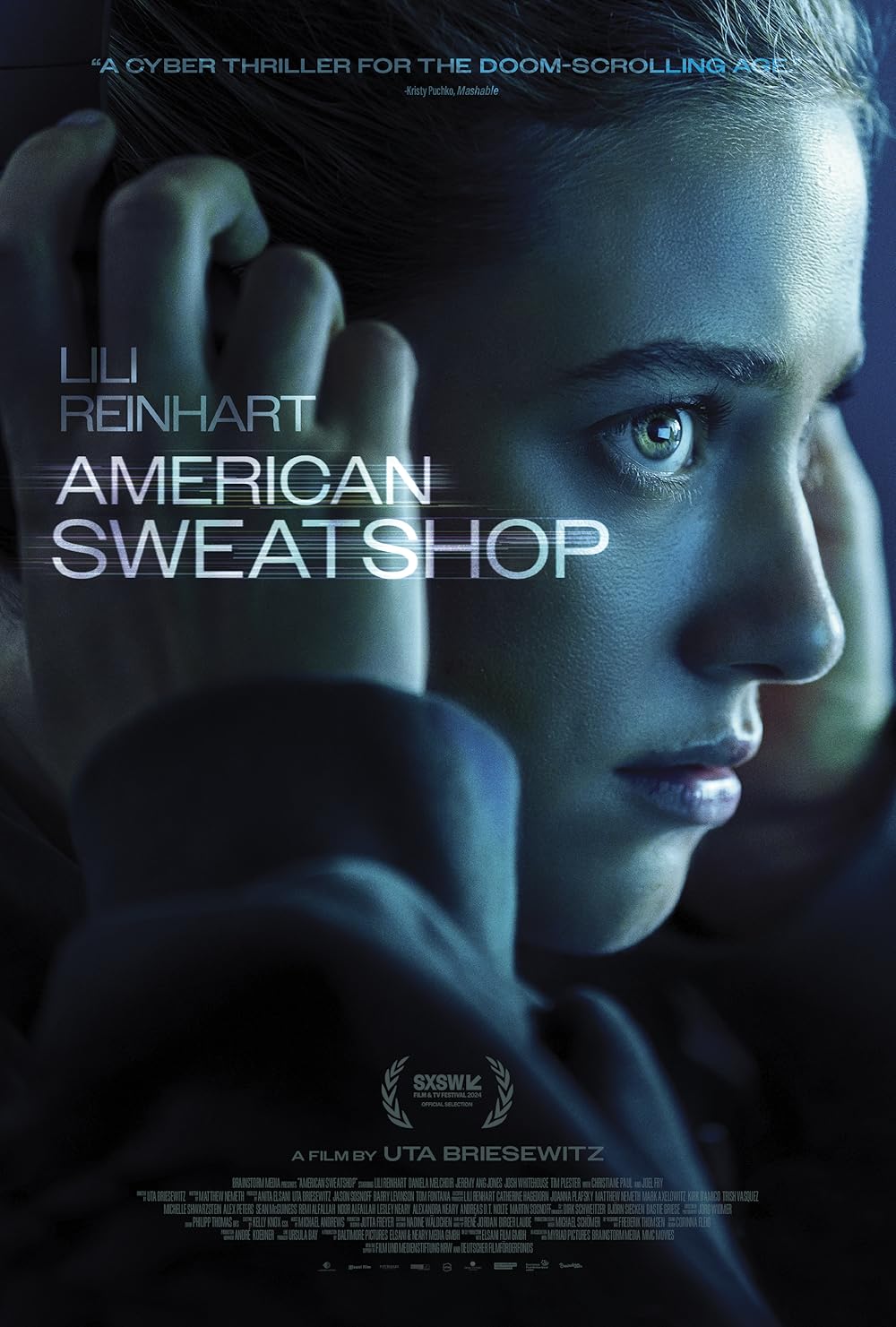
NOTE: I’m not normally one to warn about spoilers, but this post will talk about the nitty gritty of the movie American Sweatshop as well as my first novel, Moore Hollow. It’s nearly ten years old now and I like to think it’s worth a read even if it’s been “spoiled,” but if you’ve not read it and want to be surprised, go do it now (watch American Sweatshop while you’re at it – it’s pretty good) and then come back to this. Ready? Let’s begin!

You pick up a book. The cover is a lush painting of a rural scene. There are a couple of horses, in full saddle. The “people” you see really aren’t – one’s an elf, another an oversized ogre type being. The one actual person has tall hat on that just screams “wizard!”

You’d probably expect that book to be some kind of high fantasy story, probably involving a quest of some kind. The appearance of non-humans indicate a depth of world building that will include countless races and fantastic creatures. Adventure awaits!

Except the book isn’t anything like that. The cover represents a painting that is the subject of the story, which is really about the relationship between the painter and his grandson and how they bridge the generations to find love, meaning and understanding. No big battles or nifty spells or sword wielding included.

Now, this might be the best book that’s ever been written on the subject – or at all! – but you’re likely to be disappointed. Not because it’s a bad book, but because it’s not the kind of book you expected it to be. Expectations can sometimes poison a reader or viewer and create a boundary between them and the work as it actually is. They can be tricky things.

Take American Sweatshop, for example.

It’s a movie about Daisy, who works for a YouTube-style social media company as a content moderator. In other words, she watches loads of videos all day to see whether they should be blocked or, perhaps, reported to authorities. This is still a real thing, even in the age of AI. Naturally, Daisy comes across a video that appears to show a woman being killed.

This sounds like the setup for a taught thriller or horror movie – indeed, it is, to my understanding, precisely the setup for the remake/sequel/whatever to Faces of Death that just came out. The kind of thing that goes all noir as Daisy descends into the darker corners of the world in pursuit of justice for the potential murder victim.

But it isn’t that kind of movie, for the most part (it is a little confused, which is its biggest flaw). Rather, while Daisy does try to track down who made the video and determine whether it was even real, it’s less about that drive for justice/vengeance than it is on what the investigation does to Daisy’s psyche. Along the way we see how others doing the same job are coping (or not) with their particular stressors and how the company tries to help (not well!). The result is more psychological drama with a hint of satire than thriller.

For some people, that simply didn’t work. The currently solitary review of the movie on Rate Your Music (2/5 stars) starts that the “trailer was so good” but concludes: “I expected a thriller but I got something more like a video HR will show you.”

The issue, of course, is that you need to advertise your movie and in doing so the things you put out in the world – the poster, the tagline, whatever – creates expectations as a means to find an audience. People might watch a thriller with this setup who would never watch a documentary covering the same ground.

I know this from my first novel, Moore Hollow.

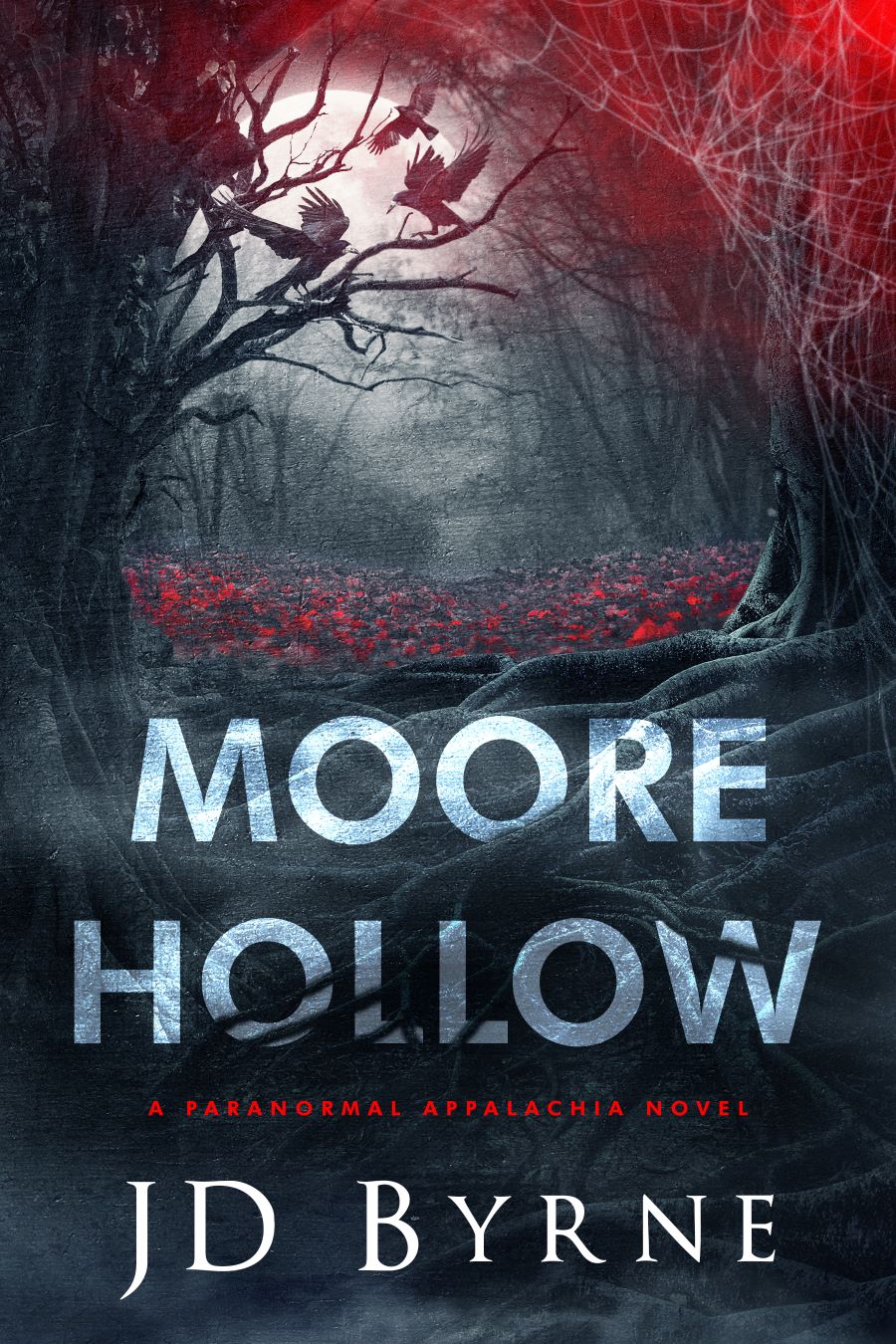
It has hints that it’s a certain kind of story. That it’s part of the Appalachian Paranormal series says something. So does that cover. Turn the book over the blurb had the “z word” in it – zombies! So it’s one of those kinds of stories, right?

Except it’s not. The zombies in Moore Hollow aren’t the typical monsters of Night of the Living Dead(which are peculiar in their own right) or The Walking Dead. In other words, it’s not this kind of story:

Rather, it’s a story where the zombies are poor creatures to be pitied and protected from the outside world, not monsters that need killing. The conflict derives from Ben Potter coming to West Virginia to find proof that these zombies exist and deciding whether he’s going to tell the world about them (to his professional and familial benefit) or keep the secret of their existence and continue his fairly miserable life.

This has led to some interesting conversations with potential readers. If they’re “oh, sweet, zombies!” I have to try and talk them down a bit, temper expectations. If they’re more like, “oh, I don’t do zombies,” then I can try to convince them it’s really not the kind of book. I don’t want people to come into the book expecting one thing and getting another and disliking it for that reason. It can make marketing kind of tricky.

The paradox is that most artists, I think, want people to engage with their work with an open mind, on its own terms. “Don’t judge a book by its cover” and all that, right? But the truth is people do judge based on covers and part of getting people to read a book or watch a movie is to convince them it’s something they want to read or see in the first place.

There are people unsatisfied with season two of The Pitt because it lacked the single, huge, trauma even of season one’s mass shooting. I’ve seen people who watched all of DTF St. Louis only to be disappointed that it was never really a murder whodunnit in the first place. Expectations, again, getting in the way of engagement.

The goal is to find the fine line that entices without promising too much, so when they get to the end they don’t feel they’ve been cheated out of something. I’m not sure where that line is, precisely, but if I figure it out I might become a rich man.