Author Interview – Cat Pleska

For our first interview of 2018 it’s back to West Virginia to talk with memoirist and editor Cat Pleska.

Who are you? Where are you? What kind of stuff do you write?

I’m a native West Virginian, 7th generation. I have a BA in English, MA in Humanities, and an MFA in Creative Nonfiction. I am an educator, author, and storyteller. I teach full time in an online Master of Liberal Studies program at Arizona State University (go Sun Devils!). I’ve taught at the higher Ed level for 18 years and have taught writing workshops in memoir and personal essay for many years. I have been a History Alive! character (photographer Frances B. Johnston), an essayist for West Virginia Public Radio (7 years), a book reviewer for The Charleston Gazette, and am a reviewer for West Virginia University Press. I am the president of a small nonprofit, 40-year-old WV traditional press, Mountain State Press. I am a cat lady (bordering on crazy cat lady with 6 cats currently), married to Dan, mother to Katie, and pup mom to one dog.

Tell us about your most recent book, story, or other project.

My memoir, Riding on Comets, was published by West Virginia University Press in 2015. About 15 years in the writing, it is a tremendous life accomplishment for me. I’ve edited 10 books, several through the Press and for another book company, Woodland Press. Most recently, Mountain State Press published Voices on Unity: Coming Together, Falling Apart, with 35 writers across the country (22 from WV) speaking to the difficulties of unity in these troubling times. I wanted for writers to have a format, a forum in which to practice what they do best when dramatic times present themselves, and they each stepped up to the plate creating poetry, prose, and song to exercise their right to speak out and speak up. I am super excited about my new book project, working title: The I’s Have It, a travel/personal essay collection about my travels in Iceland and Ireland. I hope to have it completed by summer and ready for revision throughout the fall.
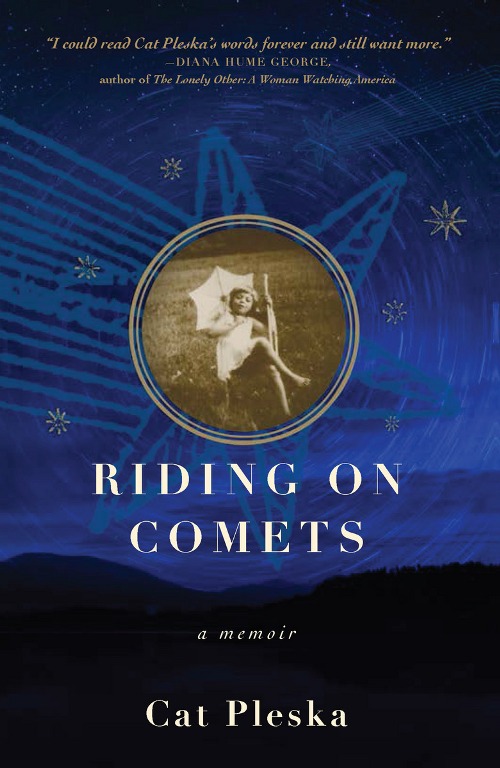
Comets Cover

In what genre do you primarily write? Why did you choose that one?

I write primarily in nonfiction—specifically creative nonfiction, as I like personal writing the best. I call myself a memoirist and personal essayist and that is what I’m published in. The occasional fiction piece or poem floats out, but rarely. Because I come from a family of storytellers, and these were tellers of personal stories, not local or regional tales many might know, I was born into the sense of hearing and imagining in my mind the stories of my people first of all. They did not make up stories; rather, they were true stories told on themselves, so to speak, many times to make you laugh or to make you cry. Each time they told a story, which was every time they gathered, the story was the same—the details did not change. So, truth, to me, was always important. When I heard about creative nonfiction back in . . . the early 90s (when I was in college), I was intrigued. I found out creative nonfiction is the truth told with creative techniques (not making it up), but rather the same way one would tell any story: scene, dialog, description. I was blessed with a partial hyperthymesia, which is recall for one’s childhood. Plus, I was lucky enough to simply ask my family for confirmation of details all through my life.

Have you ever had a situation where you were “stuck” in your writing and could see an easy solution if you were writing fictions and could make things up but had trouble sticking to the truth? If so, how did you work around that?

The truth is I was never “stuck” in my writing due to the fact that I was writing nonfiction. The training I had in fictional techniques (this is about using craft, not lying) helped me present what many think are unessential details as essential, because in truth, they are essential. I let the details tell the story of what really happened. So, if I’m writing about going trick or treating, when I was a child, for example, what’s so significant about that event? Well, what’s significant were the costumes I chose: powerful women characters. What else? That I  wandered neighborhoods as a 9 year old alone. What else? That when I returned, I stood by the front door, looking through the storm door glass and saw a massive orange streak of lightning pattern across an absolutely clear sky. Then it streaked again. I end the story with me wondering what that phenomenon was and what it meant. I really did wonder this. After that piece is one in which my dad disappears at Christmas, drunk again. My mom worrying herself into a state of ill health over his drinking jags. What happened to him? Was he all right? What was going to happen when he returned—if he returned? Although it is exactly what happened, you can see how that the event with the foreboding lightning occurred in Oct. and then comes the Christmas story, and the reader might see the strange phenomenon as foreshadowing. That is what we do with our lives: we look for cause and effect. If someone is stuck in a nonfiction story, that’s my go to: this happened (why? which may cause me to back up with a story that explains) or this happened next: are they connected? Once you explore using those questions, it becomes clear you don’t need to alter anything to become unstuck. I just relax and let the real details flow, letting them do the work of revelation, metaphor, symbolism.

Tell us briefly about your writing process, from once you’ve got an idea down to having a finished product ready for publication.

My ideas usually come from reading, especially other memoirs/essays, but also from the two professional magazines I subscribe to: Writers Chronicle and Poets and Writers. I also get ideas from any number of other places I read, from newspapers, to literary magazines, to National Geographic, to Smithsonian, to fiction. I often just hear a word, such as the one I used above, hyperthymesia, and that’ll send me off into thinking about its definition and what it really means to be along that spectrum. I’ll do further research and then think of personal instances that might fit to include as scene and exposition. Sometimes my ideas come from conversations with people who’ll say to me: you should write about that. Sometimes I’ll review prompts from workshops I’ve been in. My ideas come from words, and it just goes from there.

How do you find people you trust to provide the kind of feedback you need during the editing/polishing process?

That’s actually been a long process and it was by trial and error. First of all, I was in college taking creative writing courses and then in workshops across the country, so I learned what effective criticism is and who knows how to do it and who does not. It is as hard to learn to criticize as it is to write in the first place. The skills are different, and not all writers hone how to criticize effectively. Sometimes, they don’t even know they should learn, but learning how to effectively criticize means you learn more about your own writing in ways you hadn’t thought about. I was in writing critique groups early on, too. But I learned over the years that not all groups work well. I have been in a few in the last few years that were very effective, but eventually, I needed to just write and find a handful of people who are skilled readers—for me (and as a general rule, close in development as a writer as you are). In turn, I am often a reader for them, but not always. And there are people I read for who don’t read for me, and that’s fine. I select who I’ll read, based on what they write, how they write, and the skills I’ve learned that would be helpful to them. Not every reader is a good reader for you and you must learn that. Having my work critiqued is never easy for me—to hear. But I’ve learned to shut out the protesting ego and just listen. I wait a couple days before I approach the piece for possible changes, re-read what they’ve written and then decide in a cold, clear light of a new day if the suggestions are valuable for my piece or not.

Who is the favorite character you’ve created? Why?

Since I’m a creative nonfictionist, I don’t make up characters, but I certainly do develop them. You cannot just write about a person and say, well, she’s this or that. You have to show who that person is. For example, when I wrote about my father in my memoir, it would be easy to make him a bad guy since he was an alcoholic. But my dad was also very intelligent, a hard worker, and when sober a really funny, kind man. You have to create the rounded character even though they are not made up. You have to do your homework. I and my family had to come alive on the pages of my memoir and the same goes for any essays I write about anyone. Real people, researched, and fully, roundly viewed. I have no favorites, although I am fond of myself when I was small, say 5. I say that because that was when I became more aware and absorbed the world around me. Things came alive and so did I. My curiosity was profound and my skill as an observer, as an only child in a world of giants, set me off on my life as a writer more than anything else.

What’s the weirdest subject you’ve had to research as a writer that you never would have otherwise?

The current essay I’m writing about is the Penis Museum in Iceland sort of tops that list. I visited there, but I’d read about it before I went to Iceland. After being there and being . . . rather amazed (I mean, a sperm whale penis? Wow!) I’m still doing some research. In fact, I stumbled across a video interview with a guy who’s gifting his penis in his will to the museum. Apparently 9 inches, un-inflated, as it were, is pretty amazing.

What’s the one thing you’ve learned, the hard way, as a writer that you’d share to help others avoid?

 This is crucial to do: edit, edit, edit, revise, revise, revise then let people read it to edit/revise again and again. Do not ever put a book out there that you haven’t gotten professional editing for. Avoid that urge that this is all you can do and it’s good enough. Take out a loan if you have to, but get it professionally polished. Realize that not everyone is going to love your book. Or read it. Do not worry about that. Why should everyone? Not everyone likes Shakespeare, the bible, Fifty Shades of Grey. Don’t expect 7 billion people will like your writing, no matter how excellent it is. Avoid that expectation and realize there are even some good friends who aren’t going to read it. That’s fine. Don’t sweat it. Concentrate on and be grateful for those who do read it. Be kind. Be confident you’ve got a good book/writing, and you will if you’ve done your homework. Mostly, enjoy the writing. The sales will come.

Unity Cover

If you won $1 million (tax free, to keep the numbers round and juicy), how would it change your writing life?

I would travel half the year and write the other half. When I was 16, I wrote a letter to a person in which I said, “What I want to do when I grow up is to travel and to write.” And that dream has not changed. I’ve been to 8 countries, 4 continents (including no continent—that’s in Iceland and it literally is not any continent, but is a small stretch of land between the American continent and European/Asian continent), and it’s not enough. I’ve written all my life, have been published since 1990, and it’s not enough. So, 1 million in my pocket would set me free to do and be even more. It would be a tremendous blessing.

What’s the last great book you read or new author you discovered?

I’m sort of into the Icelandic authors right now, but I have so many books to be read . . . I’m not ashamed nor will I stop as long as a I have a dime in my pocket buying books—lots of them. I do not care one fig they’re all over the place around here. I’ll get to them as long as the eyeballs last.

Why Iceland? Both as a travel destination and as a focus of your reading?

Because I always wanted to travel since I was very young, my heart leaps up when I come upon a chance to do so. In the case of Iceland, it actually hadn’t been on my radar but a conference called NonfictionNow came up and it was taking place in Reykjavik, Iceland, and I both wanted to go to that conference, one that I had never attended, and to Iceland because a little reading about it told me I’d probably love it (I do!). So, I wrote a paper to submit for a round table event and it was accepted. So, off to Iceland I go. The diversity of attendees was quite fascinating and the conversations were enlightening. But it was the land and its people that fascinated me most. What I found there was a land still forming, but which had a history rich and engaging and that Icelandic is a language spoken that the Vikings would still understand from a thousand years ago. It’s a land where the very pragmatic people believe in elves and trolls (about 50%), where the ministry of highways employs “Troll whispers” to help in highway design. Where there are waterfalls that appear to fall to the center of the Earth, geysers flume, and the land is an incredible glowing green (Greenland is ice; Iceland is green—go figure!). These are just some of the elements that attracted me to Iceland, but the possibility of this still forming land and fascinating citizens (they just voted into law that a company cannot pay a women less than a man for an equal job) fire my imagination of what it would be like to live there. So, I write about it, dream about it, consider what it would mean if I lived there. And by the way: Icelanders love literature, have 100% literacy rate, and almost everyone publishes.

What do you think your next project will be?

As I mentioned, it’ll be The I’s Have It, but beyond that is a novel. I once thought I had two novel ideas and for years I’ve danced around with writing them both from time to time, never really getting very far. A few pages on each at best. But in 2016, I was in Shepherdstown at a local diner for breakfast. It was crowded, so my husband and I were sitting at the counter, drinking coffee, waiting for our order. I was watching the wait staff weave around one another behind the counter, as if they were braiding invisible strands of hair. They moved steadily, efficiently and smoothly and suddenly I realized—this came out of nowhere—that I was not writing two novels; they were the same novel and needed to be joined; that is, braided together. Once I realize that, I started writing the book anew. I was happily into my third chapter when a character came forward that I thought was going to be a minor one, and BOOM! She took over. I haven’t been back to it for while, as I’ve got to reconfigure the whole dang thing—in a way. All I’ve written will work but now it has to be meshed in a new way and I have to think about the structure/theme. Hey! It’s what writers do!

What’s different about the mechanics of writing fiction versus nonfiction?

As for the mechanics, there is not much difference. A good story is a good story, and the elements that make for a good story don’t differ, regardless of what genre you’re writing in (exceptions are hard news writing, scholarly writing, some biographies, although the latter two benefit from using the common mechanics of writing story). Having a facility for detail and good memory, in addition to the fact finding and checking, is a good thing for a memoirist and personal essayist, and a fiction writer as well. My early passive training in a family of storytellers caused me to have a facility with language, sensory detail, dialog, description. Just as someone writing fiction, I know I must have an opening sentence in my nonfiction that captures the audience. I know I have to provide details so the reader can “see” in their mind’s eye what’s going on; There has to be a narrative arc, something connecting the main story themes throughout; I have to build in tension; and writers of any genre who wish to tell a story, true or not, need to think about the universality of what they are writing about: why would anyone read it and care? In the end, the only major difference between writing creative nonfiction and fiction is whether or not you’re careful about fact—what really happened. But you have to break down that fact and think: but what does it mean? What do I think about it and know from it? How did it happen and what was the result? Life is story, and if we’re lucky, we get to tell it.

The Fate of The Messenger

Last month you’ll recall I talked, in rather gushing form, about The Messenger, my project for National Novel Writing Month last year. It was a bold experiment in terms of craft – I was flying by the seat of my pants, rather than working in my more plotted out way – and in terms of style – it was to be a sci-fi romp, something a bit more fun and light than my normal stuff. November was great – I “won” NaNo – and December was all about finishing the thing up.

Well, let me tell you, December sucked. In the words of my perhaps ancestor Robert, things gang aft agley. Hard.

I expected progress to slow down some, without the motivation of NaNo breathing down my neck. For about two weeks I did pretty well, but soon enough my lack of planning caught up with me. Mind you, I didn’t even know how this story would end when I started it, which is startlingly rare for me. Even if the middle bits are squishy I usually start with an idea of the beginning and the end. The more I pushed into The Messenger the more I realized I didn’t know where it was going.

I also started to worry more and more about continuity in the story. Things are always a little out of whack with first drafts, but usually I have copious notes to fall back on. Here I didn’t and it made it easy to get stuck in particular scenes, since I had to dig back through what I’d already written to try and tie things up. More often than not I was finding that I couldn’t tie them up, not in this draft anyway.

So, just as things were getting a little grim, the Christmas break showed up. I was off the entire time between Christmas and New Year’s Day, as was the wife, so plenty of time to finish up The Messenger, right? First I got sick (Merry Xmas, huh?), then the wife took her turn. Any motivation I had for writing dried up quickly. All the doubts I was having about whether I could finish this draft piled on and, as sometimes happens, The Messenger became a smoking crater. It’s dead, at least as a complete first draft.

What does that mean going forward?

Well, for one thing, it means The Messenger is on the back burner for the time being. Hopes of having a solid draft just in need of polishing are out the window. It will take some serious work to get right, work that I’ll be putting in on The Orb of Triska and its sequels for the near future.

For another, it means my experiment with pantsing proved one thing conclusively – I can’t do it. I went out, performed without a net, and fell flat on my face. Oh well, lesson learned.

Another lesson learned is that, maybe, writing big space-based science fiction isn’t for me. I never intended for it to he “hard” sci-fi. In fact, it has a disclaimer at the beginning about how it’s more “Dr. Who than Dr. Asimov” and sticklers looking for strict scientific accuracy should look elsewhere. Nonetheless, when you start flinging characters (of various species) across the galaxy things to worry about pile up. It’s entirely possible that The Messenger may wind up as a fantasy, rather than spacey sci-fi, story.

I still like the basic story of The Messenger. I like some of the things I created to fill in the universe in which it was told. None of that’s going to go to waste, but I can’t say it’ll wind up being what I intended it to be going in. That’s the frustrating joy of writing – almost all the time you wind up with something other than what you intended.

Failure

Writing Resolutions for 2018

Happy New Year, everybody!

Happy-New-Year-Memes

I figured now was as good a time as ever, and this as good a place as any, to set out some goals for the 2018 writing year. I’ve done the same in the past in private and it’s a good way to crystallize my plans, even if they don’t all come off in the end. So, what’s on the agenda for this year?

The Water Road Box Set

Now that The Water Road trilogy is complete, it only makes sense to put together an omnibus version that combines all three books in one convenient package.

2017-525 Front Page Box Set

The plan is to make the box set a Kindle exclusive, thus returning The Water Road trilogy to Kindle Unlimited. The individual books would still be available from Amazon and all other outlets.

Interviews

Last year I decided to try and do some interviews with other writers. I’ve done a few and thought they were fun and interesting and wanted to see if I could repay the favor. I wound up doing 19 interviews with all kinds of writers from all over the world. It was such a rewarding experience that I’m going to do more this year. I’ve already got about a half dozen people lined up.

More Short Stories

I’ve got a couple of finished short stories that need to find homes, so I’ll keep trying to shop those around. I’ve also got a pretty decent backlog of short story ideas, so while I’m polishing longer works I’m planning to knock out a few new short stories. Someday, down the road, there will be enough to make releasing a second collection of short stories a reality. It will include a couple of stories set in the universe of The Water Road.

Speaking of collections, look for The Last Ereph and Other Stories to get a spiffy new cover (done by someone who is not me) sometime this year, too.

Orb of Triska Polishing

Last year, you’ll recall, I finished the first draft of a novel in a new series, The Orb of Triska. My main job for 2018 will be getting that polished up and finished. Once that happens, I’m not quite sure what the next step will be. I may get it ready for publishing, with an eye toward releasing it in 2019. I may sit on it until another book or two (of the planned seven) is done. Or I may shop it around to see if any agents/publishers are interested. A lot will depend on when it’s “done” and how I’m feeling about it then.

Write The Scepter of Maril

Regardless of what becomes of The Orb of Triska one goal for later in the year is to start work on the second book in the Empire Falls series, The Scepter of Maril. If all goes well, it should be my NaNo project for 2018.

I think that about covers it. If you’re wondering about a certain other project I’ve talked about before – I’ll have some info about that in a couple of days.

Genre Bias Rears Its Ugly Head – It’s Science!

While I was of NaNoing last month an interesting bit of news came out with regards to science fiction and other types of fantastic literature. Put simply – people don’t put as much effort into reading those stories as other types.

ReadingHard

The study went like this:

Their study, detailed in the paper The Genre Effect, saw the academics work with around 150 participants who were given a text of 1,000 words to read. In each version of the text, a character enters a public eating area and interacts with the people there, after his negative opinion of the community has been made public. In the ‘literary’ version of the text, the character enters a diner after his letter to the editor has been published in the town newspaper. In the science fiction version, he enters a galley in a space station inhabited by aliens and androids as well as humans.

After they read the text, participants were asked how much they agreed with statements such as ‘I felt like I could put myself in the shoes of the character in the story’, and how much effort they spent trying to work out what characters were feeling.

The results were, on the face, disappointing:

‘Converting the text’s world to science fiction dramatically reduced perceptions of literary quality, despite the fact participants were reading the same story in terms of plot and character relationships,’ they write. ‘In comparison to narrative realism readers, science fiction readers reported lower transportation, experience taking, and empathy. Science fiction readers also reported exerting greater effort to understand the world of the story, but less effort to understand the minds of the characters. Science fiction readers scored lower in comprehension, generally, and in the subcategories of theory of mind, world, and plot.’

Readers of the science fiction story ‘appear to have expected an overall simpler story to comprehend, an expectation that overrode the actual qualities of the story itself’, so ‘the science fiction setting triggered poorer overall reading’.

In spite of some of the breathless comments I saw online the study does not, as someone points out, imply that reading sci-fi makes you dumber, but implies that people who don’t like sci-fi won’t give it its full attention. It’s nice to have some science to back this up, I guess, but is that any surprise?

That’s the whole reason literary writers, whom I’ve complained about before, don’t like admitting that they write sci-fi or fantasy. This came up against just recently after I finished Emily St. John Mandel’s really excellent Station Eleven (Weekly review forthcoming). It’s a story about survivors of a global pandemic striving to maintain a life that’s something beyond mere survival. It’s a quintessential piece of sci-fi (or, more broadly, speculative fiction), although the author is having none of it:

Thus when Station Eleven was nominated for the National Book Award – it also won the Arthur C. Clarke awards, so take that! – some eyebrows were raised. But when something that is “literary” is it prevented from being something else? I tend to agreed with this:

And yet confusion reigns in this debate, which feels strangely vague and misformulated. It remains unclear exactly what the terms ‘literary fiction’ and ‘genre fiction’ mean. A book like ‘Station Eleven’ is both a literary novel and a genre novel; the same goes for ‘Jane Eyre’ and ‘Crime and Punishment.’ How can two contrasting categories overlap so much? Genres themselves fall into genres: there are period genres (Victorian literature), subject genres (detective fiction), form genres (the short story), style genres (minimalism), market genres (“chick-lit”), mode genres (satire), and so on. How are different kinds of genres supposed to be compared? (‘Literary fiction’ and ‘genre fiction,’ one senses, aren’t really comparable categories.) What is it, exactly, about genre that is unliterary—and what is it in “the literary” that resists genre? The debate goes round and round, magnetic and circular—a lovers’ quarrel among literati.

Listen, I get the concern of writers like Mandel – slap a “sci-fi” or “detective” genre label on a book a certain group of people won’t take it as seriously. But rather than run away from the tag and deny the reality of what you’re writing, why not embrace it? Doing so would help smash conceptions about what genre fiction is and can be. Stand up for the slighted genre kids, rather than lean into the bully who just wants to put them down.

Thoughts From an Experimental NaNoWriMo

Right – so where were we?

Oh, yeah, National Novel Writing Month, also known as NaNoWriMo. Did I have a good month? I’d say I did.

NaNo-2017-Winner-Twitter-Header

The book I started for NaNo, The Messenger, is different for me in a lot of ways. For one thing, it’s pure space-based science fiction. While I’ve written some near-future sci-fi short stories, I’ve not done anything this long or, well, spacey. For another, I started the project having done very little prep work. So to be past 50k words and looking at another month’s writing (at least) to finish it is making me a little giddy.

HappyPuppy

Not an actual picture of the author. Think metaphorically, people!

Let me explain why.

Writers generally like to divide themselves into two groups – plotters and pantsers (putting to one side the ones who don’t accept either label). Plotters, as you might imagine, are people who do a lot of work before they actually start writing a first draft. They outline, develop characters, build worlds and all that kind of stuff before ever sitting down to write “it was a dark and stormy night.” (LINK). Pantsers are the complete opposite – they do little prep before writing and are, as the name implies, flying by the seat of their pants. In truth, I think most people are a little of both. Anybody who writes exactly the same book they planned to write or really sits down with a completely empty noggin and pours out a book are few and far between.

I tend to be a plotter. Lots of that is down to writing fantasy and the heavy lifting of world building. I like to get that stuff out of the way so I can let the story develop against a fairly fixed backdrop. Still, things never go precisely as planned, even when (as with The Bay of Sins, my last NaNo project) you lay out all the chapters you think you’ll need from the beginning. I suspect it’s something like attorneys say about oral arguments – there’s the one you plan to make, the one you actually make, and the one you wished you’d made after the fact.

So The Messenger was a very different experience for me. I had about a page of notes, compiled from thinking about the story over the years, but it was lacking lots of important things. Like, for instance, the names of the main characters or any of the names of the planets or alien races they’d encounter along their way. As for the way? I had an idea of how things began, but after that? I decided to let it see where it went. I’m glad I did, because I don’t think I would have come up with some of these things ahead of time.

It’s particularly interesting to do this one right after finishing the first draft of The Orb of Triska. That has a lot of work done on it before I started writing and I always felt like I knew where I was going. I think that first draft is a much better, more coherent final product, but, of course, neither one of them are “finished” after a first draft. It will be interesting to see how the final products compare once they’ve been polished up.

So that’s how I spent my November.

Also, we got new puppies:

ZariaKalindi

Zaria (L) and Kalindi (R) are ready for their album cover.

How you all been?

November Plans

Folks may know that November is National Novel Writing Month or NaNoWriMo. The idea is to write 50,000 words in a month, which is technically long enough to be classified as a novel (although most modern novels are much longer). I’ve done it several times, the last time being 2015 when I used it to start The Bay of Sins. After being otherwise involved last year, I’ve decided to jump back in for NaNoWriMo 2017.

NaNo2017

That means a couple of things.

First, it means that the first book of my new steampunk series, Empire Falls, is done! Well, the first draft is, at any rate. The Orb of Triska was fun to write and came fairly quickly, clearing the decks to let me jump into something fresh for NaNo. So I’ll put it to the side and get cracking on something different for me – a space opera adventure! It’s based on an idea I’ve had for a while, so I’m excited to get working on it. You can track my progress here:

Second, it means that traffic on the blog will be very light this month. I’ll have a couple of interviews, but other than that I don’t plan for much to be happening ‘round these parts until December. You’ll have to entertain yourselves.

Wish me luck!

WriteAllTheThings

Speculative Fiction and the “Real” World

A little while back I reviewed The Spaceship Next Door and while I enjoyed it there was something about it that bothered me. It kept picking at my writer brain until I finally figured it out. It’s a small thing and nothing at all to change my earlier recommendation (TLDR – go read it), but it’s still something worth pondering.

Spaceship . . . was released at the end of 2015. It’s safe to say it was written sometime in the year or two before that. At the very least, we’re not talking about a book that sat in a trunk for decades before it saw the light of day. By all indications, it takes place in the time in which it was written, which is to say pretty much right now. There are smart phones, ubiquitous wi-fi, and other trappings of second decade of the 21st Century. And we’re clearly talking about 21st Century America, as the book is set in Massachusetts (albeit in a fictional town).

The book also has a considerable military presence, as one might imagine for a story where a spaceship suddenly lands in the countryside and then sits around for a bit. There’s more than one soldier who is a minor character and other characters interact with even more Army folks.

This is where something started bugging me. If we’re dealing with military matters in a world that’s otherwise our own – why is there almost no mention of Iraq or Afghanistan?

I’m not saying that any book set in modern America has to comment on our never-ending military adventures (full disclosure – Moore Hollow doesn’t). Nor do I expect a domestically set sci-fi tale to dive deeply into the matter. Still, it’s a little weird that, aside from one brief mention late in the book, they never come up. There’s at least one scene where one of the soldiers (maybe the general – I can’t remember) is talking about what a good posting this is. A quick “beats dodging IEDs in Baghdad” or something similar would have worked.

This is the risk that comes from writing fiction set in the “real” world, but I can’t put my finger on why this particular aspect of it irked me. It didn’t bother me that the president (who shows up near the end) isn’t Obama (or any other actual US president), so why does the military thing? I can’t say. Maybe, for this kind of thing, this is my flying snowman moment, even if it’s not so serious as to destroy my suspension of disbelief.

There’s probably no wrong way or right way for a writer to handle a situation like this. But at the very least, writers should be aware of the issue and give it some consideration – is there something in your not-quite-real world that’s going to make people cock their heads and bit and wonder, “huh?” We want our stories to be immersive, not confusing, after all.

Or maybe I’m just a moron.

sloth-dat-reality

Aliens For the Defense!

The first novel-length project I finished (which shall molder in box in my close forevermore) grew out of the fact that criminal defense attorneys routinely have their clients try and tell them whopper stories about “what really happened.” My personal favorite is a colleague’s client who explained that he tested positive for cocaine because he was helping a buddy move a couch and when he picked it up a cloud of white powder erupted and flew up his nose. My book took that phenomenon and aliened it up a bit (it involves the Flatwoods Monster).

Now, in my wife’s home state of Wyoming, somebody is trying to sell something similar, but I doubt any court (or defense attorney) is going to be buying. The defendant was arrested for being drunk in public, but he had a good reason:

Police say a central Wyoming man they arrested for public intoxication claimed he had traveled back in time to warn of an alien invasion.

* * *

The man told police he was only able to time travel because aliens filled his body with alcohol. He noted that he was supposed to be transported to the year 2018, not this year.

I suppose time travel isn’t an exact science, even for aliens But don’t worry, the invasion isn’t until 2048, so we’ve got time to prepare.

In the meantime, might I suggest an expert witness should this gentleman decide to go to trial?

Aliens

Author Interview – John Triptych

This time we’re headed to Asia to chat with science fiction & thriller writer John Triptych.

Who are you? Where are you? What kind of stuff do you write?

Hi, I’m John and I write science fiction and thriller novels. Right now I live out in Asia because I’m planning to settle here permanently. I’m a semi-retired businessman who decided to write novels because it’s always been my dream to be an author.

Why did you relocate to Asia and do you think your new surroundings will impact your fiction?

I worked as an expat, traveling and living in different parts of the world for almost 20 years so the area was pretty familiar to me. I also found the cost of living is much, much lower, and I didn’t have to work as hard yet still maintain my lifestyle if I stayed in the US. There’s plenty of American retirees living in the Third World and they live like kings!

As far as my surroundings having a say in my writing … it’s very strange in that I actually write more about the US ever since I’ve moved away, so while I’m in another part of the world, I still write about things I’ve experienced before.

Pizza as Author Pic

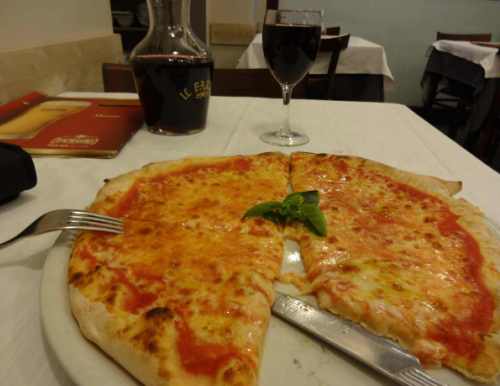
I ask writers to send me a picture – John sent me a picture of a genuine Roman pizza!

Tell us about your most recent book, story, or other project.

I’m currently finishing up the first book in a new series called Alien Rebellion. Its set a few hundred years in the future, and there’s a human colony on an alien planet that’s undergoing some … drastic changes to put it lightly. It’s sort of like a cross between James Cameron’s Avatar movie and the anthropological science fiction of Ursula K Le Guin, and a bit of James Clavell too.

In what genre do you primarily write? Why did you choose that one?

I primarily write science fiction. I like writing in this genre because there are no limits to your imagination. You can create entire worlds from scratch and I love doing that. I have a background in tabletop role-playing games and even as a kid I loved to create my own little worlds, sort of like a self-centered demigod.

Tell us briefly about your writing process, from once you’ve got an idea down to having a finished product ready for publication.

I start out with nothing more than a concept. From there I think of an initial scene and start writing. I don’t plot in advance and I just create the story and characters on the fly. I’m a two-finger typist so it takes me a long time to write (and I stop every now and then to do research on the internet too whenever an idea pops up) but I still somehow get it done!

Once the manuscript is finished I go through it a few times before submitting it to the editor. After she sends it back to me I go through it again to see if we’ve both missed any errors. I also contact the cover artist and give them my idea on what the cover ought to look like.

The moment I am happy with everything I send it to the formatter to put it all together.

How deep does your “concept” go? Does it include the universe in which you’re going to tell the story, or just the basic 1-sentence hook? The idea of writing sci-fi off the cuff without a lot of preparation gives me hives!

The whole concept revolves a lot on instinct and feel for me. My background in playing RPGs and constant daydreaming seems to have affected a strange sense of deja-vu when I write, and everything just comes together somehow. I can’t fully explain the process, but I try to imagine myself living in that world, down to the smallest detail, and everything starts to gel to the point where I am overwhelmed by details.

It’s almost like a strange awareness of being able to project yourself into a whole different universe. You start to imagine what a table looks like in that place, and how stuff works, as well as the other little things that add to it.

Who is the favorite character you’ve created? Why?

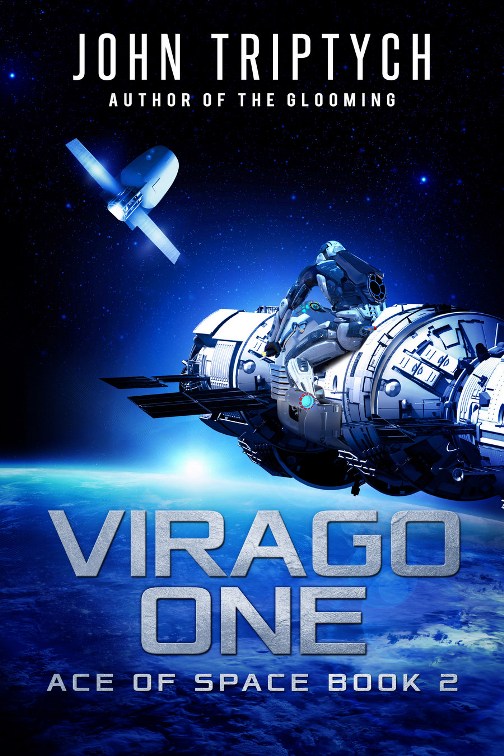
The protagonist of my Ace of Space series: Stilicho Jones. I like writing him because he is my alter ego. Stilicho is a mercenary who is out for himself and he’s a smart aleck to boot. Some readers get turned off by his smugness but I love writing him since he jokes around a lot, and it helps because I felt my earlier novels were all too grim.

Ace of Space Cover

What’s the weirdest subject you’ve had to research as a writer that you never would have otherwise?

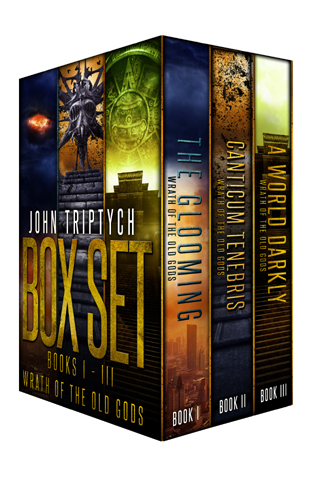
My Wrath of the Old Gods series is a mythological post apocalyptic storyline about the ancient pagan gods returning to modern day earth and causing all sorts of mayhem, so I had to research some very obscure deities because I wanted to get to the root of all these mythological stories and strip away popular misconceptions in order to get into what the old pagans gods were really like.

One of these gods I stumbled upon was a Hebrew god (or demon) named Peor (or Ba’al Pe’or, depending on the sources), literally the god of defecation! I added him into the third book of the series since there’s a subplot with one of the main characters trying to escape from hell. Great fun!

Wrath of Old Gods box

What’s the one thing you’ve learned, the hard way, as a writer that you’d share to help others avoid?

Hoo boy! I’ve learned a lot of things. One is you have to find a good editor. It’s not easy, but it will save you a lot of hassles in the end. Don’t be cheap, because good editors cost money.

Could you give an example of a time where an editor’s feedback really improved your finished work?

One of my editors is very good- she does a two step editing process. The first is that she just reads through the story, much like a beta reader, and looks for inconsistencies with the plot, characters, etc. and then sends me back the manuscript for rewriting. I go through her list of suggestions (like why would a character do this when he did this before, or that was a bad line, change it, etc.).

Once I’ve made my changes, then I send it back to her- after which she looks for grammatical errors, spelling and stuff. Once all that is done she sends it back to me again. All in all, she makes me realize about things I didn’t think about the first time over, and it has dramatically improved the quality of my work, though I still have a ways to go!

If you won $1 million (tax free, to keep the numbers round and juicy), how would it change your writing life?

Not much, to be honest! I’m semi-retired in the tropics and I live a fairly easy life. The books I’ve written have given me enough earnings to take care of my daily expenses so money isn’t too much of an issue. I guess one change would be is that I will probably take more international trips to do field research lol.

What’s the last great book you read or new author you discovered?

I don’t read a whole lot of indie books, and I always make it a habit to browse in the nearby used bookstores for some old tried and true stuff. A recent good book I’m currently reading is A Stranger is Watching by Mary Higgins Clark. It’s a classic suspense thriller that’s been made into movies more than once. I read a lot of books in different genres because of my varied tastes.

What do you think you’re next project will be?

An epic space opera series with some hard sci-fi elements. I’m currently doing research to make sure the space battles will have a bit of realism to them, but at the same time I’ve thought up an epic storyline that should interest most readers. Hopefully I will finish the first book sometime next year!

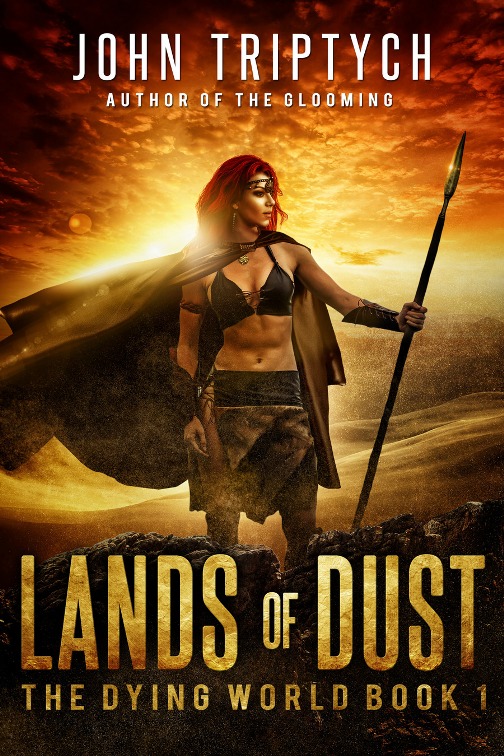
I am also writing more sequels to my hard sci-fi series Ace of Space, and my planetary romance series The Dying World. So plenty of the new and the usual too. I like variety.

2016-343 eBook John Triptych, Lands of Dust B01- small

Catch up with John on his blog, Amazon, Twitter, or Facebook.

Will I Care Once I’m Dead?

Thinking about future projects the other day – ideas that are well enough developed that I can see a book coming out of them – I figured that I have material for about 20 books locked away in my brain. Even at a pace of one a year that means a long haul going forward. Let’s face it – chances are that I’ll be in the middle of writing some book when I die. What should happen to it and any others that might be semi-started?

The issue is back in the news recently thanks to the amusingly public way that the late great Terry Pratchet’s unfinished works were handled. Per his request, his hard drive (which contained as many as 10 works in progress) was destroyed – by being crushed by a steamroller.

The comments I read when the news came out was mostly amusement and pleasure at Pratchet’s wishes being so scrupulously honored. After all, if he was so specific as to how his literary executor was to deal with his unfinished work he must have felt fairly passionately about it never seeing the light of day. Who could argue that the right thing to do is precisely what the author wants?

Destruction isn’t the only option, of course. Robert Jordan, author of the massive Wheel of Time series, realized he wouldn’t live to see the completion of the series, so he provided a trove of notes and left the final few books to be completed by Brandon Sanderson. I can’t speak to the quality of Sanderson’s work and whether he did a good job with Jordan’s baby, but, again, it’s hard to complain when the people involved do just what the author wanted them to.

The legal-rule side of my personality says this is precisely how it should work. An author (or her designee) is the master of her own work, after all. If she never wants the world to see it, or only wants the world to see it with certain conditions, that’s her right. If she wants to take any potential masterpieces to the grave, that’s no problems.

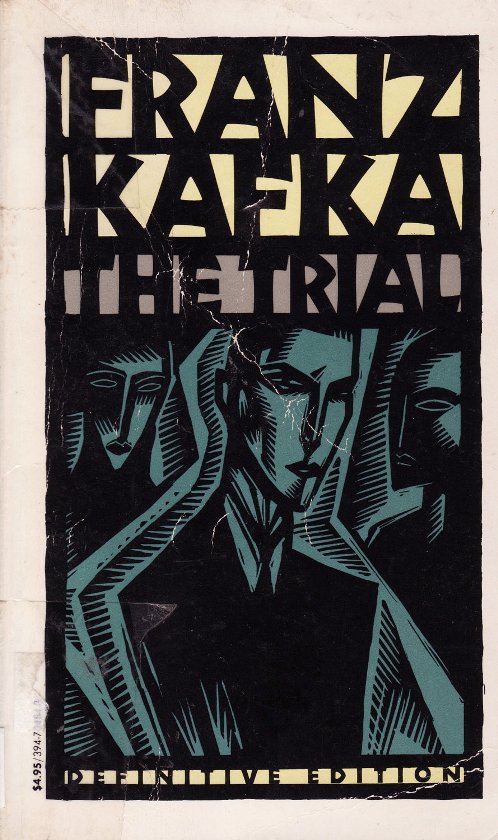
Except we have examples where ignoring the author’s wishes turns out pretty well. When Franz Kafka died he left his literary executor (and friend) Max Brod fairly specific instructions:

Dearest Max, my last request: Everything I leave behind me … in the way of diaries, manuscripts, letters (my own and others’), sketches, and so on, [is] to be burned unread

Brod did no such thing. As a result, we have all of Kafka’s novels, including The Trial, none of which were published before Kafka’s death.

franz-kafka-the-trial

A world without The Trial is barely fathomable (ironically), but had Brod did as instructed, we’d never know of it. Nabokov’s The Original of Laura was published against his wishes after he died. Even Mark Twain had a new collection of essays published almost a century after his death – against his wishes.

And so I find myself retreating from my bright-line rule of always doing what the author wants. After all, what’s the harm in ignoring those wishes? Yes, work might be released that the author wasn’t happy with, but the author isn’t going to be around to complain. A reputation could be diminished, I suppose, but authors have very little say in how the world perceives them when they’re alive and even less when they’re dead. Besides, does the posthumous release of a bad book by a great author devalue their prior work? It’s not a perfect analogy (since Harper Lee is still alive), but is To Kill a Mockingbird any less a masterpiece because Go Tell a Watchman was kind of ordinary? I don’t see how.

It’s a more complicated problem than I thought it was at first glance. Certainly, I don’t think it’s a legal issue. I’d oppose any law that required an author’s papers and unfinished works to become some kind of public good and exploited willy nilly. Nor would I support laws that would punish people like Brod for ignoring the wishes of their dead author friend. But, I have a hard time working up too much outrage when an author’s wishes are disregarded, so long as the person doing the second guessing is a close friend or family member. If they are all right with it, I’m in no place to complain. It’s kind of like jury nullification – I’m not a fan of promoting it, but I’m glad it exists for the rare occasions when it’s really necessary.

So I guess what I’m saying, to my literary heirs, if they ever get around to reading this – you’re on your own!