Knowing When to Walk Away

Deadlines really sharpen the mind. Legal writing is bound by such deadlines. If a court says a brief is due on September 1 then you better have it filed by September 1 (motions to continue excepted, of course). Point is, there comes a point where a brief or some other pleading is “final” simply due to the fact that you run out of time to fiddle with it.

Writing fiction rarely works that way, at least for self-published writers like me. Since I only do something with a book once I’ve finished it, I don’t have editors or others looming over me with deadlines. As a result, it can be hard sometimes to decide when to “let go” and let a book be “finished.”

I’m glad the same thing happens to big-time traditionally-published writers, too.

Recently, Karan Mahajan had a piece in the New York Times about how she reworked the start of her novel The Complex even after the advanced reader copies (aka, the ones the critics read) went out. The desire to tinker late in the game is fairly common:

A galley might purport to be the near-finished version of the book, but for most writers, writing is never finished. In a lecture printed in The Believer, Zadie Smith mordantly describes sitting “backstage with a line of novelists at some festival, all of us with red pens in hand, frantically editing our published novels into fit form so that we might go onstage and read from them.” She adds: “It’s an unfortunate thing, but it turns out that the perfect state of mind to edit your own novel is two years after it’s published, 10 minutes before you go onstage at a literary festival.”

To return to legal writing, it’s usually several months (sometimes a year or more) after briefs get filed that a case is scheduled for oral argument. When I return to the briefs to prepare for that argument I inevitably find things I think I should have done differently, even a stray typo. Forced to confront your past work, you can’t help but figure out how to make it better.

I’ve seen authors who rely on that as part of their development process. They’ll release a book on Kindle or in other electronic formats and then take reader feedback into account and revise, publishing new versions over and over again.

I don’t think I could ever do that. For one thing, a book, to me, is the product of a particular time and place in my own life. Moore Hollow would be different if I wrote it today – it might even be better! But the version that’s out there in the world is what it is and it is, kind of, who I was in 2015. Besides, I think it’s kind of cheap to let your audience be your beta readers. Put together the story you want to tell and loose it on the world then move on. I’ll adopt a quote from Mahajan’s piece, attributed to champion belcher Eudora Welty: “I’ll have to apply any lessons this book has taught me toward writing the next one.”

The “next one” right now is The Fall (still a working title – I’m still working on it!). I’m in the middle of what will be the final draft, or at least the one I send out to an editor or start to query. In other words, when I finish this draft I’m finished. Will it be done? Almost certainly not. Could it be improved with another pass or six? Almost certainly. Will I lose my mind if I don’t call “stop” and move on to something else? Absofuckinglutely yes.

Ultimately, that, for me, is when I tend to think that something is “done.” It’s a combination of (a) is it reasonably the best it can be? and (b) am I ready to write about something else? But even answering both of those questions “yes” doesn’t mean it’s perfect – it never will be. You gotta’ know when to walk away.

What’s to Be Done About VAR?

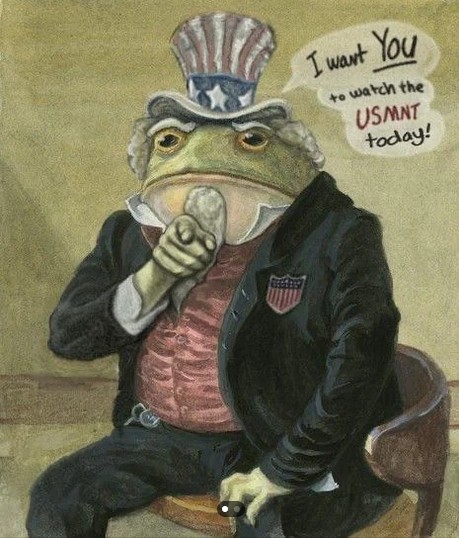
The World Cup has come and gone (congrats to Spain!) and one of the lingering talking points has been the Video Assistant Referee, aka VAR. VAR is soccer’s version of instant replay that started coming into use in the United States around the mid 1980s (first in the NFL). It was born of the fact that TV audiences (and now audiences on social media) could clearly see when referees made mistakes – surely there’s a way to prevent them in the first place, right?

Sadly, no. VAR, as with any instant replay system promises something – perfection – that no human being can produce. As a result, it’s really only shifted the focus of arguments about refereeing errors. Goodness knows, sports fans love nothing better than arguing and VAR provides plenty of grist for the mill.

This piece at The Ringer by Brian Phillips lays out a few of the most contentious talking points about VAR from the tournament. It highlights (1) Folarin Balogun’s red card during the US match against Bosnia-Herzegovina, which famously included political interference afterwards; (2) the chalking off of a second goal for Egypt against Argentina due to VAR finding an Egyptian foul in the buildup to the goal about 20 seconds earlier; and (3) the sending off of Swiss forward Breel Embolo for a second yellow for diving against Argentina. All this in service of an argument that VAR should simply be scrapped.

Of those, the strongest argument comes out of the Balogun red card. Phillips points out that the way VAR review works effectively leaves officials with a binary choice of keeping the call made on the field by the ref or taking a specific action VAR is entitled to take. In the Balogun example both the original call (no foul at all) and the VAR decision (red card to Balogun) were wrong – it was a foul, and probably a yellow card for Balogun. But because of the way VAR is setup that couldn’t be the final outcome, it was either one wrong call or another. Then, of course, there’s the Trump of it all, which as entirely separate discussion.

The other two, honestly, feel like working back from a result Phillips (and, to be fair, lots of others) just don’t like. Yes, that Egyptian goal was thrilling and it was 20 seconds or so after the foul in question, but the foul is what allowed the counterattack to happen in the first place. If finding the beginning of the “attacking phase of play” means anything it would encompass that. As for Embolo, while there’s a certain bit of the Balogun problem, as once VAR is involved one of two decisions has to be made, I don’t feel they’re both equally wrong (Embolo dove and got caught, already on a yellow card).

I’m not immune to Phillips’ ultimate argument. Certainly my wife is down for ditching VAR completely as the whole process drives her nuts. I will say that for the couple of years the Leeds were in the Championship, England’s second tier where VAR is not used, it was fun not to worry about it. You had to accept there would be wrong calls, obviously wrong in some cases, and just roll with it, though. They tend to balance out over the course of a 46-game season, but that can be hard to remember in the moment, and they may not balance at all in a 3-game group stage at a World Cup.

Ultimately, however, I don’t think getting rid of VAR is a realistic option. There’s simply too much money at stake these days. Imagine a final day six-pointer in the Premier League where whether a goal stands or not will decide which team loses out on millions of dollars the next season. Does anybody really want that? Isn’t there a way to make VAR work a little bit better if we’re going to be stuck with it?

I’ve got a few ideas.

Treat VAR Review Like En Banc Court Review

In my world, appeals in federal court are general decided by three-judge panels, regardless of how many judges actually sit in a particular Circuit Court. If a party doesn’t like the panel’s decision, they can seek review en banc, with the entire court all sitting and deciding the case. It’s rare, but when it happens the original panel decision basically ceases to exist, from a legal standpoint (it’s still in the reporters). The en banc court is not reviewing the panel decision itself, it’s resolving the same issues but on a clean slate.

What does this have to do with VAR? VAR is, effectively, a review of the referee’s decision and not, necessarily, what happened on the field leading up to it. Ultimately it’s not important whether the ref was “right” or “wrong,” what’s important is getting it right, so let’s start with the facts and not the ref’s decision. To that end . . .

Don’t Limit the Remedy

As Phillips points out, the current VAR scheme limits the remedy available during VAR review so that it often comes down to a choice between letting the on-field call stand or changing to a single, particular VAR-approved outcome. For a sport with so many judgement calls – the kind VAR can never solve – that’s a problem.

An American football example: Years ago I was watching a WVU game and, somewhere in the middle of the second quarter, the WVU ballcarrier either crossed the line for a first down or got very very close. It was only second down, so it hardly mattered, but a review was embarked upon. While they ran the footage of the ballcarrier’s knee touching the ground over and over, looking for the right spot, there was a clear foul in the background – an opposing player pulled a WVU player down by the facemask. Seeing that penalty and calling it would have made the minutiae of where the ball ended up moot (it was a first down regardless), but it wasn’t on the approved list of things instant replay could look at.

Once VAR review kicks off, the focus should be on getting it right, regardless of how that comes about. If it means it comes down to a choice between two clearly applicable options, so be it, but if some flexibility is required the process should allow for it. In the Embolo situation it would allow review to wipe away the original Argentine yellow card without necessarily resulting in a second yellow for Embolo. In legal terms, VAR should be about equity, not ticking procedural boxes.

Set a Time Limit

This, I think, is where lots of people get frustrated with the process. VAR (and every other instant replay system) was designed to deal with the “holy shit, how’d the ref miss that?!?” situations, not lead to extensive litigation over every potential minor mistake. To that end, put a clock on the VAR, whether it’s a minute or 30 seconds or whatever. If it can’t be resolved that quickly, it doesn’t need to be resolved.

Embrace Automated Tech Where Possible

Everybody loves goal-line technology. Apparently similar technology in tennis (which Phillips references) is fairly popular, too. Other similar technologies should be embraced wherever possible. At the World Cup a new semi-automated offside system was used and it was fantastic. People still quibble about what the tech measures (which is the fault of FIFA’s laws being written for an earlier age, not VAR) and there are times when there’s more in question than just where body parts are, but in terms of getting basic question right, it worked really well. More like that, please.

Revoke Article 27 and Fix It

Not a VAR issue, precisely, but so long as I’m venting.

Bad as the Balogun red card was, it should have ended with the game itself. Instead, there was political intervention and FIFA’s invocation of Article 27 of its Disciplinary Code, a loophole big enough to drive a two semis crawling slowly uphill through. It allows FIFA, with absolutely no guidance or standards whatsoever, to “decide to fully or partially suspend the implementation of a disciplinary measure.” It had already been utilized prior to the tournament to allow Cristiano Ronaldo to play the first couple of games (as well as some others), but the Balogun thing was particularly egregious.

But who can blame them? If you have the ability to revoke a punishment that’s unreviewable, why not use it to make sure marquee players are still in the tournament and your political friends are appeased? Article 27 needs revoked and replaced with a systemized scheme for reviewing disciplinary decisions (most leagues have them), with standards governing when to step in and suspend them. It will still not be great, but it will be a far sight better than what we’ve got now.

Recognize the Flaws in Human Endeavors

Anthony Taylor, a long-time ref in England’s top flight who had done some games in the World Cup, just announced his retirement. He did so noting that “the pressure is intense and the scrutiny is constant.” This from a man who, in an earlier life, had been a prison guard.

Did Taylor make mistakes over the years? I’m sure he’d agree he did. He’s only human, after all. Antonin Scalia famously wrote in a concurring opinion that “[l]ike other human institutions, courts and juries are not perfect” and you “cannot have a system of criminal punishment without accepting the possibility that someone will be punished mistakenly.” I think he’s right, although we draw widely differing conclusions based on that observation. Regardless, the same is true of any system of officiating a sport. If VAR ultimately promises perfection and can’t deliver on that, how can we expect it of any human being? Perfection in officiating is an illusion and will always be beyond our reach.

None of those are guarantees, of course, but I think they’d help make the VAR system better, which is all we can hope for at this point. But don’t worry – at no time in the future will the sport (or any other) reach the point where fans can’t argue about bad calls.
New Story: “OOPS Is Now In Effect”

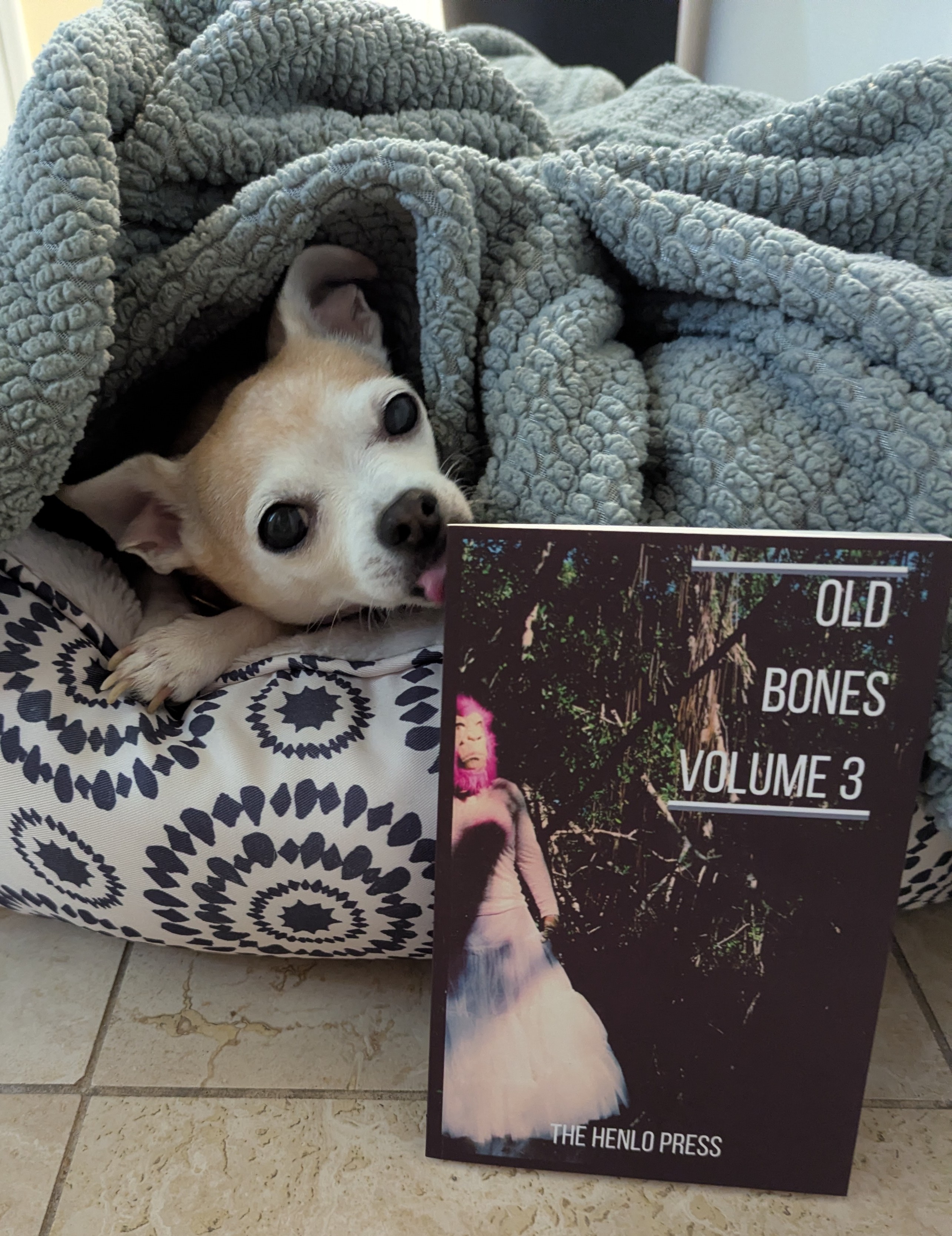
As I mentioned a while back, the latest volume of The Henlo Press’ journal, Old Bones, is out and I’m happy to say that it’s received the coveted Kalindi kiss of approval.

I’m also happy to say that it’s got a new story of mine, “OOPS Is Now In Effect.” It’s got a kind of funny background.

Some years ago, before the COVID lockdown made telework a regular feature of life, our office was required to have a plan to continue operations in case of some kind of catastrophic event made it impossible to get to our office in the courthouse. Such a contingency is not just theoretical, unfortunately. As a result, we came up with a Continuing Office Operations Plan, which was referred to as the COOP.

This amused me. Not the concept itself, but that someone had come up with the acronym COOP. It made me think of chickens, not catastrophes. And it was so close to OOPS. I mean, just move a letter around and it’s right there, right? Throw in the inherent surreality of doing table top exercises where we pretend the courthouse was destroyed or something (as if we wouldn’t have more pressing concerns) and it just all struck me as a little silly.

So I wrote down “OOPS Is Now In Effect” and a general idea about some plan for a contingency that would be a lot worse than anything that might happen to my office. The idea hung around for a while until this past year, when I finally fleshed it out for the latest volume of Old Bones.

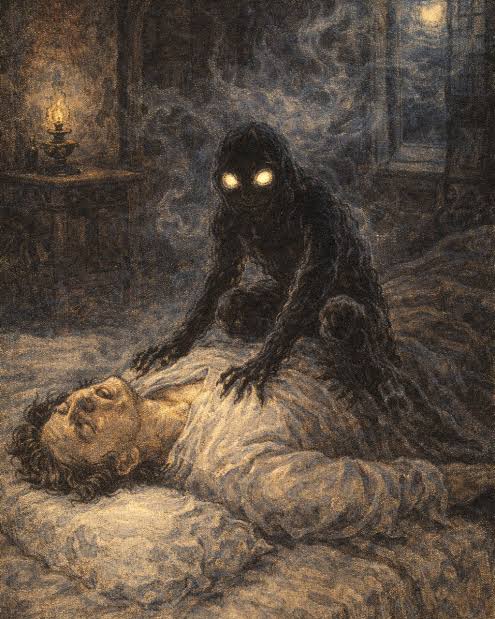
OOPS stands for “Ontological Operations Plan: Severe,” which is the kind of thing that might come in handy if you work in the Department of Metaphysical Insight within the Ministry of Transnational Affairs. Kevlin treated the massive OOPS manual the way most folks do various office manuals, with as little attention as possible.

Of course, shit goes down, and it’s down to Kevlin and an intern named Erin, who did the reading, to try and make it out alive. Here’s a taste:

It was mid-morning. Kevlin had just finished his coffee and was starting to think about lunch when the klaxon sounded.

An alarm had gone off on Kevlin’s very first day years ago, for the annual fire drill. That one had been a low but insistent hum he felt in his guts, less an urgent warning than a polite suggestion. After the fire drill was over someone told him that it led to less panic than the traditional blaring klaxons and flashing lights. Kevlin wasn’t so sure, if there was a real fire, he didn’t want to be a little bit panicked.

This one wasn’t a polite suggestion. It was loud and brassy, like a high school trumpeter was trying to show how loud he could play. The tones were long and even.

Blaaaaattttt. Blaaaaattttt. Blaaaaattttt.

Nonetheless, he remained calm, as this wasn’t the first time a klaxon like this had gone off. Typically it would go for a minute or two and then the soothing voice of the office AI would chime in and explain that the potential emergency had passed and there was no cause for concern. One time, of all things, there’d been a bomb scare, but it was resolved quickly and Kevlin hadn’t worried.

A minute passed, then two, with no letup in the noise.

Blaaaaattttt. Blaaaaattttt. Blaaaaattttt.

There was no reassurance from the AI. Kevlin’s palms started to sweat as his mouth went dry. He wished, not for the first time, that his office actually had a window in it. At least then he could break it and jump out. Sure, he was on the fourth floor, but it was better than just sitting here. He reached for his coffee mug, but it was empty. He stood up and was about to go get a drink and see what others were up to when the AI finally spoke up.

“Employees of the Ministry of Transrational Affairs,” it began in soothing, angelic tones. “There is no cause for alarm. The building has undergone an unexpected transdimensional shift which Advanced Studies is attempting to remedy. Until the matter is resolved, please implement Ontological Operations Plan: Severe. Thank you.”

“Ontological Operations Plan,” Kevlin said, terror rising in his throat. “That means OOPS.” He bolted through his office door and headed for the lobby. “Shit!”

Kevlin thought Metaphysical Oversight must have been designed by Deadalus, with a set of windowless offices in the middle of the floor, surrounding an open space that had been filled with cubicles. With walls high as a person, you couldn’t see in and it was easy to get lost in their labyrinthine environs. Out front was Donna’s post at reception, a small triangular room that opened into the building lobby. Kevlin had worked here long enough to know the way out without giving it much thought, which was good, since his brain was screaming in his head. His only thought was to get out of here now, regardless of the cost. The high walls of the cubicles made it impossible to see whether anyone else was still there. Surely they were in reception, funneling out the front doors and to the stairs.

Blaaaaattttt. Blaaaaattttt. Blaaaaattttt.

He turned the corner and came to a stop so fast he almost fell over his feet. There was no reception. Where the desk and the doors and the chairs for visitors were supposed to be, there was nothing except inky black void. It wasn’t like space. There weren’t any stars, nothing that in any way suggested the night sky. There was no Donna. Instead it was a complete absence of light, like the event horizon of a black hole.

Kevlin backpedaled so fast that he tripped and fell onto his ass, hard, cursing at the top of his lungs.

Behind him there was a voice. “Kevlin?”

He turned. Erin was peeking around the doorframe of an office, clearly on her hands and knees. She gestured frantically. “Get over here!”

For the rest of that story, and more great stories and such, get your copy of Old Bones Volume 3 here or here or here or follow them on Facebook to see if they’ll be at a book festival near you (they almost certainly will).

Updates

I’ve not been very good on keep up with the blogging this year – it’s already been a long summer! I wanted to break cover and provide a few updates (most good, one sad) before easing into the World Cup for the next few weeks.

Since I last did one of these in February the slow progress of The Fall continues. We’re to the point that my writers group has only one more round to go with it (the final chapter and epilogues – yes, multiples!) so it should be good to go for a final revision by the time the World Cup is over. 2027 release is still the plan, although I’m not sure precisely how I’m going to do it yet.

As promised, I have started on the next book in the Paranormal Appalachia series. It’s still inspired by the tale of the Greenbrier Ghost and still doesn’t have a title, but it’s got near 13k words and a lot of character details waiting to be worked in. Among other things, in this one Ben gets a love interest – who you’ve met if you’ve read “A Pool of Tears” in the Lesser Cryptids of Appalachia anthology from Brood XIV Books.

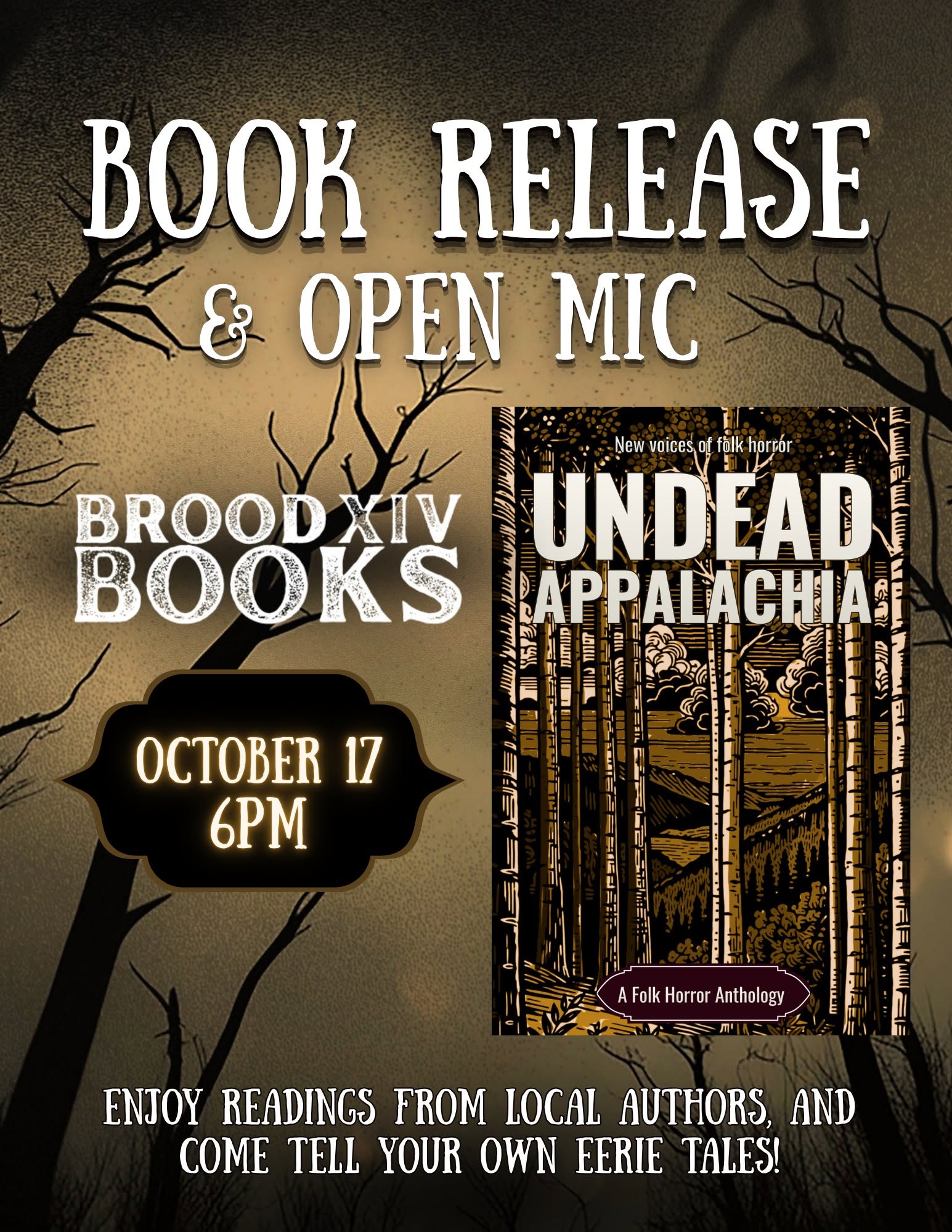
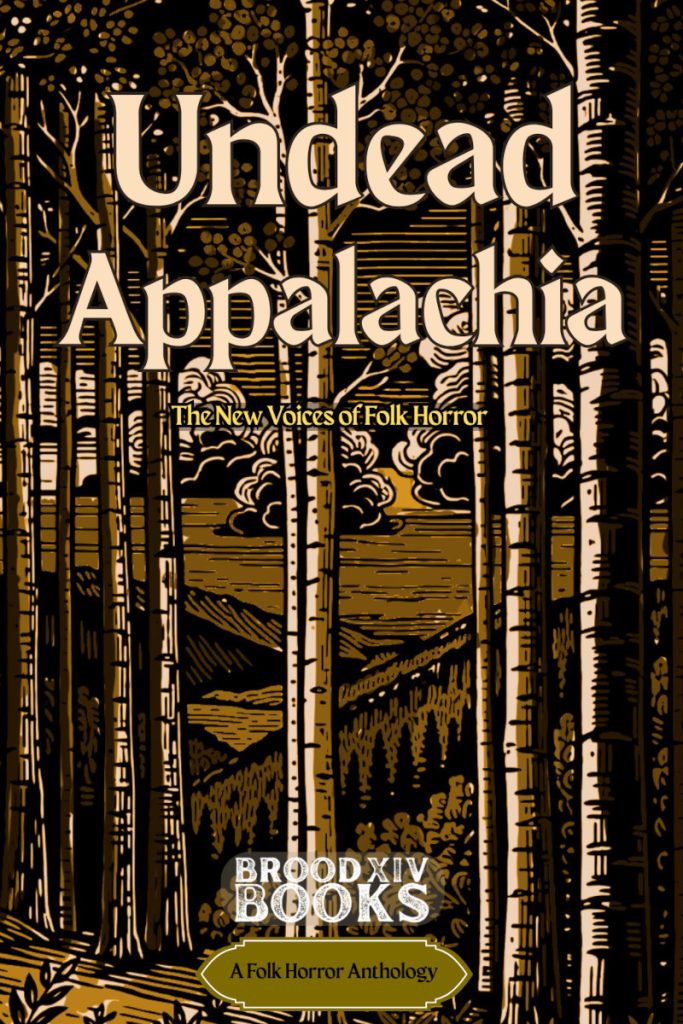
Speaking of the fine folks at Brood XIV, they’ve got another anthology on the way, Undead Appalachia.

I took a break from the new Ben Potter book to write a story for it, “The Breaker Boy.” It’s set in a West Virginia coal town after the end of World War I and was inspired by the lietuvēns, a being from Latvian folklore that is the spirit of a dead child. Eagle-eyed readers will notice some familiar place names from Moore Hollow, although the story is not, technically, a Paranormal Appalachia story. More as the we get closer to the release of the anthology.

Finally, on the writing front, the folks at The Henlo Press are readying their third volume of their journal, Old Bones, for publication. I’m happy to say this one will have another one of my stories, “OOPS Is In Effect.” It’s more of a science-fantasy kind of story, inspired, amazingly enough, by bureaucracy at work. As with “The Breaker Boy,” more details when it’s published.

On a sadder note, I’ve occasionally talked about our dogs, which my back-of-the-book bio calls the “two cutest Chihuahuas the world has ever seen.” I even wrote way back in 2018 about how they refused to wear clothes. Well, a couple of weeks back, one of them – Zaria, the younger of the two, left us. She was sweet, silly, and snuggly and we’ll miss her a great deal.

That said, onto the World Cup – see you after!

Thoughts on Rewatching “L.A. Confidential”

Recently, the Rewatchables podcast covered L.A. Confidential, one of my favorites

In that episode they discussed the two failed attempts to build a network TV show out from the movie (which seems like a fool’s errand). The second of those, which only made it so far as a pilot, starred (among others) Walton Goggins as Sgt. Jack Vincennes, the role played by Kevin Spacey (I know) in the movie. I told my wife about this, as she’s a big Goggins fan, and she looked at me puzzled and said that she’d never seen L.A. Confidential.

Naturally, I had to remedy this! A good excuse to revisit a great movie and see if there was anything new to take away from it. Turns out, there was.

Very briefly, L.A. Confidential is the story of three cops in 1950s Los Angeles trying to solve a grizzly mass murder that arises in the wake of a power vacuum in the city’s organized crime ranks. There’s Bud White (Russell Crowe), who’s spun up by abusers of women and used as dumb muscle by superiors. There’s Edmund Exley (Guy Pearce), the political animal “college boy” who has ideals of what the “new” LAPD could be. Then there’s Vincennes, kind of a celebrity cop who works as a consultant on a “Dragnet”-style TV show and has a profitable relationship with the purveyor of one of the local tabloids. They’re all drawn together by a massacre that’s initially written off as the work of young (black) hoods, but winds up going straight to the rot of the city.

What particularly stood out to me this time were the scenes where the three cops talk about why they wanted to become cops.

White’s is a post-coital conversation with Lynn (Oscar-winner Kim Basinger), a high-class call girl who’s boss is definitely involved the city’s corruption, when she asks about a scar on his shoulder. White explains that he got it from his father, when White tried to intervene and stop him from beating on his mother. White’s father tied him to a radiator and beat his mother to death in front of him and then escaped. When Lynn asks if he became a cop to “get even,” White says “maybe” and then that he “used to” like it.

For Exley, it comes during a conversation with Vincennes. He tells the story of how his father (also a cop) was shot and the perpetrator never caught. Exley dubbed the guy “Rollo Tomasi,” just to give a name to the people who get away with it. He wanted to be a cop to go after the people who think they can get away with it (notably, this comes after telling a reporter earlier that it was to “help people”). Exley then asks Vincennes why he wanted to be a cop.

Vincennes – aka “Hollywood Jack” – says he can’t remember anymore.

As a public defender I’m awfully cynical about cops. I see too much bad behavior that goes not just unpunished but rewarded. But it’s worth remembering that all but the worst power trippers in uniform probably got there for noble motives – wanting to help people, protect the vulnerable, and do justice. But even the best intentions don’t mesh well with a system that’s all about the accretion and deployment of power and authority over others.

Not for nothing do none of the three main cops come out of L.A. Confidential in great shape. Vincennes is killed, straight up, by the crooked police captain. White is reduced to a mute, broken man with no future in policing. Even Exley, while he comes out of the whole thing with another promotion where he might actually do some good in the department had to extrajudicially kill the crooked captain to get there (the same one who earlier had chided Exley for not being capable of doing “the right thing” when it came to it).

My wife asked, after the movie was over, how I could like a movie so much that was, after all, about crooked cops. I think the answer is that the movie doesn’t valorize them and it shows the destructive power of a corrupt system that people enter into even with the best of intentions. The moral shouldn’t be that, in the end, Exley did what he had to regardless of the rules. It should be about the toll it took on his soul, his humanity, and his values in the process.

That’s the thing about great movies – you find interesting new ways to think about them with every viewing. Plus, this makes me laugh every time:

On Confronting Expectations

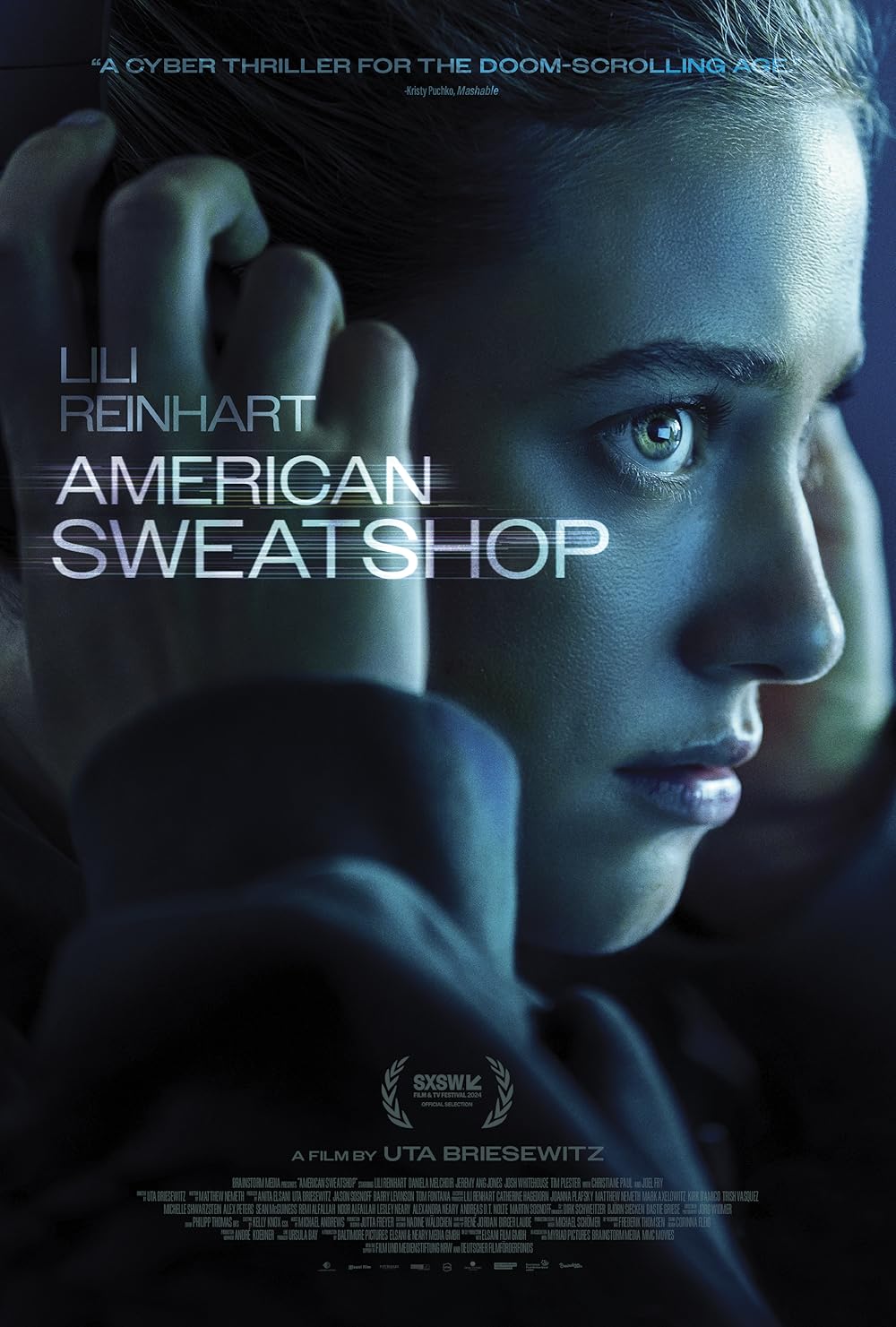
NOTE: I’m not normally one to warn about spoilers, but this post will talk about the nitty gritty of the movie American Sweatshop as well as my first novel, Moore Hollow. It’s nearly ten years old now and I like to think it’s worth a read even if it’s been “spoiled,” but if you’ve not read it and want to be surprised, go do it now (watch American Sweatshop while you’re at it – it’s pretty good) and then come back to this. Ready? Let’s begin!

You pick up a book. The cover is a lush painting of a rural scene. There are a couple of horses, in full saddle. The “people” you see really aren’t – one’s an elf, another an oversized ogre type being. The one actual person has tall hat on that just screams “wizard!”

You’d probably expect that book to be some kind of high fantasy story, probably involving a quest of some kind. The appearance of non-humans indicate a depth of world building that will include countless races and fantastic creatures. Adventure awaits!

Except the book isn’t anything like that. The cover represents a painting that is the subject of the story, which is really about the relationship between the painter and his grandson and how they bridge the generations to find love, meaning and understanding. No big battles or nifty spells or sword wielding included.

Now, this might be the best book that’s ever been written on the subject – or at all! – but you’re likely to be disappointed. Not because it’s a bad book, but because it’s not the kind of book you expected it to be. Expectations can sometimes poison a reader or viewer and create a boundary between them and the work as it actually is. They can be tricky things.

Take American Sweatshop, for example.

It’s a movie about Daisy, who works for a YouTube-style social media company as a content moderator. In other words, she watches loads of videos all day to see whether they should be blocked or, perhaps, reported to authorities. This is still a real thing, even in the age of AI. Naturally, Daisy comes across a video that appears to show a woman being killed.

This sounds like the setup for a taught thriller or horror movie – indeed, it is, to my understanding, precisely the setup for the remake/sequel/whatever to Faces of Death that just came out. The kind of thing that goes all noir as Daisy descends into the darker corners of the world in pursuit of justice for the potential murder victim.

But it isn’t that kind of movie, for the most part (it is a little confused, which is its biggest flaw). Rather, while Daisy does try to track down who made the video and determine whether it was even real, it’s less about that drive for justice/vengeance than it is on what the investigation does to Daisy’s psyche. Along the way we see how others doing the same job are coping (or not) with their particular stressors and how the company tries to help (not well!). The result is more psychological drama with a hint of satire than thriller.

For some people, that simply didn’t work. The currently solitary review of the movie on Rate Your Music (2/5 stars) starts that the “trailer was so good” but concludes: “I expected a thriller but I got something more like a video HR will show you.”

The issue, of course, is that you need to advertise your movie and in doing so the things you put out in the world – the poster, the tagline, whatever – creates expectations as a means to find an audience. People might watch a thriller with this setup who would never watch a documentary covering the same ground.

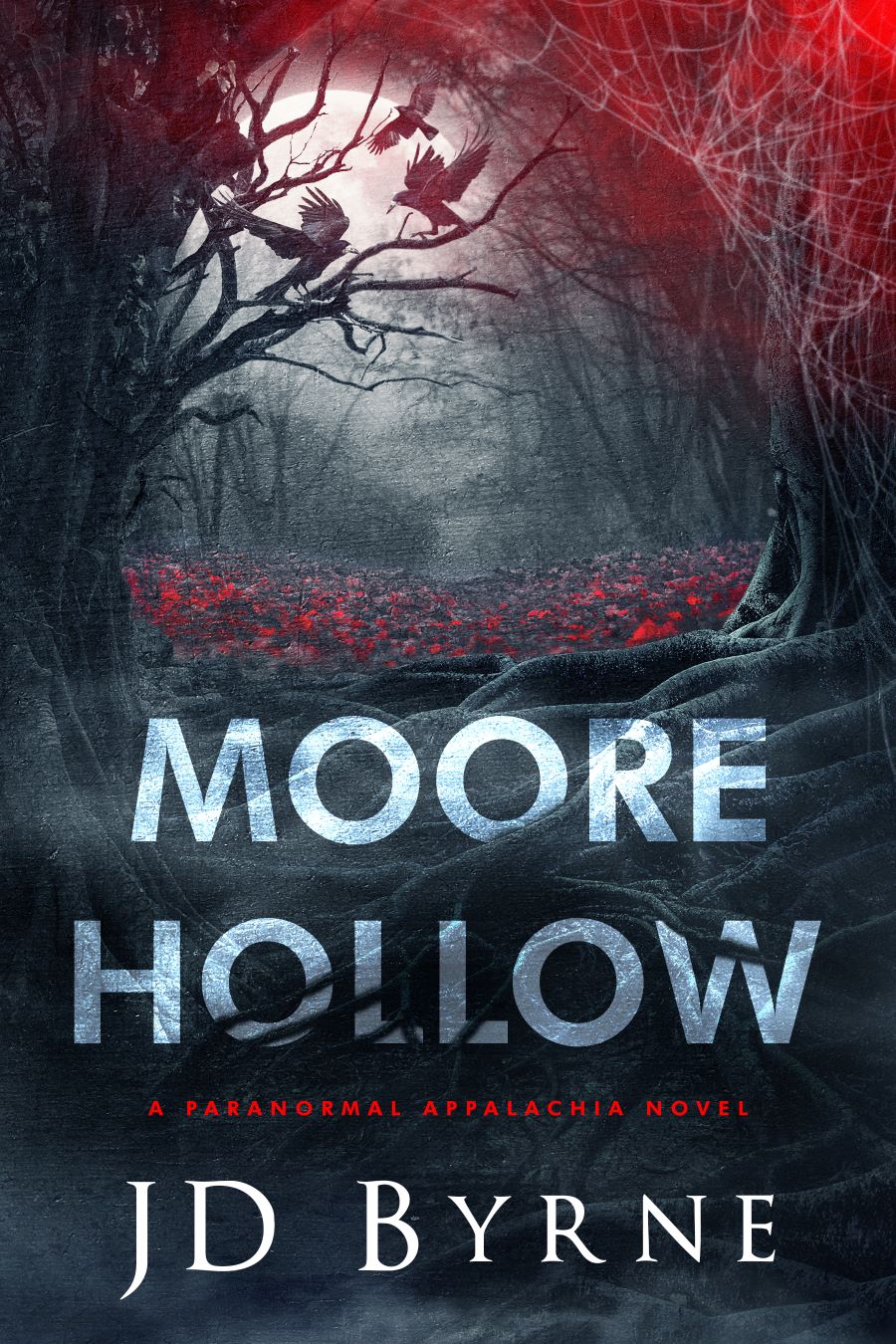
I know this from my first novel, Moore Hollow.

It has hints that it’s a certain kind of story. That it’s part of the Appalachian Paranormal series says something. So does that cover. Turn the book over the blurb had the “z word” in it – zombies! So it’s one of those kinds of stories, right?

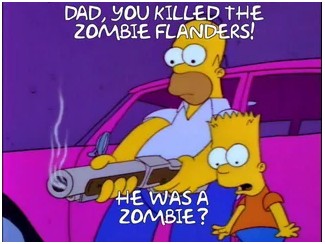
Except it’s not. The zombies in Moore Hollow aren’t the typical monsters of Night of the Living Dead(which are peculiar in their own right) or The Walking Dead. In other words, it’s not this kind of story:

Rather, it’s a story where the zombies are poor creatures to be pitied and protected from the outside world, not monsters that need killing. The conflict derives from Ben Potter coming to West Virginia to find proof that these zombies exist and deciding whether he’s going to tell the world about them (to his professional and familial benefit) or keep the secret of their existence and continue his fairly miserable life.

This has led to some interesting conversations with potential readers. If they’re “oh, sweet, zombies!” I have to try and talk them down a bit, temper expectations. If they’re more like, “oh, I don’t do zombies,” then I can try to convince them it’s really not the kind of book. I don’t want people to come into the book expecting one thing and getting another and disliking it for that reason. It can make marketing kind of tricky.

The paradox is that most artists, I think, want people to engage with their work with an open mind, on its own terms. “Don’t judge a book by its cover” and all that, right? But the truth is people do judge based on covers and part of getting people to read a book or watch a movie is to convince them it’s something they want to read or see in the first place.

There are people unsatisfied with season two of The Pitt because it lacked the single, huge, trauma even of season one’s mass shooting. I’ve seen people who watched all of DTF St. Louis only to be disappointed that it was never really a murder whodunnit in the first place. Expectations, again, getting in the way of engagement.

The goal is to find the fine line that entices without promising too much, so when they get to the end they don’t feel they’ve been cheated out of something. I’m not sure where that line is, precisely, but if I figure it out I might become a rich man.

Come See Me! Hear Me Read!

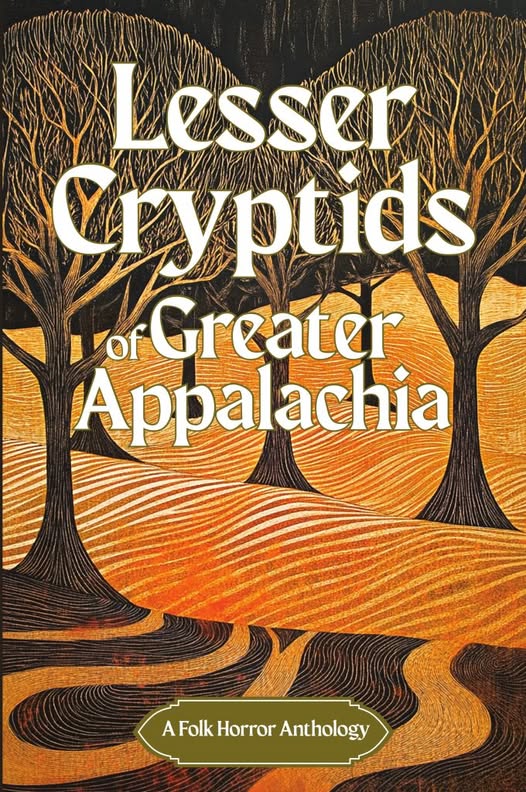
Remember a few weeks ago when I mentioned that I had a new story, “A Pool of Tears,” in a new locally-published anthology, Lesser Cryptids of Appalachia?

Well, guess what? The folks at Cicada Books & Coffee, the brains behind Brood XIV Books, are hosting a book launch/community event to celebrate the release of the book. It’s March 12 from 5-7 pm at Cicada in Huntington, West Virginia.

I’ll be there, along with some of the other authors featured in the anthology. I’ll be reading something, probably “A Pool of Tears” (or at least part of it), but who knows? You’ll have to show up and find out.

See you there!

A Writing Update

Now that 2026 is in full swing and we’ve thawed out here in West Virginia, I thought it would make sense to bring everybody up to speed on my writing life these days.

First, of course, there’s the new story in the Lesser Cryptids of Appalachia anthology, which you can read more about here.

Second, I’m still working on getting The Fall whipped into shape. It’s going through my writers’ group right now, which will take another few months (we take turns doing chunks of everybody’s project). My hope is that it’s through that process and ready to be put into final form by the end of the year. Here’s hoping for a 2027 release. I’m excited for everybody to see it.

Finally, I’m happy to announce that I’ve started working, in earnest, on book three of the Paranormal Appalachia series. In this yet-untitled book Ben Potter has to confront his unusually deep feelings about ghosts. And maybe find love. The inspiration for the story is the tale of the Greenbrier Ghost, about which I’ll say more later.

Of course, I’ll endeavor to keep updating the blog here weekly (I do have a few other things lined up to talk about), but if I miss a week, now you know why!

Thoughts on Character “Arcs”

As I mentioned last month, one of my favorite TV shows from last year was Pluribus, from Breaking Bad/Better Call Saul creator Vince Gilligan.

Rhea Seahorn (also of Better Call Saul) stars as Carol, a best-selling but unfulfilled romantacy author who turns out to be one of about a dozen people in the world who can resist an alien virus-type-device that transforms the rest of Earth’s population into a gigantic hive mind. Some people also can’t survive the transformation process, including Carol’s wife.

None of this can constitute spoilers, by the way – it all happens in the first episode. Some of what I talk about below falls into that category, however, if you care about those kinds of things.

So Carol begins the story not just literally cut off from what is now the human experience but in grief. She’s angry about what she’s lost personally and acts on that anger. She’s not, at this point, all that tuned in to what it might mean for humanity to be a big hive mind (good or bad). Carol’s pain and anger is personal, small, and, in some ways, petty.

To her surprise, this puts Carol at odds with the rest of the dozen or so folks who haven’t been absorbed yet. While she’s pushing for fighting back, they’re largely OK with it. Not for nothing do they have connections to this new hive mind, in the form of loved ones or friends who are part of it (or are they?). Carol is all alone and that loneliness is what largely drives her.

This does start to change about midway through the season. She accepts the help that the hivemind can offer (there’s a fabulous scene where a wave of drones show up to restock a Whole Foods just so she can go shopping). She accepts the presence of a companion, a woman sent to her by the hive mind because she resembles the hero from Carol’s books (the version she always wanted to write, anyway). There’s even a kind of romantic connection that develops. None of this suggests that Carol has fundamentally changed who she is or what she thinks about the hivemind, but she’s learning to live with it.

Things come to a head when Manousos, another of the unabsorbed who had locked himself away in Paraguay, makes the long trek to New Mexico to find Carol, whose early radio pleas for help indicate she’s a kindred spirit. Always more radical than Carol, he’s chagrined to learn, when he shows up, that she appears to have lost whatever fighting spirit she once had. When he starts trying various ways to injure hivemind members (and perhaps restore their individuality) she objects.

Yet, that’s not where the end of the first season leaves us. Manousos stays in New Mexico while Carol and her companion jaunt around the world, the kind of bucket-list vacation you’ll never get to take in real life. It’s during that that she learns that the hivemind’s ultimate goal of assimilating her (along with the others) could be done without her consent. This snaps Carol out of it and she returns to the Albuquerque cul-de-sac and Manousos just in time for a crate containing an atomic bomb to be delivered. End season one.

So, in a way, Carol ends the season just where she began – committed to acting against the hivemind and, maybe, saving humanity. I saw a lot of complaints online after the season finale to the effect of “she’s the same she was from the beginning, what was the point?” It made me chuckle, since that seems to miss the entire point of the season.

To a certain extent a season of TV, or a book, is a journey you send characters on. In many instances you’re literally getting them from Point A to Point B, whether those are actual physical locations (a quest from home to a far away land) or something internal (an emotionally wounded person learning to love, etc.). But sometimes, the journey looks like it brings the character back to where they began, only the character has changed.

I hate to fall back on cliche, but sometimes the journey itself is more important than the destination. While end-of-season Carol seems like she’s basically in the same place as start-of-season Carol – s resist the hivemind! – she’s there for a different reason. Earlier Carol was reacting largely from ignorance. She wasn’t interested in listening to the few other people in her situation about whether the hivemind was good and, perhaps, worth joining voluntarily. End-of-season Carol has some perspective one what the hivemind can offer, albeit a limited one.

Carol, as a person, has grown over the course of the season. She went from essentially lashing out from pain and grief to finding a resolve to fight because of what joining the hivemind would mean to her. So while her ultimate goal appears to be the same now as at the beginning, the motivation is different. That matters, at least in fiction.

That will probably not content those who didn’t enjoy the first season of Pluribus. It was definitely a slow burn (probably helped that we binged it at the end of the season), but it was going somewhere and it was important that Carol get there. Does that make for a compelling season of TV? Not for everybody, but I was definitely down for it.

Thoughts on (Fictional) Nuclear Apocalypses

I’m a child of the 1980s. By the time Ronald Reagan took office I was old enough to be aware of the wider world. That included the Cold War and the fact that there was a looming threat of nuclear annihilation hanging over our heads. That’s a lot to handle for a ten-year old.

Thankfully, I had my (decade) older brother, Todd, to put it in perspective. He assured me there was no point in worrying because there was nothing we could do about it, anyway. Beyond that, where I grew up in South Charleston, West Virginia, was a hotbed of the chemical industry and was likely a first-strike target. If the Soviets loosed the dogs of war, my brother said, we’d be vaporized in an instant, with no pain or worry about how to survive.

Once the Berlin Wall came down and the Soviet Union fell apart the specter of superpower-led nuclear annihilation faded in the face of terror attacks and climate change. But the potential for nuclear apocalypse is still with us and fiction (in its various forms) is still trying to deal with it. What’s so utterly fascinating – or depressing – is how similarly the topic has been treated over the years.

I fell down this rabbit hole last fall, starting when I saw A House of Dynamite, the latest film from Kathryn Bigelow.

It’s about a sudden, unexpected launch of an ICBM from the Pacific which, initially, everyone figures is just another test that will eventually fall into the ocean. It doesn’t take long, however, for the math to show that it’s headed for the Midwest and, more specifically, Chicago. Over the course of three 17-minute loops we see people on various levels trying to deal. An attempted shootdown fails, leaving the president with a decision about retaliation. But against who? And how much?

Watching A House of Dynamite brings out some sickening déjà vu if you’ve consumed almost any nuclear fiction in the past. Inevitably, we hurtle toward the only response that ever seems to be an option – full retaliation, because if we don’t we might not get a chance to do it later (and the American people, what’s left of the, wouldn’t tolerate that).

A House of Dynamite feels like it’s in conversation with some earlier movies, even if only subconsciously. The one that immediately sprang to mine for me, and which I rewatched immediately afterward, was 1983’s  WarGames.

The first loop in A House of Dynamite takes place in the White House situation room, which has a wall full of monitors displaying data. The pivotal scene in WarGames takes place deep inside the mountain headquarters of NORAD, which has an even more immense wall of monitors.

Our characters are all locked in there because the computer that controls the United States’ nuclear arsenal (installed after actual humans failed to launch missiles during an exercise) tries to launch a retaliation for a Soviet attack that is, in fact, just a simulation. In order to teach the computer the error of its ways, it’s forced to play Tic-Tac-Toe against itself to discover the concept of futility. Then it switches to running through scenario after scenario for nuclear war, all of which lead to the same end – complete destruction. Disaster is averted when the computer, famously, realizes:

The tie in with A House of Dynamite, for me, is that regardless of which “variant” the computer entertains – from all-out initial attack to “minor” exchanges by smaller countries – the result is the same: everybody throws everything they have at each other. There is, it appears, only one end point to any nuclear exchange.

In that sense, the other movie I immediately thought of, Fail Safe, actually has a happy ending!

I actually read the 1962 book Fail-Safe before rewatching the 1964 movie and, I have to say, this is one of those situations where the movie greatly improves on the book. Fail-Safe, like many of these movies and books, has a great ticking clock creating dramatic tension. The book wastes too much time getting there, while the movie is much more efficient.

“There,” in this case, is a mistake involving “fail-safe points” used by the United States Air Force. American bombers would fly toward those points, waiting for a recall notice that would turn them around. Without the notice, they go on to hit their targets in the Soviet Union. Most importantly, they ignore any attempts to turn them around. Due to some kind of glitch (the book and movie differ on precisely what) one squadron doesn’t get the recall notice and heads for Moscow.

What follows is a very tense unravelling of expected behavior. Trying to stave off starting a nuclear war, the Americans help the Soviets try to shoot down the bombers, but one still makes it through. Meanwhile, a debate rages in the United States about what to make of all this and whether it could be an opportunity to strike the Soviets for real (a theory pushed in the movie by . . . Walter Matthau?!). In the end, the president comes up with a horrible bargain – once the American bombers hit Moscow, another American bomber will drop the same bombs on New York City. An eye for an eye, essentially. The movie ends in pretty chilling fashion.

But, as I said, this is actually a happy ending! Rather than falling into complete catastrophe, the higher ups in the United States and Soviet Union manage to at least limit the damage and prevent an all-out nuclear war. Regardless, the message of the book and movie are clear – we don’t have a good grasp on nuclear weapons and how they might get used by mistake and what that means for the world. I’ll add that the attempt by some to avoid responsibility for all this by blaming the machines sounds very loudly in the modern AI-besotted world.

Compare that to, say, 1964’s Dr. Strangelove or: How I Learned to Stop Worrying and Love the Bomb, which shares a lot of plot scaffolding with Fail Safe (to the point there was litigation about it). Strangelove offers no hope whatsoever – not only is there nothing you, personally, can do to stop a nuclear apocalypse, the people that could do something are venal idiots that are likely to fuck things up in the end. In Strangelove’s world the only thing left to do is laugh (and crank up the Vera Lynn – anybody remember her?).

What all these works share, however, is a focus primarily on those people making the decisions. A House of Dynamite’s three loops work steadily up the chain, from information gatherers to experts to political end decision makers, but these are all still people whose jobs are to deal with the possibility of nuclear war. Given that I’m not sure what it says that, in all of them, the nuclear wars never start (or almost start) on purpose. It’s always an accident or someone else’s fault. As Men At Work sang, it’s a mistake.

That’s not the case when the focus is on regular folks dealing with the impact of a nuclear attack.

Growing up, the most famous version of that story was The Day After a 1983 made-for-TV movie (directed by Nicholas Meyer, fresh off Wrath of Kahn) that depicted a nuclear attack on the United State through the eyes of regular folks in Kansas and Missouri (what’s the hard on for nuking the American Midwest?). I don’t remember the actual movie itself, but I do remember the fallout (so to speak) from its broadcast. It hit pretty hard, even getting to Reagan.

Years later, I heard about the “British version” of that movie, called Threads. It has an epic reputation that’s on par with Magma albums or aggressive art installations. I figured this was a good time to check it out.

Threads stands in Sheffield for the American Midwest, but more importantly it depicts a population that has no plausible connection to their fate. The Americans in The Day After, theoretically, had a say in who ran the country and built up the nuclear arsenal that was unleashed. A strong theme of Threads is that the citizens of Sheffield were likely to be atomized in a conflict in which they had no part to play, aside from radioactive cannon fodder.

For that reason it’s, truthfully, the first third or so of Threads that really worked best for me. The way it portrays society starting to fray at the mere possibility of the bombs dropping (we learn, entirely from news reports, that the Soviets invaded Iran and the United States is pushing back) is entirely too realistic. Police crack down on protestors, some people just don’t want to think about it, others are obsessed. It feels very real and human. The stuff after the bombs drop, by contrast, is horrifying and depressing but also completely one note. There’s no humanity left in the aftermath, which might be realistic but feels too pessimistic even for my cynical heart. That said, had to have a lot of puppy therapy after Threads.

Even worse, maybe, in its own way, was On the Beach.

I read the 1957 book by Nevil Shute, forsaking the movie version starring (among others) Gregory Peck and Fred Astaire, which just doesn’t seem like his kind of movie. Set in Australia, it’s the story of several people – all connected to  a US naval officer and his Australian liaison – riding out a nuclear exchange and waiting for the fallout to slide far enough south that it kills them. As in some of the WarGames scenarios that flash on the screen, this war started small but bloomed into a world-engulfing conflagration. But, as with Threads, it had little if anything to do with the Australians who make up most of the cast.

The driving force of On the Beach is fatalism. This is a story of people who are waiting to die, not trying to figure out how to survive what’s coming. Nobody mentions a shelter, nobody works on how to live with fallout. The most you get is a futile submarine voyage that confirms that everybody else on the planet is dead.

And everybody is fairly stoic about it. There are various forms of denial, sure, but nobody decides to go indulge in any horrific or taboo conduct now that the end of days are on the horizon. One character (the one played by Astaire in the movie) manages to get his hands on a Ferrari F1 car and enters it in the most ghoulish motor race ever put to the page (makes 1955 at Le Mans seem tame), but that’s about it. Mostly, everybody kills themselves once the fallout starts to settle in.

So, yeah, not the most uplifting of reads. But I think it definitely captured a feeling of the time, one that people probably didn’t want to think about too much.

To round things up, a shoutout to a recent American Experience documentary, Bombshell.

Not fiction, but about fiction – specifically, the propaganda efforts around the development and deployment of the atomic bombs against Japan. Covering only up to about 1948, it shows how even from the dawn of the nuclear age there have been stories told about it, outright fictions (largely, attempting to cover up the effects of fallout after the bombing of Japan). There’s always a narrative, somewhere, that somebody has to sell.

Where does that leave us in 2026? Fuck if I know. What nuclear fiction has taught me is that we’re likely to blunder into something awful and be unable to contain it. And that for all the decades we’ve lived with these weapons, we still don’t really know what to do with them. Which is terrifying. In which case, we’re right back where I was in the 1980s listening to my brother – ain’t nothing we can really do about it and hope one hits nearby and puts us out of our misery.