What Does “Being a Democracy” Mean, Anyway?

We tend to think of types of governments in stark terms. A democracy means a nation run by the consent of the governed, right? But how does that work in the real world?

David Frum had a column in The Atlantic recently wondering what the world might have been like had the Allies lost World War I. It’s less an interesting experiment in alternate history than another facile argument for further American intervention in the Middle East, but he does kind of stumble into an interesting question when he unpacks Woodrow Wilson’s claim that the “world must be made safe for democracy”:

Not ‘democratic’ – ‘safe for democracy.’ Wilson wasn’t promising to impose democracy on Imperial Germany. He was promising to defend democracy from Imperial Germany. The First World War had not begun as a conflict between democracy and authoritarianism. Great Britain was not a democracy in August 1914. Tsarist Russia certainly was not. Ditto Japan, Italy, and Romania—all fought for the Entente, none had governments elected by more than a small fraction of the population. Even in France, the most democratic of the original Allies, elected leaders did not fully control the government (never mind that the Third Republic ruled over a vast colonial empire and denied the vote to women).

Of course, that description is equally true of the United States at the time, which disenfranchised most folks that were adult white men. Nonetheless, if someone’s voting on who runs the place, isn’t that democracy? It’s a far sight more democratic than a monarch who rules because God says so (or “some watery tart lobbed a sword at you”) or a dictator who holds power by sheer force. What’s the tipping point?

And if there is a tipping point, do any modern societies actually meet it? After all, “universal” suffrage isn’t truly universal. Most countries, at least, restrict the franchise to citizens and to those of a certain age. But the young and the alien (assume, for purposes of this argument, legal and fully documented) are subject to the authority of the government just as much as anybody else – does cutting them out of things make the system less “democratic?” What then of places where felons or the mentally infirm are banned from voting, sometimes for life?

Beyond those restrictions there’s the very real question of apathy. If, as Frum posits, most of our allies in World War I weren’t democracies because only a “small fraction” of the population could vote, what of when only a small fraction of eligible voters actually bother to participate? Only 58.2% of eligible voters cast ballots in the last US presidential election. Put another way, just over 129 million people cast votes – in a country with a population north of 320 million. When only 40% of the governed people vote, is that really a “democracy” under Frum’s test?

And that’s just the presidential election, which tends to attract higher turnouts. What percentage of the governed populace is actually voting in races further down the ballot? As a for instance, 453,659 West Virginians voted in the 2014 election that sent Shelly Moore Capito to the US Senate, out of a population of over 1.8 million. In other words, about a quarter of the state’s population voted in that election. Is that truly “democratic”?

Obviously, a lot of this is pure semantics and the political science equivalent of figuring out the right dance steps for angels on pin heads, but there’s more to it than that. We often do our worst when we’re motivated by the mythology we’ve built around ourselves. Confronting reality might make us think twice about going off half-cocked on various crusades.

In other words, if we’re going to lecture the rest of the world about the values of democracy, we better damned well make sure we’re practicing them ourselves.

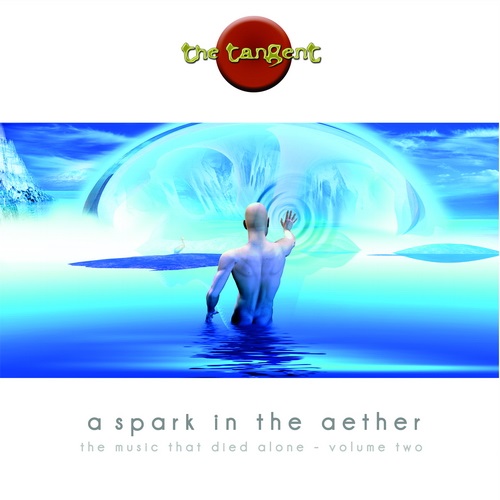
Weekly Listen: A Spark In the Aether

The subtitle for The Tangent’s latest album – it’s eighth – is “The Music That Died Alone Volume 2,” referencing the title of the band’s debut. Of course, the music it’s talking about – progressive rock – has never died, even if it did (to paraphrase Frank Zappa) “smell funny” for a while. But it’s thriving today, if not commercially than artistically. That’s due, in no small part, to The Tangent.

As the name suggests, The Tangent grew out of what was supposed to be solo project by keyboardist Andy Tillison. It grew into a real band for a few albums and has since morphed into a kind of revolving cast of players carrying on the band’s proggy project. Tillison is the central character (duties having expanded at times to include lead vocals and guitar), driving The Tangent on with his desire to bring fresh slabs of classic prog to the 21st Century.

Tillison’s never been coy about this. The first album uses a Hatfield and the North song (incorrectly titled, but whatever) in the middle of an epic. A Place in the Queue has a liner notes directing unsuspecting young readers toward Tales from Topographic Oceans (the prog equivalent to luring children into your van with candy). Hell, he even wrote a novella to go along with Not As Good As the Book which involves a far flung future and, naturally, Yes. Tillison is prog down to his bones.

On A Spark In the Aether, he lets it all out. Not only musically, but lyrically as well. Witness the epic “Codpieces and Capes,” which takes on the general slagging that prog has taken from the music press, concluding that those who fobbed it off as pretension were “so wrong” (but, in a bit of humor, “they were probably right about the rug.”). That being said, the album covers lots of ground, from the rocking title track, to jazzy ambience, and even some funky bits here and there.

The centerpiece of this album, however, is “The Celluloid Road,” which is a view of modern American through the lens of someone who’s never actually set foot here (although that doesn’t accurately describe Tillison). In other words, it’s less about how we actually are than how we project ourselves to be to the rest of the world via film and TV. It’s always interesting to hear how the rest of the world views us. In this case, it’s how the rest of the world views the way we view ourselves. It’s both amusing and a little disheartening. Said funky bits show up here in the “San Francisco” section (which mostly deals with it being destroyed in various movies – and this was written before San Andreas!).

This isn’t a Tangent masterpiece, but I’m enjoying it a lot more than Le Sacre du Trevail, which I found to be really dire and depressing. There’s nothing wrong with a bit of fun. So come on in and prog your brains out. Don’t forget to bring your cape!

TTiStif

Pulling a Town Out of Thin Air

Getting Moore Hollow ready for publication this fall made me think back to this piece from my old blog. Moore Hollow is set in West Virginia, but not in any place that actually exists on the map. Jenkinsville and Vandalia County were pulled straight from the ether. Maybe that’ll change someday.

One of the cool things about writing fiction is you get to make up stuff as you go along (it’s sort of the nature of the game).  Not just characters and what they do but, often just as important, where they do it.  You can build entire worlds and nations in your mind, not to mention cities.  I’ve even made some maps (crude, but effective – I’m not a cartographer, after all) of the world in which my Water Road books are set, as well as another world I’ve yet to write in.  It’s all quite fun.

But imagine that you could create a town out of thin air, as a fiction, only for it to pop up in real life?  Now that’s really cool!

Consider the strange case of Algoe, New York (not to be confused with the planet Algon, where an ordinary cup of drinking chocolate costs 4 million pounds).

Back in the 1930s, it wasn’t unusual for mapmakers to steal each other’s work.  After all, if a map reflects realty and someone copies the map, don’t they have a defense to plagiarism by arguing that both the original map and the alleged copy accurately reflect reality?  How can that lose?

Turns out, map makers got savvy and began including some fictional places to trap would be copyists:

That’s what Otto G. Lindberg, director of the General Drafting Co., and his assistant, Ernest Alpers, did in the 1930s. They were making a road map of New York state, and on that out-of-the-way dirt road, they created a totally fictitious place called ‘Agloe.’ The name was a mix of the first letters in their names, Otto G. Lindberg’s (OGL) and Ernest Alpers’ (EA).

The trap set, it appeared to work, when the town of Algoe appeared on a map made by none other than Rand McNally a few years later.  Case closed, right?  Big check from Rand McNally to Lindberg and Alpers.  Not so fast – Rand McNally offered a defense: there really was a town called Algoe.  In fact, the official county map showed an Algoe General Store in that location.  Checkmate, cartographic honey pot.

But how’d that happen?

Good question. Here’s the ironic answer. The owners had seen Agloe on a map distributed by Esso, which owned scores of gas stations. Esso had bought that map from Lindberg and Alpers. If Esso says this place is called Agloe, the store folks figured, well, that’s what we’ll call ourselves. So, a made-up name for a made-up place inadvertently created a real place that, for a time, really existed. Rand McNally, one presumes, was found not guilty.

Then the store closed. It isn’t there anymore.

Having said that, according to the NPR story, Algoe held on for years on Google Maps until it, again, vanished into thin air recently.

So, want to have an impact on the world?  Make a map and give it a fictional town.  It might come to life without you even knowing about it!

NOTE: This post originally appeared on my old blog on April 1, 2014.

State of Play – May 2015 Edition

After a long holiday weekend seems like as good a time as any to bring readers up to speed one what I’ve been up to.

This past weekend I had my first chance to get out and meet the public as an author:

?

?

Big thanks to Empire Books & News for having me and to all the folks who stopped by. It’s a bit of a surreal experience, like sitting in a fish bowl watching the world go past, but also kind of fun.

I’ll be back out in world next month for the West Virginia Writer’s showcase at Tamarack in Beckley. That will include a reading, which should be different. I haven’t stood up and read something to crowd since, what, high school? Still haven’t figured out what to read, either. More details forthcoming or, as always, check the appearances link for that info.

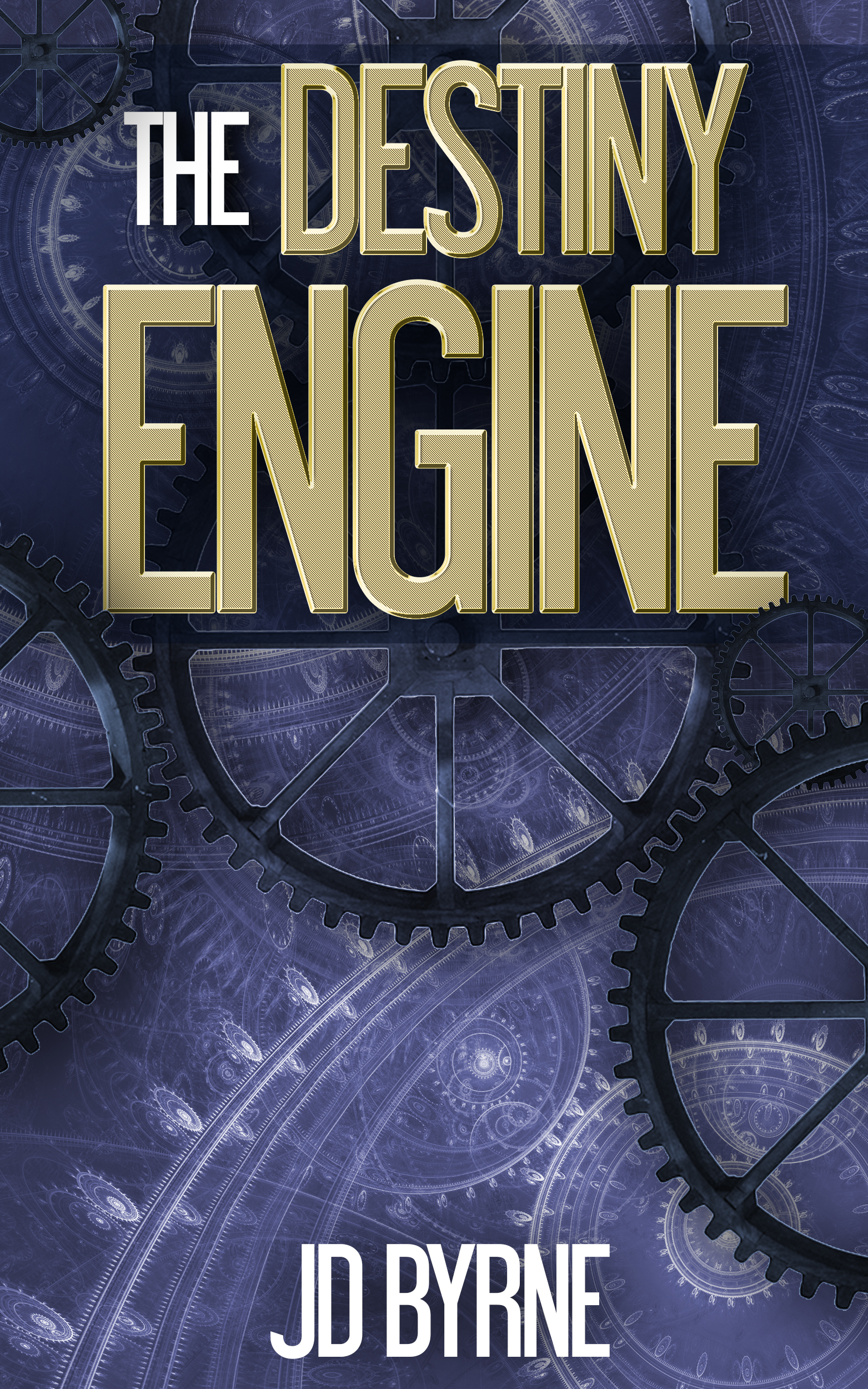
“The Destiny Engine,” is now complete and is currently trying to find a home. It’s a steampunk-style reworking of a Grimm fairy tale, “The Aged Mother.” Once its finds its niche I’ll let you know where to find it.

Moore Hollow, a novel set in West Virginia about disgraced journalists, crooked politicians, and zombies (maybe), is still set for release this fall. I’m working on finding an editor right now, after which I can move on to getting a cover.

But right now, my main focus is on finishing the second draft of The Endless Hills, part two of a fantasy trilogy that will be out next year. For me, a second draft of a long work is a complete rewrite. Essentially, I imported a process I use sometimes at work when multiple attorneys contribute to a brief and everything has to be synthesized to make it read with a single coherent voice.

In the case of the novel, I take the first draft and retype it, paying more attention to the line-by-line details. A first draft, for me, is about getting the who did what to whom, where, and why down on the page. The second draft is where I can focus more on details and making sure the whole thing works as a coherent story. After that come more drafts produced by laborious close reading while wielding a red pen.

I’m about a sixth of the way through the first draft now, so there’s still much work to be done in The Endless Hills.

Until next month!

Weekly Watch: American Crime

With a name like American Crime you’d be forgiven for thinking that the ABC show, which just wrapped up its debut 11-episode season, was another in the long line of TV shows about heroic cops nabbing bad guys. They’re popular for good reason – even I, the criminal defense lawyer, am not immune to their pull – but we hardly need another one on TV.  Good thing, then, that American Crime isn’t like anything else on TV.

That’s down to its creator, writer/director John Ridley, last seen collecting an Oscar for the screenplay to 12 Years a Slave. Rather than focus on the crime itself and the “solving” of it, the show takes one crime – a murder (nearly a double murder) in a nondescript California town – and shows how it impacts those caught up in its wake. Not only is that the focus, but Ridley showed that he didn’t really care about any traditional resolution to the case at all.

As a result, the focus is on several families dealing with the impact of the crime – the victims’ parents, the sister of the main suspect, the foster family of his heroin addict girlfriend, and the would-be family of the state’s first main witness. Issues of race, class, ethnicity, and gender bubble through the season, spurred by the stress brought on by the murder and its prosecution.

Amongst all these, the most fascinating was the Gutiérrez family. Tony, the younger of two children, unknowingly gets caught up in the fringes of the murder – he lent a car to a guy who was involved, but had no idea of it at the time. At the urging of his father, he cooperates with the police. This leads to him being arrested, charged as an accessory (mostly as leverage, it appears), and sent to juvenile detention. What happens from there is as heartbreaking as it is inevitable – treated like a criminal, like a thug, Tony becomes one, committing his own heinous act once released.

American Crime doesn’t look like anything on TV, either. A lot of the editing and camera work is intentionally disorienting (often we focus on the person being spoken too, rather than the speaker) and keeps you on your toes. Breaking Bad (Which I’m working through now, finally) may have been cinematic, but not like this. The closest precedent I can think of is Homicide: Life On the Street, which introduced TV to the hand held cinema verite style. Given that the technical flair is done in service of a bunch of fantastic performances and American Crime was always a fascinating, if grim, watch.

All that being said, the show’s greatest asset was also its greatest weakness. By stubbornly refusing to deal with the facts of the case itself, it was difficult to fully comprehend why the various parties involved were behaving the way they were behaving. How are we to judge the initial suspect’s reaction to being imprisoned and being turned into a political prop without having some idea whether he actually did it? He knew, after all. The end result is a fascinating exercise, but it rings a little hollow.

Regardless, I know the show didn’t have wonderful ratings, so kudos to ABC renewing it for a second season. With a new case on the horizon and a second chance to tweak the formula, I expect something even better.

american-crime

On Flying Cars and Flying Snowmen

Years ago John Scalzi wrote a post about how his wife, when it came to reading their daughter a favorite story, couldn’t get past the idea of a flying snowman. This didn’t make a whole lot of sense. As Scalzi pointed out she had no problem with a snowman who could come to life, wear clothes,
and talk with children, so why was flying a bridge too far?

The fact is, we all have a point beyond which we simply can’t suspend disbelief any longer. As a writer of fantasy and science fiction I’m doubly aware of that. Some people will happily turn their brains off to enjoy a good story, but if you trip that wire that goes beyond their comfort zone of disbelief, they’ll turn on you. There’s not much you can do about it, except recognize that we all do it and we all do it at different points. In other words, we all have our own flying snowman.

I bring this up not because of some great work of fantasy or science fiction, but because of the seventh movie in the Fast and Furious franchise, which has dominated the box office this year (up to this point). Although I’m a car guy (autocrossing them since 1999) I’ve never been a fan of the series. If I’m honest, I’m not a big fan of action flicks in general, so the automotive overlay does nothing for me. My wife, on the other hand, is a big fan, thanks to her action movie jones and an abiding longing for The Rock, so I took her to see the new one.

It’s not bad, for a big loud popcorn flick that doesn’t aspire to be much more than that. In particular there are some really amazing stunts and some good quips. Can’t ask much more than that. However, there are some points where I reached my flying snowman point. Ken Levine’s line is apparently in about the same place, although he got a bit more aggravated by it:

FURIOUS 7 is an absolute fucking mess! What the fuck was that?! No, seriously! There’s not a fucking frame of this stink burger that’s rooted in any reality. Roadrunner cartoons are more realistic. Is this what the action film genre has become? Mindless idiotic fucking stunts that defy all laws of gravity, physics, logic, and common sense? Hand-to-hand combat where the combatants beat the living shit out of each other and neither is even bruised? They crash through glass walls. No cuts. They hit each other with lead pipes. No blood. Their heads are smashed through concrete walls – not even a mild concussion. What the fuck was I watching? Nobody dies. Cars go over cliffs, roll over seventeen times, are twisted gnarled wrecks when they finally come to a rest 1,000 feet down the hill, and the passengers just wriggle out without so much as a scratch. At least Wile E. Coyote looks disheveled when he swallows a lit stick of dynamite that explodes in his stomach. Not Vin Diesel. Not Jason Stratham. Not the Rock. Creative license is one thing but this is fucking preposterous.

Now, to be fair, some of what Levine rages against as CGI fakery actually isn’t (see, for example, the flying cars of the title). But, he’s right. Furious 7 apparently doesn’t take place in the real world. My flying snowman moment came when Vin Diesel and Jason Statham not once but twice staged deliberate head-on collisions from which each walked away without even a bruise. There’s a fine line between “I can’t believe they did that!” and “I can’t believe they really did THAT?”

My wife concedes the point. She doesn’t argue for the reality of those things, but is more willing to set aside concerns and just enjoy the movie. She’s not wrong, but neither am I. I just can’t go that far. At least not for Fast & Furious.

Star Wars, on the other hand . . .

The defining image of the second trailer for The Force Awakens is the star destroyer crashed on the surface of what JJ Abrams swears is not Tatooine. When I saw that, there was a large part of my mind that immediately started into how impossible it was for a craft of that size to plummet through the atmosphere and crash land more or less intact. But another part thought it was about the coolest thing it had seen in years.

Guess which side wins? That’s because, when it comes to something I’ve loved since I was a kid, my flying snowman threshold is much higher. I’m willing to turn the more rational part of my brain off and just enjoy the awesomeness. Not every part, mind you.

Which is just to say, as a writer and a reader/viewer, you don’t necessarily need to know where the line is, but be aware that everybody has that line and you can’t hope to be certain you don’t cross it.

Weekly Read: Billy Lynn’s Long Halftime Walk

Billy Lynn is a soldier, 19 years old, and, thanks to an embedded Fox News camera crew, a big damn hero (to borrow a phrase). His long halftime walk isn’t his participation in a Thanksgiving Day football halftime show (starring Destiny’s Child), but rather the respite from the Iraq War that he and his squad, the Bravos, enjoy as a result of their celebrity. But
like all halftimes, it has to come to an end.

Although the action of Billy Lynn’s Halftime Walk takes place entirely on the day of said game (at old Texas Stadium – it’s a period piece, after all), its scope is a whole lot more ambitious. By dropping Billy and his mates in the middle of a charged up exhibition of pure Americana, Ben Fountain uses it to comment not just on the United States as a whole, but particularly on how the nation has interacted with the wars of the Bush administration. Or, more precisely, how we didn’t (and continue not to, really).

Everywhere he goes, Billy is confronted by people from all walks of life who want him to know how much they think of him and the work he’s doing. The platitudes have become so routine and meaningless they’re rendered in a kind of shower of buzz words devoid of any real meaning or context. It’s a brilliant device. More simply, the disconnect between the kind words and the lack of understanding is best symbolized by Billy’s simple quest for an aspirin – when confronted with the easy task of treating a headache, the home front fails miserably.

In fact, one of the failings of the book is that the people Billy interacts with are so monolithic in how they treat him that they lose any kind of individual identity. Aside from his sister, who begs him to go AWOL rather than return to Iraq, nobody at home has any real interest in what’s going on in Billy’s head. There is no conversation, for instance, with a veteran from Vietnam or what not who might better understand what Billy has gone through.

Which is disappointing, because not a whole lot happens during the day the book chronicles. Since the people Billy meets are all pretty much the same, the interactions become increasingly dull as Fountain’s main point gets beaten in again and again. Throughout there’s a tease of a film deal for the Bravos’ story, which is amusing enough (the best chance to have it made is to have Hillary Swank portray Billy), but is ultimately unresolved.

One of the interesting aspects of the book is how many real world people and places are referenced. That makes it all the more jarring when Billy and crew meet the owner of the Dallas Cowboys, who although he is clearly meant to be Jerry Jones cannot actually be Jerry Jones (for obvious reasons). It throws you off, as a reader, but you do get over it.

In the end, Billy Lynn’s Long Halftime Walk scores some points about modern American and our disconnect from the wars fought in our name (I came across it thanks to this article in The Atlantic, for example) and its dark undercurrent of humor makes it a quick read. But lacks the weight it might otherwise have carried.

BillyLynn-pb-cover

Weekly Watch: Justified

I should not like Raylan Givens. He is precisely the kind of rogue cop trope that drives me so completely nuts, not only as a viewer or reader but as a criminal defense attorney. You know the type – he can’t play by the rules because he’s just so righteous for tracking down bad guys. In spite of repeated violations of the law in ways that should end his career (or at least torpedo many cases he’s worked on), everybody kind of shrugs and winks because, hey, in the end he got the bad guy.

Nonetheless, I like Raylan. And, therefore, I liked Justified, the FX series based on the stories of Elmore Leonard, who created Raylan. That DNA is a lot of the reason Raylan works. He’s interesting enough as a character, a man sort of out of time with the modern world, that his inability to follow the rules kind of makes sense. Plus, when you put dialogue of the quality that populated Justified for so many years in his mouth it absolves a number of sins.

Which is not to say that Justified was ever a one-man outfit. It never could have succeeded if the other characters weren’t as well drawn and executed as Raylan. That goes not only for the major recurring characters, such as the outlaw yin to Raylan’s yang, Boyd Crowder, a racist drug runner with occasional bouts of preaching and speechifying, but with all the supporting characters. Bad guys, too. Justified had the best, most interesting and complex bad guys this side of The Wire.

Another thing Justified had going for it, which it also shared with The Wire (and all of David Simon’s Baltimore stuff, really) is a setting that you don’t see anywhere else on TV. Harlan County was already etched onto the national consciousness as a hardscrabble coal mining region (thanks largely to this award-winning documentary) before Justified came along. But the show made the most of that setting (even though it was shot in California) and what it meant for the people who lived there. Maybe I just liked seeing it because it could have very easily been set across the border in West Virginia, with Raylan working out of my courthouse in Charleston.

Justified never quite got its due while it was on the air. Most critics loved it, but it was never quite able to break through to that top tier of awards. Part of that’s timing. This is a golden age of TV, after all, and it’s hardly Justified’s fault if it was lost in the shuffle to the likes of Breaking Bad, Mad Men, the HBO stuff, and it’s own stable mate The Americans.

Justified was not groundbreaking and maybe not all that deep, but it was damned entertaining. It seemed to take pride in being smartly entertaining, too. I think Elmore would be proud.

Justified

State of Play – April 2015 Edition

Thought now would be as a good a time as any to update folks on what I’m up to. Some of this I’ve discussed in interviews, but some not.

Naturally, The Last Ereph and Other Stories continues to be available at online vendors everywhere (well, most places) as well as select brick and mortar locations.

I recently finished a new short story, “The Destiny Engine,” that’s in the process of being revised. It’s a retelling of an obscure (to me, anyway) Grimm tale called “The Aged Mother”. I originally developed the idea when an anthology of retold Grimm tales was mentioned, but it never came to fruition. I liked the idea, though, so kept plugging along with it.

As I’ve mentioned in interviews, my next big project is Moore Hollow, a novel set in southern West Virginia. It’s about a disgraced British journalist who comes to the fictional town of Jenkinsville, where his great grandfather once worked, to try and track down the source of stranger rumors. About what? About zombies that are supposed to live up in the hills. It should be ready for release sometime this fall.

Beyond that is my most ambitious project yet, a fantasy trilogy called The Water Road. The title (which is shared by the first volume) refers to a river that runs the breadth of the land where the story is set and is navigable over its entire length. It separates the “civilized” nations of the north from the “barbarian” clans of the south. For a century there’s been peace, but at what cost? Two women blow the lid off society and change their world forever.

As I said, that’s a trilogy. Book one, The Water Road, is written and should be out in early 2016. The Endless Hills, book two, is just going through its second draft, but should be ready for 2016, too. The third volume, The Bay of Sins, might see the light of day next year, too, but I’m thinking probably more like early 2017 (I’ve got a day job, after all).

Beyond that? I’ll let you know.