State of Play – July 2015 Edition

When I started these posts I intended to do one every month, but events got the better of me in June. Thankfully, that was because I was finishing up and releasing “The Destiny Engine,” so I think that’s a fairly good excuse.

Also, I got to take part in the first ever West Virginia Writer’s event at Tamarack down in Beckley.

JDB@Tamarack

Big thanks to Elliot Parker for setting up the whole thing, to the folks who stopped by to talk and buy a book during the day, and the souls out in the hall who couldn’t help but overhear as I read “To Watch the Storms” just before lunchtime.

So what about the books then?

Available Now!

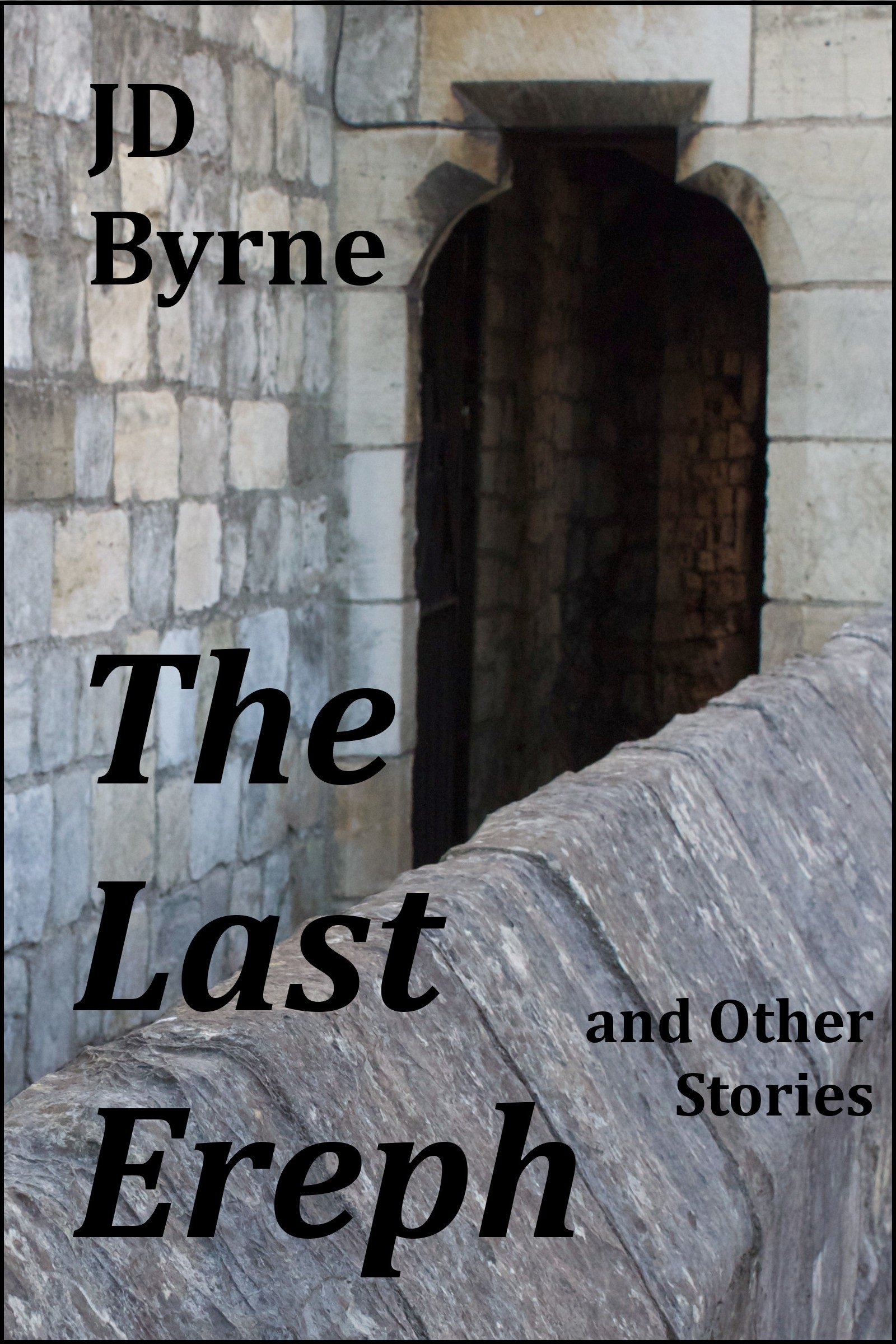
The Last Ereph and Other Stories – a collection of ten stories of fantasy and science fiction.

“The Destiny Engine” – a short story with a steampunk take on a classic Grimm Brothers tale.

Coming Soon!

Moore Hollow, my debut novel, is inching closer to being ready to be loosed upon the world. It’s been edited and formatted for both eBook and print versions. It still needs a cover, which may prove a bit of a challenge. Still, if all goes according to plan it should be out October 5.

In the Works!

As I mentioned the other day I had a new short story pop up in the last week or so. Don’t know when it will be finished or where it might go once it is.

The big project in the works continues to be the second volume of The Water Road trilogy, The Endless Hills. Still chugging through a second draft, making copious notes for a third. Everything’s still on schedule for 2016 to be the year of The Water Road.

Ideas Are Everywhere

One question that writers, and other creative types (I’m assuming), routinely get asked is “where do you get your ideas?” For some reason many writers find this frustrating. I suspect that’s not because the question itself is annoying, but because the answer so rarely satisfies the person asking it. The fact is that there are no muses who whisper in the ears of writers, nor do words generally flow out without effort. Writing, like most creative endeavors, is hard work. For laypersons, it takes a bit of a shine off the process, I imagine.

But in reality, it makes the question of inspiration all the more interesting, because it can come from anywhere. Allow me to provide a recent example.

My office is in the market for a new lawyer and we’ve interviewed several candidates over the past few weeks. One applicant who was in private practice was explaining the size and scope of their firm and mentioned that, in addition to offices in several large cities there was “one guy up in Alaska.” It was hyperbole, no doubt (and good for a laugh), but it put the idea in my head of a solitary lawyer toiling away in the wilds of Alaska. What sent them there? Was it where the firm misfits went? Was it the shit assignment you had to go through to make partner.

Of course, I write speculative fiction and don’t (generally) write about lawyers. I turned the idea over in my head for a few days and started writing. Alaska became a rock in space called Orsini and the law firm became “the company,” but the central question – what would send a person all the way out there? – remains (and gets answered). It’s got the working title “Retirement Party,” but the more I live with that the less I like it. Hopefully it’ll see the light of day in a little while.

That’s only one example. Inspiration really is everywhere – it’s up to you to do something with it when it tickles that part of your brain that makes you ask “what if?” or wonder “why?”

Like I said – the hard part’s taking the inspiration is doing something with the idea once you get it. So let me get back to it . . .

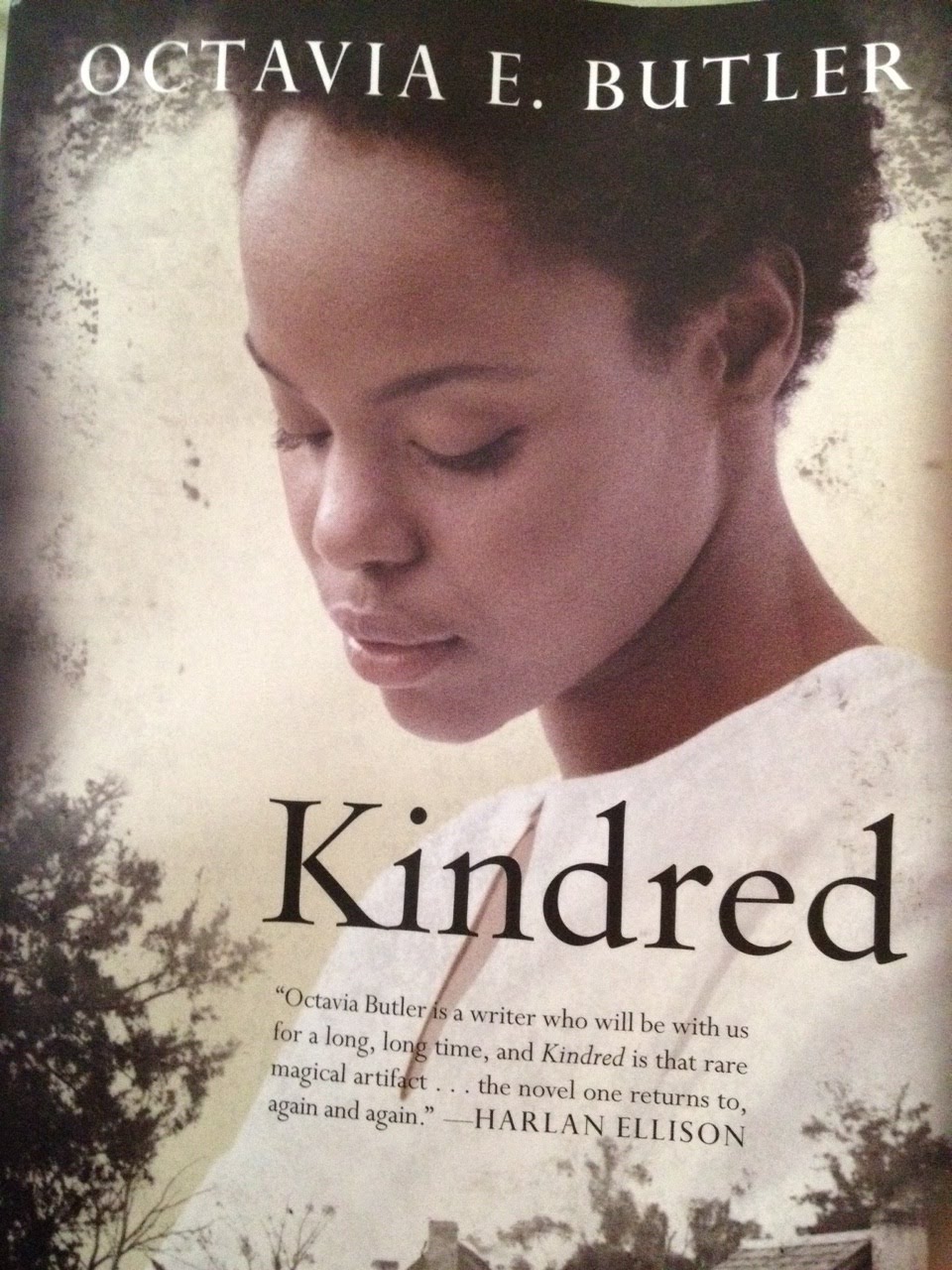
Weekly Read: Kindred

It was completely coincidental – honestly – that I started reading/listening to Kindred when the latest national debate about the Confederate battle flag sprang up. Still, the timing was auspicious. In a world where 12 Years a Slave can bring the brutality and savagery of slavery into your living room it’s worth remembering that reading is the best way to really get inside someone else’s experience.

Dana is a modern (the book is set in 1976) African-American woman living with her husband in Los Angeles. They’re both writers, she having just sold her first short story (to The Atlantic – ah, how nostalgic!). Everything’s great until, one day, Dana is pulled back to a Maryland plantation in 1819, drawn there by the peril of a boy named Rufus Weylin. He’s drowning. Dana saves his life. Dana is then repeatedly drawn back to save Rufus at various times in his life.

But here’s the thing – Rufus’s father is a slave owner who has numerous people in bondage to work the plantation. Oh, and also? Rufus is Dana’s distant relation. Meaning, if he dies before he produces the offspring that is also Dana’s ancestor, she may die, too. As a result of all this, Dana eventually spends months on the plantation experience life as a slave.

Thus, Kindred is much less a time travel adventure than it is an attempt to give a modern reader a means by which he or she can experience a historical period. Aside from the generalized concern that if Rufus dies Dana might cease to exist (Back to the Future style) there’s little emphasis on the time travel itself. Butler was much more concerned with the day to day life of slaves, which Dana is able to both comment on and experience.

The experience, needless to say, is brutal. There are beatings. Families are destroyed as sons and daughters are sold away, usually to slave caravans heading for the deep south. There is a constant treatment of human beings not only as lower than their masters, but not really human at all. Rufus and his father routinely justify their conduct as merely dealing with property. It sounds as bad as it is.

What makes the litany of abuse even more profound is that Dana isn’t, really, a slave. After all, she’s not bought from someone else and nobody ever tries to exercise legal authority of her as such. Still, her position as an African-American – and a woman, to boot – leaves her with little agency over her own life when she is sucked back into the past. But it lets Butler play with the idea of how slaves (and others in similar positions) can find some agency in their own survival.

All of this works on many levels (as you can see here), but one that occurred to me is that Kindred works as a metaphor for the way we as a nation talk about our birth. Early on Dana explains the story of her family line, born from the taboo relationship between a white man and a black woman in the antebellum south. It’s presented in an idealized fashion, a story of true love defying the system and triumphing over long odds.

The truth, as Dana learns, is much messier. The man, Rufus, owned the woman, Alice. Not only that, Alice was actually born free but was brought into slavery by Rufus after she was caught running away with her husband. She is, for the rest of her life, property. Rufus rapes her, repeatedly, producing multiple children (including, eventually, Dana’s direct ancestor). He beats her. Her only way out is to kill herself. Love doesn’t even get on the field of battle, much less conquer all.

So, too, our view of the country’s founding. We like to think of the American Revolution as a bold strike against tyranny, a fight for freedom. While there’s some truth to that, it’s a freedom that’s limited to a fairly narrow group of people. Only about a third of American colonists supported Revolution, after all. Furthermore, after the lofty rhetoric of the Revolution itself, the Founders enshrined slavery in the Constitution, along with a certain bit of dysfunction that hampers us more than two centuries later. History is complex and messy, on a national level no less than the familial one. I doubt it’s a coincidence that Dana’s ordeal ends on July 4, 1976.

Since I was waffling on about genre here the other day, I should say a word about where Kindred fits in. I’m a bit surprise to see it repeatedly referenced as “science fiction.” Sure, time travel is a beloved sci-fi trope, but Butler doesn’t make any attempt to “science up” Dana’s travel. That’s not her focus, so why bother? Jo Walton at Toris right that this is “fantasy time travel, not science-fictional.”

Not that it really matters in the end. Butler is doing what the best sci-fi and fantasy writers do – using the tools of the genre to explore humanity itself. In this case, it’s to hold a mirror up to a shameful part of our past that continues to resonate decades after Kindred was first published.

bc4c5-kindred2bbook2bcover

“The Destiny Engine” – An Excerpt

A scene from “The Destiny Engine” – available now at Amazon

Mister James insisted that Miss Smith be brought to dinner the next day, rather than for a more relaxed meeting over tea. It mattered not to him, but it greatly complicated my day. I was able to scrape together a suitable meal of braised elk, potatoes, and freshly picked greens. Miss Smith seemed pleased with the mixture of rustic and exotic and was too kind in her praise.

Over dinner Miss Smith explained how her family came west from the Carolinas during the War Between the States, settling in Denver near her great aunt. Mister James, in turn, regaled her with tales of his exploits in New York and San Francisco, carefully avoiding those that might touch on the reason he fled from both cities to the wilds of Wyoming.

As I began to gather the dishes, Mister James turned the conversation.

“Tell me, Miss Smith, what, exactly have you heard of my machine?” He leaned back in his chair, fussing with a fresh cigar.

“They say that it can tell the future,” she said, pausing, “or, rather, the future that might have been. Is that true?”

“They do?” Mister James chuckled. “And who are they?”

“Who are they?” She furrowed her brow. “I don’t see the relevance of that.”

Mister James leaned forward, resting his elbows on the table. “The relevance is that you have come seeking my help, Miss Smith, so it behooves you to answer my questions.”

She threw up her hands in halfhearted protest. “Very well. I believe I first heard about the mad inventor of Douglas during a salon in Denver. Very respectable. Before you ask, I do not remember the man’s name who spoke of you.”

Mister James grinned and puffed on his cigar. “They talk of me in Denver? How interesting.” He looked at me as if for me to share in his pride. I continued clearing the table without comment.

“Based on what I heard, I hired a professional to try and find out more,” Miss Smith continued. “He arranged a meeting with a man from Douglas, a man named Finn, who was quite specific about you and your machines.”

“And what did this Mister Finn say?”

“That you like to talk in the taverns,” she said. “Brag, really. About your machines. The ones that never work. He said it was not worth my time to try and meet you.”

“Did he?” Mister James said, laughing. “Finn was always the jealous one, wasn’t he, Whorle?”

“Yes, sir.”

“Regardless of that,” Miss Smith said, “was he telling the truth? Have I wasted my time coming here?”

Mister James thought for a moment, slowly drawing in and puffing out smoke. “That depends, madam, on why you came here. I mean, why did you need to come talk to me, about anything?”

She sighed and started down at her hands, folded in her lap, for a long moment. “I am here because of my great aunt, Mister James. Because she is in need of a miracle, and my intelligence suggests you just might be able to provide one.”

This provoked a grin. “A miracle, dear lady? I can promise no such thing. I am a man of science, not magic.”

“Miracles look different to different people, sir,” she said. “Whatever it may be called, are you capable of providing such?”

“Tell me about your great aunt,” Mister James said.

Miss Smith took a deep breath. “Great Aunt Odetta has led a long and hard life. In particular, she has lost everyone in her life who was dear to her. Her husband, you see, died, under,” she paused, then said, “let us say that he passed on prematurely.”

Mister James nodded.

“But also her children, sir, her dear boys,” she said. She removed a handkerchief and dabbed at her eyes.

“They are gone, too?” Mister James asked.

She nodded. “Drowned. Fell through the ice when they were nine and eleven, respectively. Solomon and Alistair, bless their souls.”

“A pity,” Mister James said, “but for them I can do nothing. I am not a necromancer. What do you think I might do for Odetta?”

“Since the boys died, all those years ago, she has shut out the rest of the world,” she explained. “She came to live with us, as she could not keep up the house. She sits in her room all the time, staring out the window. All she talks about is how she will never see the boys grow up, never see them become men. It is as if she is stuck in that terrible moment.”

“I am a scientist, Miss Smith, but my expertise is not of the mind,” Mister James said. “How do you think I can help you?”

She sat still for a moment, as if trying to figure out what to say, while looking back and forth between Mister James and myself.

“Have no worries about Whorle, Miss Smith,” Mister James said. “He and I are a team, aren’t we, Whorle? Anything you wish to say to me can be said in front of him.”

“Thank you, sir,” I said. Compliments were rare, so I thought it best to acknowledge one when it came.

“You can help me by using your device to allow my great aunt to see her family once again,” she said, finally, shaking her head as if she knew it was madness.

Mister James raised an eyebrow. “It is not that simple, madam. At best I can show what would have happened to them in another reality, had things turned out differently. Is that what your great aunt would want?”

She nodded. “Without doubt, sir. If she could see their lives, even if they are lives that never actually happened, it would ease her soul. I am certain of it.”

“Even if those other lives might not be particularly pleasant?”

“Have you children, Mister James?” she asked.

“No,” he said. “Never married.”

“Then you cannot know the pain that comes from a mother seeing her children die. Parents should precede their children in death, yes?”

When Mister James did not answer, Miss Smith added, “There will be, of course, a substantial fee. To help further your work.”

Mister James smiled. “I should hope so,” he said, standing and striding to the other end of the table. “For what I am willing to do for you and your great aunt, madam, is one of the glories of modern science.”

“You will do this?” Miss Smith beamed with satisfaction.

“I will. How long will it take to bring dear Odetta here?” he asked.

“Five days, perhaps six?”

“Then let us meet again, here, at dusk in a week’s time,” Mister James said. “It will be my honor to serve you.” He bowed, a gesture that did not appear to be so full of mockery as I would have imagined. “Whorle will see you out.”

Mister James retired to his library, while I assisted Miss Smith with her cloak and signaled her driver. While we waited, I noticed the broad smile on her face and the gleam of joy in her eyes.

“Miss Smith, may I speak?”

“Of course, Whorle.”

“Do not come back next week,” I said, lowering my voice to avoid any chance of detection. “If you do so, I am concerned you will not be pleased with the results.”

She frowned. “Mister James would not be trying to sell some snake oil, would he, Whorle?”

“No, madam,” I said, shaking my head. Perhaps her investigation turned up more of Mister James’s past than I imagined. “Just the opposite. I believe the device will work as promised. Which is why I beg you to stay away.”

She looked puzzled.

“There are things we are simply not meant to know, madam. The past cannot be changed, nor can the present.”

“I am surprised, Whorle,” she said, looking out the window as her carriage pulled into the driveway. “I would not think that a man who worked for someone like Mister James would be so prone to superstition. Is not everything we do tampering, in some way, with God’s creation?”

“This has nothing to do with God, madam,” I said, opening the door. “I fear for the wellbeing of your great aunt should you return next week.”

She stepped out the door, turned, and looked back at me. “Your request is duly noted, Whorle.” She turned and began to walk toward the carriage. “And rejected.”

Click here for more

New Short Story – “The Destiny Engine”

A few months ago, someone announced a forthcoming anthology of reworked Grimm Brothers tales. I thought that sounded like a neat idea, so I started sorting through the stories for one I could transform a bit. I was struck by “The Aged Mother,” which I’d never heard before, and immediately thought of a way to play with it.

The anthology never materialized (to my knowledge, anyway), but the story did.  Behold “The Destiny Engine”:

DE Cover

The Brothers Grimm meets steampunk.

Elizabeth Haden Smith is in need of a miracle. B. Pinkham James might be able to provide it. Word of the inventor’s destiny engine gives her hope for breaking her great aunt out from her stupor of grief. But James’s inventions have a habit of working too well. He was run out of New York and San Francisco before he came to the wilds of Wyoming. Will he be running again?

Sometimes it’s better to let the unknown remain that way.

Available now exclusively at Amazon, including Kindle Unlimited.

Genre Matters, If Only a Little

From time to time, I get a little riled up when it comes to issues of genre. I am, as you can tell, a genre writer. I am also, for the most part, a genre reader. Sci-fi and fantasy is what I like and I’ve got no problem admitting it. Nor do I have a problem with folks who don’t like it. Different strokes and all that.

However, it rubs me the wrong way when people use genre labels as a sign of inferiority. Particularly, it makes me grumpy when people see something that, in spite of all the genre trappings, is so elevated and wonderful that it cannot, under any circumstances, actually be a part of the genre itself. This all flared up back in March with the publication of Kazuo Ishiguro’s The Buried Giant.

Ishiguro is the Man Booker Prize winning author of (among other things) The Remains of the Day. He is “Literary” with a capital L. However, first with Never Let Me Go and now with his latest he’s come to play in what folks would generally recognize as the lands of science fiction and fantasy, respectively. But he really wishes they weren’t (I addressed this at my old blog after watching the film version of Never Let Me Go).

Ursula K. Le Guin fired the first shot, responding on an interview Ishiguro did with the New York Times. Here’s how she describes The Buried Giant:

[it] takes place in a non-historic just-post-Arthurian England. Everybody there has lost most of their longterm memory, due to the influence of the breath of a dragon named Querig.

Ogres and other monsters roam the land, but Querig just sleeps and exhales forgetfulness, until a pair of elderly Britons with the singularly unBriton names of Beatrice and Axl arrive with the knight Gawain and a poisoned goat to watch a Saxon named Wistan kill Gawain and then slice the head off the sleeping dragon.

Sounds pretty fantastic, right?

Ishiguro then says:

Will readers follow me into this? Will they understand what I’m trying to do, or will they be prejudiced against the surface elements? Are they going to say this is fantasy?

They probably will, Le Guin argues, with good reason and with no need of being ashamed. Yet Ishiguro, it seems, “takes the word for an insult.” More recently, in an interview with Neil Gaiman, Ishiguro expressed surprised at such a reaction, asking “why are people so preoccupied?” and wondering if genre labels were just something created by the publishing industry.

He’s certainly right that genres make things easier for the sellers of books – which includes authors, by the way. But they also make things easier for readers. If I read Book X and it falls into Genre 1, then maybe I might like to check out other things that fall into Genre 1, right? Sure, the genre definitions get fuzzy along the boundaries (go see any of the “what is progressive rock?” debates on the Web for proof!), but some guidance is better than none.

Admittedly, some genre signposts don’t tell you very much. Gaiman makes this point:

I think that there’s a huge difference between, for example, a novel with spies in it and a spy novel; or a novel with cowboys in it and a cowboy novel.

Can’t argue with that. The Big Lebowski isn’t a “cowboy movie” just because there’s a cowboy in it, after all. But it doesn’t really do much to tell you what it’s about. Likewise, a story with a detective as a main character could be lots of different things: mystery, police procedural, domestic drama, comedy, etc. But those two genres do have one thing in common – their stories exist in the real world.

Science fiction, fantasy, and (to a lesser extent) horror stories don’t take place in our world. That’s what makes them “speculative,” after all. Stories told in the real world have to confine to our world – if a key scene requires a character to get from one side of town to the other in 10 minutes she can’t just close her eyes, mumble some Latin, and teleport herself. But in the speculative genres anything is possible. The writer has to develop her world and its rules, but isn’t constrained by how the real world operates. It’s a Rubicon kind of thing – once you cross it, you can’t uncross it.

But genre has nothing to do with quality. There’s good science fiction and bad (cue Sturgeon), good fantasy and bad, good literary fiction and bad (keeping in mind the highly subjective nature of “good” or “bad”). If there’s a stigma about genre fiction it’s largely because writers like Ishiguro (and, at earlier times, Margaret Atwood) and his critics insist that his work is too good to be labeled as such.

That’s my great objection. I don’t care that Ishiguro or anyone else wants to come play with some of the trappings of genre fiction while not buying wholly into the genre’s tropes. It’s perfectly OK to come into our sandbox and play by yourself. That doesn’t obscure that you are, in fact, in the sandbox with us. Don’t insult our intelligence by arguing otherwise.

Weekly Read: The Revolutions

Arthur Shaw is not the most interesting man in the not-quite-historical Victorian London of Felix Gilman’s The Revolutions. That’s a problem, since he’s one of the main characters in the book. Thankfully, Shaw’s very mundanity – he needs a job and is willing to do just about anything for money – leads him into something very interesting indeed.

Oh, and there’s his fiancé, Josephine, who makes for a considerably more interesting companion.

This London is one where the kind of quasi-scientific spiritualism that was popular in our reality was not just popular, it was actually true. In particular, Arthur and Josephine find themselves bound up in a group trying to astral project to other planets, particularly Mars. Doing this requires not only the right people (sort of – the group gets less selective as things progress), but massive calculations produced by a massive machine with countless human parts. Babbage’s engine writ large.

The book takes a while to set all this up, which is either fascinating world building (for me) or dull sluggishness (for others). Things really kick into high gear when one of the astral flights is interrupted by Arthur, leaving Josephine trapped – in spiritual, if not physical form – on one of the moons of Mars.

What Gilman does next is a clever sleight of hand. The book focuses on Arthur for a bit and how he and the rest of the society plan to get Josephine back. Just when you think she might be nothing more than a damsel in need of rescue, the POV shifts and we’re treated to Josephine’s lengthy observation of (and, eventually, interactions with) the Martians and their society. This is the best part of the book, harkening back to the days of science fiction before science itself killed off the chance of finding life on Mars. Reminds me of some of the more esoteric parts of The Martian Chronicles.

Naturally, a rescue mission is mounted and while it has its own charms as an adventure story, it can’t match the peak that is Josephine’s experience with the truly alien. But all stories must end and I’d be lying if I said that the ending ruined all that came before.

So Arthur might be kind of dull. Don’t let that put you off. He’ll lead you into some very neat places.

Print

Come Say Hi This Saturday @ Tamarack

This weekend, Tamarack – the showplace for West Virginia arts and crafts located outside Beckley – is hosting a West Virginia Writers Weekend. It runs both Friday and Saturday.

I’ll be there on Saturday (June 27), from six in the morning until about six in the evening. I’ll be selling books, signing books, talking with readers about writing, and probably doing some actual writing (still working hard on the second draft of The Endless Hills).

In addition, at 11:45 – just before lunch! – I’ll be doing a reading of one of the stories from The Last Ereph and Other Stories.

It’s free to the public and should be a lot of fun. See you there!

WVWriterWeekend

Weekly Watch: Breaking Bad

A little while back I confessed that, although I had enjoyed the first season of Better Call Saul I had not seen a minute of that show’s mothership, Breaking Bad. It wasn’t that I was unaware of it or avoiding it out of some hipsterish notion of cool. It just got past me (why must there be so much good TV on at the same time on the same night of the week?). But I read the hype and knew the show’s reputation. Now I’ve gone back and done my due diligence. Did it live up to the hype?

Abso-fucking-lutely.

I usually try to push back against the hype on things like this, at least a little bit, but, damn, I can’t really do it here. Breaking Bad is everything great storytelling should be, tightly plotted and filled with well drawn, memorable characters. Moreover, it uses the visual and audible aspects of television in ways that most shows never dream of.

If you’ve been under a rock for the past few years, Breaking Bad is the story of Walter White, a high school chemistry teacher who turns to cooking methamphetamine (with the help of a former student turned junkie and small-time dealer, Jesse Pinkman) for money after being diagnosed with cancer. What plays out is Walt’s fall into ego-driven evil, as he finally finds personal satisfaction in his nearly pristine blue meth. It’s a reverse of the typical redemption arc where the bad guy comes good. Walt begins good (sort of) and goes very very wrong. It’s not uplifting stuff, but it’s riveting.

It’s not perfect, of course. It drags at times (particularly when it involves the long but inevitable rehab of Walt’s DEA Agent brother-in-law). Walt is occasionally too much James Bond or McGyver. And the entire premise – that ultra-pure meth would be that much more valuable – is dubious. But those are minor quibbles and, in the case of the last one, a great dramatic device for springing Walt’s ego upon us.

I suspect Walt might agree with that other great thinker, Zaphod Beeblebrox, that if “there’s anything more important than my ego . . .I want it caught and shot right now.” Starved for personal reward and nagged by the staggering success of former business partners, Walt repeatedly passes up moderately safe ways out of his life to as to continue his ego stroking meth cooks.

Equally important as a character, although it’s not played by any particular actor, is the War on (Some People’s) Drugs. Not only do we see both sides at play, but we see how inevitable it is that the drug trade continues on all the time. One of Walt’s ego problems is that when he tries to get out he finds out that others are selling blue meth that’s not as pure as his. It’s a personal insult. But dealers are going to sell whatever they can to those that want to buy, of which there will always be a supply. A war on what is essentially the human desire to soothe their lives will always be bound to fail.

While I came late to Breaking Bad proper, I read a lot about it while it was on the air, or shortly after it wrapped up. I noticed how images, phrases, and other parts of the series were seaping in the culture. It’s a TV show, right? So, of course they did. When a parent freaked out at finding Breaking Bad action figures on a store shelf somewhere, I chuckled and rolled my eyes.

But now, having watched the whole thing, the impact of the show on the culture kind of disturbs me. People know that, whatever its dramatic qualities (which are substantial), the show is basically about horrible people doing progressively more horrible things. Given that, things like producing a Breaking Bad vodka or Aaron Paul’s repeated attempts to capitalize on being Jesse Pinkman or the plans to open up a real Los Pollos Hermanos really rubs me the wrong way. It says something about our popular culture and the nature of celebrity and I’m not sure it’s good.

None of which takes away from the achievement of Breaking Bad (including Paul – Pinkman is, perhaps, the most sympathetic character, who consistently struggles with what he’s done and has so little idea of a better life that he can’t take any chance to find one). It is one of the gems of the current Golden Age of TV.

breaking_bad_css3_svg_raw