Last month my wife, Kelly, and I embarked on the “Two Weeks in Spain” so famed in song. It was a wonderful trip and impossible to convey all we were able to do and see, but over the next few posts I wanted to share a little bit of what made the journey so special. Each post has musical accompaniment, so press “play” at the bottom and enjoy.
Seville
A short train ride and we were in Seville (no barbers in sight!).
Our hotel in Malaga was . . . odd. For one thing, it wasn’t a single building, but a bunch of old homes all tied together into a hotel. As a result we had to take a tunnel (and about three elevators) to get to our room.
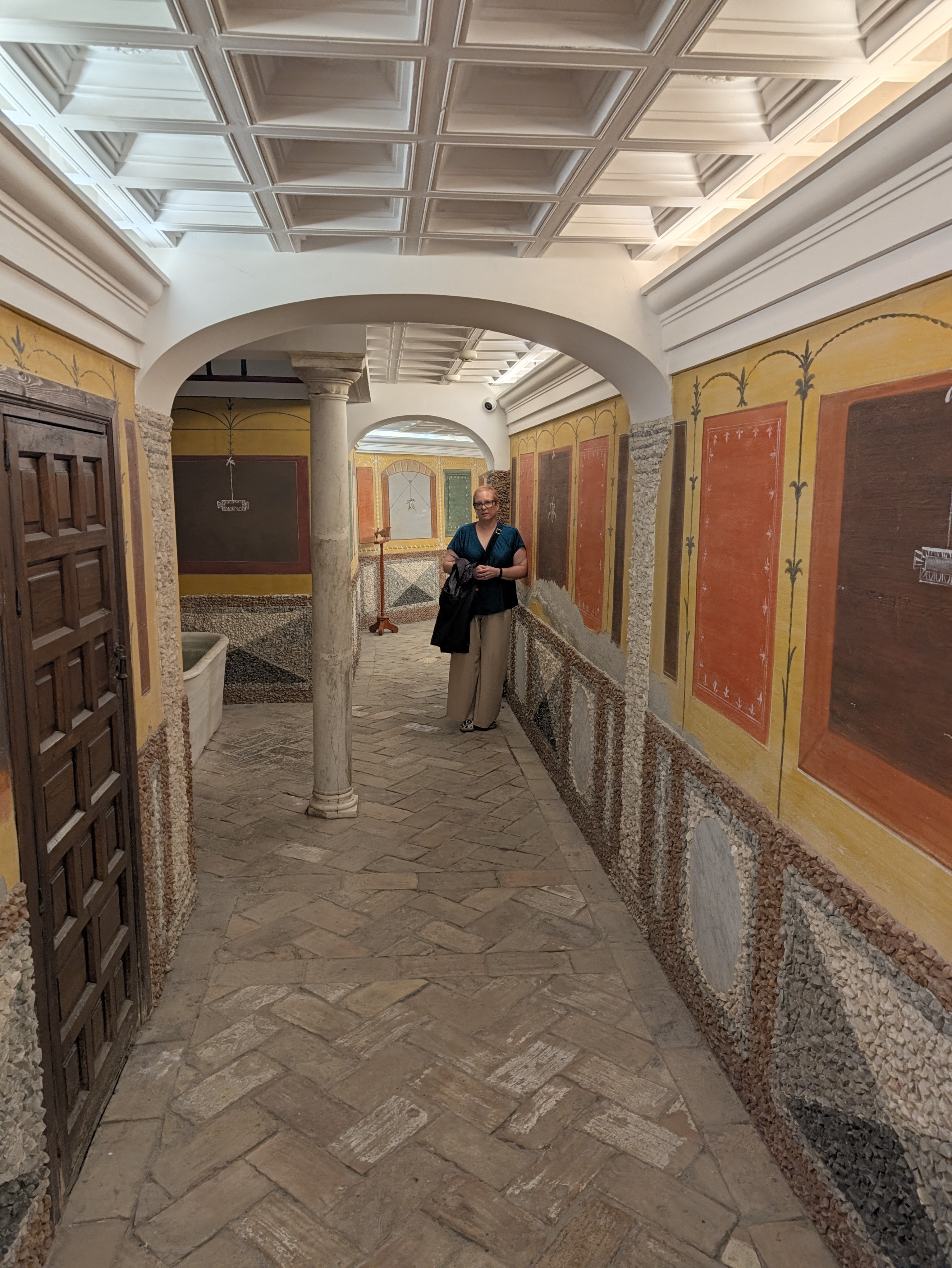
And, well, this was awkward.
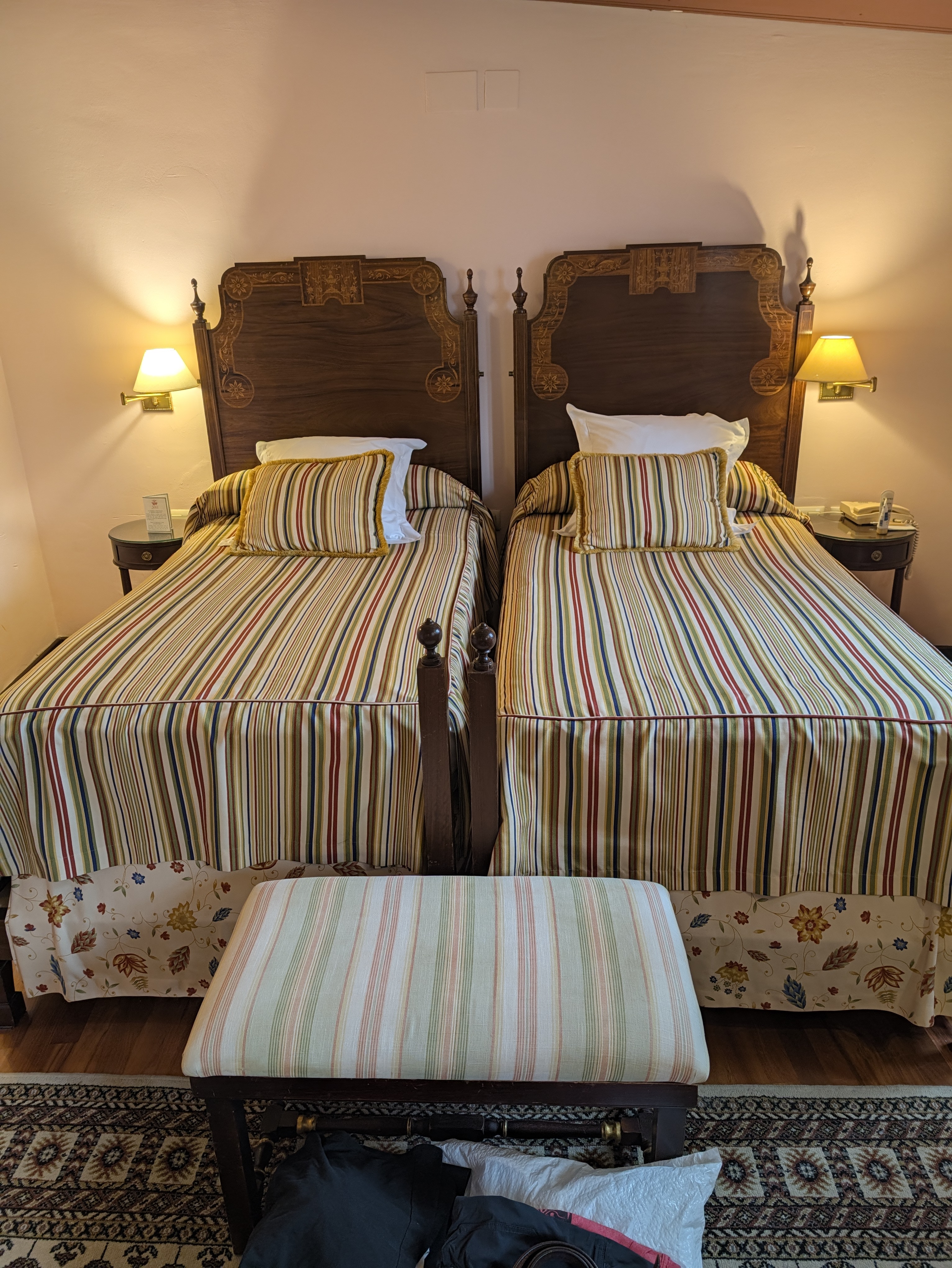
Our hotel (of which more later) was deep in the old town and, as in Cordoba, we set off to explore a bit before dinner.
When we left the hotel there was a crowd starting to gather and what looked like a community band milling around in the street. By the time we got back the crowd was so thick we couldn’t actually reach our hotel. Turns out it was just a few doors down from Iglesia de Santa Maria la Blanca and it was about time for a processional.
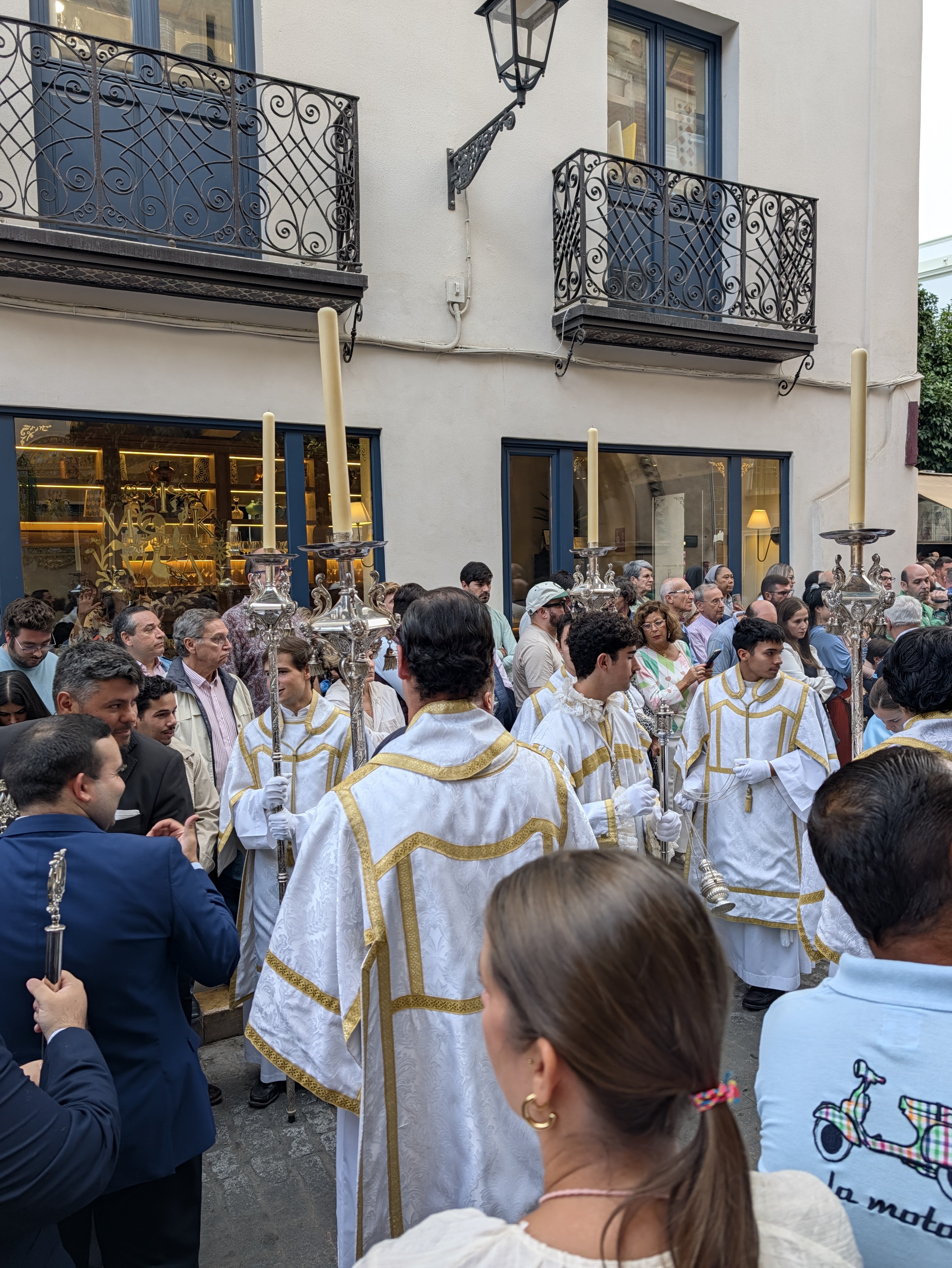
It took a while for the whole coterie to make its way out of the church, but the ending was worth it.
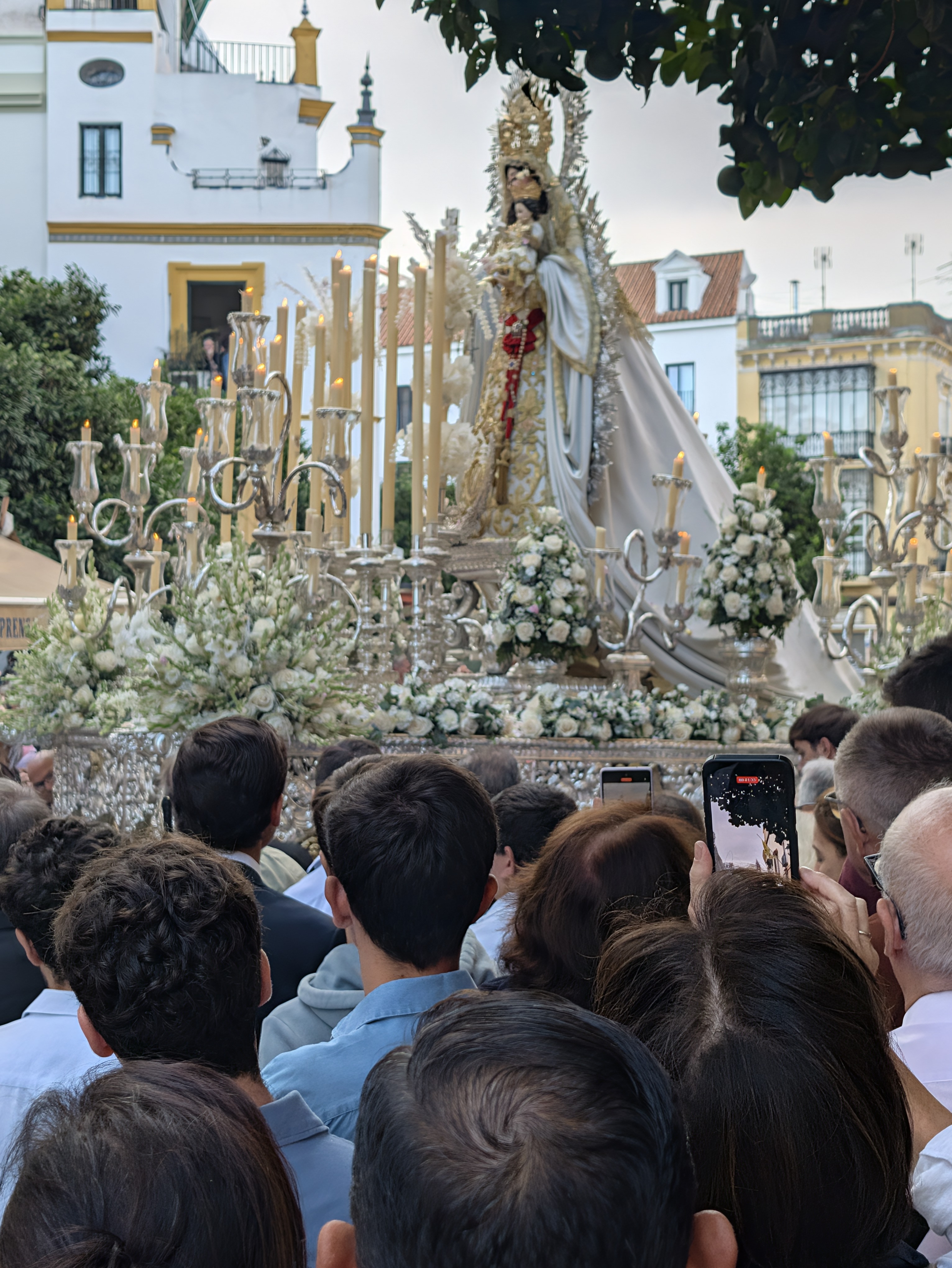
I later asked someone at the hotel how often that kind of thing happened (it was Sunday, after all) and apparently it’s not super common, but not really rare, either. While we were there we saw some posters for other similar events for different saints.
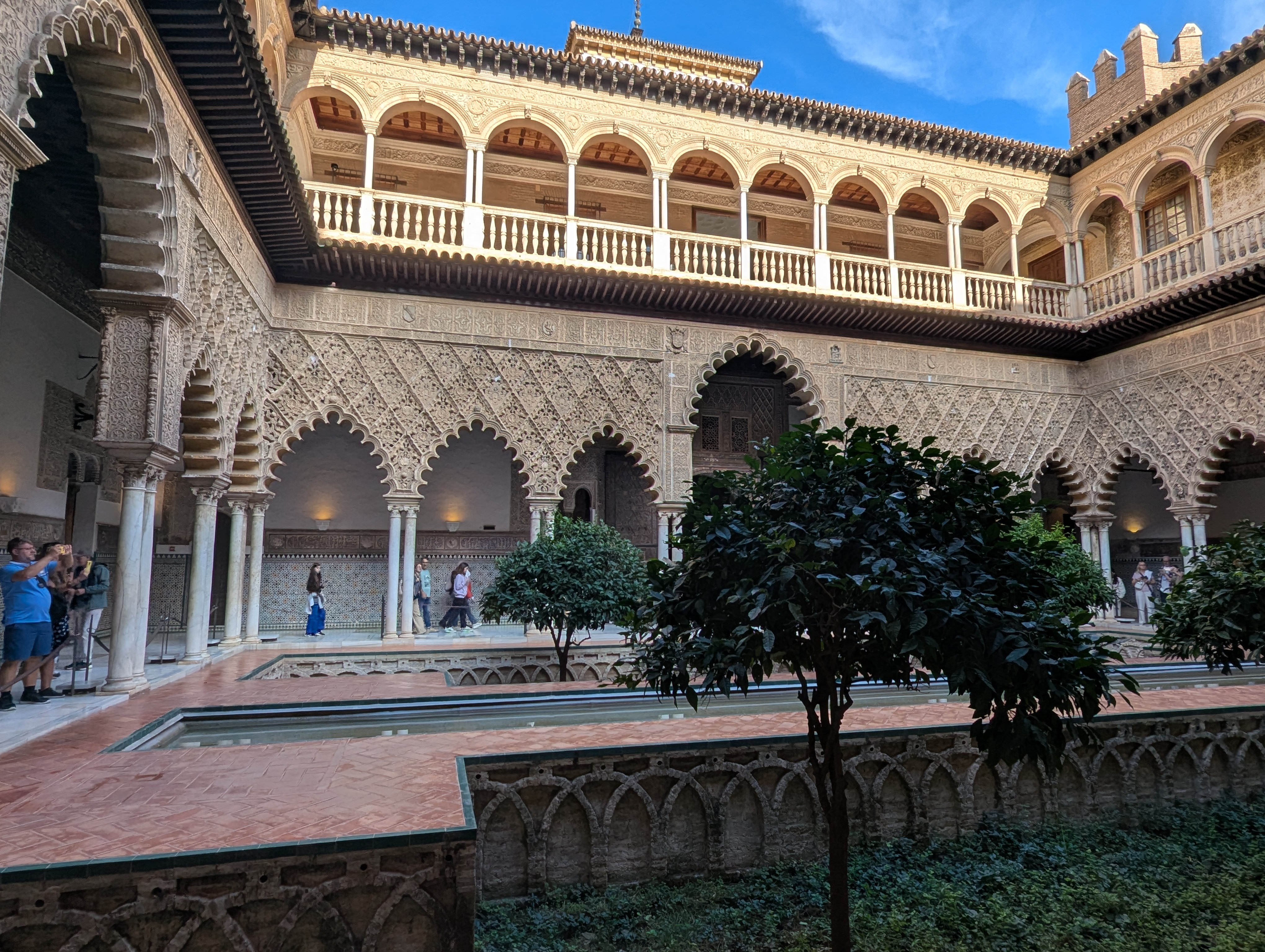
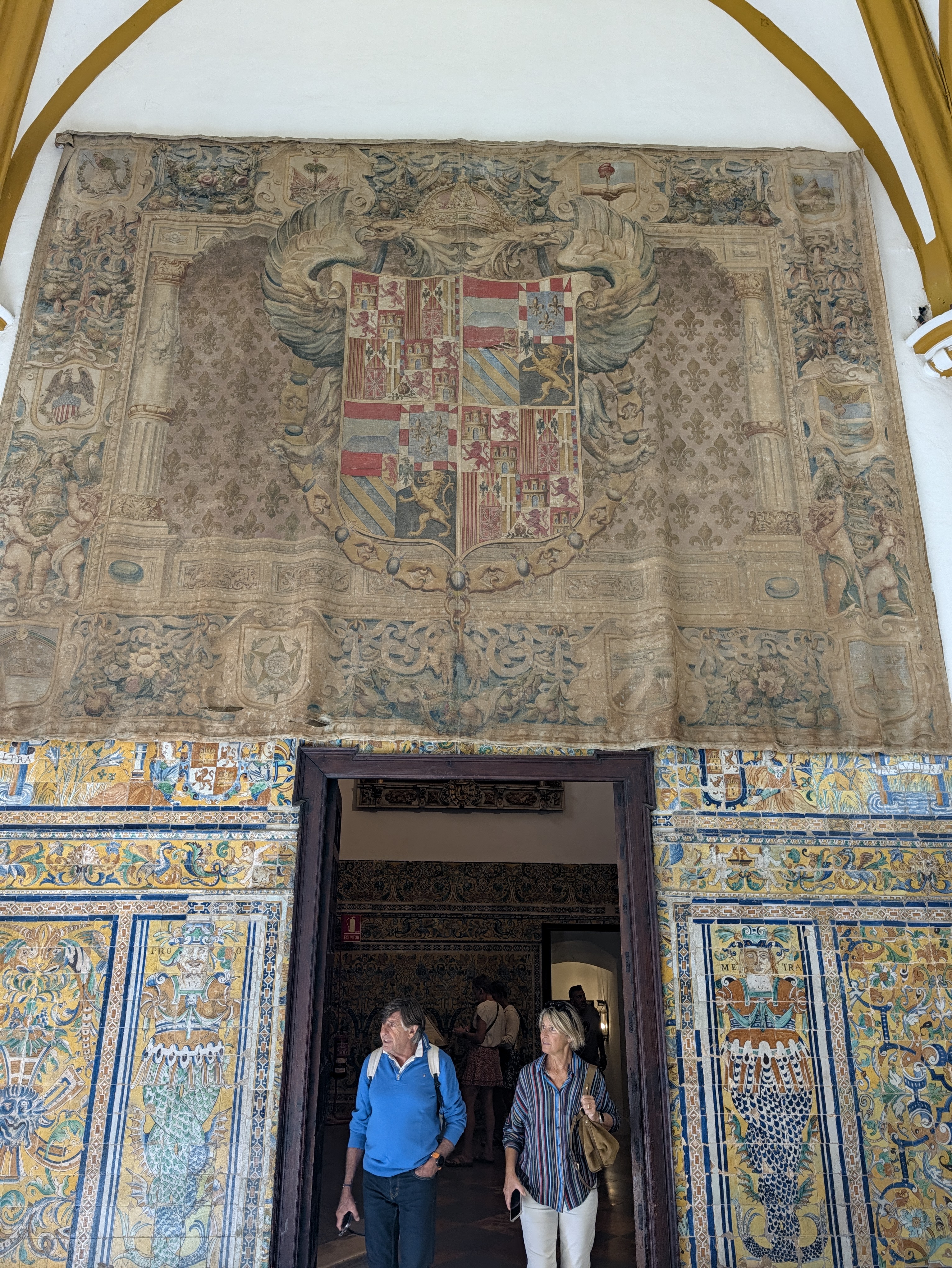
The next day we dove into the history of Seville with a tour that included both the local palace, the Real Alcazar (still used, occasionally, by the Spanish royal family) and the cathedral. The Alcazar has a lot of fascinating history – it was through here that most of the wealth of the Spanish empire in the Americas came into the country (and was taxed). It’s also got some interesting architecture, blending styles from various cultures.
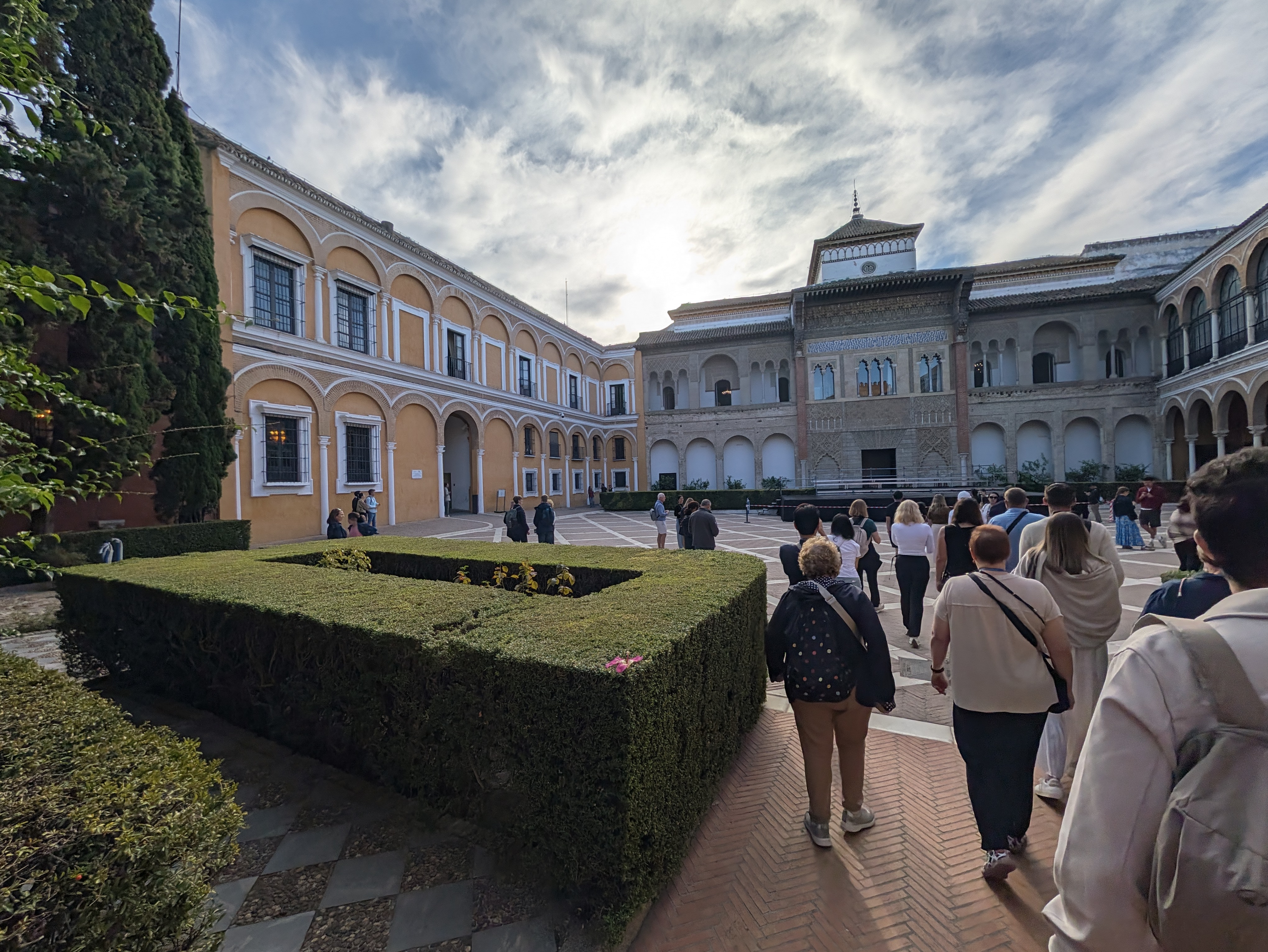
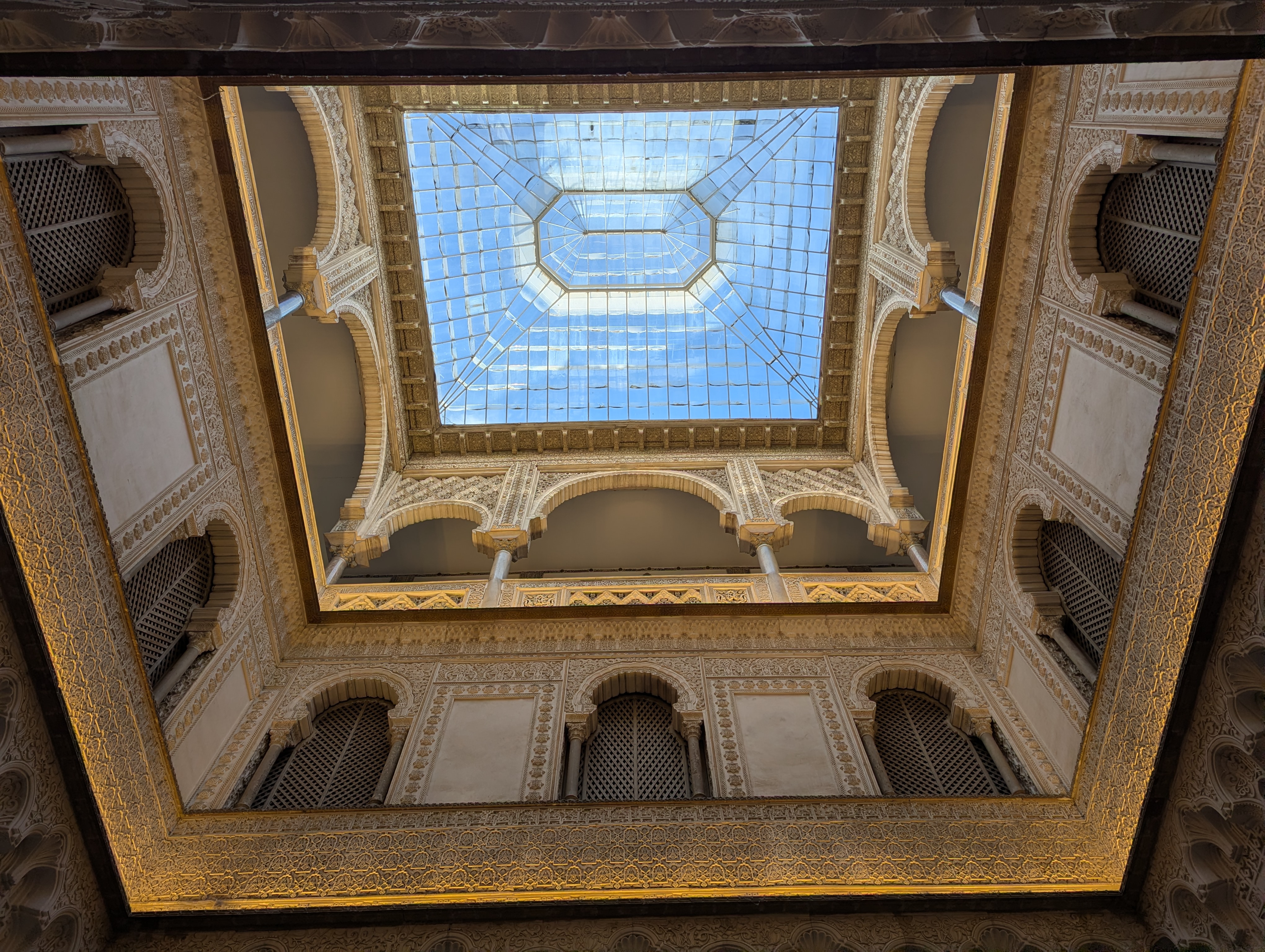
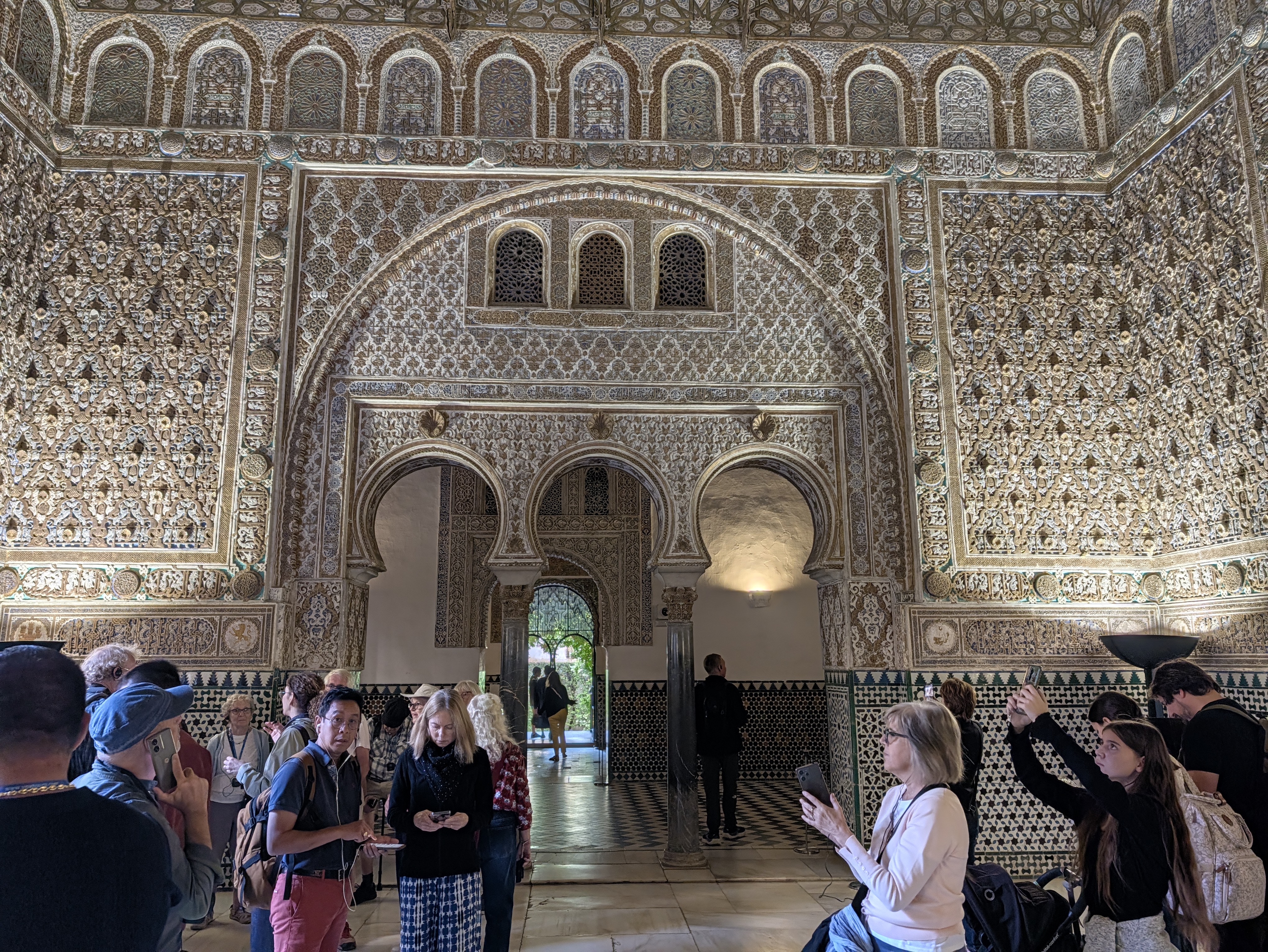
My favorite detail were these balconies, installed by Pietro I, which are, in fact, fake:
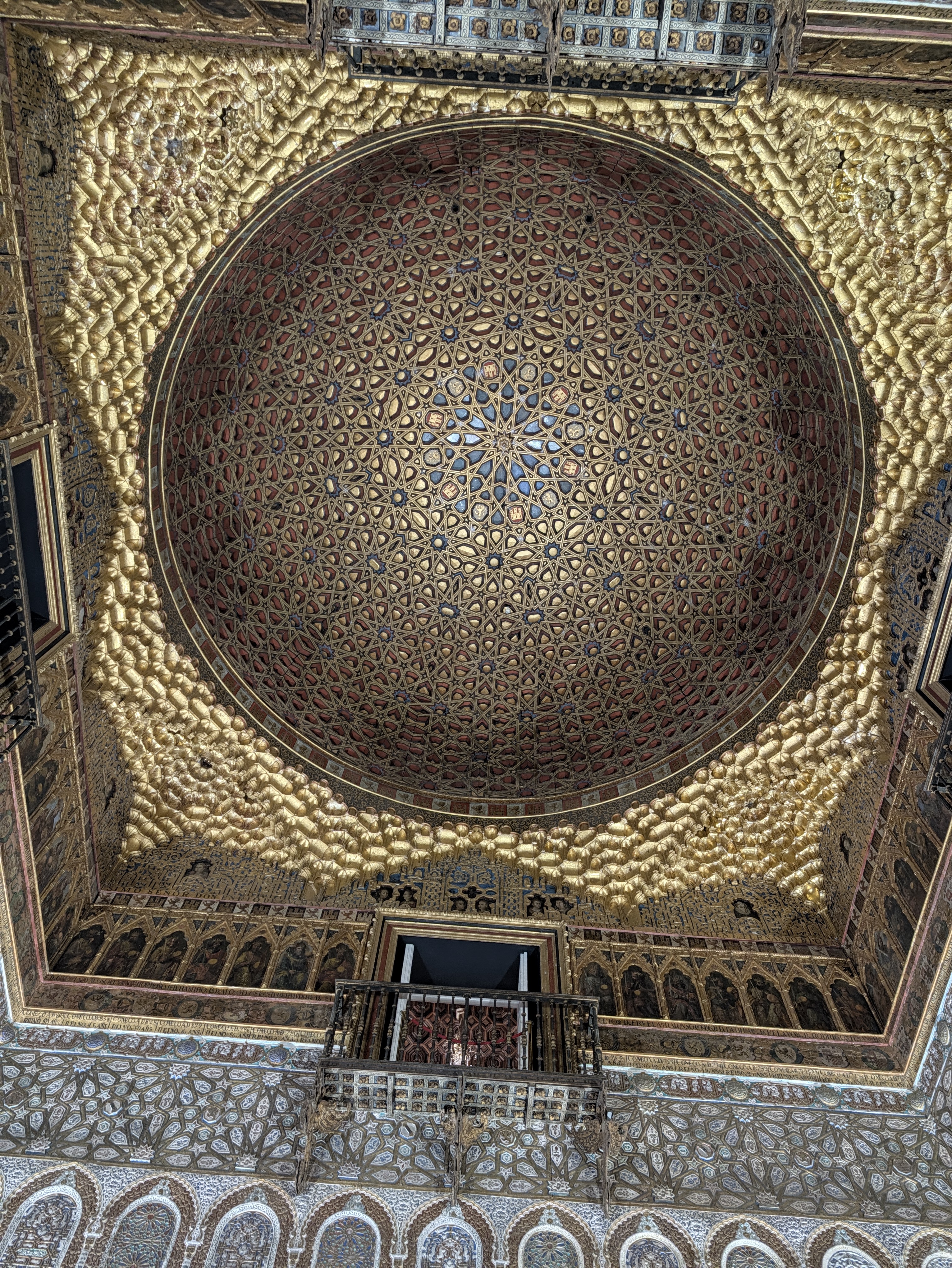
The idea was to impress visitors with the possibility of rooms on a higher level. Potemkin balconies – who’d have thunk it?
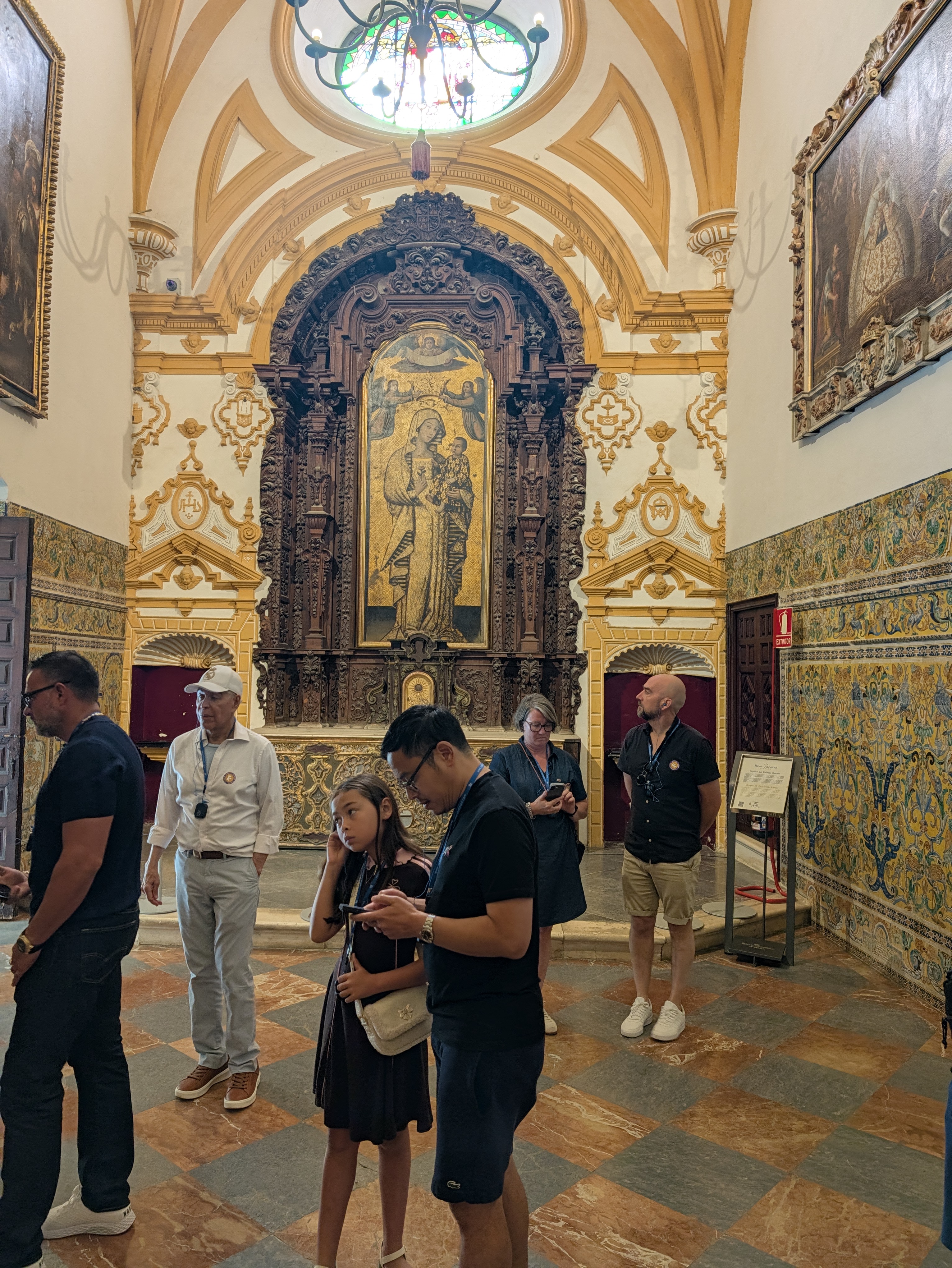
Another lovely detail – this is a confessional chapel built right outside the big room next door where the king held lavish parties. I correctly guessed was that the idea was to go inside, sin your brains out, then come out here to repent.
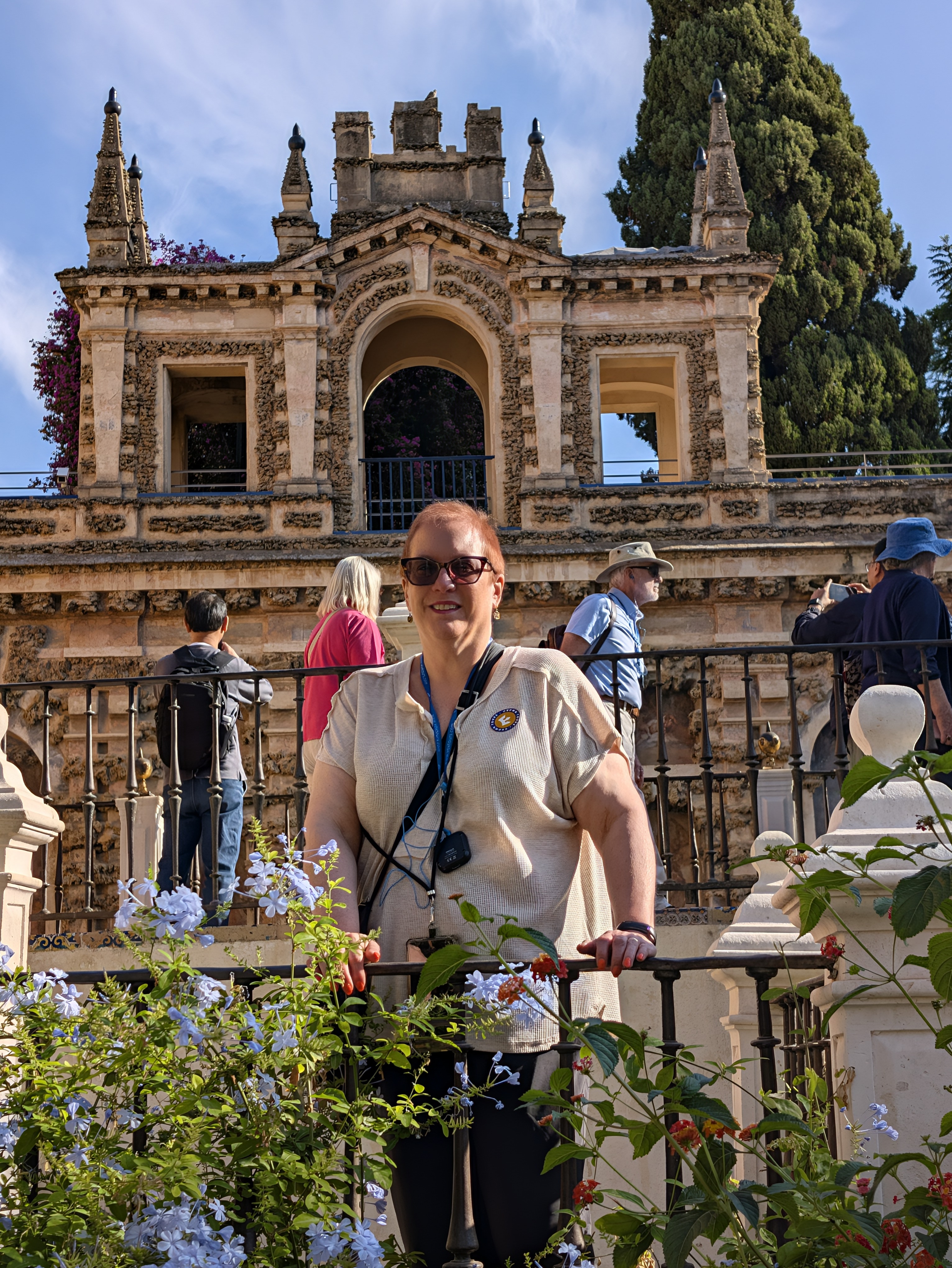
As a good palace does, there were gardens, too.
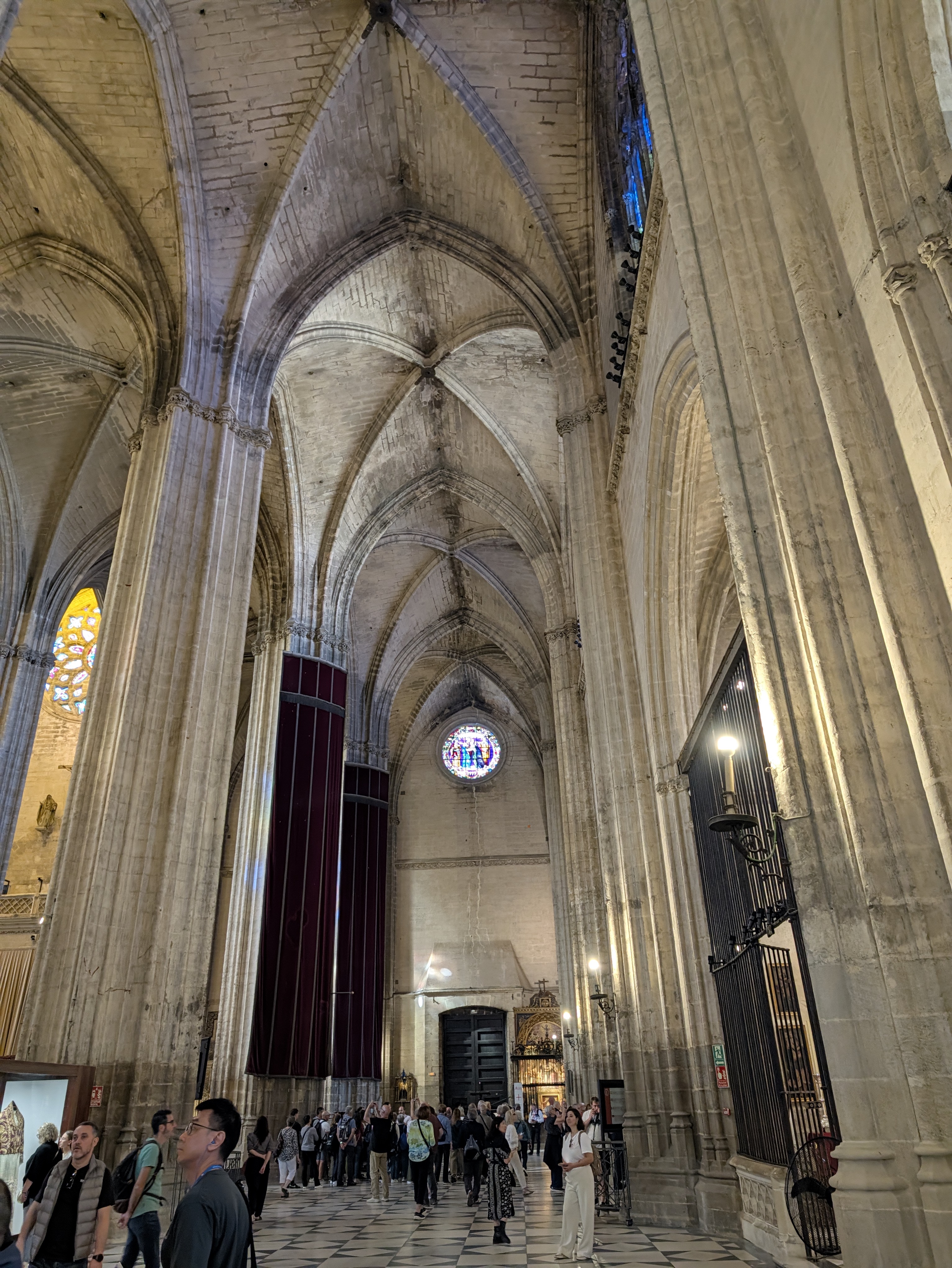
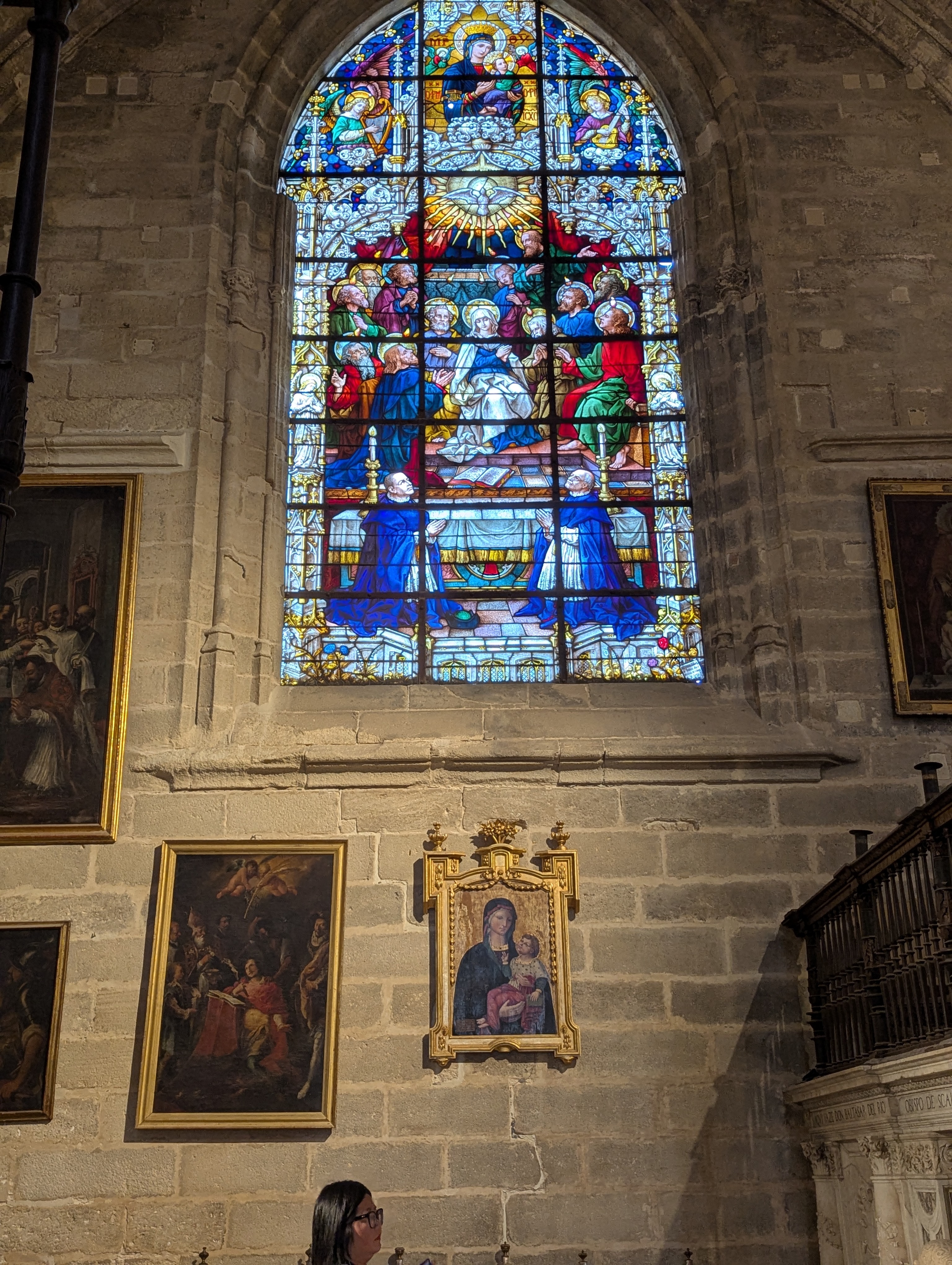
The cathedral, well, it was amazing. Completed in 1519 it’s the largest Gothic cathedral in the world and the third largest of any kind on the planet.
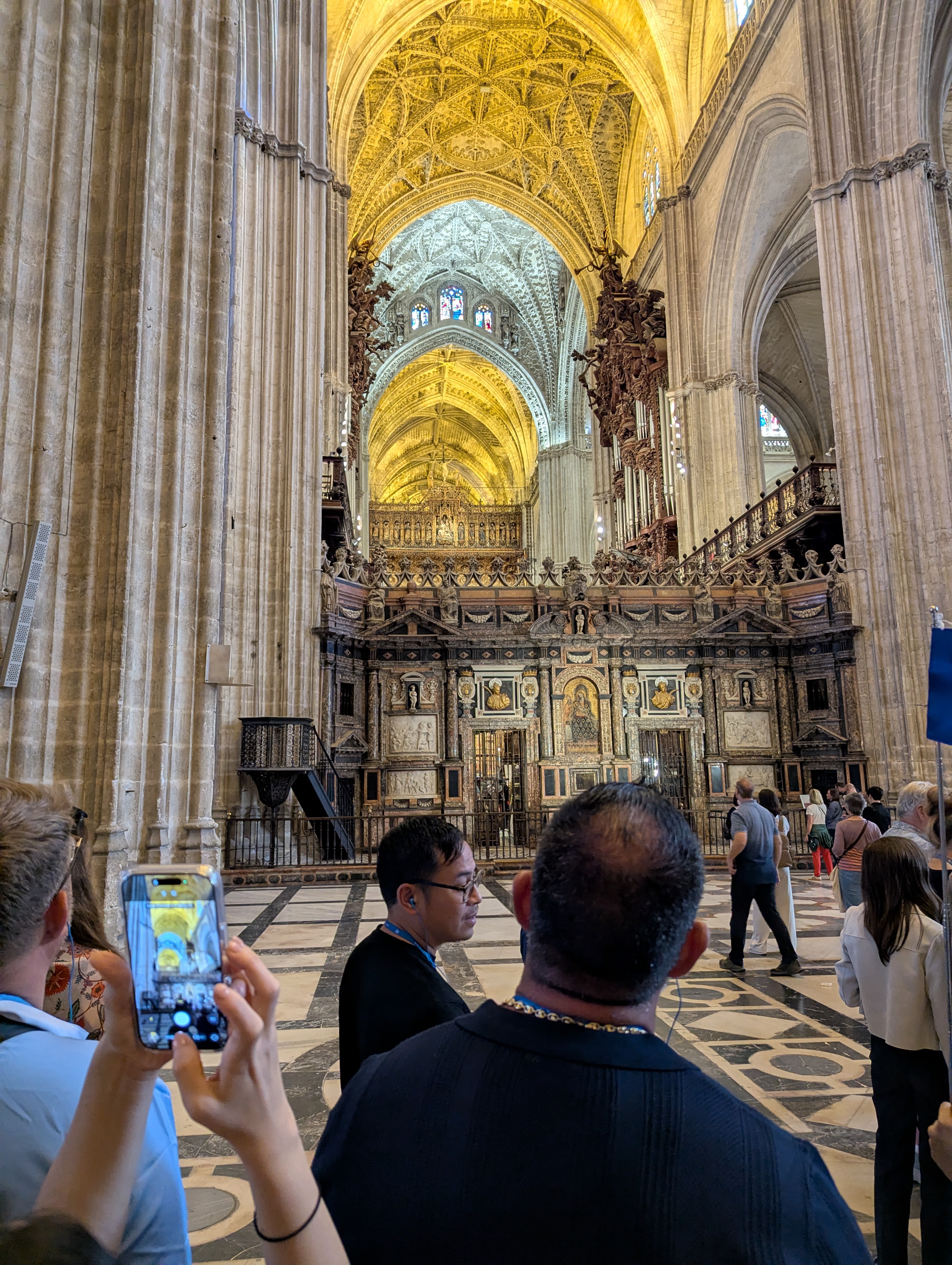
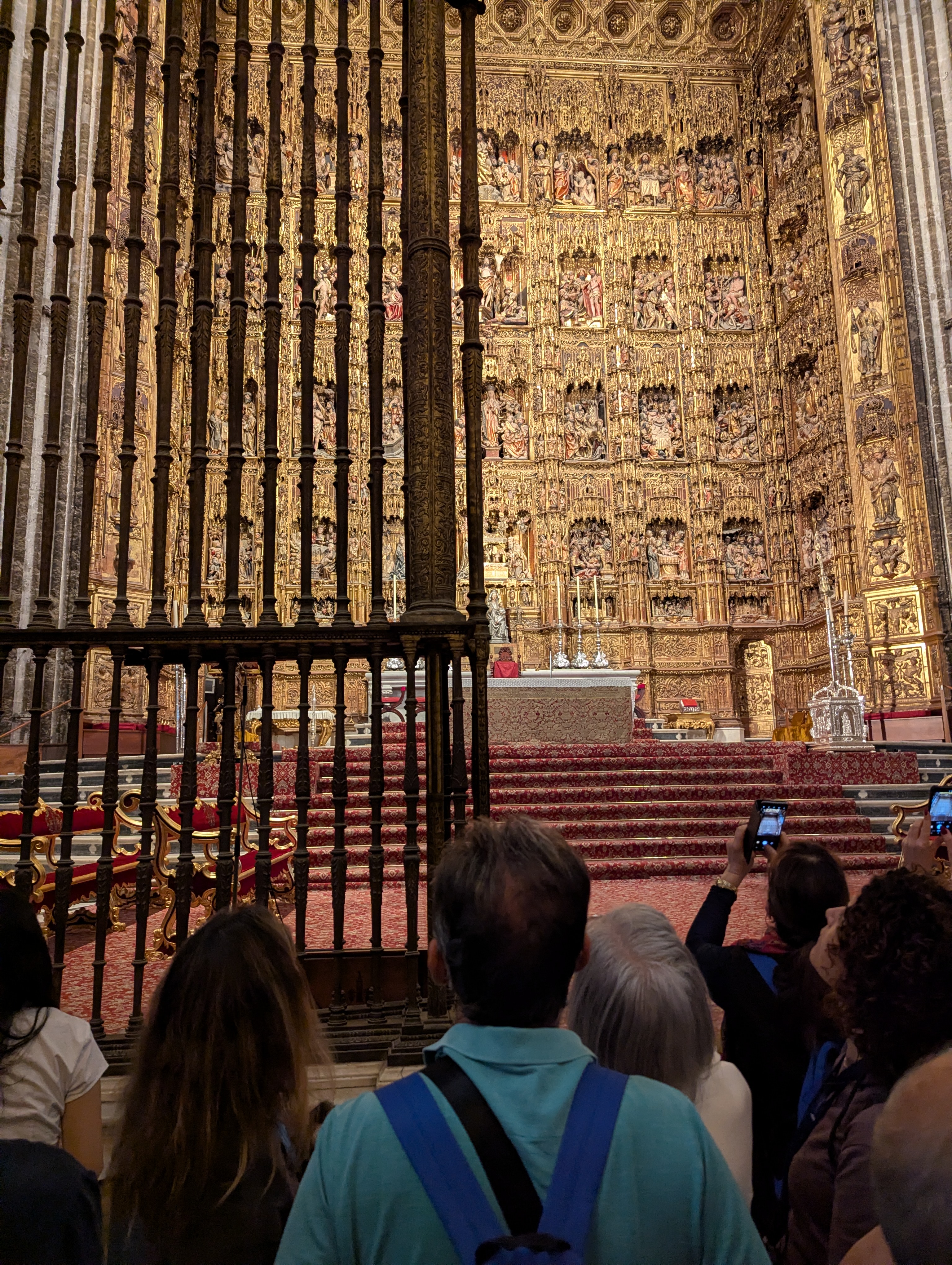
Indeed, the altar is the largest in the world – the Vatican has a scale copy (quite the flex).
Among the many people interred in the cathedral are a pair of Columbuses (Columbi?), Christopher and his second son, Ferdinand. Christopher, as you might expect, has a pretty elaborate tomb:
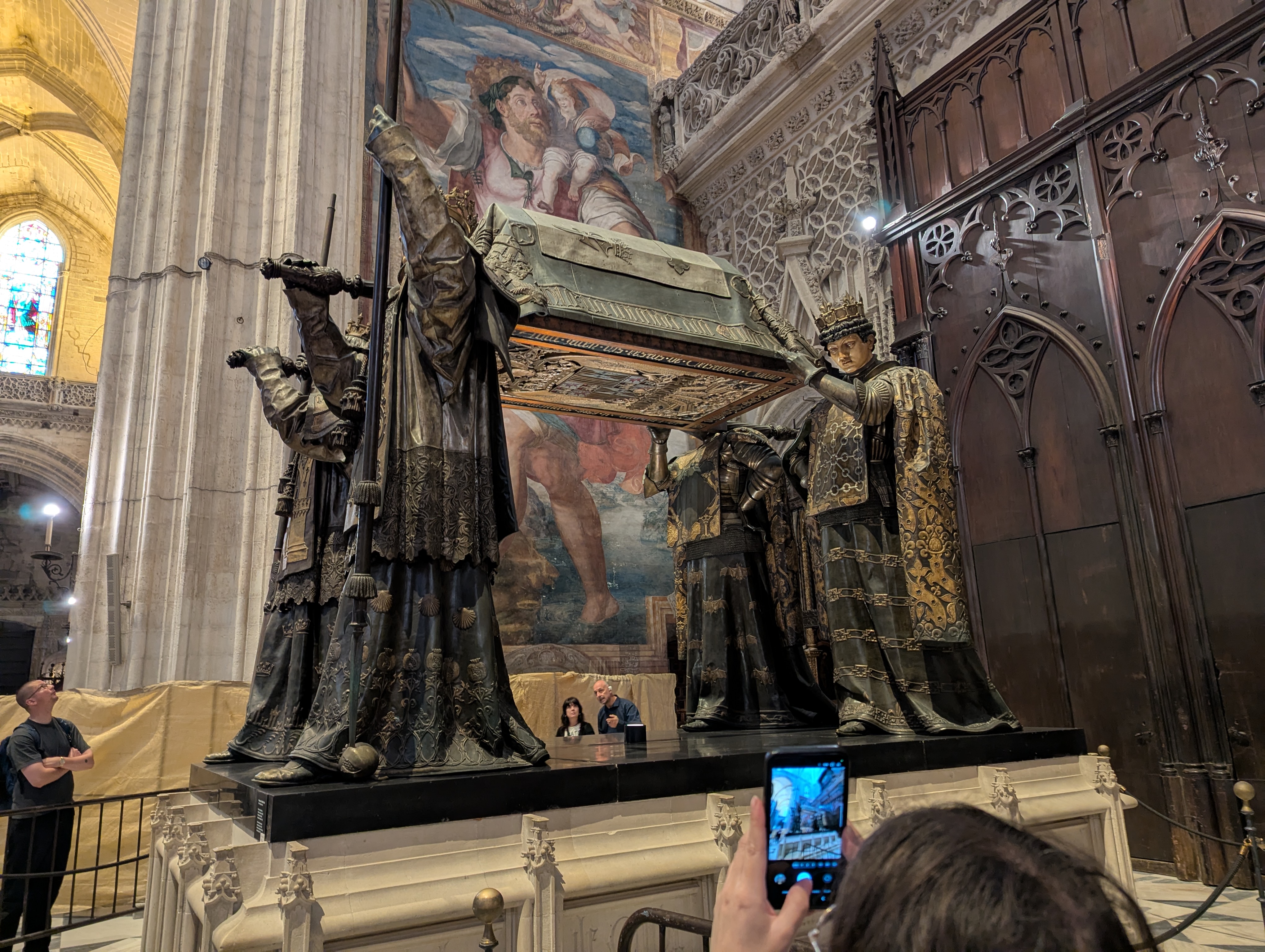
Whether that’s actually him in there has subject to some debate (his remains moved around a lot after his death), but appears to be settled now thanks to DNA comparisons with his son. Ferdinand, on the other hand, gets a respectful tile over his grave in the floor.
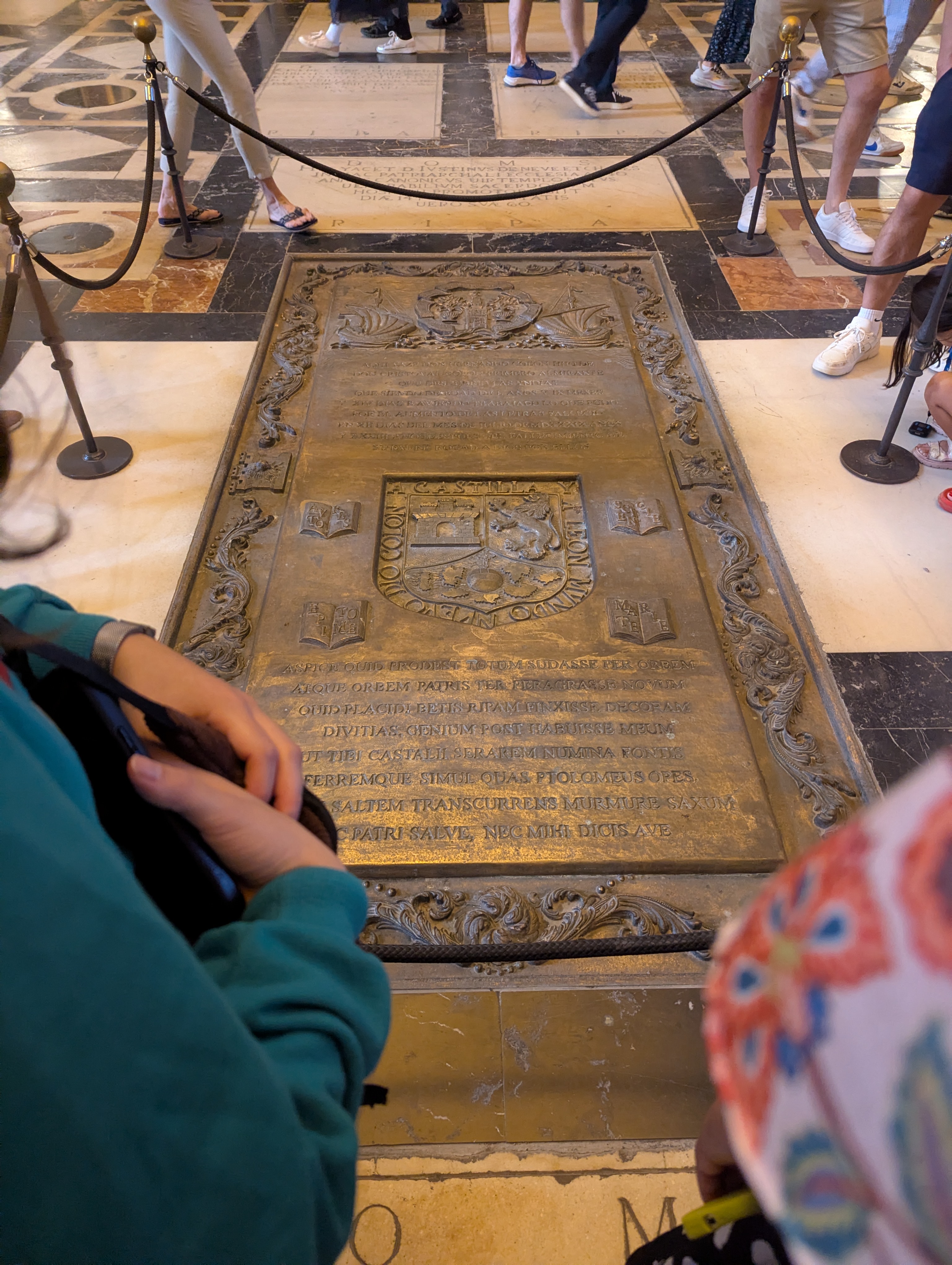
Ferdinand lacked the accomplishments of his father, but he was rich and, in particular, had an extensive library. He guaranteed his resting place in the cathedral by agreeing to give the church his collection upon his death. It’s still available to researchers.
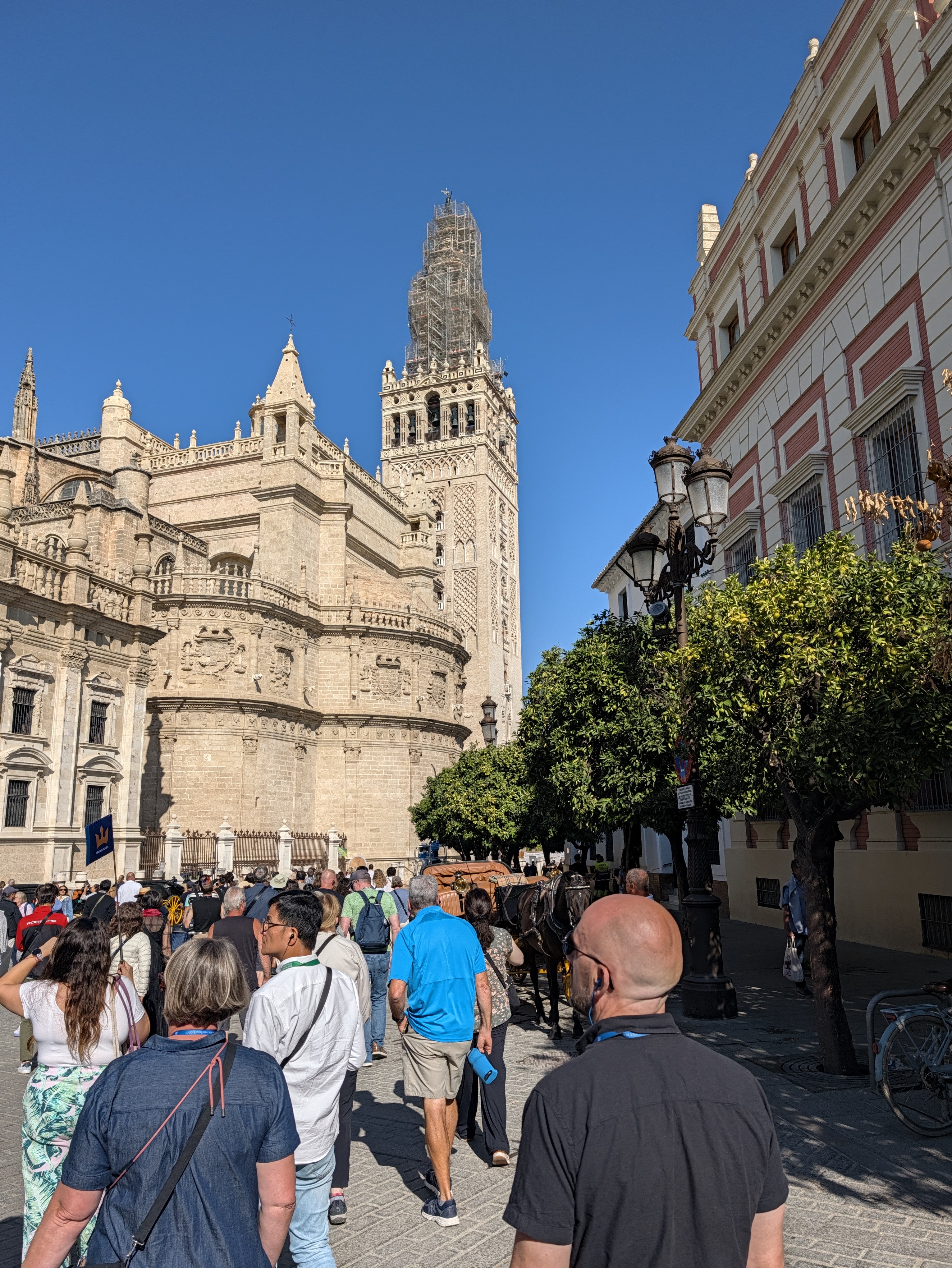
Part of the cathedral is the Giralda, a tower that was once the minaret for the mosque on the site and is now the bell tower for the cathedral. We climbed up all 37 ramps (instead of stairs, allegedly so the muezzin back in the day could ride a burro to the top to do the call to prayer), which provided some great views of the city.
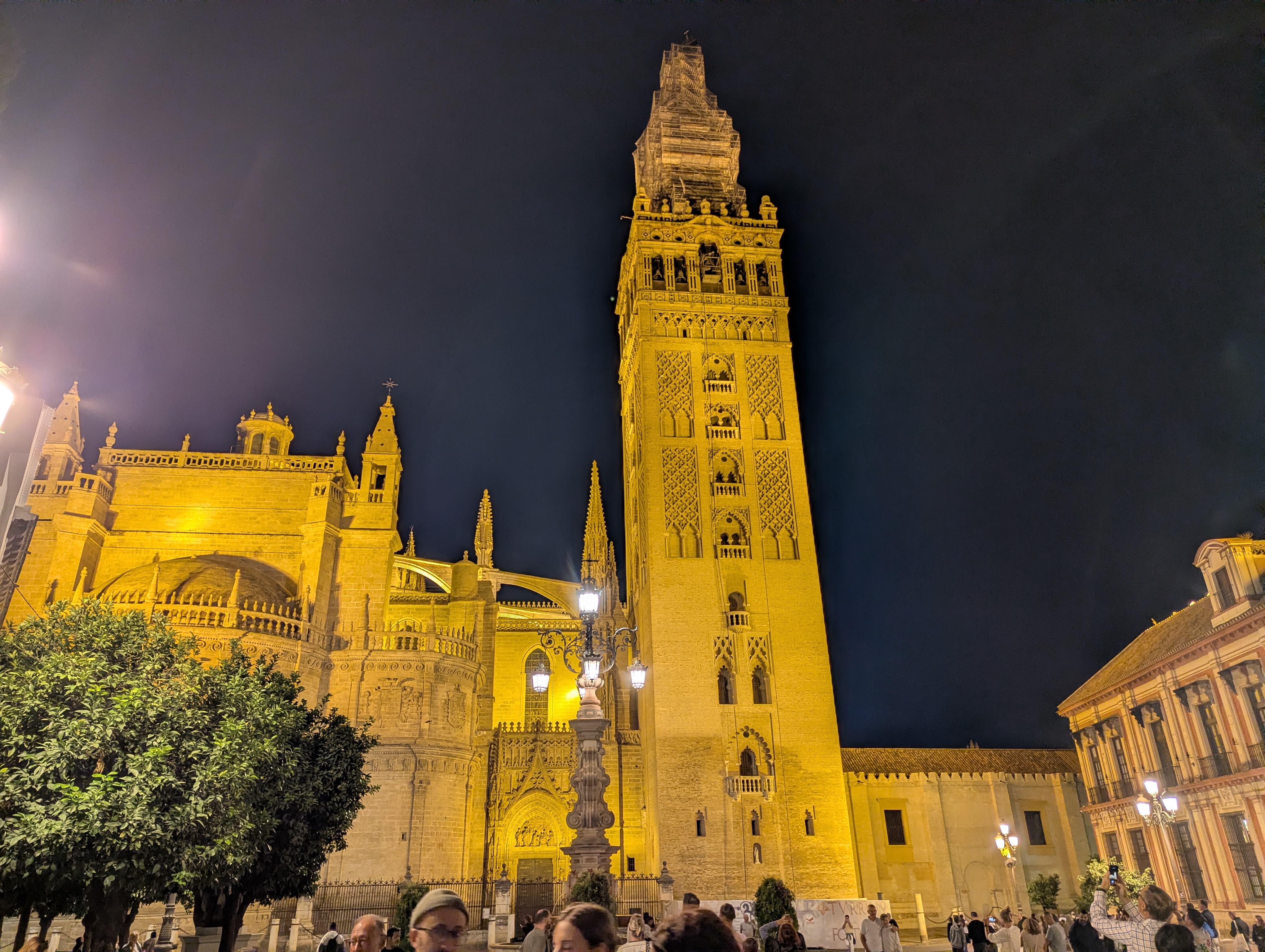
Still a long way up, though!
That night we had a cool experience, a combination tapas walking tour and flamenco experience. Our guide – a very outgoing French expat named Remy – led us from bar to bar for some food and wine, all the while explaining the history and basics of flamenco. Then, a flamenco show:
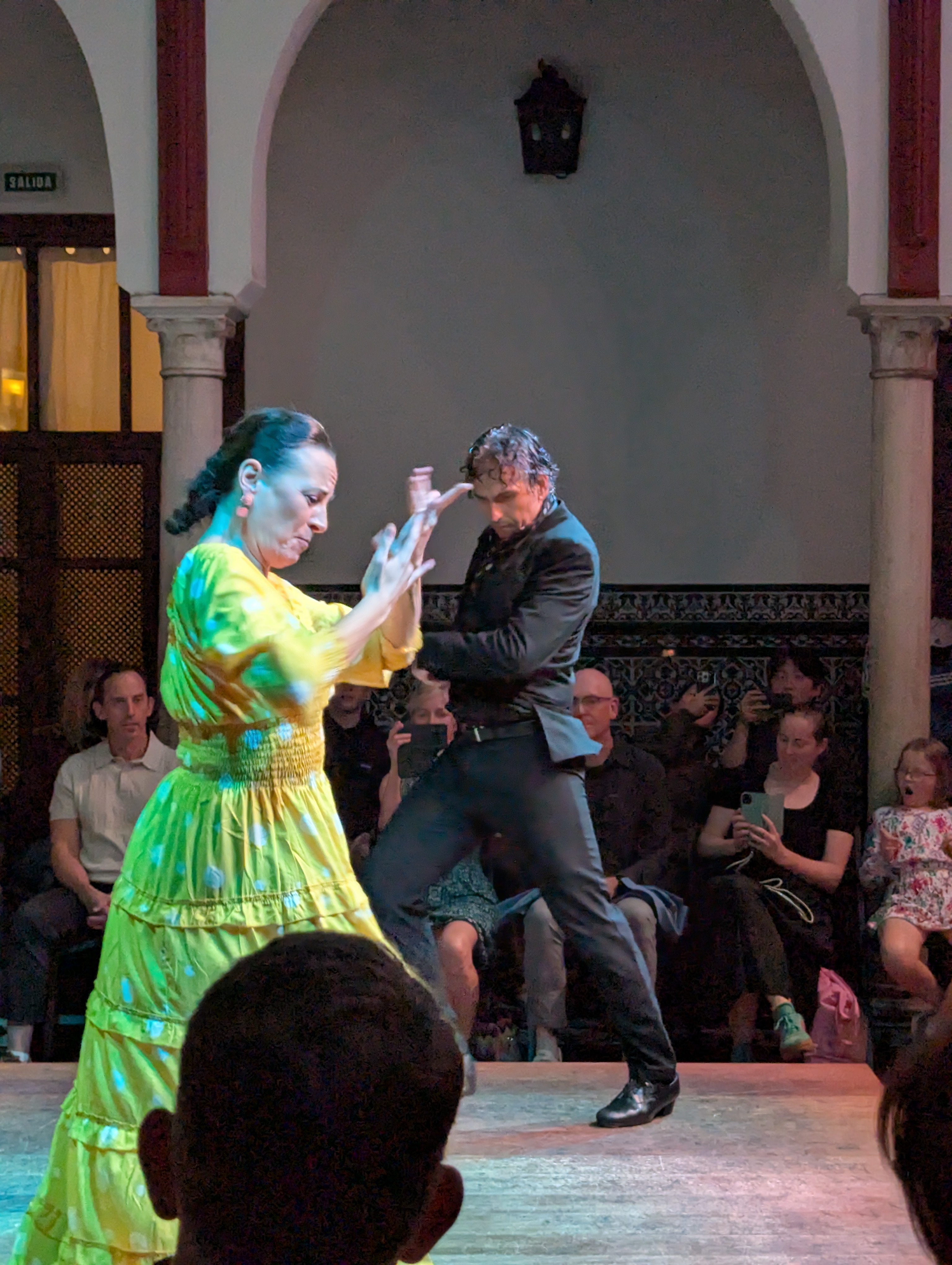
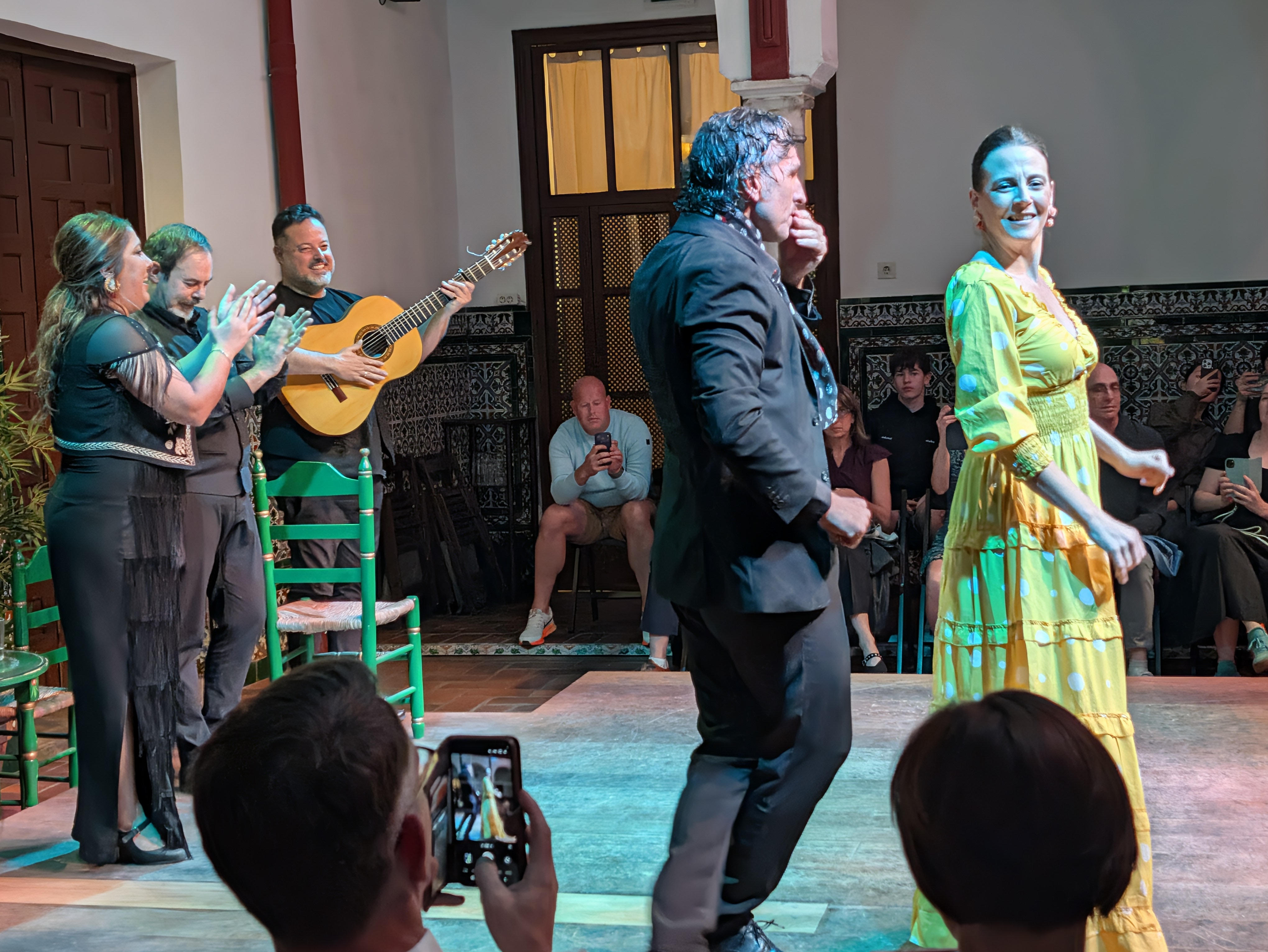
I didn’t realize going in how improvisational these were. I assumed there was some choreography, moves that went with certain songs, what have you. As explained by Remy, and as evident from the performance, it’s very free flowing and in the moment. I particularly enjoyed when one dancer just kind of kept going past where the guitarist and vocalists thought was the end and they wound up pushing to a very joyful end. The guitar player was a fucking beast, by the way.
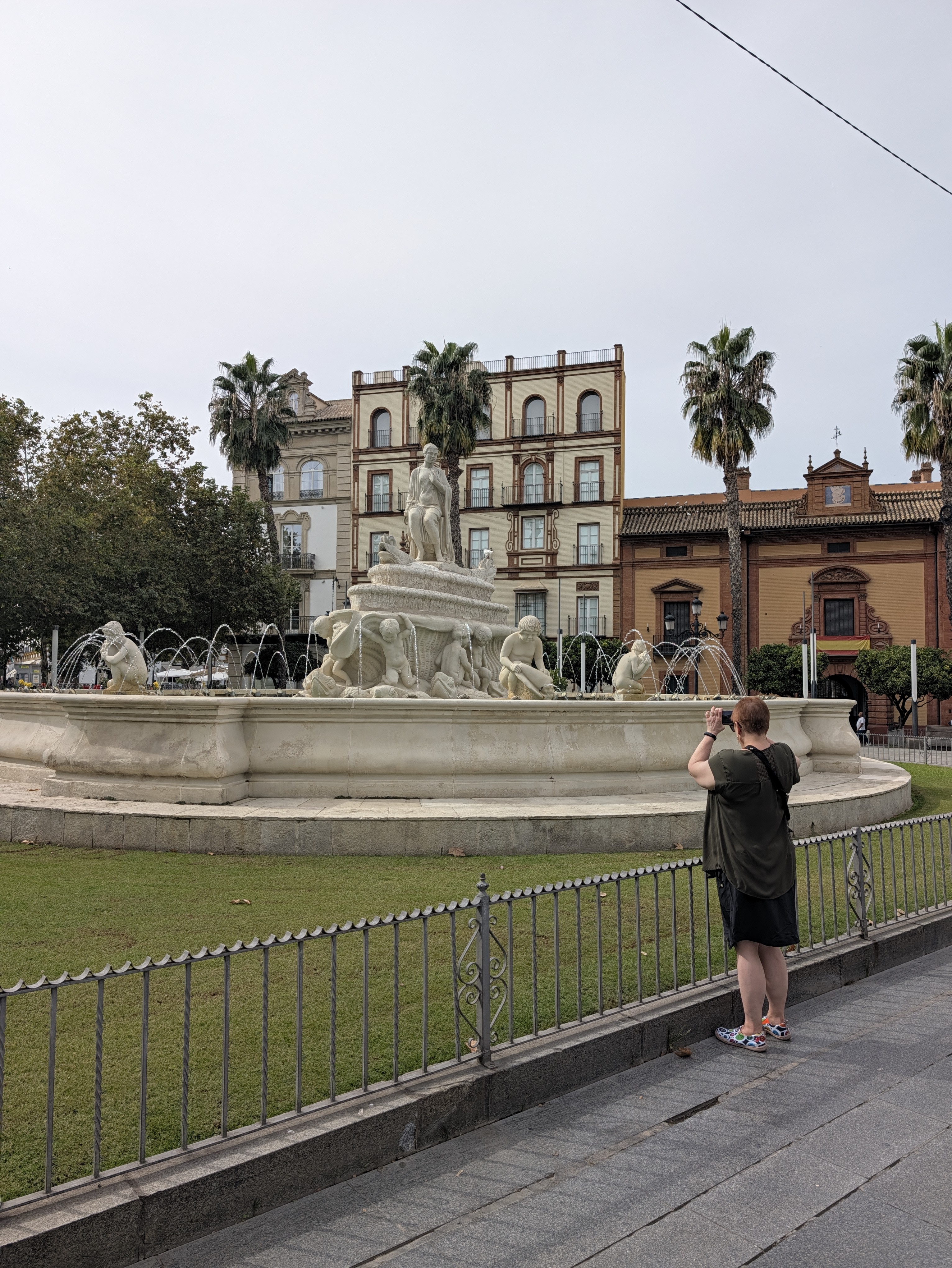
The next day (we spent three nights in Seville) was very low key, with a bath and spa time in the morning and a cruise on the “river” (actually a canal that follows the original course of the river) as a means to see some more of the city.
The spa/bath experience was interesting. Massages don’t do much for me (Kelly loves them) and I wind up feeling awkward and tense rather than relaxed. The baths, however, were nice. One set was divided into hot/warm/cold zones, while another was, essentially a giant jacuzzi. I split my time between those two, for the most part. We were supposed to have an additional bath experience in their rooftop pool, but it was down for maintenance (I think it would have been too cold, but whatever). As compensation, we were given a wine bath – a huge tub filled with wine. In which we sat. And drank wine (and nibbled on cheese and crackers). If ever there is a “this is what it feels just before the peasants revolt” setting, that was it.
Malaga
Rather than take the train, we hired a car to make it to Malaga (the train schedules just didn’t work out, for whatever reason). It was a nice change of pace, literally, and gave us a chance to take in some of the landscape. This part of Spain is pretty dry and not particularly lush. It is covered all over with olive trees, however (Spain, apparently, is the largest producer of olive oil in the world – and it’s quite tasty!). Nearer to the coast it got mountainous, which made me think a bit of home, which was nice.
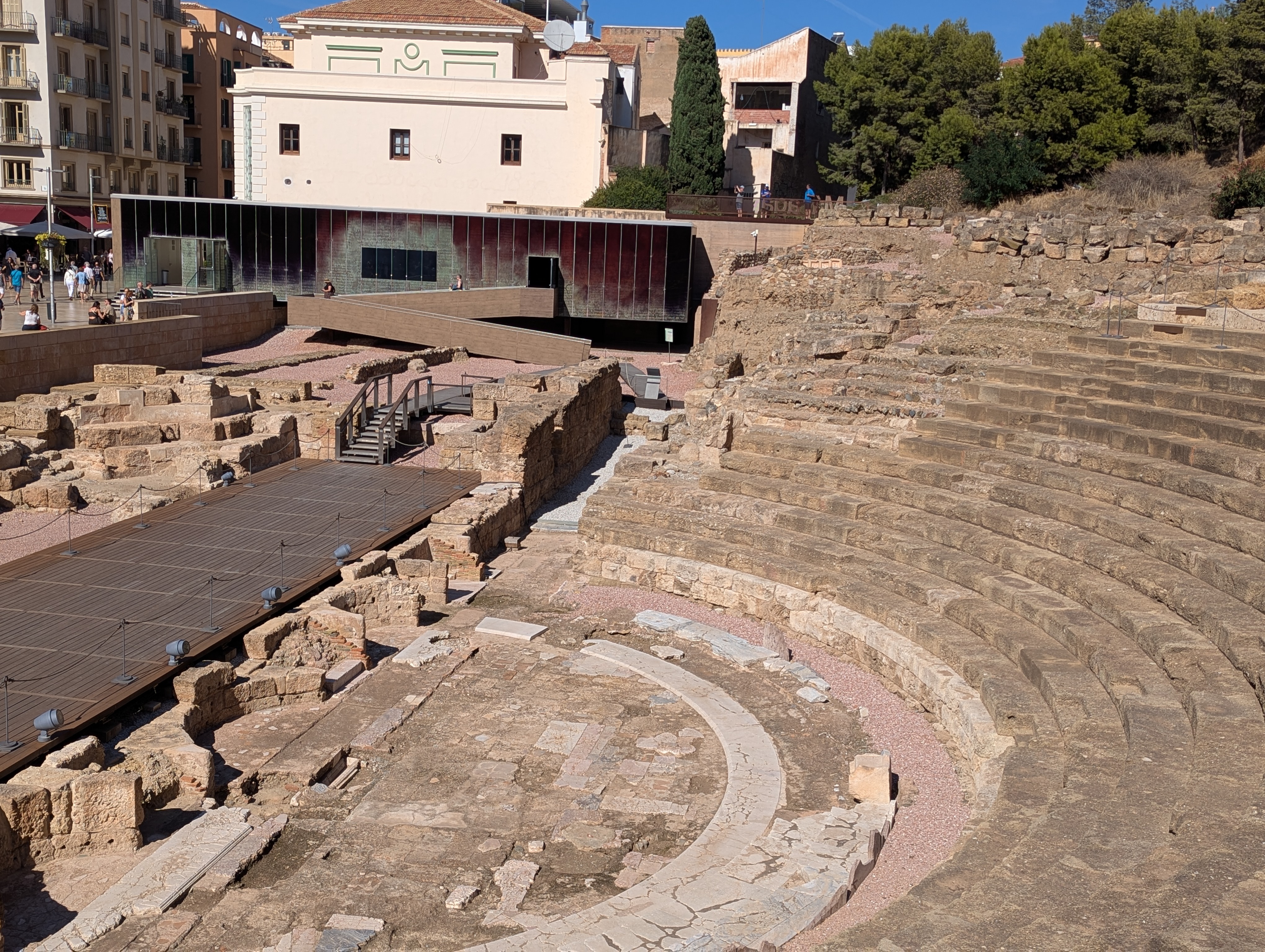
Malaga had a unique feature in terms of its old town, a fairly intact Roman-era theater.
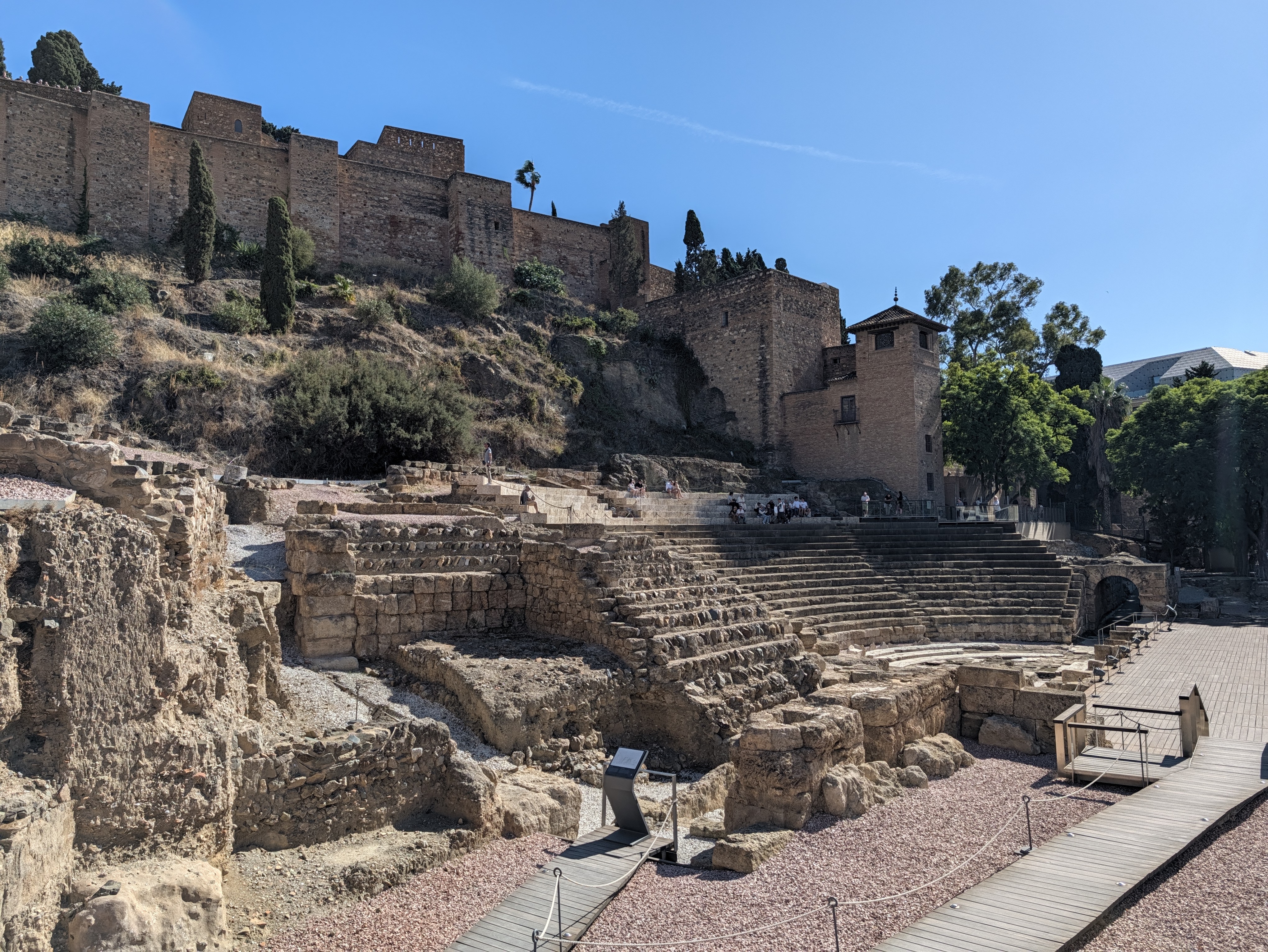
You can sit in the stone bleachers and imagine someone taking in the latest work by Seneca or Gaius Maecenas Melissus and complaining, “I’ve seen it before.”
Up the hill is the Alcazaba, a fortress dating back to the 11th Century. It’s laid on hill so it really clings to the landscape (like Obert’s house in Gods of the Empire, if you’re familiar).
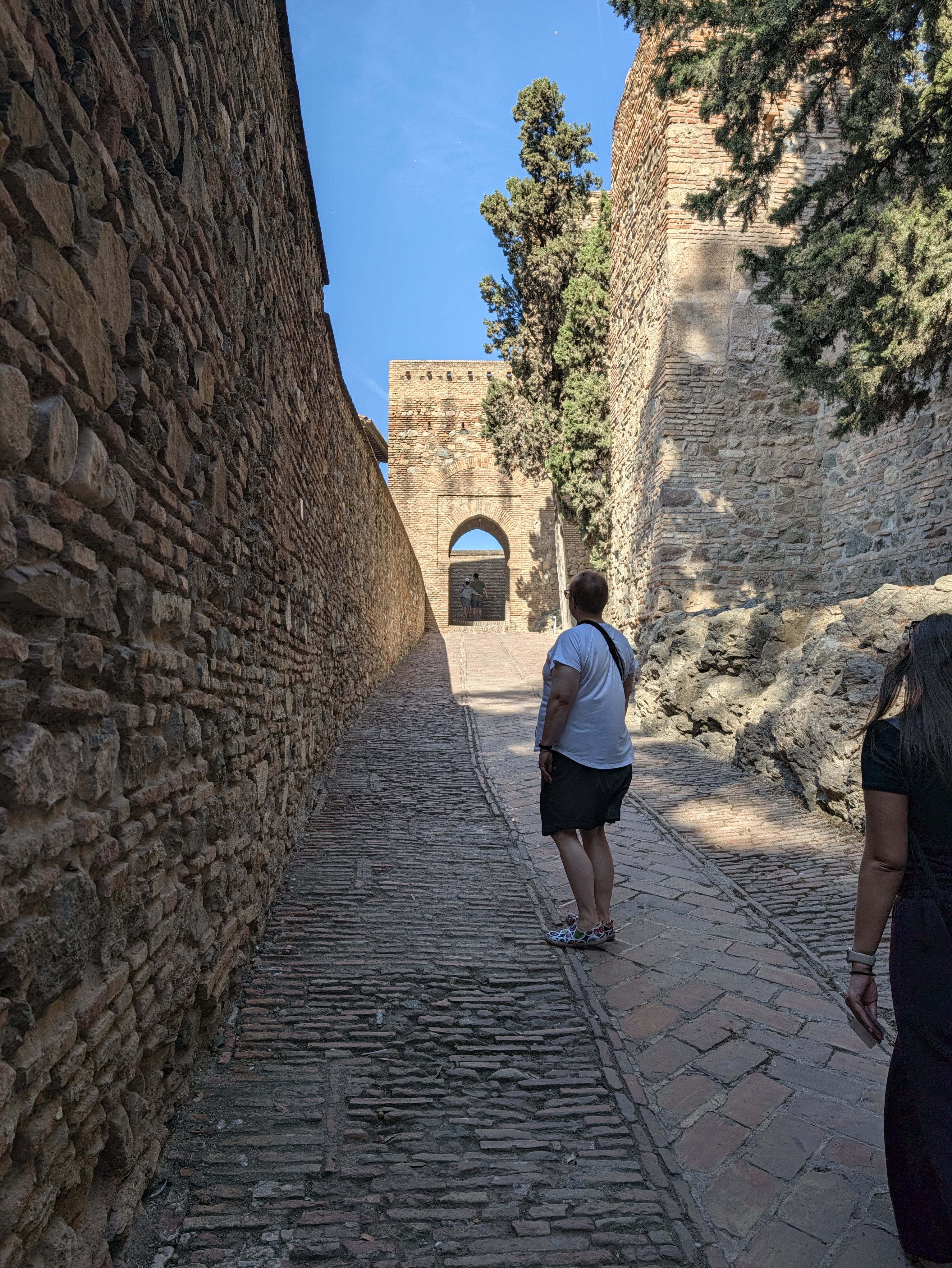
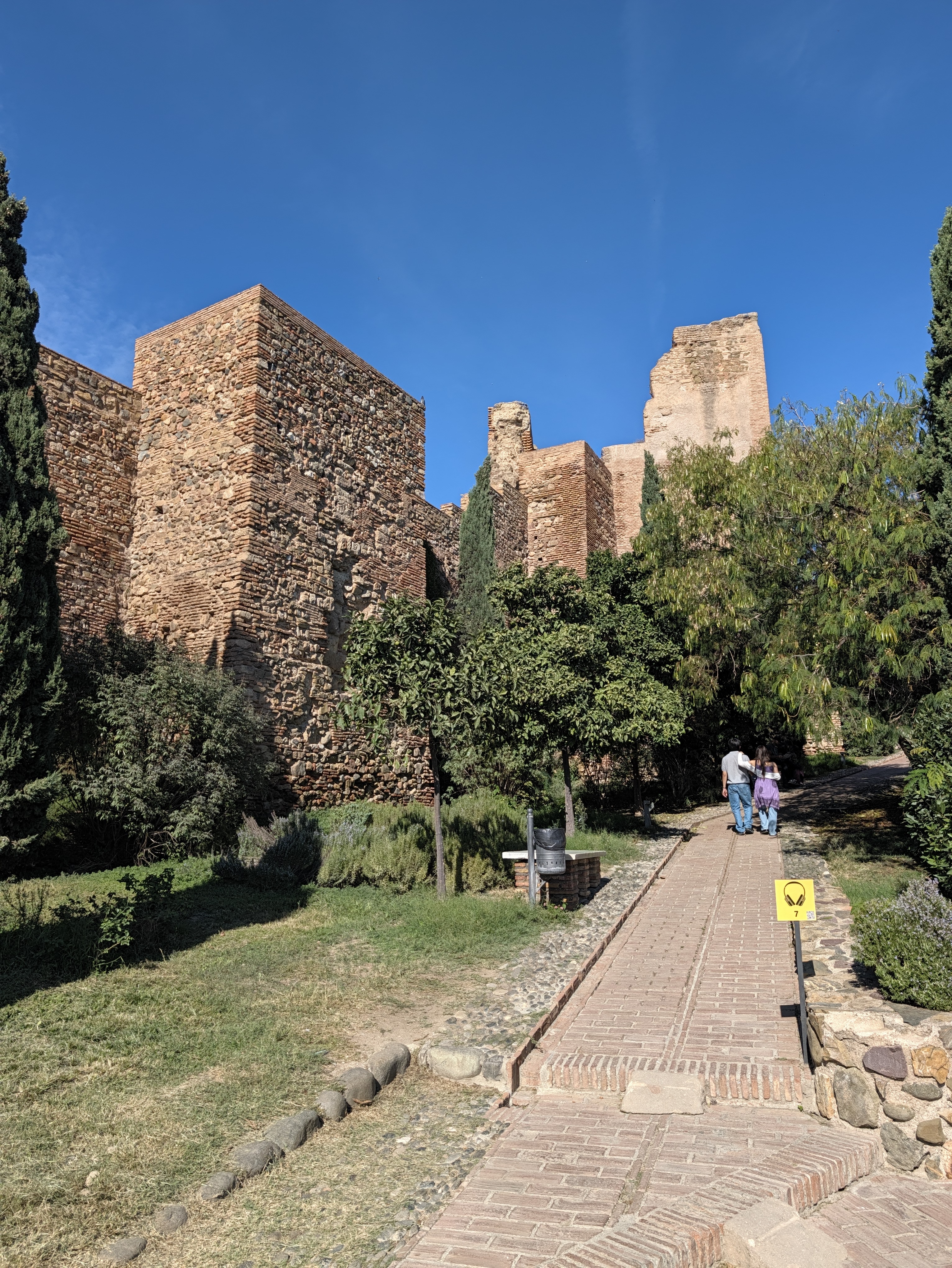
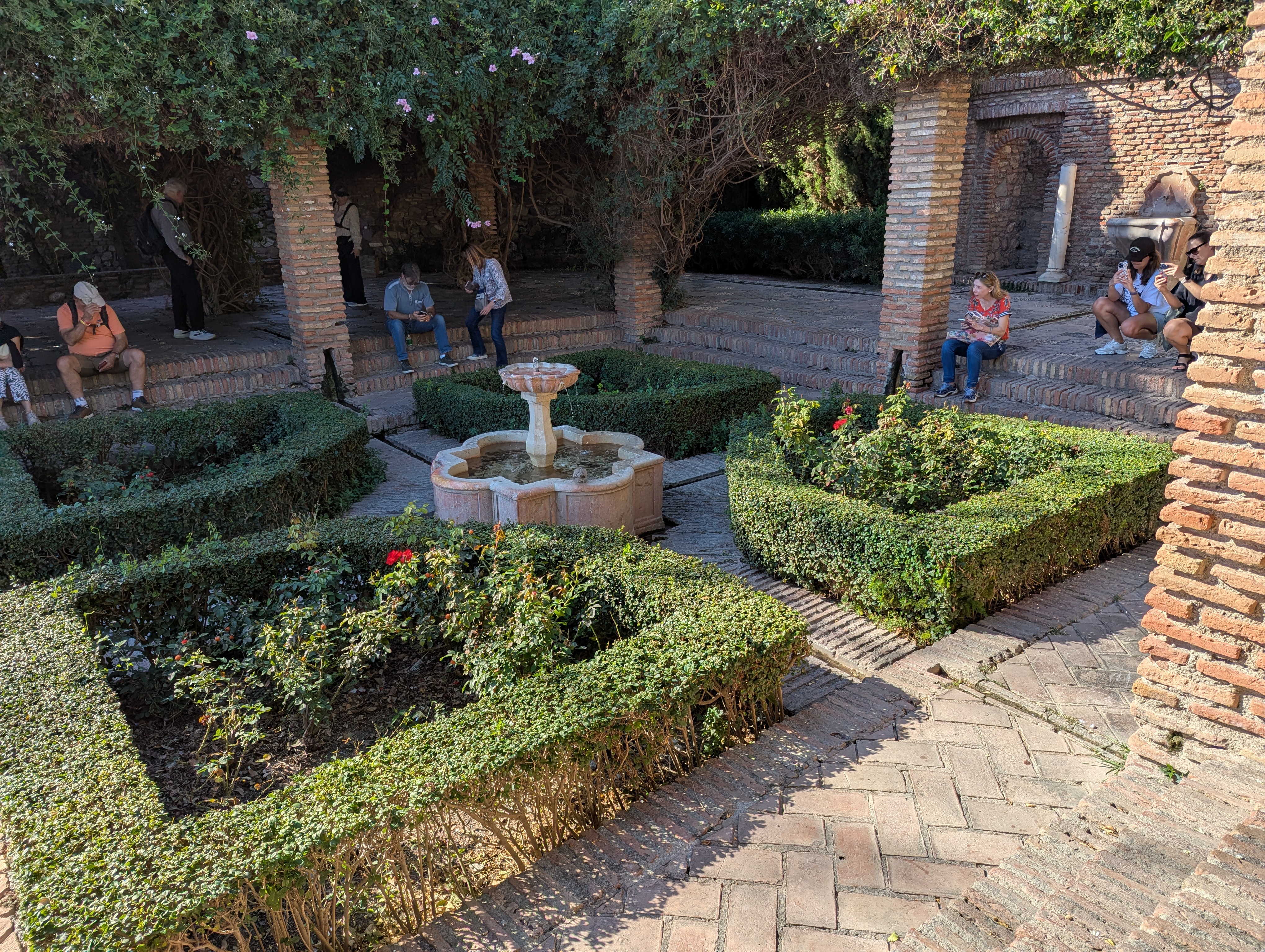
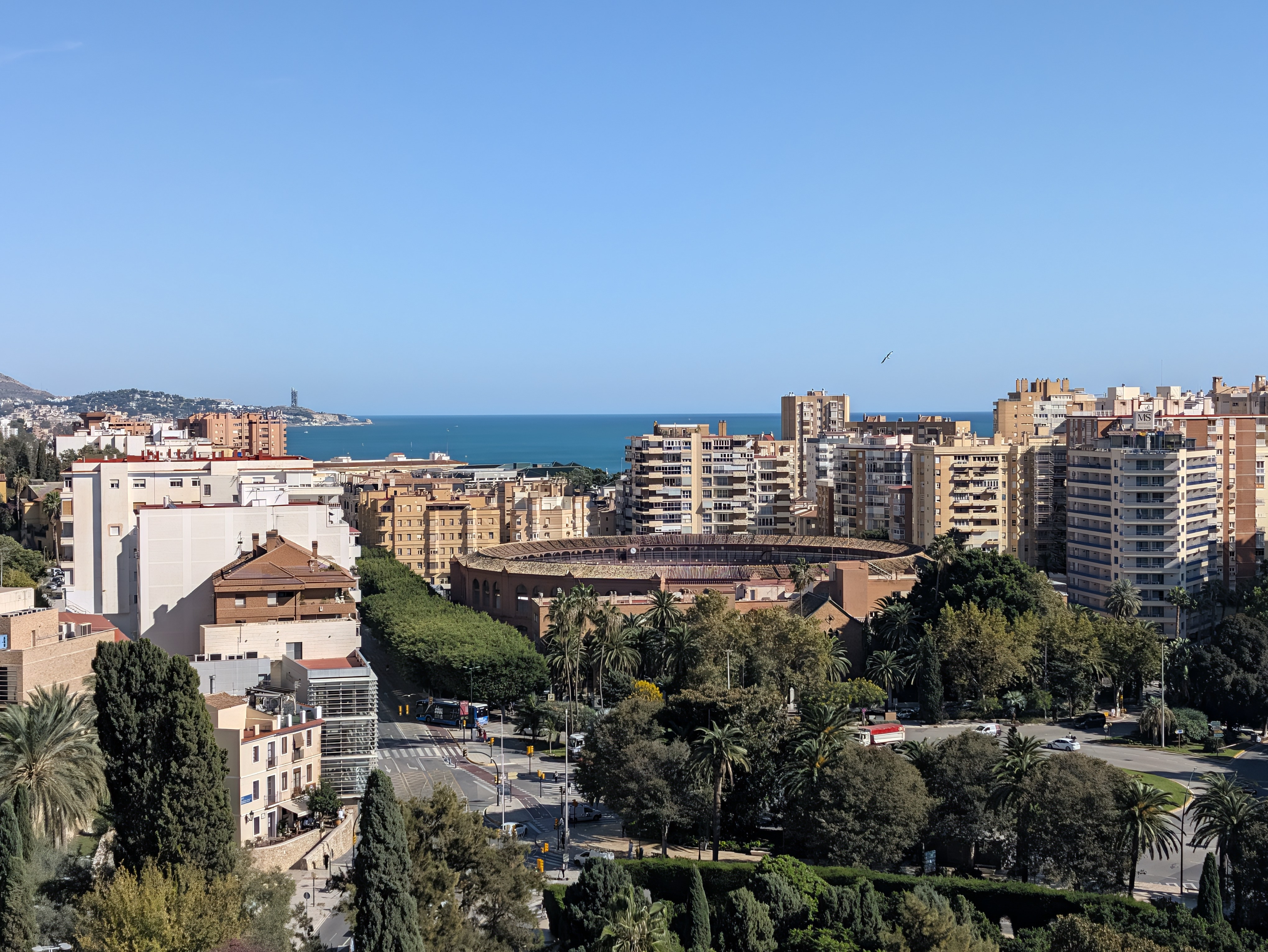
It does provide some great views of the city, particularly the harbor.
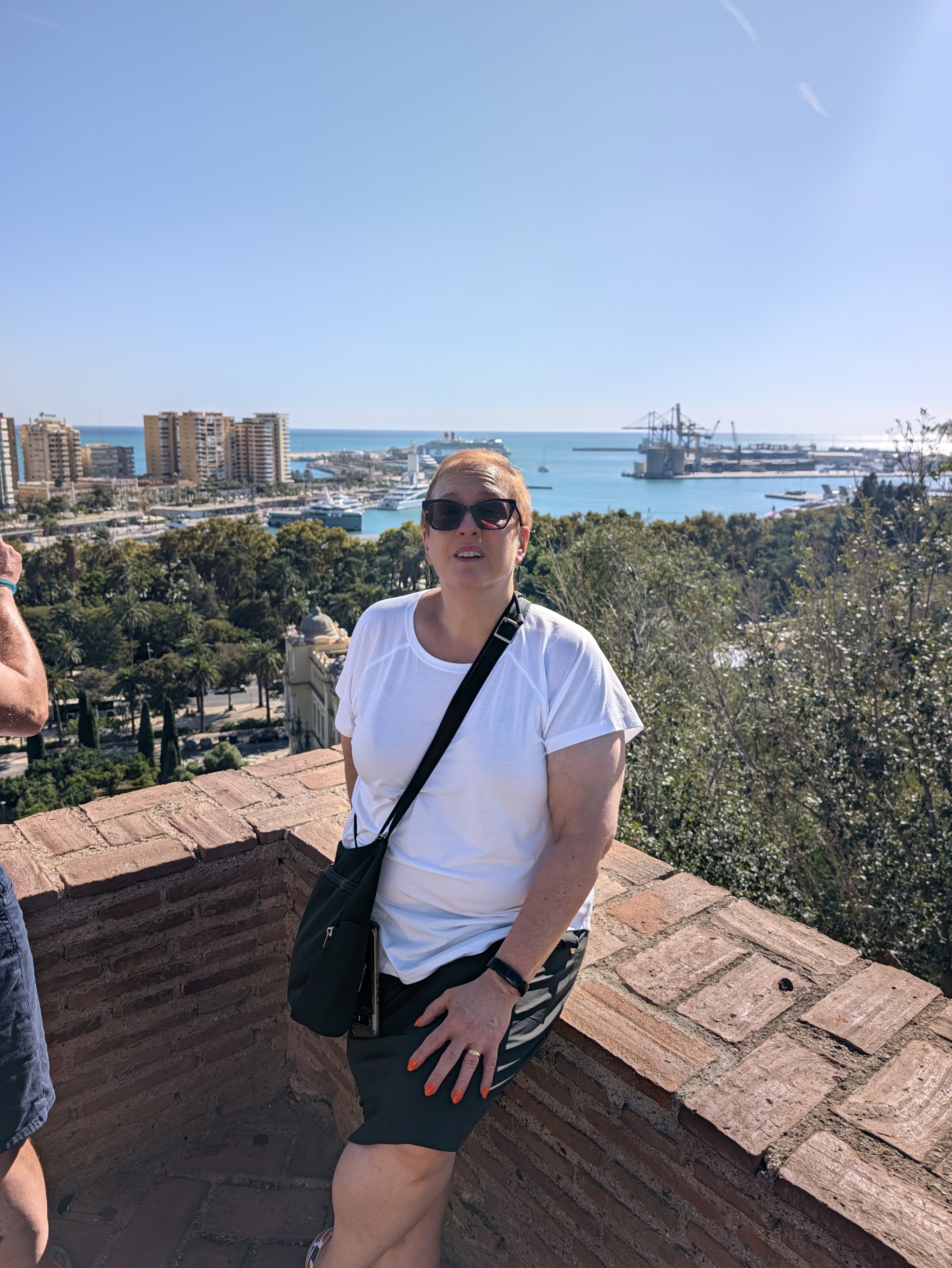
We decided not to hike all the way to the top of the hill, to the Gibralfaro castle. Gotta know your limits.
The main reason we went to Malaga was Picasso. He was born there and there’s a museum dedicated to him there.
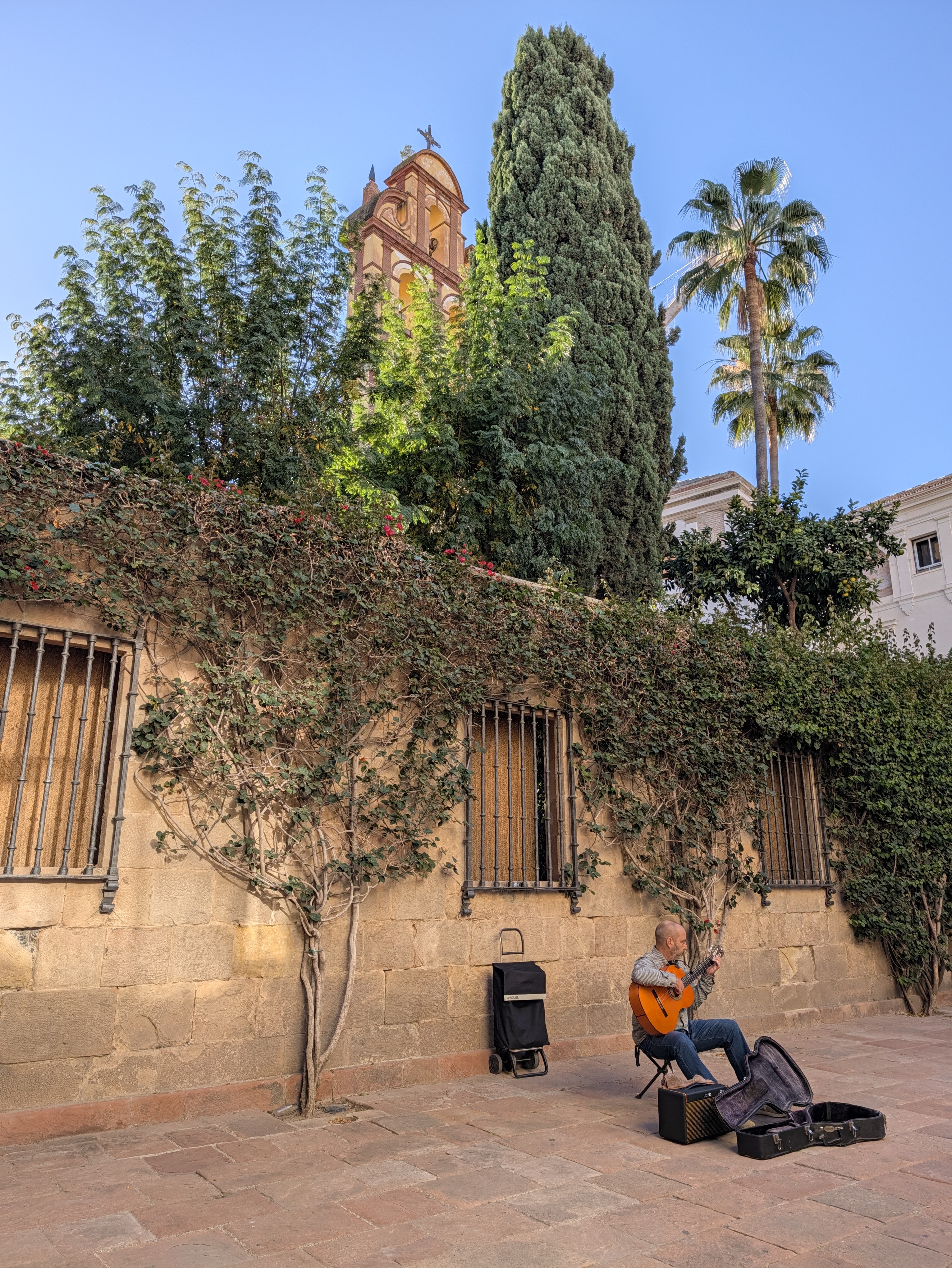
It’s pretty well done, covering the breadth of his artistic output.
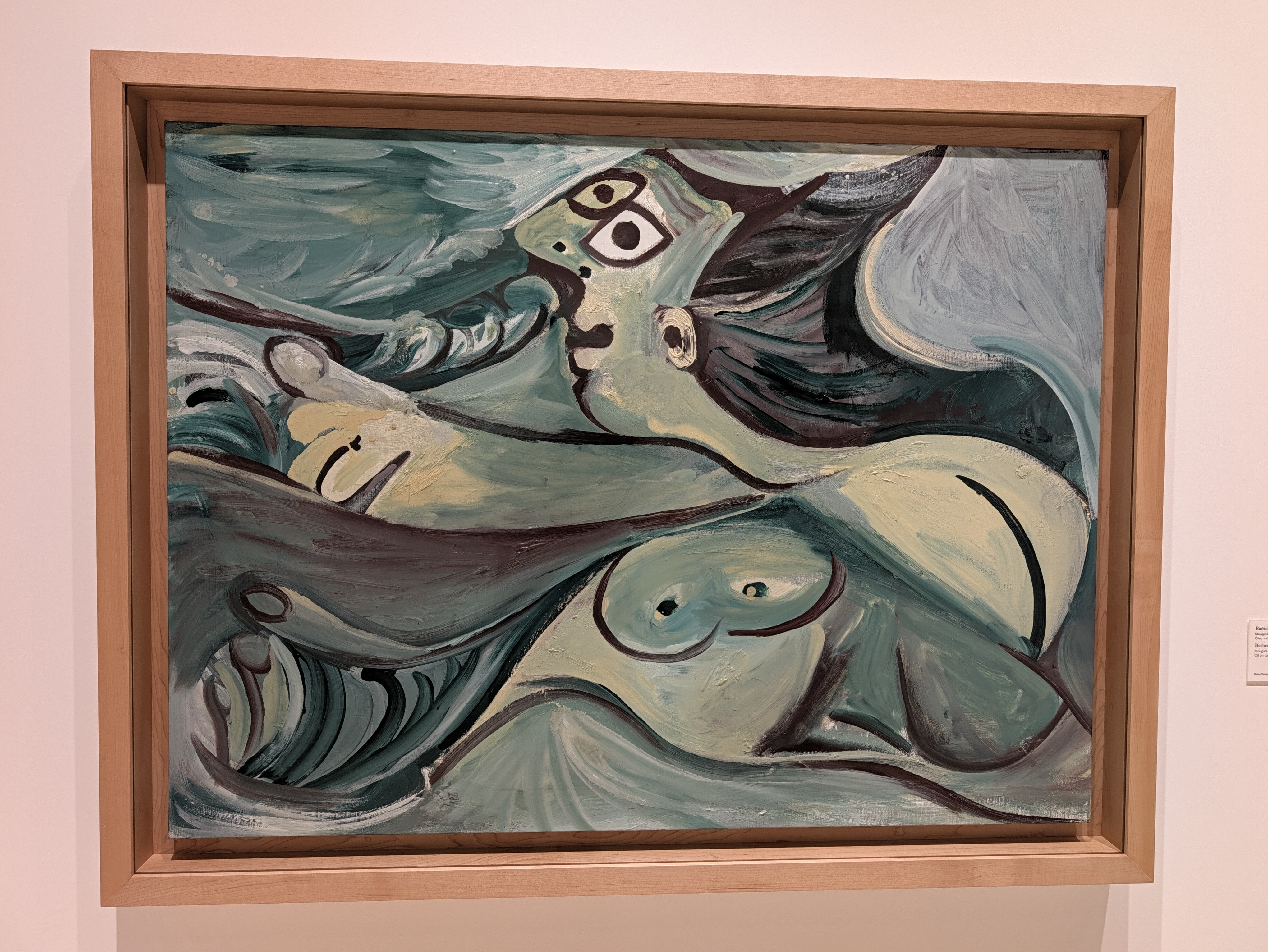
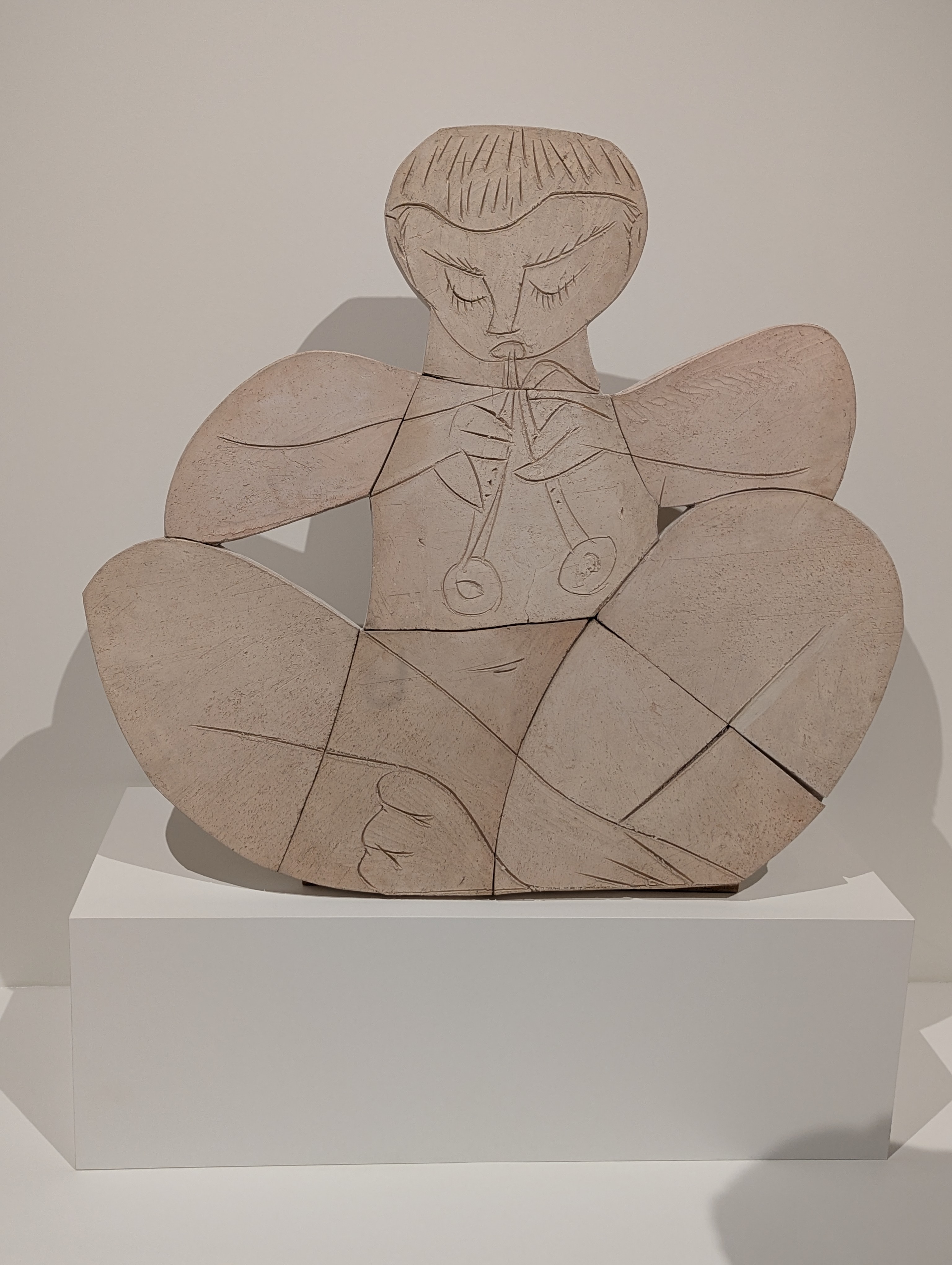
I liked his take on art: “We all know that art is not truth. Art is a lie that makes us realize the truth.”
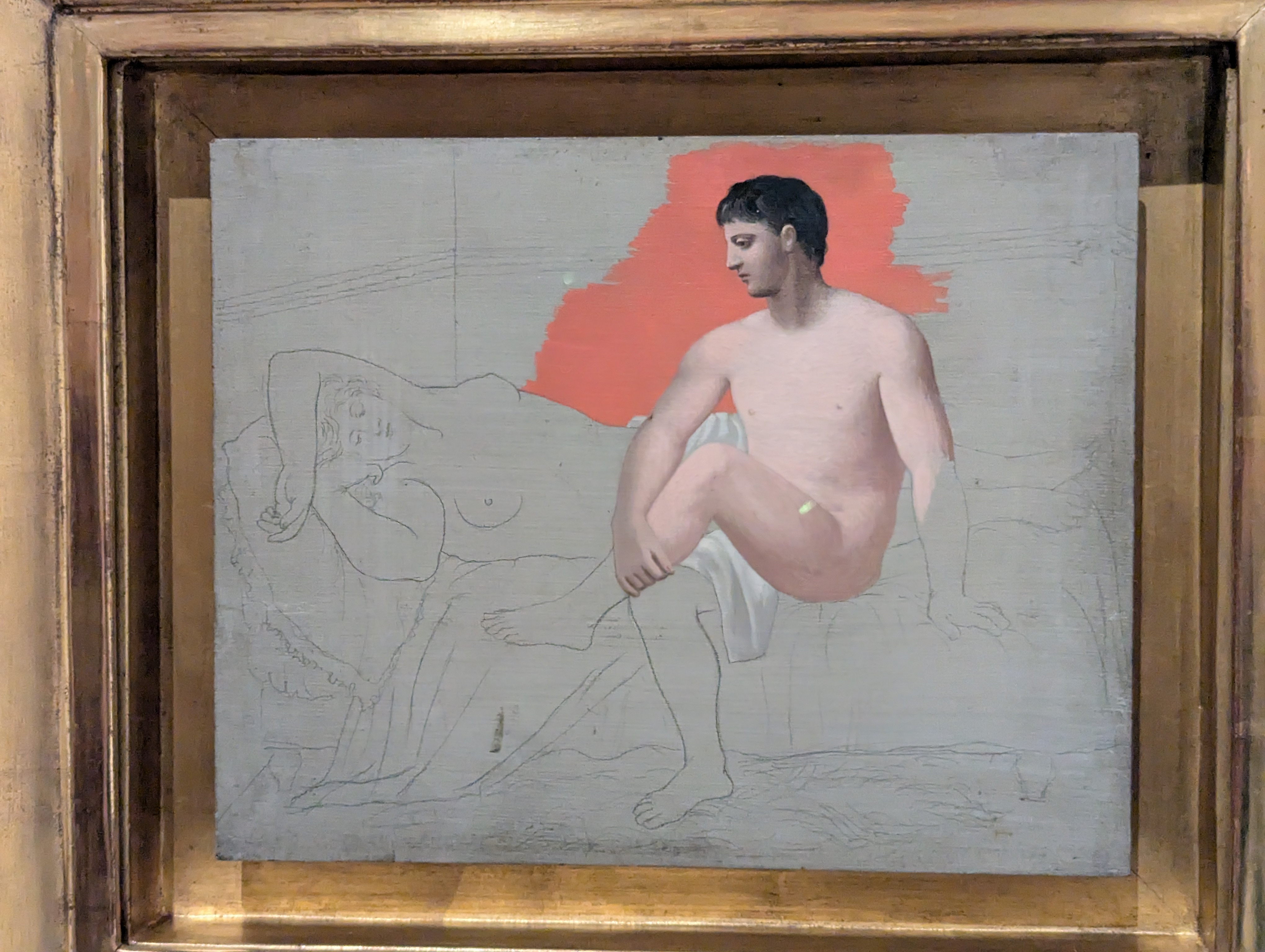
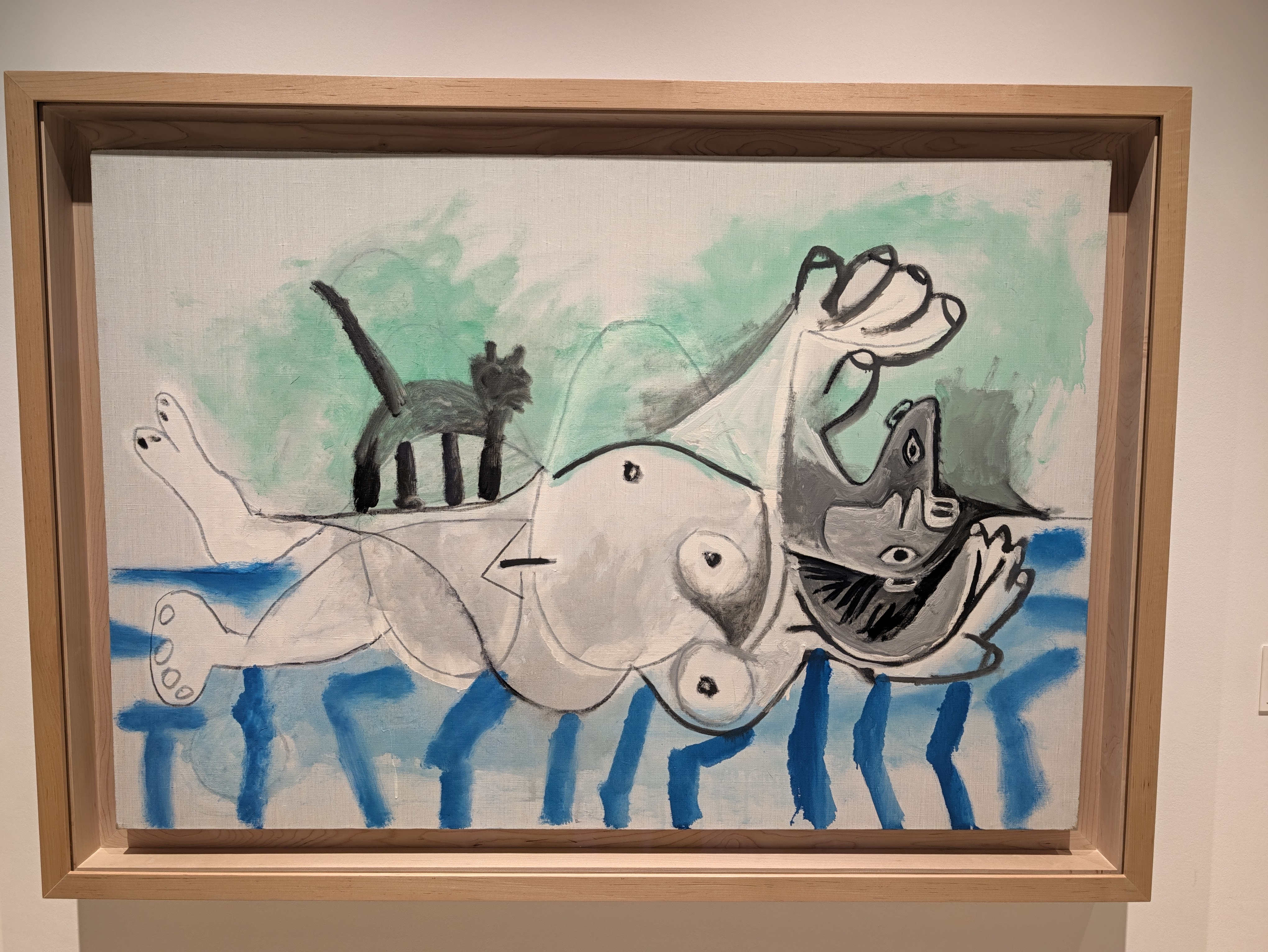
That said, a lot of his more well-known stuff is elsewhere (such as the Reina Sofia in Madrid). And the museum steered clear of Picasso’s personal life. A little post-visit digging shows why, as he was pretty much a monster to those around him.
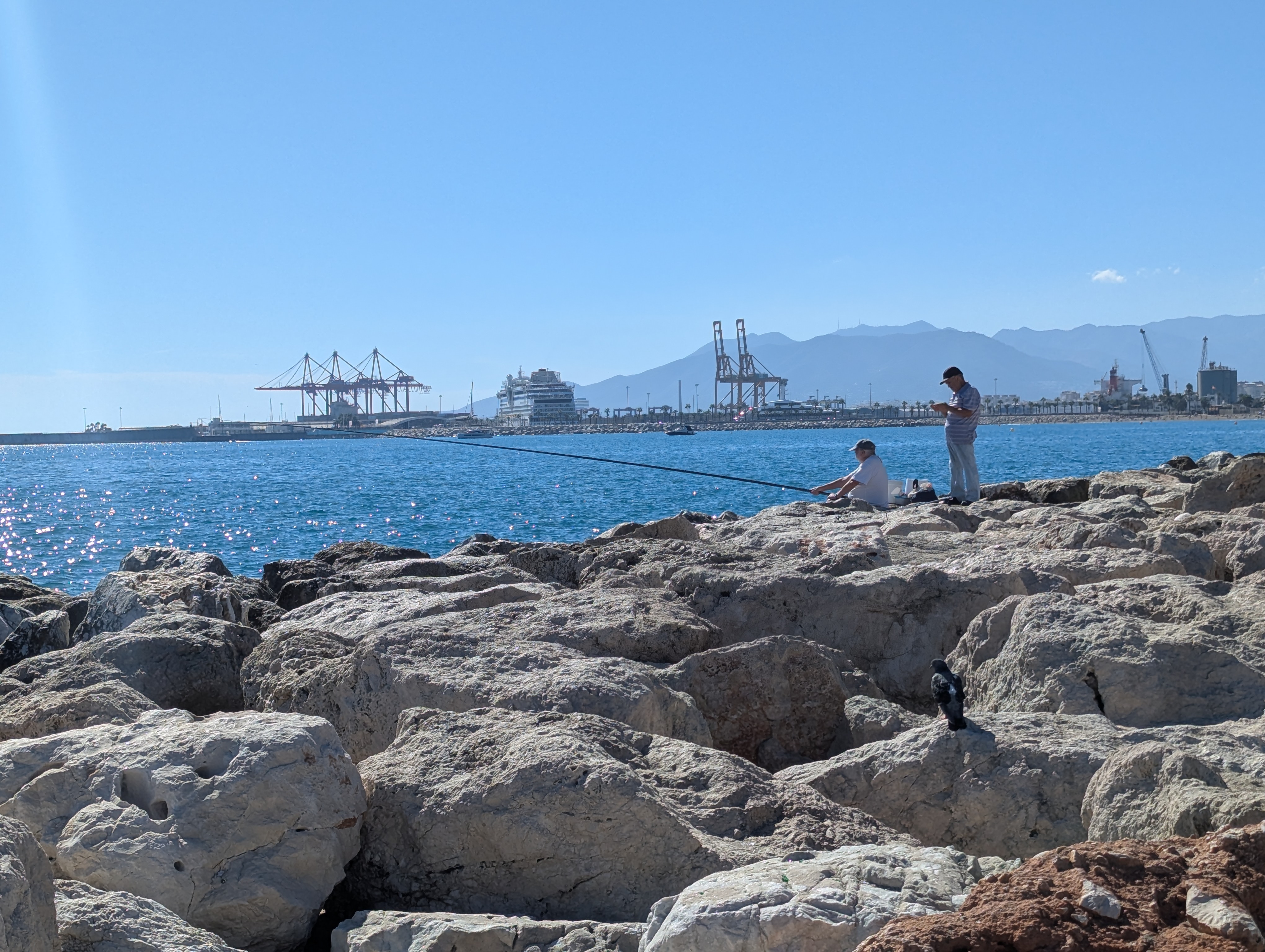
The other reason we went to Malaga was to get a little sense of the Mediterranean coast. We didn’t really “go to the beach,” but we did walk down and breathe in some salt air (Kelly waded in a bit – the water was cold). It’s very pretty.
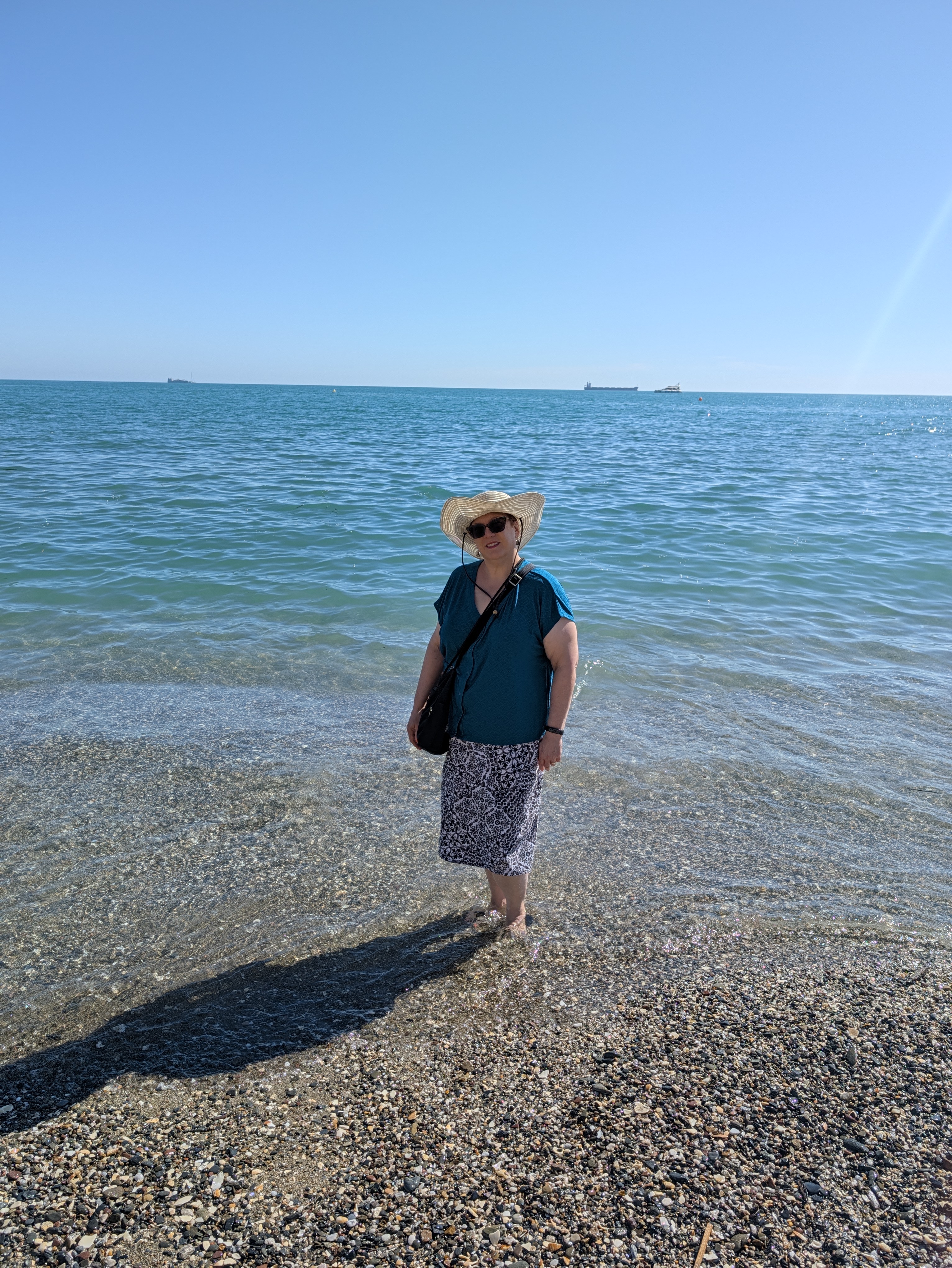
We wound up on this spit that juts out into the bay.
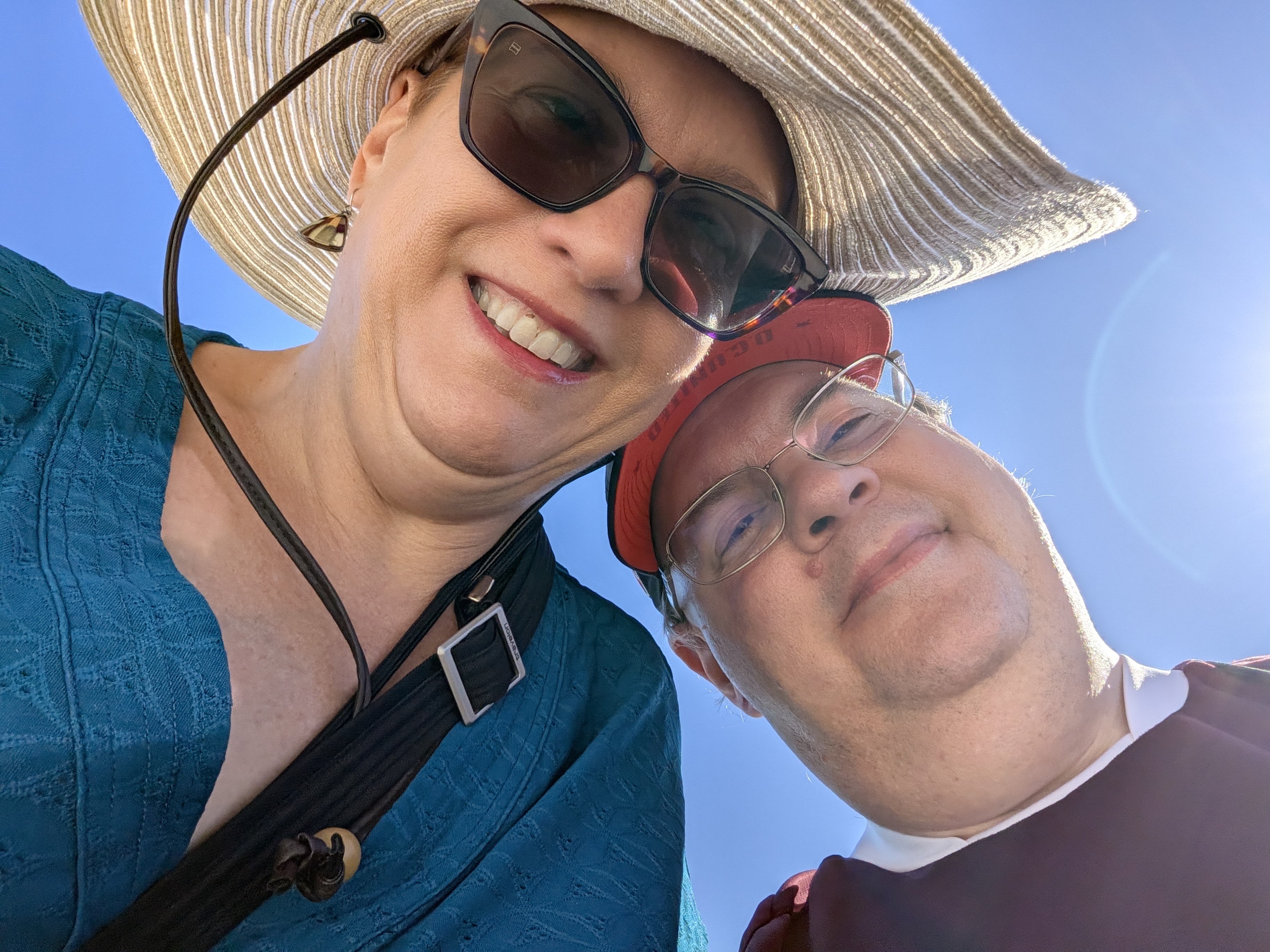
With that, we were off to Granada . . .
A word about . . . transport.
I’ve mentioned taking trains or cars to get around while we were in Spain, but I wanted to say a couple of things about transport in general. For one, the high-speed trains are amazing. The one we took from Madrid to Cordoba almost hit 300 kph, which is more than 180 mph. That’s absolutely hauling ass. Of course, when things go wrong at that speed they really go wrong, as evidenced by the horrific crash on that line a few days after we got back. And, it has to be said, none of our trains left on time. Cabs were useful in the cities, even if sometimes it was hard to find one (as you’ll see in Granada).
Take it away . . . Chick
Another jazz exploration of some of the themes from Joaquín Rodrigo’s Concecierto de Aranjuez. Originally recorded by Return to Forever, I thought this live version from years later with Chick’s band hit the spot.

