Sketches of Spain, Part 3 – Granada & Madrid

Last month my wife, Kelly, and I embarked on the “Two Weeks in Spain” so famed in song.  It was a wonderful trip and impossible to convey all we were able to do and see, but over the next few posts I wanted to share a little bit of what made the journey so special. Each post has musical accompaniment, so press “play” at the bottom and enjoy.

Granada

At one point I said that Cordoba reminded me of New Orleans – old city surrounded by modern  big city – with the topography of Morgantown – lots of hills. If that’s accurate then Granada could be described similarly, but with the topography of Logan – an old town built in a valley with steep hills on either side.

On one hill is the Alhambra, perhaps the go-to example of “Moorish buildings in Spain” in the minds of most people. More of that later, but after we arrived in town (via another drive through the countryside) and had some lunch, we decided to trek up the other hill, into a neighborhood called the Albaicín, which is where the original city was founded.
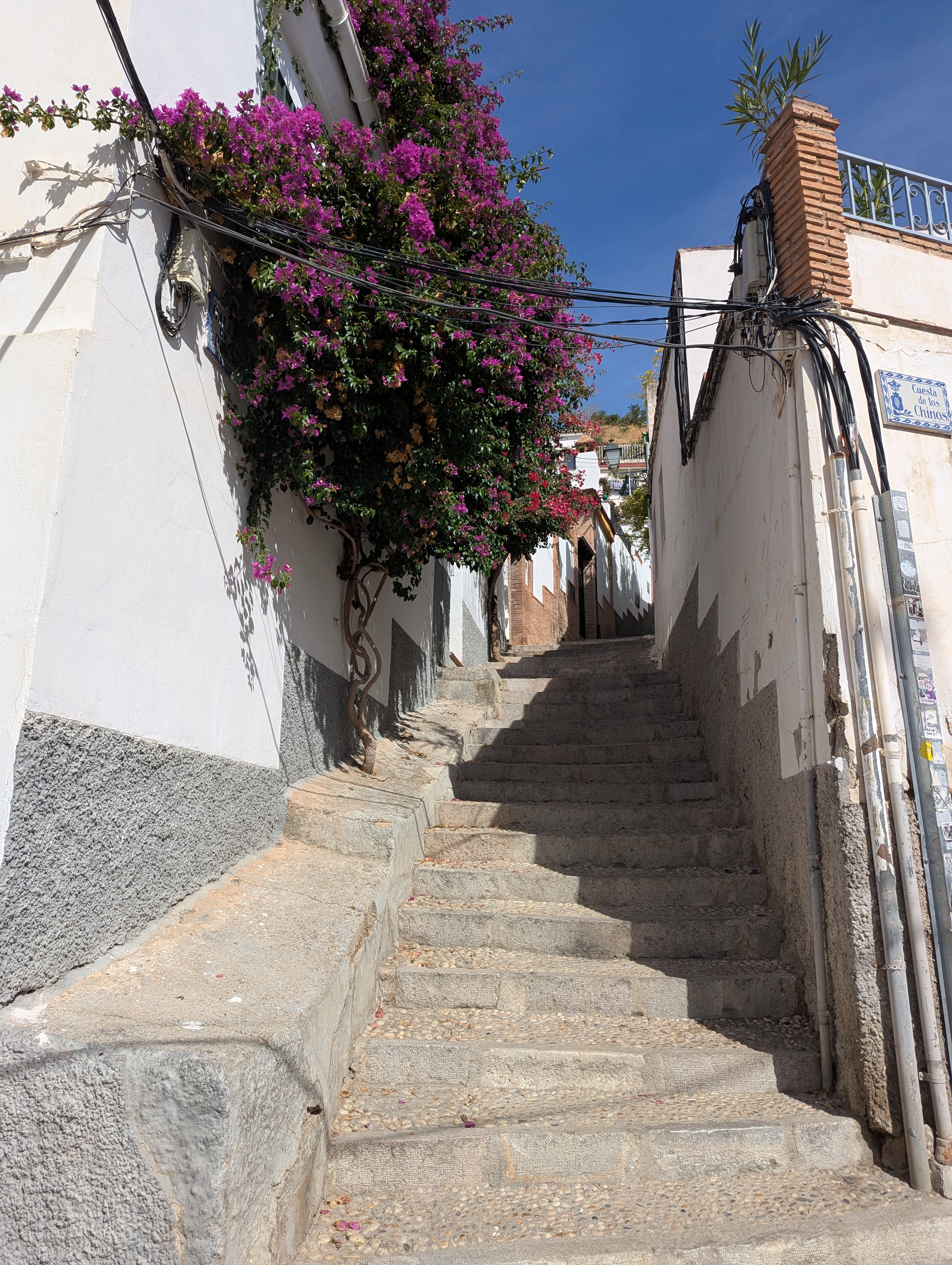
And those weren’t the steepest ones!

It was a haul, but the view was great.
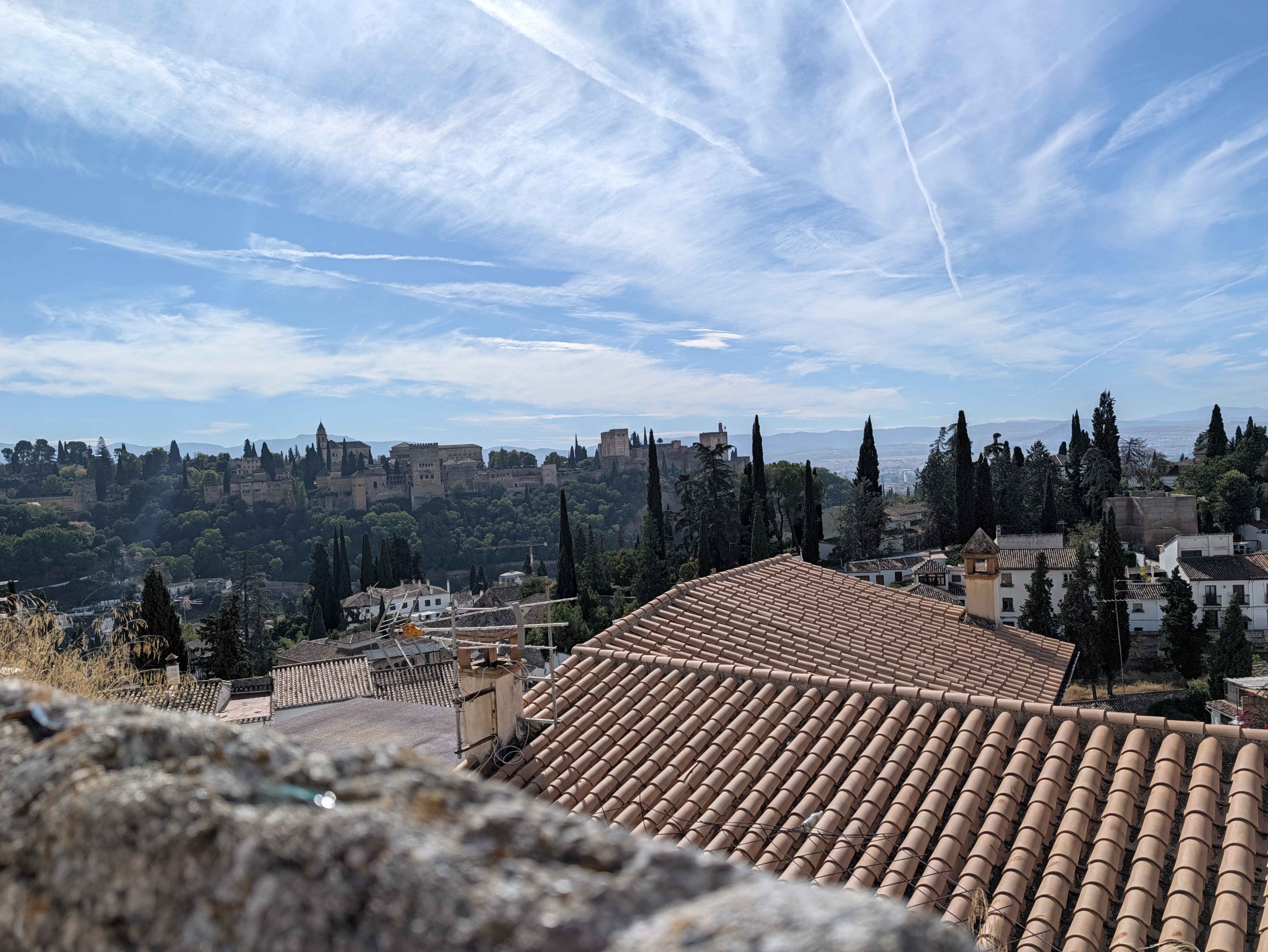
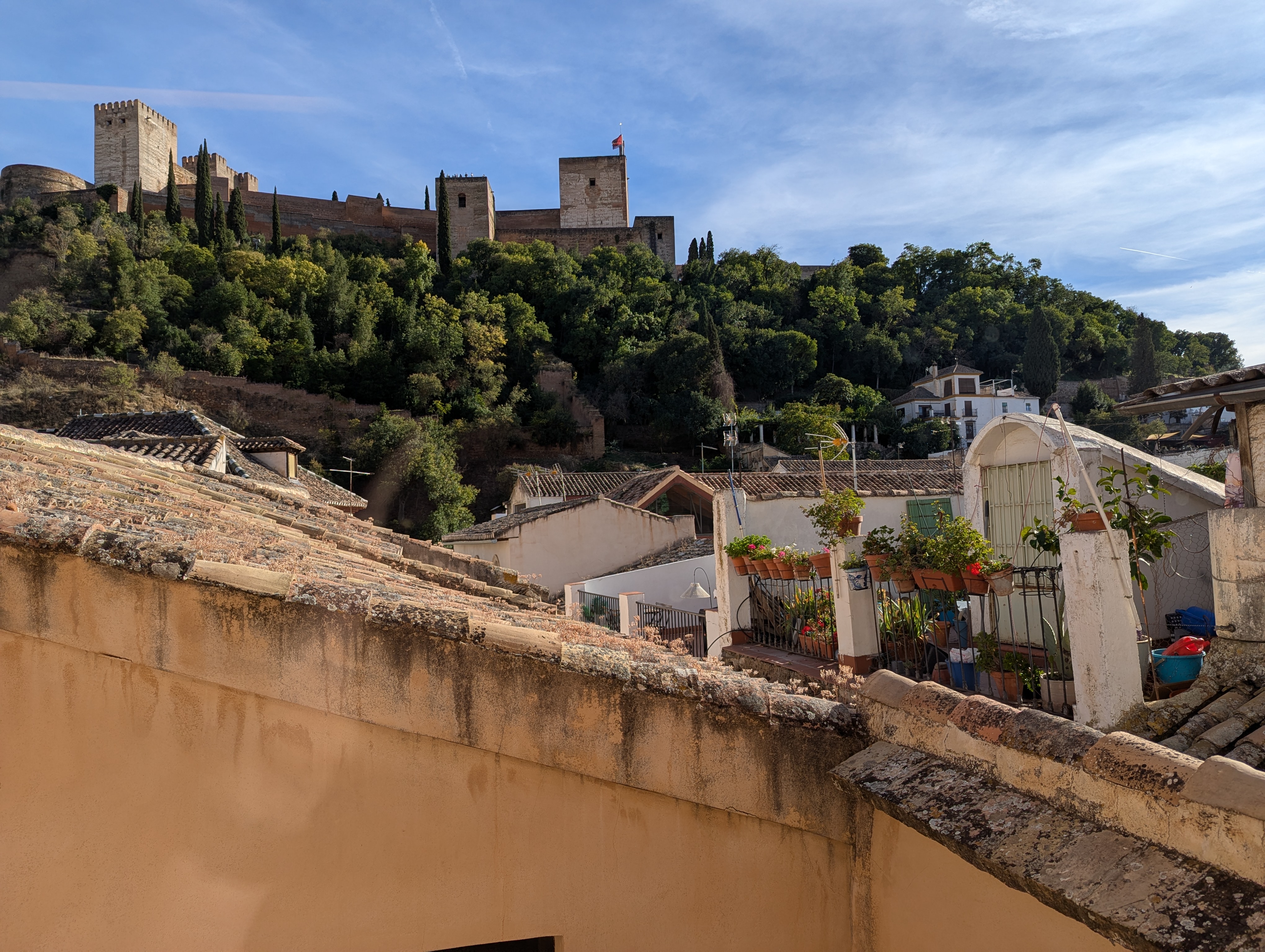
View from a wall, looking over at the Alhambra.
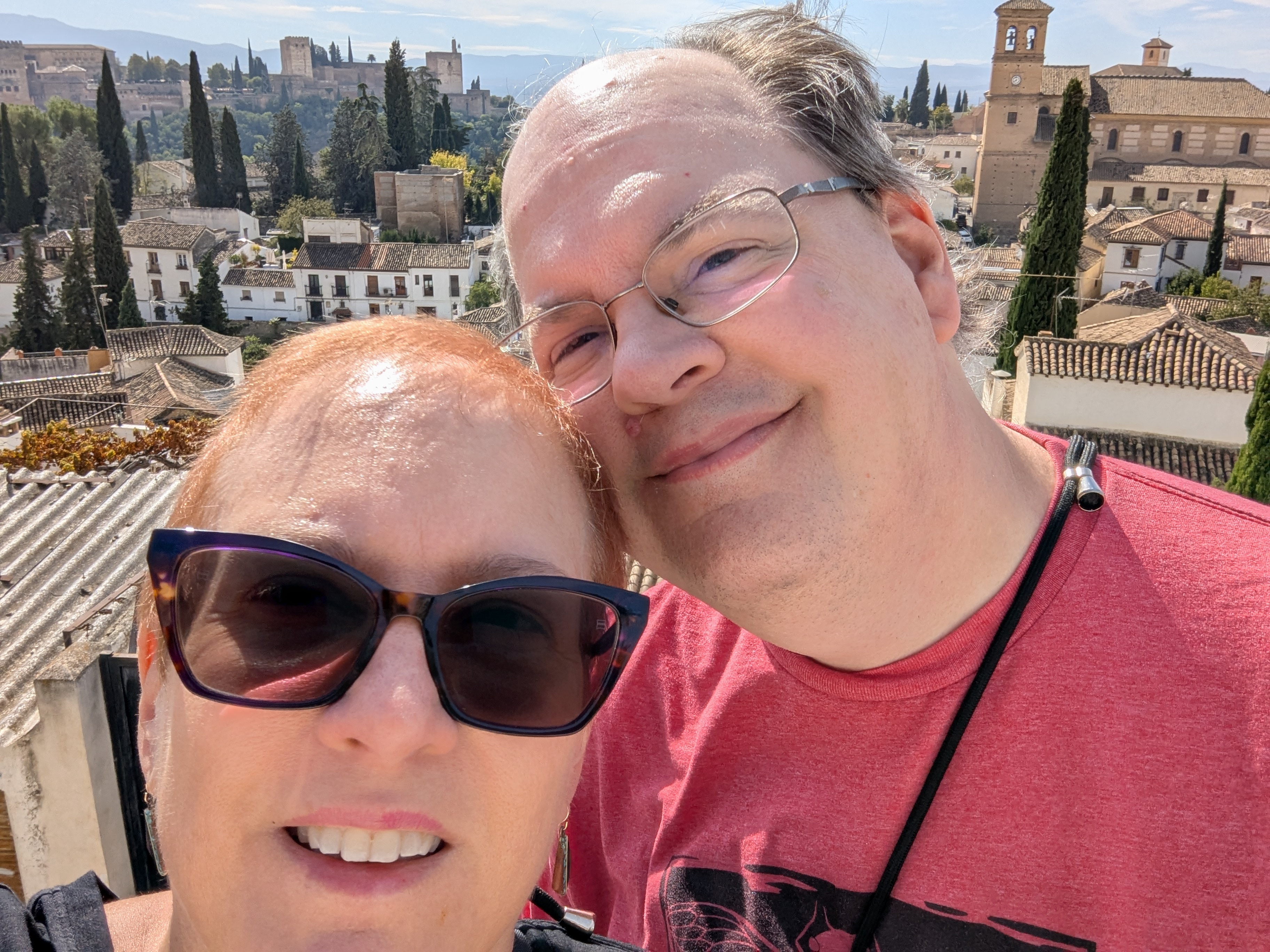
High altitude selfie.

The Albaicín was where, during the early days of the Spanish Civil War, the Republicans made their resistance, using the narrow streets and hills as natural fortifications. Alas, the Fascists just moved artily into the Alhambra and shelled them into surrender.

Our main goal for that evening, though, was something I’d been trying to set up since before COVID hit – seeing a soccer game in Europe. We tried to go see Leeds play during our UK trip a few years back, but couldn’t get tickets (and a one-day rail strike changed our plans, anyway). When we knew where we were going in Spain I dove into finding a place to watch a game. In the end, the only place where that could work out was in Granada.

Granada CF, which dates back to 1931, currently plays in the Spanish second division, but were in La Liga as recently as 2023-2024. Their colors are red, white, and blue, which seemed appropriate, even if the resulting kit feels very FC Dallas at times.
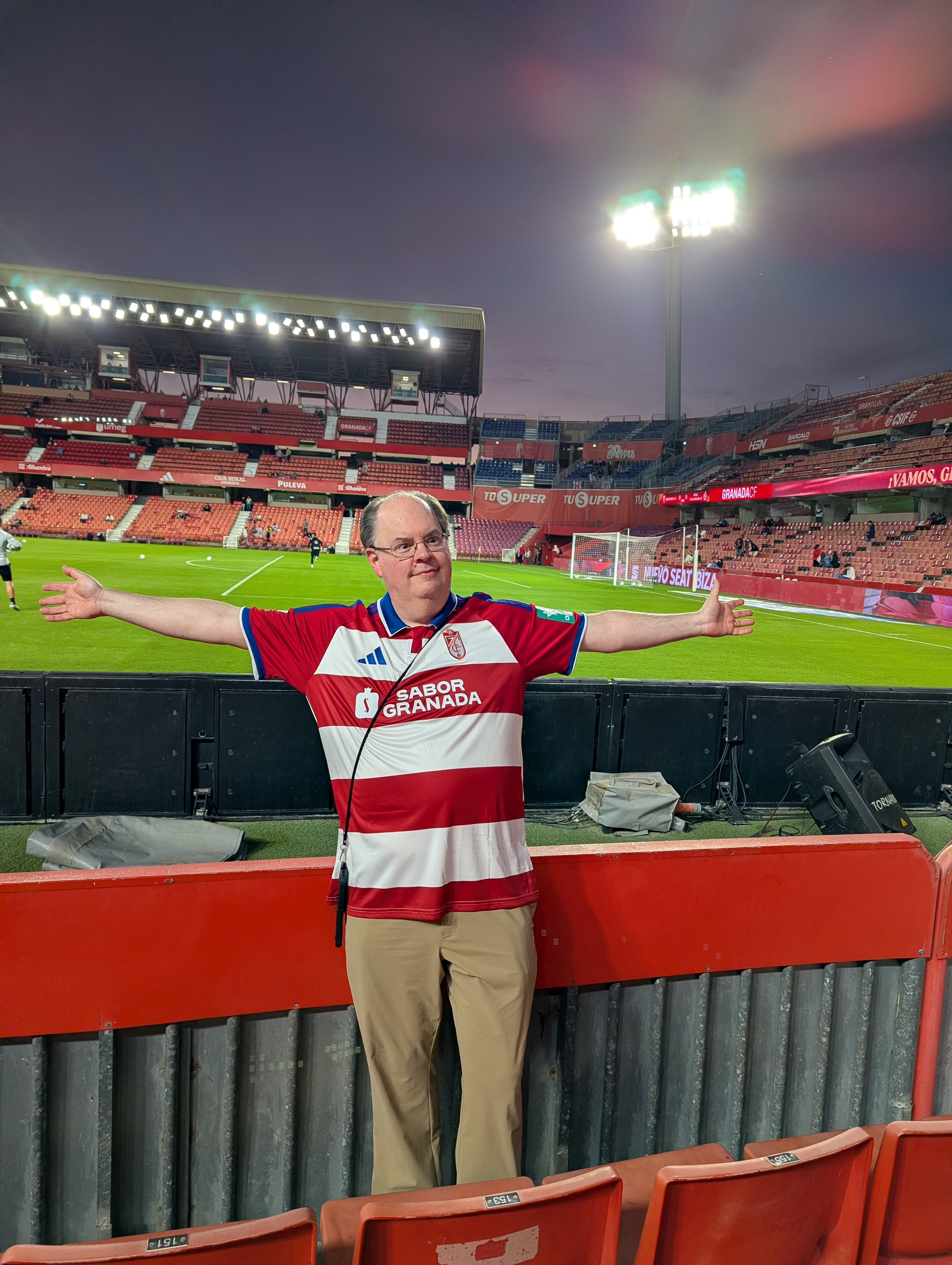
Good seats!

“Granada,” as well as being the name of the city, is also Spanish for “pomegranate” (although the word origins are different), which explains the club’s sentient pomegranate mascot, Granain:
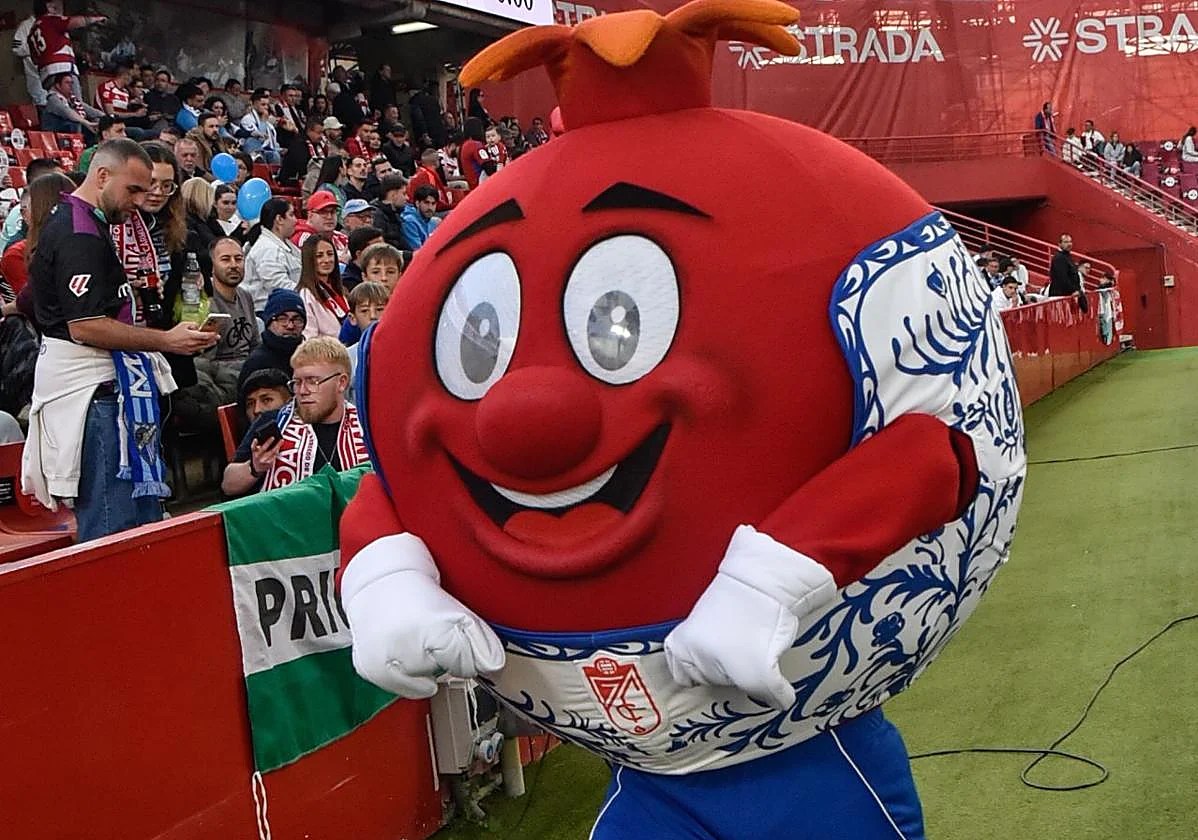
You, too, will have nightmares.

The stadium was about the size of a modern MLS stadium and was probably two-thirds full. The local supporters group, behind one goal, were pretty vocal and the rest of the crowd got into it fairly often. We really hated the right back from Real Valladolid for some reason, but we joined in booing him every time he touched the ball.
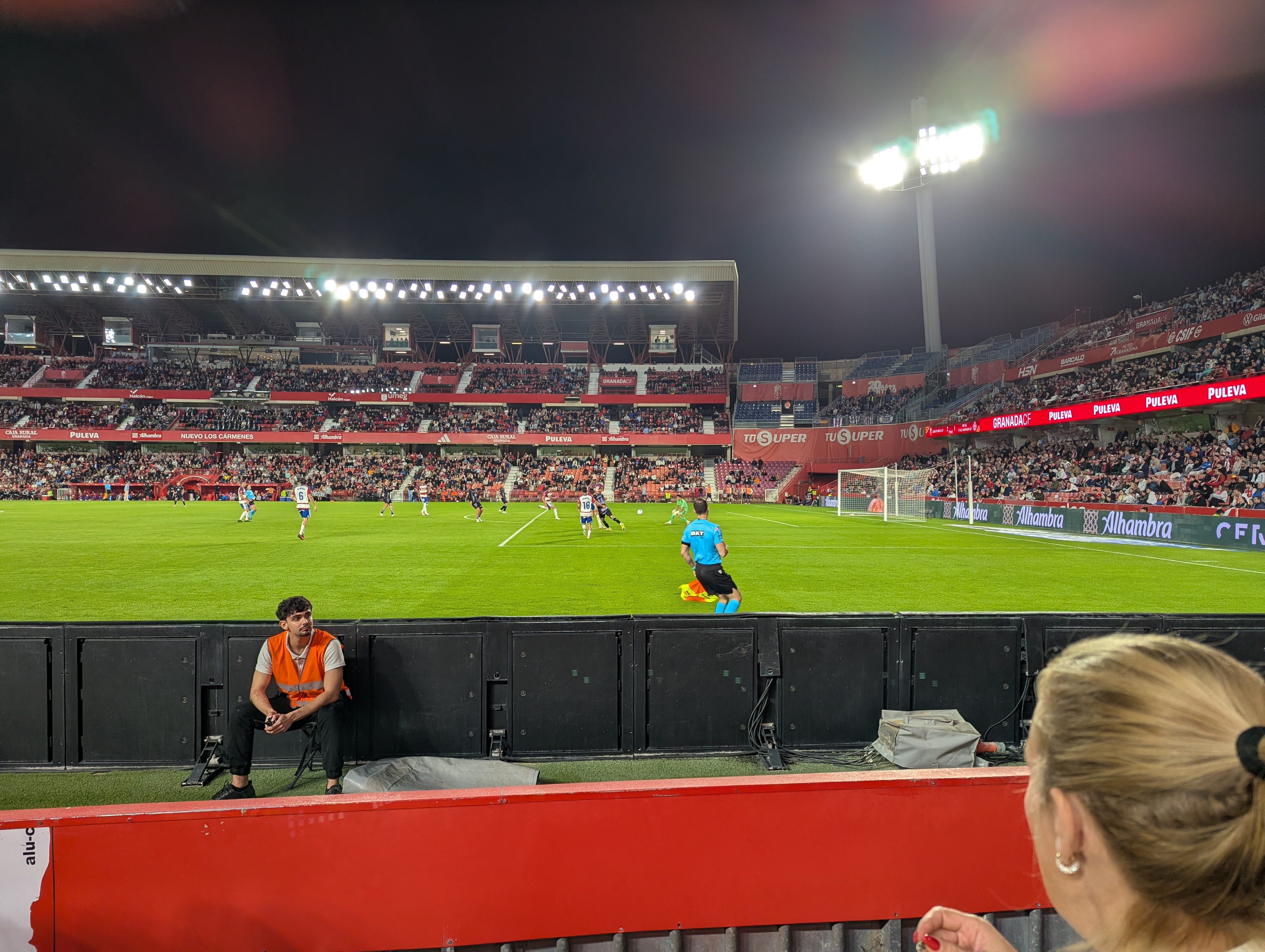
First half action.

The ball came into our area of the stands twice. Once a guy sitting behind Kelly fumbled it into the seat next to her, spilling our popcorn. A fan down the row tossed us his to make up for it (I noted later that he had a backpack full of snacks – apparently they don’t care so much about bringing your own stuff into a game). The second time a guy sitting in front of me calmly stood up and headed the ball back onto the pitch. Best header of the night!

Ultimately, the good guys won 2-1 – so I now have a team in Spain to root for!

For while, though, I thought we’d never make it back to the hotel. A map on the city website said there was a taxi stand right at the corner of the block where the stadium was. Alas, there was none. Two helpful fans leaving the game explained that they block off the streets before the game lets out so the cabs stay away. They pointed us to a spot a couple of blocks down to try. That didn’t really work and we couldn’t get the local cab app to work, either. We relocated again, about another block away, and finally got lucky. For a while there I thought we were walking home (45 minutes, per Google) in the dark in a foreign city. Whew!

The next morning, it was on to the Alhambra.

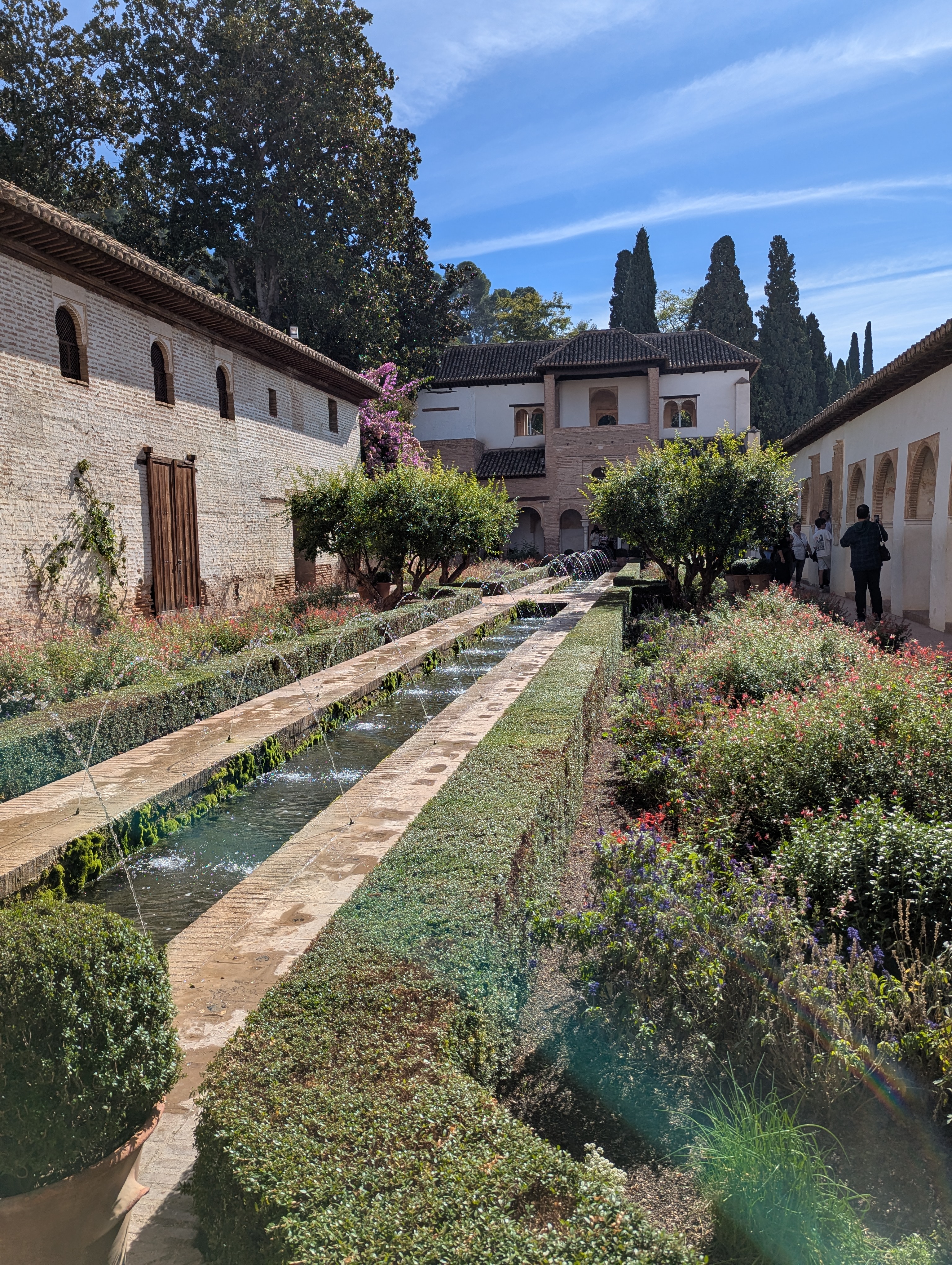
Sort of. There’s a lot to the place, so we actually started with the Generalife, a more modern palace and grounds with, as damned near everywhere in Granada, brilliant views.
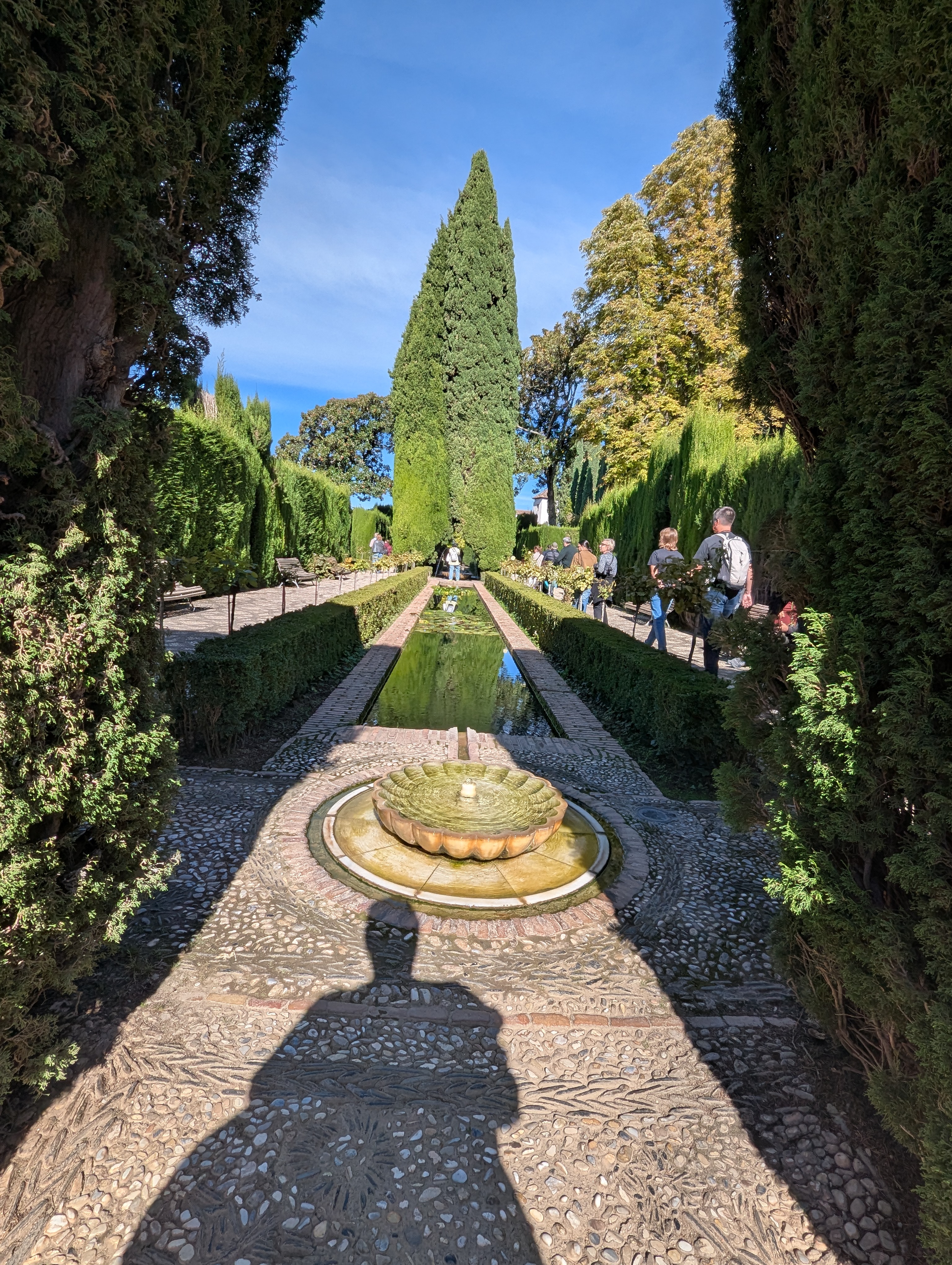
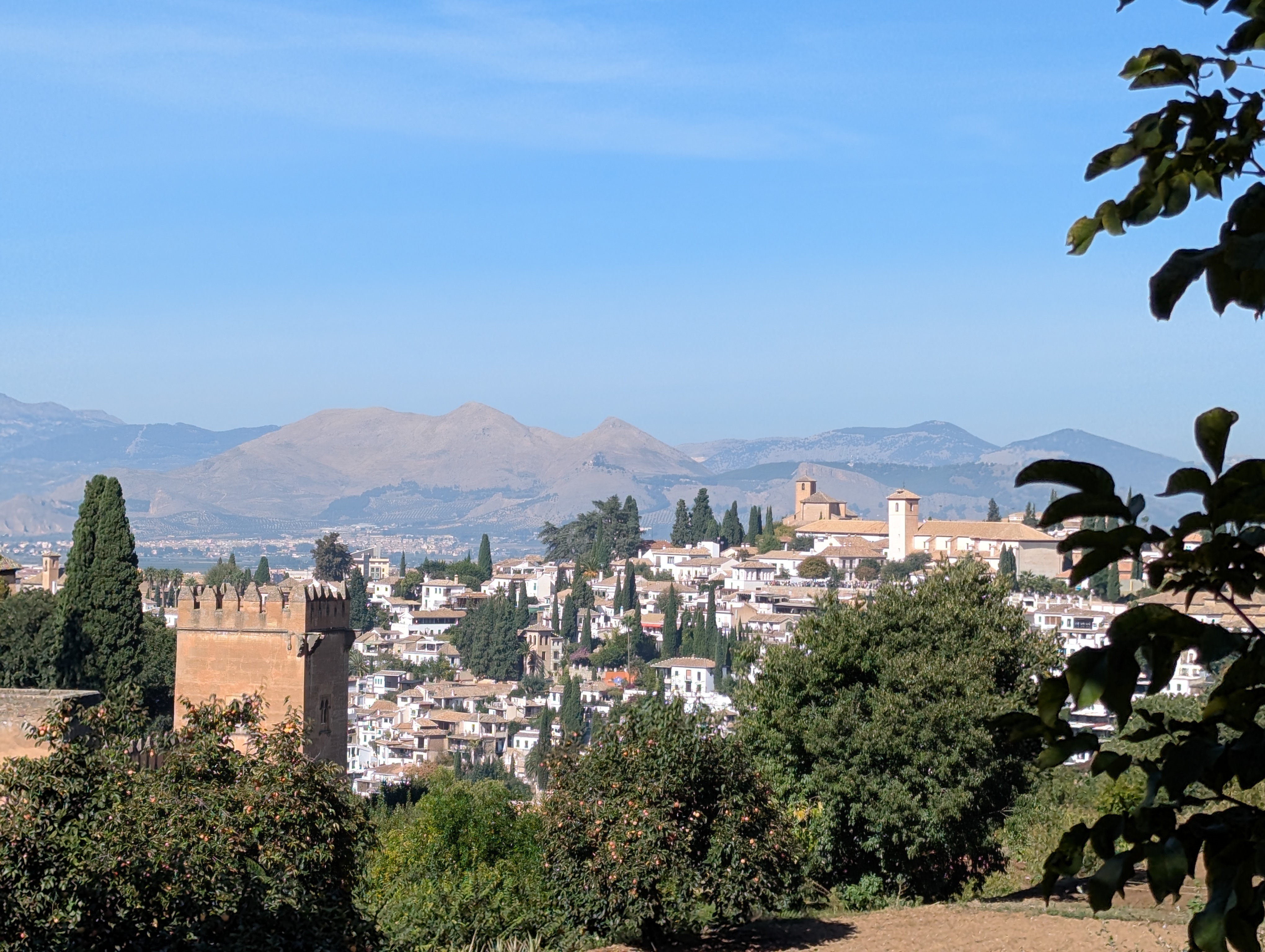
Garden in the Generalife.
That view.

It’s nice, but hardly the main attraction.

That said, the Alhambra is not a building, so much as it is a collection of them. It was once, essentially, its own city. So in addition to defensive walls and such it’s got a cathedral, a former convent, and an unfinished palace that (hundreds of years later) became a museum.

So, naturally you had to have water for the place – so a Roman-era aqueduct did the trick (bringing water from the source of the river up in the mountains).
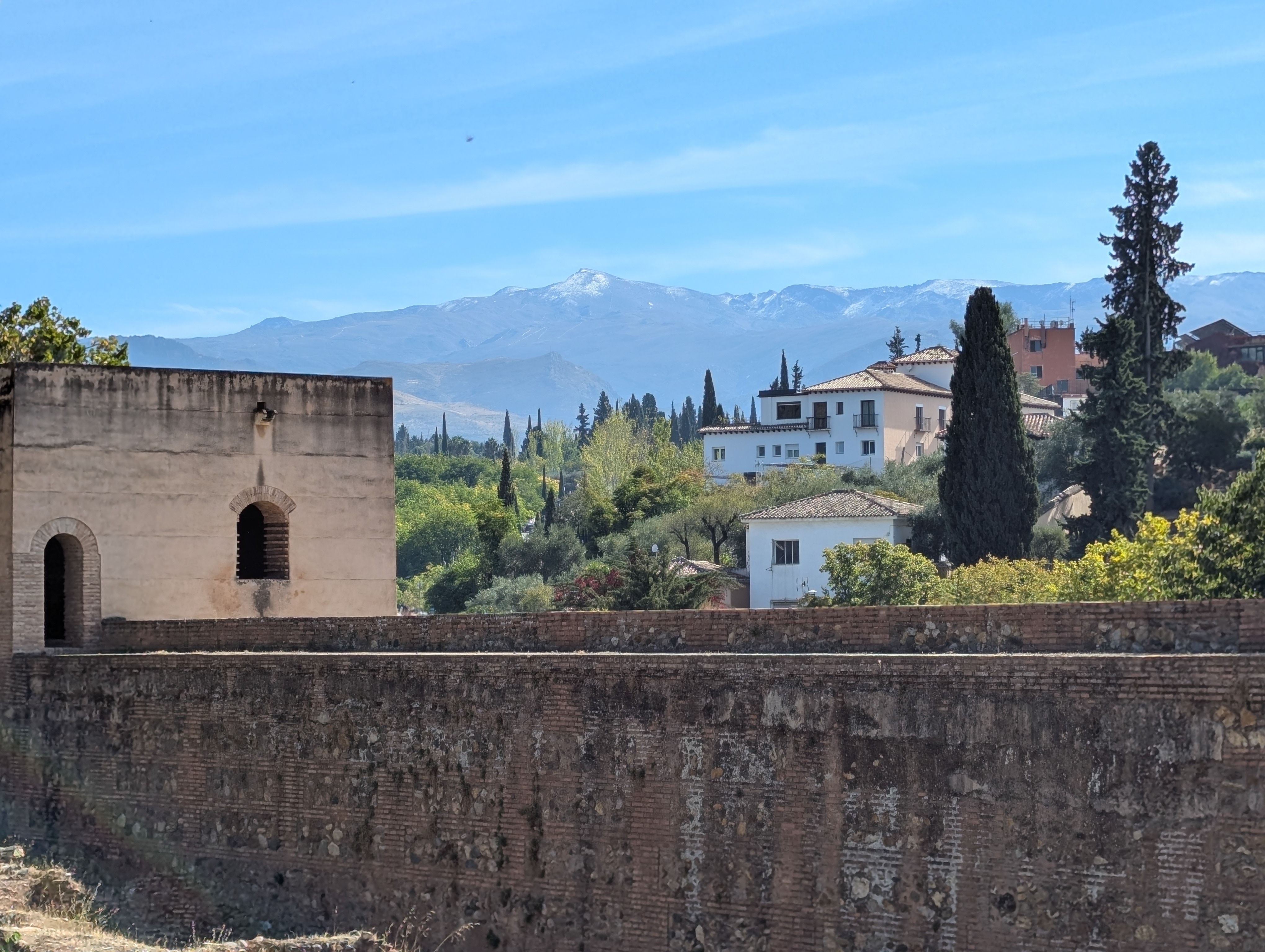
What have the Romans ever done for us?
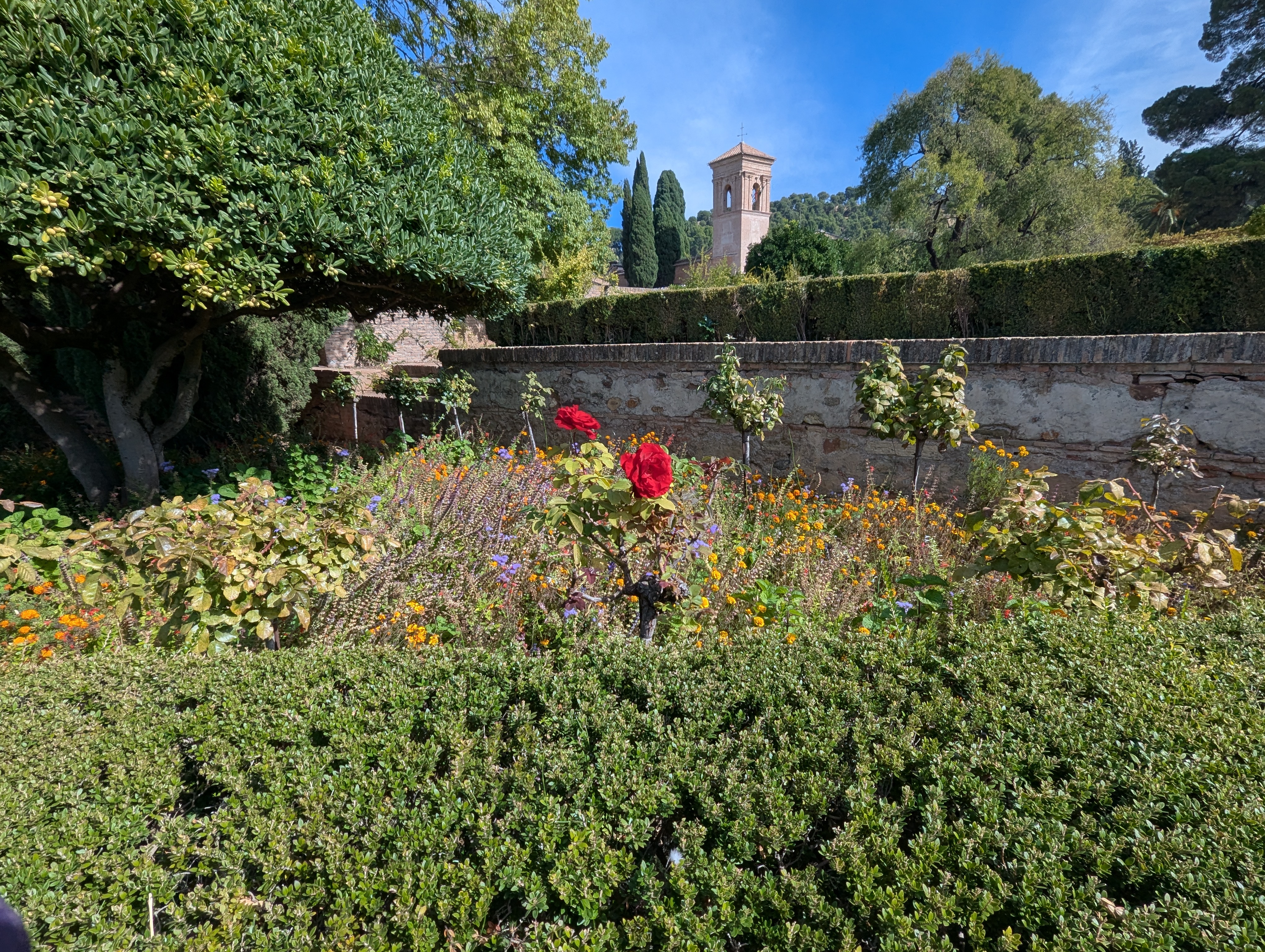
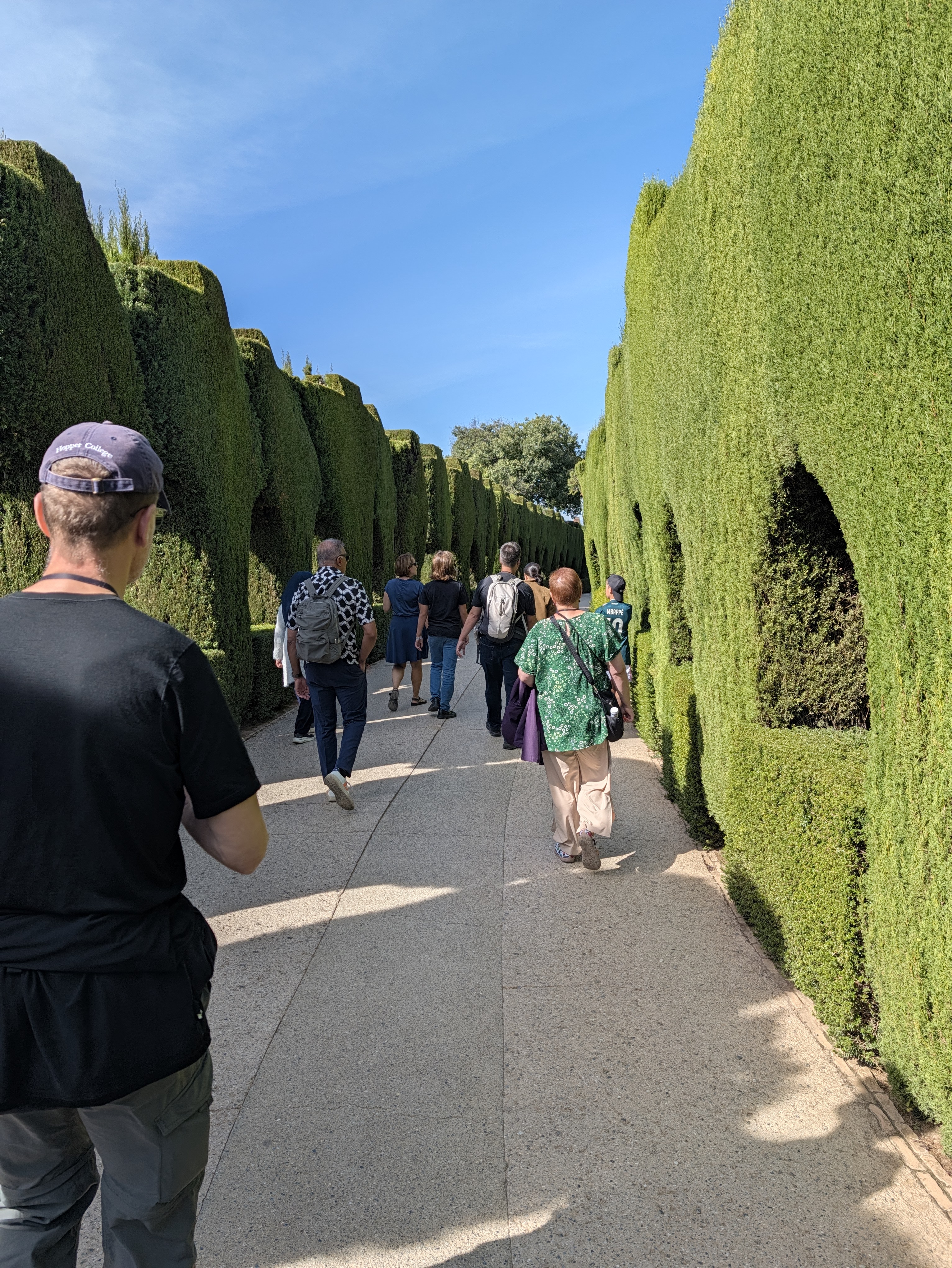
Walkway flanked by shrubberies on either side.
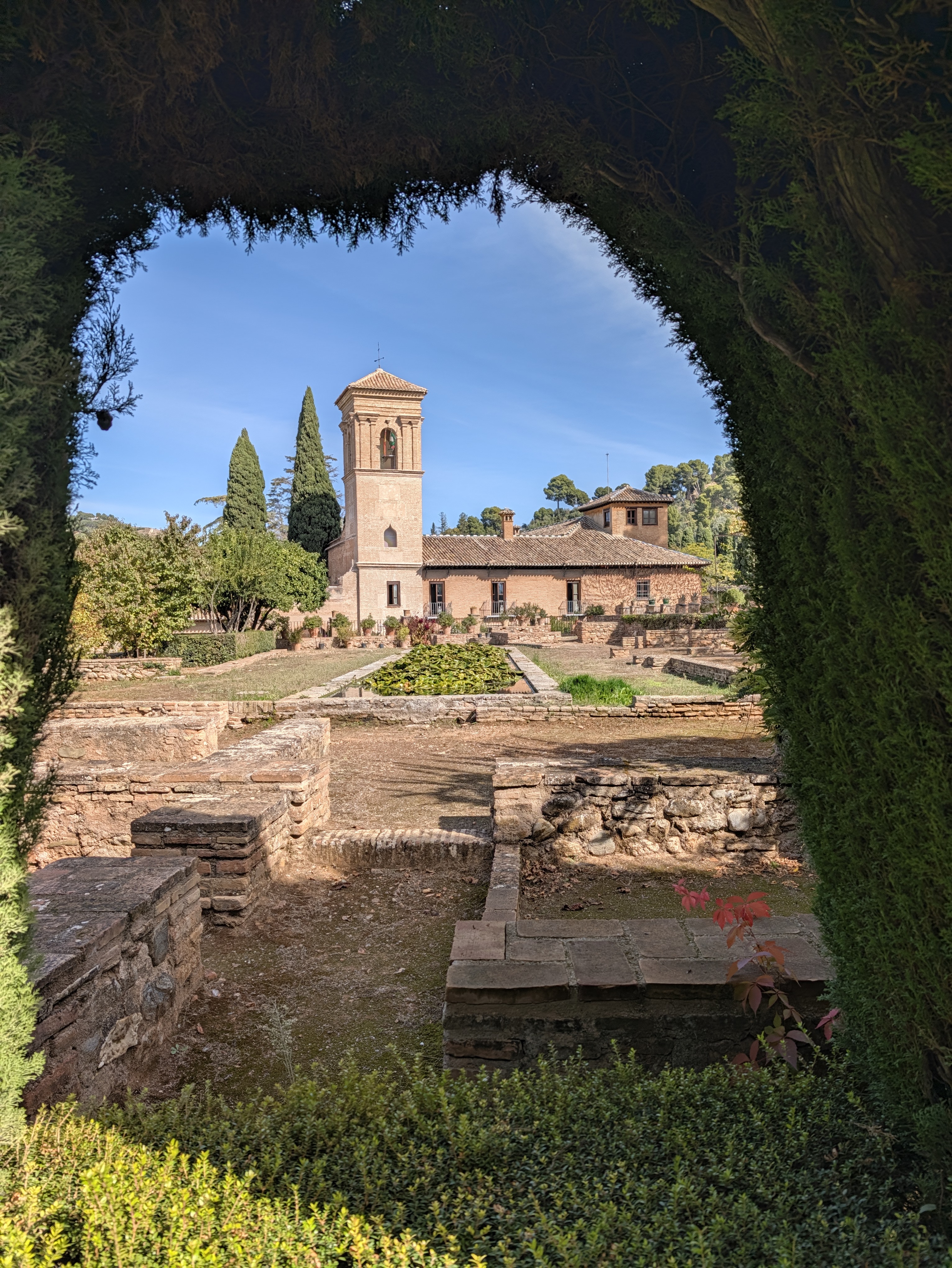
The former convent, now a hotel.
Another view of the former convent.

There are still a few people who actually live in the Alhambra and many who work there, with a street of shops open on the walk down to the main attraction.
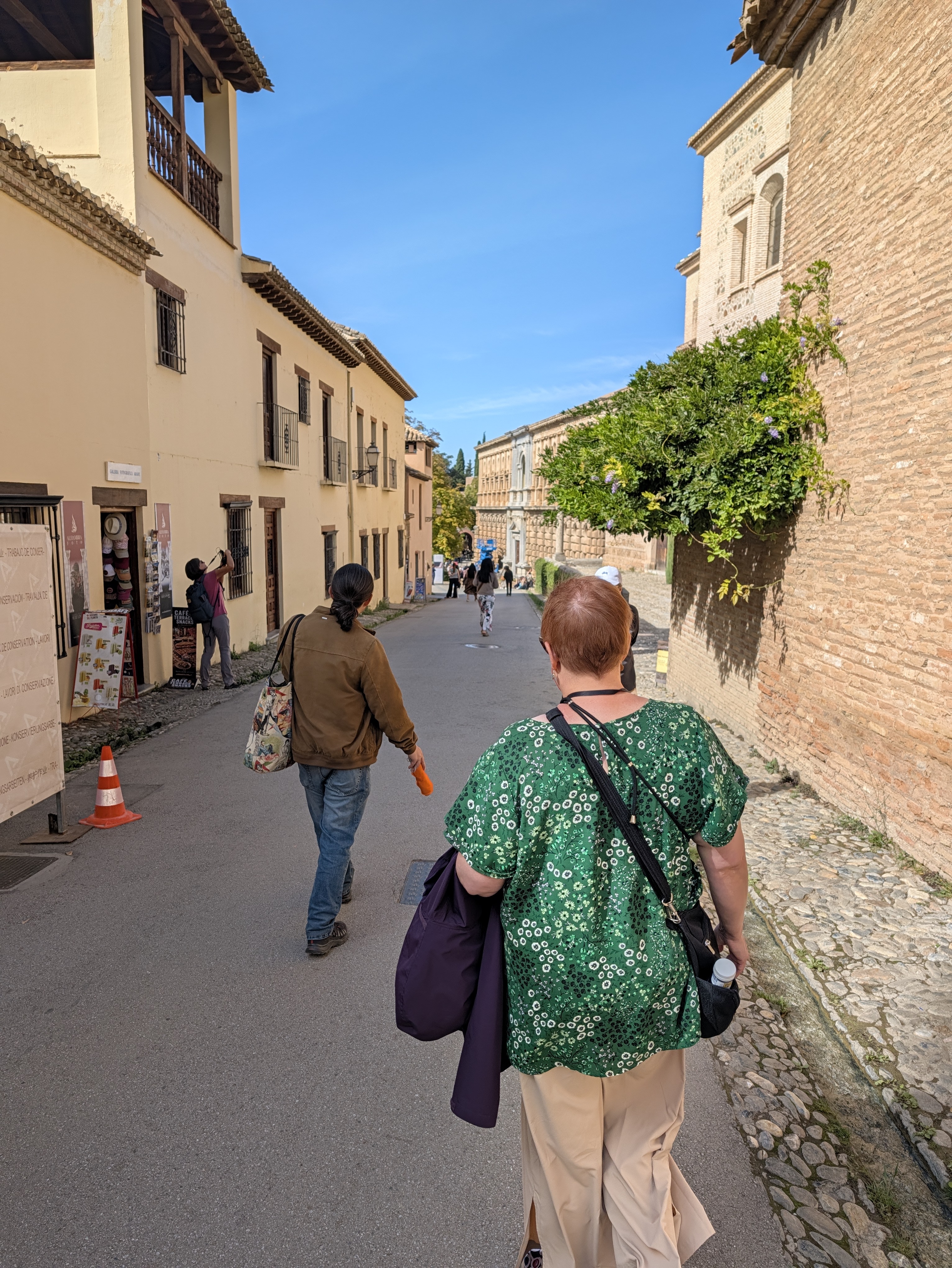
Kelly headed downhill.

Primarily, of course, the Alhambra was a fortress.
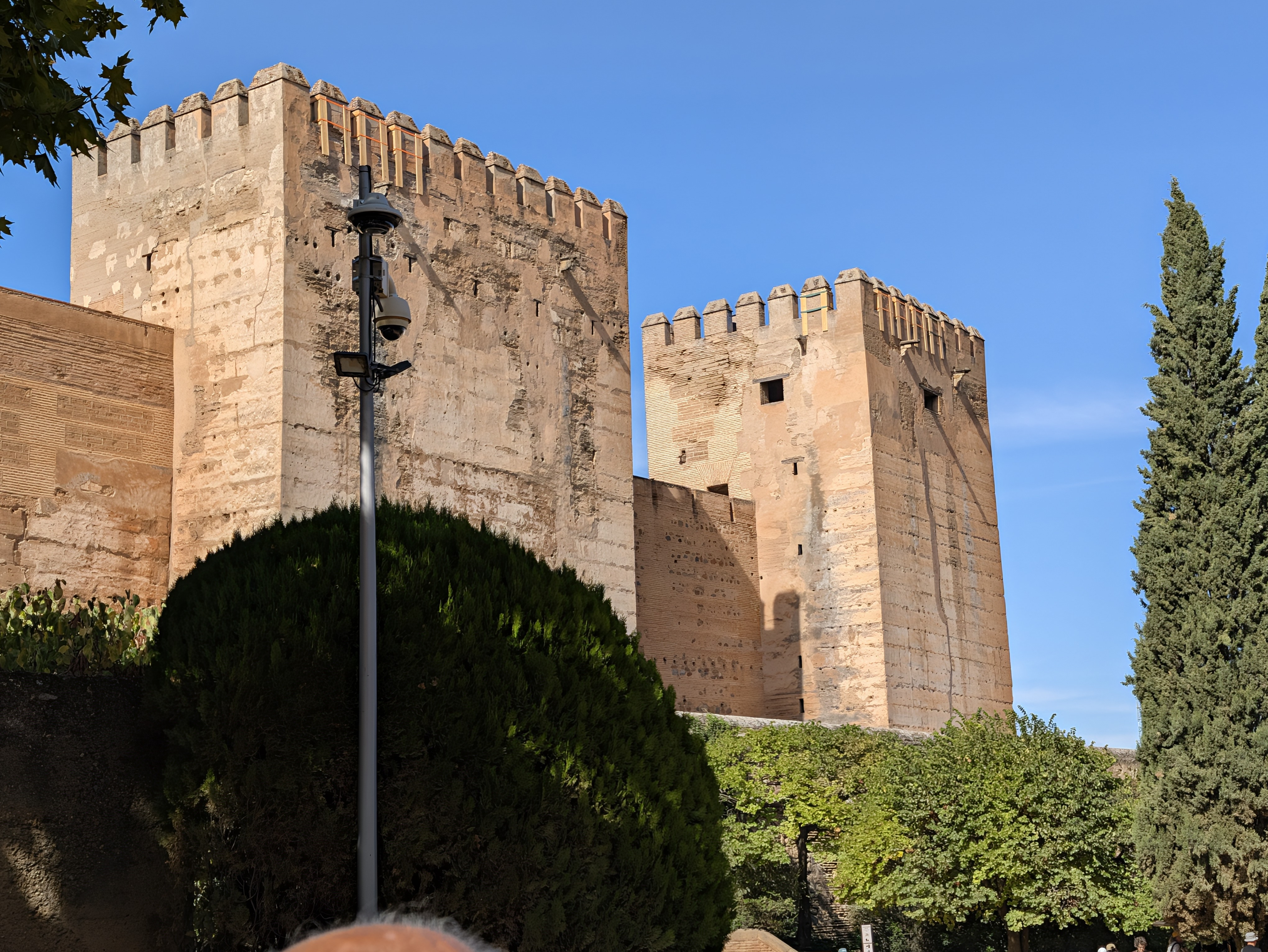
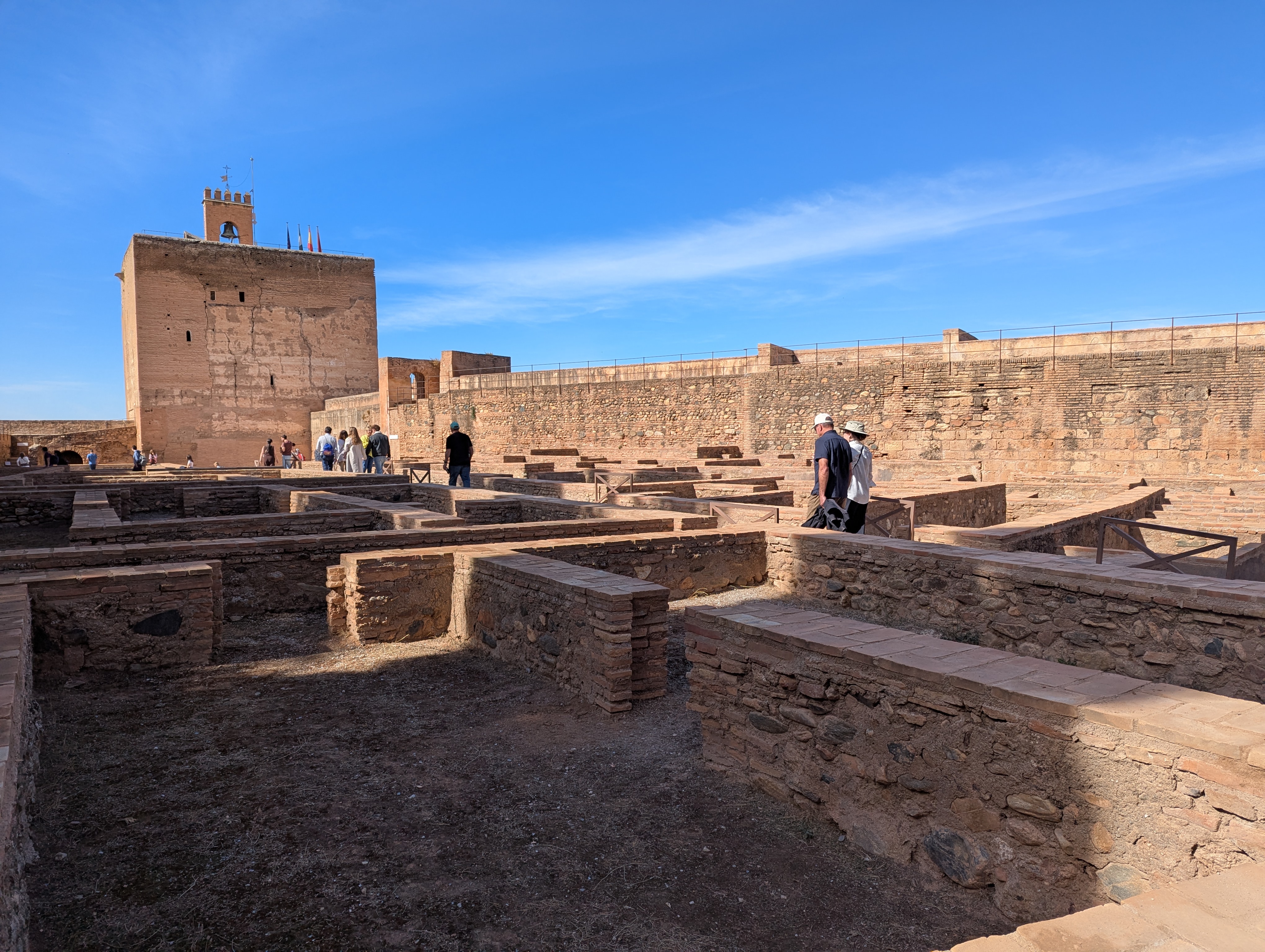
Towers and turrets.
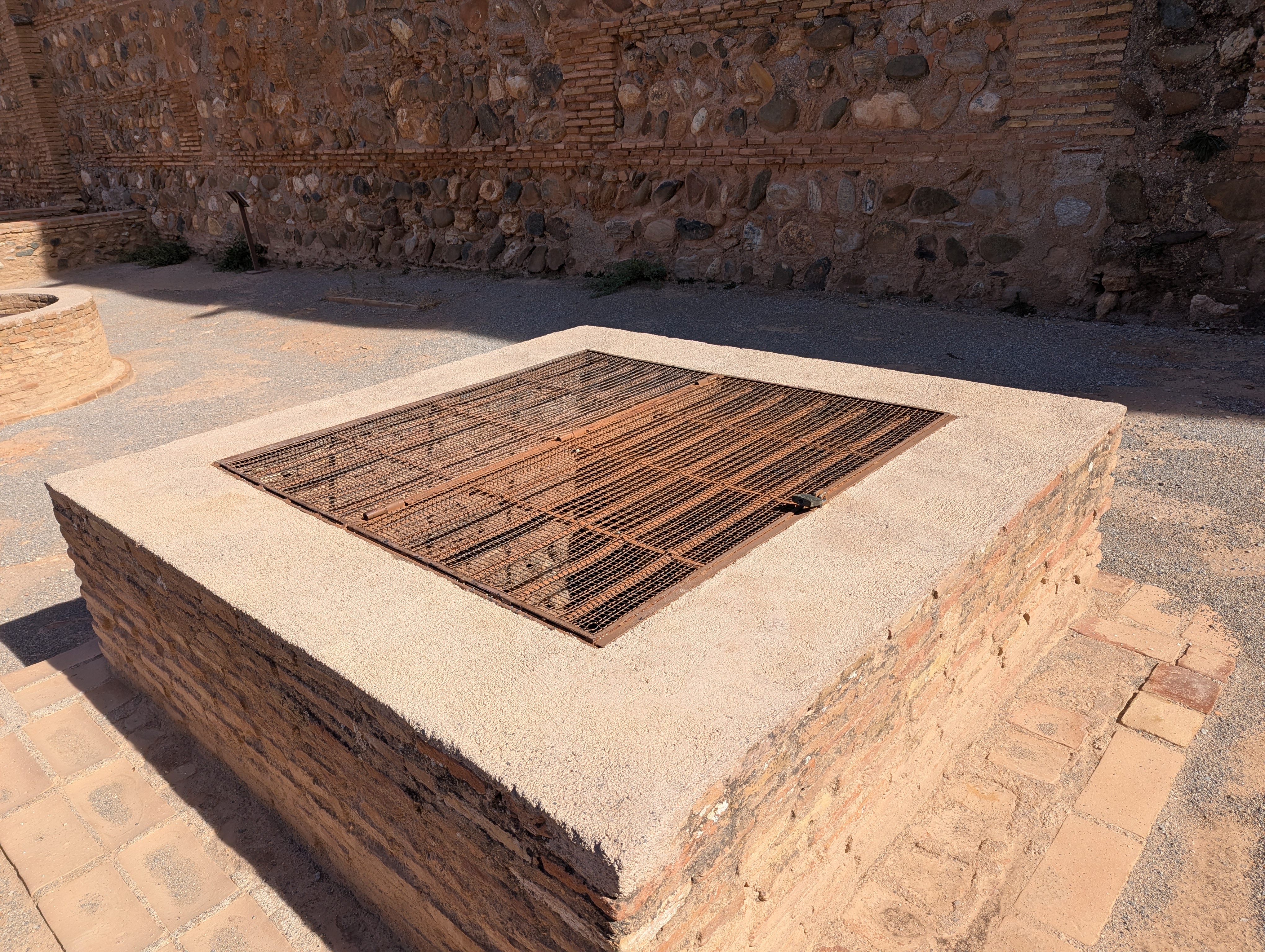
Barracks, excavated down to the foundation.
Entrance to the dungeon (there ain’t no steps in there, neither).

You don’t build on the high ground for nothing.
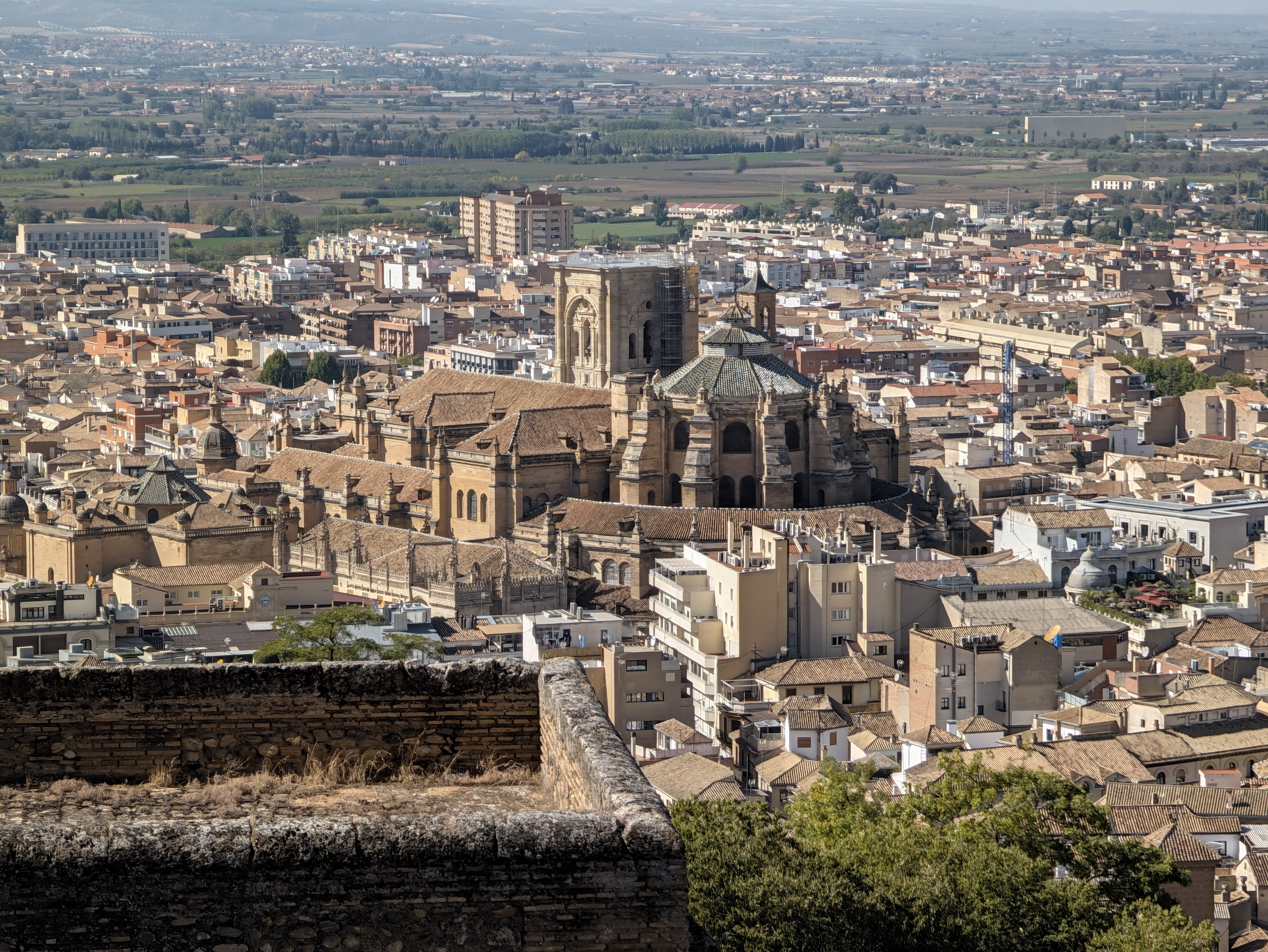
The more modern part of the city, with the cathedral.
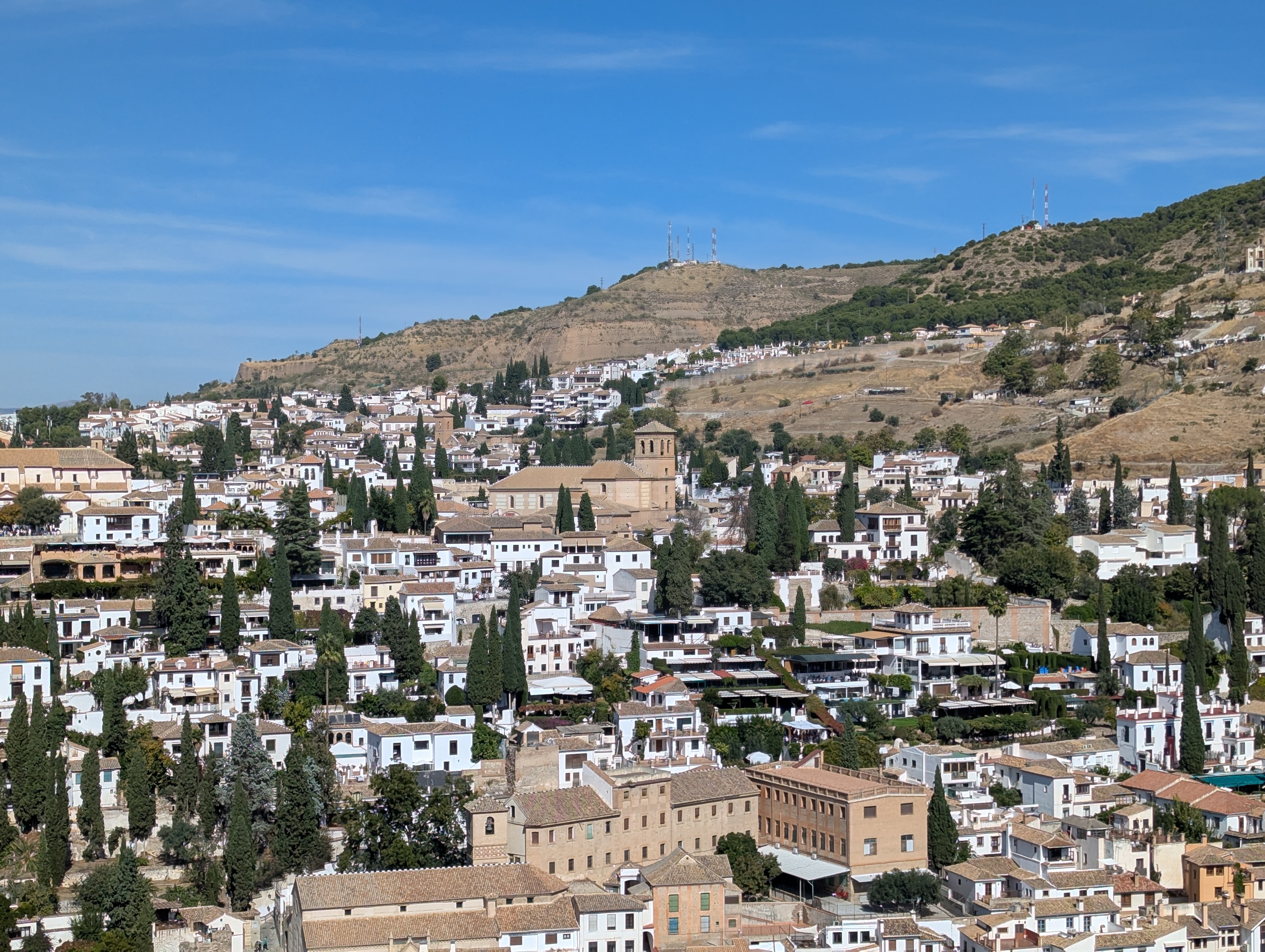
The Albaicín. I think the bare spot there just right of center is where we hiked to the day before.

But it was also a very elaborate palace.
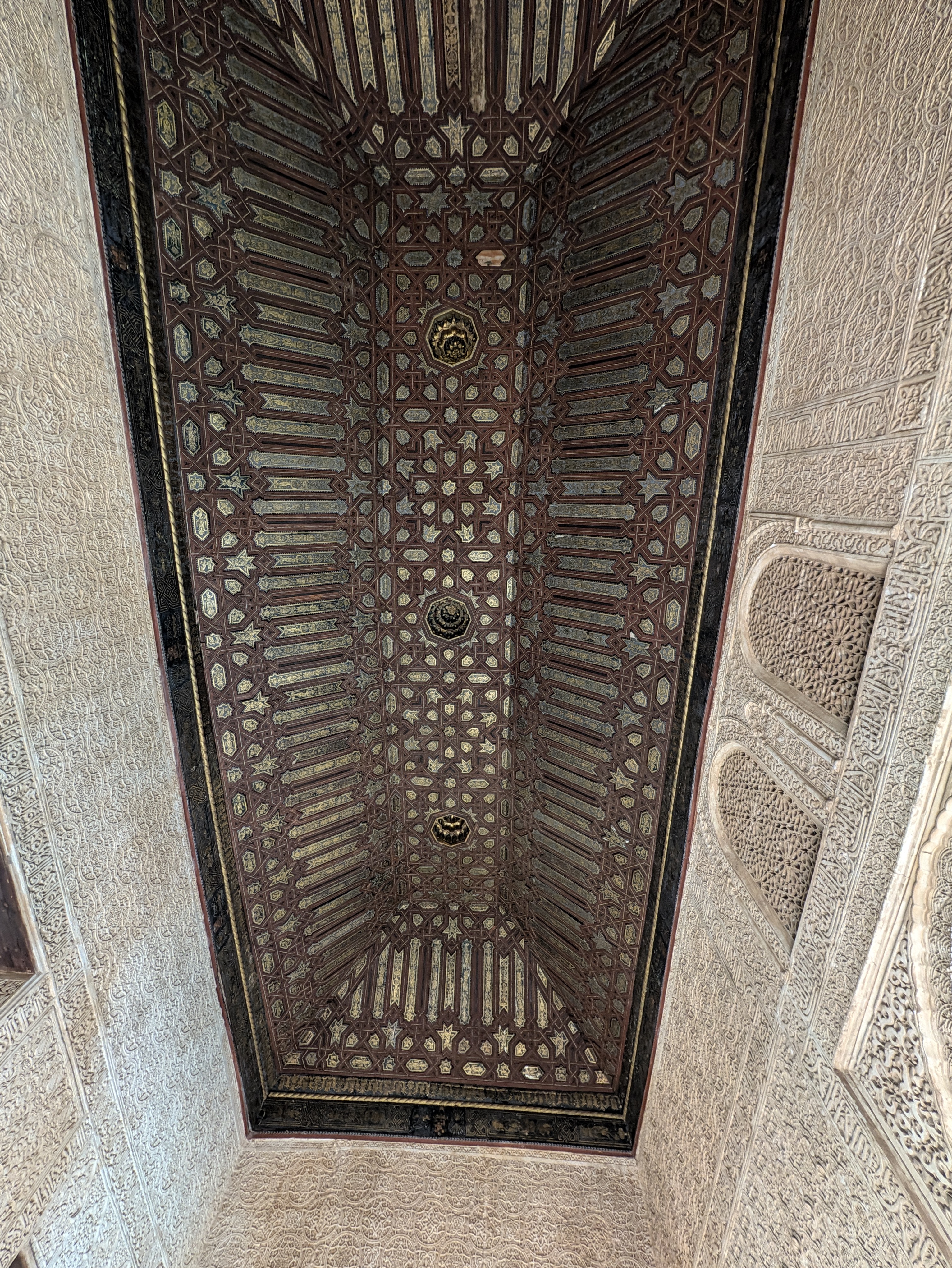
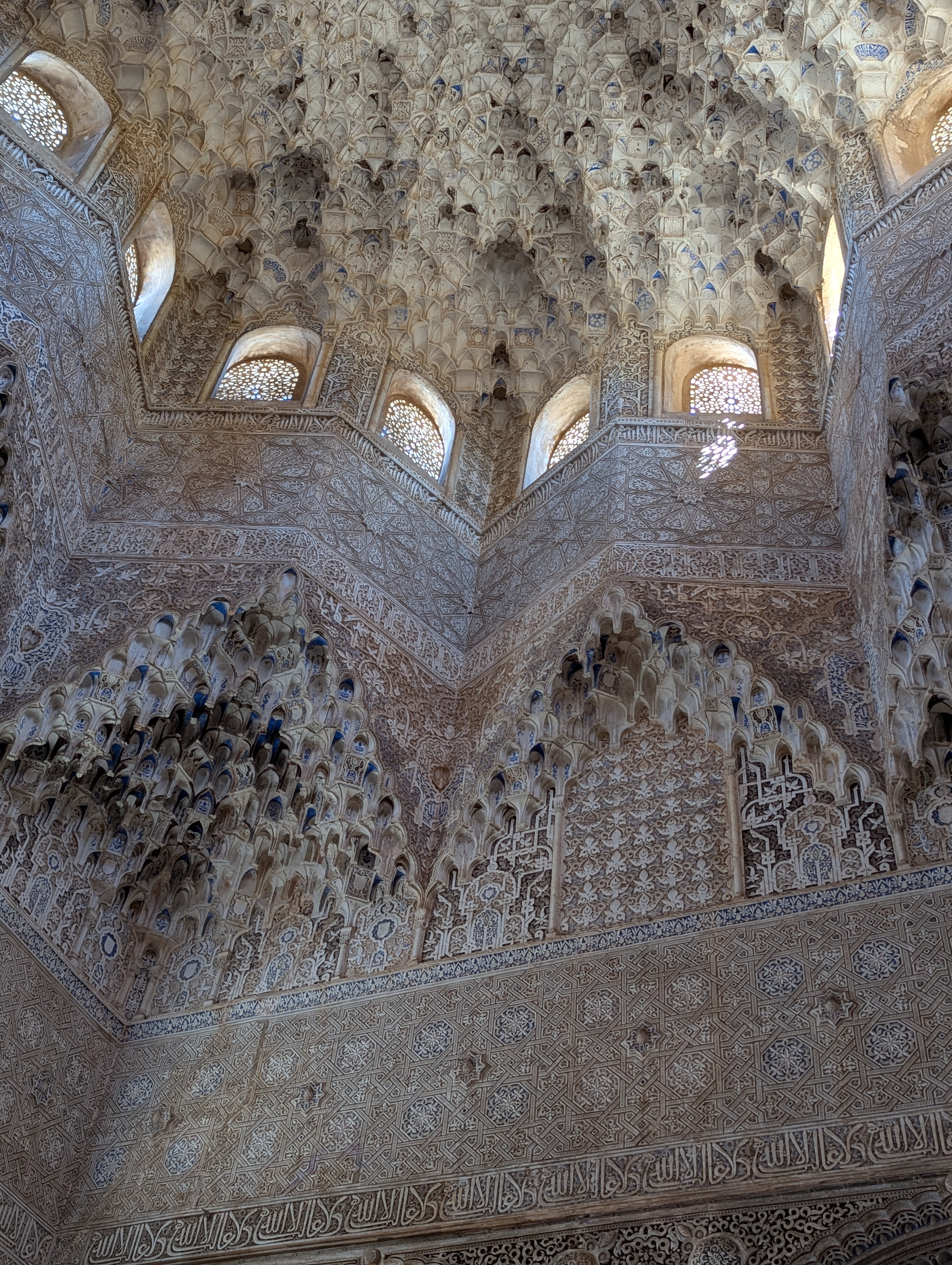
Vaulted, carved ceiling.
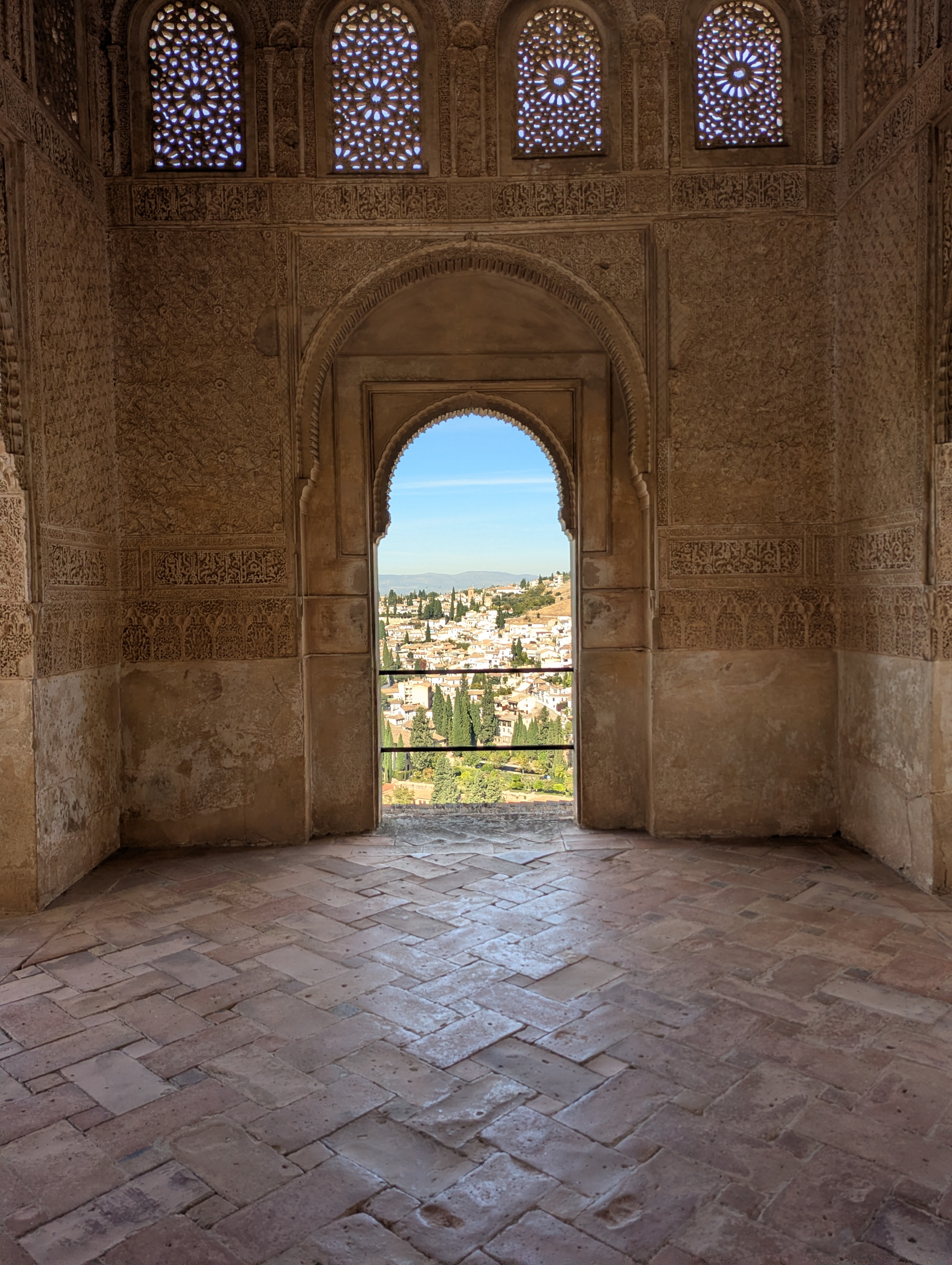
Every room with a view!
Our guide explained that, by some 20th-century proof, there’s a certain (pretty big) number of variants on this kind of design – this place has all of them.
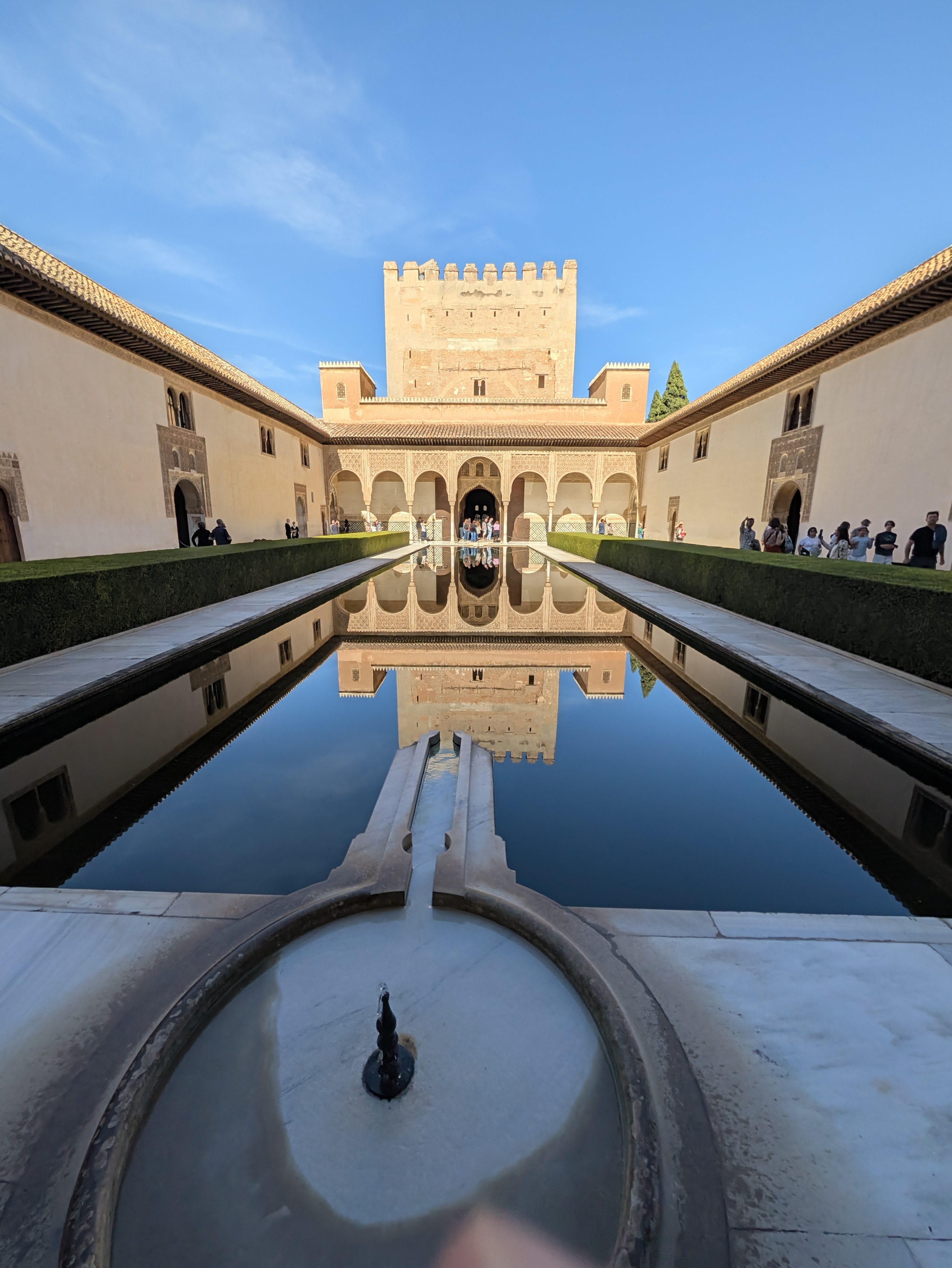
A not great picture of a really beautiful courtyard.
Better picture, lesser courtyard.
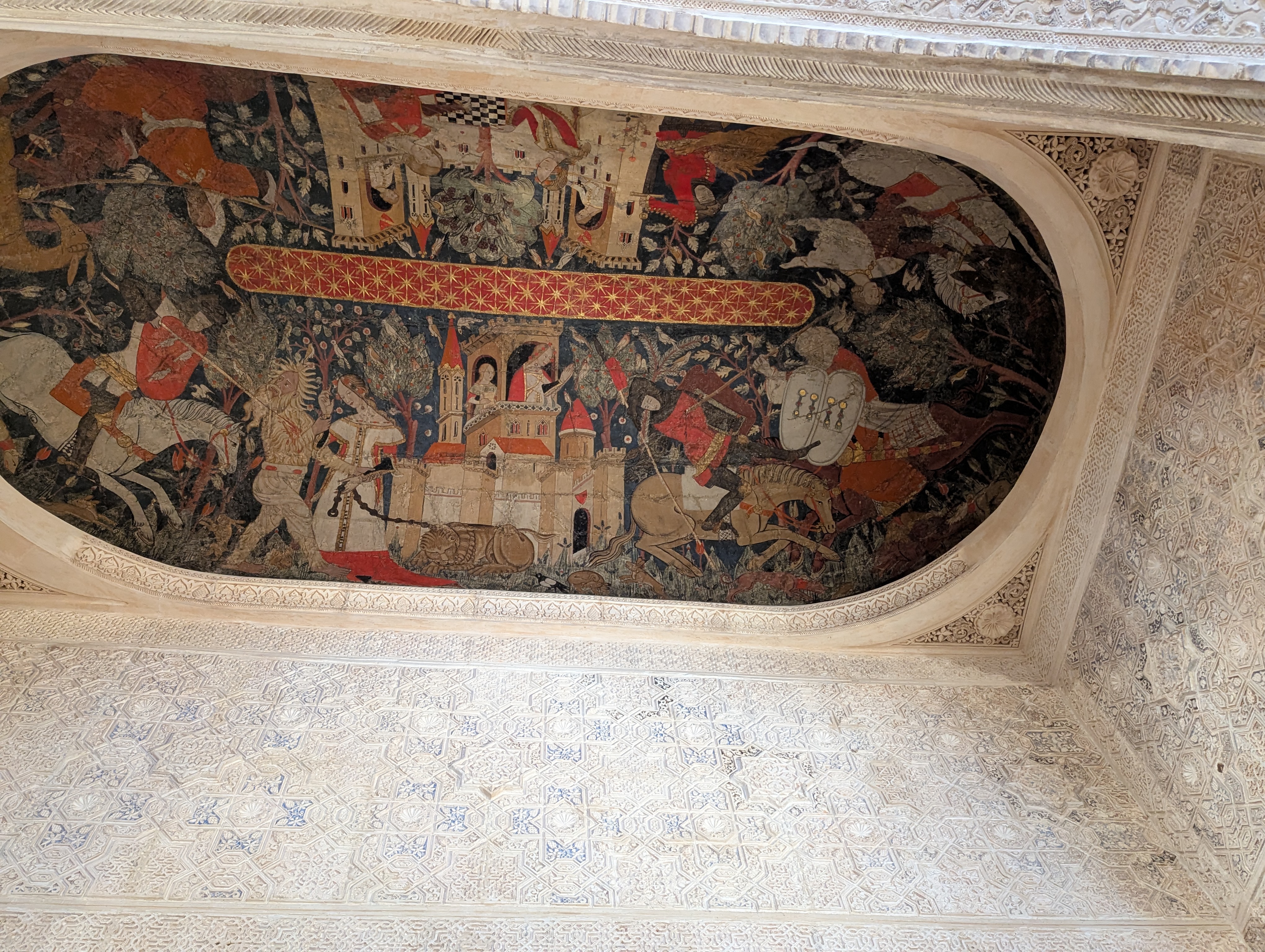
Ceiling painting.
Ceiling with a very stalactite-like finish.

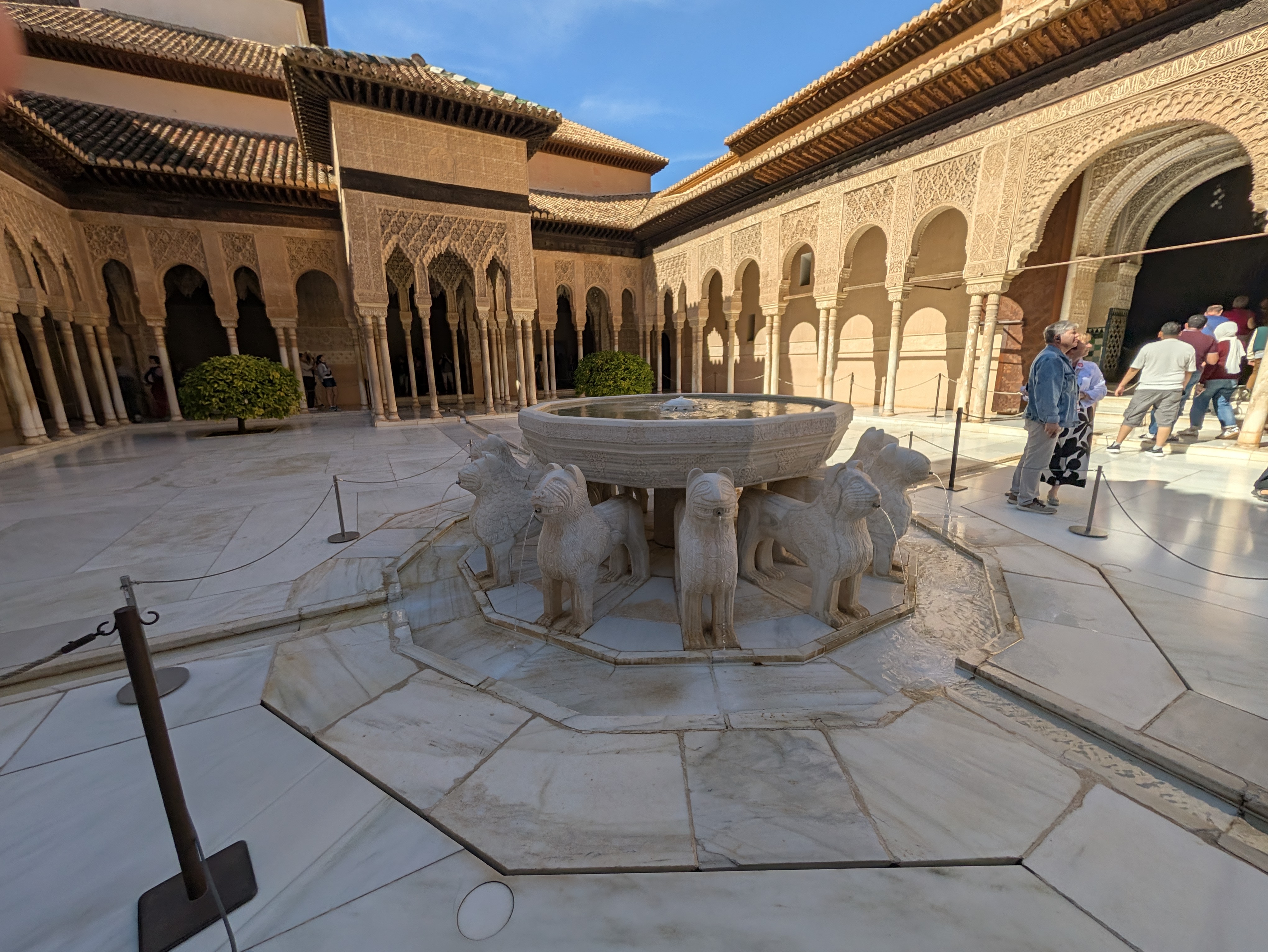
The most famous part of the place is the Court of the Lions, which includes this spectacular fountain.
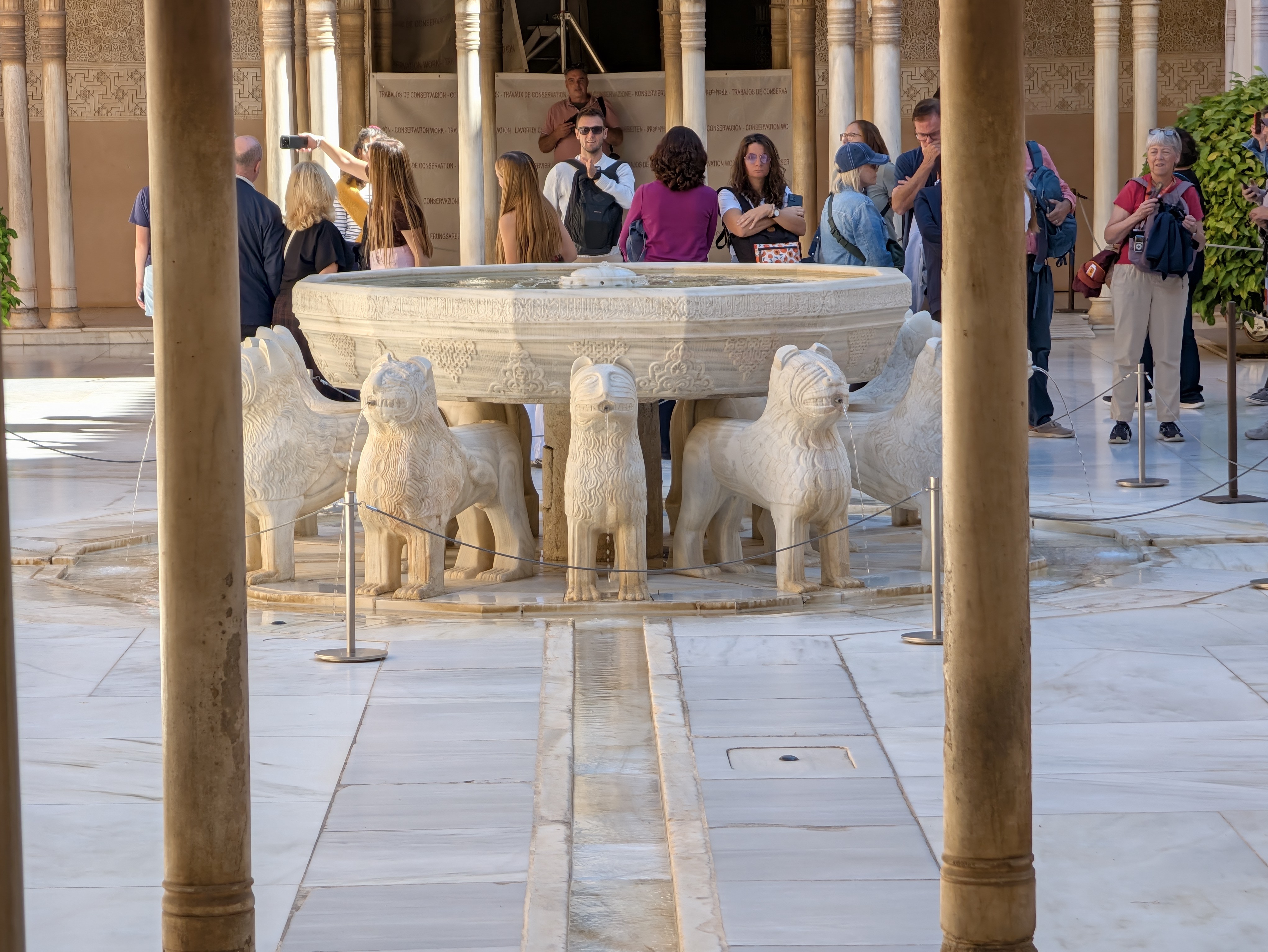
The fountain through columns.
From the other side.

In true Tufnel fashion, nobody really knows why they were built or what they’re supposed to represent. Each one is unique, though, which shows the amount of time it took to build them all (in the 14th century).

The place isn’t just ancient. Charles V, Holy Roman Emperor and King of Spain, started building a palace here in 1527, but it went unfinished and was abandoned in 1637 (well after his death). It was finally “completed” in 1927, but only got a roof in 1967. There’s a metaphor in there somewhere. Nice courtyard, though.
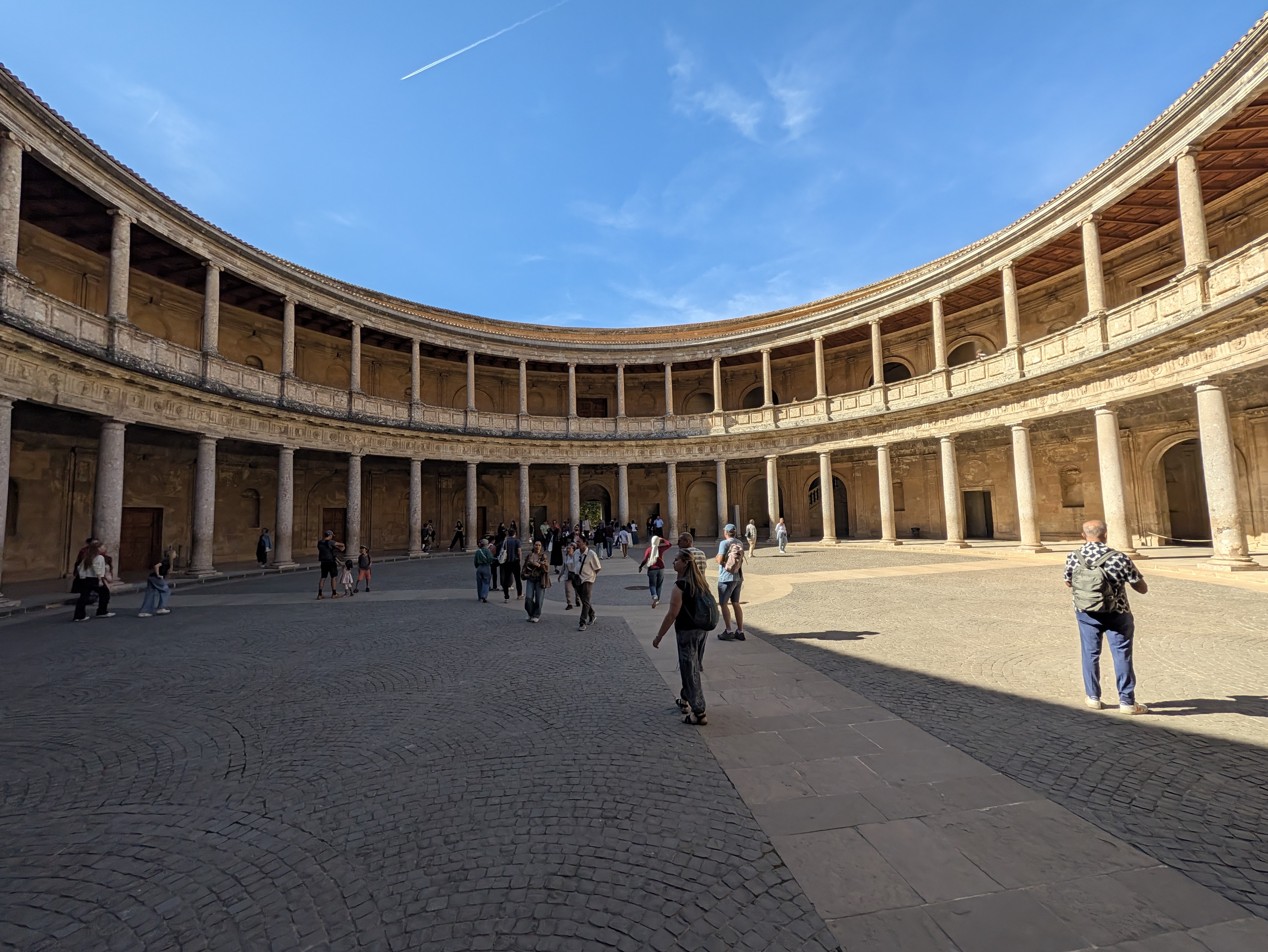
Lots of square footage, but how much is usable?

We spent the afternoon exploring the city.
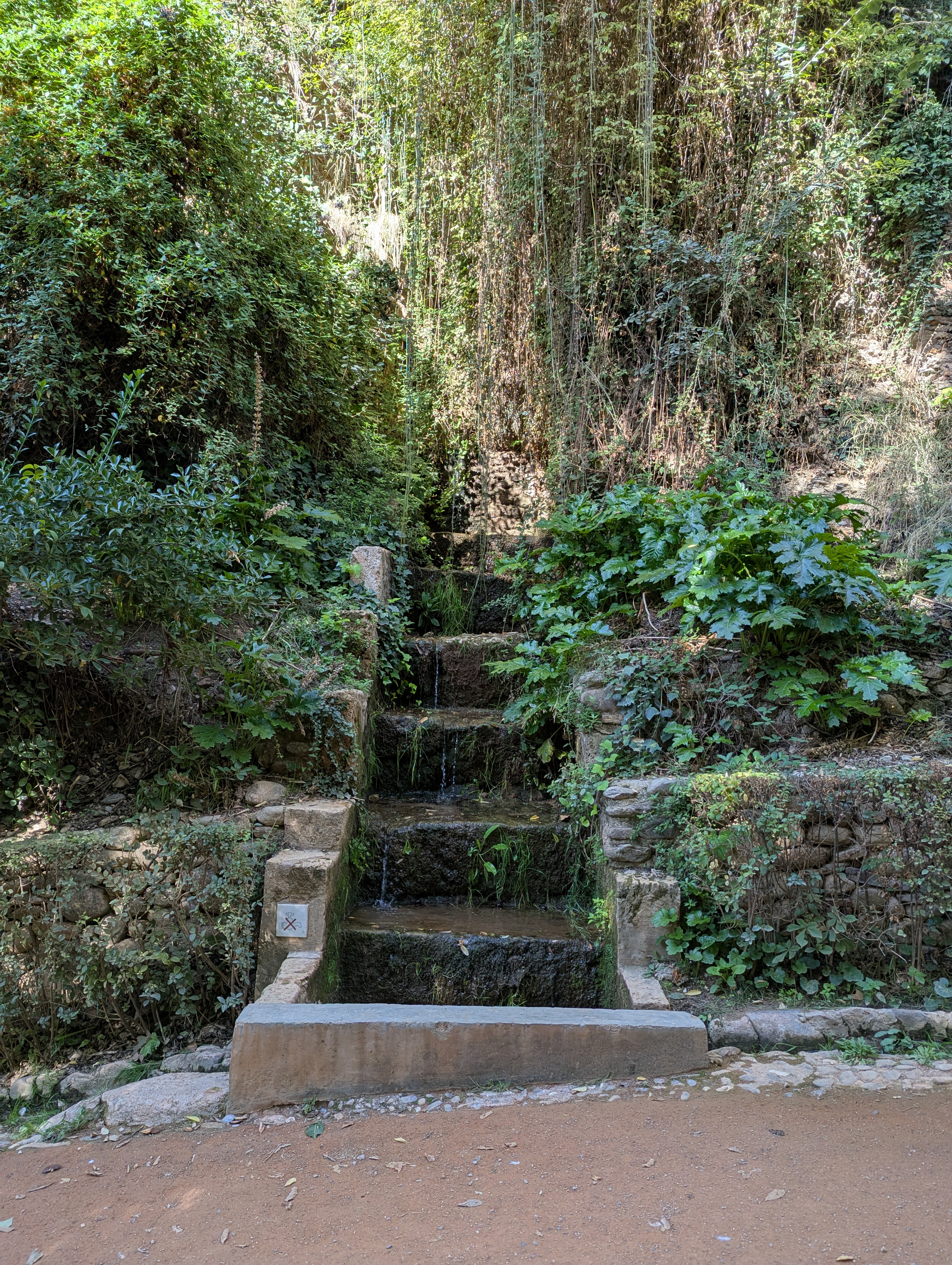
A waterfall on the way down the hill from the Alhambra.
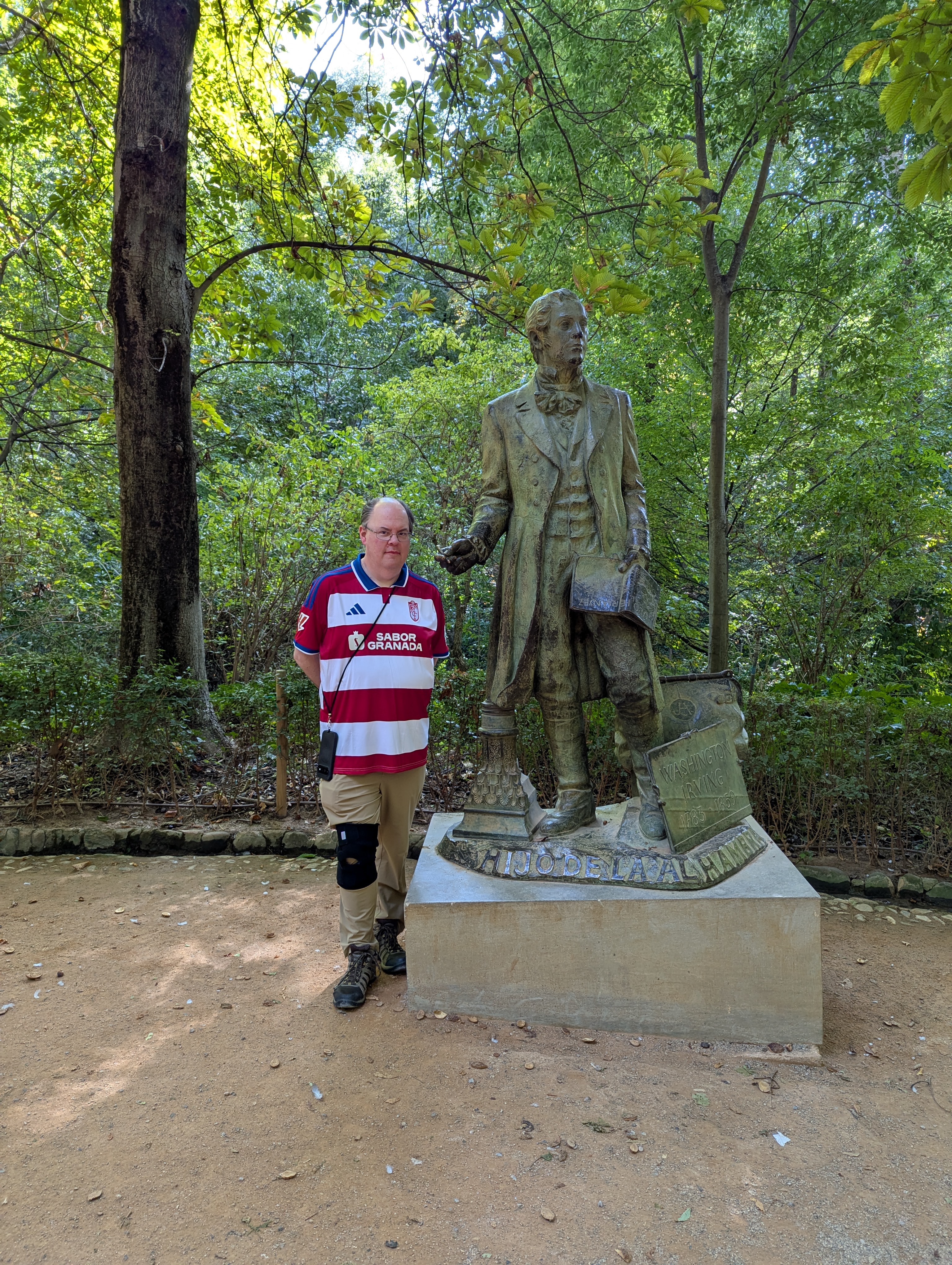
Washington Irving, who wrote “Tales from the Alhambra” after coming to Granada on diplomatic duty.
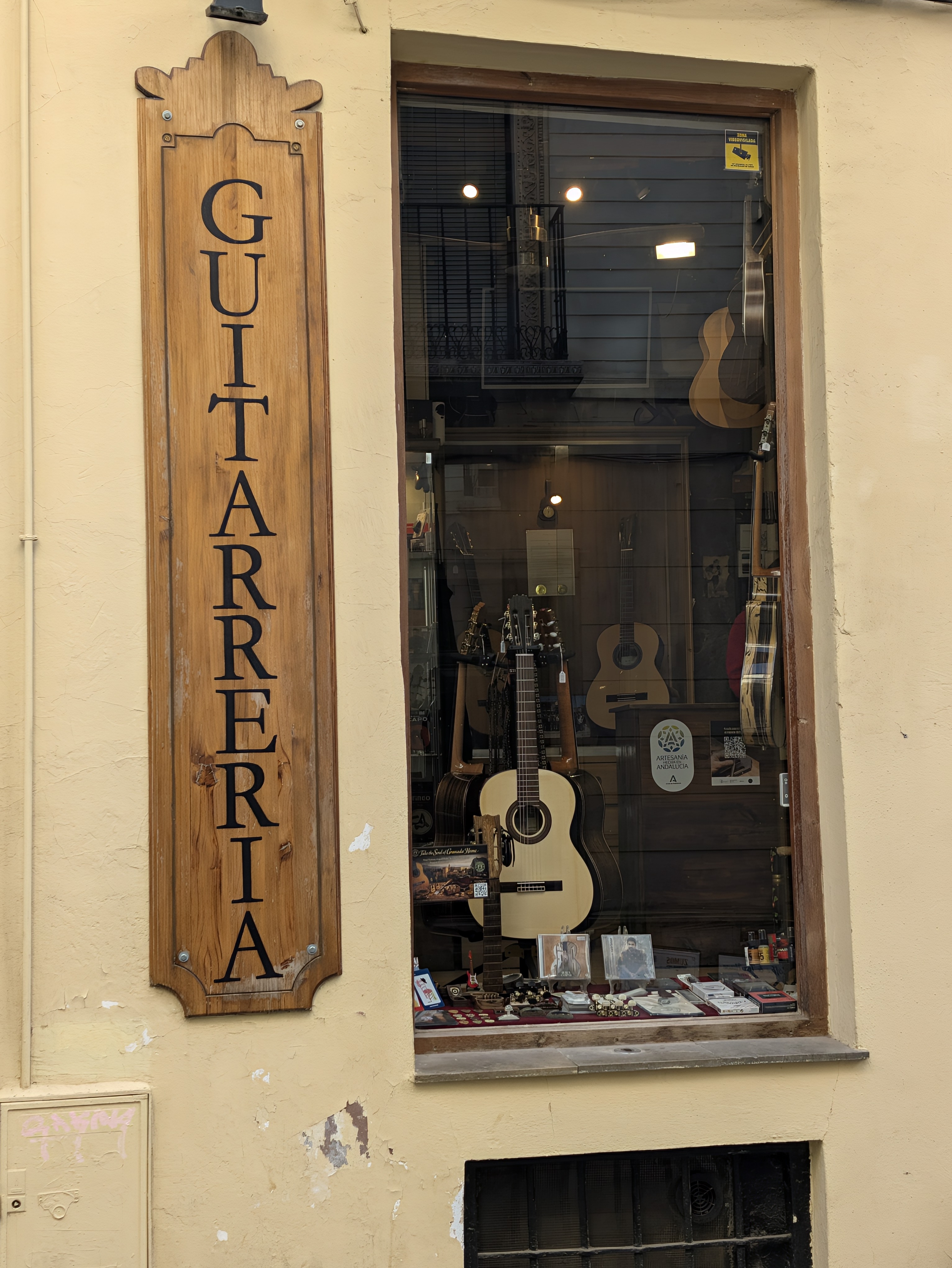
For my guitar playing friends and relations.

We stopped at the Casa de Zafra, a restored home that serves as a museum of the Albaicín.
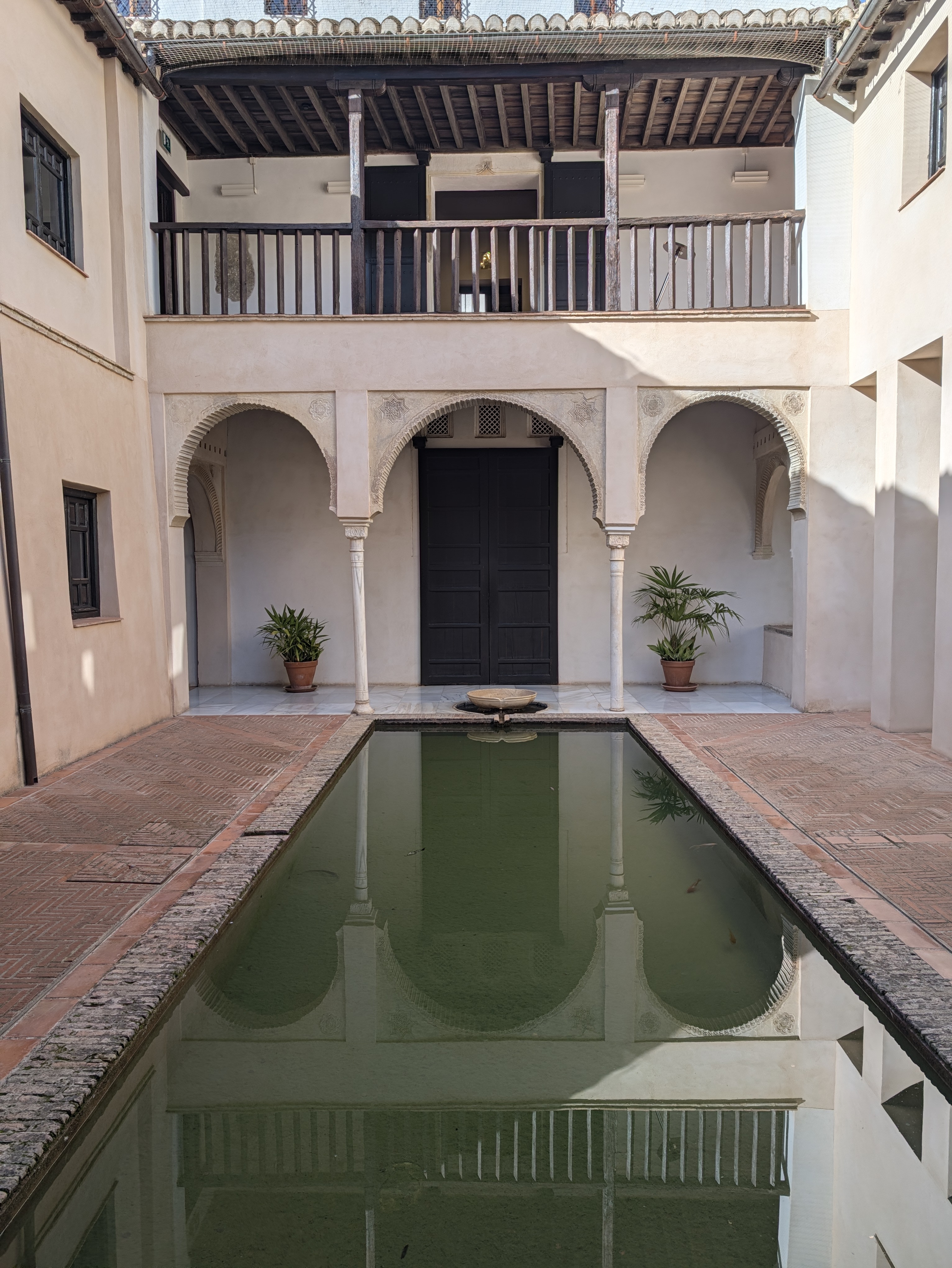
Courtyard.
Yet again, an amazing view (of . . . c’mon, guess!).

Stumbled into some street flamenco.
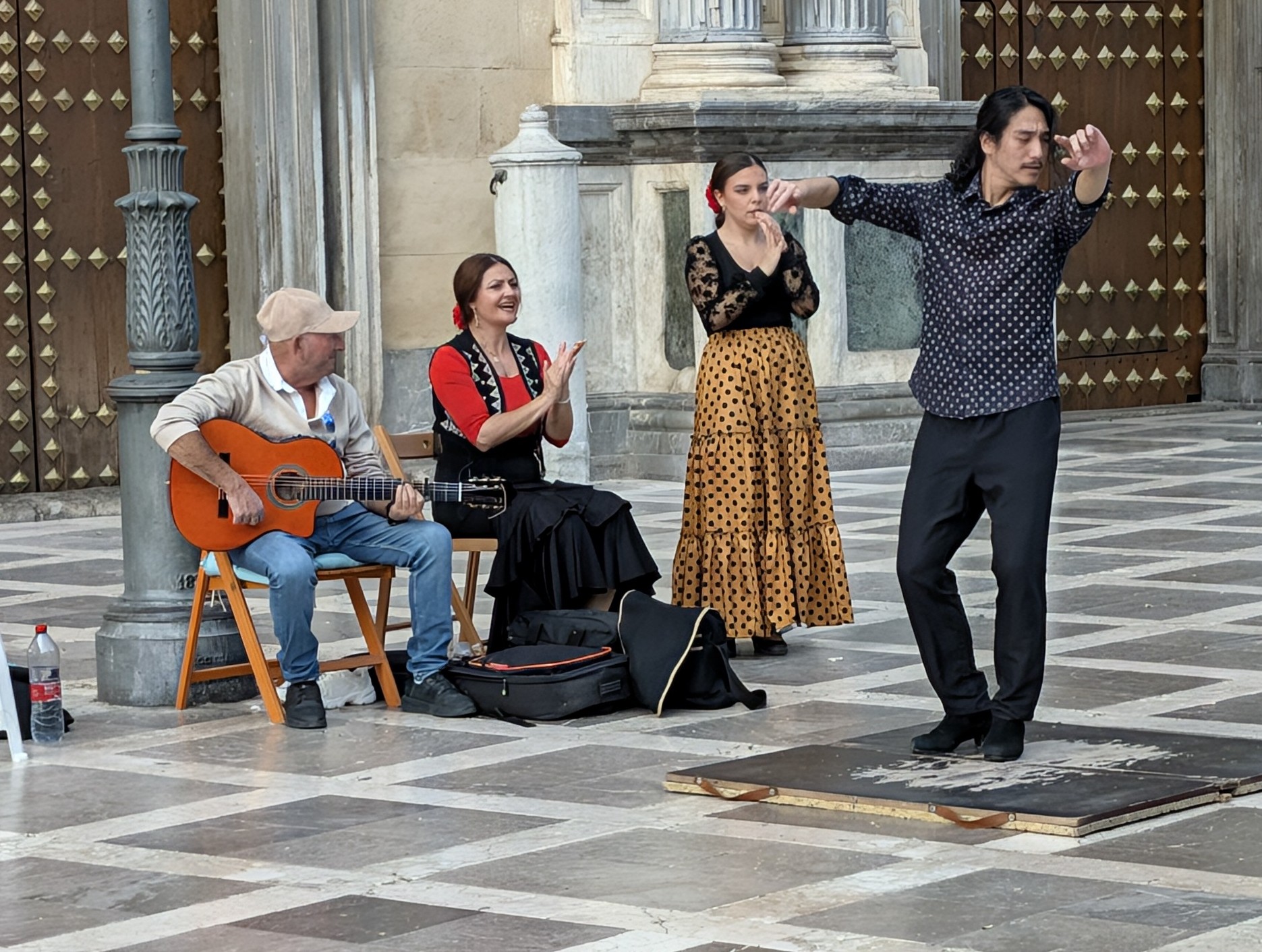
Have dance, will travel.

And a little torture, at the Museo de Olvidados (the “museum of the forgotten”), filled with toys from the Inquisition.
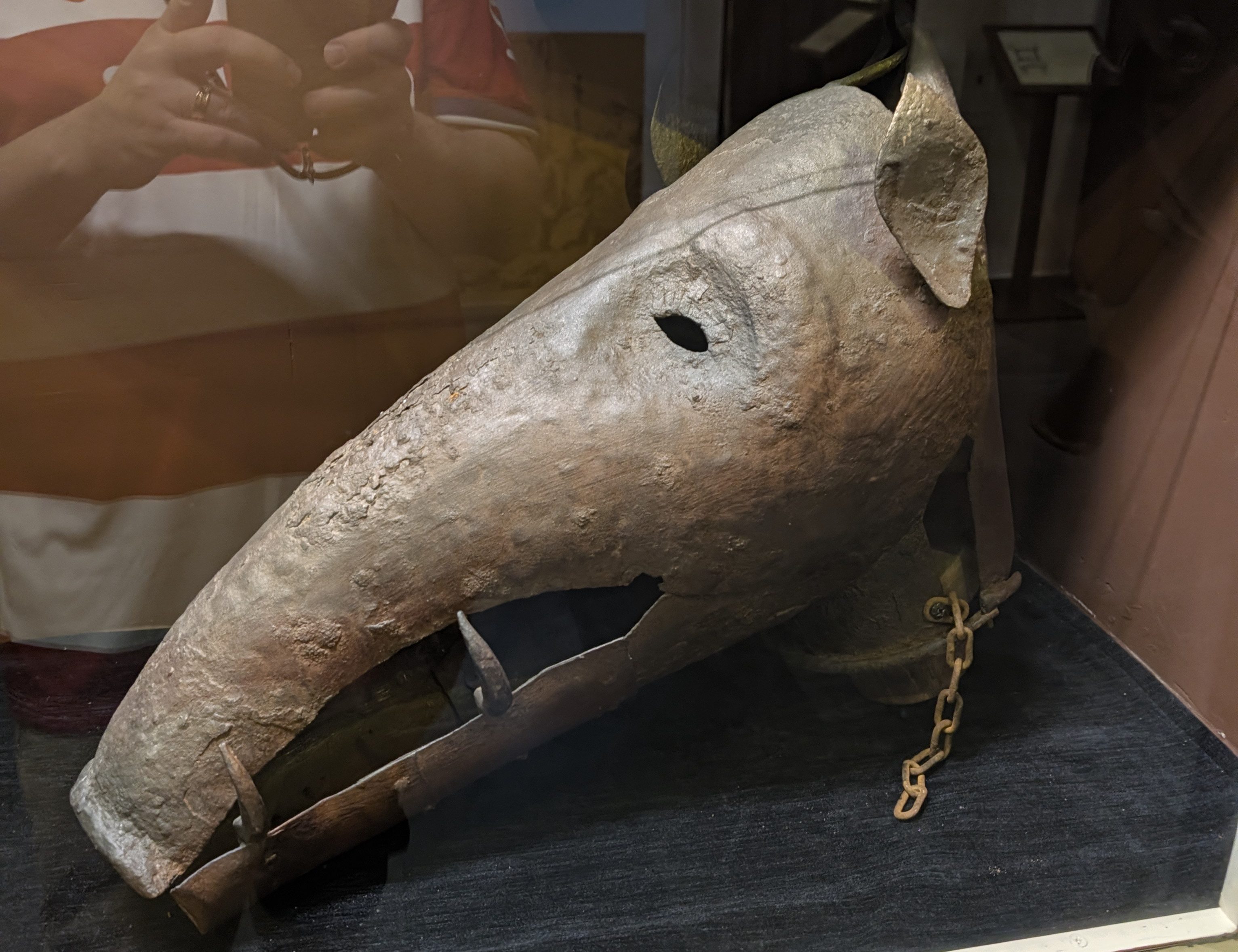
Doesn’t get much worse than a metal pig mask.
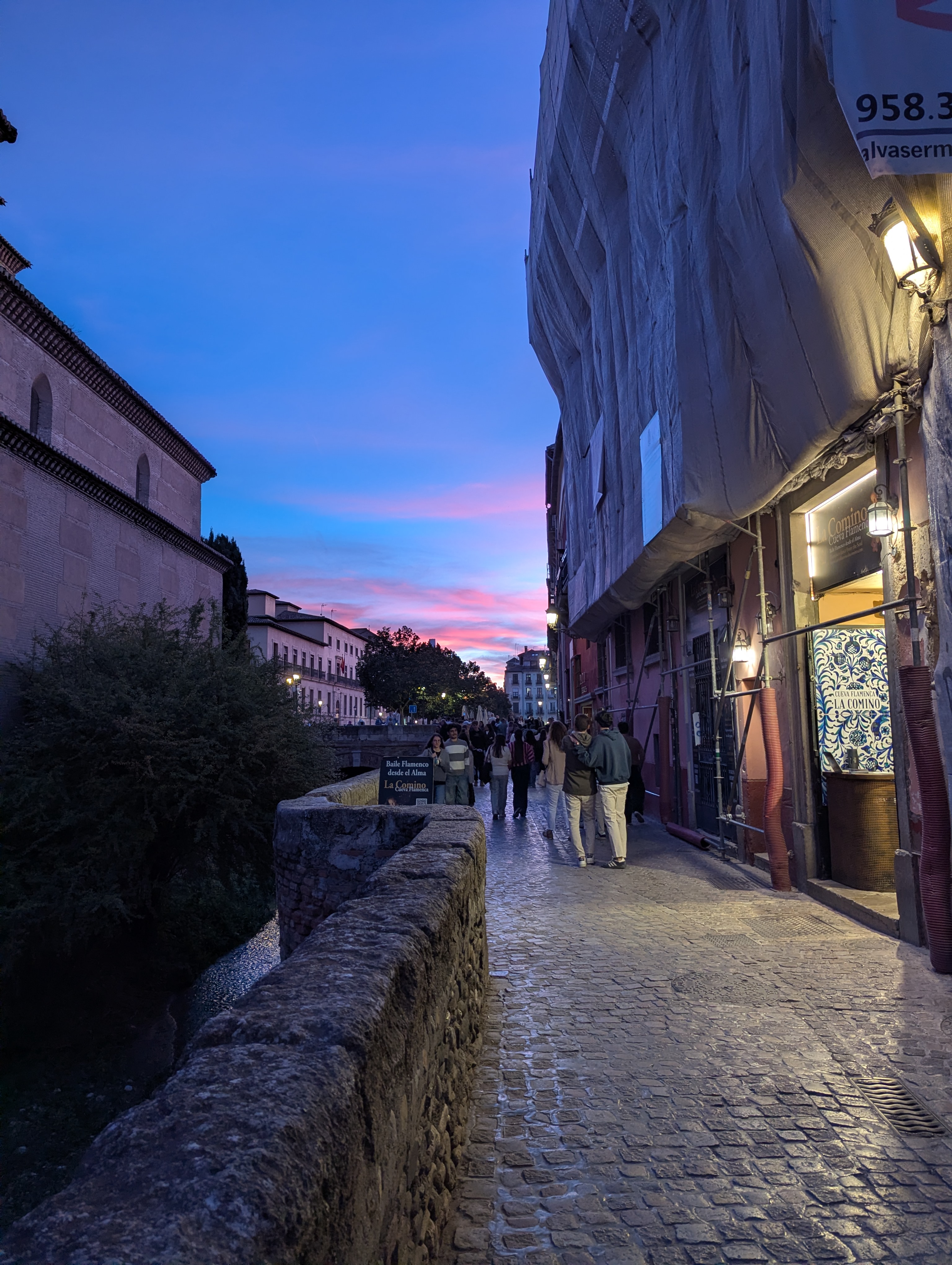
The street outside our hotel at dusk. It’s narrower than it looks!

Madrid

We really only went back to Madrid because it was the best place to fly home from. Nonetheless, it was a good excuse for another good dinner at a local place and one last batch of churros!
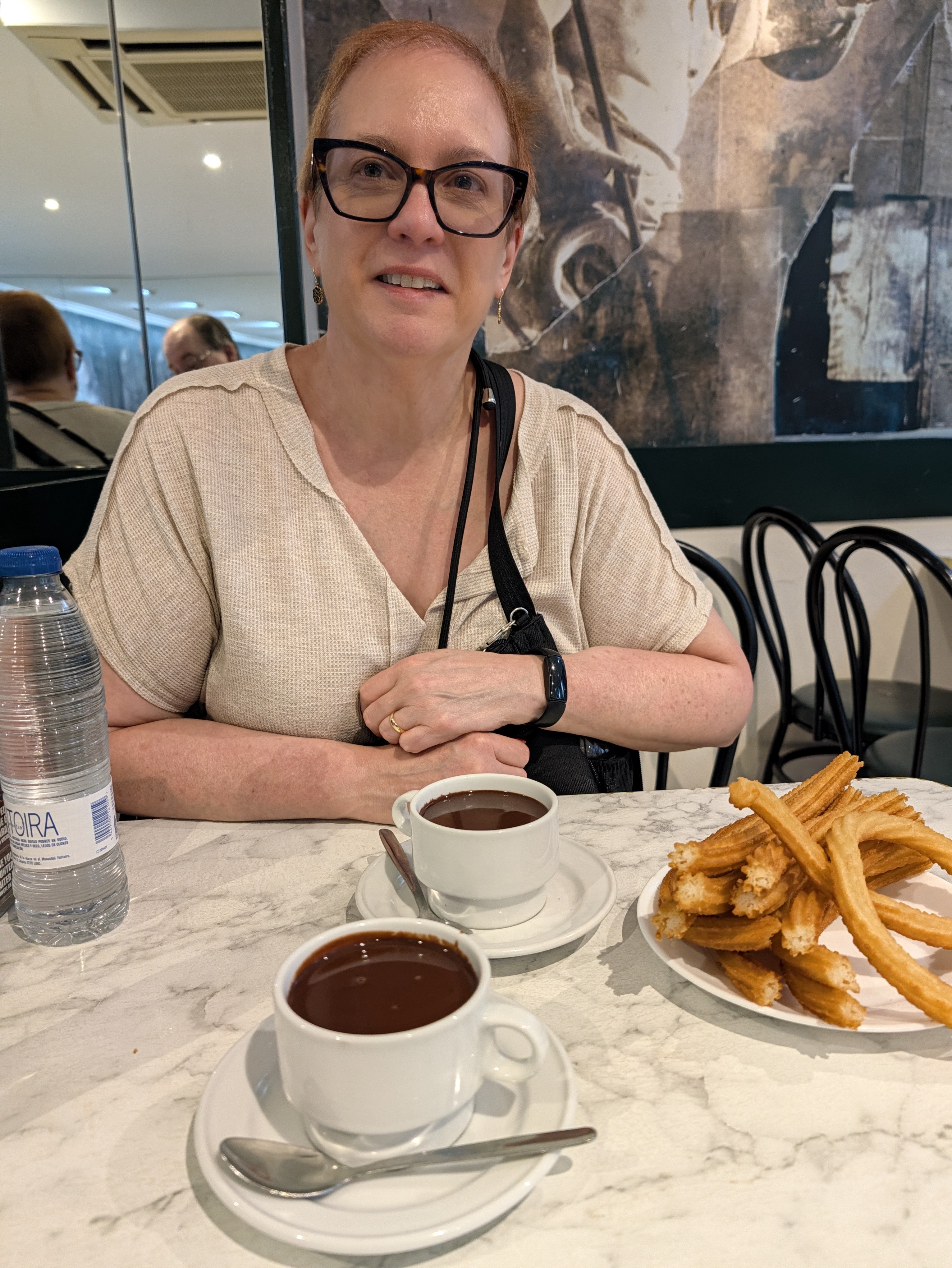
One (or two . . . or ten) for the road.

A word about . . . language.

I will admit – I was a little skeptical we’d be able to wade through this trip given that neither of us actually speak Spanish. When we went to Cambodia we had guides/translators with us the whole time and when we went to the UK, well they speak English (basically). Thankfully, most of the folks we dealt with had enough English proficiency that we could communicate well enough. It was a little more stressful in, say, train stations, were most announcement were in Spanish only, but day-to-day, we got along pretty well. A large part of that is down to the kindness of the Spanish people we dealt with (aside from the graffiti artists in Madrid).

Take it away . . . Joaquín (and friends)

After a few riffs on the original, here it is in all its glory, Joaquín Rodrigo’s Concecierto de Aranjuez.

And because I can’t resist finishing up with the prog, Emerson, Lake, & Palmer send us off with “Canario,” an adaptation of another Rodrigo piece (which is excellent – ignore the horrific fashion choices).
Sketches of Spain, Part 2 – Seville & Malaga

Last month my wife, Kelly, and I embarked on the “Two Weeks in Spain” so famed in song.  It was a wonderful trip and impossible to convey all we were able to do and see, but over the next few posts I wanted to share a little bit of what made the journey so special. Each post has musical accompaniment, so press “play” at the bottom and enjoy.

Seville

A short train ride and we were in Seville (no barbers in sight!).

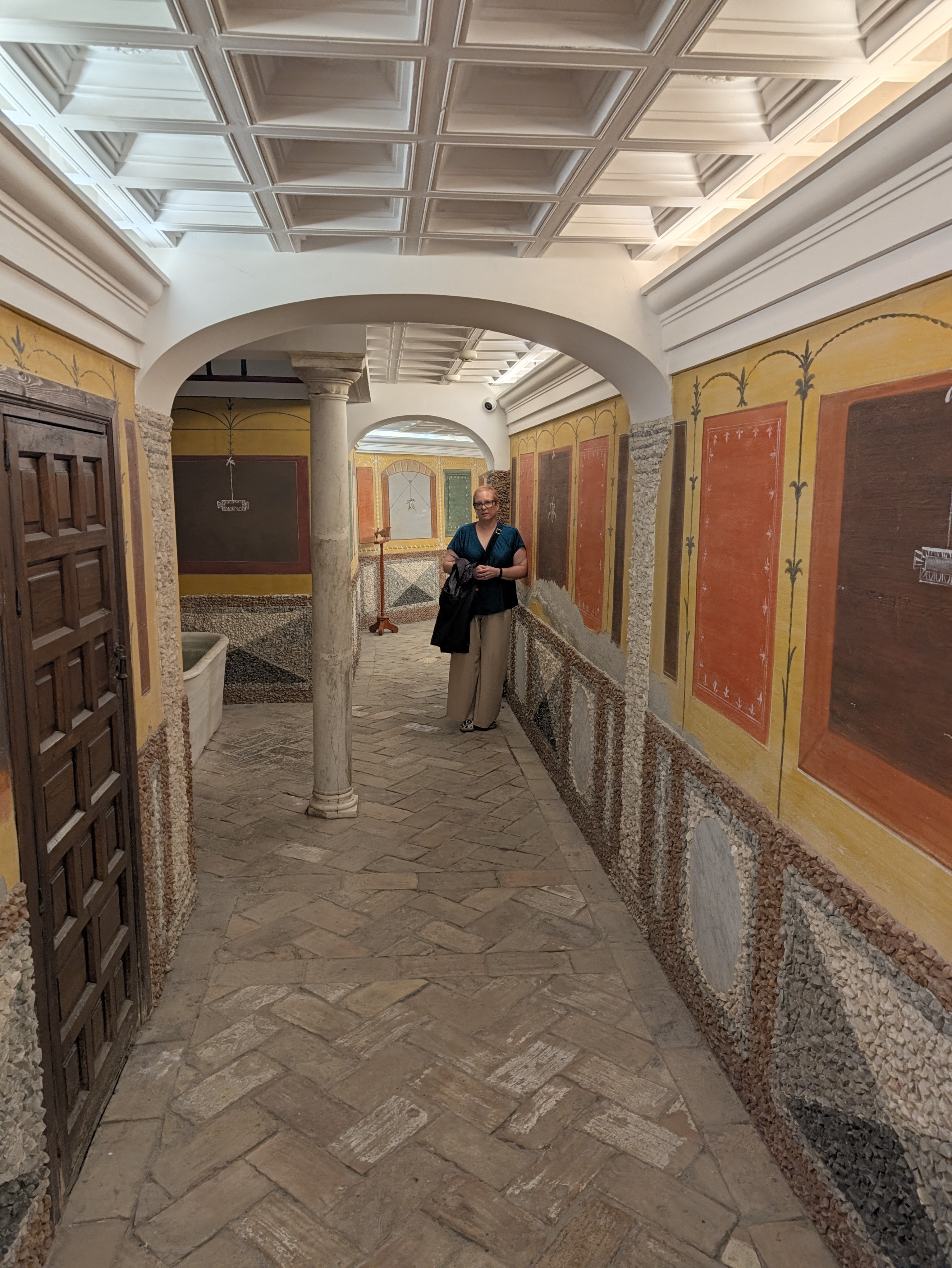
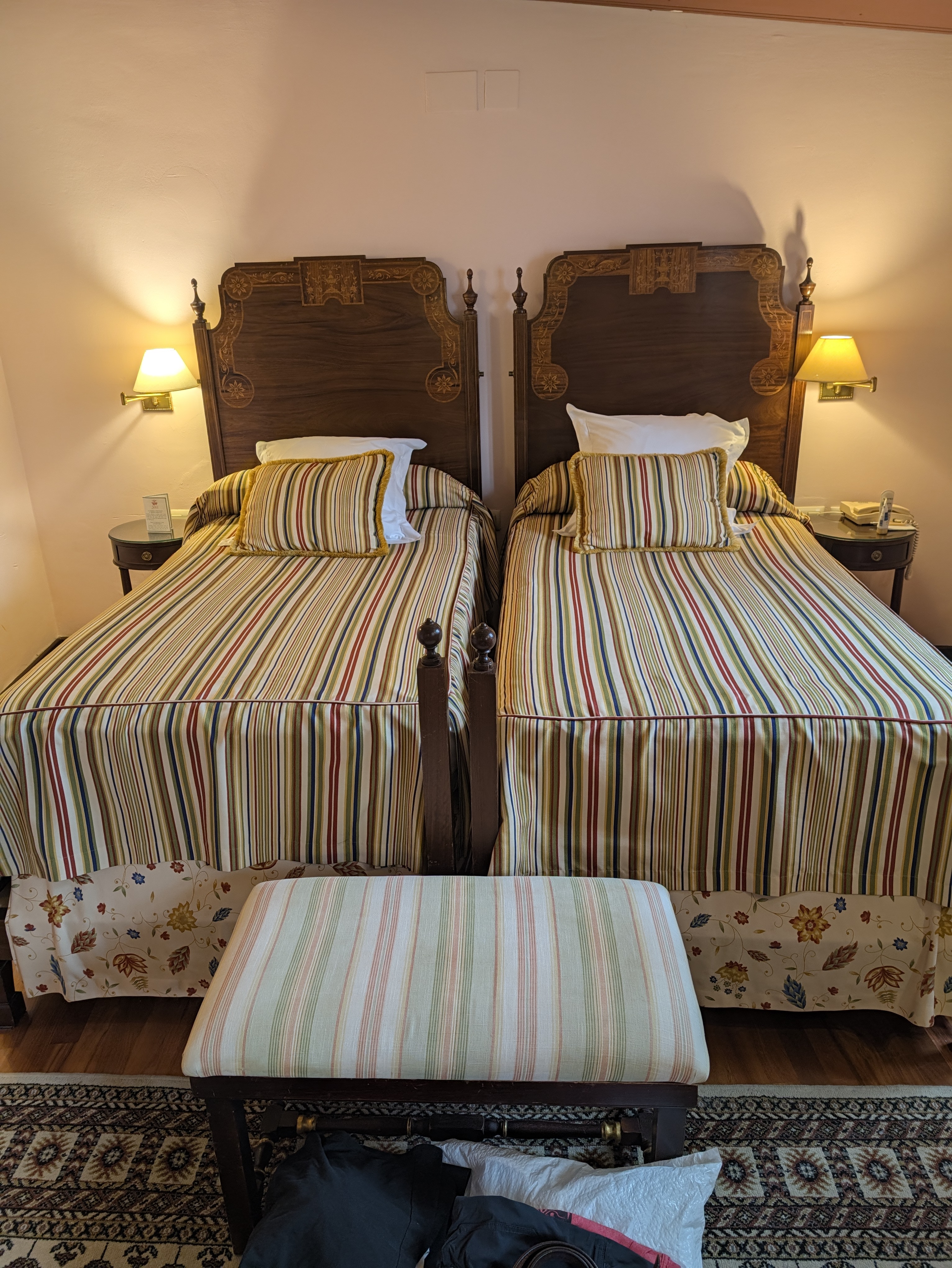
Our hotel in Malaga was . . . odd. For one thing, it wasn’t a single building, but a bunch of old homes all tied together into a hotel. As a result we had to take a tunnel (and about three elevators) to get to our room.

Kelly, hoping this doesn’t turn into some kind if “Shining” situation.

And, well, this was awkward.

Excuse me . . .

Our hotel (of which more later) was deep in the old town and, as in Cordoba, we set off to explore a bit before dinner.

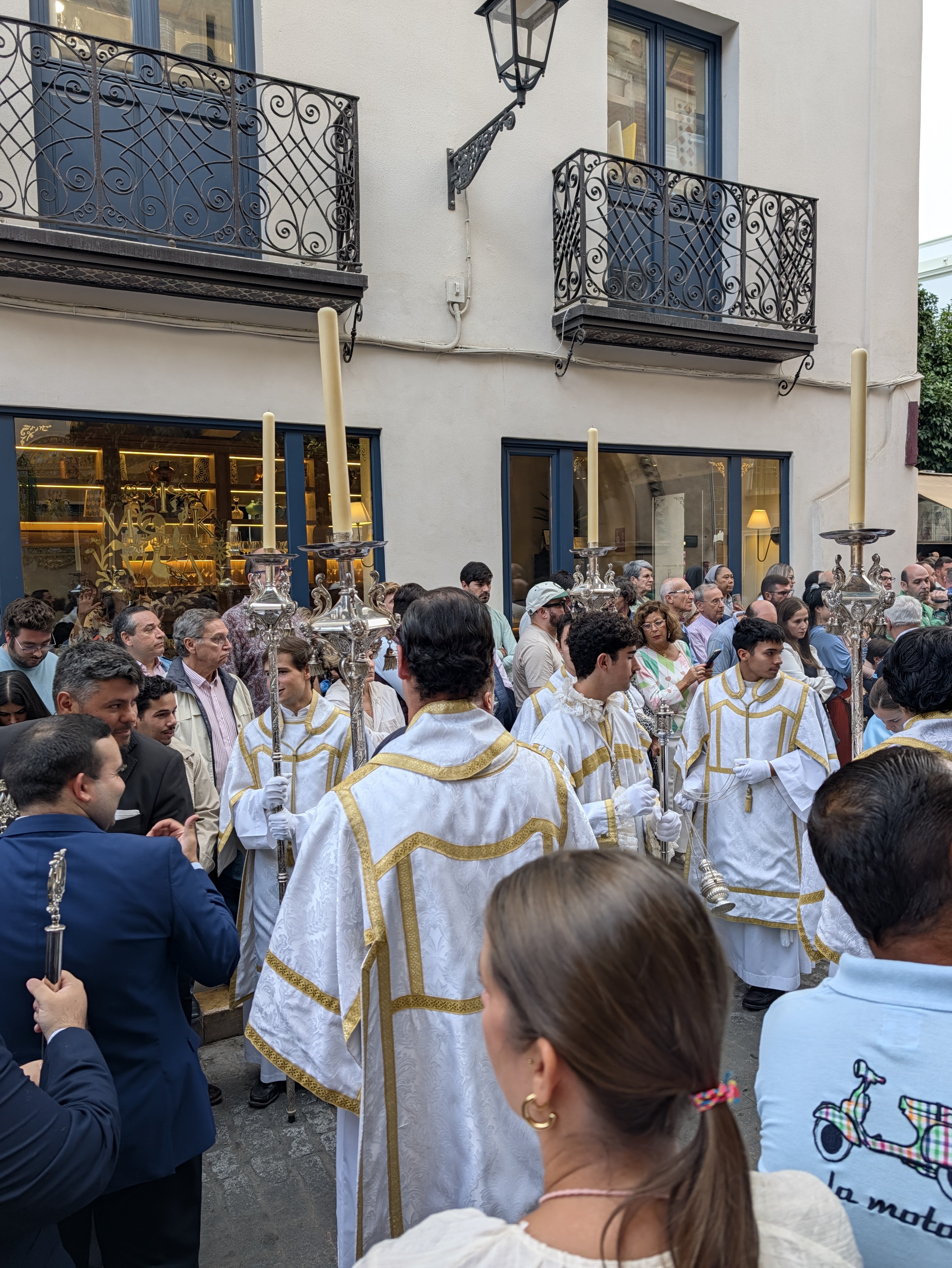
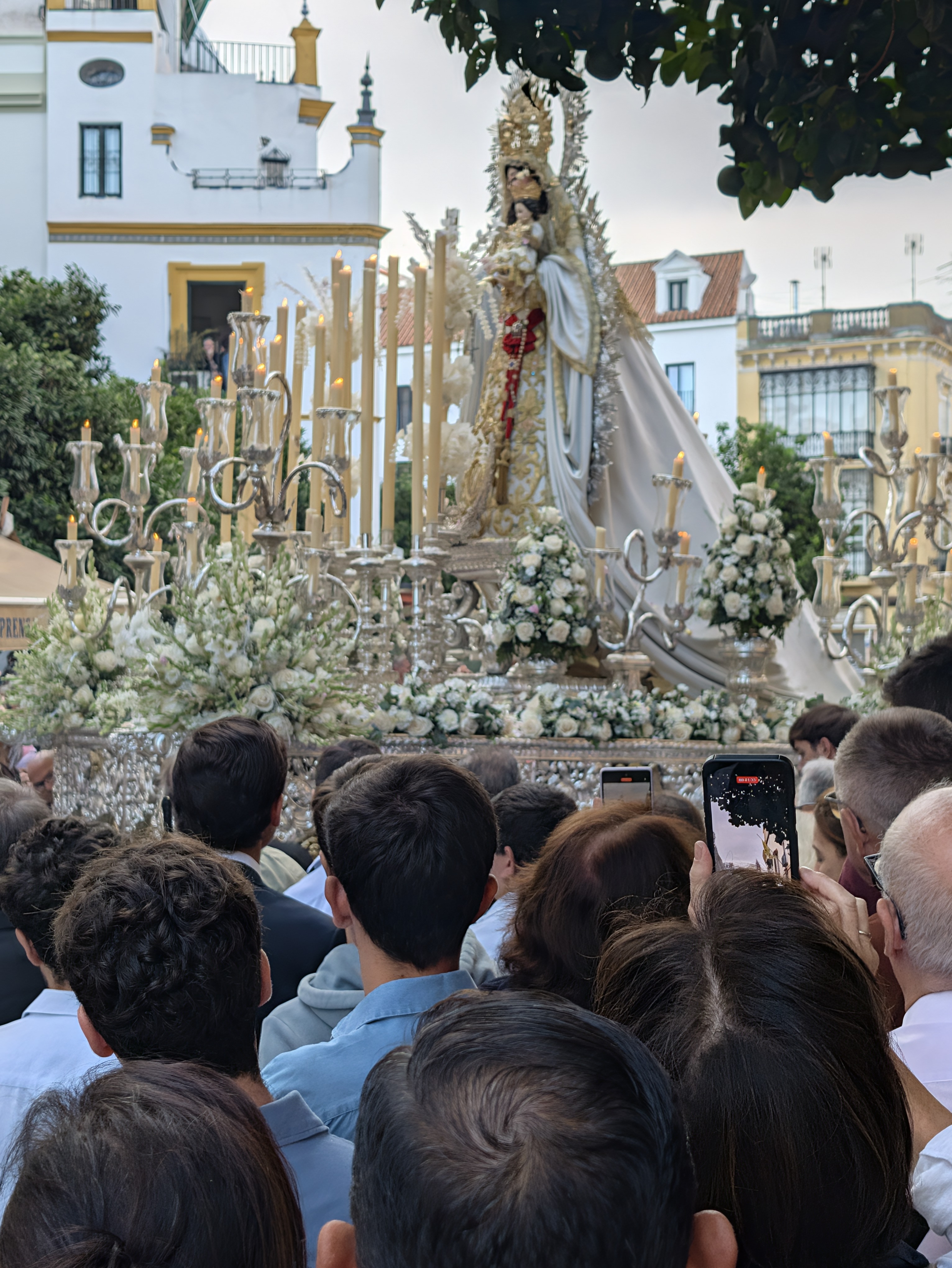
When we left the hotel there was a crowd starting to gather and what looked like a community band milling around in the street. By the time we got back the crowd was so thick we couldn’t actually reach our hotel. Turns out it was just a few doors down from Iglesia de Santa Maria la Blanca and it was about time for a processional.

Numerous Catholic guys waiting on the thing to get rolling.

It took a while for the whole coterie to make its way out of the church, but the ending was worth it.

A very elaborate float (?) with Mary and lots of candles.

I later asked someone at the hotel how often that kind of thing happened (it was Sunday, after all) and apparently it’s not super common, but not really rare, either. While we were there we saw some posters for other similar events for different saints.

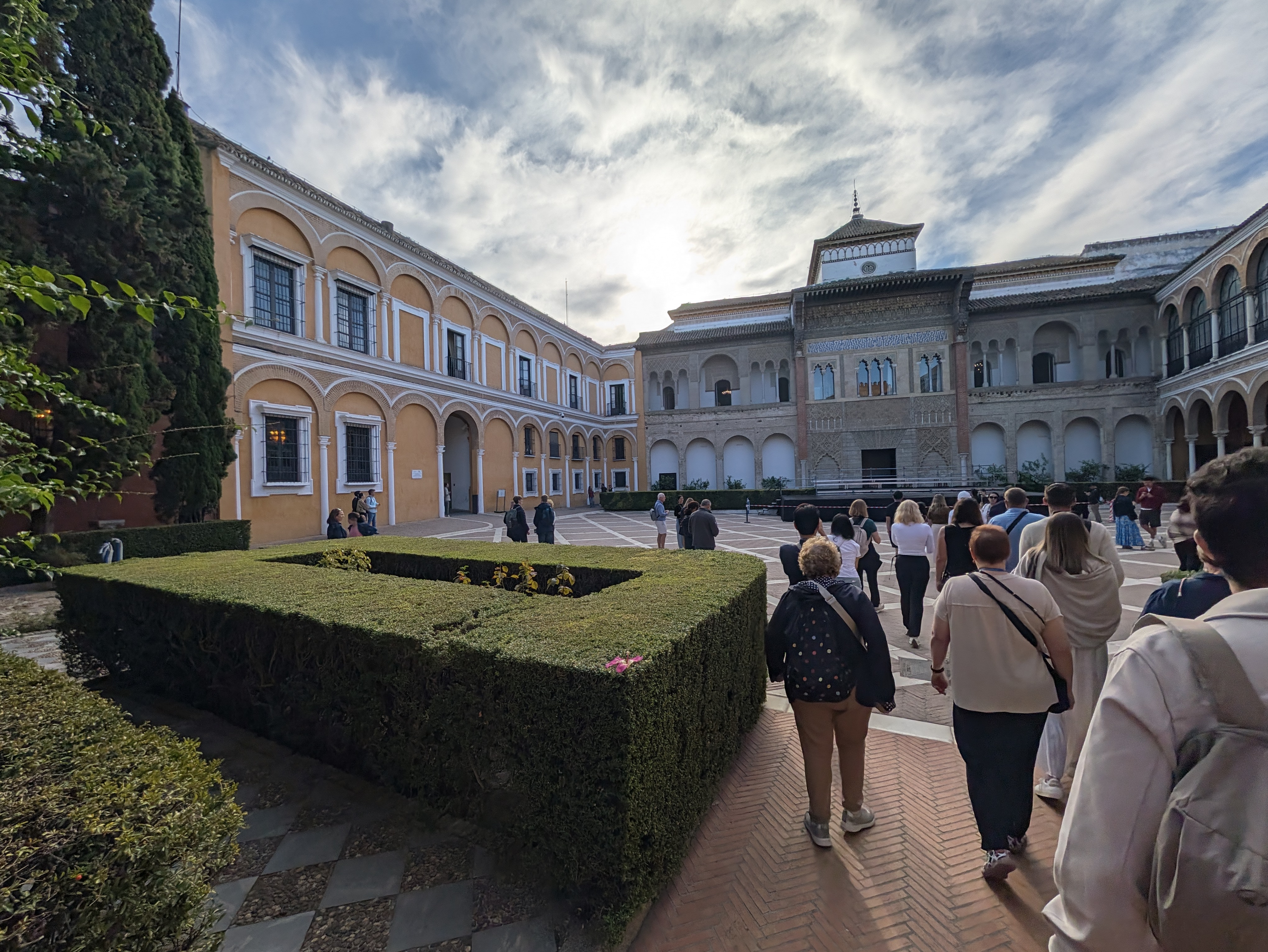
The next day we dove into the history of Seville with a tour that included both the local palace, the Real Alcazar (still used, occasionally, by the Spanish royal family) and the cathedral. The Alcazar has a lot of fascinating history – it was through here that most of the wealth of the Spanish empire in the Americas came into the country (and was taxed). It’s also got some interesting architecture, blending styles from various cultures.

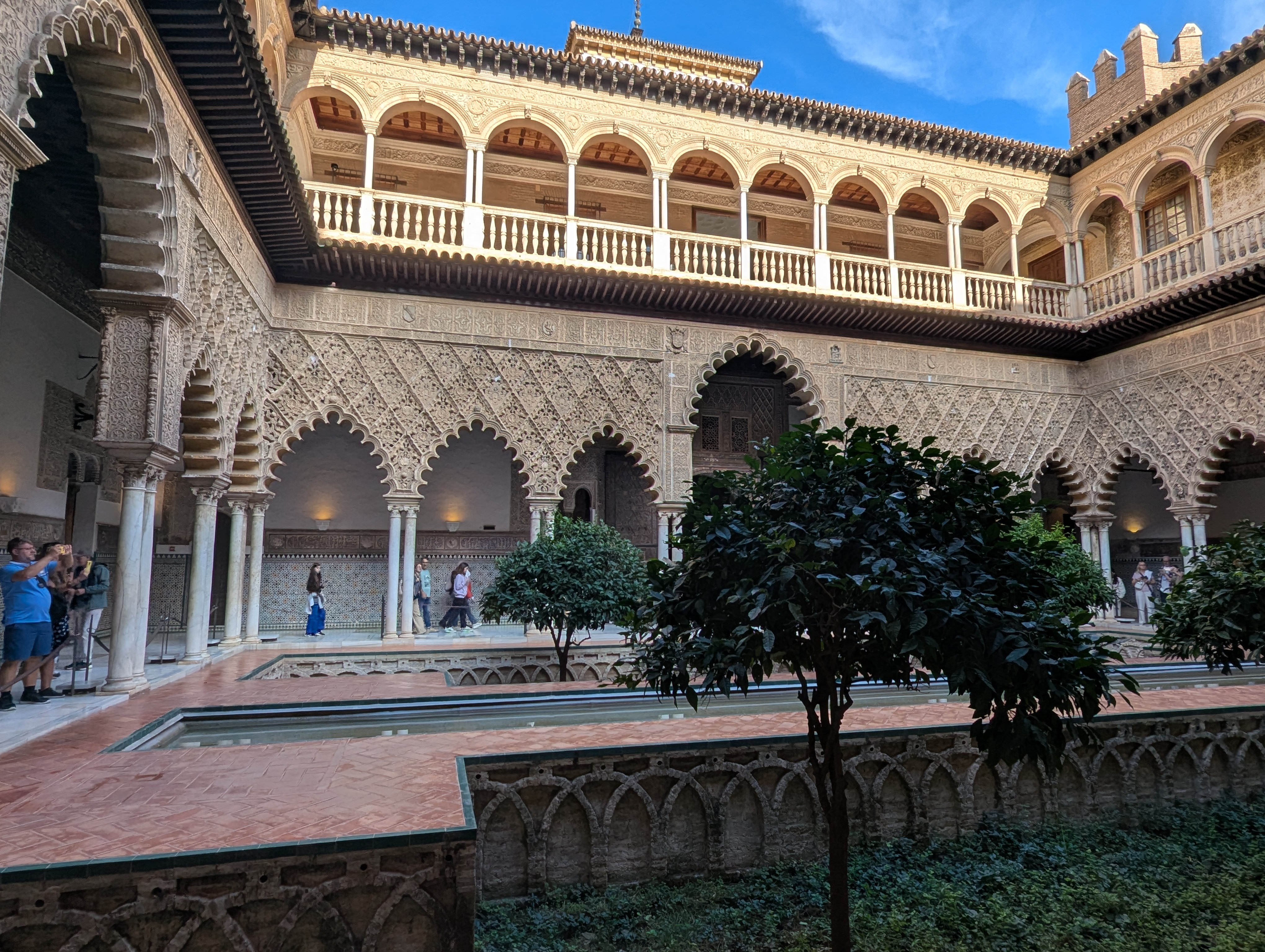
Main courtyard, with a different-era palace on each of three sides.
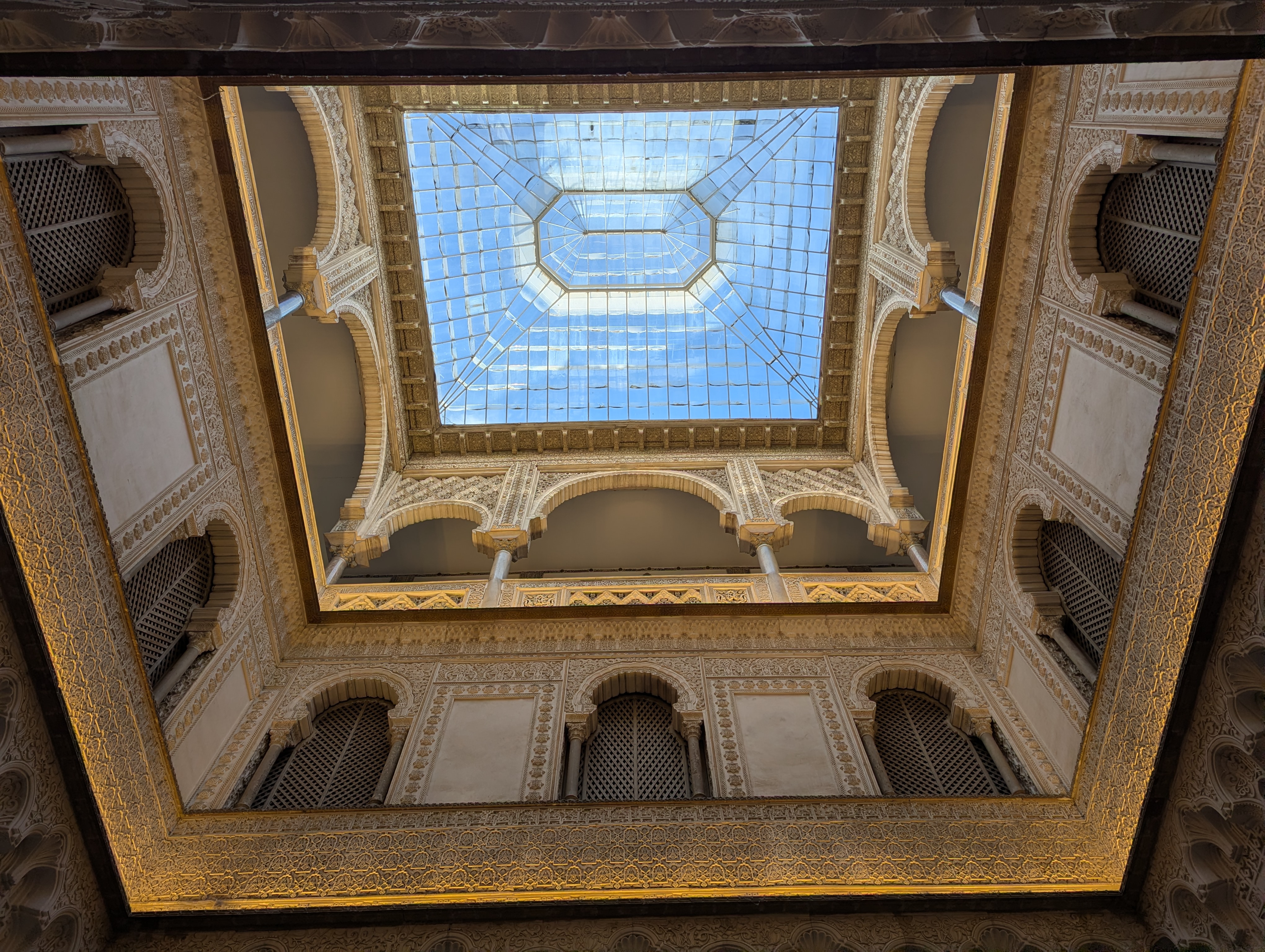
Big glass skylight on the first palace, built by a Christian king with lots of Muslim influences.
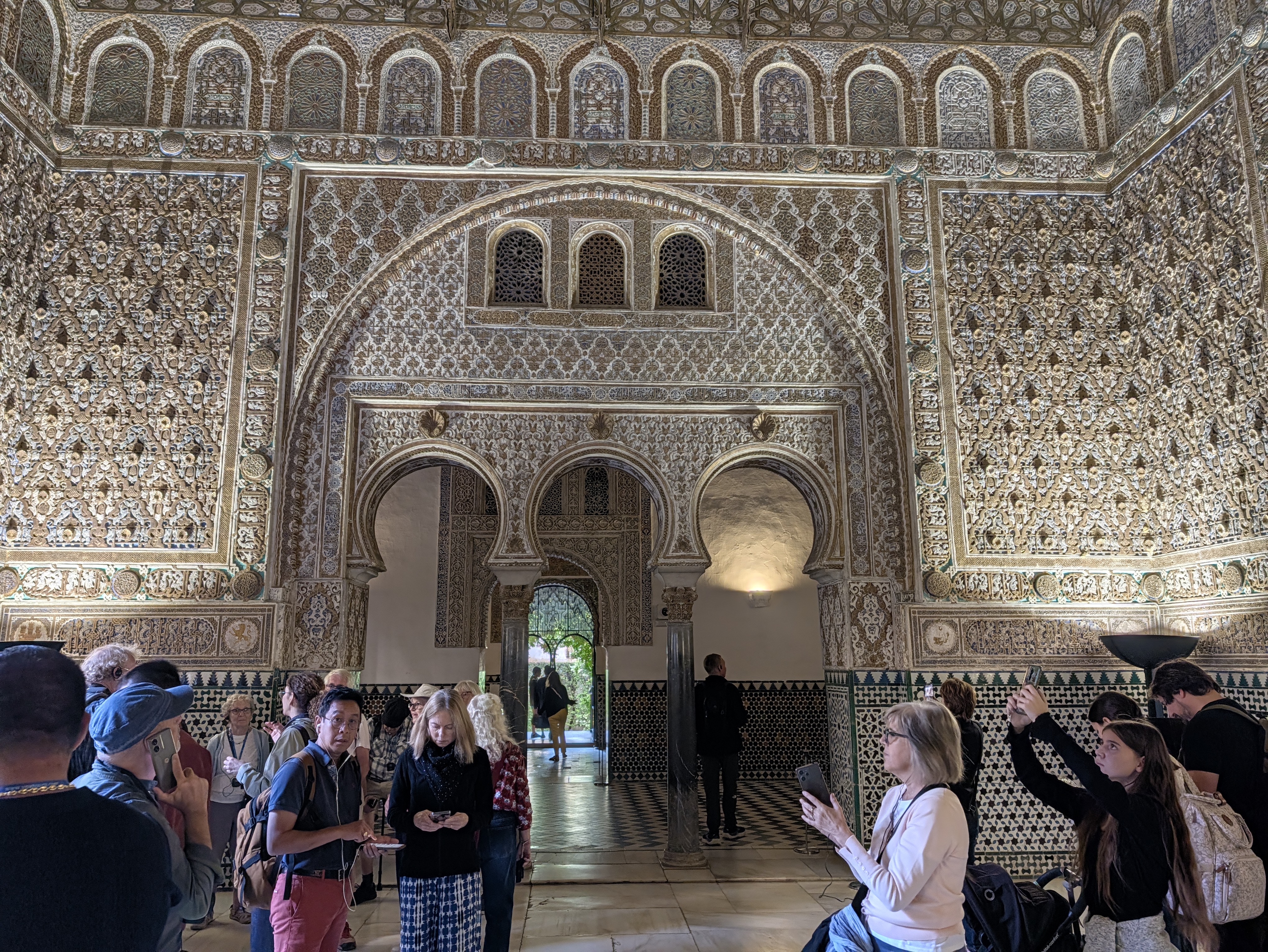
A reception hall in the main palace.

My favorite detail were these balconies, installed by Pietro I, which are, in fact, fake:

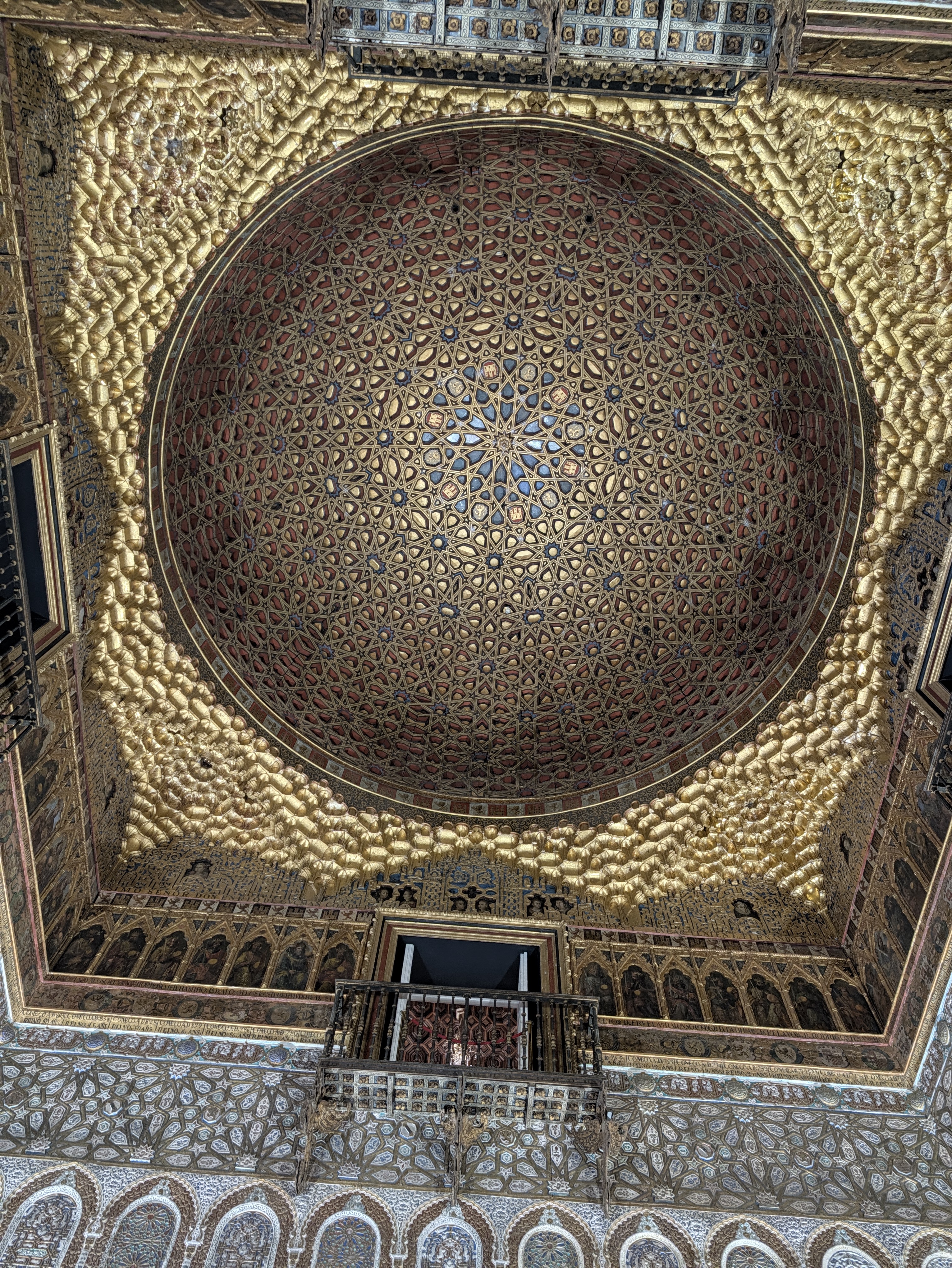
The ceiling is designed to represent the cosmos – with mirrors at the center to reflect the king at the center.

The idea was to impress visitors with the possibility of rooms on a higher level. Potemkin balconies – who’d have thunk it?

An interior courtyard, meant to depict the Muslim idea of paradise (a gift from the calif, with whom the king was good friends).
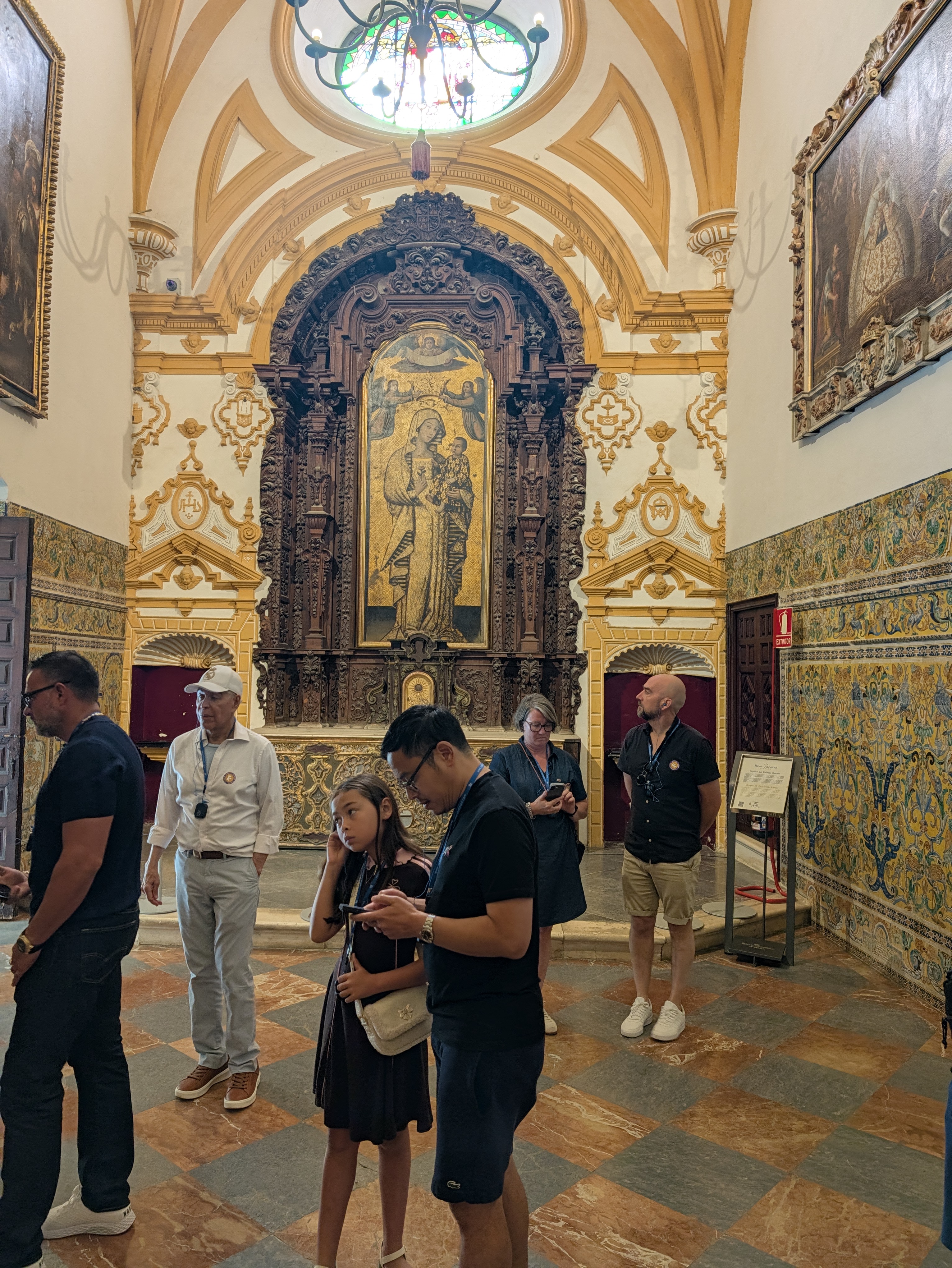
Another lovely detail – this is a confessional chapel built right outside the big room next door where the king held lavish parties. I correctly guessed was that the idea was to go inside, sin your brains out, then come out here to repent.

Sin. Repent. Repeat.
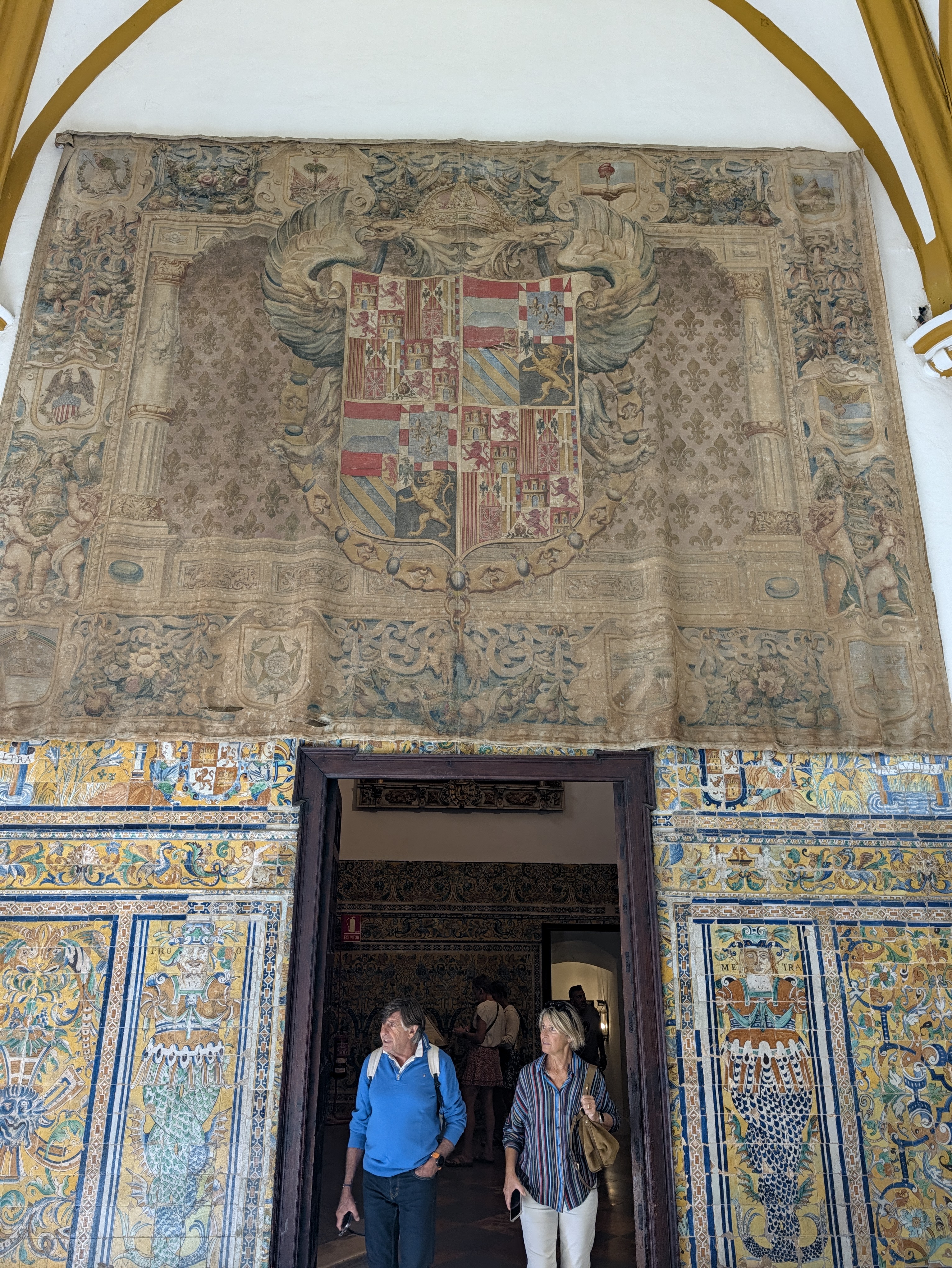
A tapestry in the very swanky party room.

As a good palace does, there were gardens, too.

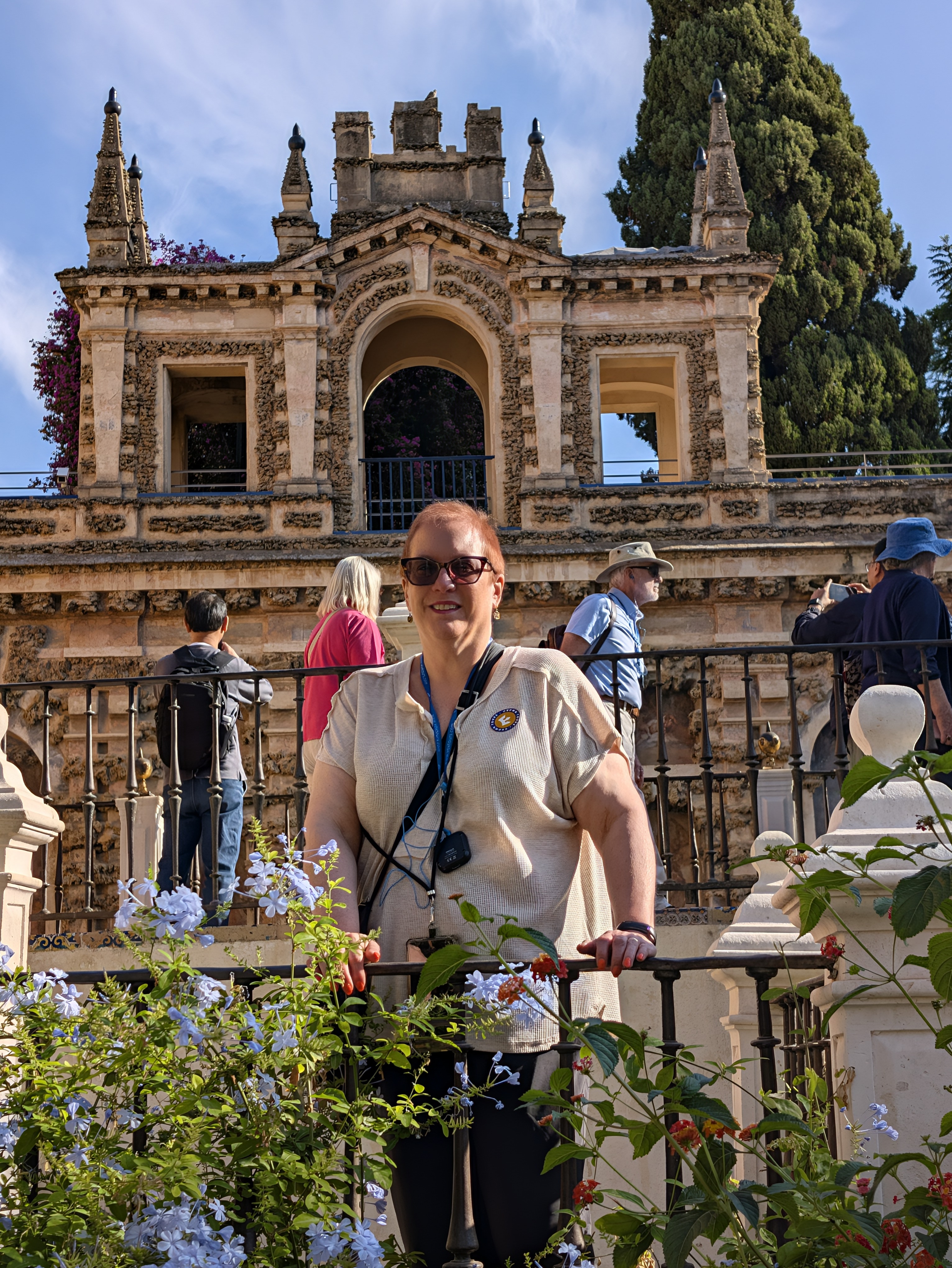
Kelly in the garden.
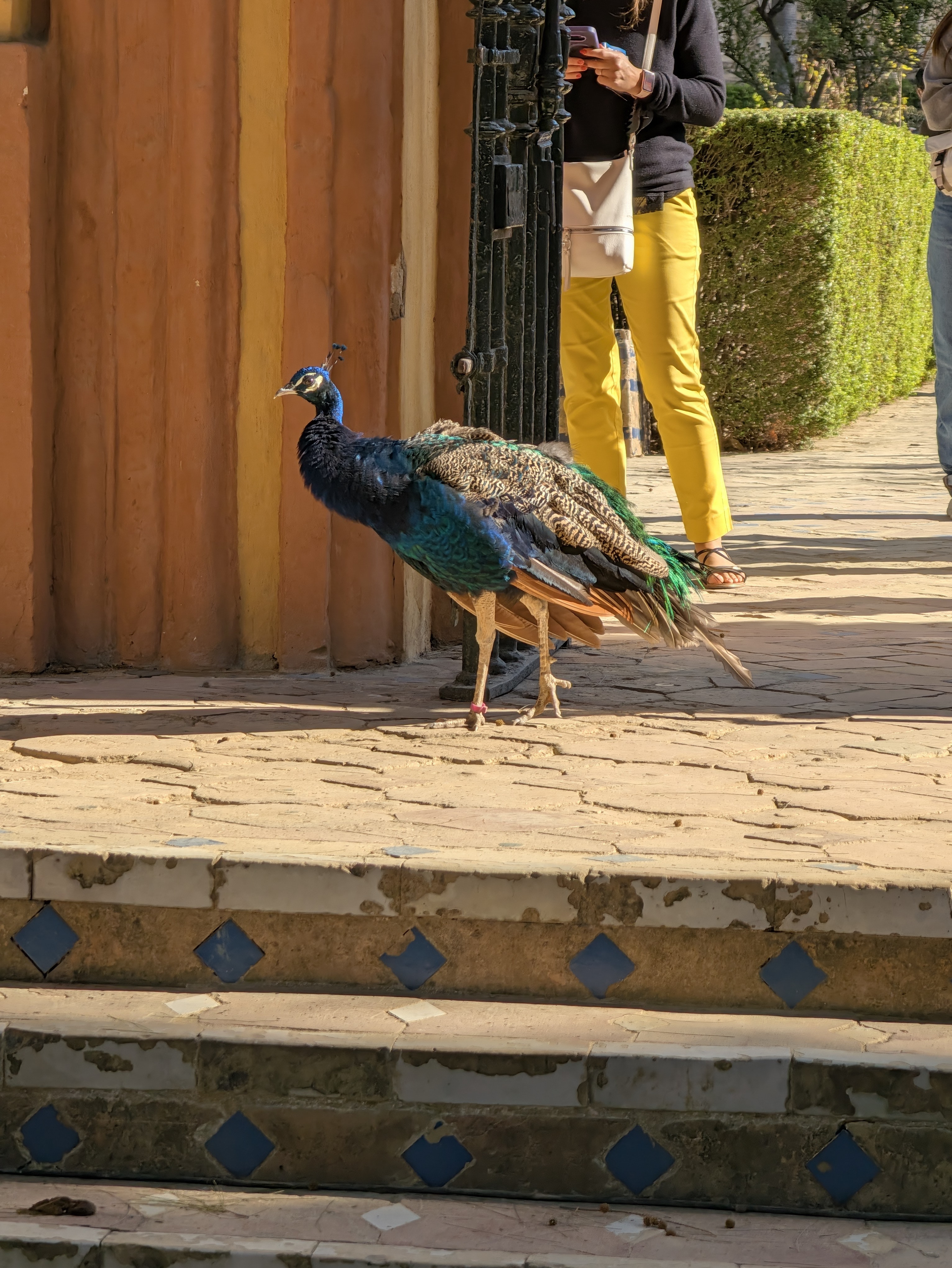
A peacock (peahen? peabeing?) being photogenic in the gardens.

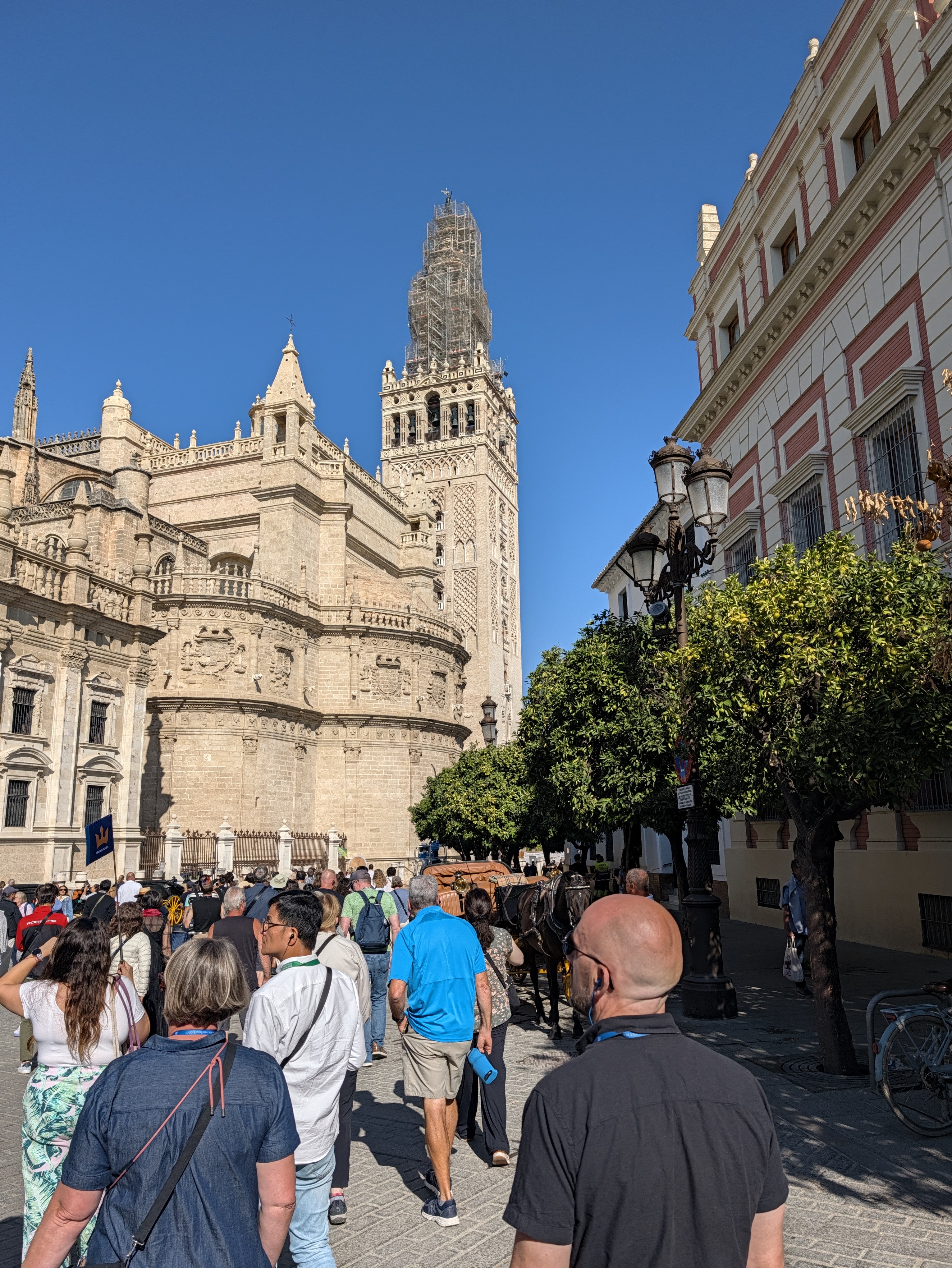
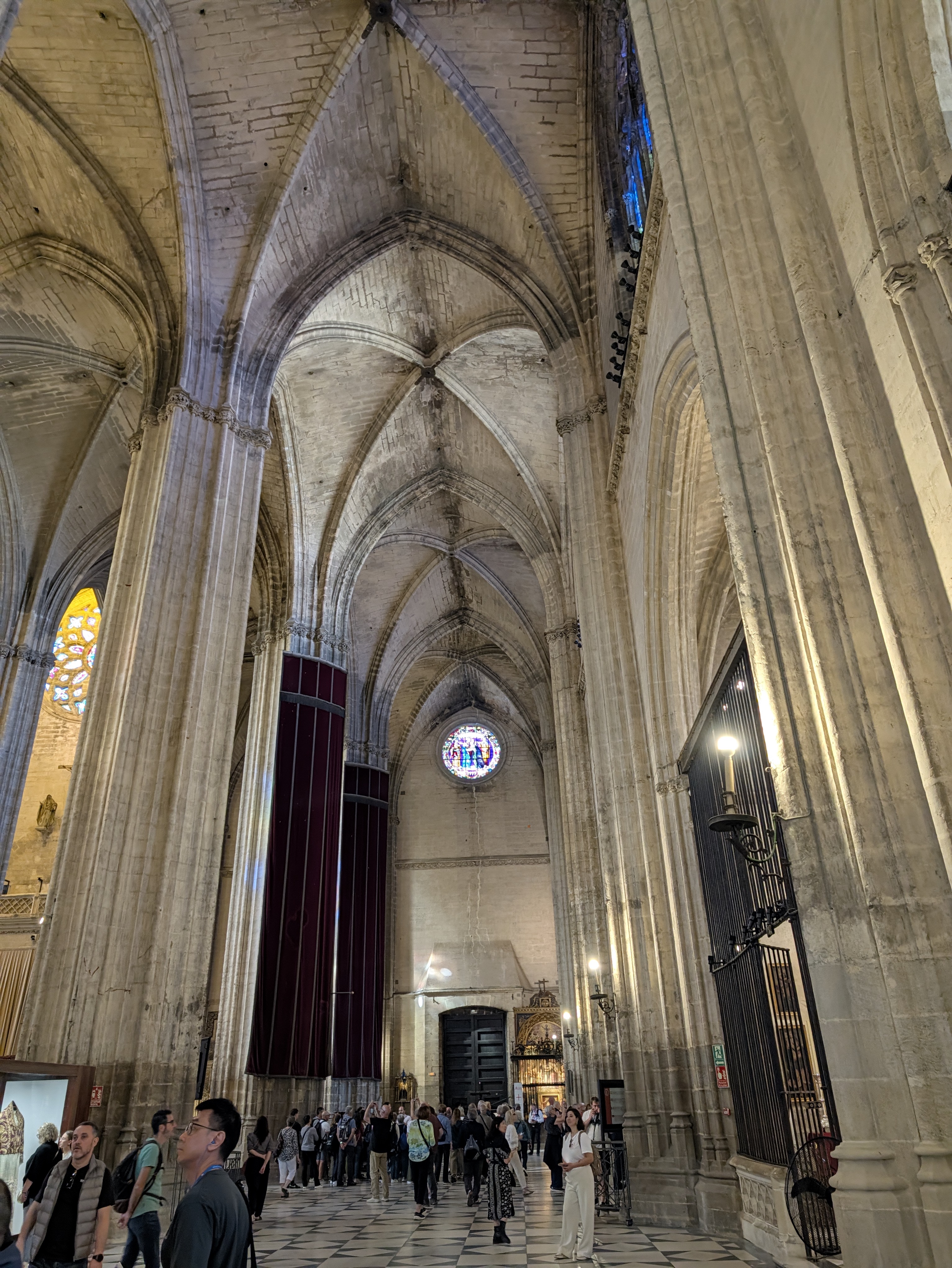
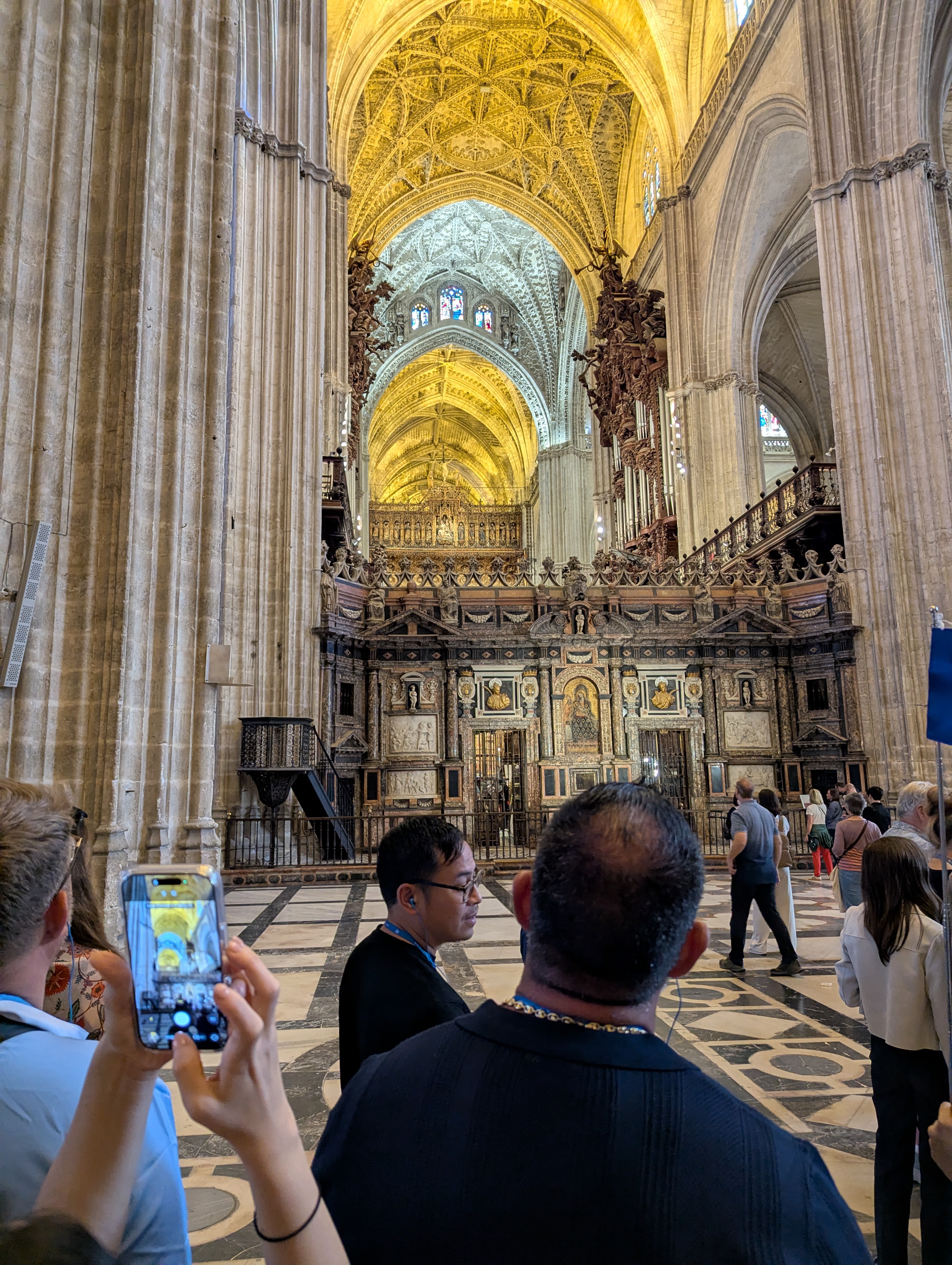
The cathedral, well, it was amazing. Completed in 1519 it’s the largest Gothic cathedral in the world and the third largest of any kind on the planet.

Outside the cathedral.
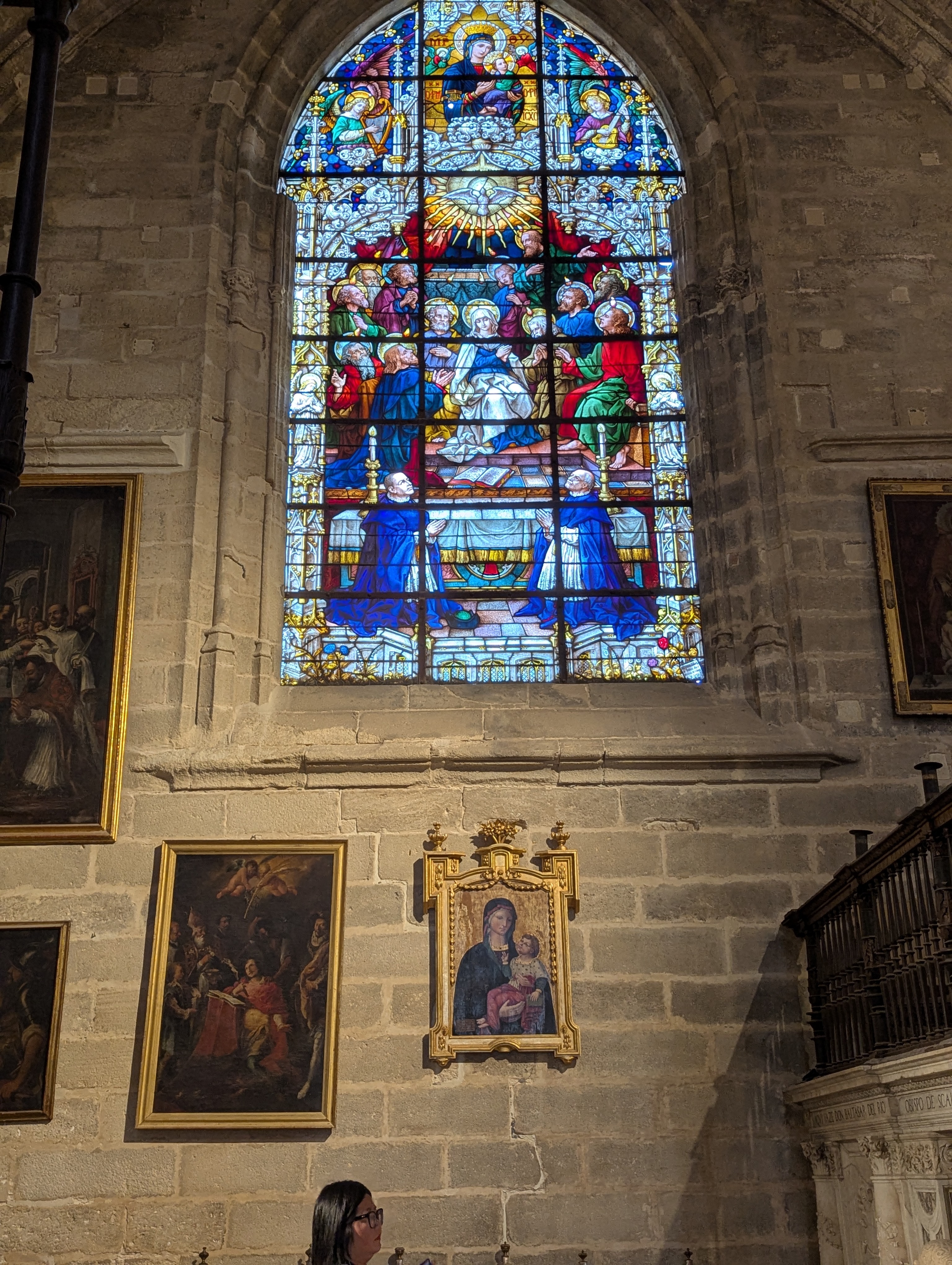
Vaults upon vaults (with stained glass).
Stained glass and paintings.
Another choir loft (I think).

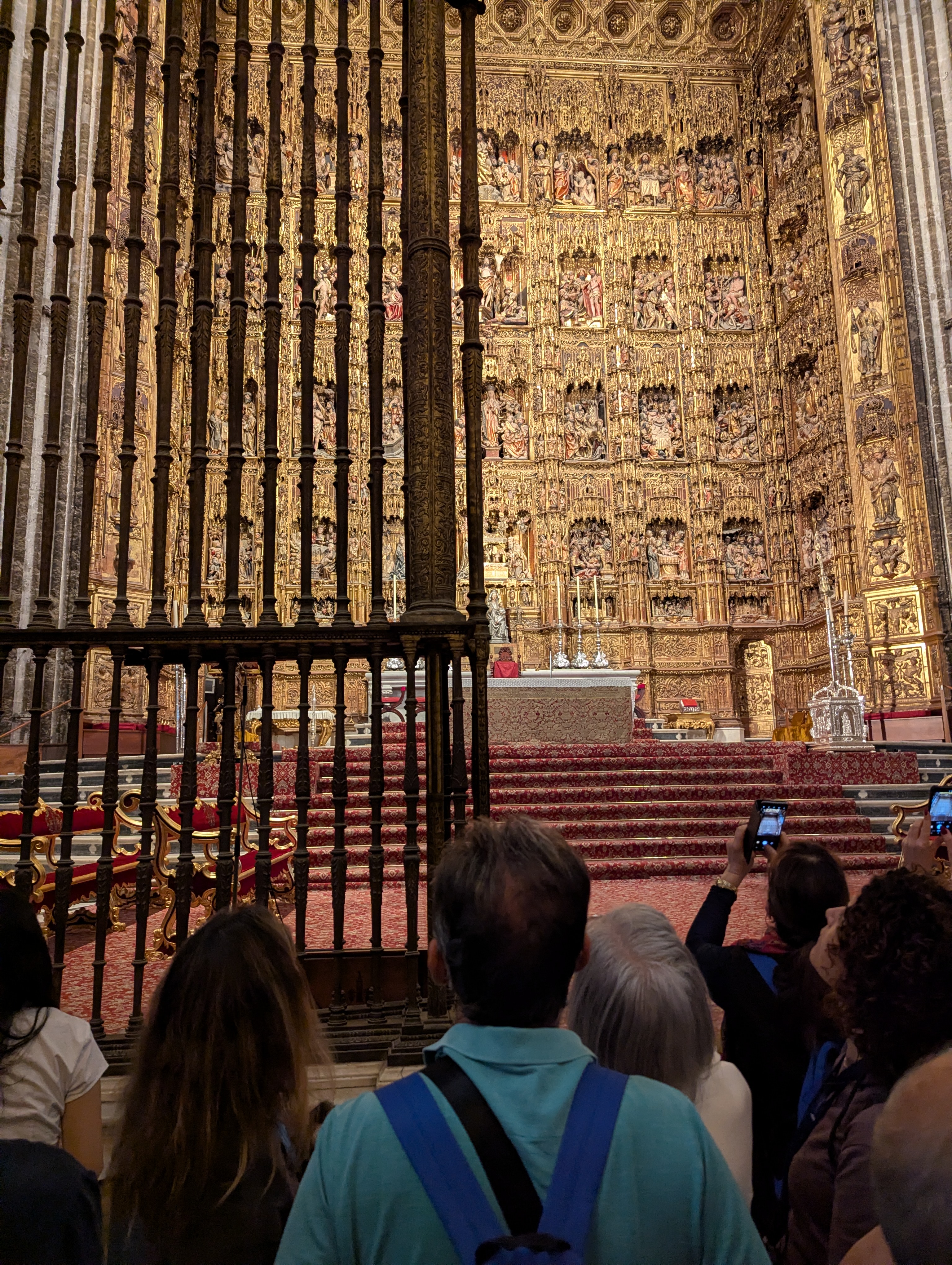
Indeed, the altar is the largest in the world – the Vatican has a scale copy (quite the flex).

So large it’s hard to get a good picture!

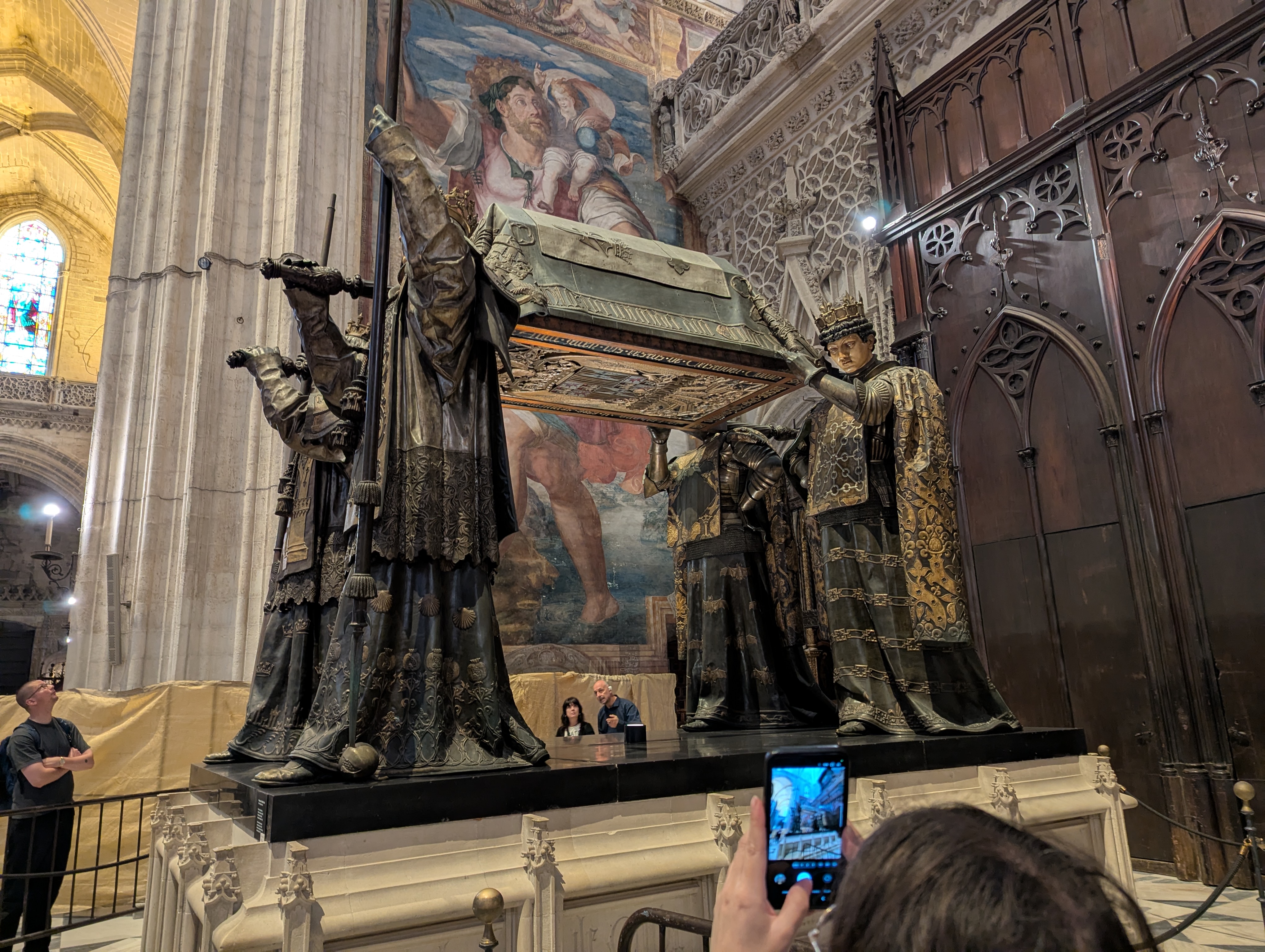
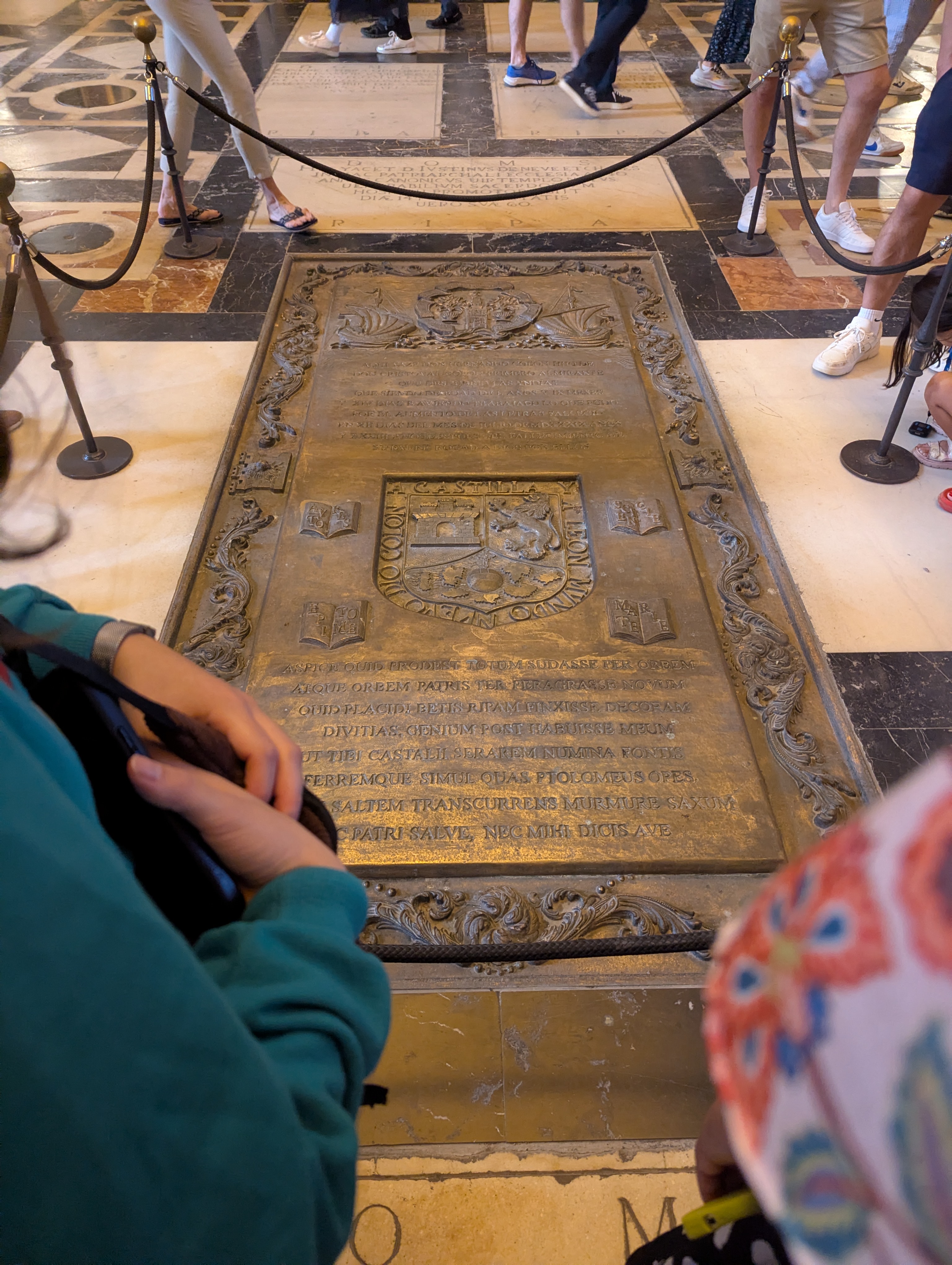
Among the many people interred in the cathedral are a pair of Columbuses (Columbi?), Christopher and his second son, Ferdinand. Christopher, as you might expect, has a pretty elaborate tomb:

The remains of Christopher Columbus (probably) – at least 80% of him.

Whether that’s actually him in there has subject to some debate (his remains moved around a lot after his death), but appears to be settled now thanks to DNA comparisons with his son. Ferdinand, on the other hand, gets a respectful tile over his grave in the floor.

Columbus’ son, a man rich in books (and other things).

Ferdinand lacked the accomplishments of his father, but he was rich and, in particular, had an extensive library. He guaranteed his resting place in the cathedral by agreeing to give the church his collection upon his death. It’s still available to researchers.

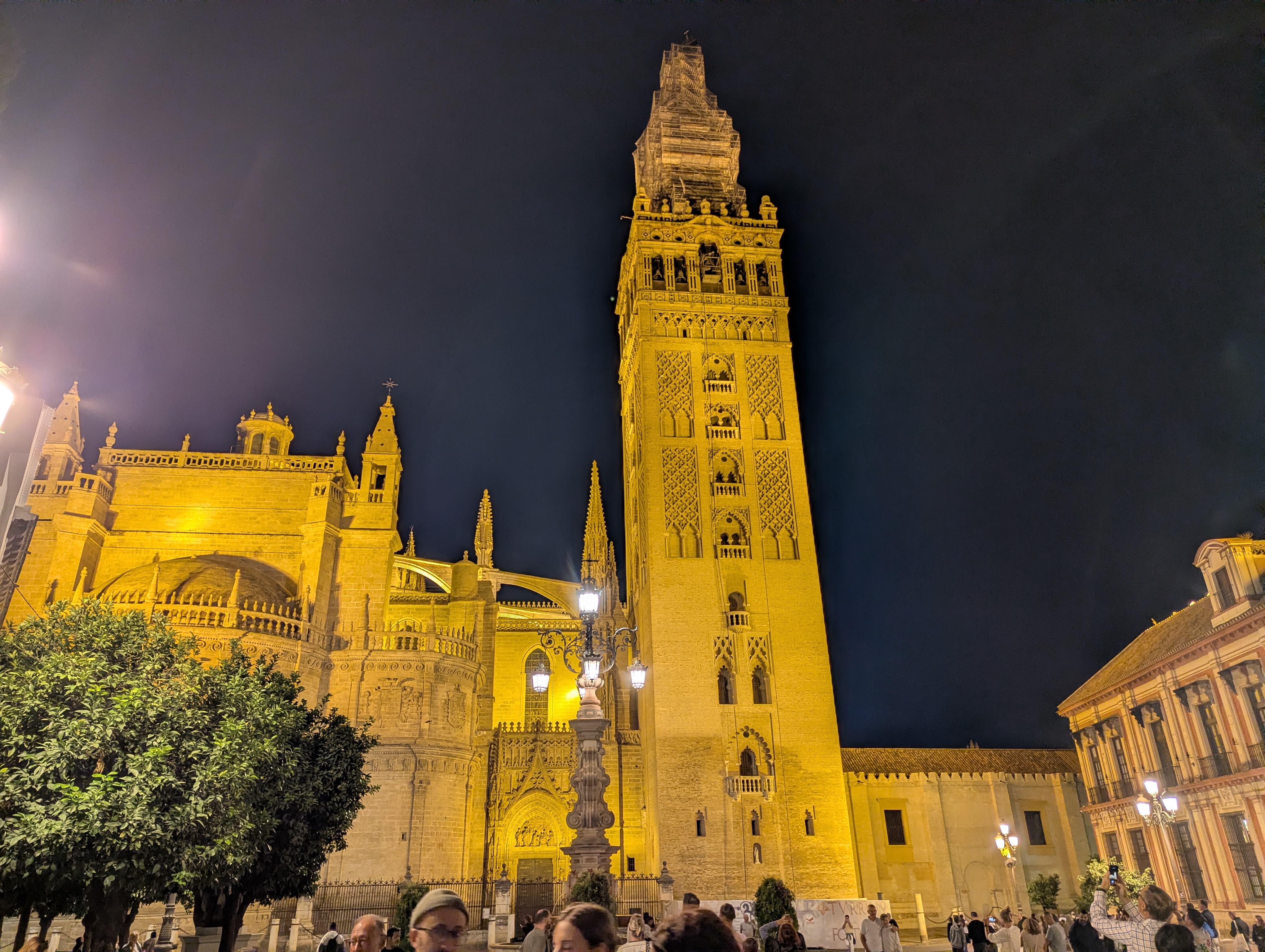
Part of the cathedral is the Giralda, a tower that was once the minaret for the mosque on the site and is now the bell tower for the cathedral. We climbed up all 37 ramps (instead of stairs, allegedly so the muezzin back in the day could ride a burro to the top to do the call to prayer), which provided some great views of the city.

The Giralda at night.

Still a long way up, though!

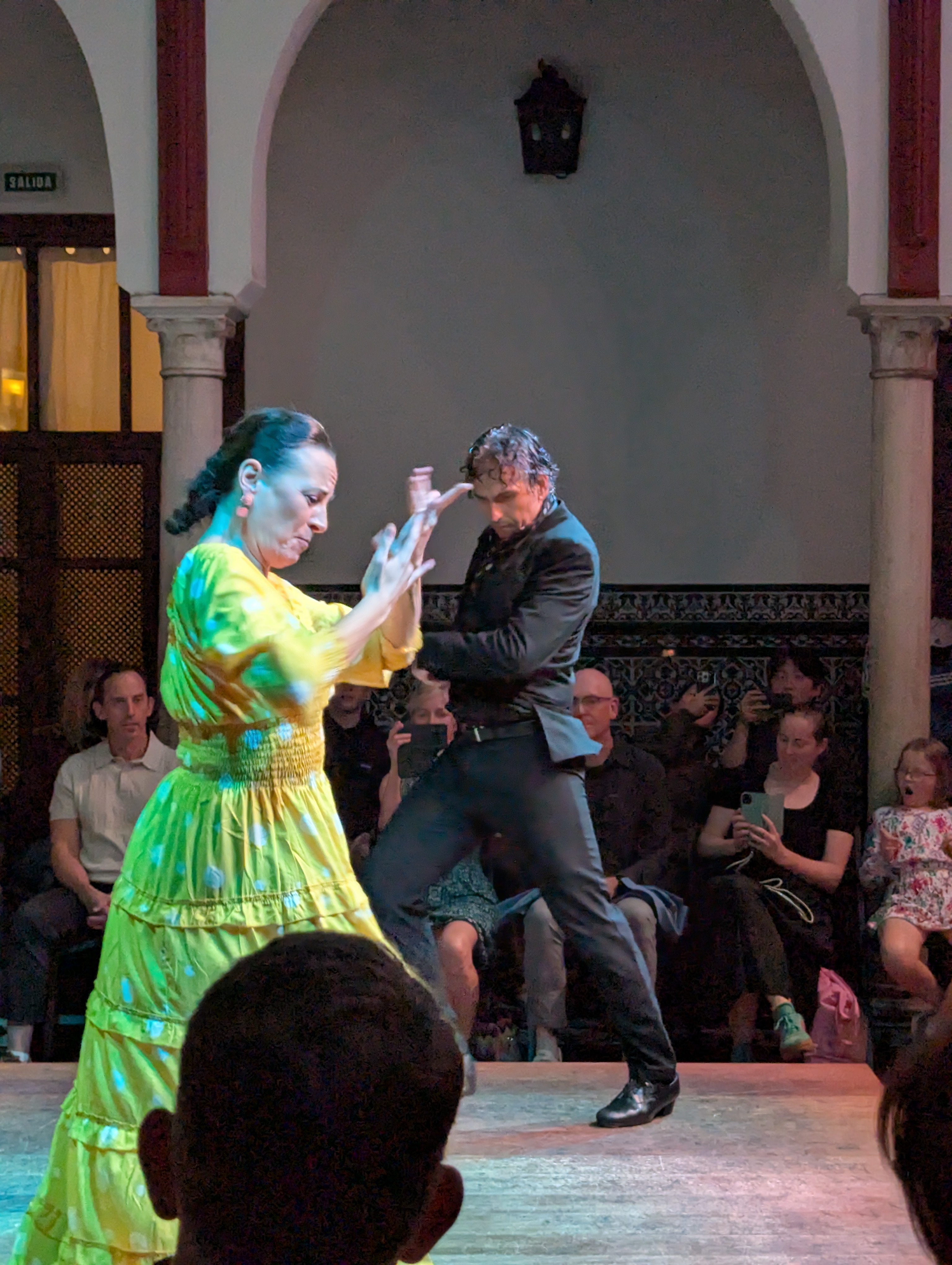
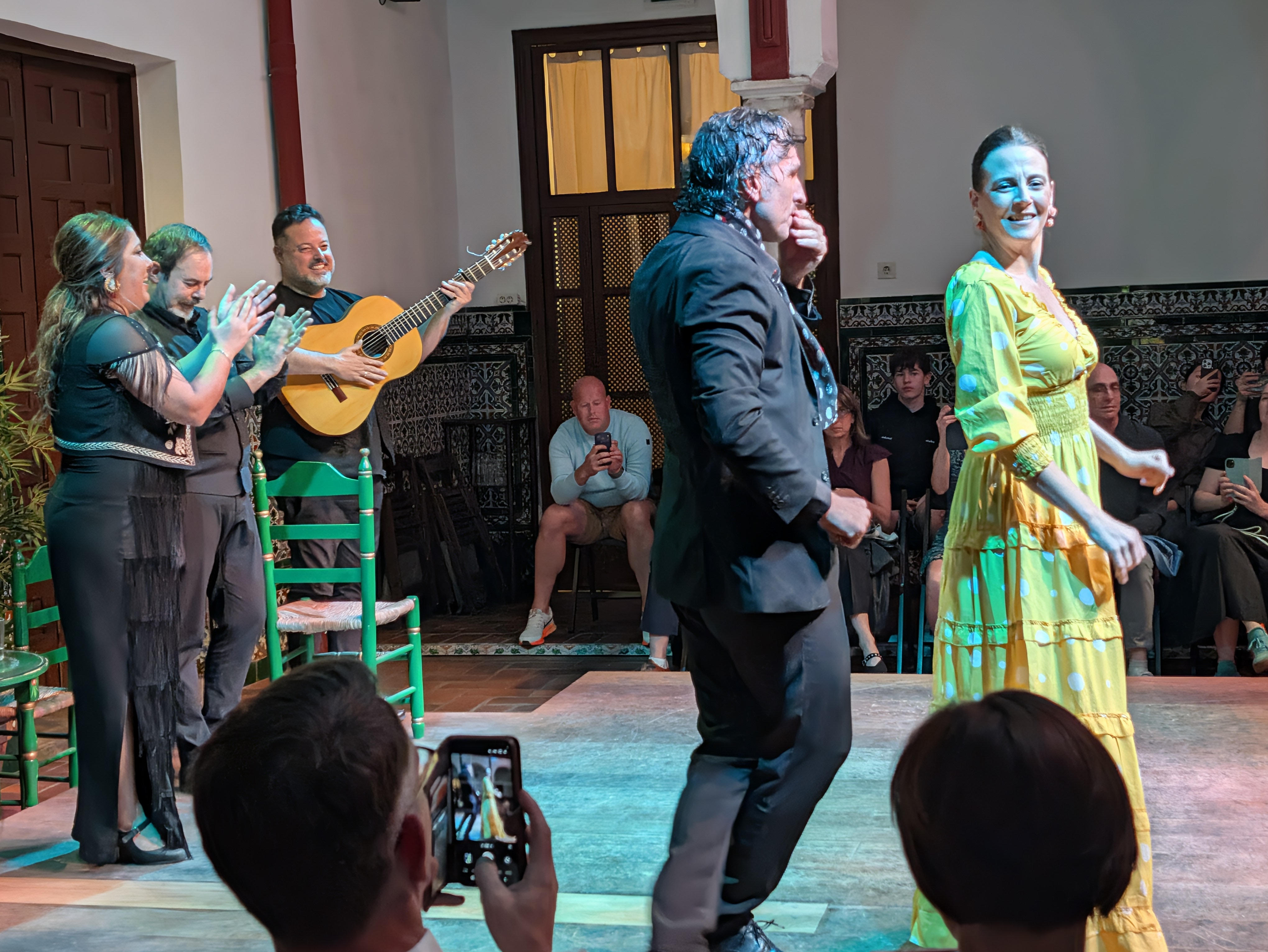
That night we had a cool experience, a combination tapas walking tour and flamenco experience. Our guide – a very outgoing French expat named Remy – led us from bar to bar for some food and wine, all the while explaining the history and basics of flamenco. Then, a flamenco show:

The two dancers.

I didn’t realize going in how improvisational these were. I assumed there was some choreography, moves that went with certain songs, what have you. As explained by Remy, and as evident from the performance, it’s very free flowing and in the moment. I particularly enjoyed when one dancer just kind of kept going past where the guitarist and vocalists thought was the end and they wound up pushing to a very joyful end. The guitar player was a fucking beast, by the way.

The entire ensemble (including two vocalists).

The next day (we spent three nights in Seville) was very low key, with a bath and spa time in the morning and a cruise on the “river” (actually a canal that follows the original course of the river) as a means to see some more of the city.

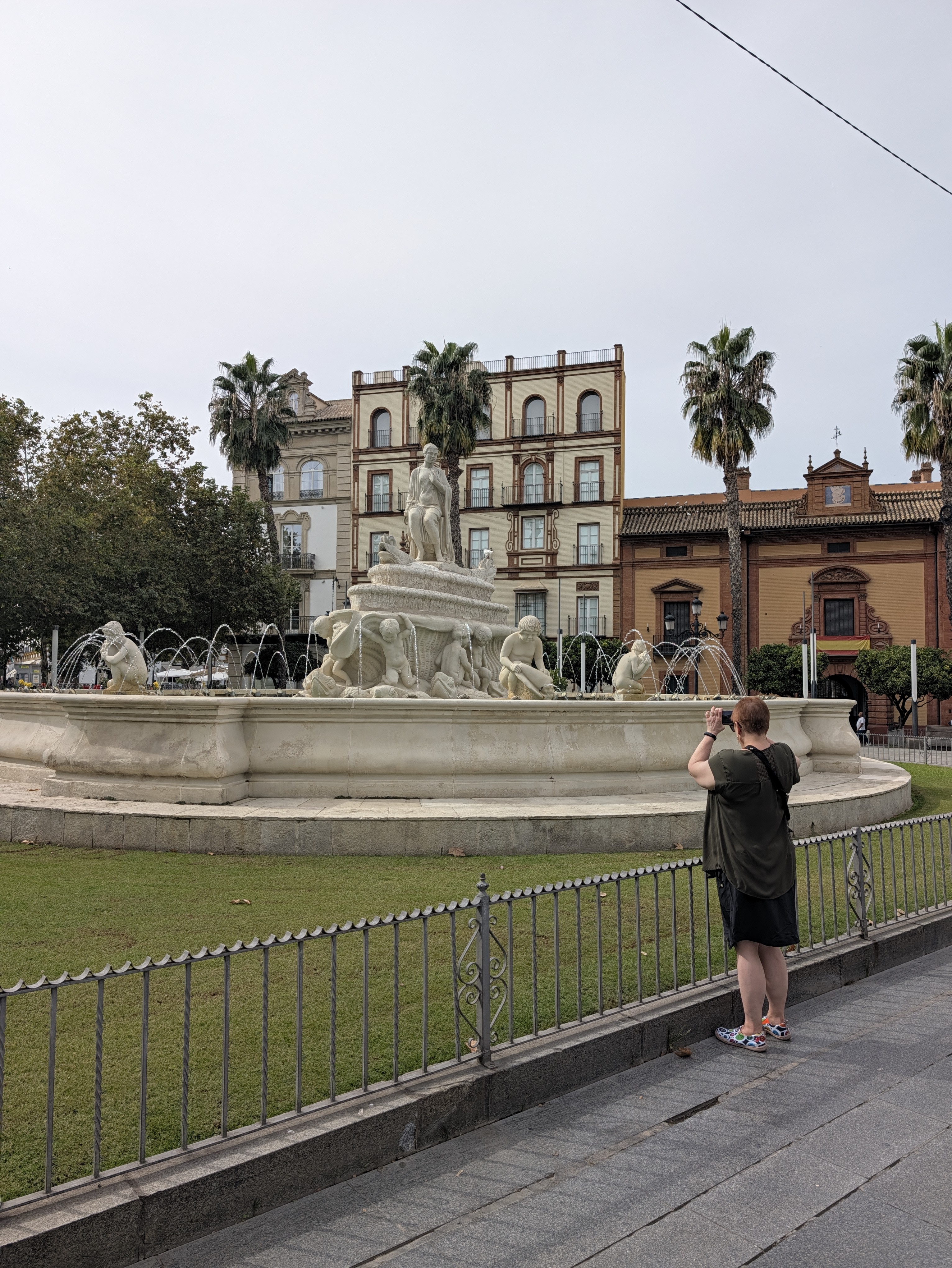
Another in my long-running series of “pictures of Kelly taking pictures of things,” in this case a fountain whose name I can’t recollect.

The spa/bath experience was interesting. Massages don’t do much for me (Kelly loves them) and I wind up feeling awkward and tense rather than relaxed. The baths, however, were nice. One set was divided into hot/warm/cold zones, while another was, essentially a giant jacuzzi. I split my time between those two, for the most part. We were supposed to have an additional bath experience in their rooftop pool, but it was down for maintenance (I think it would have been too cold, but whatever). As compensation, we were given a wine bath – a huge tub filled with wine. In which we sat. And drank wine (and nibbled on cheese and crackers). If ever there is a “this is what it feels just before the peasants revolt” setting, that was it.

Malaga

Rather than take the train, we hired a car to make it to Malaga (the train schedules just didn’t work out, for whatever reason). It was a nice change of pace, literally, and gave us a chance to take in some of the landscape. This part of Spain is pretty dry and not particularly lush. It is covered all over with olive trees, however (Spain, apparently, is the largest producer of olive oil in the world – and it’s quite tasty!). Nearer to the coast it got mountainous, which made me think a bit of home, which was nice.

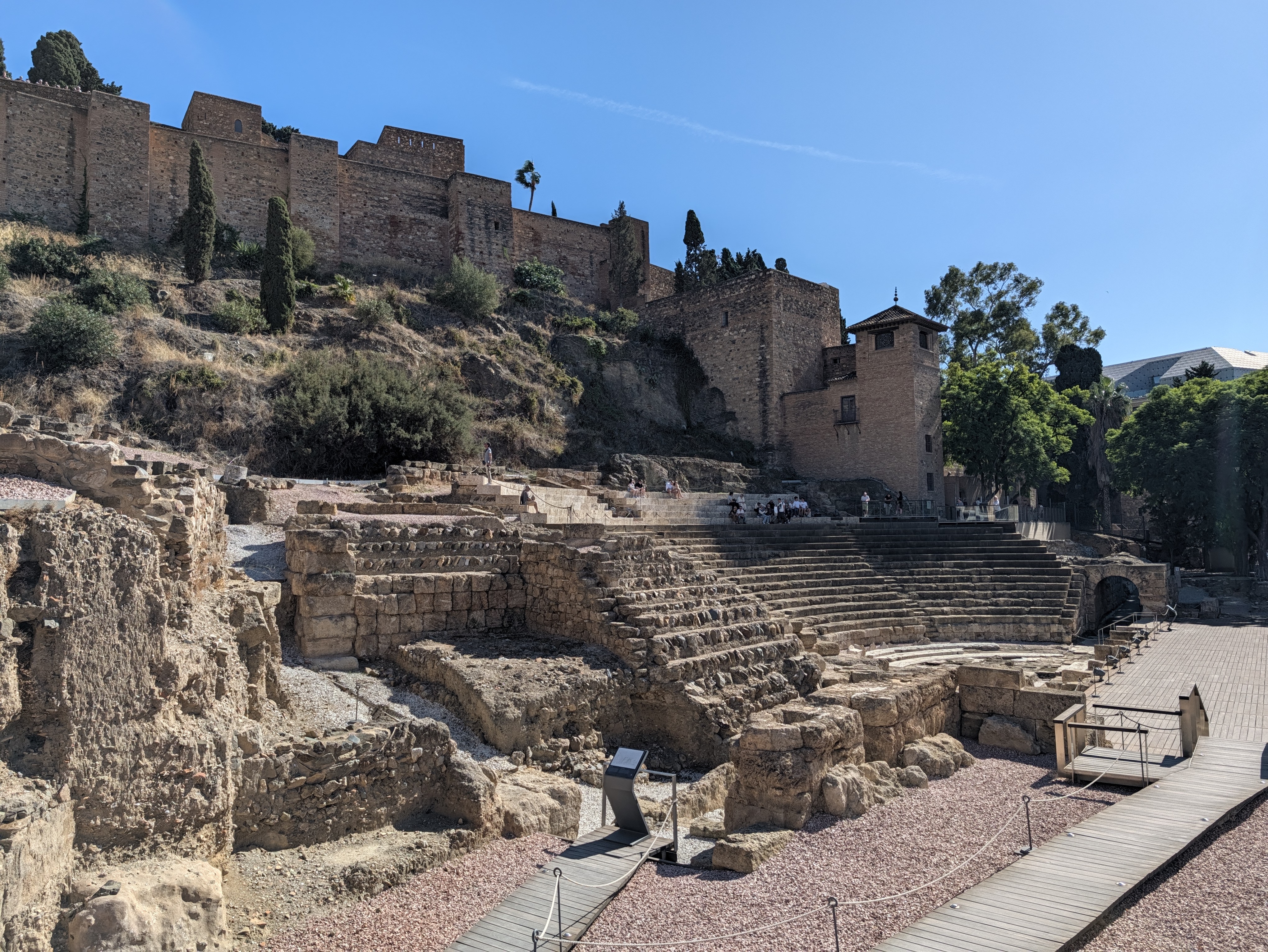
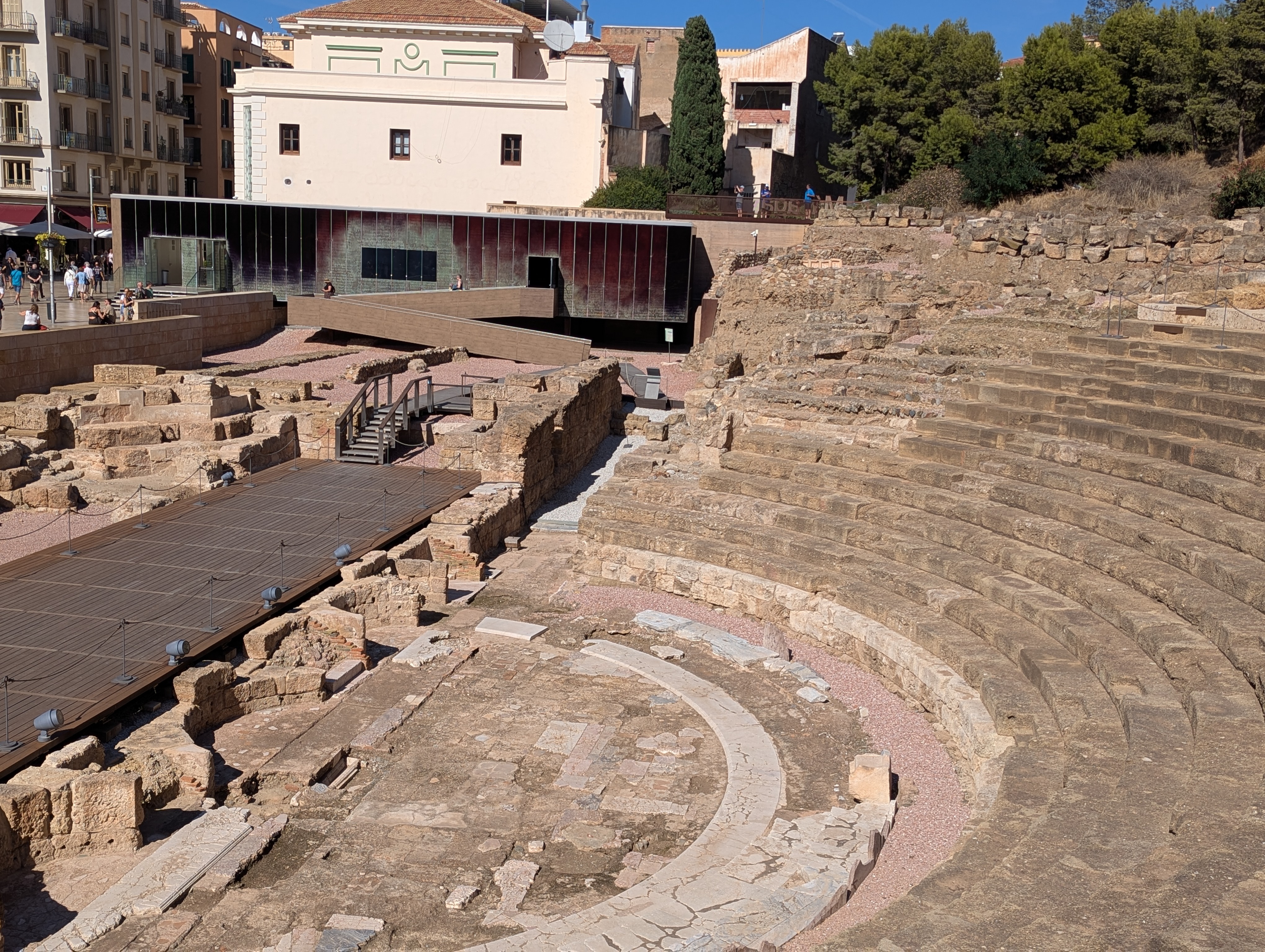
Malaga had a unique feature in terms of its old town, a fairly intact Roman-era theater.

Roman theater, with the Alcazaba on the hill in the background.

You can sit in the stone bleachers and imagine someone taking in the latest work by Seneca or Gaius Maecenas Melissus and complaining, “I’ve seen it before.”

Could definitely fling produce at the stage from this distance.

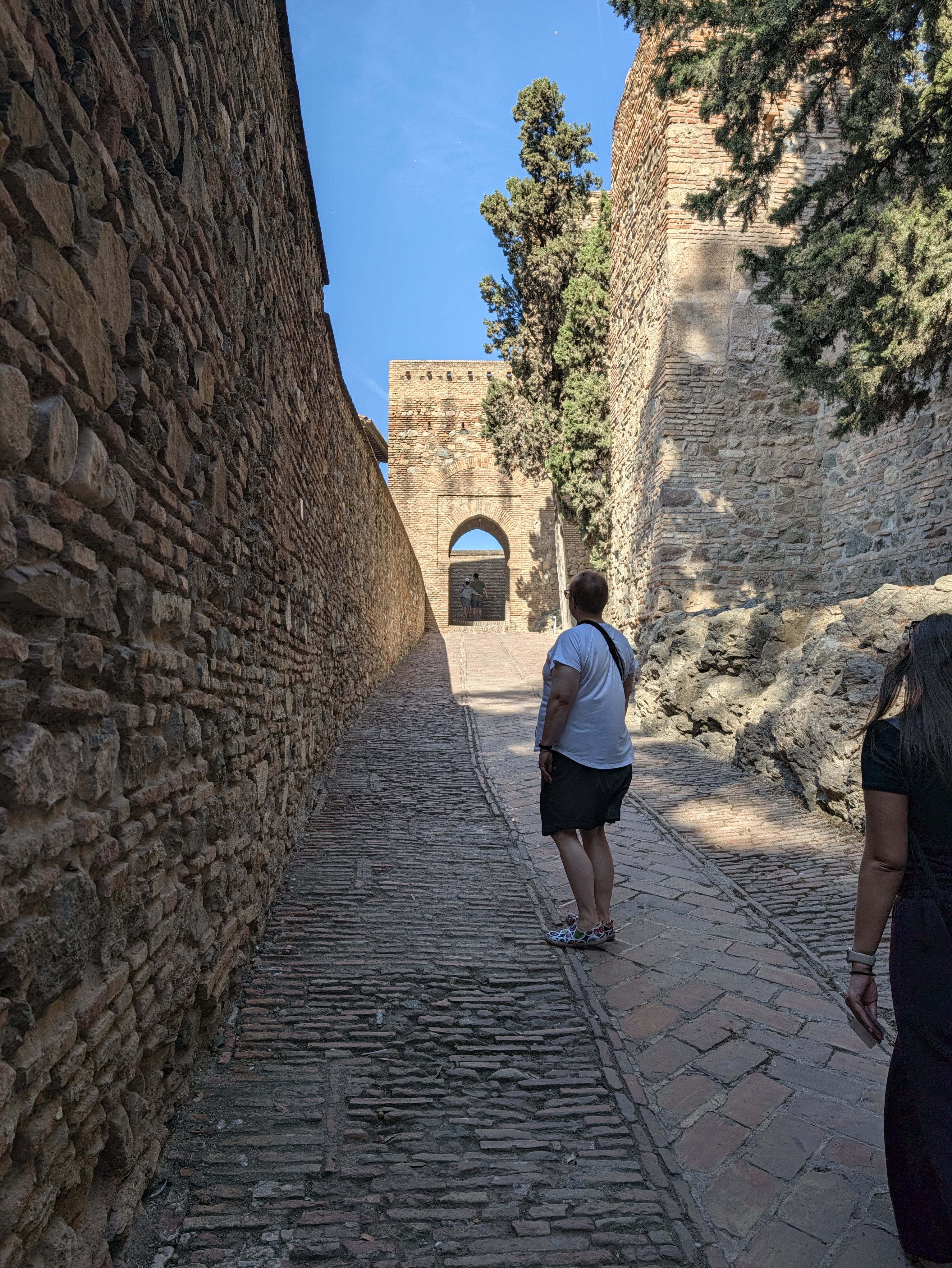
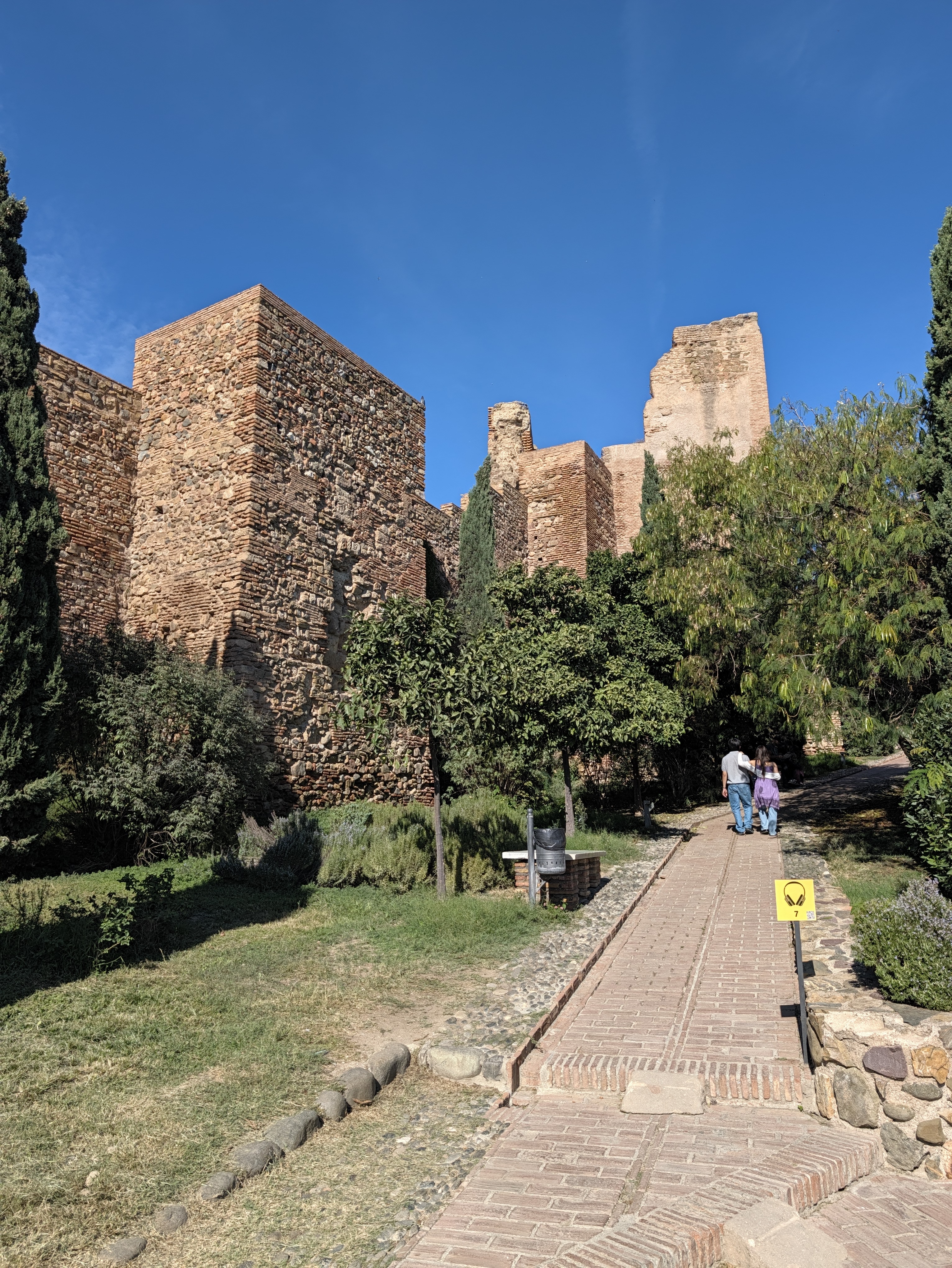
Up the hill is the Alcazaba, a fortress dating back to the 11th Century. It’s laid on hill so it really clings to the landscape (like Obert’s house in Gods of the Empire, if you’re familiar).

Kelly beside the outer wall.
Towers in various states of decay.
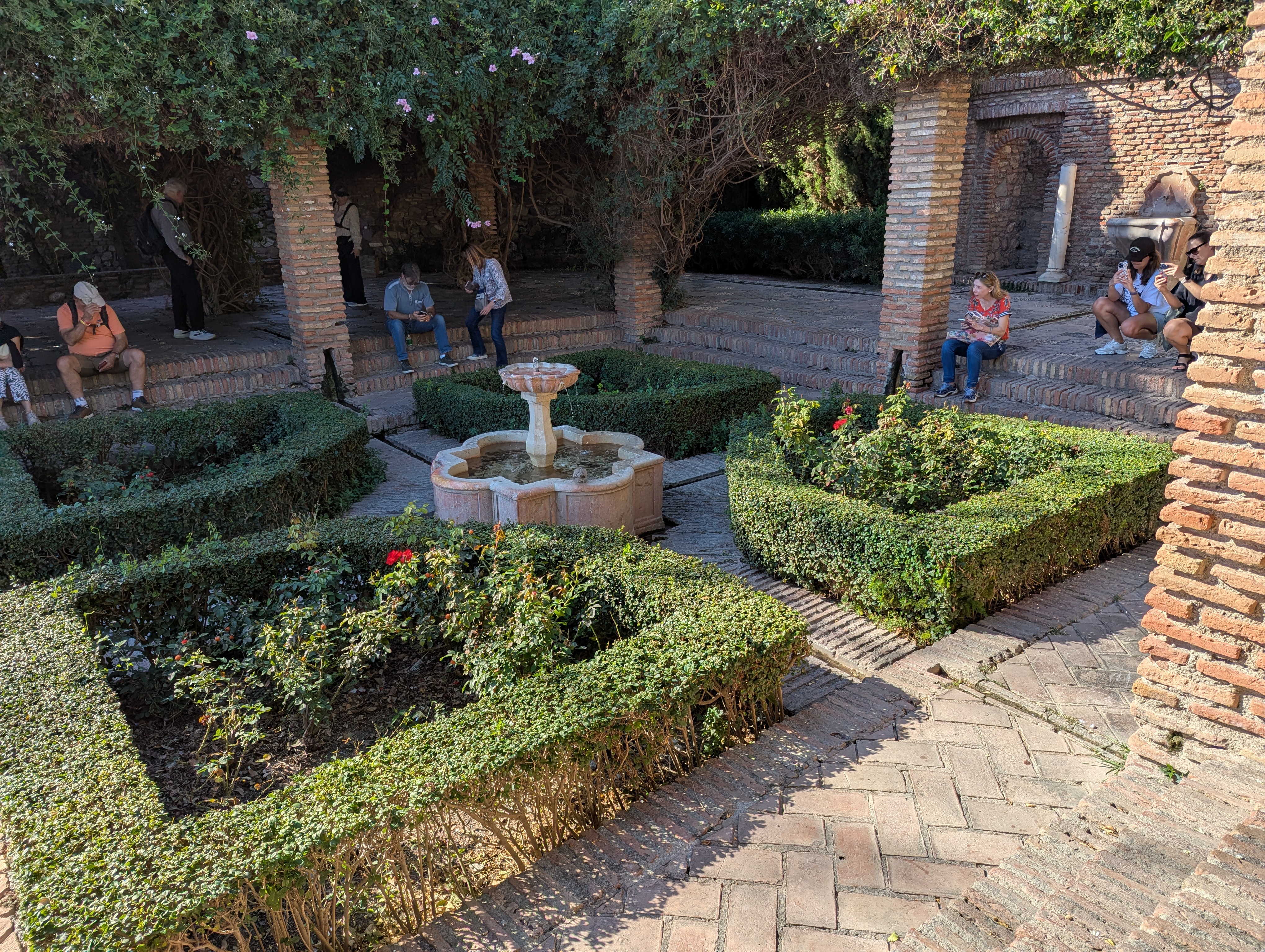
Garden with fountain.

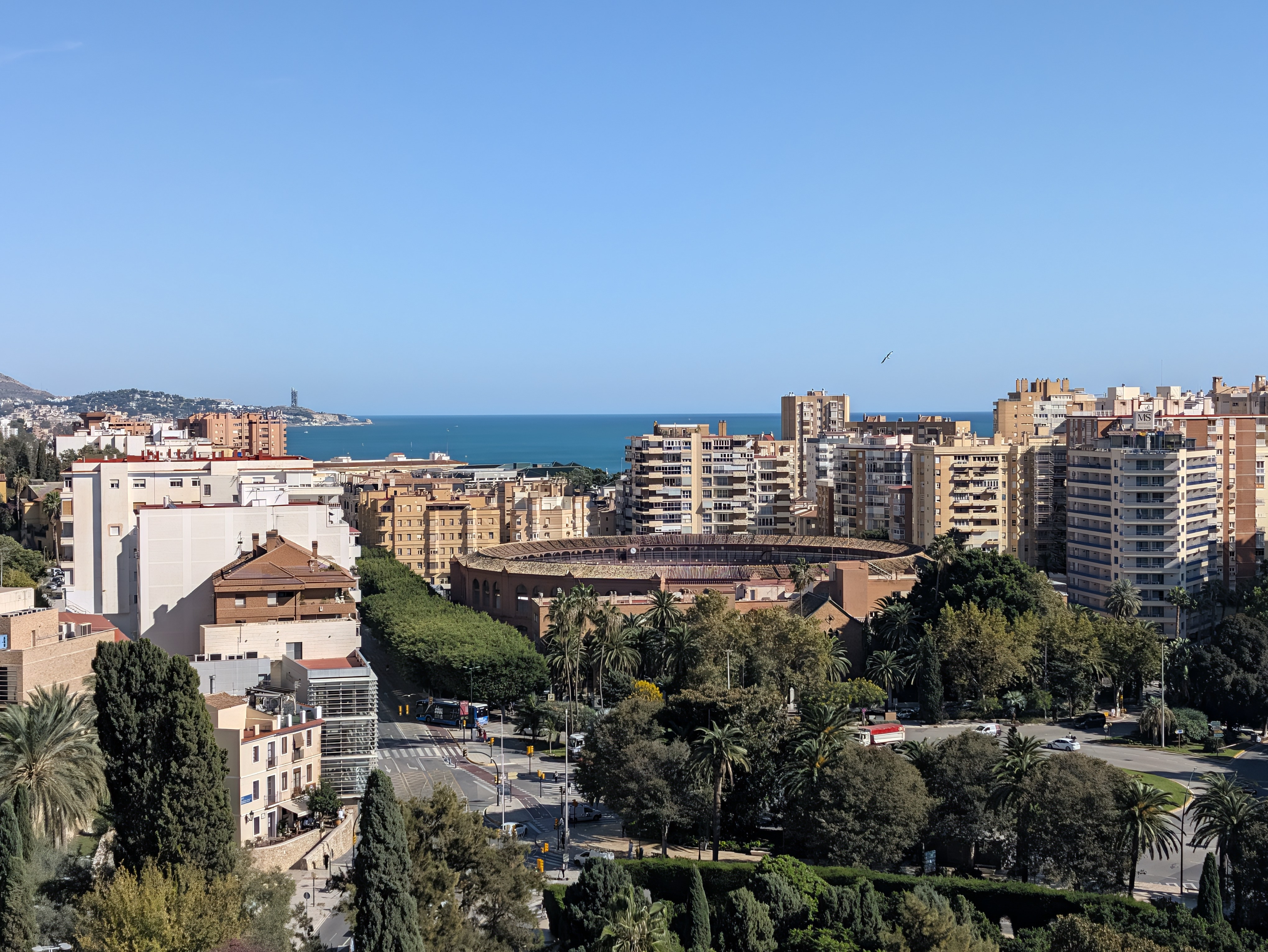
It does provide some great views of the city, particularly the harbor.

A view from a hill (as the song goes) – I think the big circular thing is a bullring.
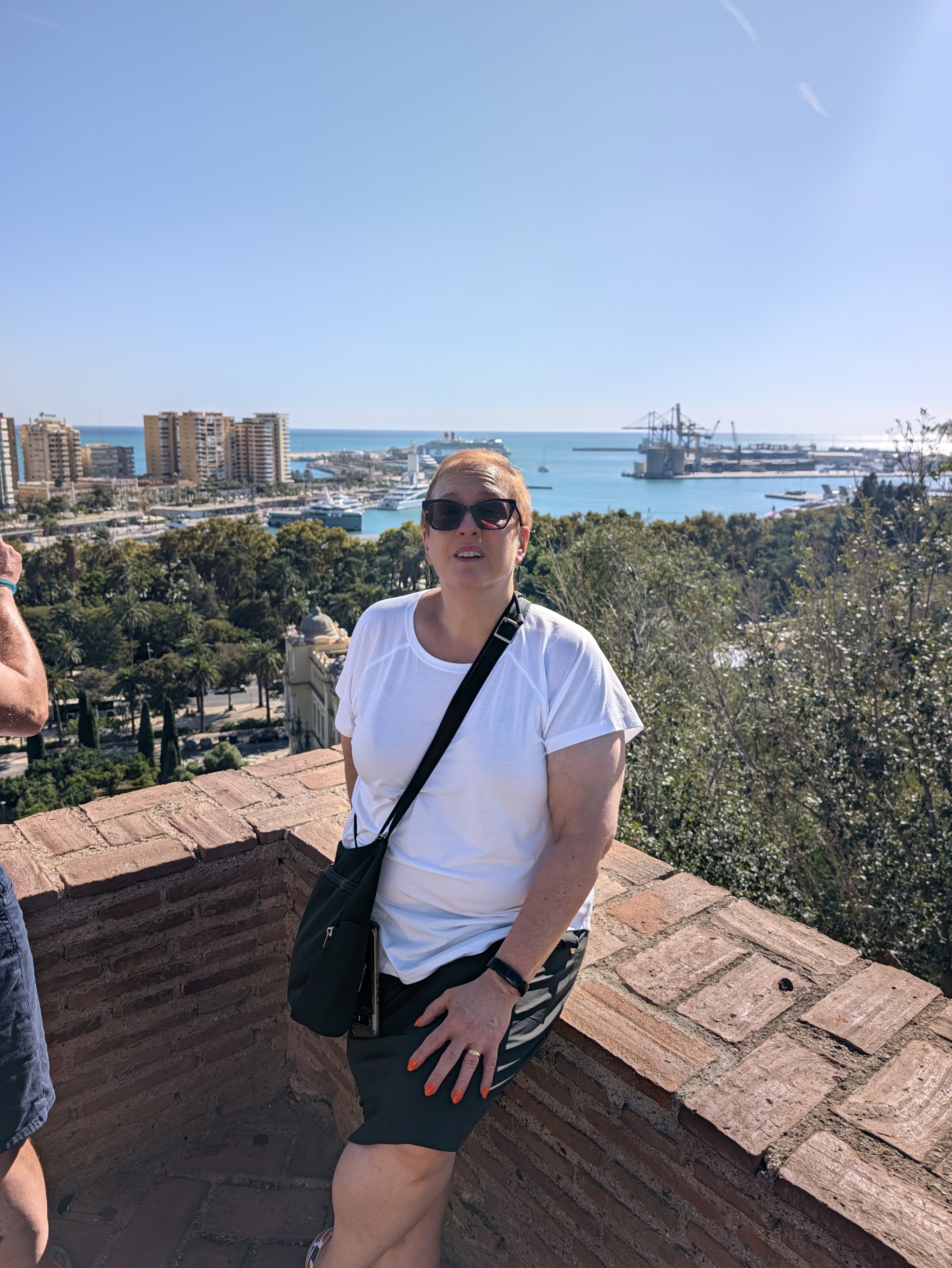
Kelly, with the harbor in the background.

We decided not to hike all the way to the top of the hill, to the Gibralfaro castle. Gotta know your limits.

The main reason we went to Malaga was Picasso. He was born there and there’s a museum dedicated to him there.

Music while we waited to get in.

It’s pretty well done, covering the breadth of his artistic output.

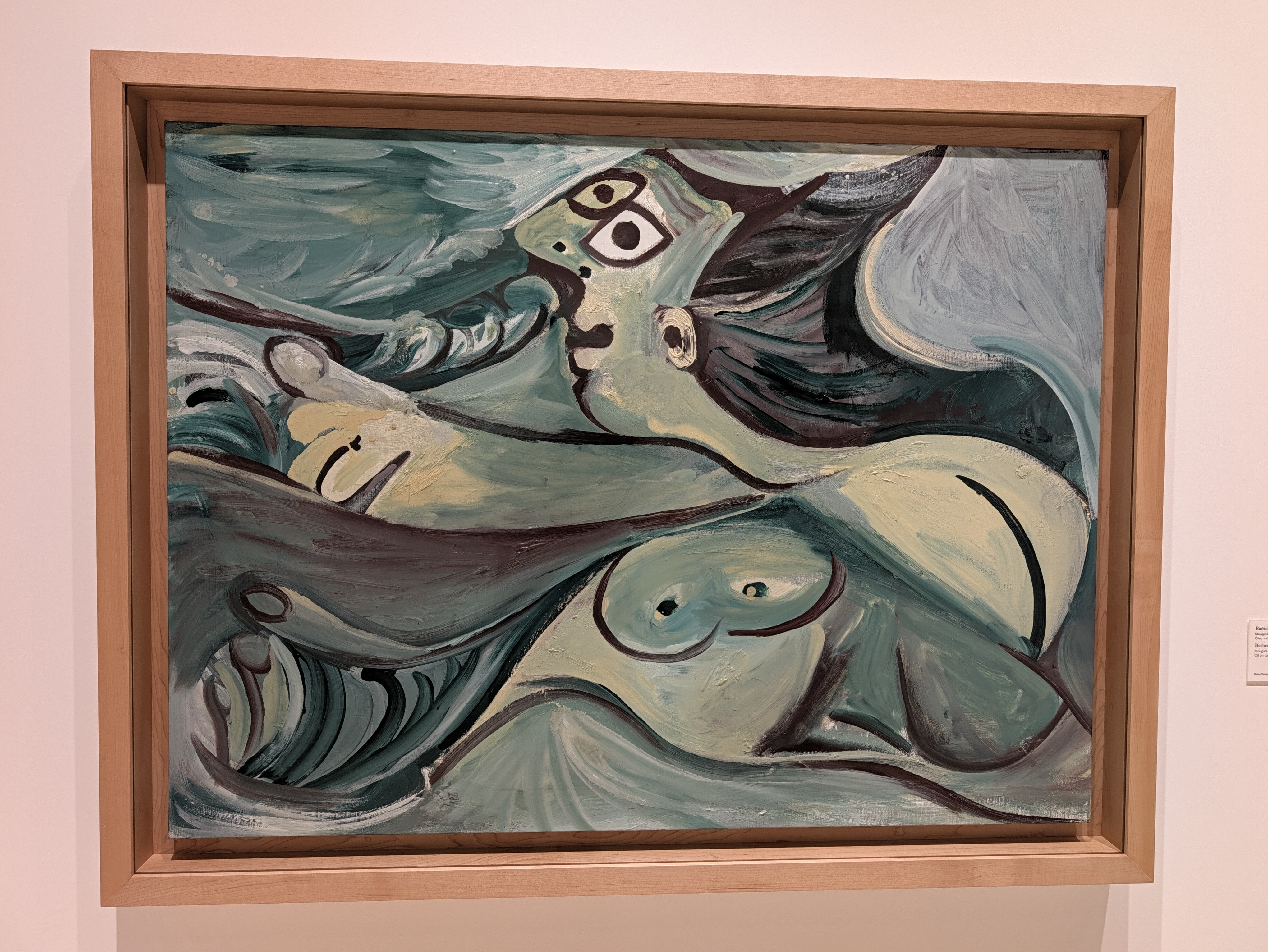
“Bather”
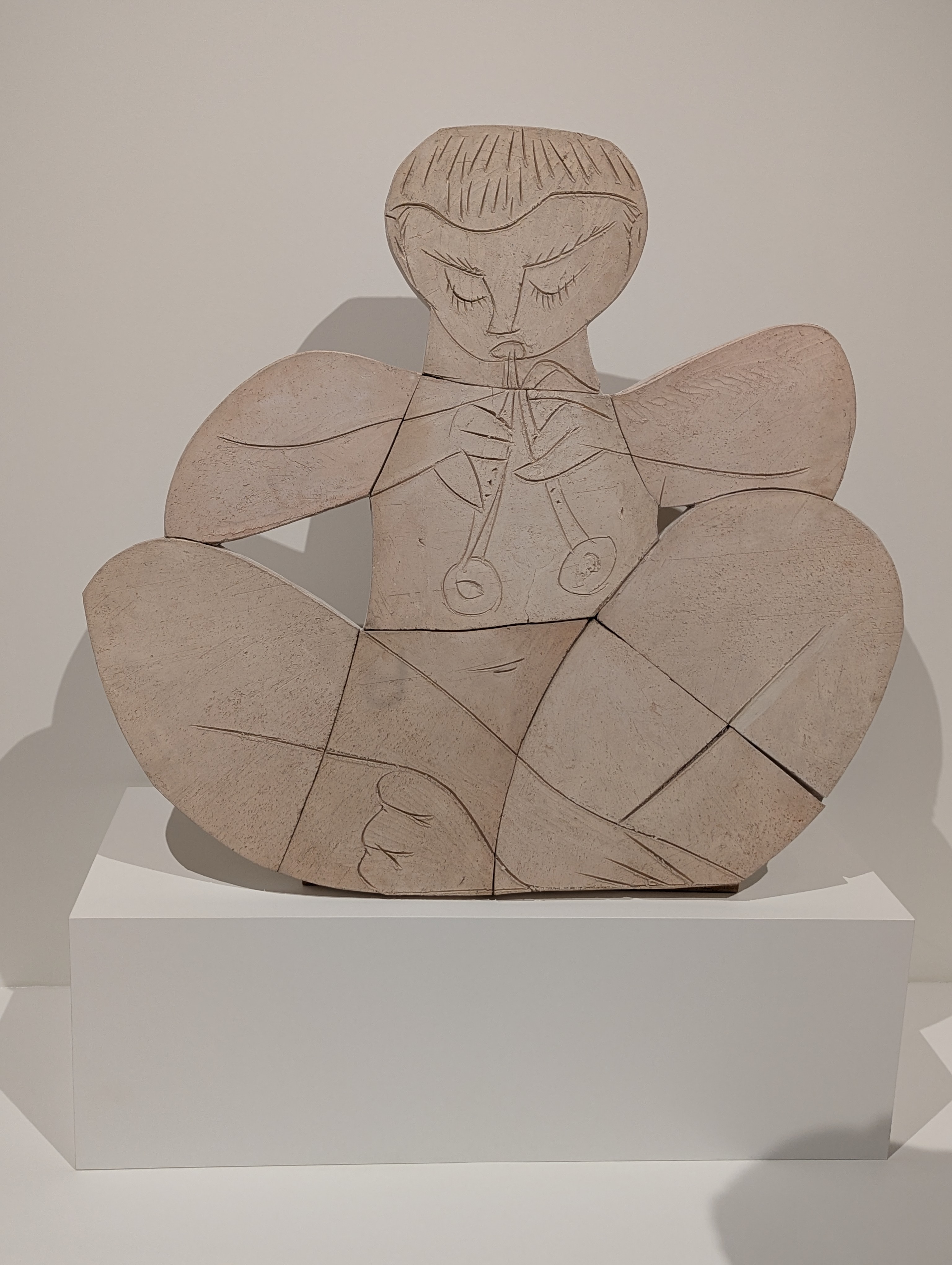
“Flute Player”

I liked his take on art: “We all know that art is not truth. Art is a lie that makes us realize the truth.”

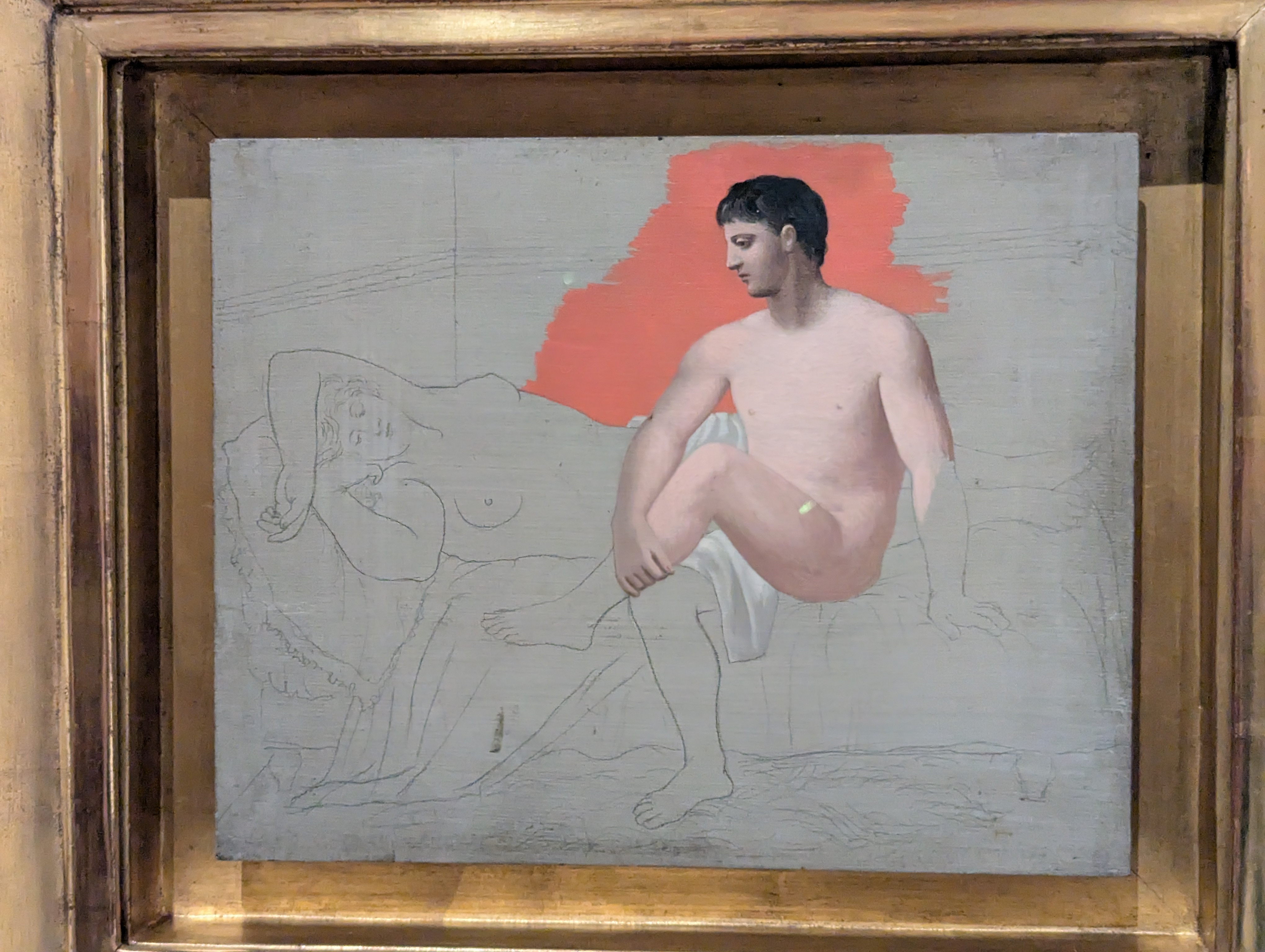
Kelly’s favorite – “Man Looking at a Sleeping Woman”
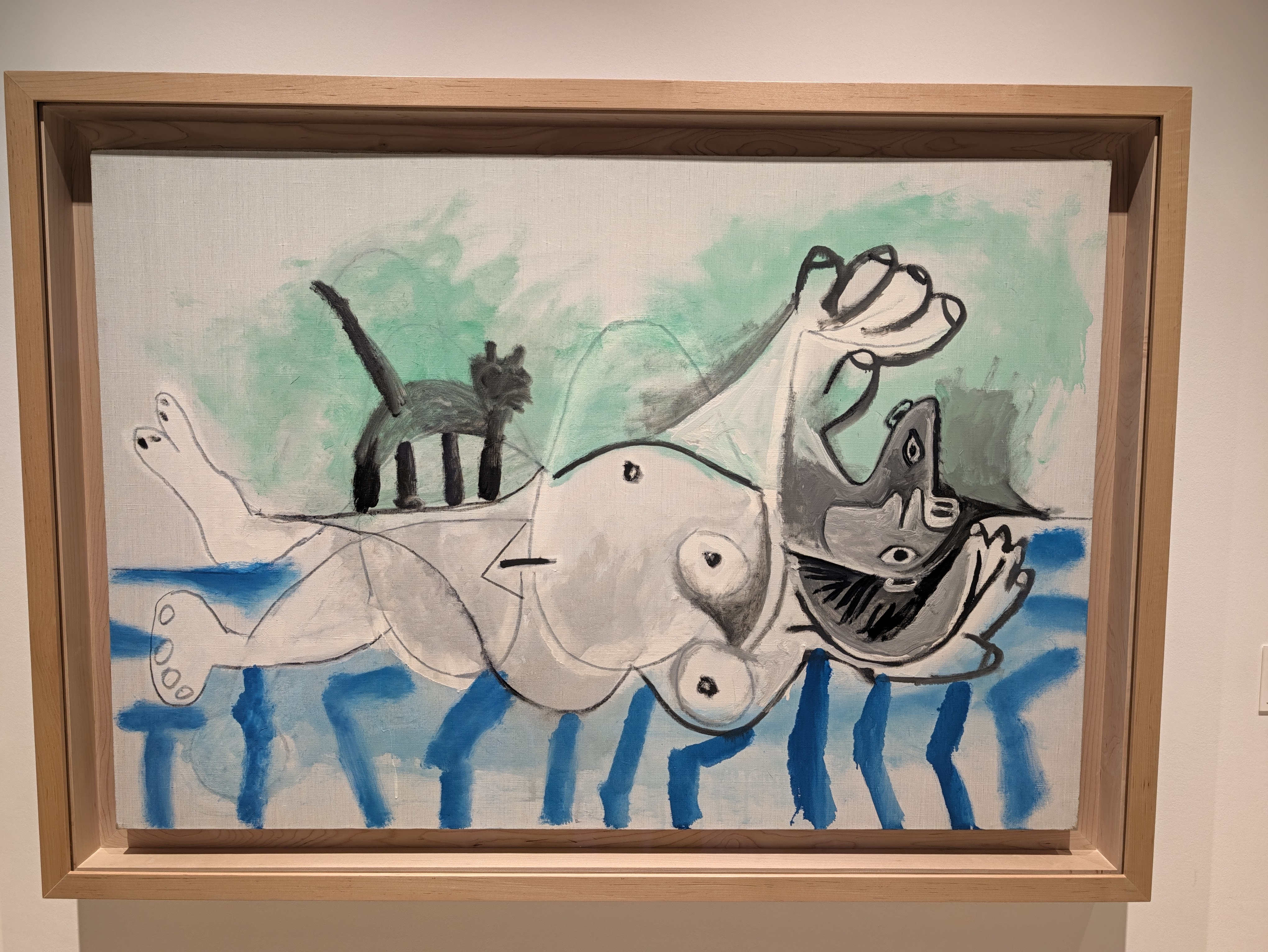
My favorite – “Reclining Nude and Cat”

That said, a lot of his more well-known stuff is elsewhere (such as the Reina Sofia in Madrid). And the museum steered clear of Picasso’s personal life. A little post-visit digging shows why, as he was pretty much a monster to those around him.

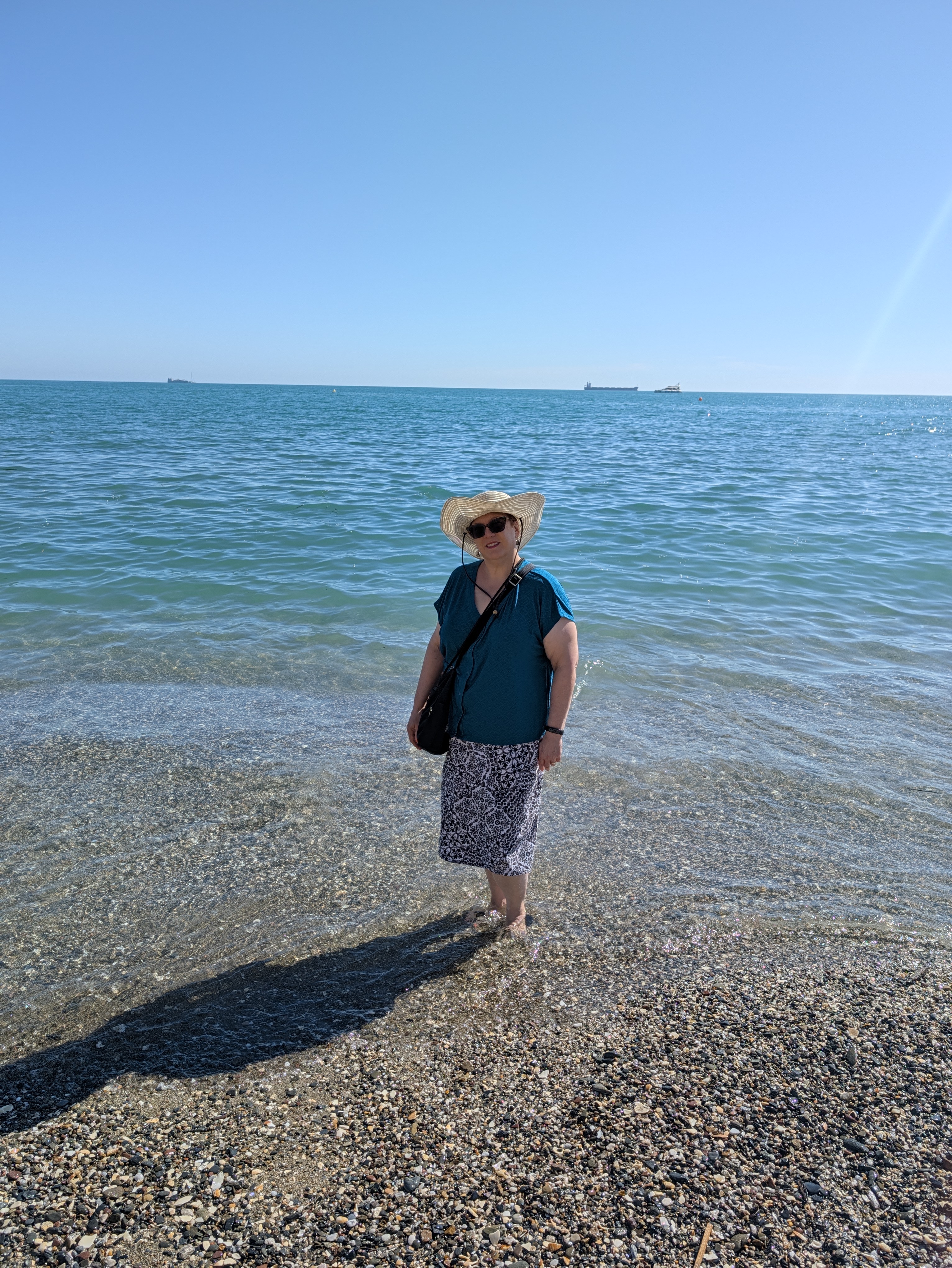
The other reason we went to Malaga was to get a little sense of the Mediterranean coast. We didn’t really “go to the beach,” but we did walk down and breathe in some salt air (Kelly waded in a bit – the water was cold). It’s very pretty.

Kelly wades.

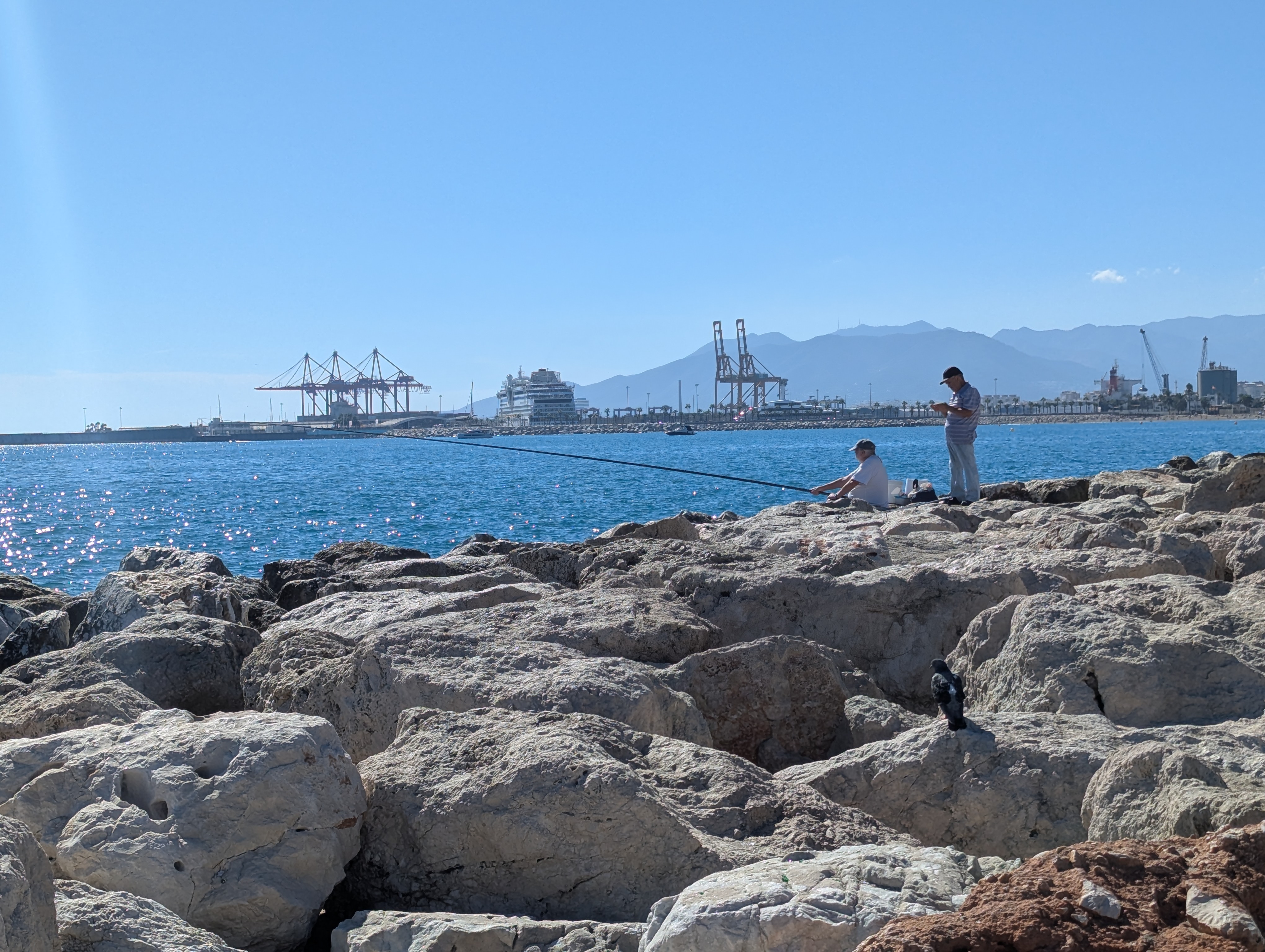
We wound up on this spit that juts out into the bay.

Big damned fishing poles.
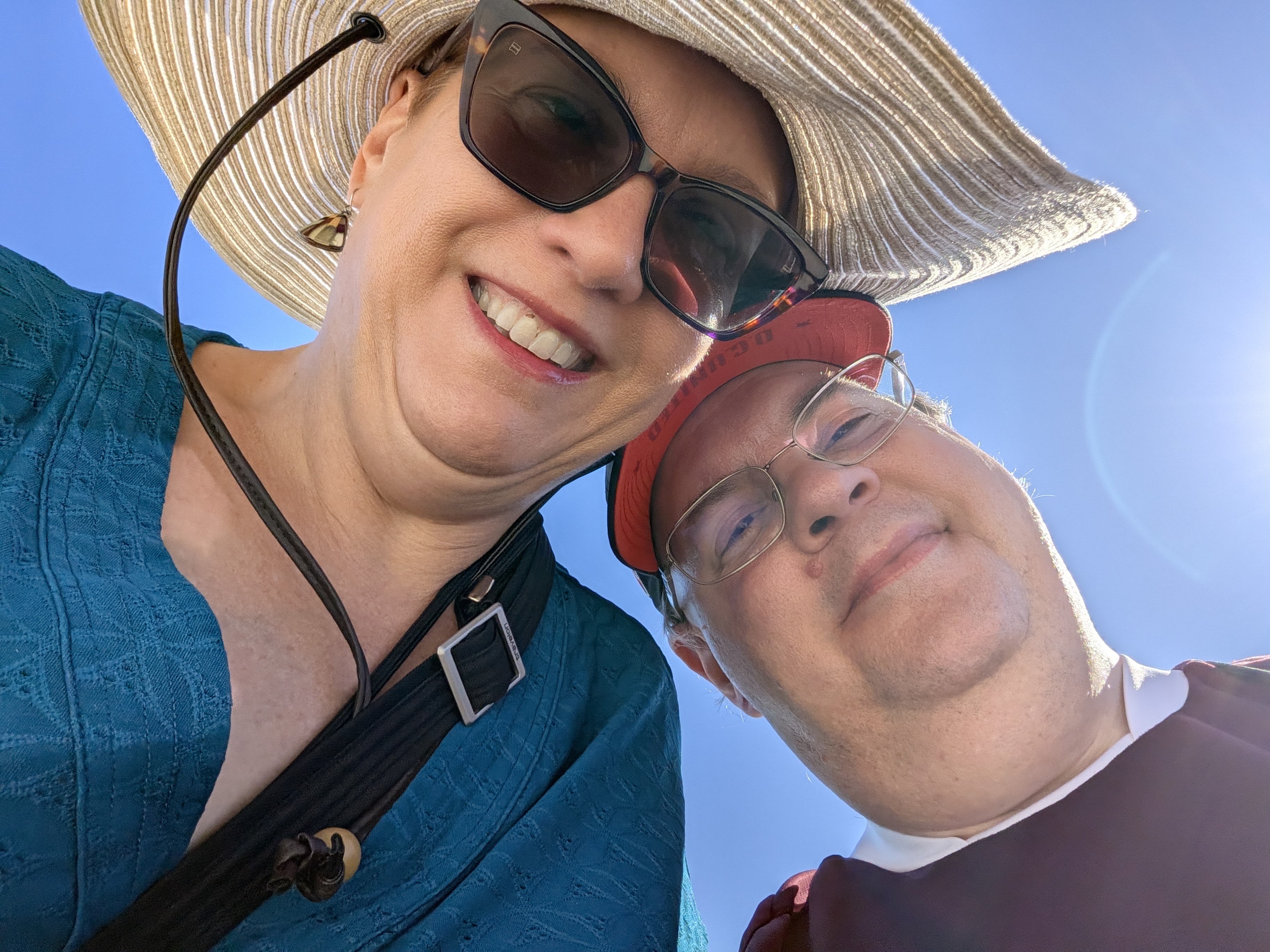
Selfie in the sun.

With that, we were off to Granada . . .

A word about . . . transport.

I’ve mentioned taking trains or cars to get around while we were in Spain, but I wanted to say a couple of things about transport in general. For one, the high-speed trains are amazing. The one we took from Madrid to Cordoba almost hit 300 kph, which is more than 180 mph. That’s absolutely hauling ass. Of course, when things go wrong at that speed they really go wrong, as evidenced by the horrific crash on that line a few days after we got back. And, it has to be said, none of our trains left on time. Cabs were useful in the cities, even if sometimes it was hard to find one (as you’ll see in Granada).

Take it away . . . Chick

Another jazz exploration of some of the themes from Joaquín Rodrigo’s Concecierto de Aranjuez. Originally recorded by Return to Forever, I thought this live version from years later with Chick’s band hit the spot.

Sketches of Spain, Part 1 – Madrid & Cordoba

Last month my wife, Kelly, and I embarked on the “Two Weeks in Spain” so famed in song.  It was a wonderful trip and impossible to convey all we were able to do and see, but over the next few posts I wanted to share a little bit of what made the journey so special. Each post has musical accompaniment, so press “play” at the bottom and enjoy.

Departure

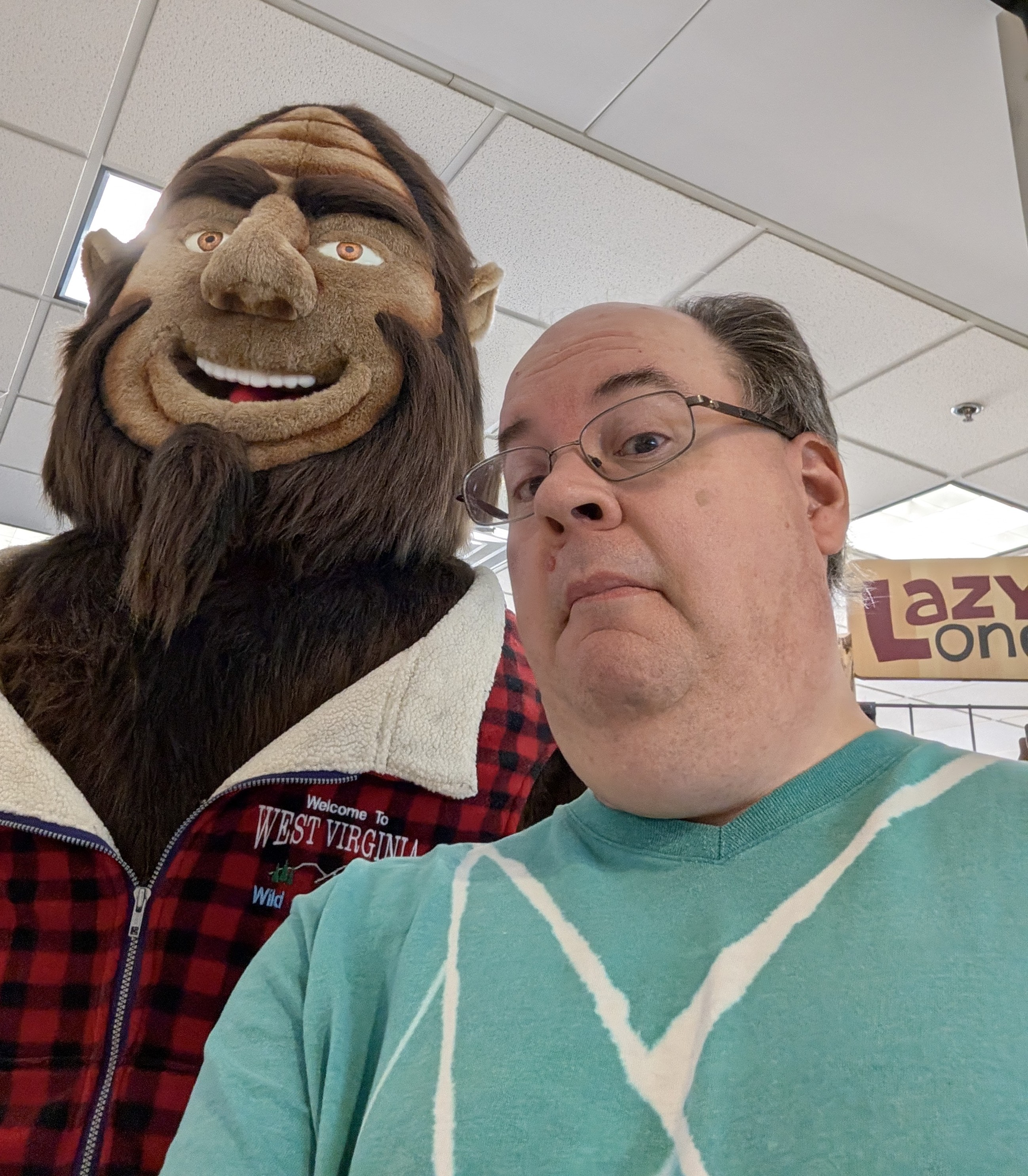
Naturally, I had to check in with Señor Foot on the way out of town, at our local “international” airport.

Checking in with our local cryptid on the way out.

The flights were, thankfully, uneventful and resulted in only a minor amount of panic from me (I’m not a good flyer).

Madrid

Our first stop was Madrid, where we would stay for a couple of nights before heading off into Andalusia, where we spent the bulk of our days. We landed around noon local time, which felt much later due to jet lag. Instead of falling into bed, we decided to push on through dinnertime and try to adapt to the time change.

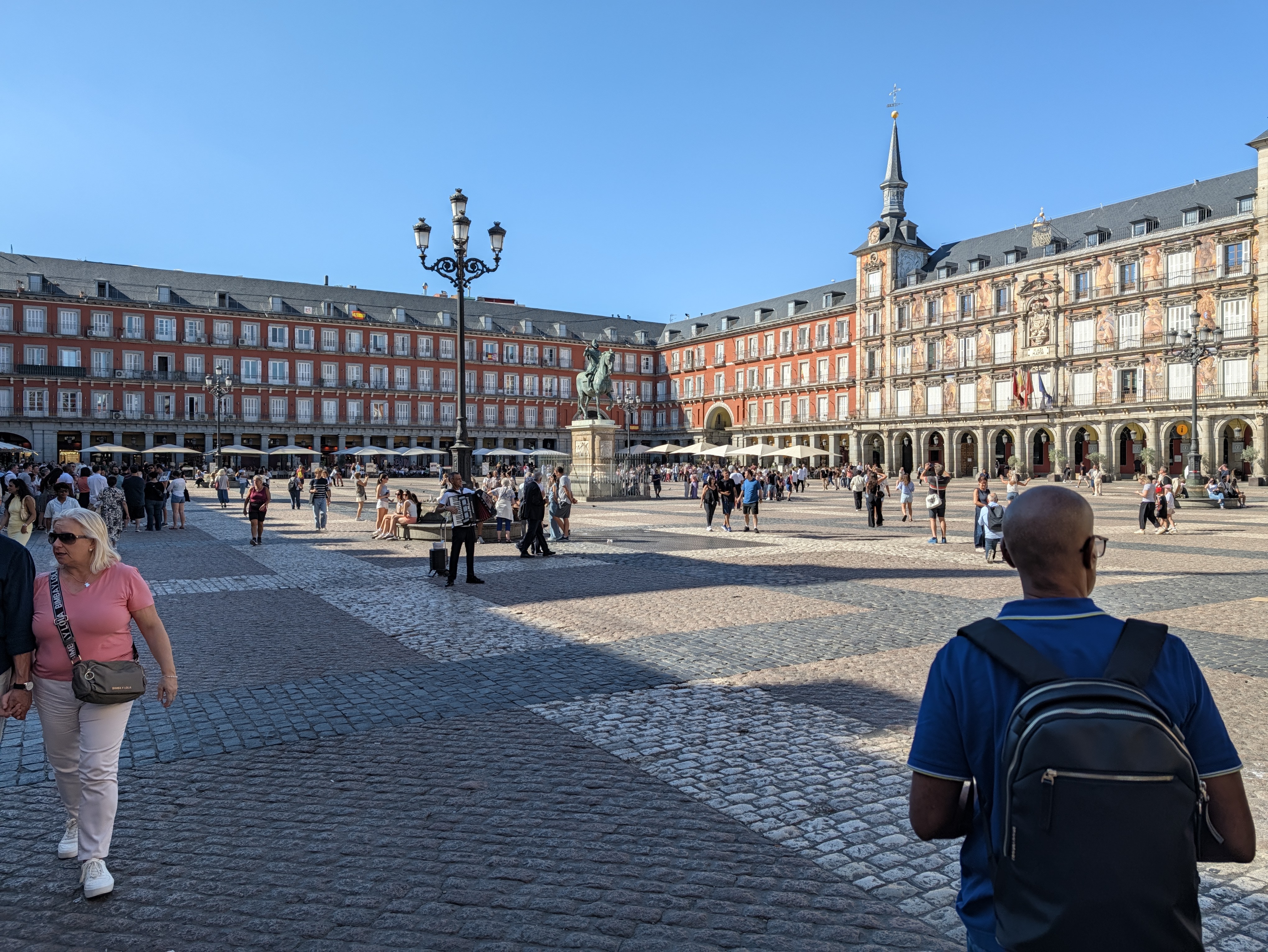
Our hotel was right downtown, near a busy traffic circle and a park frequently used for protests. There was a McDonald’s on the corner (although Burger King seemed more prevalent overall), but we bypassed a taste of home and headed for the Plaza Mayor.

Plaza del Mayor. The guy on the horse is Felipe III.

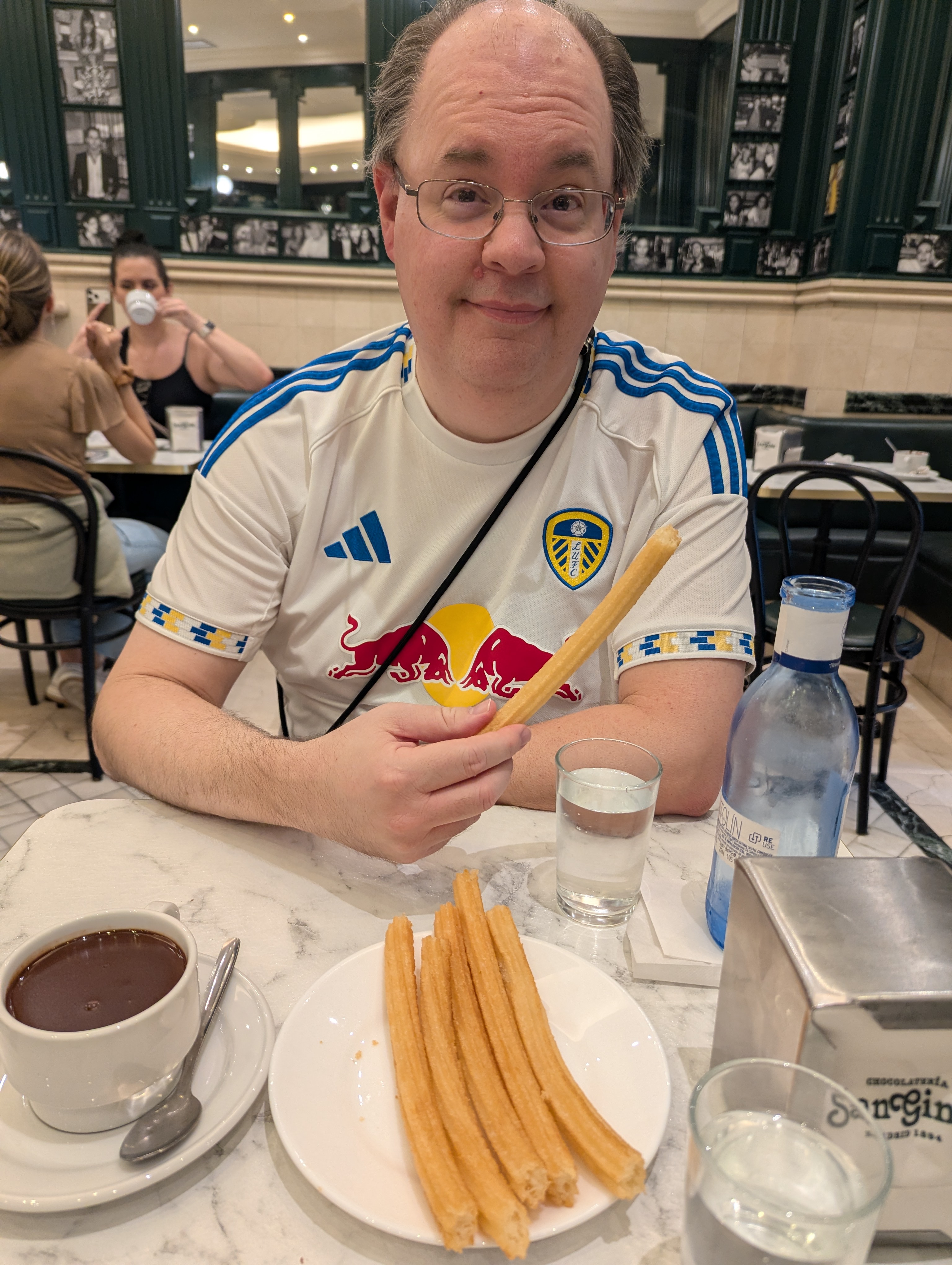
The plaza is ringed by restaurants and tourist trap shops, but Kelly had a different destination in mind. We walked through the square, down a set of stairs and an alley, and had our first experience with Spanish cuisine – churros con chocolate!

Yes, they’re even better than they look.

The place, San Gines, struck me as the Spanish version of Cafe du Monde in New Orleans – they basically do one thing, but they do it very well. That thing is fresh, crispy churros (no cinnamon, like we get here), served with a cup of drinking chocolate (think hot chocolate that aspires to be mousse). The chocolate clings onto the churros when dipped and makes an irresistible combination.

On our way back to the square, I was heckled! I was wearing my Leeds jersey, not knowing that Manchester United had been in Madrid the night before getting beaten by Atletico in the Champions League. A grieving Mancunian saw my jersey and called me out (among other things, as “Yorkshire scum”!), but I just laughed it off.

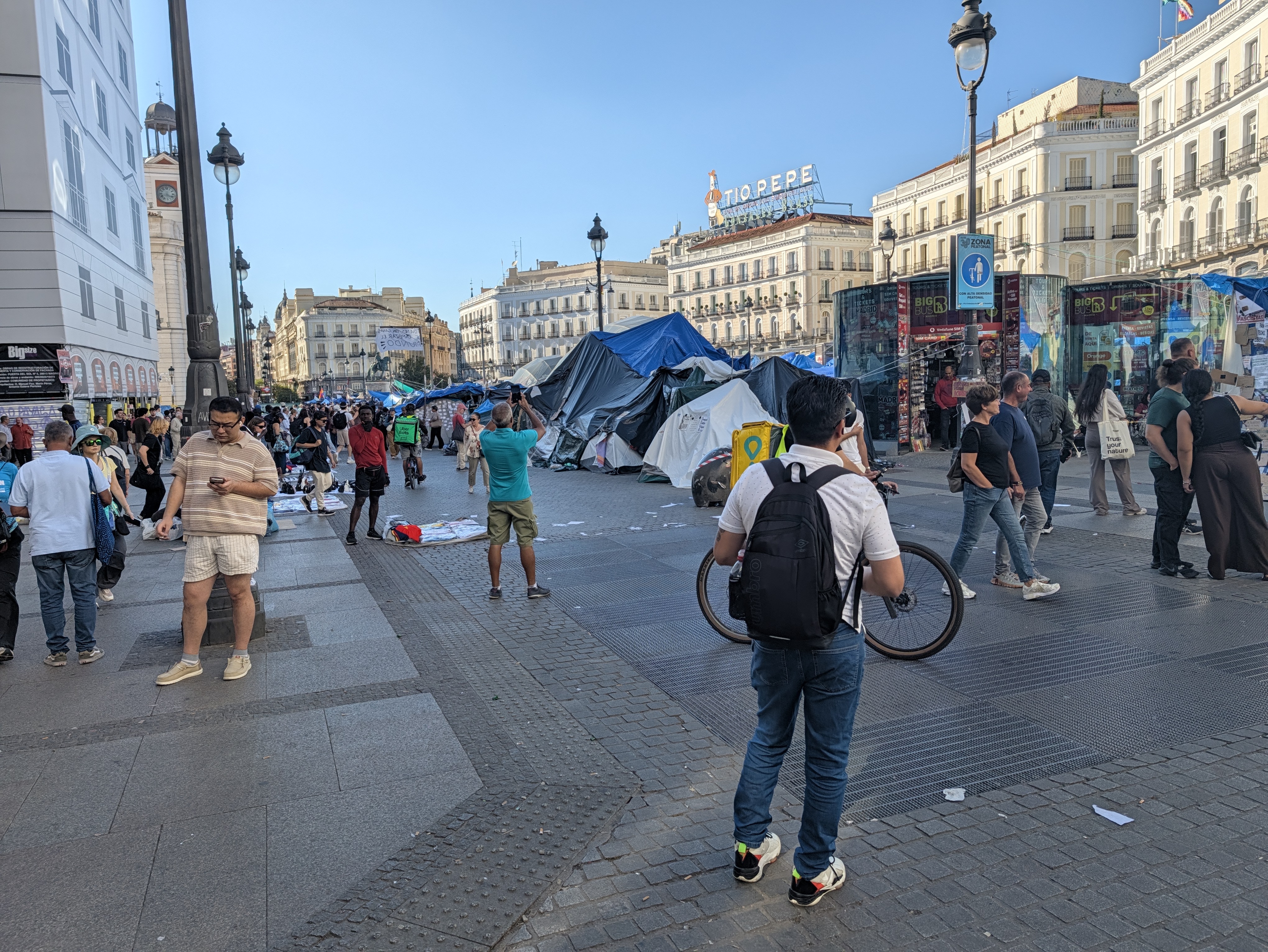
It was a little harder to laugh off what we found at the Plaza de Sol.

Tent city protest that had been going on for several weeks (and caused the Prime Minister to call for new elections).

A long-term protest camp had been erected there. The prime motivation is the housing affordability crisis in Spain (it’s led to the prime minister calling for a new election), but has embraced a hodge podge of grievances, one of which was, well, us – someone had spray painted “tourists go home!” on the plinth of a monument. Graffiti aside, nobody said or did anything to us as we took in the scene. Heck of a way to orient to your surroundings, though.

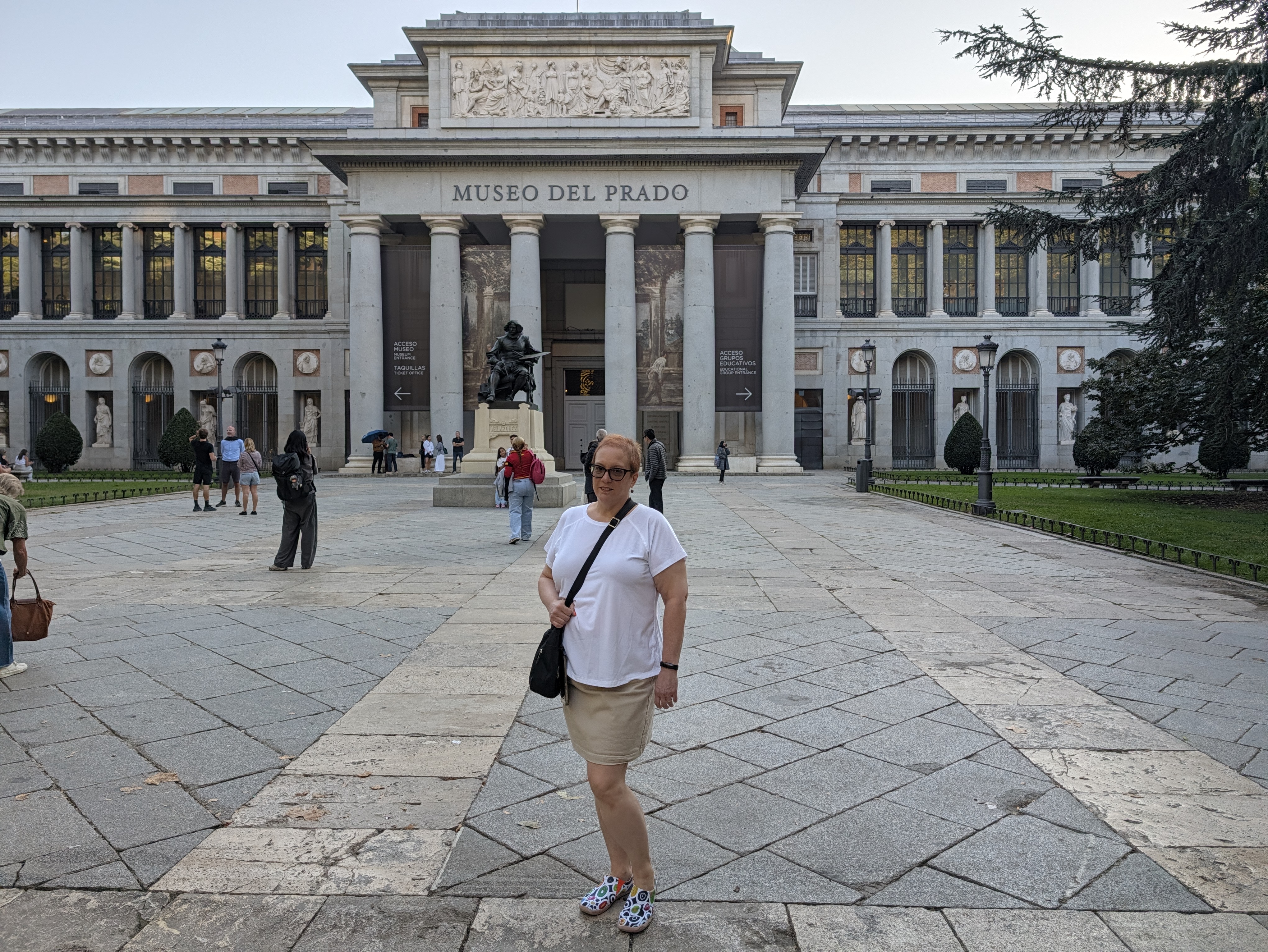
For our only full day in Madrid our focus was on art. Our hotel was just down the street from the Prado, which is where we spent a good chunk of our day.

Kelly in front of the Prado. That’s a statue of Velazquez behind her.
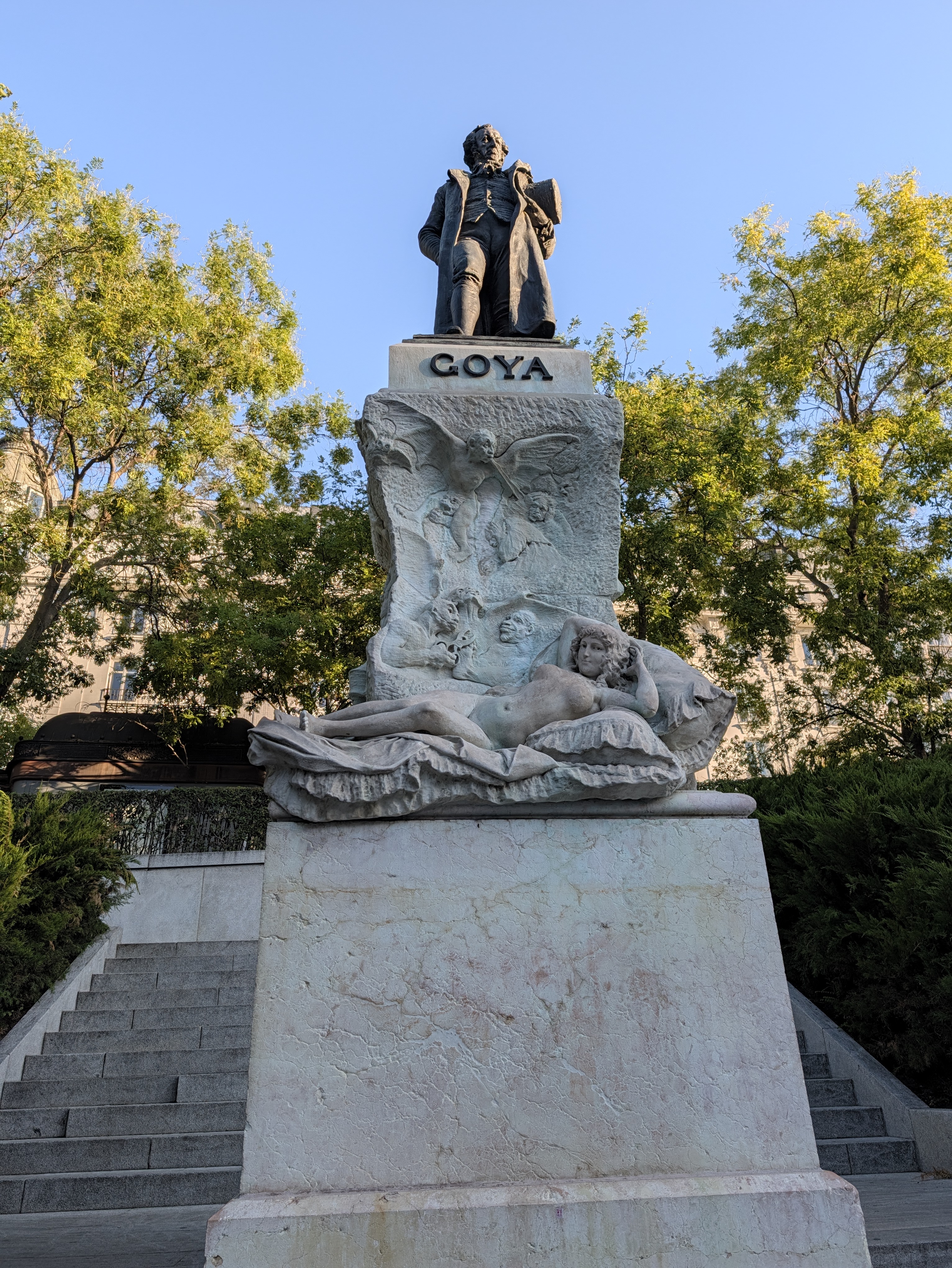
A statue of Goya outside the Prado.

The Prado is, of course, full of amazing art (none of which you can take pictures of, unfortunately). It’s collection is fairly narrow, though, focusing largely on Spanish artists from a few-century slice of time. Lots of portraits of dead rich people and more saints and crucifixions than you can shake a stick at.

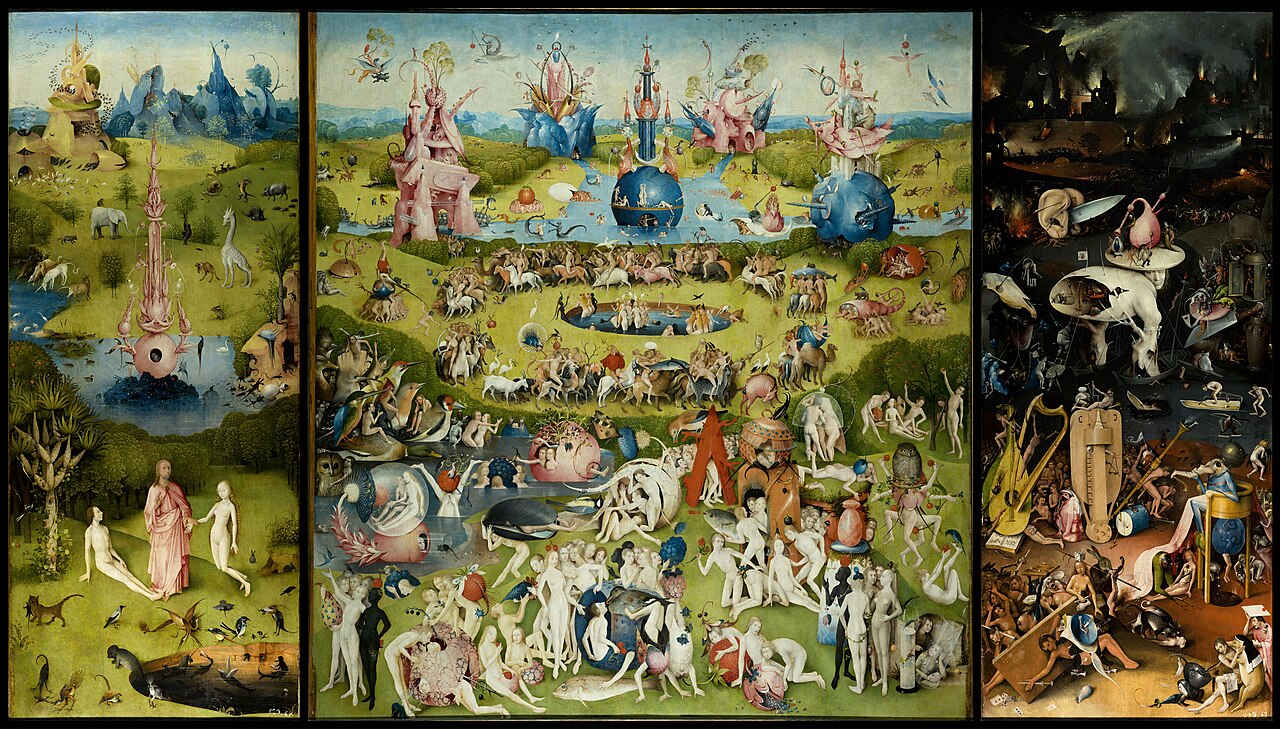
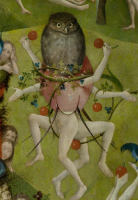
My two favorite chunks involved more disturbing images. The Prado has a large collection of works by Hieronymus Bosch, who specialized in surreal religious imagery. This includes his famous tryptic, The Garden of Earthly Delights:

Taken from Wikipedia

I particularly liked this owl, who’s face is just like “what the hell have I gotten myself into?”

We’ve all been there, dude.

The Seven Deadly Sins and the Four Last Things is pretty striking, too:

Imagine sitting down to this to play a game of bridge.

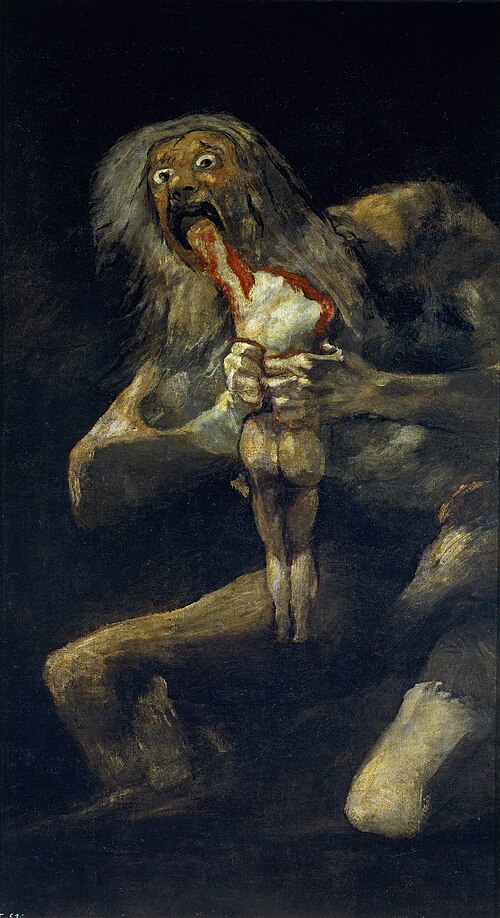
The other collection that really struck me are the so-called “Black Paintings” by Goya. They were painted on the walls of his home later in his life and, perhaps, were never intended to be shown to the public. As the name suggests they’re dark and you can feel creeping mortality clinging to them. The most famous of them:

Saturn devouring his son.

The Black Paintings inspired some musical ideas and a story idea, too, so I suspect I’ll return to them over and over in the future.

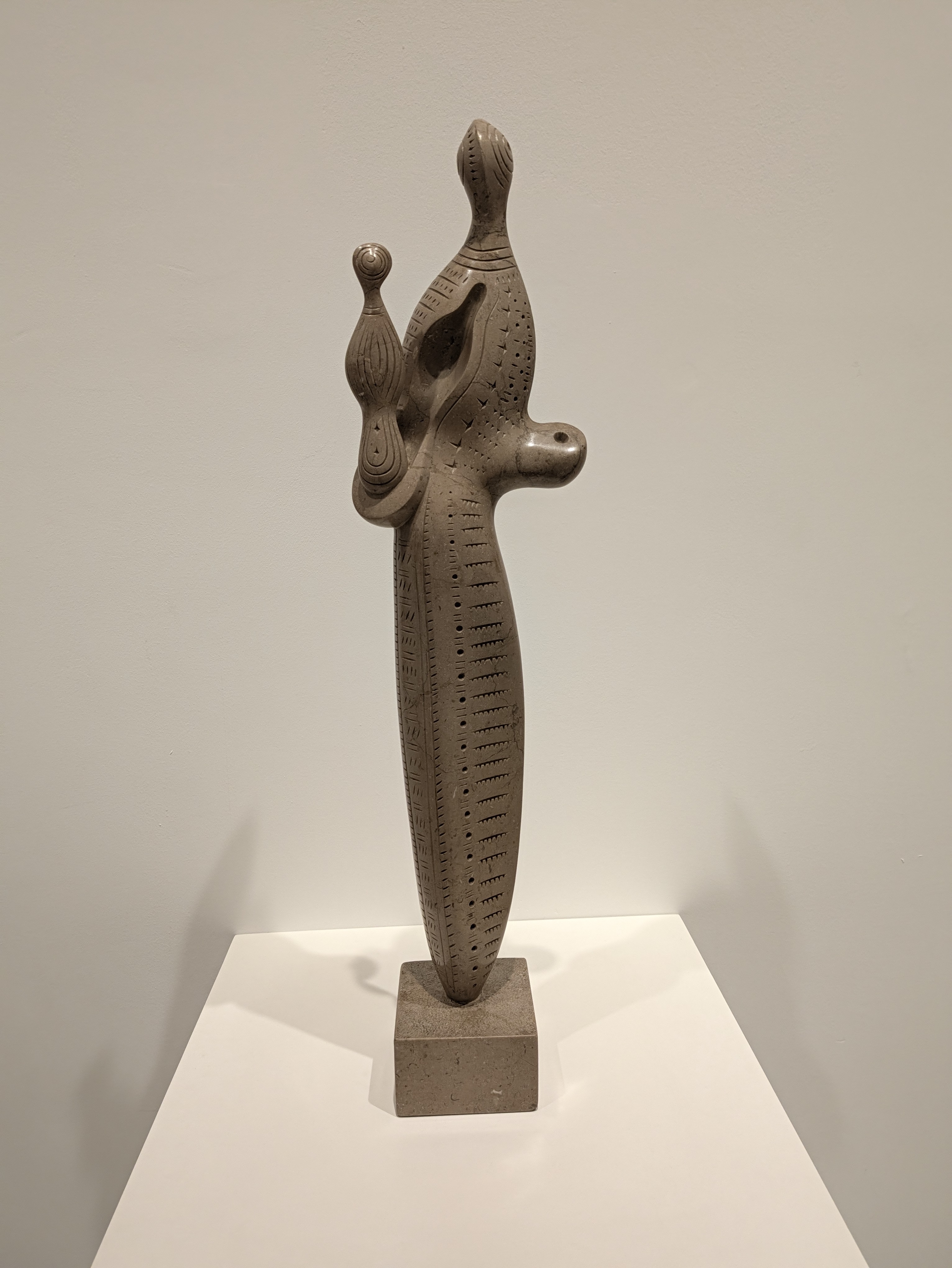
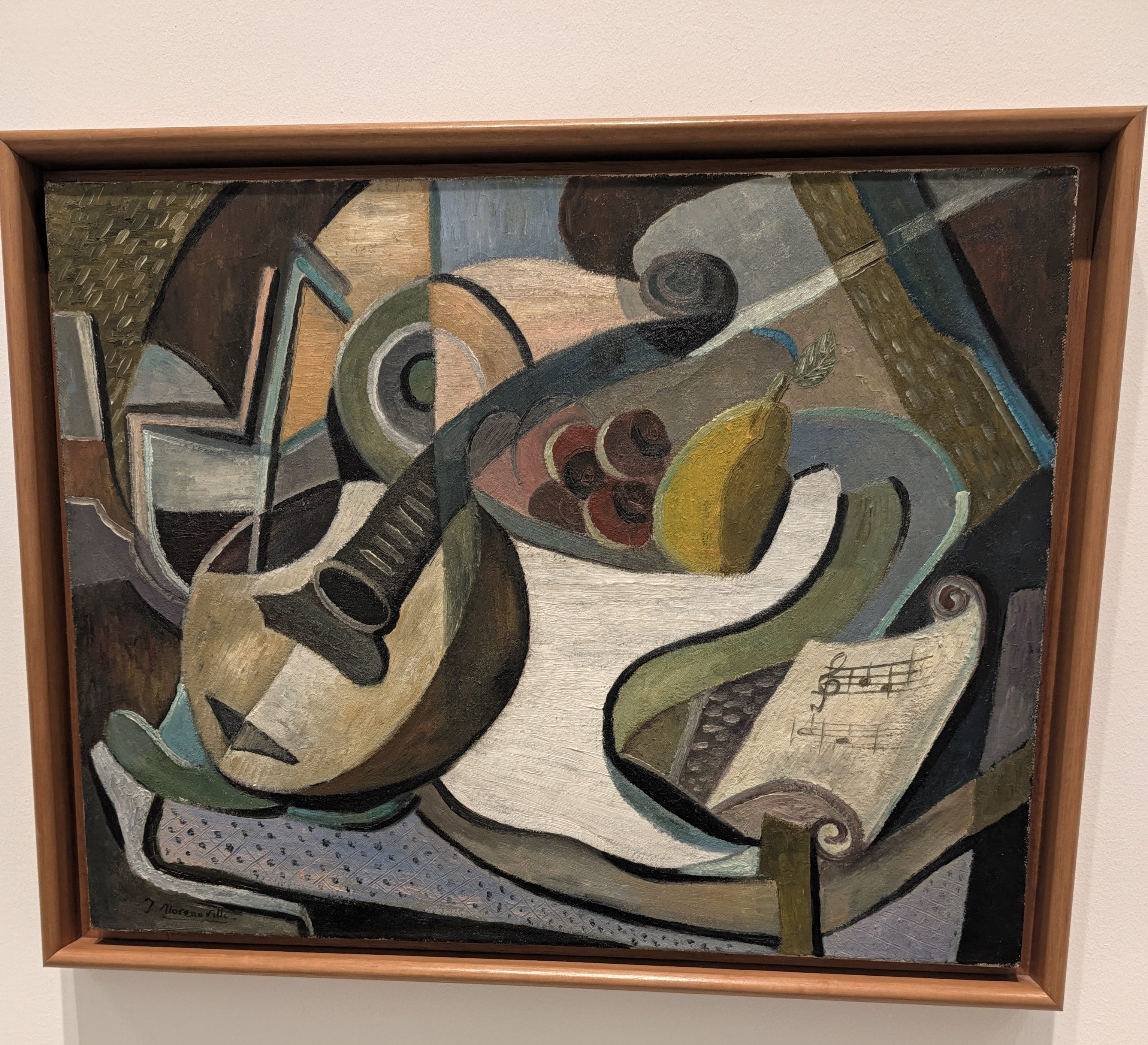
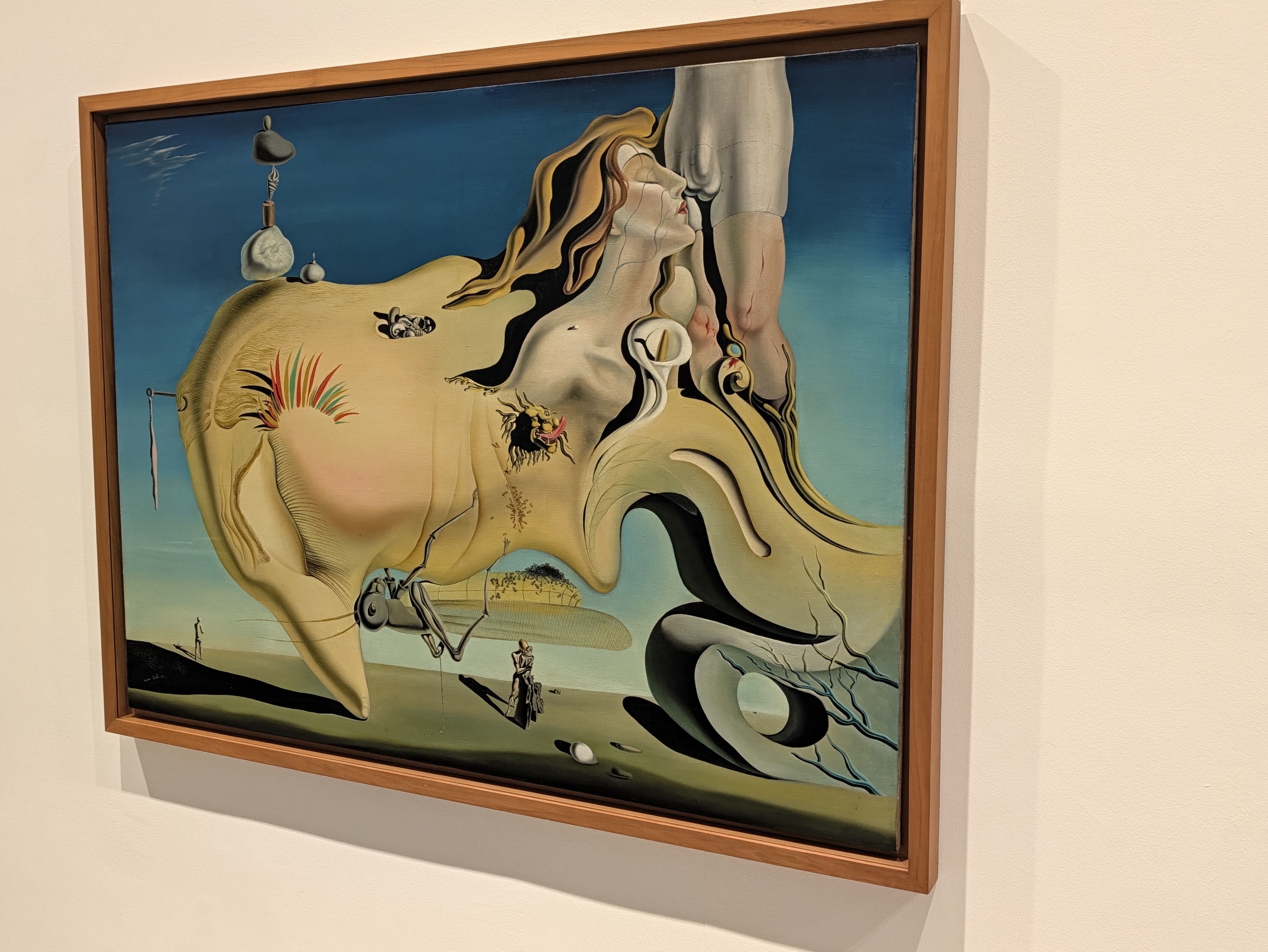
That evening our focus turned more modern, as we spent some time at the Reina Sofia, which is dedicated to more modern art. It’s full of neat stuff by Picasso, Dali, Miro and others – precisely the stuff I love but that Kelly will roll her eyes at frequently. And they let you take pictures!

“Maternity” by Alberto
“Still Life” by Villa
“The Face of the Great Masturbator” by Dali (couldn’t resist)

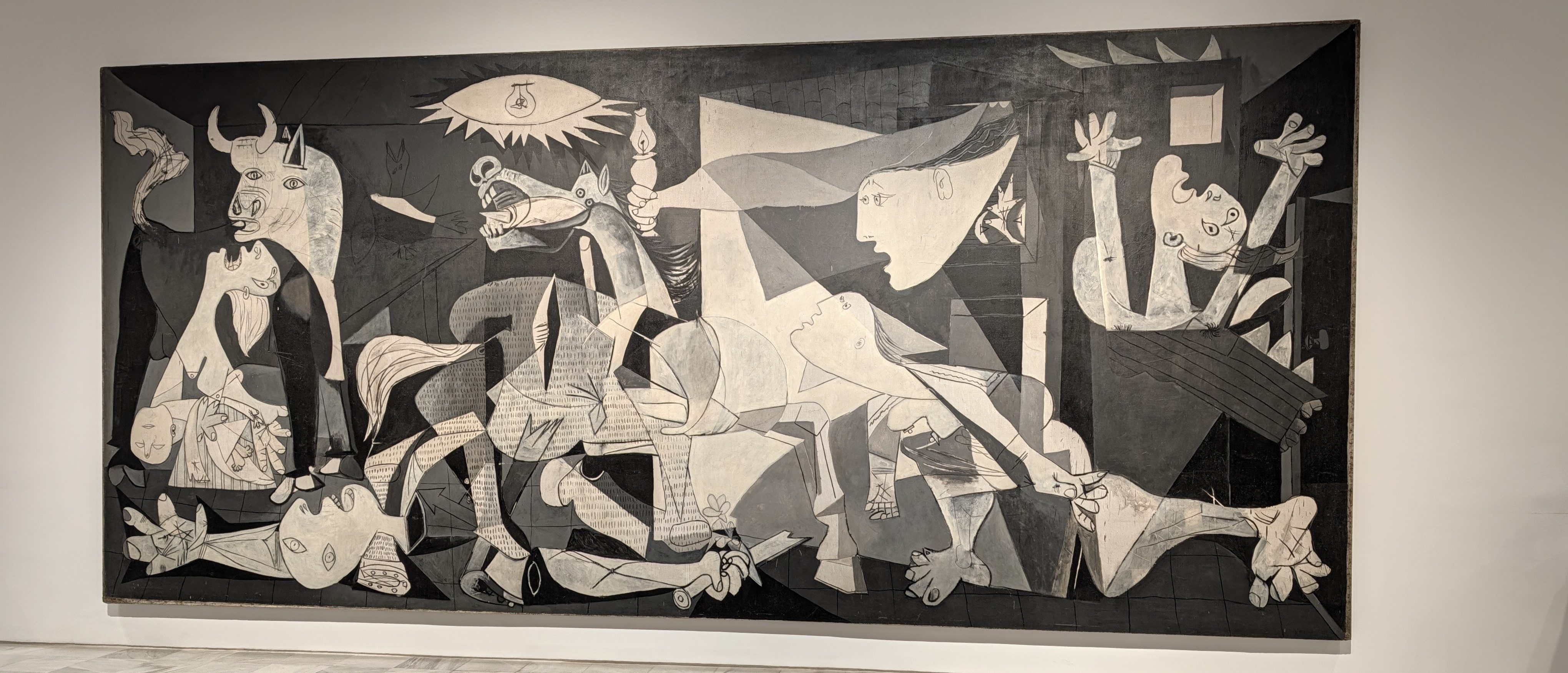
The centerpiece of the collections is Picasso’s sprawling mural, Guernica.

“Guernica” by Picasso

It’s even more impactful in person, the black/grey/white palate evocative of the newspaper photographs that first brought the atrocity to the world’s attention.

Cordoba

The next morning we hopped a train to our first Andalusian destination – Cordoba.

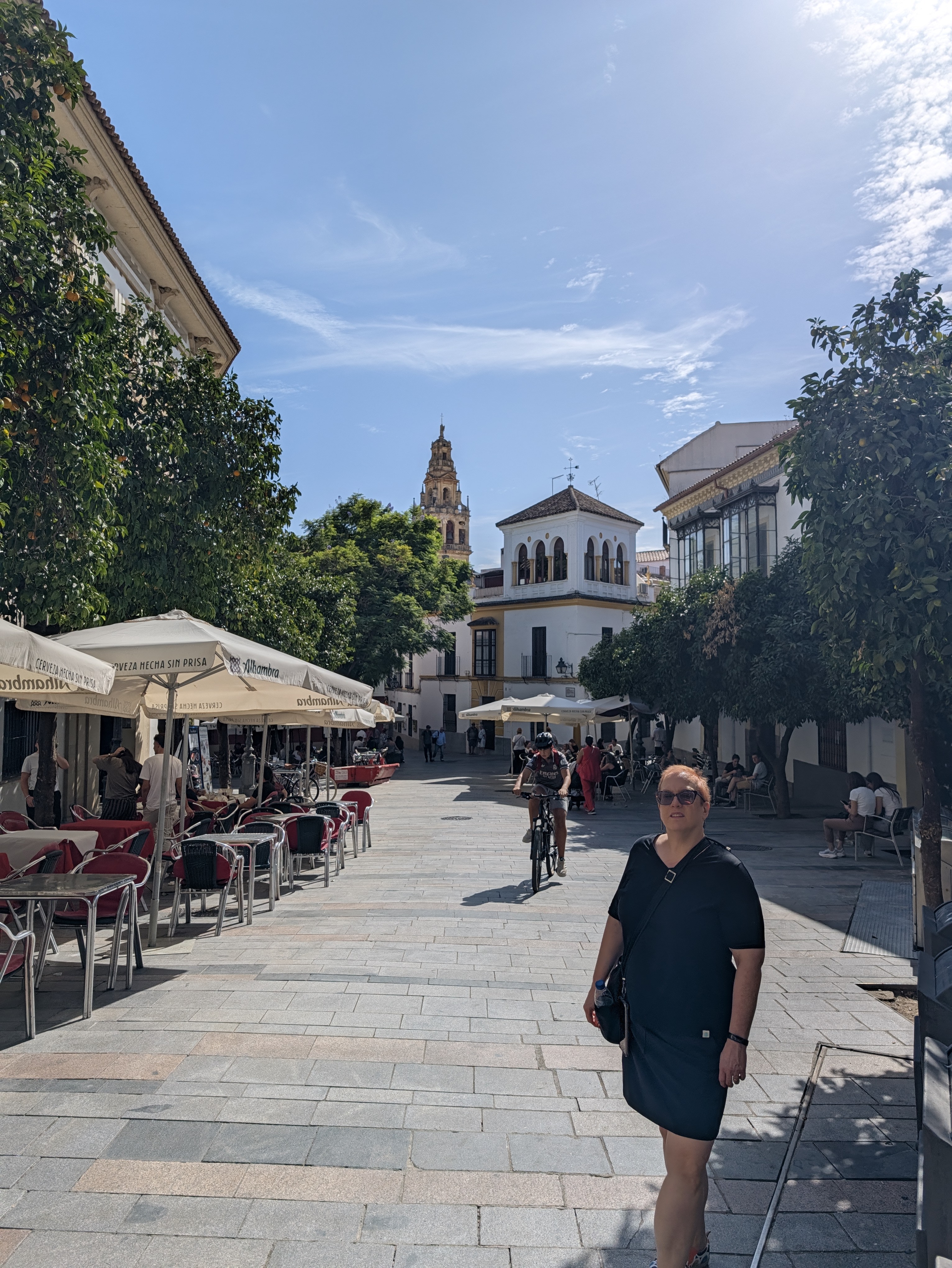
Kelly on a Cordoba Street with the bell tower of the Mezquita in the background.

In a way, Cordoba set the template for the rest of our journey. It’s a city with ancient roots, defined by layers of overlapping cultures (Romans, Visigoths, Muslims, Christians) that produce a particular vibe in terms of what the place looks and smells like. It was also our first experience of the really narrow streets in the old town!

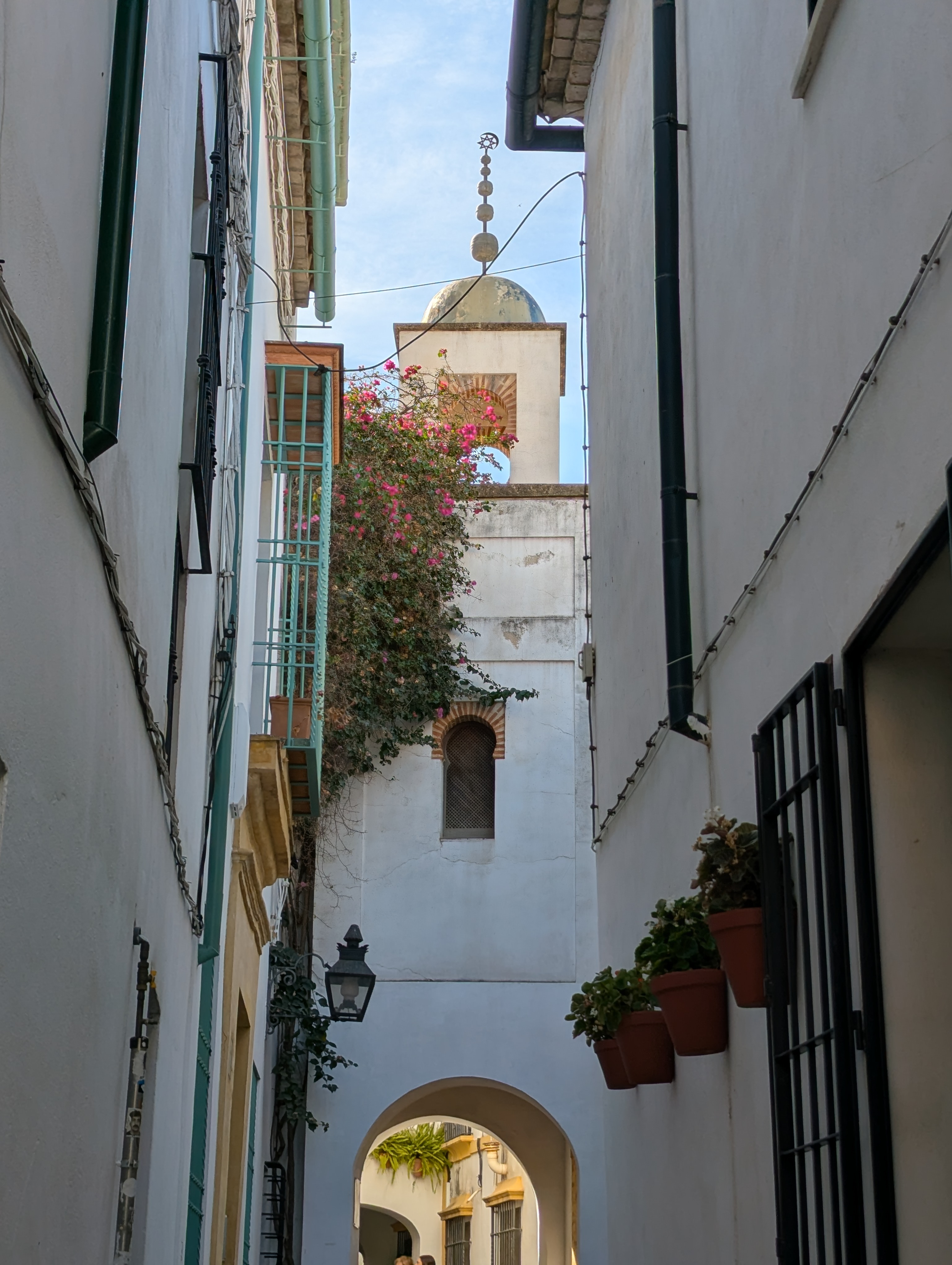
A very narrow street (one of many).

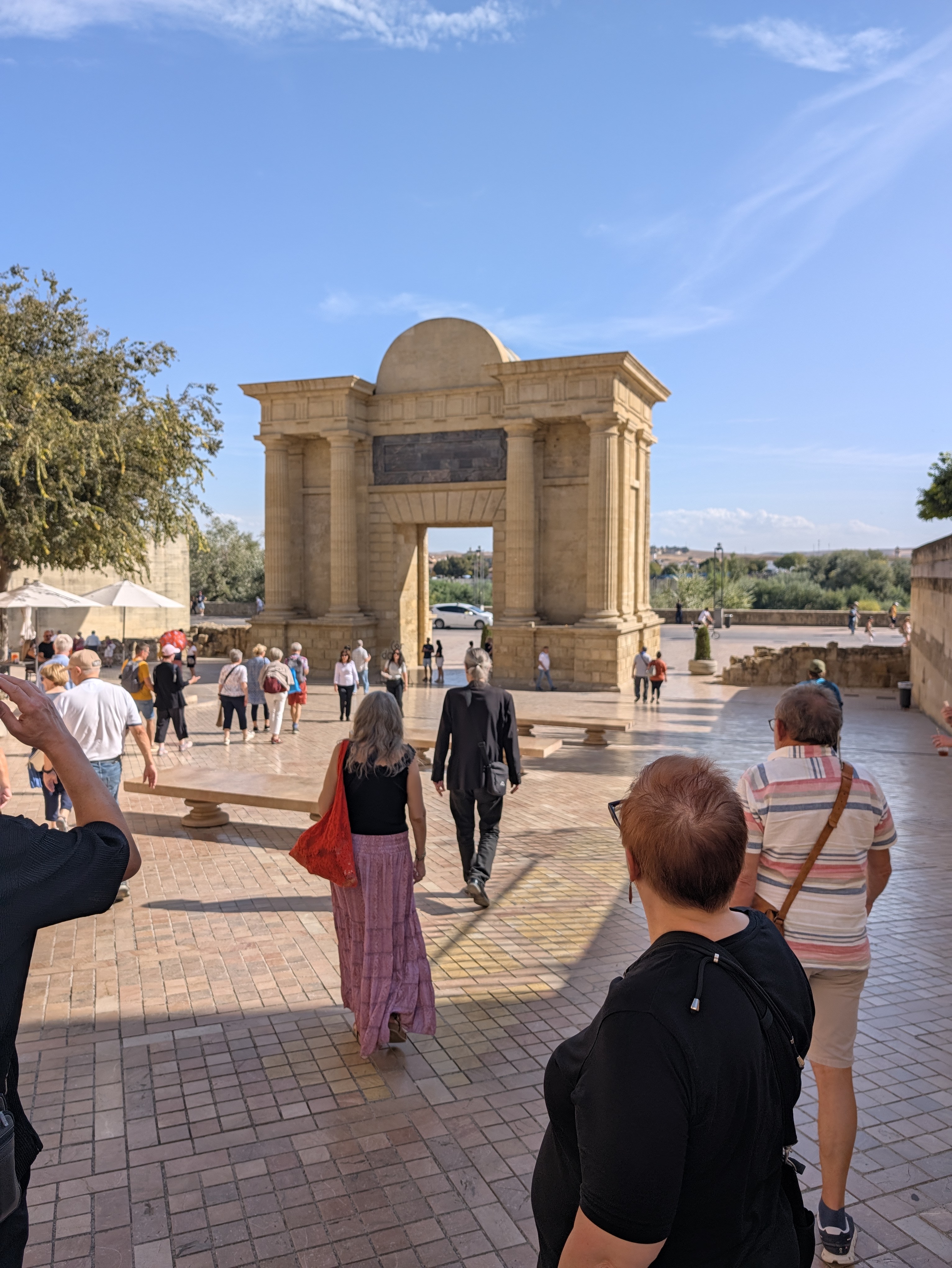
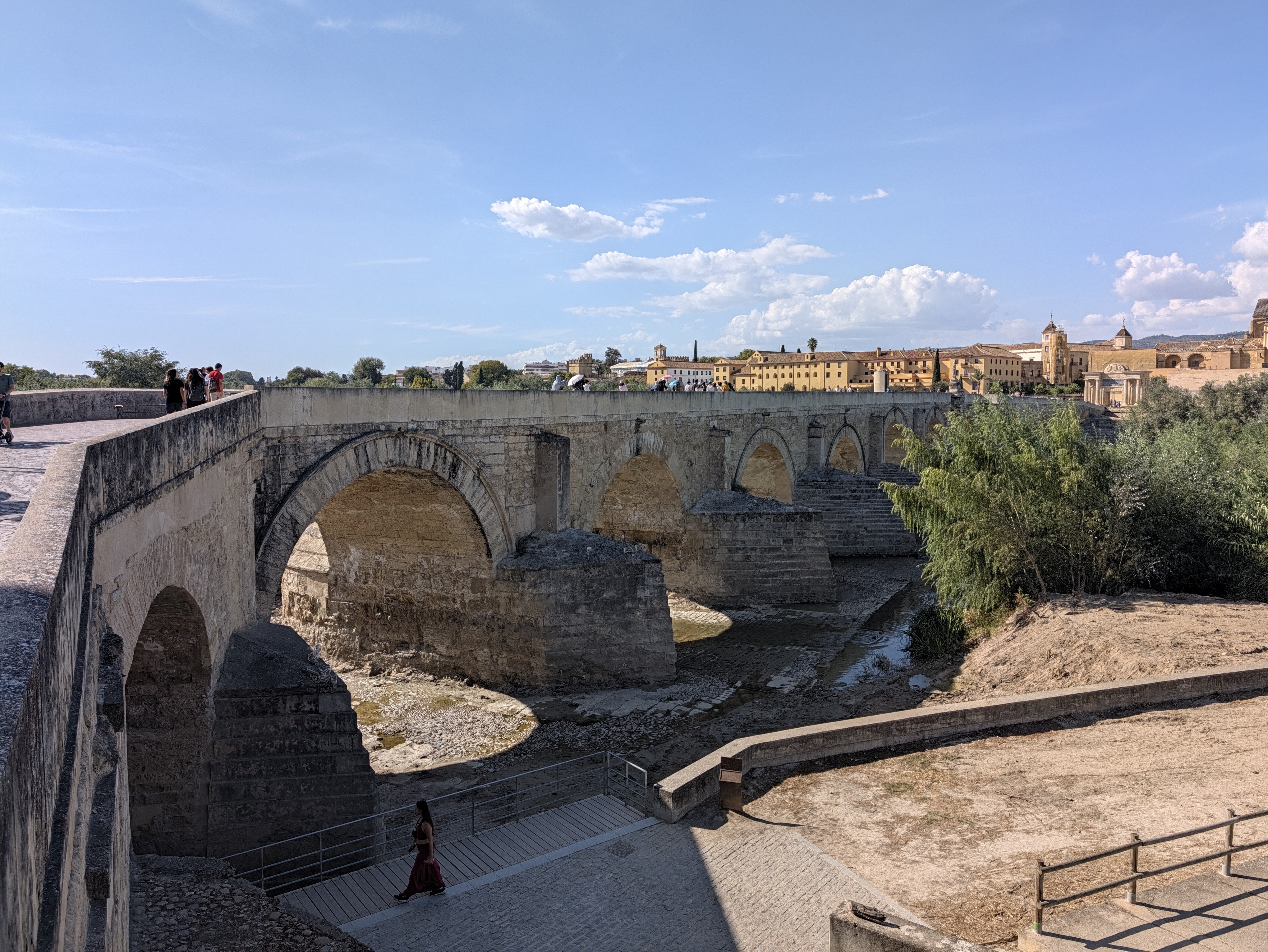
We spent the rest of that day walking the streets of the old town, down to the Puerta del Puente, a 16th-century gate to the city, and across the Roman Bridge – which mostly dates from the 8th century.

Kelly beholds the Puerta del Puente
The Roman Bridge with the old town in the background.
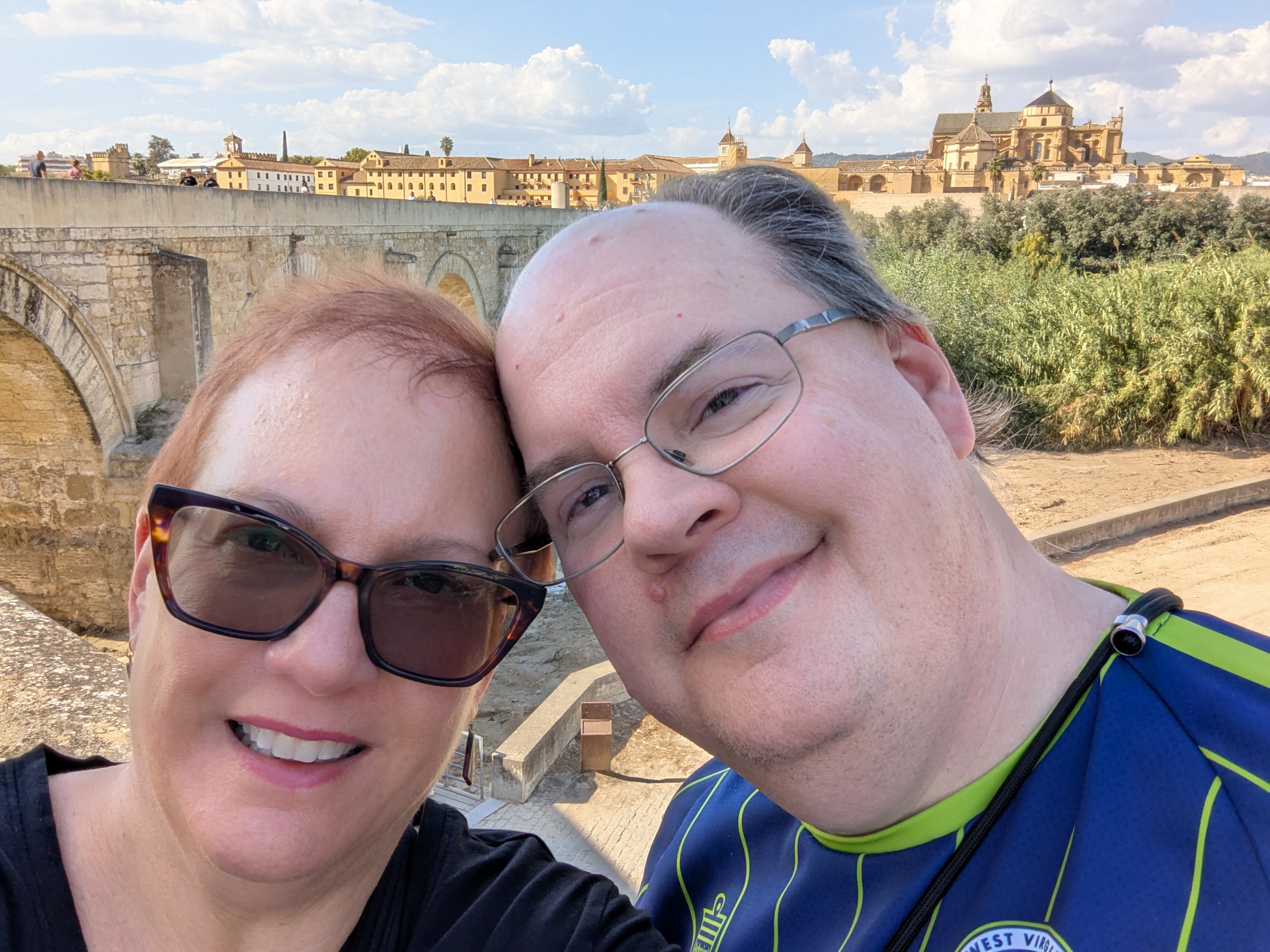
Selfie with bridge.

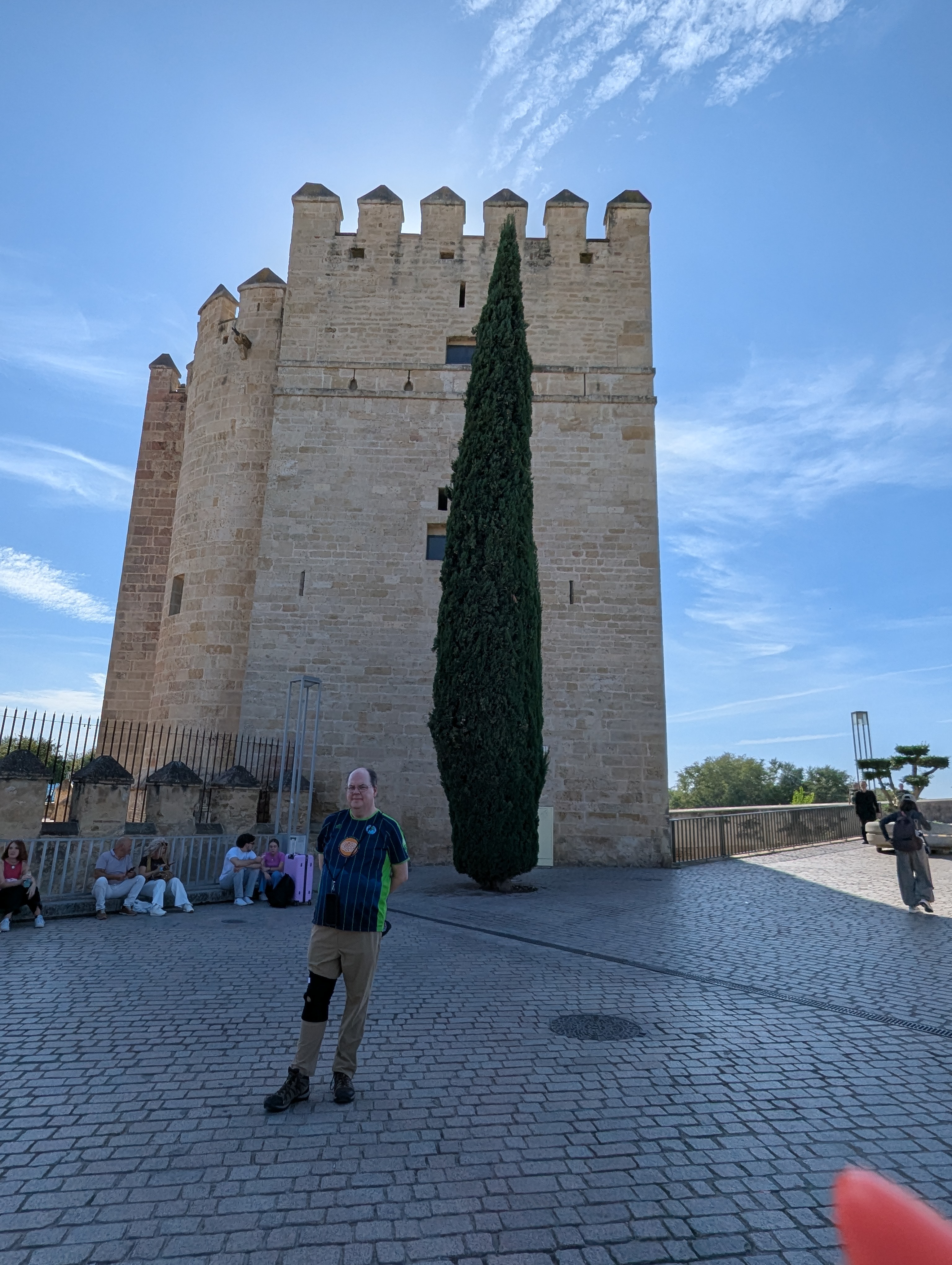
At the other end is the Calahorra Tower, a fortified gate first built in the 14th century. It provided some great views back across the river of the old town.

Yours truly in front of the Calahorra Tower.

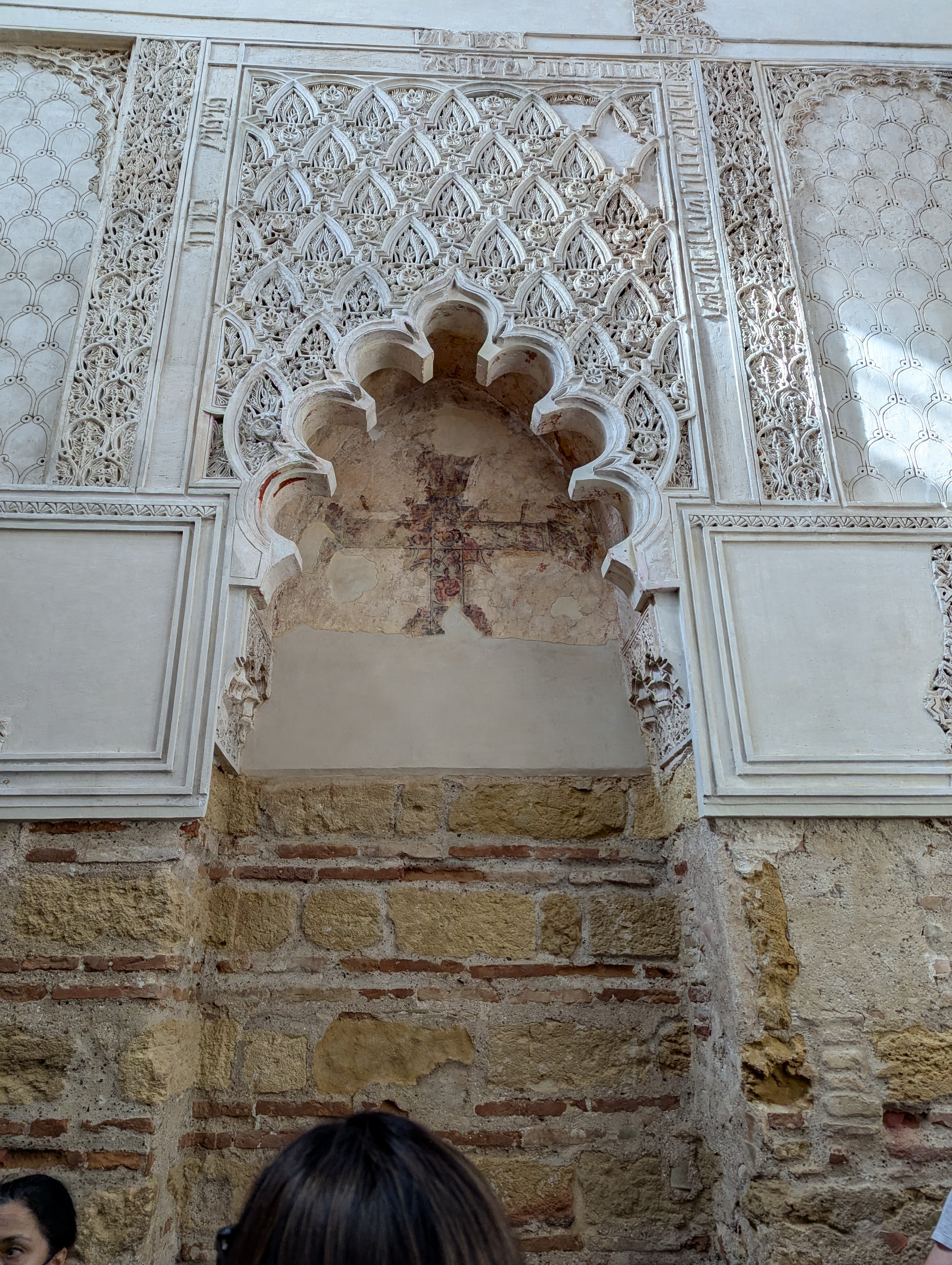
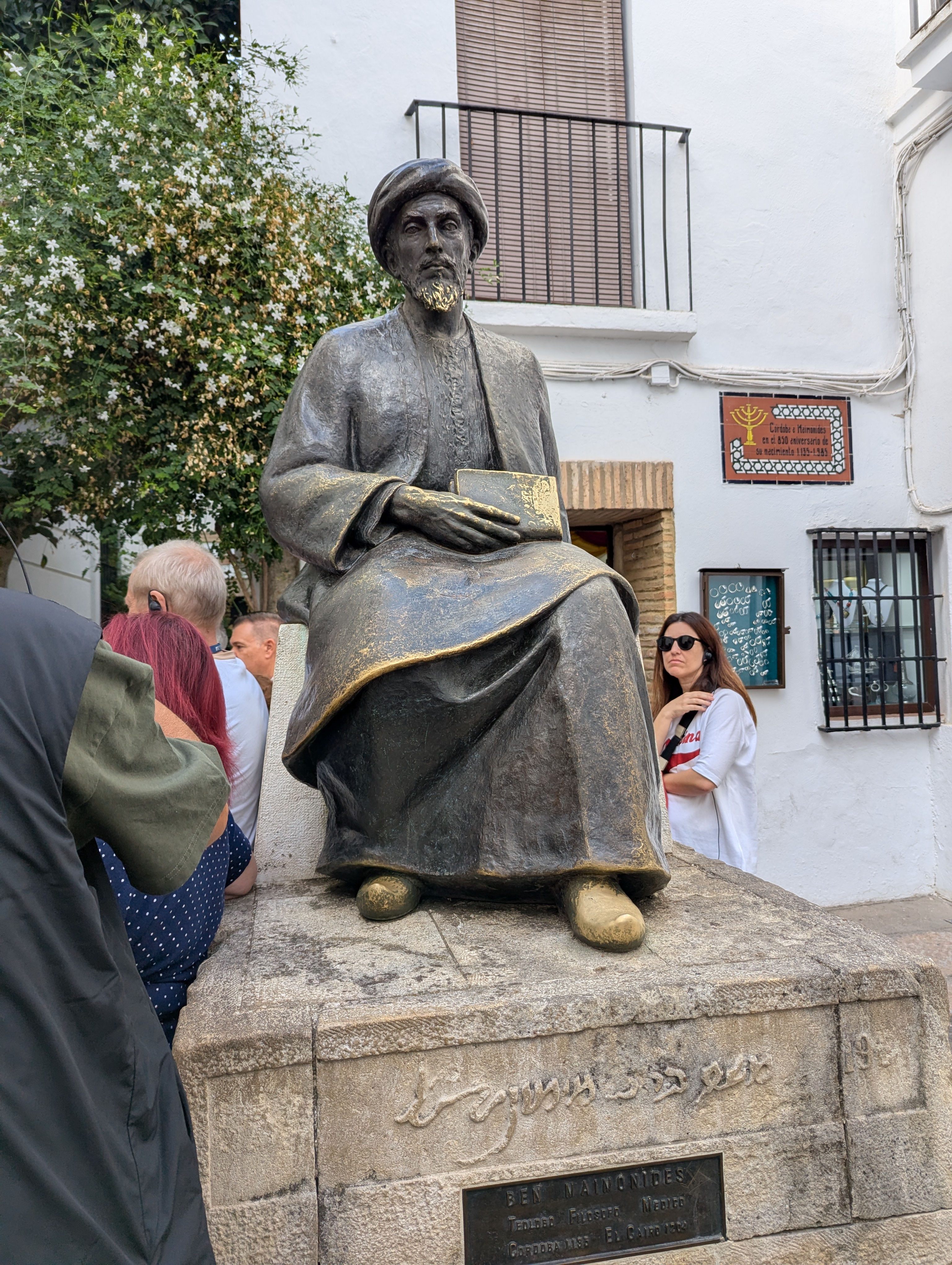
Our major site to see in Cordoba was what’s commonly called the “Mezquita,” although technically it is the Mosque-Cathedral of Cordoba. It’s a place where all those layers really come to the fore. But before we made it there, we were shown some other spots from what’s known as the “Jewish Quarter” (even though the Jews were expelled from town in 1391).

Interior of the synagogue.
Statue of Maimonides (rabbi, physician, philosopher), born in Cordoba.

As I said, this led us to the Mezquita.

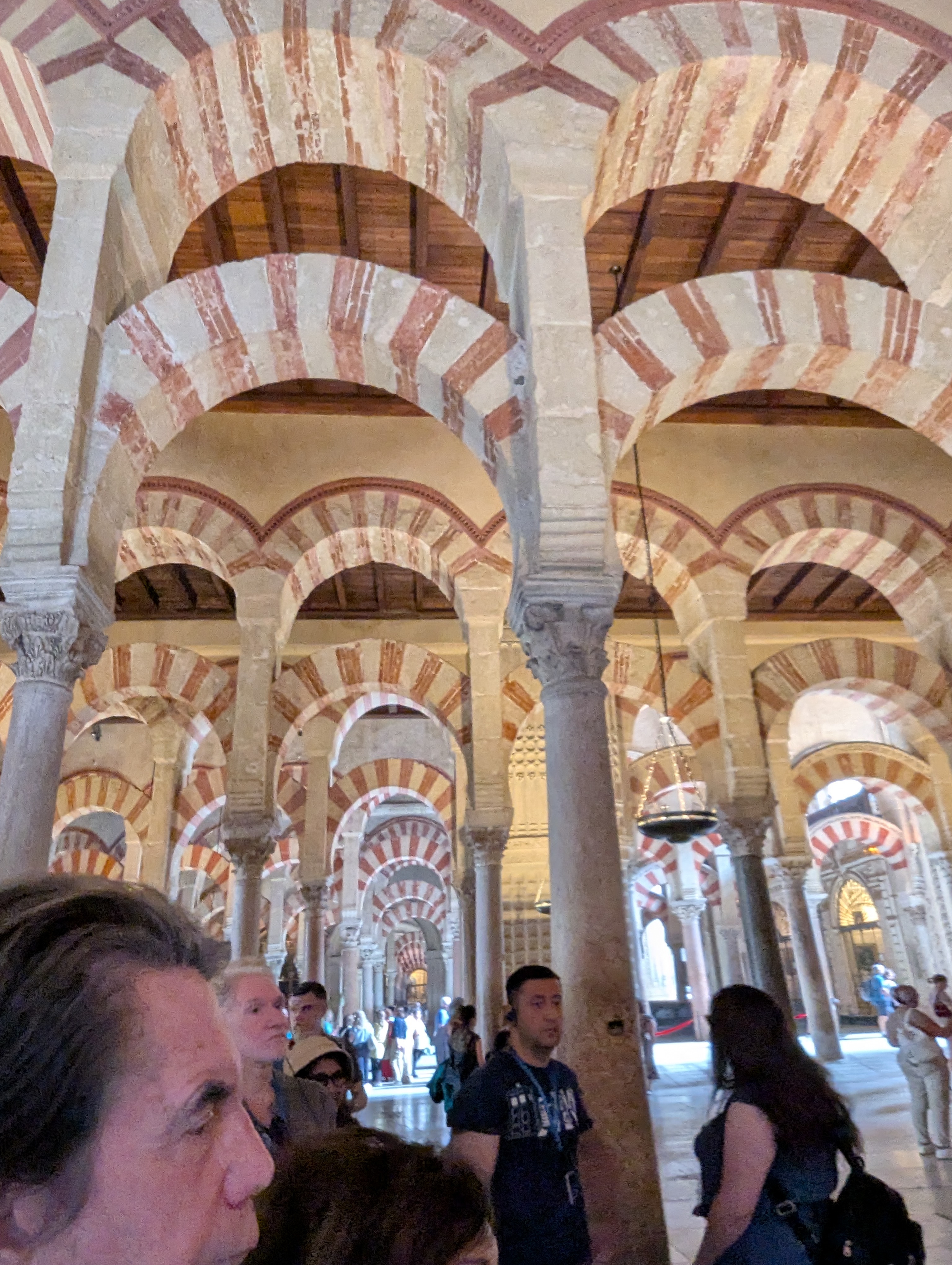
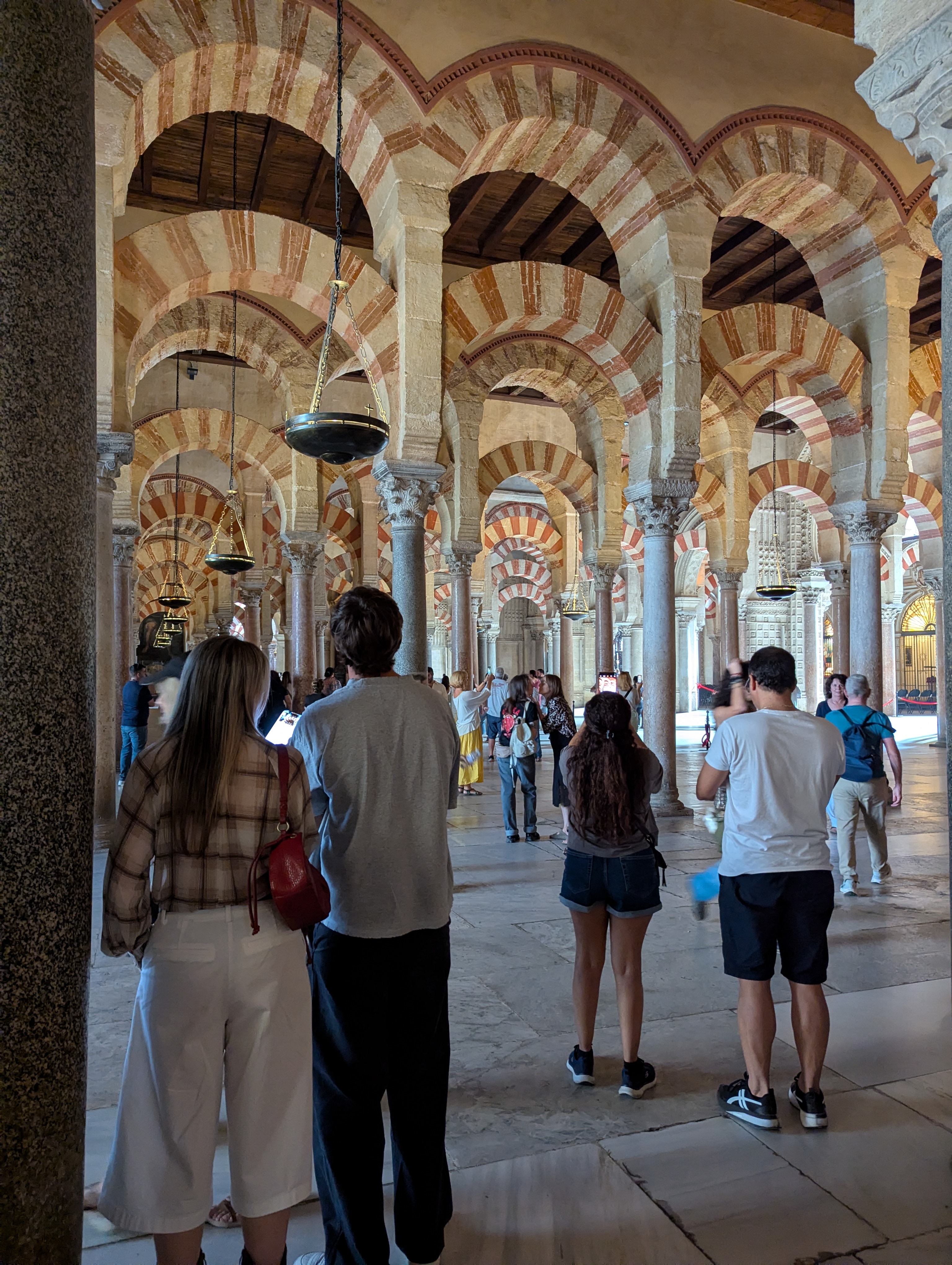
More arches than a McDonald’s convention!

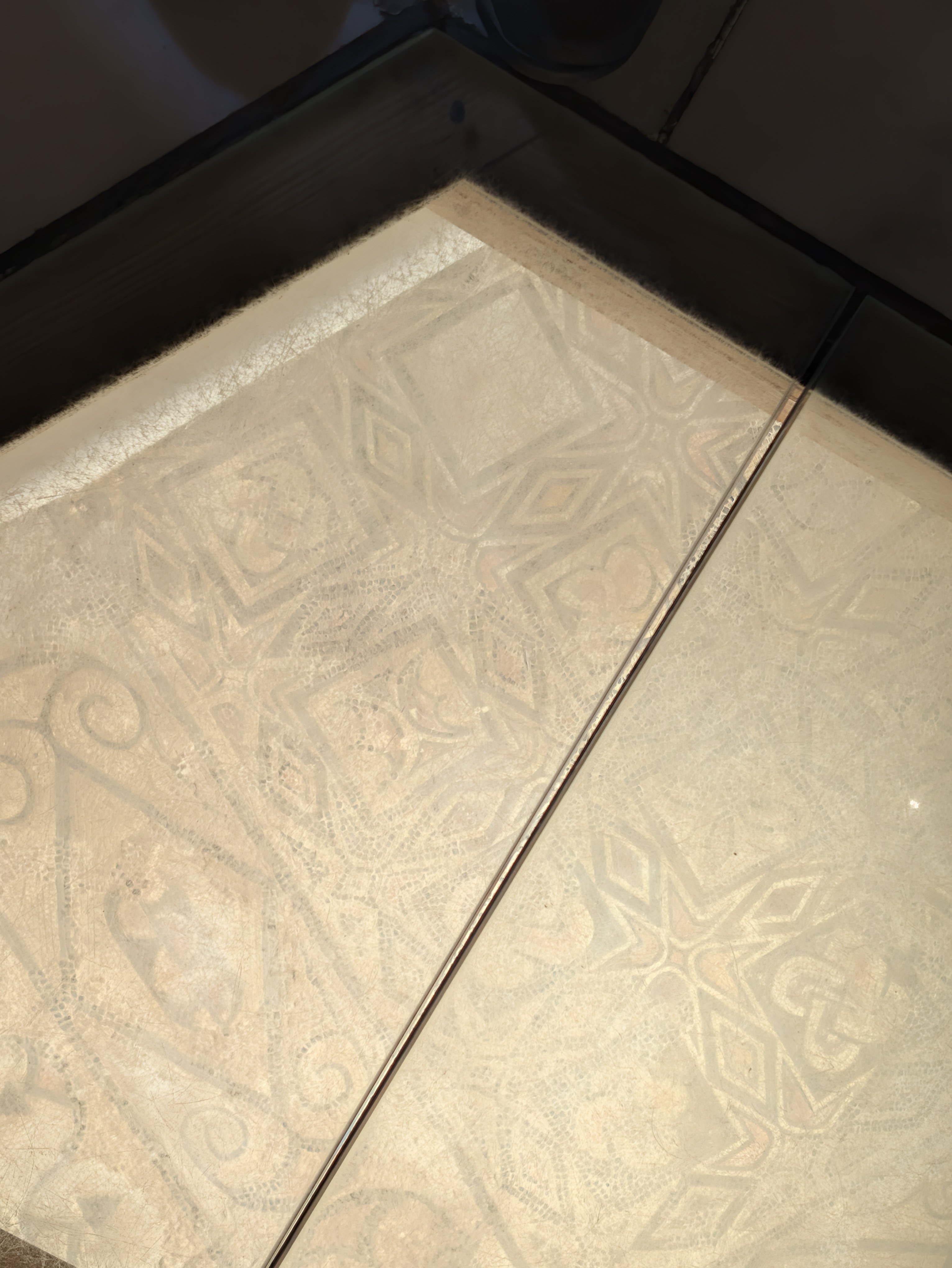
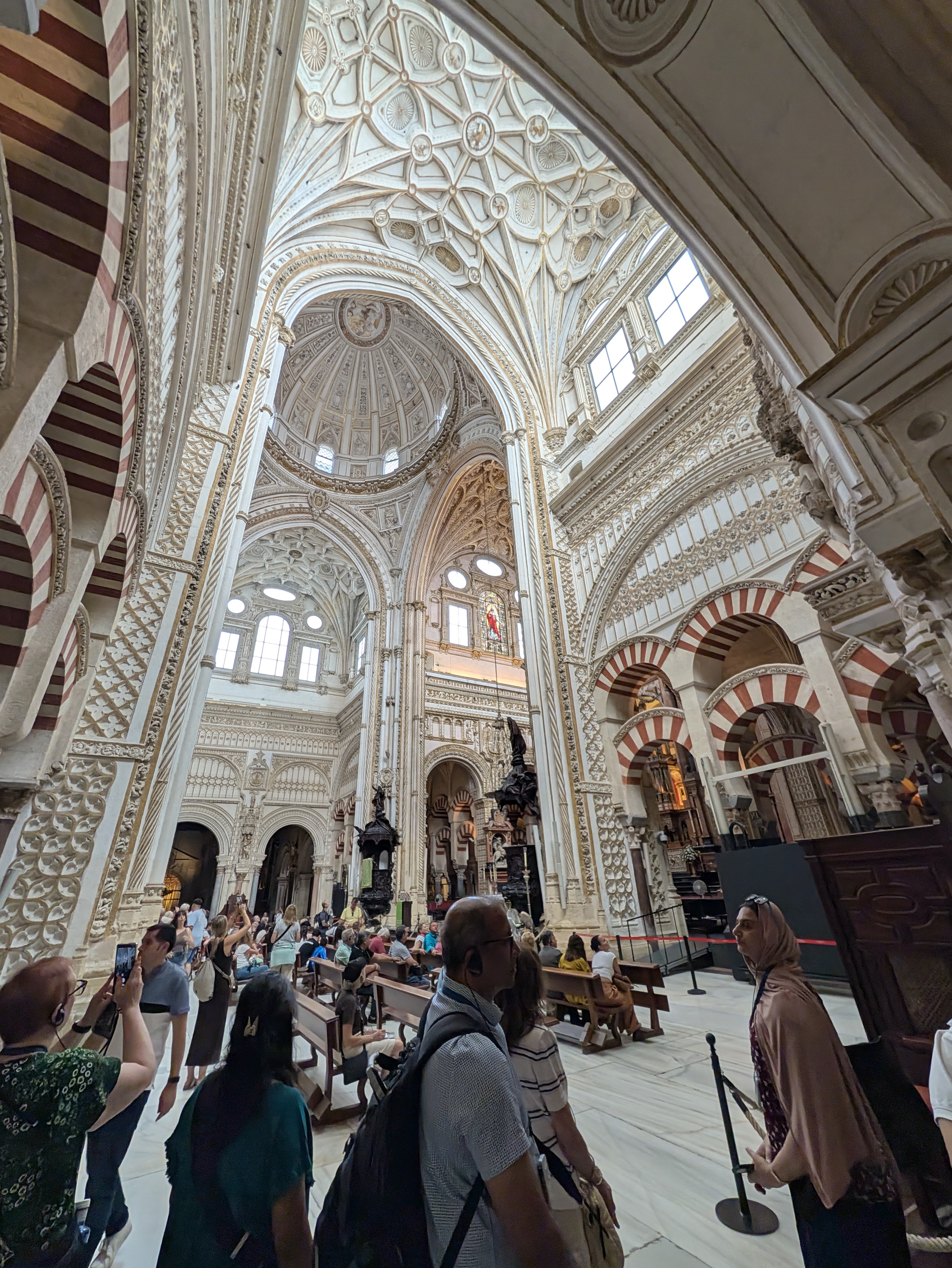
The site was initially a Catholic church, built by the Visigoths, before it became a mosque after the Muslim conquest. Not just any mosque, either, but a massive one (perhaps the largest in the world at the time). After the Christians retook the city in the middle ages, rather than destroy the mosque and build a cathedral, they built the cathedral right in the middle of the place.

Hard to see, but mosaics from the original Visigoth construction under the current floor.

So you go from views like this, with row upon row of arches and columns:

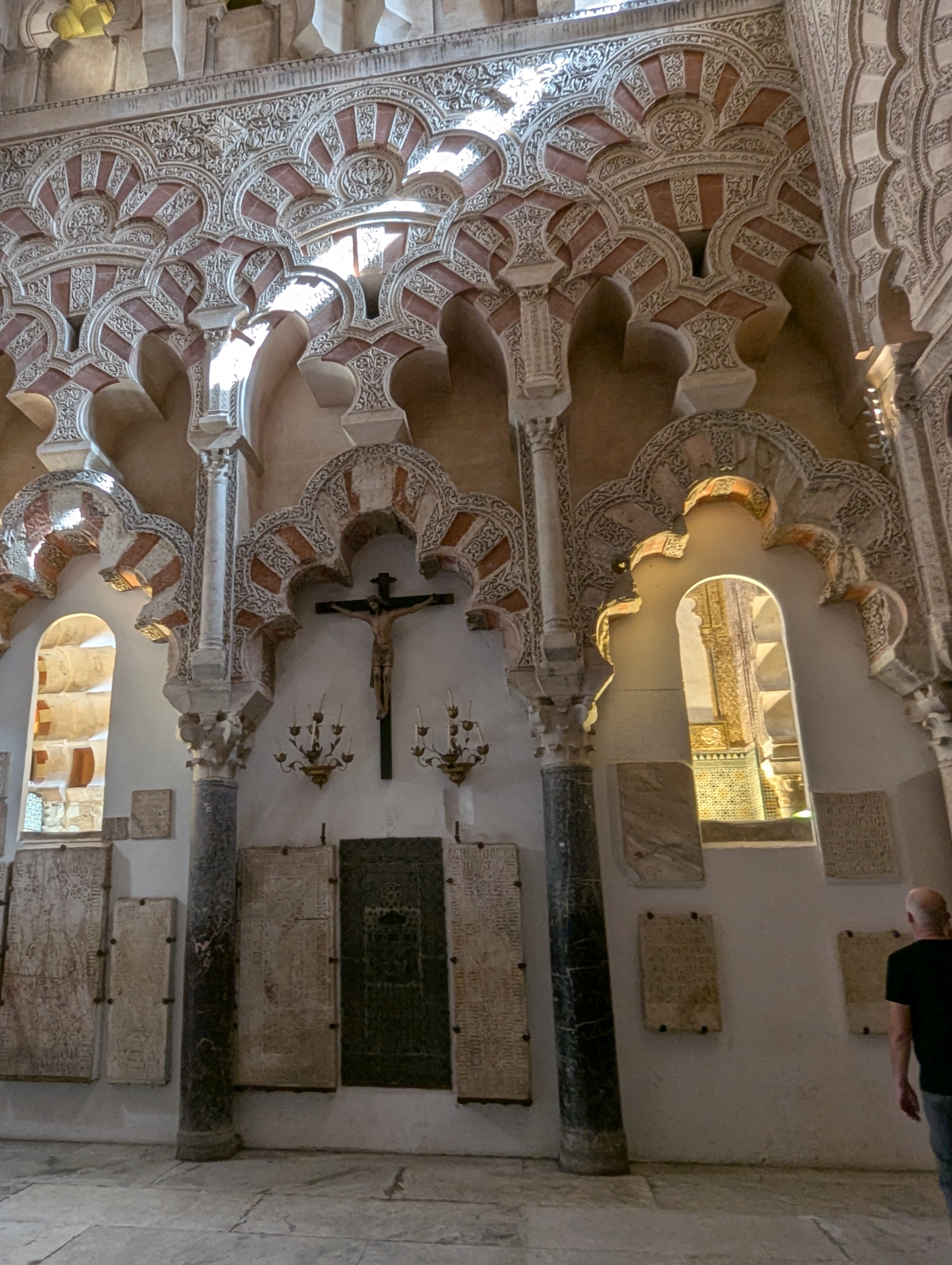
More arches.
Yup, that’s Jesus.

And then turn the corner and BOOM – cathedral:

Transition into the cathedral space.
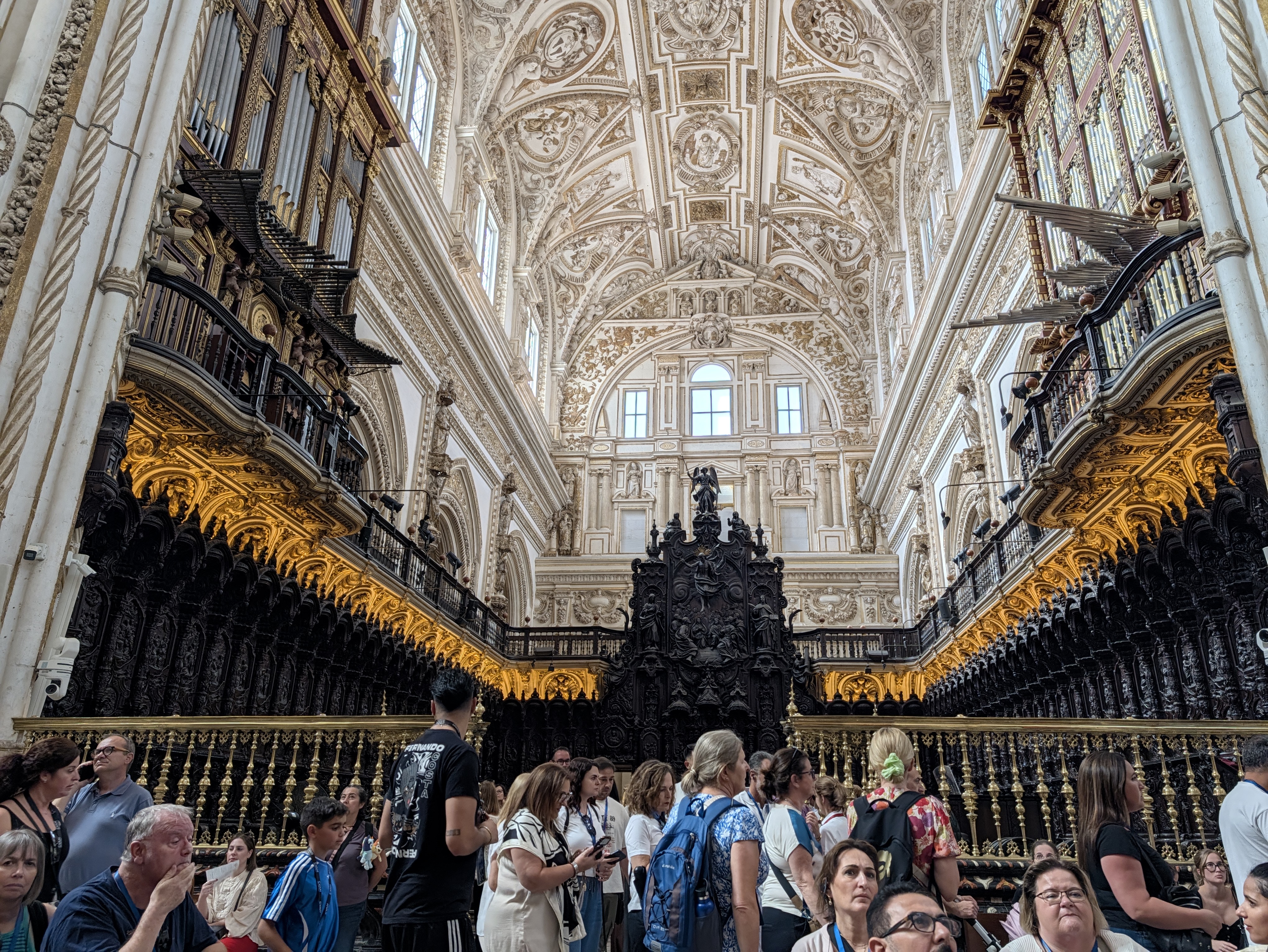
Choir stalls along with two massive organs.

It’s an amazing place and cell phone pictures hardly do it justice.

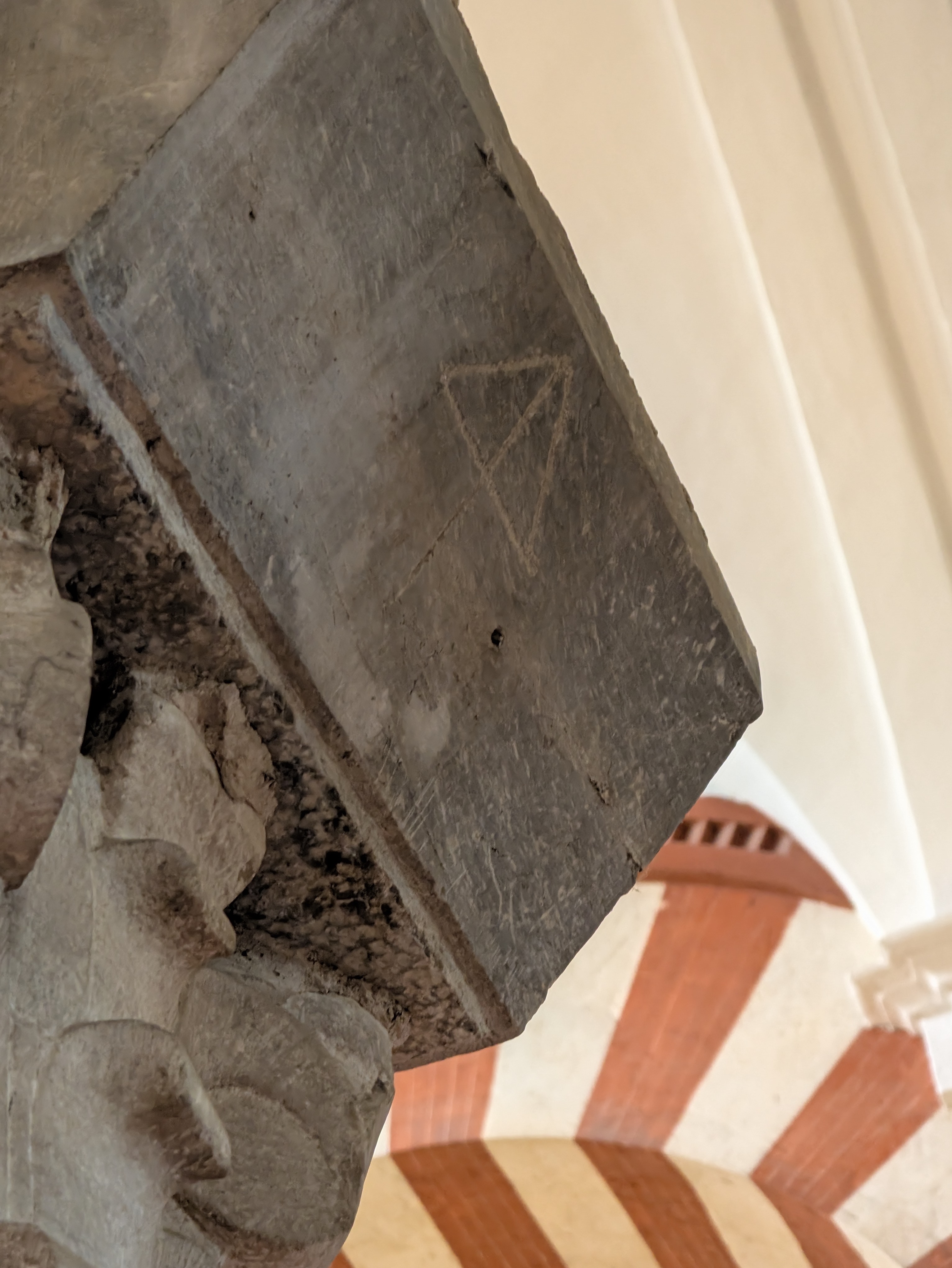
Stone-worker’s mark, “signing” his work hundreds of years ago.

We spent the rest of the day in the old town, popping in here and there.

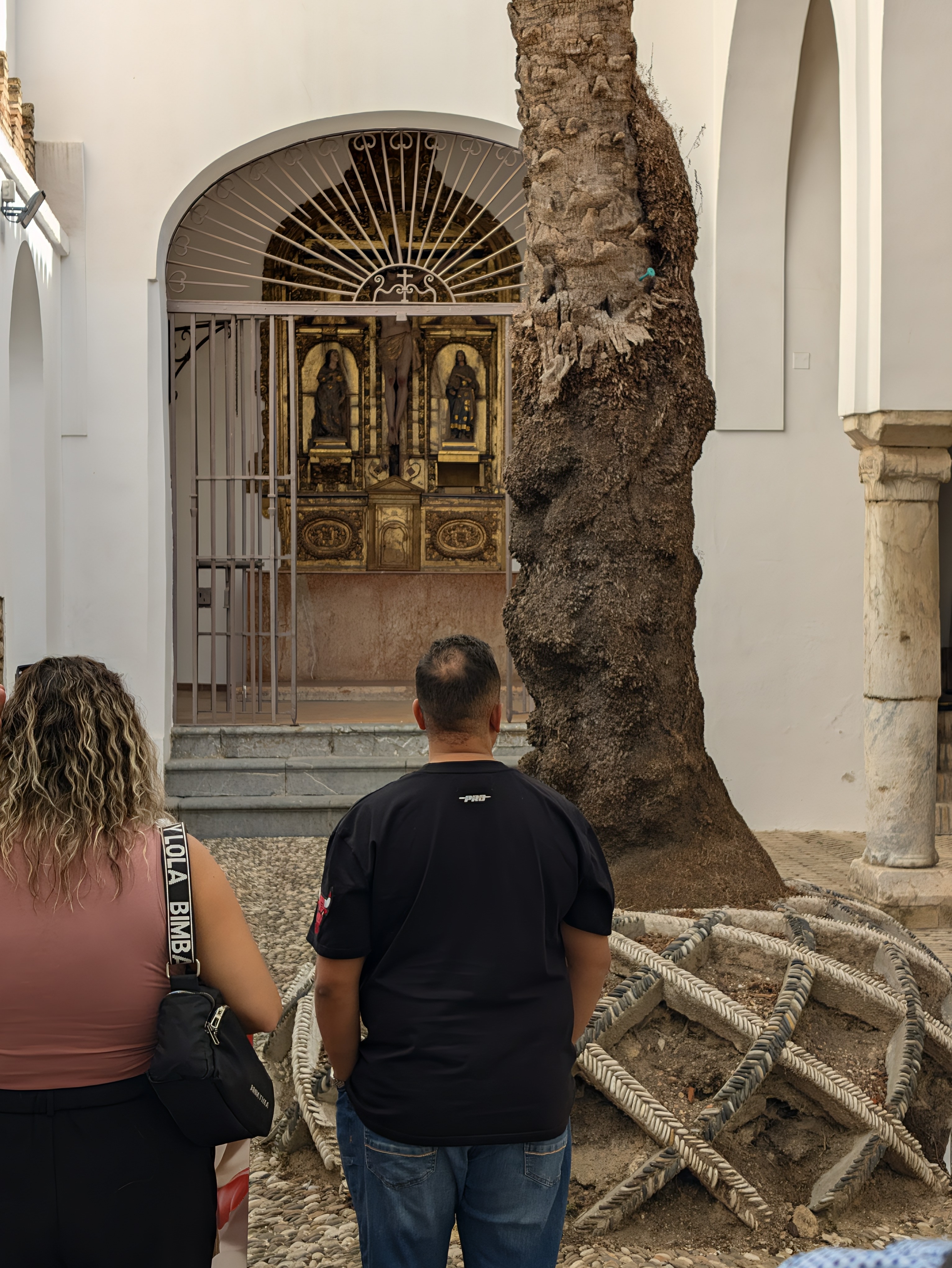
Church in the Jewish Quarter with a 300-year-old palm tree in the courtyard (growing through the roof).
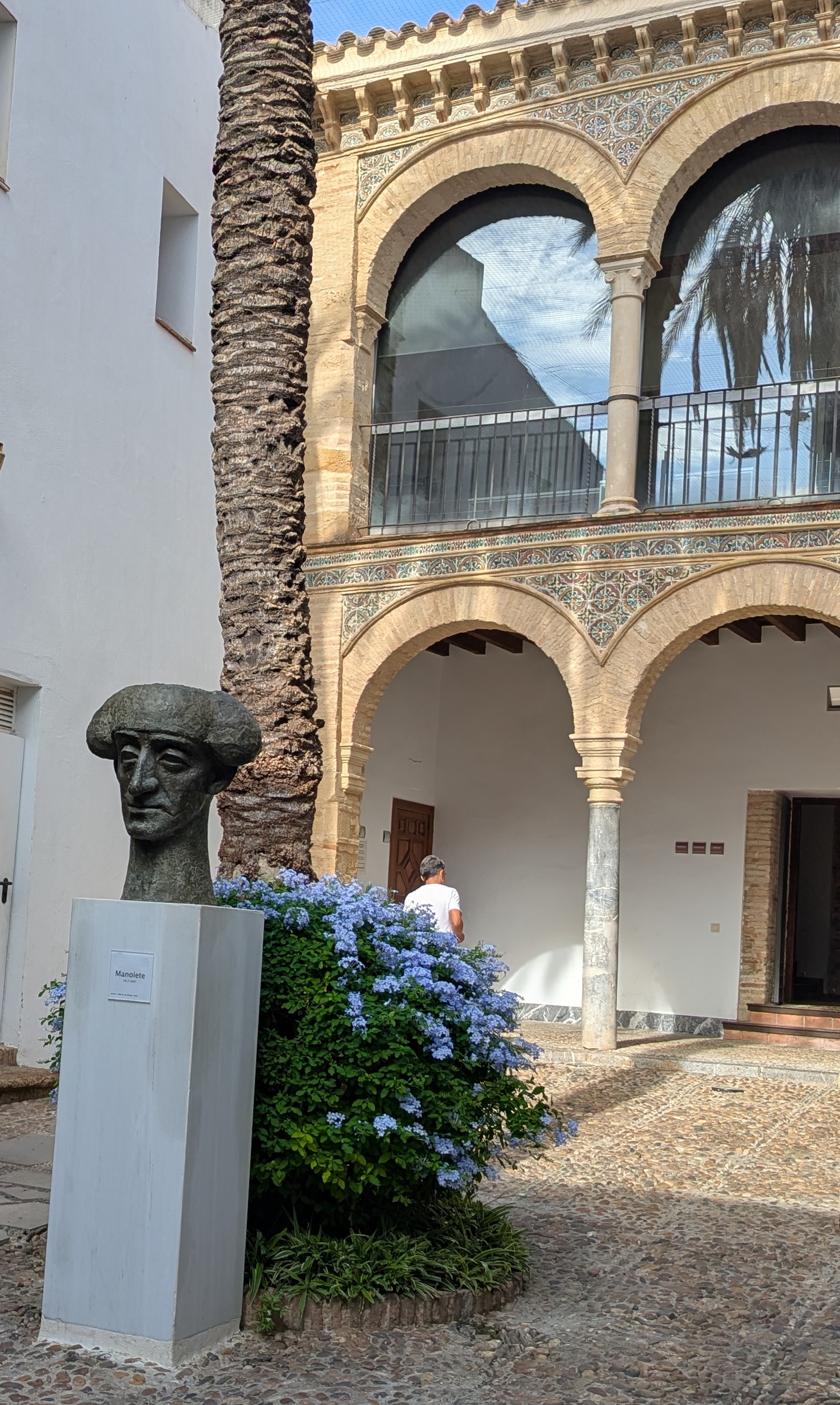
Bust of a matador famed for dying young in the bullring (so, a loser?).
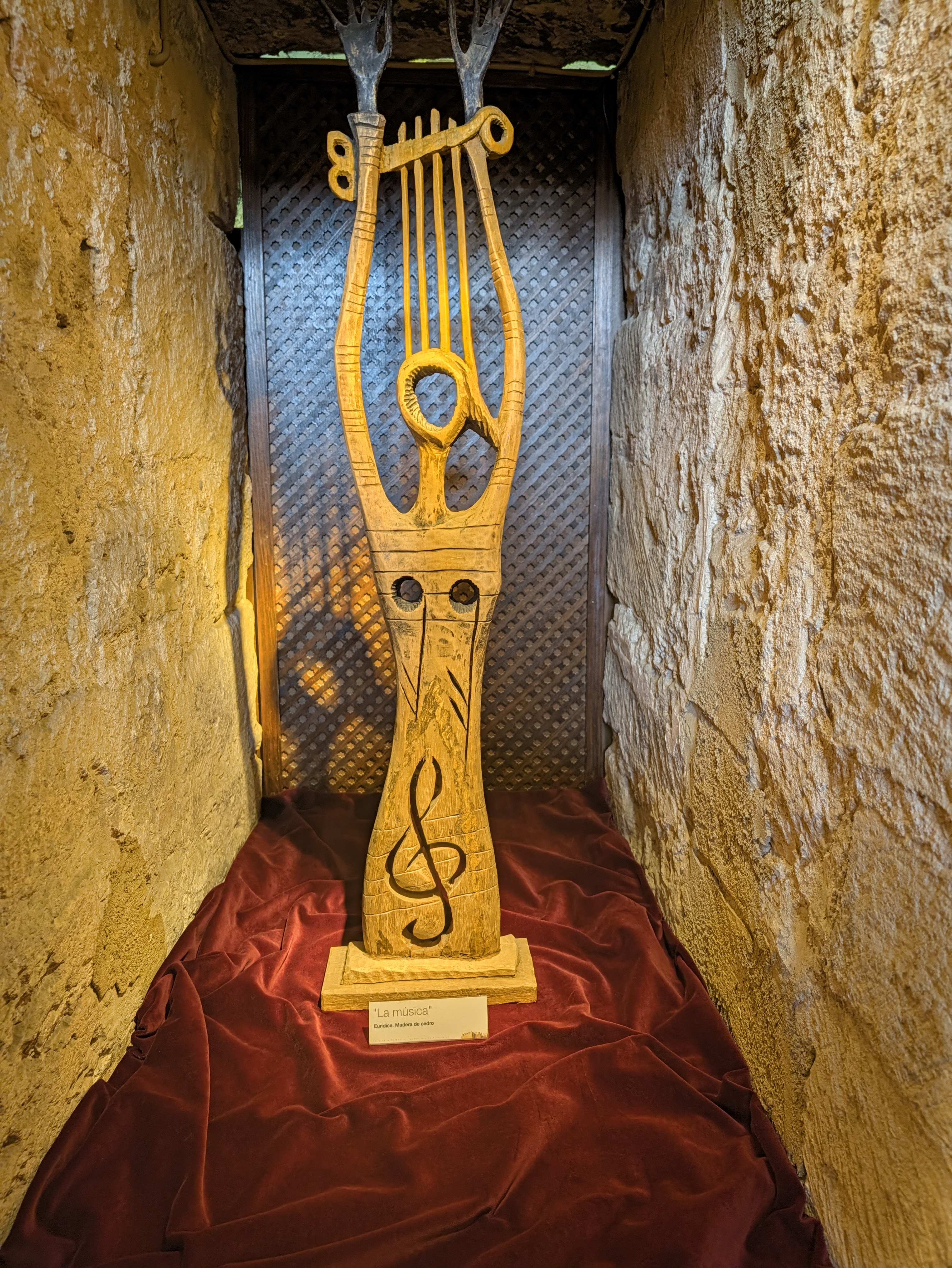
Art from inside Calahorra Tower.

With that, we were off to Seville . . ..

A few words about . . . food (and wine)

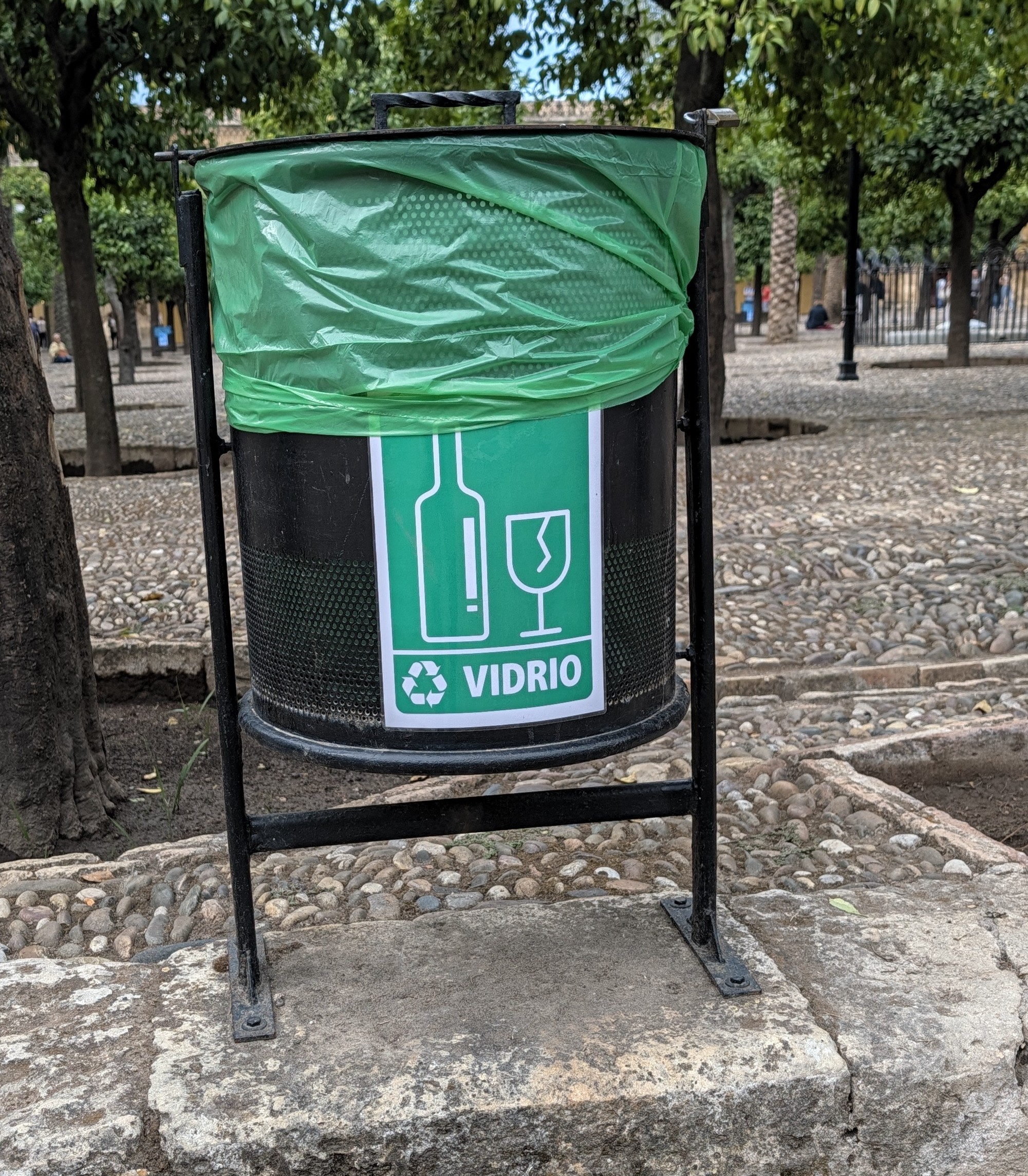
We ate well in Spain. For the most part we didn’t seek out particular places, instead catching meals at small tabernas where we could sit outside and enjoy the city passing by. Kelly fell in love with salmorejo, a very garlic-forward chilled tomato soup (I didn’t think you could have too much garlic – I was wrong!), while my find of the trip was carrilladas or braised pork cheeks (super tender with a wonderful, hearty sauce). We drank very well, too, of course, never had a bad glass of wine (of which there were plenty). I was surprised how wine-focused the place was, to the point where there didn’t appear to be a lot of cocktails and you have the need for wine-bottle-specific trash cans outside a thousand-year old holy site!

Just the wine, now.

Take it away . . . Miles

Miles Davis did an album called Sketches of Spain that’s more orchestral and almost ambient in spots than other stuff I’ve heard of his. The big part of side one is a take on the Adagio movement of Joaquín Rodrigo’s Concecierto de Aranjuez, of which we’ll hear more later.