Last month my wife, Kelly, and I embarked on the “Two Weeks in Spain” so famed in song. It was a wonderful trip and impossible to convey all we were able to do and see, but over the next few posts I wanted to share a little bit of what made the journey so special. Each post has musical accompaniment, so press “play” at the bottom and enjoy.
Departure
Naturally, I had to check in with Señor Foot on the way out of town, at our local “international” airport.
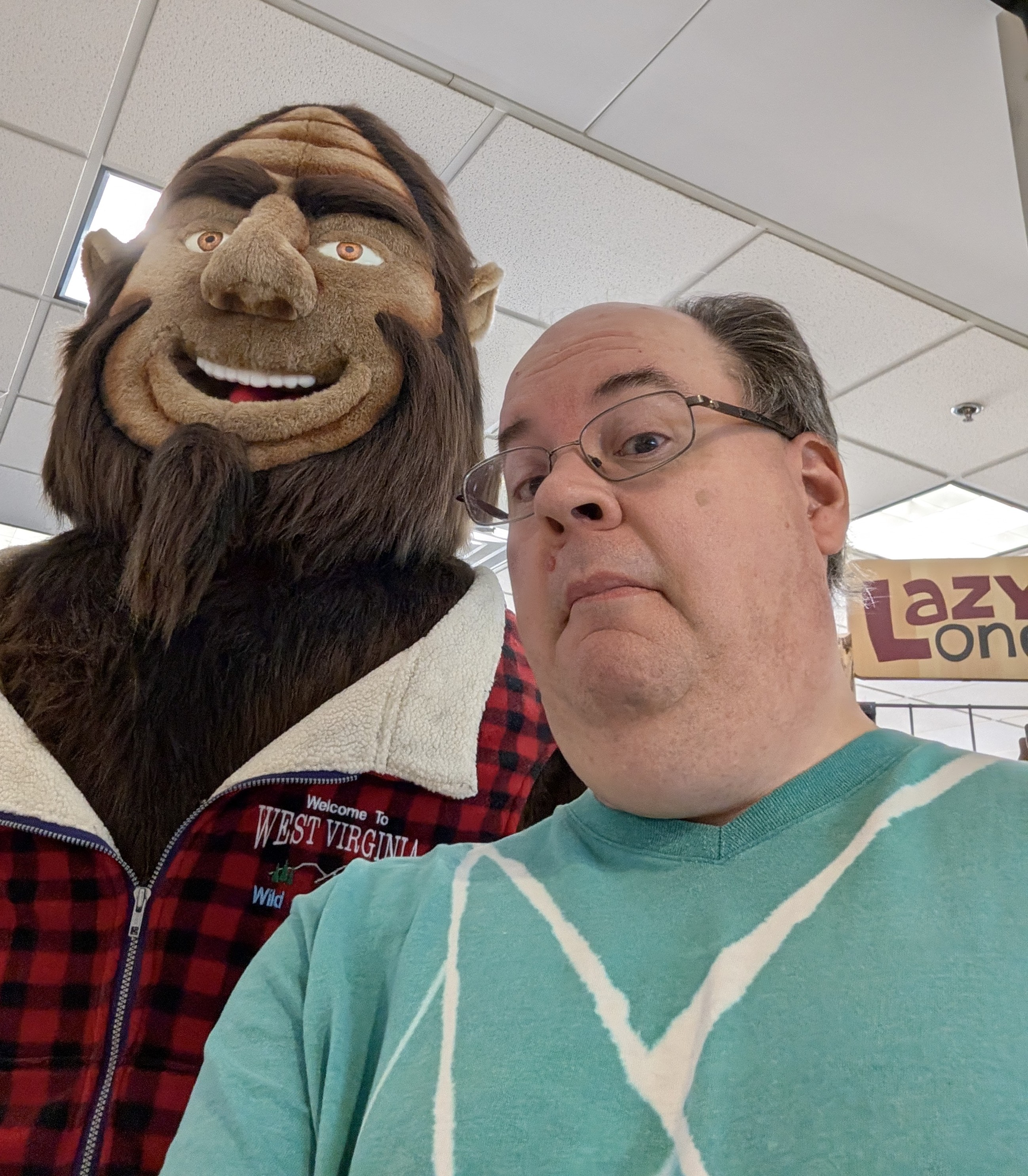
The flights were, thankfully, uneventful and resulted in only a minor amount of panic from me (I’m not a good flyer).
Madrid
Our first stop was Madrid, where we would stay for a couple of nights before heading off into Andalusia, where we spent the bulk of our days. We landed around noon local time, which felt much later due to jet lag. Instead of falling into bed, we decided to push on through dinnertime and try to adapt to the time change.
Our hotel was right downtown, near a busy traffic circle and a park frequently used for protests. There was a McDonald’s on the corner (although Burger King seemed more prevalent overall), but we bypassed a taste of home and headed for the Plaza Mayor.
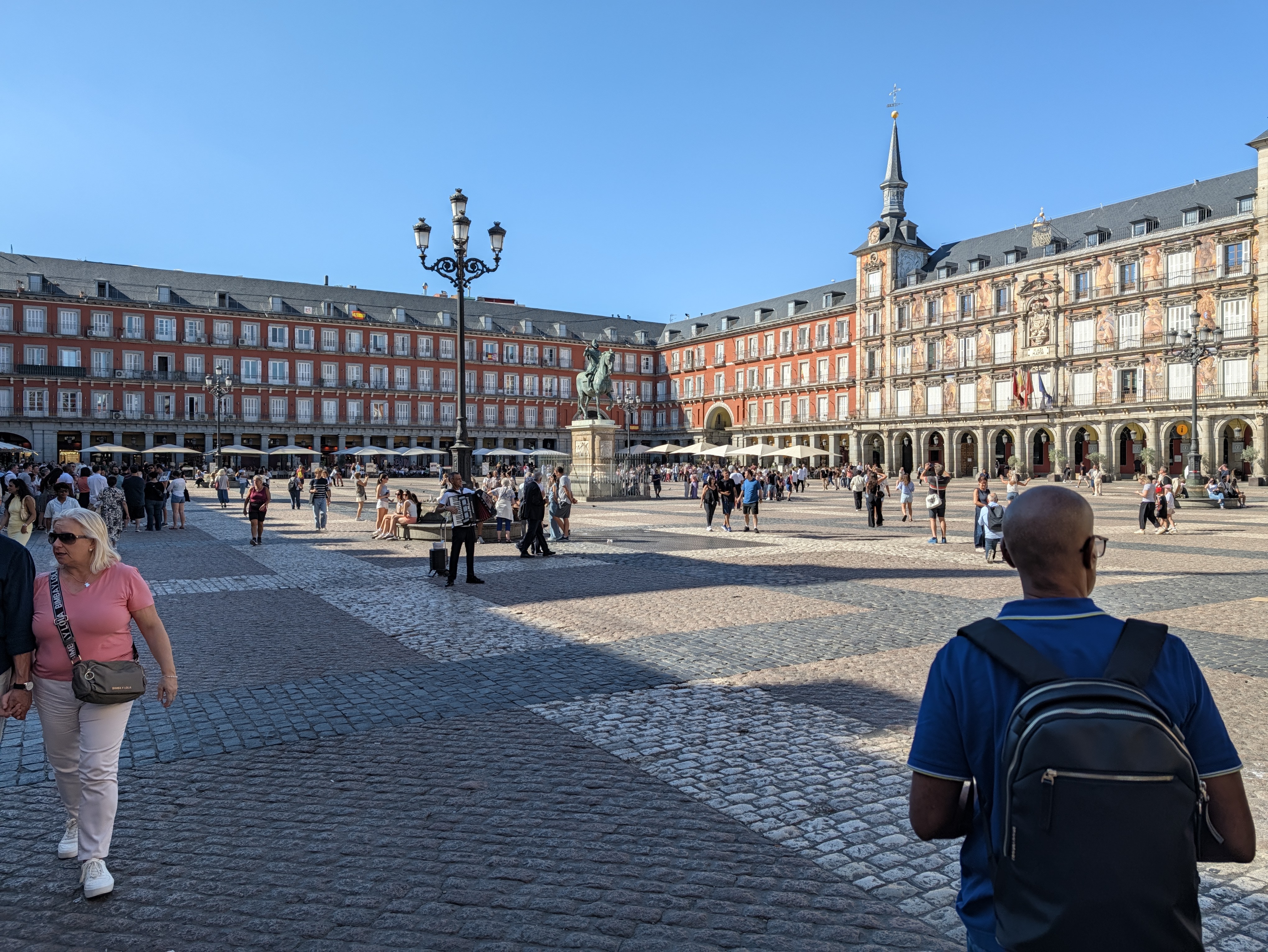
The plaza is ringed by restaurants and tourist trap shops, but Kelly had a different destination in mind. We walked through the square, down a set of stairs and an alley, and had our first experience with Spanish cuisine – churros con chocolate!
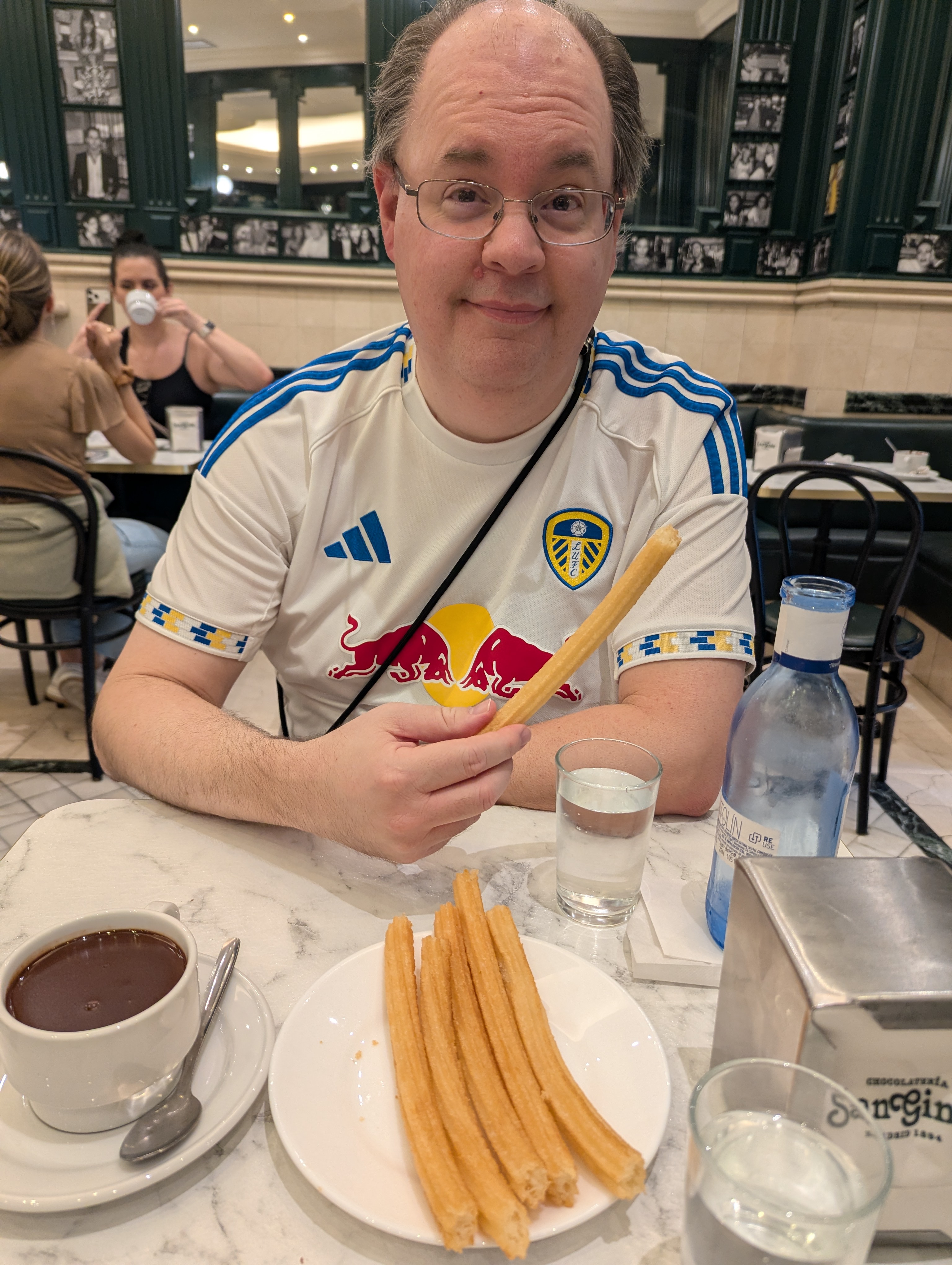
The place, San Gines, struck me as the Spanish version of Cafe du Monde in New Orleans – they basically do one thing, but they do it very well. That thing is fresh, crispy churros (no cinnamon, like we get here), served with a cup of drinking chocolate (think hot chocolate that aspires to be mousse). The chocolate clings onto the churros when dipped and makes an irresistible combination.
On our way back to the square, I was heckled! I was wearing my Leeds jersey, not knowing that Manchester United had been in Madrid the night before getting beaten by Atletico in the Champions League. A grieving Mancunian saw my jersey and called me out (among other things, as “Yorkshire scum”!), but I just laughed it off.
It was a little harder to laugh off what we found at the Plaza de Sol.
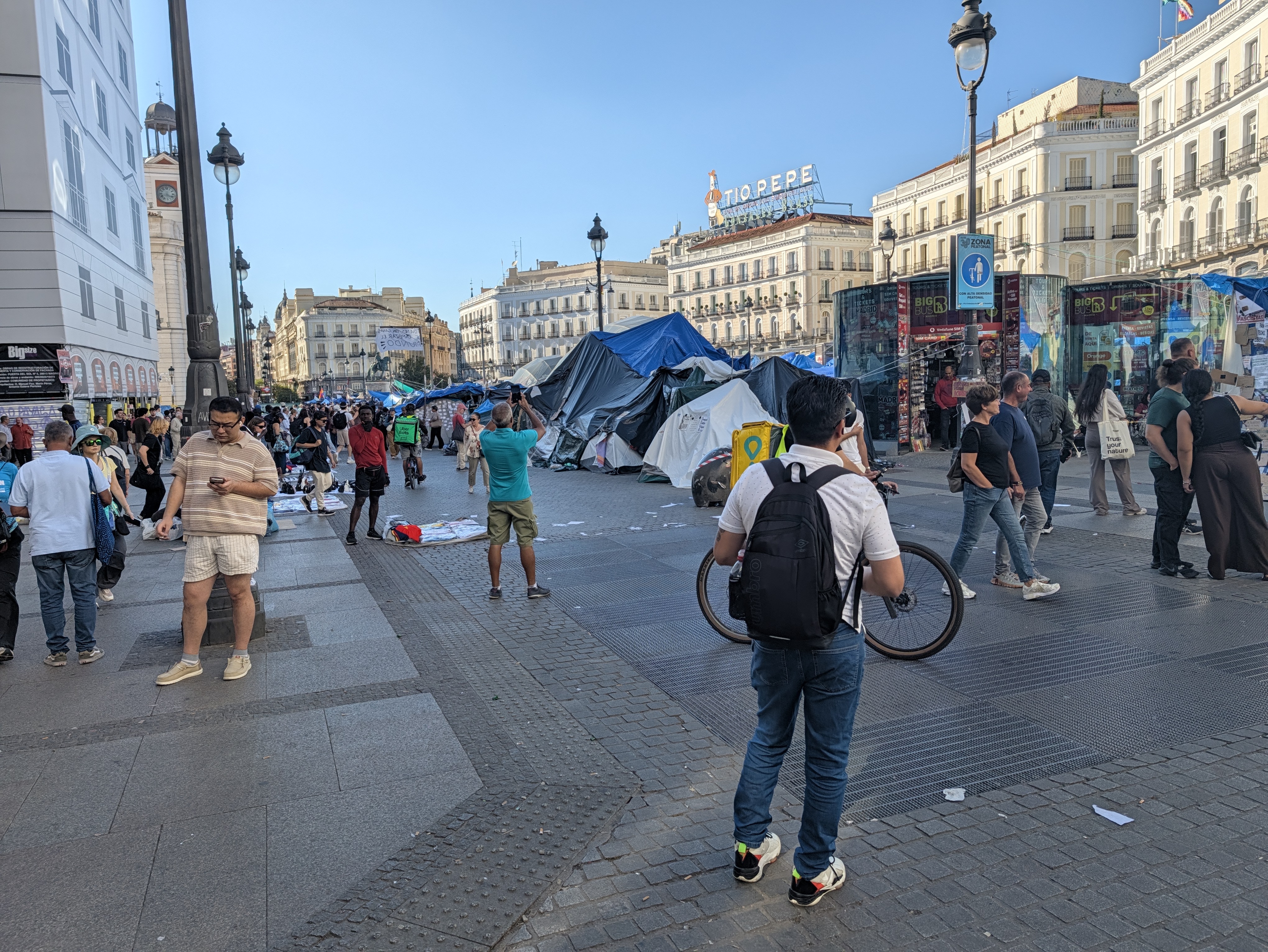
A long-term protest camp had been erected there. The prime motivation is the housing affordability crisis in Spain (it’s led to the prime minister calling for a new election), but has embraced a hodge podge of grievances, one of which was, well, us – someone had spray painted “tourists go home!” on the plinth of a monument. Graffiti aside, nobody said or did anything to us as we took in the scene. Heck of a way to orient to your surroundings, though.
For our only full day in Madrid our focus was on art. Our hotel was just down the street from the Prado, which is where we spent a good chunk of our day.
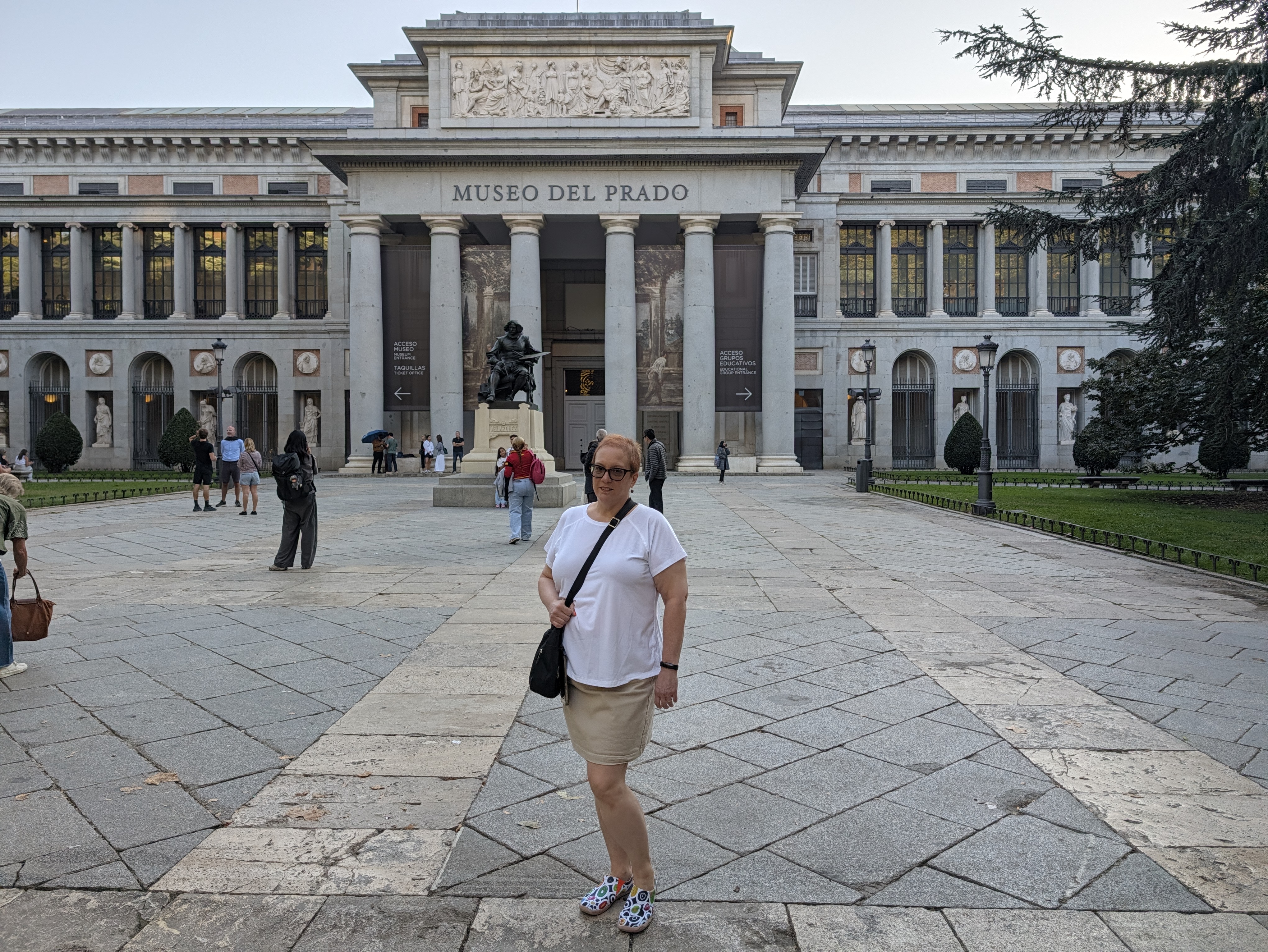
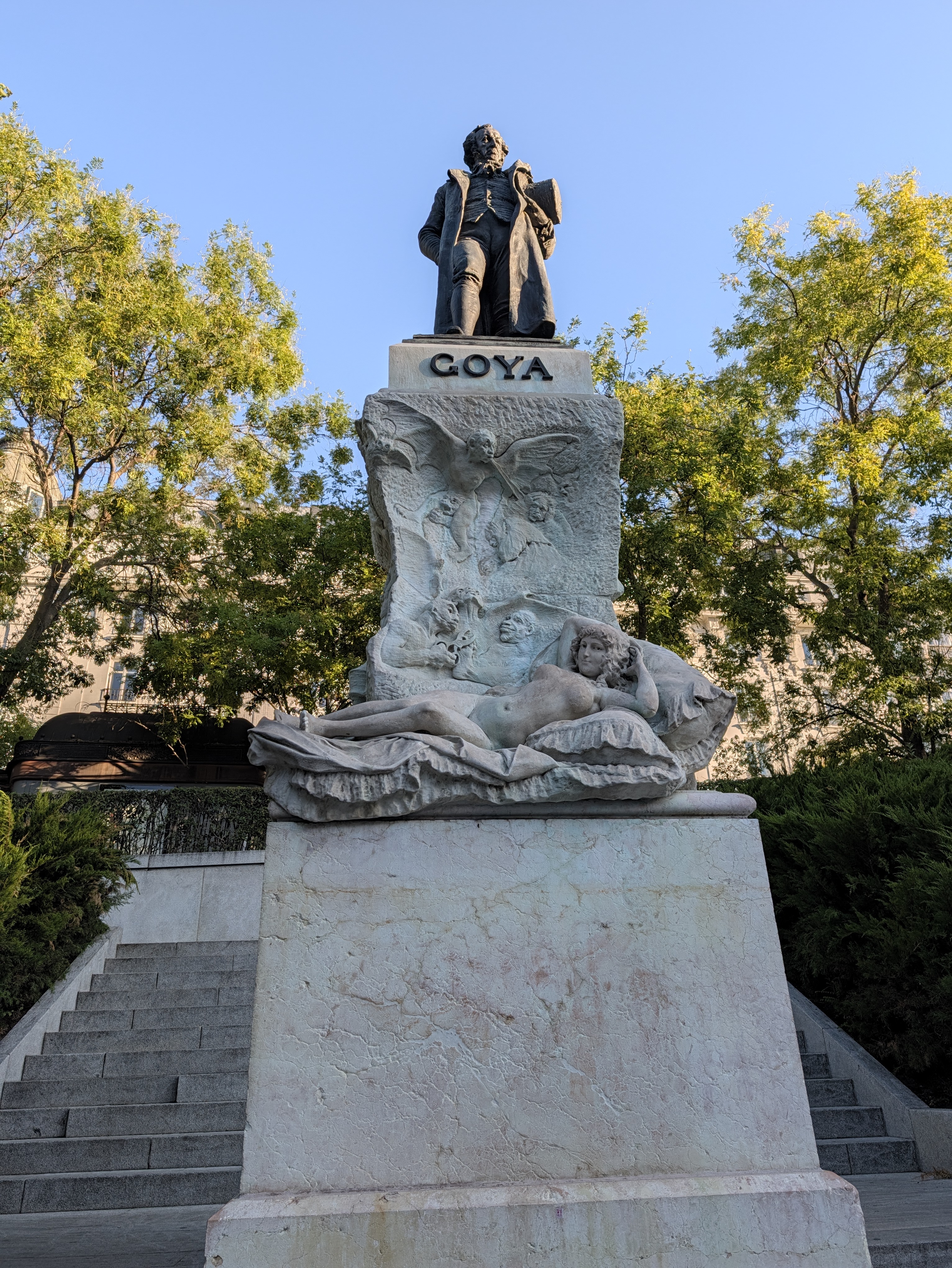
The Prado is, of course, full of amazing art (none of which you can take pictures of, unfortunately). It’s collection is fairly narrow, though, focusing largely on Spanish artists from a few-century slice of time. Lots of portraits of dead rich people and more saints and crucifixions than you can shake a stick at.
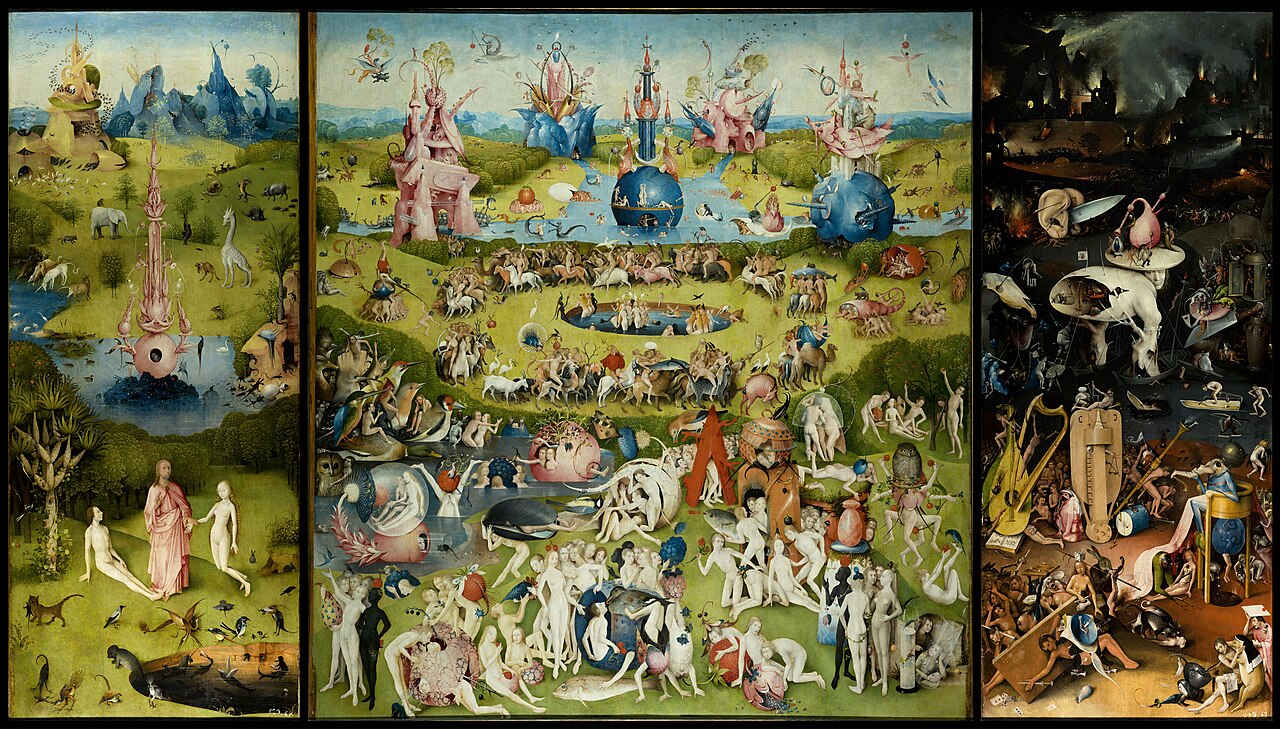
My two favorite chunks involved more disturbing images. The Prado has a large collection of works by Hieronymus Bosch, who specialized in surreal religious imagery. This includes his famous tryptic, The Garden of Earthly Delights:
I particularly liked this owl, who’s face is just like “what the hell have I gotten myself into?”
The Seven Deadly Sins and the Four Last Things is pretty striking, too:

The other collection that really struck me are the so-called “Black Paintings” by Goya. They were painted on the walls of his home later in his life and, perhaps, were never intended to be shown to the public. As the name suggests they’re dark and you can feel creeping mortality clinging to them. The most famous of them:
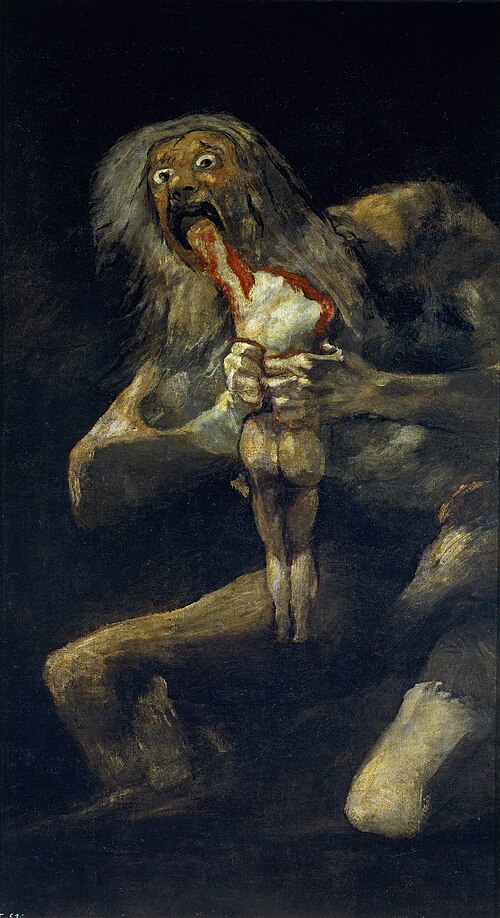
The Black Paintings inspired some musical ideas and a story idea, too, so I suspect I’ll return to them over and over in the future.
That evening our focus turned more modern, as we spent some time at the Reina Sofia, which is dedicated to more modern art. It’s full of neat stuff by Picasso, Dali, Miro and others – precisely the stuff I love but that Kelly will roll her eyes at frequently. And they let you take pictures!
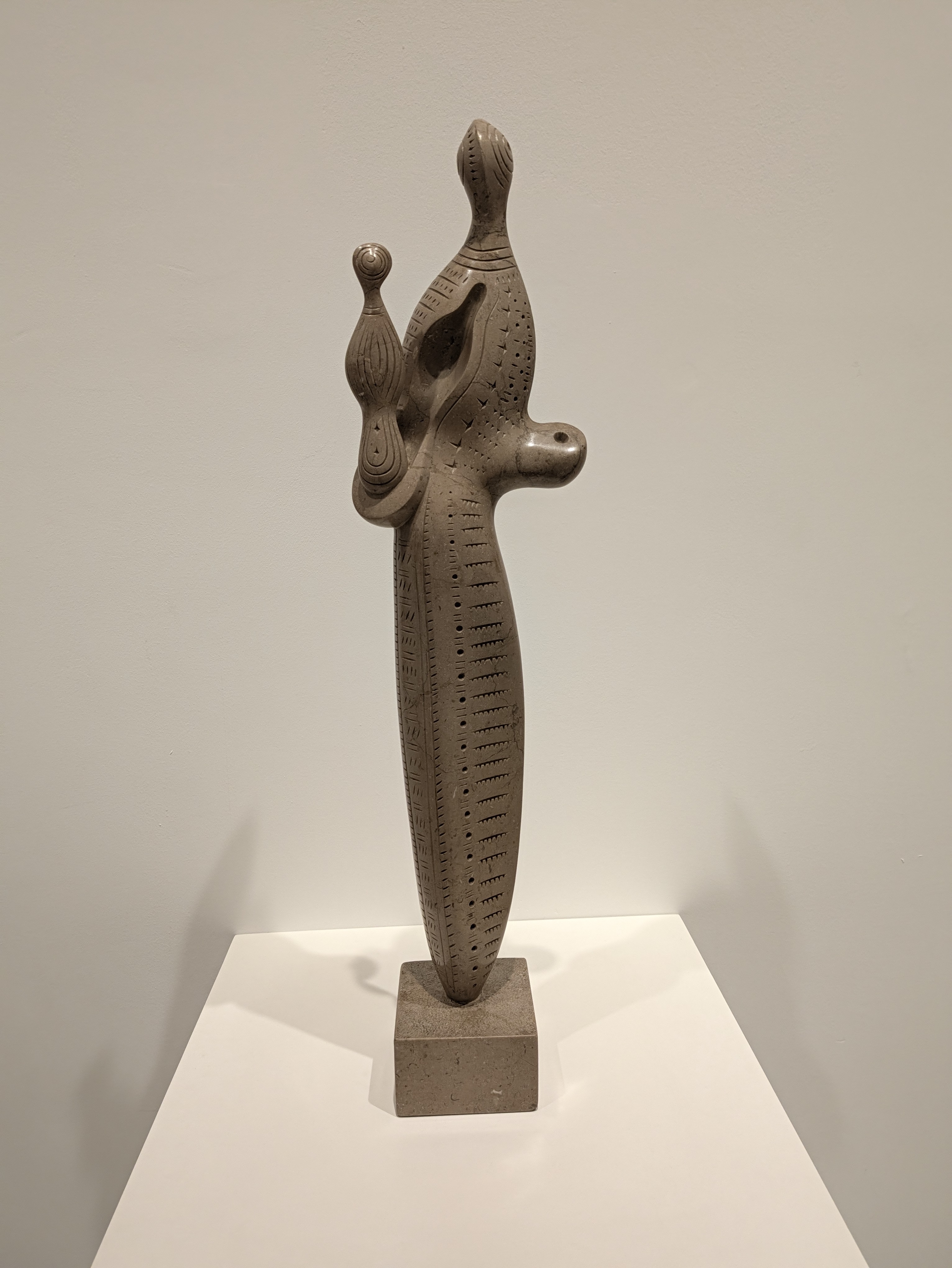
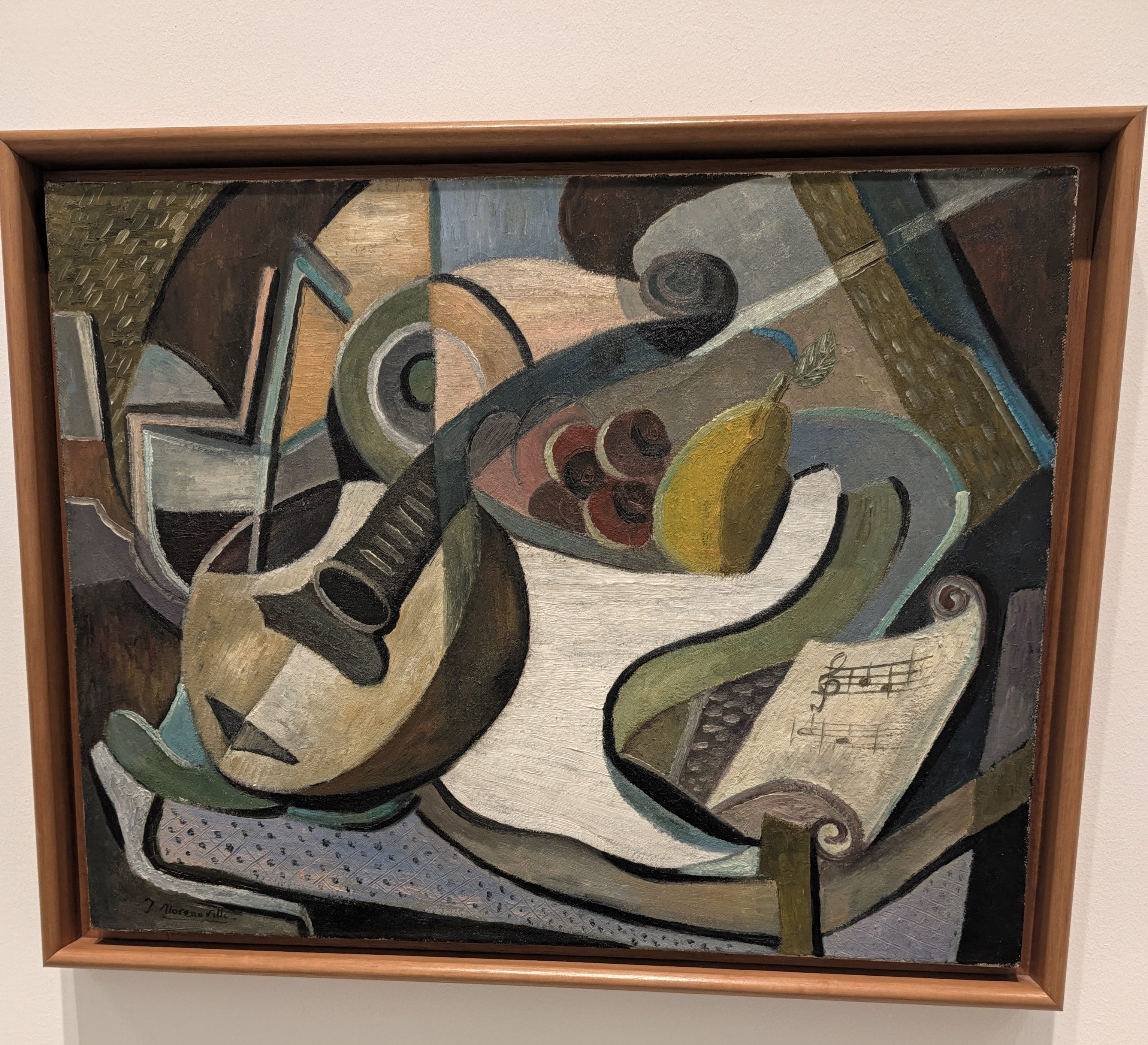
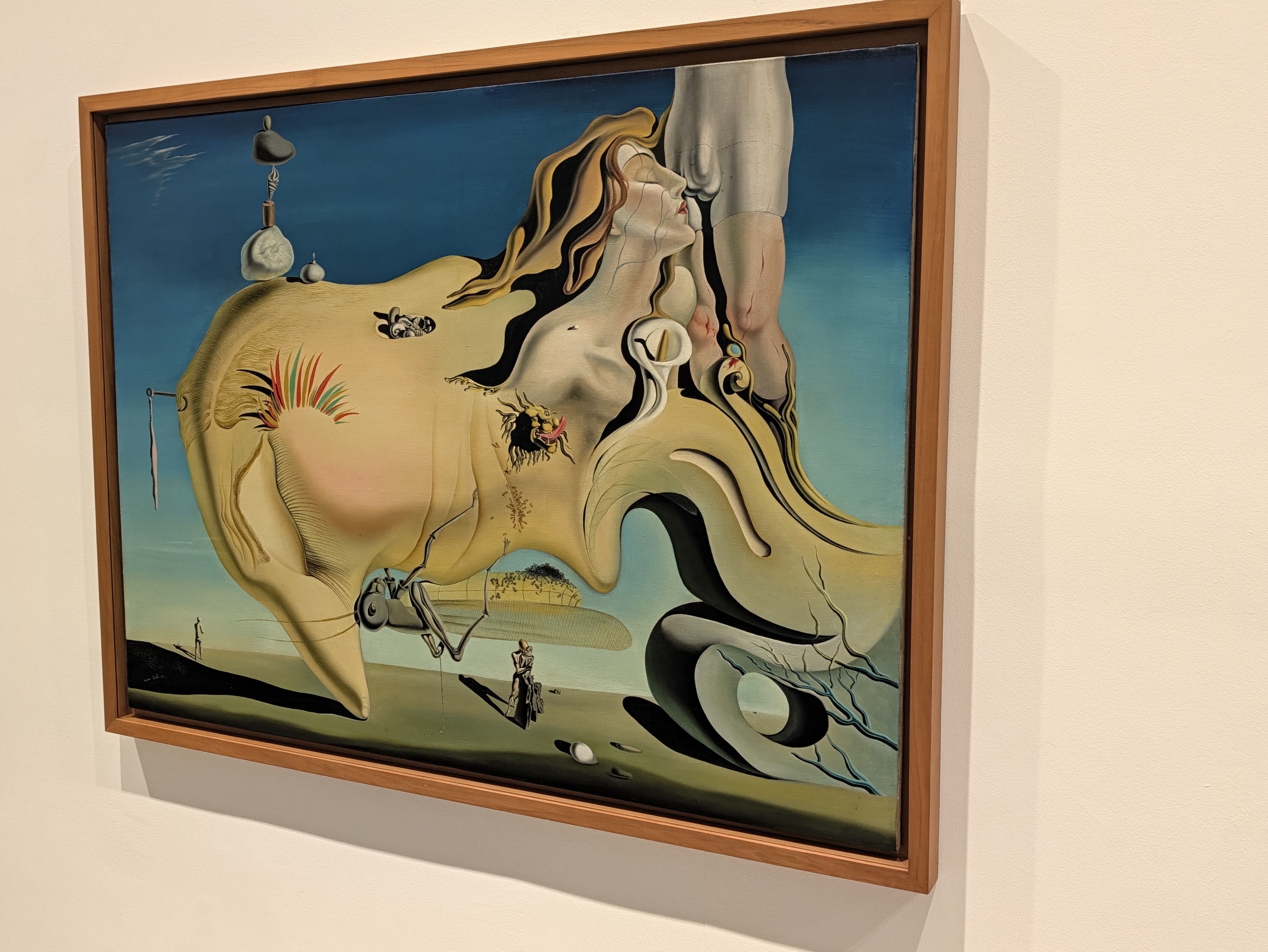
The centerpiece of the collections is Picasso’s sprawling mural, Guernica.
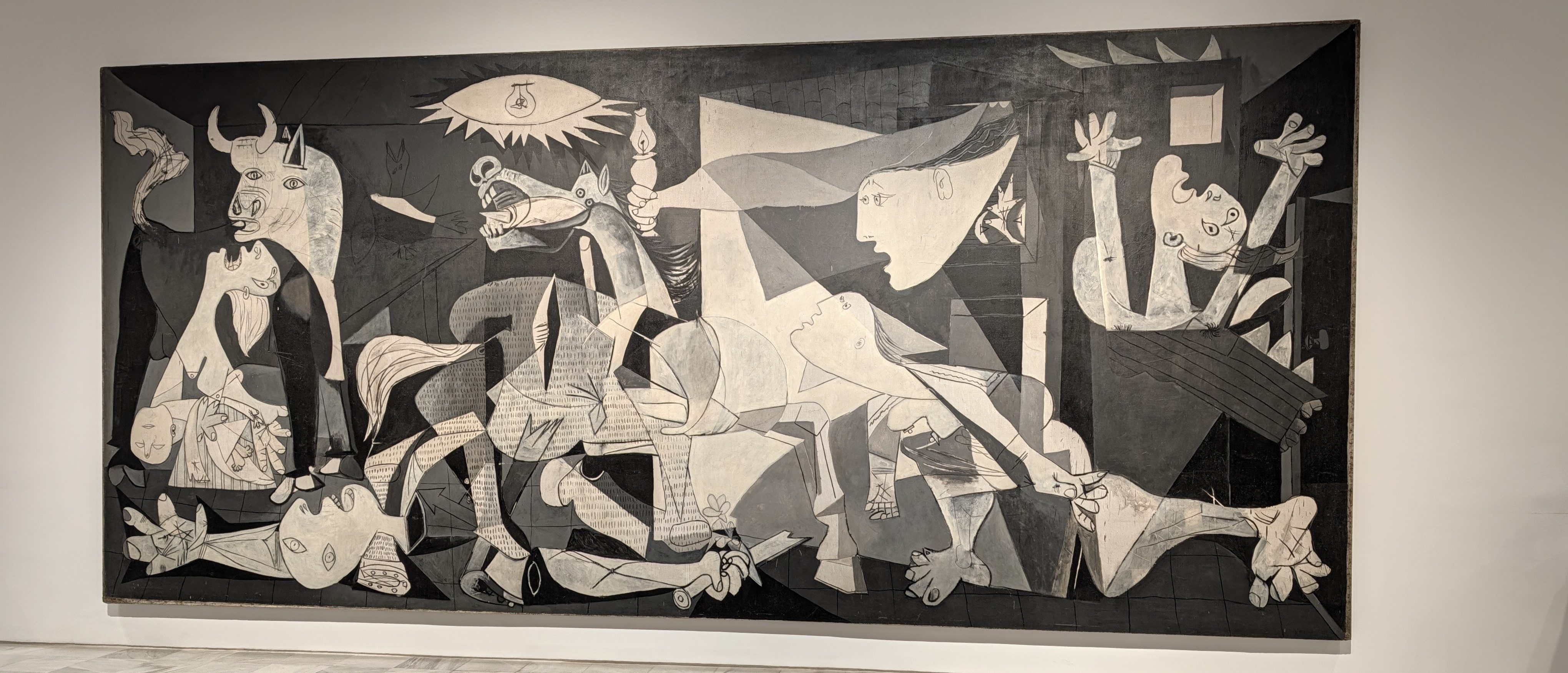
It’s even more impactful in person, the black/grey/white palate evocative of the newspaper photographs that first brought the atrocity to the world’s attention.
Cordoba
The next morning we hopped a train to our first Andalusian destination – Cordoba.
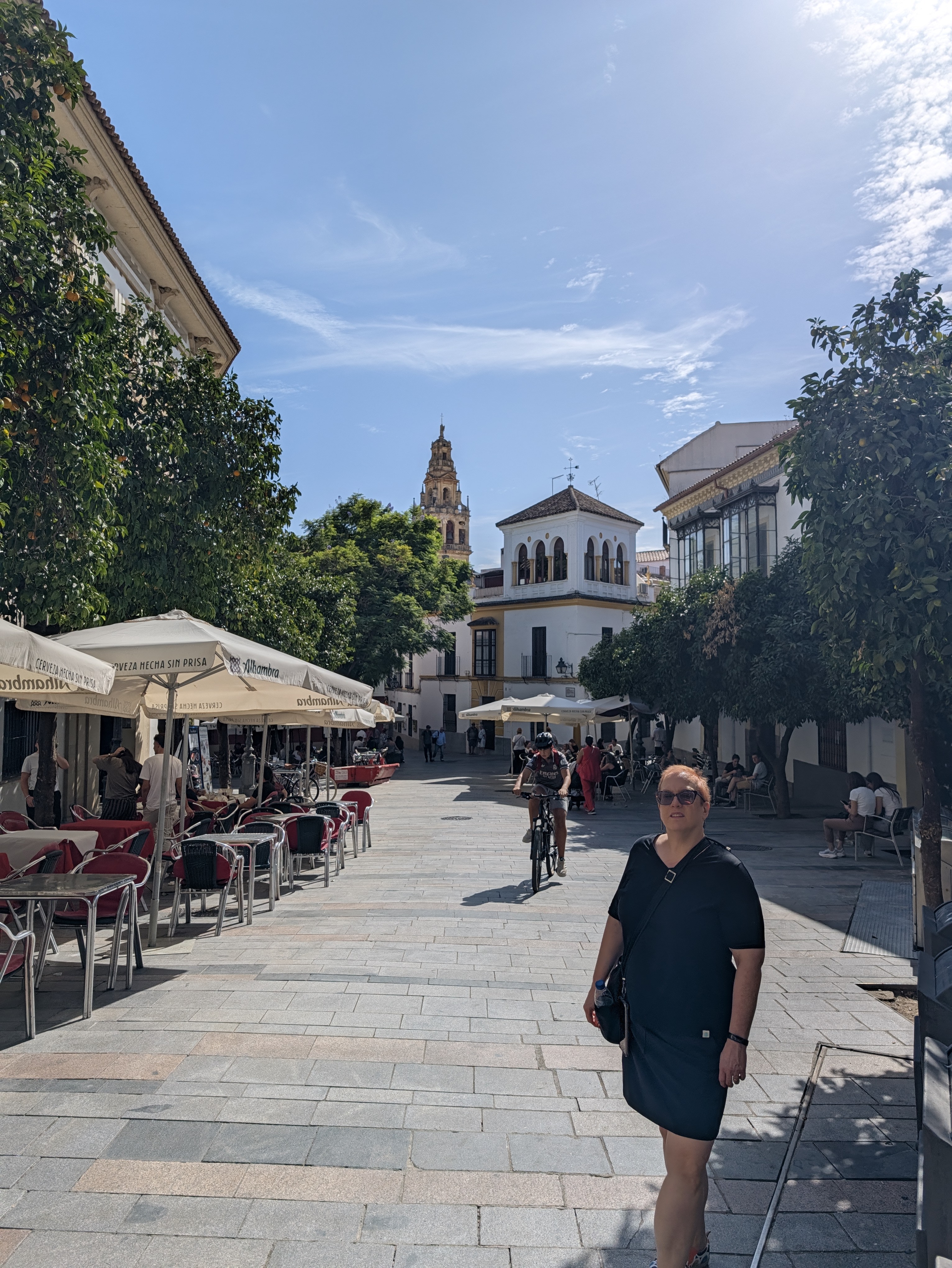
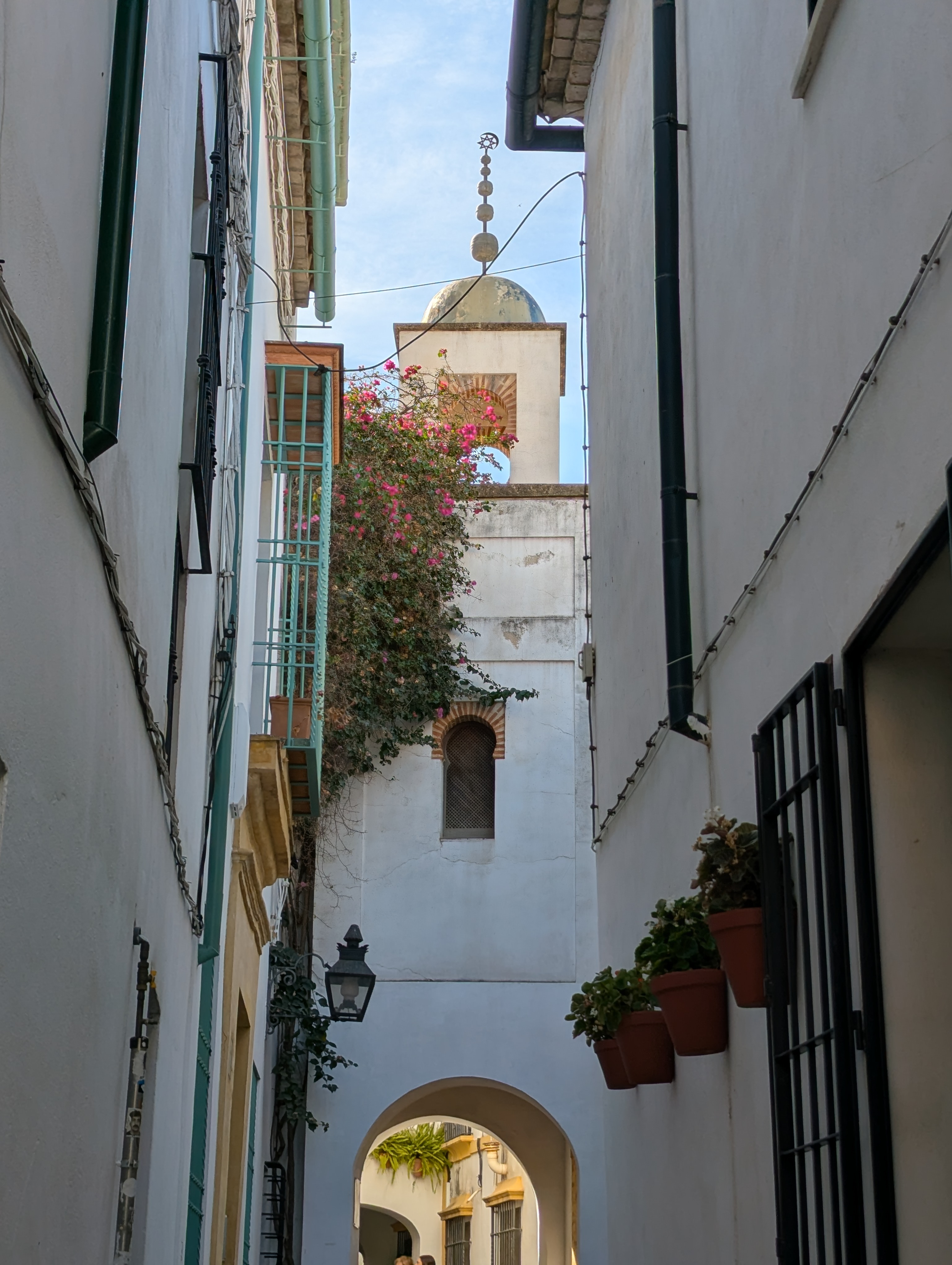
In a way, Cordoba set the template for the rest of our journey. It’s a city with ancient roots, defined by layers of overlapping cultures (Romans, Visigoths, Muslims, Christians) that produce a particular vibe in terms of what the place looks and smells like. It was also our first experience of the really narrow streets in the old town!
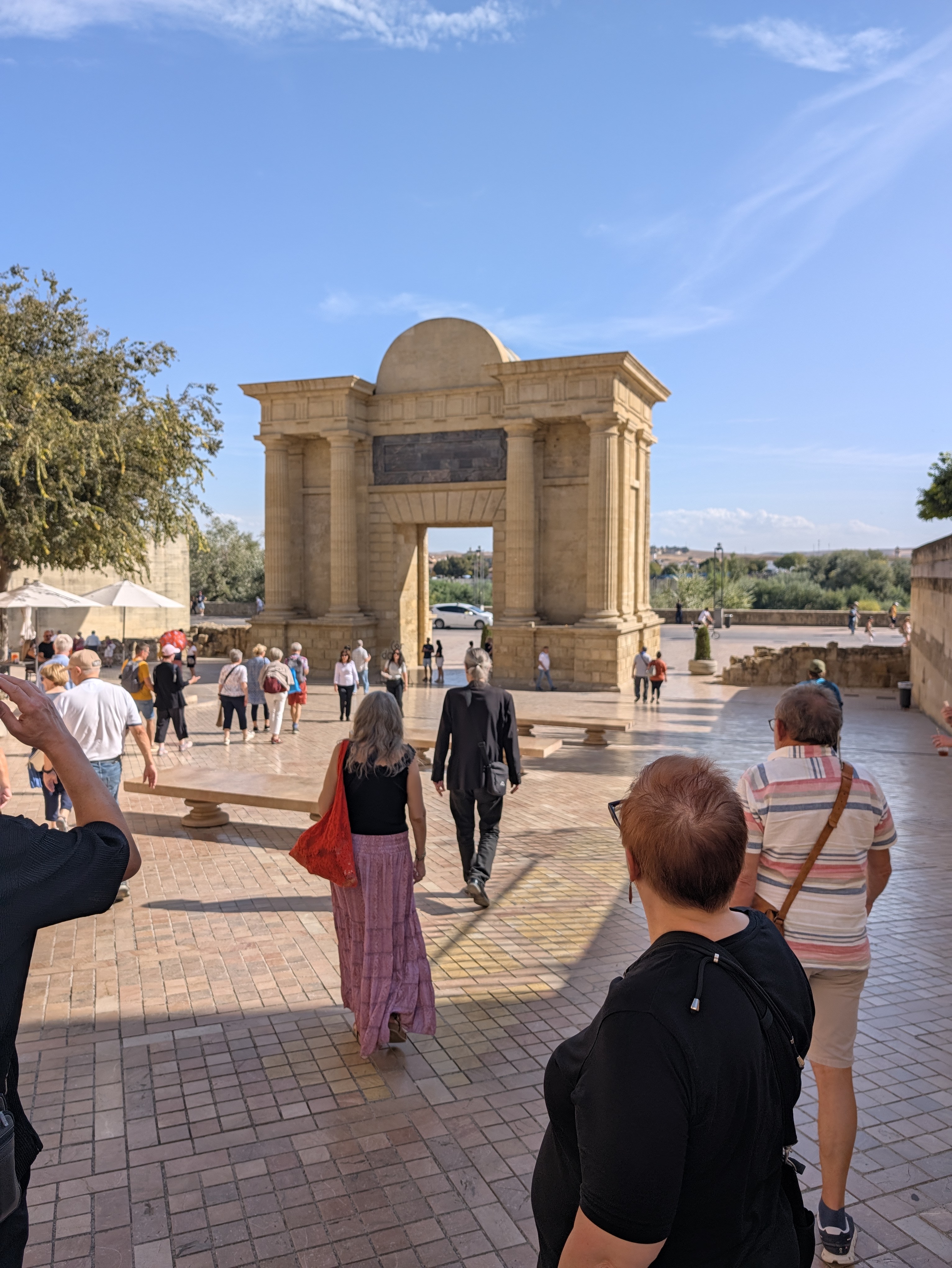
We spent the rest of that day walking the streets of the old town, down to the Puerta del Puente, a 16th-century gate to the city, and across the Roman Bridge – which mostly dates from the 8th century.
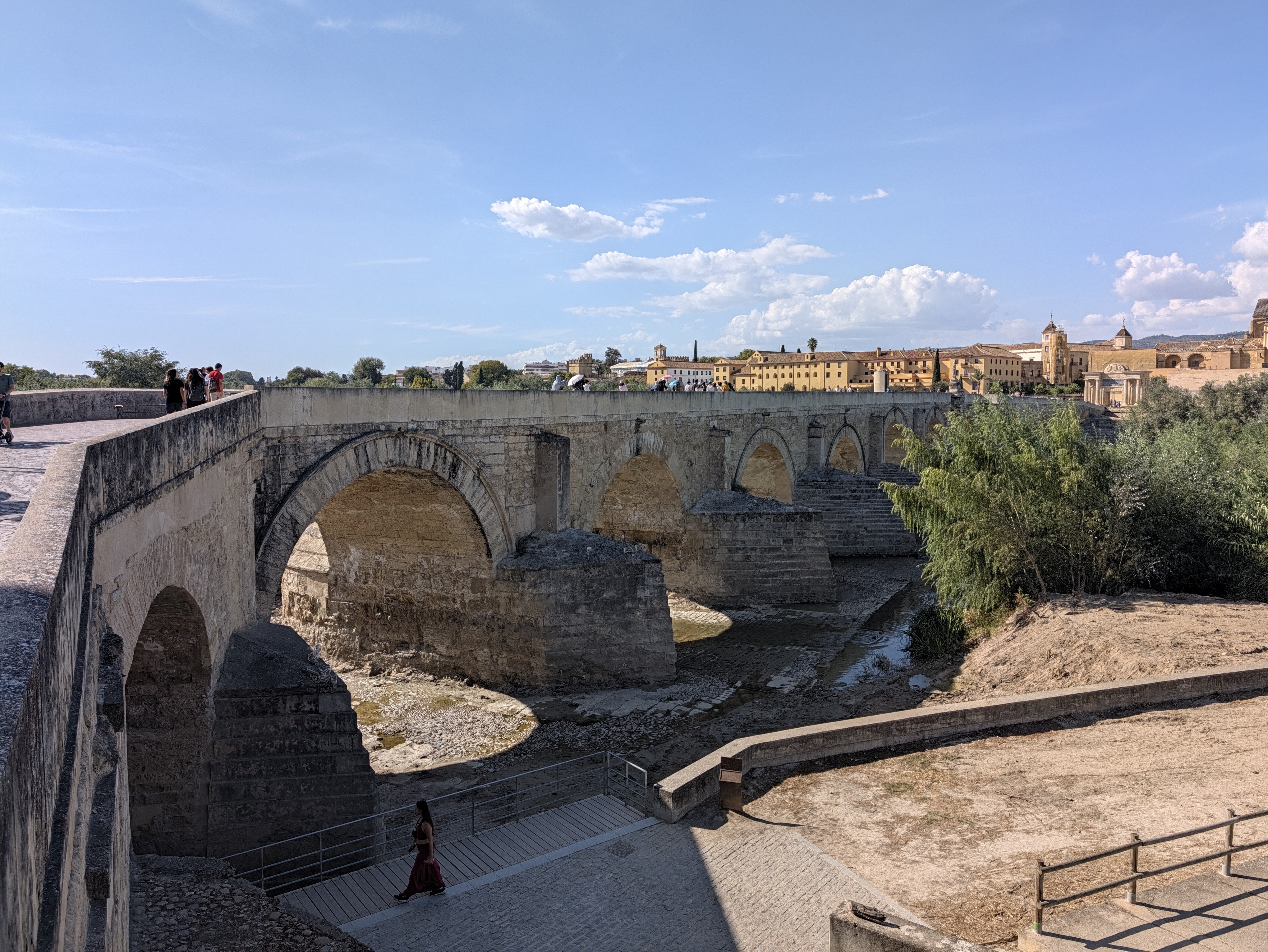
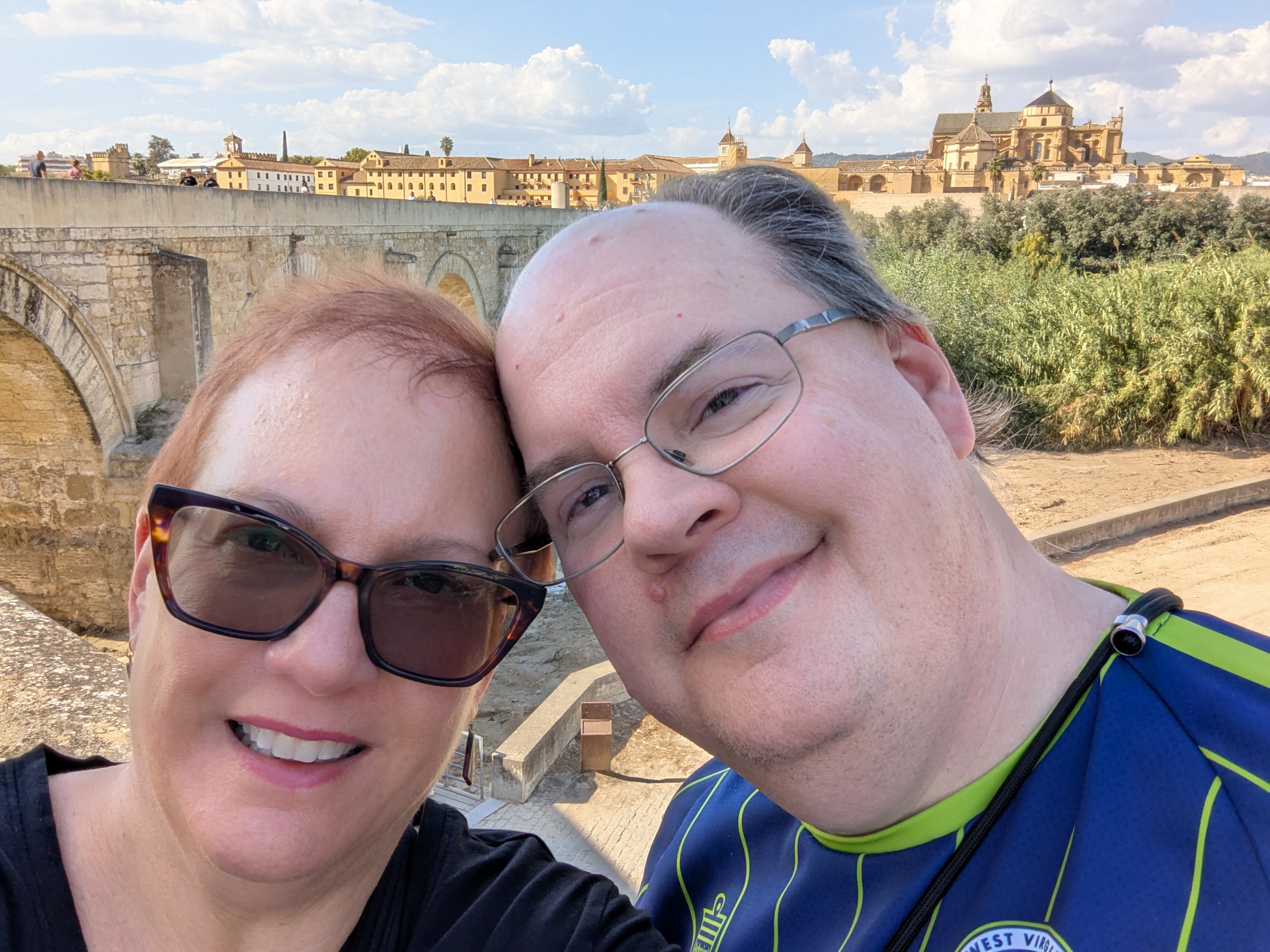
At the other end is the Calahorra Tower, a fortified gate first built in the 14th century. It provided some great views back across the river of the old town.
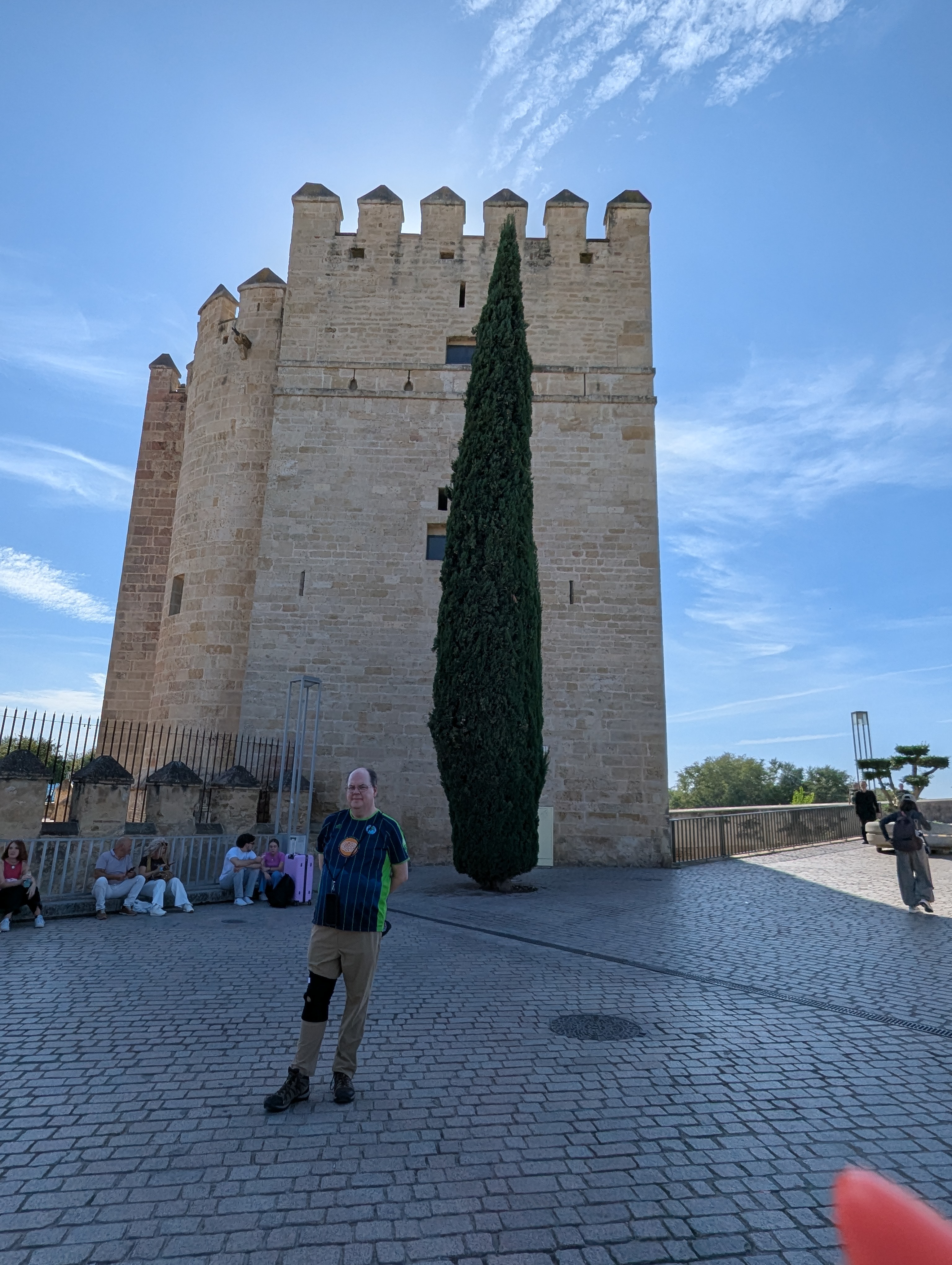
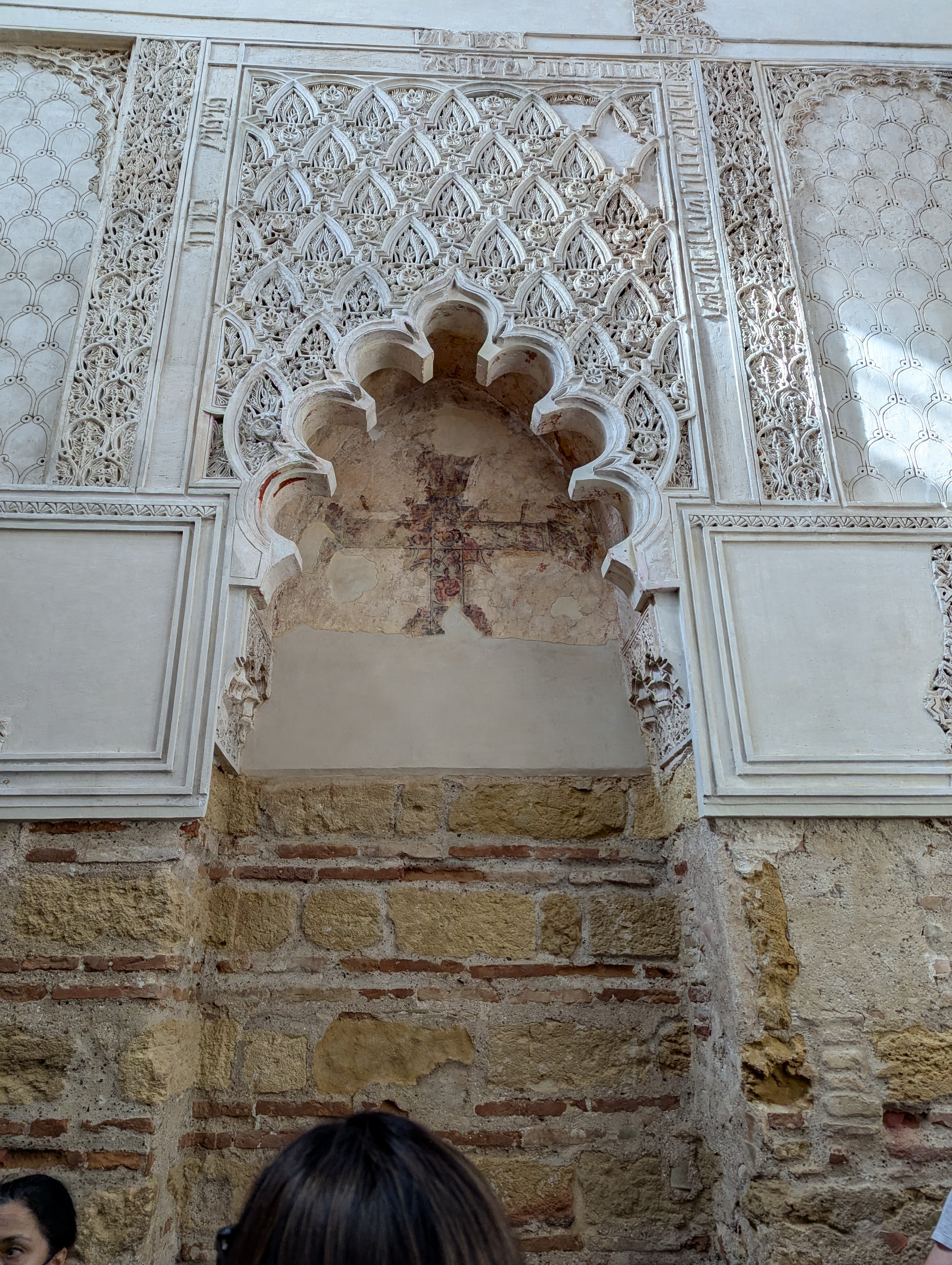
Our major site to see in Cordoba was what’s commonly called the “Mezquita,” although technically it is the Mosque-Cathedral of Cordoba. It’s a place where all those layers really come to the fore. But before we made it there, we were shown some other spots from what’s known as the “Jewish Quarter” (even though the Jews were expelled from town in 1391).
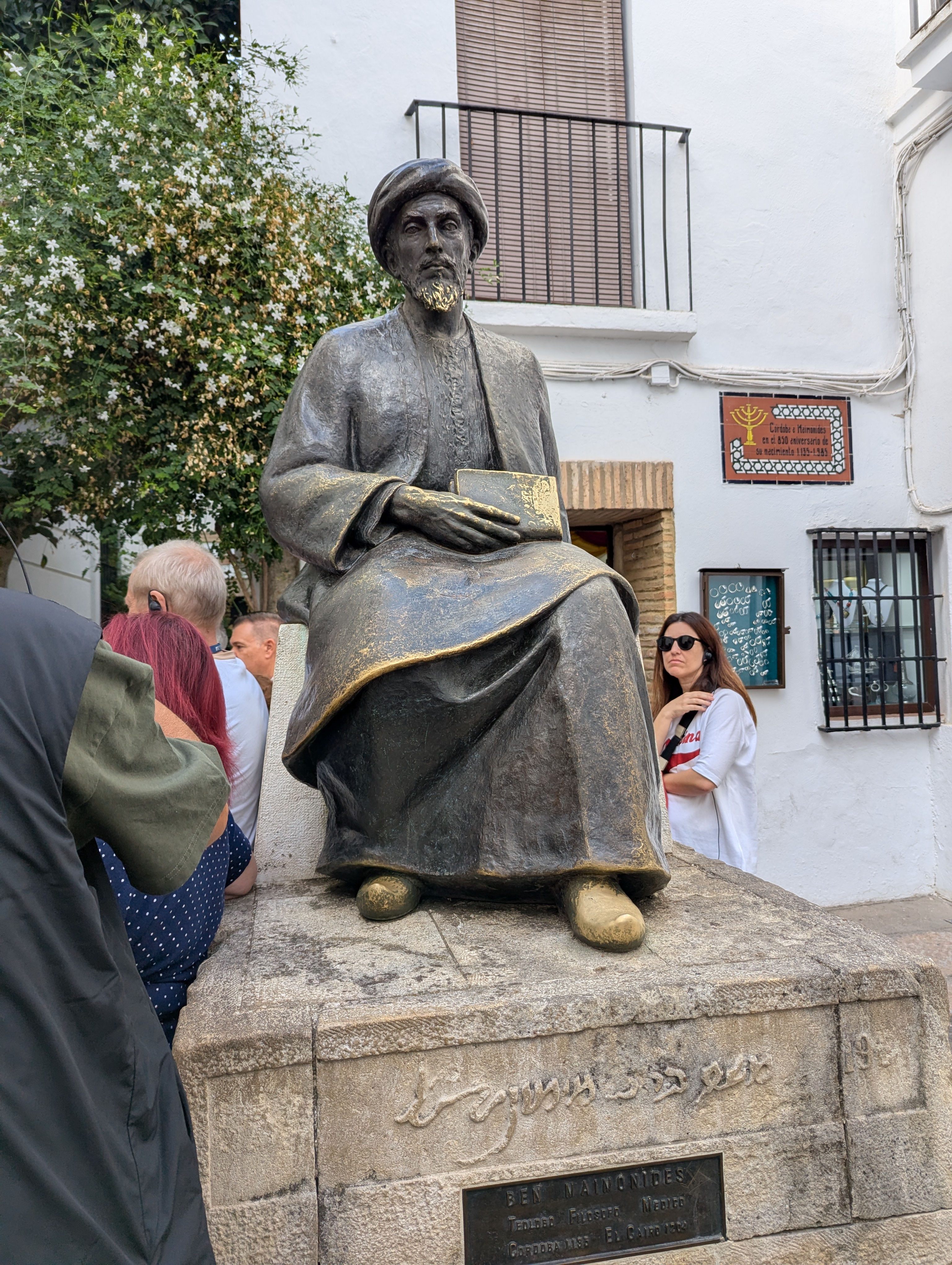
As I said, this led us to the Mezquita.
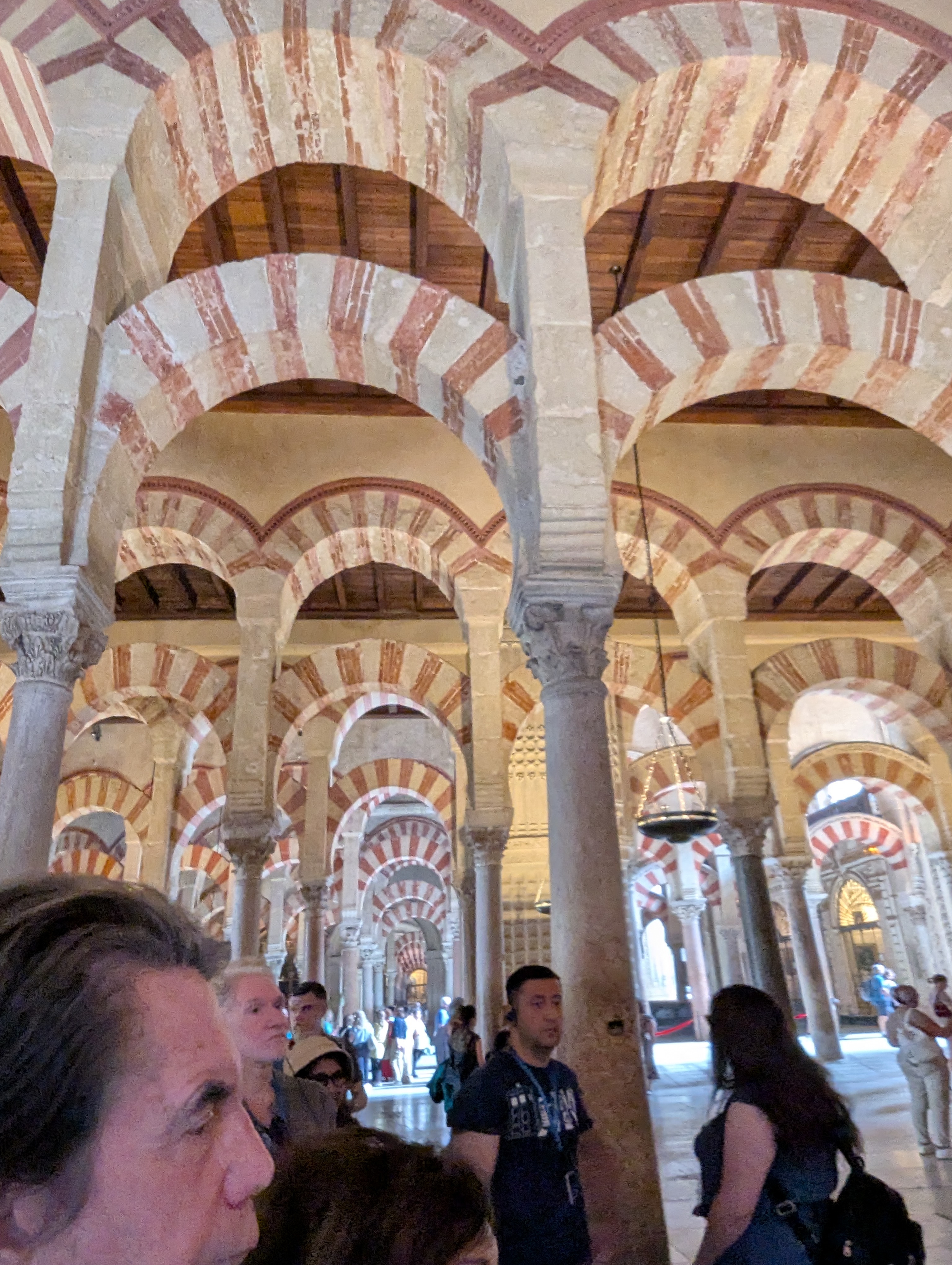
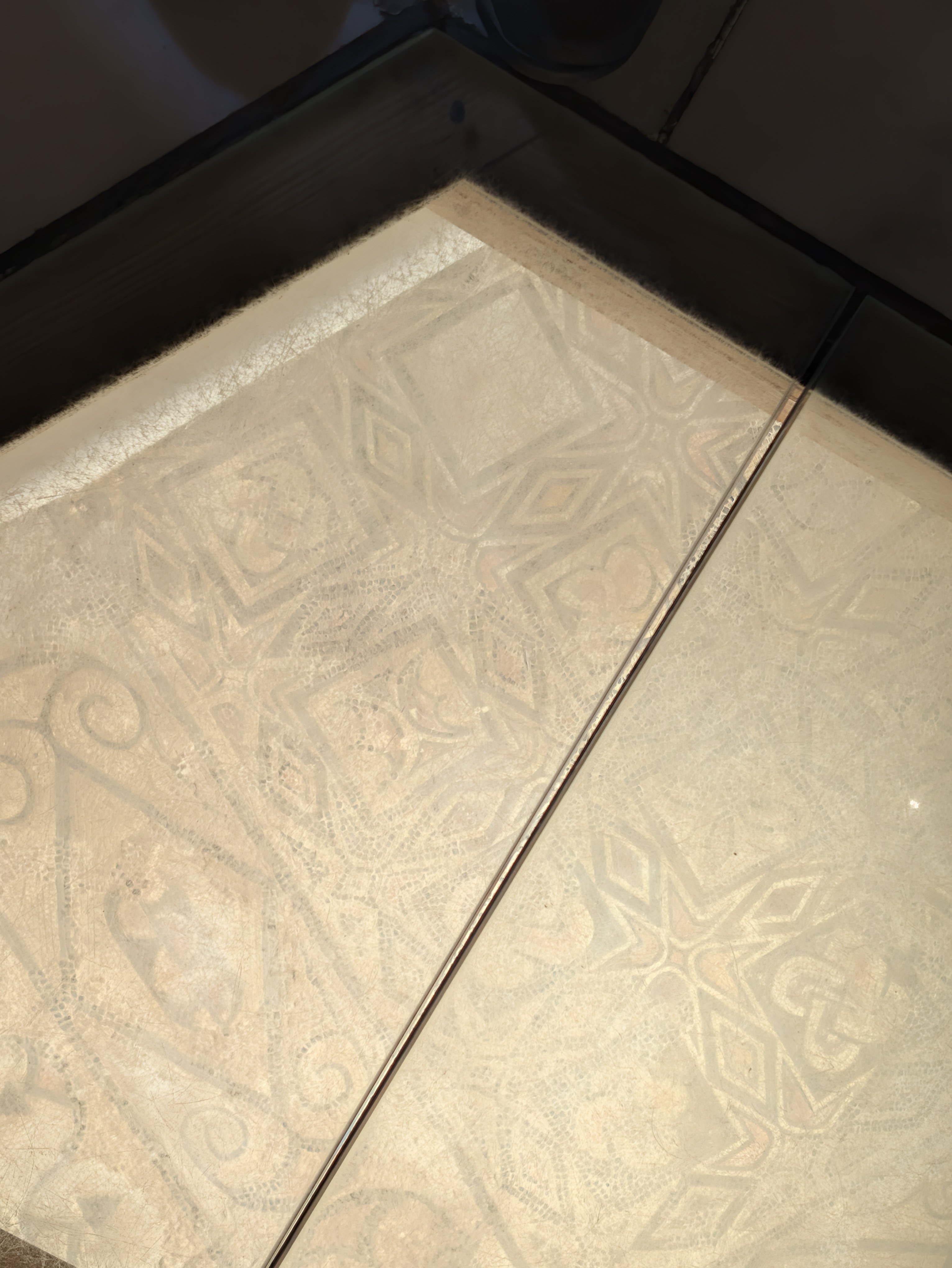
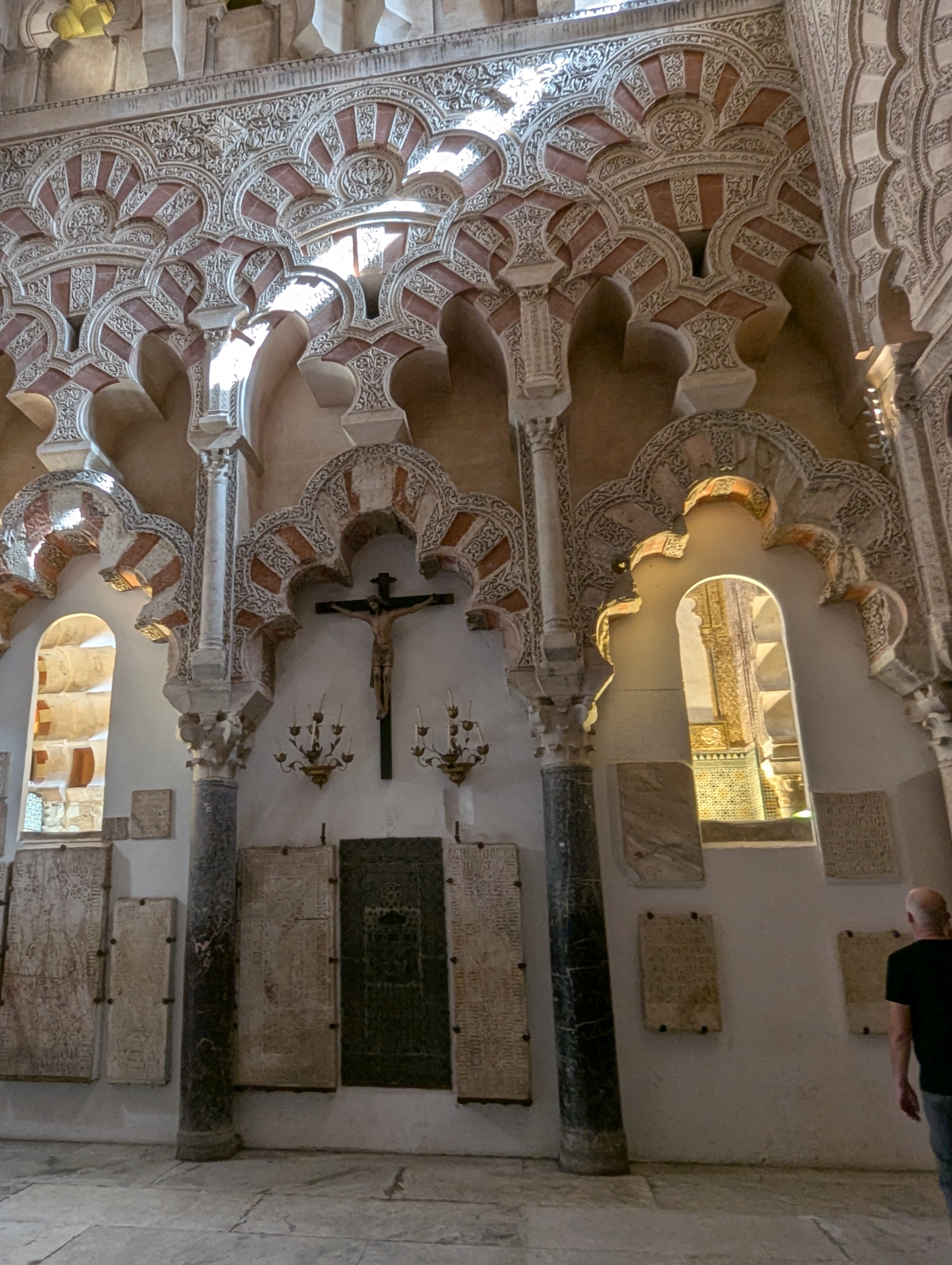
The site was initially a Catholic church, built by the Visigoths, before it became a mosque after the Muslim conquest. Not just any mosque, either, but a massive one (perhaps the largest in the world at the time). After the Christians retook the city in the middle ages, rather than destroy the mosque and build a cathedral, they built the cathedral right in the middle of the place.
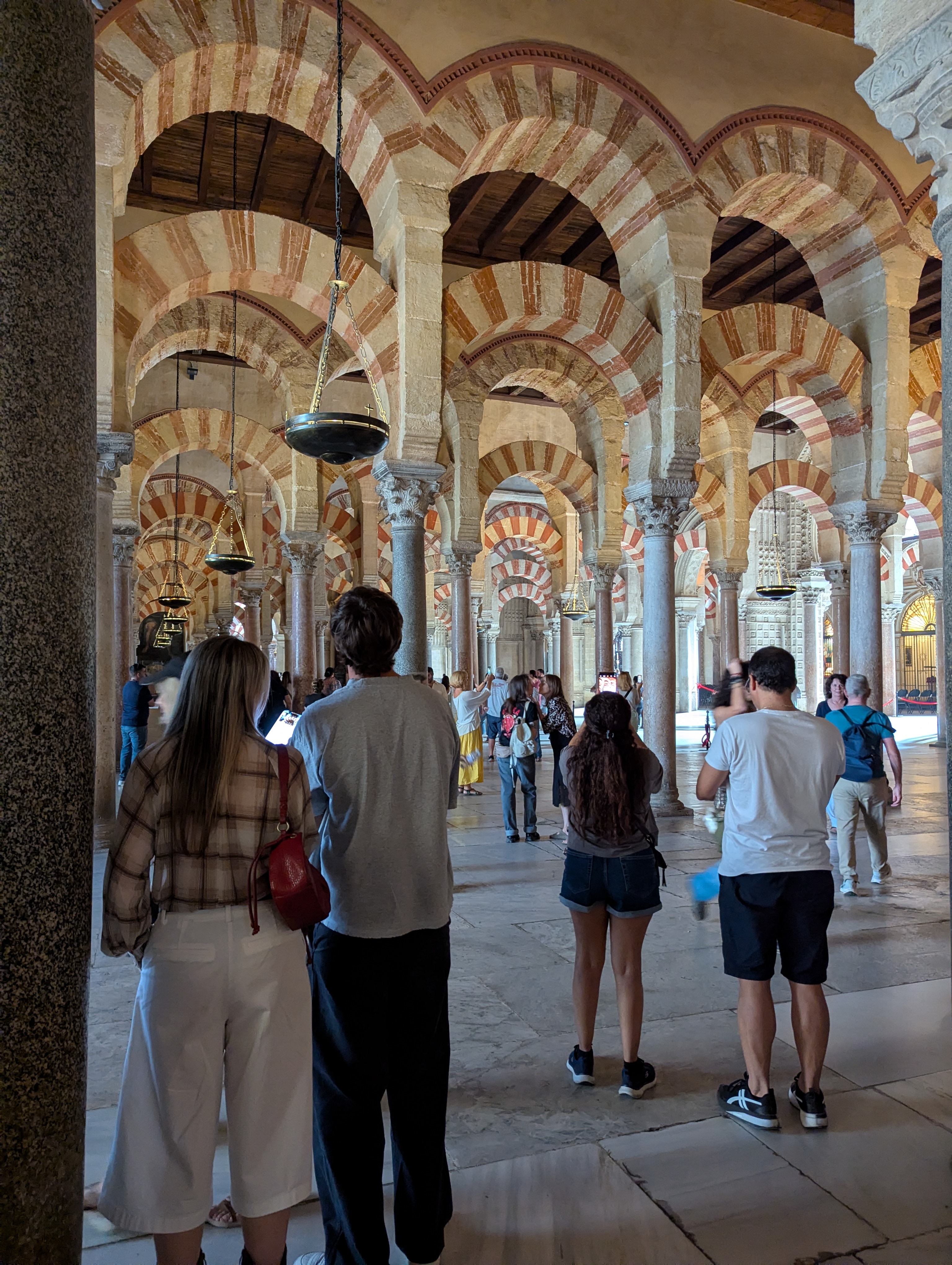
So you go from views like this, with row upon row of arches and columns:
And then turn the corner and BOOM – cathedral:
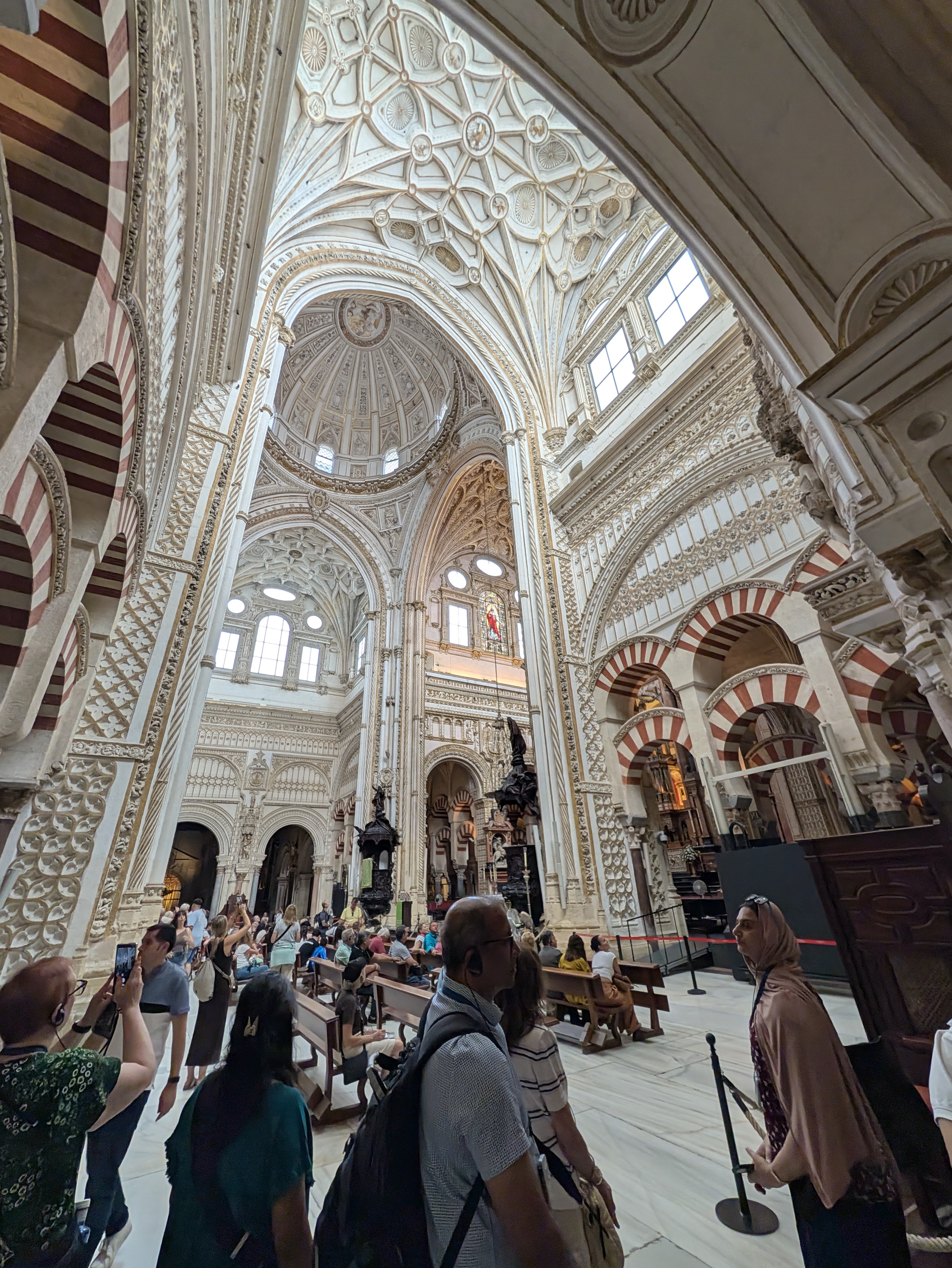
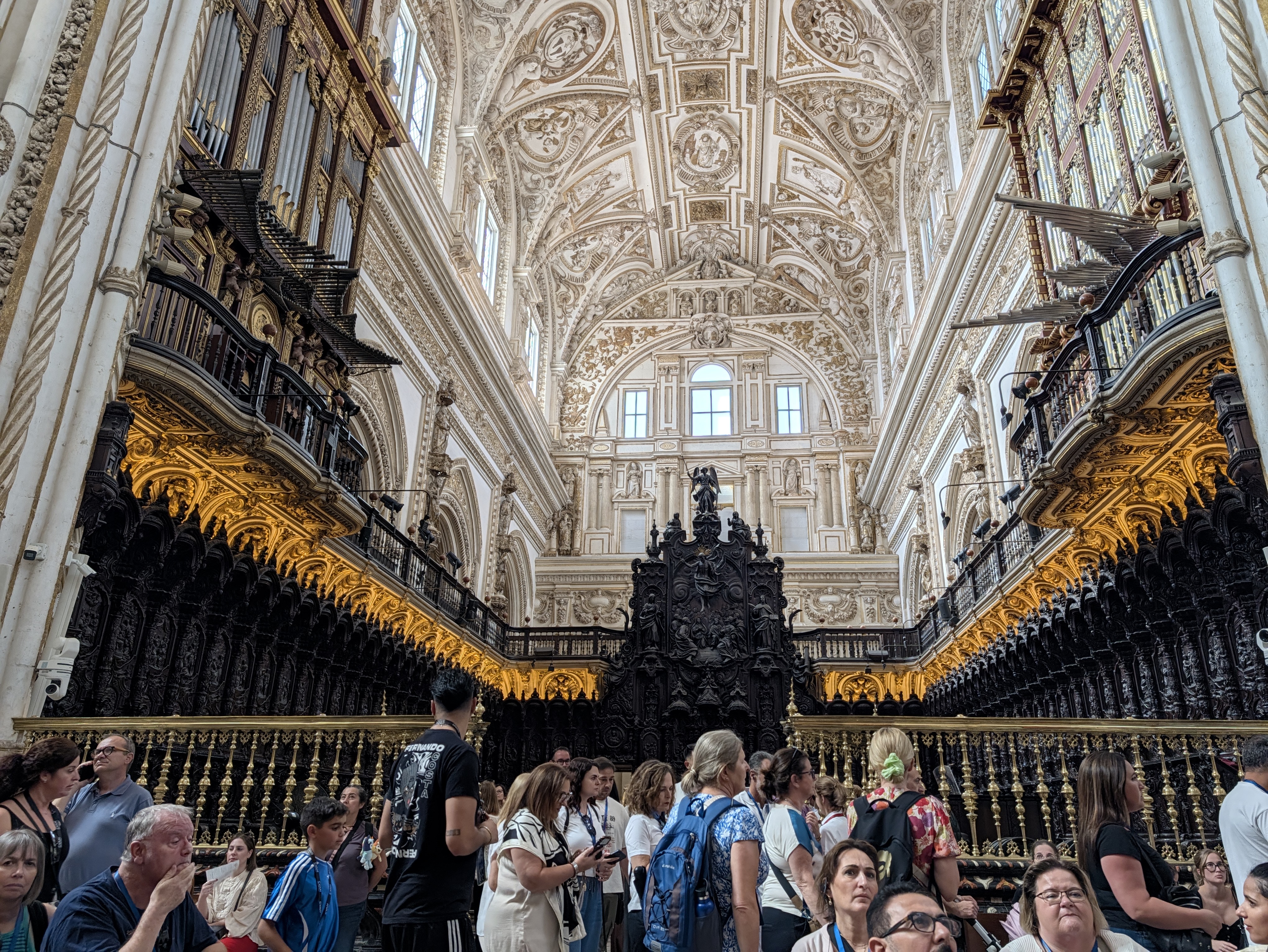
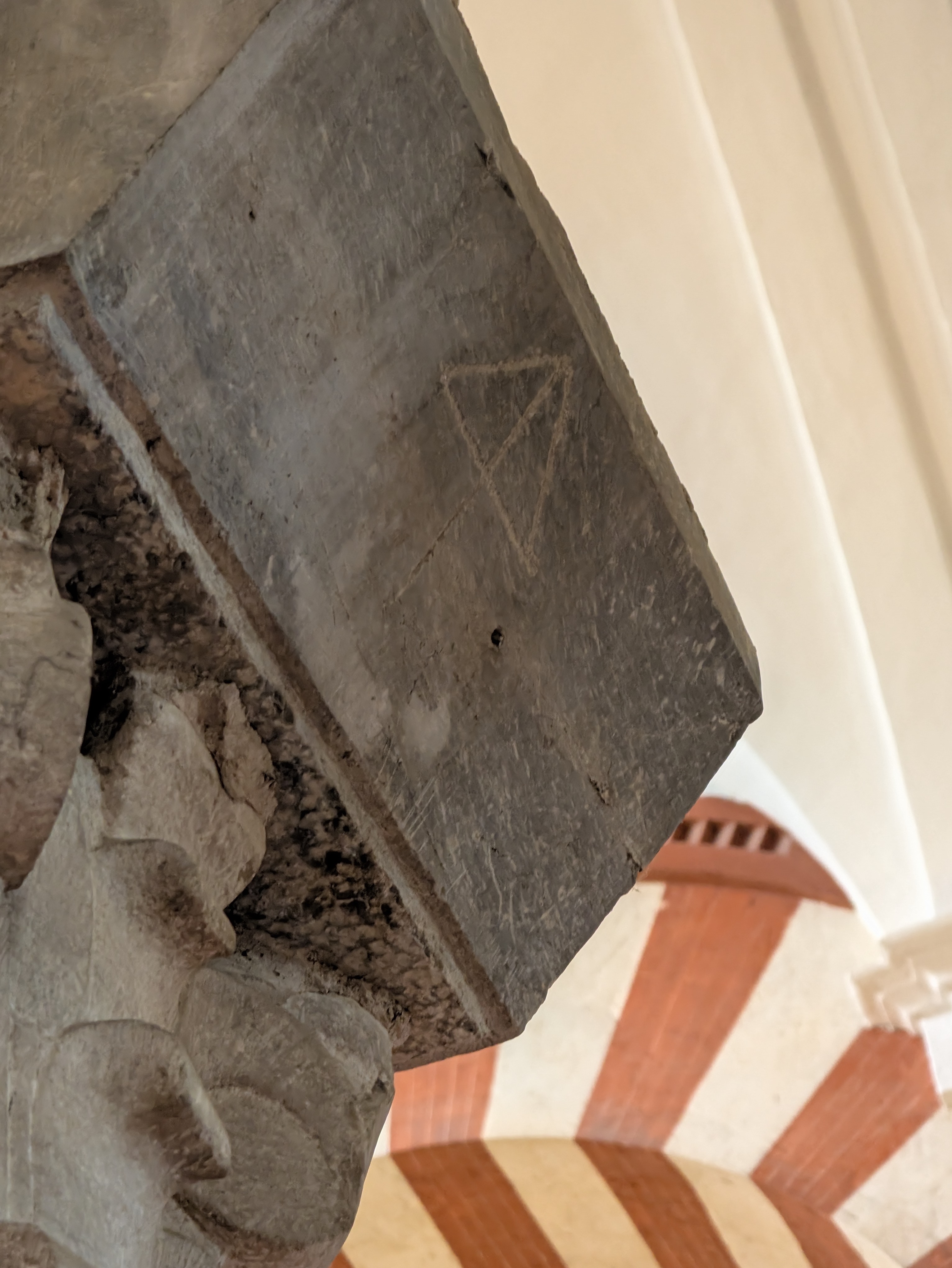
It’s an amazing place and cell phone pictures hardly do it justice.
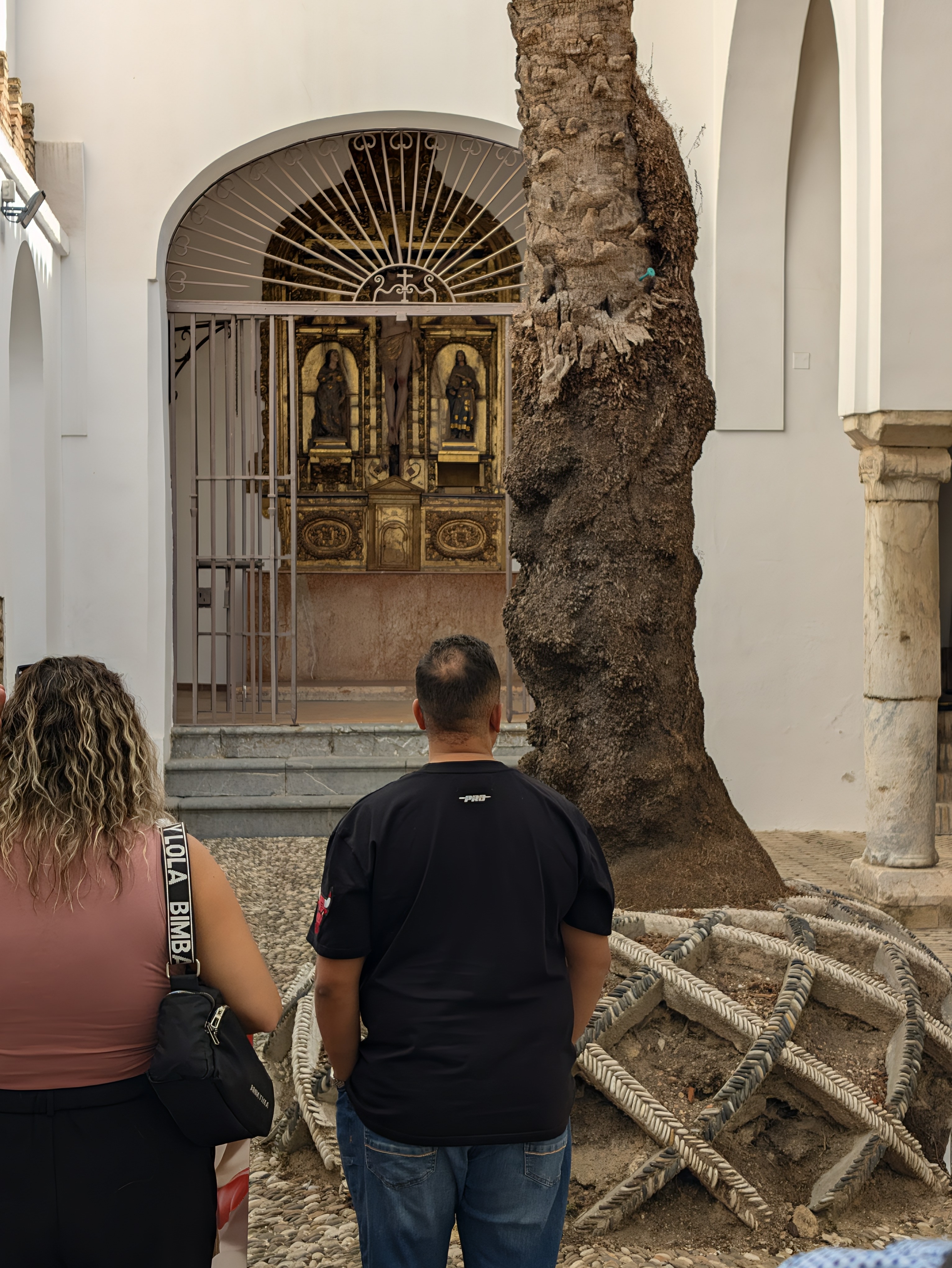
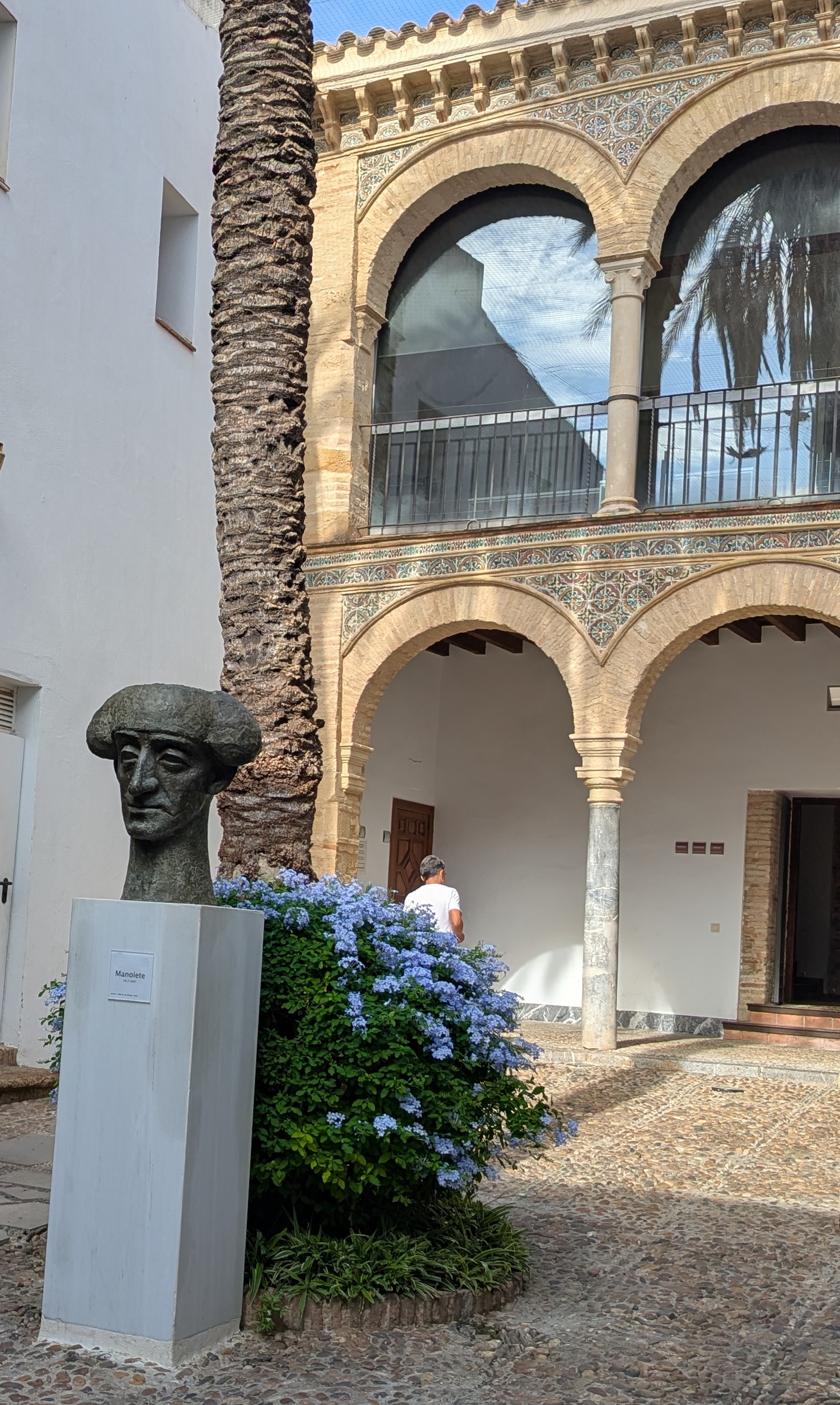
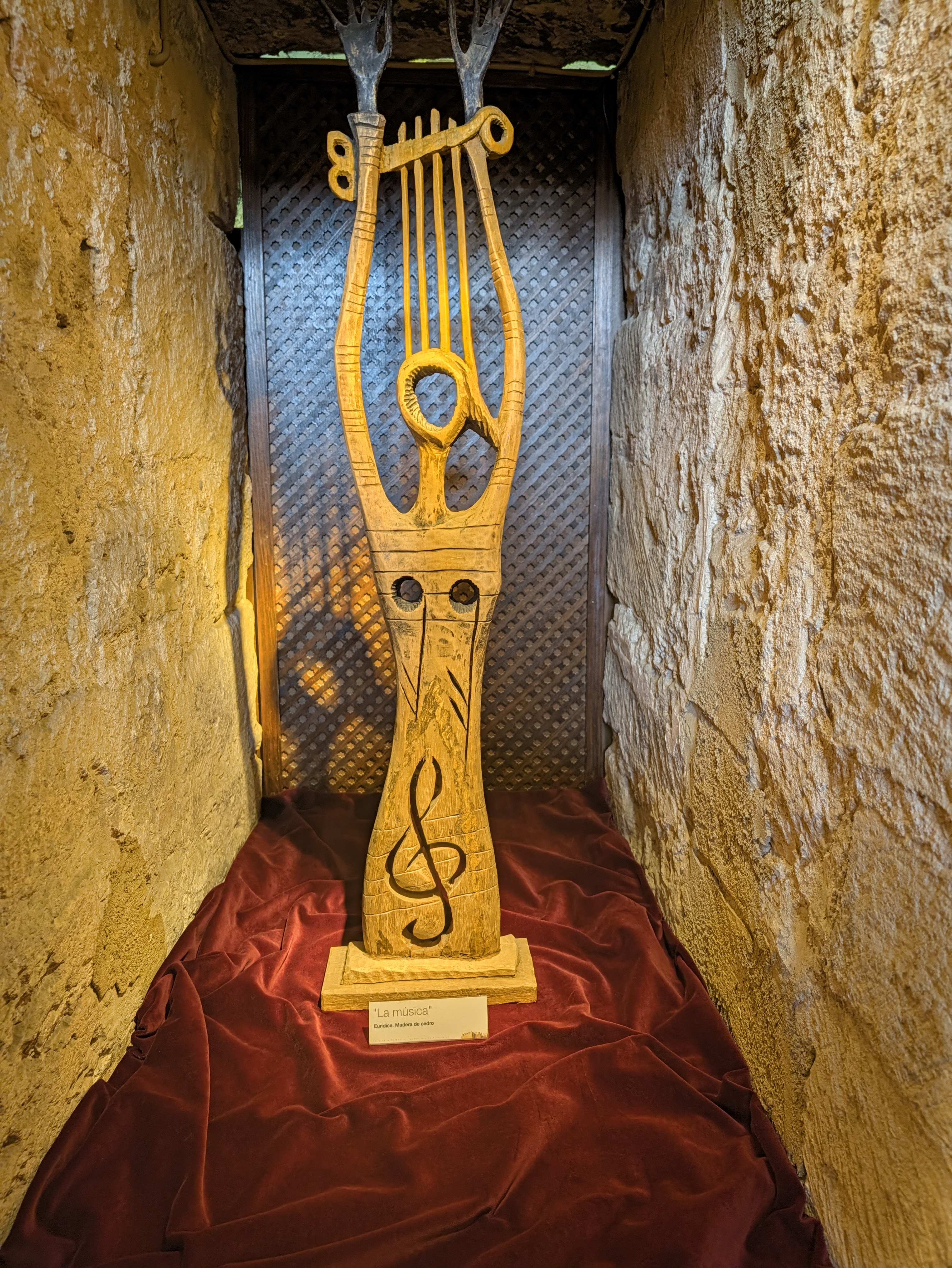
We spent the rest of the day in the old town, popping in here and there.
With that, we were off to Seville . . ..
A few words about . . . food (and wine)
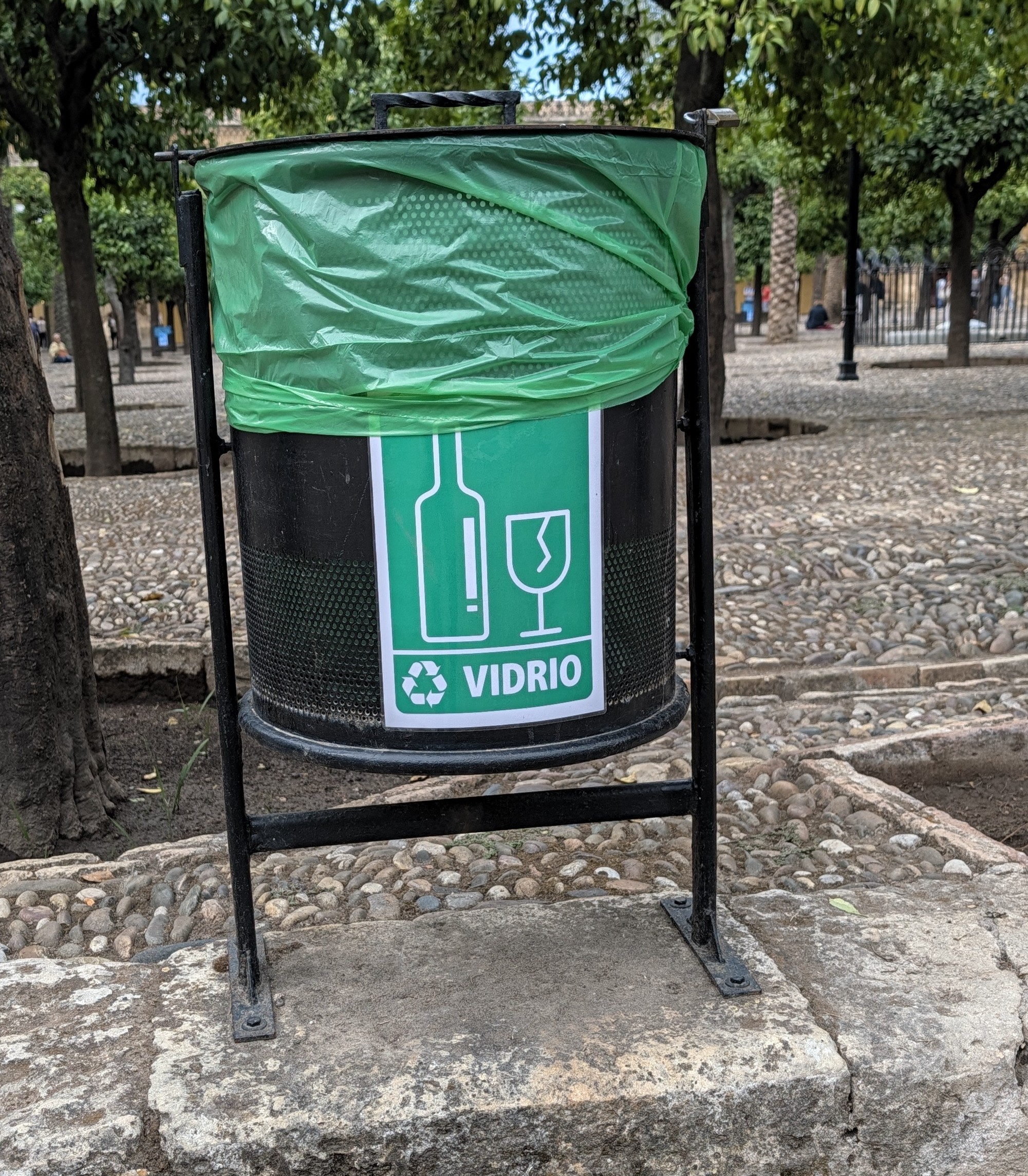
We ate well in Spain. For the most part we didn’t seek out particular places, instead catching meals at small tabernas where we could sit outside and enjoy the city passing by. Kelly fell in love with salmorejo, a very garlic-forward chilled tomato soup (I didn’t think you could have too much garlic – I was wrong!), while my find of the trip was carrilladas or braised pork cheeks (super tender with a wonderful, hearty sauce). We drank very well, too, of course, never had a bad glass of wine (of which there were plenty). I was surprised how wine-focused the place was, to the point where there didn’t appear to be a lot of cocktails and you have the need for wine-bottle-specific trash cans outside a thousand-year old holy site!
Take it away . . . Miles
Miles Davis did an album called Sketches of Spain that’s more orchestral and almost ambient in spots than other stuff I’ve heard of his. The big part of side one is a take on the Adagio movement of Joaquín Rodrigo’s Concecierto de Aranjuez, of which we’ll hear more later.

