On Killing Other People’s Darlings

I’ve never really understood fan fiction. That’s when people who aren’t the creators of a work – book, movie, TV series – write stories in that world using those characters. Occasionally it’s done with the permission of the original creator (such as Eric Flint’s 1632 series), but mostly it’s done in the literary equivalent of under the table.

I get the idea of wanting your favorite characters to have continuing adventures and to have such an attachment to a created world that you want to play around in it. I think if I found out people were writing fan fiction about Antrey or Aton or any of the other character’s I’ve created I’d be flattered. But it takes a lot of work to write good, interesting stories (and don’t get me wrong – some fan fiction is really good), so why not take the time and effort and direct into original characters and locations? It seems like a wasted opportunity to me.

Still, if it makes people happy to do it and they’re not making money off the work of others, have at it. As I said, I can understand wanting to continue the adventures of favorite characters and my understanding is that’s largely what most fan fiction is about.

Then I learned about deathfic.

Deathfic is fan fiction based around the death, sometimes gruesome and involved, of a character. I initially thought it involved dispatching bad guys who maybe escaped the ultimate punishment in the original work. It wouldn’t be too hard to imagine a gruesomely appropriate death for The Commander from The Handmaid’s Tale, for example. But, no, it’s something quite different:

deathfic, the kind of fan fiction in which a beloved character dies, typically in a way that is as painful for the reader as possible. ‘Sometimes I’m just in the mood to hole up and read the saddest thing I can find on the internet,’ Rachel says.

* * *

A baseline assumption of love is that a person you adore is not someone you would like to watch die. Presumably, you would also not like to be the sole architect of that person’s death. But to deathfic writers, the genre isn’t about having some kind of sick control over the life of someone else. It’s about a different kind of control entirely.


So, I guess that’s a thing? Again, seems like an odd thing to do to characters you care about, but whatever rocks your boat, I suppose. And I get, as the article points out, that sometimes writing fiction (even fan fiction) can be a way of working through issues happening in real life, including the deaths of loved ones.

Where things get a little creepy is when the people being killed off aren’t fictional characters at all:

There is deathfic for almost every fictional character and real-life celebrity you can imagine. You can find stories in which Rihanna dies and is reborn as a modern Messiah, and hundreds in which members of the K-pop supergroup BTS haunt one another as beautiful ghosts. These can be “crack” stories, in which writers are openly striving to make the strangest fictional reality they can imagine. BuzzFeed, for instance, has documented the rise of Justin Bieber deathfic, which includes freak accidents and maimings of all kinds.

That’s just fucked up. I mean the any celebrity “reborn as a modern Messiah” angle has some possibilities, but writing death scenes for famous people is just macabre as shit. Not saying you shouldn’t be allowed to do it, but if that’s your thing, maybe you want to get some help?

An old chestnut of writing advice is to “kill your darlings.” It doesn’t necessarily mean characters – it applies to any part of your writing not being so precious that it’s off limits from being cut – but it works that way, too. Killing someone else’s darlings, well, that may be a bridge too far. In the end, though, they’re only real on paper, so I guess there’s no harm.

KillEmAll

When The Gimmick Gets In the Way

Last year I wrote about some stories I’d come across that were told in a non-traditional that really worked well. I suppose turnabout is fair play – sometimes the gimmick just gets in the way of the story.

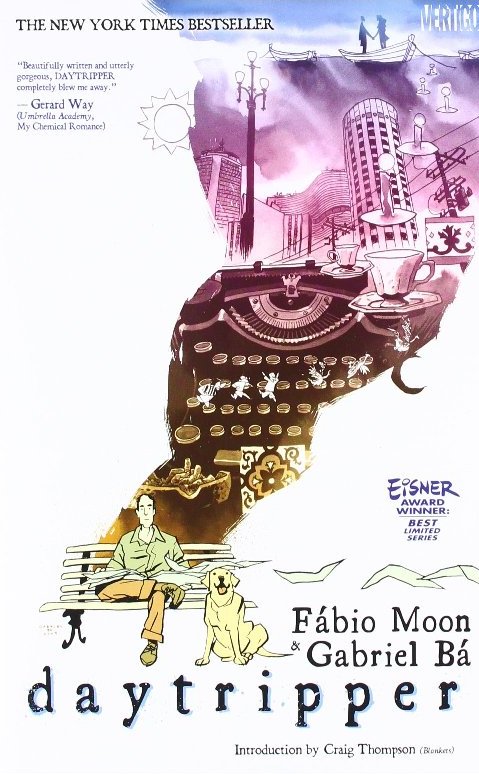
Daytripper is a beautifully put together graphic novel. In each chapter it tells the story of Bras, a writer (first of obituaries, later of novels), as he experiences certain turning point days in his life. It gets a little treacly and really hits you over the head with the “wonder of the everyday” stuff, but some of the individual pieces are good and the art is uniformly excellent.

Daytripper

Here’s the thing – at the end of every chapter, at the end of every vignette – Bras dies. Most of the time he does so in sudden, horrible ways, since they happen at all times of his life, from childhood on up. That’s an interesting way to structure a story, provided you do something with it. Creators Fabio Moon and Gabriel Bá don’t, however. There’s no overarching fantastic of magical realist element that gives the repeated deaths meaning. Everything just resets and we get another version of Bras – one blissfully unaware of his prior fates – to live out another last day.

Without that, the gimmick overwhelms the rest of the book. As readers, we know what’s coming at the end of every chapter. It becomes a macabre game, wondering just how Bras is going to snuff it this time, with methods ranging from the mundane (traffic accident) to the ridiculous (murdered by an old friend living in a shack in the desert). Meanwhile, frustration builds as you wonder just what the point of all this, beyond the hammering home of the tired old cliché about living every day as if it’s your last.* This is clearly a minority view when it comes to Daytripper, so take it with a gram of salt.

My point is this. It’s possible to tell perfectly good stories in the traditional, third-person POV, past tense, linear kind of way (at least I hope it is!). It’s also possible to deviate from the expected in order to throw your readers off, make them engage with the story in a different way, or what have you. But the gimmick has to serve something. Making readers struggle through a non-linear story just because you can isn’t clever, it’s just mean. If I, as a reader, am going to have to put together the puzzle pieces, the final picture better be worth it.

* I’ve never understood the wisdom of this. If it was really my last day on Earth, I wouldn’t worry about mundane shit like paying bills or going to work. But if I lived my ongoing life that way I’d quickly be homeless, unemployed, and (I suspect) divorced. Recognizing this isn’t likely to be your last day and you need to plan accordingly is part of being an adult.

Off to NaNoWriMo 2019!

It’s November, which means it’s time for National Novel Writing Month, aka NaNoWriMo!

NaNo Graphic.jpg

I sat out NaNo last year while I worked on revising Gods of the Empire. The year before that although I “won” in the sense that I made the 50,000-word goal for the month, the book I was working on ultimately cratered (I still like the idea and plan to return to it in a different setting).

So I kind of feel like I have unfinished business this year. To help me get back in the swing of things, I’m returning to an old haunt, so to speak:

Pageflex Persona [document: PRS0000030_00047]

Moore Hollow is my first novel and ever since it’s been loosed upon the world I’ve had people asking about a sequel. I never intended it to have one, to be honest. I thought I’d told the entire story. However, I’ve come to realize that I like Ben Potter, the book’s main character, and the idea of this Englishman with West Virginia ties coming back to the state. So I’m writing a sequel which will, if successful, turn this into an ongoing series (tentatively) called Paranormal Appalachia.

As you can tell from that title, Ben will get involved with various weird things happening in West Virginia (mostly – he’ll travel a bit). He’s going to hook up some with the main character from my first NaNo book, which now lives in the back of my closet. That guy’s a lawyer who specializes in handling “odd” cases and is developing kind of a reputation.

I’m excited to see where this all leads. I’ve got several stories in mind for Ben and I’m hoping they flesh out into full-fledged, engaging novels. I guess we’ll find out!

See you in December!

WriteAllTheThings

Fantasy Doesn’t Have to Be “Accurate,” It Just Has to Be Compelling

A while back I wrote about how research can be important, and idea-provoking, when it comes to writing fantasy. The gut reaction might be that writing fantasy means you can just make everything up as you go along. It’s not that simple, but one of the joys of writing fantasy is the freedom it gives you to mold the world your story is set in to the needs of the story itself. That’s why questions like this bug me:

AccuracyPostCap1

That’s from one of the fantasy author Facebook groups I’m in. I chimed in asking for more information about what kind of time period we’re talking about, since the kind of rigorous border regulation we know today is a fairly recent invention. But more than that, I asked what the writer’s story needed? After all, it’s fantasy, so why be bound to mundane reality?

I think that when it comes to worrying about research in fantasy it comes in two flavors. One is research for inspiration – you’re not looking to see how things are or were done in order to have your characters do the same thing, but you’re trying to spark your own creativity. The most obvious case of this is reading history, which is full of bizarre and compelling story fuel that can be molded to fit just about whatever world your telling your story in.

An example of this is one I’ve mentioned before – the basic arc of The Water Road trilogy was inspired by reading about Napoleon’s 100 Days and thinking about how he was handled – exiled only to return – sounded like something that would happen to the bad guy in a fantasy series. What actually takes place in The Water Road is very different, but the bones of it are still there.

The other situation is the one where I think people get hung up sometimes, that is doing research about the right or correct or “accurate” way to do something. That’s a situation where you need to have a character do something or have something happen to the character and you want to make sure it feels right. That kind of research is good and necessary – you can’t really write fantasy without any research (including as “research” here knowledge you’ve already obtained) – but it’s important not to let the reality overwhelm the story.

As an example, the world of Gods of the Empire includes steam-powered autocars (of course it does, it’s steampunk!), but they’re mostly toys of the rich. So as part of his travels Aton gets to ride in one and I wanted to have a scene where he observed the startup of one of these things, to capture the kind of Rube Goldberg beasts that they are. I did some scrounging and found a very good video of someone going through the startup for an restored Stanley Steamer, originally built around 1911:

Cool, huh? It provided some great details that I was able to put into that part of the book, but I didn’t just take down what the guy did in the video and transport it to the book. Why? For one, while providing a glimpse of the startup routine is a nice way of deepening the world building it’s a grace note on the overall story, not a subplot – I didn’t want to divert for that long. For another, the character in my book wasn’t starting a Stanley Steamer, but rather a similar vehicle in a different world with differing technologies. In other words, I was only concerned about being accurate to my world, not the real world.

Research while writing fantasy is kind of like the old saw about knowing the rules of writing (or any artistic endeavor). It’s not important to know the rules to slavishly follow them, but it is important to know them so that when you break them you can think of why you’re breaking them and to what effect.

Say, for example, you want to have a two-feet-tall sprite in your story wield a long steel broadsword. Physics tell you that in the real world (assume a real world with sprites, people) that wouldn’t work – the sword is too big and too heavy for the sprite to pick up, much less wield. Does that mean it can’t happen because it would not be “accurate.” No! This is fantasy – anything can happen, if you want it to, but you need to figure out how, in your world, such a thing is possible. Maybe the sword is enchanted and can be wielded by anyone who is worthy? Maybe sprites are supernaturally for some cool reason in your world? It doesn’t matter, so long as you realize that some fanstaticking is going to have to happen.

Which, after all, is the point, right? One different between science fiction and fantasy is that fantasy is really only limited by your imagination. Sci-fi, at least in theory, is tethered to the realities of the real world, however much one can extrapolate from them. Fantasy not only lets you think outside the box, but blow up the box completely. It’s a great power to have, being able to mold the world to fit your story – why shouldn’t you use it every chance you get?

Wonka

Gone Writin’

It’s been a while since I did a writing update post, so this seemed as good a time as any.

The good/great news – Gods of the Empire, the first book in my new Unari Trilogy is (for all intents and purposes) done! There’s a few little things left to do with the text and Derange Doctor Design is hard at work whipping up a great cover, but I can say with confidence that it will be released this fall. The target is to be ready for the 2019 West Virginia Book Festival.

The bad news, for you blog readers, is that means that I’m now knee deep in Widows of the Empire, the second book in the trilogy. As a result, blogging is going to be light to nonexistent for the next little bit.

stop-that-you-should-be-writing-loki-14591496

Yessir. If all goes well I’ll have a first draft done by the end of the summer.

So, until then (barring something I just can’t hold in), take care of yourselves and have some fun!

WriteAtDawn

Allies? Competitors? Something Else?

Recently someone on a sci-fi/fantasy writers’ group I’m in asked the following question:

AlliesCompetitors

It’s an interesting question, but one I didn’t feel comfortable answering right away since neither one of those choices really seemed right.

“Allies” is pretty heavy in terms of commitment. Maybe that’s because my first thought when talking about allies is in a military sense. NATO members are allies not necessarily because they like or agree with each other, but because there’s a deep obligation to defend each other if another is attacked. That’s hard core and I’m not sure I’m down to shed blood (metaphorical, even) for other authors I barely know. In addition, allies have overarching interests that allow them to overlook other, even fundamental, disagreements. Think of the US and UK allying with the Soviet Union during World War II. Again, I’m not sure I want to think of my relationship to other authors that way.

But “Competitors” doesn’t really work either, at least most of the time. I’m a firm believer in authors supporting other authors and when someone I know in real life has success – a new book gets a great launch, superb reviews – or someone in an online forum shares that kind of success I join in on the celebration. Their success has little to say about my own sales, reviews, or lacks thereof. It’s not a matter of fighting over the same readership pie. Now there are times when I am in direct competition with  other writers – competitions, anthologies with limited spaces, etc. – but you know that going in and can prepare for it.

Thinking about these two concepts led me to another term that I think fits my perspective the best – colleagues. I settled on that after sitting in a courtroom watching a hearing where a pair of defense attorneys worked at cross purposes.

I’m an Assistant Federal Public Defender, one of about a half dozen in our office. Outside of our office there are a couple of dozen private lawyers on what’s called the CJA Panel who also take appointed cases – ones our office can’t due to conflicts of interest or just lack of resources. For the most part we’re on the same side as the panel attorneys – we share legal theories, help work through issues, that kind of thing. But sometimes, we’re not on the same side – we’re in what you might call competition.

In this particular case one of my AFPD colleagues was representing someone charged with violating his supervised release (sort of like probation after you get out of prison). The particular issue came down to whether the court believed our client’s story about how he came to possess some drugs. This story could be backed up by his girlfriend, but only if she admitted to conduct which might put her in legal jeopardy. So, the court appointed a CJA Panel member to represent her interests in the hearing. It would have been better for our client had she testified, but her interests aren’t the same as ours and, on her lawyer’s advice, she invoked the Fifth Amendment.

Everything worked out in the end and we were back on the same “team” as that panel attorney the next day. But for that brief time, we were competitors.

So I think that’s the word I think best describes my relationship with fellow writers – colleague. It recognizes that sometimes you are in competition, but it’s not very often, while taking into account that we share a lot of interests in common without going so far as to bring into being an iron-clad allyship. In general, I’m happy when my colleagues do well and want to help them do it, but there may be exceptions.

After all, just because you write books and I write books doesn’t mean I’m going to help you move or anything.

Move

All Stories Are About Characters

There’s this scrappy little independent film out in theaters now, Avengers: Endgame, that you might have heard about. Without going deeply into spoilers, let’s just say that it involves what the Doctor might call some “timey wimey” nonsense. Thus I was kind of pleased when I saw this article by Michal Schick pop through my Google stream:

Endgame1

I figured this would be a good reminder of what I call the MST3K philosophy: “repeat to yourself this is just a [movie], you should really just relax.” After all, there’s been considerable ink spilled on what the time travel stuff in Endgame means for the Marvel Cinematic Universe, whether it “works,” and all that kind of stuff. It’s interesting, but there’s a certain amount of diminishing returns the further you dive in.

So imagine my surprise when Schick went a different direction:

Endgame2

This is a good and overlooked point when it comes to superhero stuff. Many superheroes tend to have a sheen of the scientific about them, an explanation for why they have superpowers – Spider Man is who he is because he was bitten by a radioactive spider, Superman is who he is because he’s from another planet and the rays of our sun give him powers. But let’s be honest – that’s all bullshit. It’s not as if the scientific explanations really hold up to scrutiny or are based on extrapolations of known science. They sound cool and that’s enough.

With that recognition, however, we’re clearly in the realm of fantasy rather than science fiction. That means that when there’s time travel in Endgame it’s not trying to be scientifically rigorous. Instead, it’s a kind of “just so” setup, something you have to just accept as part of that world. It may be internally inconsistent and that’s worth criticizing, but bagging on the film for not getting time travel in general “right” is missing the point.

After agreeing with the article up to this point, I took a hard turn into disagreement. After noting, correctly, that often the quick and dirty classification of things as fantasy or sci-fi depends on what they look like (the good example they use is “blasters and ray guns” equal sci-fi, while “magic wands” doing basically the same thing equal fantasy), it goes all wrong:

Far, far more important to genre are the interests and values of the story itself.

Does the story prioritize character (fantasy) or does it highlight and interrogate plot and concept (science fiction)? Do the story’s values live in the realm of emotion and experience (F), or intellect and ideology (SF)? Is the creator working with the primary interests of fantasy or science fiction, not to design their world, but to define it?

No, no, no. “Emotion and experience” are part and parcel of any story, regardless of the genre. Science fiction may be particularly susceptible to stories where the tech is more important than the people using it, but if there’s no emotional connection to those characters you might as well just read a technical manual. I’ve written about this before, but I think it does sci-fi a disservice to think it’s not about characters.

To me, the admittedly hazy line between sci-fi and fantasy comes from how the author treats the world in which the story is being told, not the characters. Worlds that look more like ours and where the element of the fantastic has some real connection to ours fall on the sci-fi side of the line, while a world whose differences from ours just are tends to fall under the fantasy umbrella. Neither classification is a marker of quality, much less determinative of how the characters are developed and how readers connect with them.

That’s the most important part of telling a story, regardless of genre. People want to care about characters. They want “emotion and experience.”

The Plusses and Pitfalls of Non-Standard Narratives

In whichever mediums stories are told – in print, on a screen, orally – they usually have a similar narrative structure. The story is presented as it is, with perhaps some limitation on the point of view of the narrator, but without any particular artifice. Sometimes creators do something a little different and impose some kind of artifice on the narrative. That can be a thrilling creative choice, but it can also pose some potential problems. I was thinking about that over the weekend when I encountered two largely successful examples of non-standard narratives.

Evil Eye, by Madhuri Shekar, is an “Audible original,” one of those short freebies offered up to members every month.

EvilEye

Although Audible is mostly known for audiobooks, in my experience these have been closer to podcasts or radio plays, for the most part. Evil Eye is a story about an Indian-American woman struggling with her mother back in India who keeps trying to arrange a marriage for her. When she finally meets a guy without mom’s intervention what begins as a light rom-com kind of thing dives headlong into a story of revenge, reincarnation, and violence. It’s pretty damned good, even if Shekar doesn’t quite stick the landing.

Part of what made Evil Eye so compelling was that it was told entirely through phone calls and voice mail messages. It takes a little while to get a handle on, but it’s used pretty effectively. For example, there a portion of the story where one character basically disappears and another frantically tries to find them. The repeated voice mail messages to a phone nobody is answering, combined with the ratcheting up of the caller’s anxiety, is a great effect.

It doesn’t all work, though. The climax involves a confrontation between multiple characters that can’t really play out in a phone call. The work around is to have one character make a call, then leave the line open while the confrontation happens (in pristine audio detail). It’s clearly a cheat, but not one I hold against Evil Eye too much.

Can’t say quite the same for Searching, a movie that came out last year.

Searching

Searching is about a widower father searching for his high-school daughter who failed to come home one night. It’s fairly suspenseful and engrossing, at least until the writer/director decided it needed a happy ending, at which point the wheels really come off.

Searching’s gimmick is that it’s told entirely through computer screens – via deep dives into emails, Google searches, and Facetime calls (it’s an Apple household, naturally). For the first half of the movie or so this is really effective. The opening segment that sets up the family dynamic and the relationship (or lack thereof) between father and daughter is really excellent, reminding me in terms of storytelling efficiency of the beginning of Up.

Things start to a little sour after that, however. While the father is digging into the digital realm the gimmick works pretty well, but when he has to interact with other people it wears thin. Every conversation between the father and the cop leading the investigation into his missing daughter takes place over Facetime. Why? Because that’s how the movie is made, not because it really makes any sense. The father has a public confrontation with a possible suspect, assaulting him, but we only see it from crappy cell phone videos. Most problematic, when the father confronts his brother about potentially explosive allegations he does so only after rigging the brother’s house with surveillance equipment. Again, why? Because of the gimmick, not because it makes any kind of sense.

Indeed, sometimes you just have to be willing to drop the gimmick and get on with the story. The most famous example of non-standard narratives in literature may be Dangerous Liaisons, which is told entirely in letters between the two main characters. The fact that it’s one of the few books that’s been improved upon by putting on screen suggests that the gimmick isn’t the important part of that story.

Using gimmicks to tell a story can be fun. It can knock your reader of her narrative feet, shaking her up and forcing her to engage with the story in a different way. It can also help you get more deeply into a character than you might in a story told in a more traditional way. But gimmicks can become their own problems, boxing you in to certain narrative choices that might not work best for the story you want to tell.

Remember, kids: always keep control of your gimmicks – don’t let your gimmicks control you.

Another Literary Writer Discovers Speculative Fiction

To quote John Hurt at the end of Spaceballs:

oh-no-not-again

I’ve written before about “literary” writers who refuse to accept that if they write a book about genetic engineering or post-apocalyptic dystopias or clones that they’re writing science fiction. As much as that honks me off, I can sort of understand it. Artists hate to be pigeonholed (ask Robert Fripp about progressive rock!) and if they’re well known for non-genre works they want to stay in that lane. They’re still wrong, but I get it. Now I’m just trying to figure if I prefer it to sheer ignorance.

Ian McEwan is nothing if not a literary icon – author of more than a dozen novels, one of which, Amsterdam, won the Man Booker Prize while another, Atonement, became an Oscar-winning film. He is literary with a capital “L,” no doubt about it. Now he’s decided come and play in the genre sandbox. Nothing wrong with that – all are welcome! – but he’s being kind of a putz about it.

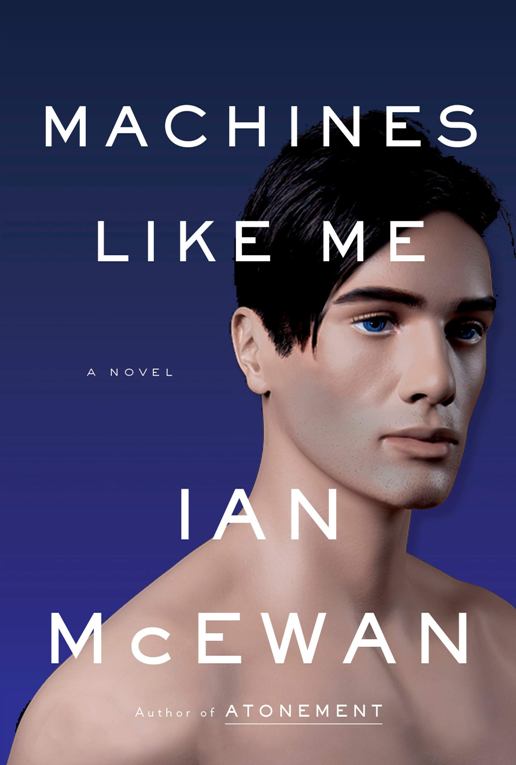
McEwan’s new book, Machines Like Me, is blurbed like this:

Machines Like Me occurs in an alternative 1980s London. Charlie, drifting through life and dodging full-time employment, is in love with Miranda, a bright student who lives with a terrible secret. When Charlie comes into money, he buys Adam, one of the first batch of synthetic humans. With Miranda’s assistance, he co-designs Adam’s personality. This near-perfect human is beautiful, strong and clever – a love triangle soon forms. These three beings will confront a profound moral dilemma. Ian McEwan’s subversive and entertaining new novel poses fundamental questions: what makes us human? Our outward deeds or our inner lives? Could a machine understand the human heart? This provocative and thrilling tale warns of the power to invent things beyond our control.

Machines

Sounds interesting! Alternate history, robots, and warnings about “the power to invent things beyond our control” are all interesting areas for sci-fi to explore. And the cover model looks like he came right off a Kraftwerk album! Problem is, McEwan appears to think he’s the first person to address such topics. From a lengthy (and interesting) interview recently in The Guardian:

McEwan has an abiding faith that novels are the best place to examine such ethical dilemmas, though he has little time for conventional science fiction. ‘There could be an opening of a mental space for novelists to explore this future, not in terms of travelling at 10 times the speed of light in anti-gravity boots, but in actually looking at the human dilemmas of being close up to something that you know to be artificial but which thinks like you. If a machine seems like a human or you can’t tell the difference, then you’d jolly well better start thinking about whether it has responsibilities and rights and all the rest.’

I’m with McEwan on the power of literature to examine ethical dilemmas inherent in things like artificial intelligence or robotics, but, I mean, science fiction has been dealing with that since almost the beginning. As Gautham Shenoy at Factor Daily puts it:

If nothing, this displays spectacular ignorance on the part of this Booker Prize-winning author because, as far as metaphors go, that is what the novel widely considered to be the first modern science fiction novel, Mary Shelley’s Frankenstein is about. A fact that becomes all too ironical when McEwan describes Machines Like Me as an ‘anti-Frankenstein novel’. And as far as the larger themes that McEwan claims to tackle in his novel, they could well describe almost the entire body of work of Hollywood’s favourite science fiction author, Philip K. Dick, the fictionalizing philosopher. For the longest time, science fiction has always been about exploring the ‘human dilemma’ as McEwan puts it, and the question of the human-ness of androids has been explored to no end, not least in Annallee Newitz’s Autonomous, in recent times amongst many others. Not to mention that what Mr. McEwan seeks to do now is what a whole phase of science fiction did decades years ago – a movement now referred as the ‘New Wave of SF’ from the 1960/70s which saw science fiction, as a genre, move towards ‘literary merit’ and the ‘softer’ side of science was all about exploring the human condition, typified by scores of science fiction authors including Thomas M. Disch, John Brunner, Joanna Russ, J.G. Ballard, Ursula K. LeGuin, Roger Zelazny, Theodore Sturgeon, Frtiz Liber, Samuel R. Delaney, Brian Aldiss, Michal Moorcock, Alfred Bester, and of course, Philip K. Dick.

McEwan may have a new perspective on the issue of humanity and the machines we create, but it’s presumptuous to think he’s the first person to grapple with those issues in fiction. Shenoy quotes the great Iain (M.) Banks as calling such drop ins by literary folks, claiming to be breaking new ground, as “comically arrogant . . . to fail to do the basic research.” That sounds about right. I mean, how do you know you have something new to say if you don’t know what those who came before you have already said?

I suppose it’s a step forward for a big literary star like McEwan to not hide the ball on playing in the sci-fi sandbox. But on the other hand, it’s at least one step back (if not two) if he thinks he’s the first one whose ever been in there.

Oh, well. At least the book looks “pretty good.”

Adaptation by Subtraction

One of the reasons novels are so hard to adapt into movies is because there’s just so much in them. Short stories are much easier to completely absorb into a two-hour film, but a book that runs several hundred pages? A real task. Often where filmmakers go wrong is in trying to cram as much of the novel onto the screen as possible, trying to please fans and make sure nothing important gets left out. In truth, that’s about the worst way to attempt an adaptation.

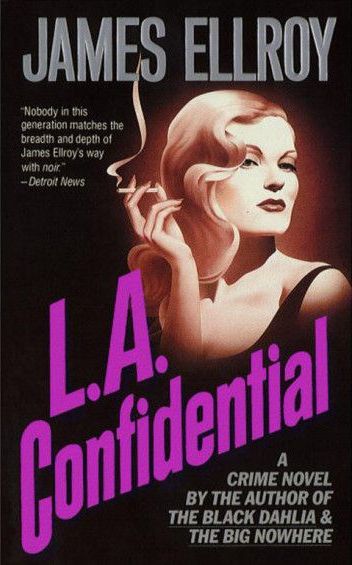
The best adaptations are ones where the filmmakers take the core of the novel and transport it onto the screen, maintaining the feel and ideas of the book, while jettisoning material that gets in the way. Having just read the novel on which it’s based I think the best example of that may be L.A. Confidential.

LACMovie

Directed by Curtis Hanson, who co-wrote the script along with Brian Helgeland, the film was critical lauded when it was released in 1997. Nominated for nine Oscars it won two, including for the screenplay (it lost best picture to Titanic – not a choice that aged well), which was adapted from the James Ellroy’s 1990 novel of the same name. It’s one of my favorite movies.

The book and movie both follow a trio of cops in 1950s Los Angeles as they try to unravel a conspiracy of corruption among the police, politicians, and wealthy businessmen. The events take place in the wake of “Bloody Christmas,” an actual LAPD prisoner abuse scandal, and are catalyzed by a (fictional, so far as I know) shotgun massacre of six people at a diner called the Nite Owl. Everything comes to a very bloody end.

LACBook

The film tells a tight story, hewing close to the Nite Owl killing as the driving force and covering only a few days. The cops – Edmund Exley (Guy Pearce), Wendell “Bud” White (Russell Crowe), and Jack Vincennes (he who shall not be named) – each take their own paths to the truth, which is far from convenient for any of them. They boil down into fictional cop archetypes – the by-the-book choir boy who has to get his hands dirty (Exley), the thug who wants to be more cerebral (Bud), and the glib hustler enamored with Hollywood glitz and scandal (Jack). As someone else wrote a long time ago, Exley and Bud make one good cop between them.

The book, by contrast, spreads out over several years (with huge time jumps pretty clumsily handled) and adds to the Nite Owl a huge, sprawling murder case that involves torture porn and not one but two serial killers! I’m probably biased from having come to the film first, but this part of the book didn’t work that well for me, as it was so over the top it sacrificed some verisimilitude for spectacle. It is also dark as fuck, full of language that wouldn’t pass any modern PC filter.

What’s amazing is that for leaving out all that stuff the movie still basically ends in the same place in terms of theme. Exley learns that sometimes rules have to be bent to deal with real evil (the lesson of every good fictional cop and, sadly, way too many real life ones), while Bud does his best to rise above his brutality, but winds up reverting to type in the end. Jack winds up dead in both tellings, although for very different reasons.

What the book does that no movie can touch is get us much deeper into the heads of the three cops around whom the story revolves. Bud in the book is basically Bud from the movie, but the other two get backstories that really sharpen their characters. As in the movie, Exley is a war hero, but in the book we learn he’s also a fraud – he framed the aftermath of an act of cowardice to look like bravery. The relationship with his father – an ex-cop turned real estate developer – also gets a lot of development and helps explain why Exley is who he is. The Jack of the book gets a lot more development, including a tragic fuck up in his past and a love interest that gives him more of a potential redemption arc.

Which is to say some things are lost in the adaptation, but not much. For the most part, Hanson and Helgeland got it right on what to cut and what to emphasize. But don’t take my word for it:

Ellroy approved: ‘They preserved the basic integrity of the book and its main theme, which is that everything in Los Angeles during this era of boosterism and yahooism was two-sided and two-faced and put out for cosmetic purposes. The script is very much about the [characters’] evolution as men and their lives of duress. Brian and Curtis took a work of fiction that had eight plotlines, reduced those to three, and retained the dramatic force of three men working out their destiny. I’ve long held that hard-boiled crime fiction is the history of bad white men doing bad things in the name of authority. They stated that case plain.’

That puts Ellroy in a pretty limited company of authors who are fans of the movies based on their works. Like I said – sometimes it’s not about what’s left in, but what’s left out that makes an adaptation successful.