Moore Hollow Monday – Free Excerpt

Welcome to the first Moore Hollow Monday! These posts will help you get excited about the release of my new novel, Moore Hollow, on October 5.

In this excerpt from the book, the main character Ben Potter meets with his sometime employer and editor Artith, about a potential job:

The book said nothing on the outside, its brown leather binding just barely holding up against years of abuse and neglect. It was about the size of a trade paperback with an afterimage of rough cowhide on the cover that had been worn smooth with age. He flipped open the cover and found the title page. The word “Journal” was printed across the top in barely legible gothic script. Underneath were a few black lines, spaces for the owner to write his name and the dates covered. The dates, written in neat, plain handwriting, were “July, 1905” and “February, 1907.” In the space where the journal owner’s name was written, it said, “Reginald Benjamin Potter.”

“Bloody hell,” Ben said.

“That’s you, isn’t it?” Artith asked, leaning back in her chair and looking extremely pleased.

Ben stared at the journal. “It’s my name, all right. But it’s not me. I’m the fourth poor soul to be saddled with it.” He closed the book and rubbed the rugged outer covering again. “Is this my great-grandfather’s?”

“You’ll have to tell me,” she said. I flipped through it, but I wasn’t really interested in the stuff he said about England. Did your namesake go to America?”

Ben nodded. “For a couple of years just after he left school. He went to some backwoods mountain town, coal mining country.” Ben shot her a dull look. “Only someone in my family would travel halfway around the world to wind up in a place that was just like home.”

Artith flashed him a confused look.

“Yorkshire,” Ben said, remembering that they had never really talked about his family before. “My family’s from just outside of Leeds. Been there for centuries. So leave it to my ancestor to go from English coal country to American coal country.”

“West Virginia,” she said.

Ben chuckled. “Where the bloody hell is that?”

“Somewhere west of Virginia, I suspect,” she fired back. “You know anything about what he did while he was over there?”

Ben shook his head. “Something with railroads, I think. The ones they used to haul coal out of the mines and to wherever it went before it got shipped off. He only spent a couple of years there before he came home and started the family business.”

“Which is not paranormal investigation or journalism, let me guess?” Artith said, chuckling.

“Much to my father’s chagrin,” Ben said, remaining stoic. “Civil engineering, actually.”

“How come you’re not an engineer then, Ben?” Artith asked, enjoying this little bit of torment. “Bad at maths?”

“No,” Ben said, more defensively than intended, “although that didn’t help. It just never did anything for me. To be a good engineer you have to be curious about how things work and why they sometimes don’t.”

“And you don’t care?” Artith continued.

Ben shook his head. “So long as whatever the damned thing is actually works, I’ve got no interest in the details.”

Artith thought for a moment like she had another prickly question ready but apparently passed on asking it. Instead, she shifted topics. “Did you know your great-grandfather then?”

“No, no,” Ben said, shaking his head. “He died before the Second World War. Granddad told me a lot about him, though.”

“He was an engineer too?” she asked.

Ben turned his head to one side, looked at the wall in thought, then said, “After a fashion.” Looking back to Artith’s confused face, he added, “He was a bit eccentric.”

She let that pass by unremarked. “Did your Granddad tell you anything about what his dad did in America then?”

“A little bit,” Ben answered without thinking. Then something tickled the back of his memory, something he hadn’t thought about for years. “Why?”

Artith leaned forward in her chair as if she might pounce. “I told you I skimmed that over the weekend,” she said, pointing to the book in Ben’s hands. “Your namesake tells quite a tale in there. As he lays it out, one of the local politicians was in a very tight race for his seat on whatever their little local council was called.”

Ben whistled. “A hundred-year-old political squabble is the kind of thing that gets you excited these days, Artith? Better find a job at Sky.”

She waved the joke away. “No, no, no. What’s interesting is what this desperate pol did about it. Or rather tried to do about it. According to your great-grandfather at least.”

“Which was?” Ben asked. The memory was coming into better focus now. He had some idea where this was going.

“This guy,”—she paused for a moment—“the name escapes me, but this guy, according to your forefather, actually raised the dead so that they could vote for him.”

Something clicked in his head. “Ah, yes,” he said. “The zombie voters.”

“You knew about this?” Artith asked, obviously hurt. “Why didn’t you tell me?”

“It’s not as if I was holding out on you, Artith,” Ben said. “Granddad told me a few stories. They were fun, but I never thought they were real. Seriously, why should I?”

“And nothing about working for the Journal made you think, perhaps, in a moment of reflection, that the time was ripe to revisit these stories?” she asked. It was clearly a rhetorical question.

Ben answered anyway. “I don’t work for the Journal, Artith, or for you unless some checks have gone missing in the post.”

She put up her hands in mock concession.

“Look, I loved my Granddad,” Ben explained. “But he was a little, what’s the word? Off, you know? When he’d talk about things his father saw in America I just took them for what they were—fun stories. Besides, Artith, you know me at least a bit. Do you think that working for places like the Journal have made me a believer in all this shit?” He gestured around the room, taking in all the paranormal exotica on display.

She shook her head. “Of course not,” she said, not altogether convinced. “That’s not why I showed you that, anyway.”

“It’s not?” Ben asked. “Then why? It’s kind of neat, I guess, but—”

“I want you to check it out,” she said, cutting him off with a devious look.

Moore Hollow – The hardest part of a mystery is deciding what to do once you’ve solved it.

Preorder now at Amazon, Barnes & Noble, iTunes, and Kobo

Cover (KDP)

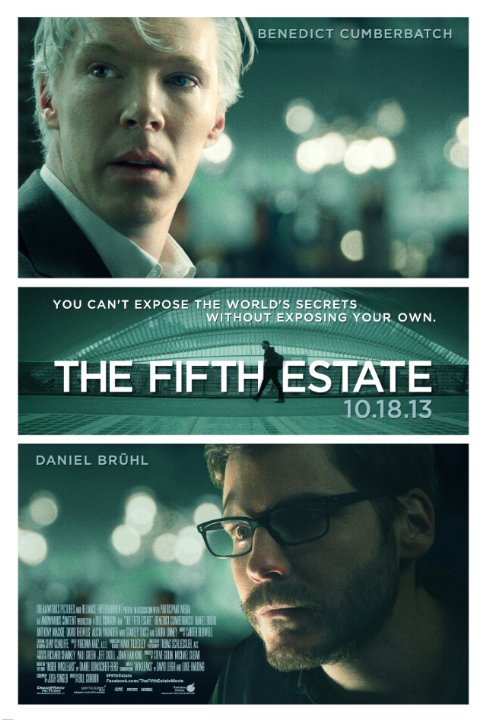
Weekly Watch: The Fifth Estate

The Fifth Estate desperately wants to be a movie about Julian Assange, the enigmatic founder and leader of Wikileaks. Problem is, it’s not really a movie about Assange. Instead, it’s really about Daniel Domscheit-Berg, who worked with Assange for a few years. It’s based on his book (along with one other) and he’s clearly the audience surrogate – the one who lets us in on the story.

But since The Fifth Estate wants to be a movie about somebody else, we don’t really learn enough about Berg to care about him or his motivations. It’s unclear why he hooked up with Assange (they knew each other when the movie’s timeline starts, although they were just meeting in person for the first time) and whether their eventual rupture was inevitable or the result of Assange really going over a bridge too far.

The biggest problem with this isn’t that Berg’s story might have been more interesting – maybe it isn’t – but that without a good anchor into the broader story of Wikileaks the person the film wants to be the center of attention, Assange, isn’t that interesting, either. Benedict Cumberbach (sp?) does pretty well with what little he’s got to work with, styling Assange as an aloof egomaniac with a messiah complex who may, nonetheless, be doing the right thing.

The shallowness of all this is evidenced via a running joke, in which Assange will relate some harrowing experience and then quip that’s why he has white hair. Late in the film Berg offers the real secret – he dyes it (no shit!) because that’s what the cult in which he grew up did. Assange has already told us about the cult, so this really isn’t anything new. What’s set up as some kind of big reveal – I thought, perhaps, Assange’s whole back story had been a lie cooked up to enhance his image – really isn’t. You shrug and move on, just as with the rest of the film.

It doesn’t help that most of the action takes place on computers and Hollywood hasn’t really figured out yet how to make that interesting. The great achievement of The Social Network was making a story about computers about people instead, so the (very brief) bits of actual computing we see mean something. Too many of the characters in The Fifth Estate spend too much time tapping out stuff on keyboards that we, the viewers, can’t even read (seriously – when the climax is happening it’s nearly impossible to figure what people are saying to each other). At one point it looks like, in an accommodation for dramatic purposes, that folks might read what they’re typing in a voiceover, but that only happens once. Somebody should have stuck with that instinct.

Amidst all that I suppose it’s no surprise that the central conflict, brought into sharp relief by the release of documents leaked by American soldier Bradley (now Chelsea) Manning, almost comes out of nowhere. While there are earlier cites to the Wikileaks policy of never editing or redacting the documents they release, nobody really questions this policy or how it might run up against conflicting concerns (say, the safety of innocent third parties) until it actually happens. Some better philosophical and political groundwork would have made that climax more powerful and dramatic.

In the end, there are a couple of better movies waiting to escape The Fifth Estate, one about Assange and one about Berg. It’s a shame the creative team behind The Fifth Estate didn’t have the material to make the first one or the desire to make the second one. Don’t take my word for it – Assange didn’t like it either.

FifthEstate

The More the Merrier

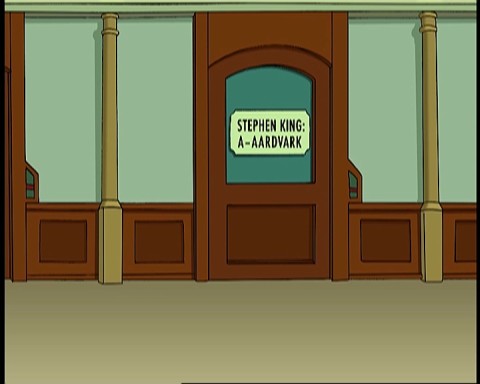
When I saw that Steven King had written a column in this weekend’s New York Times about profligate authors, my mind immediately went to this blink-and-you-miss-it joke from Futurama:

stephen-king-door

That was done in February 2001. He’s published 19 books since.

What I’m saying is that Steven King is amazingly productive when it comes to writing. He is also, of course, very very good at it. After all, here’s a guy who’s spent most of his life in the genre ghetto and had nonetheless won the National Book Award. He doesn’t need to do much more than point to that award to debunk the idea that quality is inversely proportional to quality.

So let’s ignore that – or rather take that point as given – and ask why the contrary holds true for so many people? Why do we tend to view people who put out lots of creative product – books, music, movies, you name it – aren’t as good?

One reason is that people figure that if you’re cranking out product at such a prodigious clip you must be scrimping on quality. It’s certainly possible that some creators would do that, releasing their stuff upon the world without a lot of editing or polishing. But it’s equally possible that whoever we’re talking about is just that prodigious. For some people writing is a hard slog, something that takes weeks and months to get right. Others are just able to pour forth things from the mind, tapping into a wellspring of creativity. We people in the first group aren’t fond of people in the second group, but that’s our petty problem.

The bigger issue, I think, is that the more someone produces the more their best stuff seems to get watered down, somehow. With only To Kill a Mockingbird on her resume Harper Lee was an undisputed master, a woman with a perfect batting average for writing classic American novels. Now that Go Set a Watchman has been released to less than thunderous applause, she’s batting 50 percent. Still really good, but somehow less impressive. Which is silly, because even if she followed up Mockingbird with a string of badly written shallow zombie mysteries Mockingbird itself is still what it is. But it takes some of the aura of inspiration off when somebody who hits a homerun their first time up at bat can only manage bloop singles (at best) for her other at bats.

Another issue is that the more product someone produces the more likely they are to experiment or move out of their comfort zone, potentially alienating existing fans. Steve Hackett’s had a pretty productive solo career (24 albums since 1975) that’s frequently jumped outside his progressive rock comfort zone to include a blues album and albums of orchestral material. As it happens, I’m not a huge fan of Hackett’s tangents, so I can see where someone’s overall opinion of an artist like him would dip at the perceived diminishing returns. But on the other hand, that’s silly because, no matter how many other albums he makes, Voyage of the Acolyte, Please Don’t Touch, Darktown, and several others will continue to be brilliant.

Which is to say that no matter how strange the creative mind may be, the minds of the people we create for can be even stranger. “Quality” is as much about perception as anything else and it’s nearly impossible to control how perfect strangers perceive you. If your muse only lets you grind out a new work every decade, don’t force it. But if your muse won’t shut up and helps you pop out something every month, don’t stifle it. Do what works for you.

Stephen King’s got your back – what more do you need?

Stick Your High Art Where the Sun Don’t Shine!

Another blast from the past . . .

OK, not really. I’ve got nothing against what most people think of as “high” art – I enjoy quite a bit of it – I just object to the classification. Regardless of how well-meaning or merely taxonomic it strives to be, it carries an implied judgment of “low” art as being, somehow, not worth as much. By further implication, it suggests that those who enjoy or make “low” art are somehow lesser than those who deal with “high” art.

I bring this up because of a recent essay over at the New York Times philosophy blog by Gary Gutting (with an assist from Virginia Woolf) about the divergence. Along the way, he appears to argue that musical worth, at least (it’s unclear if his metrics would apply to literature, film, or visual arts) can actually be quantified and judged objectively.

Along the way, he lays down this assertion:

Centuries of unresolved philosophical debate show that there is, in fact, little hope of refuting someone who insists on a thoroughly relativist view of art. We should not expect, for example, to provide a definition of beauty (or some other criterion of artistic excellence) that we can use to prove to all doubters that, say, Mozart’s 40th Symphony is objectively superior as art to ‘I Want to Hold Your Hand.’ But in practice there is no need for such a proof, since hardly anyone really holds the relativist view.

* raises hand *

I’m not sure how many of us there are, but I for one will proudly admit to being a relativist on the quality of art. Someone’s interaction with art is so personal, so bound up in the quirks of our own experiences, that it’s impossible to convert that interaction to some kind of objective measurement. For the record, I’m not ignoring the objective fact of consensus – that I like something a majority of the world can’t stand doesn’t make them right and me wrong, but it does mean I’m swimming against the current.

Anyway, back to the philosopher, who continues:

We may say, ‘You can’t argue about taste,’ but when it comes to art we care about, we almost always do.

Well, yeah, people will argue about things that matter to them, be it art, politics, or sports. Just because we do doesn’t mean the arguments can be won on some kind of objective scale. Humans will argue about anything!

He goes on:

You may, for example, maintain that the Stones were superior to the Beatles (or vice versa) because their music is more complex, less derivative, and has greater emotional range and deeper intellectual content. Here you are putting forward objective standards from which you argue for a band’s superiority. Arguing from such criteria implicitly rejects the view that artistic evaluations are simply matters of personal taste. You are giving reasons for your view that you think others ought to accept

Several things strike me as wrong about this.

The most important one, I think, is that Gutting is conflating the manner in which someone defends a preference with the actual basis upon which that preference rests. I’ve listened to an awful lot of music in my four decades on the planet, from the most popular radio hits to the most obscure wind band compositions. A lot of those I’ve listened to because of “hey, if you liked X, you’ll like Y, too” recommendations. I’m not sure they’re worth any more than a coin flip when it comes to predicting whether I’ll like it or not. Some things move me, some things don’t. The same is true for everybody, isn’t it?

More likely, these “objective” standards upon which Gutting relies are not the considerations we have when we decides something moves us, but post-hoc rationalizations to try and explain why that thing moved us. At the end of the day, I can’t really say why I prefer Marillion to Magma.* I suppose I could dig into the construction of the various songs and come up with some reasons for it, but they’d be meaningless. Most of the time, I’d rather listen to Brave than Udu Wudu. But sometimes not, you know? I can’t really tell you why.

Gutting’s reference to “objective” standards make me think of people who argue about whether one athlete is better than another when they’re separated by decades. Yes, statistics will be trotted out to support argue that Pele is better than Lionel Messi (or vice versa), but they don’t prove anything. Too many years have passed, the game has changed, etc. Ultimately, we have our favorite in mind before the argument begins and scramble to find some justification for it. If it was as simple as “consult these objective measurements” there’d be nothing to argue about.

Another flaw in Gutter’s presentation is assuming that those things he lists are “objective” to begin with. I’ll give him a pass on complexity for now (although more of that later), but the others have not just some, but large amounts of, subjectivity inherent in them. Whether something is “derivative” is a value judgment, in the end. Any musician is influenced by other music she’s heard and is, to some point, derivative of what’s come before. What’s the dividing line for being too derivative? What if it’s a parody, pastiche, or homage, anyway? Even more untethered from objective measurement are a piece’s “emotional range” and “intellectual content.”

As for complexity, how to measure it and what it means isn’t readily apparent. “Complex” generally implies some amount of difficulty, but any musician will tell you that sometimes playing something “simple” precisely and with musicality is more difficult than playing something that’s a tangled flurry of notes. Furthermore, that something is more complex doesn’t make it inherently more likely to connect with the listener. Quite the opposite, in fact. Returning to the Marillion/Magma example, few would argue if you called Magma’s more complex, but that wouldn’t lead inexorably to a conclusion that it was superior. For some folks it would be, for some folks it wouldn’t. For some people, there is a point where there are simply too many notes.

For another thing, using complexity as some sort of taxonomic tool fails to conflate like with like. Of course a three-minute song recorded in the early days of multitrack recording by four guys is less “complex” than a half-hour long symphony written to be performed by a full orchestra made up of dozens of people. So what? How does that help us judge either piece? It’s like saying desert is less nutritious than the main course – it utterly misses the point.

Someone in the comments to Gutter’s piece trotted out Duke Ellington’s aphorism:

There are simply two kinds of music, good music and the other kind

But even that’s not quite right – there’s what you like and what you don’t; what moves you and what doesn’t; what you want to hear and what you don’t. That a lot of people agree with you, or a consensus develops down through history that a particular work is a masterpiece doesn’t change that.

At the end of the day, as I said, art is personal. To label some of it “high” and some of it “low” throws up class barriers where none really exist. People like what they like. Sometimes, they like the same stuff you do. Sometimes they don’t. Deal with it.

* Before I get any angry letters in Kobaïan, I dig Vander’s bunch when I’m in the mood. Don’t take it personally.

This post originally appeared at my old blog on July 18, 2013

Some Validation on War and Religion

A while back I wrote a review of Fields of Blood, Karen Armstrong’s lengthy (if shallow) tome about the history of war and religion. There, I wrote this:

Third, and most troubling for the entire book, is Armstrong wants to view religion’s role in violence as simply as the critics to which she is responding. If it’s not THE cause, she seems to argue, it is exonerated. She ignores (or breezes right past) the role religion can play in making killing of the other guy all right, even if the underlying cause isn’t religious. The American Civil War is an example of a war that was purely political, but both sides thought they were doing God’s work. Ever listened to the ‘Battle Hymn of the Republic’? It’s all about how righteous the Union cause was.

I normally wouldn’t bring something like that back up just for fun, but a recent article in The Atlantic backs me up on this, so I thought I’d pass it along.

Allen Guelzo looks at the issue of religion on the Civil War, using a pair of new books as a jumping off point. While he’s ultimately more interested in what the war did to religion (created a bunch of new skeptics), along the way he discusses a new book by Harvard’ Drew Faust about how religion fueled the war, on both sides:

Above all, it was a time when Christianity allied itself, in the most unambiguous and unconditional fashion, to the actual waging of a war. In 1775, American soldiers sang Yankee Doodle; in 1861, it was Glory, glory, hallelujah! As Stout argues, the Civil War ‘would require not only a war of troops and armaments … it would have to be augmented by moral and spiritual arguments that could steel millions of men to the bloody business of killing one another…’ Stout concentrates on describing how Northerners, in particular, were bloated with this certainty. By ‘presenting the Union in absolutist moral terms,’ Northerners gave themselves permission to wage a war of holy devastation. ‘Southerners must be made to feel that this was a real war,’ explained Colonel James Montgomery, a one-time ally of John Brown, ‘and that they were to be swept away by the hand of God, like the Jews of old.’ Or at least offered no alternative but unconditional surrender. ‘The Southern States,’ declared Henry Ward Beecher shortly after Abraham Lincoln’s election to the presidency, ‘have organized society around a rotten core,—slavery,’ while the ‘north has organized society about a vital heart, —liberty.’ Across that divide, ‘God is calling to the nations.’ And he is telling the American nation in particular that, ‘compromise is a most pernicious sham.’

But Southern preachers and theologians chimed in with fully as much fervor, in claiming that God was on their side. A writer for the Southern quarterly, DeBow’s Review, insisted that since ‘the institution of slavery accords with the injunctions and morality of the Bible,’ the Confederate nation could therefore expect a divine blessing ‘in this great struggle.’ The aged Episcopal bishop of Virginia, Richard Meade, gave Robert E. Lee his dying blessing: ‘You are engaged in a holy cause.’

The problem, of course, is that once you have God on your side, the other side isn’t just wrong or dangerous, they’re downright Satanic. It makes it more difficult to view the conflict in realistic, practical terms. As Guelzo puts it, “Holy causes that can never be overcome do not make provision for surrender.”

Which is where Armstrong went so wrong. Warfare is evil, even if it’s sometimes a necessary evil. Dragging religion into it, even if only to bulk up your side’s morale, doesn’t help matters and almost certainly is going to make things worse.

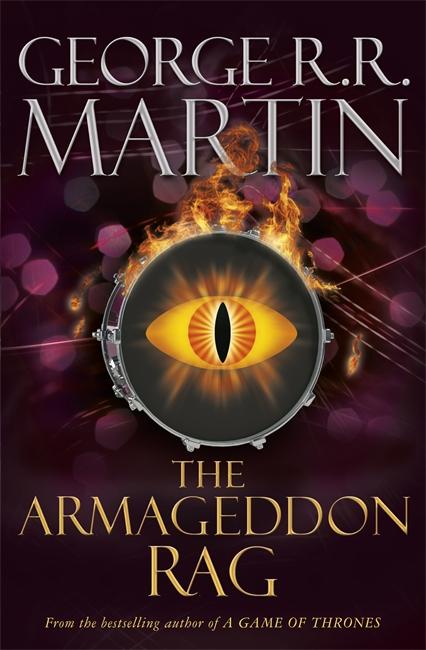
Weekly Read: The Armageddon Rag

It’s hard to believe that, in an era when A Song of Ice and Fire and it’s TV variant, Game of Thrones, are such cultural icons that there was a time when George R.R. Martin was a failed novelist. Commercially speaking, at least. After a handful of short-story collections and novels (including the very good Dying of the Light), The Armageddon Rag was such a flop when it came out in 1983 that (in Martin’s words) it “essentially destroyed my career as a novelist at the time.” He went to work in television for the next several years before he returned to novels and began working on A Game of Thrones. Is The Armageddon Rag that bad? Should it have been commercial suicide? Those, of course, are very different questions.

Let’s take the second one first. It might not have been suicide, but The Armageddon Rag must have been a hard book to sell. It’s kind of a murder mystery, but it’s also a music soaked reflection on the lost dreams of the 1960s. Did I mention it involves raising the dead and a subtle kind of deep, dark blood magic? You can see the issue. It’s fantasy, but it doesn’t really have that feel, but it’s certainly not “realistic.” I can see why it sank, regardless of quality (which gives me pause, given my upcoming novel about zombies that really isn’t a zombie story – get me?).

Which is as shame, because it is pretty good.

As I said, it starts with a murder mystery, in which our hero, Sandy, starts to investigate the grisly, ritualistic murder of the former manager of a band called The Nazgul (yes, it’s a Tolkien reference – check out the graphic on the bass drum on the cover below). They were a fast-rising proto-prog/hard rock band that’s career was cut short when, near the finale of a massive outdoor concert in New Mexico, their lead singer was shot and killed.

Sandy kicks off his investigation a dozen years later. But what starts as a mystery quickly swerves into a reverie for the 60s and the dreams of that era. Sandy puts from east coast to west (in his trusty RX-7), talking with the remaining members of the band as well as a group of his college friends, each of whom represents some version of the shattered hippie dream. There’s the sellout working in advertising, the burned out college professor, etc. The most poignant is a guy who’s controlling father (an Tom Clancy-type author referred to as Butcher Byrne *gulp*) basically drives him crazy and locks him away in the family mansion.

None of this has much to do with what appears to be the point of the story, which is why Martin deserves so much credit for making this bit fly by. Sandy’s road trip was probably my favorite part of the book.

Once Sandy hits the west coast, things take a turn. Sandy meets a guy who is planning a comeback for the resurrected Nazgul, one that is about more than just an 80s guy’s attempt to cash in on 60s nostalgia. This is where the blood magic starts to creep in. Sandy is wrapped up in this, of course, and, when push comes to shove and the band is raging through the title track one more time on that New Mexico mesa the fate of the world lies in Sandy’s hands.

Pity it takes so long to get there.

The first half of the book, which could have seemed too long and too untethered to the main story, flew by. Getting to know Sandy’s old friends was interesting, as was their different attempts to deal with the loss of their dreams and stick to their principles. It also contains a fantastic dream sequence while Sandy’s in Chicago that turns the 1968 protests into a real horror show.

The second half, by contrast, drags on as Sandy becomes the PR guy for the reborn Nazgul tour. We know early on this will all culminate with another concert in New Mexico and something is obviously going on, but we get length reports of multiple rehearsals and concerts that don’t really push things along all that much. Making things more frustrating is that as we grow closer to the climax we don’t get a much better idea of precisely why all of this is happening. It’s hard to see what new manager’s end game is. Perhaps that’s why, when the end finally comes, it sort of drops like a lump.

Having said all that, it’s still a pretty fun read. Martin obviously cares a great deal for the late 60s/early 70s music scene that the Nazgul would have inhabited and that shows through. The details of the band’s history, down to a discography and lots of song lyrics, are impressive, too. And it’s interesting to think about how even if music can change the world, whether it should.

The-Armageddon-Rag

Technology Changes, Human Desire Doesn’t

I’ve said before that the War on (Some People’s) Drugs is destined to be a failure because it is, at bottom, a war on human desire. People will always look for ways to feel better, to escape the horror/dreariness/boredom of their daily lives, or to just slip away for a little while. Why else do we, as a species, keep coming up with ways to mess with our brains? See my current favorite example, the prevalence of “ether frolics” in the late 19th Century.

The same is true when it comes to technology, but in reverse. Almost anytime people freak out about how some new technological development is going to send the world straight to hell in a hand basket, chances are they’re not being very original. The same complaints have happened before when technology we now don’t give a second thought about was new and perceived as dangerous.

Amanda Hess at Slate has a good example of how, regardless of technological means, human desire is fairly constant. Riffing on a series of think pieces about the evils of Tinder, the hookup app, she goes back more than 150 years to a similar piece about the evils of a then-new technology – the private post office box:

In 1860s Manhattan, young men and women in search of some excitement could duck into a little stationery shop uptown, open the unmarked notebook on the counter, and scribble a message to all the other strangers who were in on the secret.

* * *

Beneath each note, the author had scribbled the address of the nearest post office. Now any man who found himself smitten with the writing of Blanche G. or Annie B. could send the girl a private note to the post office, where her father couldn’t intercept it.

Think of it as Tinder for the pre-steampunk crowd!

A man named George Elliot was having nothing of it. In a book called The Women of New York (which sounds like an app in and of itself) he wrote, as Hess explains:

This postal personal-ad operation, Ellington sneered, could only appeal to ‘a certain class of people of the metropolis—more particularly the classes known as the demi-monde, the fast men and the women who are inclined to a rapid life.’ Ellington hardly deemed these men worth mentioning, but he filled a 650-page volume with opinions on the women he believed were destroying the moral fiber of society with their whoring. Though these women ‘outwardly appear to enjoy their various midnight revelries,’ Ellington diagnosed their private condition as ‘blasé and tired of everything.’

The point is not to laugh at Elliot’s ridiculous notions about the place of women. It’s to recognize that technological moral panic is a recurring theme throughout history. More than likely there were people who thought Guttenberg was going to hell for inventing movable type. Certainly it’s true that similar panics accompanied the early days of the telegraph, telephone, television, and the internet.

Why should mobile apps be any different? And in a few years we’ll find some other technological gizmo upon which to fixate and declare how it, too, shall ruin society just like all its predecessors didn’t.

The Dog Days of August Sale!

In which Maia, the One-Eyed Wonder Pup, speaks to you:

It’s August – the last hazy, sticky, hotter than heck days of summer. What better way to beat the heat than with a good book!

MaiaTalkstoYou

Better yet, how about a book full of stories that will take you anywhere but where you are! That’s The Last Ereph and Other Stories, a collection of ten tales of fantasy and science fiction. Go from mysterious verdant islands to a haunted lake in the woods and to eight other places. Well, OK, there is the one about the stifling heat and brownouts and a shady salesman, but still! It’s not where you are!

Final Cover Idea (KDP)

Only 99 cents on for Kindle, now until very early Monday morning. Tell ’em Maia sent ya’!

For more on The Last Ereph and Other Stories, including free samples, click here.

The Other Side of Jury Nullification

I haven’t talked a lot about law on this blog, but I did at my old one. Here’s a post on jury nullification that I thought I’d bring back in light of this interesting discussion over at The Volokh Conspiracy.

Jury nullification is back in the news, thanks to a heavy handed (and most likely unconstitutional) prosecution in New York.  The local US Attorney has charged a 78-year-old man with jury tampering because:

Since 2009, Mr. Heicklen has stood there and at courthouse entrances elsewhere and handed out pamphlets encouraging jurors to ignore the law if they disagree with it, and to render verdicts based on conscience.

That concept, called jury nullification, is highly controversial, and courts are hostile to it. But federal prosecutors have now taken the unusual step of having Mr. Heicklen indicted on a charge that his distributing of such pamphlets at the courthouse entrance violates a law against jury tampering.

Eugene Volokh does a good job of analysing the First Amendment issues with the prosecution, but I’m more interested in the underlying issue of jury nullification.

Jury nullification really isn’t a thing in and of itself.  It’s more a side effect of the prohibition against double jeopardy in the Fifth Amendment.  When a jury acquits a defendant at trial, that’s the end of it.  The prosecution cannot seek appellate review of the verdict.  By contrast, a defendant can challenged the sufficiency of the evidence on appeal, although (as I’ve explained before) there’s little chance of success.

The upshot of that setup is that a jury can return a not guilty verdict for any reason it wants, from the state’s failure to prove its case to the jury’s disgust at the law being enforced.  Those of the libertarian/people power persuasion see jury nullification as an unfettered good, a way for the people to check the power of the state when it comes to unpopular laws or discriminatory applications of otherwise popular laws.

That’s all fine and dandy, in theory, but it strikes me as naive in practice.  After all, if we tell jurors to “render verdicts based on conscience” there’s no principle that limits it to acquittals.  Judges routinely instruct jurors both to ignore evidence that comes out in court and instructs them about the burden of proof and other legal issues.  If they are free to disregard what the judge says, it could lead to all kinds of problems.

Maybe I’m just cynical, but from my experience it doesn’t look like jurors give the weight they should to the judge’s instructions in most cases. My completely unscientific conclusion is that the presumption of innocence and beyond-a-reasonable-doubt standard exist largely on paper at this point, not in the minds of actual jurors.  As a result, we already teeter dangerously close to a criminal justice system that makes convictions of innocent people too easy.  Any program that exacerbates that state of play can’t be altogether good.

Jury nullification has a long and storied history in this country, dating back at least to the libel trial of John Peter Zenger in 1733.  But that was a different era, one in which the basics of the law was much more in the grasp of potential jurors.  In the modern era, I’m not so sure that telling jurors they can and should go rouge won’t lead to more harm than good.  At the very least, it’s a problem that jury nullification advocates need to face head on.

And they’ll have to do better than some of the commentators to this article about the case over at Reason.  Asked to distinguish between jurors who acquit because they view the law as unjust and jurors who acquit for less lofty reasons (i.e., an all-white jury acquitting a Klansman who killed a black guy), the best they can do is a variant on the No True Scotsman fallacy – the second example isn’t “really” jury nullification.  Sadly, it produces the same result, so any theoretical distinction is moot.  In any case, further informing jurors that they can do whatever the hell they want would encourage bigotry and bias as much as more principled decisions.

NOTE: This post was originally published on February 28, 2011.