Weekly Watch: The Force Awakens

I’m a sci-fi/fantasy geek writer – you thought I was going to pass this one up?

Unless you’ve been under a rock for the past two years, you know that last week brought the rebirth of the Star Wars franchise with The Force Awakens, the biggest movie event in – well, in ever, I think (I’ve never stood in line for a movie in my 42 years, much less for a mid afternoon Saturday matinee). This was the first of a new trilogy, the first since Disney bought the franchise, and the first to be made without the input of George Lucas. Could it bear the weight fandom has put upon it?

Short answer – very much yes.

Longer answer . . . well, read on (trying to be as non-spoilery as possible).

The good news is that the scripted, penned by (among others) West Virginia native and Empire Strikes Back scribe Lawrence Kasdan is strong where it counts most, which is in the actual interaction of people (well, “beings,” I guess) on screen. Not only are the characters, be they new or old, given interesting things to say and do, but J.J. Abrams manages to do something that Lucas has lost all talent for – getting good performances out of actors. You care about what happens to the people on screen, which goes an awful long way.

The effects, as promised, harken back to the first trilogy rather than the “throw all the CGI things on screen!” approach of the prequels. In fact, it’s quite fun to see the sleek, modern interior of the First Order TIE fighters contrasted with the decidedly retro (dare I say analog?) controls of the Millennium Falcon. When there are battles (and there are!), they’re refreshingly gritty and small enough that we can keep track of what’s going on (there’s one scene in particular where the camera keeps ground action in frame while tracking what a particular pilot’s doing in the air – great stuff).

As for the overall story, it’s a bit of a letdown. If you’re a fan of the series – hell, even if you’ve only seen Star Wars itself, it will seem awfully familiar. It’s not a carbon copy, which is best seen in the contrast between the two characters who begin things on a backwater desert planet, Luke and Rey. Luke wants nothing more than to get his ass off Tatooine in the beginning of Star Wars. Rey, on the other hand, wants nothing more to hang around on Jakku. But the beats are largely the same and as things wind to the big finale, the voice of Peter Griffin might pop into your head.

That’s not entirely a bad thing. The big ask of The Force Awakens was to wash the stench out of our mouths from the prequels, as well as set up two more movies (at least). It succeeds in that, partly by reassuring fans that it’s going back to its roots, that everything’s in good hands. It’s not the greatest movie ever made. It’s not the best Star Wars movie ever made. But it’s damned good and makes me look forward to whatever comes next.

Merry Xmas, everybody – Star Wars is back!

star-wars-force-awakens-official-poster

When Law and Soccer Collide

In the United States, we generally think of sports team logos getting in trouble with modern law, bowing to the changing perceptions of a (hopefully) more inclusive population. However, that’s not always the case, particularly when you’ve got a legal foundation that goes back well beyond 1776.

Consider this Big Soccer article about Ayr United, currently playing in the third tier of Scottish soccer (confusingly called League One – just trust me). They’ve been on a roll on the field, but could run afoul of the law off of it, all due to their team crest, which is this:

AUFC Crest

Nice, huh? It’s been around since the 1950s, but is in danger of something that’ s been around much longer – a law about heraldry that dates back to 1592. England has a civil court to deal with heraldry, but Scotland’s body, the Lyon Court (presided over by Lord Lyon, King of Arms, naturally) is a little more hard core:

In Scotland however, infractions in heraldry are actually a criminal matter and nobody can legally use any sort of heraldic device without the approval of the Lord Lyon, who has the power to have any unapproved heraldic devices, and anything they are attached to, destroyed. This means that if Ayr make no changes to their emblem, the Lord Lyon could destroy all team kit and merchandise.

Another club in Ayr’s league, Airdire United, actually did the latter when their crest came under scrutiny.

Why Ayr and why now? The Lyon Court only investigates things brought to its attention, so somebody must have ratted (suspicion falls on fans from rivals Kilmarnock because, naturally, an Ayr fan ratted them out decades ago). Having said that, one Scottish attorney estimates that 25 of Scotland’s 42 professional soccer clubs might have similar issues.

I like the conclusion the article writer reaches:

It may seem as though Ayr United and the clubs before them are being unfairly treated, but I should point out that the Lyon Court is there to uphold the law. It may be a ridiculous anachronism of a law, but it’s still the law, and if the Lyon Court decide that a prosecution is in the public interest, then that’s what they’ll do.

That’s why it’s important for legislative bodies to go back through old laws and clear out those that are outdated and never enforced. Not only do they undermine confidence in the law, the provide troublemakers, whether of the elected or civilian variety, with tools to harass their rivals. The UK is currently in the middle of such a project, looking to strike old laws from things like wearing armor in Parliament to handling salmon “under suspicious circumstances.” Hard to say whether that would reach so far as the Lyon Court, however. I’m guessing not.

So loopholes it is for Ayr United.

Weekly Read: Calculating God

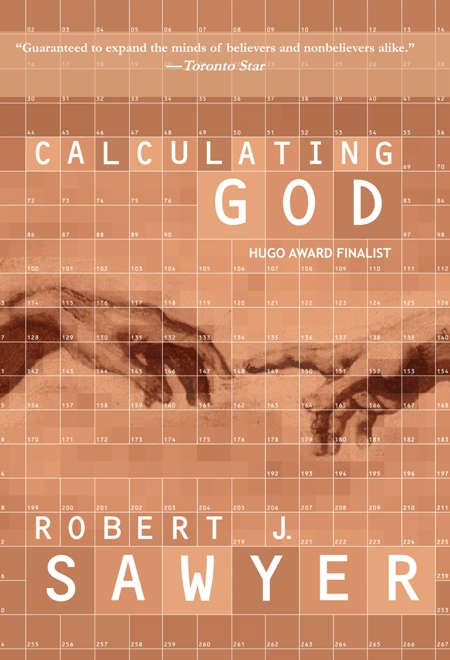
It’s a hell of an opening for a book. A six-legged alien lands on earth. He doesn’t land in Washington, DC in front of the White House. No, he lands in Toronto in front of a museum. And he doesn’t ask the nearest passerby to “take me to you your leader,” he goes to the front desk and inquires of the security guard if he might speak to a paleontologist.

So begins Calculating God, Robert Sawyer’s twist of one of the most beloved tropes in science fiction.

That trope is the alien who comes to earth to share the advanced knowledge of his species with humanity, often for good, though sometimes for ill. Think Klatuu from The Day the Earth Stood Still or the Overlords of Arthur C. Clark’s (and SyFy’s!) Childhood’s End. Hollus, the alien in question for Sawyer does the same, but with a twist – she’s come to share the Good News.

Well, not quite. But she’s looking for God. Actually, she’s a believer, certain that there was an intelligent designer. Her cancer-riddled human counterpart, Tom Jerrico, is not. Thus the usual frame of received wisdom from aliens is flipped. Thus ensues a lot of talking, of the vaguely scientific and philosophical variety, about the possibility of an intelligently designed universe.

To be certain, this is not a serious exploration of the issue. That’s because Sawyer stacks the deck, adding in a few additional “facts” known to the aliens but not us that pushes well beyond the basis for modern intelligence design or “Goldilocks” theorists. Rhetorically it’s a cheat, but dramatically it’s quite interesting. Tom, after all, is a man of science as well as an atheist and skeptic. If anyone should be open to new evidence about a feature like the existence of God, it would be him (contrary to popular belief, most of we atheists don’t claim to know for certain God doesn’t exist, just that we haven’t seen proof of his/her existence). Given that, it’s silly for people to get upset about the arguments presented and Tom’s eventual “conversion,” given that, to paraphrase MST3K (talk about resurrections!), it’s just a book and folks should really just relax.

In this sense, Sawyer’s book hasn’t aged well. In 2000, when the book came out, it might have been possible to give the benefit of the doubt to those arguing “intelligent design.” However, just five years later in a landmark court decision, it was revealed that intelligent design purveyors are simply religious folks trying repackage creationism into a “science” they can shove into public schools. The hilarious find and replace evidence in that case speaks for itself.

Not that those people are interested in the same kind of designer as the aliens Sawyer constructs. Their designer is just another advanced alien intelligence, one so far ahead of the rest of us as to appear magical (kind of like the Vorlons from Babylon 5, now that I think of it). The aliens aren’t interested in saving souls, condemning sinners to hellfire, or purging heretical ideas. That the book ignores that this is true for so long is one of its primary faults.

But far from its only one.

For one thing, the book is awfully talky. Which makes sense, as the main interest is in Hollus learning about Earth’s history and how that plays into her theories about a created universe. But it can be kind of dull and doesn’t have any real tension to it. In addition, Tom is a pretty bad foil for Hollus (he turns Occam’s Razor from a guidepost into dogma) – more stacking of the deck. For most of the book the only breaks are Tom’s maudlin asides about his cancer, which don’t add much to things.

Sawyer does something about this in the last third of the book, but in incredibly ham-handed fashion. He introduces to Arkansas Christian terrorists – one is even named Cooter (the other is JD – thanks Robert!) – who bomb abortion clinics and, eventually, shoot up a bunch of priceless fossils at the museum. Putting to one side how these rednecks ex machina manage to get into Canada after first blowing up a clinic in Buffalo (but, remember, this was before 9/11), their stories end when they’re both killed at the museum, so they come and go so quickly and without any real impact that you’re left wondering just what the point was.

The second attempt at action fares better, but makes you wonder why it hadn’t come earlier. A celestial event that should destroy life on Earth (and the other alien worlds) is blocked, literally, by the hand of God, leading the aliens to pick up and head to that part of space. Naturally, cancer-ridden Tom comes with them – who wants to spend your last days with your loving prop family, anyway? What plays out frantically in the last bit of the book might have been interesting with some more room to breathe, but it’s so rushed that you just don’t care.

The jaunt to the stars also highlights how the alien technology conveniently moves at the speed of plot. Yes, they’re advanced enough to travel at near light speeds from star to star. No, sorry Tom, they’re not any more advanced than late 20th century Canada when it comes to treating cancer – not only do they not have a cure, they don’t even have a better way of treating it. But, good news! In spite of the fact that you’re lurching toward your death bed, they can put you in suspended animation (twice!) for the space trip! It just doesn’t make much sense.

All this makes the book sound worse than it is. It’s a fairly quick read, has a fun premise, and raises a couple of interesting ideas. It could have been a lot more engaging and epic, however.

CalculatingGod

Weekly Watch: American Sniper

I’ve said, for a long time, that all art is subjective. Beyond the fact that art impacts different people in different ways, that’s because different people bring different perspectives and experiences to art in the first place. Two people looking at the same artistic work (or reading it or listening to it) can come to very different opinions about it based on the individual lens through which they’re doing the viewing. In that sense, art can become a Rorschach test, saying more about the person reacting to it than the art itself. A good recent example of that was American Sniper.

It’s a fictionalized account of the life of Chris Kyle, credited as the most prolific sniper in American military history. He racked up that total during the Iraq war. Ironically, given that he made his reputation with a gun, Kyle’s life was ended by another veteran at a shooting range in 2013. I have no doubt that the perceptions and values I brought to the movie colored the way I saw it.

It’s an interesting, if muddled, film. After a quick flashback intro, it alternates between harrowing battle scenes based in Iraq (the last one, which involves an all engulfing sandstorm, is really impressive) and home front scenes in Texas that shows how much impact the experiences are having on Kyle. The problem is that it never commits to either venue. It’s neither an all out war movie, nor is it a deep examination of the problems faced when vets come home.

Nowhere is that more obvious than in the way it glosses over Kyle’s life once he left Iraq behind. I don’t mean his death – that’s not shown on screen. I mean his transformation from brooding, seriously messed up soldier to a loving father and husband who was putting his experiences to use helping other veterans. All that’s covered with such brevity that it might as well have been a musical montage.

As I said, American Sniper turned into a kind of Rorschach test, with reviews saying more about the person talking about it than the film itself. That was true whether it was a professional pundit or some random person popping up on the Internet.

On the pundit side, check out Matt Taibbi’s review. I like Taibbi and agree with him on a lot of things, but I have to wonder if he actually watched the moving before writing that. It’s much more about what it isn’t – a catalog of the sins of the Bush administration and the Iraq War – than what it is. Instead, it’s very personal story about one man in the middle of something bigger. In fact, the plot makes it a mano y mano battle between Kyle and his Iraqi counterpart suggesting (as the recent Sicario did for the drug war) that everything, even war, in the end, is personal.

If liberal pundits were quick to slam the film for its perceived politics, conservatives were quick to praise it for the same reasons – because they found their politics positively reflected in it. Personally, if I thought American Sniper was validation of my politics, I would be very frightened. But I come to it with my own baggage, right?

See what I mean about a Rorschach test?

And it goes beyond politics. Take, for instance, this discussion in IMDB about how Eastwood ruined a perfectly good “war movie” by having scenes with a “whining wife” in them. Ignoring the fact that Eastwood wasn’t interested in making a “war movie” or that movies with scenes of warfare in them can be about more than killing bad guys.

American Sniper isn’t unique in this, although the effect is amplified because it deals with recent history, politics, and overseas adventures that are still causing us all kinds of problems. It might have cut across that divide with a little more commitment to being one thing or the other.

american-sniper-poster

The Trouble Of Quantifying Art

It’s received wisdom that movies adapted from written material are, to steal a phrase from an excellent album by The Tangent, not as good as the book. I tend to agree with that wisdom, but there are some notable exceptions (Dangerous Liaisons, The Sweet Hereafter, LA Confidential). Is there some way we can tell, with math and numbers and stuff, which ones work better than others?

No. No there isn’t.

That doesn’t keep people from tying. Back when the last part of The Hunger Games film saga came out, stats guru Nate Silver purported to identify the 20 “most extreme cases” of film adaptations that failed to live up to the quality of their book source material. When I clicked the link I was actually hoping Silver might have broken out of his usual routine and embraced the ambiguous in the world.

Alas (footnotes omitted):

there are extreme cases where book-lover rage is justifiable. Which cases? I pulled the Metacritic critic ratings of the top 500 movies on IMDB tagged with the “based on novel” keyword. I then found the average user rating of the source novel for each film on Goodreads, a book rating and review site. In the end, there was complete data for 382 films and source novels.

The results are kind of fun to look at. Remember, Silver’s most interested in the divergence between good books and bad movies, and vice versa, so a great adaptation of a great novel kind of falls through the cracks. Still, who knew that Up in the Air was so much better a film than the novel? But that list points out some of the problems with Silver’s undertaking. Is it completely accurate to call Apocalypse Now an “adaptation” of Heart of Darkness, or is it simply inspired by it? And Dr. Strangelove, while it may have adapted the plot of Red Alert, it turned the ideas of it on their head, playing it as dark satire, rather than serious, suspenseful drama (it got that from Failsafe). The reverse list is a little easier to understand, for the reasons Silver mentions.

But the real problem isn’t in the particular results, it’s in the method. Mainly, Silver is comparing apples and oranges. He somewhat admits this in a footnote, when he admits that there isn’t a critic aggregator for books like there is for films in Rotten Tomatoes. But he falters in then assuming that there isn’t a like to like comparison he can make. IMDB also has user ratings, numbers generated by fans that are more like the Goodreads ratings than Metacritic averages.

The difference is important. Every few years you’ll see a think piece like this one about how film critics don’t appear to have much influence on what movies people go see. They routinely trash the kind of big summer popcorn movies that do billions of dollars in business. It doesn’t suggest that the critics are wrong or right, just that they have a different frame of reference than fans. A critic sometimes sees a dozen movies in a week, whether they appeal to her likes and dislikes or not. The typical movie goer, on the other hand, sees one or two and tends to pick stuff he thinks he’ll enjoy. So comparing book fans to movie fans would have been a baseline for a survey like this.

Another problem, that Silver doesn’t approach at all, is one of scale. Put simply, even really popular books are read by orders of magnitude fewer people than see adaptations of them. Going back to Up in the Air, how many people read that book? Yet it did more than $166 million dollars in box office. My thought is that book fans tend to be more passionate than movie fans, more invested in their favorites. Not to mention, if most of the people who see an adaptation never read the source material, how can they compare one to the other?

Ultimately, that’s all nitpicking. Trying to reduce art to numbers is a fool’s game. Fun to play sometimes, but ultimately like trying to light a cigarette in a hurricane.

UPDATE: Or, as James Poniewozik puts it in a New York Times write up of the best in television for 2015:

Art isn’t math.

Amen.

Unmasking Judas

Since the time I wrote this post in 2014, Big Big Train staged a set of fairly rare live gigs which, thankfully, were recorded. They’ve been sharing the results on YouTube, the second of which was “Judas Unrepentant.” Sounds like a good enough excuse for me to repost this. Watch, listen, read, and enjoy!

It took a while for Big Big Train’s The Underfall Yard, released in 2009, to grow on me.  It’s successor, English Electric Volume One still hasn’t*, for whatever reason, with the exception of one track.  It’s a song about something that always strikes me as fascinating – art forgery.

“Judas Unrepentant” is about a guy who forges art, but does it in a very clever way.  Rather that churn out reproductions of known classics, he has a different scheme:

Establishing provenance
Acquiring old frames with Christie’s numbers
Then Pains a picture in the same style
Specializing in minor works by major artists

It’s quite brilliant, actually.  Reminds me of a story I heard Rick Nielsen of Cheap Trick tell about their early days – where every other bar band played the radio hits by Zeppelin or The Who, they’d learn the B-sides nobody paid much attention to, so it sounded like original material (although they never passed it off that way).

I always wondered if the song was completely fictional or inspired by a real forger.  Last night, I think got the answer, thanks to a 60 Minutes piece on Wolfgang Beltracchi.  As the setup explains:

Wolfgang Beltracchi is a name you may never have heard before.  Very few people have. But his paintings have brought him millions and millions of dollars in a career that spanned nearly 40 years. They have made their way into museums, galleries, and private collections all over the world.  What makes him a story for us is that all his paintings are fakes. And what makes him an unusual forger is that he didn’t copy the paintings of great artists, but created new works which he imagined the artist might have painted or which might have gotten lost. Connoisseurs and dealers acknowledge that Beltracchi is the most successful art forger of our time — perhaps of all time. Brilliant not only as a painter, but as a conman of epic proportions.

Now, the song is not Beltracchi’s story.  For one thing, the song indicates that its hero wanted to get caught:

His time bombs are in place
And anachronisms
Clues pointing to the truth
If ever they are X-rayed

It’s clear from the story that Beltracchi didn’t want to get caught, which he did.  He was sentenced to six years in prison and his wife/codefendant to four.  As for how he got caught?

But then in 2010, he got busted by this tube of white paint.

The Dutch manufacturer didn’t include on the tube that it contained traces of a pigment called titanium white. That form of titanium white wasn’t available when [Max] Ernst would have painted these works and Beltracchi’s high ride was over.

Which is interesting, because in the song, our hero:

Wrote legends in lead white
to trick the experts
And hoodwink the trained eye

Coincidence?  Could be.  But Beltrachhi’s story must have been in the news in Europe sometimes before “Judas Unrepentant” was written, so it makes sense that one served as inspiration for the other.

One thing I will say for the song is that is provides something the 60 Minutes piece doesn’t, which is answering why go through all trouble?  Beltracchi is a staggeringly talented guy.  Presumably he could have been a successful artist under his own name, so why all the fraud?  “Judas Unrepentant” has an answer:

He’s painting revenge
Embittered by lack of success

* * *

Expressing contempt
For greedy dealers
Getting rich
At the artist’s expense

Revenge as the long con.  I like it, although it all comes to a tragic end, sadly.

I think what makes art forgets so interesting is that they tend to poke a finger in the eye of the art world, challenging its aesthetic bona fides and pointing out how, so often, people only care about the name attached to a work, not the work itself.  To that end, I applaud this collector:

This $7 million dollar fake Max Ernst is being shipped back to New York.  Its owner decided to keep it even after it had been exposed as a fake. He said it’s one of the best Max Ernsts he’s ever seen.

Because, in the end, the important thing shouldn’t be whether the signature on the bottom makes your friends jealous, but whether the art moves you and makes you think about it.

* The similarly named English Electric by OMD, however, grabbed me right away, for what it’s worth.

This post originally appeared at my old blog on February 24, 2014.

Back In the Saddle

Hey, everybody! Did you miss me? Now that November’s become December, it’s time to get back to blogging. First us, here’s what I’ve been up to for the past thirty days:

NaNo-2015-Winner-Banner

That’s right, my National Novel Writing Month campaign was a smashing success, with a grand total of 66.744 words written for The Bay of Sins. I got into a groove right away and averaged about 2200 words a day, about 500 more than necessary to meet the 50,000 words in a month goal. Not bad, considering I have a day job and everything.

Actually, this is by far the best year I’ve ever had. I’ve usually struggled across the 50k line on the 29th or 30th. My previous best was when I did the first draft of The Water Road and hit 55,000 in the month. So 66,744 is a hefty improvement.

What made it easier this year? For one thing, The Bay of Sins is the final part of a trilogy, so it’s all downhill. I’m working with characters I know well (for the most part) and in familiar locales, so the learning curve that usually goes with a new story is pretty much gone. For another, this is the first thing of this length I’ve sat down to write since releasing stuff out into the world this year. That makes it easier, believe it or not.

Having said that, there’s much more to go before The Bay of Sins is finished. Hopefully, I’ll knock out the rest of this draft before Christmas.

Look for way more info about The Water Road – the entire series – with Water Road Wednesdays, coming in 2016!

What I’m Doing for the Next Month

Traffic here on the blog will be light-to-nonexistent for November while I participate – once again – in National Novel Writing Month, or NaNoWriMo.

NaNo-2015-Participant-Banner

Except for 2010 (I was editing) and 2014 (I was getting ready to spend two weeks in Cambodia), I’ve done NaNoWriMo every year since 2008. I’ve “won” – that means I’ve produced at least 50,000 words from scratch – four years and failed two other times.

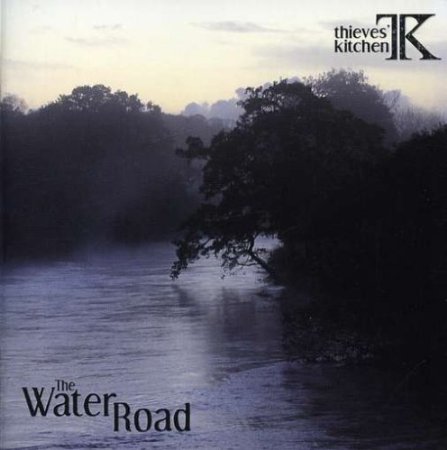
I’ve found NaNo to be a good time to really focus down on writing and force myself to be productive every day. Moore Hollow, which came out last month, was my NaNo project for 2012. Meanwhile, The Water Road and The Endless Hills were projects for 2009 and 2013, respectively. As you can see, it takes a lot of time beyond NaNo to polish something into a finished product, even if it’s a winner.

All of which is a long way of saying that for November, NaNo and The Bay of Sins (book three of the trilogy of which The Water Road and The Endless Hills are the first two parts) is my first priority. I can’t say I won’t blog about anything – in fact I know of one thing I’ll have to blog about – but pretty much anything else will have to wait until December.

You can keep track of my progress, if you like:

Alternately, I’ll be posting occasionally to Twitter, so you can follow me there.

See you in December!

“Quotas” – A (Very) Short Story

I’ve written stories that are lots of different lengths. Moore Hollow’s a novel, albeit a fairly short one. The books of The Water Road trilogy, on the other hand, will all clock in at over 110,000 words a piece. Then, of course, in The Last Ereph and Other Stories there are stories ranging from just over four pages to nearly twenty.

But I’ve never written a story in 100 words before. Until author Eric Douglas (who interviewed me way back in April), issued a challenge to write a 100-word story for Halloween. Not less than 100 words, not about 100 words – 100 words exactly. Holy hell, was it hard! I had to bag my first attempt, but I really like what I wound up with.

Here it is – “Quotas”

“Nothing personal,” the demon said, squatting in a fetid cloud of hot vapor. “Just business.”

“You’re trying to take my soul!” I tried to back up, but the tunnel wall blocked any escape.

“It’s nothing to do with you. Trust me.” The demon waved an oozing appendage at him.

“You’re a demon!”

“Then don’t.” The demon shrugged, in the way it would if it had shoulders. “Can’t stop some things, regardless.”

“Like?”

“Death. Taxes. Such as it’s the end of the month,” the demon said, long forked tongue slipping over its calloused, slimy lips. “You know. Quotas.”

The demon sprang.

Happy Halloween!

Schary---Spooky-Devil-Cat--------Devil-Kitteh---Omg-And-Its-Not-Even-Halloween---Sounds-Like-Every-C

Be sure and check out Eric’s website for links to all the other 100-word stories he got!

Weekly Listen: The Race for Space

I’ve always had a soft spot for concept albums. There are such things as instrumental ones – Camel’s The Snow Goose comes to mind (along with every piece of orchestral program music ever) – but lyrics are usually a key part of playing out the concept. Words are important – but what if you use the words of others?

On the one hand, Public Service Broadcasting is an electronic (mostly) pop duo that makes interesting, textured, music. But what really makes them stand out for the crowd is what they do with the words of others.

Using samples of speech isn’t a new thing, particularly with electronic music. My favorite examples are the conspiracy theorist preacher in The Orb’s “Salt”, who punctuates every statement by yell “fact!” and the more subdued, but just as loony, guy in Mogwai’s “Repelish” who explains why Led Zeppelin really wants you to go to hell.

PSB goes beyond that. They use speech samples to tell a story, to weave a narrative through an album that reflects a particular concept. It’s more than a trick or a fascinating experiment. It takes the whole project, which would probably be pretty good in the first place, and pushes it into greatness.

As you might have guessed from the title, The Race for Space is about the space race, in particular the glory years leading up to the moon landings. It starts with the title track, which is just John F. Kennedy’s famous speech (“we choose to go to the moon in this decade . . .” – you know the one) and some lush, slowly growing choral chords. But it serves as a statement of intent, of just what exactly you’re in for going forward.

From there on out, tunes jump from various space race milestones, both Soviet and American. The best of the bunch are “Sputnik,” which has a broad post-rock kind of feel, punctuated by lots of burbling synth goodness (mimicking the “bleep bleep” of the “new Russian moon,” as the narration says), and “Go!,” which takes the go/no go calls of the various departments checking in during the Apollo 11 landing. They way they’re edited together to work perfectly with the driving beat catches the excitement of one of humanity’s great achievements.

Of course, some of the milestones are a little less celebratory. Specifically, “Fire in the Cockpit,” which deals with the fire in the Apollo 1 capsule, is mostly a dirge with very serious explanations of what happened layered on top. Other tracks are more subdued and reflective, like “The Other Side” and “Valentina.” There’s even a bizarre change of pace horn-laden jam for “Gagarin.”

I learned about The Race for Space from Prog magazine. At first, it doesn’t seem like a natural fit. Aside from a bit of “E.V.A” where the rhythms get tricky, there’s nothing here that sounds “proggy.” But on the other hand, it’s a completely original and interesting album from start to finish, unafraid to head down whatever particular rabbit whole strikes its fancy. If that ain’t prog, I don’t know what is.

RaceforSpaceUS

RaceforSpaceCCCPjpg