Water Road: Wednesday: The Triumvirate

As I mentioned a few weeks ago, there are a pair of nation-states north of the Water Road, along with a coalition of city states. When The Water Road begins, they’re all joined in an alliance called the Triumvirate. And I don’t mean these guys:

triumvirate

The where and why of the Triumvirate says a lot of what happens all during The Water Road trilogy.

More than a century before The Water Road begins the lay of the Altrerian political landscape is this:

On the west coast was the United Guilds of Altreria, a society organized around trades and vocations. Guilders don’t have families and tend to be very practical and open to new ideas. They were the first to jump on the Great Awakening, a movement during which most people lost belief in the gods.

On the east coast was the Bonded Realms of Greater & Lesser Telebria. As it suggests, the kingdom is a union of two smaller kingdoms, one each north and south of the River Teleb. It has a king (naturally), Ibel IV, but his power has largely been sapped away by parliament. Still, he’s a powerful figurehead and can definitely throw his weight around every now and then. Telebrians tend to be very traditional and stuck in old ways of doing things.

In between was the Arbor, a thickly forested portion of land consisting of lots of disparate cities and villages. Of those, seven are ancient walled cities of the most importance: Tomondala, Kerkondala, Vertidala, Maladondala, Felandala, Nevskondala, Durlandala (“dala” means “great walled city” in the ancient Altrerian tongue). They tend to be fiercely independent and suspicious of outsiders.

Around this time, a Neldathi leader named Sirilo united some of the clans and launched an invasion of Altreria. This was the First Great Neldathi Uprising. The Neldathi army rampaged across the Guildlands and threatened the rest of the continent. The Guilders and the Telebrians got together to form a defense alliance. However, they realized that without the Arbor involved that could provide Sirilo’s army a place to hide out, lick their wounds, and regroup. They went to the seven cities in the Arbor and convinced them to form a loose confederation, which became the Confederated States of the Arbor.

Thus, the Triumvirate was born, an alliance consisting of three equal partners – the Guilds, the Telebrians, and the Confederation. It established a city, Tolenor, on an island in the Bay of Sins on what was, essentially, neutral territory. It also served its purpose – a Triumvirate army chased Sirilo and the Neldathi back south of the Water Road, crushing the Rising at the Battle of the Hogarth Pass.

With the Rising crushed, the Triumvirate carried on, dedicated to keeping the Neldathi from unifying again and threatening the land north of the Water Road. Among other things, it established a string of forts along the southern bank of the river, in Neldathi territory. At the time The Water Road begins it’s been successful. But that’s all about to change.

Weekly Read: The Final Empire

As I said the other day, I’ve finally gotten around to discovering the work of Brandon Sanderson. He’s perhaps best known as the guy drafted in to finish the Wheel of Time series after Robert Jordan died. But he’s a prolific author in his own right and one of the hottest fantasy writers going (I swear there was one of those “a bunch of fantasy series that should be adapted for TV” lists that was made up mostly of his stuff).

Mistborn appears to be Sanderson’s magnum opus, comprising two trilogies and some other associated works. The Final Empire (or simply Mistborn, in some quarters) is where it all began. It’s a pretty fun read that does a good job of setting up the world in which Sanderson is playing, but it’s not without its faults.

The most intriguing feature of Mistborn is it’s system of magic (if that’s what it is), which is tied to the use of metals by particular people. The main branch is called allomancy and allows a person to “burn” a particular metal (already ingested) in order to enhance physical and mental abilities. A few people can use one particular metal with skill (although, naturally, the book is full with characters who can). But a very select few, the Mistborn, can burn all of them, turning them into, essentially, superheroes. There’s a less developed system, feruchemy, that also allows people to use metals in interesting ways.

Sadly, this system is dropped into a world that plies fairly common waters, with a black-hearted despot ruling a country full of put-upon subjects. To be fair, said subjects aren’t really bucking for rebellion (at least at first), which is a change. But the overall arc of the story is pretty clichéd. I thought, for a while, the big bad, the Lord Ruler, might be a more complex character than it appeared, but that didn’t come to fruition.

Allomancy also suffers from what I find to be a common fault in fantasy – it’s not very democratic. That is, you’re either born an allomancer (and of noble blood) or you’re not. And while it’s certainly up to each person to develop their inborn talents, there’s no question of someone really upsetting the magical applecart. Compare, for instance, the magic system in Jonathan Strange & Mr. Norrell, which implies that anyone with sufficient knowledge can perform magic, regardless of birth or station.

Taking us through this world, naturally, is the young allomancer just coming into her powers, Vin, and her swashbuckling mentor with a dark past, Kelsier. At least they each have some interesting things to work through. Vin, in addition to being a budding allomancer, gets thrown into the deep end as an undercover agent in the halls of the aristocracy, while Kelsier has to deal with the growing quasi-religious reputation arising from his cheating death well before the book begins.

Kelsier’s main problem, however, is that he’s too damned competent. That’s particularly apparent once he’s dead (you read that right). There’s a point where it appears the grand plan to which our heroes have been striving is in tatters, almost a complete failure. It’s a setback that, nonetheless, presents some opportunities, if seized. Turns out, this was all part of Kel’s grand plan, which means it wasn’t in tatters at all. It comes across as trick on the reader and, worst of all, doesn’t even serve as a good basis for what Vin eventually does to win the day.

There’s also one technical issue, an odd choice from Sanderson that I can’t quite figure. For almost all of the novel the two point-of-view characters are Kel and Vin. We see everything through their (allomantically enhanced) eyes. Yet, as the book winds toward a conclusion, a couple other POVs pop up. These aren’t new characters, but ones who have been around all along. The new, scattered, POVs don’t really add to proceedings and threw me on my back foot because of the switch. A head scratcher, that.

One funny thing about The First Empire. As I read comments on Goodreads and whatnot, the more negative comments focus on how “slow” the beginning is and how exciting the climax is. I’m just the opposite. I loved the early world building and thought the ending felt rushed too by-the-numbers. To Sanderson’s credit, the book actually ends, while easily setting up the next volume in the series. That’s too rare a find these days.

The Final Empire isn’t without its flaws. But Sanderson’s built and interesting world, one I’m interested in revisiting. Hence, I already have the next two volumes downloaded, ready to consume – the ultimate endorsement!

Mistborn-cover

I Want Swoopy Spaceships!

Confession time. I have been a consumer – reader, watcher, even listener – of science fiction for most of life. I consider it my first love, even though when I write I tend to drift into fantasy more often than not. That’s not the confessional bit (not in 2016, for crying out loud!). No, the confessional bit is this:

I don’t really care that much about the scientific accuracy of my science fiction.

There, I said it!

Now, I’m not saying I completely switch off my brain when something walks into the room with “sci-fi” written all over it. We all have our flying snowmen points after all. But some of the things I see other sci-fi fans complain about – like movies with sound in space or faster-than-light travel – just don’t bother me that much. I kind of appreciate it when somebody decides to get it “right” and see where that goes, but I’m perfectly happy to nod and move on otherwise, so long as the story and characters are engaging.

All this is a way of saying I’m deeply bummed by the current state of spaceship design in visual sci-fi. Particularly, I’m disappointed that the ships in The Expanse look so damned ugly.

The Expanse is another attempt by SyFy to regain its footing as a decent home for science fiction on television. Based on the novels by James S. A. Corey (actually two authors working together), it’s set at a time in the future where humanity has expanded into the solar system, but not yet beyond it. With that caveat, it’s a space opera as you can get, with character shuttling off from planet to asteroid to space station as the plot requires. The books (at least the first two) are damned good and the TV series is doing an all right job with the adaptation.

A big part of said shuffling involves a ship called the Rocinante. Yes, it’s named after Don Quixote’s horse. It also happens to be the name of the narrator’s ship in Rush’s epics “Cygnus X-1” and “Hemispheres” in which he is “sailing through the galaxy.” When I pictured the Roci in my head (because I don’t remember a description from the text) I imagined something sleek, swoopy, and sexy. Truth is, I almost always think of space ships like the Heart of Gold:

one hundred and fifty meters long, shaped like a sleek running shoe, perfectly white and mind-bogglingly beautiful.

On TV there is no such leeway, however. The Roci looks like it looks and, depressingly, it looks like this:

Rocinante

This may be a very realistic conception of what such a ship would really look like. But, damn, it’s dull. Others will disagree – some folks value practicality when making an aesthetic judgment and who am I to say they’re wrong? It just bums me out a bit.

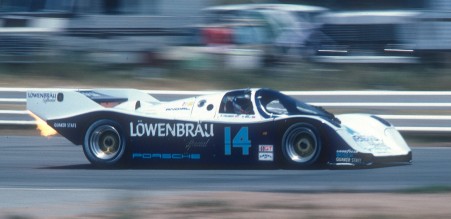
I’ve seen a similar transformation in the design of race cars over the years. When I was younger and first getting into racing, this is what a top of the line prototype sports car looked like:

Jaguar-XJR-8

lowenbrau-porsche-962_16c_apr-86

Mazda-RX-792P1-500x250

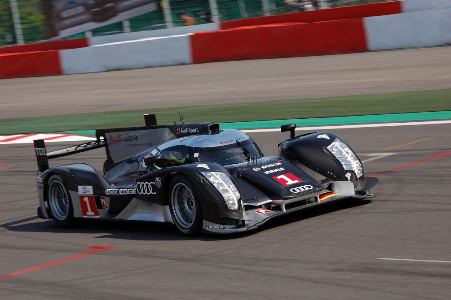
Now, as the black science of aerodynamics has continued to develop and every part of the car has to produce downforce, they’ve become this:

Audi R18 at the 1000km of Spa 2011. Picture was taken during the warm-up.

Don’t get me wrong – the modern car would run circles around the older ones. There’s something to be said for finding beauty in performance. But at the same time, it’s hard not to see that something’s lacking in the modern era.

Same goes with the modern visual depictions of spacecraft. Realism counts for a lot and I don’t begrudge anyone who prizes that in their sci-fi. But that doesn’t keep me from being disappointed.

I want my swoopy spaceships back. And race cars, too.

Water Road: Wednesday: The Neldathi Clans

As I mentioned last week, the Neldathi, who live south of the Water Road in the universe of The Water Road, are physically quite distinct from the Altrerians who live to the north. They’re different species, in fact, although they can produce infertile offspring. When it comes to how their societies work, the differences are even more pronounced.

While the Altrerians are organized into what we might call nation states (or city states, at least in the case of the Arbor), the Neldathi are organized into clans. Each clan is ruled by a thek (or chief), selected in various ways, from based on heredity to something more like democracy (without the coin flips). Some clans are patriarchal, some matriarchal, others more egalitarian. In other words, there’s a good deal of variety to how each clan is set up.

There are several other positions of authority in Neldathi clans aside from theks. Two of the most important are War Leader (which is just what it sounds like) and Master of the Hunt, each of which is responsible for ensuring the clan’s survival. Speakers of Time are individuals who become walking storehouses of knowledge – libraries with legs, essentially – and pass on the clan’s history, traditions, and laws. Finally, kels act as judges, settling disputes between clan members.

The Neldathi are nomads, which is why they don’t have “states” as we (or the Altrerians) think of them. That doesn’t mean they aren’t territorial. Each clan has a Great Circuit, a route along which they regularly move through the year. Each guards its circuit jealously. Three clans have circuits that cover the northernmost ground, near the Water Road itself – the Dost, Kohar, and Haglein. Three more stick toward the southern coast and the Islander cities – the Mughein, Elein, and Sheylan. That leaves five others – the Chellein, Akan, Volakeyn, Uzkaleyn, and Paleyn – who roam the most mountainous ground in the middle.

The Great Circuit’s aren’t defined with great particularity and clans don’t necessarily travel them in regular cycles. As a result, it’s not uncommon for neighboring clans to run into one another, which leads to violence. For example, the Volakeyn and the Akan have circuits that border one another. If they happen to wind up in the same space at the same time, they’ll fight over resources, same as anybody else. Neldathi don’t fight wars of conquest – they’d have no means of securing territory – but they do fight.

In fact, the Neldathi have a history of long-simmering feuds between clans, for several reasons. One is that if clans meet when circuits overlap, that frequently means resources are limited in that area and one side is bound to lash out. Another is that the same clans routinely interact with each other, breeding bad blood. Finally, the Speakers of Time tell stories of glory won in battle and of the evil done to their clans by their enemies. That allows feuds to grow and fester between certain clans.

That last feature, in particular, provides an opening that might be exploited by outsiders.

When Magic Isn’t

I recently got around to reading the first of Brandon Sanderson’s Mistborn series, The Final Empire. It’s pretty good (full Weekly Read coming up later? Perhaps!). One of the distinguishing features of the series is the system of “magic” that it uses. The use of quotes is intentional, because about two-thirds of the way through the book I started to wonder if Sanderson was really dealing in magic at all.

The magic in Mistborn revolves around metals and what people can do with them. Allomancers can ingest small portions of certain metals, “burn” them, and thereby enhance their physical and mental powers. “Mistings” can burn only one particular metal, while “Mistborn” can burn all of them. Mistings are useful. My particular favorites were the “soothers,” who are able to calm or inflame another’s emotions to make them more cooperative. Mistborn, on the other hand, and basically superheroes, able to leap tall keeps in single bounds, possess extraordinary strength, and heal wounds more quickly.

Actually, the better analogy would be to characters in a video game. Indeed, one reviewer knocked Sanderson’s system for “sometimes feel[ing] a little like a video game trick (press X-Y-X-X to burn steel!). And, honestly, once you get past the “this is what this metal does” exposition, the constant references to characters burning this and pulling on that get old. It’s work-a-day, it’s formulaic it’s . . .

Not all that magical.

Which isn’t, inherently, a bad thing. I really like Allomancy (and the related Feruchemy that plays a role, too) – it’s certainly different than casting spells, waving around wands and such. But it does call for different characters wielding it. “Working magic” is my mind conjures someone like the wrinkled, slow, puppet-based Yoda of the first Star Wars trilogy, rather than the CGI-spawned ass kicker of the prequels. It takes some getting used to.

And it can seem kind of out of place for what is, after all, supposed to be fantasy. I’m not one to suggest fantasy has to have magic – far from it! The Water Road trilogy has not a whit of magic in it. But if you are going to build a world with magic, shouldn’t be a bit more magical and mysterious? Indeed, as one commenter put it elsewhere:

I’m inclined to label Sanderson’s Mistborn as hard sci-fi, because of the way he fleshes out the abilities of allomancers. This might seem odd, because the author really makes it look like magic. But the way they invoke their power, the limitations on its usage and strict adherence to the framework of physical laws that we the readers are already familiar with, strike me as less magical, and more of an empirically-discovered science, and thus some form of sci-fi rather than fantasy.

Putting to one side the hard/soft discussion, that sounds about right. Part of what makes magic special is that it’s inherently vague, squishy, and unpredictable. It shouldn’t work all the time, just because you know how to work with the constituent parts. It’s about corralling the elements and playing with the very stuff of existence, after all, not just figuring out how to use the natural world to do things better.

Or not. One of the great things about fantasy is that it’s only bounded by your imagination. I don’t think I’d come up with a system like Sanderson’s, but his works for his world and it’s consistent. It’s hard to ask more than that, even if, maybe, I do.

SpongebobMagic

Water Road: Wednesday: The Neldathi & Their Lands

Although the Altrerians lend their name to the land in which The Water Road takes place, it’s not theirs alone. The land to the south of the Water Road is quite different from that to the north and includes a very different species of inhabitants.

For starters, the Neldathi don’t have green skin, but blue, although some have complexions that near completely white. They’re still humanoid, but where the Altrerians are smaller than your average human, the Neldathi are bigger. For a sense of scale, Rob Gronkowski would on the small side of average for a Neldathi. Thus they’re strong, but also slower of foot and, to the Altrerians, slower of thought, as well. More on them as a people next week.

The lands south of the Water Road are defined by a series of rugged mountain ranges, all named by and after Altrerians, although very few of them live there. The mountains begin to rise just south of the river, becoming fearsome snow-capped peaks in short order. The ranges often run up against one another, sometimes parallel to each other. Some of the mountains are covered with great stands of timber. It’s forbidding territory, a place that’s referred to in curses and hushed tones by Altrerians.

Because the continent of Altreria is in the southern hemisphere, the further south one goes the colder it gets. The lands south of the Water Road, therefore, are frequently blanketed in snow, making existence there difficult. Neither the climate nor terrain lends itself to the kind of settlements that developed to the north. Unlike the north, there are no great cities in the south.

Which is not to say there are no cities at all. When the land nears the coast, warm currents provide a more hospitable climate. In four locations along the southern coast, the Slaisal Islanders have built cities, way stations for use during their trade with the Neldathi. The Islander cities are the one place where the Neldathi clans share space, along with a small population of Islander sailors and the occasional Altrerian, mostly traders and the like – or at least they appear to be.

Weekly Watch: Roxy: The Movie

If there was a holy grail for Frank Zappa fans, it was this.

For several days in December 1973, Zappa and the Mothers as they existed at that time – a group some consider his best ever and included George Duke and Chester Thompson (the drummer one) – hit the stage at LA’s Roxy Theater for a set of shows where not only the sound but the pictures were all recorded. Thus Zappa’s explanation in the intro for “Penguin In Bondage” that he’s “circumlocuting” a particular topic “in order to get this text on television.” The shows served as the basis for Roxy and Elsewhere, a partly live album that many (including yours truly) consider Frank’s best.

But there was supposed to be a movie, too, filmic evidence of Zappa and crew at the height of the their powers. As it happens, it was doomed from the start:

Unbeknownst to anyone on the crew, the audio recording device suffered an internal malfunction within two minutes of the very first show. There was no way for anyone to know about it until the film had been shot, processed, and delivered to the editor. Since the production schedule was so short, they didn’t process any of the film until all of the shows were ‘in the can.’ When the editor went to align the picture and sound . . . it became apparent that the program stayed in sync for all of five seconds.

That’s from the liner notes from Roxy: The Movie, which has, for years, been just out of reach for Zappa fans. Now it’s has finally seen the light of day after being a tantalizing mirage for my entire lifetime. Is it worth the wait?

Yes and no. In all honesty, it would be impossible for the movie to live up to the expectations that decades have piled upon it.

For one thing, it’s not just a video document of Roxy and Elsewhere. If anything, it shows just how much of that album is studio work, versus live. That’s not a bad thing – Zappa never held closely to the distinction between “live” albums and “studio” albums (even his 1988 tour releases that preach about there being no overdubs have tracks cobbled together ex post from multiple sources). But it does lend the sense that something’s missing, that there’s a stripped down feeling to some of the material.

For another thing, Zappa being Zappa there are some things that just don’t work on the night and are much better elsewhere. Primarily that’s “Inca Roads,” which gets a low-energy lounge version here that pales beside the one recorded later in Helsinki (memorialized on You Can’t Do That On Stage Anymore, Volume 2). And the marvelous side-long suite from Roxy and Elsewhere feels truncated without “Village of the Sun” leading into the other two parts.

If that sounds awfully negative, it shouldn’t. This is still a great document of a Zappa concert with the man in his prime. He rules not just the stage but the entire venue, directing musicians and audience alike. You get to experience the entirety of “The Be-Bop Tango (Of the Old Jazzman’s Church)” in its entirety, complete with what can barely be referred to as “dancing.” And the other two parts of that side following “Village”? Brilliant. Napoleon Murphy Brock getting sexed up during “Dummy Up”? A little more disturbing!

Another thing that’s fascinating to watch is the multitude of percussion on display. The band for this gig had eight members (Frank included), of which three were full time bangers of things – Ruth Underwood, Chester Thompson, and Ralph Humphrey. Hell, Zappa even through in with the pounding at one point. What’s amazing is that by seeing who’s doing what, as opposed to just hearing the end product, you’re able to see how the parts play off one another and what they each bring to the table. So many times you see a band with two drummers and wonder what’s the point. Not so here.

So if you’re new to Zappa and coming to things with an open mind, that mind will be blown by Roxy: The Movie. It’s a document of man at the height of his powers, leading what’s considered to be one of his best collections of musicians, and having a hell of a good time to boot. That it can’t quite live up to what people like me had hoped it could be is on us, not Frank.

RoxyCover

Water Road Wednesday: Altreria & Altrerians

In the universe of The Water Road the name “Altreria” carries several responsibilities.

For one thing, Altreria is the name of the land in which the story takes place, by which I mean all of it. It is that world’s equivalent to “Earth,” for lack of a better comparison.

Altreria also refers to the world’s only major landmass. It’s a continent that runs roughly north to south (think of Australia turned on its side and twisted a bit) and sits in the southern hemisphere, so traditional American/European directional notions (north is cold, south is warm) are reversed. There’s also a chain of islands, the Slaisal Islands, off the northeast coast. The Water Road itself runs from west to east – from Great Basin Lake to the Bay of Sins – across its width about two-third’s of the way down the continent. To the north live Altrerians, with Neldathis to the south. More of them later, of course.

Altreria also refers to the land north of the Water Road – hence the reason those who live there are called Altrerians (if you’re noticing that they seem to control the vocabulary of geography in this world, you’re right). That land’s most obvious distinguishing features are two other rivers, the River Innis and the River Adon, that run north to south through the middle third of the continent. North of the source of those rivers are the Badlands – a dry, dusty, and hot region with very little in it.

Those rivers also help define the political landscape of Altreria. To the east, between the River Adon and the coast, is the Kingdom of Telebria (fully the “Bonded Realms of Greater & Lesser Telebria” – they’re a bit picky about it). Southern Telebria is home to the Endless Hills, which lend their name to the second book of the trilogy. To the west, between the River Innis and the coast, are the United Guilds of Altreria. In between is a dense forest known as the Arbor, which consists of numerous city states gathered together in a confederation. Again, more of those later.

Altreria has several major cities of note. In Telebria, on the east coast is Sermont on the Sea, the kingdom’s capital. In the west, Innisport, the largest of the Guilder cities, lays at the confluence of the River Innis and the Water Road. Finally, there’s Tolenor, a fairly recent settlement, a planned city built on an island in the Bay of Sins. It’s home to the Triumvirate, of which – yet again – more later!

As for the inhabitants of Altreria, they’re not human. No one in The Water Road is. They’re bald humanoids, a bit smaller than we are with skin that’s green, of one hue or another. Generally those born deep in the Arbor have dark green skin, while those born closer to the Water Road wind up nearly white, with just hints of light green. They’re not particularly strong, but they’re quick, cunning, and good strategists.

That’s not all (obviously!), of course, but that gives you a taste of the world of The Water Road. Or at least the lay of the land, so to speak.

Water Road Wednesday: Je Suis Napoleon!

“Wait a second,” I hear you saying. “I thought you wrote fantasy and the like. What’s Napoleon got to do with The Water Road?”

A fine question, one that comes down to that dreaded word (by some) – inspiration. As I’ve written before, ideas come from all over, often when you’re not expecting them. The key is having that flash of creativity in your brain that makes you think, “there’s a story there” when you see it.

One of my regular stops on the Internet is Wikipedia’s front page. It’s got several blocks of featured articles, one of which is a “today in history” thing. It lists about a half dozen historical events, in addition to a few holidays. I usually skim it, see nothing all that interesting, and move on.

One day, one of the events listed was either the date that Napoleon left Elba to return to France or the date he arrived in France. Either way, it was the start of the Hundred Days, which would end at Waterloo and with Napoleon’s second exile (it stuck that time). Now, this was not news to me – my undergrad degree was in history and the area that most interested me was 19th-century Europe and the rise of the nation states. Yet, somehow, for some reason, something struck me that had never struck me before.

Which was this – Napoleon’s arc of ravaging Europe, being defeated, being exiled, then returning for a sequel – sounds just like the bad guy in a fantasy series! After all, why kill or adequately imprison the villain if you need him for the rest of the trilogy? Honestly, it’s almost on the level of a James Bond villain’s diabolical scheme to kill Bond that, of course, always fails. Hanging would have been quicker and easier, but not left open the sequel!

Which is not to say that The Water Road trilogy is based on the life of Napoleon or that it tracks his defeat, exile, return, and defeat again. But that was one of the jumping off points. Things, naturally, got more complicated from there. That’s one of the great things about writing fantasy – when an idea comes along, the only thing that limits you as a writer is your imagination.

je_suis_napoleon_by_insanity540

Weekly Watch: Making a Murderer

2015 was a good year for long-form documentaries about criminal justice, from the smashing success of the Serial podcast to HBO’s crime solving (?) The Jinx. But the cream of the crop has to be the Netflix series Making a Murderer. That’s partly because it’s infinitely bingeable, where the others weren’t, but that’s also because it’s got a hell of a story to tell

The story, writ broadly (it’s over 10 hours long, after all) is this – In 1985 Steven Avery is convicted of attempted rape in Manitowoc, Wisconsin. He maintained his innocence and, 18 years later, DNA proved him right (while identifying the real culprit to boot). Released from prison, Avery became a shining star in the exoneration world, a poster boy for needed reforms of the criminal justice system. Then, just when changes were about to be made, he was charged and convicted of an even more heinous crime – murder. As in 1985, Avery maintains his innocence, but so far, hasn’t been able to prove it.

But wait, there’s more. There’s a back story involving Avery’s relationship with the Manitowoc County Sheriff’s Office. It was responsible for putting him away in 1985, ignoring evidence pointing to the real perpetrator in the process. It ignored signs in the mid 1990s that suggested Avery was innocent. And, most important, the office and several of its officers were being deposed as part of a lawsuit about Avery’s conviction at the time the murder victim, Teresa Halbach, went missing.

Thus, rather than telling a story about how a man who was wrongly imprisoned for two decades might have been turned into a killer, the film makers (with a generous assist from Avery’s lawyers) instead tell a tale of a man who wrongfully convicted twice. The first time, via more negligence than malice, but the second time by a deliberate frame up.

There’s also the story of Brendan Dassey, Avery’s slow-witted teenage cousin, who was also convicted of participating in Halbach’s murder. The entire case against Dassey consisted of a “confession” given by Dassey that’s almost a paradigmatic example of how skilled interrogators can get the answers they want, regardless of how truthful they really are. The overriding sense at the end of things is that Brendan, at the very least, had nothing to do with the murder.

I’m not sure they can make the case that Avery was framed. But what the Making a Murderer does is to highlight a lot of troubling issues in the criminal justice system. They’re not things that are new to those of us who work there every day, but they’ll shock some lay people. At least I hope they do.

The first thing that pops up is investigative and prosecutorial tunnel vision. That is, once cops know they have the “right guy,” they focus entirely on convicting him, regardless of evidence that might point to another suspect. Case closed, stat achieved! That’s most obvious in those in the system who, even after DNA cleared Avery, refused to concede they’d gotten the wrong man. This is fairly common in exoneration cases. People are so wedded to the position that they were right that they can’t accept they were wrong. Confirmation bias can be a real monkey on one’s back.

Next there’s the way that the prosecutorial apparatus protects itself from accusations of wrongdoing. To its credit, the Wisconsin AG’s office did an investigation of Avery’s 1985 case after his exoneration. The investigators who were deposed in Avery’s civil case said some pretty damaging things, mostly about the kind of tunnel vision I mentioned above. The final report, however, was a whitewash, which is par for the course. Misbehaving prosecutors are rarely punished, or even called out by name when courts find they’ve misbehaved.

Brendan’s story combines two current tropes of criminal defense, a coerced confession and horrific defense lawyering. We see some of Brendan’s taped interview with police, but we also hear lots of phone calls with his mother while he was in jail. The upshot of all this is that he had no idea what he was doing, was trying to please the officers, and almost certainly didn’t have the role in the murder he ascribed to himself (if he had any at all). Again, this isn’t unusual – while all cases of DNA exoneration have a false confession rate somewhere around 20 percent, for juveniles that goes up to over 40 percent. Let that sink in for a moment – in almost half of juvenile exoneration cases, the juvenile confessed to a crime he didn’t commit.

What’s worse in Brendan’s case is that one of the his false confessions was obtained by his defense team! His second appointed lawyer declared his client guilty before he even met him and apparently was trying to make him the best guilty pleader and cooperator he could. That backfired, spectacularly, giving the prosecution extra ammunition to use against him at trial. You’ve heard of lawyers who are asleep during their client’s case? Maybe, sometimes, that’s the lesser of two evils.

Of course, to hear the prosecution tell it, there is no such thing as a “false” confession. During the closing argument in Brendan’s case the prosecutor told the jury that “innocent people don’t confess to crimes they didn’t commit.” As the numbers laid out above show, that’s clearly false. While a lay person might be forgiven for thinking that, a lawyer in the 21st century shouldn’t. If the prosecutor wasn’t outright lying, he was so out of touch with current research on false confessions that he should have his license pulled.

Avery’s trial had a whopper from the prosecutor in closing argument, too, in the form of the declaration that “the presumption of innocence applies to the innocent.” That’s wrong on a couple of levels. Theoretically, of course, everyone – innocent, guilty, and in between – is entitled to a presumption of innocence. It’s the prosecution’s job to rebut that. If it can’t, the defendant goes free – regardless of whether, factually, he’s guilty or not.

But he’s also wrong practically, for a very different reason. That’s because, practically (in my experience), there is no presumption of innocence. It’s a myth people buy into to make themselves feel better about how the world works, like Santa Claus or God. In truth, lots of people think if you’re charged with something, you must be guilty of something. Judges can instruct jurors otherwise, but it’s a hard bias to crack.

Speaking of bias, I certainly have one that I bring to Making a Murderer. Being a criminal defense lawyer for 16-plus years will do that. And make no mistake, the filmmakers have a viewpoint and are making an argument. This is not an even, balanced, tell all sides documentary. It’s a polemic, meant to stir passions. Whether it succeeds in convincing that Avery is the unluckiest man on the planet, being wrongfully convicted for two separate crimes, is unclear. But if it riles people up enough to pay attention to the issues the case raises, that’s good enough for me.

MakingaMurderer