Author Interview – Carter Taylor Seaton

Joining me this month is another local author, Carter Taylor Seaton. Carter has written a little bit of everything, with her latest release being a biography of a recently departed West Virginia political stalwart.

Who are you? Where are you? What kind of stuff do you write?

Hey there, I’m Carter Taylor Seaton, a gal born and bred in Huntington, West Virginia, as we like to say. After raising a family, I spent about ten years in Georgia before returning to Huntington be sure my grandchildren knew their Nana. I’ve written novels, essays, magazine articles, a non-fiction book, and a biography.

As a Huntington native who left the area then came back, how does that experience effect your writing (fiction, in particular)?

My ten years in Georgia specifically informed my second novel, amo, amas, amat…an unconventional love story. While I lived there many of my close friends were gay, but when I came back to West Virginia I was shocked to learn that folks here, in the main, still were quite homophobic. In general, I think most novelists will admit that their lives always creep into their work, whether or not it’s intentional. I certainly see that in my writing.

carterpic

Tell us about your most recent book, story, or other project.

My latest project is a biography of the late long-term congressman, educator, presidential advisor, and WV secretary of state, Ken Hechler. West Virginia University Press is releasing The Rebel in the Red Jeep in May.

Hechler’s been a presence in West Virginia for as long as I can remember – what’s something you learned about his life that you didn’t know before he asked you to write his biography?

Actually, I knew very little about him other than the fact that he’d held public office for so many years, so almost everything I learned through my research and during our time together was new to me. Yet, for someone whose life revolved around serious issues, I was surprised to learn he loved to sing. Although he didn’t have a very good voice, that fact didn’t stop him.

In what genre do you primarily write? Why did you choose that one?

I prefer fiction, but the non-fiction book, Hippie Homesteaders, was a project dear to my heart because I knew most of those transplanted artisans and musicians and realized no one had ever told their compelling stories. Ken Hechler actually approached me to write his biography. How could I say no to a living legend?

Why do you prefer fiction and are you hungering to get back to it after a couple of non-fiction books?

In a sense fiction is easier, which makes it more fun. Of course if you’d asked me that before I spent four years researching the biography on Hechler, I might have answered differently. I do enjoy the research non-fiction requires, but the footnoting and indexing are tedious to say the least. With fiction, there’s also research, but there’s no need to document it.

Tell us briefly about your writing process, from once you’ve got an idea down to having a finished product ready for publication.

My physical process depends on what I’m writing. If it’s fiction, it first involves a legal pad and a #2 pencil, then I enter it in the computer for edits and tweaks. If it is non-fiction, I start on the computer because all my research is there.

As a former English major, I’m also an outliner. Not one that’s set in stone, but regardless of the genre, I have to know where it is going. So I’m a ‘plotter,’ not a ‘pantser’ (one who writes by the seat of their pants.) The result of too many term papers, I expect.

I think I’m a bit compulsive about having one chapter as tight as possible before moving on. That means I don’t write an entire draft before I revise. I revise as I go. Works for me, but might not for others.

I proof by reading from the back to the front so I don’t get caught up in the story or the sentence structure. Here I’m looking for typos and omissions, not revision opportunities.

Who is the favorite character you’ve created? Why?

I very much liked Cassie, the next-door neighbor of the protagonist in amo, amas, amat…an unconventional love story. It’s set in the 80s just as the AIDS crisis is beginning. She’s a lesbian yet, unlike most homosexuals at that time, she never bothers to hide it. She becomes the catalyst for the protagonist’s moral awakening. I’m currently in love with AJ, the headstrong, potty-mouthed gal in the novel in progress.

What’s the weirdest subject you’ve had to research as a writer that you never would have otherwise?

Timothy Leary.

What’s the one thing you’ve learned, the hard way, as a writer that you’d share to help others avoid?

I’m not suggesting writers avoid it, but deciding to self-publish requires a level of marketing that is hard for someone who doesn’t know how to do it well. It takes a tremendous amount of time that could otherwise be devoted to more writing. I did it once, but as a career marketing professional in my former life, I was comfortable with taking on the marketing tasks.

How does the “after publication” period – marketing  and such – differ between self-publishing and trade publishing?

It differs greatly. When you self-publish, there’s no one else to support the marketing efforts. Publishers do a great behind-the-scenes job of getting your book into the hands of distributors and stores, in front of reviewers, and entered into contests. Some of that, particularly the need for reviews and contest entries is much more difficult for the author than it is for the publisher. That being said, you still have to put yourself out there doing lectures, book signings, or appearances regardless of how the book is published. Publishers may book some of those gigs for you, but in reality you still must do lots of that yourself. And be willing to go where your publisher sends you.

If you won $1 million (tax free, to keep the numbers round and juicy), how would it change your writing life?

It wouldn’t change it much. I might buy a new laptop so I can work in places other than my “chick cave.”

What’s the last great book you read or new author you discovered?

1Q84 by Haruki Murakami. I love the way he tells the story from two POVs and how they finally intersect.

What do you think you’re next project will be?

I’m already working on a multi-generational novel.

Tell us a little about your multi-generational novel (if you don’t mind).          

Actually, a house that has been in a family for nine generations is as much the protagonist as the young woman who learns she’s inherited it. She has the option of accepting the estate or not, but the stories within the story are told her to woo her into leaving her much loved but hard scrabble life in West Virginia to assume the role of mistress of this Virginia manor. Will she or won’t she?

Carter on Social Media

http://www.carterseaton.com

Three (Very) Short Stories for Valentine’s Day

Last year Apex magazine announced that they were reviving their flash fiction contest. Each contest is set up around a particular holiday and for this one the holiday was Valentine’s Day. Each person could enter up to three stories, each no more than 250 words each. Since I’m not one of the winners (congrats to those who did – you can read their stories in February issue of Apex), I thought I’d share my stories here.

 Since I had three stories to play with, I decided to use them to deal with the beginning, middle, and end of a relationship. It’s not the same relationship, mind up – these stories are all set in different universes and involve different characters. I think they get at some universal ideas, however, so maybe they have more in common than I originally intended.

 Anyway, enough of my yakkin’ – enjoy!

vday1


The Spoils

“Is this necessary?” Elvin said.

“He could give in,” said Ilori, one eyebrow raised.

“She could,” Danforth said. Even sixty feet away he could seeIlori was striking. Twilight deepened her mocha skin and added definition to streaks of silver in her short black hair.

“Over this?” Elvin held up the Tyrolian orb.

Danforth nodded. But it was about so much more.

“Very well.” Elvin put the orb down. “Whoever brings it to hand wins.”

They nodded.

Danforth said the incantation quietly – crisp and sharp, honed from years of formal training. The orb began to roll toward him. He was a pillar of stone.

Ilori was anything but. Her home-taught hedge magic, learned from mother and grandmother, was loud, with complex hand movements. It was like she was possessed. The orb reversed course.

Danforth started another incantation, tapping into deeper, darker magic, but quickly stopped. Losing might be winning this time. There would be another Tyrolian orb, someday, but there was only one Ilori. He let go.

The orb sped up, flying to Ilori. She caught it in one hand like the laziest fly ball then cried out in victory.

“She’s the winner,” Elvin said, walking over to him.

“I know.” Danforth was unable to contain a silly grin

Ilori skipped over with a wide smile. “Told you.”

“Fair is fair.”

“Hope you brought your wallet,” she said, bounding off. “I’m not a cheap date!”

Danforth turned to Elvin. “Loser buys dinner.” He winked and walked after her.


The Thrill Is Gone

The apothecary shook his head. “Does your wife not already love you and you her?”

Eric the Simple sighed and leaned against the counter. “Love, yes. Alas, passion is something altogether different. Have you nothing that might help?”

The apothecary looked under the counter. “Perhaps, if you’re certain there is no other option.”

“I’ve tried everything,” Eric said in exasperation. “The woman’s desires are a mystery.”

“Aren’t they all.” The apothecary took out a piece of parchment, grabbed his quill, and began scratching something out. Finished, he carefully slid the paper across the counter.

Eric mouthed the words as he slowly scanned the page. “Spine of newt? Spleen of badger?” He looked up. “And this looks like Latin. A spell?”

The apothecary nodded.

“A love spell?” Eric waggled his eyebrows and grinned.

The apothecary shook his head. “Summoning spell, to bring forth a stink demon.”

“A what?” Eric threw the parchment down.

“It’s a minor inconvenience – smelly, ugly, and sinister looking, but actually harmless. Your wife will take a fright, you shall vanquish the foul beast, and she shall be in your arms.”

Eric stepped closer to the counter. “This is the best you can do?”

The apothecary closed his eyes and rubbed the side of his nose. “There is one other option.”

“Yes?”

“You could sit down with your wife and talk about this, find out how she feels.”

Eric paused for just a moment. “Stink demon it is then.”

The apothecary nodded. “I’ll get the badger spleen.”


The Last Night

The chalice shook in Sir Kavus’s hand as he slipped into her apartment. After months of sneaking around his nerves were still on edge.

What he shared with Lady Edana had been wild, hot, and passionate in ways he hadn’t thought possible. But it wasn’t true love, of the kindhe shared with Wyon, who tended his wounds and gave him sons and daughters.Wyon was home.

After one last night of pleasure,Edana would drink the potion mixed with the wine and all would be well. She wouldn’t even remember Kavus’s name.

He set the chalice on the table as Edana stepped from her bedchamber, naked body aglow in the candlelight. “My knight.”

“My queen.” He took her in his arms. They fell into bed for the last time.

Later he rolled over, throat dry, alone in bed. Edana was in the doorway, diaphanous gown clinging to her curves. “Thirsty?” She was carrying two chalices.

Kavus nodded and took the one she offered, gulping down the sweet wine. It seemed to go to his head, sending him to a deep sleep.

He awoke in a strange bed, although he couldn’t say it was not his. There was a woman standing next to it wearing only a smile.

“My name’s Edana,” she said, crawling in beside him.

The name wasn’t familiar, but he wasn’t about to object to her warmth next to him. There was no other place for him to be in the whole world, he was certain.


vday2

Legal Realism In the Wild

Ken over at Popehat poses an interesting philosophical question:

If a tree falls in the forest, does it make sound? If a right goes unrecognized and defied by the people charged with enforcing it, is it a right at all?

The answer may seem obvious, but it falls into what’s traditionally been a blind spot in legal philosophy.

A major enterprise of the philosophy of law is not only defining what a “law” is, but also identifying when, if ever, said laws shouldn’t be followed. To that end, there are two large camps among legal philosophers (along with numerous fringe theories that I’m just going to assume don’t exist for the length of this post).

Natural law theorists are that laws (or at least just laws) exist outside of human efforts at generating them. Therefore, human laws that conflict with natural law are invalid can be ignored. By contrast, legal positivists argue that what makes a law valid and just is the way its produced, thus making it completely a creature of human endeavor.

Both positions have serious issues. Natural law theory all but invites people to ignore laws they don’t like on the ground that it conflicts “natural law” (probably God’s law, but not necessarily). That’s fine and dandy if it’s not abiding by the Fugitive Slave Act, much less so if a modern Abraham decides he needs to engage in child sacrifice. But the legal positivist argument loses sight of broader notions of justice in favor of procedure. After all, lots of laws in Nazi Germany were properly proposed and enacted, but they were still vulgar and (at a gut level) invalid. Neither theory completely survives interaction with the real world.

So what happens in real life when, as Ken asks, a right is defied by the people responsible for protecting it? Something like this.

A woman in Georgia complained on Facebook that her ex-husband wouldn’t help out by making a drug store run when she and kid (the ex’s kid, too) had the flu. In other words, she called him a jerk (a friend chimed in that he was a “POS”). However, the ex just happens to be an officer in the local sheriff’s department. Thus, in a lawsuit she:

contends that her husband, a friend in the Sheriff’s Department, and a county “magistrate” put her in jail for her Facebook comment. According to her, Captain King filed a police report with his friend, Washington County Sheriff’s Investigator Trey Burgamy. Washington County magistrate Ralph O. Todd — who is not a lawyer, and who ran unopposed last year — issued a warrant requiring Anne King and Susan Hines (who had responded on Facebook by suggesting Captain King is a “POS”) to appear at a hearing. After a hearing at which Captain King was the only witness, Magistrate Todd caused a warrant to issue charging Anne King with criminal defamation: “SUBJECT DID, WITHOUT A PRIVILEGE TO DO SO AND WITH INTENT TO DEFAME ANOTHER, COMMUNICATE FALSE MATTER WHICH TENDS TO EXPOSE ONE WHO IS ALIVE TO HATRED, CONTEMPT, OR RIDICULE, AND WHICH TENDS TO PROVOKE A BREACH OF THE PEACE, SPECIFICALLY, SUBJECT DID MAKE DEROGATORY AND DEGRADING COMMENTS DIRECTLY AT AND ABOUT COREY KING, FOR THE PURPOSE OF PROVIDING A BREACH OF THE PEACE. Anne King also contends that Magistrate Todd threatened to “ban her from Facebook.”

The magistrate also falsely informed her that although she could call the ex a piece of shit to his face, she couldn’t post it on Facebook. Just to make it perfectly clear, the statute she was accused of violating was always a violation of the First Amendment, was recognized as such by the Georgia Supreme Court in 1982 and removed from the books by the legislature in 2015. In other words, neither the cop nor the magistrate had any legal authority to do what they did and the woman had a clear First Amendment right to say what she wanted (a few days later a “real judge,” as Ken puts it, dismissed the charge).

How does either natural law theory or legal positivism deal with this woman’s experience? Not well, which is why there’s a third way, one which I’ve subscribed to for a long time – legal realism.

Legal realism says, in essence, that law is whatever those with the power to make it and (more importantly) enforce it say it is. Higher notions of what law should be or what makes a “just” law don’t make any difference. If The Man says you’re going to jail, you’re going to jail.

My go to hypothetical for this used to be if the president signed a “Legal Philosopher Protection Act” that made a particular philosopher (John Rawls, Ron Dworkin – insert your favorite here!) off limits from academic criticism. Professor says, “that clearly violates the First Amendment” and duly proceeds to slag off on Rawls or whoever. Student reports Professor, who is hauled out of the classroom by a pair of US Marshalls. At some point things get sorted out, but not before an arrest, some period of custody/incarceration, and an awfully lot of bruised feelings.

Yet, that’s essentially what happened to the woman in Georgia – arrested for violating a law struck down during the Reagan administration for conduct that anyone with a working knowledge of the First Amendment knows cannot be a crime. And yet, there was an arrest. There was custody. And there are certainly hurt feelings.

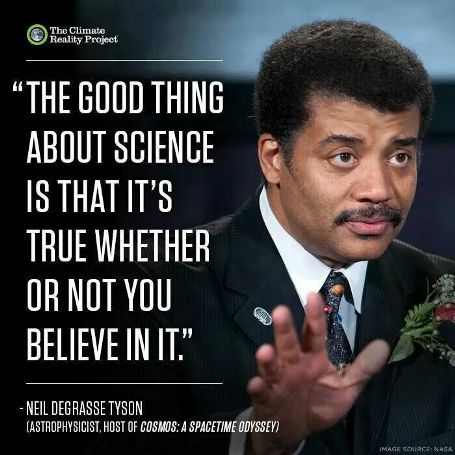
There’s a meme that floats around about science:

science

Law kind of works the same way. We can argue esoterically about the nature of law, what it really is, and whether any particular law is just. But at the end of the day, when the cops arrive at your door to slap the cuffs on, they’re not interested in any of that. What they say goes, at least for long enough to make things miserable. Any theory that doesn’t recognize that has serious issues.

Weekly Read: The Speed of Sound

Reviewing memoirs is a tricky thing. Essentially, it breaks down into answering three questions – Is the story of this person’s life interesting and worth reading about? Is the story told in such a way that elevates things beyond a simple “this is what happened” narrative? Does it say something profound about the world?

Thomas Dolby has the first part covered. If you only know him as the “She Blinded Me With Science Guy,” then his memoir The Speed of Sound: Breaking the Barriers Between Music and Technology will be a revelation. Only half the book is taken up with his music career. The other half deals with his second life as a Silicon Valley tech entrepreneur, a career that is probably reaching into the smart phone you’re using to read this.

Dolby’s music career is, in itself, pretty interesting as a cautionary tale of just how fickle the business is. Dolby found his first synth in the trash after being fired from his job at a produce shop. Via tinkering and experimentation he mastered the still relatively new tool and wound working with a lot of other people, either in their band or as a hired gun in the studio (the synths on Foreigner 4? All Dolby). Finally he was able to record his first album, The Golden Age of Wireless, which wasn’t doing much of anything until “She Blinded Me With Science” (not on the album itself, originally) broke big in the United States, thanks largely to MTV.

Wireless is now regarded as a classic and Dolby would spend the rest of the 1980s trying to replicate its success. That he didn’t owes less to the quality of music he was making than it does to commercial factors that were well beyond his control. The Flat Earth (which is brilliant), for example, tanked commercially largely due to the fact that his record label fired its main promo person (resulting in non-cooperation from his former contacts in the media) and picked a losing fight with MTV. Unable to back up the commercial success of Wireless, Dolby’s other albums sank like stones.

Which isn’t to say he got some interesting stories out of it. If nothing else, he wound up working with and rubbing elbows with lots of stars. There are anecdotes about David Bowie’s fear of flying (Dolby played with him at Live Aid), Michael Jackson’s nerdy interest in cutting edge music gear (Dolby’s “Hyperactive” was written for Jackson), and Eddie Van Halen’s (who played on Dolby’s album Astronauts and Heretics) lack of amusement about This Is Spinal Tap – because Van Halen thought it was about them! It’s all interesting, and fun, but it’s not very deep or dramatic. As I said, the downward slide of Dolby’s music career was due largely to factors outside of his control and since he was always a solo artist there aren’t any nasty inter-band dynamics to spice things up.

After four albums and lots of other session work, Dolby left the music business, but he didn’t leave the business of music. Always the tech head, Dolby was interested early on in making music a big part of the Internet experience (he refers to it as “sonicizing” the Web). He started a company that eventually became Beatnik. You probably don’t know it, but you likely use its tech every time your mobile phone rings (Dolby even had a role in selecting the ubiquitous “Nokia waltz”). The business world didn’t really suit Dolby, either (some of the ups and downs, caused by outside forces, echo what happened in his music career), so he eventually cashed out, returned with his family to the UK, and started making music again.

One of the disappointments with the book is the short shrift given to this last part of his career (that he’s turned yet another new page, teaching at Johns Hopkins University in Baltimore, is barely mentioned). In particular, I wanted to know something about the tour, the tech, and the conception of the tour that gave us The Sole Inhabitant, which is my favorite version of Dolby’s music. That’s par for the course, as the thing I wanted more of throughout was the nitty gritty of the music (I have the similar gripe about most music books or documentaries). We get a few tales of where songs came from (the genesis of “Wreck of the Fairchild” is particularly good), but little of the actual work of building up songs. Given Dolby’s nature as a tinkerer, rather than muse-inspired mouthpiece, I’d be interested in his process.

So, Dolby’s story is interesting, but that’s about all The Speed of Sound has going for it. The writing’s fine and pleasant, but nothing special. Dolby occasionally tells an anecdote that’s completely of its time, without meaningfully reflecting on it in any way (the Michael Jackson story ends with the appearance of neighborhood kids in their PJs, for example – this passes without comment). Likewise there’s nothing terribly profound in Dolby’s story. It’s a nice story about a guy who made a good life largely doing what he loves to do, which is mess around with music and tech stuff.  Good for him, certainly, but it doesn’t make for the meatiest of reads.

The bottom line is this – if you’re a fan of Dolby, or even just wonder what he’s been up to since he hit the “Where Are They Now?” file, The Speed of Sound is highly recommended. Otherwise, your time might be better spent elsewhere.

speedofsound

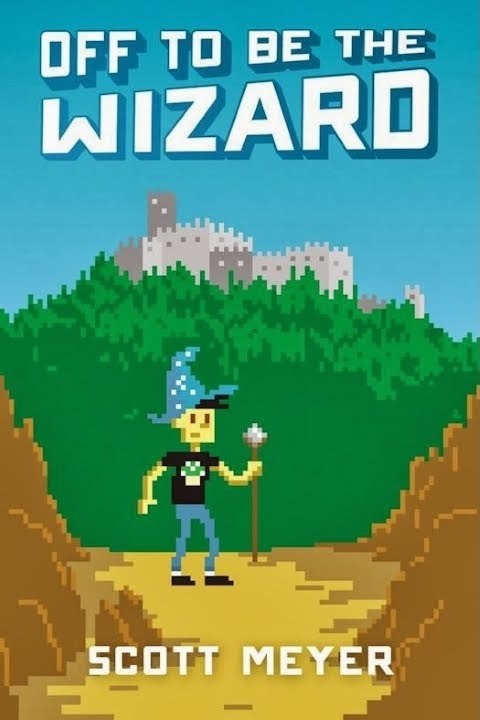
Weekly Read: Off to Be the Wizard

Off to Be the Wizard is a funny book. Very funny in some spots. It’s humor and general breeziness make it a quick read, but its charm can only carry it so far.

Martin is a computer geek. One night he discovers (on just about the very first page of the book – it works better than I expected) a text file, plays around with it, and discovers that chestnut sci-fi trope: that our world is really just a computer simulation, with parameters that can be endlessly modified. In short order he’s essentially practicing magic by summoning sums of money from thin air, teleporting, and travelling through time. It’s the first of those that gets him in trouble (damned Treasury agents) and cause him to flee not just to another place, but another time – medieval England.

At this point, I expected the story to turn into something like Doomsday Book, but with jokes, where Martin has to use his wits and “wizardry” to survive. Instead, Martin falls into a community of similar time travelers and spends most of the book interacting only with them. Aside from a few mentions here and there, the same story could have been told in the Old West, feudal Japan, or the prehistoric African plains. It’s a huge wasted opportunity and hints one of my main problems with the book.

That is, things are much too easy for Martin and his friends. Not only are they not subject to the vagaries of medieval life (aside from a wonderful running joke about stew), there isn’t even any real conflict happening until, about 3/4 of the way through the book, the author realizes there has to be. The resulting ending, with a big bad that comes out of nowhere and has a temporary menace that the rest of the book doesn’t justify, is too quick and perfunctory to mean much.

What that leaves is a bunch of Martin, mostly in the company of his older (and more interesting) mentor Phillip, learning how all the wizarding works. This provides some good chances for comedy, but the need to build up Martin’s need to pass “the trials” is undercut by there not actually being any. Aside from one run in with bullies, at no point does anything that might hint at a book-defining conflict pop up.

Along the way, anything that might complicate the wizards’ fairly easy life (typical time travel issues like changing the past/future, the ability to power computers in medieval England, etc.) get hand waved away. On the one hand, I like that – it’s a funny book, not a deeply thought out treatise on the potential hazards and difficulties of time travel. But still, having everything work out so easily almost renders the time travel pointless. No surprise, then, that Martin is never seriously pulled by a desire to return to his own time (to be fair, he’s never given a reason to be pulled).

That also keeps Martin from really interacting with the world he’s time travelled himself into. This is a particularly glaring missed opportunity because it really emphasizes the absence of women from the book. Martin’s mother gets a mention or two and there’s a crazy old woman with goat problems, but otherwise the only woman around is Gwen. She goes from a complete blank of a character (main defining feature – all the wizards want to do her) to,  magically, a big player when the plot finally cranks up. There’s no ground work laid for this and it comes completely out of the blue (deus ex vagina, perhaps?).

There are other women who have found the file and travelled back to this time, but they’ve all headed off to Atlantis, conveniently off screen (to be fair, the second book in the series goes there, so I’ve read). But that doesn’t explain why, in the day to day of living, Martin and his pals are able to avoid any contact with the opposite sex. It’s the kind of blind spot you’d expect in some of the foundational fantasy literature the book gently satirizes, but not something written in the second decade of the 21st Century.

That all sounds harsh, and maybe it is. But, like I said, being funny can take a book a long way and Off to Be the Wizard is funny. And in Philip, the wizard from a slightly older time who finds himself out of step with the more currently pop culturally savvy wizards (he knows not of The Simpsons, for instance), it has a really interesting, greatly drawn characters. Except for one thing – when, late in the book, he’s able to crank Genesis on his car stereo (yes, in medieval England – you’ll have to read the book), it’s completely out of character that it’s something from the poppy Phil Collins era (“That’s All,” to be specific – there’s a hilarious discussion of the video). I mean, come on! Surely “Watcher of the Skies” or the end of “Supper’s Ready” would have been more appropriate!

As I was saying – a fun book, a quick read with lots of laughs. However, its flaws stand out enough that I’m not interested in heading further into the series.

wizard

Hear Those Tiny Auto Horns

Sometimes a headline skips across your screen and you just have to see if the article really lives up to it. Take this one, from CNet a few weeks ago:

Moths take tiny cars out for a spin

You have my attention.

Turns out, scientists have gotten silkmoths to drive tiny cars in search of mates using pheromones:

The methodology taps into how moths sense the world around them: the sensitive scent receptors on their antennae. The researchers placed a target scented with female silkworm moth pheromones, then observed the tethered male moths driving the car toward that target.

How does a moth drive a car with no hands? With an air-supported trackball, much like a mouse trackball. As the moth crawls around on the ball toward the scented target, optical sensors track the ball’s movement and translate that into steering, moving the car in the same direction.

The end game is a better understanding of the ability of insects to detect scents. That could, in theory, lead to a future where the bomb-sniffing dog or cadaver dog is replaced by a drone or robot guided by insect senses.

But the real question that needs immediate follow up is this – when these moths are out cruising for chicks, are they cranking side one of Led Zeppelin IV?

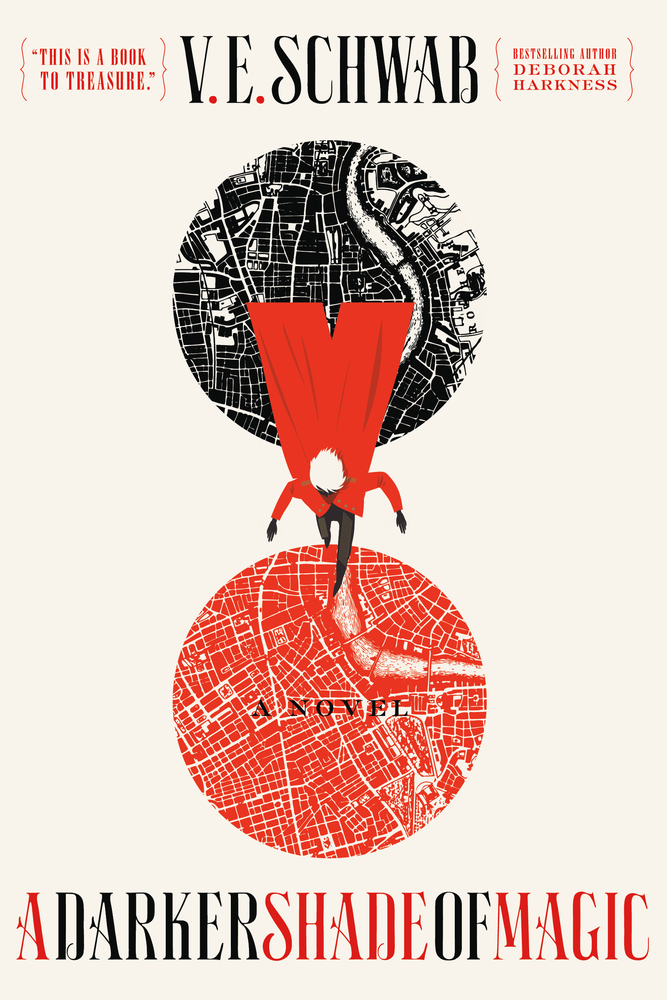
Weekly Read: A Darker Shade of Magic

According to Wikipedia there are over a dozen places (worth of note) across the globe called “London,” from Ontario to West Virginia to California to Kiribati, not to mention the big one in England. In spite of whatever differences those places have, they all share the fact that they are part of our world and bound by the laws of physics.

The Londons of A Darker Shade of Magic, not so much. They’re all in the same place as London, England, but all they really share in common is the name. Grey London (which is ours, I’m pretty sure) is dreary and dull, when it comes to magic. By contrast, magic thrives in Red London and is an important part of life there. It’s more of a power struggle in brutal White London. What magic did to Black London is, well, pretty awful.

A Darker Shade of Magic is the story of Kell, one of the few people with the ability to move back and forth between the various Londons. He serves as a courier, technically working for the king in Red London, but taking messages both ways. He also has a side gig, smuggling small objections from one London to the other. It’s in that capacity that he gets into trouble (isn’t that always the case?) and, in the process, threatens the safety of Red London and all those he cares about. Along the way he acquires a sidekick in Lilah, a pickpocket from Grey London with big dreams (she wants to be a pirate) and, we’re lead to believe, a bit of a secret when it comes to magic.

There are other characters, too, wonderfully drawn and (in some cases) downright frightening. Their interaction is the best thing about A Darker Shade of Magic, whether it’s slowly growing admiration of Lilah’s abilities by Kell, the attempts of Kell’s semi-brother Rhy to hit on her, or the way the king and queen of White London completely control a room (and a kingdom). It helps that the book takes the time to build these worlds up (the first third is, essentially, a travelogue as Kell moves from one London to the other) so that the characters seem like natural expressions of those places.

In fact, the scene setting is more interesting than the real plot, when it finally gets to it. Part of the issue is that there are dual threats that seem like they might be linked, but we never really find out if they are. They create a lot of havoc for our heroes, but it’s unclear to just what end. One thing I will note, however, is that while this is the first book of a series, it does tell a complete story, while managing to leave enough dangling to make you want to read more.

Where things go wonky is where magic plays a key role in the plot. That’s because the magic of A Darker Shade of Magic tends to morph to fit the needs of the plot. We’re initially told that what makes Kell (and his White London counterpart, Holland) special is that they alone can travel between the Londons, an increasingly rare skill. But by the end of the book Lilah and others are doing it, too, with no particularly good explanation. Also, at a critical moment near the climax of the book, game winning magic essentially becomes a Peter Pan “wish hard and it works” exercise. It’s kind of disappointing that for a story where magic is talked about so much and plays such a key role in things that it’s nature, scope, and impact doesn’t seem well thought out.

As big of a hole as that sounds for a book with the word “magic” in the title, it’s really not. The end destination may not live up to the hype, the journey is well worth it. As I said, this book tells a complete story and I could walk away from the series, satisfied, if a little disappointed. I’m not. Which should tell you something.

darkermagic

Where the Magic Happens

Recently one of the writers forums I’m on had people sharing pictures of their writing setups. It’s always interesting to see where everybody works, so I thought I’d share with the wider world.

studio2
As you can see, my writing station also doubles as noise making station. Essentially, my wife and I each have a room for our creative toys (she has a loom!), so all my stuff lives together.

studio3
Note the books in the background, overwhelming their once well organized shelves (books are an essential part of any writer’s toolkit). As for the noise makers on the left there, that’s a Korg M50 workstation on the bottom (with fuzz box and Korg Kaosilator perched on top), with an Alesis Micron virtual analog synth on top. Both of those (and all the other hardware) runs into the Zoom R16 mixer/recorder there in the angle.

studio1
The PC there is where the writing happens and where the noises get collected and shaped into something interesting (hopefully). Yes, wine is sometimes involved – why do you ask? These noisemakers are, on top, a Nord Lead 2X virtual analog synth (in rack form), a Novation Bass Station II virtual analog synth, and a Moog Minitaur analog synth. On bottom is a M-Audio MIDI controller that I use for the Nord and the software synths on the PC. I use the Novation to control the Minitaur these days.

It’s not the most elegant setup, or the most efficient (notice I don’t really have a place to sit), but it works. For me, anyway.

Author Interview – Patricia Hopper Patteson

Joining me this month is West Virginia author Patricia Hopper Patteson, whose new book Corrib Red comes out in March.

Who are you? Where are you? What kind of stuff do you write?

Hi, I am Patricia Hopper Patteson. I am what you might call a tenement rat from Dublin, Ireland. For the first few years of my life I grew up in what is now the trendy part of the city called Temple Bar. Way back, this area of the city was known for its sub-standard tenement flats. At age seven my family moved from the city to the suburbs. I came to Morgantown, West Virginia as a bride back in the 70’s and have been here ever since. I write non-fiction, short fiction and novels.

How does your transatlantic background inform your writing?

Having a transatlantic background (love that term) is like speaking two languages in a way. I behave differently depending on whether I’m here or in Ireland. Living abroad certainly affects how I write and what I write about. Interestingly, I received my undergraduate and graduate degree from [West Virginia University] as a non-traditional student. So my introduction to creative writing came from WVU. My core introduction to story-telling comes from my parents, who made up stories to tell us as young children.

This trilogy at the core is about emigration. About the Irish in earlier centuries who came to the US but never returned home. That’s what the first book is about—returning home. Whatever extra money the Irish had after they emigrated was sent home to help the family survive. Many emigrated out of necessity in a time when travel was difficult and money was scarce, unlike today where we have so many ways to stay connected to family and friends

Tell us about your most recent book, story, or other project.

Kilpara is my first novel in a three-part historical nineteenth century family saga series. It takes place in both the US and Ireland and begins in Maryland in 1866 right after the Civil War. The second novel called Corrib Red is due out in March and is the second novel in the series. It takes place almost completely in Ireland and jumps a generation to two sisters who are coming of age and face the dilemma of choices available to them within the period constraints. The third novel in the series starts ten years later and takes place in both Ireland and The US. An illegitimate African-American daughter is central to this story that comes together in Ireland and throws the family off center.

kilpara_cover

I’m intrigued by the span of time you plan to cover in your family saga series. Was that always the plan, or did the specific stories you’re telling just work best in those periods?

The first book was initially two stories and everyone that read it said it should be two separate stories. So when I began fleshing out and editing Kilpara I found out I had enough material to make it a complete novel, so the story reads that way.

I love anything to do with the US Civil War and the first novel begins right after the US Civil War (1866). When I was growing up I never heard anything about the Irish in the US Civil War. I was surprised when I first went to Antietam and Gettysburg to learn how many Irish fought in that war. That’s why I chose that period.

I jump a generation for the second novel Corrib Red which takes place mostly in Ireland (1885). This is Parnell’s time, and I’ve always loved what he did for Ireland, and how tragic it was that he died young. Many Irish turned against him when they learned he was involved with a married woman, whom he later married before he died. His history gives great insight into the culture and mind-set of the time.

The third novel (in-progress) takes place about ten years later (1896). This was a time of cultural awareness in Ireland that later influenced history in the early part of twentieth century.

In what genre do you primarily write? Why did you choose that one?

Right now I’m primarily writing historical fiction, but I have other projects started like mystery, romance and young adult. I find historical fiction fascinating. Although the 19th century was a less complicated time, it’s hard to imagine living without the conveniences we have today. People were far more interactive because they had less distractions and outside commitments. Just think, women who could afford servants, spent much of their day changing clothes for different events, breakfast, lunch, walks, visitors, dinner. It seems exhausting by today’s standards especially now when you can just put on a pair of jeans and go. Women were also restricted by societal norms and were treated like property by the men they married.

corrib-red-front-cover

Tell us briefly about your writing process, from once you’ve got an idea down to having a finished product ready for publication.

The idea for the novel is the easy part. It’s developing a whole concept for a novel that’s the challenge. Once the concept for the beginning, middle and end begin to gel in my mind I start to outline the story.  I generally like to start the first couple of chapters to get a feel for the characters and story at the same time I’m fleshing out the outline. After the first couple of chapters I finish the outline completely so I have a guide. On this third novel I’m trying something new which is telling the story from two POVs and switching from first person to third person. To make this work I’m doing alternating chapters—so it’s a bit of a challenge. I go through many edits of the novel starting with content, then grammar and proofing. After about the third or fourth edit the book starts to take shape. The last thing I do is read the whole novel out loud.

What do you get out of that process that you don’t get from just reading it with a red pen in hand?

When I edit with a pen I hear the story in my mind. However, when I read the novel out loud, I hear each word I speak. I prefer it if I can get someone else to read the story out loud, because then I really hear things more. But that doesn’t always happen. When reading out loud I can hear words that are unnecessary, phases that may be too long, and ramblings that may need to be tightened, scenes that could use some tidying up, and the pacing. I work on all of these things during the editing phases, but reading out loud helps me find anything I may have missed.

Who is the favorite character you’ve created? Why?

I have two favorite characters in the family saga series, although I must say I like all of the characters. The two that are most challenging are Cecil and Aunjel.

Cecil is a 19th century sociopath and very evil. I always love to read about evil characters in novels and look for their redeeming qualities. Cecil doesn’t have any redeeming qualities. He thinks he’s above everyone and everything and takes revenge on anyone who goes against him in a major way.

Aunjel is one of the two main characters in book three of the series and she’s the daughter of Lilah, a light-colored African-American. Lilah has a mutual liaison with Ellis O’Donovan, an aristocrat and major character, in book one. Aunjel is the result of that liaison although Ellis doesn’t know about her until book three. Aunjel also grows up believing her biological father is an African-American. To create Aunjel I wrote a 13,000 word story about Lilah, Aunjel’s mother, and her background, so that I could better understand Aunjel and her challenges in the late 1800s

What’s the weirdest subject you’ve had to research as a writer that you never would have otherwise?

In book three of the series I send David Ligham, a fairly major character in book two, away to West Africa to negotiate a peace treaty with King Prempeh of the Ashanti tribe. This is fictional of course, but there was a lot of conflict going on between the British and the Ashanti tribe around that period. I read three books on the subject to write a few paragraphs.

What’s the one thing you’ve learned, the hard way, as a writer that you’d share to help others avoid?

There are many things a writer learns along the way that it’s hard to know where to begin. The importance of editing is the one thing that helps establish a writer and gets them recognized. Also, if you find another writer who you trust completely to read your novel, or short fiction, and give you honest feedback, this will help avoid weaknesses in your writing.

If you won $1 million (tax free, to keep the numbers round and juicy), how would it change your writing life?

It probably wouldn’t change things all that much. However, I would love to write a novel set around the Grand Canyon, and it would be nice to spend time there to research the area.

What’s the last great book you read or new author you discovered?

One author I had heard about, but hadn’t read any of his work is Ken Follett. I recently read The Man from St. Petersburg and thoroughly enjoyed the novel. In this novel Follett brings London to life in the early 1900s, and the characters and plot are intriguing.

 What do you think your next project will be?

I’d like to write a historical romance that takes place in present time, and I’d like to write a young adult mystery novel.

How would you write a historical romance that takes place in the present time? That sounds like a contradiction in terms.

Sorry about the contraction of terms. I may have been a bit lazy. It’s really a modern day romance with historical undertones.

For example a situation that takes place in today’s world that is parallel in some way to Abraham Lincoln’s unfortunate assassination. The male protagonist won’t be a president, more likely a congressman or a senator, or even a mayor. He will try to save a small town from being overrun by corrupt business associates. These associates want to move a gambling casino into the town as a front to launder illegal money. The female protagonist would be the conduit between the present and the past. She would discover a dress worn by Mary Todd Lincoln tucked away in her great-aunt’s attic. Every time she puts on the dress (or maybe just touches the dress) Mary Lincoln’s ghost appears to warn about danger. Mary’s ghost will help the female protagonist avert the assassination of the present day male protagonist. This of course pushes the male and female protagonists together.

This the long way to explain what I mean. It’s a story I’d like to write but haven’t figured out the complete concept yet.

patricia_patteson-300-pixals

Patricia on Social Media

On the Web
On Facebook
On Twitter
On Linkedin

Get Kilpara at Amazon or Barnes & Noble

Learn more about Corrib Red at Cactus Rain Publishing

Is Hate Reading Really a Thing?

I’ve long understood that there’s such a thing as “hate watching,” particularly for TV shows. On the one hand, I get it – it’s a way to keep in the conversation about a popular show, even if you don’t like it. On the other hand, what’s the point? We’re living in the era of peak TV and if you don’t like one series there are bound to be others out there that are more worth spending your time with.

Now I’m wondering if hate reading had become a thing, which makes even less sense.

I came across this recently after I finished up the fourth volume of Brian K. Vaughn’s Y: The Last Man. The series, about the literal last man on Earth (a pathogen of some kind killed every male – human or otherwise – on the planet) navigating a world run by women, is fairly acclaimed, but not everybody digs it. That’s perfectly OK (all art appreciation is personal, after all). But by the fourth of five volumes, you’d figure the people still reading are pretty much fans.

When I finish reading something I head over to Goodreads and see what other folks think of it. It’s interesting to see where my opinion fits and whether I like or loathe something for the same reason other folks do. In the case of Y, I was drawn to a 3-star review, because I often find “negative” review more interesting that positive ones. Still, I was a bit perplexed by the opening:

After hating deluxe editions 1, 2 and 3, I wasn’t expecting much from this one, but it turned out to be marginally better.

Talk about damning with faint praise. The reviewer concludes that she was “looking forward to” finishing volume five and “not having to read a Brian Vaughn comic again.”

What the hell? I mean, I can see reading the first book in an acclaimed series, not being all that impressed, but deciding that you should give the second book a try to see if it gets better. It’s like buying an album by a band that’s new to you and deciding, even though you don’t like it much, to get another just to make sure you’re not missing anything (I speak from experience – I have a habit of buying the wrong album when I try a new band). But that’s a far stretch from “hating” something. If you hated the first one, and certainly the second one, why waste your time with any others?

I suppose Brian K. Vaughn is coming to her home and holding a gun to her while she reads his comic (maybe he uses a service – give me referral, Brian!)? Otherwise I can’t figure how anyone anywhere is ever “forced” to read a book they don’t want to read. That’s something you can only force yourself to do, for whatever strange reason you might want to subject yourself to displeasure.

Far be it from me to discourage reading for any reason, even if it’s just to get a good hate on. All I’m saying is that life is too damned short to read bad books, watch bad movies, or listen to bad music. If you read a book and hate it, I can guarantee that there are countless books you could read next that aren’t that book’s sequel. Take a chance on a new author, a new series. What’s the worst that can happen?

badbooks

Attributed to James Joyce. He was onto something.