Where the Magic Happens

Recently one of the writers forums I’m on had people sharing pictures of their writing setups. It’s always interesting to see where everybody works, so I thought I’d share with the wider world.

studio2
As you can see, my writing station also doubles as noise making station. Essentially, my wife and I each have a room for our creative toys (she has a loom!), so all my stuff lives together.

studio3
Note the books in the background, overwhelming their once well organized shelves (books are an essential part of any writer’s toolkit). As for the noise makers on the left there, that’s a Korg M50 workstation on the bottom (with fuzz box and Korg Kaosilator perched on top), with an Alesis Micron virtual analog synth on top. Both of those (and all the other hardware) runs into the Zoom R16 mixer/recorder there in the angle.

studio1
The PC there is where the writing happens and where the noises get collected and shaped into something interesting (hopefully). Yes, wine is sometimes involved – why do you ask? These noisemakers are, on top, a Nord Lead 2X virtual analog synth (in rack form), a Novation Bass Station II virtual analog synth, and a Moog Minitaur analog synth. On bottom is a M-Audio MIDI controller that I use for the Nord and the software synths on the PC. I use the Novation to control the Minitaur these days.

It’s not the most elegant setup, or the most efficient (notice I don’t really have a place to sit), but it works. For me, anyway.

Author Interview – Patricia Hopper Patteson

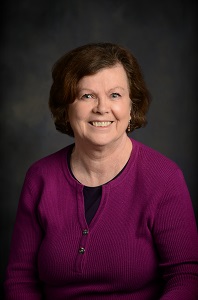
Joining me this month is West Virginia author Patricia Hopper Patteson, whose new book Corrib Red comes out in March.

Who are you? Where are you? What kind of stuff do you write?

Hi, I am Patricia Hopper Patteson. I am what you might call a tenement rat from Dublin, Ireland. For the first few years of my life I grew up in what is now the trendy part of the city called Temple Bar. Way back, this area of the city was known for its sub-standard tenement flats. At age seven my family moved from the city to the suburbs. I came to Morgantown, West Virginia as a bride back in the 70’s and have been here ever since. I write non-fiction, short fiction and novels.

How does your transatlantic background inform your writing?

Having a transatlantic background (love that term) is like speaking two languages in a way. I behave differently depending on whether I’m here or in Ireland. Living abroad certainly affects how I write and what I write about. Interestingly, I received my undergraduate and graduate degree from [West Virginia University] as a non-traditional student. So my introduction to creative writing came from WVU. My core introduction to story-telling comes from my parents, who made up stories to tell us as young children.

This trilogy at the core is about emigration. About the Irish in earlier centuries who came to the US but never returned home. That’s what the first book is about—returning home. Whatever extra money the Irish had after they emigrated was sent home to help the family survive. Many emigrated out of necessity in a time when travel was difficult and money was scarce, unlike today where we have so many ways to stay connected to family and friends

Tell us about your most recent book, story, or other project.

Kilpara is my first novel in a three-part historical nineteenth century family saga series. It takes place in both the US and Ireland and begins in Maryland in 1866 right after the Civil War. The second novel called Corrib Red is due out in March and is the second novel in the series. It takes place almost completely in Ireland and jumps a generation to two sisters who are coming of age and face the dilemma of choices available to them within the period constraints. The third novel in the series starts ten years later and takes place in both Ireland and The US. An illegitimate African-American daughter is central to this story that comes together in Ireland and throws the family off center.
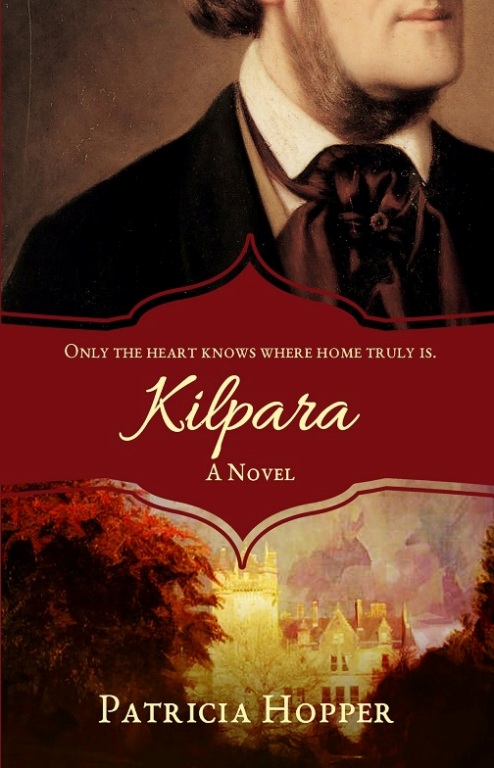
kilpara_cover

I’m intrigued by the span of time you plan to cover in your family saga series. Was that always the plan, or did the specific stories you’re telling just work best in those periods?

The first book was initially two stories and everyone that read it said it should be two separate stories. So when I began fleshing out and editing Kilpara I found out I had enough material to make it a complete novel, so the story reads that way.

I love anything to do with the US Civil War and the first novel begins right after the US Civil War (1866). When I was growing up I never heard anything about the Irish in the US Civil War. I was surprised when I first went to Antietam and Gettysburg to learn how many Irish fought in that war. That’s why I chose that period.

I jump a generation for the second novel Corrib Red which takes place mostly in Ireland (1885). This is Parnell’s time, and I’ve always loved what he did for Ireland, and how tragic it was that he died young. Many Irish turned against him when they learned he was involved with a married woman, whom he later married before he died. His history gives great insight into the culture and mind-set of the time.

The third novel (in-progress) takes place about ten years later (1896). This was a time of cultural awareness in Ireland that later influenced history in the early part of twentieth century.

In what genre do you primarily write? Why did you choose that one?

Right now I’m primarily writing historical fiction, but I have other projects started like mystery, romance and young adult. I find historical fiction fascinating. Although the 19th century was a less complicated time, it’s hard to imagine living without the conveniences we have today. People were far more interactive because they had less distractions and outside commitments. Just think, women who could afford servants, spent much of their day changing clothes for different events, breakfast, lunch, walks, visitors, dinner. It seems exhausting by today’s standards especially now when you can just put on a pair of jeans and go. Women were also restricted by societal norms and were treated like property by the men they married.
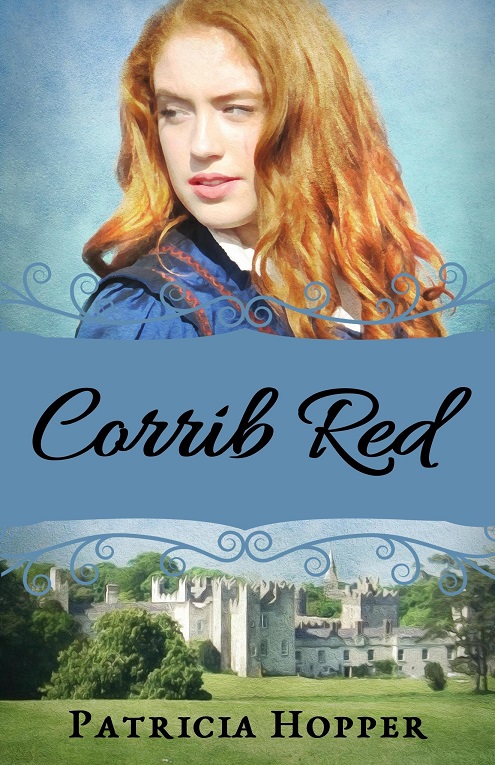
corrib-red-front-cover

Tell us briefly about your writing process, from once you’ve got an idea down to having a finished product ready for publication.

The idea for the novel is the easy part. It’s developing a whole concept for a novel that’s the challenge. Once the concept for the beginning, middle and end begin to gel in my mind I start to outline the story.  I generally like to start the first couple of chapters to get a feel for the characters and story at the same time I’m fleshing out the outline. After the first couple of chapters I finish the outline completely so I have a guide. On this third novel I’m trying something new which is telling the story from two POVs and switching from first person to third person. To make this work I’m doing alternating chapters—so it’s a bit of a challenge. I go through many edits of the novel starting with content, then grammar and proofing. After about the third or fourth edit the book starts to take shape. The last thing I do is read the whole novel out loud.

What do you get out of that process that you don’t get from just reading it with a red pen in hand?

When I edit with a pen I hear the story in my mind. However, when I read the novel out loud, I hear each word I speak. I prefer it if I can get someone else to read the story out loud, because then I really hear things more. But that doesn’t always happen. When reading out loud I can hear words that are unnecessary, phases that may be too long, and ramblings that may need to be tightened, scenes that could use some tidying up, and the pacing. I work on all of these things during the editing phases, but reading out loud helps me find anything I may have missed.

Who is the favorite character you’ve created? Why?

I have two favorite characters in the family saga series, although I must say I like all of the characters. The two that are most challenging are Cecil and Aunjel.

Cecil is a 19th century sociopath and very evil. I always love to read about evil characters in novels and look for their redeeming qualities. Cecil doesn’t have any redeeming qualities. He thinks he’s above everyone and everything and takes revenge on anyone who goes against him in a major way.

Aunjel is one of the two main characters in book three of the series and she’s the daughter of Lilah, a light-colored African-American. Lilah has a mutual liaison with Ellis O’Donovan, an aristocrat and major character, in book one. Aunjel is the result of that liaison although Ellis doesn’t know about her until book three. Aunjel also grows up believing her biological father is an African-American. To create Aunjel I wrote a 13,000 word story about Lilah, Aunjel’s mother, and her background, so that I could better understand Aunjel and her challenges in the late 1800s

What’s the weirdest subject you’ve had to research as a writer that you never would have otherwise?

In book three of the series I send David Ligham, a fairly major character in book two, away to West Africa to negotiate a peace treaty with King Prempeh of the Ashanti tribe. This is fictional of course, but there was a lot of conflict going on between the British and the Ashanti tribe around that period. I read three books on the subject to write a few paragraphs.

What’s the one thing you’ve learned, the hard way, as a writer that you’d share to help others avoid?

There are many things a writer learns along the way that it’s hard to know where to begin. The importance of editing is the one thing that helps establish a writer and gets them recognized. Also, if you find another writer who you trust completely to read your novel, or short fiction, and give you honest feedback, this will help avoid weaknesses in your writing.

If you won $1 million (tax free, to keep the numbers round and juicy), how would it change your writing life?

It probably wouldn’t change things all that much. However, I would love to write a novel set around the Grand Canyon, and it would be nice to spend time there to research the area.

What’s the last great book you read or new author you discovered?

One author I had heard about, but hadn’t read any of his work is Ken Follett. I recently read The Man from St. Petersburg and thoroughly enjoyed the novel. In this novel Follett brings London to life in the early 1900s, and the characters and plot are intriguing.

 What do you think your next project will be?

I’d like to write a historical romance that takes place in present time, and I’d like to write a young adult mystery novel.

How would you write a historical romance that takes place in the present time? That sounds like a contradiction in terms.

Sorry about the contraction of terms. I may have been a bit lazy. It’s really a modern day romance with historical undertones.

For example a situation that takes place in today’s world that is parallel in some way to Abraham Lincoln’s unfortunate assassination. The male protagonist won’t be a president, more likely a congressman or a senator, or even a mayor. He will try to save a small town from being overrun by corrupt business associates. These associates want to move a gambling casino into the town as a front to launder illegal money. The female protagonist would be the conduit between the present and the past. She would discover a dress worn by Mary Todd Lincoln tucked away in her great-aunt’s attic. Every time she puts on the dress (or maybe just touches the dress) Mary Lincoln’s ghost appears to warn about danger. Mary’s ghost will help the female protagonist avert the assassination of the present day male protagonist. This of course pushes the male and female protagonists together.

This the long way to explain what I mean. It’s a story I’d like to write but haven’t figured out the complete concept yet.
patricia_patteson-300-pixals

Patricia on Social Media

On the Web
On Facebook
On Twitter
On Linkedin

Get Kilpara at Amazon or Barnes & Noble

Learn more about Corrib Red at Cactus Rain Publishing

Is Hate Reading Really a Thing?

I’ve long understood that there’s such a thing as “hate watching,” particularly for TV shows. On the one hand, I get it – it’s a way to keep in the conversation about a popular show, even if you don’t like it. On the other hand, what’s the point? We’re living in the era of peak TV and if you don’t like one series there are bound to be others out there that are more worth spending your time with.

Now I’m wondering if hate reading had become a thing, which makes even less sense.

I came across this recently after I finished up the fourth volume of Brian K. Vaughn’s Y: The Last Man. The series, about the literal last man on Earth (a pathogen of some kind killed every male – human or otherwise – on the planet) navigating a world run by women, is fairly acclaimed, but not everybody digs it. That’s perfectly OK (all art appreciation is personal, after all). But by the fourth of five volumes, you’d figure the people still reading are pretty much fans.

When I finish reading something I head over to Goodreads and see what other folks think of it. It’s interesting to see where my opinion fits and whether I like or loathe something for the same reason other folks do. In the case of Y, I was drawn to a 3-star review, because I often find “negative” review more interesting that positive ones. Still, I was a bit perplexed by the opening:

After hating deluxe editions 1, 2 and 3, I wasn’t expecting much from this one, but it turned out to be marginally better.

Talk about damning with faint praise. The reviewer concludes that she was “looking forward to” finishing volume five and “not having to read a Brian Vaughn comic again.”

What the hell? I mean, I can see reading the first book in an acclaimed series, not being all that impressed, but deciding that you should give the second book a try to see if it gets better. It’s like buying an album by a band that’s new to you and deciding, even though you don’t like it much, to get another just to make sure you’re not missing anything (I speak from experience – I have a habit of buying the wrong album when I try a new band). But that’s a far stretch from “hating” something. If you hated the first one, and certainly the second one, why waste your time with any others?

I suppose Brian K. Vaughn is coming to her home and holding a gun to her while she reads his comic (maybe he uses a service – give me referral, Brian!)? Otherwise I can’t figure how anyone anywhere is ever “forced” to read a book they don’t want to read. That’s something you can only force yourself to do, for whatever strange reason you might want to subject yourself to displeasure.

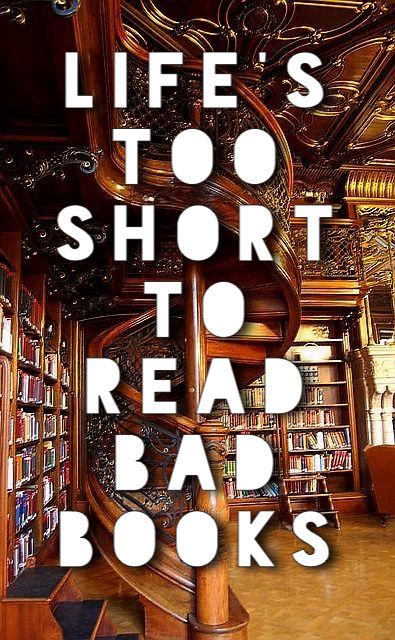
Far be it from me to discourage reading for any reason, even if it’s just to get a good hate on. All I’m saying is that life is too damned short to read bad books, watch bad movies, or listen to bad music. If you read a book and hate it, I can guarantee that there are countless books you could read next that aren’t that book’s sequel. Take a chance on a new author, a new series. What’s the worst that can happen?

badbooks

Attributed to James Joyce. He was onto something.

Weekly Read: The Liberation

It’s a good rule of thumb, although not an iron clad law, that the second part of a trilogy is never as good as the first part (Godfather Part Two, The Empire Strikes Back, and The Endless Hills are exceptions to the rule, of course). It’s hard to match the excitement of discovery you get from the first installment’s introduction of the characters and the world their moving around in. In addition, the second part is usually a bridge between the introduction and the climax. It’s a natural area for a bit of a letdown. The real issue is, how does the final installment stack up?

When I reviewed the first two parts of Ian Tregillis’s The Alchemy Wars last year, I noted that they followed the pattern. The Mechanical introduced us to a really cool world, a handful of interesting characters, and some big overarching questions about such minor things as free will and the nature of sentience. The Rising didn’t quite live up to that promise, focusing on some rousing action and pushing some of the more philosophical stuff to the side. Also, there was a whole section in the middle of the book that didn’t really seem to matter that much.

Well, remember what I said about middles and all that? Tregillis finishes up the trilogy with The Liberation, a rousing conclusion that, if anything, comes along just a little too quickly.

At the beginning of The Liberation, the Dutch Empire that has essentially conquered the world with its magically powered “clakkers” (clockwork people) has, to be kind, been put on its back foot. It’s not giving things away to say that The Liberation is about an oppressed people in revolt. What’s interesting is that it doesn’t present a simple good-guys-throw-off-their-yokes narrative. There are factions amongst the clakkers, deep philosophical divisions of the type that you’d find in most human uprisings. After spending most of The Rising in North America, the primary focus of The Liberation is the European mainland, particularly The Hague.

Having said that, there’s a key part of the story that plays out in North America (around the non-clakker enclave of New France). The stories in the New World and Old World play out in parallel, until, about two-thirds of the way in, we learn that one preceded the other. It’s a neat trick on Tregillis’s part, some temporal sleight of hand that allows the two stories to develop well on their own before the reader needs to know how they’re related.

It’s a bit of a shame, then, that when the end comes it comes very quickly. Not out of nowhere – the pieces are all moved into place quite well – but it doesn’t quite seem up to the task. I’m hesitant to complain because Tregillis has given us an ending, one that – just like the real world – wraps up most loose ends, but allows some questions to linger that will have to be answered in the future. It’s a fitting cap to an inventive and immersive read.

As far as I know, Tregillis doesn’t have any future plans for this universe. I hope I’m wrong, because I’d be really interested to see what’s happening in a generation or two.

tregillis_liberation-tp1

Over 70 Authors! 99-Cent Books! You Can’t Miss This!

janpromo4

To kick off the new year, I’ve joined with over 70 other writers of speculative fiction – fantasy, science fiction, horror, etc. – to spread the word about our 99-cent books.

For me that means The Water Road, of course, so if you haven’t checked it out yet this is the time. Be sure to look over the other offerings, too, because there’s bound to be something in there for just about everyone. The promo runs through January 14. See all the participating books here.

janpromo6

The Simple Power of “What If?”

Every work of fiction, or damned near every one, can been seen as an answer to a “what if?” question. What if a family has to uproot their entire existence because of climate change? What if most of a small town’s children are killed in a tragic accident? What if a young attorney’s cushy law firm is a front for the mob? On and on it goes.

The power of “what if?” is given particularly free reign in speculative fiction, since the question doesn’t have to conform itself to the real world. Stepping outside reality to ask the question can still lead to powerful insights into the real world, however.

Last week while putting laundry away I stumbled into a Twilight Zone marathon on TV. The episode I landed on, “I Am the Night – Color Me Black”, that takes a preposterously simple “what if?” question and uses it to drill down about the human condition. The opening narration lays it out:

Sheriff Charlie Koch on the morning of an execution. As a matter of fact, it’s seven-thirty in the morning. Logic and natural laws dictate that at this hour there should be daylight. It is a simple rule of physical science that the sun should rise at a certain moment and supersede the darkness. But at this given moment, Sheriff Charlie Koch, a deputy named Pierce, a condemned man named Jagger, and a small, inconsequential village will shortly find out that there are causes and effects that have no precedent. Such is usually the case—in the Twilight Zone.

In typical Twilight Zone fashion the supernatural event isn’t really the important part of the story. It’s how it throws everyone in the episode out of equilibrium and allows the filters of euphemism and manners to slip enough to see peoples’ true selves. Thus, not only do we have the deputy who’s certain (against the evidence) that Jagger is guilty, but we get the realization that Jagger is pretty much a douche, anyway. He may have been wronged, but that doesn’t make him right.

So the darkness lingers, until after the execution when we learn that it’s appearing all over the world, at locations like the Berlin Wall, Budapest, and a street in Dallas (keep in mind, the episode first aired four months after the Kennedy assassination). So, in less than half an hour, a simple question – “what if one morning the sun didn’t rise?” – leads us to, on the micro and macro scale, sober observations on human nature.

That’s the simple power of “what if?” when it comes to storytelling. It’s the prime mover, the thing that gets the ball rolling. It can upend the real world and give us a way to reflect on it all at the same time.

whatif1

Now I’m Picturing Lil’ Antrey

I’m not a huge fan of dividing literature into “adult” and “kids,” if we’re being honest. Children develop at different rates and can handle different levels of complexity and subject matter as they grow up. I went through a stage in fifth grade where I read 1984, Anthem, and Brave New World all back to back to back. Pretty heady stuff for an 11-year old, but I was up for the challenge. At the least, I wasn’t harmed by the experience, even if I returned to those books with greater understanding once I was older.

That’s a long way of saying I think this is kind of silly:

’On the Road,’ with its recurring references to sex, drugs and domestic violence, might not seem like an ideal bedtime story for a child. But that’s precisely the point of KinderGuides, a new series of books that aims to make challenging adult literary classics accessible to very young readers.

Along with ‘On the Road,’ KinderGuides recently published picture book versions of Ernest Hemingway’s ‘The Old Man and the Sea’ and Truman Capote’s melancholy novella ‘Breakfast at Tiffany’s.’ (It skipped over the awkward question of whether Holly Golightly is a prostitute.) In one of its most ambitious and bizarre efforts, it released a cheerful take on Arthur C. Clarke’s opaque, mind-bending science fiction novel, ‘2001: A Space Odyssey,’ an allegory about the evolution of human consciousness that many adult readers find impenetrable.

Yes, somebody has come up with a series of defanged literary classics for children. To what end? There’s lots of great children’s and YA literature out there these days. And, as I said above, some kids will be ready for the classics earlier than others. There’s no harm in letting them have at any of the mentioned titles when the time is right.

So what, exactly, is the point? Maybe it’s a way for parents of young children to feel even more pride in their little one? After all, she’s not reading The Very Hungry Caterpillar, she’s reading On the Road. Only she isn’t, of course, or at least isn’t really getting the full picture. It’s a bit like the Kevin Kline character in A Fish Called Wanda who brags about reading philosophy but, when called upon it, shows he doesn’t understand a word of it. The kid doesn’t know any better, but at least the parents can feel like they’ve accomplished something.

Otherwise, this appears to be a blatant cash grab, a way to make money of those venal parents. I’m all for filling the demand of the market, but isn’t this, essentially, making money off the works of others? The producers of KinderGuides claim they avoid such issues because they’re “study guides as well as entertainment.” But doesn’t a study guide for something presume you’ve actually read it to begin with? It sounds like weapons grade bullshit to me (the article concedes that “[s]ome copyright experts dispute that logic” – you think?).

Regardless of the legalities, there’s something shady about bowdlerizing someone’s work to sell it to a market the writer never intended it for. On the Road is many things, but it is not a children’s book. Nor is Lady Chatterley’s Lover nor Slaughterhouse Five nor (if I can insert myself here) The Water Road. They were written for different purposes and audiences. That’s OK – even in the 21st Century there’s nothing wrong with telling kids that there are certain things they’re just not ready for yet.

no-children-round

Unless there’s a buck to be made. In which case, all bets are off.

Watch Me On TV (Actually YouTube)!

A few weeks ago I mentioned sitting down with author Eliot Parker for his interview show Chapters. The show’s been broadcast and has now been posted to YouTube. If you’re interested in what I had to say, check it out:

We talk about speculative fiction, The Water Road, a couple of stories from The Last Ereph and a few other things. Check it out, enjoy, and thanks again to Eliot for having me on.

Favorite Tunes of 2016

I know this is a bit late, since most “best of” lists tend to come out well before the year is out, but it kind of fits. I’d meant to write more about music this year, since it was a pretty good year, aside from the seemingly endless kill off of big time musical names (to cite just a few). But I didn’t, so here’s a quick amends.

A note about what this isn’t – it’s not a list of the “best” albums of 2016. For one thing, music is all subjective so talking about “best” is kind of pointless. For another, I couldn’t hope to listen to even a fraction of all the music that came out in 2016, so my choices are drawn from a small sample.

No, these are just eight albums that I thought were really good, that connected with me in  some way. They’re organized alphabetically, of course. No winners here.

Bent Knee – Say So
My breakout band for the year. A collection of young kids (I can say that now – I’m old) from Boston who meld the furiosity and energy of prog metal or punk with delicate, almost ambient passages, all tied together with great vocals. They played both ROSFest – generally regarded as a more “safe” prog festival – and ProgDay – where anything does – this year and blew the roofs off the joint both times (metaphorically at ProgDay, since it’s outside). Say So doesn’t quite capture the power of their live show, but it comes awfully close.

Eveline’s Ghost – The Painkeeper
Just prior to ROSFest, Greg Walker sent out one of his periodic Emails with new releases. Most of them have YouTube or Bandcamp links these days, so I spent some time clicking through. Once I heard the first few seconds of this Italian band, I knew I wanted to hear more. I didn’t realize (until I’d picked it up from Greg at ROSFest) just how good this album was. It takes the more complex/busy side of prog (think early echolyn), but never takes it too far. The songs are melodic and engaging, with some nice jazzy touches here and there.

Mike Keneally – Scambot 2
Mike Keneally really contains multitudes – crafter of catchy hooks, exquisite guitar player, conjurer of bafflingly complex arrangements – but he rarely lets them all fly together at once like he has on the Scambot albums. This, the second in a planned trilogy about the titular “composer with no finished compositions” and “grump”, cracks right out of the gate and never lets up. It’s less aggressively weird than the first volume, but just as knotty, clever, and intense. As usual, Keneally pulls it off with the assistance of talent collaborators like Bryan Beller, Marco Minnemann, and Kris Myers (of Umphrey’s McGee fame). My only complaint is that the last track, “Proceed”, sounds like it has a lengthy ride out guitar solo in it that he didn’t decide to let out!

Knifeworld – Bottled Out of Eden
Although they sound nothing alike, Knifeworld reminds me a bit of Keneally, because main man Kavus Torabi (also of Gong and Guapo) manages to build musical confections that are, at once, complex, deep, and layered but also hooky and compelling. This album has a lighter vibe than the last one, but the tunes are just as sharp and interesting.

Marillion – Fuck Everyone And Run
Marillion’s not exactly ever been an “up with people” kind of group (there’s a joke that they specialize in “songs about water and death”), but FEAR is more pessimistic than usual. Lyrically, it’s largely bound up in the mess in which the world currently finds itself. The epics “El Dorado” and “The New Kings” both alternate between anger and disillusionment, while the kind of title track, “Living in FEAR,” provides some naive hope that maybe we easily panicked humans might not have to live that way (as I said, it’s a naive hope). Stuck in the middle is another epic, “The Leavers,” which, amazingly, has nothing to do with Brexit and is actually about life on the road. The epics all hang together really well (better than “Gaza” and “Montreal” from the last album) and there are plenty of patented Marillion moments sprinkled throughout. Is it, as advertised, their best since Marbles? Absolutely, even if it doesn’t live up to that milestone.

No More Pain – The Spader EP
In the modern digital world the line between LPs and EPs is finer than ever (one of the AV Club’s best albums of the year was a “long player” that runs 21 minutes), but this 5-part epic is as long as many classic LPs of yore, so I think it stands on its own. No More Pain is another discovery of the year (thanks to ROSFest), a prog metal band from New Jersey that manages to be heavy and rocking without getting all “metally” in the way many bands do. Of course there are chops a plenty, but there’s also a sense of humor, which you’d have to have to produce an EP about and dedicated to an early supporter of the band (from the liner notes: “We are in independent group and stealing our music will make us very sad and we will cry little bitch tears as we text each other crying-face emojis”).

The Rube Goldberg Machine – Fragile Times
This is a quiet (the first track is called “Background Noise,” after all), small album (it’s not much longer than The Spader EP), but it’s full of nice moments. The band has a kind of post-rock sound, but shot through with more of a melodic sensibility. To borrow an observation from my brother (who said it about Marillion), there’s just enough proggy stuff going on to keep things interesting, but it doesn’t overwhelm the songs. Some really nice, melodic fretless bass work, too.

Thank You Scientist – Stranger Heads Prevail
Another entry from New Jersey (must be something proggy in the water), this band managed to avoid any drop off from their first album, Maps of Non-Existent Places. There’s a heaviness and lots of riffs that sound like they could come from a standard prog metal band, but the compositions are more interesting, not to mention the arrangements. Horns and violin are constants, with some tuned percussion popping up every now and then. Plus, they rock out at a solar powered milk farm. How can you not love that?

Like I said, not a bad year at all.

2016albumsoftheyear

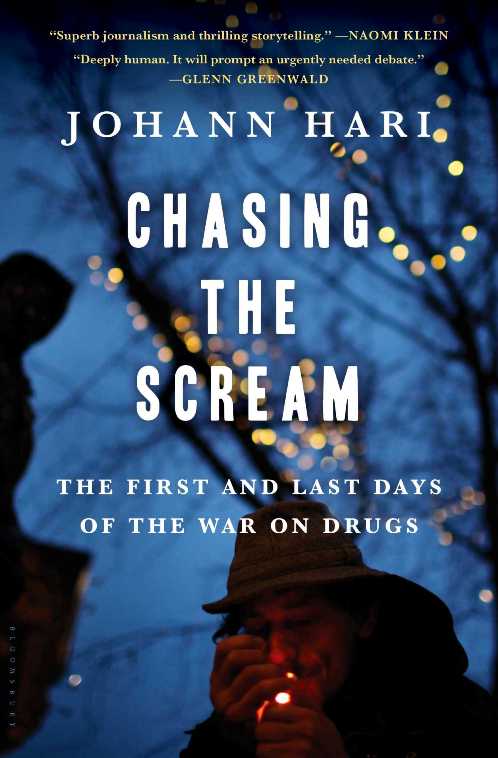
Weekly Read: Dreamland and Chasing the Scream

I read these two books back to back because they seemed to go together. One is a sober telling of how an epidemic swept the nation, landing right in my back yard (the book itself swept through my office earlier this year). The other is a passionate call to arms about the War on (Other Peoples’) Drugs. Both are essential reading.

The Dreamland in Dreamland, by former crime reporter Sam Quinones, is a public pool in Portsmouth, Ohio. For decades it was a hub of life in the town, ever expanding. It’s decline was tied to the region’s decline as a manufacturing hub. As jobs went away and poverty grew, addiction to powerful new opioid painkillers, and then heroin, ravaged the region. Dreamland was the perfect metaphor, withering away to merely a memory.

In Dreamland the book, Quinones lays out the perfect storm of factors that led to the opioid epidemic, which continues to claim lives all over the industrial Midwest and Appalachia. It’s made of three strands. The first is a revolution in the medical conception of pain, especially long term, chronic pain, and that it could and should be treated with powerful drugs. The second is the search for a safe drug to meet that need, which eventually led to Oxycontin. The third is slow expansion of a particular kind of heroin distribution operation from a particular small town in Mexico, Xalisco. As the “Xalisco Boys” operation spread into regions not generally thought of as “heroin country” (like West Virginia), they found a fertile ground of addicts already hooked on Oxycontin and looking for a cheaper, better fix.

Each strand has some particularly interesting stories to tell, although they’re not all of equal interest. The retail heroin distribution of the Xalisco Boys is, in fact, quite interesting – unlike the violent drug gangs who sell stepped-on product as a means to enhance the bottom line, the Xalisco Boys competed simply by selling a better product for less money. No violence and a focus on customer service. It makes getting heroin like ordering a pizza – an analogy to which Quinones returns over and over again. That’s the book’s main failing – it treads over the same ground repeatedly, particularly when it comes to the Xalisco Boys.

The other two strands weave together more effortlessly, particularly since they share a common root. In the 1980s a doctor published a “report” – really just a one-paragraph letter to the editor of a medical journal – that his practice hadn’t shown that patient who received powerful pain killers became addicted to them. This became the basis for Oxycontin advertising that opioid medications weren’t addictive, which recent history has shown to be completely false.* In the post-truth era of President Trump and “fake news,” it says something that the basis for Oxycontin’s development and sales was so poorly vetted because there was no profit to be gained in confirming it (because there never was in debunking it).

That’s one interesting linkage between the sellers of Oxycontin and the Xalisco Boys that Quinones hints at, but doesn’t quite make. Both are driven in what they do by the most basic of motives in a capitalist society – not just to make a profit, but to make as much of it as possible. That’s what drove the Xalisco Boys to look for untapped heroin markets. That’s what drove the Oxycontin peddlers to skip past the possibility of addiction and push doctors to prescribe the pills for damned near everything. The bottom line can be damned scary thing.

Dreamland is far from perfect. As stated above, it’s redundant, even beyond the stories of the Xalisco Boys. It’s also pretty dry writing, although it gets the point across. More important, Quinones gives short shrift to the fact that Oxycontin and other powerful pain killers are, for some patients, their only means of dealing with their pain. It also falls into a familiar pattern – of drug dealing bad guys (of various kinds) and good guy cops fighting to stop them – without providing any insight as to whether that’s a battle worth fighting.

Where Dreamland is a sober telling of an important modern story, Chasing the Scream is a polemic, a call to wake up to the failure of the War on (Some Peoples’) Drugs after more than a century. Dreamland should depress you – Chasing the Scream should piss you off.

Chasing the Scream is journalist Johann Hari’s chronicle of his attempt to figure out how the drug war began and where it’s headed. He travels the world, from his native UK to North America and elsewhere seeking answers about policy, addiction, and alternatives to prohibition. If in the end he doesn’t come up with a singular policy proposal to end the drug war, Hari at least convinces that it’s a war that needs to end (full disclosure – 15+ years of criminal defense practice convinced me of this long ago).

One thing he collects along the way are a cast of rich, memorable characters, from the transgendered former dealer in New York City and the former addict who transformed a particularly seedy portion of Vancouver to an addict who died in prison, cooked alive in the Arizona sun, and a mother whose pursuit of justice for her daughter in Mexico just produced further violence. Most key to the Hari’s book, however, is Harry Anslinger.

Anslinger was the head of the Federal Bureau of Narcotics (the spiritual predecessor to the modern Drug Enforcement Agency) for more than three decades and was, to Hari’s telling, the paradigmatic drug prohibition enforcer. He saw addicts as less than human, used racial and ethnic hatred to stir up panics to grow the power of his office, and was an overall asshole (the “scream” of the title refers to a trauma of Anslinger’s early childhood). Along with jazz great Billie Holiday (one of Anslinger’s high profile targets) and gangster Arnold Rothstein (the prototypical violent drug lord), Anslinger’s ghost hovers over the entire book as the project he started, the War on (Other Peoples’) Drugs expands and is entrenched.

Anslinger is Hari’s antagonist and he spends most of the book looking at the impact of his drug war on those caught up in it and challenging the assumptions underlying it. Of particular importance, he emphasizes the psychological model of addiction over the pharmaceutical model, presenting evidence that most drug users consume their product of choice without much problem, like most people drink alcohol without becoming alcoholics. Along the way he suggests that the scientific literature is clear about the limited addictive power of opioid pain killers, for instance, a claim that Quinones severely undermines.

Compelling as the stories of those caught up in the drug war are, the more interesting bits of Hari’s book are his examination of questions of drug use more generally, and addiction in particular, that shows the entire is more nuanced that Anslinger-style prohibitionists allow. For example, he discusses studies of drug use by non-humans, which is apparently fairly common. Elephants in Vietnam, for instance, generally steered clear of poppy fields until the United States bombing campaign drove them to seek escape from their terror.

It also allows Hari to get into various experiments with alternatives to strict drug prohibition. That includes programs in the UK and elsewhere that allowed addicts to get drugs legally, via prescriptions doled out by a state monopoly. Far from turning into drug fueled free for alls, this allowed addicts to function in everyday society and didn’t lead to more drug use. It also cut off a powerful marketing tool for drug dealers, as the addicts are their best customers. It’s no coincidence that part of the Xalisco Boys scheme that Quinones documents is how they used addicts in a new market to help them advertise and otherwise find customers.

Hari also explores broader legalization and decriminalization programs, such as those in Uruguay and Portugal. Though showing their success, Hari doesn’t dive deeply enough into the Portugal experiment, in particular, for it’s unclear how the law squares legal use and possession of drugs with criminal distribution – the drugs being used have to come from somewhere, after all. More interesting is his examination of the different arguments used by the people backing marijuana legalization in Washington and Colorado in the past few years. The disconnect (WA – drug prohibition is worse that pot being legal, even if it’s bad; CO – pot isn’t bad at all, being less harmful than alcohol) shows that even folks who see the end of the drug war in sight don’t necessarily agree on how to get to that point.

In the end, Hari doubles back to Anslinger for a stinger that brings the rot at the core of the drug war home. The stinger is – Anslinger himself was a drug dealer. He provided for a sitting United State Representative who was an addict to get a safe supply of heroin at a pharmacy (paid for by Anslinger’s agency, no less). The final irony? It was Joseph McCarthy, infamous red scare scam artist. It’s the ultimate example of the hypocrisy that leads me to call the drug war the “War on (Other Peoples’) Drugs,” because it’s rarely about the powerful and connected that are targeted, but the outcast and the hopeless. The war on drugs, ultimately, is a war on them.

Chasing the Scream, as I said, is a call to arms. Unfortunately, Hari may not be the best person to lead the charge, given his prior history with plagiarism and Wikipedia sock puppet scandals. It gives people an instant reason to disagree with anything he says, from snarky internet commenters to book critics (but see, as we lawyers say).

Dreamland is a flawed book, but essential to understanding one of modern American’s great tragedies. Chasing the Scream is the polemic of a flawed messenger about one of mankind’s great modern mistakes. Both are necessary and highly recommended.

dreamland

drugs0118

* UPDATE: This article from Slate goes into more detail on the one-paragraph phenomenon and how it’s not an uncommon occurrence in scientific journals.