Other Great Lawyer Movies

Several years ago, the American Bar Association Journal put together a list of the “best lawyer movies.” They’ve recently updated it, to their credit (there’s nothing quite so sad as an out of date “best of” list), and it’s full of great movies – Primal Fear, A Few Good Men, To Kill a Mockingbird, etc.. I come not to scorn that list, but to supplement it, with five of my favorite overlooked lawyer movies.

A word on what “lawyer movie” means (to me, at least). It’s a movie where a lawyer is a main, if not the main, character and where the practice of law is important to the plot. It doesn’t have to revolve around a courtroom (although that helps) and, taking a cue from the ABA’s inclusion of A Man for All Seasons, isn’t limited to American lawyers. So, with that said, off we go.

Breaker Morant (1980)

Breaker

Breaker Morant gets bonus points for not only being a great lawyer movie, but a great war movie, too. Set during the Boer War of 1899-1902, it’s the story of three Australian soldiers (although the titular Breaker is of English extraction) put on trial for murder of enemy prisoners and a German missionary. They’re attorney, another Australian, has only every handled land conveyancing before. It is, ironically, a real kangaroo court, with the soldiers being scarified more for the sake of international PR than justice.

That’s because, the movie asks, what is justice in a war where there are no rules? It’s from the Boers that we get the word “commando.” By the time the movie is set they’re fighting a rearguard irregular action that eschewed pitched battles, uniforms and the like. The by-the-book military law ways of dealing with prisoners didn’t really fit with that kind of war. But is the British Empire more interested in enforcing the rule of law or using the Australians as scapegoats? The irony is the murder of the German missionary, of which we knew they are completely guilty, is the one count on which they’re acquitted.

It also contains what might be my favorite last line in all of cinema:


A Soldier’s Story (1984)

ASoldiersStory

Another one that doubles as a great war movie as well as lawyer movie. Only this time the war is World War II and it’s nowhere near the events of the film itself. Based on a Pulitzer Prize winning play, it’s the story of an African-American army officer sent to a Mississippi base to investigate the death of an African-American drill sergeant.

Through the investigation we learn about the sergeant’s unit, a group of African-Americans desperate to do their part to defeat Hitler, but who have been reduced to a semi-barnstorming baseball team (they might get to play the Yankees). There’s an exploration of racism (the fact that the investigating officer is black is just too much for some folks) and abuse of power that spirals into a genuinely satisfying twist. Plus, there’s a hell of a cast, led by Harold Rollins and Adolph Caesar, but also including Robert Townsend, David Allen Grier, and a young Denzel Washington.

The People vs. Larry Flynt (1996)

people_vs_larry_flynt


You don’t want to quit me, I’m your dream client: I’m the most fun, I’m rich, and I’m always in trouble.

Every lawyer has difficult clients, something that the movies aren’t always good at putting up on screen (to see a great portrayal of what it’s like to work with a fraud client watch Shattered Glass). Sadly, most of our difficult clients aren’t as fun or rich as Larry Flynt, though some of them are in trouble even more often than “always.”

The People . . . (directed by the late great Milos Foreman) is a bio-pick, but it spends a lot of time in court, culminating with the most realistic depiction of a Supreme Court argument I’ve ever seen on screen. It’s the culmination of Flynt’s fight against (the late and decidedly not great) Jerry Falwell, who sued Flynt and Hustler over a parody ad that implied Falwell had sex with his mother. For that alone, it makes the list.

The Sweet Hereafter (1997)

SweetHereafter1

Every other movie on my list (and many on the ABA list) has great courtroom scenes. The Sweet Hereafter never gets anywhere near a courtroom, yet it still provides one of the best portraits of what it means to be a lawyer I’ve ever seen.

Mitchell Stephens (played by Ian Holm) is a big city lawyer with a drug-addicted daughter trying to build a case in a small, isolated Canadian town. A school bus has crashed through the ice, killing many of the town’s children and leaving deep scars on just about everyone. Stephens trudges from home to home, trying to sign up plaintiffs for a suit against the bus manufacturer and the school district. Thus, Stephens is literally an ambulance chaser, yet it’s clear he does believe in the righteousness of what he’s doing. He’s not just chasing a payday (though there is that). The melancholy of it all, being absorbed by the traumas of others, comes through in every scene with him. No other movie I’ve seen gets that aspect of what it means to be a lawyer.

Naturally, it all falls apart at the end (thanks to a surviving child, played by Sarah Polley, who’s gone on to direct some great films), which makes it the rare lawyer movie where the lawyer loses. Again, that’s a hard truth for most lawyers (most of my fellow criminal defense lawyers, at least).

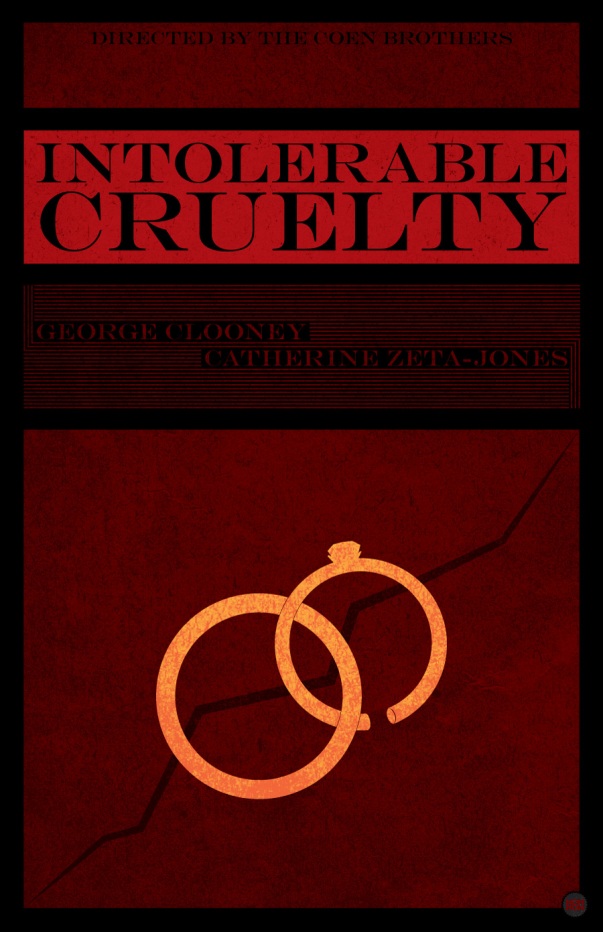
Intolerable Cruelty (2003)
intolerable-cruelty6


One of the reasons I like to talk about “favorites” instead of “best” is that movies (and all art) strikes different people in different ways and sometimes you love something even if it isn’t a critical darling. I don’t think anybody would call Intolerable Cruelty one of the Cohen Brothers’ best movies, but it is undoubtedly one of my favorites.

That’s largely down to the fact that for the first year of my legal life I was a divorce lawyer. Working for legal aid as the domestic violence specialist I split my time between working with abuse victims to get protective orders and getting them out of marriages. The people I was working with didn’t have enough property (and, thankfully, not many had kids) to fight about most time, much less enough to worry about something like the famous prenup that bears the name of Myles Massey (played with all his old-school movie star charm by George Clooney), but the beats and rhythms of what divorces cases are like are the same regardless of what’s involved. Maybe it’s millions of dollars; maybe it’s the commemorative Smurf glasses from Arby’s. I recognized that on the screen.

Plus, there’s an easy screwball feel to the whole thing (Catherine Zeta-Jones, as the woman who cooks up the scheme to bring Massey to heal, is great, too), with just enough bizarre touches (Massey’s wheezing senior partner, the Baron, etc.), that it’s just fun. Which is something you shouldn’t be able to say about a movie with a divorce lawyer as the main character!
Weekly Read: Kings of the Wyld

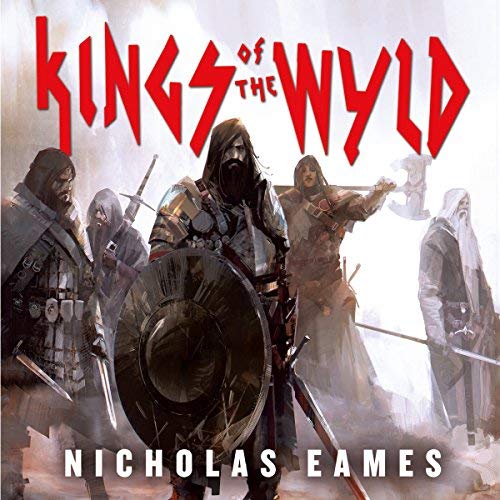
It’s a fairly standard setup for a fantasy story – a gang of unruly characters get together to journey across the land in order to fulfill some quest. But what if the gang is a band? I mean, what if a group of fantasy mercenaries was treated like a rock and roll band? That’s the great conceit of Kings of the Wyld.

The band, in this case, is called Saga. When the book begins the band has been broken up for a while and Clay is making ends meet as a city watchman, married with daughter. That all changes with Gabriel shows up in desperate need – his own daughter, now a mercenary herself, is stuck in a city besieged by various beasties and baddies on the other side of the world. He needs to get the band back together to save her.

What follows is a pretty fun read, although it comes off a little shallow. Part of the fun is that is that Nicholas Eames really leans into the “group of mercenaries as a band” idea. A lot of the names are references to music in our world – the wizard named Moog, the axe called Syrinx (a Rush reference, I’m guessing), and even Saga itself, which I think is a reference to the Canadian semi-prog band  The characters also play the parts. Moog is the keyboard player stand-in (naturally), weird and aloof and always in flowing robes (not capes? Rick Wakeman weeps somewhere). Gabriel is the nominal front man, the once pretty face up front. Clay plays the bass player roll, holding everything together. The bands also relate to each other like musicians, equal parts jealous of the others’ success and impressed by their prowess. Plus there’s a whole thread about how in Saga’s time bands had to go real feats of heroism, not empty, showy displays in huge stadiums. There’s even sleazy managers! That all works really well.

The actual plot doesn’t fare quite so well. It at times feels like an overgrown Dungeons & Dragons campaign, with the crew moving from one adventure to the next without any real weight to them. Characters change from friend to foe and back again because the plot requires it. At one point a character loses a limb, but then regrows it. There aren’t really any harsh consequences to face. Add to that the fact that the object of the quest – saving Gabriel’s daughter – seems painfully far away for most of the book, until suddenly it isn’t. To be fair, the book wraps up the story and doesn’t leave us hanging, but it comes off as rushed.

But the biggest issue, for me, is that the story sets up as a story of old guys getting back together to relive their former glories, but very few of them act like it. Nobody’s really lost a step when it comes to fighting, everybody heals quickly when needed. It’s a lost opportunity, since aging heroes aren’t often the main course in a fantasy epic.

All that being said, Kings of the Wyld is a fun read. The episodes themselves, while they don’t add up to much, are well done in and of themselves. The dialogue is quick and funny. And Eames manages to work in a staggering array of creatures and beasties for our heroes to interact with. It verges on overload, but it doesn’t cross the line. So if you’re a fantasy fan and want a familiar tale with a twist, this one’s for you. Sometimes it is good to get the band back together.

KingsoftheWyld

Ideas Will Always Be Free Range

I have a file on my computer that’s full of “what if?” ideas that occur to me from time to time. Most of them will never find their way into an actual story – there’s a fair gulf between “cool idea” and “cool story.” In light of that, it can be cool to see one of those ideas show up on the big screen completely independent of your having it.

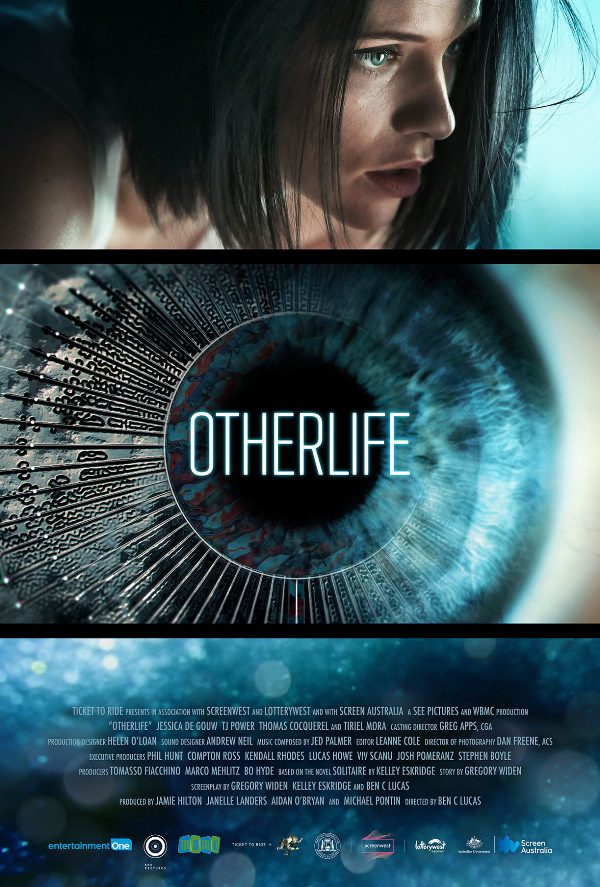
The Australian film OtherLife is based on a nifty “what if” question – what if, via a process involving programmable biotech (don’t call it drugs) dropped into a person’s eye, that person could experience rich and full “memories” of experiences in the blink of an eye? Think of the ability to cram an entire vacation into a few seconds! Actually, that sounds kind of shitty and easily manipulated, but it’s still a cool idea.

Otherlife

In the film the tech’s creator, Ren, is having problems with the system as it gets ready to go public. To help the company with funding, her partner wants to explore a Government-proposed use of the tech – to make criminals experience a long time of confinement without actually having to incarcerate them. Ren is furious (since her motives are purely altruistic and personal) and balks at the idea, of course. Things spiral out from there to a not all that interesting conclusion.

Mostly because that idea – of incarceration by memory – is a really interesting one. You may have guessed by now that’s the one that I wrote down in my “what if?” file years ago. But the film isn’t really interested in exploring the ideas behind that setup, instead using it to jump start the plot and put Ren through a very weird experience. It’s interesting enough to watch, but doesn’t really stick with you for very long, putting thrills and twists ahead of deep thought and head scratching.

Newbie writers sometimes worry about either not having an “original” idea or that if they discuss their own idea in public it will get “stolen.” Fact is, neither of those things is a problem. Ideas are only the beginning. It’s what you do with them that matters, how the characters you create are affected by them. OtherLife takes the “memories of punishment” idea and does one thing with it. If I ever get back to it I’ll do something very different. The world’s big enough for both (and more!) and all the richer for it, too.

Which is funny, because watching Otherlife gave me another neat idea! It has to do with people disappearing and then reappearing and what that does to them and those around them. It’s now sitting in my “what if?” file, quietly tucked away. Maybe one day it’ll become something worth developing.

Weekly Read: The Cadaver King and the Country Dentist

There’s a long-running thread on one of the writers’ forums where I hang out about “books you’ve thrown across the room with force.” The examples are most books that are badly written, not otherwise infuriating. That being the case, if I actually had a copy of Radley Balko’s The Cadaver King and the Country Dentist, rather than the Audible file on my phone, I’d definitely have thrown it across the room a few times while reading it. As it is, I can’t afford the new phone, so I just had to grin and bear it.

From the main title you’d think this book might be one of the nifty mysteries where a pair of mismatched souls find the killer in the end. The subtitle dispels that: “A True Story of Injustice in the American South.” The spine of the book is the story of two men wrongfully convicted of murder in Mississippi and what it took to reclaim their freedom. It’s a story with a pair of clear bad guys, but the lesson of the book is much broader than that.

Said bad guys are the ones mentioned in the title. The “Cadaver King” is Steven Hayne, a medical examiner who at one point was doing 4 out of every 5 autopsies in the state (plus others in Louisiana and some in private cases, too). He did so much work for a couple of reasons. One is that, for decades, the death investigation system in Mississippi was completely fucked up. It was left in the hands of local coroners (elected officials, not necessarily medically trained – the history of the office is fascinating and has little to do with death investigations), who then contracted with actual doctors to do autopsies. The other is that Hayne told prosecutors what they wanted to hear, pushing well past the bounds of what science could say to provide clinching evidence that whatever person the state charged was guilty of the crime.

Bad as Hayne was his sidekick, “Country Dentist” Michael West, was even worse. West started out as the purveyor of a an always sketchy and now debunked field of forensic practice that allowed someone to match bite marks they way others might match fingerprints. With Hayne an expert at finding bites on corpses, even when it made no sense, West could be another link between a suspect and a conviction (why nobody questioned the rise in murders that involved biting is a mystery. As the years went on he developed other skills so that, before his eventually unraveling, he was basically a one-man CSI.

It’s not a spoiler to say that Hayne and West get their comeuppance (West is finally pinned down during a deposition about his magical testimony by an Innocence Project lawyer named – I shit you not – Fabricant) and that two innocent men are freed. But that’s far from a happy ending. There are almost certainly others similarly situated in Mississippi and what makes the book so infuriating is that the entire system is setup to keep them in prison. I’ve had to explain this to clients before – once you’re found guilty, it’s next to impossible to prove otherwise. Finality reigns supreme. The system simply doesn’t care if that might not be the truth and most people don’t want to know (one revealing anecdote is how the Innocence Project at the University of Mississippi got pushback initial because people feared it might suggest some alumni had gotten the wrong people convicted). As Balko puts it in the book, “[w]hat you’re about to read didn’t happen by accident.”

That’s bad enough, of course, but when politics and perverse prosecutorial incentives are thrown into the mix it practically guarantees bad outcomes. That’s mostly because politicians have been so good at weaponizing fear of crime (even as crime rates drop to historic lows) and most prosecutors are elected. You’ll rarely lose an election for being too tough on crime, but go the other way and better start planning for another career. And, as Balko points out, this is a bipartisan problem. When a blue-ribbon federal panel issued a report calling into question large swaths of forensic evidence, the Obama Justice Department dismissed it. Truth is, people rarely care about the details of the criminal justice system unless they or someone they love get caught up in it.

But that only works they way it does because, at bottom, the modern American criminal justice system doesn’t place any priority on determining what actually happened in any particular case. Prosecutors want convictions. Defense attorneys want the best results for their clients, which may be at odds with the actual truth of the situation. Defendants, sometimes facing long potential sentences and no real option of winning in court, plead guilty to things they didn’t do. And, as I said, once that verdict is in, the system is not designed to examine it again.

The Cadaver King and the Country Dentist is a good read. It’s engaging and compelling, frightening and maddening. “If you’re not outraged,” the saying goes, “you haven’t been paying attention.” Pay attention. Read this book.

CadaverKing

Still Not Sold on VAR

The World Cup has come and gone (congrats Les Bleus!) and, along with it, the most high profile deployment to date of Video Assisted Refereeing or VAR. Regular readers know I’m not a huge fan of VAR (not quite the militant my wife has become, however), but if it’s here to stay it’s at least worth making it the best product it can be. So how did it do on its debut on the global stage?

If I’m being honest – not bad. It seemed to work fairly efficiently and corrected a good number of “wrong” calls. Not all of them, of course, which goes to one of my primary complaints with any form of review in sports – a promise of perfect that can never be realized. And it didn’t take that long. According to SoccerAmerica, 455 incidents were reviewed in 64 games, with only 20 resulting in game stoppages (of an average 80 seconds). And it managed to avoid my nightmare scenario – where team A is fouled while attacking in team B’s box but there’s no call, allowing team B to counter attack and the next stoppage is after team B scores. How does that all get sorted out? It will happen eventually. But, more often than not, the World Cup version of VAR was a good thing.

The other versions still need a lot of work.

Every week, for some reason, MLS puts together a “you be the ref” video with a controversial calls (or non-calls) involving a penalty kick, offside call, and red card.

Invariably they tend to show referees making bad decisions and, in some cases, VAR does very little to help. Witness a recent outburst by Real Salt Lake coach Mike Petke, which attracted support from others around the league (before all the tweets disappeared, for some reason).

A lot of this comes down to something that video review in all sports (that I’m aware of, at least) have imported from the world of my day job – standards of review.

When a court of appeals reviews a lower court decision, it doesn’t just hoover up the record and spit out an opinion. The court reviews discrete issues, each with its own rules for reviewing it. Generally speaking, if the issue is purely one of law – say, what a statute means – it’s reviewed de novo, with no deference to the lower court’s decision. On the flip side, a purely factual issue is reviewed for clear error – meaning it’s not just enough for the lower court to have been wrong, but it must be really really wrong for the higher court to do anything about it. Lots of issues fall in the middle and get reviewed for abuse of discretion, which is also pretty deferential to the lower court’s decision.

There are reasons for these in courts of law. Primarily, the thought goes that lower courts that actually sit and watch witnesses testify and such have a better chance of getting the facts right than higher courts working from a cold record. There’s some evidence that isn’t true, but it’s the accepted basis of the system right now.

VAR (and reply in American football) has adopted, basically, the clear error standard, in spite of the reasons for doing so not applying. If anything, the replay booth is in better shape than the ref watching the game live to make correct decisions. Why hamstring things so that only “really really wrong” decisions are corrected? During the World Cup commentators mentioned that the replay officials (or perhaps just the ref making the review – why do they get to judge their own work?) couldn’t even look at replays in slow motion. What’s the point of that? If we’re going to stop the game to get things right, let’s get things right!

That, largely, is what’s keeping me from more fully embracing VAR. On the one hand, it goes too far in messing with the flow of the game. On the other hand, it doesn’t go far enough, since it limits the value of the replays. The powers that be need to work that contradiction out, sooner rather than later.

Or, at the very least, MLS needs to adopt the system FIFA used for the World Cup. It’s eons better than what they do now. If we have to have VAR – and I fear we must – let’s at least make it the best it can be.

Come See Me!

It’s that time of year again, as several events are coming up around the area where I’ll be hawking my wares and talking about books.

First up is the Lewisburg Literary Festival on August 3 and 4 in the best small town in America, Lewisburg, West Virginia. I’ll be in the Literary Town Square both days with lots of other authors. There all kinds of other things going on, too, including workshops and presentations from writers like David Sheff. Get more details at the festival’s website here.

Lewisburg

Second will be the West Virginia Book Festival on October 26 and 27 in Charleston. It’s a very strong lineup this year, including Dennis Lehane, Debbie Macomber, and John Scalzi. I’ll have a table in the marketplace, so stop by and say hey (unless Sclazi’s on – I’ll be AWOL then). Find out more at the festival’s website here.

2010_Bookfest_Logo

I always enjoy talking we readers – even if they’re not my readers! So be sure to stop by.

Things Change

Sometimes I think this should be the theme song of writers:

I mean, even the most devoted planner would have to admit that no lengthy project finishes precisely the way it was planned. Things always change. As my ancestor (why not?) once said, “the best laid schemes o’ Mice an’ Men / Gang aft agley.”

I’ve written before about my current work in progress, The Orb of Triska. My intention was for it to be the first of a seven-book series called Empire Falls. Good news! Editing continues apace and I’m really liking where things are going. But, as I said . . . things change.

The plan was for each book in the series to be about the length of Moore Hollow. At about 85,000 words it’s long enough, but not nearly as long as most fantasy novels these days. All of The Water Road books are north of 130,000, for comparison (for another comparison, A Game of Thrones weighs in at 292,000 – and it’s the shortest of that series!). I thought more, shorter books would work better for this story and planned out each volume accordingly.

Then, between editing passes, I started thinking about it again. The series is going to follow three characters and the stories for two of them didn’t really break into that many parts. It was more like three parts. And the other character, who had a more discrete series of adventures, could be easily reworked into three parts, too. In other words, the bones for another trilogy are there. So, I decided to retool a bit.

Empire Falls the proposed seven-book series is dead. Long live The Unari Trilogy! Each of those will be about the length of The Water Road novels. I don’t think anything major will have to be left out, but everything should flow a lot better in three bigger chunks.

That’s where I am these days. You have to be flexible as a writer. Sometimes the best way to do something isn’t the way you thought it should be done in the first place.

Change

Weekly Read: Quick Hits

Books have been piling up a little bit (metaphorically – most of them are in electronic form) around here the past few weeks, so I wanted to take a brief moment to highlight some of the more interesting ones I’ve finished recently.

House of Penance

House of Penance

A graphic novel with a neat idea – a horror take on the famous Winchester Mystery House (link). Built by Sarah Winchester, widow of William Wirt Winchester of Winchester arms fame, the house is full of odd rooms and corridors. Stories have run rampant about why Winchester built it that way, continually adding onto it apparently without plan for years. House of Penance tells how she was trying to appease the spirits of all those killed by her husband’s guns. Like I said, neat idea, and the artwork is fabulous, but the story is really lacking. So little actually goes on, but the story is intent on remaining some kind of puzzle, that it doesn’t land like it could. Glad I read it, but not essential.

The Fifth Season

The_Fifth_Season_novel

While I don’t always agree with the picks for winners of the Hugo, Nebula, and other awards, I always look at the list of nominees as a good suggestion of books to check out. Among this year’s Hugo nominees is The Stone Sky, final part of a trilogy by N.K. Jemisin. I’d never read any of her stuff before, so I backtracked to the first book, The Fifth Season, only to find it won the Hugo, too. Good sign? Damned good. This is a phenomenal book, full of rich and different world building. Jemisin also had the guts to basically make this book all backstory for the main character, but it works so well you just have to admire it. Can’t wait to get to the next one!

The Enchanted

Enchanted

I’m fairly certain everything that happens in this book is a figment of the narrator’s imagination. He’s an inmate on death row in a very Southern gothic sounding prison (although the locale is never specifically identified). He calls it an “enchanted place” and weaves various tales of the people (and non-people) around him. Since there’s no bright line in it that confirms the book is set in a fantasy world, I can only read it (as an attorney who’s talked to hundreds of people in prison) as the extended coping mechanism of a deeply broken, troubled mind. That doesn’t make the book any less compelling. For all its oddity and “this can’t be real”-ness, it may be the best conception of what being locked in a cage is that I’ve ever read.

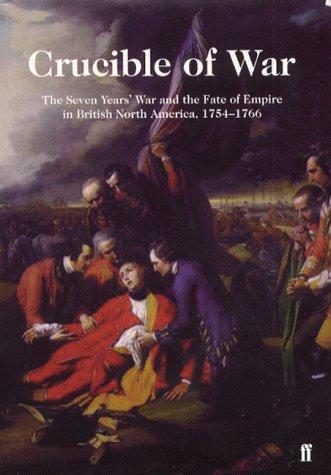
Crucible of War: The Seven Years War and the Fate of Empire in British North America, 1754-1766

Crucible of War

Who’s up for a dense, thick tome about a war most of you forgot about when you were in high school? I was because the wife and I recently took a side trip to Fort Ligonier outside Pittsburgh while we were on a trip.

Maker:0x4c,Date:2018-3-24,Ver:4,Lens:Kan03,Act:Lar01,E-Y

It was in this general area (though not this particular fort) where a young George Washington blundered into a massacre that launched what many consider the first “world war,” sparking conflicts from the Americas to Europe to Africa and India. What AUTHOR is mostly interested here is how the conflict that began in the backwoods of Pennsylvania really jump started the machinery of British Empire and, in the process, laid the foundations for the American Revolution. It’s fascinating stuff, but this is pretty dry, serious history – there aren’t any characters developed as through lines for the book, names and places are flung at you with great depth. It’s also, sadly, a good example of how some things in America never change.

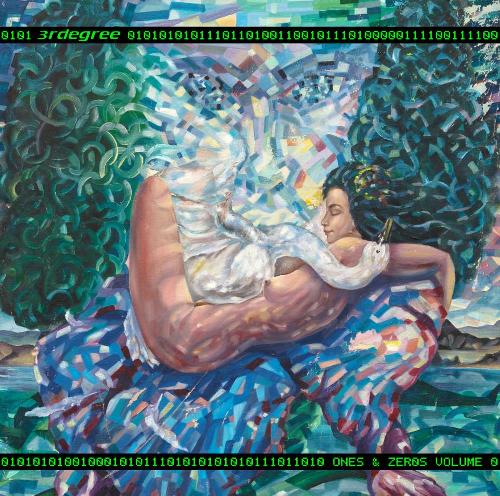
Weekly Listen: Ones and Zeroes: Volume 0

At the end of my review of 3rDegree’s Ones and Zeroes: Volume 1, I wrote:

It’s a mess of awfully good music wrapped around an interesting idea. And the best thing? It’s only the first part!

Now that I’ve gotten familiar with the band’s follow up, I’m not so sure about that anymore.

The “first part” bit, I mean. The enthusiasm was completely warranted. But where does Volume 0 fit in to the chronology? It came second, after all, but it’s hardly a sequel. So it is a prequel? Not really. Is it better to listen to them in order of release or numerical order? I’m going to go out on a limb and say it doesn’t really matter, for a very unexpected reason – Volume 0 doesn’t really have anything to do with Volume 1. Conceptually, at least.

Hear me out.

Volume 1 tells, essentially, a single story about the impact of a fictional (gods, I hope) megacorp, Valhalla Biotech, that peddles various “life extension” technology. There was a through line running from stem to stern of the album, summed up by refrain “tell me what it means to be human.” This was helped along by the sometimes chilling asides from various Valhalla products and spokespersons.

Volume 0, by contrasts, covers a lot of different ground. “Olympia” deals with artificial beings who aren’t content to be submissive. “Perfect Babies” channels Brave New World and Gattaca and their (timely and relevant) fears of designer offspring. The epic “Click Away!” dives into the echo chamber of the Internet. Unlike Volume 1, there’s no connective tissue pulling these all together (the Valhalla announcements are absent, for example).

To put it another way, Volume 1 is a Black Mirror episode; Volume 0 is an entire season.

This isn’t a bad thing. Indeed, it’s probably a good idea not to just do a copy of Volume 1, since it’s hard to bottle lightning twice. Still, aside from the opening overture and a few riffs in the closing “Ones and Zeroes” there isn’t really a link between to the two albums. They’re separate things that stand on their own merits.

And Volume 0 has plenty of merits. Lyrically, the best tracks (“Olympia” and “Logical Conclusion,” in particular) create perfect little worlds, short stories of immediate impact and thougtfulness. The rest throw out interesting ideas and slip in some zingers for good measure (has a meaner chorus ever been sung other than “the future doesn’t need you at all?”).

Musically, 3rDegree continue to refine a sound that doesn’t really resemble anybody else. Bassist Robert James Pashman once told me that 3rDegree was (I’m seriously paraphrasing) “too straight forward for the prog crowd, but too weird for the mainstream.” That’s still true, although they’ve been embraced by the prog world in the past few years (and produced an epic in return!). But they’re at their best when the hooks and melodies come to the fore, to be supported by some interesting backing stuff and arrangements. That’s all backed up by playing that’s intricate and muscular, but rarely flashy. It takes a few listens to really get at what’s going on, which is always a good sign. I particularly dig that there’s lots of bass synth on this album.

One of the reasons I had to keep giving Volume 0 listens is because I had a hard time thinking about what to say about it. Here’s the thing – with each album since they got back together, 3rDegree have been stepping up their game in big ways. Volume 0, though, doesn’t feel like a big step forward. It feels like a consolidation, a restatement of what they’re about. That’s not in any way a bad thing.

What I’m saying is that Volume 0 is a great album. It’s musically and lyrically rich, filled with catchy tunes and great playing. But that’s what we’ve come to expect from 3rDegree at this point, right? They’re a band in top form and cranking out another excellent offering just isn’t a surprise at this point. So why don’t you have your copy yet?

Ones&Zeroes