Sometimes Writing Is Just Filling In the Holes

I can only assume that no piece of art – novel, symphony, painting – comes out complete and perfect in one pass. Creators have to go back and fix things, right? If not I must be doing it very very wrong.

When I write a first draft it’s all about momentum. The goal is to keep putting one foot in front of the other moving the story forward. I’m not saying that I just slap words on the page with the intention to repair them later, but there is a sense of urgency to keep going. For my writing style, until I have an actual story I have a hard time nipping and tucking it into something that readers will (hopefully) enjoy.

As a result, sometimes there are times when I leave holes that need to be filled on a second pass.  A lot of times it’s a sentence or a paragraph, usually replaced with something in all caps like “WRITE SOMETHING EXCITING HERE.” That’s particularly true if I’m writing a chapter where characters get into danger and I know they’re going to get out, but haven’t figure out how yet.

What sucks about this strategy is that I usually forget I’ve done it until I come around for a second draft. For me a second draft is where I can make sure things that need to be connected and make sense. Wait, the bad guy in Chapter 5 was an expert marksman, but in Chapter 9 he can’t hit the broad side of a barn? That kind of thing gets fixed in a second draft, along with making sure characters develop like I want and such. And, of course, I fill in holes.

As I said, I usually forget about these holes, but it’s not a big deal to put down the virtual red pen, fire up the writing brain, and knock out a few sentences.

Sometimes, unfortunately, you get this:

Chapter34

That’s Chapter 34 of the first draft of Widows of the Empire. As you can see, when I came round on my second draft, there wasn’t anything there.

Did I panic? Just a little bit. It was one of those situations where I knew, generally, what had to happen in that chapter but at first pass I didn’t have a good idea of how it should happen. I don’t know what it was when I was in the first draft but the particular synapses I needed just weren’t firing at that point.

Did they fire later? Thankfully, yes, although not without complication. I sketched out what I wanted to happen in that chapter, then went back to my red pen and the rest of the manuscript, planning to write that chapter when I was finished. A day or two, tops, and that would be that.

Then the COVID-19 lockdown happened. I’m fortunate in that my day job is both essential (the wheels of justice may slow the fuck down, but they don’t stop) and I can do it safely from home, so my life hasn’t been upended nearly as much as it has for some people. Nonetheless, the change in my daily life, along with the existential dread of the whole situation, sapped my creativity. Literary creativity, anyway.

It took a couple of weeks, but I finally found the spark again and, in a few days, pounded out a chapter that I think is exciting and a little tragic. It moves the pieces along in a way that should deepen the main character involved. It felt good.

All of which is a long way of saying there is now a complete second draft of Widows of the Empire. And it’s waiting for my virtual red pen. Patience, my sweet . . .

Selma

What Makes A Compelling Main Character?

Last week I started a book. The two main characters were from a different race and were essentially vampires, although they weren’t called that. It was kind of a romance, kind of coming of age, but it involved a lot of sex and murder, without any hint of conscience or consequence. Nor was there any other character trying to put a stop to it.

I didn’t finish the book.

I decided to bail because I couldn’t get into either of the main characters at all. It wasn’t that they were bad or did evil things – I don’t need the protagonist of every book to be a flawless hero (read The Water Road if you don’t believe me). But there has to be something there and it made me start to think about what we expect, as readers, from our main characters.

Stories are all about characters. Regardless of how inventive the world building or how labyrinthine the plot, if the people who are living in that world and doing those things don’t connect with readers than it’s kind of a wasted exercise.

Do main characters have to be good heroes who strive to do right and seem like really fun/nice people to be around? That’s certainly one way to go. Having your main character be someone who’s easy to root for makes it easy for readers to be swept away in their story. Those kinds of characters tend to be kind of dull, though, since they’re always doing the right things for the right reasons. Still, people generally want good to triumph over evil, so it’s one approach to take.

A more subtle approach would be to have a main character who has flaws and sometimes makes bad decisions, but who’s heart is basically in the right place. This is where most main characters fall, I think. Since I referenced The Water Road before I’d say that’s where Antrey belongs. She does a horrible thing, but spends the rest of the trilogy trying to make up for it and learn from it.

But what about bad guys? Anti-heroes? Can’t people identify with main characters who are generally doing wrong? Of course! It’s a much trickier situation.

One of my favorite main characters I’ve come across recently (and who I’ve mentioned recently) is Johannes Cabal, necromancer and start of the series that bears his name. Nobody would accuse Cabal of being a good guy – in fact, a lot of his troubles come from the fact that he’s fundamentally involved in wicked shit (when your first book involves making a second deal with the devil, you’re working overtime). Why do I like him? For one thing, he’s funny. He gives very few fucks about the people he comes across. That, I think, is key to having a main character who’s a bad guy – if they’re fun to watch do what they do, even if it’s evil, it’s easier to be on their side, so to speak. Also, deep down in Cabal’s core, he’s trying to do a good thing – cure the human race of the disease of death. It’s a laudable goal, even if the only way to get there is to slog through darkness.

Another way you can make a main character who does bad thing someone to root for is make their antagonist even worse. The wife and I stumbled across Freaks this weekend on Netflix. Neither a remake of the Tod Browning classic or an adaptation of the Marillion tune, it’s about a little girl with powers and a father trying to protect her. Not “evil,” particularly, but since the kid has no idea of her powers or personal boundaries she does some seriously bad things. That said, the government agency charged with hunting these people down was even worse. It’s easy to wish for a bad, but perhaps redeemable, character against someone who just wants to exterminate them.

I suppose the bottom line for any main character (or any character, really) is that readers have to be interested in them. Maybe not love them, but at least be curious about them and where they’re going. It’s easy to buy in with heroes and people trying to do good. But even people wandering around doing evil have to be interesting. If they’re not, why waste your time reading about them?

BondCat

New Short Story – “The Nickel Tour”

I’m taking part in this year’s version of the NYC Midnight Short Story contest. The way it works is that for every round folks are divided into groups and each group is given a particular assignment in terms of genre, scenario, and a required character, along with a limited amount of time to write a story. As the competition goes on (there are four rounds in total) the time given to write the stories shrinks (as do the maximum word counts, thankfully).

The first round stories were due back in January. I was drawn into a group where the required genre was sci-fi, the scenario was a job interview, and the character was a mercenary. The word limit was 2500 words. The results finally came in last week and I made it out of the first group! So along with about 800 others I had to write a new story last weekend for the second round. We’ll see how that goes.

Here’s the story from the first round, “The Nickel Tour.” I took the title from a phrase used in my office when we interview someone and then show them around the office. That definitely played into the story and the setting. Enjoy!

The Nickel Tour

Reynolds was having a hard time taking his eyes off the stun grenade sitting on of the table. It was inert, or so the mercenary sitting across from them had said. Ada – that was all, just Ada – had assured her interviewers that unless the lights along the centerline were flashing it was perfectly safe, a harmless lump about the size of an egg, shaped like a rugby ball. Nothing to worry about.

Nearly all the other mercenaries interviewed for this new security position had been caught at the building checkpoint trying to bring in some kind of weapon. Ada hadn’t, which made her all the more impressive. She didn’t even look like a merc. The others looked like they had all come from central casting, clad in leather and with enough scars to fill a plastic surgery convention. Ada sat calmly, in a tailored light grey suit, with short blond hair, and blouse buttoned up to her neck. If someone from outside walked in on this, she would look like just another lawyer trying to get a job. Yet, somehow, she got that grenade into the office.

“You’ve had experience with sudden, emergent, rapidly changing situations?” Tacey, one of the partners, asked.

“Yes, ma’am,” Ada said, shifting to look the attorney directly in the eyes. “I was part of the response team that dealt with the environmental collapse on Keneally Station out in The Ring. There was a sudden spike in CO2 levels, along with failing hydroponics and water regulators. Within a day the place was becoming toxic. Needless to say, people there were panicked and had to be contained.”

The way she said “contained” made Reynolds’ mouth dry. She made the violent control of desperate people sound like no more than a Saturday picnic.

“What about more long term problems? Something that you just can’t fix overnight?” Dipali, the senior partner, asked.

“Sir, I was on the Revenant when that mess went down,” she said, shifting again. “I can assure you, there was no short term solution there, but we managed to keep a lid on things.”

“What happened on the Revenant?” Reynolds asked. The others at the table looked at him like he’d asked them why water was wet.

“It was a long haul liner bound for Europa,” Ada explained. “There was some unpleasantness aboard.”

“On a cruise ship?” Reynolds asked, chuckling nervously.

“It wasn’t that kind of a liner, sir,” Ada continued. “It was full of refugees wanting to start a new life off-world. What the agents hadn’t realized is that they put a bunch of people in this ship who came from different clans that had been battling each other for generations – in business, arts, politics. Left with months of nothing to do other than stew on old grudges in close quarters, things turned . . . unpleasant.”

Everyone else around the table nodded, so Reynolds didn’t ask anything else. He returned his attention to the stun grenade and wondered how many of them she’d used during that “unpleasantness.”

“Your resume is impressive,” Tacey said, “but almost all of it is off-world.”

Ada nodded. “I’ve spent most of my career in The Ring, working for various mining co-ops. There was also a stint on Mars as part of a personal security detail. And I did a pair of deep space runs. I’m very comfortable in space. I’m very comfortable taking control of situations.”

“Then why come back to Earth? Why now?”

“Life in space can be very transitory, very unsettled,” she said. “I’ve reached the point in my life where I want more permanence. It sounds corny, but I just want to find a place to call home, maybe raise a family.”

“How long have you been off-world?” asked Dipali.

“Long enough that I need to make the choice before my body does it for me,” Ada said. “I’ve chosen Earth and I think this position would suit me very well.”

Tacey asked, “any experience with interdimensional beings?”

She squirmed in her seat. “Nothing professionally, ma’am. I’ve seen the vids, I’ve done some reading. I can assure you, however, that  I’m very good at getting up to speed in a new situation.”

The members of the hiring committee looked at each other and nodded.

“I think that’s all we need,” Dipali said, standing and extending his hand. “We’ll be in touch before the end of the week. For now, Reynolds here will give you the nickel tour. It was very nice to meet you.”

“You, too, sir.” Ada shook hands before everyone else left the room, leaving her and Reynolds alone. “Does every interviewee get to see the office?”

Reynolds shook his head. “You’re the first. I’d say that’s a good sign.” He nodded to the grenade. “Should you pick that up?”

“Leave it,” she said. “It’s a paperweight.”

“You’re the expert,” he said, opening the door into the back office.

The offices of Dipali, Tacey, and Waldroup were like one of those tunnel systems that prairie rodents dig. The outside world sees, at most, the reception area and one of the two conference rooms adjacent to it. Only employees, the odd repair person, and select interviewees get to see what lies beyond.

“Probably seems a little confusing,” Reynolds said as he led her back past a cube farm filled with busy legal assistants. “It will actually make perfect sense once we get back out front.”

“It’s a circle,” Ada said. “But lead on.”

They paused for some  introductions, then continued into the more secluded area of the attorneys’ offices.

“How many attorneys are there?” Ada asked after they’d met another pair of associates.

“A dozen,” Reynolds said. “The three partners on the front door, a couple of junior partners, and then the associates, like me.”

“How long have you worked here?”

“Couple of years. That’s why I was in on your interview, since I was the last hire. It’s kind of a tradition.”

“And what is it you do, exactly?” She was in earnest, information gathering mode, not just making idle chit chat.

“I specialize in cultural understandings, and misunderstandings, in interdimensional contract law. I was brought on when the firm started doing interdimensional work. It’s the same reason we’re hiring a security specialist.”

Ada nodded as they walked down the curved corridor. “Cultural understandings? You make sure nobody’s feelings get hurt?”

He shook his head. “A contract is a meeting of the minds between two parties, or more, to do particular things. You have to know the cultural background of each party to know how that meeting of the minds happens or if it happens at all. Think of it as a way to avoid any . . . unpleasantness.”

Ada nodded at the call back. “Like what?”

“You said you’ve never dealt with an interdimensional being before.”

She shook her head. “Only humans out in space.”

“Well, consider how contract terms might mean different things to a human from our world and, say, a human from Earth-13, where the sky is purple and the sun never really sets. Or if the other party to the contract is a being of pure energy, like the Sostu. Some of our clients are Tuv’O, which for all the world look just like orchids. But they’re sentient!” Reynolds couldn’t help getting excited when he talked about his work.

“And they need contracts?” Ada asked, tugging at her collar.

“Doesn’t everyone?”

“If they’re plants, then how do they,” she paused for a moment, swallowing hard, “how do they get around, much less to another dimension?”

“They’re carried around by a bonded pair of Ez’ak – think a Chihuahua crossed with a beetle – with whom they communicate telepathically. It’s really fascinating.”

“If you say so.”

“Now you’re in for a real treat,” Reynolds said. He knocked on a door, then opened it, letting Ada walk in before him. “Meet Frunobulax.”

Ada looked around the cramped room, jammed with sleek, black computer equipment. On top of one black box, near the door, was a small orb, pulsing with pale orange light. “Who?”

“It’s our office AI,” Reynolds said. “Say hi to Ada, Fru.”

The orb’s glow intensified and deepened into the color of a rich sunset. “Hello, Ada,” it said in a smooth, controlled voice that was clearly artificial without sounding like a computer.

“Had much experience with AI?” Reynolds asked.

Ada shook her head. “Just about every ship making runs out past Luna has some kind of AI, but nothing like this.”

“Fru is the cutting edge of AI and machine learning. He was given basic programming, then let loose on the entirety of human knowledge to develop a personality. That’s where he got the name.”

Ada looked at him, confused.

“Frunobulax has something to do with Frank Zappa,” Reynolds explained. “Fru fell deep into his discography during his learning phase and liked the name.”

“It is a very large poodle dog,” Fru threw in.

She nodded, still not getting it. “What does Fru do?”

“I handle most of the background office functions, from environmental controls to lighting,” Fru said.

“All of that’s out of human hands?” Ada asked, voice cracking slightly.

Reynolds nodded. “Those factors can be very important, depending on which clients are around,” Reynolds explained. “Fru is much better at handling them in real time than we’d ever be.”

“I can also analyze data at a much faster rate than the humans,” Fru continued. “And, of course, I manage the mathematics behind the rift generator.”

Her eyes went wide. “What did it say?”

Reynolds grinned. “Come on,” he said, leading her out of the room, closing the door behind him.

They walked past a few more doors, as the loop that was the inner office turned back toward reception, when they came to a black door without any visible handle. Ada looked around as they walked, like all of a sudden she was plotting an exit strategy.

“You’ll like this,” Reynolds said, grinning like a kid showing off his Christmas toys. He leaned in to a panel near the door while a laser scanned his eyes. Once a soft “bong” confirmed he’d passed that test, he exhaled on the panel. It turned green and the door whisked open. He stepped into the doorway to hold it open while Ada walked inside.

The room itself was about the size of a two-car garage. It was immaculately clean, with what appeared to be bare white walls, floor, and ceiling. At the far end was an arch of dull grey metal, studded with pulsing, purple emitters.

When Ada saw it, her hands shot too her mouth, like she’d seen a ghost.

“Pretty cool, huh?” Reynolds said, beaming.

“This law firm really has an interdimensional rift generator?” She said, mouth agape. “I hoped that computer was joking!”

Reynolds nodded. “I said we were on the cutting edge of interdimensional law. How else could we be? It’s a small one, but it gets the job done.”

She gave him a sharp look. “Is that legal?”

“It’s not illegal,” Reynolds said with a shrug. “There’s no law against it, if that’s what you mean. This is an office full of lawyers. You think they’d do something that might be against the law?”

Ada didn’t seem convinced. “But all the other rift generators are in space, either in Earth orbit or out in The Ring.”

“Because that’s where they were first built,” Reynolds said, strolling around the room. “There’s nothing about rift generation that requires vacuum or zero gravity. No reason why you shouldn’t have one on Earth.”

“No reason?” Her voice was rising. She undid the top button on her blouse with one hand and fanned herself with the other. “What about Field Station? That, that . . . thing they summoned?”

“An early calculation error,” Reynolds said, waving away her concern. “Fru would never let that happen here.”

“What about that entire mining colony in The Ring, the one that just disappeared?”

“Sabotage, of course” Reynolds said. “That’s why we’re hiring a security specialist. Are you all right?”

Ada was breathing fast, taking gulping breaths.

“Come on, let’s finish up the tour.” He repeated the process to open the door and Ada ran out ahead of him into the hallway. She was doubled over, gasping, hands on her knees.

Reynolds started to pat her on the back, but thought better of it. “Maybe should have saved that for another day. It’s probably a lot to take in.”

She stood and nodded. “That a device capable of ripping apart the fabric of space, and perhaps wiping out the Earth in the process, is in the hands of a boutique law firm? Yeah, that’s one way to put it.”

“We’re not James Bond villains,” Reynolds said, chuckling. “Come on, we’ll stop by Mr. Waldroup’s office, so you can meet him.”

“Actually, if it’s all right, I should be going,” Ada said. “I know you’ve got work to do and I need to get to the shuttle pad to catch my flight back to Luna.”

Reynolds stopped and was going to ask why she didn’t want to meet the one named partner she hadn’t seen yet, but decided against it. “Sure, Ada. Whatever you say.”

Walking back towards reception he had a hard time matching her pace without starting to trot. It was like she knew where she was going now and was intent on getting there as quickly as possible.

When they reached reception, Reynolds took a couple of longer strides just to make sure she couldn’t bolt straight through the door. He was certain she could brush him aside if need be, but he hoped she wouldn’t end a job interview like that.

Ada stopped, ran a hand through her hair, and took a deep breath. She held out her hand. “Thanks for the tour. It was . . . eye opening.”

“You’re welcome,” Reynolds said. “Like Mr. Dipali said, I’m sure you’ll hear something back by the end of the week.”

She nodded, stepped around him, and through the door.

“Safe travels,” Reynolds said, waving at the closed glass front door.

“What was that all about?” asked the receptionist.

Reynolds shrugged. “Beats me.”

The next morning, Reynolds was checking his email when a new message arrived. The subject line said “Sorry.” It was from Ada.

“Thanks for the tour yesterday,” she said. “I’ve decided that coming back to Earth isn’t the right decision for me, so I won’t be joining your firm.”

“I wanted to tell you to go grab that stun grenade, if you can,” the message continued. “You can activate it by twisting the narrow end three times to the right, then twice to the left. After that, all you have to do is compress it between your hands, throw it, and run like hell.”

“Memorize that, Reynolds,” she said in closing. “You’re going to need it.”

Reynolds locked his workstation and headed for the conference room.

JobInterview

On Fictional History and Fictional Places

Fiction is fake, by definition. Otherwise it would be nonfiction, right? Any character you create doesn’t exist in the real world if you’re writing fiction, even if you’re writing about a historical figure. Still, a lot of fiction takes place in what we think of as the “real” world. What happens when the real world isn’t enough and you decide to create enclaves of pure fiction within it? Well, then things get interesting.

I had a chance to ponder this recently thanks to a couple of things I consumed that leaned heavily into fictional history and fictional places. Neither quite worked and I’m not sure if all that non-existent history or fake places weren’t part of the problem.

As for fake history, I finally had a chance to see Once Upon a Time . . . in Hollywood, the latest Quentin Tarantino epic. I’m a fan of most of his stuff, and while I found a lot to admire about Once Upon a Time . . . (Brad Pitt, in particular, is as good as everybody said he was), there’s some interesting alternate history in it that didn’t really work for me.

Hollywood

Sitting alongside the story of a TV star on the downside of his career (Leo DiCaprio) and his buddy/stunt man (Pitt) in 1969 Los Angeles is the story of Sharon Tate. Tate, as you’ll recall, was married to Roman Polanski at the time (hilariously portrayed as looking almost exactly like Austin Powers and not yet a rapist) and would be brutally murdered by members of the Manson Family that August. Spoiler alert, I guess – in the world Tarantino builds, that doesn’t happen. Instead, the would-be murderers go to the house next door, where Dicaprio’s character lives and Pitt’s is on acid, and are violently dispatched with a combination of the world’s best pit bull and a flame thrower (which somehow makes sense). The movie ends with everybody else getting on with their lives, the spirit of the 1960s not yet brutally ended.

The odd thing about all this is that it seems backwards. Usually when we’re talking alternate history the pivot point – where it diverges from our reality – is at or near the beginning of the story. The rest of it is exploring the “what if this happened?” question. For a timely example, the HBO adaptation of Philip Roth’s The Plot Against America begins as Charles Lindberg runs for, and wins, the presidency in 1940 on an isolationist platform bolstered by anti-Semitism. What happens next is what we’re going to find out in the next few weeks.

The closer comparison with Once Upon a Time . . . is Tarantino’s prior bit of historical revisionism, Inglorious Basterds. In that one a group of Jewish American Army soldiers during World War II put Hitler down in a bloody, fiery way. It’s clearer wish fulfillment, in my opinion, since everybody knows Hitler was a monster. It also leans heavily on the speculative fiction trope of time travelling to kill Hitler, so it makes more intuitive sense. There’s certainly some wish fulfillment in Once Upon a Time . . . – of course it’s a better world where murder victims aren’t actually murdered and the would-be killers get instant justice – but the way it comes about makes less sense. There’s nothing explaining why the Manson kids go to the wrong house and neither the DiCaprio nor Pitt characters do anything other than react to a home invasion – they aren’t heroes who intentionally foil a plot. I just don’t get the point of the exercise.

It’s easier to see the point of using completely made up geography in fiction, but even that can be tricky. Full disclosure – I’ve done it myself (Moore Hollow is set in a fictional West Virginia county), so I’m not against the idea. It does honk me off a little bit when it comes out of nowhere, though.

One of my great finds of last year was Johannes Cabal the Necromancer, a darkly funny book about a guy trying to conquer death by bringing people back from it. In that book the titular hero (I use the term loosely) has to obtain 100 souls for Satan in order to win his own back, with the devil providing a nightmarish carnival train to aid in the process. As I said, it’s funny in a dark, sarcastic kind of way (in some ways it puts me in mind of a horror version of Hitchhiker’s Guide to the Galaxy) and, so far as I can remember, takes place entirely in our world. Not our real world, obviously (see, bringing people back from the dead, Satan, souls, etc.), but at least it looks like ours. It all happens in the UK, with Cabal’s family coming from Germany.

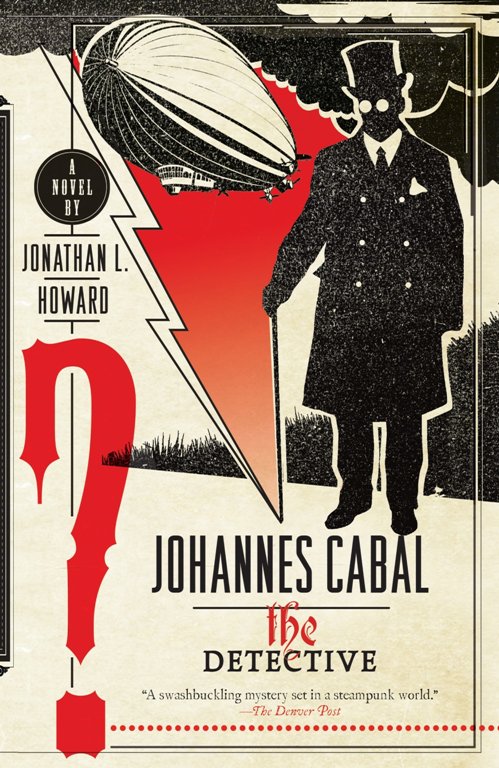
Imagine my surprise when I dove into the sequel, Johannes Cabal the Detective, and found out that it takes place entirely in a pair of made up countries somewhere in Europe (with a third thrown in for good political measure).

CabalDetective

I understand why the author did this – the story requires particular political and military maneuvers that don’t fit established history and it’s hard to manipulate real places to do your fictional building. Nonetheless, it’s kind of a shock to have these made up places thrown at you without warning. Had the first book mentioned them or been set in them it would have been different. That neither Cabal nor his sidekick have any connection to these places doesn’t help the story, but that’s a separate issue.

Of course, there are entire genres of fantasy that take place in worlds that have no relation to this one. The Water Road trilogy takes place on another world entirely (with no human beings!), as does Gods of the Empire and its sequels. But with those you know going in what you’re getting into. Changing the game midstream seems like a miscalculation to me. The question with everything, whether it’s fake history or made up locations, is what works best for the story? What best serves the character? Sometimes the answer to both is something completely new and unexpected. But sometimes it’s not.

On Killing Other People’s Darlings

I’ve never really understood fan fiction. That’s when people who aren’t the creators of a work – book, movie, TV series – write stories in that world using those characters. Occasionally it’s done with the permission of the original creator (such as Eric Flint’s 1632 series), but mostly it’s done in the literary equivalent of under the table.

I get the idea of wanting your favorite characters to have continuing adventures and to have such an attachment to a created world that you want to play around in it. I think if I found out people were writing fan fiction about Antrey or Aton or any of the other character’s I’ve created I’d be flattered. But it takes a lot of work to write good, interesting stories (and don’t get me wrong – some fan fiction is really good), so why not take the time and effort and direct into original characters and locations? It seems like a wasted opportunity to me.

Still, if it makes people happy to do it and they’re not making money off the work of others, have at it. As I said, I can understand wanting to continue the adventures of favorite characters and my understanding is that’s largely what most fan fiction is about.

Then I learned about deathfic.

Deathfic is fan fiction based around the death, sometimes gruesome and involved, of a character. I initially thought it involved dispatching bad guys who maybe escaped the ultimate punishment in the original work. It wouldn’t be too hard to imagine a gruesomely appropriate death for The Commander from The Handmaid’s Tale, for example. But, no, it’s something quite different:

deathfic, the kind of fan fiction in which a beloved character dies, typically in a way that is as painful for the reader as possible. ‘Sometimes I’m just in the mood to hole up and read the saddest thing I can find on the internet,’ Rachel says.

* * *

A baseline assumption of love is that a person you adore is not someone you would like to watch die. Presumably, you would also not like to be the sole architect of that person’s death. But to deathfic writers, the genre isn’t about having some kind of sick control over the life of someone else. It’s about a different kind of control entirely.


So, I guess that’s a thing? Again, seems like an odd thing to do to characters you care about, but whatever rocks your boat, I suppose. And I get, as the article points out, that sometimes writing fiction (even fan fiction) can be a way of working through issues happening in real life, including the deaths of loved ones.

Where things get a little creepy is when the people being killed off aren’t fictional characters at all:

There is deathfic for almost every fictional character and real-life celebrity you can imagine. You can find stories in which Rihanna dies and is reborn as a modern Messiah, and hundreds in which members of the K-pop supergroup BTS haunt one another as beautiful ghosts. These can be “crack” stories, in which writers are openly striving to make the strangest fictional reality they can imagine. BuzzFeed, for instance, has documented the rise of Justin Bieber deathfic, which includes freak accidents and maimings of all kinds.

That’s just fucked up. I mean the any celebrity “reborn as a modern Messiah” angle has some possibilities, but writing death scenes for famous people is just macabre as shit. Not saying you shouldn’t be allowed to do it, but if that’s your thing, maybe you want to get some help?

An old chestnut of writing advice is to “kill your darlings.” It doesn’t necessarily mean characters – it applies to any part of your writing not being so precious that it’s off limits from being cut – but it works that way, too. Killing someone else’s darlings, well, that may be a bridge too far. In the end, though, they’re only real on paper, so I guess there’s no harm.

KillEmAll

When The Gimmick Gets In the Way

Last year I wrote about some stories I’d come across that were told in a non-traditional that really worked well. I suppose turnabout is fair play – sometimes the gimmick just gets in the way of the story.

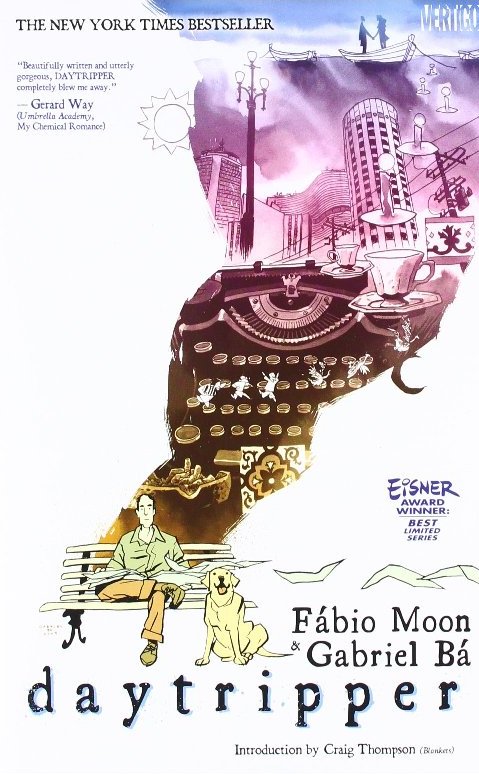
Daytripper is a beautifully put together graphic novel. In each chapter it tells the story of Bras, a writer (first of obituaries, later of novels), as he experiences certain turning point days in his life. It gets a little treacly and really hits you over the head with the “wonder of the everyday” stuff, but some of the individual pieces are good and the art is uniformly excellent.

Daytripper

Here’s the thing – at the end of every chapter, at the end of every vignette – Bras dies. Most of the time he does so in sudden, horrible ways, since they happen at all times of his life, from childhood on up. That’s an interesting way to structure a story, provided you do something with it. Creators Fabio Moon and Gabriel Bá don’t, however. There’s no overarching fantastic of magical realist element that gives the repeated deaths meaning. Everything just resets and we get another version of Bras – one blissfully unaware of his prior fates – to live out another last day.

Without that, the gimmick overwhelms the rest of the book. As readers, we know what’s coming at the end of every chapter. It becomes a macabre game, wondering just how Bras is going to snuff it this time, with methods ranging from the mundane (traffic accident) to the ridiculous (murdered by an old friend living in a shack in the desert). Meanwhile, frustration builds as you wonder just what the point of all this, beyond the hammering home of the tired old cliché about living every day as if it’s your last.* This is clearly a minority view when it comes to Daytripper, so take it with a gram of salt.

My point is this. It’s possible to tell perfectly good stories in the traditional, third-person POV, past tense, linear kind of way (at least I hope it is!). It’s also possible to deviate from the expected in order to throw your readers off, make them engage with the story in a different way, or what have you. But the gimmick has to serve something. Making readers struggle through a non-linear story just because you can isn’t clever, it’s just mean. If I, as a reader, am going to have to put together the puzzle pieces, the final picture better be worth it.

* I’ve never understood the wisdom of this. If it was really my last day on Earth, I wouldn’t worry about mundane shit like paying bills or going to work. But if I lived my ongoing life that way I’d quickly be homeless, unemployed, and (I suspect) divorced. Recognizing this isn’t likely to be your last day and you need to plan accordingly is part of being an adult.

Off to NaNoWriMo 2019!

It’s November, which means it’s time for National Novel Writing Month, aka NaNoWriMo!

NaNo Graphic.jpg

I sat out NaNo last year while I worked on revising Gods of the Empire. The year before that although I “won” in the sense that I made the 50,000-word goal for the month, the book I was working on ultimately cratered (I still like the idea and plan to return to it in a different setting).

So I kind of feel like I have unfinished business this year. To help me get back in the swing of things, I’m returning to an old haunt, so to speak:

Pageflex Persona [document: PRS0000030_00047]

Moore Hollow is my first novel and ever since it’s been loosed upon the world I’ve had people asking about a sequel. I never intended it to have one, to be honest. I thought I’d told the entire story. However, I’ve come to realize that I like Ben Potter, the book’s main character, and the idea of this Englishman with West Virginia ties coming back to the state. So I’m writing a sequel which will, if successful, turn this into an ongoing series (tentatively) called Paranormal Appalachia.

As you can tell from that title, Ben will get involved with various weird things happening in West Virginia (mostly – he’ll travel a bit). He’s going to hook up some with the main character from my first NaNo book, which now lives in the back of my closet. That guy’s a lawyer who specializes in handling “odd” cases and is developing kind of a reputation.

I’m excited to see where this all leads. I’ve got several stories in mind for Ben and I’m hoping they flesh out into full-fledged, engaging novels. I guess we’ll find out!

See you in December!

WriteAllTheThings

Fantasy Doesn’t Have to Be “Accurate,” It Just Has to Be Compelling

A while back I wrote about how research can be important, and idea-provoking, when it comes to writing fantasy. The gut reaction might be that writing fantasy means you can just make everything up as you go along. It’s not that simple, but one of the joys of writing fantasy is the freedom it gives you to mold the world your story is set in to the needs of the story itself. That’s why questions like this bug me:

AccuracyPostCap1

That’s from one of the fantasy author Facebook groups I’m in. I chimed in asking for more information about what kind of time period we’re talking about, since the kind of rigorous border regulation we know today is a fairly recent invention. But more than that, I asked what the writer’s story needed? After all, it’s fantasy, so why be bound to mundane reality?

I think that when it comes to worrying about research in fantasy it comes in two flavors. One is research for inspiration – you’re not looking to see how things are or were done in order to have your characters do the same thing, but you’re trying to spark your own creativity. The most obvious case of this is reading history, which is full of bizarre and compelling story fuel that can be molded to fit just about whatever world your telling your story in.

An example of this is one I’ve mentioned before – the basic arc of The Water Road trilogy was inspired by reading about Napoleon’s 100 Days and thinking about how he was handled – exiled only to return – sounded like something that would happen to the bad guy in a fantasy series. What actually takes place in The Water Road is very different, but the bones of it are still there.

The other situation is the one where I think people get hung up sometimes, that is doing research about the right or correct or “accurate” way to do something. That’s a situation where you need to have a character do something or have something happen to the character and you want to make sure it feels right. That kind of research is good and necessary – you can’t really write fantasy without any research (including as “research” here knowledge you’ve already obtained) – but it’s important not to let the reality overwhelm the story.

As an example, the world of Gods of the Empire includes steam-powered autocars (of course it does, it’s steampunk!), but they’re mostly toys of the rich. So as part of his travels Aton gets to ride in one and I wanted to have a scene where he observed the startup of one of these things, to capture the kind of Rube Goldberg beasts that they are. I did some scrounging and found a very good video of someone going through the startup for an restored Stanley Steamer, originally built around 1911:

Cool, huh? It provided some great details that I was able to put into that part of the book, but I didn’t just take down what the guy did in the video and transport it to the book. Why? For one, while providing a glimpse of the startup routine is a nice way of deepening the world building it’s a grace note on the overall story, not a subplot – I didn’t want to divert for that long. For another, the character in my book wasn’t starting a Stanley Steamer, but rather a similar vehicle in a different world with differing technologies. In other words, I was only concerned about being accurate to my world, not the real world.

Research while writing fantasy is kind of like the old saw about knowing the rules of writing (or any artistic endeavor). It’s not important to know the rules to slavishly follow them, but it is important to know them so that when you break them you can think of why you’re breaking them and to what effect.

Say, for example, you want to have a two-feet-tall sprite in your story wield a long steel broadsword. Physics tell you that in the real world (assume a real world with sprites, people) that wouldn’t work – the sword is too big and too heavy for the sprite to pick up, much less wield. Does that mean it can’t happen because it would not be “accurate.” No! This is fantasy – anything can happen, if you want it to, but you need to figure out how, in your world, such a thing is possible. Maybe the sword is enchanted and can be wielded by anyone who is worthy? Maybe sprites are supernaturally for some cool reason in your world? It doesn’t matter, so long as you realize that some fanstaticking is going to have to happen.

Which, after all, is the point, right? One different between science fiction and fantasy is that fantasy is really only limited by your imagination. Sci-fi, at least in theory, is tethered to the realities of the real world, however much one can extrapolate from them. Fantasy not only lets you think outside the box, but blow up the box completely. It’s a great power to have, being able to mold the world to fit your story – why shouldn’t you use it every chance you get?

Wonka

Gone Writin’

It’s been a while since I did a writing update post, so this seemed as good a time as any.

The good/great news – Gods of the Empire, the first book in my new Unari Trilogy is (for all intents and purposes) done! There’s a few little things left to do with the text and Derange Doctor Design is hard at work whipping up a great cover, but I can say with confidence that it will be released this fall. The target is to be ready for the 2019 West Virginia Book Festival.

The bad news, for you blog readers, is that means that I’m now knee deep in Widows of the Empire, the second book in the trilogy. As a result, blogging is going to be light to nonexistent for the next little bit.

stop-that-you-should-be-writing-loki-14591496

Yessir. If all goes well I’ll have a first draft done by the end of the summer.

So, until then (barring something I just can’t hold in), take care of yourselves and have some fun!

WriteAtDawn

Allies? Competitors? Something Else?

Recently someone on a sci-fi/fantasy writers’ group I’m in asked the following question:

AlliesCompetitors

It’s an interesting question, but one I didn’t feel comfortable answering right away since neither one of those choices really seemed right.

“Allies” is pretty heavy in terms of commitment. Maybe that’s because my first thought when talking about allies is in a military sense. NATO members are allies not necessarily because they like or agree with each other, but because there’s a deep obligation to defend each other if another is attacked. That’s hard core and I’m not sure I’m down to shed blood (metaphorical, even) for other authors I barely know. In addition, allies have overarching interests that allow them to overlook other, even fundamental, disagreements. Think of the US and UK allying with the Soviet Union during World War II. Again, I’m not sure I want to think of my relationship to other authors that way.

But “Competitors” doesn’t really work either, at least most of the time. I’m a firm believer in authors supporting other authors and when someone I know in real life has success – a new book gets a great launch, superb reviews – or someone in an online forum shares that kind of success I join in on the celebration. Their success has little to say about my own sales, reviews, or lacks thereof. It’s not a matter of fighting over the same readership pie. Now there are times when I am in direct competition with  other writers – competitions, anthologies with limited spaces, etc. – but you know that going in and can prepare for it.

Thinking about these two concepts led me to another term that I think fits my perspective the best – colleagues. I settled on that after sitting in a courtroom watching a hearing where a pair of defense attorneys worked at cross purposes.

I’m an Assistant Federal Public Defender, one of about a half dozen in our office. Outside of our office there are a couple of dozen private lawyers on what’s called the CJA Panel who also take appointed cases – ones our office can’t due to conflicts of interest or just lack of resources. For the most part we’re on the same side as the panel attorneys – we share legal theories, help work through issues, that kind of thing. But sometimes, we’re not on the same side – we’re in what you might call competition.

In this particular case one of my AFPD colleagues was representing someone charged with violating his supervised release (sort of like probation after you get out of prison). The particular issue came down to whether the court believed our client’s story about how he came to possess some drugs. This story could be backed up by his girlfriend, but only if she admitted to conduct which might put her in legal jeopardy. So, the court appointed a CJA Panel member to represent her interests in the hearing. It would have been better for our client had she testified, but her interests aren’t the same as ours and, on her lawyer’s advice, she invoked the Fifth Amendment.

Everything worked out in the end and we were back on the same “team” as that panel attorney the next day. But for that brief time, we were competitors.

So I think that’s the word I think best describes my relationship with fellow writers – colleague. It recognizes that sometimes you are in competition, but it’s not very often, while taking into account that we share a lot of interests in common without going so far as to bring into being an iron-clad allyship. In general, I’m happy when my colleagues do well and want to help them do it, but there may be exceptions.

After all, just because you write books and I write books doesn’t mean I’m going to help you move or anything.

Move