Nothing substantive this week as I’m finishing up a short story for submission to an anthology about lesser-known cryptids of Appalachia. No spoilers, but I can at least mention the beastie that’s involved:
Back next week!
Nothing substantive this week as I’m finishing up a short story for submission to an anthology about lesser-known cryptids of Appalachia. No spoilers, but I can at least mention the beastie that’s involved:
Back next week!
Just before I went on hiatus courts in two separate lawsuits by creatives against generative AI companies handed down similar decisions indicating that AI isn’t going anywhere anytime soon. Both concluded that using existing copyright-protected works to train AI engines falls under the doctrine of “fair use.” As one article explained:
The doctrine of fair use allows the use of copyrighted works without the copyright owner’s permission in some circumstances.
Fair use is a key legal defense for the tech companies, and Alsup’s decision is the first to address it in the context of generative AI.
AI companies argue their systems make fair use of copyrighted material to create new, transformative content, and that being forced to pay copyright holders for their work could hamstring the burgeoning AI industry.
Anthropic told the court that it made fair use of the books and that U.S. copyright law “not only allows, but encourages” its AI training because it promotes human creativity. The company said its system copied the books to “study Plaintiffs’ writing, extract uncopyrightable information from it, and use what it learned to create revolutionary technology.”
Copyright owners say that AI companies are unlawfully copying their work to generate competing content that threatens their livelihoods.
Alsup agreed with Anthropic on Monday that its training was “exceedingly transformative.”
You can read more about the nuances of the various cases here. And this column points out how restrictive copyright can be when a real human being wants to use something that’s currently protected.
While I’m not a party to either suit, I do know that some of my books (likely scraped from pirate sites) are included in at least one collection that’s used for AI training, so I do have some skin in the game. In light of that, I wanted to say a few more words about AI and make some public promises about it.
Part of the trouble we’re having with AI is down to the fact that the law has never really grappled with the nature of computer power in the 21st Century. The pro-AI argument for training on existing works is that it’s the same thing that humans do – all artists and creators are building their own work on whatever they’ve read or seen or heard before. Nobody could seriously argue that a young would-be writer who borrows a bunch of books from friends or families and then writes their own story was fucking with anybody’s copyright. The problem with AI is that it can do that on a massive scale that the law can’t quite fathom.
It’s somewhat similar to what’s happened with criminal records and arrest reports over the past few decades. Those things were always (for the most part) public and accessible to anyone who had the time and desire to go to the courthouse and wade through files to find them. But who actually did, outside of people doing it for a living? Now it’s just a matter of a quick Web search to see if your neighbor was arrested for DUI over the weekend. The law is mostly concerned with the public/private dichotomy, without factoring in accessibility.
Years ago, the Supreme Court was confronted with how to deal with GPS trackers placed on cars and whether they implicated the Fourth Amendment. Generally speaking, to assert a Fourth Amendment violation you have to have a “reasonable expectation of privacy” in the place that was searched. By definition, there’s no such expectation when you’re out in public, so there’s never been a problem with the police following people who they suspect of something (but lack the probable cause necessary to arrest them). GPS trackers take that and multiply the amount of data available exponentially in a way that flesh-and-blood cops could never handle. Rather than confront this head-on in the case, the Court took a step back and concluded that the actual placement of the tracker was the problem. We’re still trying to figure out what mass data means when it comes to the Fourth Amendment.
It’s the same with AI and it’s doubtful the law is going to get itself in gear anytime soon. With that said, I have a few promises I’ll make to readers when it comes to AI:
I will not knowingly allow my work to be used for AI training. A good chunk of the AI discourse when it comes to creators is the copyright angle, but even if the AI companies came up with arrangements to compensate creators for the use of their work in training there are still huge issues with generative AI. It’s horrible for the environment. Its products are the worst kind of unimaginative slop. It’s bad for the soul – creativity is a large part of what makes us human and we best not be willing to outsource it to machines. Count me out, regardless of potential reward.
I will not knowingly use generative AI in my writing or music. This should come as no surprise, particularly in light of my NaNoWriMo post linked above, but I won’t knowingly use generative AI in my work. There are other AI variants that are much more common and less problematic (like spell check) that I have always used and will continue to use, but every idea that gets put on a page or in a song is only going to come from my own head – for better or worse! Otherwise, what’s the point?
I will not knowingly work with others who use generative AI. I am happy to say that Deranged Doctor Designs, who have done the (current) covers for all my books, are committed to going forward without resorting to generative AI in their work. I will strive to ensure the same with anybody else I work with in the production process.

All this may be pointless, standing on the tracks of “progress” while the train inevitably barrels over me. I may be shouting into the void (I did use to have a blog called Feeding the Silence so it wouldn’t be the first time). As one snappy commenter put it:

A couple of years ago I wrote some about the inherent problem with prequels:
But there’s an inherent problem with prequels – they’re playing in a universe in which the future is already known to us. That can box writers in and sometimes make it difficult for the prequel to stand on its own as a piece of compelling drama, something we should care about for its own merits.
I was specifically talking about Obi-Wan, the Star Wars prequel series that covers the time leading up to the original Star Wars movie. It has a kidnapped Leia in danger and multiple show downs between the younger Obi-Wan and Darth Vader, but there was a lack of tension since we knew that all of them have to make it into Star Wars in one piece.
Ironically, I contrasted that with another Star Wars prequel:
Star Wars knows how to do this. Rogue One is regarded by a lot of people as the best Star Wars movie since the original trilogy, even though we knew precisely how it was going to end. What made it work was that existing characters were largely absent and we got to know and care about a whole new cast so that when they made the necessary sacrifices to complete their mission it landed with some heft.
I say “ironic” because having finished up the second (and final) season of Andor I realized how much of a prequel problem that show had in the end.

It shouldn’t have been a surprise, of course, given that Andor is a prequel of a prequel – Rogue One. What was surprising is that the issue wasn’t so much knowing who was “safe” draining the tension. It was that the series was so set on getting to Rogue One that it dashed along from event to even without leaving a lot of time to breathe and develop characters more.
By modern streaming standards Andor had a long run – only two seasons, but 12 episodes each, which feels positively indulgent compared to some (looking at you The Last of Us). While the first season was basically a straight running chronology, the second seasons breaks the episodes into four three-episode hunks, with each hunk separated by a year or more.
As a result, what at first felt like a slow burn character study of Andor and the people in his orbit turned into a sprint through important events necessary to get him to the beginning of Rogue One.
Does this mean that the sprint wasn’t rewarding? In a lot of ways it was. Apparently Ghorman and its fate is something that’s come up in other Star Wars properties, but I knew nothing about it, so the whole development there I thought was really well done. When the final hammer comes down it does feel earned, even if you wanted to know more about some of the locals before we saw them cut down.
Not too long ago I wrote about how, sometimes, form dictates how fiction turns out. I didn’t think about it then but “prequel” is another kind of form that forces creators to do certain things in certain ways. That’s not an inherently bad thing, but just as I talked about with the formal restrictions in that piece, it makes a difference in the end product.
Would Disney have ever let Andor play out over four or five seasons to dive really deeply into who all these people were (between Andor and Rogue One I still have no solid idea of Saw Gerrera or what exactly he’s up to)? Probably not. For all its quality and praise, my understanding is that Andor is not one of the Mouse’s hottest streaming properties. Without that time would it have been better not to rocket through years of things happening just to make sure we get to where we need to get? Maybe, but that was always the assignment and it’s impossible to say that Andor failed in it. What I am fairly certain of is that if the same folks had been given the freedom to tell a Star Wars story that didn’t have to plug into an existing narrative at some point the end result probably would have been even more rewarding
Many many years ago, there was a Bloom County cartoon in which Opus learns of new companies that allow you to freeze-dry a deceased pet and keep them around forever. His reaction was a tad overwrought:

Or at least I always thought it was. More and more, however, it’s becoming clear that we can’t just let the dead be dead, we’ve got to keep bringing them back to serve various agendas.
The most alarming recent case came out of a court in Arizona. Christopher Pelkey was killed during an incident of road rage and Gabriel Horcasitas convicted of his manslaughter. It’s pretty common in such cases to have victims (or family members of victims) give statements to the judge before sentencing about what has been lost due to whatever crime the defendant committed.
Horcasitas’ sentencing went a step further:
Ms. Wales, 47, had a thought. What if her brother, who was 37 and had done three combat tours of duty in the U.S. Army, could speak for himself at the sentencing? And what would he tell Gabriel Horcasitas, 54, the man convicted of manslaughter in his case?
The answer came on May 1, when Ms. Wales clicked the play button on a laptop in a courtroom in Maricopa County, Ariz.
A likeness of her brother appeared on an 80-inch television screen, the same one that had previously displayed autopsy photos of Mr. Pelkey and security camera footage of his being fatally shot at an intersection in Chandler, Ariz. It was created with artificial intelligence.
“It is a shame we encountered each other that day in those circumstances,” the avatar of Mr. Pelkey said. “In another life, we probably could have been friends. I believe in forgiveness and in God, who forgives. I always have and I still do.”
Reporting on the hearing has been really bad – that article quotes the defense attorney as stating (perhaps correctly) that given the wide latitude judges have at sentencing that there’s probably nothing legally wrong with it, but he also says that an appellate court might find it to be reversible error – but it’s unclear whether an objection was lodged, so who knows? Regardless, Pelkey’s reference to forgiveness beyond the grave didn’t seem to move the judge any – Horcasistas got the maximum sentence.
I can sympathize with using AI to bring a dead loved one back to life to hear them make their own plea for justice (I also think it’s ghoulish and I’ve never been a big fan of victim impact statements, but at least feel for those involved). That’s a lot harder to do when it’s part of a cynical cash grab at the expense of a dead person’s reputation.
BBC Maestro is the British broadcaster’s version of Masterclass, in which you pay to access video lectures by big names in their given fields. When it comes to mystery fiction is there a bigger name than Agatha Christie? Ah, but she’s dead. That’s no longer a problem! Thanks to the “magic” of AI and some desperate descendants:
Agatha Christie is dead. But Agatha Christie also just started teaching a writing class.
“I must confess,” she says, in a cut-glass English accent, “that this is all rather new to me.”
* * *
She has been reanimated with the help of a team of academic researchers — who wrote a script using her writings and archival interviews — and a “digital prosthetic” made with artificial intelligence and then fitted over a real actor’s performance.
“We are not trying to pretend, in any way, that this is Agatha somehow brought to life,” Michael Levine, the chief executive of BBC Maestro, said in a phone interview. “This is just a representation of Agatha to teach her own craft.”
Bullshit. Anyone could take Christie’s writings, including drafts, notes, and other non-published works, and base a writing class on it. Such a class would probably be quite useful! But it wouldn’t bring in the bucks the way having “Agatha” actually tell it to you. People are attracted to the name, which is the whole point in using it in the first place. Add in the likeness and it’s like she’s in the room with you (are the space bees, as well?).
It reminds me of the Frank Zappa hologram tour that hit the road a few years ago. A band full of Zappa alumni played live, occasionally joined by a holographic projection of Frank playing along. It was a sad gimmick. It should have been enough of a draw to hear some amazing music played live (in front of your ears!) by amazing musicians, but that wouldn’t have been enough of a draw. But Zappa there in hologram form? Well, it did sell some tickets, although the fact that it’s been largely forgotten about hints at its impact (meanwhile, Dweezil and others continue to do the man’s music justice on the live stage around the world).
And now they’re reanimating one of the most distinctive voices in movie history:
Nearly 40 years after his death, Orson Welles is back — as a disembodied AI-generated voice in location-based storytelling app Storyrabbit.
Storyrabbit, from podcast company Treefort Media, inked a partnership with the Orson Welles Estate to launch “Orson Welles Presents.” The app now features the unmistakable voice of Welles, digitally re-created using Storyrabbit’s AI technology, as an option for users to hear stories about specific locations. Using the Welles voice is free in the app until June 1, after which it will cost $4.99/month.
I mean, the idea for the app is kind of neat – it provides you with short info blurbs about specific locations based on where your phone is – but what value is added by having not-Welles give you the info? Surely the into itself is what you want, right? Maybe you don’t want it read by Gilbert Gotfried, but surely any of the numerous voice over actors or audiobook narrators out there could do the job, right?
I love history – that was my undergrad degree before I went to law school. I love the history of art, too. I’d give a lot to have been able to talk with Kurt Vonnegut or see Frank Zappa play live, but that’s never going to happen. An AI simulacrum of either of them isn’t the same thing – it’s a modern construct based largely on who we think those people were, not who they really were.
The dead are gone. They can leave us incalculable gifts, but what they can’t leave is their presence. Animating their virtual corpses in pursuit of a buck (or pound) demeans them – and us as well. Maybe Opus had it right all along.
NOTE: This post contains spoilers for the third season of The White Lotus, so if you care about that kind of thing come back later.
One of the things about oral argument is that appellate judges love hypotheticals. Even garden variety criminal appeals can present issues that will resound through multiple cases in lower courts, so judges like to use hypos to test the limits of potential holdings or outcomes in any given case. Judges hate it when they ask a hypothetical question and the answer from counsel starts with, “that isn’t this case, Your Honor.” No shit, counsel, now answer the damned question!
I got those kind of vibes reading some of the criticism of the season finale of The White Lotus and the reaction to it of the show’s writer/director/creator, Mike White.
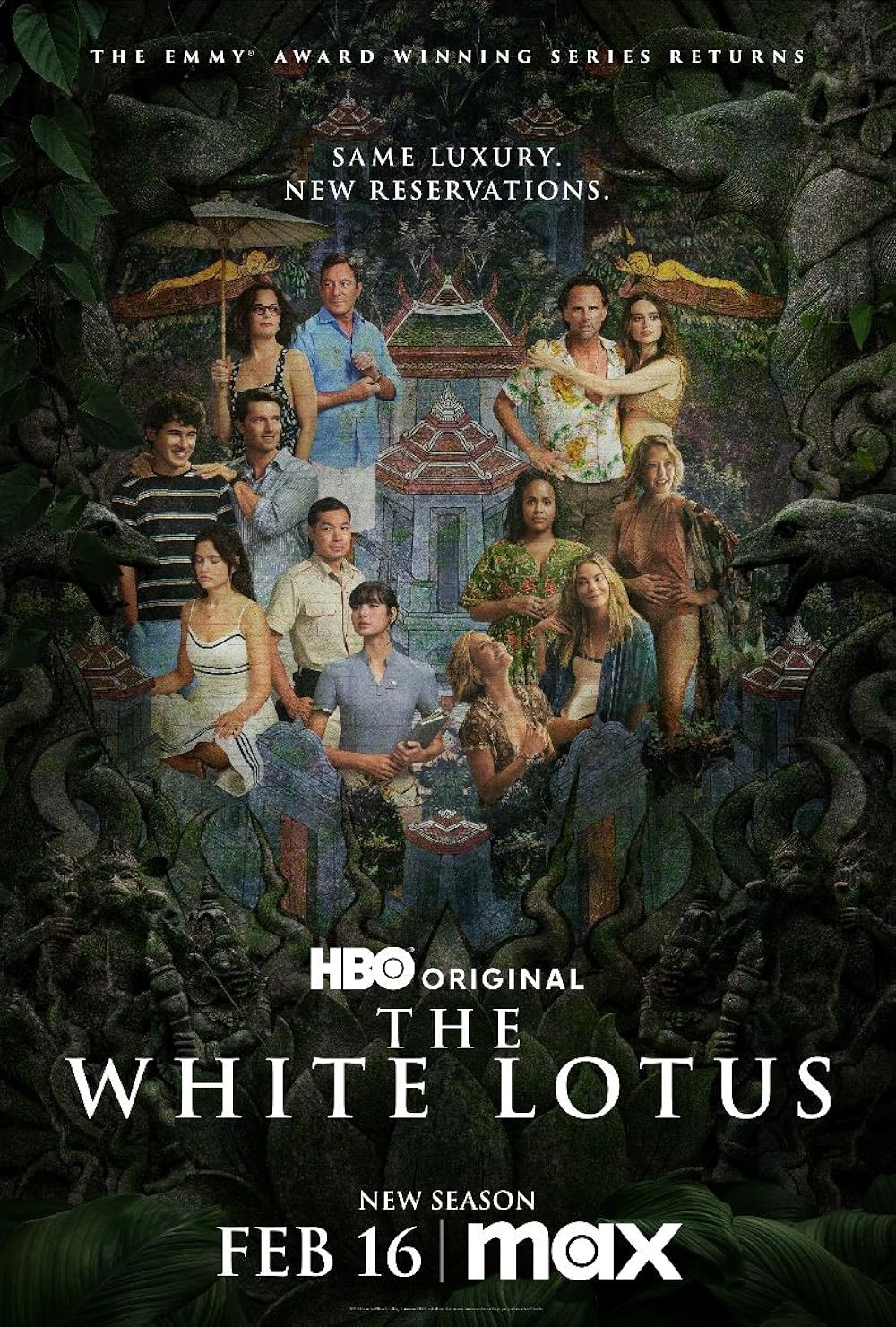
So far, all three seasons of The White Lotus are setup the same way – we initially see a dead body at an outpost of the titular resort, then rewind to a week or so earlier as we see the events that lead up to that death. This season, the finale included a gun battle that ended in a higher-than-usual body count (five dead, by some reckonings).
Some folks (myself included) complained that the swift manner in which the episode and, therefore, season, ended felt rushed, as the main characters (who weren’t dead) departed on schedule and apparently unaffected by the carnage around them. It’s not unreasonable to think the Thai police would sweep down on the place and question these folks or that some of them might be so shattered by the experience that they needed some kind of assistance (a trio of main characters were right in the middle of the firefight!).
White’s response to that criticism doesn’t strike me as particularly compelling:
Mike White, the show’s creator, thought the armchair critics were being too literal, calling them the “logic police” in an interview with The Hollywood Reporter.
“This isn’t a police procedural, this is a rumination-type show,” he said. “It makes me want to pull my hair out. Is this how you watch movies and TV shows?”
There’s a fine line in criticism between knocking something for failing at what it’s trying to do and for not being what you think it ought to be (see, e.g, this review of Warfare that seems to condemn it for not being something other than it is). I’ve seen authors say they have a hard time reading for fun anymore because they can’t turn their writer-brain off and will try and think of how they’d have told the same story in a better, different way (I’m not casting stones – I can lapse into that mode, too). That seems to be what White is accusing critics of doing, but it doesn’t wash.
Nobody wanted or expected the show to turn into Law & Order: Thailand for the last half hour of the season (although a season arranged so that we know who died from the jump, with cops pushing rich dipshits out of their comfort zone, might be interesting), but it feels off to present not just on screen death but straight up murder (with multiple fatalities) and have it vanish into the atmosphere. Moreover if the show is, as White puts it, a “rumination-type show,” what event can cause more intense ruminations than witnessing a mass shooting? Granted they’re very different shows, but you can bet there’s some “rumination” going on among the characters of The Pitt following their mass shooting event.
Look, endings are hard and I understand that White had a lot of stuff left on the editing room floor due to time restraints, even with an hour-and-a-half finale. Still, sometimes it just doesn’t work or at least leaves people scratching their heads (as Bruce says, “not everything everybody does works all the time, son”). That doesn’t ruin all that came before it (it’s more about the journey than the destination, right?), but that also doesn’t mean people don’t have a point.
Sometimes you just have to accept the thing didn’t work and move on.
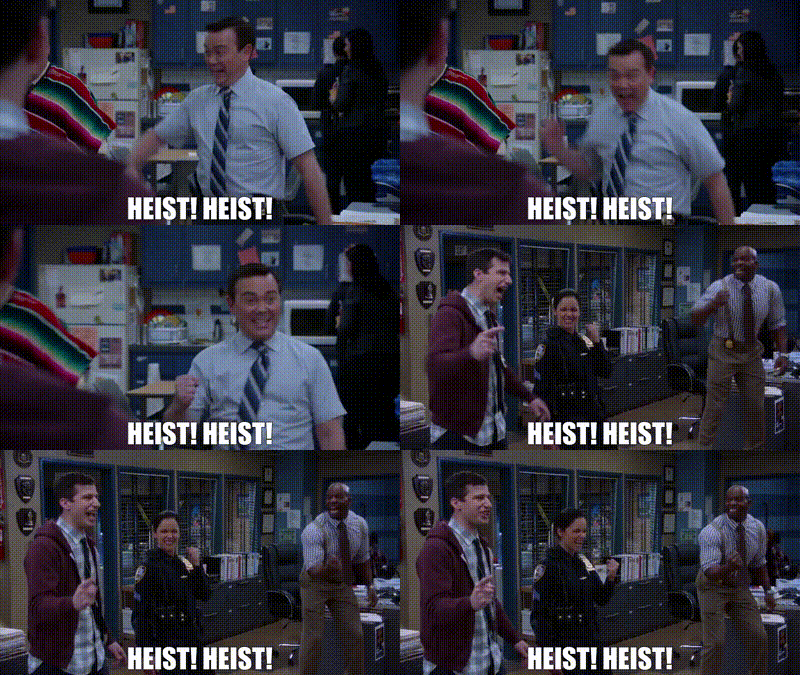
A few years ago I wrote a piece about “heist” stories and what they are (or should be). My concept of the heist is narrower than it is for others (including the OED) and boils down to this:
The distinction, for me at least, comes down to brute force. A robbery can be elaborate and kinetic and exciting – think the beginning of The Dark Knight – but, at the end of the day, it’s “your money or your life.” It’s simple, effective, and brutal. “Heist” conjures up something more clever, more deeply thought out. It’s about getting the object of the robbery without the violence. It’s a better, more elevated, kind of crime, if you will.
The distinction came back to mind recently when the wife and I watched Heist, a 2001 David Mamet film starting Gene Hackman, Delroy Lindo, and host of others.

As you might expect, it involves thefts gone bad, but do they actually live up to my stickler’s definition of what a heist is?
There are actually two thefts in the movie, the first is more setup and the second the main event (the titular heist, one assumes). The first definitely doesn’t feel much like a heist to me. Yes, there is some subterfuge involved – the thieves drug the morning coffee of the employees of the jewelry store they’re going to hit, but that’s close to the line in terms of brute force (courts would consider the use of poison to be “violent,” in most instances). What clearly is brute force is the way they actually get in to the store – they just break down the door. Literally, it’s a forced entry. So I’d say this job is more a straight up robbery than a heist.
The second job is definitely more like it. The target is a bunch of Swiss gold on a cargo jet that’s about to leave the country. This is a heist, albeit one that doesn’t go off without a hitch. The plan is all subterfuge and distraction. The only violence involved arises because of an unexpected issue. When push comes to shove, Hackman’s character walks right in pretending to be somebody he’s not and walks out with the loot. Hell, the police response is more due to the diversionary explosion the crew uses at another part of the airport (this crew loves them some diversionary explosions) than the theft itself!
Indeed, that’s one of the neat things about the movie – there’s hardly any police presence in it. There are cops about (there’s one tense scene where a state trooper stumbles on their prep and a young hothead nearly turns it into a shootout), but there are no dogged investigators bearing down on the crew after the big score. Rather, they tear themselves apart in a series of betrayals and double-crosses. It’s too much (why care about what’s happening when it’s certain to be upended in a few minutes?), but it gets at another key element in distinguishing a heist from a garden-variety robbery – the ability to get away with the goods.
So, in the end, how heisty is Heist? Fairly heisty, I would say. The initial job is a straight up robbery, but the big set piece definitely has heist vibes. Doesn’t make it inherently more interesting than the first one, but it’s more compelling in different ways. It’s fun, which is a key to a good heist, in my opinion – even if the end result is an awful lot of dead folks.
Years ago, Ricky Gervais made a movie (with his writing/directing partner Matthew Robinson) called The Invention of Lying.
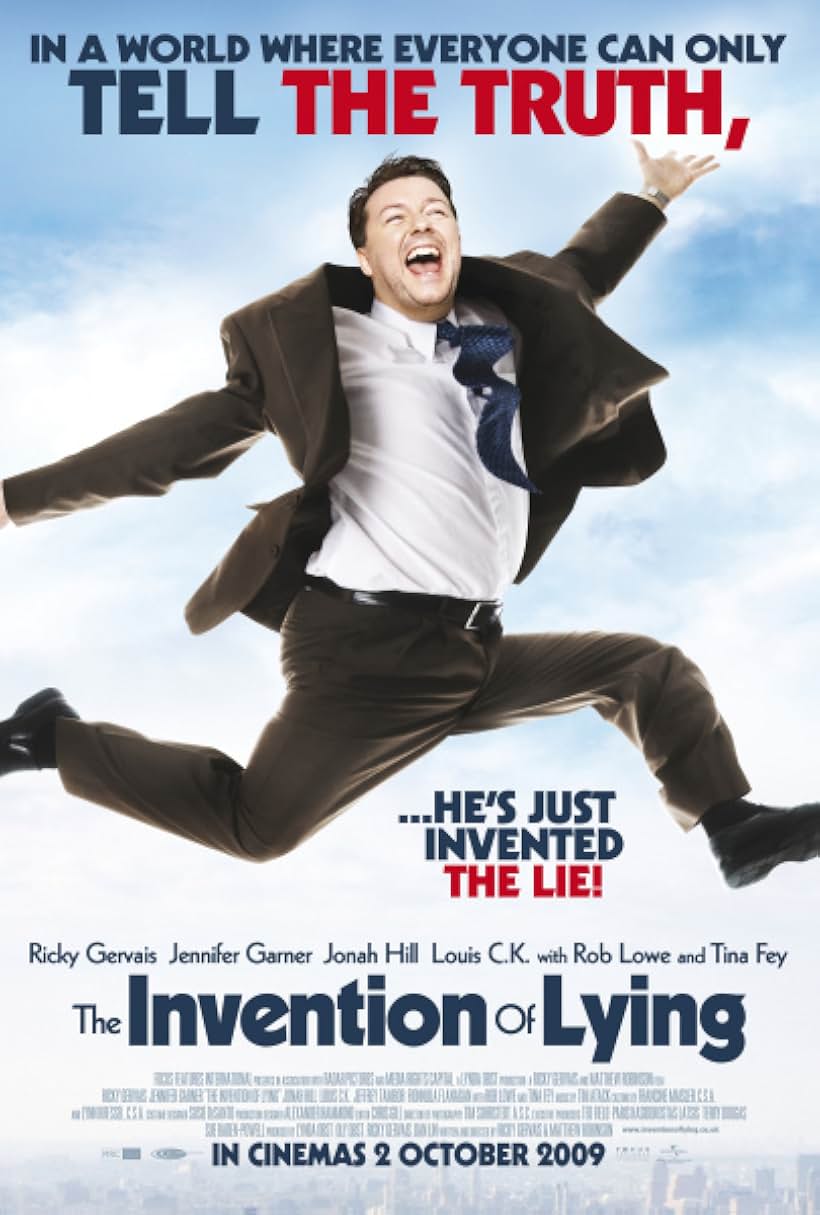
Gervais starred (along with my high school classmate Jennifer Garner) as a screenwriter in a world where lying doesn’t exist. As a result, he’s limited to only writing movies about historical events since fiction does not exist. He winds up discovering how to lie, part of which is being able to write a fictional screenplay.
The movie itself is fine, but the part about fiction not being able to exist in a world without lying always stuck in my craw. Then, a few weeks ago, I saw this on Facebook:

And that sticking came back with a vengeance (although she was sharing it in a humorous way). Because, you see, the notion that fiction – storytelling – is “lying” is simple-minded bullshit.
George Constanza famously said that a lie isn’t really a lie if you believe it, but that kind of goes both ways – a lie is really only a lie if the people hearing it expect it to be true. This is most evident when you’re talking about lying in court – perjury. Any witness, before they say a word to a jury or answer a single question, either takes an oath to or affirm that they are going to tell the truth. Jurors are primed to believe them.
But the same is true for most everyday interactions. When I ask my wife how her day was I don’t expect her to lie to me, after all. We may not be completely accurate with others all the time (that’s probably beyond the capability of human brains), but, for the most part, we’re not trying to lie to others on a regular basis. There’s an expectation of truth, at the very least.
Fiction, by contrast, announces itself from the start. “This is not real,” it says, “this is made up.” Even if there are close cases on the margins (including, ironically, stories about historical events and figures), nobody would ever say that The Lord of the Rings or 2001 or what have you were anything other than made up stories designed to entertain and enlighten. They are not presented as fact.
Of course, sometimes storytellers lie as part of the fiction. Fargo famously starts with a disclaimer:
This is a true story. The events depicted in this film took place in Minnesota in 1987. At the request of the survivors, the names have been changed. Out of respect for the dead, the rest has been told exactly as it occurred.
Amusingly, the Coen Brothers have changed their own story over the years as to whether the story of Fargo had some basis in real events or was completely made up. Does that make the movie any more of a “lie” either way? No! It’s a work of fiction, a story being told by storytellers. We’re not supposed to take it as truth.
For a certain definition of “truth,” of course. The argument goes that fiction can often get at truths about the human experience that non-fiction can have a hard time grappling with. That’s probably correct in some instances, although I can’t speak from experience. The stories I write are, I hope, entertaining and engaging, but any brush with deeper cosmic truths is probably coincidental.
As a wise man once said:
So, yeah, writers and other storytellers do make stuff up. It’s kind of the business model (the hard part is making up stuff nobody else has come up with yet!). But that’s what people think we do, right? Nobody could ever possibly believe we’re telling the truth.
Or maybe I’m full of shit? You’ll never know!
Revenge is an evergreen character motivation. Everybody, regardless of their station in life or what they do for a living, has gotten pissed off enough by someone to at least contemplate getting revenge. But how far can revenge get you in a story? Does there come a point where even the most righteous revenge starts to curdle?
I thought about this a lot while the wife and I were watching The Glory.
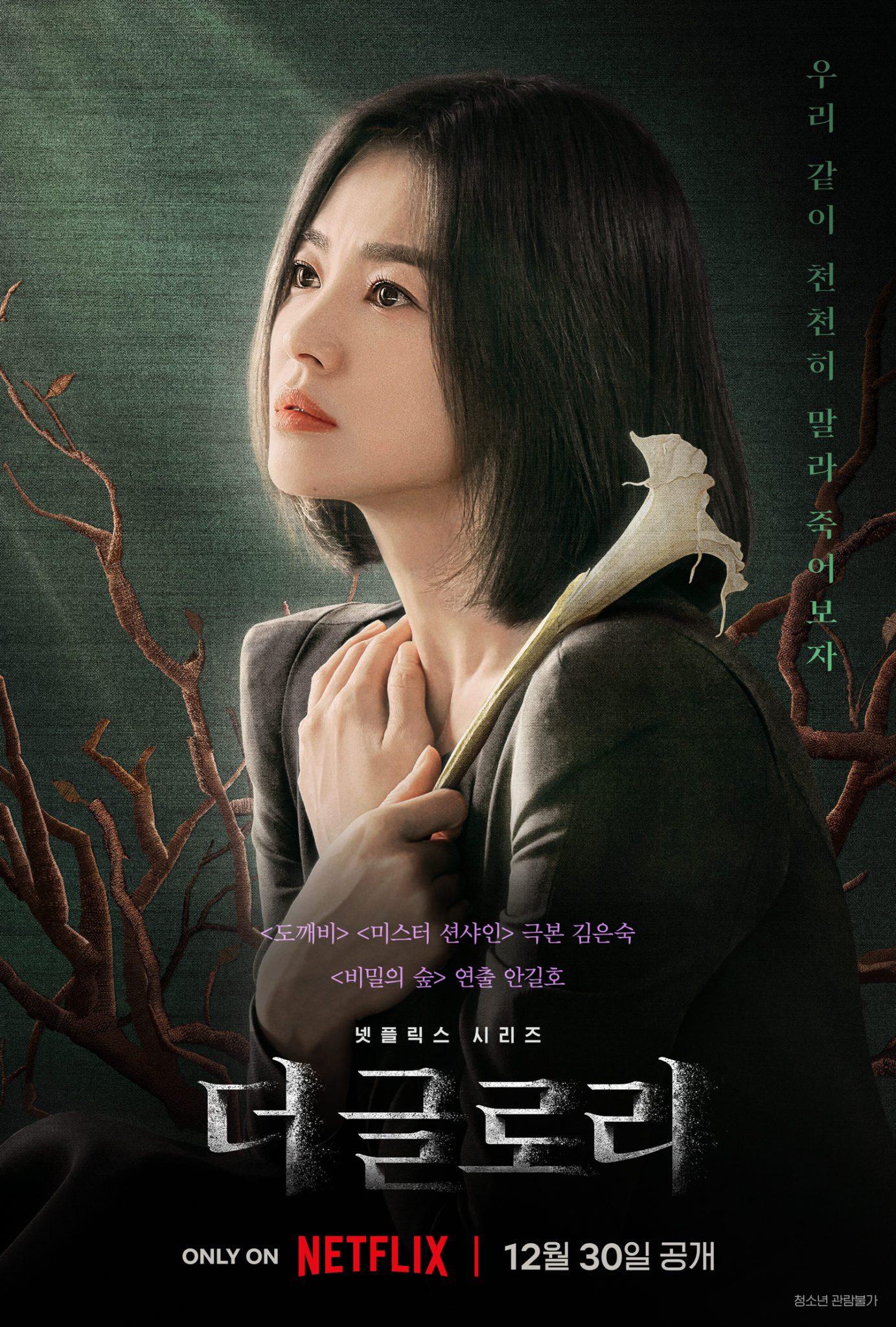
A South Korean drama from Netflix, it sprawls out over 16 hourish-long episodes (apparently originally released in two parts). The further on we got the less invested I was in the main character’s revenge arc – not because it wasn’t well founded, but because I had so much time to think about it.
The main character is Moon Deun-eun, who while in high school is constantly bullied by a group of classmates led by Park Yeon-jin. “Bully” here is really too tame of a term – they tortured the poor girl, which we see in fairly graphic detail (burning with a curling iron, for instance). They get away with it because their parents are rich and connected and Deun-eun is basically fending for herself (her father is absent, her mother worthless). After she drops out, Deun-eun struggles for a while until she dedicates her life to getting back at Yeon-jin and crew.
And she plays a long game. Over the course of years Deun-eun trains to become a teacher, eventually worming her way back into the lives of her tormentors by becoming a teacher in the school of Yeon-jin’s young daughter. From there she unwinds a pretty clever plot in which she does little herself to hurt anyone, but turns the others against one another in a way that leads to a fairly satisfying payoff. But it takes an awful long time to get there and, along the way, you start to wonder if revenge is really that great a deal, even if fully warranted.
To be fair, The Glory doesn’t let Deun-eun go quietly into the sunset when it’s all over. She’s basically stripped of her reason for living and only gets back on track by deciding to help her boyfriend get revenge on the man who killed his father. Nonetheless, your sympathies lie with Deun-eun only so far as the hot coals of revenge keep burning and I didn’t feel it at the end of 16 episodes.
Maybe it’s just the law-talking-guy in me but, in the broad view, revenge is bad. Bad for the soul, probably, but certainly bad for society. The law, in all its manifestations, is largely designed to replace systems of private justice – a.k.a. revenge. If your neighbor steals from you, you don’t break into his house and get your stuff back – you call the police or sue him. If someone kills your loved one, you don’t get to track down the offender and kill them yourself – that’s a job for the police, prosecutors, and the courts.
Emotionally revenge can be very satisfying, at least in fiction.
I mean, who couldn’t get on board with something like this:
On the other hand, being the better person just doesn’t have the same zip to it:
But for that very reason I think revenge works best in movies or a shorter series. There’s enough time to get you fired up and fully behind the main character’s scheme without giving you time to really think if they should be doing it in the first place. Revenge fiction works best when it harnesses that initial “this is bullshit!” reaction to learning about someone being wronged. The more time you have for that to ebb away, the less interesting the ultimate revenge is.
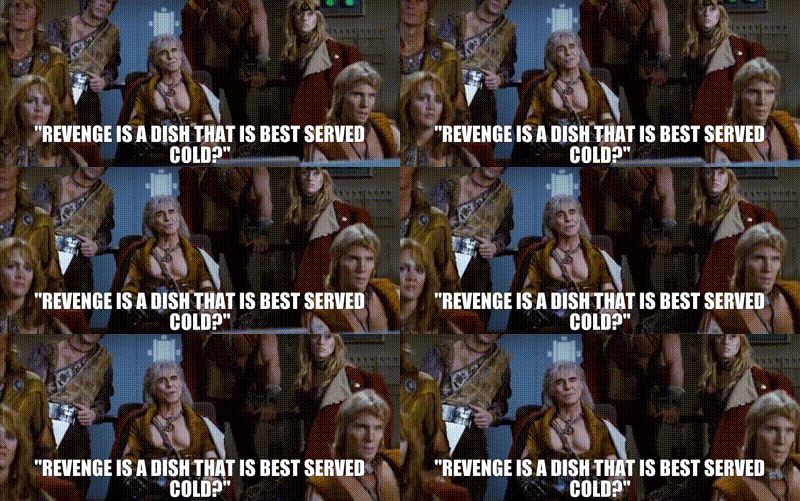
The quote at the top, of course, comes from Star Trek II: The Wrath of Khan. Critically, part of why that works so well is that the revenge seeker is the bad guy.
A while back I saw this headline:
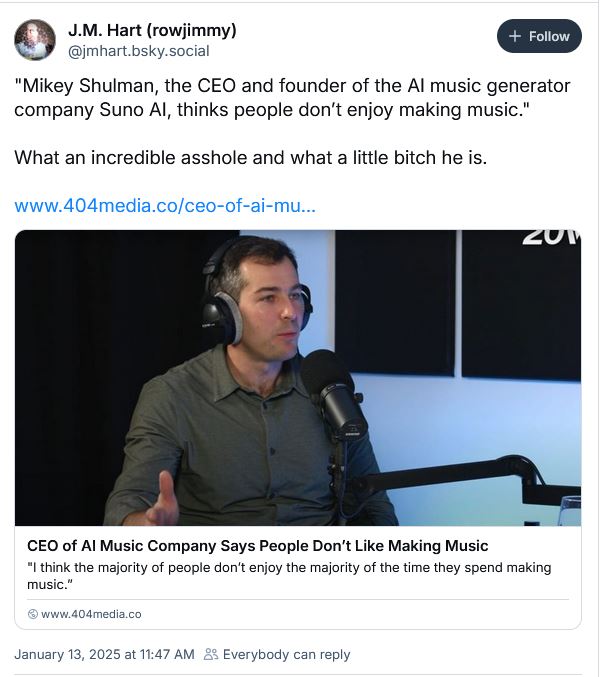
And let’s just say I had an instant reaction:

My second reaction was hoping this dope wasn’t related to the Shulman brothers of Gentle Giant fame (doesn’t seem like it). I cooled off a bit and figured maybe he was being taken out of context or something.
Reading further didn’t make things any better. I had thought, perhaps, that what Shulman meant when he said people don’t like making music these days was something about how creators have to spend so much time doing other stuff (building brands, being terminally online, etc.) that “making music” in a business sense is not as fun as it once was. He was talking about professionals, in other words.
Nope. He’s just a douche:
“It’s not really enjoyable to make music now. It takes a lot of time, it takes a lot of practice, you need to get really good at an instrument or really good at a piece of production software,” Shulman explained. “And I think the majority of people don’t enjoy the majority of the time they spend making music.”
It’s an interesting and arresting angle.
Not really and here’s why – the vast majority of people who make music do so only for their own amusement or the amusement of those few around them. Most musicians aren’t trying to make it big, or even make a living, making music. They’re making music because it stirs something in their soul, fills a need in the way they interact with a world. Put simply – for most musicians being “good” is irrelevant to why they make music in the first place.
Years ago, one of my local writer colleagues made a very good point about making art. When people ask writers if they’ve ever been published or artists whether they’ve had an exhibition, they’re tying the doing of art with the high-level consumption of it, with sales. As a comparison, my colleague suggested, nobody asks a bunch of middle-age guys playing basketball at the Y if they’re training for the NBA. Rather, we recognize the value of doing the thing just for the sake of doing it, not to produce a product for which other people might pay money.
As a writer I like to think of myself as a professional – I work very hard on the text, work with editors and cover designers to produce a polished final product. As a musician, I am very much an amateur. I make noise when the spirit takes me and, if something comes out that makes me particularly happy, I’ll upload it to share with others. But I don’t deceive myself that I’m doing anything other than having fun and, maybe, another person or two might have fun with it, too. Which isn’t to say I don’t have fun writing, too – if I didn’t I wouldn’t do it – but I have different goals in each area.
Doing anything well, much less competently enough for others to pay you money for it, is hard. It takes work, long-term effort, and lots of failure. You know what doesn’t require any of those? Making are because you love it. Your sculptures can be lumpy. Your stories can peter out in the end. Your songs can be stiff and not particularly catchy. Did you enjoy making them? The answer to that question is the only thing that matters in the end.
So I will disagree with Mikey and suggest that the vast majority of people who make music – or any kind of art – enjoy it simply because that’s the whole point of doing it in the first place. Sure it can be frustrating, but the answer is to take a break and take the dog for a walk, not to turn to some soulless piece of AI to do the work for you.
Make art for yourself. And have fun.

There are, at least, two kinds of twists that writers can employ. One simply pulls the rug out from underneath you and changes the game going forward, but doesn’t do much to recontextualized what you’ve already seen. A few weeks ago I talked about the big “Colin Farrell is a blue alien” twist on Sugar, which falls into that category. Whatever the reveal entails for the show’s second season, it doesn’t cause you to look back at what came before and nod knowingly about how things have changed.
Another kind of twist is just the opposite, one that really turns all that came before on its head and makes you seriously rethink all you’ve already seen. Another recent Apple+ endeavor, Disclaimer, does just that.

Written and directed by Alfonso Cuaron (adapted from a novel of the same name by Renee Knight), Disclaimer is about a celebrated journalist/documentarian and mother, Catherine, (played by Cate Blanchett) whose life is turned upside down by the appearance of a slim work of fiction (no way it’s long enough to be a “novel”) that appears to be based on a traumatic event from her past. The book is self-published by the father, Stephen, (Kevin Kline) of a 19-year-old son, Jonathan, who died in said traumatic event, although the book was written by his deceased wife.
This is all, it turns out, a plot of the Stephen’s to ruin the Catherine’s life, as well of that of her husband and adult son, Nicholas. The book tells the story of a younger Catherine seducing Jonathan who then, in his besotted horniness, drowns rescuing five-year-old Nicholas from dangerous seas. It paints Catherine as not just an adulterous but a bad mother, concerned only with her own hedonistic pleasures rather than taking care of her kid.
But that story is, of course, fiction. You can tell by the way it’s shot and the fade ins/outs used to transition in and out of those scenes. Fiction can get at big truths sometimes in a better way than nonfiction, but in terms of the details of reality it has issues, particularly given the fairly flimsy basis (some apparently-sexy photographs) upon which this fiction is based.
The twist, which finally arrives at in the seventh and final episode but isn’t much of a surprise,* is Catherine’s side of the story: it was not a fling, an affair, or a lost weekend, it was sexual assault. She tells Stephen about how she didn’t actually know Jonathan, but that he managed to get into her unlocked hotel room, threaten her and her son with a knife, and then repeatedly assault her over the course of hours. This, of course, makes all we’ve seen before feel very different as a lot of what Catherine does can be viewed through the lens of her being a survivor of sexual assault, not just a brittle hothead.
Does that mean the twist works? I think it depends on the audience. This review goes into good detail as to why it doesn’t, although it can be summed up fairly succinctly: it’s not really much of a twist. It’s not hidden where the book comes from or what it is (apparently there’s a little bit more mystery in the novel) and you quickly realize that what you’re seeing in the gauzy Italian flashbacks is the product of someone’s imagination. It’s only a matter of figuring out when the other shoe drops, which the show gives away easily. Seriously, there’s a trigger warning before every episode about (among other things) sexual violence, none of which shows up in the first six episodes – guess what happens in the seventh?
But that assumes that the only point of a twist is to shock and surprise, to leave an audience thinking “I did not see that coming!” What if you’re after something else? Interviews with Cuaron (like this one) suggest that he was more interested in luring viewers into the headspace of those who read the book cold – several of whom comment that the Cahterine stand in “got what was coming to her” and that was a good thing – to judge her as a mother and a human being. The twist, then, forces viewers to confront their own biases and assumptions. It should make them feel bad about themselves.
Still, the “this is not exactly a twist” does undercut that idea a bit. So does the fact that Disclaimer is so very much. Cuaron is on record as saying this couldn’t have been done as a movie, but lots of viewers and critics, including yours truly, think otherwise. It would have to choose which movie to be – the serious study of grief, untold truths, and the aftereffects of abuse or the very pulpy revenge story in which Kevin Kline in old man makeup turns into a would-be murderer (the whole time I kind of wanted him to slip it Mr. Fischoeder territory, maybe have a golf cart). Part of the issue with the series is that it whiplashes back and forth in tone.
And then there’s the endless voiceovers (in at least two, if not three, voices and POVs) that mostly exist to make sure anybody who’s never watched a moving picture before doesn’t miss important stuff. There’s one scene, a flashback when Stephen and his wife go to Italy to recover their son’s body, and he finds evidence the kid’s been smoking again in his hotel room. The wife snaps that it was probably due to the girlfriend, and the Kline in voiceover explains that the wife never really liked the girlfriend. No shit!
Which is frustrating, because there are several good stretches in Disclaimer, some good performances, and it looks great (in the sense that sometimes “great” means drab and dingy). And the whole idea of luring viewers into one state of mind about Catherine then pulling a switcheroo has promise, but the whole fails to come together as a whole. And the twist, while vital to what it’s trying to do, doesn’t land like it should given what came before it.
As I said in my other post, twists are hard to get right. They’re also risky. If the point is to change a viewer or reader’s focus on all that came before it risks ruing it. A “gotcha!” twist my land flat, but it doesn’t necessarily blow up the rest of the work. I’m not saying the twist in Disclaimer ruins it, but I think there were much more interesting ways to reach the point it was trying to make.


