I Guess We Need to Talk About AI

Over the last year or so it’s been harder and harder to avoid thinking about how artificial intelligence – “AI” – might impact the various aspects of my life. Not for nothing but there’s certainly a future where some variant of AI does most, if not all, of my lawyering job, so that’s been on my mind. More personally, how AI is going effect what people write and read, and the kind of music they make and listen to, is also something that is hard to keep off the brain. Now something’s popped up that really makes it impossible for me to avoid it.

Regular readers know that I’ve participated in National Novel Writing Month – NaNoWriMo – off and on for years. The idea is that you take the month of November, write about 1700 words a day, and by the end you have around 50,000 words, one threshold (at least) for a full-length novel. NaNoWriMo helped me develop the discipline to sit down and do that kind of long-form writing and several of my books started out as NaNoWriMo projects.

NaNoWriMo hasn’t had the best couple of years. Back in 2022 the organization paired up with an company called Inkitt that is, to put it mildly, a little suspicious. Then last year there were revelations that a child sex predator had been able to use the NaNoWriMo forums to seek out victims, leading to changes in how the site operated.

And now NaNoWriMo has waded into the debate on AI, doing so for apparently the most base of reasons – they have a new sponsor, ProWritingAid, which bills itself as an “AI-Powered Writing Assistant.” According to this (very positive) review, it’s more of an editing/feedback tool than the generative AI like ChatGPT we’ve come to think of as “AI,” so it doesn’t look like the kind of thing that is going to write a book for you, but help you do the actual work.

Which just makes NaNoWriMo’s recent declaration all the stranger. Last year and entry appeared in the site’s FAQ to answer the question “Am I allowed to use AI?” The answer makes perfect sense -there’s nothing to keep you from using AI during NaNoWriMo, but using something like ChatGPT “to write your entire novel would defeat the purpose of the challenge, though.” So far so good.

Then, more recently, another entry appeared asking “What is NaNoWriMo’s position on Artificial Intelligence (AI)?”. Initial squishiness about neither supporting nor condemning “any specific approach to writing,” gives way to a rejection of the “categorical” condemnation of AI, as such is classist, ablelist, and ignores “general access issues” (whatever that means).

Huh?

Depending on the definition of “AI” there certainly are technologies that could assist writers with various disabilities get their work written. Speech-to-text software involves some form of AI, broadly defined. Spell checkers are a friend to everyone. But is that really what they’re talking about? I doubt it, since those technologies have been around for years and nobody batted an eye. This can only be in reaction to thoughts on generative AI, right?

Rather than reinvent the wheel, I’ll quote some of Chuck Wendig’s post on this, with the charming title of “NaNoWriMo Shits the Bed on Artificial Intelligence”:

The privileged viewpoint is the viewpoint in favor of generative AI. The intrusion of generative artificial intelligence into art and writing suits one group and one group only: the fucking tech companies that invented this pernicious, insidious shit. They very much want you to relinquish your power in creating art and telling stories to them and their software, none of which are essential or even useful in the process of telling stories or making art but that they really, really want you to believe are essential. It’s a lie, a scam, a con. Generative AI empowers not the artist, not the writer, but the tech industry.

It goes on like that (it’s good rant) and I can’t say I disagree. At best, generative AI could be a benefit to consumers of content by providing them more of it at less cost, and perhaps tailored to their particular preferences. But for the creators there is absolutely nothing in generative AI for them. Being creative is about personal expression. Why have a machine write the story you want to tell? Tell it yourself!

That said, there are two things that have, up to this point, kept me from fully joining the anti-AI crusade.

First, there’s more than a whiff of moral panic about generative AI, in the sense that it reminds me of similar complaints about other artistic technological breakthroughs. Session musicians were up in arms that the Mellotron would put the out of business, but it turns out the a Mellotron doesn’t sound like live instruments played by human beings – it sounds (gloriously) like a Mellotron. Same with something like AutoTune, which may be used to “fix” a human vocalist, but has transformed more into an instrument/intentional effect with its own sound and characteristics. Will we look at generative AI that way in ten or twenty years? I’m not saying we will, but I’m not saying we won’t, either.

Second, most seem to agree that using generative AI is a cheat if used to “write” “your” book – how is it any different than hiring a ghost writer to do it? Honestly, putting to one side concerns about how AI engines are trained (a big aside, I’ll admit), isn’t hiring someone to write a book you put your name on just as bad as putting your name on something generated by a computer? Yes, it’s better in some spiritual sense ultimately for the content to be generated by a human rather than a computer, but it’s still not your story, is it?

Those are questions that will be worked out over the coming years. Right now, in 2024, however, it should be enough for an organization devoted to writing to say “generative AI is not welcome here,” while making room for the use of AI-adjacent technologies that help people tell their own stories. That NaNoWriMo can’t make that fairly simple declaration is, for me, enough to no longer be a participant, at least in any official way.

Thank you, NaNoWriMo, for how you helped jump start my life as a writer. I’ve got it from here.

The Triplets of Tennerton – Second Excerpt

In this excerpt, Ben has been retained by Grace to work on the case of Sid Grimaldi. First up, that means visiting Sid in the local jail and getting his story, which goes beyond “I didn’t do it.”

“Sid,” Ben said, mustering his softest tone, “I can’t imagine what that was like, the pain and the horror of that night. But I know that for years you’ve said that you don’t think your girls died in that fire. How could that be?”

Sid sat up and wiped his eyes again, like he was resetting himself, moving into a different mode of conversation. “I can’t explain it, I just know it in my bones.”

“You understand that from my vantage point, someone who came into this not knowing anything about you, it just doesn’t make sense.”

“But you have to believe me!” Sid reached out and grabbed Ben’s hands.

Ben decided to lie a little. “I want to. I really do. And I’m perfectly willing to listen to any odd theory you might have. Trust me, I’ve seen some things you wouldn’t believe.”

Sid released him and sat back. “Like what?”

“I can’t really say.”

Sid scowled. “You’re bullshitting me.”

“No, no, that’s not it,” Ben said, trying to sound convincing. “It’s just that . . . well, you know how anything you tell Grace or me or the other investigator who’s working on your case is privileged? You could tell me right now that you set that fire knowing full well your girls would die, and I would have to keep that secret.”

Sid gave him a hard look. “You made a promise. To keep a secret?”

Ben nodded. “I know you don’t know me and you’ve got no reason to trust me, but I do keep my word. I’ve promised the people involved never to talk about it, but, yes, I’ve seen something you’d never believe. Still, that doesn’t mean I’ll believe anything anybody tells me. What makes you think your girls are alive?”

Sid slumped back in his chair. “I told you, man, I don’t know. It’s just something in my gut. You got kids, man?”

“No,” Ben said, continuing to hold back as much personal information as he could.

“Then you don’t know. You know things about your kids that you can’t explain.”

“If that’s true,” Ben said, deciding to press a bit, “how come Teresa doesn’t believe you?”

It took a moment for Sid to come up with an answer. “You’ll have to ask her. I mean, we all have our own truths. Hers was that she had to get on with her life, for Toby and herself. Mine is that I can’t get away from what happened that night. It’s why I’m here, ain’t it?”

Ben was willing to concede the point. He was also ready to conclude that Sid’s belief about his triplets wasn’t much more than wishful thinking, so he decided to pivot away for a moment. “You mentioned the stuff about the shed and the ladder. Is there anything else you remember that was odd? Not just about that night, but any time after the triplets were born?”

Sid closed his eyes, looking deep in thought for a long while. “There was this one thing,” he said finally. “It was while everybody was still in the hospital. I’d gone to get some things for Theresa. When I came back, there was this man in her room, talking to her.”

“A man?” Ben asked. “Was it a doctor or nurse, some kind of technician?”

“I thought he was, at first. From behind, he had the same kind of build as Teresa’s doc. He was in a suit, but I figured he had just stopped in on his way in or out of the hospital.”

“He wasn’t a doctor?”

Sid shook his head. “He was asking Teresa all these questions, but they were the kind the doctor would already know, right? When the girls were born, the specific time. The date. He stopped when I asked him who he was.”

Ben leaned in just a bit. This was the first out-of-place thing Sid had said that resonated with him. “What did he say?”

“Just that he heard about us in the news and he wanted to wish us good fortune,” Sid said. “I remember that now. Who does that?”

All Ben could think of was how, in the modern world of social media, everything about those girls would have been online, and people far and wide would be doing just that. Still, it was odd for someone back then to do it in person. “Wait, did you say he read about you in the news?”

Sid nodded. “Didn’t say where, specifically, but we were in the news a little. Triplets, identical ones no less, are kind of rare.”

Ben marked that down as one more thing to follow up on. “You remember anything else about this man? What he looked like? I don’t suppose he gave you a name.”

“I asked his name, but he wouldn’t give it. He weren’t rude about it or nothing, just, what’s the word,” Sid paused for a moment. “Slippery. Guy struck me like he lied for a living.”

Ben fought back the urge to make a joke about lawyers. Sid’s fate was in the hands of one, of course.

“Other than that, the only thing I remember is that the suit he was wearing was black. Black coat, black tie, white shirt. It looked kind of old fashioned, yet very crisp.”

“Huh,” Ben said.

The Triplets of Tennerton – coming May 29

Pre-order now for Kindle and other eBook formats.

The Triplets of Tennerton – The Inspiration

One of the things that made me think sequels to Moore Hollow might work is that West Virginia has a pretty rich collection of folklore, cryptids, and other oddities to keep Ben and crew busy for many books to come. Leave it to me, then, to take inspiration for The Triplets of Tennerton not from Mothman or the Flatwoods Monster (although he kind of makes an appearance), but from a house fire that happened in 1945.

George Sodder and his wife Jennie lived in Fayetteville along with their nine (!) children. On the night of December 24, 1945, the house burned down. Both parents and four of the children made it out alive. Five other children, however, were presumed dead – presumed because their bodies have never been found. But for that last detail the whole tragedy might have vanished into the ether of memory and history, but the circumstances of the fire and the lack of remains have made it a unsolved mystery of long standing.

The primary thing that stuck with me from a storytelling standpoint is that George, Jennie, and the rest of the family continued to believe that the missing children actually survived the fire. The lack of remains was part of that belief, as there had been a similar fire in the region shortly before where remains of those who didn’t get out were found. More than that, there were reported sightings of the kids in Charleston not too long after. Over the years, there were more reports, from as far away as Missouri and Texas, but none of them ever panned out. George even tracked down a man alleged to be one of his missing sons, but the man denied it.

The circumstances of the fire were suspicious, too. The family received an odd phone call about 12:30 in the morning. A half-hour later, Jennie awoke when she heard something hit the roof with a bang. A half hour later they smelled smoke. Once the fire was underway, George tried to climb up to the second floor to rescue the children trapped there, but a ladder they routinely used around the property was misplaced. George couldn’t start either of his trucks to move next to the house to use them to climb. There’s much more, but that gives you a sense of it.

And that’s before you get to a possible motive that involves the Sicilian mob and George’s vocal hatred of Benito Mussolini (George was born in Sardinia and came to the United States at age 13).

As so often happens with real-life inspirations for fiction, reality (such as we know of it) is really just a jumping off point. What grabbed me about the Sodder story was the lack of remains at the scene of the fire and the family’s unwavering belief that those children had survived. The Triplets of Tennerton  is not the story of the Sodder family. Sid Grimaldi isn’t George Sodder and what happened to Sid’s children is vastly different from what most likely happened to George’s. Nor was Sid’s family united in their belief, as the Sodders were. This is definitely “inspired by” territory, not “based on.”

If you want to know more about the mystery of the Sodder family, I recommend this three part podcast from Unexplained Mysteries. There’s also a good write up here from Smithsonian Magazine.

The Triplets of Tennerton – coming May 29

Pre-order now for Kindle and other eBook formats.

At Least I Got This Cool Graphic

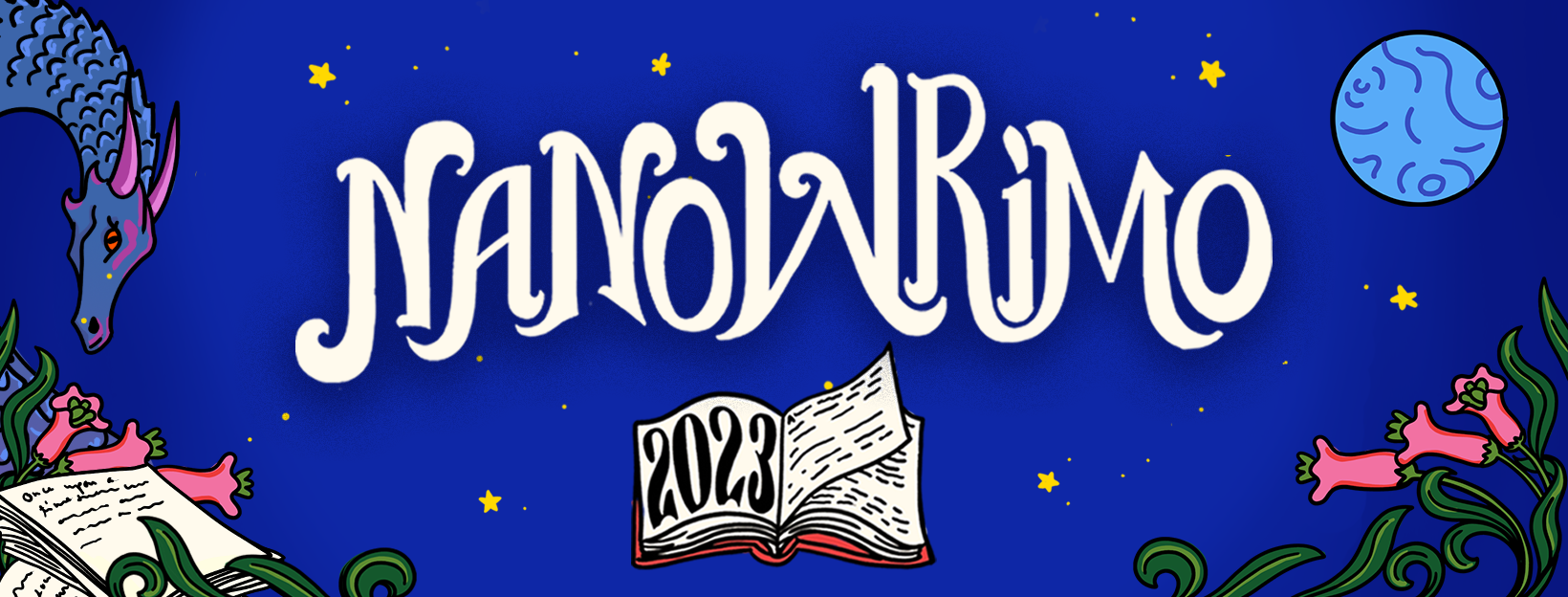
NaNoWriMo is over, which means it’s time to take stock and see whether it was all worth it. Was it? Well, I did get this spiffy graphic:

Which means, yes, I “won” again this year. I’m particularly pleased since the month included not only Thanksgiving (which my wife and I host for the family, so lots of work) but a birthday weekend jaunt to New Orleans (thanks, honey!) and I still managed to keep to task and wind up with 50k+ words in the end.

I’m really happy with them, too. There are definitely things that need to get worked out in a second draft (I have notes, of course), but this story and this main characters and taking me to some different, interesting places. Alabrie, the city-state where the story is set, is shaping up to be a character all in itself.

It’s not done, of course, not even the first draft, but I can see the end of the tunnel. More than most books I had a real idea of what the entire story was before I sat down to write it. Still, much work still left to do.

Off to Write a New Book!

It’s that time of year again! No, not when the lungs are clogged with clods of pumpkin spice, but when it’s just about National Novel Writing Month!

As I wrote a little while back I’ve got a new project ready to go for NaNoWriMo this year. I’ve got a few more days to put to finishing touches on my planning and then it’s off to the races on Monday. Needless to say, there won’t be any new posts for November, and maybe even into December if I’m on a roll.

So, until then . . .

Am I a Hack?

People create for lots of different reasons. Some folks do it purely for the fun or catharsis of creation. Some do it as a vocation, if they’re good at it, enjoy it, and can hit the market just the right way. Others are trying to tap into something fundamental about humanity or probe deep into the eternal mysteries of the universe. And some just want to share their creation with the world and hope it brings a few people joy.

I fall into that last category. I write largely because I enjoy it, because it’s fun to tell stories, and I hope some other folks out there will enjoy reading them. I’m not trying to write the “great American novel” or plumb the depths of the human condition to help better understand my fellow people. All I’m really interested in is entertaining, maybe more thoughtfully sometimes, but that’s it.

Does that make me a hack?

I never thought so until recently. To my mind, “hack” was a pejorative term. Wikipedia, at least, agrees with me, defining a “hack writer” as a:

Term for a writer who is paid to write low-quality, rushed articles or books “to order”, often with a short deadline. In fiction writing, a hack writer is paid to quickly write sensational, pulp fiction such as “true crime” novels or “bodice ripping” paperbacks. In journalism, a hack writer is deemed to operate as a “mercenary” or “pen for hire”, expressing their client’s political opinions in pamphlets or newspaper articles. Hack writers are usually paid by the number of words in their book or article; as a result, hack writing has a reputation for quantity taking precedence over quality.

Putting to one side the unwarranted bias against “pulp” writing or romances inherent in that definition, it’s clear that being called a hack is insulting. It’s a charge that your insincere, only in it for the money, not making art but some kind of crass commercial product. If I was called a hack I’d be deeply offended, same as if someone in my professional life called me a shill or a mouthpiece.

But maybe I’m looking at things all wrong, if this Slate piece by Sam Adams is right. Titled “Bring Back the Hack,” it argues that movie studios should look to “hack” directors to helm their big-budget franchises rather than getting up-and-coming auteurs whose singularity tends to get squished in the franchise machine, anyway:

The problem here is two-pronged. The first is Hollywood’s penchant for sucking promising young directors into its maw, tempting them into selling their artistic souls to the franchise devil with medium-fat paychecks and the possibility of speaking to a larger audience. The second is that the movies frequently end up being lousy, extinguishing whatever hint of personality made the filmmaker attractive in the first place and revealing them to be hopelessly out of their depth when tasked with bending a massive studio movie to their will. You don’t get the unique stamp of an artist, but you also don’t get the frictionless craftsmanship that would be brought to the job by a seasoned old hand—in other words, a hack.

Adams seems to deem the primary feature of a “hack” as being that “you don’t know who they are.” He then launches into a discussion distinguishing workmanlike directors such as Jon Turtletaub and even John Huston from true auteurs. Later on, however, he sort of admits that “hack” isn’t really the word he’s looking for:

That’s where hacks come in. A hack—or, if you insist on a less prejudicial term, a craftsperson—isn’t out to make a movie their own. Their aim is to fulfill the task set before them. Like former cinematographer Jan de Bont and former costumer designer Joel Schumacher, they often entered the business from the lower ranks of the crew rather than as writer-directors, rising to the top with an understanding based in the practicalities of production. A hack is a perfect match for a formula film, whether it’s the latest IP extension or simply squarely in an established genre, because they don’t consider themselves better than the material.

This “craftsperson hack” category includes, for Adams, people like Ron Howard (who won Best Picture and Best Director Oscars for A Beautiful Mind) and Jon Favreau (who launched the most successful film series in history, not to mention The Mandalorian). If those guys are hacks then I suppose I’d be happy to be called one, though that term doesn’t feel right. Neither is somebody that’s on my list of favorite directors, the kind of people whose stuff I want to see just because they made it. But Adams cites Favreau’s going to battle with the studio to cast Robert Downey, Jr. for Iron Man, which hardly seems like a pliant, go-along-to-get-along kind of thing. Hell, if hacks can make stuff like Rush then sign me up.

At any rate, I don’t think the same kind of distinction can be made with writers. Name brands are a thing, after all, since people like to read more books from an author if they liked one of their books. That applies equally to deeply sublime stuff and more pulpy just-for-fun stuff. I suppose the closest thing you have in books is situations where some established author’s name continues to hold sway even though others are actually writing the books. Zombie comic strips come to mind, too, I suppose.

I tend to agree with Adams that bringing in somebody known for their personal vision in movies to direct the next comic book flick is kind of a waste. Regardless, I don’t think defining hack so broadly as to lose its meaning does anybody any favors. Leave to it the stain of uncaring make work, produced without any personal motivation.

I may be a lot of things, but I think I’m safe in saying I’m not a hack.

Decision Made (Finally!)

The more I write the more I realize that coming up with ideas isn’t the hard part. What’s hard is figuring out which ideas have legs and can become stories or books. Sometimes it takes some hard work to separate the wheat from the chaff, so to speak.

When Heroes of the Empire came out in June  it brought to a close a long period of focusing on one world and one project. Since 2018, at least, when I started the first draft of Gods of the Empire, I’d basically lived in the world of the Unari Empire, building it out and telling the stories of my characters in it. The only reason I felt able to work on the sequel to Moore Hollow in the spaces between those books was that it meant returning to a world I already knew.

At the same time, I was gathering ideas like some thieving magpie, putting them away in various Word documents for a later date. I knew from the time I collected them that some had more substance than others, but I wasn’t quite prepared for how long it would take me to figure out which ones were which.

See, the thing with trilogies, at least for me, is that they are an implicit promise to the reader – I know how this ends and I’m going to finish it in good time. If I say “here’s my new book, it’s the first part of a trilogy,” rest assured that, barring some unforeseen circumstance, I’m working on those books for the next few years.

Which means, back in June, I got really excited about the idea of diving into a new world. Part of what makes writing fantasy so fun is you get to let your imagination wander and come up with strange new places, things, and people. Writing a trilogy means that you have to put that wandering on hold and I was happy to get my walking shoes back on (so to speak).

And I had a target – I wanted to start my next book during National Novel Writing Month. I’ve done that for several of my books. NaNoWriMo provides a great way to focus on writing for a month, even if what you’re left with on December 1 is only two-thirds or even one-half of a finished manuscript. That would give me a couple of months to build the world, flesh out the characters, and then figure out what was going to happen to them.

Easy, right? If only.

I actually had to go through my idea files pretty brutally, with virtual red pen and everything, and just get rid of stuff that didn’t really strike my fancy. Some of those were mere ideas (“surely there’s a fantasy story in the Scapa Flow incident, right? What about High Noon but with wizards!”) that were never going to become a real story. Others were things that I’d hung on to so long without developing that I figured their time had passed. Ultimately, they were ideas that I just didn’t see sprouting stories and I hadn’t faced up to that fact yet.

In the end I had about three dozen ideas that could become my next project, so I decided to so what my anal retentive self always does – start dividing and conquering them. I put each idea into one of four groups – Sci-Fi, Older Fantasy, Newer Fantasy, and Non-SF/Fantasy (yes, I’ve got a couple of those). The goal was to produce a “winner” in each group and then compare those four to each other. I almost worked – I wound up with five finalists because I couldn’t decide between the top to Newer Fantasy ideas.

I worked through each idea. I took a week and spent one day thinking through all the angles I could for every one. I did a PowerPoint presentation for my wife to get her feedback on the ideas. Good ideas that I at first thought were front runners fell by the wayside either because they weren’t as deep as I’d hoped or they just weren’t singing to me.

Finally, last week, I was in Richmond for court and had some time the night before to work through the final three (don’t worry, my colleague was doing the argument the next morning). I walked around my hotel room, talking to myself, arguing the pros of a particular idea then playing devil’s advocate and tearing it apart. After a couple of hours, and a really enormous calzone, I finally made a decision.

My next project has the working title The Fall. It’s inspired by the sad tale of Franz Reichelt, a Parisian tailor who met an infamous fate:

To use an awful pun, that’s the jumping off point for this project. It’ll be set in a similar kind of world, timeline wise, but include what I think is a really nifty magical element. This is my first time building a magic system for one of my novels, so I’m both anxious and excited about the prospect. Structurally I’m leaning toward doing something like Citizen Kane, where the main character is investigating someone’s life and we see it play out in flashbacks.

All in all, I’m really looking forward to diving into this.

And, yes, it is the one my wife liked best.

The Prequel Problem

Ending stories is hard – trust me. But figuring out the right place to start them can be just as hard. That’s true for all kinds of stories, but particularly fantasy or sci-fi stories where you have to build the whole world around the story you’re telling and the characters involved. By definition their world existed before their story did and will continue to do so once it’s over (barring apocalypse, of course).

Which explains the popularity of prequels. There’s so much backstory to dig through, most of it only hinted at, that there appears to be a rich environment to exploit. It must also seem like a fairly safe investment, since you’re dealing with, if not familiar and fan-favorite characters, at least events and histories in which the fans are already invested.

But there’s an inherent problem with prequels – they’re playing in a universe in which the future is already known to us. That can box writers in and sometimes make it difficult for the prequel to stand on its own as a piece of compelling drama, something we should care about for its own merits.

I thought a lot about this problem over the weekend as the wife and I (at her suggestion!) finally caught up with the Obi-Wan Kenobi series.

The six-episode series is set in the time between Rise of the Sith, with its culling of the Jedi, and the original Star Wars (aka A New Hope), a time during which, for all we knew, Obi-Wan was living off the grid on Tatooine keeping tabs on Luke Skywalker. Years pass, of course, so the idea that he didn’t get into anything worthy of telling a story about is pretty sad, but do the writers use that freedom to do something really interesting?

No, not really.

The inciting incident of the series is when Princess Leia is kidnapped on Alderaan (nice planet – too bad it goes boom) by, of all people, Flea. This is part of a plan to draw out Obi-Wan so some Jedi hunters can get him. Those Inquisitors are kind of interesting and could have been explored in some depth, but they have a boss and his name is Darth Vader. And so, the series largely revolves around maneuvering Vader and Obi-Wan into the same space.

As a result, we get two solid confrontations between them, the second of which would have felt like a pretty epic duel if it had any kind of stakes. It couldn’t, however, because of the prequel problem: both Vader and Obi-Wan survive to fight again in Star Wars, so neither can be killed or even seriously injured in ways that conflict with the “future.” Likewise, young Leia (who, as you might expect, is quite the scamp) is never in any real danger, as we know she survives unscathed. Indeed, the series punts her offscreen for the final episode mostly, as it rushes back to Tatooine for a confrontation between one of the Inquisitors and Luke’s family – which, again, we know will ultimately come to nothing.

It didn’t have to be that way. Using Leia’s kidnapping to lure Obi-Wan out of hiding was a solid idea. Imagine if she’d mostly stayed off screen (a MacGuffin, if you will) while he scrapped with and evaded Inquisitors and grew into his status as a hero. There’s actually a good character arc in the series, as Obi-Wan goes from trying to lay low and hide to being more engaged with the Rebellion. Isn’t that a cool enough story to tell? Do we need the Vader stuff? Do we need any suggestion that Leia or Luke will be harmed?

Star Wars knows how to do this. Rogue One is regarded by a lot of people as the best Star Wars movie since the original trilogy, even though we knew precisely how it was going to end. What made it work was that existing characters were largely absent and we got to know and care about a whole new cast so that when they made the necessary sacrifices to complete their mission it landed with some heft.

Ultimately, I think the prequel problem is a matter of characters rather than universes. After all, we read historical fiction all the time that involves real events. It’s not what happens to characters, it how it effects them, changes them, that matters. But when your prequel ties itself to characters who can’t change, that becomes a problem. I’ve dinged Star Trek – Strange New Worlds for tying itself too closely to characters steeped in Trek lore, rather than freely exploring people we know nothing about.

I’ve never really been interested in the idea of writing prequels. I had a prequel story, of a sort, for one of the characters in the Unari Empire trilogy that I almost wrote, but ultimately decided that all that was important about him was in one of the books already. Generally speaking, I’d rather go on and dive into a new world with new characters than revisit old ground.

But if you asked nicely . . .

Is the ATAC a MacGuffin?

For Your Eyes Only is my favorite James Bond flick.

Part of that is due to when I saw it, it being one of the first Bond movies I’d seen. But a big part of it due to the fact that the spine of the movie’s plot is a more plausible Cold War scenario than the Dr. Evil inspiring big bads Bond often faced.

In a nutshell, a British ship (disguised as a fishing trawler but really a spy ship) sinks off the Greek coast. On board was the Automatic Targeting Attack Communicator or ATAC, a computer that helps coordinate the UK’s ballistic missile fleet. Naturally the Soviets want to get their hands on it. Bond, aided by supreme Bond Girl Melina Havelock, tries to get it back for the Brits. In the end . . . well, the end is one of my favorites of all time:

So I was delighted to come across an episode of the All 80s Movies Podcast about For Your Eyes Only. I was surprised, though, when the guys on the podcast called the ATAC (which they hilarious mispronounce “AhhTAC” – it’s not like they don’t say it over and over again in the movie!) a “MacGuffin.” That didn’t jive with my idea of what a MacGuffin was and got me to thinking about it.

The term apparently dates to about 1930s or 1940s and was coined by a British screenwriter named Angus MacPhail, who worked a lot with Hitchcock. As defined by the OED, a MacGuffin is:

a particular event, object, factor, etc., presented as being of great significance to a character or characters, but in the end proving illusory.

Hitchcock would further explain that a “MacGuffin is the thing that the spies are after, but the audience doesn’t care” and, ultimately, “is actually nothing at all.”

It’s that last part that I always associated with the concept of a MacGuffin. A famous more recent example is the briefcase in Pulp Fiction, which multiple characters go to great lengths to possess, but we never learn what is inside, except for:

But I’m seeing lots of examples cited of things that are, to my mind, so substantial to be considered MacGuffins. Some cite all the things in the Indiana Jones movies (as in “Indiana Jones and the BLANK of BLANK”) as MacGuffins. This includes the Ark of the Covenant in the first movie – but they find the Ark, it melts some Nazis, and basically deus ex machina’s Indy’s escape. Is that a MacGuffin? Another list includes Colonel Kurtz from Apocalypse Now, a real human being with whom the main character significantly interacts, as a MacGuffin. That makes no sense to me. Likewise the Death Star plans in Star Wars – not only do they jump start the plot, but we see them after delivery and the info in them allows Luke to blow the place to shit!

Other examples hew closer to my conception of a MacGuffin. “Rosebud” in Citizen Kain, for example, since the important part of the story isn’t the damned sled but that rise and fall of Kain’s life. The Holy Grail in Monty Python and the Holy Grail is an even better example, since it motivates the action but is never seen or obtained by the characters.

While pondering all this I checked out one of the all-time great MacGuffin movies, which I’d never seen, The Maltese Falcon.

It definitely fits the mold of MacGuffin I have in my mind. The bird itself doesn’t show up until about 15 minutes from the end of the film and then, once it’s revealed to be fake, ceases to have any real meaning. Rather, the movie is about what the pursuit of this object (which Bogart’s Sam Spade calls “the stuff that dreams are made of”) changes and corrupts all who decide to pursue it. It could be anything – a Javanese lion, an Andalusian wombat – and the same story gets told. That the damned thing matters to the characters but doesn’t to the audience seems to be the whole point.

I suppose for me the question is how important the actual item is to the resolution of the story. If all it does it motivate people and the ultimate identity/characteristics of the thing doesn’t matter, I’d call that a MacGuffin. If it’s more important than that, probably not.

Where does that leave the ATAC? Since we see it in action, then see it recovered, then stolen, and then ultimately destroyed by the main character so the bad guys can’t have it, I’m definitely not getting MacGuffin vibes from it. It’s just too important to the movie, including the wider world of it. The world of The Maltese Falcon continues to spin regardless of how that petty crime is resolved, while the world of For Your Eyes Only gets considerably more dangerous if the ATAC falls into Soviet hands.

Ultimately, what qualifies as a MacGuffin is probably in the eye of the beholder. As a writer, it’s a useful tool to have in order to motivate characters. On the other hand, don’t lose sight of the fact that sometimes the little doohickey everybody is trying to get their hands on is pretty damned important in its own right.

Just like obscenity, you know it when you see it.