On Pardons and Admissions of Guilt

I’ve almost written this post several times, but I’m only just getting around to it. I’ve gotten plenty of opportunities, at least.

Over the years, every time Trump has pardoned one of his cronies – as he recently did with Michael Flynn – one of the reactions (mostly on the left) has been that by accepting the pardon the recipient admits his guilt to whatever offense he is being pardoned for. I think this rests on a misreading of the relevant Supreme Court case. More than that, any quick thought about how pardons normally work show that one doesn’t really have anything to do with admissions of guilt at all.

The Supreme Court case at issue is Burdick v. United States, 236 U.S. 79 (1915). And to be fair, in Burdick the Court did say this, in distinguishing between pardons and legislative immunity:

This brings us to the differences between legislative immunity and a pardon. They are substantial. The latter carries an imputation of guilt; acceptance a confession of it. The former has no such imputation or confession. It is tantamount to the silence of the witness. It is noncommittal. It is the unobtrusive act of the law given protection against a sinister use of his testimony, not like a pardon, requiring him to confess his guilt in order to avoid a conviction of it.

Case closed? No quite, for two reasons. First, there is absolutely no citation to any other case or source to support the idea that accepting a pardon means confessing guilt. Second, no court, even the Supreme Court, proclaims on law in a vacuum. So what was it that was the actual issue in that case?

Burdick was the editor of a New York City newspaper that had published leaks from inside the Treasury Department. The local US Attorney convened a grand jury to investigate and called Burdick, hoping he would name his sources. Instead, Burdick invoked the Fifth Amendment and his right to remain silent. To get him to talk, the US Attorney went to President Woodrow Wilson and obtained a pardon, which would extinguish the ability of Burdick to plead the Fifth (which, coincidentally, is where Flynn is now). Burdick refused to accept the pardon, continued to refuse to testify, and was eventually convicted of contempt for doing so.

When the case reached the Supreme Court the issue was, in the Court’s words, a “narrow question, is the acceptance of a pardon necessary?” Ultimately, the Court held that it was and that the person to whom the President wants to give a pardon doesn’t have to accept it (this is one hook upon which hangs the theory that Trump cannot pardon himself). It was in discussing why someone might not accept a pardon that the Court noted that it can be perceived as an admission of guilt. Thus, what a pardon means to the person accepting it wasn’t the issue before the Court – it was whether the person could reject the pardon in the first place. To my reading, that doesn’t to a clear legal basis for saying that the acceptance of a pardon is an admission of guilt.

But beyond what Burdick actually says (and about what), the idea that parsons require admissions of guilt just doesn’t make sense in a lot of cases and would create some real perversity in other cases.

For one thing, posthumous pardons exist, though they’re rare. In 1999, Bill Clinton entered the first federal one for Henry Flipper, the first African-American to graduate from West Point. It came 118 years after Flipper’s court martial and almost 60 years after he died. Trump did something similar with heavyweight champion Jack Johnson, granting a pardon in 2018 for a bogus Mann Act conviction that occurred in 1913 – Johnson died in 1946. There are countless other examples of posthumous pardons at the state level. Needless to say, the dead cannot admit to anything (they can’t accept anything, raising questions of whether these pardons actually mean anything) or confess to a crime in order to receive pardons. Whether posthumous pardons make any kind of sense, they are a thing, and they argue against the act of pardoning involving any kind of admission of guilt.

For another thing, some pardons are issued in anticipation of prosecution, not after a conviction. The most notable example is Gerald Ford’s pardon of Richard Nixon after his resignation, not for specific crimes for which he’s already been convicted, but for any crime for which he could have been charged. Notably, while Ford apparently carried hunk of Burdick around with him as proof that an acceptance of a pardon was a confession of guilt, Nixon’s own statement accepting the pardon didn’t confess to any particular crime (although he apologized for the “anguish” his actions had caused – the prototypical “I’m sorry because you’re sad” nonpology). What would the recipient of such a pardon confess to without having been convicted of something?

A related concern is mass pardons, which cover entire classes of people and aren’t concerned with the particular facts of any one case. Such pardons include Andrew Johnson’s mass pardon of ex Confederates after the Civil War (notably, the oath required to get one was all about allegiance going forward, not confessing to past crimes) and Jimmy Carter’s pardon of Vietnam War draft evaders.

Finally, requiring those who are offered pardons to admit guilt in order to receive them would lead to perverse results. Convicted people who are actually innocent may be loath admit to something they don’t believe – that they’re guilty of a crime – in order to get a pardon. This is the same dynamic that sometimes plays out with parole boards – they want some sign that the inmate at issue is remorseful and reformed, but if you’re wrongfully convicted how can you provide that? Furthermore, the use of the pardon power to spare the innocent is, arguably, it’s primary function. Thus, when the Governor of Illinois issue a pardon to Oscar Neebe and his codefendants (convicted in 1886 for taking part in the Haymarket bombing) in 1893, because they were innocent. In 2011, the Governor of Colorado posthumously pardoned a man who had been executed in 1939 because his conviction was based on “a false and coerced confession.” Other examples of similar pardons abound. If, as we’re often told, pardons are supposed to be a kind of safety valve in the criminal justice system, to allow executives to give relief to those who did not commit the crimes of which they were convicted, reading the acceptance of a pardon to mean a confession of guilt makes no sense. Pardons, as well as commutations of sentences, are acts of executive grace, the last vestige of the absolute power once granted to kings. They can be granted for good reasons, bad reasons, or no reason at all. That’s the point – this is the one area where the executive gets to make that decision themselves. Maybe that’s an idea whose time has passed, but it would require Constitutional amendments to change. The very nature of pardons is that they don’t come with strings attached (unless they specifically do), certainly not the requirement of admitting guilt from the one being granted the relief.

Thoughts On Buttered Cats

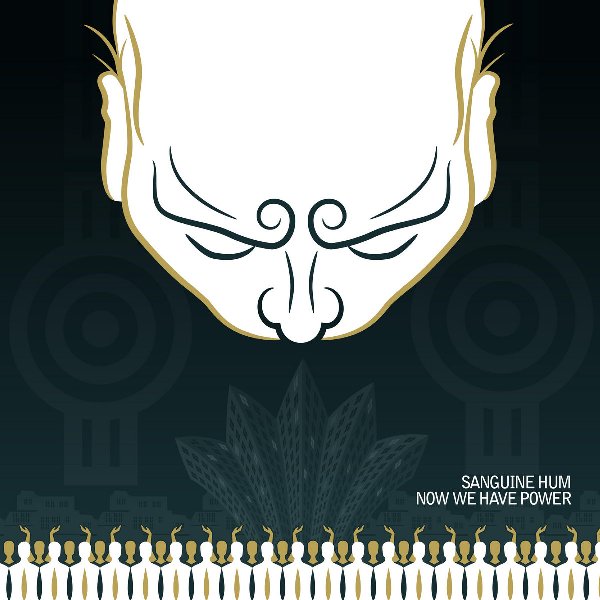
One of my favorite bands is Sanguine Hum, which marries intricate song writing and arrangements with an absurdist streak derived from the original Canterbury scene (not for nothing was an earlier version of the band called Antique Seeking Nuns). A few years ago they released a pair of concept albums – Now We Have Light and Now We Have Power – inspired by what’s called the “buttered cat paradox.” Did I mention the absurdist streak?

The buttered cat paradox is best explained in this short video, where butter is substituted with jam, but the principle is the same:

The further step upon which the Sanguine Hum albums are based is the idea that if the cat will hover off the ground, rotating, that the rotational force could be capture as a form of generating power. As one song from the first album goes:

The simplest way to describe
What is lighting up the night’s sky
Is rotatory fur!
It spins through the air.
We buttered their backs
Now we have light!
Now we have power!

This is, of course, basically a joke (remember the absurdum!), but the whole idea never sat right with me. If the cat wants to land on its feet and it’s falling feet first, why on Earth would it suddenly stop and start spinning? Sadly, my education left me without a good means of figuring this out. The closest I got to science in college was a survey-level Biology class, with nary a Physics class in sight. If you need someone to explain the histiocity of Holocaust denial or expound on legal philosophy, I’m your man. How things move in the universe, not so much.

I did some poking around and someone confirmed that I was right to think this doesn’t make any sense! The long and short of it involves the much larger mass of the cat as compared to the buttered/jammed toast:

So there it is – a completely hypothetical, terminally absurd thought experiment is debunked. I do take some satisfaction in this, even as I try to always keep in mind the MST3K motto to “repeat to yourself it’s just a[n album], you should really just relax.”

Let’s do just that, then, shall we?

Now We Have Light by Sanguine Hum

Now We Have Power by Sanguine Hum

The Mouse That Didn’t Roar

A lot has been written in the past few days (and will be written in the foreseeable future) about the legacy of the late Ruth Bader Ginsburg, both as an advocate before the Supreme Court and as a long-serving Justice. I wanted to highlight something that might get overlooked in all that (although at least one other commentator mentioned it), an instance where she made a huge impact on an important part of federal law without any explanation of why she made the decision she did.

Sentencing in federal criminal cases changed dramatically in the 1980s. Up until then, judges had great leeway to impose a sentence within a broad statutory range, with release on parole at the back end further mitigating potentially harsh sentences. Confronted with great disparities in sentencing, a bipartisan law, the Sentencing Reform Act (passed in 1984) gave birth the US Sentencing Guidelines (which went into effect in 1987).

The Guidelines are a mechanistic system that converts not just the defendant’s offense of conviction but related conduct into an “offense level” that goes from 0 to 43. Many of the facts related to that calculation comes from judges, not juries, and can even include conduct for which the defendant was acquitted at trial. The Guidelines do a similar thing with a defendant’s criminal history, placing them in a Criminal History Category from I to VI. Where those two values meet is the Guideline range, where the sentence is supposed to be imposed.

Starting in 1987 judges, for the most part, were required to impose sentences within that range (exceptions were largely controlled by the Guidelines, too).

From the get go, defense attorneys argued that the Guidelines (and various state equivalents) violated the Sixth Amendment because they increased punishment for a defendant based on facts beyond those found by a jury (or admitted during a guilty plea). Judges finding facts, the argument went, shouldn’t be the basis for ratcheting up punishment. Courts weren’t interested, however, and the Guidelines helped to drive the country’s overincarceration problem for the next two decades.

Things started to change in 2000, when the Supreme Court held that a New Jersey statute that allowed a judge to increase the statutory punishment for a defendant based on a judicially-found fact violated the Sixth Amendment. Ginsburg was in the majority in that case, but the cause of the revitalized Sixth Amendment was really championed by her opera buddy, Justice Scalia. With that case in hand, defense attorneys once again began to argue that the Guidelines were unconstitutional. Now the issue was whether an increase in those Guideline ranges were an increase in the statutory maximum for a particular offense.

Nothing came of those arguments until 2004, when the Supreme Court decided Blakely v. Washington. Blakely involved a sentencing guideline scheme in Washington state that was very similar to the federal Guidelines. In a 5-4 decision, the Court held that those guidelines violated the Sixth Amendment. Notably, the Court didn’t prescribe any kind of remedy, instead remanding the case and letting Washington deal with it. Ginsburg was, again, in the majority.

After Blakely it was only a matter of time before the Court had to consider what this all meant for the federal Guidelines. In 2005 the Court finally dealt with the matter in United States v. Booker. The facts of the case lay out the starkness of the issue – Booker was convicted of a drug offense that carried a statutory range of 10 years to life in prison. His Guideline range, on the other hand, bulked up by judicially found facts about the amount of drugs involved, was 30 years to life in prison. Two decades in a cage is a hell of a thing to require based on facts found by a single person (and not even beyond a reasonable doubt).

Booker, as it turned out, was actually two decisions for the price of one. In the first, the 5-4 majority followed Blakely and held that the US Sentencing Guidelines violated the Sixth Amendment. In the second, a different 5-4 majority held that rather than leave it at that and let lower courts and Congress sort it out, the appropriate remedy to resolve the issue was to strike down the statutory language that made the Guidelines mandatory in the first place. Thus were the advisory Guidelines born, which we’ve had ever since.

What made for these two conflicting opinions? After all, most of the majority for the remedial opinion were dissenters from the other opinion (led by Justice Breyer, who helped draft the initial Guidelines). It was Ginsburg – she was the fifth vote in both majorities. But in a rare instance of opaqueness, she didn’t write an opinion explaining her decision. Sure, she joined the ones written by Stevens and Breyer that were the majority opinions, but she didn’t write separately to explain why she had a foot in both camps.

In a career that made a lot of impact on peoples’ lives, Ginsburg’s decision in Booker may be her most important. Since the Guidelines became advisory in 2005 hundreds of thousands of people have been sentenced as part of a system she basically created (for some idea of the numbers, in its last report to Congress on the impact of Booker, the Sentencing Commission noted that more than 85,000 defendants had been sentenced in the past year). Yet there was no sweeping opinion, no reading from the bench to spur Congress into action. Just a decision, made thoughtfully I’m certain, but without any transparency.

Are we – or, should I say, are federal criminal defendants – better off with the advisory Guideline scheme rather than whatever else Congress might have created? Hard to say, given how little experience the system has with juries finding sentencing facts. I will say that judges have seized their authority under Booker (and its progeny) to vary from and, in some cases, completely ignore the “advice” provided by the Guidelines. Still, they exert a kind of gravitational pull at sentencing and are pretty central to most proceedings. It’s the irony that gets me, I suppose. Ginsburg was arguably the Court’s most public face over the past few years. That she has had such a major impact without doing much more than casting a vote seems out of whack, but such is life. And the law.

A Mountaineer In the Duke of York’s Shire

Back in the spring, when the first blush of the pandemic shut things down around the world, one of the “holy shit, this is serious” moments was when the sports world ground to a halt. In the United States the big deal was when the NCAA men’s basketball tournament, March Madness, was cancelled outright. In Europe, soccer leagues shut down one by one across the continent.

At the time, there were serious discussions about what that meant for the 2019-2020 season that was in the home stretch. Would it be completed later, keeping in mind that the 2020-2021 season kicks off in August? Would the standings be set and stone at the time things were halted, even though the season wasn’t complete? That’s the path the French leagues took, setting final tables based on points earned per game. Would the powers that be simply declare things over, void, and disappear the entire season? That’s what the Dutch leagues did.

In England, the debate about how, and whether, to finish the season centered around Liverpool FC, which were well on their way to their first Premier League title and first top-flight championship in three decades. I was more interested in what was going to happen in the Championship, England’s second tier, where Leeds United topped the table at the time things shut down. It had been 16 years since Leeds had been in the Premier League and I’d been rooting for them to get back all that time.

Why? How does a person born and raised in West Virginia come to root for a team in Yorkshire?*

While I played soccer growing up, it wasn’t really until I was in college that I became a fan of the game. Part of that was due to the 1994 World Cup, which was hosted in the United States and all over TV. Major League Soccer was an outgrowth of that, too. But what really captured my attention was the one-game weekly broadcasts of UEFA Champions League games on a regional sports station. In the Champions League the top teams from all over Europe (each nation has its own league – even each of the UK nations have their own!) from the previous season play to crown a continental champion.

That’s where I first met Leeds United.

LUFC Logo

At the time I didn’t know anything about Leeds or the county, Yorkshire, when the city is located. What I saw was a team that appeared to be overachieving. It appeared to be doing it with young talent that was largely British or Commonwealth based (it was a little odd for a newbie to see English teams primarily made up of players from around the world – I hadn’t learned about the Bosman ruling yet). In other words, they looked like underdogs and I’ve always had a soft spot for underdogs. So they won my support.

In the years since I’ve developed a little bit of an affinity for Leeds and Yorkshire. Two of my favorite bands are from Leeds, The Tangent (or at least its main man, Andy Tillison) and Kaiser Chiefs. The latter is even named after the prior club of former Leeds captain Lucas Radebe! And Yorkshire has a history as one of England’s major producers of coal, so it resonates with my West Virginia roots.

Now, at the time, I didn’t know that Leeds United had a glorious history, particularly in the mid-1960s and early 1970s  when they were one of England’s elite (around the same time progressive rock ruled the land – coincidence?). From the time I was in law school until just about the time I started my current gig in 2002, things were like that again, with the team finishing in the top five for five consecutive seasons.

Then the wheels came off. The team had made some bad financial decisions, gotten overstretched on credit, and had to sell some of its best young players. The bottom fell out and the team was relegated to the Championship and then, three seasons later, to League One (which, confusingly is England’s third tier – the equivalent to AA baseball). They bounced back to the Championship at the start of this decade, but were frustratingly underachieving, until crashing out in the promotion playoffs last year.

Which is what made the pandemic pause so nerve wracking. This season it looked like promotion was theirs to take. Would the interruption mess with the team’s chemistry? Would a compressed schedule put too much stress on Marcelo Bielsa’s thin squad? Would there even be any more games? Thankfully, the rest of the season played out and the right result ensued:

BBCLeedsHeadlineNYTLeeds

Had the pandemic not swept along, my wife and I had planned to visit England and Scotland in the spring and see Leeds play at Elland Road. We might have wound up at the game where they clinched promotion. Alas, it was not to be. At least the promotion part happened! “Marching On Together” as they say.

* I should note that I do my soccer loyalties like some people do publishing rights – for the United States and then for the rest of the world. I root for DC United in Major League Soccer. Who suck so bad right now they’re giving me all the soccer pain I can handle.

The Big Black Hole In the Room

Thanks to Zinio I’m finally getting a chance to catch up on the issues of Prog magazine that I’ve missed during the pandemic. One of them, from June, has yet another of Prog’s famous lists (they love their lists over there), this one of the 50 most “influential” progressive rock albums of all time. As the intro makes clear, it was “not a list of the best prog albums of all time,” but rather a list of albums that are “pivotal in the ongoing development of progressive music.”

As with most lists, the best thing about it is that it can be a jumping off point for discussion. Nothing like this can ever be “definitive.” With that in mind, it makes sense that the list is skewed heavily toward the late 1960s and early 1970s when prog was emerging and at its commercial peak. I was pleased to see it didn’t end there, however, with releases all the way up to 2013 making the cut. There is, however, one pretty glaring hole in the list, which is pretty odd considering that the whole revitalization of the genre that made Prog possible happened then.

I’m talking about the 1990s.

The sole representative from the 90s is Radiohead’s OK Computer (1997), which is both an excellent album and an impressive reminder that expansive, odd, and small-p “progressive” rock could still find a commercial audience. But there was a lot of other important stuff going on in that decade that the list overlooks. Oddly, in some cases.

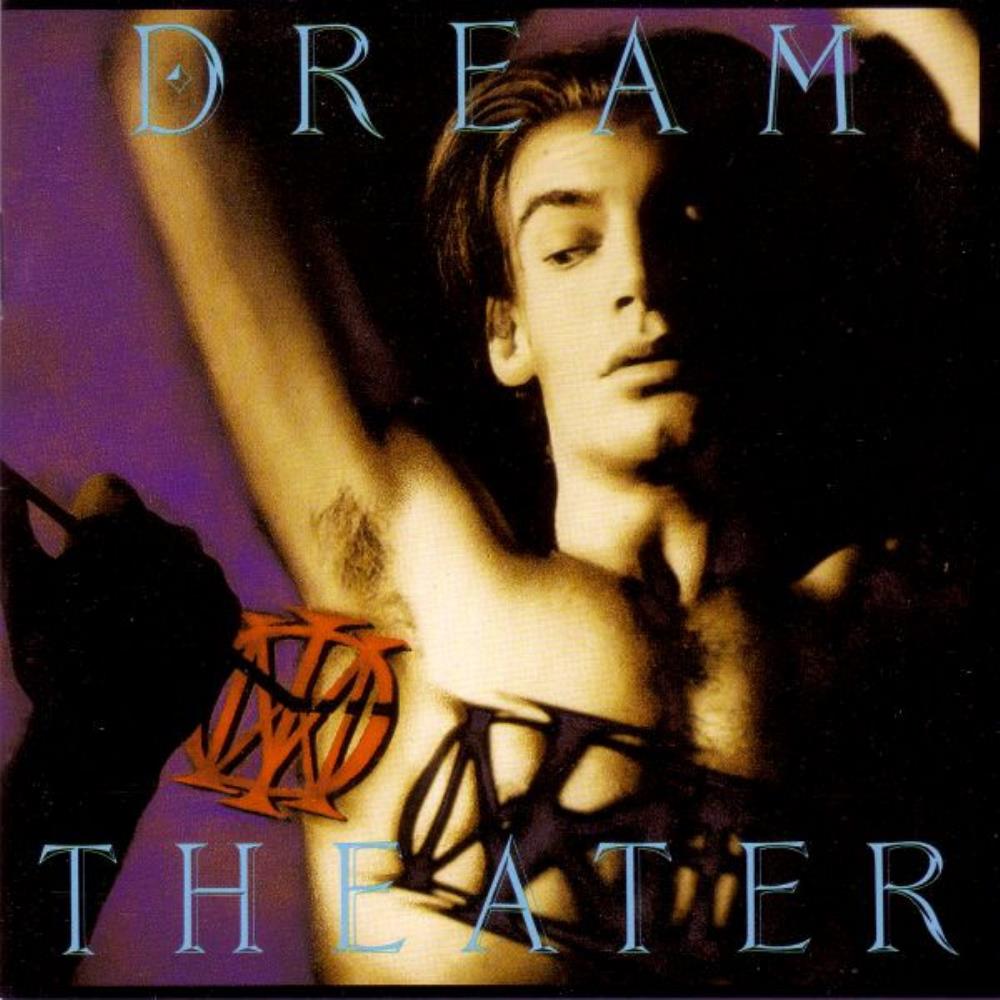
For example, Dream Theater’s 1989 debut album, When Dream and Day Unite, makes the cut. In a way that makes sense, as DT are the founding fathers of prog-metal and where better place to start than at the beginning? But the truth was not many people heard or cared about that album when it came out. What really broke DT, and announced the arrival of prog-metal, was their 1992 release, Images and Words. It’s practically the face that launched a thousand metal-tinged proggers (who kind of dominate things these days).

But that’s just one example. Here are some other important releases that are absent from the Prog list.

The Swedish Invasion

After the 1970s, prog wasn’t dead, but (to borrow a phrase from Frank Zappa) it did smell funny. While there was a slight resurgence with the neo-prog scene in the early 1980s, it didn’t get the kind of traction as the much had in the 70s. By the end of the decade, prog was very much on life support.

Two things happened in the 1990s that helped its resurgence, what some call the “third wave” of progressive rock. The first was that technology made the recording and releasing of music less expensive and put into the hands of musicians a better chance to get their music out there. The second, the real seismic shift, was the emergence of the Internet. Suddenly it didn’t matter that you were the only one in your town who knew Peter Gabriel was originally in Genesis – you could talk with other fans all over the world and be part of a real community.

A bit part of the enthusiasm that coursed through the Net in the early years was because of several bands from Sweden who helped kick off the third wave.

First up was Anglagard, whose debut album Hybris (1992) sounded like it was dropped out of 1973 via a time warp:

Hybris

It’s glorious, lush, mostly instrumental symphonic prog with lots of 70s hallmarks (Mellotron! Minimoog! Flutes!) and completely out of step with what was popular at the time. It also laid down a marker – people are still making this kind of music (and, to a certain extent, people are still buying it).

Anekdoten’s debut, Vemod (1993), falls into the same boat, although it takes its cues more from Wetton/Bruford era King Crimson than Anglagard does.

Beyond both of those, 1994 saw the release of The Flower King, a solo album by guitarist/vocalist Roine Stolt. Stolt himself wasn’t new – he was a teenage wunderkind in Kaipa during the 1970s – but this album was a return to a basic, very Yes-inspired, symphonic prog sound. Of course, it’s also essentially the debut album of The Flower Kings, who continue to crank through to this day. Stolt went on to lead that band while working with all sorts of other people in bands like Agents of Mercy, The Tangent, and Transatlantic. The Flower Kings itself brought the world the extraordinary bassist Jonas Reingold (and his band Karmakanic) and vocalist Hasse Brunnison’s band.

What all these bands have in common, and why they’re influential to the modern prog world, is they undeniably claimed the idea that “progressive rock” is as much a style – indebted to the original bands of the 1970s – as it is an idea or a rallying cry. There’s rock that progresses – continues to push the boundaries, wherever they may be – and there’s progressive rock as a label. These bands represent the real genesis (so to speak) of that modern, nostalgic prog path.

A Reinvigorated Old Guard

While prog itself might have struggled in the 1980s, that didn’t mean that all prog bands did. Some changed their sound up and had a hit (Yes), while others did the same and became one of the biggest pop bands in the universe (Genesis). That transition wasn’t so smooth for other bands, however, and they limped into the 90s like lost ships at sea.

After vocalist Pete Nichols left, IQ struggled on with a couple more albums that tried to tack into a slicker, more direct sound, with no real success (a couple of good tunes, though). In 1993, Nichols came back and the band jumped solidly back into the neo-prog territory they helped to chart with Ever.

Ever

It wasn’t the only example of a more establish act returning to their more progressive glory days.

Marillion had tried to go a little more pop on Holidays In Eden, but, again, it didn’t really work out (again, several good tunes, though!). As their relationship with their label deteriorated, then went and produced a sprawling concept album, Brave (1994). Not just a statement of intent to do whatever they wanted, it marked a shift in their sound where they started to emphasize atmosphere and mood more than juicy solos. You can hear that vibe everywhere from Gazpacho and Airbag to Pineapple Thief and Porcupine Tree (parts of it, anyway).

Not to be outdone, 1995 saw the roaring back of one of the classic 70s bands when King Crimson released THRAK. It, too, was somewhat backwards looking, melding the intricate dual guitar lines of the 1980s lineup with the thunderous power (two drummers! two bass-ish players!) of the 1970s. It arguably introduced Crimson to entire new audiences from the nu-metal and related scenes.

A New Brand of Odd

“What is prog?” is the evergreen debate on the Internet. If it means more than “stuff that sounds like the 1970s” – and it does – then you have to have some room in your array of influence for bands that might not fit the prog mold, but are just weird enough to embody the spirit of the genre.

Is Primus prog? Don’t know, don’t care, but there’s definitely some prog DNA in there. Their 1991 breakthrough Sailing the Seas of Cheese shows influences of Rush and King Crimson, some astounding musicianship, and just plain odd stuff that pushes it outside the mainstream. The same could be said for The Flaming Lips, who rang out the decade with The Soft Bulletin (1999), a skillfully layered collection of nouveau psychedelia. Arguably they’d go bigger (and proggier) later, but still.

Then there’s Talk Talk, who released their final album, Laughing Stock, in 1991. Much as I have tried this is an album I just can’t get into, but it’s been beloved by a generation of musicians that have come after it for its abstract, arty meanderings. I’ve read that, for some, it’s the origin of post-rock. If spawning a new genre isn’t influential, I don’t know what is.

Finally, in any discussion of the modern progressive scene you have to make room for jam bands. Not every one of those bands gets proggy points, but so many of them take such a diverse range of influences and throw them together with live improvisation that it’s hard to imagine something more progressive. While the scene dates back to the Grateful Dead, what really made it clear that a new generation would jump on that train was the success of Phish. While they’re most known for live shows (of course), their studio albums are worth note, too.

Rift

I’d put 1991’s Rift up there as their proggiest effort – it’s even a bloody concept album!

I’ll admit that I might be a bit sensitive when it comes to 1990s prog. This was the era, while I was in college and law school, that I rediscovered progressive rock – found out that it wasn’t dead and that the 1970s scene was broader and deeper than I’d ever imagined. Even putting that to one side, though, I think even the folks at Prog would admit that it wasn’t quite the nearly-barren wasteland it’s list portrays it to be. Not every album I talk about above should have made the cut, but at least a couple should have.

Why Do I Love Bad (Fictional!) Lawyers?

Popular culture is full of lawyers. As both a lawyer and a writer, I apologize for that, but the legal profession is a pretty rich vein of drama (and even comedy) for writers. There’s crime and deceit, business dealings and family squabbles. The law touches every area of life (for good or for ill), so it’s a great way to examine life itself.

There are plenty of heroic lawyers in pop culture. Perry Mason’s having a kind of resurgence with the new, gritty, noir-flavored HBO series. Atticus Finch is a popular choice for crusader who launched a thousand earnest legal careers.* There are countless others, of course, lawyers who fight for the little guy (or gal) or justice or law in the abstract. They’re fine, of course, but when you always win, things can get kind of stale.

Which is why some of us – or maybe just speaking for myself here – have more of an affinity with the legal bad boys, the ones who work on the edges of professional ethics, for whatever reason. There’s a quite a rogue’s gallery and I pretty much love every one of them. They’re the patron saints of the legal profession, in my eyes.

Front of mind at this point can be none other than Jimmy McGill, aka Saul Goodman, of Breaking Bad and his own prequel spinoff, Better Call Saul (which is better than the original, I think):

Saul2

The “patron saint” thing is kind of a joke, but the fact that Saul is about a struggling criminal defense lawyer makes it instantly more relatable to me, even if I never find myself nearly dead in the desert hauling two duffle bags full of drug cartel money (let’s hope). He is a sleaze, no doubt, and it eventually gets him into serious trouble, but at least early on he’s willing to use that sleaze to help the underdog and generally fuck with “law and order.” While I can’t say I approve of Jimmy’s methods, I appreciate the attitude. It’s one that sustains long-time public defenders like me.

Of more long standing in the pantheon is the one, the only “law talking guy,” Lionel Hutz:

Hutz2

Voiced by the wonderful Phil Hartman on The Simpson, Hutz is just a master class in legal incompetence. He marvels at how useful law books can be. He changes the terms of his retainer by marking up his own business cards. He shudders at the otherwise happy thought of a world without lawyers. He requests “bad court thingies.” And, most notably, he’s always looking out for himself:

Deep in the heart of every lawyer lurks the certainty that, if nothing else, they’re better than Hutz.

He’s not the only cartoon lawyer with a hold on my heart. How can I not love Harvey Birdman?

Harvey

Harvey’s less an idol for his legal acumen that he is for his ability to keep a calm head on his . . . wings, while everything else falls apart around him. It’s an important skill for an attorney, especially a criminal defense lawyer. Besides, who wouldn’t want to have an eagle for an assistant?

But if we’re going old school, there’s one sleazy lawyer that was lodged in my brain long before I was anywhere near a law school – Steve Dallas:

SteveDallas

Looking back I’m a little appalled at my love for Bloom County’s legal scholar. He’s a loud mouthed, rude, misogynistic, frat boy – precisely the kind of person I’d loathe if I met him (or saw him online) today. I mean, he did have cool cars, so that counts for something. And he was, come to think of it, the only professional in Bloom County (among the regular cast, at least). He had credentials and never let anybody else forget it. Like Harvey, he also recognized the value of good help:

SteveOpus2SteveOpus1

When it comes to all these guys (and they are all guys – I’ve noticed) I’m reminded of that idea, from Tolstoy, that all happy families are the same, but dysfunctional ones are unique in their dysfunction. I think that’s true for fictional lawyers, too. Good-hearted crusaders are important and uplifting, but they’re not always much fun. Bring on the bad boys!

* Years ago I went to a legal writing seminar where, for the session on issue spotting, we used the facts of To Kill a Mockingbird. A mere 45 minutes later he was facing a lengthy ineffective assistance of counsel charge.

New Tune – “Dance Party in the Pirates Courtyard”

Last spring the Fourth Circuit held an oral argument session in Charleston, South Carolina, rather than its usual home in Richmond. I had to go down there to argue a case, so I took the wife with me and we made a little vacation of it. Charleston is a neat old city, full of lots of history and architecture.

One day, while walking around, we passed this narrow passageway:

PiratesCourtyard (Small)

Something about the sign grabbed me. It wasn’t for a restaurant or bar and wasn’t any kind of historical marker. It was just a sign designating this places as Pirates Courtyard.

Almost immediately I got a riff in my head. Being that musical inspiration is usually fleeting for me, I did well to keep it going until we got back to the hotel. I jotted down the idea and, at the top of the legal pad with the notes, wrote “Dance Party in the Pirates Courtyard.” Usually I pick a title from my long list of nonsense phrases I keep handy just for that purpose, but this seemed to fit the riff and gave me some idea of what might come next.

After many months, and some good lockdown time, I’ve finally completed it. Does it really conjure a “dance party”? Probably not. It’s too slow, has a “chorus” in 7/4, and has an ambienty piano bridge. But I like it and it’s my song and I’ll call it whatever the fuck I like!
Anyway, here it is – hope you enjoy:


Dear US Soccer – Please Shut Up and Settle

I practice criminal law, criminal defense to be precise. I’m glad I do, because there’s a clarity of focus in it that can be a bit hazy in other legal areas. My job is to do the best for my client in court, period – whether that means an acquittal, a better sentence, or (as in my practice, for the most part) a successful result on appeal. Very very rarely are the other considerations to worry about. That the public doesn’t like the process is irrelevant – I’m trying to keep my guy out of a cage.

Civil law is different, particularly civil defense. People who get sued are often really determined to prevail on court, to prove to the world that they’re right. But part of their lawyer’s job is to suggest that winning in court is not necessarily going to solve their problem. A criminal defendant is rarely made worse off by a bold defense in court. A civil defendant, by contrast, particularly a corporation without any real personality – well, sometimes the big machine gets it right:

WinningMove

That went through my head when I read about US Soccer’s pleading last week in its ongoing litigation with the US Women’s National Team (USWNT) over equal pay. I don’t know enough about employment law to know if the arguments made in it are legally sound or have a chance of success, but I’ll assume they do. Question is, what does US Soccer think a “win” would look like at this point?

This article at SI breaks down the federation’s latest argument, which basically has two parts. The first is one familiar to anyone who has brushed up against the legal system – non fregit eum, et emit eam (aka “you broke it, you brought it”):

Stolzenbach first asserts that the fundamental flaw of the players’ legal theory is that they compare a pay system that their own labor union, the U.S. Women’s National Soccer Team Players Association, negotiated with the pay of players who aren’t in their bargaining unit—players on the men’s team.

To that end, U.S. Soccer stresses that courts have consistently rejected attempts by unionized employees to compare their employment terms to employees who are outside of their bargaining unit.

This is the kind of procedural argument I’d expect any lawyer to make. It appears to be the equivalent to how plea bargains are treated in criminal law – once you sign one, you’re stuck with it. Assume A and B are charged in an indictment and A decides to get a good early plea bargain. B sticks it out and, later, either gets a better deal or goes to trial and is acquitted. Can A back out of his plea? Not a chance. Courts routinely hold that so long as you weren’t misinformed, mistaken, or misled into making a guilty plea then you won’t be able to back out of it later. Whether this is a winning argument in the context of the USWNT case I don’t know, but it seems fairly standard.

The other one, though . . . yikes. It has to do with whether the job of USWNT player is “roughly equal in terms of effort, skill, and responsibility” to that of US Men’s National Team (USMNT) player. It was bad enough to point out that in terms of “responsibility” that the USWNT may not have the same earning potential as the USMNT (while eliding the fact that the USMNT choked and missed out on its last big earning opportunity – the 2018 World Cup).

From there it got worse:

Stolzenbach attempts to supplement this argument, even wading into some territory that could be described as misogynistic.

He insists that men’s players face much more demanding working conditions and thus have fundamentally different—and, by implication, harder—jobs. He contends that men’s players encounter ‘opposing fan hostility’ in road environments, particularly in Mexico and Central America, that is ‘unmatched’ by anything experienced by women’s players. Stolzenbach stresses that the women don’t play in Mexico, Central America or the Caribbean when trying to qualify for tournament play. Further, Stolzenbach maintains that ‘science’ confirms there are different levels of speed and strength required for men’s and women’s players. He insists it is not a ‘sexist stereotype’ to recognize this distinction.


Now, if US Soccer was fighting to stay out of jail I might question this strategy, but you do what you have to do. But at the end of the day, US Soccer is going to have to continue to do business with the USWNT (and the USMNT, who have publicly supported the drive for equal pay) and, more importantly, the American public. Why on Earth would they want to denigrate about the only good thing coming out of American soccer at the moment?

Let’s recap. The women are undefeated in more than a dozen matches, just swept through the She Believes cup against quality competition, are the two-time defendant champions of the world (with two other World Cups prior), and are gearing up to try and win their fifth gold medal at this summer’s Olympics. By contrast, the men failed to qualify for the last World Cup (to be fair, so did traditional powers Italy, Chile, and the Netherlands), their furthest progression in the Cup came before the Second World War, and they’ve ceded the pole position in the region to Mexico. Oh, and the Olympics? The men haven’t qualified since 2008.

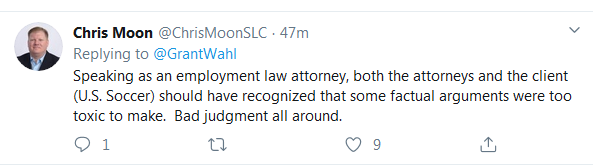
Whether those comparisons are apples to oranges or not is irrelevant. In the public eye, US Soccer has precisely one broadly loved group whom people outside of soccer fanatics care anything about – the USWNT. Building the game in the United States – at all levels, men’s and women’s – requires public support. Pissing off a large swath of the public with arguments like this – even if it’s a winner legally – is a long-term losing proposition. It’s not just my criminal law mind that thinks this is a bad play (in response to this tweet):

USSoccerTweet1

Indeed, the backlash from this filing has been swift and fierce. US Soccer eventually apologized, but the players weren’t buying it. The president of the federation resigned and, apparently, the law firm responsible was fired.

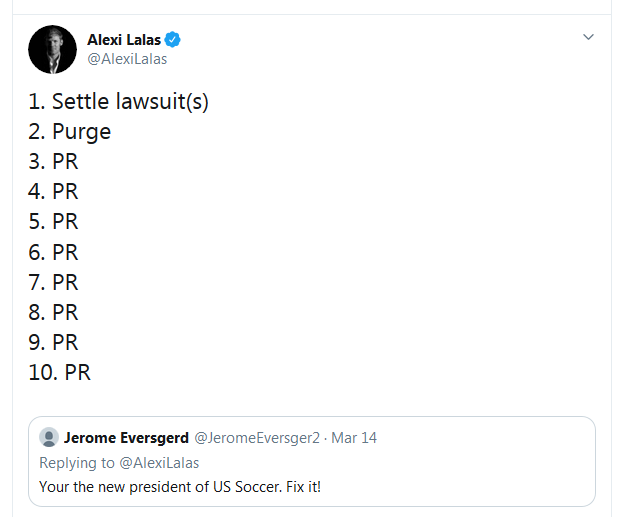
Ultimately, as to what comes next, I think Alexi Lalas has it about right:

USSoccerTweet2

This really isn’t a legal fight. It can’t be won in a courtroom. It’s only going to be won in the court of public opinion and that’s going to require some serious groveling on US Soccer’s part. So, let’s get to it, US Soccer – shut up and settle this thing already!

Please-Shut-Up-Morgan-Freeman-Picture

Decade – Favorite Books

As 2019 wound down a lot of people took the chance to catalog the best/worst/whatever of the decade just gone by (while others noted that the new decade doesn’t really start for another year). Never one to pass up a good chance to develop some blog fodder, I’m spending this month looking back at my favorites from the 2010s.

Writers read. I’m always surprised when I find someone who writes who thinks that either reading in their genre is a bad idea or, in some cases, that reading itself just takes away from valuable writing time. You gotta do your own work, of course, but it’s critical for a writer to nourish their mind and soul with the works of others. Besides, reading is fun! So, naturally, I do a lot of it, although most of it these days is less “reading” than it is “listening” via audiobooks. Regardless, I’ve read some good stuff over the past ten years.

Here are the rules for this list . . .

1. Only works first published during the last decade are eligible.

2. Only one work per author on the list BUT (and it’s kind of a big one) I’ve included series, trilogies, and the like under one heading, so the list is actually more than ten books.

3. As with all the other lists, these are personal favorites. I don’t make any claim to these being the best, most influential, or what have you. I just really liked ‘em.

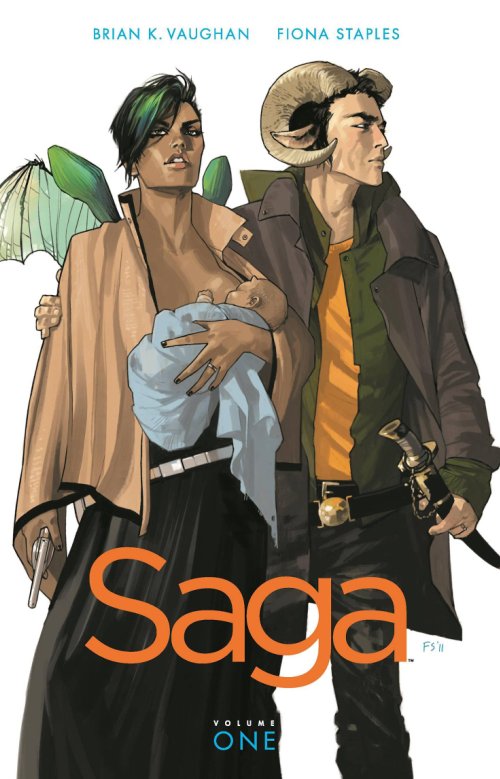
Saga (2012-present)
by Bryan K. Vaughn & Fiona Staples


SagaVol1

A couple of years ago when I wrote about why you should be reading this science fantasy space epic, I called it “the apex of what comics can be.” That’s completely true – if you’ve never read a comic or graphic novel before, you could do worse than to start with Saga. But as I also said back then, you should read it because “it’s a great story, involving people you will care deeply about, told across a stunningly inventive backdrop.” How could it not be a favorite?

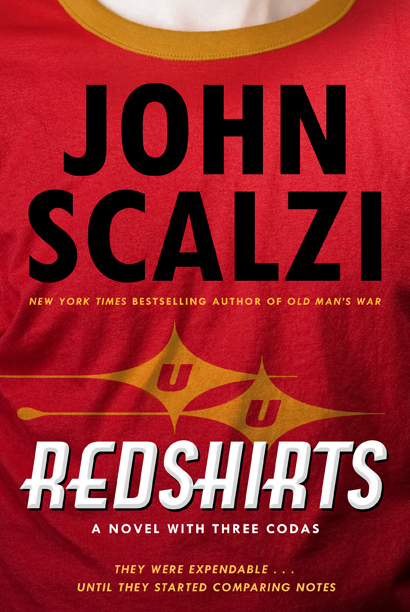
Redshirts (2012)
by John Scalzi

Redshirts_John_Scalzi1

By now even people who have never seen an episode of Star Trek know what it means to be a “red shirt” – an expendable character who gets sacrificed so the audience knows the peril our heroes are about to face (and escape, obviously). Is there something deeper there than just a cheap joke and internet meme? John Scalzi took the idea and ran with it, crafting a story about a group of low-rung characters on a suspiciously Trek-like ship who figure out the game. What follows is good fun and a meditation on what it means to live your own story and find out who you really are. Also, how can you not love a book with three codas?

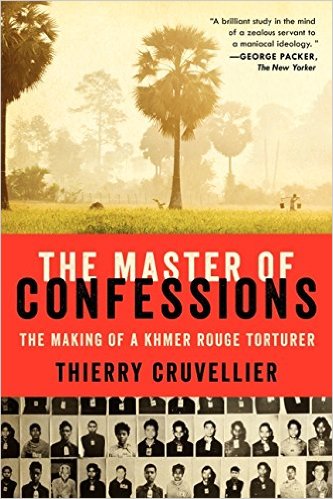
The Master of Confessions (2014)
by Thierry Cruvellier

MasterofConfessions

Thierry Cruvellier’s book is not a history of what the Khmer Rouge did to Cambodia in the 1970s, nor is it a straight biography of Duch, the titular master of confessions. Rather, it’s a more freeform observation and commentary on Duch’s 8-month trial for crimes against humanity. As such, while it certainly talks about the brutal history of that era (and that place, Tuol Sleng, the former high school that still had blood on the walls when my wife and I visited in 2015), it also dives into the idea of confessions as legal proof and what happens when legal proceedings drag on an on, to the point where the defense team openly spars with each other.

I wrote a more in-depth review of the book which you can read here. Needless to say, it’s one of the most interesting books I’ve ever read.

Children of Time (2015)
Children of Ruin (2019)
by Adrian Tchaikovsky

If you had told me in 2010 that one of my favorite books in the next decade would involve sentient spiders I would have rolled my eyes. But it’s true! Children of Time begins with a disrupted experiment on a distant planet which results in spider-like beings getting infected with an uplift nanovirus. In the eons it takes for humans to make it back there, we’re treated to the evolution of the spiders and development of their own space-faring society. It’s completely brilliant, outside the box stuff. The story continues in Children of Ruin, which is almost as good.

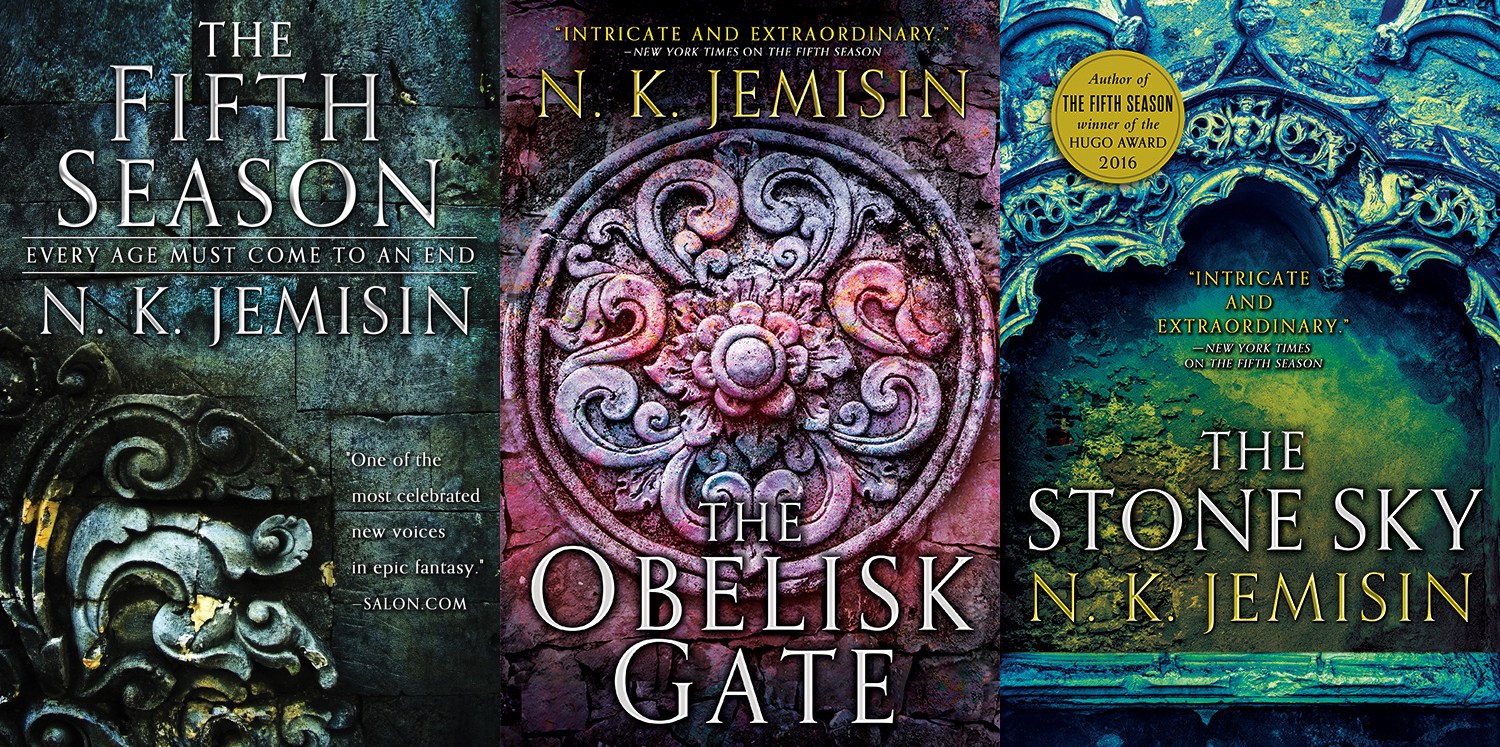
The Fifth Season (2015)
The Obelisk Gate (2016)
The Stone Sky (2017)
by N.K. Jemisin

Broken

I generally do not buy the hype. Almost never do I read, see, or hear something that is wildly praised and think it’s as great as all that. If anything shouldn’t have met my standards it’s this trilogy – a volume of which won the Hugo award for best novel an unprecedented three years in a row. Somehow, it managed not to disappoint. The first book, in particular, is utterly brilliant for the narrative sleight of hand it pulls off. The other two don’t quite match that high mark, but are both excellent and the trilogy tells a hell of a story overall.

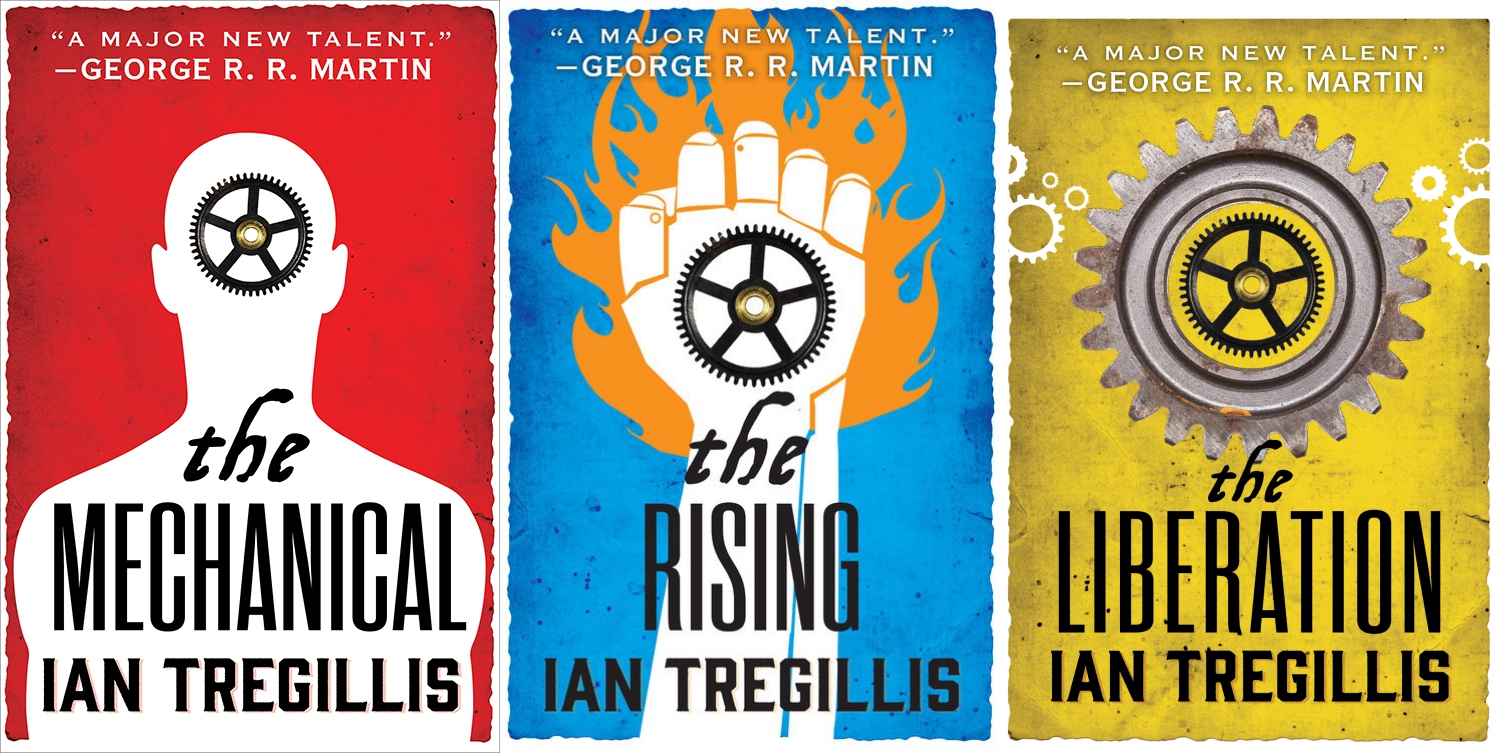
The Mechanical (2015)
The Rising (2015)
The Liberation (2016)
by Ian Tregillis

Tregillis-AlchemyWars2016UK

“Clockmakers lie.” Not such a big deal if they’re all making timepieces, but if they’re making scores of mechanical men? It could be a big problem, particularly if some of those “clakkers” start to think for themselves. That’s the thrust of the Alchemy Wars trilogy, which is set in an alternate universe 1920s where the world is basically ruled by the Dutch as a result of their mastery of clockwork automatons. Only some, like the books’ hero Jax, aren’t content to do what they’re told. A great story set in a fascinating world that raises interesting questions about free will and such.

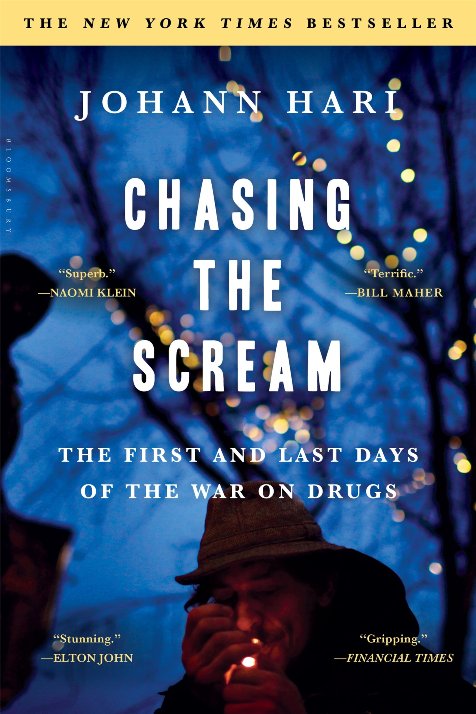
Chasing the Scream: The First and Last Days of the War On Drugs  (2015)
by Johann Hari

Scream

I read this book along with Sam Quinones’ Dreamland, which investigates the origin of the current opioid crisis. Chasing the Scream goes back much further and investigates the origins of the drug war itself, back in the beginning of the 20th Century. It focuses particularly on a slimy shit named Harry Anslinger, who ran the predecessor to the DEA for more than three decades. He was the prototypical drug warrior, pathologically certain of his moral correctness and impervious to evidence showing just about every assumption he had about drugs was wrong. More than that, however, the book allows Johann Hari to look at various alternatives to our current drug war, almost all of which look more promising.

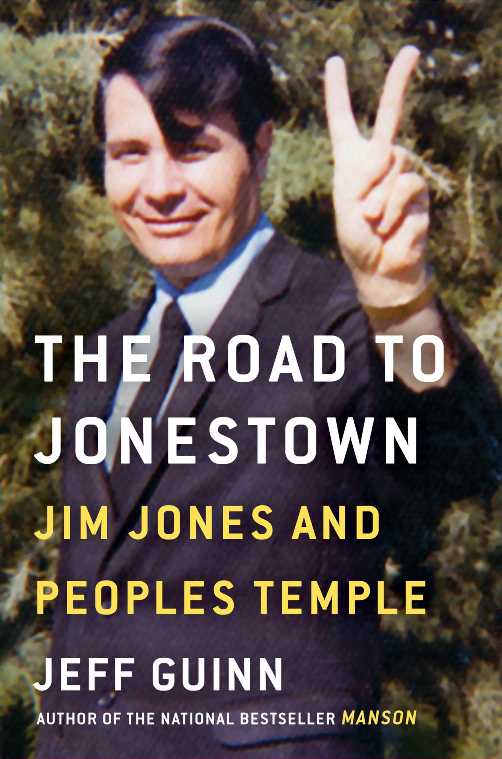
The Road to Jonestown (2017)
by Jeff Guinn

RoadtoJonestown

I knew the basic story of Jonestown – the far out settlement in the jungle, the fateful Congressional fact-finding mission, the murder/suicide that ensued. What I never really knew is how things wound up that way. Guinn’s book is a fascinating and comprehensive look at a man who began life as a charismatic preacher and civil rights activist who slipped slowly into authoritarianism and paranoia. It’s frightening, yet completely understandable, how many of victims were drawn in by him and equally horrific the things so many of them eventually did in his name.

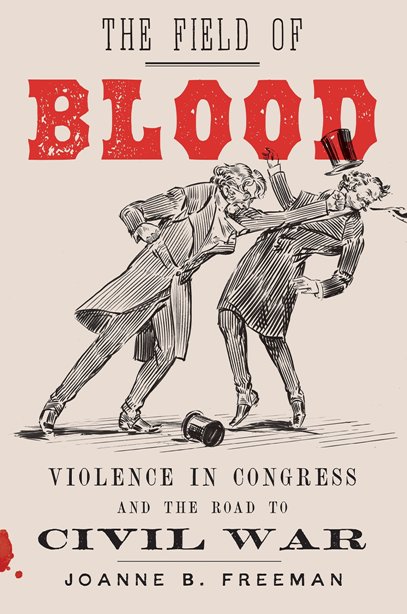
The Field of Blood: Violence In Congress and the Road to Civil War (2018)
by Joanne Freeman

FieldofBlood

I went into reading this book thinking that the incident pictured on the front – the beating of a northern Senator by a southern colleague in the Senate chamber on the eve of the Civil War – was a singular thing. I expected some interesting history you point to and say, “look out how uncivilized they all were.” Instead, I came out the other end thinking the age – which included numerous acts of inter-Congressional violence and at least one death – sounds an awful lot like ours. Given where it all led the first time, it wasn’t a comforting read.

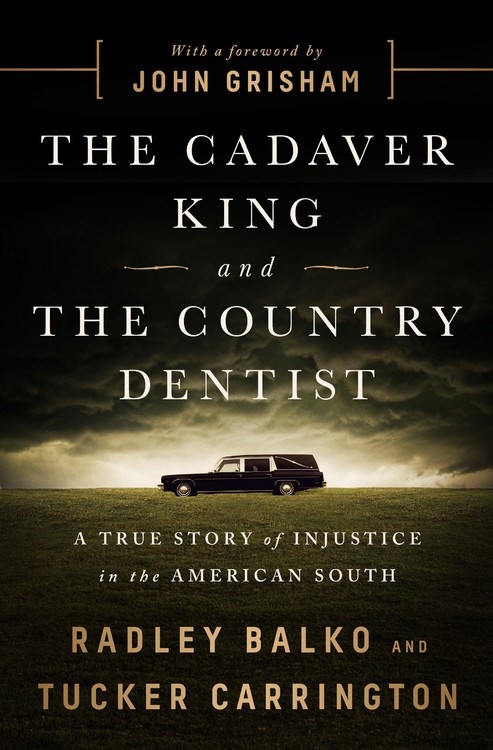
The Cadaver King and the Country Dentist (2018)
by Radley Balko & Tucker Carrington

CadaverKing

Radley Balko is best known for his work chronicling the rise of militarism in police procedures, but during that same time he’s done a lot of work on the hot mess that is forensic science in this country. In this book he, along with Tucker Carrington (of the Innocence Project), take one particular case study of this, chronicling the death investigation system in Mississippi. Thoroughly political and slanted towards the prosecution, it sends innocent people to prison – who then only sometimes get released, because the courts have problems dealing with stuff like this. It will make you throw the book across the room.

Decade – Favorite TV Shows

As 2019 wound down a lot of people took the chance to catalog the best/worst/whatever of the decade just gone by (while others noted that the new decade doesn’t really start for another year). Never one to pass up a good chance to develop some blog fodder, I’m spending this month looking back at my favorites from the 2010s.

It’s not an original thought to say that there’s a lot of TV shows out there these days. Not just that – a lot of very good TV shows (along with a lot of dreck, of course – Sturgeon was onto something). With every streaming service and cable network producing original content, it’s impossible for anybody to keep track of it all. These selections are ones I was lucky enough to cross paths with (in some instances years after their original run) over the past ten years. Some other things to keep in mind:

1. These are just what I say they are – favorites. I don’t make any claims that these are the “best,” whatever that may mean.

2. I only considered shows that began in 2010 or later (but see below).

3. I didn’t limit consideration to only multi-season series, but the list wound up not including any limited run stuff (although, again, see below).

With that said, away we go . . .

Justified (2010-2015)

Justified

I’m a federal criminal defense lawyer. US Marshals are not my friends. So it says something that one of my favorite characters of the past decade is a Deputy US Marshal. That Raylan Givens is the creation of Elmore Leonard doesn’t hurt, but the way he was developed (and played by Timothy Oliphant) through the run of the show really brought him to life. That Leonard vibe extends all the way though the show, particularly in the very unusual for TV setting (hello, federal district next door to mine!) and the astounding bevy of supporting characters, all of whom are unique characters without being “colorful” (if that makes sense). I mean, Boyd Crowder (and Dewey Crow), come on!

Bob’s Burgers (2011-present)

Bob

This is one of those shows I knew nothing about until the wife and I started watching reruns on Cartoon Network (I think) several years into its run. It didn’t take us long to make first-run episodes part of our regular rotation, to the extent that Fox’s football programming makes regularity an option. It’s a funny show with just enough heart to make you care about the weirdoes on screen. And what weirdoes. I’ll just say that I think Gene Belcher is my spirit animal and leave it at that.

Game of Thrones (2011-2019)

GoT

I know, I know, they didn’t really stick the landing (it wasn’t as bad as lots of loud people thought), but as a fan of Martin’s books before the series began I was super pleased by the show. It’s also a fascinating case study in adaptation, since the show runners ran past the point where Martin had written fairly quickly. I’d also be lying if I didn’t appreciate how the show helped shove fantasy stuff to the cultural forefront. Plus, I got to discuss it in court!

The Americans (2013-2018)

Americans

If someone had told me, before this show premiered, that it was really more of a family drama than a high-stake spy thriller, I might have given it a pass. That would have been a big mistake because while that’s an accurate description of what transpired over six seasons, it also doesn’t do justice to the atmosphere the show generated with all the spy stuff (and excellent soundtrack choices). Once you’ve seen mom and dad stuff a dead body in a suitcase it tends to stick with you, you know? If Stranger Things (which just missed the cut for this list) is all about 1980s nostalgia, this series was all about the paranoia of the same age.

Fun fact – the children of the Soviet spies who were the inspiration for the show recently had their Canadian citizenship confirmed.

Bojack Horseman (2014-present)

Bojack

Comedy is tricky. As I noted above, you have to care about characters for a show to have legs, not matter how good the jokes. But in asking us to care, it invites the writers to go into more serious, less funny places. Bojack Horseman really straddles that line nicely, digging deeply into the title characters depression and substance abuse but never quite losing site of the fact that we’re watching a cartoon about half-human animal people in a place called Hollywoo. You could probably do “Death of a Salesman” in front of the backdrop and still die laughing. This is, after all, a show where an entire episode’s punch line is that the horse guy is bombing at his own mother’s funeral.

Oh, and it’s got my favorite theme song from any TV show in a very long time.

The Knick (2014-2015)

Knick

This is my overlooked/neglected pick for this list, which is a surprise given the pedigree involved – a period piece created/directed by Stephen Soderbergh starring Clive Owen (and a host of excellent character actors) promising a different spin on that venerable TV institution, the hospital drama. Maybe it was because the show sidestepped the usual focus on medical heroics to dwell in the underbelly of a hospital struggling to stay open in 19th century New York. Maybe Owen didn’t pull off the addicted genius asshole like Hugh Laurie did on House. Maybe the excellent, anachronistic electronic score by Cliff Martinez turned some off. Regardless, I loved both seasons and wanted more. Alas.

The Leftovers (2014-2017)

Leftovers

Tom Perotta’s novel The Leftovers is very good, a darkly humorous meditation on a world where a small percentage of the population just disappear one day. The TV series upon which it’s based, which covered the events of the book in the first of its three seasons, is completely brilliant. The vibe’s not quite the same as the book, but it doubles down on the sheer weirdness that a world like that would produce. I didn’t know what was going on for a lot of the show’s run and I still loved it. It’s one of those shows that you either loved or it left you cold. Count me firmly in the first group.

Better Call Saul (2015-present)

Saul

You’re probably wondering why this made the list and not Breaking Bad. Did you overlook the part above where I said I was a defense attorney? Saul Goodman is one of the TV patron saints of my profession (along with Lionel Hutz). More to the point, I think the slow transformation of Jimmy McGill into Saul Goodman is a more compelling arc than what happened with Walter White. Walter was driven to do horrible things by circumstance, but he embraced those acts pretty easily. Jimmy has always tried to be better, to seek the approval of the establishment (in the form of his lawyer brother Chuck), and generally do right. That he continually fails and is drawn deeper and deeper into criminality is more tragic.

The Magicians (2015-present)

Magicians

Full confession – I was not a huge fan of the Lev Grosman books upon which this series is based. I read the first two and simply couldn’t come to grips with the main character, Quentin. There was just too much of him. Imagine my surprise when the show runners here apparently came to the same conclusion and made Quentin one of many lead characters on the show, almost all of whom are more interesting and compelling. Add to that some great batshit “yes, this is fantasy!” elements and a willingness to do just about anything (singing – I’m talking about singing) and this series is one of my most pleasant surprises.

Mr. Robot (2015-2019)

MrRobot

A show about which I once said this:

MrRobotJoke

I never really loved this show until its last season. Up to that point I had been impressed by it, but something hadn’t fully clicked about it. I think what finally did it was realizing how amazingly Sam Esmail and crew used the visual language of the show, the odd camera angles and such, to give it a distinct look that could throw you off your feet. That made me reflect on the writing itself and I realized it did the same thing and that, at the end of the show, I was profoundly digging it. Slow burns are a wonderful thing.

HONORABLE MENTIONS

I had to have a pair of honorable mentions, just because they don’t quite fit the parameters I set when I started this project.

Archer (2009-present)

Archer

Archer would have been a shoo-in for this list, but for one fact – it premiered in 2009. In spite of that, I had to give it some love since it’s amazingly funny and still running into the next decade. I love the show’s willingness to take the characters and throw them into completely different settings from season to season (from the original spy spoof setup to drug runners, noir figures, and space farers), even if every attempt didn’t work out that well.

Watchmen (2019)

Watchmen

Watchmen isn’t on the list proper for a couple of reasons. First, it’s Damon Lindelhoff’s baby and he’s already represented with The Leftovers. Second – just what is Watchmen, anyway? If it’s really just a one-season-and-done situation, it may still deserve a spot, but since future seasons are a possibility I wasn’t comfortable putting it on. Regardless of how brilliant this season was, it could go completely downhill in the future. Maybe after another ten years I’ll come back and promote it to the big leagues.

NOTE: I put this list together before it was confirmed that Watchmen was going to be one and done. Rather than mess with the list, I’ll keep it here in its special place. Seems right.