Beginning in 1955, Donald Campbell piloted Bluebird K7, the world’s first functional jet-powered hydroplane, to a slew of water speed records. He didn’t just break the record, he shattered it over and over again – the record he initially broke was 178 miles per hour, while his last complete run, nine years later, was over 276 miles per hour.
On January 4, 1967, Campbell took Bluebird to Coniston Water in England’s Lake District for another run, hoping to hit 300 miles per hour. After making the run one direction at over 297 miles per hour, Campbell began the return run. Then, tragedy struck:
It was big news in the UK, big enough that young Steve Hogarth, while not quite grasping what had happened, noted the emotional impact Campbell’s death had on his mother. Flash forward three decades and Hogarth, aka “H,” and his band Marillion release Afraid of Sunlight, my personal favorite album of theirs. One track, “Out of this World,” is about Campbell and his fatal voyage, complete with some snippets of radio traffic from that day.
So far not that interesting, right? A band writing a song about a tragic historical event is hardly rare (Marillion themselves have jokingly been referred to as a band specializing in songs about “death and water”). What’s really cool is what happened afterward. Bill Smith was not just a Marillion fan (he even sort of promoted a solo Fish show in Newcastle!), but an experienced salvage diver. Inspired by the song, he led a team that found Bluebird and raised it from the depths. The official photographer for the event? Steve Rothery, Marillion guitarist. You can hear more about that day on the latest episode of Hogarth’s podcast, The Corona Diaries, which includes an interview with Smith.
Again, that would be an interesting enough story, but it goes even further. Smith and his team restored Bluebird and, in 2018, it was in the water again, on Loch Fad in Scotland, where it hit 150 miles per hour.
Sadly, that wasn’t the end of things. There appears to be an ongoing legal dispute over where Bluebird should make its final landing. According to the BBC, the Campbell family promised Bluebird to a local Coniston museum (that has built a wing specifically to house the restored craft). Smith, however, argues that because some of the restored craft is made up of new parts, he “co-owns the craft.” Interestingly, in the podcast, Smith points out that the usual finders-keepers salvage law of the open ocean doesn’t apply to inland waterways.
I suppose it’s inevitable that when someone’s legacy is at stake the parties involved wind up at odds. I don’t think it’s a matter of money more than it is pride and obligation. I hope there’s a happy ending in there somewhere, a resolution that can please all the parties involved, if not completely.
All in all, there’s probably at least another song in all this.
When I went to college most of the music I had was on cassettes recorded from the record collections of my brothers. As a result, I didn’t have the liner notes that came with those albums and, thus, no lyrics to pore over. This wasn’t a huge problem, but I did always wonder what Jon Anderson was singing about on old Yes albums.
I got online during my junior year of college and quickly discovered primitive websites devoted to bands I loved. Some of them even had song lyrics on them! So I dutifully dove into some of those old Yes albums and . . . didn’t really get any better understanding of the lyrics. Turns out Anderson was more focused on what words sounded like rather than meaning, so they were pretty vague on purpose – what on Earth (or beyond) is “cold summer listening” and how does “hot color melt the anger to stone,” anyway?
Still and all, Anderson never wound up in the crosshairs of J. Edgar Hoover. And he never inspired , one of my favorite Bloom County strips of all time:
The joke works, of course, because nobody really knows what the words to “Louie, Louie,” are, which is pretty amazing given how much the song has seeped into our culture. How exactly did that happen? Turns out, it’s precisely because purveyors of moral panic can try to make the lyrics be any old thing they wanted.
This article in Reason tells the tale. The song was written in 1956, but didn’t really breakthrough until it was recorded by the Kingsmen in 1963 (it peaked at No. 2 on the Billboard chart) and even then it took a while to get rolling. As the article points out, it’s not a particularly deep song:
It was nothing more than a lovesick sailor’s lament to a bartender about wanting to get back home to his girl. But because Jack Ely, the Kingsmen’s lead singer, slurred the words beyond recognition, it became something of a Rorschach test for dirty minds. Schoolyard rumors about filthy lyrics in “Louie, Louie” stoked parental fears, prompted fevered complaints, and ultimately triggered a prolonged nationwide investigation.
My favorite overreaction to this comes from the governor of Indiana who “claimed that the record was so obscene it made his ‘ears tingle’” and used his connections with radio stations to effectively ban the song in that state. That’s peanuts to the multi-year investigation that the United States government launched into the song, via the FBI and the fellas at the freakin’ FCC, among others. Even with all that time and all those resources involved, investigators couldn’t figure out what the Kingsmen were on about!
My other favorite detail is this – it took the crack investigators at the FBI 18 months to think to go look up the actual lyrics on file with the U.S. Copyright Office! Mystery solved, at least, right? Not really. There were “other versions” of the lyrics circulating in schoolyards and such, which seems to say less about “Louie, Louie” than it does about the hyper sexed minds of young adults everywhere.
There’s lots of other interesting stuff in the article, so I recommend the full read. I will go ahead and spoil the ending, though – “Louie, Louie” won, in the end, becoming its own kind of classic. Did you know that April 11 is International “Louie, Louie” Day? Now you do, just in time to celebrate and tell the censorious prudes to go fuck themselves.
A couple of weeks ago I talked a little bit about how, in reaction to the Russian invasion of Ukraine, people and businesses had been cutting ties with all things Russian. Some of these make sense, as a way to starve the Russian economy and isolate/shame people with close ties to Putin, but some of them are pretty stupid, like pouring out (presumably quality) Russian vodka that you’ve already paid for. That’s a fairly pointless gesture, after all.
Which brings us to the weirdness revolving around Yuri Gagarin. Gagarin, of course, was the first human in space, an icon of the Space Race . . . and died in 1968. Putin was a teenager when Gagarin died, so it’s fairly safe to say he had nothing to do with the decision to invade Ukraine.
So imagine my surprise when I saw on Twitter over the weekend that Gagarin was being cancelled. Actually, what Tweet after Tweet said was that he had been “stripped of his honours” – complete with British spelling:
Where was this coming from? Even during the height of the Cold War I don’t remember Gagarin being treated as anything other than a pioneer. What would lead to his cancellation due to a war that started four and a half decades after he died? Turns out it’s slightly more complicated, at least in terms of the reach.
As it happens, there is a thing called the Space Foundation, which, according to Wikipedia, “is an American nonprofit organization that advocates for all sectors of the global space industry through space awareness activities, educational programs, and major industry events. It was founded in 1983.” At the beginning of April they’re having a Space Symposium (apparently a yearly event) that, according to Futurism, was supposed to have a night or panel called “Yuri’s Night.” Now, per a now deleted Tweet (cowards) it’s been renamed “A Celebration of Space: What’s Next.”
So it’s a schmoozy meet and greet cocktail party thing and, to me, sounds like it’s primarily geared toward fund raising. As explained in the Futurism story:
The nonprofit Space Foundation announced in a now-deleted note that ‘in light of current world events’ it would be changing the name of a fundraiser from ‘Yuri’s Night” to ‘A Celebration of Space: Discover What’s Next’ at its Space Symposium conference.
‘The focus of this fundraising event remains the same — to celebrate human achievements in space while inspiring the next generation to reach for the stars,’ the deleted update notes.
I agree with the author of the Futurism piece that this is a “rather dubious show of solidarity with the Ukrainian people” and is ultimately a dumb move, but I can see how it happened. In an environment when every corporate entity has to take a stand on current events, you’re going to have places that decide to avoid any hint of controversy as much as possible (and trigger the inevitable backlash).
But let’s keep in mind what this is not – there is no cancelling of Gagarin going on here. He’s not being erased from history books. There are no “honours” the Space Foundation has bestowed upon him that they could now revoke. How could they? Gagarin will always be the first person in place.
My point here is not that the Space Foundation was the right one. I think it’s pretty stupid, but I think equally stupid, or maybe even more so, is the reaction to it which is fairly divorced from the initial decision. It feels to me like it’s one of those minor stupidities that blows up over social media based on details that aren’t accurate. Dealing with the fallout from the Russian invasion is hard enough without reacting to stuff that didn’t actually happen.
When Russia invaded Ukraine a few weeks ago, the world responded pretty quickly to isolate Russia and exclude Russians around the world from various things. A major Russian conductor was dropped for concerts at Carnegie Hall because of his close ties to Putin and unwillingness to criticize the invasion (a similar result came with an famed opera singer a little while later). Bars stopped serving Russian vodka. Hell, even rapacious companies like BP decided that being in business with Russia was a no-go.
Soccer was one of the first parts of the sporting world to respond. UEFA, the European federation, announced that it was moving the Champions League final, the capstone of its most important club competition, from St. Petersburg to Paris. In the wake of that, several countries – notably Poland, Sweden, and the Czech Republic – announced they would not play Russia under any condition. That was important, as they were all involved with Russia in the same playoff round of World Cup qualifying and so were, potentially, forfeiting a chance to make this year’s World Cup Finals (other federations with less skin in the game, including the US Soccer Federation, made similar statements). Eventually, FIFA stepped in and banned Russia from further competition, leaving the Swedes, Poles, and Czechs to fight it out for World Cup berth with clean hands.
Sort of.
It was a shock, to say the least, when Qatar beat out Australia, Japan and others to win the right to host the 2022 World Cup (in the same process that awarded the 2018 World Cup to . . . Russia). The Qatari heat would require the tournament to take place in November and December, rather than in the middle of the summer. Beyond that, of course, Qatar is not a democracy and has a shady human rights record.
But specifically, the numerous new stadiums the nation needed to build for the World Cup, are killing workers at an alarming rate, up to 6500 migrant workers from India, Pakistan, and surrounding areas alone. A minimum wage for those workers only came into effect in 2021. A good idea of what laboring to build the stadiums is like can be found here. So not only are there ethical questions about the host nation for the World Cup in general, but specifically linked to the competition itself.
So what should the countries that have qualified do about it? The invasion of a sovereign nation by a neighbor, in a way that wrecks the equilibrium of modern Europe, may be sui generis. After all, the nations who initially stepped up to say that wouldn’t play Russia could find themselves in Putin’s crosshairs sooner rather than later. Lots of the other countries, including the United States, are doing everything they can to stop the war without it blowing up into World War III.
What’s gone on in Qatar isn’t that, but it isn’t good. More and more, repressive regimes are using sports to try and launder their reputations. Called “sportswashing,” it’s probably a driving force behind the fact that there are now things like a Formula 1 race in Saudi Arabia and the recent Winter Olympics (and current Paralympics) in China. Letting Qatar host the World Cup is more of the same.
But it’s very likely that they are going to host, so what to do about it? Is the reaction of the sporting world to Russia’s aggression the beginning of a new era in sports activism? Or is it so beyond the pale of the modern world that it won’t impact anything else? I wish I knew, because I struggle with what to do about the World Cup, too. I watched almost every game of the 2018 version in Russia and the Americans didn’t even qualify. If we make it this time? You bet I’ll be paying attention, but won’t feel good about it.
Let me address the elephant in the room – if global sports is going to develop a conscience about things like human rights and violating international law, won’t that standard mean excluding the United States from certain things? Maybe. People asking “what about Iraq?” have a very good point. There are differences between the two situations, but I’m not sure they make a difference. Nor is invading Iraq without cause our country’s only sin when it comes to international relations. If that means we get punished for it, I’m not sure that’s a bad thing.
For most of us, sports are a distraction, a fun way to spend free time and we try to keep that frame even when we’re engaging with multi-billion dollar competitions that span the globe. We want them to an escape from the regular world, from the conflicts that rage in “real” life. But they’re part of our world, in all its pain and joy, and that means inextricably entwined with world affairs.
When Gregg Berhalter was announced as the head coach of the US Men’s National Team in 2018 that decision was not greeted with a lot of enthusiasm. Gregg’s managerial career consisted of a couple of non-descript years in Sweden followed by a solid run in charge of the Columbus Crew, losing MLS Cup in 2015 (at home) to the Portland Timbers. There were other big, international names that were allegedly in the mix, so this pick seemed underwhelming. It didn’t help that Gregg’s brother Jay was one of the higher ups in US Soccer at the time, leading to lazy charges of nepotism in Gregg’s hire. That Gregg had appeared 44 times for the USMT as a player, but never made the field during the World Cup where he was on the roster kind of said it all.
Gregg’s hire came in the shadow of the USMNT failing to qualify for the 2018 World Cup. His ultimate success will be judged solely on whether we qualify for the 2022 tournament in Qatar and, if we do, how well we do there. Up to this summer there hadn’t been a lot of meaningful games for Gregg to show fans what he can do at the helm. But, oh boy, has he had a very good summer.
Like everything else, the pandemic wreaked havoc with the international soccer calendar. League seasons that were suspended in early 2020 finished up later than usual that year, leading to the cancellation of major 2020 national competitions and the late start of the next club season. That season then got compressed so the delayed summer competitions could happen. So this summer has been packed solid with the Copa America and European Championships taking place on a year delay, not to mention the Olympics. And then there’s World Cup qualifying, which gets underway in September and will include schedules with three games played in two weeks (usually it’s only two).
For CONCACAF, the regional federation to which the United States and the rest of North and Central American and the Caribbean belong, its championship, the Gold Cup, was already scheduled for 2021. But the inaugural finals of the Nations League, a new tournament meant to fill in the gaps between World Cups and Gold Cups, was supposed to have taken place in 2020, but got pushed back. So, for Gregg and the USMNT this summer meant two games in the Nations League final, the Gold Cup, and then the start of World Cup qualifying, all with players who have been at it pretty much nonstop for the past year or so. Oh, and CONCACAF moved the Gold Cup back a month so as to not compete with Copa America and the Euros, pushing it into the preseason for a lot of European clubs.
Thankfully, Gregg had a plan. Step 1 – take the best team possible into the Nations League finals with the intent of winning a trophy. This would bet the core players, most of whom play in Europe. It would be the first meaningful chance to see them play together, in anticipation of a meeting with full-strength Mexico in the final. Step 2 – take a younger, mostly MLS-based team into the Gold Cup, with the intent of discovering roster depth that will help us when World Cup qualification begins, while giving the first-team guys some rest and letting them start preseason work with their club teams. Go as far as you can in the tournament, but don’t expect to win it, especially if we came up against Mexico, again. Step 3 – start World Cup qualifying with the strongest team possible and, hopefully, some momentum.
Well, as for Step 1 – this happened:
After a less than impressive semifinal win against Honduras, the US beat Mexico 3-2 in extra time to lift the first Nations League trophy. It didn’t go completely to plan – injuries kept the preferred Best 11 from playing together much – but you can’t argue with the results. Off to some vacation for most of those guys, on to the Gold Cup.
The Gold Cup was never going to be beautiful. The only real holdover from the Nations League roster was midfielder Kelly Acosta. More than a dozen players had appeared less than ten times for the USMNT. The guys called in from Europe were basically trying to make moves to new clubs. How much talent did this group have?
Enough to blow through the group stage, at least. By which I mean we won all three games, even if two of them were a lot closer than you’d like them to be. Rosters were rotated, players were given chances to sink or swim. Nothing convincing but, again, the results were coming. We were probably outplayed for large parts of the quarterfinal against Jamaica and the semi against Qatar (here as guests and reigning champions of Asia), but the result in the end was the same: 1-0 to the US.
But remember, the goal here isn’t necessarily to win, but to learn. What did we learn in all those games? That New England goalkeeper Matt Turner should be in the running for the top job when qualifying starts. That defender Miles Robinson and midfielder/defender James Sands are both worthy of the qualifying roster. The defensive depth we were worried about is here and it’s pretty good. The attack not so much (Matthew Hoppe’s enthusiasm aside), but we’re top heavy with attacking talent with the first-choice team. We’ve also learned that Gregg can make great use of substitutes – keeping in mind that FIFA is keeping 5 substitutes (as opposed the usual three) until at least the next World Cup is over.
But we want to win this thing, right? Over Mexico for the second time this summer? You’re damned right we did:
It should be noted that, due to injuries and Olympic duty, Mexico was missing a few first-teamers, but they had a lot more of their “A” team on the field in the Gold Cup final than we did. We won anyway. Was is pretty? No. Was is great fun to watch? Absolutely.
I’d like to say I was a Gregg booster from the beginning, but that would be a lie. I wasn’t as down on him as some other folks, but I wasn’t thrilled. As we waded through lots of friendlies with questionable roster selections and what not I wondered if he was up to it. Now I’m ready to buy in completely. Gregg might not do it the way I want him to, but his job is to get us back to the World Cup and regain are spot on top of CONCACAF.
At my dayjob office there’s a whiteboard and bulletin board back near the break room. After a few years, one of our administrative folks has found its best use – asking questions of the staff about the important questions in life. Things like “what’s your favorite ice cream flavor?” or “if you could wake up one morning an expert in anything, what would it be?” Now, she’s come up with a question that, as she correctly warned me, is a real stumper:
If you could only listen to one album for the next year, what would it be?
Between my musical geekiness and my penchant for over thinking things, my mind’s been working overtime since the question came up. I think I’ve come up with a decent answer – here’s how I got to it.
It quickly occurred to me that there are two questions you have to ask before you start evaluating answers for a question like this. It has to do with getting the most out of whatever you select.
The first is, do you go for something that’s a stone cold favorite or something more mysterious? The case for the favorite is obvious – you want to listen to something you like, if it’s all you’ve got for a year. But there’s also a risk – would listening to any favorite album for a year cause you to sour on it? Get so sick of it you’d never want to hear it again? Something less familiar, or more dense, might be more rewarding over multiple listens.
I didn’t let this issue detain me very much. While I toyed with the idea of choosing something like Brian Eno’s Music for Airports (Ambient 1), as its details would surely be sharpened by lots of repeated listening, ultimately I decided that if I have to listen to only one thing for a year, I want it to be something I really love. A lot of my favorite albums I’ve known for years, if not decades, and I’m not yet tired of them. It’s a risk I’m willing to take.
The second, and more difficult question, is one of quality versus quantity. Favorite albums might not be very long, might not provide the best bang for your buck, so to speak. But longer ones might not be as good. The best example of this in my collection, probably, comes from Zappa. My favorite Zappa album is probably Roxy & Elsewhere. While originally a 2-LP release, we’re talking about Frank’s 1970s stuff, so the sides are short and it sits comfortably on a single CD. Läther, on the other hand, is a 3-CD release of what was originally intended to be an 8-sided album. It’s crammed full of music, full of variety and skill, even if it’s not my favorite. Which to pick?
In the end, I decided to go with the “more is more” philosophy, at least to an extent. It was made easier by the fact that bands in the 1970s would produce fairly short (by standards of the CD era I grew up in, at least) studio albums, and then release multi-disc live albums. Those albums often cover a lot of ground and sometimes do it with versions that improve on the original studio recordings. With that in mind, it came down to two choices.
The first was Yessongs, the first live Yes album.
This is one of those “if you only own one album by a band, buy this one” kind of albums. Originally three LPs (it fits on two CDs) and recorded after Close to the Edge, it really captures the band at its prime. It includes all three songs from that album, as well as most everything important from Fragile and The Yes Album. More than that, lots of the live versions of those songs are bangers. What’s not to love? Well, a couple of things. First, it doesn’t touch at all on either of the band’s first two albums, which have some gems. Second, the main thing missing from Fragile is “South Side of the Sky,” which is my favorite track on that album. Finally, there’s a lack of Bill Bruford on this release. Drummer Bruford left Yes after Close to the Edge to join King Crimson and he’s only on a couple of tracks. His replacement, Alan White, took over the drum stool for good (having worked with some nobody named John Lennon previously), which is saying something for a band whose membership rivals Spinal Tap (or King Crimson!) for turnover. He’s a great player, but I like Bill better and these are “his” tunes.
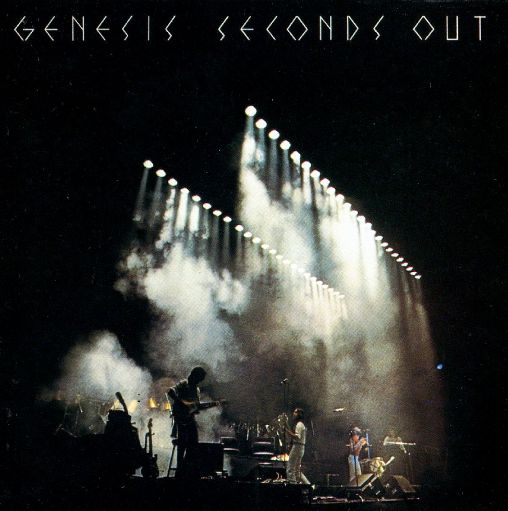
The other contender was another live album (originally a double LP, still a double CD), Seconds Out by Genesis.
As you might expect from the title, this is the second live album from Genesis and is the swan song of the prog era. Peter Gabriel was already gone and Steve Hackett was on his way out the door and the band was about to reshuffle into the pop/prog trio that conquered the world in the 1980s and 1990s. It focuses on the albums released since Live, but that’s still prime real estate – Selling England by the Pound, The Lamb Lies Down on Broadway, A Trick of the Tail, and Wind and Wuthering. It also dips into the further past for the main oversight of Live – the side-long epic “Supper’s Ready.” That starts off disc two with a bang that never lets up – side four of the original LP release contains the definitive versions of “Cinema Show” and “Dance on a Volcano/Los Endos.” That whole disc is one of my very favorites. Down sides? Well, there’s only one track from Wind and Wuthering, which is odd since it was the newest album at the time. And, although it’s apocryphal to say that Hackett was “mixed out” since he was leaving the band, it’s not the strongest of his albums with the band.
In the end, there was only one solid choice – Seconds Out. Much as I love Yes, Genesis may be my all time favorite band (certainly during the Gabriel/Hackett years) and if I could only listen to one thing for a year, wouldn’t that be it?
I will not lie – there’s been one thing I’ve really enjoyed about the past year of pandemic fucked life. I’m lucky in that I’ve been able to keep working from home during the whole thing without any real impact on my daily work. One side effect of that is that without commuting time on workdays, I had a lot more time on my hands.
What a boon that must have been for creativity! So much more time to write!
Yeah, well, about that. Whether it was the constant creeping doom around the world or just the fact that Widows of the Empire and Heroes of the Empire are being difficult, I didn’t turn all that extra time into a new books. Not yet, at least.
What I did do was make some music.
And here it is. All of these songs were started or finished (in most cases both) during 2020. Not many are actually pandemic related, but just being able to use the extra time to quickly follow up on ideas and moods definitely played a role. With a couple of exceptions, none of them have been uploaded until now.
Not all of these songs fit the Pandemic Year mold. “Shadow Weaver” and “A Vulgar Surplus” both developed out of ideas I had sketched out in 2014 and rediscovered last year after I moved some old projects into my newer DAW. Ironically enough, “In the Year of the Plague” itself went through several fits and starts, with the final version only taking shape this spring. Maybe that says something about the long tendrils of our COVID year. Or not.
A couple of other notes. “The Laminated Llama” arose from an experiment with the SynthOne app on my iPad. “Please Scream Inside Your Heart” is my first experiment with sound collage, with a nod toward “The Waiting Room” from The Lamb Lies Down on Broadway. It was inspired by news reports about a reopening Japanese theme park’s advice for having COVID-preventative fun. The samples are taken from various loop libraries and the BBC’s sound effect archive, along with some insect sounds recorded by me at Babcock State Park on a hike.
This isn’t a collection of doom and gloom. That’s lurking in a lot of the sonic crevices, but I hope that it’s also about finding some fun and beauty in the face of a world in crisis. I had fun putting these tunes together. Hope you get some enjoyment listening to them.
The artwork here is by frank_to_artist on Flickr. Used under a Creative Commons 2.0 license. Modified by yours truly.
Did you ever have the kind of weekend where you fell into an impromptu film festival? Naturally a festival has to have a particular theme, right? This past weekend, the wife and I fell ass over teakettle into a series of largely depressing, but mostly good, movies about various historical horribles. An International Misery Film Festival, if you will.
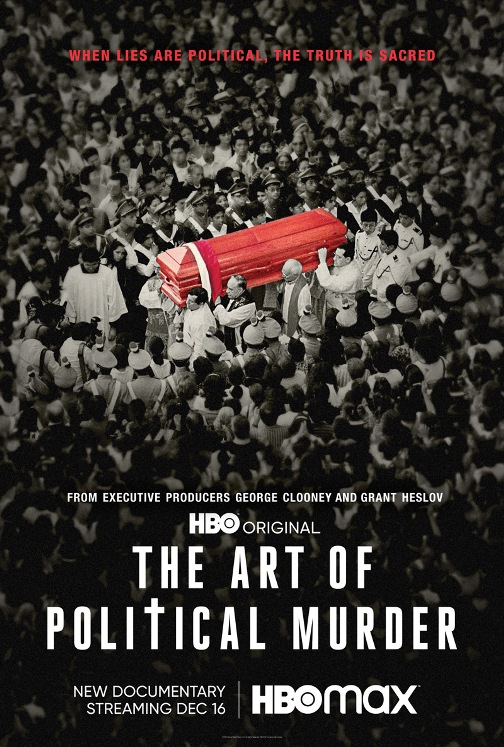
It’s about a Guatemalan priest and human rights advocate, Juan José Gerardi Conedera, who was murdered in 1998, two days after he announced the release of a report on abuses during that country’s civil war that implicated the government in various atrocities. The film works through the investigation and ultimate conviction of several perpetrators (army officers and a fellow priest), although it stops before diving into why they did it or if someone higher up the authorial chain ordered them to do it. The film tries to play like a whodunit, but it wastes time on alternate theories that don’t pan out, almost like it needs to delay the inevitable conclusion. Recommended for shedding light on an incident I wasn’t familiar with, but could have been better.
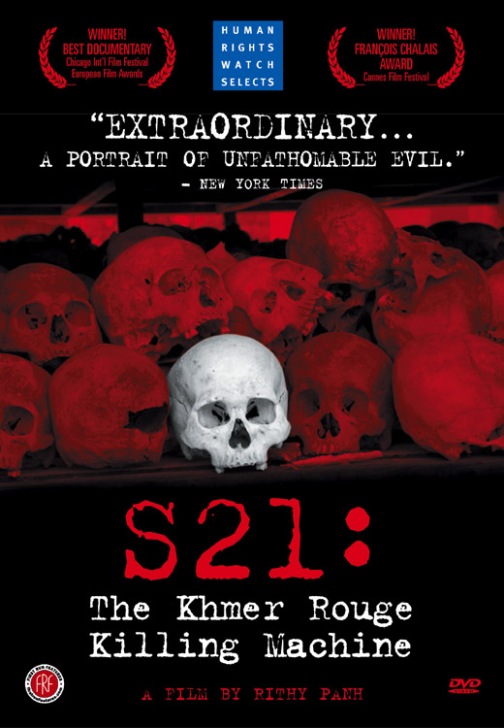
From Guatemala we next travelled to Cambodia. When the wife and I honeymooned in Cambodia we stopped for a day or two in Phnom Penh between stints exploring ruins around Ankor Wat and some beach days at Kep. That gave us time to experience the Tuol Sleng Genocide Museum, as well as the nearby Cheung Ek “killing fields.” It was a thoroughly heart wrenching experience. At Tuol Sleng we met one of the few survivors of the prison/torture facility the Khmer Rouge ran there, which it called S-21.
Low budget (it was shot on video, I’m pretty sure), but harrowing and powerful, this doc brings those two survivors together at Tuol Sleng with a host of men who worked there for the Khmer Rouge – guards, torturers, drivers. A large part of the doc is given over to these men explaining what they did at Tuol Sleng and, in some cases, pantomiming their crimes and daily routines. What’s most amazing, to 21st century ears, is that while one of these men voices the expected “just following orders” defense, they don’t make any attempt to euphemize what they did. The word “torture” is used repeatedly, rather than, say “enhanced interrogation techniques” (the Khmer Rouge waterboarded, too!). They go to Cheung Ek and cold describe mass murder. The limitation of a doc like this is there’s very little understanding of what made people do this to one another, but on its own terms it’s very worth watching.
From the 1970s in Southeast Asia we moved to something influenced by what was happening in that region at the same time, The Baader Meinhoff Complex.
??????????
This German film briskly covers the rise and fall of the first iteration of the Red Army Faction (sometimes known as the Baader Meinhoff Gang, after two of its leaders) from about 1968 to 1978. An outgrowth of the West German student protest movement, the RAF conducted a series of bank robberies, assassinations, and bombings in hopes of sparking a Marxist revolution. What was really interesting was how much motivation came from American activities in Vietnam and having military bases in West Germany. Indeed, some of the group’s bombings targeted American military installations, killing a handful of American soldiers.
There are issues that resonate with the modern world throughout the film. It begins with a demonstration by students against the visiting Shah of Iran. Once he and his wife leave the scene, the protestors are attacked by Iranian supporters, while West German police standby (they later join in, beating protestors and, in one case, shooting and killing one). It’s impossible not to watch that now and think of the police response (or lack thereof ) to various protests (and worse) in the US over the past few years. That the main RAF members wind up in solitary confinement pending their trial echoes in debates of how often that’s used in our modern penal system.
That said, the most interesting facet of the film is Horst Herold, the head of the West German police, played in a clever bit of casting by Bruno Ganz, the Hitler of Downfall fame. On the one hand, Herold does what you’d expect of a police chief chasing a band of murderous criminals and pulls out all the stops to catch them – at one point, he puts every police officer in West Germany on the street on a single say performing checkpoints, patdowns, and searches. Yet, he also recognizes that to combat terrorists you need to understand their motivations, which usually stem from legitimate concerns. That his more enlightened thoughts don’t carry the day point out a fundamental irony of the whole thing – in violently reacting to what it perceived as the West German police state, the RAF gave the state the justification it needed to really crackdown.
The film’s major problem is that it just has too much ground to cover. Intent on cramming as much action in as possible, it doesn’t spend enough time with some of the ancillary characters who drop in for an operation then disappear. It also doesn’t provide any idea of what happened to the RAF after its founding members died in prison. Still, a good watch and highly recommended.
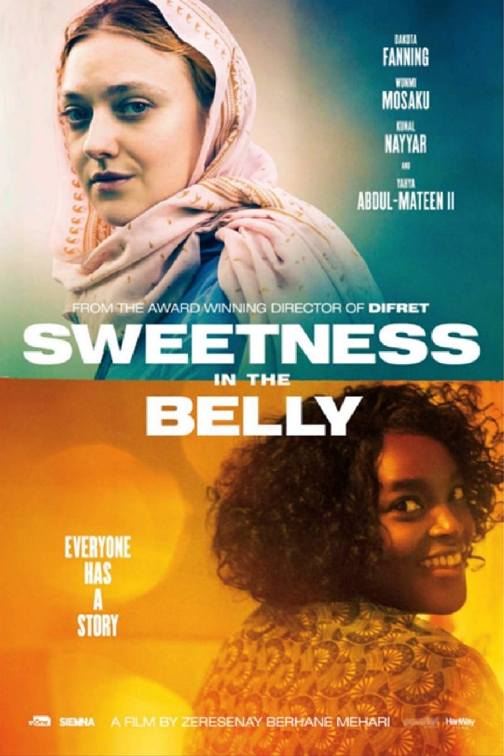
I wish I could say the same about our sojourn in Ethiopia and London, Sweetness In the Belly.
Based on the novel of the same name, this tells the story of a British girl who is abandoned at a Sufi shrine in Morocco by her parents (who were probably killed over some kind of drug debt). She becomes devout, goes to Ethiopia just as the civil war there starts, and winds up a refugee resettling in London. There are issues of representation here – the story of African refugees told through the eyes of a white British woman – but the film’s biggest sin it that it’s just not very compelling. Lily, the main character, is a complete bore whose attractiveness to the two doctors of color she comes across (one in Ethiopia, the other in London) is completely inexplicable. The film fares better when it focuses on Lily’s bonding with another refugee in London, but that only goes so far. Not recommended.
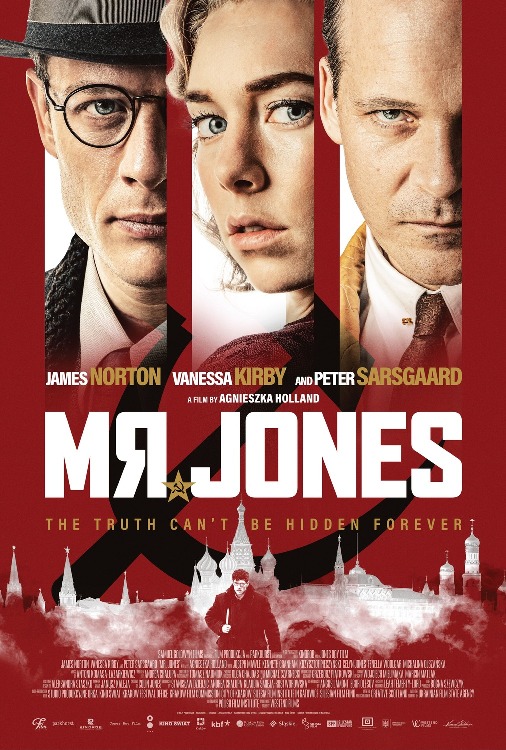
Our final stop was the Soviet Union, via England and Wales, for Mr. Jones.
The title character is Gareth Jones, a Welsh journalist who, in the early 1930s, was also an advisor to British Prime Minister David Lloyd-George. After scoring an interview with Hitler (the result of which is alarm that wasn’t fully heeded), Jones wanted to do the same with Stalin. Cut loose from the government due to budget cuts (it was the Great Depression, after all), he makes it to Moscow. He doesn’t get to talk to Stalin, but the murder of another journalist (allegedly during a robbery) and the fact that reporters are being restricted to Moscow, make him curious. He manages to sneak to Ukraine where he bears firsthand witness to the Holodomor, the man-made famine that killed millions of people and may (depending on who you ask) been an act of genocide. The Soviets had been covering the whole thing up until Jones’ reportage came out.
The film keeps its point of view close on Jones, which is effective for the most part, but it robs the Holodomor of any real context. We see the horrors of it – even if (according to his family) the real Jones didn’t experience all of them (such as cannibalism), as he does in the film – but don’t get more than a few passing mentions about how and why it happened. There’s also a frame story with Orwell writing Animal Farm and it just doesn’t work. I get it – Orwell’s fable is a takedown of Stalinism – but it seems like it’s just stuck on to Jones’ story, particularly given that there’s a scene where the two meet and talk about what they’re writing! Flawed, but ultimately worth a watch. So, there we are. This weekend, I’m thinking some mindless comedies to balance things out.
If there’s one characteristic of progressive rock that stands out above the others it’s song length. From the get go, bands weren’t afraid to push the envelope well beyond your typical three-minute rock/pop song. “Epic” became a kind of watchword for prog (even though it’s clearly not required), to the extent that side-long epics (or even beyond!) became common place.
I love me some epics, but I’ve found over the years that the real sweet spot for prog seems to be in what I’d call the “mini-epic” range – songs that took up most of an album side, but not the entire thing. Some of my favorite songs fall into this range, so I thought I’d highlight and praise some of these mini-epics.
First, a note on precisely what we’re talking about. For the “classic” era (mostly the 1970s), we’re talking about songs, as I said, that didn’t take up an entire side of an album. For the “modern” era (everything else), I’m talking about songs of about the same stature, so between 10 and 15 minutes. Long enough to do lots of things, but short enough for the end-of-the-side palate cleanser to come after.
With that said, here’s ten of my favorites, five “classics” and six more “modern” ones (‘cause I couldn’t decide which one to sacrifice).
“The Grand Wazoo” by Frank Zappa, from The Grand Wazoo (1972)
Zappa wasn’t know for epics (he tended to string together shorter songs that all segued together on a side), but his two “big band” albums had a few. The title track from The Grand Wazoo is my favorite of the lot (aside from the first 90 seconds or so of “Big Swifty”). Love the horns, love the slinky synth solo.
“And You and I” by Yes, from Close to the Edge (1972)
This barely passes the 10-minute mark (the live version is a bit quicker and doesn’t), but it still fits the bill, packing in so much, from Howe’s harmonics in the opening through Wakeman’s Minimoog solos, Anderson’s lilting vocal, and the supreme tightness of the Squire/Bruford rhythm section. Yes often went bigger, but rarely better.
“Cinema Show” by Genesis, from Selling England by the Pound (1973)
Quite possibly my favorite hunk of Genesis ever, particularly the long instrumental second half. The vocal first part, with typically obscure mythological lyrics, is great, too, but the lengthy keyboard solo in the second half really sells it. Notably, the instrumental section is just the three piece – Banks, Collins, and Rutherford. A sign of things to come.
That said, the live version from Seconds Out is heads and shoulder better than the studio version.
“Starless” by King Crimson, from Red (1974)
King Crimson has covered so much stylistic ground that it’s hard to pick one favorite track, but if I was forced to pick one favorite Crim track, this would be it. Somewhat like “Cinema Show” it’s got a vocal intro followed by a lengthy instrumental coda, one that builds layers slowly until it finally explodes in aural widescreen. Love the Mellotron all over it, too.
“Squarer for Maud” by National Health, from Of Queues and Cures (1978)
National Health are my favorite of the bands that emerged from the “Canterbury scene,” mixing a loose, jazzy style of prog with lyrics that were often absurd or completely baffling. The only words here are a spoken-word musing on the word “luminous,” which leads into the lengthy instrumental coda. Are you noticing a theme here?
“Go the Way You Go” by Spock’s Beard, from The Light (1995)
A milestone for me, as it was the first bit of music I listened to over the Internet and the first album I bought over the Web. The listening was of a 30-second clip that (the guitar breakdown about halfway through) took gods know how long to download over dialup and the actual purchase only came after a phone call with guitarist Al Morse (he sang a chorus of “Country Roads” when he found out I was in WV), but that’s what the early days were like, kids!
“Russia On Ice” by Porcupine Tree, from Lightbulb Sun (2000)
Steven Wilson has always been great at playing with dynamics and mood. He uses both to maximum effect here, with the sluggish, barely there verses giving way to the lush, explosive choruses. Not my favorite of his work, but a great tune nonetheless.
“The Seventh House” by IQ, from The Seventh House (2000)
Even clunker albums have gems. The title track to The Seventh House stands heads and shoulders above the rest of what is a pretty weak IQ effort. The story of two WWI survivors coming to grips with their memories, it’s cinematic and emotional. I wish I understood what the whole “houses one through six” thing was about.
“The Invisible Man” by Marillion, from Marbles (2004)
Just brilliant from start to finish. Atmospheric, brooding, and creepy song that manages to actually tell a tale worth telling. I think they’ve done this track every time I’ve seen them live since Marbles came out and I never get tired of it.
“The Island” by The Decemberists, from The Crane Wife (2006)
You don’t have to be hard-core proggers to dabble in the epic. On this album and the next The Decemberists really leaned into their prog influences, though – this even has a keyboard solo that’s very Keith Emmersony! Still, it works best because Colin Melloy works such great narratives in his songs and here, with a little more room to roam, makes full use of it.
“Microdeath Softstar” by Phideaux, from Doomsday Afternoon (2007)
I really wish an album about environmental disaster and mankind’s inability to do anything about it wasn’t becoming more and more relevant with each passing year. At least the music’s good, full of Phideaux’s trademark churn (I can’t think of a better way to describe it) and lots of tasty playing. At least the end times will have a good soundtrack.
“Sell out!” Is there any worse insult to hurl at a creative person?
After all, writing or making music or whatever is supposed to come from the soul, right, and nothing good can come of creating art just to profit off of it. But what does it really mean to sell out and are most examples of “selling out” just really people getting lucky while doing something different?
I started thinking about this a while back when I stumbled across a list of “7 rock bands that were open about being sellouts.” The article doesn’t fulfill its promise – none of the artists listed are shown to have been “open” about selling out and, in at least one example with which I’m very familiar, there was no selling out, unless “selling out” is defined as only becoming hugely successful after years of not being so.
That example is Genesis.
Formed in the late 1960s at the English “public” school Charterhouse, Genesis was one of the leading lights of the progressive rock scene in the 1970s. Even after vocalist Peter Gabriel departed, they made two great prog albums. After guitarist Steve Hackett left in 1977, the band soldiered on as a trio and their sound started to change to something more streamlined and modern. It was that lineup that became absolutely huge in the 1980s, to the point where they were damned near everywhere.
This, naturally, led to some fans of the band’s 70s style walking away huffing about selling out. As the original article put it, after Gabriel left:
Phil Collins took over the vocal duties and over the course of a couple of subsequent Genesis albums changed the style of the band to a much more commercially viable one. He didn’t hide the fact that monetary gains influenced the decision to stray away from long progressive compositions and into simpler pop-rock arrangements.
There’s no link or reference for the “monetary gains influenced to decision to stray away from long progressive compositions” and most interviews I’ve seen suggest otherwise. For one thing, this narrative that Collins drove the stylistic change overlooks the contributions of keyboardist Tony Banks and guitarist/bassist Mike Rutherford. Most of the band’s big 80s hits were co-written by all three of them and there’s no evidence to suggest Banks and Rutherford were pulled in that direction by Collins against their will. Their solo projects show serious pop leanings and, arguably, the band’s first attempts at something more mainstream were written by Rutherford (“Your Own Special Way” from Wind and Wuthering) or all three of them (“Follow You, Follow Me”). Point is – the entire band was in on it.
And was this really selling out? “Selling out” implies some calculation on the part of the artist, of doing something for commercial gain that they wouldn’t otherwise do. Is that what happened with Genesis? It doesn’t look that way. By all indications, the band’s direction shifted because they wanted to do something different. They’d done all they wanted in the prog world, so why not explore some different areas? Banks in one interview explained that they’d “always did long and short songs, we just got better at the short ones” (he also denies that Collins’ solo success had an impact on the band’s music direction). At any rate, there doesn’t appear to be good evidence that the band stuck their collective fingers in the wind and said, “right, let’s go make some cash.” They did what they wanted to and it worked.
Yes is also on the list of “sellouts,” which makes even less sense, in context. Indeed, 90125 and the big single off of it, “Owner of a Lonely Heart,” sound radically different than Yes during its prog heyday, but there’s no indication that was done for coldly calculated economic reasons. The song wasn’t even a Yes song to start, as it was written by Trevor Rabin on his own, then brought into a band that wasn’t intended to be Yes. Hell, according this write up, Rabin was told it was “too weird to be a hit in America” – a hell of a way to sell out!
It appears to me that “sell out” is more an insult than an accurate description. It’s the kind of thing “real” fans scream when their favorite band changes course in a way they don’t like, a means of coping, I guess.
Which, you know, is okay. I can find great stuff throughout the Genesis catalog, but if you made me pick three of their albums to listen to for the rest of my life none of the trio stuff would make the cut. Others would choose differently, including my former boss (and Patrick Bateman), which is why music and art is so much fun. But there’s a difference between changing directions and making art that turns out to be popular and selling “to those who want buy.”
I’m not saying people don’t sell out, but I suspect it happens mostly in a losing effort. Big Generator looks much more like an attempt to cash in on the success of 90125 and “Owner,” but it wasn’t as huge so it kind of gets overlooked. Or it happens because of label pressures more than an artist’s desires (see Marillion’s Holidays In Eden). Mostly I think it’s a lazy epithet. The writer of that piece on “Owner,” even recognizing it was “too weird” to be a hit, still labels it selling out (even though he praises the song itself).
Besides, what’s wrong with shipping some units? Pop stars have kids (and ex wives) that need fed, too.