Weekly Read: Head On

One of the cool things about writing speculative fiction is building a world out of a neat “what if?” idea and playing around in it. John Scalzi did that with Lock In. Set in a world where a chunk of the population has succumb to Haden’s Syndrome – a disease that leaves them “locked in” their body, unable to move but with functional brains – Lock In used a fairly standard buddy cop storyline to play out the ramifications. The story was secondary to learning how the main character, FBI agent (and intentionally ungendered) Chris Shane, and their fellow Hadens interacted with each other and the rest of the world. I couldn’t even tell you what the central mystery was and still really liked it.

Head On is a sequel to Lock In, but it’s dubbed a “standalone followup.” Having read Lock In certainly helps understand the background of the story, but newbies should be able to jump right in, and maybe they should. With my feet firmly on the ground in the world of Head On right from the jump the story came to the fore and, sadly, it wasn’t that interesting.

The milieu for it is, though. Head On revolves around an ultraviolent sport called hilketa (SP?), in which specially crafted versions of the threeps (aka “3P0” – get it?) batter each other with the objective of ripping a particular player’s head off and using it to score a goal. It’s like rugby or gridiron football without any of the problems with head injuries, since there aren’t actual humans on the field playing the game.

Nonetheless, when one hilketa player dies during a preseason game, it swings Shane and his (non-Haden) partner into action to untangle a convoluted web of deceit and murder. Diving into that mystery allows Scalzi to explore some interesting things. The most mundane may be the impact of big money and expansion in sports, but there’s also more world-specific questions like what “performance enhancing” drugs mean for people who play a sport without their body. Most compelling is how all this is impacted by the United States government’s withdrawal of financial support for Hadens (helped, it’s more than implied, by corporations pushing the edges of the law too far). Also, there’s a cat with an interesting bauble on its collar.

MiBCat

Sort of like this one, but a different color. And friendlier. And without a galaxy ’round its neck. But otherwise . . .

But I find these background things, or sideways highlights of the Hadens world, much more interesting than the actual detective story. Shane and their partner are your typical fictional cops – always pushing boundaries, but always getting the bad person, so it’s OK. This time, particularly, that none of the several lawyers in the book are even decent people, much less competent. I was particularly disappointed that Scalzi reuses the stereotype of the public defender as an out of their depth idiot, rather than a dedicated, smart, hard working advocate stuck in a system that criminal underfunds them. To his credit, the actual solution to the mystery of the hilketa player’s death is sadly plausible for 21st Century America.

Oddly, part of what I think kept me from fully engaging with Head On is that it’s so short. The version I listened to (in keeping with the ungendered main character, there are separate audiobook versions read by Will Wheaton and Amber Benson – I listened to Wheaton’s) was barely seven-and-a-half hours long. The book moves at a brisk pace – the trademark Scalzi smart assess are present in all their glory (a good thing!) – and doesn’t really make room for anything that doesn’t drive the plot along. The decision to “lock in” the point of view on Chris, I think, limits things a bit too much. I think if I’d known more about the other people in this world I’d have cared more about the mystery in which they were wrapped up.

If that sounds negative, I don’t really mean it to be. Head On is a quick, interesting, fun read, but I don’t think it does much to improve on its predecessor. My hope is that in a future book Scalzi breaks from the crime story mold and tells some other stories about Hadens. He could bring Shane along for the ride, although it would probably help if they were knocked down a few pegs (in addition to being an FBI agent Shane is the son of a fabulously wealthy ex-NBA superstar – he’s got power and money, in other words). Regardless, I’ll probably check that one out, too.

HeadOnCover

Author Interview – Eric Douglas

For this interview we go under the sea with diver and author Eric Douglas.

Who are you? Where are you? What kind of stuff do you write?

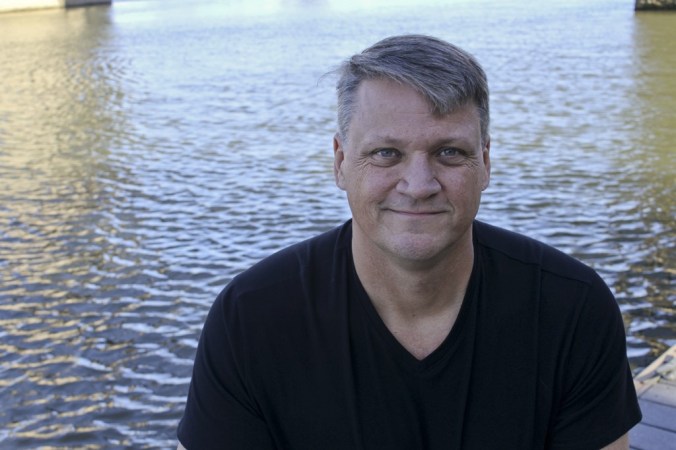
My name is Eric Douglas. I was born and raised in Cross Lanes, West Virginia. Attended Nitro High School and got a degree in Journalism from Marshall University. As a newspaper reporter, I learned I was pretty good at telling human interest stories. Fiction didn’t come along until much later, though. In 1998, I got a job working in the recreational scuba diving industry, editing a magazine and working as a technical writer in California. That led to another position that gave me the opportunity to travel all over the world. Much of that travel became the inspiration for my books. I still write some nonfiction, but all of my fiction work has a scuba diving/ocean/environmental aspect. My main character in my series of novels is Mike Scott, a photojournalist who travels the world and gets involved in stories – many of which involve diving.

Were you a diver first who got involved in the industry, or was it a job that became a passion?

I was first certified to dive in 1990, just after I graduated from Marshall. I didn’t go to work full-time in the industry until 1998. One of my original motivators for learning to dive, aside from the legacy of Jacques Cousteau, was I thought it would add something interesting to my resume. My dream job then, and now, is to work for National Geographic. I thought being a diver might make me more interesting to them. Still working on that one.  My first job in the dive industry was as a technical writer and editor. So, my writing fueled my opening into diving as a profession.

Tell us about your most recent book, story, or other project.

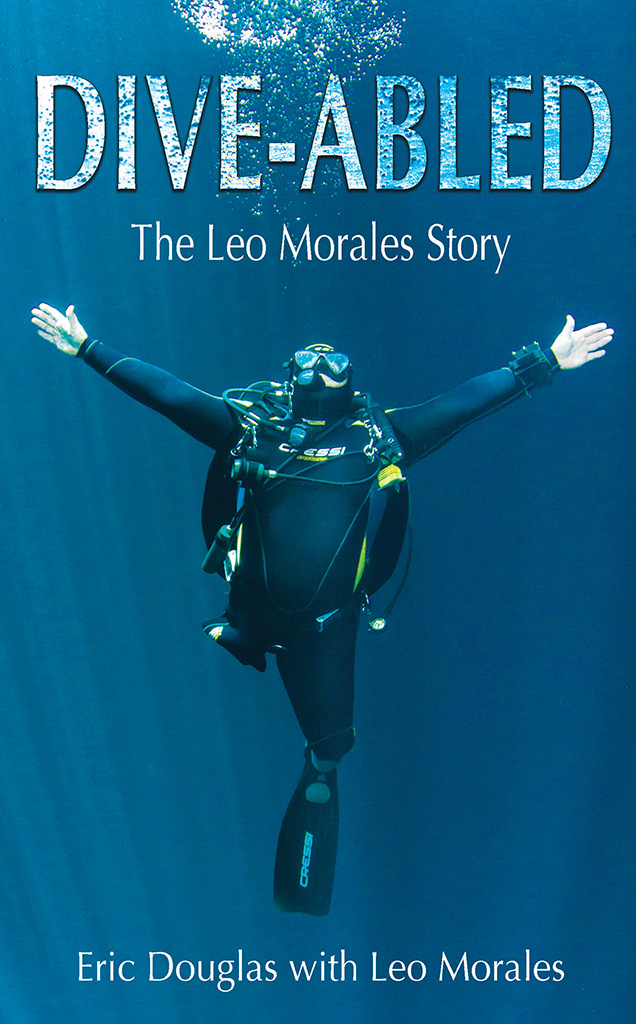
I published four books last year, but one came in November and the other in late December. The November book is called Dive-abled: The Leo Morales Story. It is a biography about a young man who lost his leg to cancer and then used diving to regain his life. He has set two world records as a disabled diver.

Dive-Abled-COVER-Final-web

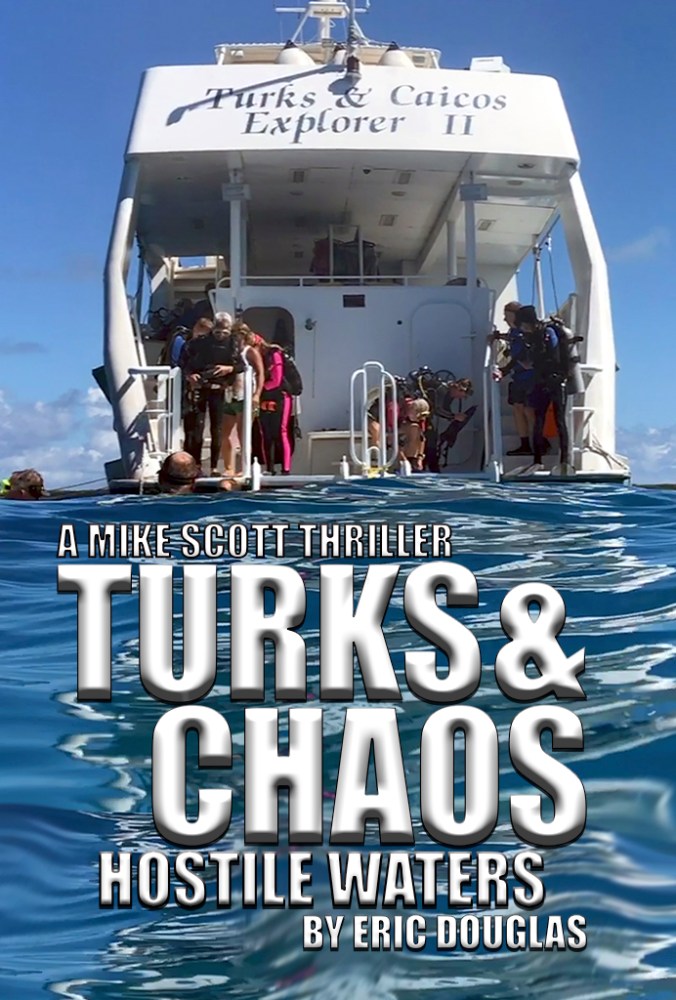
The December book is called Turks and Chaos: Hostile Waters. It is a novella in my long-standing series. It is set entirely onboard a liveaboard dive boat near the Turks and Caicos islands. For the last few years, I have been attempting to release a novel and a novella in that series.

Dive Pic

In what genre do you primarily write? Why did you choose that one?

Most of my books are thrillers. I’ve always loved action stories with real heroes. I cut my teeth on James Bond movies and loved the Jack Ryan/Tom Clancy books as a teen/20-something. I’m a big fan of Clive Cussler as well and get a lot of comparisons to his Dirk Pitt books.

Tell us briefly about your writing process, from once you’ve got an idea down to having a finished product ready for publication.

I will often start with a dry erase board by my desk. I will plot out the basic story there. Not a true outline, but the major plot point. I’ll stare at that for a week or so to make sure I am comfortable with it and to see if I come up with anything else. From there, I use Scrivener for my first couple drafts. I set up chapters with major plot points and then start writing.  I am often surprised where the story goes. Once I get a complete draft down, I will export it to my tablet and read it/mark it up there. From there, second round of revisions. After that, I usually send it to a group of Beta readers and editors. In all, I got through five or six rounds of revisions before it is done. The last couple rounds, once I get input from others, is all done in Word.

Who is the favorite character you’ve created? Why?

My main character is a tribute to a friend. One of my best friends from high school and college is Mike Burnsworth. He died from cancer my senior year at Marshall. His middle name was Scott, so that’s where Mike Scott comes from. I do it in memory of him.

What’s the weirdest subject you’ve had to research as a writer that you never would have otherwise?

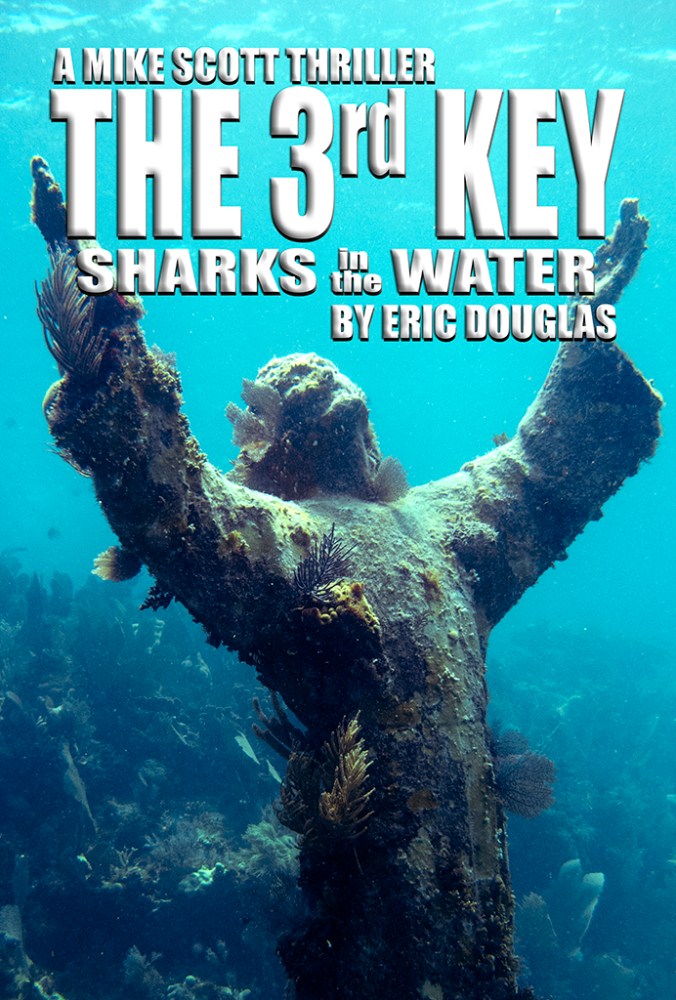
For my last full-length novel, I sent a note to a friend who is a Ph.D. chemist. I asked him about a poison that could kill by aerosol and was available in the 60s. He came back with “Why would I know something like that?” Once I told him it was for a book, he understood and we concluded that Sarin gas had just been created a couple years before. That shows up in The 3rd Key.

Keys cover 2017 V.1 web

What’s the one thing you’ve learned, the hard way, as a writer that you’d share to help others avoid?

It is a grind. I do it because I love it, but writing is a lot of work. Especially about 2/3rds of the way through a project. That is when you really hate it and want to quit. That’s probably why so many books go unfinished.

When you get to that point where it seems like things are falling apart and it’s not worth finishing, how do you push through? Is there a book that was particularly difficult in that respect that turned out really well?

I’ve never been a big believer in writer’s block, but there are definitely times I get stuck. When that happens, I always turn aside to a new project. I was having a lot of trouble getting started on my latest novel. I just couldn’t find the mojo. So, I gave myself a new assignment. I ended up writing a short story set in Charleston in 1855. It was something  completely different and totally removed from anything I had  done in a while. As a further challenge, I wrote the first  draft entirely on a tablet instead of on my computer. That did  the trick. I am now cranking out the new novel and the block is gone.

If you won $1 million (tax free, to keep the numbers round and juicy), how would it change your writing life?

I would travel more and do more “location research.” I need to get back to the islands. Its been a couple years and I have the itch.

Author

What’s the last great book you read or new author you discovered?

I’ve recently read a couple books by Wayne Stinnett. He writes in my genre and I enjoy them, although I tend to break out of reader mode with him and think “I wouldn’t have written it like that.” Which is why I don’t read a lot of people who write similar stories to mine. I love thrillers, but I try to avoid those with an ocean/diving theme. A favorite of mine as well is Huntington author Sheila Redling. I love her Dani Britton books and hope she releases another one soon. In fact, she agreed to do a cross-over with me and I used Dani in The 3rd Key.

What do you think your next project will be?

I just fired up Scrivener for the next full-length Mike Scott novel. The dry erase board stage was a couple weeks ago. I expect this one is going to involve Russian hackers, undersea mining and all sorts of intrigue. Hold on to your hats!

Is there an end in sight for Mike Scott? Or will his adventures go on so long as you keep getting good ideas of how to get him into trouble?

I’m working on the 10th Mike Scott story right now, not counting a couple short stories he is in. After this one, I plan to write a novel completely separate from Mike and diving. It’ll still be a thriller/mystery, but I want to branch out into something else. That said, I’m sure I will come back to Mike Scott afterward. Like with the short story, I think I need to refresh and stretch my wings a bit.

Or, Just Be a Fan of the Game

The old saw goes that things that matter little lead to the deepest, angriest arguments. If nothing else, sports proves that over and over. Let’s be honest – unless you’re actually on a professional team or work for the organization, whether one group of super wealthy athletes beat another on the field/court/pitch/track doesn’t really change your life.

To be clear – I’m not shitting on sports in general. I’m a big sports fan, although my tastes tend to run more toward niche sports (hello soccer and non-NASCAR auto racing!) than the American big three. Does it give me a little thrill when DC United wins a game or my alma mater makes a deep run in the NCAA tournament? Of course! Does it ruin my day if they don’t? Of course not! Did I mention DC United? If their success was really tied to my mental health I’d offed myself years ago.

One of the things that most riles up sports fan – even more than the evergreen battle of artificial turf versus natural grass – is when people who haven’t “paid their dues” with a particular team jump on the bandwagon when they do well. They’re usually called “fair weather” fans, since they flee the team when they have a downturn. It’s the sports equivalent of a person with loose sexual morals – you’ll root for just about anyone, won’t you?

FairWeather2

Over at The Atlantic, Derek Thompson argues in favor of this kind of sports libidinous. He’s a sports slut and is proud of it:

But I’m done apologizing. In fact, I’m pretty sure that I’m right and everybody else is wrong. Rooting for winners is more than acceptable—it’s commendable. Fans shouldn’t put up with awfully managed teams for decades just because their parents liked those teams, as if sports were governed by the same rules and customs as medieval inheritance. Fans should feel free to shop for teams the way they do for any other product.

What I’m proposing here is a theory of fluid fandom that would encourage, as opposed to stigmatize, promiscuous sports allegiances. By permanently anchoring themselves to teams from their hometown or even an adopted town, sports fans consign themselves to needless misery. They also distort the marketplace by sending a signal to team owners that winning is orthogonal to fans’ long-term interests. Fluid fandom, I submit, is the emotionally, civically, and maybe even morally superior way to consume sports.

I kind of like that approach and, if done openly, I don’t think most sports fans would have a real problem with it. I think most fans have problems with bandwagon jumpers not because they’re there, but because they sometimes imply that they’re enjoying a team’s success as much as someone who’s suffered through years of defeat and disaster. Honesty can go a long way.

Along that like I’d like to lay out a third course, one that I frequently follow, particular when it comes to racing. It’s simple – be a fan of the sport, not a fan of a particular team. In other words, don’t turn yourself into a Cavs fan as a reason to watch the NBA Playoffs; watch the playoffs because you’re a fan of basketball (or the NBA’s version of it, at least) itself.

I’ve done that with racing for years. I’ve never really had a favorite driver and, beyond a nominal attachment to Ferrari in Formula 1, never really had a favorite team. I tend to root for underdogs, but that naturally changes from year to year (and even race to race). I’d like to see Haas do well, since it’s been so long since there was an American presence in F1, but my life doesn’t rise and fall on their exploits. For everything else – Indy cars, sports cars, touring cars – I just want to see good racing.

Same goes for soccer, largely. I do have favorites – DC United for the US, Leeds United for the rest of the world (like literary rights) – and, of course, I pull for the United States national teams (men’s, women’s, and youth). But that only takes in a tiny fraction of the amount of soccer out there. Truth is, I’ll watch damned near any soccer game I can find. Do I care who wins the Champions’ League semi between Roma and Liverpool? Not really, but I’m damned sure going to watch it. Same with this summer’s World Cup, since, sadly, there’s no American rooting interest. Even if not rooting for either team might make law enforcement suspicious. See, US v. Manzo-Jurado, 547 F.3d 928 (9th Cir. 2006)(among the factors cited by cops to justify stop of defendant was that he and his friend were at a high school football game but were not rooting for either team).

What I’d say to Thompson, then, is that you’re not doing anything wrong, but you could do it better. Unless you have a genuine interest in a particular team or player, just give yourself over to the pleasure of the game. It’s what you’re most interested in, anyway. And you won’t piss off those losers for whom this stuff is life and death.

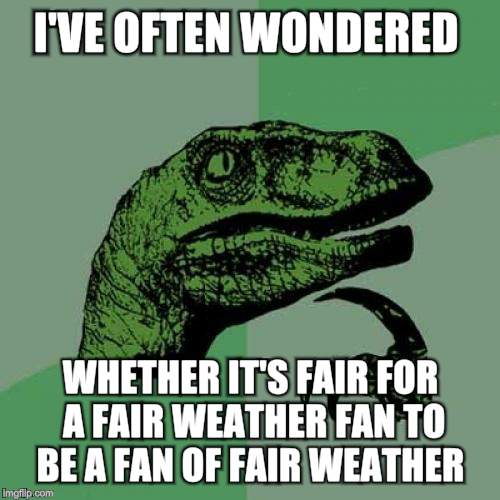
Besides, it frees your mind to ponder other things:

FairWeather1

Author Interview – S.G. Redling

This time we head to Huntington, West Virginia to talk to the genre hopping S.G. Redling.

Who are you? Where are you? What kind of stuff do you write?

I’m Sheila Redling, writing as S.G. Redling. I live in my hometown, Huntington WV. I write all kinds of stuff but I make my living writing thrillers, mysteries, sci-fi, and urban fantasy.

Tell us about your most recent book, story, or other project.

I’m making my first foray into self-publishing this spring. Wow, that is a LOT  of work. I’m putting out the next two books in urban fantasy Nahan series. Book One was Ourselves; Book Two is The Reaches; Book Three is Empire. Book Four is just a twinkle in my eye.

Reaches

What made you decide to self publish your latest books? What one thing about it surprised you in terms of being more work that you expected?

I’ve been sitting on Books 2 and 3 of the Nahan series for some time. It’s a strange series (like most of the stuff I write.) The relationship with the original publisher didn’t quite go the way I liked so we parted ways after Book 1. I decided that I missed the characters and I might as well put them out into the world. As for the difficulty, honestly, I was surprised at how easy it is to get a book online. I was expecting to be exasperated at every turn but I found a great cover designer and formatter. KDP and Create Space made the launch incredibly easy. Now SELLING the books may be a different matter.

In what genre do you primarily write? Why did you choose that one?

Genre definition has been a big problem for me. I like weird, not-entirely reality-based thrillers. That’s what I like to read, that’s what I like to write. However, most of my thrillers are traditional and reality based. As for why I chose what I chose, I wish I knew. The stories choose me.

Tell us briefly about your writing process, from once you’ve got an idea down to having a finished product ready for publication.

Man, I wish I could. I have completed over a dozen full-length manuscripts, seven of them sold to publishers, three are in the pipe for release on my own time, and the rest will probably never see the light of day. Every single time I start a book, I feel like I’m starting at the very beginning of my career and skill set. Every book is different; every story has new and aggravating challenges. It often feels like I don’t even know how to type.

The consistent parts of my process are showing up, making notes, daydreaming a lot during long walks, and easing myself into a writing schedule. I base my schedule on word count – daily, weekly, monthly. At the beginning of a book, I’ll keep the count low – 500 words a day X 5 days a week. Usually that’s enough to get a story to catch on fire. From there, I average 2500 words a day, seven days a week. I write quickly and forward, with only the slightest edits as I go. Once the manuscript is done, I read through, make changes, and then share it with some trusted readers. I enjoy rewrites; I feel they are the do-overs we don’t get anywhere else in our lives.

Are there stories that have chosen you that have been more difficult to write than others? What made them difficult?

(Sobs into hands) Uh, yeah. I have a thriller I’ve been working on for months that is going to be the death of me. I love puzzlers and twisty stories and unfortunately am writing one that is outwitting me at every turn. While it’s terrifying and frustrating and often demoralizing, I think it’s important to always write at the very edge of your ability level. You should always be writing a book that you’re not sure you can handle. It makes you a better writer.

Who is the favorite character you’ve created? Why?

That’s a tough question. I do really love my characters, with all their triggers and questionable hygiene. At the risk of sounding precious, they have broken my  heart more than once. The one I’m fondest of as a human being is Loul Pell, the comic book nerd from the planet Didet in Damocles. Of all the characters who have walked in my head, he had the largest heart and the greatest faith in humanity. He is the only character I’ve ever written that I miss the way one misses a dear friend.

What’s the weirdest subject you’ve had to research as a writer that you never would have otherwise?

You should probably ask my sister, Monica, this question. As a nurse, she is my go-to for all questions about medical issues. (How long can you hide a body in a wall before it smells? How quickly does an adult male bleed out?” How much pressure would it take to nail a foot to the floor?)

But my favorite research adventure was the discovery of a highly flammable epoxy. My friend (and fellow WV writer) Lynne Squires recommended the epoxy when I knocked my side mirror off. When I looked at the box, the directions were basically just “Squirt and stick.” The rest of the packaging was covered in tiny print with the pages of warnings of flammability. I had to know just how flammable. So I sat in my driveway with a steel bowl, a box of matches, paper and cardboard, a bucket of dirt, a bucket of water, and a fire extinguisher. Long story short – the epoxy was insanely flammable and proceeded to play an important role in the finale of my latest thriller, At Risk. My neighbor deserves a medal for all the foolishness she puts up with sharing a fence with me.

JD – This is definitely the “winner” so far of this question!

What’s the one thing you’ve learned, the hard way, as a writer that you’d share to help others avoid?

Writing is too much work to do for anyone but yourself. Be careful to the point of paranoia about whom you let in your head. Trust your gut. Write what you love and remember that even when you hate it, you love writing. If you don’t love it, don’t do it.

Redling 1a

If you won $1 million (tax free, to keep the numbers round and juicy), how would it change your writing life?

I guess there’s only one way to find out. *watches for check in the mail*

Until then, I suppose it would greatly improve my technological landscape which is currently like an outtake from the original Mad Max.

Who am I kidding? It would all go to wine and cat food.

What’s the last great book you read or new author you discovered?

I recently asked the Facebook Hive Mind for recommendations for alien invasion stories and was not disappointed. One of the happiest takeaways for me was the discovery of Wil McIntosh, whose books Defenders and Faller were two big highlights of my reading list.

What do you think you’re next project will be?

Right now I’m focused on this new territory of self-publishing the next two Nahan books. I’m writing the next Dani Britton book and there has to be at least one more after that because I owe Eric Douglas a crossover with his Mike Scott character. I’ve got the first of a new mystery series waiting in the wings and most of a completely insane thriller finished. As it stands now, my immediate future holds gallons of coffee and wine, barrels of chocolate, miles to walk, and enough typing to break my shoulders. It’s a good plan.

Have you found it difficult to find an audience that will follow you from genre to genre?

Did my agent ask you to ask me that?

It has been challenging. One of my biggest setbacks is that I don’t effectively brand myself. At least not in an easily commercialized way. I think I have a type – mind-bending, usually violent, with complex female leads – but unfortunately there’s no section in the bookstore with that title. All I can hope is that readers will keep taking a chance on me, that I’ve earned their trust in delivering a quality story.

Keep up with S.G. at her Amazon author page and click here to find out more about The Reaches.

My Ten Albums

There’s been a thing going around Facebook for the past few weeks where, for ten days, people posted cover from a different album that made an impact on them and they’re still listening to. The whole point was to not explain the choices – but there’s too much blog fodder here to pass up. So here are my ten, in the order they went up – which is to say, pretty much randomly as pulled from my brain. I should point out these aren’t necessarily favorites or “best” albums by these artists, although they’re all pretty great (your mileage may vary, of course).

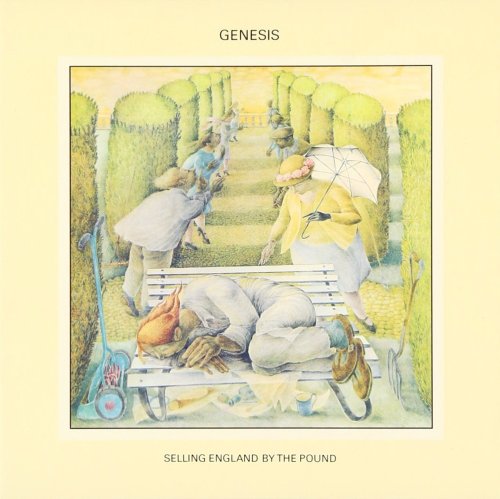
Genesis – Selling England By the Pound (1973)

 SEbtP

 I can’t say that this is the first Gabriel-era Genesis album I heard (my brother, Todd, had most, if not all, of them), but it is the one I first fell in love with. It was, to use an analogy I’ll come back to later, my gateway drug for progressive rock. Swelling mellotrons, soaring guitars, lyrics that were completely beyond comprehension to a grade schooler living in 1980s West Virginia – how could I resist?

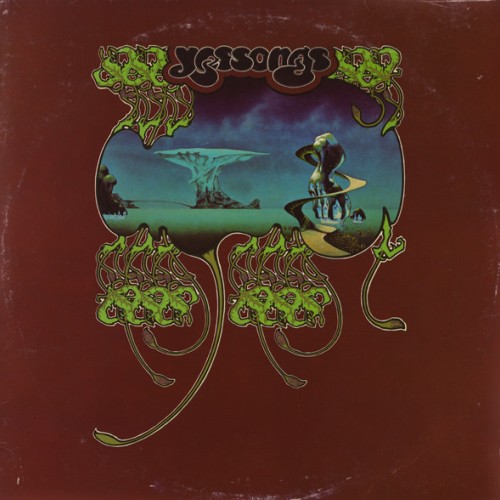
Yes – Yessongs (1973)

YesSongs

Growing up when I did my music delivery vehicle of choice was (and still is) the CD, but I was just old enough to catch the end of the (first) age of vinyl. I actually bought a few LPs, this being the one that stood out. Not only because it’s 3 albums full of Yes in its prime, but because of that amazing Roger Dean gatefold sleeve. Appreciating album art is one of the great lost joys of the modern streaming generation.

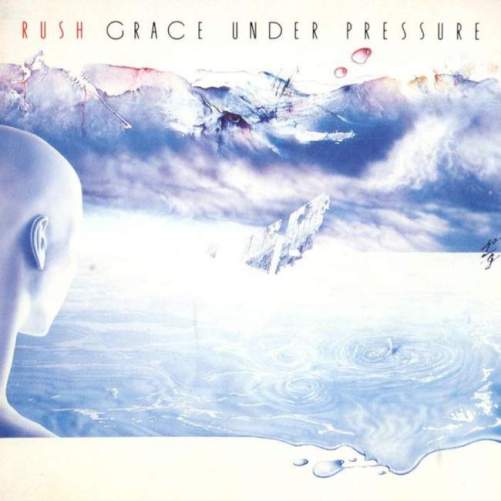
Rush – Grace Under Pressure (1984)

GUP

This definitely falls into the “not my favorite” category (although I like it just fine), but this album makes the list because it was the first “new” album by a favorite band I ever bought. On cassette, no less. Sitting down to digest any album that’s new to you is fun, but digging into a completely new one by a favorite artist is a real treat, particularly back in the pre-Internet days when you might have little idea of what it actually sounded like!

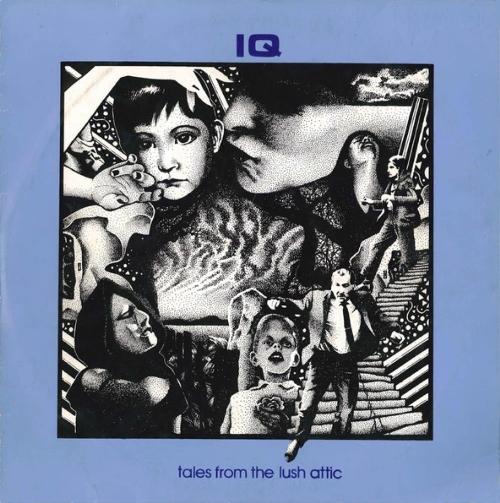
IQ – Tales From the Lush Attic (1983)

 Lush Attic

 It’s no shock to say that progressive rock is a niche genre, at least since the heydays of the mid 1970s. That means that finding albums for me has rarely been as simple as heading down to the record store and hunting for something interest. Mail order catalogs and web retailers are a must. This album makes the list because it was in the first order I ever made from a mail order catalog (along with Camel’s Mirage and Gentle Giant’s Octopus) – not even over the Internet! There are better IQ albums, but it’s a landmark for my exploration of prog. And the cover’s cool.

echolyn – as the world (1995)

AtW

Mail order aside, sometimes you stumble across something that seems interesting and you take a chance. When I found as the world in the bin at the mighty Discount Den in Morgantown back in my college days I knew, vaguely, that they were a prog band. And I saw that this album released on a major label and had a big suite in the middle of it, so I thought I’d give it a shot. Took it home and was hooked on this band from the first track (which is all vocal harmonies and strings). Sometimes you get lucky, so it’s worth playing the game now and then.

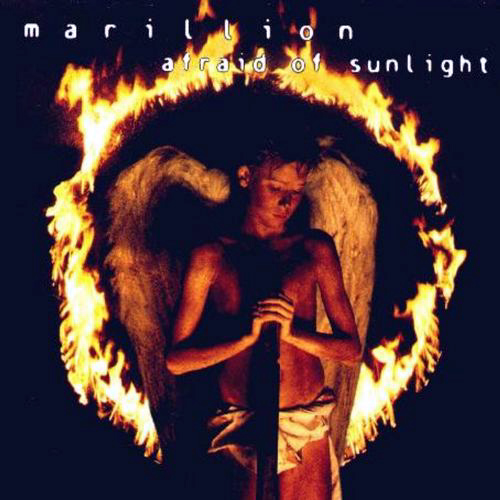
Marillion – Afraid of Sunlight (1995)

AoS

You’re rarely lucky enough to discover a favorite band when their brand new. Usually, you come in somewhere in the middle of things, where a band’s heady back catalog can make the prospect of new music from them both tantalizing and a little worrying. Will the new stuff measure up to the old? Afraid of Sunlight was my first “new” Marillion album and, at the time, I didn’t care for much of it. It’s since gone on to be one of my favorite Marillion albums (favorites period, really), but the experience of being uneasy with it to begin with it something I’ve repeated many times over the years.

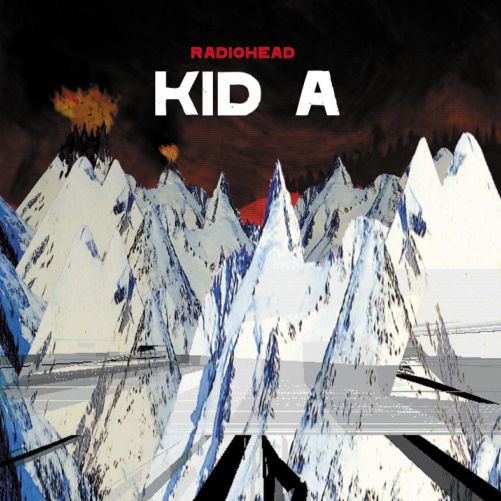
Radiohead – Kid A (2000)

KidA

I didn’t know I needed Kid A until I saw Radiohead perform “Idioteque” on Saturday Night Live. I’d come late to OK Computer and knew their new album wasn’t supposed to be anything like it, so I wasn’t all that interested. That performance changed my mind, in more ways than one. Not only did it cause me to buy the album, it caused me to open up an entirely different area of music to check out. Kid A was, for lack of a better word, my gateway drug to electronic music. I wouldn’t make the conscious choice to explore Kraftwerk or OMD or The Orb for another couple years, but this planted the seeds.

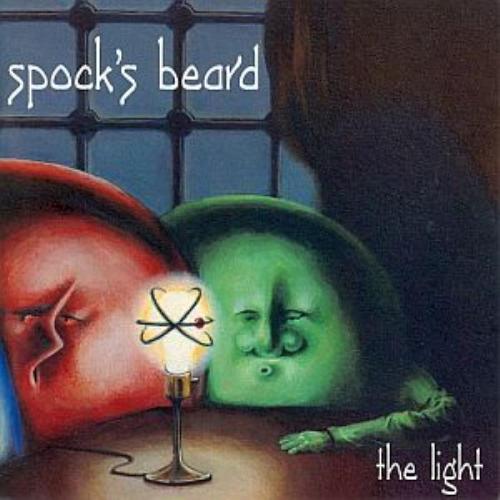
Spock’s Beard – The Light (1995)

TheLight

These days we take for granted the ability to sample music on the internet and buy with a press of a button. It was not always so. The Light was my first experience with internet commerce and it was a little rocky. I took an hour or so to download a few 30-second clips from songs (it was the guitar break in “Go the Way You Go” that sold me), then had to actually mail a check to California. It came back – twice – requiring a phone call from guitarist Alan Morse. When he found out I was at WVU he sang me a chorus of “Country Roads.” We got things straightened out and I became a Beard fan for life.

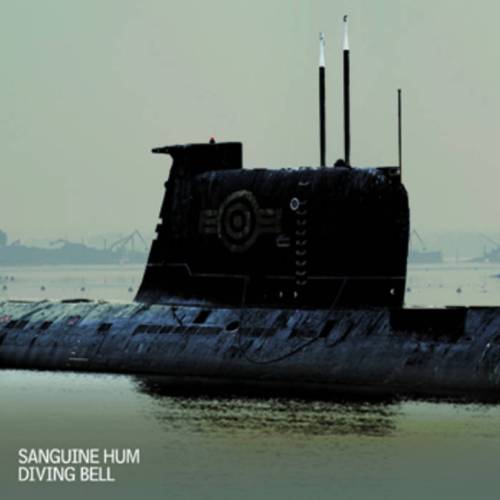
Sanguine Hum – Diving Bell (2010)

DivingBell

One of the great things about going to prog festivals is that I get exposed to lots of new bands. I’ve bought a lot of albums over the years because of that, but this one is special. Going into Sanguine Hum’s 2012 performance at ROSFest I knew nothing about them. I went in as cold as could be, completely ignorant. I didn’t just like what I heard – I was completely blown away. Ironically, I wound up getting this, the band’s only album at the time, from Amazon because the vendors had sold out and the band’s stash didn’t make it from the UK (I wound up snagging a couple EPs from the band’s prior incarnation, the wonderfully monikered Antique Seeking Nuns). Fresh, exciting, powerful new music is out there, even in the 2010s.

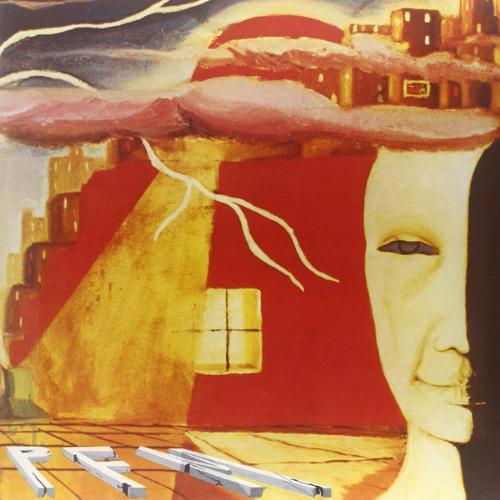
Premiata Forneria Marconi – Storia di un Minuto (1972)

Storia

Progressive rock is an outgrowth of a particular time in the UK, but it spread across the globe and resulted in some really rich regional scenes. Italy, in particular, was an early hotbed (Genesis and Van der Graff Generator both hit it big there first). This was the first album I got that was really “foreign,” without any English to be found, either in the lyrics or the liner notes (two times over – it’s a Japanese pressing!) and it convinced me that wasn’t going to be a stumbling block to discovering some wonderful music.

Why You Should Be Reading Saga

I didn’t grow up reading comic books. I can’t say why. They weren’t verboten in our house and their residence in the same ghetto as science fiction and fantasy, but for some reason I never really dove in. Maybe it was because I perceived comics as being about super heroes and they never interested me much. It wasn’t until I got to college and my roommate corrupted me with some Batman did I get a chance to read them.

Even then, I didn’t really get into comics or graphic novels (I prefer waiting for a bunch of issues to get collected – makes for a more satisfying reading experience) until I got exposed to a pair of the traditional gateway drugs for the genre – in other words, stuff so good that even people who don’t read comics read them. One was Alan Moore’s Watchmen, a deconstruction of the entire superhero genre; the other, Neil Gaiman’s Sandman series, which follows the exploits of Morpheus, the god of dreams, and his extended family.

While both of those are great ways for readers not familiar with comics to dip their toes into the graphic waters, they’re both “classics” by this point, held in such reverence that people might risk approaching them like you would Homer or Hemingway – things you should read because they’re important and exemplars of the form, but maybe not just for the enjoyment of it.

Thus, allow me to suggest another gateway, one that’s fresh, ongoing, and just released its 50th issue – Saga.

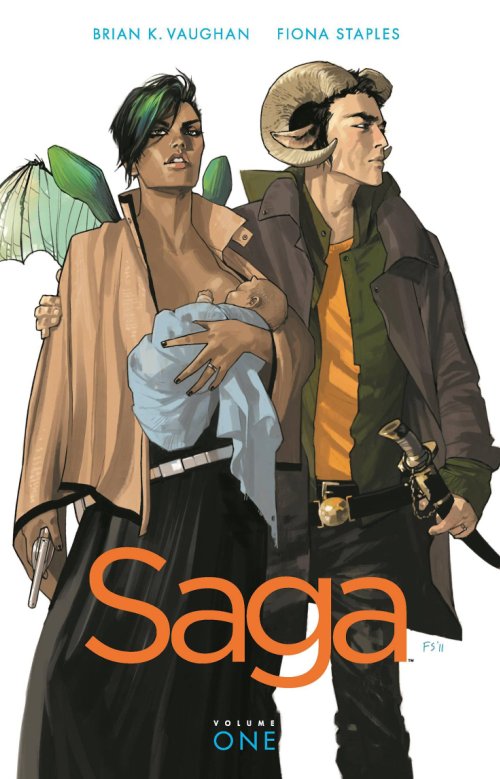
Created by Bryan K. Vaughn (words) and Fiona Staples (images), it’s a sprawling science fantasy saga with a heavy helping of just plain weirdness. Vaughn and Staples take full advantage of their chosen format to give the story a scope and a visual sense that would be impossible to pull off in another format. In the same way that 2001 epitomizes what a motion picture can be (an completely immersive audio-visual experience), Saga is the apex of what comics can be.

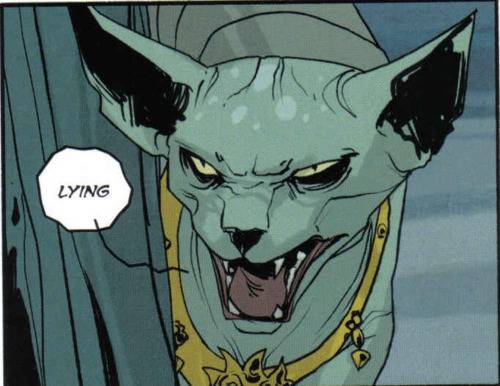
As amazing as Staples’s art is, Saga wouldn’t be worth reading without a compelling story and characters we care about. The basic setup is simple – a world, Landfall, has been at war with its moon, Wreath, for years. In the middle of the war, Alana (from Landfall) and Marko (from Wreath) fall in love and produce a kid, Hazel (who is the narrator), who really shouldn’t have been able to happen. They try and survive in a world where damned near everyone wants to hunt them down, from soldiers to bounty hunters with sentient lie-detecting cats.

Lying_Cat_Saga_001

Along the way, as they blast from world to world in a spaceship that is also a tree (did I mention this is science Fantasy? Definitely a capital “F”), collecting other outcasts to form a very bizarre, very fractured, but very sweet extended family (as this article points out, Saga is almost impossibly diverse in its characters). Vaughn has said that’s what Saga is really about:

I now have two kids. I first starting thinking about this while waiting for our first kid. And I always used writing as an outlet to talk about my fears, concerns, and passions. I really wanted to talk about creating new life. And I found talking to my friends who are strangers to the fatherhood experience—I would watch them start yawning or looking at their watch–difficult. If you’re outside of that world you don’t really give a shit. When you’re living in it, it’s really exciting. So I wanted to find a way to make people who don’t have kids or who never intend to have kids feel what it’s like to be a parent.

That’s where Saga was born.

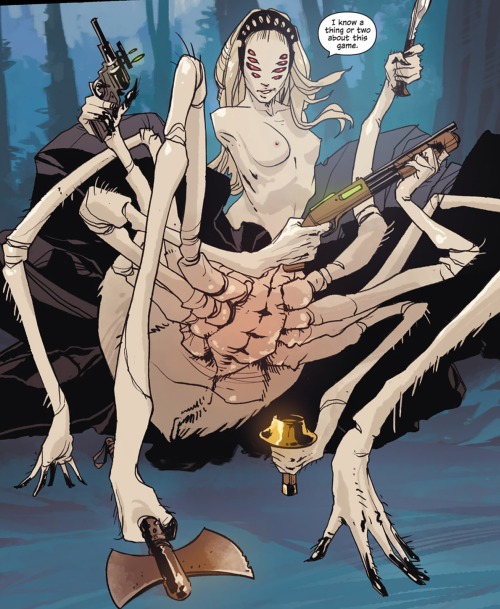
Not having kids I can’t say whether having them makes Saga more meaningful, but it does emphasize the foundation of the story. All the amazing art and “holy shit” concepts don’t add up to much if the characters aren’t ones we care about in the first place. That’s true of good fiction in general, but particularly good speculative fiction. At bottom, it’s a story about love, fear, and survival. The tree ships and arachnid bounty hunters are just gravy.

saga-the-stalk

What I’m trying say is that Saga isn’t something I recommend to comic newbies because it’s a classic (although it’s on its way to becoming that) or because it’s something, to channel one of my high school English teachers, “that well read people know.” It’s because it’s a great story, involving people you will care deeply about, told across a stunningly inventive backdrop. I mean, really, what else do you need?

SagaVol1

At Long Last, the Entire Saga of The Water Road In One Handy Package

Very happy to announce that how, instead of buying three separate books to digest the entire story of Antrey, Strefer, and The Water Road, you can now get them in one convenient package. Presenting The Complete Water Road Trilogy box set:

2017-525 3d render on transparent Website.png

This is the series readers have called “magnificent,” “excellent,” “exciting,” and “engrossing.”

This version is only available in eBook format. And for April, it’s on sale for just 99 cents! Get one in your preferred format at the links below.

Amazon
Barnes & Noble
Kobo
iBooks
Scribd

Weekly Read: Children of Time

One of the great things about speculative fiction is that you get to write about characters who aren’t human. One of the hard things, as a result, can be making readers care about characters who, at least on the surface, aren’t anything like them. To be able to pull that off is something special.

Children of Time starts off with human characters who seem all to relatable. A ship is in orbit around a planet that’s been freshly terraformed. A scientist is making ready to start a bold experiment – seeding the planet with a group of monkeys, followed by a spiffy nanovirus that will help jumpstart and guide their evolution. To “uplift” them, in the David Brin sense of the word.

Needless to say, things don’t go as planned. The experiment is disrupted before it’s really begun by a quasi-Luddite faction that things humanity going to the stars was a mistake. The monkeys burn up over the planet. The nanovirus . . . well, what becomes of the nanovirus is what Children of Time is all about.

You see, just because the monkeys didn’t make it to the planet doesn’t mean other life didn’t. Instead of finding its intended host, the nanovirus finds a species of spiders into which it can insert itself. It does and, for half the ensuing chapters in Children of Time, Adrian Tchaikovsky puts us in the brains of various spiders as their society develops over thousands of years. That society itself is a supreme feat of imagination on Tchaikovsky ‘s part, but what really matters is that you come to care for these non-human beings, creatures that are more likely to conjure nightmares than sympathy.

That’s certainly true for the crew of Gilgamesh, the humans who make up the other half of the chapters. After the experiment at the beginning of the book goes awry humanity itself follows suit. Eventually, the only humans left alive are the crew of Gilgamesh and its “cargo” – hundreds of thousands of people in suspended animation.

It’s no spoiler to say that the humans and spiders have a coming together (two of them, sort of) and while the ultimate confrontation is wonderfully done, the paths they take getting there are equally fascinating. While the spiders slowly develop a technologically advanced society (the things they do with webs), humanity on board Gilgamesh is slowly falling apart. As seen through the eyes of a “classicist,” who gets woken up every so often to observe another crisis, it’s like the entire universe is falling apart at the seams. By the time the end comes the desperation among the humans is palpable.

Along the way, Tchaikovsky uses his characters to explore lots of big issues in a classic sci-fi way – religion, politics, and the like. More than anything, however, it shows how two intelligent groups can nearly destroy each other based mostly on the fact that they don’t have accurate information about the other group. The ending keeps this from being completely depressing, but it is kind of bleak. The day is saved by something the real world doesn’t have, after all.

There’s a lot to unpack in Children of Time. It doesn’t shy away from the fairly bleak state of the human condition, while suggesting that it’s not something specific to humans. And it does offer some hope, for while the source of the ending isn’t real, the effects could be. Either way, this is one of the best books I’ve read in a while (and I don’t see any way to adapt it to film). I was completely blown away. Highest recommendation, of course.

ChildrenofTime

Lessons Learned from Swimming Blindly Through the Aural Seas

When I write I have some idea of where I’m going. As you can see from my experiment with trying to go free form, I need some structure when I write. Nonetheless, when I write I’m acting with intention and purpose – I see where I want to go and try to get there.

When I make music, it’s almost completely the opposite. Essentially, music comes about in one of two ways. First, I get a flash of inspiration when a riff or rhythm or something pops into my head (and, hopefully, onto the computer). Second, I take whatever winds up on “tape” and fiddle around with it, adding things, taking things away, and generally just figuring out what works. I very rarely come to a song idea with a clear conception of what the end product should be.

In other words, when I write, it’s like setting out to sea in a boat, with charts, a destination, and a plan on how to get there. When I make music, it’s more like diving in head first and seeing where the tide sees fit to deposit me. Swimming blindly, if you will.

That’s not to say that the drifting, searching musical creation doesn’t require making choices. Sometimes, those choices are relevant when it comes to thinking about writing, too.

I’ve been thinking about this lately after finishing a new song with the deviously serious title of “Dummy Tickle” (it’s embedded below). I have no idea where that title came from, because this song, all not-quite-four minutes of it, began five years ago.

Which brings me to lesson number one I’ve learned from making music – creativity takes time.

The DAW I use has a metadata field that lets you put just about anything you want in it. I always put (1) when I started the song; (2) when I finished “writing” it; and (3) when I got it in final form (mixed down, etc.). It’s a very rare thing when a song goes from idea to completion in a week or a month. Usually it takes a while, but not five years.

What was I doing with “Dummy Tickle” for five years? I’d like to say I tried out dozens of different things to try and bring the basic idea (that lazy, bouncy bass line and equally laid back melody) to bigger, better life. Nothing really clicked, nothing seemed right. I let it go for a while, but every time I went back and listened to unfinished tracks I thought “there’s something there” and marked it down as something to finish.

Finally, a few weeks ago, something clicked. I don’t know precisely what or why then – maybe a session of playing with the puppies trigger up some kind of endorphin rush or something. How couldn’t they?

Pups
Anyway, the damn burst and I started making progress. It just took some time to get there. Patience really is a virtue, especially when it comes to creative things.

Still, it wasn’t a matter of just banging out a few more notes and being done with things. I was in need of ideas for a transition, a middle section, and started playing around with a couple of chord progressions.

Then I hit on the second lesson I’ve learned from “Dummy Tickle” – sometimes, simpler is better.

I have a sign tacked to the wall in my studio:

Monphonist Pic

I put it up when I realized that a lot of the early electronic music I like – from ethereal Tangerine Dream to the synth-pop of The Human League and OMD – was done by people with access only to monophonic synthesizers (that is, ones that can make only one sound at a time). That is, they can only make one note at a time. By contrast, without even getting into the virtual synths in my arsenal, I can bring to bear 150 voices! At once! I only have 10 fingers, after all.

My point is I tend to think in chords, even thought single notes are often what’s called for. After struggling to find the right sequence for this song, I backed off and gave it a fresh look. And I looked at my sign. The heart of this song was that simple bass line, the simple melody. Don’t mess that up by building it up unnecessarily. Take the simple route. Thus, that middle section was composed entirely of monophonic lines weaving together – as was the rest of the song.

None of this is Earth shattering. Still, as creators sometimes it’s easy to get wrapped up in the vision of more – more words, more notes, more colors – until you disappear up your own backside in search of your next complexity fix. Sometimes you have to step back and think about what works for the song, book, or whatever it is you’re making. Some of them are just simple little things that don’t have airs on being anything more.

“Dummy Tickle” is like that. A little goof of a tune, a good mood wrought by bouncy synths. Enjoy!

Author Interview – Paul Keenan

This time we dive into the worlds of poetry, fiction, and . . . technical writing?

 Who are you? Where are you? What kind of stuff do you write?

 My name is Paul Keenan, and I write a lot of things. I’ve written somewhere north of 300 poems, a dozen or so short stories, a novel, a stage play…. Lately, I’ve been doing some technical writing for a couple of financial technology web journals, Lending Times and Blockchain Times.

 Tell us about your most recent book, story, or other project.

I wrote a novel last year. I’d made four previous attempts, but this was the first that I actually finished. Coincidentally, it’s also the first I wrote since getting sober in July of 2013. It’s called The Situation with Phillip, and it’s a work of fiction loosely inspired by the thought that the soul weighs 21 grams. Jeffrey is a serial killer who has come to the conclusion that it isn’t the soul that weighs 21 grams, but that the stress and hardship of life, which account for the loss of weight the body experiences upon death. To prove this, he is kidnapping people from five offsetting sets of character types (faithful/doubtful…), stressing them for a calendar month, and then killing them to see how much weight has been lost. There are indications that he isn’t completely at ease with the loss of life, but he feels he’s doing God’s work and accepts the loss for the good he thinks it will do in the future.

Phillip is also a man who thinks he is doing God’s work in his life, and it is his faith in God that he tries to maintain focus on during his month as Jeffrey’s prisoner. Having found that he really has little chance of escape—Jeffrey’s elaborate containment set-up includes remote control handcuffs and shock collar—Phillip is in constant communication with God, in prayer that, when the time comes, God will provide him with the words he needs to lead Jeffrey to see the error of his ways.(There’s a synopsis of the novel, plus a good number of posts about the progress of the drafting process on my blog at paulelmo.com).

In light of all the poetry you’ve written over the years, what is it that kept bringing you back to trying to write novels?

I chose novels because that’s what I grew up reading, and I read authors who had made a lot of money doing it. Sadly, most of my writing life has been financially driven. Now that I’m beginning to make a little money writing, I see how incorrectly I’ve gone about the process. Live and learn, I guess.

I come back to novels because I want to sell a novel. I queried The Situation with Phillip to an agent last year. I got a great rejection, 112 words. In it, the agent suggested some things that would make me more marketable as a novelist. I began following his advice; the social media and publications are part of that. I plan to get in touch with him again in September, which will mark a year from the first Q.

 In what genre do you primarily write? Why did you choose that one?

 Across the breadth of my writing life, I’ve written more poetry and verse than anything else. I’ve done so for a number of reasons. I think the iambic foot merges well with the human rhythm. Plus, I’ve always seemed so busy, a the shortness of poetry has always appealed to me. I edit as I go, but when I’m done, I’m pretty much done. It’s a very Bukowski way of writing. What’s more, I think my life is good subject matter, and poetry always fits that well.

Given the broad sweep of your writing, how much does one area of it impact others? Does your poetry influence your technical writing (or vice versa!)?

I don’t know how much my technical work has affected my creative work, but poetic lines influence everything I write. There’s a focus in poetry that is helpful in framing any type of writing. You focus on the line, the cadence, the rhythm. Poetry also helps a writer practice omitting needless words.

Author Pic

 Tell us briefly about your writing process, from once you’ve got an idea down to having a finished product ready for publication.

No matter what the genre, I learned in school to just get it on the page and then go back and fix it. I know that contradicts what I just said about writing verse, but with verse it’s still pretty much the same; I just don’t do much of the going back and fixing it. Still, while I put more thought into the actual crafting of work while I’m writing poetry—you really have to—I still pretty much adhere to the school of thought that says to just get it on the page. Then you can see what you’ve got and what needs to be done with it.

Who is the favorite character you’ve created? Why?

I’ve had a few, but right now my favorite is Phillip from The Situation with Phillip. Like all of my other favorite characters before him, I like Phillip because he’s a philosopher, and most of his philosophy comes from lessons learned the hard way. Being an problem drinker in recovery, and being a problem drinker in need of recovery before that, I’ve created a strong personal philosophy that helps others at times. That’s the part of me that gets channeled into these characters like Phillip, and it’s what endears them to me.

What’s the weirdest subject you’ve had to research as a writer that you never would have otherwise?

As a matter of fact, it’s the stuff I’m working on right now with my technical writing job, fintech, financial technology. A large part of my present focus is on cryptocurrencies and blockchain technology. Bitcoin. Ethereum. It’s so far out of what was previously my wheelhouse, but I’ve taken to it and become really interested in it. It’s something that I would have gotten to soon enough, just because I think its massive scale is going to make us all interested in it down the line, but I never would have ever thought I’d be writing about it.

 What’s the one thing you’ve learned, the hard way, as a writer that you’d share to help others avoid?

Don’t swing for the fences. I grew up reading novels by best-selling novelists, so I thought the only way to make it was as a best-selling novelist. The hard truth of that was the drinking life doesn’t much lend itself to the strength of thought and discipline required to write novels. I have four good, lengthy novel starts, and, while I imagine they’ll all be finished in time, I spent of years chasing the pipe dreams within them when I should have been focusing on more practical projects. Also, you have to write every day, even if it’s only for a half an hour or so. There’s a quote by Lawrence Kasdan, the filmmaker, that I like. He said, “Being a writer is like having homework every night for the rest of your life.” It took me a while to get it, but I focus on that, and I haven’t missed a day in about a year, nor barring tragedy or illness or something like that, I can’t imagine any way that I will.

 If you won $1 million (tax free, to keep the numbers round and juicy), how would it change your writing life?

I don’t know how much it would change my actual writing, other than I’d be able to write for myself and not for someone else, like the group of magazines I write for. It would change my writing that I wouldn’t have to work at a non-writing job to make money, and it would give me more time to devote to my blog and going back and finishing the novels and other long-form projects that I’ve started but never finished. Still, I’m interested in what I write about in my blog (music, the hilarity and oddness of life at times, music, and my Christian faith are all regular topics), and I’m interested in the fintech and blockchain stuff, so I wouldn’t much change what I write, I’d just have more time to devote to it.

 What’s the last great book you read or new author you discovered?

Lately all of my time reading time has been spent on financial theory analysis, and I don’t tend to read a lot of new novelists. I re-read books I’ve liked in the past. I like structuralism and authors who have fun with their craft. Within the past year, I’ve re-read Tom Robbins’s Still Life with Woodpecker and Italo Calvino’s …if on a Winter’s night a traveler…, which are two of my favorites. The last book by a new author I read was The Good Man Jesus and the Scoundrel Christ by Philip Pullman, and, while I didn’t agree with it, as a man of faith I found it interesting enough. Still, I wouldn’t recommend it for a doubtful person; too much food for thought, I think.

Since you mentioned recovery a few times, do you find it difficult to write about characters who are going through similar issues, or is it cathartic to work it through with them?

It’s totally cathartic to write about recovery and characters at all stages of addiction and recovery. The basis of sobriety is a good program, and, for me at least, a good program is based on a good philosophy. Most times, writing about abuse and recovery just gives me good reminders of what I already know and think; occasionally, however, I realize something new or I realize I believe something I didn’t know I believed. It all helps to strengthen the philosophy and the program. Beyond that, it’s great advice for us to write what we know. Being not only a former problem drinker, I’m also a bartender, which means that booze and bars are great fodder for me.

 What do you think you’re next project will be?

Well, now that I’m working a full-time job and my writing is a rather large part-time job, I’m not sure. If I had that million dollars (which happens to be a nice round number that I like, by the way), and prior to securing the tech writing job, my plan was to go back and finish the four novels and the screenplay that I’ve started but not completed. I’d also like to see if there are any agents out there who’d like to see what progress I could make on a couple of music related books I’d like to see written. One is the search for faith in a higher power in the lyrics of Chris Cornell, the late singer who fronted both Soundgarden and Audioslave. Also, I’d like to do a comprehensive study of the impression that the five members of The Traveling Wilburys made on the music world—that one might have to be a series.

I don’t worry too much about it though. Ideas have never been a problem for me, and now that I’ve gotten sober and have the discipline, I figure God will put me where He wants me to be when He wants me to be there. It’s like this fintech deal; I had no idea that was in store for me. Still, it has only been four months, I’m the lead feature analysis writer for a new online magazine, Blockchain Times, and the field has become something that will shape me and my writing, as well as the lives of my sons—ten and six—going forward. You try to think about what you’re going to do next, and then something like that happens, and you realize once again that we’re not as much in charge as we think we are. No matter what comes next, I’m going to be where God puts me, and I’m going to do what He wills me to do. Knowing that, I don’t have to worry too much about it.

Learn more about Paul at his blog.