On American Dystopia and the Great White North

Dystopian fiction can be tricky. Assuming you’re setting it on Earth, you either need to have the whole world go to hell, which isn’t all that probable, or the shit show is more localized, in which case you have to address how the rest of the world interacts with the place where the story is set. I’ve been set to thinking about this a bit thanks to two recent bits of television.

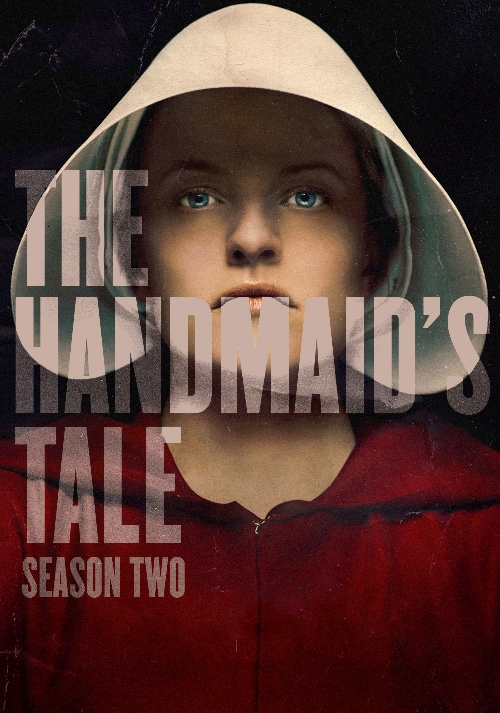
Margaret Atwood’s The Handmaid’s Tale is as localized as dystopia can get. It’s told entirely from the point of view of the titular handmaid, June, and doesn’t concern itself at all with the outside world. Gilead is what she experiences; nothing more.

The TV adaptation probably couldn’t have worked if it maintained that rigorous POV, so it wisely broadened its world from the get go. In the first season, therefore, we learned that June’s husband and her best friend managed to escape to Canada, where there’s a growing population of expats from the area that used to be New England. But we don’t really know what that means in a global socio-political sense.

HandmaidS2

That was evident in the recent episode “Smart Power,” where Commander Fred and his wife, Serena, take a diplomatic trip to the Great White North. They’re received professionally, if coolly, in the manner you’d expect for delegates from a nation with which the Canadians have at least some normal relations. But do they? We don’t really know. Things are complicated when an American agents of some kind offers Serena a new life in Hawaii, one where she actually gets to control her destiny.

All this is a bit confused because we don’t really know how Gilead relates to the rest of the world – or what the rest of the world thinks of Gilead (once some info leaks out during the Commander’s visit, we quickly find out, at least partly). How big is Gilead? We know it’s centered in New England, but what of the rest of the United States? Does Canada recognize it as an independent nation? If so, why? What does the United States look like?

None of these were really important in the book, since it was June’s story above all else. But by broadening the focus (something that had to happen for the TV series to continue), these questions become relevant and I’m not certain the show’s brain trust really has the answers.

The recent HBO adaptation of Farhernheit 451 suffered even more acutely from this problem. It makes explicit the story’s setting (Cleveland) and, via an implausible update that involves the works of humanity encoded into DNA, sets up an endgame where Montag has to help someone escape to Canada to rendezvous with some scientists. We’re never told if that’s just because that’s where they are or because Canada is the safe area we always assume it to be.

F451

This is particularly important to Farhernheit 451 given its semi-hopeful ending of an underground group dedicated to actually memorizing great works of literature to ensure they don’t disappear.* That still happens, but it’s now supplemented with the DNA thing. But if Canada is a safe haven, if it exists outside of the dystopia the United States has become – then why the need to preserve all knowledge? Isn’t it safe elsewhere in the world?

To a certain extent this is an issue with any speculative fiction worldbuilding. Writers need to have some idea what happens beyond the bounds of their stories, since those things should influence those stories in some ways. But it’s compounded dystopian fiction set in the “real” world because readers and viewers presume the world is as it is in real life, unless we’re told otherwise. That can lead to confusion, or at least some disappointments.

* Kudos to the writers for updating the preserved works to include writers who are women and people of color (and even some women of color!). However, the impact is a bit muted since only the minority characters are memorizing the work of minority authors.

Birth of an Idea

Some authors hate the “where do you get your ideas?” question. I’ve never really figured out why. I can see why readers might be disappointed with the answers, since they’re much more mundane than they might hope. There is no communication with the muse, no blinding flash of insight, just a keen eye and brain that perpetually asks, “what if?” And the realization having a pen handy is almost always a good idea:

So in service of explaining how that works, I thought I’d describe the process I recently went through were a new story idea crystallized in my mind. It’s as good an example as any of the truth that inspiration is out there everywhere, if you know what to do with it.

Right now in my lawyer day job I have a case pending in the court of appeals where one of the issues involves whether my client had served too much time in prison and might be entitled to credit for that. In my brief I made a couple references to him “banking time.” When the Government responded, for some reason, it turned the word around and repeatedly referenced a “time bank,” which it argued didn’t really exit (it does).

Beyond the fury at the allegation I was making shit up, the phrase “time bank” got lodged in my brain. There was something about it that seemed absurd and specific in a way that “banking time” didn’t.

With “time bank” lodged in my brain like a stepped-on Lego, I went into brainstorming mode, which to my neighbors looks like mowing my yard. I do some of my best thinking about writing while I mow, since it’s not like my mind is taken up with other things. So I turned over this concept in my mind, over and over again – what, precisely is a “time bank”? And how would it differ from a memory bank?

I came up with three different ideas, one sort of modern science fictional, one utterly fantastical, and one kind of in between. Thinking them over I found myself drawn the first, the modern one, and began thinking about how characters might interact with this “time bank.”

The working title is “Down and Out at the Time Bank,” a tale of a poor schmuck who gets in way above his head, but probably comes out of it just fine. Short story or something longer? Don’t know yet, as I’ve got to put it on the back burner while I work on other things. But it’s there, lurking in my ideas file, waiting for me to come back to it.

So, thank you, unnamed Assistant United States Attorney. You’ll win the case in the end (‘cause y’all almost always do), but at least you gave me something worthwhile I can take away from it.

And that, ladies and gents, is where story ideas come from!

Rivalries and How They Work

The World Cup is underway and, sadly, the United States isn’t involved this time. For the first time since 1990, we failed to qualify. In the words of one commenter I saw in a forum the other day, “we shit the bed.” It’s as good a description as any.

That has led some Americans to wonder who they might root for in the tournament. I think that’s kind of silly – as I’ve written before, you can be a fan of the game, without any particular rooting interest – but whatever makes the experience more enjoyable (Volkswagen is having fun with the idea in its new commercials).

While we Americans failed to qualify, our great rivals from across the Rio Grande did, and with some ease. That’s led to some to suggest that American fans should root for Mexico in the Cup. That reached peak silliness this past weekend with this Tweet from, of all people, United States Men’s National Team legend Landon Donovan:

Putting to one side the cash-grab aspect of all this (Wells Fargo, Landon? Really?), that’s simply not how rivalries work. I personally think it’s a bridge to far to wish ill on your rivals (not a fan of the “my two favorite teams are A and whoever is playing B” shirts). Rooting against someone just seems like bad karma. Sports should involve positive motivations, not negative.

Besides, you can sit back and realize it’s good for the United States for Mexico – and the other CONCACAF teams, Costa Rica and Panama – to do well. When the region does well on the global stage it lifts all boats and we, as a men’s soccer program, desperately could use some lift right now. But that’s a far bridge from actually rooting for them to do well.

To put it in another context, as a West Virginia University fan and alum, I hope that our Big XII rivals do well in bowl games and NCAA tournaments, because it makes us look better when we do well in the conference. So, while I’m happy with Kansas winning a national championship in basketball or Oklahoma doing well in the football “playoff,” that doesn’t mean I’m actively rooting for them. That’s just a bridge too far.

But still, if you’re an American fan and you want to root for Mexico, be my guest. Just don’t make it more than it is, as Donovan tried to do in a follow-up Tweet after being called out by fellow former USMNT member Carlos Bocanegra:


Um, no. In the same way that rooting for WVU against Baylor doesn’t mean I wish ill on the students in Waco, not rooting for Mexico has nothing to do with the horribles the current regime is perpetrating upon immigrants and Latinos. Sports can certainly build bridges, but not ones that can bear that much weight.

So I will watch with interest as Mexico (and Costa Rica and Panama) take on the world in our absence. I’ll marvel at brilliant plays made and shake my head at missed chances and nonsense. In other words, I’ll watch their games just like I do everybody else’s.

That being said – well done to Mexico for knocking off Germany yesterday.

Cheating? Brilliant? A Little of Both

The World Cup gets underway this week. Even without the United States involved (*sniff*) I’m still looking forward to the tournament. Beyond the month-long celebration of world-class soccer, it always seems to bring some really odd stories out in the run up to the tournament. Some are amusing, some less so.

This one falls kind of in between.

Tunisia are returning to the World Cup for the first time since 2006 after topping their group in qualifying. That means playing a series of friendlies (soccer-talk for “exhibition”) in the weeks leading up to the Cup in order to prepare. That’s bad timing because the Tunisian players are Muslims and it’s currently Ramadan. That means not drinking or eating anything between sunrise and sunset for a month. This year, that month is May 15 to June 14.

You can see the problem. Soccer is famously taxing when it comes to physical stamina:

So playing the same at the highest level while you can’t eat or drink would be a real pain in the ass.

Tunisian goalkeeper Mouez Hassen appears to have found a clever solution:

In friendly matches against Portugal then Turkey, goalkeeper Mouez Hassen appeared to feign injury at sundown, when the fast comes to an end.

As he lay on the pitch receiving medical treatment, his teammates rushed to the sidelines to drink water and snack on dates.

And it produced immediate results.

Down 2-1 to European champions Portugal, Tunisia rebounded six minutes after Hassen’s injury break by scoring an equalizer and ended the match 2-2.

Days later against Turkey, Hassen stopped play by lying on his back.

Again, his teammates ate dates and drank water provided to them by waiting coaching staff. That match also ended 2-2.

* * *

Pundits in Tunisia were quick to note the timing of the goalkeeper’s injuries in the second half of both matches – in the 58th and 47th minutes of play respectively.

This coincided with the time of sunset, which is when Iftar – the breaking of the fast usually with dates and water – begins for Muslims observing Ramadan.

In other words:

WhatYouDidThere

I’m torn about how to think about this.

Make no mistake, Hassen was cheating. Simulation is a violation of the rules of the game. While it usually comes up in situations where a player is trying to draw a foul or a penalty kick it applies just as much when a player feigns injury for some reason. That happens late in games when one team is trying to kill time or simply blunt the momentum of the other side when it’s seeking a game-winning or game-tying goal.

On the other hand, the benefit to his team wasn’t something completely unusual in modern soccer. If a player gets hurt – enough that the game stops for trainers to trot out on the field and tend to him – the teams routinely take a chance to get a drink. I’ve seen players slurp Gatorade-style goo from tubes on the sideline, too. Given the rigors of a soccer match, it’s not unusual for players to take any chance they can to hydrate and such.

Thus, part of me wants to chock this up to “creative gamesmanship” and give it a pass. And it happened in friendlies, anyway, so there wasn’t anything really at stake (Ramadan will be over by the time the Cup starts, so it won’t come up there). But it’s still faking an injury to gain an advantage, however slight, and that’s a chicken shit thing to do.

So, no more of this, folks. But, you know, pretty clever of you to think of it in the first place.

Author Interview – Amy Deal

For this interview we talk to romance writer Amy Deal, who decided to fill a market gap her own darned self.

Who are you? Where are you? What kind of stuff do you write?

I’m Amy Deal.  I was raised in Barboursville, and currently live in Huntington and I write romance fiction.

Tell us about your most recent book, story, or other project.

I’m working on my first book.  It’s called A Stronger Bond and it’s a vampire romance.  It’s the story of a vampire, Alexi who loves a mortal, Ava.  Their relationship is put to the test when she is kidnapped by a vampire hunter bent on revenge.  There’s also an ancient vampire, Demetri, who believes himself in love with Ava.  So, there are a lot of obstacles for them to overcome to get their happy ever after.

 In what genre do you primarily write? Why did you choose that one?

Romance.  I’ve always loved a great romance story either in books, movies or TV.  But they have to have happy endings.  I am anti Nicholas Sparks.  LoL

TV and movies are where my first writings came from.  I would take the stories and rewrite them.  Little did I know that I was writing FanFic before it had a name.  LoL

What made you want to start writing romance stories instead of just reading them?

I like a certain kind of romance story and no one was writing them.  I knew I couldn’t be the only one, so after some conversations with others, I decided to write the kind of romance I wanted to read.

Follow up follow up – what kind is that?

A lot of the vampire romance stories have the heroine either as a vampire herself or a vampire hunter.  I like stories where the heroine is the typical girl next door.  Living her life and then suddenly she’s confronted with something that shakes up her world and makes her look at things differently.

Tell us briefly about your writing process, from once you’ve got an idea down to having a finished product ready for publication.

I get my best ideas when I’m talking to someone or listening to a conversation.  As for the rest of it I wish I had an organized thought out process, but I really just write when I can grab some time.  I just took a trip on Amtrak and I had several hours to work on nothing but marketing, plotting and research.  It was nice.

How much plotting do you do ahead of time? How much world building? Do you ever just sit down and see where the words take you?

I just bought a writing software program that will hopefully help me do some plotting, world and character building, but I really just sit down with an idea and start writing.  Eliot Parker says that I like to drop people right into the action and I do, but I’m trying to learn to plot my way and drive them there slowly.

Who is the favorite character you’ve created? Why?

Alexi.  He’s the main character of the book.  I’ve always had a soft spot for anyone who feels that they aren’t redeemable or worthy of being loved.  Alexi is all of that and I’ve made it my mission to make sure he finally accepts that he can be.

What’s the weirdest subject you’ve had to research as a writer that you never would have otherwise?

With vampires I’ve researched a lot of blood related topics.  Because it’s their main source of everything, especially loving someone, I had to find a way to make a disease where someone’s blood would be poison to a vampire.

What’s the one thing you’ve learned, the hard way, as a writer that you’d share to help others avoid?

Never listen to the people who say you aren’t a writer if you haven’t had something published.  If you write, you’re a writer.  Also, if you write a genre that isn’t popular, or one that people don’t understand, just remember that somewhere out there, someone is waiting to read it.

AuthorPic

Have you found people not supportive of writing romances? Based on what I’ve seen romances and vampire stories are both really popular!

I haven’t found anyone that hasn’t been supportive of me personally.  Yes! they are really popular.  It goes in waves.  Vampires will be popular, then a real life event will happen where suddenly military romances become popular.  It’s like soup du jour, but hero du jour.

 If you won $1 million (tax free, to keep the numbers round and juicy), how would it change your writing life?

I’d be able to focus on my writing and do a lot of traveling to find locations to use.  I’d also have all the latest and greatest tech gadgets to help with my writing.

What’s the last great book you read or new author you discovered?

Andrea Bills.  She’s also a WV romance writer and her books are so good.  Her writing draws the reader in and once you’re in, you never want it to let you go.

What do you think your next project will be?

It’s another book in the A Stronger Bond universe.  It’s the story of one of the other vampires you meet in the book.

For more about Amy check her out on Facebook or the web.

Ten Books I Love

Remember that list of 10 albums that were particularly important to me I did? It evolved from a Facebook thing. Shortly thereafter, I started seeing other folks do the same for books. Sure enough, one of my friends tagged me and so I had to come up with a list of books (hers was seven, I bumped mine out to ten) that I “love.” Not necessarily meaningful or insightful, just favorites. With that in mind, let’s dive in (in no particular order) . . .

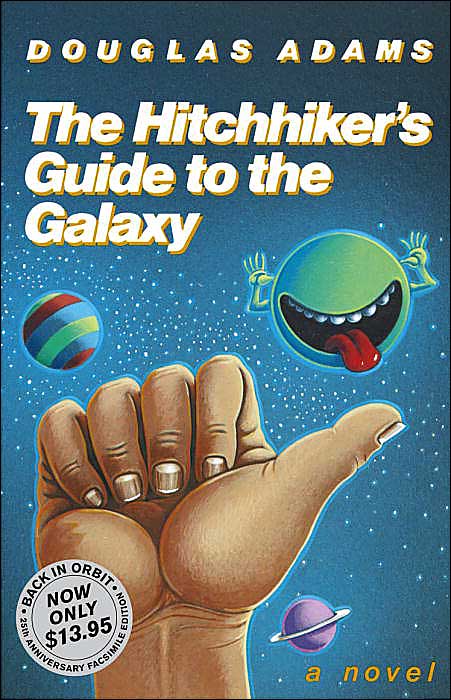
The Hitchhiker’s Guide to the Galaxy (1979)
HHGttG

This is almost a cheat, as the Guide has so many iterations and my favorite will always be the BBC television version (cheepnis and all). Still, I remember pouring through the book (and the other two in the original trilogy) that my brother had. Funny, thoughtful, clever, and an entirely different way to approach science fiction. It stuck to the same part of my brain as Monty Python.

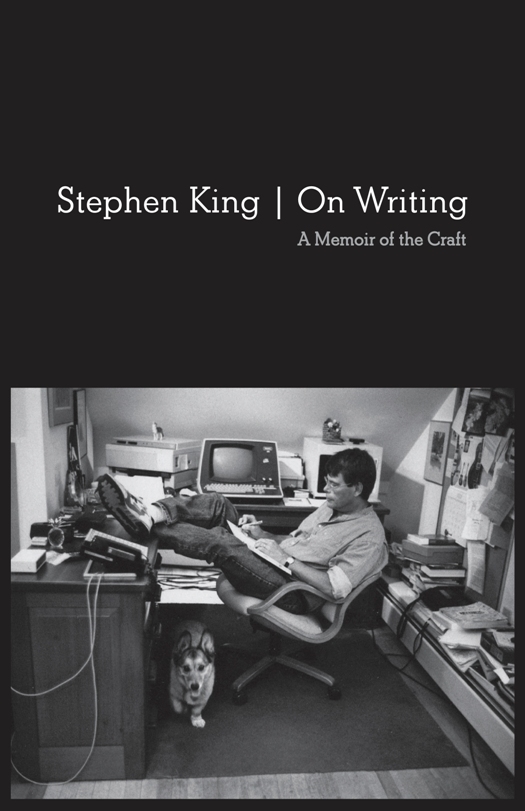
On Writing: A Memoir of the Craft (2000)
OnWriting

There are lots of books about writing (some of them actually written by writers!) and people will tell you not to rely on one of them if you’re trying to figure out how to be a writer yourself. As true as that is, the one that everyone seems to recommend is Stephen King’s memoir. For good reason – it’s a brutally honest, open exploration of what it means to be a writer. It doesn’t bury itself in inspirational bullshit, but it also doesn’t make writing seem like something that’s out of anyone’s reach. Reading about writing doesn’t end here, but it probably ought to start here.

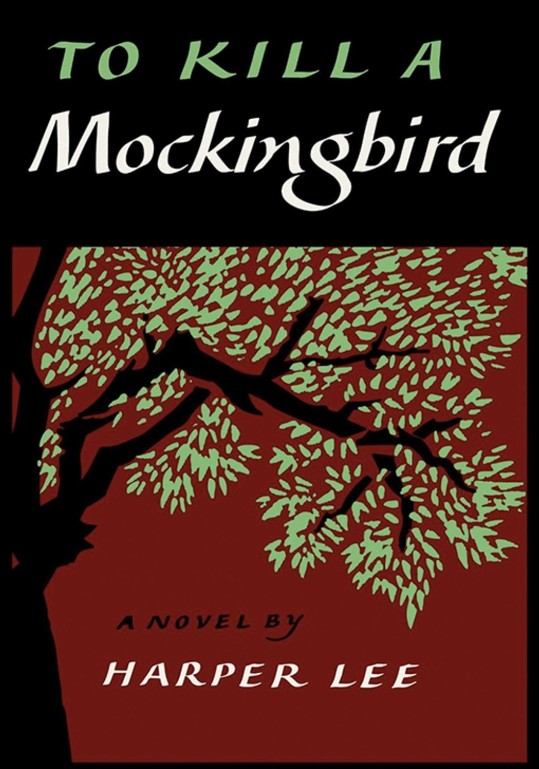
To Kill a Mockingbird (1960)
Mockingbird

Since I’m a defense lawyer by trade it’s practically required that I have great reverence for this one. I’d like to say I don’t, that I go against the cliché, but what would be the point? Atticus Finch is, in a lot of respects what lawyers aspire to be, particularly defense lawyers. He seems to resonate particularly with defenders since after a noble and capable defense, he still loses. That’s the life of a defense attorney, after all.

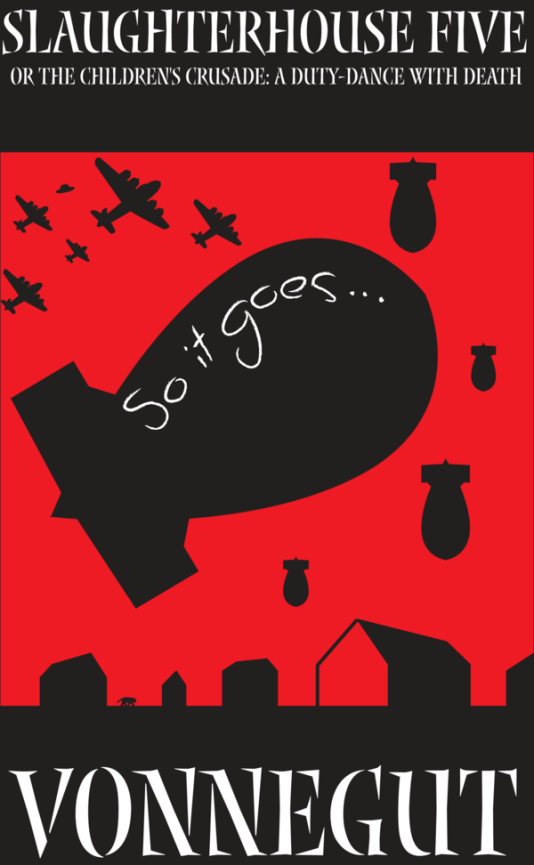
Slaughterhouse-Five, or The Children’s Crusade: A Duty-Dance With Death (1969)
 Slaughterhousefive

I’m not sure whether this was my introduction to Vonnegut (it might have been Galapagos or “Harrison Bergeron”), but it is the one that made me fall hard for his work. The dark humor and deep humanity that runs through his work speaks to me, I guess. Plus, he gave no fucks when it came to style and form – I mean, what kind of book is this anyway? Science fiction? Social commentary? Historical fiction? Who the fuck cares! It’s brilliant.

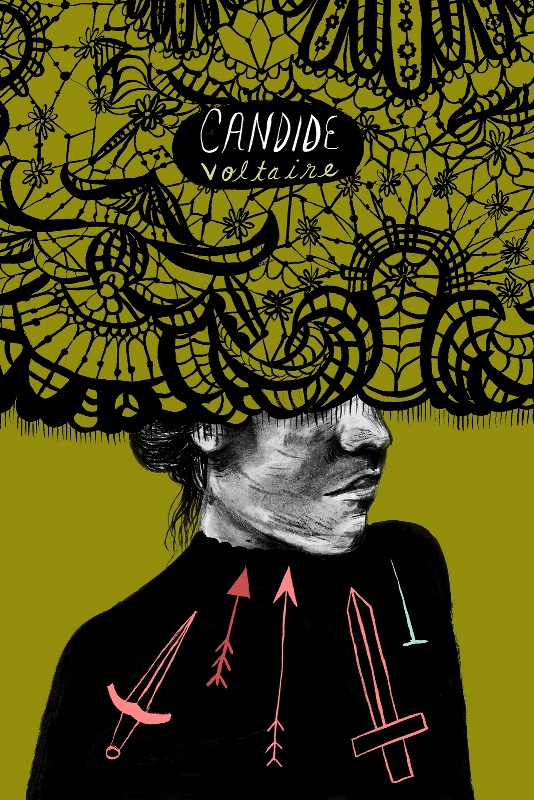
Candide: or, The Optimist (1759)
Candide

I am, at my core, a cynic. On my better days, I’d say I was a realist. Regardless, a bit reason why is Candide, which skewers the idea of this is the best of all possible worlds. Although the story is all about breaking down the titular character’s naiveté, it’s not depressing. It’s darkly comic (there that phrase is again) and liberating, as we see the scales fall from his eyes. While the ending isn’t one you’d call happy, it’s at least hopeful, in that it puts the power for our own happiness in our own hands. Besides, it’s inspired both a fabulous musical/operetta by Bernstein and a concept album by Rush!

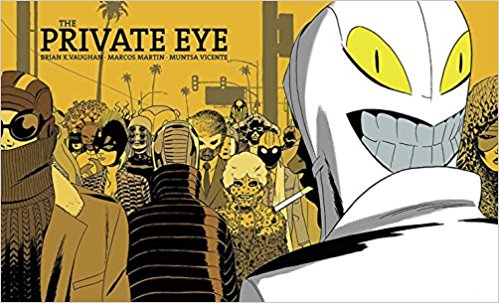
The Private Eye (2015)
PriavteEye

Usually when it comes to dystopias the world of the future is completely fucked. Some plague or aliens or nuclear war or whatever has returned life to a primitive state, with characters reduced to hunter gatherers as they try to rebuild society. The dystopia of The Private Eye, by contrast, looks pretty sweet. There’s technology, food is plentiful – it looks like what we think of as “the future.” So what’s the problem? The problem is that everyone stored their data in “the cloud” and one day, “the cloud broke.” From the simple idea that everybody’s data is loose in the world, Bryan K. Vaughn builds a stylish, neo-noir tale for the 21st century. And it looks amazing.

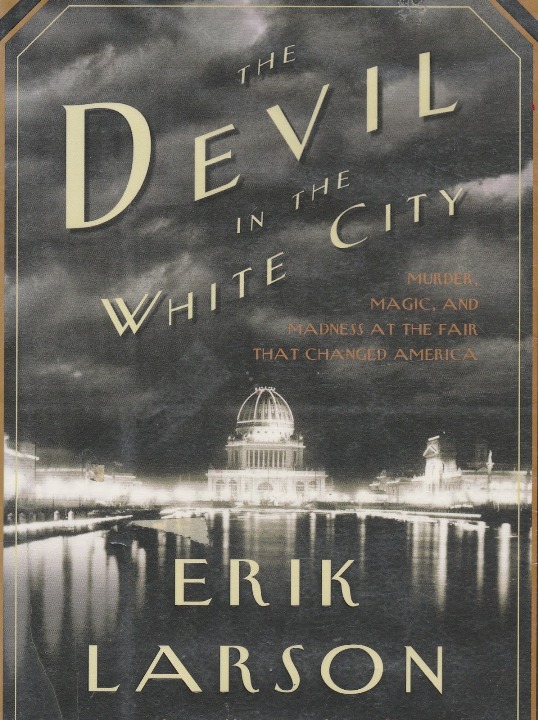
The Devil In the White City (2003)
Devil

History is supposed to be dull, a lifeless parade of facts, dates, and names that it can be hard to care much about. It’s not, really (my undergrad degree is in history – trust me!), but that’s the rep. Thankfully, a generation of writers producing “narrative nonfiction” have done a good job bringing the past to life. None is better than Erik Larson and, while all his books are good, this one is my favorite. It’s the story of a grizzly serial killer who uses the 1893 World’s Fair in Chicago as cover to lure his victims. That story alone would be good enough, but woven with the story of the fair itself and how it was developed really makes things pop.

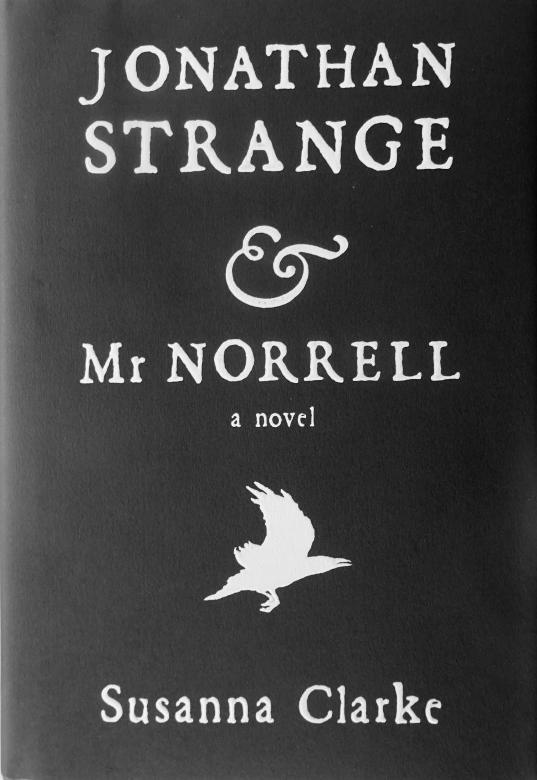
Jonathan Strange & Mr. Norrell (2004)
Strange

This is a horrible admission for a writer of fantasy, but I’m not a big fan of magic (hence the lack of any in The Water Road). There’s something random and unearned about it lots of times, where the people who wield magic do so by grace of birth or whatnot. What I deeply love about this book is that magic is all about knowledge and, more precisely, books. In fact, the way magic is learned and used in this book makes me think of how law was taught in the pre-modern age, when students apprenticed with members of the bar. Take all that, wrap it up in a magical history of England (and, oh by the way, the Napoleonic Wars), and it makes for an epic read.

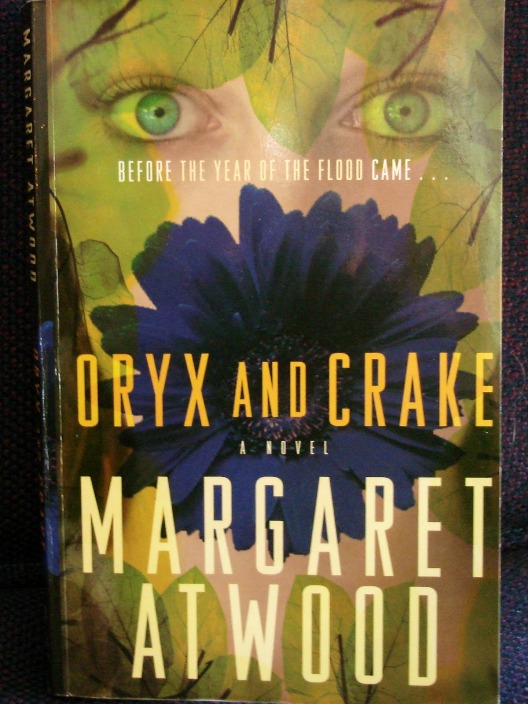
Oryx and Crake (2003)
Oryx

There are many ways of imagining the future. Only Margaret Atwood has come up with one that includes revolting, genetically engineered “chickens” called ChickieNobs:

’This is the latest,’ said Crake.

What they were looking at was a large bulblike object that seemed to be covered with stippled whitish-yellow skin. Out of it came twenty thick fleshy tubes, and at the end of each tube another bulb was growing.

‘What the hell is it?’ said Jimmy.

‘Those are chickens,’ said Crake. “Chicken parts. Just the breasts, on this one. They’ve got ones that specialize in drumsticks too, twelve to a growth unit.

‘But there aren’t any heads…’

‘That’s the head in the middle,’ said the woman. ‘There’s a mouth opening at the top, they dump nutrients in there. No eyes or beak or anything, they don’t need those.’[quote]

That sort of captures the whole feel of this book – at the same time horrible and morbidly funny. It’s a great beginning to a wonderful sci-fi (sorry, Margaret) trilogy.

UPDATE: Eagle eyed readers, or just those with all their digits, will notice I’m one short. Not sure how that happened, since I have the cover and everything, but, alas, I left out one of my absolute all time favorites! Better late, a they say . . .

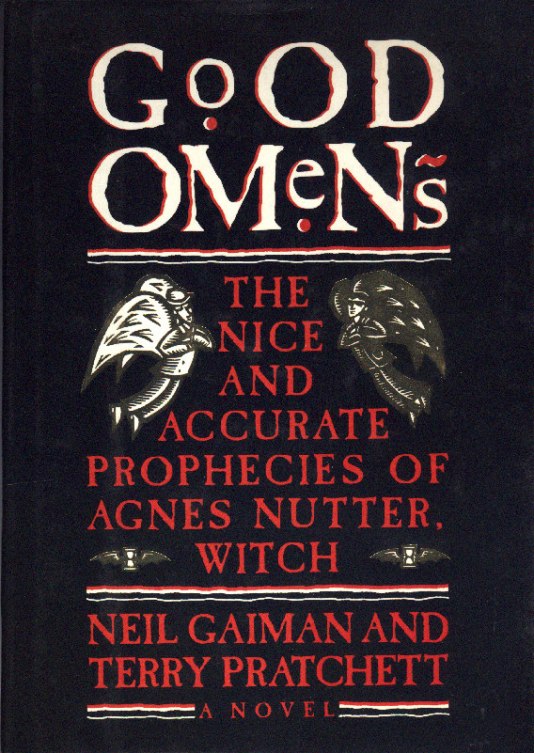
Good Omens (1990)
GoodOmens

Another bit of a cheat, as I get two favorite authors for the price of one – Neil Gaiman and Terry Pratchett. I think this was my first exposure to them on the printed page (I’d come across Gaiman via Babylon 5, of all places) and it melds their styles perfectly. It shouldn’t work, but it does. Hilariously funny and darkly compelling.

On Death In Fiction

Riffing on the two sides of the debate in the wake of Infinity War – either all those deaths don’t matter because we know they’re coming back or it matters because the people in universe don’t know that. What do writers owe their readers?

This post was inspired by events that take place in Avengers: Infinity War. If you’ve not seen it yet and want to remain unspoiled, be warned, I’ll be talking about major stuff that happens.

Spoilers

With that said . . .

Holy shit, that movie killed a lot of people. I’m not even talking about anonymous nobodies, set dressing to be collateral damage for the big final battle. I’m talking beloved characters, some major, deaths that could be universe shattering, even if we, as savvy modern media consumers do better.

The deaths basically come in bunches. Loki and Heimdahl meet their end at the very beginning, while Gomorra is sacrificed about midway. But the big shit hits the fan when bad guy Thanos gets all the Infinity Stones and snaps his fat fingers, disappearing half the beings in the universe. Among those who disappear into dust (like vampires on Buffy . . ., but they float up to hebbin, rather than down to the ground) are Black Panther and Spider Man. Serious shit.

Or is it? It doesn’t take a crystal ball to see that there’s no way Marvel is going to let all those characters stay dead. The MCU is an impressive feat of storytelling, but it’s first and foremost a money-making property. Black Panther and Spider Man already have other movies in the pipeline – you think they’re going to dump those for the sake of the story? Fat chance.

Which has led to an interesting discussion on line about the end of the movie. On one side are the people who say these deaths (at least the dusty ones, maybe the others) don’t really mean anything because we, the audience know they aren’t permanent. On the other are people who insist that they do have meaning because the other characters in the MCU don’t know these characters will come back and so it’s a big deal for them. Who’s right?

Maybe neither, at least completely. Some of it depends on what the creator is trying to do. If it’s just shock the audience, it’s a pretty hollow means to do so, but that’s not the only thing you accomplish when you kill a character.

Go back to the aforementioned Buffy the Vampire Slayer. Buffy dies at the end of the fifth season, sacrificing herself to save the world (again). It’s no shock that the next season of the show was not a Buffy free zone – she came back from the dead in the first two episodes. That was to be expected. But the show worked through that in very interesting ways. Most importantly, Buffy’s friends thought by bringing her back they pulled her from hell, when in fact she was in heaven (or at least at peace). In other words, it mattered for the rest of the season (and the show, really) that Buffy had died and then gotten better. It wasn’t a simple reset button.

To pull a somewhat vague, non-spoilerly, example from my own writing, I have a book where a major character dies at the end. That death resonates through the next book, motivating what other characters do. I didn’t kill that person off just for a “gasp” moment or to make sure readers know that nobody in that world is safe.

On the other hand, the recently completed season of Agents of Shield ended with an emotional death that, it turns out, really wasn’t, except the people in the universe completely knew it (even if viewers, myself included, were scratching their heads for a bit). That’s just cheap manipulation and is a hollow exercise.

Then there’s always the Deadpool take – announce you’re going to die in the opening credits, show said death twice, have a prolonged death scene later in the film, then wink it away post-credits. But would you expect anything less from that fucker?

Which path will the next Avengers movie take? Too soon to tell, of course (except, I think it’s safe to say, not the Deadpool avenue), but one hopes it’s closer to the Buffy example.

The bottom line, as a writer, is that death, like anything else when it comes to plot, is a tool. As with any tool, it can be used well or poorly. But given the emotional heft that death can have, folks should think long and hard about deploying it as a simple plot point. As with all things – think it out first.

Weekly Watch: Whiplash

Sometimes I come late to movies and the wait probably colors the experience. When Whiplash came out a few years ago it seemed like a movie I needed to see. It was critically praised, an Oscar winner, and about music. Sounded like it was right up my alley. But it slipped under my radar until, a few weeks ago, it popped up on TV (uncut) and I TiVoed it. After watching it, I kind of wish I’d just completely forgotten about it.

Whiplash, simply put, is one of the most overrated movies I think I’ve ever seen.

Since it’s been a while, there’s no need to avoid spoilers. The movie’s about a kid at a music conservatory, a drummer, who gets plucked from lower division drudgery by a famously abusive, prickly director to be part of his competition band. Lots of yelling and music occurs and our hero is broken down by his would be mentor. The ending is nicely ambiguous, as he either triumphs over this asshole or simply becomes just like him. It’s the best part of the film by far.

That’s because most of the other things that make up a movie – mainly the characters and the story itself – are lacking. Take the main character, who is so dull I can’t even remember his name. He has the charisma of a wet sponge, yet somehow manages a date with Supergirl (he dumps her later in the most on the nose “it’s not you, it’s me” speech ever put to film). His only goal appears to be getting famous, which he’s decided to do in 21st Century American by . . . becoming a jazz drummer. Sure, kid, whatever.

More formidable is his mentor, Fletcher, for which J.K. Simmons won an Oscar. Simmons gets to yell a lot, complete with vulgarities and insults that range from homophobic to anti-Semitic. There are no layers to this guy, no hint as to how he’s come to be the way he is. There’s a hint of a soul, when he finds out that a former student has hung himself, but it’s gone pretty quickly. Oh, and he’s nice to a little girl, but, you know, even Hitler liked dogs. Simmons’s performance at last has life to it.

What’s altogether not clear is why either character has anything to do with music. As one reviewer concluded:

What Whiplash ultimately champions isn’t really musicianship but empty, grandstanding virtuosity. Under Fletcher’s tutelage, Andrew never learns anything about nuance or dynamics; as designated by Chazelle, the measures of his artistic accomplishment are strictly speed and ferocity. The movie ends with Andrew executing one of those horrible, endless jerk-off solos that give jazz a bad name, though it’s presented as the ultimate victory.

Wet sponge only wants to be famous. When challenged about his career choice there’s no mention of love of music or trying to connect with the mysteries of the universe. He has no music background at home, so it’s not as if he’s trying to fulfill someone else’s dream. Just why would he put up with all the shit Fletcher sends his way?

Likewise, it’s never clear why Fletcher went into teaching music rather than, say, being a football coach. Make no mistake, his tactics aren’t about making better musicians or better people, they’re about one thing – winning competitions. I know from my own musical life that winning such things often means cranking up flashy technique at the expense of, you know, the music and that’s certainly true for Fletcher. Again, he’s not into the music itself, only the end goal of winning. More than that, the anecdote that underlies his philosophy of life/teaching isn’t true.

Which is what makes the film’s pivotal point so fucking stupid. The band is set to play at a competition a couple of hours into the hinterlands outside New York City. Fletcher, perfectionist that he is about these shows, doesn’t bother to charter a bus to take the band there. No, it’s every man (and it’s all, or at least mostly, men) for himself, with a helpful hint to leave earlier to beat the traffic. Naturally, wet sponge can’t manage that and manages to walk away to a car wreck to take his place, bleeding on stage. Rather than have the stand in take his place (the band hauls around multiple drummers, but every other spot is just a single – for whatever reason), Fletcher lets him play, which of course he can’t. It’s horribly dumb.

As, really, the whole movie is. Some of the cinematography is nice (sweeps across the horn section, nice lighting, etc.), but it’s service of absolutely nothing. The writer/director, Damien Chazelle, clearly has a thing for jazz (he went on to make La La Land), but he doesn’t seem to enjoy it very much (as this article argues, the movie gets its jazz mythology wrong). As such, Whiplash isn’t much more than a lovingly shot portrait of an abusive relationship where neither party has any real motivation. If there’s anything more pointless than a drum solo, maybe that’s it.

Whiplash


Author Interview – Timothy G. Huguenin

This time we talk things that go bump in the night, Bigfoot, and . . . greeting cards?

Who are you? Where are you? What kind of stuff do you write?

My name is Timothy G. Huguenin, I’m a horror writer living in Bartow, West Virginia.

 Tell us about your most recent book, story, or other project.

My most recent published book is a ghost story called Little One. Kelsea Stone lives in Los Angeles and gets a call one day from a lawyer telling her that her birth parents have passed away (she was sent to a foster home at a young age and never knew them) and have left her their house in Canaan Valley, West Virginia. She flies over there to check it out, clean it up, and probably sell it or rent it out—and subconsciously, she deeply desires to know her parents and figure out why they sent her away. While she is there, she finds out that hers isn’t the only soul dwelling in the house.

Little One Cover

In what genre do you primarily write? Why did you choose that one?

I write horror, usually set in the Appalachians (primarily West Virginia, because I grew up there). I don’t know why I like horror more than the other genres, but I do, so that’s usually what I write. I tend to shy away from slasher-type horror, and gravitate more toward gothic and/or weird styles, depending on my mood. I take a cue from Stephen King and try to focus heavily on characterization, especially in my novels, but I’m not nearly as good at that as he is. Early on in my life as a reader, before I really was serious about writing, Poe heavily influenced my tastes, and I’ve been drawn toward Lovecraft and Ligotti these days.

Tell us briefly about your writing process, from once you’ve got an idea down to having a finished product ready for publication.

I usually get an idea for a villain, or a monster, or some kind of creepy or disturbing situation, without even a skeleton of story. It’s just kind of a seed in my head. I’ll leave it in there for a while and see if it sticks around. If I keep thinking about it, usually that means it’s a pretty good idea, and it will start to germinate. I’ll try to come up with some characters, if I haven’t already, and figure out a conflict that the story could center around.

So there’s some time between when I get the first idea to when I actually get something on paper—though this process can take anywhere from a few minutes to a few months. When I think I have a seed that has sprouted enough (I can think of at least one or two characters and the conflict, with a general idea of where the story might go), I can start writing. Once that happens, I start typing and see what happens. Usually the beginning is hard, since the characters aren’t quite established yet.

But once I get through that, the story kind of lives its own life. Sometimes it goes where I was expecting; most other times I’m surprised by it. After I have a first draft, I’ll take a break from the book. Then I’ll print it out. I always print out hard copies for editing. Always, always, always print out your story at least once before you decide you’re done. You miss so much on a computer screen. (I splurged a little last year and bought a Brother HL-L2340D, a black and white laser printer that prints on both sides of the paper, and I would highly recommend that little workhorse to any writers who can afford it. And really, I make it sound like some big extravagance, but really, it is relatively inexpensive as far as laser printers go. I’m just an old cheapo by nature.) Anyways, I’ll run through the paper copy for initial edits, put my changes back into the computer, then I’ll email what follows from that to my wife, Emily. After I consider her comments and apply changes based on that, it will go to my other beta readers, if I have any.

My last two novels were improved immensely because of pre-publication beta reader feedback. If it’s a short story, usually Emily is the only person other than myself to read it before I submit it somewhere. After her comments, I might even go over it one more time on my own. For short fiction, that’s about it. I might revisit a short story every few months, but generally speaking that’s all I do. For my first two novels, I’ve hired a professional copy editor to help clean up my prose and mistakes after the beta reader stage. With something of that length, even the best self-editing writers cannot get by without a good, unbiased line editor. Also, I go through the novel again once or twice after editing. Even then, mistakes and typos can slip through the cracks. I am very particular about that kind of thing, and errors in a finished product really get me upset.

Why do you think it’s so important to edit on paper copies? Did you have an experience where you missed something editing on screen?

No specific editing disasters come to mind immediately, but I’ve always felt more comfortable reading from paper, so that naturally led to me editing from paper copies. Some studies have shown that reading from a screen decreases reading comprehension compared with reading from paper. How accurate those studies are in general I haven’t looked into, but I know in my own experience, I do not read as well from a computer, so it is easier for me to miss mistakes that way.

Watcher Cover

Who is the favorite character you’ve created? Why?

I am currently trying to find an agent for a novel I wrote about a boy and his friends trying to stop an evil hypnotist from taking over their town. It is my favorite thing I’ve written so far, and I reckon that my favorite character probably comes from that book. However, there are quite a few really good characters in there, and it would be hard for me to choose just one. I think I’ll go with the villain, Dr. Wolfgang M. Schafer (as he is called right now, and I don’t see myself changing his name before publication, but you never know for sure until it’s settled in print). He’s tall and lanky, with silver eyes and greasy black hair. He wears a top hat and a ratty black suit with a tie the color of dark blood. A barn owl named Trilby rides around on his shoulder and is known to attack meddling kids every now and again.

What’s the weirdest subject you’ve had to research as a writer that you never would have otherwise?

I know I’ve Googled some weird stuff while I’m writing, but for some reason I’m drawing a blank (maybe my subconscious doesn’t want to share! lol). Hmm. I’ve been reading a lot about Bigfoot recently, but that’s not really that weird. One of my questions I had a hard time figuring out (and still never found a good, detailed answer to) was how long it takes for a body to decompose without being embalmed. After death, bodies these days are pumped full of chemicals. I had trouble finding info about what happens if you don’t do that, specifically a timeline of decay stages. I even tried emailing some police and professors at a school that runs a lab on that kind of stuff for people studying to be forensic investigators, or whatever they call those CSI guys. But nobody would email me back.

What’s the one thing you’ve learned, the hard way, as a writer that you’d share to help others avoid?

There are some great short fiction magazines out there—some print and more online—and there even more bad ones. Now, I’m not talking about paying vs. nonpaying vs. token markets here. People have their own opinions on what their stuff is worth, and I’m not saying that all nonpaying markets are bad. I’m saying, there are some places that you might be tempted to submit to in desperation, then later regret it if you get accepted because it is presented in an embarrassingly unprofessional manner, and you will have doubly harder time selling it to a magazine with a greater readership. It is hard to get short fiction published by the good ones, so you might be tempted to just send your story anywhere at all, even if it’s a website with only tiny handful of viewers (most of which are the contributing authors), without a competent editor, and looks like some teenager’s Geocities project from the dial-up era. But it is better to hold on to a short story that isn’t getting accepted, keep tinkering with it every now and then as you improve as a writer. Eventually you will start writing better stuff, and new good markets do open up, giving you more options.

If you won $1 million (tax free, to keep the numbers round and juicy), how would it change your writing life?

I’m not sure. I reckon I would buy a house with better insulation, and I wouldn’t ration my heat as much. That would make it a lot easier to sit down and write in the winter. My electricity bills get pretty high in the winter, and I try not to turn my thermostat up past 60 in most rooms—and when I’m not in the room, I keep it turned down to 50. So when I sit down to write, I sometimes get really shivery. Also—and I don’t know if other people are like this, or if it’s just me—being cold makes me have to pee a lot. So in the winter I get up to pee quite often. I keep telling my wife if I ever make it big, I’m going to have someone build me a tiny house in our back yard that could be my lonely little writing shack. If I ever do that, I’ll make sure it stays warm when I’m in there.

What’s the last great book you read or new author you discovered?

Well, I’m usually late to the game with any kind of trend, including literary stuff, even in my own genre. Only last year I discovered Thomas Ligotti’s Grimscribe, which is from the early 1990s.Like almost everyone else who has read it, I was super impressed. I ended up buying Songs of a Dead Dreamer after that, and then Teatro Grottesco, which I haven’t read much of yet. I later found out he holds a very pessimistic, frankly depressing and disturbing philosophy that I don’t personally subscribe to, but he sure knows how to write some very unique stuff, with a prose style that hearkens back to Poe and Lovecraft in some ways, though not as verbose. More lately, I’ve also been enjoying Michael Wehunt’s work. He also writes in the weird vein of horror, though from what I have read so far, his stories tend to read more like Robert Aickman than Ligotti. I enjoyed his novella The Tired Sounds, A Wake, which was published by Dim Shores Publishing in a limited print run, so that one, unfortunately, isn’t easily available now. However, a few of his short stories can be read for free online (there are links on his website), and Apex published a book of his short fiction called Greener Pastures, which you can find on Amazon. Actually, Shock Totem originally published it, but they went out of business, or got bought or something, and Apex is the publisher who has it now. I know he’s currently working on a novel, and I’m looking forward to seeing how that turns out.

What do you think your next project will be?

I’ve started a Bigfoot novel set here in West Virginia. I’ve been kind of stuck on it recently, though. I have a few paragraphs down and a few character sketches, but it’s not really wanting to take off for some reason. One of my other goals for this year is to write more short fiction, so I’ve been trying not to worry about the novel as much this month and get some words down on shorter stuff. Also, you might find this kind of funny—I do—just yesterday I decided to try and break into the world of writing for greeting cards. I’m sending a few little verses to some companies. We’ll see where that goes. I had forgotten until recently that I used to write little poems for my friends all the time in high school, so it makes sense to try this out. I don’t really think I’ll get very serious about it, but if someone ends up wanting to pay me for something that took me fifteen minutes to write, I won’t feel bad about that.

What is it about Bigfoot that made you want to write a story about it?

For all the television attention Bigfoot has gotten due to recently made Bigfoot hunting reality type shows, I haven’t come across very many Bigfoot novels—and not any that I considered very good, either, based on reading some excerpts or reading reviews (if you have any suggestions, point me to them, I’d love to find some good ones). Though generally speaking Bigfoot has been associated with the Pacific Northwest, there have been multiple reported sightings here in West Virginia. Russell L. Jones, a Bigfoot believer, has written a book specifically on Bigfoot in WV called Tracking the Stone Man, which I found very interesting. In fact, Pocahontas County (where I live) and two neighboring counties, Pendleton and Randolph, have the highest reported numbers of sightings according to the Bigfoot Field Researchers Organization (BFRO). The Monongahela National Forest is huge, over nine hundred thousand acres. Plenty of room for Ol’ Squatch to hide, if he exists. I was looking for a good monster in WV, and heard people have claimed to see Bigfoot activity in the area. Sounded like a good story to me!

AuthorPic

Did you sit down and decide to write greeting card verse, or did you come up with a verse and think “this might work . . ..”?

I saw somewhere on the internet that you could submit stuff to a few greeting card companies who would pay for work. Figured it was worth a shot. So far I haven’t gotten any interest in mine.

For more check out Timothy on the web, Facebook, Twitter, or Instagram.

Another ROSFest Down, Many More to Go

This year marked the 15th anniversary of ROSFest – the annual Rites of Spring Festival of progressive rock. Born near Philadelphia, it’s called the Majestic Theater in Gettysburg home since I’ve been going in 2011. The fest this year was as smoothly run as ever, with a lineup that wound up being one of the best I’ve seen. So what about those bands?

First up on Friday night was District 97, a band from Chicago who, it happens, were also at ROSFest for the first time in 2011. They went over really well, but their brand of heavy modern prog didn’t connect with me very much. So my expectations for this set was low, but I was pleasantly surprised. I liked the new material (from a forthcoming album they’re currently crowd funding) better than the old, so I’ll keep an ear on them going forward.

Headlining Friday was legendary fusion band Brand X, complete with original members Percy Jones (bass) and John Goodsall (guitar), who were joined by a drummer, keyboard player, and percussionist. They were, to be blunt, blazing. Any thought that a band that’s been around since the mid 1970s might be mellowing in their old age was put to bed early. All their stuff started to sound a bit samey after two hours, but it was an impressive kind of consistency.

Saturday began with a semi-local band, Cell 15, which at least has the most interesting origin story for ROSFest this year. The lead guy/drummer/keyboard player explained that he got out of prison in 1992 and that the first Cell 15 album was largely written while he was incarcerated. Good on him for getting out and turning his life around (from someone who sees people try, and fail, to do the same thing every day). The music itself was fairly standard Americanized symphonic prog (think Kansas and Spock’s Beard), which I enjoyed. However, the band relied way too heavily on canned music, particularly for very important and obvious synth leads. The reliance on the canned stuff is all the weirder given that they had a second drummer join them for a few tunes and, based on their new CD that I got, the main guy isn’t even the drummer on the album! Frustrating.

Up next was another American band, LA’s Perfect Beings. They were invited to ROSFest a couple of years ago, but two band members leaving put the kibosh on that. However, in prepping for that year’s fest I got their second album, which was pretty good, but nothing special. Their set this year focused on their new album, Vier, and was exceptional. In a weekend that sometimes tends to the showy and ostentatious, they made great use of quiet passages and empty space (somewhat like Marillion does, although they don’t sound a thing like them). My favorite surprise set of the weekend.

Italy’s Barock Project was the first band announced for this year’s festival, to a lot of enthusiasm. It’s easy to see why. This group of young guys (after one particular catchy tune the band leader declared “sometimes we’re a boy band!”) belts out a brand of what I’m going to start calling “up tempo party prog.” It’s kind of the same vibe as Moon Safari, although the two bands sound nothing alike. The result was a fun show, with lots of energy, but the music didn’t really stick with me. The highlight was a brief instrumental workout where the keyboard player channeled the spirit of Keith Emerson. They, too, appeared to have some canned stuff, but at least it was mostly in the background.

Years ago I was pawing through CDs in my local borders and came across an album from a band called Threshold. Somewhere in my mind I associated he name with a Celtic-influence prog band from Ohio, so I snatched it up. It seemed like a rare find. It wasn’t until I got home that I realized Threshold was actually a British prog metal band. It was not at all what I was expecting, but I enjoyed it nonetheless. When they were announced as the Saturday headliner I was interested to see if that album (Critical Mass, if you’re scoring at home) was representative of their stuff. Turns out it was, although they didn’t play anything from that album at ROSFest. They play melody proggy metal that doesn’t dip into the “balls ‘n’ chunk” aspects of metal too much. I enjoyed it. Tip to the lead singer though – don’t demand the audience sing along unless you’re sure they know the words!

Sunday morning, the “Church of Prog” slot, brought not one but two bands, playing short sets with a quick turnover. First up was Valdez, the current project of British ex-pat Simon Godfrey (who was also at ROSFest 2011 with Tinyfish – maybe he came and never left?). I was pleasantly surprised to see the band also included Tom Hyatt (of echolyn fame) on bass. Being completely unfamiliar with their stuff I was pleased with the set – melodic, proggy in spots, anthemic in others. Plus, Godfrey is a great front man (when one person in the crowd responded to a song announcement, he waited just a sec, then deadpanned, “thanks, Mum”). A highlight.

The other Church of Prog band was Lines in the Sky from Tennessee. Unfortunately for them, my brain had reached music saturation at that point, and I left after a few tunes.

Have you ever heard prog from Peru? In the flesh? I have! Flor de Loto took the stage Sunday afternoon and put on another high energy set full of riffy (a little too riffy, in spots) heavy prog. The most notable aspects of their set for me were the Spanish vocals and the presence in the band of a dedicated flautist, who mostly used native Andean instruments (he was introduced both as “the last Inca” and the “Ian Anderson of the Andes”). Also, their keyboard player fired back at the guy from Barock Project with a solo that owed a serious debt to Rick Wakeman. Fun stuff.

The first note I wrote about Special Providence (from Hungary) was “holy shit that’s a lot of notes.” If jazz metal is a thing, this band is the gold standard. They played really dense, seriously complex instrumental music that got all weird with rhythms and such. Sometimes I wasn’t convinced that the band seemed to be on the same page, but it all tended to work out. I preferred the tunes that leaned more heavily on the fusion side of things than the metal. An impressive set that grew on me the further it went on (which rarely happens).

Wrapping up things this year was Premiata Forneria Marconi – PFM. If you read my post about 10 influential albums, you’ll know that PFM is an important band to me. I was stoked to see them live, even if there’s very little of the original band left. No matter. This wasn’t the same guys who did Storia di un Minuto or Per Un Amico, but they played that material with a lot of heart, soul, and magic. The newer stuff wasn’t bad, either, but it pales in comparison to the classics. To have heard them played live to their fullest extent (like Brand X, these guys aren’t slowing down) was awesome and a great way to end the weekend.

My one beef, which is really minor, involves encores. We’ve all grown used to the “obligatory” encore, where the band leaves the stage with everyone in the building knowing they’re coming back for more. It’s a dumb ritual, but at least it seems somewhat organic. For at least a couple of sets at ROSFest this year, somebody (organizer George, I think) off stage took to the mic to urge the crowd on to “bring them back” to the stage. That, to me, is a bridge too far. We’re already passed the point where the encores are really genuine; stage managing them just seems tacky.

Will that keep me from coming back in 2019, with already announced headliners Riverside? Not on your life.

rosfest2018

UPDATE: Or, it appears, probably not. Shortly after this post went live the organizer of ROSFest announced that the festival was moving to Sarasota, Florida. A pleasant drive of a few hours turned into an epic road trip, or (even worse) flying. So it looks like this was my last ROSFest, after all. Fuck.