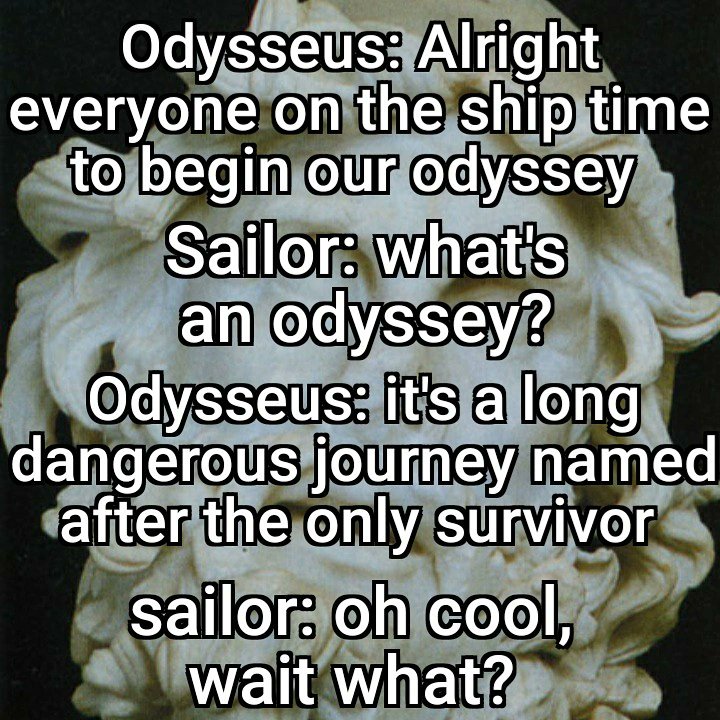
Like a lot of folks (maybe most?), my knowledge of Homer’s Odyssey came mostly from references and homages, rather than the actual poem itself. It’s hard to go through life and not have heard of the sirens or Scylla and Charybdis (they even show up in “Wrapped Around Your Finger”!). Until this year, though, I think the closest I’d come to consuming the actual story was O Brother, Where Art Thou?.
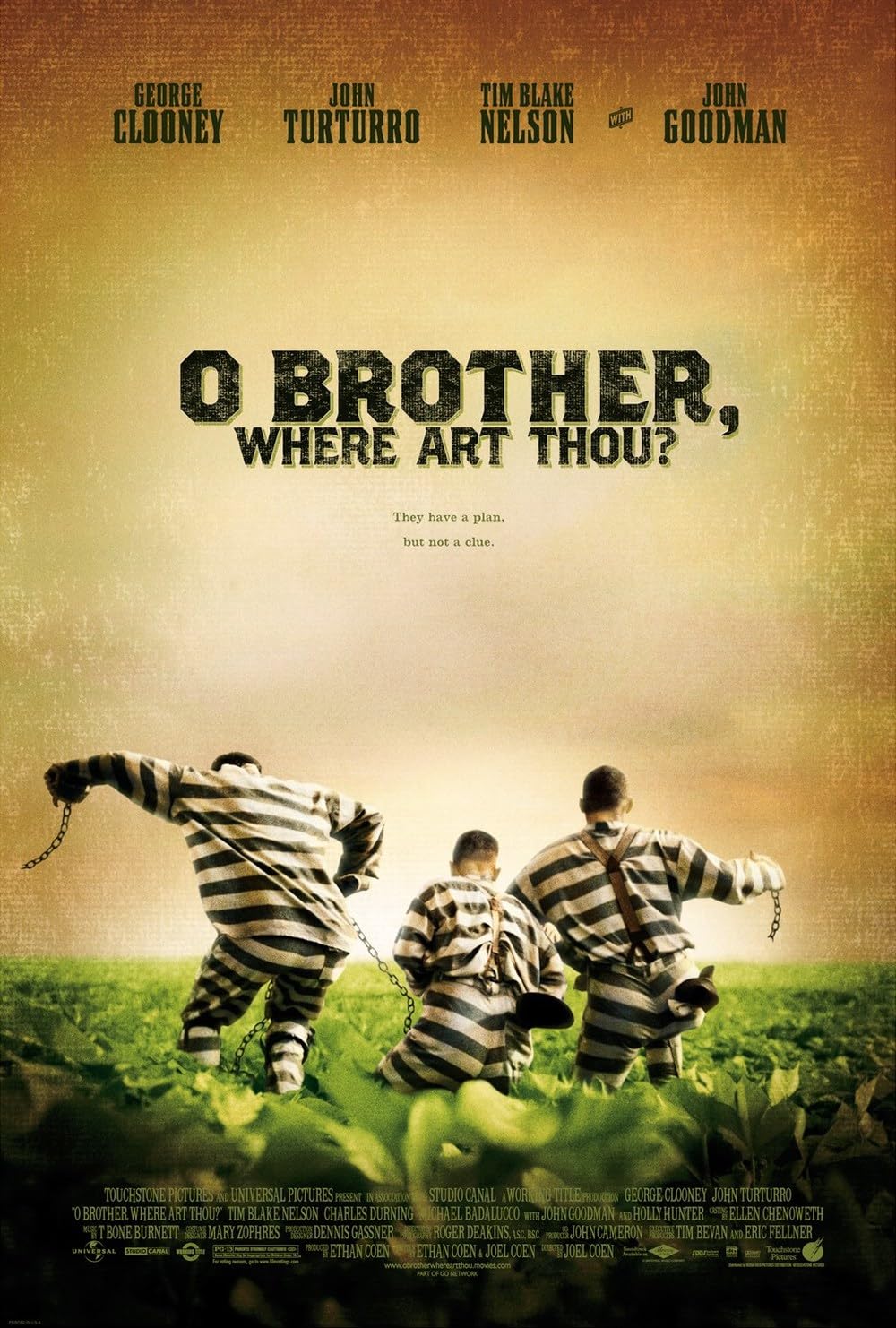
It’s a great flick, with the irony being that the Coen brothers hadn’t actually read the poem, either, when they made it. Rather, they’d picked up enough from the general culture to get the gist of it.
When Christopher Nolan’s take on The Odyssey came out, I knew I was going to see it. Aside from being one of the big event movies of the summer I’m generally a fan of Nolan’s work.
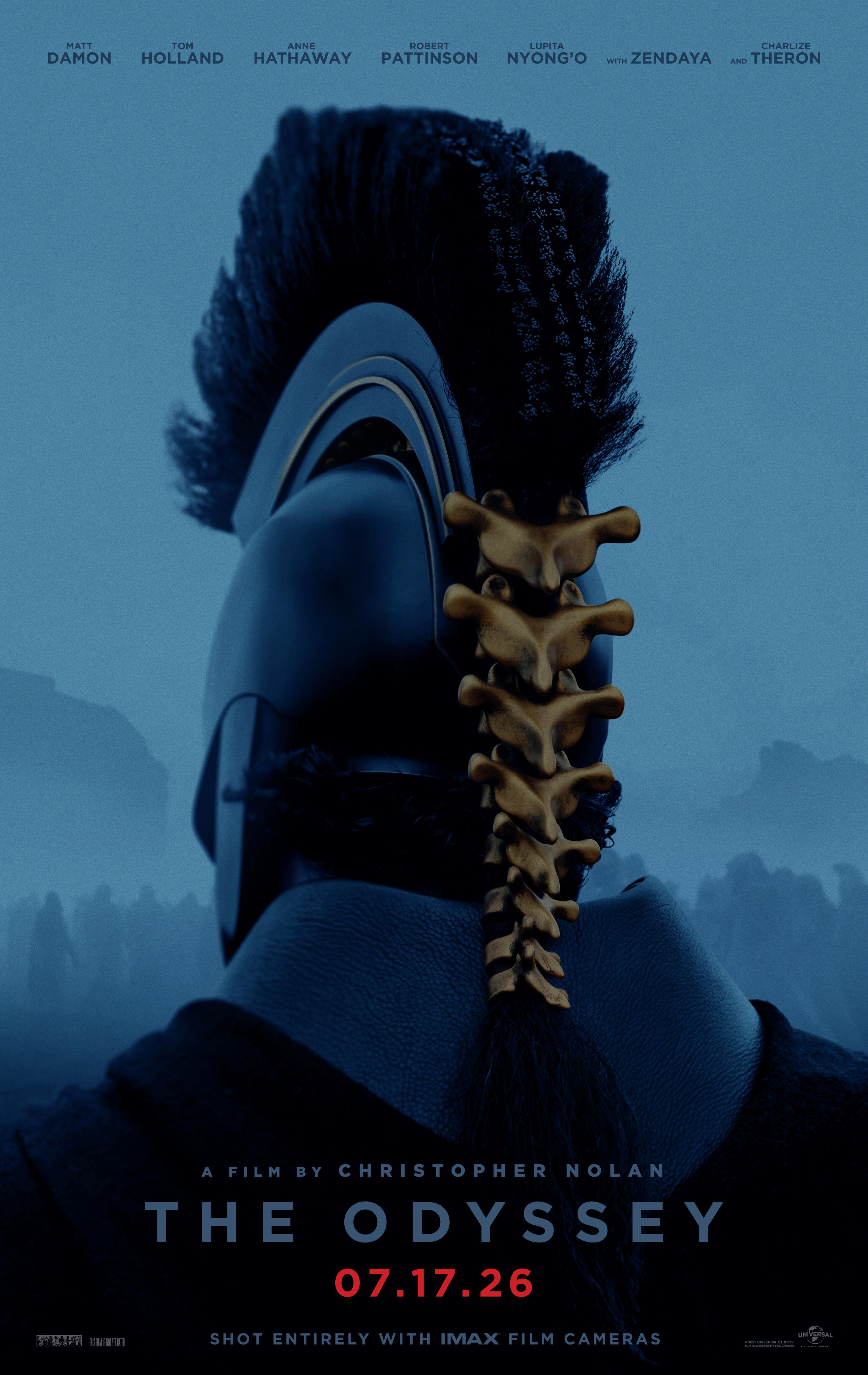
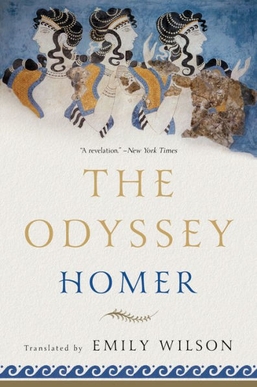
But before I did, I wanted to get a better grounding in the original poem, so I read/listened to the 2017 translation by Emily Wilson (read by Claire Danes) before dragging the wife to the theater to see the movie.
I’m not going to judge one against the other, but there’s definitely some interesting contrasts between the two.
The first thing that struck me about the poem is how much it doesn’t sound like poetry, at least to my ears. Wilson made a big deal of keeping her translation the same number of lines as the Homeric original and (as reported here) really focused on keeping a more structured meter (lots of modern translations are in free verse). I can’t argue with her, but I didn’t pick up on any of that listening to it. If I’m honest, I was a little apprehensive that it would come out a little too “poetic” (not in a good way) and was relieved that it, for the most part, felt very natural. The poetic flourishes are in the language and the repeated phrases (such as the “wine dark sea”) that pop up almost as road signs along the way.
Another thing I thought was fascinating about the poem was the portrait of the Greek gods who were involved. Far from being enlightened beings with promises of a happy afterlife, the gods in Odyssey are more like gangsters. The concept of xenia (what Nolan’s people call “Zeus’ Law”), to treat strangers well, could be a riff on the Golden Rule, but here it’s much more transactional. It’s not good to treat strangers well because of some shared humanity (or spark of the divine), but because that really could be Zeus in disguise and if you treat him badly he will fuck you up in return. It’s basically a holy protection racket.
More than that, the gods are major players in the narrative of Odyssey. Odysseus’ torments are largely due to blinding Poseidon’s son, the cyclops Polyphemus, leading that god to rough up the seas and such. Then his crew dies largely because they eat cattle belonging to Apollo, who then takes vengeance. But Odysseus has Athena in his camp, and she provides invaluable assistance in getting him home and getting his kingdom back. If anything, the humans in Odyssey are often mere playthings for the gods.
Nolan’s movie largely jettisons the gods. They’re mentioned a lot, with some not-so-subtle touches to emphasize the point (thunder when Zeus gets mentioned, for example), but the gods of Nolan’s movie are much more abstract concepts that actual beings interfering with human life constantly. Even Athena is revealed to potentially be no more than a PTSD flashback, a walking reminder of atrocities committed in Troy, rather than an actual goddess. This hampers some parts of the story, such as when Athena basically blinds the numerous suitors as Odysseus mows them down. On screen it’s just another “why are these guys all proceeding one by one?” attack scenario instead. One bit of clever adaptation, however, is making Odysseus’ ally (and favorite slave) Eumaeus blind, so he can’t see what Odysseus actually looks like (he’s sort of glamoured in the poem by Athena, naturally).
Another thing that stood out to me about the poem is about how minor some of the classic scenes are. As I said, I was listening to this, largely on commutes to and from work. The sirens and Scylla/Charybdis were first mentioned about halfway to work one morning and were both done by the time I parked the car. Very anti-climactic, particularly given that Odysseus is told how to avoid them (he doesn’t clever the shit out of it, as in the movie). Naturally, Nolan milks them pretty well, with the passage of the sirens being particularly good.
Overall, it’s hard to think of the poem in terms of “good” or “bad” or even “like” or “dislike.” It’s the origin of so many tropes that have echoed across centuries through all kinds of art and media. It would be like trying to rate the Bible or The Epic of Gilgamesh – they’re just there and, pretty much, always have been.
In light of that, there was no way Nolan’s movie could really compare. I’d go so far as to say a real “adaptation” of Homer’s Odyssey is impossible. The best you can hope for is for whoever is telling the story in a new form does something interesting with it, something personal and unique to their sensibilities.
By that measure, Nolan’s film is a triumph. As has been noted elsewhere, it feels so much like a “real movie,” standing out in an era of green-screen specials and CGI. Yes, Odysseus’ ship looks more like a Viking long ship than what he might have had, but it’s a real Viking long ship (no shit) and feels like it. The movie is a work of craft and precision and there’s no doubt it’s what Nolan wanted it to be.
What he wanted it to be is, honestly, quite a bit different from what Homer composed. Primarily, Nolan’s Odysseus is a modern warrior, beset by PTSD from the events in Troy. The movie returns to Troy – the horse, the sack – multiple times and makes clear that Odysseus is scarred as a result of not just what he saw, but what he did. In a lot of ways, the final return to Troy, where’s it’s ruthlessly sacked and its citizens slaughtered, is the scene some critics said was needed in Oppenheimer after the bomb was dropped in which the architect is confronted by the horrific fruits of his cleverness.
In the poem, Odysseus doesn’t show any of that. He doesn’t appear to view what happened at Troy as anything other than war and that’s just the way it is. He is psychically battered and scarred, but it’s due to the separation from his family and struggle to get back home. Nolan might have shifted on that because in the 21st century we have a better idea of what combat does to people emotionally, but it does make for a different story. It also makes using the ending of poem, which is fairly upbeat, impossible and Nolan didn’t figure out how to make it work.
So often when someone makes of movie or TV series based on a book we get bogged down in which is better, whether it’s a faithful adaptation or not. It would serve us better to view each thing as its own and judge it on its own merits. There’s no reason you can’t love a millenniums-old poem and a modern movie based on it for entirely different reasons.