Deadlines really sharpen the mind. Legal writing is bound by such deadlines. If a court says a brief is due on September 1 then you better have it filed by September 1 (motions to continue excepted, of course). Point is, there comes a point where a brief or some other pleading is “final” simply due to the fact that you run out of time to fiddle with it.
Writing fiction rarely works that way, at least for self-published writers like me. Since I only do something with a book once I’ve finished it, I don’t have editors or others looming over me with deadlines. As a result, it can be hard sometimes to decide when to “let go” and let a book be “finished.”
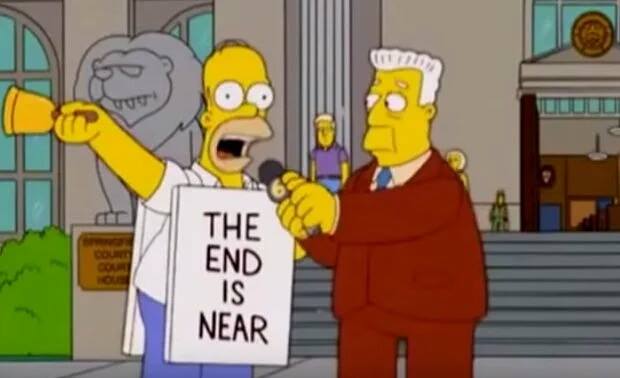
I’m glad the same thing happens to big-time traditionally-published writers, too.
Recently, Karan Mahajan had a piece in the New York Times about how she reworked the start of her novel The Complex even after the advanced reader copies (aka, the ones the critics read) went out. The desire to tinker late in the game is fairly common:
A galley might purport to be the near-finished version of the book, but for most writers, writing is never finished. In a lecture printed in The Believer, Zadie Smith mordantly describes sitting “backstage with a line of novelists at some festival, all of us with red pens in hand, frantically editing our published novels into fit form so that we might go onstage and read from them.” She adds: “It’s an unfortunate thing, but it turns out that the perfect state of mind to edit your own novel is two years after it’s published, 10 minutes before you go onstage at a literary festival.”
To return to legal writing, it’s usually several months (sometimes a year or more) after briefs get filed that a case is scheduled for oral argument. When I return to the briefs to prepare for that argument I inevitably find things I think I should have done differently, even a stray typo. Forced to confront your past work, you can’t help but figure out how to make it better.
I’ve seen authors who rely on that as part of their development process. They’ll release a book on Kindle or in other electronic formats and then take reader feedback into account and revise, publishing new versions over and over again.
I don’t think I could ever do that. For one thing, a book, to me, is the product of a particular time and place in my own life. Moore Hollow would be different if I wrote it today – it might even be better! But the version that’s out there in the world is what it is and it is, kind of, who I was in 2015. Besides, I think it’s kind of cheap to let your audience be your beta readers. Put together the story you want to tell and loose it on the world then move on. I’ll adopt a quote from Mahajan’s piece, attributed to champion belcher Eudora Welty: “I’ll have to apply any lessons this book has taught me toward writing the next one.”
The “next one” right now is The Fall (still a working title – I’m still working on it!). I’m in the middle of what will be the final draft, or at least the one I send out to an editor or start to query. In other words, when I finish this draft I’m finished. Will it be done? Almost certainly not. Could it be improved with another pass or six? Almost certainly. Will I lose my mind if I don’t call “stop” and move on to something else? Absofuckinglutely yes.
Ultimately, that, for me, is when I tend to think that something is “done.” It’s a combination of (a) is it reasonably the best it can be? and (b) am I ready to write about something else? But even answering both of those questions “yes” doesn’t mean it’s perfect – it never will be. You gotta’ know when to walk away.

