Is Art the Stuff Nobody Needs?

We’ve all sat through movies, or slogged through books, that are too damned log. Did Uncut Gems really need two hours of shouty Adam Sandler? Wouldn’t 90 minutes have done the trick? Do any of the Song of Ice and Fire books need those long descriptions of food?. Couldn’t most of those Netflix true crime documentary series be cut to a feature length doc rather than four or five TV episodes? Isn’t in the obligation of the creators of these entertainments to be as efficient as possible?

Not so fast, argues author Lincoln Michel. Last month he made a strong argument that it’s the “unnecessary” stuff that makes art worth doing. I’m not sure that he’s completely correct, but he’s certainly not wrong.

Michel references people who complain about scenes of sex or violence, or, most hilariously, “those damn whale chapters” in Moby Dick, because “they don’t move the plot along.” Dubbing these folks “consumers” rather than readers, he suggests that their “ideal story seems to be a Wikipedia plot summary.” This might have many causes, from a modern obsession with efficiency to artists seeking short cuts to satisfy an increasingly fragmented audience.

For Michel, this is not a good thing:

Yet I would like to humbly suggest this thinking is entirely wrong. The unnecessary is most necessary part of art. Art is exactly the place to let your eye linger on what fascinates it. Art isn’t an SEO optimized app or a rubric for overworked teachers to grade five-paragraph essays. Art is exactly the space—perhaps the last space left—where we can indulge, explore, and expand ourselves. If we can’t be weird, extraneous, over-the-top, discursive, and hedonistic in our art, where can we be?

While recognizing that the seemingly extraneous stuff can have meaning in the work (by deepening understanding of a character, for instance), Michel goes so far as to claim that “I don’t believe art has ‘a point.’” In other words, for Michel, art is about the journey itself, not the destination and the tangents and dead ends that are explored along the way are as much a part of that as the jaunt down the proverbial Yellow Brick Road.

I like a lot of what Michel is saying here. I write fiction, but I also write briefs and other legal arguments in my day job and in that role, there is no doubt, brevity counts. Lawyers are famously long winded, I know, but you really want to convince the judge (or law clerk) reading your brief in the most efficient way possible, so you trim down the issues, trim down the facts to the bare minimum.

Fiction can certainly be different than that, but does it have to? I’m reading a book right now (no names – I’m not finished yet and it might turn around on me) that has a great idea at its center and would make for a really good short story or novella, but as a novel there’s just too much padding. What should be tense and horrific is instead kind of dull and plodding.

In a way it reminds me of the bloat albums went through when CDs took over as the main music format back in the 1990s. Whereas single LPs couldn’t handle much more than 45 minutes of music without quality issues, CDs can run all the way up to almost 80 minutes (a time chosen, apocryphally, so as to allow for the inclusion of all of Beethoven’s Ninth Symphony on one disc) and lots of artists took advantage of that. Here recently we’ve seen albums shrink again, back to where they were in the LP days and that seems generally like a good move.

That said, some of my favorite albums of that era are full to bursting and I wouldn’t have it any other way. Marillion’s Brave trimmed down to fit on one LP would be a travesty. I wouldn’t shave a moment off of the early Mike Keneally albums, all of which push the boundaries of CD capacity. And to the extent that other albums have filler, that doesn’t really diminish from the enjoyment I get from the really good stuff.

Heck, progressive rock writ large could be thought of as a celebration of what is “unnecessary” for rock music. Rock and roll, after all, is supposed to be direct, to the point, and emotionally blunt. Prog flouted that ideal, most obviously in songs that sprawled across entire albums sides (or more!), rather than be limited to 3 minutes or so. It’s that embrace of the excess, the unnecessary, that I love about prog.

That said, there’s an awful lot of lengthy prog that does nothing for me at all, same as books or anything else. Michel recognizes this, following his discussion of a favorite novel of his that is “plotless and essentially character-less” with the recognition that “[o]f course, it might not be interesting to you. If you don’t enjoy an artist’s vision, that is of course well and fine.” The problem, he argues, is transferring that personal dislike to objective truths about the quality of a work.

With that I agree 100%. As I’ve said here before, the reaction to art is inherently personal and what is one person’s work of genius is another’s pretentious twaddle. Where I part company, I guess, with Michel is that when I hear people say something is boring or slow or has unnecessary parts what I’m hearing is that the art, whatever it is, isn’t working for them and isn’t interesting to them. Because I don’t think there are objective truths about art I don’t take any one person’s reaction to any particular piece of it as being an attempt to deliver any truth other than their own. So I wouldn’t be as hard on people who think parts of books or movies or whatever are “unnecessary” because, to them, they are.

What’s most important, in the end, is that, as Michel concludes, there are spaces where artists and those who experience art can be free to be as excessive and unnecessary as they want to be. Not every work of art is for every taste and that’s not only okay it’s fucking fantastic. Find what you love and dive into it, then hope whoever is making it is willing to explore the unnecessary or the “boring” because when they do it you might think it’s the best thing ever. And creators – keep in mind that not everybody is willing to follow you down your creative cul de sacs – but I bet some folks will.

Weekly Watch: “Night of the Living Dead”

At the recent DualCon in Charleston, through sheer serendipity, my table wound up being next to that of John Russo, co-writer (along with director George Romero) of Night of the Living Dead, the horror film from which essentially the entire modern zombie genre sprang. After hearing him talk about the movie on a panel we did it occurred to me that I’d never actually seen the flick. Naturally, the wife and I remedied that situation that very evening.

The story of Night of the Living Dead is even more amazing than the movie itself, although it holds up pretty well after all these years. Made for about $100,000 by first-time film makers (Romero, Russo and others had a production company that made commercials and other short pieces in and around Pittsburgh – Romero even directed some segments of Mr. Rogers!) it grossed about $30 million worldwide, making it one of the most profitable movies ever made.

The movie itself takes a fairly common setup and ramps the dread up to 11. As Russo explained during our panel, he thought of Night of the Living Dead as the 1939 movie Stagecoach, “but with zombies instead of Indians” and that seems right. You take a group of disparate people with few prior ties to each other, put them in a stressful situation, and see whether they pull together and triumph or splinter and fail.

If the movie is not just that story, but a metaphor for society at large as it faces existential threats then we, in the words of Thinking Plague, “are so fucked.” Once the group is gathered in an isolated house while the zombie horde (sorry, “ghouls” – the movie never uses the Z word) approaches, the battle lines are draw over whether to remain on the main floor or barricade themselves in the basement. The arguments both ways are the kind that can never be right or wrong – the main level has multiple points of entry for the ghouls, but also multiple ways out; the basement is more secure, but if they break through that door you’re dead.

My first thought upon viewing was that Ben, the main character and the prime supporter of the main level argument, was proven wrong, because he winds up in the basement when the horde overwhelms the house, anyway. The more I think about it, though, I don’t think that’s the case. Less important than where they make their stand is that they make it together, is what I’m thinking now. That even he is killed, in the end, and not by the ghouls, makes for a very bleak viewing experience and comment on human nature.

Aside from the side effects of its low budget (beyond its role in launching the modern zombie genre, Night of the Living Dead is one of the foundational films of the modern independent film scene) it doesn’t feel “cheap” (this is not a Zappa-esque “Cheepnis” situation). The script uses radio and TV news reports, often playing in the background, to broaden the story without losing the focus on our characters and their locale. That also helps setup the very end, too. I also enjoyed the soundtrack, which is typical orchestral bombast, save for when the zombies are the focus, when is switches to a very cutting edge soundscape of synthesized throbs and scratches.

But my final takeaway from Night of the Living Dead is irony. My first novel, Moore Hollow, is a kind of zombie story. The backdrop is that a crooked West Virginia politician around the turn of the 20th century actually tried to raise the dead so they would vote for him. In the novel, a disgraced English journalist with family ties to the West Virginia coal fields comes to track down the mystery. The zombies aren’t monsters, but more a problem to be dealt with and, perhaps, damned souls who need protection. I gave him the last name “Potter” completely oblivious to the Harry Potter connection.

His first name? “Ben.” Just like the main character in pop culture’s foundational zombie text. Sometimes the creative mind really does some wild things.

On Bowdlerizing Dahl

The publishing world (and many many others) erupted last week at the news that the publisher of Roald Dahl’s books, Puffin (the children’s imprint of Penguin Books, naturally) had:

hired sensitivity readers to rewrite chunks of the author’s text to make sure the books “can continue to be enjoyed by all today”, resulting in extensive changes across Dahl’s work.

My only exposure to Dahl’s works is the Gene Wilder version of the Charlie and the Chocolate Factory movie (and the Futurama parody), but my understanding is part of what sets his work apart from other whimsical children’s literature is that it has a bite and nastiness to it that others lack. It seems like what Puffin is up to is smoothing down some of those rough edges to make things more palatable to modern audiences (although how changing the description of Augustus Gloop from “fat” to “enormous” doesn’t seem that different to me).

Predictably, this has been described as “censorship” by some, including Salman Rushdie. Whatever one thinks of this bowdlerization of Dahl’s work it simply isn’t censorship.

For one thing, “censorship” implies the violation of someone’s rights. Whose freedom has been impinged here? Certainly not Dahl, who died in 1990. He hasn’t had anything to say for more than three decades. The only organization with any speech rights in this situation is the publisher or whoever else owns the copyright to Dahl’s works (it’s unclear precisely who is calling the shots after selling rights to Netflix a few years ago). They have the right to say what they want – and refrain from saying what they don’t – even if that might be a dumb move. Unless an author has some perpetual right to have his words reprinted in perpetuity I’m not seeing a violation here.

For another, the key trigger for the term “censorship” should be some type of official action backed by the threatened use of force. That is most likely to come from some governmental body (see the current nonsense in Florida), but could come from a pitchfork-wielding mob, I suppose. Thing is, I haven’t seen anybody demanding that Puffin make the changes that have been made. It appears to have been purely a self-motivated ploy to make more money. It’s capitalism at its finest!

Backing the outrage that there is some stifling of expression going on here is an idea that a writer’s words make their way to the public unchanged by other actors in the publishing process. There may be writers who are big enough to not have to worry about editors, but draft manuscript submitted to an agent or publisher typically goes through lots of revisions before being published. I have ultimate control over my books, since I self publish, but the final product is still shaped by beta readers, the input of other writers, and an editor. I might not take all their advice to heart, but they certainly have shaped the books I’ve released. Hell, Dahl himself made changes in the past to adapt with the times:

Dahl himself agreed in the late 1960s that his original Oompa Loompas – who in the original 1964 novel were human pygmies bought for cocoa beans in the African jungle – could be recast as the little orange creatures with which we’re all now familiar.

Admittedly it’s different when the author themselves do it, but I’m not seeing censorship here or the violation of anybody’s rights. If anybody has a beef with all this it would seem to be living authors, writing new material for the current world, whose work might be squeezed out:

Philip Pullman reeled off a string of brilliant modern writers who might get read more if Dahl’s texts were left to grow old as their author intended, and thus to drop naturally down the bestseller lists.

Does that mean it’s a good idea for Puffin to try to rewrite what many people consider to be classics? Probably not. As I said, I don’t know Dahl’s work, but this piece at Pajiba seems to get it right:

It does far more damage to pretend that Dahl’s work is spotless, to remove its dark parts and erase from history the very real hurt he caused. The anti-cancel culture people may screech about content warnings, but surely pointing out what’s in a book makes far more sense than cutting it out? This decision had to go through so many people at Puffin. A ton of executives and editors had to sign off on this, to make the decision to participate in the smudging away of reality. Who did they think it would benefit? Dahl himself would have hated it. His readers wouldn’t support it. Schools using his work for classes now have a heap of problems to deal with. They handed a hand grenade of culture war bullshit to the right-wing, and didn’t win themselves any allies on the left. Writers everywhere must now wonder what could be done to their books when they’re not around to say otherwise.

Lurking under all this is the question of why anybody has copyright control of books three decades after the death of their author. The changes here were all made by the current copyright holders, in an attempt to keep the books commercially viable. Without that, anybody could take the old text and sell as many of them as they could. Alternately, of course, anybody could do their own update of Dahl’s stories, albeit without his name on them.

Ultimately, I don’t see this so much as censorship or anything evil, but just a group of people the law allows to continue to make money off a product years after the creator is dead trying to keep the product relevant and marketable. It’s a dumb attempt, but no more than that. Never put down to malice what you can attribute to the simple desire to make more money.

UPDATE: Since I wrote this, the Dahl folks have announced that they’re going to keep publishing the older versions, along with the new rewritten ones. Certainly a whiff of “New Coke” marketing to that. Also, I thought I’d pass along this column about all this which catalogs a great number of literary works that were changed over the years well after their authors were dead. TL,DR, as the kids say – this kind of thing has been happening for a really long time.

Does Size Matter?

Get your minds out of the gutter, folks, I’m talking about books here.

A while back I came across this column:

The argument is as the headline states it – that novels used to be longer and the fact that people don’t read long novels anymore is a problem. I don’t find it a very compelling argument, for several reasons.

The jumping off point for this observation was the then-looming 100-year anniversaries of two very famous long books – James Joyce’s Ulysses and Marcel Proust’s In Search of Lost Time (its English translation, anyway). The overwhelming mood of the column is a “they just don’t make ‘em like the used to” and wouldn’t things be better if modern popular culture supported such massive works? Fiction, the author argues, helps build empathy for others and generally leads to a more civilized, less violent society. I don’t disagree (although the cynic in me says look at the 20th Century), but I’m not sure book length makes much of a difference.

Joyce and Proust are odd standard bearers for this argument, too, given that they’re ultimately more talked about then read. Were either best sellers in their time? The author labels them “gravely under-read,” so presumably not. “Proust” has enough pop culture currency to be a solid basis for a silly sketch about trying to summarize his work, but how many people have any idea what it says? As for Joyce, even the author of this column concedes that there are parts of it that are “skippable,” which sounds like a concession that Ulysses is just too damned long.

More to the point, the column ignores or downplays evidence that consumers of media (in whatever form) are more than happy to give over lots of time to various works. He bemoans the fact that Netflix allows viewers to watch things a increased speeds, “as if 90 minutes is now considered an unreasonable amount of time to spend watching a 90-minute movie.” This is slightly out of touch, as the ballooning of movie lengths is pretty regularly commented on. As for Netflix itself, a recurring criticism of its popular documentary shows is that they take what should be a feature-length story and stretch it over hours and hours. Yet people still dive in.

There’s a glancing mention of popular fiction, specifically a recognition that the Harry Potter books that kids eat up are lengthy, but then regret that “between youth and middle age, out enthusiasm for chunky novels recedes.” But is that true? Fantasy and science fiction are two of the most popular fiction genres and they often produce true door stoppers. Per this graphic from Electric Lit Ulysses is 265,000 words, which is a bunch. But A Game of Thrones, which has sold scads of copies, is 292,000 and it’s the shortest book in that series. Eye of the World, the first of the Wheel of Time series is nearly 306,000 words. Again, it’s sold loads.

Both of those are the first installments of a lengthy series, of course, which gets another overlooked truth of the modern book market – readers really like long, mutli-volume works they can dive into and immerse themselves in. Those series run into the millions of words. In Search of Lost Time, of course, was itself a series of seven books (topping out at just over 1.2 million words – Martin’s at 1.7 with A Song of Ice and Fire and isn’t done yet!). Going back to movies, what does it say that the most successful popular film series of our era tells a complete, interwoven story, over two-dozen-plus movies (not to mention related TV series)? It’s not an indication that people aren’t willing to devote considerable attention to media that moves them.

I’m not trying to equate popular novel series or the Marvel movies with two classics of world literature, but the thesis of this column isn’t that people aren’t reading the right kind of books (although that’s implied), but that they’re not reading ones that are long enough. But that’s simply not true. In whatever form you consume you media – book, film, or TV – people eagerly consume epic stories all the time.

There’s a musical analogy here, too. Progressive rock is famous for artists who indulge in lengthy songs, including side-long epics like “Supper’s Ready” or “Close to the Edge.” It’s to the point that some newer artists think length is as important as anything else when it comes to prog. But the truth is that Gentle Giant did more interesting things in 4 minutes than many bands can do in 20. The only issue should be how long should a particular song – or book or movie – be to get the job done? Sometimes it’s short, sometimes it’s not.

Or, as the old saying goes:

“The Consequences of Sin” Is Here!

That post title sounded better before we were on the verge of Armageddon (again). But recall back in June I announced that I had a new short story that was going to appear in a forthcoming anthology. Well, it’s here.

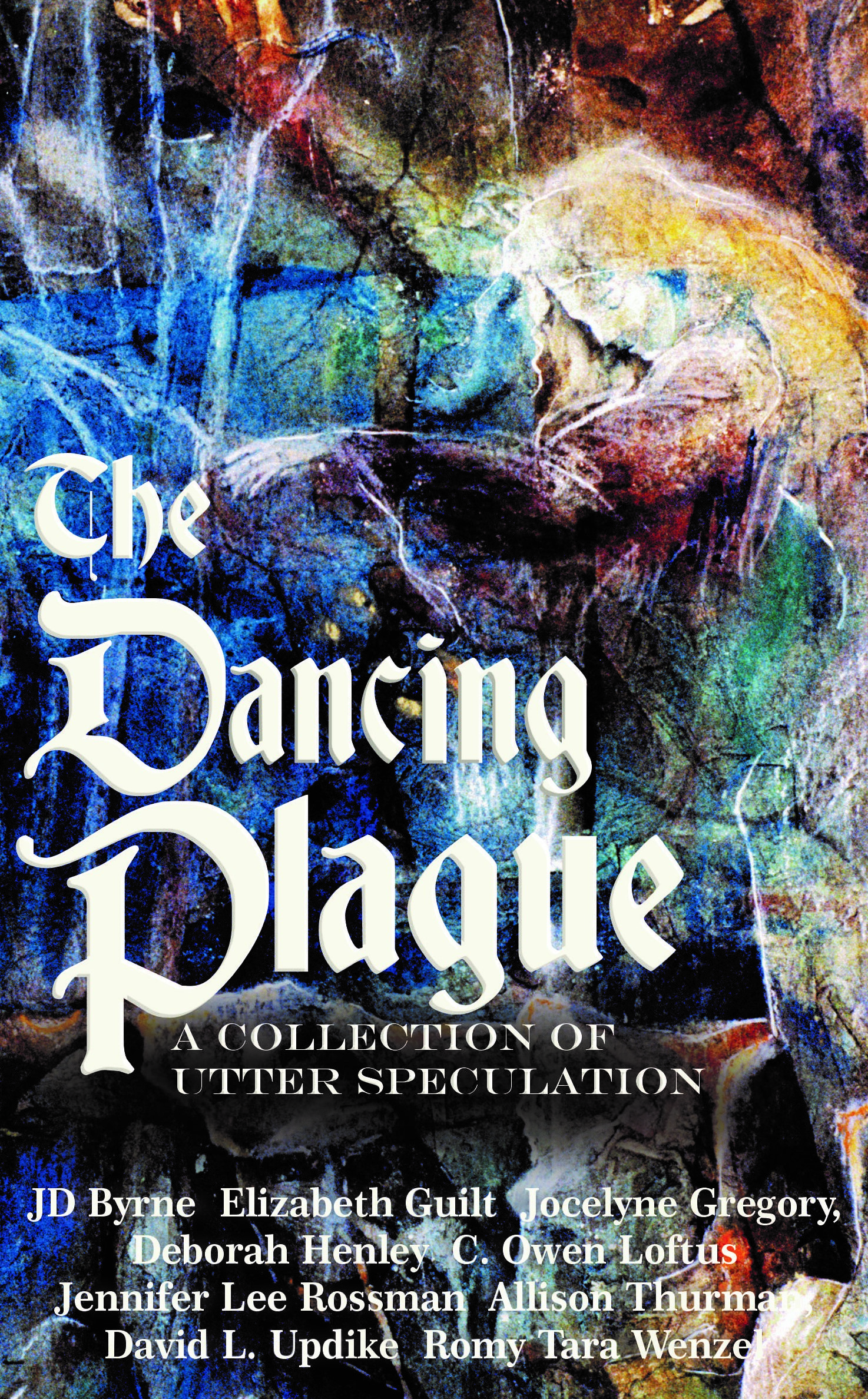
The book is The Dancing Plague: A Collection of Utter Speculation, which you can get here (paperback) or here (Kindle eBook). My story is “The Consequences of Sin,” takes one of the traditional explanations for these kinds of phenomena (not really a spoiler – it’s demons) and twists it a bit, inspired by the Fritz Lang classic M. You can read more here about the background of the story (and other stuff) in this interview I did. The other authors did similar interviews, which you can find here.

Regular readers will know that lost of years I’ve done a story for Halloween here on the blog. Since this story is coming out in October and is sufficiently creepy (I hope), it will fill that role for this year. You can find links to all my Halloween stories here.

That’s it – let’s dance!

Art Isn’t Easy, But It Must Be Human, Right?

Like most writers (I think) I have way more ideas than I can handle, meaning that promising concepts often languish for years while I work on other things. You always think there will be time to go back and develop the good ones, but that might not be true. The sudden explosion in art generated by artificial intelligence makes me think a future I dreamed up years ago is here now, for better or worse.

The idea I had was that a group of computer scientists had built a super computer that, when fed with enough examples of a particular kind of art, could then produce the “perfect” example of whatever it had been fed. The computer, at the time the story would have started, had already written a best-selling mystery novel and created some impressive visual art, too. For its next project it would take on music, leading the cranky main character to show the world that music was a human endeavor that machines could never match. I actually started this story a couple times, but it never got very far.

If I were to try and finish it now it would become more historical fiction that sci-fi, as AI art is really getting its moment in the sun. I’d seen some people on Twitter playing around with various programs where you give it a text prompt and it produces a picture. Some of them were kind of neat, others were horrifically creepy in an unintentional way. It all seemed like a lark until somebody took one to a state fair.

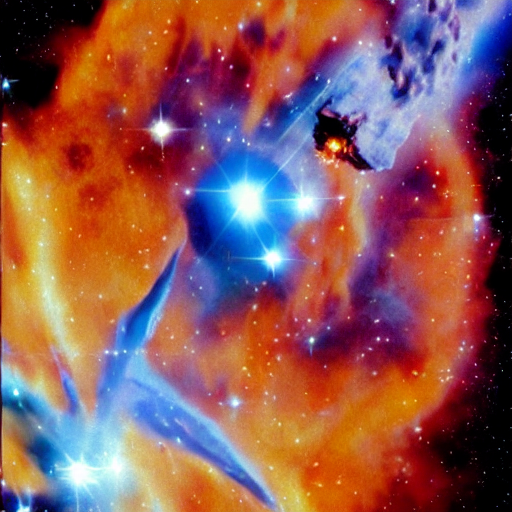
A guy named Jason Allen submitted an artwork called “Théâtre D’opéra Spatial,” which, from the presentation of it in this New York Times article, looks like something from a sci-fi or fantasy cover from the 1970s or 1980s. That’s no criticism – it’s pretty cool and I could see it prompting some interesting stories.

Allen submitted the work in the Colorado State Fair’s art competition, specifically in a category for “artistic practice that uses digital technology as part of the creative or presentation process.” The “digital technology” in this case is an AI program/website called Midjourney. It and similar setups work this way:

Apps like DALL-E 2 and Midjourney are built by scraping millions of images from the open web, then teaching algorithms to recognize patterns and relationships in those images and generate new ones in the same style. That means that artists who upload their works to the internet may be unwittingly helping to train their algorithmic competitors.

In other words, a user like Allen feeds text inputs into Midjourney, which then comes up with an image attempting to match the prompt. The process itself sounds like it could be excruciating, tweaking terms one word at a time to see what impact it might have on the final process (as someone who does that with legal search terms every day, I sympathize).

As an experiment, I found a freebie one of these to play around with. I fed it “Attack ships on fire off the shoulder of Orion” and got back these:

Pretty nifty, huh?

All of this would have had the air of a neat experiment or side story, had Allen and his work not won the category (and the $300 that went with it). For what it’s worth, I think Allen is clearly right that he didn’t break any rules. They apparently didn’t define “digital technology” to exclude AI or to only include tools wielded by humans on art they created, so good on him for exploiting the loophole.

But that isn’t the real question. The issue that has people upset about Allen’s win is whether his AI-generated painting is really “art” at all and what it means for human artists. The objections seem to break down along two lines.

The first is, well, that machines just can’t make art or, rather, “art” made by machines lacks something that human-made art does. As someone who at least tries to make art, of the written and aural variety, I’d like to think there’s something to this. On the other hand, as someone who makes electronic music specifically, I’m well aware of the history of musicians (and others) panicking at the onset of some new technological advance. British session musicians in the 1960s were initially super pissed at the Mellotron, one of my favorite instruments, because it was going to put them out of work. It didn’t, of course, because Mellotron strings or flutes or voices never sound quite real, which is part of its charm. Sequencers and drum machines, too, got similar hate for not being “real,” which ignores the fact that what makes them interesting is that they don’t sound “real” in the first place.

But in those examples there’s still a human being pushing the buttons, doing the work. But isn’t that what Allen did? He apparently tried numerous strings of search terms before getting images he liked, tweaking them as he went along. Is that so different than finding a synth patch you like, then using the tools of the synth to shape and sculpt it into something unique and personal? It’s not as if Allen sat down, had a conversation with the AI about what he was looking for, and the AI went away and created. All is doing was responding to prompts Allen gave it which is, for practical purposes, all any artistic medium does.

 The second objection feels more immediately justified, but doesn’t quite hold up under close scrutiny. As I said earlier, these AI image generators work by “scraping” millions of images already on the internet and using them as grist for the images the AI generates. This, to some, sounds a little like machines stealing the work of real human artists. Admittedly, I’d be pissed off if I found out some AI writing thing had scraped some of my stories as fuel for its work. But is that gut reaction reasonable?

After all, what are artists if not meat machines that absorb as influences the works of those who came before them? There’s even a well-known saying to the effect that “good artists copy, great artists steal,” although who said it is a mystery (I heard it from Zappa first, I think). Granted, a computer algorithm can absorb a lot more data than a human brain can in a lifetime, but does that make a difference? We’re hashing that out in the legal realm with regards to the Fourth Amendment and whether computers doing what police would never have the time to do themselves raises questions about the constitutionality of searches. Is the difference between Allen feeding the AI prompts and sitting down with a human artist and saying “here’s the kind of stuff I like, can you do one in that style?” one of kind or degree?

Which is where, I think, humans have it all over machines. As slick as any AI is, all it can do is what people have programmed it to do. A machine has yet to wake up one day and decide “I’m going to paint a flower.” I’m not sure they ever will, although I’m not sure I’d bet against it. There’s something to be said for humanity for having the creative urge in the first place.

Ultimately, this issue is one more in the long line of humans worrying about becoming obsolete. Machines and computers do more and more of our jobs. They’re getting to be a bigger part of law enforcement. And now they’re coming for the arts. It was probably inevitable. It’s worth shifting, then, to wondering not whether AI can make art, but whether it can appreciate it. Show a group of humans the same painting or movie or play for them the same song and you’re likely to have numerous reactions to it. Maybe it’s the reaction, not the creation, that is indelibly human?

Talking Is Good 

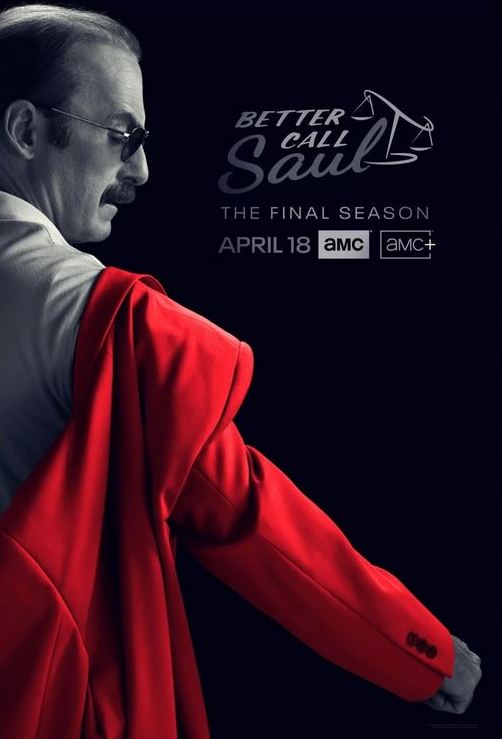
Better Call Saul wound up being one of my favorite bits of TV ever (Emmy voters be damned!).

I even like it better than Breaking Bad (which I’ve now seen all of, thank you). Partly it’s because Jimmy/Saul is a lawyer and so his character resonates more with me (he is one of our patron saints, after all), but mostly I think it’s because I find Jimmy/Saul’s character arc more compelling than Walter White’s. White’s was more viscerally terrifying at time, but the fate of Jimmy/Saul (not to mention Kim Wexler) hit me right in the feels.

So why was I so disappointed by the series finale? It wasn’t bad, far from it, and I’ve got no real beef with how character arcs wrapped up. I sort of thought the very end should have come while Jimmy/Saul was on the bus headed to prison and all the other inmates were chanting “better call Saul!”, as it would have indicated just how he was never going to be able to outrun his past, but I don’t begrudge he and Kim one last smoke.

A nitpick here about that prison, though. My federal public defender self got overly excited during the scene where Jimmy/Saul is negotiating his deal with the Government. There was talk of the US Sentencing Guidelines! He even mentioned being sent to FCI Butner, a real facility in North Carolina where Bernie Madoff (not to mention several of my clients over the years) did his time. Hooray for verisimilitude! So why, then, was his final destination a fictional prison, ADX Montrose, that was clearly a stand in for ADX Florence, the real “Alcatraz of the Rockies?” There must be a reason, but damned if I can figure it out. Maybe I’m just miffed because Montrose was the name of my elementary school.

Anyway, back to the bigger question – what was it about the finale that left me unsatisfied? Ultimately, I think it was that everything happened too quickly. Better Call Saul (like Breaking Bad before it) was never a show to rush things, sometimes coming in for criticism for being too slow to move things along (a criticism with which I don’t agree, by the way). You couldn’t say that about the finale, though, which breezes through a good chunk of time in a single hour (mostly). It felt a little forced.

Was it because I wanted more Guideline talk? Not really, but I think “talk” was something that was missing. By the time the finale rolled around the show’s two main characters, Jimmy/Saul and Kim, were worlds apart (geographically and otherwise) not just from themselves, but from anybody else. Kim had coworkers and a boyfriend down in Florida but was keeping them at arm’s length. There certainly wasn’t anyone she could confide in about things. Jimmy/Saul didn’t even really have that much, unless you count all those cinnamon roll delivers to the guy from Parks and Rec.

As a result, the decisions they make and the way they reach those decision occur entirely inside the characters’ heads. I’m not saying they don’t make sense in the end, but there’s no way to really have them grapple with their decisions because there’s no one for them to talk to. As it happens, I just read the novel Fletch (the movie was better) which gets around this clumsily by having the titular reporter dictate his thoughts into a tape recorder which is at least something.

Of course, it’s easier to handle a situation like this on paper than it is on screen. Novelists or short story writers can easily open up a character’s skull and dive in, charting as the synapses fire while the character develops a plan. Short of a voiceover there’s no good way to do the same on film or television (or radio/podcast), aside from having characters talk to other people. Which is why it’s worth thinking about how characters are going to work things out if you strip away anybody else to talk to.

Talking, as the song says, is good. It’s a good rule for real life and it’s an even better thing to keep in mind when writing fiction.

I Meant to Do That

Make a Jazz Noise Here, one of the live albums documenting Frank Zappa’s final tour, kicks off with a rousing version of “Stinkfoot” which ends, as his opening numbers tend to do, with an introduction of the various people in the band. At the end of the roster is Ed Mann, Zappa’s long-time percussionist. Zappa explains that prior to the show one of the fans came up to Mann and “treated like a war criminal” because he “fucked up” a riff in a song called “Dicky’s Such an Asshole” (it’s about Nixon) at a show weeks before. Zappa explains how the people who come to the show listen so carefully that he wanted to take time to allow Mann to “warm up” for that big riff by practicing it right now. The band drops out and Mann plays the riff perfectly. Then he says something to the effect of “here’s how we played it that night” and plays a different riff. The band cranks on, point made.

The point was, of course, that Mann hadn’t “fucked up” anything weeks before, he’d played the riff differently on purpose (at Zappa’s insistence, or at least with his blessing, surely). In other words, when a professional is doing something, maybe assume that they’ve got everything under control and what seems like a mistake to you might actually be completely intentional.

I thought about that episode when I came across this column from April by Damon Young. It’s entitled “A letter to that man who emailed me to correct my grammar” and, well, it’s brilliant. Young is a regular at the Washington Post and has a long string of credits, including a book of essays that won the 2020 Thurber Prize for American Humor. It’s safe to say he knows his way around words.

He certainly has no problem claiming that expertise, as the first line of the response column is “I’m better at this than you are at everything you do.” Harsh, but probably fair. Later, he digs into the specific complaints of the email:

In your email, you declared that my use of the word “ain’t” was a “really poor choice,” corrected my use of “them,” and demanded that I don’t try to sound like I’m “still in the street.”

If you were better at this than I am, you would know, as I do, that the rules of grammar are mostly suggestions. Guardrails to help us corral and curate the mess in our heads into something cohesive.

***

You would also know — if you were better at this than I am — that sentences are music. And that both sentences and music are math. Equations. Beats separated by pauses. Microbursts of energy clustered and cut and culled to find balance. You would know that sometimes “ain’t” just fits in a way that “isn’t” or “is not” does not. Same with “them” instead of “those.” You would know that even the choice of “does not” at the end of the above sentence instead of “doesn’t” was intentional, because of the repetitious rhythm of “does not” existing immediately after “is not.” You would know that short phrases lead to shorter sentences, which punch in a way that longer ones sometimes can’t. Like this just did. You would know that “ain’t” ain’t a signifier of being “still in the street.” You would know that “still in the street” ain’t do what you think it did. You would know that writing a thing like that just proves you’re a living anachronism. But not in a romantic way, like a streetcar or a Ferris wheel. But like cigarette smoke indoors.

I mean, damn, that’s gotta’ sting.

Young is right, of course – rules are meant to be broken. But beyond that, what he’s saying (I think) is that people who break rules know they’re doing it and have a good reason to do so. That’s why as a writer or musician or whatever it’s important to learn the rules, even if you intend to ignore them completely in your creations. Rules, even as suggestions, have some value in generating expectations among your audience and if you’re going to confront them with something different it’s best to both realize it and question whether it’s worth it. Young, clearly, knew the score and what he was doing.

Of course, when it comes to rules, Young has broken one of the cardinal ones in even writing this piece. Writers are repeatedly (and correctly, in my opinion) advised never to engage with critics or reviews of their work, even positive ones. It’s a hard firewall we’re supposed to put up to avoid being dragged into the social media muck. Go blow off steam with your spouse or writing buddies, but, for the love of all that’s holy, don’t respond online.

But again, Young knows what he’s doing. He knows the rule about responding to critics and decided that, in this instance and in this way, he should break it. As such, this pieces serves as a bit of wish fulfillment for writers everywhere who don’t have the courage (or the skill) to clap back at critics.

Inspiration Strikes at Odd Times

So, you know how I’ve released two volumes of the Unari Empire Trilogy, right? That would be Gods of the Empire and Widows of the Empire.

What about the final volume, you might ask, Heroes of the Empire? Any update on it? Yes, friends, and it’s good news!

But first, some context.

Although Widows just came out last fall, I’ve been working on Heroes since about a year before that. It was my NaNoWriMo project in 2020, so I started writing it in November of that year. I “won” that year, but the book was nowhere near finished, so I kept working on it into the new year. By June of 2021, according to a timestamp on the Word file, I had something saved as “First Draft.” Except it really wasn’t.

What had happened is that I got about 80% through the draft and my creativity came to a complete halt. I didn’t have a good idea of how to bring things in for a landing, so rather than try to push through the end, I took a different approach.

In my day job, sometimes I take pieces of legal writing from others in my office and synthesize them into a single brief. It’s safe to say that each of the attorneys in my office has a different voice and just cutting and pasting won’t work to produce a clear, readable final product. So I have lots of experience rewriting the words of others to produce a smoother end product.

When I wrote Moore Hollow and The Water Road I did the same thing – I took my first draft of each book and rewrote them completely, filling in any shallow bits and using the quicker pace to connect up things better. It worked well, but I hadn’t felt a need to write that way for the other books that followed.

Until Heroes. Since I was stuck I decided to pull a Bruford and go back to the beginning again and rewrite the first draft. According to yWriter I started that process last April and everything went swimmingly for a while, until things bogged down again. In particular, when I got to that ending, I just completely lost momentum. It wasn’t that I didn’t know where the story was going to end up, I just didn’t quite know how it was going to happen.

Last week I was bogged down (again) in what I thought was the next-to-last chapter. It shifts POVs a lot as the climax happens and that made it hard to write, anyway. Otherwise, I was just kind of drifting.

Then I got up to take a piss one night.

I was up in the middle of the night to go to the bathroom, my mind barely functioning, when it hit me. This was out of the blue inspiration of the kind I don’t generally have. The solution was simple – a short time skip to move straight to the consequences of what we’re seeing, rather than the details of the incident itself. I was so stoked I couldn’t really get back to sleep (which made work the next day quite a drag).

This is a long way of saying, this past weekend, I finally put the final words of the first draft of Heroes of the Empire into yWriter! It’s finished! Well, I mean, it tells a complete story. Now comes the fun part, the several rounds of edits, but at least I can see the end of the process at this point.

Thus, coming late this year or (more likely) early next, the final, gripping part of the Unari Empire story, Heroes of the Empire.