Water Road Wednesday: Strefer Quants

If Antrey Ranbren is the most important person in The Water Road trilogy, Strefer Quants is right behind her and, in truth, might have a case for knocking Antrey off the top. The Water Road itself is largely their two stories, splitting off from each making the same world shattering discovery.

Unlike Antrey, who’s a woman without a country, Strefer comes from the United Guilds of Altreria. As a Guilder, Strefer was raised without a traditional family, including a mother or father. This is reflected in her full name – Strefer Quants of the Guild of Writers. Quants is derived from Quantstown, where she was born. Her Guild affiliation is, just that – it shows to which Guild she owes loyalty.

Although Strefer is a Guilder, she works for a Telebrian in Tolenor. She’s the lesser of two reporters stations in the city for the (Sermont) Daily Register, the newspaper of record for the Telebrian capital. Strefer’s boss, Tevis, gets the plum assignments like covering the sessions of the Grand Council of the Triumvirate and writing about matters of state. Strefer, on the other hand, has a much rougher beat to cover.

Her attitude towards her job is summed up in this blurb from last week’s One Line Wednesday session on Twitter:


But it’s a job at which she’s very good, particularly when it comes to getting people to open up to her and talking her way into places where she probably shouldn’t be. She has the typical Guilder worldview that prioritizes doing what works and confronting reality head on, rather than adherence to high ideals of an earlier age.

When The Water Road begins, Strefer is in need of a good story (hence the blurb above). She’s about to find it.

Water Road Wednesday: First Excerpt from The Water Road

In this scene, Antrey accompanies her mentor, Alban, to a reception being held in honor of the beginning of the new term of the Grand Council of the Triumvirate. It’s an uncomfortable evening for all involved.

The reception was being held in a large foyer on the second floor of one of the subsidiary buildings. Antrey remembered that it had once been the home for the Confederation’s trade delegation, but now served as overflow office space for the Grand Council itself. As a result of its heritage, the room was filled with deep rich wood textures, with fine carvings climbing the wall. Candles flew high overhead, providing an endless supply of light that reminded Antrey of dusk on the eastern shore. They arrived slightly behind schedule and the room was already a buzz of multiple conversations reverberating around the oaken hall.

“Come on,” Alban said, tugging gently on her elbow, “we’ll find some drinks.”

They walked over to the other side of the large circular room, to a table manned by a pair of young men. Sharply dressed, one held a wine bottle in his hand, the other some kind of fruit-based punch. Alban picked up an empty glass at the table and gave it to Antrey, before taking one for himself. “Try the wine,” he said. “It’s from Guild vineyards along the northern portion of the River Innis. Best in Altreria, in my opinion.” He held out his glass and it was filled a clear crisp white wine.

Antrey did the same. She looked at the man pouring the wine, studying him. He paid no attention to her, aside from dealing with the empty glass she held. It was impossible to say if that was particularly due to who she was or merely part of his job. She thanked him when the glass was full, but that prompted no response. She turned and faced the crowd while she took a sip of wine. Antrey had not had much experience with wine, beside the common table wines Alban would bring home every now and then. It was beyond her experience to call this the best in the land, but it was very good.

“All right,” Alban said, after they had observed the crowd and sipped their drinks for a moment. “Time to get this over with, yes?”

Antrey nodded and followed him as he plunged on into the crowd. Before they got very far, a voice called out in their direction.

“Alban!” the voice said, from off in the crowd to their right.

Alban stopped just long enough to turn that direction before he was confronted by a large man with dark green skin. A smaller, but similarly hued, woman, hung off his arm. “So good to see you again, old friend!” He wrapped his free arm around Alban in a brief hug. Alban returned the favor.

“Jamil,” Alban said, “it has been a while since you were in the city. What brings you back to Tolenor?”

“I was talked out of retirement by the mayor,” the other man said, with mock exasperation. “Once you come here, everyone insists on sending you back.” He laughed. “Where are my manners,” he said turning to the woman with him. “This is my wife, Utka. Utka, this is Alban Ventris, clerk to the Grand Council.”

The woman extended a hand to Alban, who took it and shook it politely. “My pleasure. And this is Antrey Ranbren,” he said, turning to her. “She is my assistant with the Grand Council. She’s been most vital to my work over the past few years.” Jamil ignored the introduction. Alban continued. “Jamil was a trade missionary from Kerkondala back when I was a Sentinel. We met more than a few times on the roads. Or what pass for roads in the Arbor.”

“We were much younger then, were we not?” Jamil said, with a jovial smile that quickly disappeared. “And perhaps less prone to eccentricity.”

Alban smiled and took a drink, as if thrown back on his heels. “We were younger, Jamil, certainly,” he said, after an awkward pause. “So what brings you back to Tolenor? What task has the mayor given you?”

Jamil launched into a discussion of his trade mission, about which Antrey knew nothing and cared little. She stood beside Alban and sipped her wine. As he spoke with Alban, Jamil kept his gaze fixed on him alone. It was as if Antrey was not even there. This was a new sensation for her. Usually her appearance caused strangers to gawk and follow her through a room. She had come to terms with that years ago. Being treated like a black hole, a non entity that could simply be ignored was more difficult. She did her best to keep a calm façade for Alban’s benefit, at least.

Rather than pay attention to Jamil’s story, Antrey studied Utka. She stood, silent, behind Jamil. Presumably, she knew all that Jamil was saying, yet she nodded as if hearing it for the first time. After a few moments, she turned her gaze to Antrey. They said nothing, but Antrey could sense some shared misery between them. Antrey was roused from her thoughts by Alban’s hand on her shoulder.

“It was good to see you again, Jamil,” he said, turning to walk away. “Perhaps we can talk in a few days.”

“That would be good. I might have to ask you for some help, depending on how things turn out,” Jamil said.

“Come by my office,” Alban said. Without any other parting words, he and Antrey began to walk away.

As they passed each other, Utka reached out and grabbed Antrey’s arm. The two women paused, exchanged glances, and then went their separate ways.

“I apologize for that,” Alban said as they wound their way around various clutches of people.

“For what?” Antrey asked.

“For Jamil. The way he treated you. Or didn’t treat you, as the case may be. I can’t go so far as to call him a good man, but he’s not a bad one. He isn’t the most enlightened of fellows, however. Even within the Arbor. Try not to let it bother you.”

“I really didn’t notice,” Antrey said, lying. She appreciated Alban’s attempt to smooth things over, even if it cost him little.

They had almost reached the other end of the room when Alban changed direction and intercepted a woman who had just broken away from a small group. “Galenna!” Alban called out after her. She stopped turned, began to walk towards them, and greeted him with a smile.

Antrey surveyed Galenna as she approached. She looked to be about Alban’s age, with some cracks and wrinkles evident on her face, which was dominated by bright black eyes that almost overpowered the pale green of her skin. She was dressed in a formal military uniform, pale yellow with hints of silver around the collar and cuffs. Although Antrey did not recognize the insignia, she must be from the Guild. Telebrian women were not part of the military. While some of the cities in the Confederation had women fighters, they were more organized as irregulars or ready militia. A professionally dressed military woman could only be from the Guild.

“Hello, Alban,” she said, greeting him with outstretched hands. “How does the evening find you?”

“It finds me well,” he said. “This is my assistant, Antrey Ranbren. Antrey, this is Galenna, Master of the Guild of Soldiers and the new member of the Grand Council from the Guilds.”

“Pleased to meet you, councilor,” Antrey said, with a courteous nod.

“Please, call me Galenna,” she said to Antrey, before quickly shifting attention to Alban. “We’ve known each other too long to rest on formalities, eh, Alban?”

Alban laughed. “I suppose that’s true.” He turned to Antrey. “Galenna was the first woman allowed into the Sentinel corps. They kept her isolated in an outpost on the shore of Great Basin Lake. They sent all the trouble makers there.”

Galenna’s eyes flitted quickly to Antrey, but then returned to Alban before she answered. “Which is why that is where they sent you too, of course.”

“Of course,” Alban said. They launched into a discussion about Galenna’s recent postings, how she found life in Tolenor, and a little about the trouble in the Badlands. All the while, Galenna continued to snatch glances at Antrey. It was if she was afraid to actually look directly at her and be caught by someone. Unlike Jamil, who was content to excise her from his reality, Galenna was concerned about Antrey’s presence. What was her concern? That the trained beast would break its chains and cause a scene. Antrey sipped her wine slowly and deliberately, breathing deeply. She was shaken from her observations when she heard her name pop up in the conversation.

“As Antrey can tell you,” Alban was saying about something, “the work of the Grand Council can often lose its focus on real issues and devolve into minutiae.” He paused, expecting either of the women to pick up the conversation. Galenna looked nervously at Alban and Antrey, but said nothing.

“Yes, that’s true,” Antrey said, finally, to fill the silence. “But, to be honest, even the minutiae can be fascinating.” It was only a partial lie, one designed to inject some levity into the conversation. It didn’t help.

“Well, I suppose I’ll see firsthand for myself tomorrow,” Galenna said to Alban. “If you’ll excuse me, old friend, I’ve had a long day and will have a longer one tomorrow. I must be going. Good evening.” She turned and walked off before Alban could return the courtesy.

“Wait here for a moment,” Alban said to Antrey before rushing off after her.

Antrey watched as Alban caught up with Galenna just as she was about to leave the rotunda. He grabbed by her arm and obviously surprised her. Alban promptly began to tell her something. Antrey couldn’t hear what was being said, but the tone was clear. He spoke quickly and gestured with his free hand more than usual. At one point, he shifted his feet to block Galenna’s view of Antrey, just as she tried to snatch another glance at her. When Galenna tried to get a word in, Alban cut her off. It was a tense exchange and it made Antrey nervous. She turned away, back toward the bulk of the crowd. Alban returned in a few moments, clearly upset.

“What’s wrong, sir?” Antrey asked.

He sighed. “I’m afraid that I must once again apologize for an acquaintance. And this time, I can make no excuses on her behalf. Galenna, given all she has accomplished in her life and the prejudice she has faced, should know better. I am truly sorry, Antrey. I trust that the entire evening won’t be like this.”

“You should stop apologizing for the acts of others, sir,” Antrey said. He started to say something else but closed his mouth without uttering a word. Perhaps Alban was surprised by her directness. “Neither you nor I can control how others behave or how they react to me. I am, like it or not, a curiosity, sir. It is enough to know that you are offended on my behalf.”

That seemed to please Alban. He looked about ready to start across the room to refill his drink when an elegant older man stepped in front of him. “Alban, it is a pleasure to make your acquaintance once more,” he said, extending his hands.

“The pleasure is all mine, president,” Alban said, bowing his head slightly.

Antrey knew at once that this was Atilleo, the current President of the Grand Council. He was also a member of the inner circle of the King of Telebria. Quite possibly, he was the most important person in the city.

“President, I don’t believe you have met my assistant, Antrey Ranbren,” Alban said, presenting her for inspection.

“Why, yes, of course, I have seen her in the chamber many times,” he said to Alban before turning to her. “Good evening, Antrey,” he said, in a slower cadence and at a slightly higher volume than he had been speaking to Alban. “Does it find you well?”

“Yes, president,” Antrey said, somewhat self consciously. “Thank you.”

The older man turned his attention back to Alban. “Are you ready for the start of the session?”

“Of course, president. Antrey has been hard at work making sure everything is in place while I finished my latest volume.”

“Ah, yes. You do us great honor with your work, Alban. It reflects very well on the Grand Council,” Atilleo said.

“Thank you, president,” Alban said, giving him a deferential nod.

“As does all your hard work, Antrey,” Atilleo said, turning to address her. Again, he spoke with a halting tone and talked to her as if she was deaf. “I know that Alban relies on all that you do.”

Antrey mimicked Alban’s nod. “Thank you, president. I have learned a great deal from working with Alban, both within and without the Grand Council chamber. I look forward to hearing the session tomorrow.” In spite of be treated like a dim-witted child, she did her best to match Alban’s eloquence.

The effort obviously threw Atilleo out of his comfort area. “Well, yes,” he said, before pausing awkwardly. Finally, he took Antrey’s hand in his and patted it, like one might pat the head of a small animal. “I am sure you will learn something.” He hastily turned back to Alban. “I beg your forgiveness, but I must go and say a few words. In the morning, then?”

“In the morning, president, absolutely,” Alban said.

Atilleo gave Antrey one last look, smiled nervously at her, and then bled into the crowd.

Alban stood for a moment, speechless. One of the wine servers started to walk past and Alban grabbed him, abruptly and without warning. He shoved his empty glass into the young man’s hand, then took Antrey’s from her and did the same.

“Come on,” he said, turning and walking away from the crowd that was gravitating towards where Atilleo was about to speak. “Galenna was right about one thing. We have an early morning tomorrow.”

Antrey said nothing and they walked back home in silence.
Technical Brilliance Only Goes So Far

A few weeks ago my wife and I finally saw Mad Max: Fury Road, the movie that’s risen to the rarified air of awards talk genre pictures seldom see. It’s got an Oscar nod for Best Picture, after all. Although I’m not a huge fan of the old Mad Max flicks, I’m a sci-fi fan, fond of dystopia. My wife’s a big action movie fan. So we’re definitely in what might be the target audience for something like this. Nonetheless, when it was done, we turned to each other and asked:

“Is that it?”

Not that it wasn’t cool. The movie looks gorgeous and George Miller deserves a lot of credit for doing some really insane stunt work using real vehicles and people instead of wallowing in CGI overload. Who wouldn’t want a flamethrower guitar? Or keytar, maybe? I’m a keyboard player, after all. And, yes, it was cool to see such overt feminist overtones in a movie that comes out of a very masculine tradition.

But is that enough?

The best explanation I’ve read as to why Fury Road deserves consideration as one of the best movies of 2015 is from this article by Amanda Marcotte over at Salon. Her argument seems to boil down to it being a great technical achievement:

“Mad Max” is more than just a really good movie. It’s also a wildly innovative movie, one that plays with the very idea of filmmaking itself. The director, George Miller, tore up the book on how to make a movie, taking huge risks in doing so, and ended up making the movie that people could not stop talking about this year.


“Mad Max” barely has a script. There was heavy storyboarding, but in terms of a traditional script for actors to work from, nope. Instead, they filmed for months in the desert, collecting 480 hours of footage (which is three weeks, if you watch non-stop), which was pounded and then refined into a coherent story in the editing bay, with Margaret Sixel, Miller’s wife, at the helm.

As a result, she argues, it’s an

artistic experiment toying with how to use the tools of film-making to tell a story in an entirely different way than we’re used to

that happens to be “fun” and “moving.”

Therein, I guess, lies the rub. I’ll give Fury Road the “fun” label – it certainly wasn’t an experience I wish I hadn’t had when it was over. But I don’t get “moving” from it and, in retrospect, can see where the fact that it “barely has a script” is perhaps a main reason why. It’s not the film is incoherent (which is a credit to the editing work), it just doesn’t make much sense.

The talk about Fury Road reminds me a little of the buzz last year around Boyhood. It, too, was a great movie making experiment, filmed over years in order to capture the main character aging into adulthood. However, I remember, amidst the plaudits, that some critics dared to suggest that, at the end of the day, the finished product wasn’t all that captivating. Still, the audacity of its making carried it a long way.

Technical achievement is worth celebrating, but it’s not the be all and end all of art. Progressive rock, more than most subgenres of popular music, values instrumental mastery – it lionizes people who can play. That being said, there’s still something to be said for avoiding the “too many notes” trap). A flurry of sound might be impressive, but is it interesting or moving? Not necessarily.

So it goes with literature. Clever wordplay and narrative structure that defies common sense can be daring experiments and produce new ways of telling stories. But at the end of the day, if the story itself doesn’t connect with readers, it’s a lot of flash that, in the end, doesn’t produce much heat.

Same thing with movies. Fury Road is, without a doubt, technically impressive. I just didn’t get a lot out of it beyond that. To be truly great, as so many think Fury Road is, demands more.

Water Road Wednesdays: Sentinels and Mind Walkers

The Triumvirate is more than just a defensive alliance. By the time The Water Road begins, it’s almost like a nation unto itself. It has its own capital, the island city of Tolenor. It also has something like a military or intelligence wing, a group of highly trained men and women who answer only to the Grand Council of the Triumvirate, not their home nations. They’re called Sentinels.

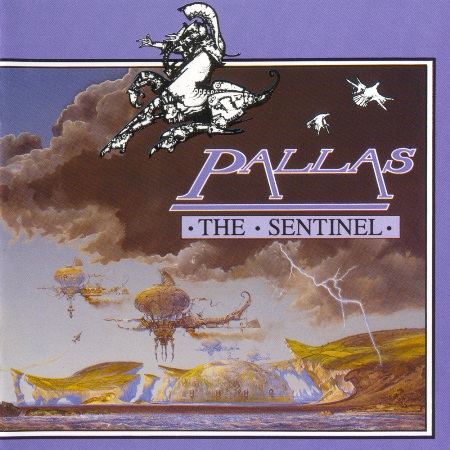
I think “sentinel” is a term that’s been used in sci-fi and fantasy for years, but it seemed to fit here. In all honesty, it was front of mind when I started writing it because I had just discovered the album of the same name by Scottish proggers Pallas:

the-sentinel-529a826f48b85

How can you look at that and not be inspired?

The main role of the Sentinels is to be gatherers of intelligence. A few of them are stationed in each of the numerous forts the Triumvirate erected on the southern bank of the Water Road following the first Neldathi uprising. There they collect information about the Neldathi and ensure the progress of the Triumvirate’s plan to keep the Neldathi from uniting again and threatening to come north.

Of those Sentinels, there is a small subgroup that provide an invaluable services. In the universe of The Water Road they’re called mind walkers, but you could also call them telepaths. Mind walkers can communicate with each other of long distances, allowing Sentinel agents deep in Neldathi territory to report back to the Sentinels in the forts. Mind walkers also serve as a means of long-distance communication for the military. Only a very small percentage of the Altrerian population has this talent and anyone who manifests it becomes a Sentinel. There are no Neldathi mind walkers.

Beyond the mind walkers and the Sentinels stationed at the forts along the Water Road, another group of Sentinels are stationed in Tolenor. Some serve as trainers and administrators at the Sentinel academy that’s in the Triumvirate complex at the city’s center. Others have a much less glamorous job – law enforcement. Since Tolenor is a city that doesn’t belong to any of the three Triumvirate members, the alliance itself is responsible for keeping the peace.

Sentinels carry a distinctive weapon, a pikti. A pikti is a fighting pike, slightly taller than the average Altrerian, made out of the wood of a particular plant that grows only in one location in Telebria. Through a secret process, the wood becomes hard as steel but much lighter, resulting in a staff that is glimmering black. Due to their rarity and difficulty of use (pikti training is a key aspect of a Sentinel’s time at the academy) it is unheard of to see someone carry a pikti who is not, or was not at some earlier time, a Sentinel.

Guest Post: The Keystone by Sue Korb

This is a guest post by author Suz Korb about her exciting new project!

I’m doing something totally incredible. I’m going to blog the first draft of my newest novel as I write it! This is my new project as a way of getting me to write more every day. Follow my blog for daily chapters of my current work in progress.

The Keystone (Suz Korb cover)

This will be fiction at its most raw. Pure story. This is adventure as it unfolds in my mind, the most creative way possible for a writer to express one’s self. I’m going to have fun with this and you can join me for the journey, wherever it may take us!

Water Road Wednesday: Antrey Ranbren

Now that we’ve talked about where The Water Road trilogy takes place, it’s time to shift the focus to the people involved in the story. As you know from earlier WWW entries, nobody in The Water Road trilogy is a “person” in the sense that they’re human beings, but that doesn’t stop me from referring to them as “people” or “persons.”

The most important person in The Water Road trilogy is, without a doubt, Antrey Ranbren. The trilogy’s overall arc is her story, although it folds in a lot of other important characters along the way. Remember the post about how Napoleon’s exile and return sparked the idea that became The Water Road? Well, Antrey is Napoleon (after a fashion).

Antrey is a woman between worlds. In a world divided by species, by nation, and by clan, she has none of them. Antrey is of “mixed heritage” (as they say in more polite circles), product of an Altrerian father and Neldathi mother. Her surname, Ranbren, is a generic one for such offspring. They are generally shunned by both Altrerian and Neldathi societies, often left to fend for themselves in Altrerian brothels (children of mixed heritage cannot have offspring of their own, conveniently enough).

As a result of her parentage, Antrey was exiled from Clan Dost as a youth and made her way to Tolenor, the home of the Triumvirate. There she caught the attention of Alban Ventris, Clerk to the Grand Council of the Triumvirate. Alban took her into his home, taught her to read and write, and made her his assistant. It’s a good life, better than she ever expected, but it doesn’t make her any more a part of regular society:

It wasn’t as if she could blend in with the crowds. The city was jammed full of Altrerians of every shade of green, from the pale northern Telebrians to the dark hued Arborians. With her pale turquoise skin, Antrey was distinctive, a small patch of clear sky on an overcast day. At least she inherited her father’s slight Altrerian frame. It was difficult enough looking different. Having to poke out above the heads of everyone else by a foot or more would have been unbearable. She did her best to try and conceal her otherness. She kept her black hair, from her mother’s side, closely cropped so as to be almost unnoticeable. She did her best to ensure that as little skin was visible to the public as possible. Despite her best efforts, she stood out.

Most importantly, it’s a life that’s put her in a place to learn a secret that will change the whole world, not just hers, forever.

Water Road: Wednesday: The Neldathi Clans

As I mentioned last week, the Neldathi, who live south of the Water Road in the universe of The Water Road, are physically quite distinct from the Altrerians who live to the north. They’re different species, in fact, although they can produce infertile offspring. When it comes to how their societies work, the differences are even more pronounced.

While the Altrerians are organized into what we might call nation states (or city states, at least in the case of the Arbor), the Neldathi are organized into clans. Each clan is ruled by a thek (or chief), selected in various ways, from based on heredity to something more like democracy (without the coin flips). Some clans are patriarchal, some matriarchal, others more egalitarian. In other words, there’s a good deal of variety to how each clan is set up.

There are several other positions of authority in Neldathi clans aside from theks. Two of the most important are War Leader (which is just what it sounds like) and Master of the Hunt, each of which is responsible for ensuring the clan’s survival. Speakers of Time are individuals who become walking storehouses of knowledge – libraries with legs, essentially – and pass on the clan’s history, traditions, and laws. Finally, kels act as judges, settling disputes between clan members.

The Neldathi are nomads, which is why they don’t have “states” as we (or the Altrerians) think of them. That doesn’t mean they aren’t territorial. Each clan has a Great Circuit, a route along which they regularly move through the year. Each guards its circuit jealously. Three clans have circuits that cover the northernmost ground, near the Water Road itself – the Dost, Kohar, and Haglein. Three more stick toward the southern coast and the Islander cities – the Mughein, Elein, and Sheylan. That leaves five others – the Chellein, Akan, Volakeyn, Uzkaleyn, and Paleyn – who roam the most mountainous ground in the middle.

The Great Circuit’s aren’t defined with great particularity and clans don’t necessarily travel them in regular cycles. As a result, it’s not uncommon for neighboring clans to run into one another, which leads to violence. For example, the Volakeyn and the Akan have circuits that border one another. If they happen to wind up in the same space at the same time, they’ll fight over resources, same as anybody else. Neldathi don’t fight wars of conquest – they’d have no means of securing territory – but they do fight.

In fact, the Neldathi have a history of long-simmering feuds between clans, for several reasons. One is that if clans meet when circuits overlap, that frequently means resources are limited in that area and one side is bound to lash out. Another is that the same clans routinely interact with each other, breeding bad blood. Finally, the Speakers of Time tell stories of glory won in battle and of the evil done to their clans by their enemies. That allows feuds to grow and fester between certain clans.

That last feature, in particular, provides an opening that might be exploited by outsiders.

Water Road: Wednesday: The Neldathi & Their Lands

Although the Altrerians lend their name to the land in which The Water Road takes place, it’s not theirs alone. The land to the south of the Water Road is quite different from that to the north and includes a very different species of inhabitants.

For starters, the Neldathi don’t have green skin, but blue, although some have complexions that near completely white. They’re still humanoid, but where the Altrerians are smaller than your average human, the Neldathi are bigger. For a sense of scale, Rob Gronkowski would on the small side of average for a Neldathi. Thus they’re strong, but also slower of foot and, to the Altrerians, slower of thought, as well. More on them as a people next week.

The lands south of the Water Road are defined by a series of rugged mountain ranges, all named by and after Altrerians, although very few of them live there. The mountains begin to rise just south of the river, becoming fearsome snow-capped peaks in short order. The ranges often run up against one another, sometimes parallel to each other. Some of the mountains are covered with great stands of timber. It’s forbidding territory, a place that’s referred to in curses and hushed tones by Altrerians.

Because the continent of Altreria is in the southern hemisphere, the further south one goes the colder it gets. The lands south of the Water Road, therefore, are frequently blanketed in snow, making existence there difficult. Neither the climate nor terrain lends itself to the kind of settlements that developed to the north. Unlike the north, there are no great cities in the south.

Which is not to say there are no cities at all. When the land nears the coast, warm currents provide a more hospitable climate. In four locations along the southern coast, the Slaisal Islanders have built cities, way stations for use during their trade with the Neldathi. The Islander cities are the one place where the Neldathi clans share space, along with a small population of Islander sailors and the occasional Altrerian, mostly traders and the like – or at least they appear to be.

Water Road Wednesday: Altreria & Altrerians

In the universe of The Water Road the name “Altreria” carries several responsibilities.

For one thing, Altreria is the name of the land in which the story takes place, by which I mean all of it. It is that world’s equivalent to “Earth,” for lack of a better comparison.

Altreria also refers to the world’s only major landmass. It’s a continent that runs roughly north to south (think of Australia turned on its side and twisted a bit) and sits in the southern hemisphere, so traditional American/European directional notions (north is cold, south is warm) are reversed. There’s also a chain of islands, the Slaisal Islands, off the northeast coast. The Water Road itself runs from west to east – from Great Basin Lake to the Bay of Sins – across its width about two-third’s of the way down the continent. To the north live Altrerians, with Neldathis to the south. More of them later, of course.

Altreria also refers to the land north of the Water Road – hence the reason those who live there are called Altrerians (if you’re noticing that they seem to control the vocabulary of geography in this world, you’re right). That land’s most obvious distinguishing features are two other rivers, the River Innis and the River Adon, that run north to south through the middle third of the continent. North of the source of those rivers are the Badlands – a dry, dusty, and hot region with very little in it.

Those rivers also help define the political landscape of Altreria. To the east, between the River Adon and the coast, is the Kingdom of Telebria (fully the “Bonded Realms of Greater & Lesser Telebria” – they’re a bit picky about it). Southern Telebria is home to the Endless Hills, which lend their name to the second book of the trilogy. To the west, between the River Innis and the coast, are the United Guilds of Altreria. In between is a dense forest known as the Arbor, which consists of numerous city states gathered together in a confederation. Again, more of those later.

Altreria has several major cities of note. In Telebria, on the east coast is Sermont on the Sea, the kingdom’s capital. In the west, Innisport, the largest of the Guilder cities, lays at the confluence of the River Innis and the Water Road. Finally, there’s Tolenor, a fairly recent settlement, a planned city built on an island in the Bay of Sins. It’s home to the Triumvirate, of which – yet again – more later!

As for the inhabitants of Altreria, they’re not human. No one in The Water Road is. They’re bald humanoids, a bit smaller than we are with skin that’s green, of one hue or another. Generally those born deep in the Arbor have dark green skin, while those born closer to the Water Road wind up nearly white, with just hints of light green. They’re not particularly strong, but they’re quick, cunning, and good strategists.

That’s not all (obviously!), of course, but that gives you a taste of the world of The Water Road. Or at least the lay of the land, so to speak.

Water Road Wednesday: Je Suis Napoleon!

“Wait a second,” I hear you saying. “I thought you wrote fantasy and the like. What’s Napoleon got to do with The Water Road?”

A fine question, one that comes down to that dreaded word (by some) – inspiration. As I’ve written before, ideas come from all over, often when you’re not expecting them. The key is having that flash of creativity in your brain that makes you think, “there’s a story there” when you see it.

One of my regular stops on the Internet is Wikipedia’s front page. It’s got several blocks of featured articles, one of which is a “today in history” thing. It lists about a half dozen historical events, in addition to a few holidays. I usually skim it, see nothing all that interesting, and move on.

One day, one of the events listed was either the date that Napoleon left Elba to return to France or the date he arrived in France. Either way, it was the start of the Hundred Days, which would end at Waterloo and with Napoleon’s second exile (it stuck that time). Now, this was not news to me – my undergrad degree was in history and the area that most interested me was 19th-century Europe and the rise of the nation states. Yet, somehow, for some reason, something struck me that had never struck me before.

Which was this – Napoleon’s arc of ravaging Europe, being defeated, being exiled, then returning for a sequel – sounds just like the bad guy in a fantasy series! After all, why kill or adequately imprison the villain if you need him for the rest of the trilogy? Honestly, it’s almost on the level of a James Bond villain’s diabolical scheme to kill Bond that, of course, always fails. Hanging would have been quicker and easier, but not left open the sequel!

Which is not to say that The Water Road trilogy is based on the life of Napoleon or that it tracks his defeat, exile, return, and defeat again. But that was one of the jumping off points. Things, naturally, got more complicated from there. That’s one of the great things about writing fantasy – when an idea comes along, the only thing that limits you as a writer is your imagination.

je_suis_napoleon_by_insanity540