Weekly Read: American Heiress

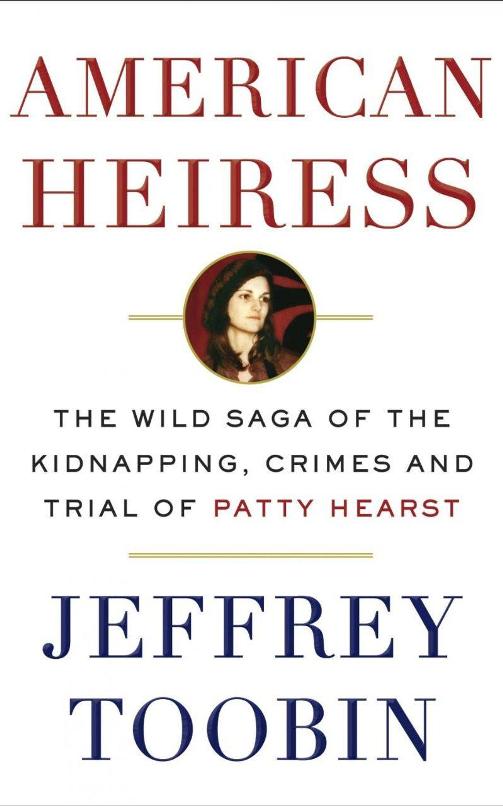
As they say, truth is stranger than fiction. One of the problems with writing fiction is that readers expect it to make sense, for characters to behave in ways that are believable and compelling. Writers telling true stories aren’t saddled with such issues. Jeffrey Toobin’s latest, American Heiress, tells one of those stories that, if labeled fiction, would have readers rolling their eyes in disbelief.

The basic parameters of the Patty Hearst case are fairly well known. She was kidnapped from the apartment she shared with her then-fiancé in Berkley, California, by a group calling itself the Symbionese Liberation Army. She was held for months, during which time she turned from captive to comrade. As a professed member of the SLA she participated in bank robberies and lead a life on the run. It all came to an end with an arrest, conviction, and lengthy federal prison sentence.

Toobin’s book breaks down, basically, into three parts. Part one covers Hearst’s background, the kidnapping itself, and her turn to bank robber. This part is a bonkers story with a lot of different angles playing into it – not just Hearst and her kidnappers, but also her family and the law enforcement officers working the case. Then there’s Hearst’s fiancé, who famously told the kidnappers to “take anything you want” when they broke in. As Toobin jokes (multiple times), they did.

Events after the kidnapping played out in a way that seems unbelievable today. The Hearst family – who, at this point, were nowhere near as wealthy as people thought – agreed to an SLA demand to set up a broad food giveaway for the poor. The operation, created almost overnight, had to fight off local grifters (including Jim Jones) and led to riots. The fiancé, whom the family never liked, tried to help in his own way, but only led to his reputation being shredded.

This part makes you hope that the American Crime Story crew, who turned Toobin’s The Run of His Life into The People v. OJ Simpson for FX, has the rights to this book. There are so many characters (the list of famous people who had some connection to all this is impressive – Jane Pauley, Kevin Kline, Lance Ito, and, later on, Bill Walton) acting in so many bizarre ways that Ryan Murphy’s sensibilities would be well served. Appropriately enough, this part wraps up after the SLA members split up and Hearst and her two comrades watched the other half dozen perish in a scene that played out like a mini-Waco – gunfight followed by immolation.

The rest of the book doesn’t quite live up to the first part. The middle section drags a bit as Hearst and the others go on the lamb. Mostly it’s because we lose the multiple angle approach that brought so many characters into play. Still, there’s a particularly odd idyll in the Pennsylvania woods (which has given me a great story idea) and it’s important to the story as a whole.

Part three covers the Hearst’s eventual arrest and trial. One would think that Toobin, being a lawyer, would focus mostly on this, but he gives it a brief, compelling summary, during which one thing becomes clear – Toobin has no regard for Hearst’s lawyer, F. Lee. Bailey. In Toobin’s telling, Bailey was a swaggering, swashbuckling self promoter for whom practicing law was almost an afterthought. He had a deal to write a book about the trial before it even started and spent several nights during trial flying back and forth to Las Vegas to speak at legal seminars. To boot, while Bailey’s reputation was built on winning big cases – Sam Sheppard (aka The Fugitive) and the Boston Strangler – he, like any criminal defense lawyer, lost more than he won. For Hearst, he lost.

Hearst’s trial – she was charged with bank robbery and carrying a firearm in relation to it – boiled down to one issue: did she willingly engage in this criminal conduct after becoming a SLA member, or was she a kidnap victim who had been brutalized, terrorized, and brainwashed to the point where she did whatever she was told in order to survive? It’s clear that Toobin agrees with the jury that convicted her that Hearst was a fully fledged revolutionary by the time of the robbery. What’s really troubling is that while it seems like Hearst did shift into the role of SLA comrade, she shifted out of it just as easily. Given that all this happened while she was barely an adult (she was 19 at the time of the kidnapping, 21 when convicted), I wonder what modern research in the brain development of young adults might shed some light on whether such swings of outlook are really that out of the realm of normal.

Whatever steam the book loses after the first part Toobin finds when he gets righteous in the conclusion. After her conviction was affirmed on appeal and the trial court denied a habeas claim (contrary to what Toobin says, ineffective assistance of counsel claims are routine and often completely baseless), Hearst’s family started a massive effort to get her sentence commuted. It was, eventually, but Jimmy Carter. The staggering bipartisan group that pushed for clemency included famous hardliners such as John Wayne and Carter’s opponent in the upcoming election, Ronald Reagan. Part of it, Toobin argues, is that once Jim Jones led his group in a mass suicide (and murder of Congressman Leo Ryan, a vocal supporter of Hearst), it became much easier to believe Hearst’s story of brainwashing. In the end, she only served about two out of the seven years to which she was sentenced.

But it didn’t stop there. Flash forward to the end of the 1990s and Hearst is now seeking something unprecedented – getting a pardon from a second President after first gaining a commutation. There was no consensus this time – part of the opposition was the then United States Attorney in San Francisco, a guy named Robert Mueller. But Carter and his wife appealed directly to Bill Clinton, who pardoned Hearst on his last day in office.

Toobin, who clearly believes Hearst was a willing participant in her criminal activity, makes the obvious point – only Patty Hearst had the resources and name recognition to get clemency twice, in spite of the evidence against her. People who have done a lot less have gone to prison for a lot longer and not gotten any sniff of clemency. But those people were the ones the SLA said it was fighting for. They weren’t wealthy heiresses.

Toobin’s book is well worth reading. Even if the back half can’t live up to the entertainment value of the first part, there’s a lot of interesting info in here. Toobin does a good job of setting the context for all this (You think we’ve got political strife today? How do several years with 2500 bombings across the country sound?). There’s also some original research, as Toobin got his hands on previously unseen letters Hearst and her lover/co-defendant wrote to each other after their arrest (as couriered by Hearst’s first lawyer). I’m not sure it all makes sense in the end, but so what? It’s real life – it doesn’t have to.

PS – For an interesting perspective on the book, check out this column from Andrew O’Heir, who grew up in the San Francisco area while all this was going on.
ToobinHearst

Is Originality an Illusion?

On their second album echolyn has a multipart suite that chronicles their struggle to make their kind of music in a world that doesn’t really appreciate it. An early section is called “Only Twelve,” a reference to the fact that the Western musical scales only has 12 tones. It’s not that diverse a palate to work with. A later section, however, suggests that’s not the right way to think about it. It’s called “Twelve’s Enough.”

But recent evidence suggests that 12 might not really be enough. As this article lays out, more and more pop artists are getting sued for lifting bits of music from other sources (Ed Sheeran, whose music I couldn’t pick out of a sonic lineup, appears to be a great transgressor). This is not likely to be a result purely of coincidence:

[quote]Bennett [a forensic musicologist – JDB] then goes very deep into the maths, proposing a scenario where he and I each decide to write a melody. ‘I might start on C and you might start on E – two of the seven notes in the major scale. The odds [against us choosing the same note] aren’t exactly one in seven, but you get the idea. Then you come to the second note: I might choose D, you might choose another E. So then we’ve got a seven to the power of two probability, and that’s just within two pitch choices.’[/quote]

The analysis goes much deeper but as you can see from just two notes, the probabilities don’t look good for coincidence. That shouldn’t be a huge surprise. We interact with art – music, literature, you name it – from the day we’re born. How could we not internalize things and, perhaps, come to think of them as our own? As Bennett admits, there’s a line between copying and plagiarizing.

Having said all that, artists have always copied from one another. There are entire traditions – folk music and the blues come to mind – that are based on taking work done by others making it your own. Hell, it’s been said (by Picasso, possibly) that good artists copy, but great artists steal (http://quoteinvestigator.com/2013/03/06/artists-steal/).

The issue of going too far with borrowing is where this all meshes with the law of copyright. We want to protect creators and incentivize creativity, but we don’t want to shut down the natural drift of ideas that occurs in culture. Is the list of court cases about pop plagiarism an indictment of our current copyright scheme?

That’s the idea behind what is surely the best piece of legal/regulatory speculative fiction ever written, Spider Robinson’s “Melancholy Elephants.” It’s about a word where copyright protection is eternal and, as a result, it becomes increasingly difficult for people to create new things because everything can be traced to something that came before.

We haven’t reached that point yet, although we might be close. Before we go too far, it’s worth thinking about whether we want to live in a world where every idea, every melody, every story is owned by a single person (or corporate entity) for all of time.

Let’s Play the Feud!

I’m currently reading Authors In Court: Scenes from the Theater of Copyright, which uses a handful of case studies to track the development of copyright law since its introduction in England via the Statute of Anne in 1710. I haven’t even gotten through the first case yet and already I’m entertained. To anyone who thinks folks way back when were more civilized than modern, crass, digital folks, think again.

That first case involves Alexander Pope, English author (and second most quoted writer in The Oxford Dictionary of Quotations, according to Wikipedia – behind only Shakespeare), and a contemporary publisher named Edmund Curll. They’re in the book because, eventually, Pope sued Curll for publishing some of his letters in which, Pope argued, he retained the copyright. But things got ugly long before that.

Curll and Pope were very different people. Pope was a country gentleman, an elite. He was a writer, but he didn’t do it for a living (heaven forefend!). Curll, by contrast, was a scrappy businessman, doing anything he could to make a buck. He developed a reputation as a low-rent publisher, becoming (among other things) the first publisher in England to be convicted of obscenity.

What set the feud alight was a book Curll published called Court Poems, which purported to contain works by Pope (among others). The poems were scandalous and Pope was upset, either because he or a friend was designated as the author of some of them. Rather than just send a nasty letter, Pope got even in a much more emphatic way:

shortly after the book appeared, Pop contrived to encounter Curll at a tavern in Fleet Street. There, under the pretense of sharing a glass of wine as a sign of reconciliation, Pope dosed Curll’s drink.

Said dose was an “emetic,” a word which sent me scrambling to the dictionary. Long story short – it’s something that makes you puke.

Poisoning a professional rival so that he puked is a pretty dick move. But Pope wasn’t done:

A few days later, adding insult to injury, Pope published a comic pamphlet couched in the sensationalist style of a Grub Street production, a style not entirely different from that of, say, a modern supermarket tabloid. Titled A Full and True Account of a Horrid and Barbarous Revenge by Poison on the Body of Mr. Edmund Curll, Bookseller, Pope’s undated pamphlet, identified only as “by an Eye Witness,” reports on the tavern episode and then veers off into malicious fantasy as the stricken Curll, convinced that he is dying, makes his last will and testament.

In the end he is spared from death by “a plentiful foetid Stool.” Pope still wasn’t done, writing two more pamphlets expanding the fantasy and, eventually , devolving into anti-Semitism.

Future chapters involve Harriet Beecher-Stowe and J.D. Salinger, among others. I wonder if they taunted their rivals with bodily fluids (and tales thereof), too?

They might, given that the Pope/Curll feud is just one of many in literary history that went beyond simple sniping at each other. For example, Gore Vidal once compared Norman Mailer to Charles Manson – so Mailer punched him at a party (leading to Vidal’s retort – “once again, words fail Norman Mailer). Hell, Mario Vargas Llosa punched Gabriel Garcia Marquez in 1976 and neither ever explained why (although this article suggests it was over a woman and, therefore, isn’t really a literary feud at all) .

Of course, writers being writers they’re more likely to lash out at each other with words rather than fists. Playwright Lillian Hellman sued critic Mary McCarthy after McCarthy said that “every word she writes is a lie, including ‘and’ and ‘the.’” Hellman got the last laugh, dying before the suit could be heard. Salman Rushdie responded to John Updike making fun of a name he used in one of his books by suggesting that Updike “stay in his parochial neighbourhood and write about wife-swapping, because it’s what he can do.” Finally, after Colson Whitehead gave a book by Richard Ford a particularly nasty review in the New York Times, Ford spit on Whitehead at a party. Whitehead shot back that this “wasn’t the first time some old coot had drooled on me” and that other critical reviewers (there were a bunch, apparently) best “get a rain poncho, in case of inclement Ford.”

If nothing else, feuds tend to be good for business. Pope and Curll, certainly, made hay out of their beef. Maybe what I need to do is go honk off some famous author and start a heated back and forth! Yeah, that’s the ticket!

pope-and-curll

Really Denmark?

You see a headline about a blasphemy prosecution and assume it’s about some Third World dictatorship or Alt-Right fever dream. But dateline Copenhagen? Really? Per The Volokh Conspiracy (aggregating other sources):

A Danish prosecutor says a 42-year-old man in northern Denmark has been charged with blasphemy for allegedly burning the Quran and posting a video of it on Facebook.

Jan Reckendorff says it was the first time since 1971 that a person was charged for ‘publicly mocking a religious community’s religious doctrines or worship,’ adding it is punishable by imprisonment for up to four months or fine.

No prosecutions in my lifetime? Either the Danes are very pious or this is the kind of stifling speech law that gets used so rarely that it’s impossible to say what’s allowed and what isn’t. The other few cases that have been prosecuted suggest just that:

This marks the fourth time in history anyone has been prosecuted under Denmark’s blasphemy clause: four people were sentenced for posting posters mocking Jewish teachings in 1938; two people were fined for carrying out a fake baptism at a masked ball in 1946; and two programme leaders at Danish Radio were exonerated in 1971 for airing a song mocking Christianity.

I mean, come on, Denmark. You’re one of those magical European places that liberals like me point to and say, “see, if they can do all these humane things, why can’t we?” Then you go and do something like this. I guess nobody’s perfect.

But, still, Denmark – really?!?

really-snl

Legal Realism In the Wild

Ken over at Popehat poses an interesting philosophical question:

If a tree falls in the forest, does it make sound? If a right goes unrecognized and defied by the people charged with enforcing it, is it a right at all?

The answer may seem obvious, but it falls into what’s traditionally been a blind spot in legal philosophy.

A major enterprise of the philosophy of law is not only defining what a “law” is, but also identifying when, if ever, said laws shouldn’t be followed. To that end, there are two large camps among legal philosophers (along with numerous fringe theories that I’m just going to assume don’t exist for the length of this post).

Natural law theorists are that laws (or at least just laws) exist outside of human efforts at generating them. Therefore, human laws that conflict with natural law are invalid can be ignored. By contrast, legal positivists argue that what makes a law valid and just is the way its produced, thus making it completely a creature of human endeavor.

Both positions have serious issues. Natural law theory all but invites people to ignore laws they don’t like on the ground that it conflicts “natural law” (probably God’s law, but not necessarily). That’s fine and dandy if it’s not abiding by the Fugitive Slave Act, much less so if a modern Abraham decides he needs to engage in child sacrifice. But the legal positivist argument loses sight of broader notions of justice in favor of procedure. After all, lots of laws in Nazi Germany were properly proposed and enacted, but they were still vulgar and (at a gut level) invalid. Neither theory completely survives interaction with the real world.

So what happens in real life when, as Ken asks, a right is defied by the people responsible for protecting it? Something like this.

A woman in Georgia complained on Facebook that her ex-husband wouldn’t help out by making a drug store run when she and kid (the ex’s kid, too) had the flu. In other words, she called him a jerk (a friend chimed in that he was a “POS”). However, the ex just happens to be an officer in the local sheriff’s department. Thus, in a lawsuit she:

contends that her husband, a friend in the Sheriff’s Department, and a county “magistrate” put her in jail for her Facebook comment. According to her, Captain King filed a police report with his friend, Washington County Sheriff’s Investigator Trey Burgamy. Washington County magistrate Ralph O. Todd — who is not a lawyer, and who ran unopposed last year — issued a warrant requiring Anne King and Susan Hines (who had responded on Facebook by suggesting Captain King is a “POS”) to appear at a hearing. After a hearing at which Captain King was the only witness, Magistrate Todd caused a warrant to issue charging Anne King with criminal defamation: “SUBJECT DID, WITHOUT A PRIVILEGE TO DO SO AND WITH INTENT TO DEFAME ANOTHER, COMMUNICATE FALSE MATTER WHICH TENDS TO EXPOSE ONE WHO IS ALIVE TO HATRED, CONTEMPT, OR RIDICULE, AND WHICH TENDS TO PROVOKE A BREACH OF THE PEACE, SPECIFICALLY, SUBJECT DID MAKE DEROGATORY AND DEGRADING COMMENTS DIRECTLY AT AND ABOUT COREY KING, FOR THE PURPOSE OF PROVIDING A BREACH OF THE PEACE. Anne King also contends that Magistrate Todd threatened to “ban her from Facebook.”

The magistrate also falsely informed her that although she could call the ex a piece of shit to his face, she couldn’t post it on Facebook. Just to make it perfectly clear, the statute she was accused of violating was always a violation of the First Amendment, was recognized as such by the Georgia Supreme Court in 1982 and removed from the books by the legislature in 2015. In other words, neither the cop nor the magistrate had any legal authority to do what they did and the woman had a clear First Amendment right to say what she wanted (a few days later a “real judge,” as Ken puts it, dismissed the charge).

How does either natural law theory or legal positivism deal with this woman’s experience? Not well, which is why there’s a third way, one which I’ve subscribed to for a long time – legal realism.

Legal realism says, in essence, that law is whatever those with the power to make it and (more importantly) enforce it say it is. Higher notions of what law should be or what makes a “just” law don’t make any difference. If The Man says you’re going to jail, you’re going to jail.

My go to hypothetical for this used to be if the president signed a “Legal Philosopher Protection Act” that made a particular philosopher (John Rawls, Ron Dworkin – insert your favorite here!) off limits from academic criticism. Professor says, “that clearly violates the First Amendment” and duly proceeds to slag off on Rawls or whoever. Student reports Professor, who is hauled out of the classroom by a pair of US Marshalls. At some point things get sorted out, but not before an arrest, some period of custody/incarceration, and an awfully lot of bruised feelings.

Yet, that’s essentially what happened to the woman in Georgia – arrested for violating a law struck down during the Reagan administration for conduct that anyone with a working knowledge of the First Amendment knows cannot be a crime. And yet, there was an arrest. There was custody. And there are certainly hurt feelings.

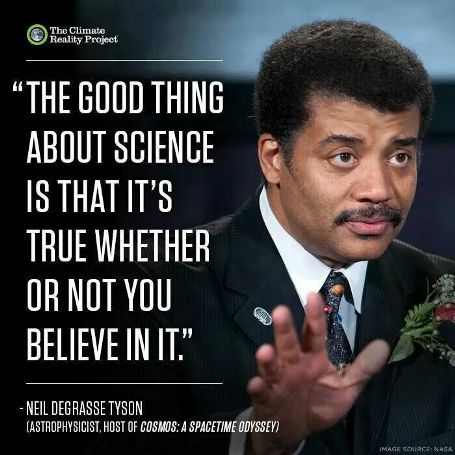
There’s a meme that floats around about science:

science

Law kind of works the same way. We can argue esoterically about the nature of law, what it really is, and whether any particular law is just. But at the end of the day, when the cops arrive at your door to slap the cuffs on, they’re not interested in any of that. What they say goes, at least for long enough to make things miserable. Any theory that doesn’t recognize that has serious issues.

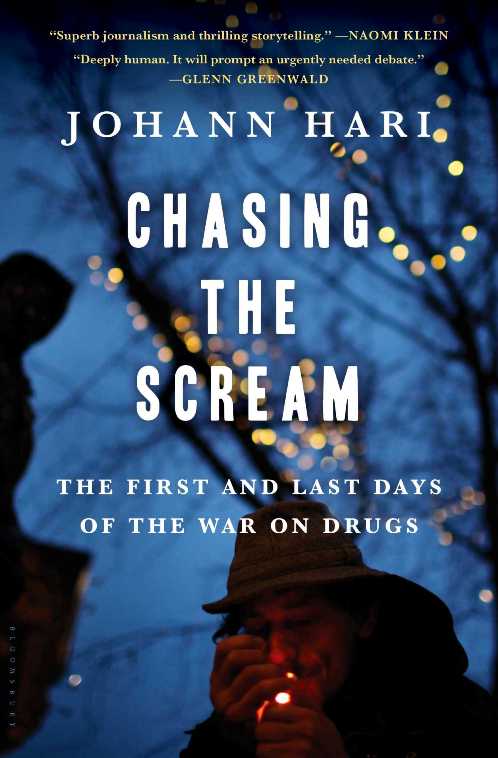
Weekly Read: Dreamland and Chasing the Scream

I read these two books back to back because they seemed to go together. One is a sober telling of how an epidemic swept the nation, landing right in my back yard (the book itself swept through my office earlier this year). The other is a passionate call to arms about the War on (Other Peoples’) Drugs. Both are essential reading.

The Dreamland in Dreamland, by former crime reporter Sam Quinones, is a public pool in Portsmouth, Ohio. For decades it was a hub of life in the town, ever expanding. It’s decline was tied to the region’s decline as a manufacturing hub. As jobs went away and poverty grew, addiction to powerful new opioid painkillers, and then heroin, ravaged the region. Dreamland was the perfect metaphor, withering away to merely a memory.

In Dreamland the book, Quinones lays out the perfect storm of factors that led to the opioid epidemic, which continues to claim lives all over the industrial Midwest and Appalachia. It’s made of three strands. The first is a revolution in the medical conception of pain, especially long term, chronic pain, and that it could and should be treated with powerful drugs. The second is the search for a safe drug to meet that need, which eventually led to Oxycontin. The third is slow expansion of a particular kind of heroin distribution operation from a particular small town in Mexico, Xalisco. As the “Xalisco Boys” operation spread into regions not generally thought of as “heroin country” (like West Virginia), they found a fertile ground of addicts already hooked on Oxycontin and looking for a cheaper, better fix.

Each strand has some particularly interesting stories to tell, although they’re not all of equal interest. The retail heroin distribution of the Xalisco Boys is, in fact, quite interesting – unlike the violent drug gangs who sell stepped-on product as a means to enhance the bottom line, the Xalisco Boys competed simply by selling a better product for less money. No violence and a focus on customer service. It makes getting heroin like ordering a pizza – an analogy to which Quinones returns over and over again. That’s the book’s main failing – it treads over the same ground repeatedly, particularly when it comes to the Xalisco Boys.

The other two strands weave together more effortlessly, particularly since they share a common root. In the 1980s a doctor published a “report” – really just a one-paragraph letter to the editor of a medical journal – that his practice hadn’t shown that patient who received powerful pain killers became addicted to them. This became the basis for Oxycontin advertising that opioid medications weren’t addictive, which recent history has shown to be completely false.* In the post-truth era of President Trump and “fake news,” it says something that the basis for Oxycontin’s development and sales was so poorly vetted because there was no profit to be gained in confirming it (because there never was in debunking it).

That’s one interesting linkage between the sellers of Oxycontin and the Xalisco Boys that Quinones hints at, but doesn’t quite make. Both are driven in what they do by the most basic of motives in a capitalist society – not just to make a profit, but to make as much of it as possible. That’s what drove the Xalisco Boys to look for untapped heroin markets. That’s what drove the Oxycontin peddlers to skip past the possibility of addiction and push doctors to prescribe the pills for damned near everything. The bottom line can be damned scary thing.

Dreamland is far from perfect. As stated above, it’s redundant, even beyond the stories of the Xalisco Boys. It’s also pretty dry writing, although it gets the point across. More important, Quinones gives short shrift to the fact that Oxycontin and other powerful pain killers are, for some patients, their only means of dealing with their pain. It also falls into a familiar pattern – of drug dealing bad guys (of various kinds) and good guy cops fighting to stop them – without providing any insight as to whether that’s a battle worth fighting.

Where Dreamland is a sober telling of an important modern story, Chasing the Scream is a polemic, a call to wake up to the failure of the War on (Some Peoples’) Drugs after more than a century. Dreamland should depress you – Chasing the Scream should piss you off.

Chasing the Scream is journalist Johann Hari’s chronicle of his attempt to figure out how the drug war began and where it’s headed. He travels the world, from his native UK to North America and elsewhere seeking answers about policy, addiction, and alternatives to prohibition. If in the end he doesn’t come up with a singular policy proposal to end the drug war, Hari at least convinces that it’s a war that needs to end (full disclosure – 15+ years of criminal defense practice convinced me of this long ago).

One thing he collects along the way are a cast of rich, memorable characters, from the transgendered former dealer in New York City and the former addict who transformed a particularly seedy portion of Vancouver to an addict who died in prison, cooked alive in the Arizona sun, and a mother whose pursuit of justice for her daughter in Mexico just produced further violence. Most key to the Hari’s book, however, is Harry Anslinger.

Anslinger was the head of the Federal Bureau of Narcotics (the spiritual predecessor to the modern Drug Enforcement Agency) for more than three decades and was, to Hari’s telling, the paradigmatic drug prohibition enforcer. He saw addicts as less than human, used racial and ethnic hatred to stir up panics to grow the power of his office, and was an overall asshole (the “scream” of the title refers to a trauma of Anslinger’s early childhood). Along with jazz great Billie Holiday (one of Anslinger’s high profile targets) and gangster Arnold Rothstein (the prototypical violent drug lord), Anslinger’s ghost hovers over the entire book as the project he started, the War on (Other Peoples’) Drugs expands and is entrenched.

Anslinger is Hari’s antagonist and he spends most of the book looking at the impact of his drug war on those caught up in it and challenging the assumptions underlying it. Of particular importance, he emphasizes the psychological model of addiction over the pharmaceutical model, presenting evidence that most drug users consume their product of choice without much problem, like most people drink alcohol without becoming alcoholics. Along the way he suggests that the scientific literature is clear about the limited addictive power of opioid pain killers, for instance, a claim that Quinones severely undermines.

Compelling as the stories of those caught up in the drug war are, the more interesting bits of Hari’s book are his examination of questions of drug use more generally, and addiction in particular, that shows the entire is more nuanced that Anslinger-style prohibitionists allow. For example, he discusses studies of drug use by non-humans, which is apparently fairly common. Elephants in Vietnam, for instance, generally steered clear of poppy fields until the United States bombing campaign drove them to seek escape from their terror.

It also allows Hari to get into various experiments with alternatives to strict drug prohibition. That includes programs in the UK and elsewhere that allowed addicts to get drugs legally, via prescriptions doled out by a state monopoly. Far from turning into drug fueled free for alls, this allowed addicts to function in everyday society and didn’t lead to more drug use. It also cut off a powerful marketing tool for drug dealers, as the addicts are their best customers. It’s no coincidence that part of the Xalisco Boys scheme that Quinones documents is how they used addicts in a new market to help them advertise and otherwise find customers.

Hari also explores broader legalization and decriminalization programs, such as those in Uruguay and Portugal. Though showing their success, Hari doesn’t dive deeply enough into the Portugal experiment, in particular, for it’s unclear how the law squares legal use and possession of drugs with criminal distribution – the drugs being used have to come from somewhere, after all. More interesting is his examination of the different arguments used by the people backing marijuana legalization in Washington and Colorado in the past few years. The disconnect (WA – drug prohibition is worse that pot being legal, even if it’s bad; CO – pot isn’t bad at all, being less harmful than alcohol) shows that even folks who see the end of the drug war in sight don’t necessarily agree on how to get to that point.

In the end, Hari doubles back to Anslinger for a stinger that brings the rot at the core of the drug war home. The stinger is – Anslinger himself was a drug dealer. He provided for a sitting United State Representative who was an addict to get a safe supply of heroin at a pharmacy (paid for by Anslinger’s agency, no less). The final irony? It was Joseph McCarthy, infamous red scare scam artist. It’s the ultimate example of the hypocrisy that leads me to call the drug war the “War on (Other Peoples’) Drugs,” because it’s rarely about the powerful and connected that are targeted, but the outcast and the hopeless. The war on drugs, ultimately, is a war on them.

Chasing the Scream, as I said, is a call to arms. Unfortunately, Hari may not be the best person to lead the charge, given his prior history with plagiarism and Wikipedia sock puppet scandals. It gives people an instant reason to disagree with anything he says, from snarky internet commenters to book critics (but see, as we lawyers say).

Dreamland is a flawed book, but essential to understanding one of modern American’s great tragedies. Chasing the Scream is the polemic of a flawed messenger about one of mankind’s great modern mistakes. Both are necessary and highly recommended.

dreamland

drugs0118

* UPDATE: This article from Slate goes into more detail on the one-paragraph phenomenon and how it’s not an uncommon occurrence in scientific journals.

Music – Even Bad Music – Isn’t A Crime

People can get passionate about music. I understand – I certainly fall into that bunch. When emotions flare people might even talk about music being so bad it’s criminal. But it’s good to know that such thoughts are limited to the realm of friendly hyperbole, at least in the First Circuit.

Musical taste should have been the least of Neftali Alvarez-Nunez’s problems. Alvarez-Nunez was a habitual user of marijuana and addicted to Percocet, which meant it was illegal to possess a firearm. But the firearm he possessed was actually an unregistered machine gun, so he got charged with two federal firearm offenses. He pleaded guilty and faced a maximum recommended sentence of 30 months, according to the United States Sentencing Guidelines.

However, in the report that included those calculations, the probation officer also included “a surfeit of information about the defendant’s musical pursuits.” These included being a member of Pacho y Cirilio, a somewhat popular group in Alvarez-Nunez’s housing project in Puerto Rico. The groups songs tended to (in the probation officer’s words): “promote violence, drugs and the use of weapons and violence.” That was particularly important because the housing project was “known to be associated with murders, drug sales and smuggling and weapons trafficking” (the First Circuit later would refer to it as a “no-man’s land”).

The probation officer, and later the Government at sentencing, suggested that this was a basis for imposing a sentence above that 30-month threshold. The Government introduced one of the group’s videos which, the court concluded, “included rifles and grenade launchers, along with children.” After rejecting Alvarez-Nunez’s argument that considering his music violated the First Amendment, the court imposed a sentence of 96 months – more than three times what the Guidelines recommended.

Thankfully, the First Circuit vacated that sentence (it called the sentencing court’s rational “implausible”), although the line between acceptable use of a defendant’s artistic expression and First Amendment infringement is a little finer than it perhaps should be. The court notes that there is no per se rule against considering “one’s beliefs and associations at sentencing simply because those beliefs and associations are protected by the First Amendment.” A defendant’s writings or recordings could be relevant to the stated purposes of sentencing, but there wasn’t any showing of such relevance in this case. The fact that some of Pacho y Cirilio’s songs involve unsavory or illegal conduct isn’t enough.

In reaching that conclusion, the court noted an obvious, but apparently overlooked, truth:

Implicit in this rationale is the assumption that the lyrics and music videos accurately reflect the defendant’s motive, state of mind, personal characteristics, and the like. But this assumption ignores the fact that much artistic expression, by its very nature, has an ambiguous relationship to the performer’s personal views.

In other words, Johnny Cash did not really shoot a man in Reno just to watch him die, Steve Hogarth was not an abused girl found catatonic on the Severn Bridge, and Roger Waters did not really construct an emotional wall around himself to cut himself off from the pain of real world. All right, so that last one actually happened, but you get my point. Need I say that I did not bash in the skull of my mentor and lead a rebellion? I’m not even blue, to tell the truth.

There are lots of things that are relevant to figuring out the right sentence for any particular person. The music they make, or listen to, really shouldn’t be one of them.

Weekly Read: Imbeciles: The Supreme Court, American Eugenics, and the Sterilization of Carrie Buck

It is better for all the world, if instead of waiting to execute degenerate offspring for crime, or to let them starve for their imbecility, society can prevent those who are manifestly unfit from continuing their kind. The principle that sustains compulsory vaccination is broad enough Three generations of imbeciles are enough.

– Buck v. Bell, 274 U.S. 200, 207 (1927)

In the rogues gallery of bad Supreme Court decisions – things like Dred Scott, Plessy, and Korematsu  – few had summed their own awfulness up so succinctly as Buck v. Bell, in which the Supreme Court upheld the constitutionality of Virginia’s law allowing the forced sterilization of the “feeble minded.” The decision was nearly unanimous (the lone dissenter didn’t write an opinion explaining his vote) and, horrifically, it is still “good law” in the 21st Century (a claim is shares with Korematsu).

Imbeciles, by lawyer turned journalist Adam Cohen, isn’t a deep legal analysis of Buck itself. Instead, it tells the story of the case by focusing on four people involved in it. First (and last) is Carrie Buck, the Virginia woman eventually sterilized for being “feeble minded.” Second is Albert Priddy, who ran the Virginia institution where Buck was committed prior to her sterilization (he dropped out before the case hit the Court, being replaced by Bell). Third is Aubrey Strode, the Virginia legislator and lawyer who helped pass the law and then defend it in court. Finally, there’s Olive Wendell Holmes, the Supreme Court Justice who authored the opinion. The result is an interesting, depressing, and angering story that provides a lot of needed background to the Court’s brief (5 paragraphs) opinion.

Cohen structures the book so that we begin with Buck’s life up to the case began and end with her life after her sterilization. In between, we get a chapter each on the background of the other guys and then a chapter covering their intersection with the case. It’s a fairly effective way to structure things, although not carried off very creatively (each chapter title is just someone’s name, like a George R.R. Martin tome). It also leads to some redundancy, particularly as Cohen uses Priddy’s and Strode’s background chapters as means to sketch out the broader picture of the eugenics movement.

That movement, though eventually discredited and forgotten (the Nazis being enthusiastic adopters of eugenics helped it slip down the memory hole), echoes in the 21st Century political diatribes about immigration and wall building. Indeed, the sterilization arguments were basically the same as the arguments for restricting the immigration of “undesirables,” with the added twist of them already being in the United States. Beyond that, sterilization was largely a way for society to deal with a perceived problem on the cheap – it was too expensive to warehouse the “feeble minded” in a more beneficent way. Sterilization followed by release into society was cheap, easy, and, thanks to the Supreme Court, perfectly legal.

I’ve read some complaints from readers that Cohen spends too much time diving into the biographies of his subjects, to the detriment of a broader understanding of the eugenics movement. I think that misses the point, somewhat. Cohen presents a good argument that Buck v. Bell was as much the result of those biographies as it was legal theory or factual findings. It’s not a complete success (Holmes may have been predisposed to support eugenics, but this wasn’t a close case), but I find it fairly persuasive. For example, see here for a law review article putting Holmes’s vote down his experiences during the Civil War (something Cohen touches on).

The personal relationships explain how the law’s most dubious component came into being. Strode drafted the law, perhaps in a way that meant to slow down its implementation. For example, he refused calls to have the sterilization scheme applied to all Virginians, rather than only those in state custody. Similar provisions in other states had been struck down on equal protection grounds. Cohen argues that while Strode was a skilled lawyer and advocate, he wasn’t the eugenic evangelist that Priddy and others were.

One of those provisions of the law was a requirement that it not go into effect until the Supreme Court approved it. On the face of it, this seems like a good thing – why not wait for the high court to weigh in? But that’s not the way the American legal system is designed to function. Courts (up to and including the Supreme Court) only adjudicate live “cases and controversies” – meaning actual disputes that require a resolution. That’s why issues of standing are so important, as there can be no actual dispute if someone doesn’t have the ability to seek redress against the other party. Our system is designed to allow two interested parties to argue against each other, present evidence to support their claims, and ultimately allow a neutral third party to pick a winner. It’s trial by combat, only less bloody and more mentally taxing.

By requiring the Virginia law to be blessed by the Supreme Court before it went into effect, Strode effectively set the stage for the farce that was Buck v. Bell. Cohen lays out how Priddy, Strode and others essentially conspired to produce a “test case” for the Court. Now, test cases and strategic litigation on social issues isn’t a bad thing – the one that always stands out to me is how the plaintiff in Brown v. Board of Education was chosen partly because the black school she attended was actually better than the closer white school she would have otherwise attended (that took the idea that it was separate, but not equal, off the table and forced the discrimination issue to the fore). But that’s different than a setup. Buck v. Bell was a setup.

That was largely true for two reasons. First, Buck herself was largely kept in the dark about the whole thing, both the operation to sterilize her and the litigation about it. It’s hard to have a real case or controversy if the plaintiff isn’t really driving the bus. Second, and more importantly, Buck’s lawyer, Whitehead, was in on it from the get go. He was friends with Strode and Priddy and did nothing that a competent lawyer would think of as competent. With only token resistance, Strode rolled through the courts and up to the Supreme Court, getting the ruling everybody wanted (and needed). This is, perhaps, the biggest flaw in Cohen’s argument that Strode wasn’t quite as on board with eugenic sterilization as the rest of those involved – he knew how the system was supposed to work and proceeded with the farce, anyway.

Ultimately, the focus is on Carrie Buck, who opens and closes the book. It’s a natural through line for the story of her particular case (obviously), but a little bit dangerous as a thread holding together a book about eugenics as a broader movement. That’s because, as Cohen makes clear again and again, there simply wasn’t evidence to support the conclusion that Buck was “feeble minded.” In fact, she appears to have been a perfectly normal person of average intelligence. As a result, the book comes dangerously close to suggesting that the real injustice is that Buck wasn’t actually a moron, rather than the state mandated sterilization of anybody. It’s a bit like telling the story of prison overcrowding through the eyes of someone who was wrongfully convicted. It’s powerful, but perhaps not for the right reason.

Imbeciles is a compelling story of a Supreme Court case, the people who guided it, and the woman who got caught up in its wake. Highly recommended.

imbeciles

Practicing Law Can Be Frustrating

There’s a scene in Clerks when Randle explains, “this job would be great, if it wasn’t for all the fucking customers.” Practicing law is a wonderful job (I think so, anyway) that allows you to do interesting work that has real impact in peoples’ lives. It can also be frustrating, particularly when you’re working with a difficult client. Indeed, sometimes it seems like a great job, but for the clients. Rigid procedural rules don’t help, either. Sometimes they make the perfect storm

Imagine you represent a client charged with a federal crime. You manage to get him out a bond but, in a flash, he takes off. Disappears. Neither you nor law enforcement has any idea where he is. Nonetheless, the world moves on and the codefendant in your case makes a routine motion to continue the trial date. Local rules require that you inform the court of whether your client objects to this or not – your client who is currently on the lamb. How do you deal with this impossible task? By deploying some weapons grade snark:

’As this Court is well aware, Mr. Jeffs is currently not available to inform his counsel whether or not he agrees to the Continuance. Whether his absence is based on absconding, as oft alleged by the Government in their filings, or whether he was taken and secreted against his will, or whether he experienced the miracle of rapture is unknown to counsel,’ Kathryn Nester wrote. ‘However, his absence prevents counsel from obtaining his approval and thus further prevents counsel from filing a joinder with the Motion to Continue Current Trial Date in compliance with the local rules.’

Now, I don’t think I’d get quite that snarky in a legal pleading, but Kathy Nester is the Federal Public Defender in Utah. If she’s done it, she’s probably earned the right to do it through her years of work before that court. Must have felt good to type that, though.

Here’s the funny thing – I didn’t hear about this on a legal blog or through the Federal Defender grapevine. I found it over at PZ Myers’s blog, where he plays up the silliness of someone “arguing” that their client was raptured in court. Problem is, it’s pretty clear she’s joking. That someone or something has been “raptured” is a running joke in my house, after all (my wife and I lose things constantly – maybe it’s gnomes? *).

Neither Myers, nor the immediate post he linked to at RawStory, use the full quote. Specifically, they don’t have the last line about “compliance with the local rules.” Nester was required, by an inflexible rule, to answer a question she cannot answer – what does her client think about continuing the case? It’s an absurd situation that calls for a similarly absurd response.

I think we can safely say that she’s not going to try and spin this into a alibi defense, you know?

* That’s a joke, too. Seriously.

Water Road Wednesday: Leave a Message at the Beep

Thank you for calling Water Road Wednesday. We’re sorry, but your desire to learn more about the world of The Water Road trilogy cannot be fulfilled at this time. The author has been called away to the industrial north to attend a gathering of those who fight the good fight (none of which involve Neldathi, the Triumvirate, or anything like that).

PDComic

Regular service will return next week.

Until then, go tell the author’s niece (also a writer) happy birthday – she’s 21 today!

Or, if you need some companionship, just talk to the answering machine: