Weekly Watch: True Story

Truth, as they say, is stranger than fiction. It does not, however, necessarily make for a dramatic story, even if it’s an interesting one.

The true story behind True Story is plenty interesting. Mike Finkel was a reporter for the New York Times who had several big-deal pieces in the paper’s Sunday magazine. He pushes too far on one story, creating a composite central character for his narrative that doesn’t exist. As a result he’s fired and deported to the wilds of Montana (not deported – he actually lived there).

He’s trying to figure out how to get his life back when a reporter from Oregon calls about a murder suspect named Christian Longo. Wanted for killing his wife and three children, Longo flees to Mexico. What does this have to do with Finkel? When he’s arrested in Mexico, authorities learn that Longo has been posing as – Mike Finkel, reporter for the New York Times.

With that slenderest of connections (there’s no evidence Longo ever really did anything with Finkel’s identity, aside from get laid), Finkel heads to Oregon to meet the guy who pretended to be him. They wind up talking all through Longo’s trial. Their relationship is the heart of the movie.

Which is a shame, because it’s just not that interesting. For one thing, the movie largely consists of Finkel and Longo sitting across a table from each other talking. Some interesting topics are brought up, but nothing really lands all that hard. It comes across very staged, like it was once a stage play with only two characters that was adapted for the screen (which it wasn’t). It doesn’t help that the only other “main” character, Finkel’s then girlfriend (now wife), is given precious little to do, aside from a late confrontation with Longo where she is, hilariously, allowed to walk into a jail waiting room with a cell phone (cell phones are contraband in prisons).

That might have a potential to work, but it would need a better pair of sparring partners. Put bluntly, the version of Finkel in this movie is just a bad journalist. He’s entirely too naive about Longo and how he’s manipulating him. He doesn’t do any independent investigation of Longo’s alleged crime and doesn’t seem to care about whether he might be innocent or not. When the rug gets pulled out from underneath him, it’s less a shock and more like the inevitable result of his own foolishness, like when a puppy finally catches its tail and freaks itself the fuck out.

Outside of the conversations between Finkel and Longo, the movie exists in some kind of bizarre Neverland where the fact that Longo is on trial for capital murder is barely mentioned. There’s no mention of Longo’s lawyer and whether he or she approves of all these non-privileged conversations. In spite of the fact that inmate mail is routinely read and searched, nobody alerts the prosecution about Longo’s letters to Finkel. Then, once they do learn about it, they do nothing to get a hold of them.

This is another one of those situations where Finkel doesn’t seem like much of a journalist. When first confronted by a detective about his conversations and correspondence with Longo, he puts on a good front that suggests journalistic scruples are too important to allow him to cooperate with police. Then, once he realizes Longo is full of shit, he can’t run to them fast enough (even though they don’t want his stuff, in the end, for dubious reasons related to Finkel’s credibility). This is another potentially interesting issue that just never gets a full airing.

I may be griping about things that actually did (or didn’t) happen, so it seems a little shitty to possibly ding True Story for being too true. But as I said long ago, just because it’s real doesn’t mean it’s compelling drama. True Story may be all it claims to be, it just doesn’t add up to very much.

TrueStoryPoster

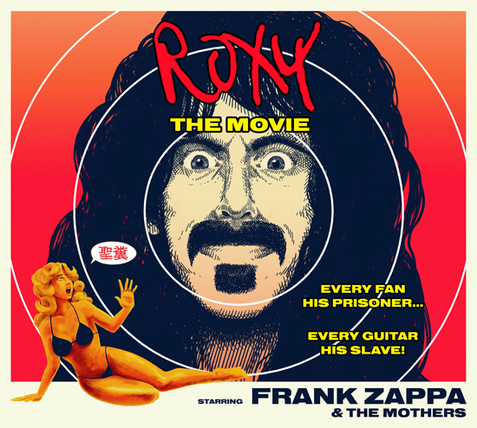
Weekly Watch: Roxy: The Movie

If there was a holy grail for Frank Zappa fans, it was this.

For several days in December 1973, Zappa and the Mothers as they existed at that time – a group some consider his best ever and included George Duke and Chester Thompson (the drummer one) – hit the stage at LA’s Roxy Theater for a set of shows where not only the sound but the pictures were all recorded. Thus Zappa’s explanation in the intro for “Penguin In Bondage” that he’s “circumlocuting” a particular topic “in order to get this text on television.” The shows served as the basis for Roxy and Elsewhere, a partly live album that many (including yours truly) consider Frank’s best.

But there was supposed to be a movie, too, filmic evidence of Zappa and crew at the height of the their powers. As it happens, it was doomed from the start:

Unbeknownst to anyone on the crew, the audio recording device suffered an internal malfunction within two minutes of the very first show. There was no way for anyone to know about it until the film had been shot, processed, and delivered to the editor. Since the production schedule was so short, they didn’t process any of the film until all of the shows were ‘in the can.’ When the editor went to align the picture and sound . . . it became apparent that the program stayed in sync for all of five seconds.

That’s from the liner notes from Roxy: The Movie, which has, for years, been just out of reach for Zappa fans. Now it’s has finally seen the light of day after being a tantalizing mirage for my entire lifetime. Is it worth the wait?

Yes and no. In all honesty, it would be impossible for the movie to live up to the expectations that decades have piled upon it.

For one thing, it’s not just a video document of Roxy and Elsewhere. If anything, it shows just how much of that album is studio work, versus live. That’s not a bad thing – Zappa never held closely to the distinction between “live” albums and “studio” albums (even his 1988 tour releases that preach about there being no overdubs have tracks cobbled together ex post from multiple sources). But it does lend the sense that something’s missing, that there’s a stripped down feeling to some of the material.

For another thing, Zappa being Zappa there are some things that just don’t work on the night and are much better elsewhere. Primarily that’s “Inca Roads,” which gets a low-energy lounge version here that pales beside the one recorded later in Helsinki (memorialized on You Can’t Do That On Stage Anymore, Volume 2). And the marvelous side-long suite from Roxy and Elsewhere feels truncated without “Village of the Sun” leading into the other two parts.

If that sounds awfully negative, it shouldn’t. This is still a great document of a Zappa concert with the man in his prime. He rules not just the stage but the entire venue, directing musicians and audience alike. You get to experience the entirety of “The Be-Bop Tango (Of the Old Jazzman’s Church)” in its entirety, complete with what can barely be referred to as “dancing.” And the other two parts of that side following “Village”? Brilliant. Napoleon Murphy Brock getting sexed up during “Dummy Up”? A little more disturbing!

Another thing that’s fascinating to watch is the multitude of percussion on display. The band for this gig had eight members (Frank included), of which three were full time bangers of things – Ruth Underwood, Chester Thompson, and Ralph Humphrey. Hell, Zappa even through in with the pounding at one point. What’s amazing is that by seeing who’s doing what, as opposed to just hearing the end product, you’re able to see how the parts play off one another and what they each bring to the table. So many times you see a band with two drummers and wonder what’s the point. Not so here.

So if you’re new to Zappa and coming to things with an open mind, that mind will be blown by Roxy: The Movie. It’s a document of man at the height of his powers, leading what’s considered to be one of his best collections of musicians, and having a hell of a good time to boot. That it can’t quite live up to what people like me had hoped it could be is on us, not Frank.

RoxyCover

Weekly Watch: The Force Awakens

I’m a sci-fi/fantasy geek writer – you thought I was going to pass this one up?

Unless you’ve been under a rock for the past two years, you know that last week brought the rebirth of the Star Wars franchise with The Force Awakens, the biggest movie event in – well, in ever, I think (I’ve never stood in line for a movie in my 42 years, much less for a mid afternoon Saturday matinee). This was the first of a new trilogy, the first since Disney bought the franchise, and the first to be made without the input of George Lucas. Could it bear the weight fandom has put upon it?

Short answer – very much yes.

Longer answer . . . well, read on (trying to be as non-spoilery as possible).

The good news is that the scripted, penned by (among others) West Virginia native and Empire Strikes Back scribe Lawrence Kasdan is strong where it counts most, which is in the actual interaction of people (well, “beings,” I guess) on screen. Not only are the characters, be they new or old, given interesting things to say and do, but J.J. Abrams manages to do something that Lucas has lost all talent for – getting good performances out of actors. You care about what happens to the people on screen, which goes an awful long way.

The effects, as promised, harken back to the first trilogy rather than the “throw all the CGI things on screen!” approach of the prequels. In fact, it’s quite fun to see the sleek, modern interior of the First Order TIE fighters contrasted with the decidedly retro (dare I say analog?) controls of the Millennium Falcon. When there are battles (and there are!), they’re refreshingly gritty and small enough that we can keep track of what’s going on (there’s one scene in particular where the camera keeps ground action in frame while tracking what a particular pilot’s doing in the air – great stuff).

As for the overall story, it’s a bit of a letdown. If you’re a fan of the series – hell, even if you’ve only seen Star Wars itself, it will seem awfully familiar. It’s not a carbon copy, which is best seen in the contrast between the two characters who begin things on a backwater desert planet, Luke and Rey. Luke wants nothing more than to get his ass off Tatooine in the beginning of Star Wars. Rey, on the other hand, wants nothing more to hang around on Jakku. But the beats are largely the same and as things wind to the big finale, the voice of Peter Griffin might pop into your head.

That’s not entirely a bad thing. The big ask of The Force Awakens was to wash the stench out of our mouths from the prequels, as well as set up two more movies (at least). It succeeds in that, partly by reassuring fans that it’s going back to its roots, that everything’s in good hands. It’s not the greatest movie ever made. It’s not the best Star Wars movie ever made. But it’s damned good and makes me look forward to whatever comes next.

Merry Xmas, everybody – Star Wars is back!

star-wars-force-awakens-official-poster

Weekly Watch: American Sniper

I’ve said, for a long time, that all art is subjective. Beyond the fact that art impacts different people in different ways, that’s because different people bring different perspectives and experiences to art in the first place. Two people looking at the same artistic work (or reading it or listening to it) can come to very different opinions about it based on the individual lens through which they’re doing the viewing. In that sense, art can become a Rorschach test, saying more about the person reacting to it than the art itself. A good recent example of that was American Sniper.

It’s a fictionalized account of the life of Chris Kyle, credited as the most prolific sniper in American military history. He racked up that total during the Iraq war. Ironically, given that he made his reputation with a gun, Kyle’s life was ended by another veteran at a shooting range in 2013. I have no doubt that the perceptions and values I brought to the movie colored the way I saw it.

It’s an interesting, if muddled, film. After a quick flashback intro, it alternates between harrowing battle scenes based in Iraq (the last one, which involves an all engulfing sandstorm, is really impressive) and home front scenes in Texas that shows how much impact the experiences are having on Kyle. The problem is that it never commits to either venue. It’s neither an all out war movie, nor is it a deep examination of the problems faced when vets come home.

Nowhere is that more obvious than in the way it glosses over Kyle’s life once he left Iraq behind. I don’t mean his death – that’s not shown on screen. I mean his transformation from brooding, seriously messed up soldier to a loving father and husband who was putting his experiences to use helping other veterans. All that’s covered with such brevity that it might as well have been a musical montage.

As I said, American Sniper turned into a kind of Rorschach test, with reviews saying more about the person talking about it than the film itself. That was true whether it was a professional pundit or some random person popping up on the Internet.

On the pundit side, check out Matt Taibbi’s review. I like Taibbi and agree with him on a lot of things, but I have to wonder if he actually watched the moving before writing that. It’s much more about what it isn’t – a catalog of the sins of the Bush administration and the Iraq War – than what it is. Instead, it’s very personal story about one man in the middle of something bigger. In fact, the plot makes it a mano y mano battle between Kyle and his Iraqi counterpart suggesting (as the recent Sicario did for the drug war) that everything, even war, in the end, is personal.

If liberal pundits were quick to slam the film for its perceived politics, conservatives were quick to praise it for the same reasons – because they found their politics positively reflected in it. Personally, if I thought American Sniper was validation of my politics, I would be very frightened. But I come to it with my own baggage, right?

See what I mean about a Rorschach test?

And it goes beyond politics. Take, for instance, this discussion in IMDB about how Eastwood ruined a perfectly good “war movie” by having scenes with a “whining wife” in them. Ignoring the fact that Eastwood wasn’t interested in making a “war movie” or that movies with scenes of warfare in them can be about more than killing bad guys.

American Sniper isn’t unique in this, although the effect is amplified because it deals with recent history, politics, and overseas adventures that are still causing us all kinds of problems. It might have cut across that divide with a little more commitment to being one thing or the other.

american-sniper-poster

The Trouble Of Quantifying Art

It’s received wisdom that movies adapted from written material are, to steal a phrase from an excellent album by The Tangent, not as good as the book. I tend to agree with that wisdom, but there are some notable exceptions (Dangerous Liaisons, The Sweet Hereafter, LA Confidential). Is there some way we can tell, with math and numbers and stuff, which ones work better than others?

No. No there isn’t.

That doesn’t keep people from tying. Back when the last part of The Hunger Games film saga came out, stats guru Nate Silver purported to identify the 20 “most extreme cases” of film adaptations that failed to live up to the quality of their book source material. When I clicked the link I was actually hoping Silver might have broken out of his usual routine and embraced the ambiguous in the world.

Alas (footnotes omitted):

there are extreme cases where book-lover rage is justifiable. Which cases? I pulled the Metacritic critic ratings of the top 500 movies on IMDB tagged with the “based on novel” keyword. I then found the average user rating of the source novel for each film on Goodreads, a book rating and review site. In the end, there was complete data for 382 films and source novels.

The results are kind of fun to look at. Remember, Silver’s most interested in the divergence between good books and bad movies, and vice versa, so a great adaptation of a great novel kind of falls through the cracks. Still, who knew that Up in the Air was so much better a film than the novel? But that list points out some of the problems with Silver’s undertaking. Is it completely accurate to call Apocalypse Now an “adaptation” of Heart of Darkness, or is it simply inspired by it? And Dr. Strangelove, while it may have adapted the plot of Red Alert, it turned the ideas of it on their head, playing it as dark satire, rather than serious, suspenseful drama (it got that from Failsafe). The reverse list is a little easier to understand, for the reasons Silver mentions.

But the real problem isn’t in the particular results, it’s in the method. Mainly, Silver is comparing apples and oranges. He somewhat admits this in a footnote, when he admits that there isn’t a critic aggregator for books like there is for films in Rotten Tomatoes. But he falters in then assuming that there isn’t a like to like comparison he can make. IMDB also has user ratings, numbers generated by fans that are more like the Goodreads ratings than Metacritic averages.

The difference is important. Every few years you’ll see a think piece like this one about how film critics don’t appear to have much influence on what movies people go see. They routinely trash the kind of big summer popcorn movies that do billions of dollars in business. It doesn’t suggest that the critics are wrong or right, just that they have a different frame of reference than fans. A critic sometimes sees a dozen movies in a week, whether they appeal to her likes and dislikes or not. The typical movie goer, on the other hand, sees one or two and tends to pick stuff he thinks he’ll enjoy. So comparing book fans to movie fans would have been a baseline for a survey like this.

Another problem, that Silver doesn’t approach at all, is one of scale. Put simply, even really popular books are read by orders of magnitude fewer people than see adaptations of them. Going back to Up in the Air, how many people read that book? Yet it did more than $166 million dollars in box office. My thought is that book fans tend to be more passionate than movie fans, more invested in their favorites. Not to mention, if most of the people who see an adaptation never read the source material, how can they compare one to the other?

Ultimately, that’s all nitpicking. Trying to reduce art to numbers is a fool’s game. Fun to play sometimes, but ultimately like trying to light a cigarette in a hurricane.

UPDATE: Or, as James Poniewozik puts it in a New York Times write up of the best in television for 2015:

Art isn’t math.

Amen.

Weekly Watch: Sicario

The War on (Other People’s) Drugs has always been great fodder for Hollywood. There are good guys, there are bad guys, and the violent nature of the drug trade means there’s lots of opportunities for shootouts and car chases and all the other action movie stuff that Americans love. Rarely do these movies ask if there might be something pointless about the whole exercise.

Sicario has a lot of those trappings, but they’re seen through a smudged lens. There are bad guys, all right. There are good guys, but from early on the question of just how good they are is in play. And there are plenty of well played action sequences, including the most tense road trip ever that didn’t involve your in-laws.

But there’s something else going on in Sicario, largely because the main character, played by Emily Blunt, has so little to do with the bigger picture into which she’s swept. She’s a tactical specialist brought into an operation that doesn’t have anything to do with her specialty (hostage rescue). That leaves her with lots of time to question the legality and morality of the entire operation. She never really comes around, but gets beaten down by what she sees.

It’s an interesting narrative choice. A more traditional approach would have made Benicio del Toro’s character the protagonist, which would fit comfortably into the ever popular revenge fantasy niche (del Toro, by the way is fantastic – Oscar, here he comes). But that would make us root for him in a way that making Blunt the main character doesn’t allow. We look at what she does with the same kind of (hopefully) disgusted detachment.

That being said, what does Sicario say about the War on (Other People’s) Drugs itself? Two things, both of which aren’t likely to come through in your typical action flick.

For one, the film implies that the high minded ideals of the war are actually just cover for much more personal motives. The head of all this covert fun, Josh Brolin’s character, first tries to convince Blunt that his strategy is about luring a big cartel’s main man in the US to go to Mexico, to the big boss, since they don’t know where he is. Blunt’s objection that they don’t have jurisdiction in Mexico is waved away. Next, he tries to justify the op with a kind of drug-fueled real politik – that the actual problem is the expanding number of cartels shipping drugs to the US and that the solution is to make sure there are fewer of them that can, at least, be more easily controlled.

All this is, to put it politely (oh, spoiler alert!), bullshit. At its heart, the story Sicario tells is a revenge story. Del Toro’s character, who’s position in the governmental hierarchy is never nailed down, is in it to avenge the death of his wife and child. Thus, all the issues about violating another nation’s sovereignty and the scope of a particular agency’s authority are pushed aside for the most personal of motives.

The other thing that comes through comes as a result of some scenes in Juarez, Mexico, that follow a Mexican state police officer (an important distinction from the Mexican federal officers). His son plays soccer, which is just a detail about his home life until the very end. His mother takes him to a game, played on a bare dirt lot in Juarez, around which the sounds of gunfire rattle off every few moments. At first it’s unsettling, but everyone goes on with their lives.

The point, it seems to me, is that even after a great blow has been struck against the bad guys, the problem continues to exist. My theory has long been that the reason the War on (Other People’s) Drugs is destined to fail is because it’s actually a war on human desire, a desire to escape the shitty world around us. Sicario seems to agree that it’s ultimately fruitless, but on other grounds.

Either way, it’s refreshing to see a movie that, on the one hand, is set up to be the conventional good guy v. bad guy story, then turns out to ask deeper questions. Throw in lots of great performances and some really tense set pieces and Sicario is an excellent, if unsettling, piece of work.

Sicario

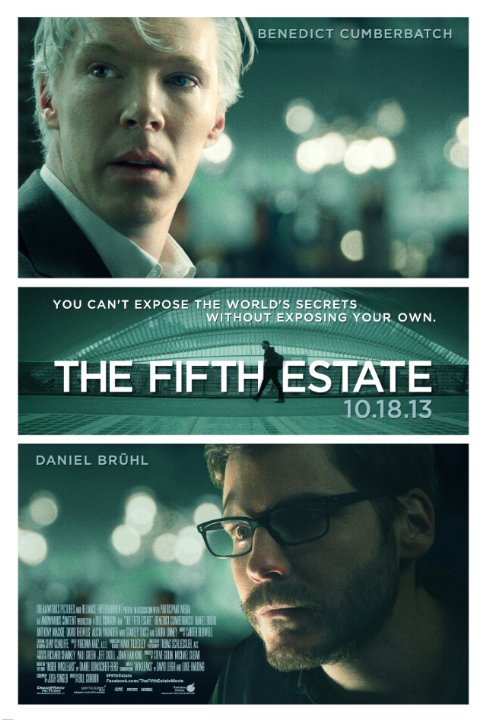
Weekly Watch: The Fifth Estate

The Fifth Estate desperately wants to be a movie about Julian Assange, the enigmatic founder and leader of Wikileaks. Problem is, it’s not really a movie about Assange. Instead, it’s really about Daniel Domscheit-Berg, who worked with Assange for a few years. It’s based on his book (along with one other) and he’s clearly the audience surrogate – the one who lets us in on the story.

But since The Fifth Estate wants to be a movie about somebody else, we don’t really learn enough about Berg to care about him or his motivations. It’s unclear why he hooked up with Assange (they knew each other when the movie’s timeline starts, although they were just meeting in person for the first time) and whether their eventual rupture was inevitable or the result of Assange really going over a bridge too far.

The biggest problem with this isn’t that Berg’s story might have been more interesting – maybe it isn’t – but that without a good anchor into the broader story of Wikileaks the person the film wants to be the center of attention, Assange, isn’t that interesting, either. Benedict Cumberbach (sp?) does pretty well with what little he’s got to work with, styling Assange as an aloof egomaniac with a messiah complex who may, nonetheless, be doing the right thing.

The shallowness of all this is evidenced via a running joke, in which Assange will relate some harrowing experience and then quip that’s why he has white hair. Late in the film Berg offers the real secret – he dyes it (no shit!) because that’s what the cult in which he grew up did. Assange has already told us about the cult, so this really isn’t anything new. What’s set up as some kind of big reveal – I thought, perhaps, Assange’s whole back story had been a lie cooked up to enhance his image – really isn’t. You shrug and move on, just as with the rest of the film.

It doesn’t help that most of the action takes place on computers and Hollywood hasn’t really figured out yet how to make that interesting. The great achievement of The Social Network was making a story about computers about people instead, so the (very brief) bits of actual computing we see mean something. Too many of the characters in The Fifth Estate spend too much time tapping out stuff on keyboards that we, the viewers, can’t even read (seriously – when the climax is happening it’s nearly impossible to figure what people are saying to each other). At one point it looks like, in an accommodation for dramatic purposes, that folks might read what they’re typing in a voiceover, but that only happens once. Somebody should have stuck with that instinct.

Amidst all that I suppose it’s no surprise that the central conflict, brought into sharp relief by the release of documents leaked by American soldier Bradley (now Chelsea) Manning, almost comes out of nowhere. While there are earlier cites to the Wikileaks policy of never editing or redacting the documents they release, nobody really questions this policy or how it might run up against conflicting concerns (say, the safety of innocent third parties) until it actually happens. Some better philosophical and political groundwork would have made that climax more powerful and dramatic.

In the end, there are a couple of better movies waiting to escape The Fifth Estate, one about Assange and one about Berg. It’s a shame the creative team behind The Fifth Estate didn’t have the material to make the first one or the desire to make the second one. Don’t take my word for it – Assange didn’t like it either.

FifthEstate

Genre Matters, If Only a Little

From time to time, I get a little riled up when it comes to issues of genre. I am, as you can tell, a genre writer. I am also, for the most part, a genre reader. Sci-fi and fantasy is what I like and I’ve got no problem admitting it. Nor do I have a problem with folks who don’t like it. Different strokes and all that.

However, it rubs me the wrong way when people use genre labels as a sign of inferiority. Particularly, it makes me grumpy when people see something that, in spite of all the genre trappings, is so elevated and wonderful that it cannot, under any circumstances, actually be a part of the genre itself. This all flared up back in March with the publication of Kazuo Ishiguro’s The Buried Giant.

Ishiguro is the Man Booker Prize winning author of (among other things) The Remains of the Day. He is “Literary” with a capital L. However, first with Never Let Me Go and now with his latest he’s come to play in what folks would generally recognize as the lands of science fiction and fantasy, respectively. But he really wishes they weren’t (I addressed this at my old blog after watching the film version of Never Let Me Go).

Ursula K. Le Guin fired the first shot, responding on an interview Ishiguro did with the New York Times. Here’s how she describes The Buried Giant:

[it] takes place in a non-historic just-post-Arthurian England. Everybody there has lost most of their longterm memory, due to the influence of the breath of a dragon named Querig.

Ogres and other monsters roam the land, but Querig just sleeps and exhales forgetfulness, until a pair of elderly Britons with the singularly unBriton names of Beatrice and Axl arrive with the knight Gawain and a poisoned goat to watch a Saxon named Wistan kill Gawain and then slice the head off the sleeping dragon.

Sounds pretty fantastic, right?

Ishiguro then says:

Will readers follow me into this? Will they understand what I’m trying to do, or will they be prejudiced against the surface elements? Are they going to say this is fantasy?

They probably will, Le Guin argues, with good reason and with no need of being ashamed. Yet Ishiguro, it seems, “takes the word for an insult.” More recently, in an interview with Neil Gaiman, Ishiguro expressed surprised at such a reaction, asking “why are people so preoccupied?” and wondering if genre labels were just something created by the publishing industry.

He’s certainly right that genres make things easier for the sellers of books – which includes authors, by the way. But they also make things easier for readers. If I read Book X and it falls into Genre 1, then maybe I might like to check out other things that fall into Genre 1, right? Sure, the genre definitions get fuzzy along the boundaries (go see any of the “what is progressive rock?” debates on the Web for proof!), but some guidance is better than none.

Admittedly, some genre signposts don’t tell you very much. Gaiman makes this point:

I think that there’s a huge difference between, for example, a novel with spies in it and a spy novel; or a novel with cowboys in it and a cowboy novel.

Can’t argue with that. The Big Lebowski isn’t a “cowboy movie” just because there’s a cowboy in it, after all. But it doesn’t really do much to tell you what it’s about. Likewise, a story with a detective as a main character could be lots of different things: mystery, police procedural, domestic drama, comedy, etc. But those two genres do have one thing in common – their stories exist in the real world.

Science fiction, fantasy, and (to a lesser extent) horror stories don’t take place in our world. That’s what makes them “speculative,” after all. Stories told in the real world have to confine to our world – if a key scene requires a character to get from one side of town to the other in 10 minutes she can’t just close her eyes, mumble some Latin, and teleport herself. But in the speculative genres anything is possible. The writer has to develop her world and its rules, but isn’t constrained by how the real world operates. It’s a Rubicon kind of thing – once you cross it, you can’t uncross it.

But genre has nothing to do with quality. There’s good science fiction and bad (cue Sturgeon), good fantasy and bad, good literary fiction and bad (keeping in mind the highly subjective nature of “good” or “bad”). If there’s a stigma about genre fiction it’s largely because writers like Ishiguro (and, at earlier times, Margaret Atwood) and his critics insist that his work is too good to be labeled as such.

That’s my great objection. I don’t care that Ishiguro or anyone else wants to come play with some of the trappings of genre fiction while not buying wholly into the genre’s tropes. It’s perfectly OK to come into our sandbox and play by yourself. That doesn’t obscure that you are, in fact, in the sandbox with us. Don’t insult our intelligence by arguing otherwise.

On Flying Cars and Flying Snowmen

Years ago John Scalzi wrote a post about how his wife, when it came to reading their daughter a favorite story, couldn’t get past the idea of a flying snowman. This didn’t make a whole lot of sense. As Scalzi pointed out she had no problem with a snowman who could come to life, wear clothes,
and talk with children, so why was flying a bridge too far?

The fact is, we all have a point beyond which we simply can’t suspend disbelief any longer. As a writer of fantasy and science fiction I’m doubly aware of that. Some people will happily turn their brains off to enjoy a good story, but if you trip that wire that goes beyond their comfort zone of disbelief, they’ll turn on you. There’s not much you can do about it, except recognize that we all do it and we all do it at different points. In other words, we all have our own flying snowman.

I bring this up not because of some great work of fantasy or science fiction, but because of the seventh movie in the Fast and Furious franchise, which has dominated the box office this year (up to this point). Although I’m a car guy (autocrossing them since 1999) I’ve never been a fan of the series. If I’m honest, I’m not a big fan of action flicks in general, so the automotive overlay does nothing for me. My wife, on the other hand, is a big fan, thanks to her action movie jones and an abiding longing for The Rock, so I took her to see the new one.

It’s not bad, for a big loud popcorn flick that doesn’t aspire to be much more than that. In particular there are some really amazing stunts and some good quips. Can’t ask much more than that. However, there are some points where I reached my flying snowman point. Ken Levine’s line is apparently in about the same place, although he got a bit more aggravated by it:

FURIOUS 7 is an absolute fucking mess! What the fuck was that?! No, seriously! There’s not a fucking frame of this stink burger that’s rooted in any reality. Roadrunner cartoons are more realistic. Is this what the action film genre has become? Mindless idiotic fucking stunts that defy all laws of gravity, physics, logic, and common sense? Hand-to-hand combat where the combatants beat the living shit out of each other and neither is even bruised? They crash through glass walls. No cuts. They hit each other with lead pipes. No blood. Their heads are smashed through concrete walls – not even a mild concussion. What the fuck was I watching? Nobody dies. Cars go over cliffs, roll over seventeen times, are twisted gnarled wrecks when they finally come to a rest 1,000 feet down the hill, and the passengers just wriggle out without so much as a scratch. At least Wile E. Coyote looks disheveled when he swallows a lit stick of dynamite that explodes in his stomach. Not Vin Diesel. Not Jason Stratham. Not the Rock. Creative license is one thing but this is fucking preposterous.

Now, to be fair, some of what Levine rages against as CGI fakery actually isn’t (see, for example, the flying cars of the title). But, he’s right. Furious 7 apparently doesn’t take place in the real world. My flying snowman moment came when Vin Diesel and Jason Statham not once but twice staged deliberate head-on collisions from which each walked away without even a bruise. There’s a fine line between “I can’t believe they did that!” and “I can’t believe they really did THAT?”

My wife concedes the point. She doesn’t argue for the reality of those things, but is more willing to set aside concerns and just enjoy the movie. She’s not wrong, but neither am I. I just can’t go that far. At least not for Fast & Furious.

Star Wars, on the other hand . . .

The defining image of the second trailer for The Force Awakens is the star destroyer crashed on the surface of what JJ Abrams swears is not Tatooine. When I saw that, there was a large part of my mind that immediately started into how impossible it was for a craft of that size to plummet through the atmosphere and crash land more or less intact. But another part thought it was about the coolest thing it had seen in years.

Guess which side wins? That’s because, when it comes to something I’ve loved since I was a kid, my flying snowman threshold is much higher. I’m willing to turn the more rational part of my brain off and just enjoy the awesomeness. Not every part, mind you.

Which is just to say, as a writer and a reader/viewer, you don’t necessarily need to know where the line is, but be aware that everybody has that line and you can’t hope to be certain you don’t cross it.

If You’re Worried About Rosebud, You’re Missing the Point

It’s his sled. It was his sled from when he was a kid. There, I just saved you two long boobless hours.

Peter Griffin, spoiling Citizen Kane

Saw Gone Girl last weekend.  It’s really good, particularly if you like the kind of movie that takes place in an air of dread that’s perfectly summoned by David Fincher (with able assists from Trent Reznor and Atticus Ross).  I say that even knowing the big twist of the film going into it.  Not because I had read the book on which it’s based, but because my wife blurted it out during a TV commercial. She didn’t know I wanted to see it.

Point is, she didn’t really “spoil” the movie for me, in the true sense of the word.  That’s because the flick is good enough that it doesn’t rise or fall on the big “twist” (which, for what it’s worth, happens about halfway through – this isn’t The Sixth Sense we’re talking about).  In my opinion, any movie/book/TV show that rises and falls on that twist isn’t really worth watching.

What’s more, people seem to enjoy things more once they know how it turns out.  At least that’s what some research says.

Back in 2011, as The Atlantic reports, a study was published that sounds pretty neat:

Scientists asked 900 college students from the University of California, San Diego, to read mysteries and other short stories by writers like John Updike, Roald Dahl, Agatha Christie, and Raymond Carver. Each student got three stories, some with “spoiler paragraphs” revealing the twist, and some without any spoilers. Finally, the students rated their stories on a 10-point scale.

The results?  Readers preferred the spoiled stories.  But why would we want to know how it ends ahead of time?

One theory is that our anticipation of surprises actually takes away from our appreciation for the 99 percent of the movie that isn’t a monster twist. ‘The second viewing is always more satisfying than the first,’ Sternbergh said, ‘because you notice all the things you missed while you were busy waiting for the twist.’ Psychologists have observed that when we consume movies and songs for a second (or third, or hundredth time), the stories become easier to process, and we associate this ease of processing with aesthetic pleasure.

Think about this for a second.  Most of us have some piece of culture that we go back to again and again.  I know that the big escape at the end of Brazil takes place all inside Sam’s head, but I still watch it.  I know that Arthur and Ford wind up on a primitive Earth populated by a bunch of idiots expelled from a better planet, but I’ll still consume Hitchhiker’s Guide . . . again (in its many forms).  And I know Tommy goes back to being blind, deaf, and dumb at the end, but that doesn’t make “Pinball Wizard” kick any less ass.

Of course, there might be other reasons why spoilers really aren’t, including the uncomfortable recognition that we really like predictability more than we let on.  But, in this area at least, I’d like to not be completely cynical and think that, deep down, we realize that works built on the big twist only are, as someone else put it in the Atlantic piece:

like artistic flash paper: It excites for a moment but offers little lasting wonder.

After all, we want to be better than Peter Griffin.  Right?

Note: This piece was originally posted on my old blog on October 20, 2014.