Genre Bias Rears Its Ugly Head – It’s Science!

While I was of NaNoing last month an interesting bit of news came out with regards to science fiction and other types of fantastic literature. Put simply – people don’t put as much effort into reading those stories as other types.
ReadingHard

The study went like this:

Their study, detailed in the paper The Genre Effect, saw the academics work with around 150 participants who were given a text of 1,000 words to read. In each version of the text, a character enters a public eating area and interacts with the people there, after his negative opinion of the community has been made public. In the ‘literary’ version of the text, the character enters a diner after his letter to the editor has been published in the town newspaper. In the science fiction version, he enters a galley in a space station inhabited by aliens and androids as well as humans.

After they read the text, participants were asked how much they agreed with statements such as ‘I felt like I could put myself in the shoes of the character in the story’, and how much effort they spent trying to work out what characters were feeling.

The results were, on the face, disappointing:

‘Converting the text’s world to science fiction dramatically reduced perceptions of literary quality, despite the fact participants were reading the same story in terms of plot and character relationships,’ they write. ‘In comparison to narrative realism readers, science fiction readers reported lower transportation, experience taking, and empathy. Science fiction readers also reported exerting greater effort to understand the world of the story, but less effort to understand the minds of the characters. Science fiction readers scored lower in comprehension, generally, and in the subcategories of theory of mind, world, and plot.’

Readers of the science fiction story ‘appear to have expected an overall simpler story to comprehend, an expectation that overrode the actual qualities of the story itself’, so ‘the science fiction setting triggered poorer overall reading’.

In spite of some of the breathless comments I saw online the study does not, as someone points out, imply that reading sci-fi makes you dumber, but implies that people who don’t like sci-fi won’t give it its full attention. It’s nice to have some science to back this up, I guess, but is that any surprise?

That’s the whole reason literary writers, whom I’ve complained about before, don’t like admitting that they write sci-fi or fantasy. This came up against just recently after I finished Emily St. John Mandel’s really excellent Station Eleven (Weekly review forthcoming). It’s a story about survivors of a global pandemic striving to maintain a life that’s something beyond mere survival. It’s a quintessential piece of sci-fi (or, more broadly, speculative fiction), although the author is having none of it:

Thus when Station Eleven was nominated for the National Book Award – it also won the Arthur C. Clarke awards, so take that! – some eyebrows were raised. But when something that is “literary” is it prevented from being something else? I tend to agreed with this:

And yet confusion reigns in this debate, which feels strangely vague and misformulated. It remains unclear exactly what the terms ‘literary fiction’ and ‘genre fiction’ mean. A book like ‘Station Eleven’ is both a literary novel and a genre novel; the same goes for ‘Jane Eyre’ and ‘Crime and Punishment.’ How can two contrasting categories overlap so much? Genres themselves fall into genres: there are period genres (Victorian literature), subject genres (detective fiction), form genres (the short story), style genres (minimalism), market genres (“chick-lit”), mode genres (satire), and so on. How are different kinds of genres supposed to be compared? (‘Literary fiction’ and ‘genre fiction,’ one senses, aren’t really comparable categories.) What is it, exactly, about genre that is unliterary—and what is it in “the literary” that resists genre? The debate goes round and round, magnetic and circular—a lovers’ quarrel among literati.

Listen, I get the concern of writers like Mandel – slap a “sci-fi” or “detective” genre label on a book a certain group of people won’t take it as seriously. But rather than run away from the tag and deny the reality of what you’re writing, why not embrace it? Doing so would help smash conceptions about what genre fiction is and can be. Stand up for the slighted genre kids, rather than lean into the bully who just wants to put them down.

Does The Room Piss You Off, Too?

If you’re any kind of movie nut you’ve heard of, if not seen, The Room. Released in 2003 it was written and directed by Tommy Wiseau, who also played the leading role. It is famously bad. I’ve seen it referred to as the “Citizen Cain of bad movies.” Its badness is so noteworthy that it’s the subject of a new (much better, by all accounts) movie, The Disaster Artist, directed by and starring James Franco as Wiseau.

I’ve seen The Room and it’s as bad as advertised. In spite of that, or really because of it, it’s become a cult favorite, so much so that it’s actually made back the initial money spent on it (north of $6 million, all from Wiseau). Not because people actually like it, but because they revel in its awfulness. Wiseau seems to have made his peace with this, but it kind of pisses me off.

Don’t get me wrong – I’ve said over and over again that a person’s response to art, what they like and don’t like, is deeply personal. In addition, I’m fond of enjoying stuff that consensus suggests sucks, what generally get called guilty pleasures (I hate the term). I, for example, have a deep affection for lots of movies people consider lousy that tend, for some reason, to involve Max Von Sydow (Victory, Dune, Flash Gordon). I like them because I like them, in spite of the fact that most people don’t. I’m cool with that kind of thing.

But from what I’ve read from people who have made The Room a cult favorite it’s not because they see it as an undervalued gem. Nor does it appear to fall into the “so bad its good” category, as everybody involved takes the thing completely seriously. No, it seems that people just really enjoy watching an artist fail, enjoy watching a horrible product because it’s horrible.

There’s a Seinfeld episode where Jerry’s dentist (a very pre-Breaking Bad Bryan Cranston) converts to Judaism and proceeds to tell lots of jokes of Jewish people. Jerry seeks out a priest to tell him of his problems with this.

As a mere consumer of pop culture I’ve got no problem with people interacting with The Room in any way they want. As a producer of it, as a writer, it kind of pisses me off that people take such enjoyment in something they know, and will admit, sucks. I know so many people – musicians, authors, visual artists – who put their heart and soul into their work and make good, but completely overlooked, stuff that it honks me off to see something celebrated because it’s bad.

My plea, I suppose, is this. If you love The Room because you really like it – which is a perfectly valid way to feel – then, by all means, go ahead and love it. But if you’re interest in it is merely to be part of the cool crowd that knows all about it because it’s horrible, spent your energies elsewhere. Try a new writer, stream a new musician, go to a local gallery. There’s good – even great – stuff out there waiting for you if you’re willing to look for it.

Thoughts From an Experimental NaNoWriMo

Right – so where were we?

Oh, yeah, National Novel Writing Month, also known as NaNoWriMo. Did I have a good month? I’d say I did.

NaNo-2017-Winner-Twitter-Header

The book I started for NaNo, The Messenger, is different for me in a lot of ways. For one thing, it’s pure space-based science fiction. While I’ve written some near-future sci-fi short stories, I’ve not done anything this long or, well, spacey. For another, I started the project having done very little prep work. So to be past 50k words and looking at another month’s writing (at least) to finish it is making me a little giddy.

HappyPuppy

Not an actual picture of the author. Think metaphorically, people!

Let me explain why.

Writers generally like to divide themselves into two groups – plotters and pantsers (putting to one side the ones who don’t accept either label). Plotters, as you might imagine, are people who do a lot of work before they actually start writing a first draft. They outline, develop characters, build worlds and all that kind of stuff before ever sitting down to write “it was a dark and stormy night.” (LINK). Pantsers are the complete opposite – they do little prep before writing and are, as the name implies, flying by the seat of their pants. In truth, I think most people are a little of both. Anybody who writes exactly the same book they planned to write or really sits down with a completely empty noggin and pours out a book are few and far between.

I tend to be a plotter. Lots of that is down to writing fantasy and the heavy lifting of world building. I like to get that stuff out of the way so I can let the story develop against a fairly fixed backdrop. Still, things never go precisely as planned, even when (as with The Bay of Sins, my last NaNo project) you lay out all the chapters you think you’ll need from the beginning. I suspect it’s something like attorneys say about oral arguments – there’s the one you plan to make, the one you actually make, and the one you wished you’d made after the fact.

So The Messenger was a very different experience for me. I had about a page of notes, compiled from thinking about the story over the years, but it was lacking lots of important things. Like, for instance, the names of the main characters or any of the names of the planets or alien races they’d encounter along their way. As for the way? I had an idea of how things began, but after that? I decided to let it see where it went. I’m glad I did, because I don’t think I would have come up with some of these things ahead of time.

It’s particularly interesting to do this one right after finishing the first draft of The Orb of Triska. That has a lot of work done on it before I started writing and I always felt like I knew where I was going. I think that first draft is a much better, more coherent final product, but, of course, neither one of them are “finished” after a first draft. It will be interesting to see how the final products compare once they’ve been polished up.

So that’s how I spent my November.

Also, we got new puppies:

ZariaKalindi

Zaria (L) and Kalindi (R) are ready for their album cover.

How you all been?

November Plans

Folks may know that November is National Novel Writing Month or NaNoWriMo. The idea is to write 50,000 words in a month, which is technically long enough to be classified as a novel (although most modern novels are much longer). I’ve done it several times, the last time being 2015 when I used it to start The Bay of Sins. After being otherwise involved last year, I’ve decided to jump back in for NaNoWriMo 2017.

NaNo2017

That means a couple of things.

First, it means that the first book of my new steampunk series, Empire Falls, is done! Well, the first draft is, at any rate. The Orb of Triska was fun to write and came fairly quickly, clearing the decks to let me jump into something fresh for NaNo. So I’ll put it to the side and get cracking on something different for me – a space opera adventure! It’s based on an idea I’ve had for a while, so I’m excited to get working on it. You can track my progress here:

Second, it means that traffic on the blog will be very light this month. I’ll have a couple of interviews, but other than that I don’t plan for much to be happening ‘round these parts until December. You’ll have to entertain yourselves.

Wish me luck!

WriteAllTheThings

“The Invited Guest” – A Short Story

It’s that time of year again. Author Eric Douglas has invited other writers to do some short fiction for Halloween. In years past he’s put a 100-word requirement (not a limit, a requirement) on the stories, but this year he didn’t put any shackles. You can read my entries from the past two years here and here. I set out to write something about 1000 words.

Enjoy – “The Invited Guest”

“How could this happen?” Sarah Jane said, head in hands.  She was sitting in a high backed chair next to the fire. Across from her, on the love seat, was the Devil.

He looked like a man of nondescript middle age, with a perfectly tailored black suit. Only his tie contained the faintest hint of red. She knew something was up because of his walking stick, black with an ever shifting pattern of flames. Then he removed his hat, a black fedora. The small horns were a dead giveaway.

Sarah Jane slumped back in her chair. “Why? How?”

“Could have something to do with that,” the Devil said, pointing to the crumpled paper bag next to Sarah Jane’s chair.

“My sandwich?” She’d just finished a supreme club sub from Tony’s down the street.

He nodded, eyes twinkling. “Did you, by chance, toss a portion of it in the fire?”

“Yeah, just the heel,” she said, then paused. “Wait a second.”

The Devil’s eyebrows rose.

She dug through her memories, deep into her youth. “My grandmother.”

“Was she was from the ‘old country’?” The Devil made air quotes.

Sarah Jane nodded. “When I was really young she would always hand out this crazy advice. ‘It’s bad luck if you spill salt and then don’t throw it over your shoulder. You’ll have good luck if you eat grapes after midnight.’ That kind of thing.” She thought some more, then started nodding. “And she said something about throwing bread into the fire.”

The Devil clapped his hands together. “There you have it.”

“But I didn’t want to summon you.”

“Makes no difference,” the Devil said. “I did not make the rules, believe it or not.”

“Well, I’m sorry to have wasted your time. You can go now.”

A slow, slippery grin stretched across the Devil’s face. “That is not how this works.”

A sudden chill ran from Sarah Jane’s feet to her head and back again.

“You see, once I have been summoned, there is only one way to make me leave.”

“Which is?” she asked, slowly enunciating each word.

“We need to come to an arrangement,” the Devil said, sounding very reasonable.

“Arrangement?”

“Yes.” He flicked some dust of his hat with his fingers. “Typically when someone summons me they want something big, bold, possibly dangerous. For that they are willing to trade their soul.”

“Whoa, back up, Scratch,” she said, hands raised. “I like my life as it is. I certainly don’t want something so much as to trade you my soul for it.”

The Devil raised a hand, palm open. “Like I said, I did not make the rules. I have to get something from you.”

“But I don’t want anything.”

“Yes you do.” The Devil sat back in his chair and examined his nails.

Sarah Jane chose her words carefully, “I need to pay you to go away?”

The Devil nodded.

“That’s insane! You can’t just show up in someone’s home and then not leave until they give you something!”

He raised a finger. “I did not just show up, woman. I was summoned. That it was without intent is irrelevant. If you want me to leave, you will pay.”

Sarah Jane wracked her brain. “But it shouldn’t cost me much, right?”

“What?” The Devil was caught by surprise.

“I mean, all I want is you gone and, let’s face it, you’re going to need to be somewhere else sooner or later.”

“I suppose that’s right, but . . .” he started.

Sarah Jane ignored him and kept going. “So it’s not really fair to take my entire soul just to get you to do something you’re going to do anyway.”

The Devil sat, mouth open for a moment. “I can play this game longer than you. You’ve got a boyfriend? What will you do if he comes over?”

She shrugged, not concerned that the Devil knew that. “I think Phil would enjoy this. He’s seen all the almost every movie about you, even Crossroads.”

The Devil rolled his eyes, then leaned forward, elbows on knees. “Look, you’ve got to give me something. A part of your soul, just a small bit.”

“Like what?” Sarah Jane asked. “Ten minutes ago if somebody had told me I had a soul I’d have said they were full of shit, but I’d have said the same thing about you, too. No offense.”

“None taken.” He leaned back and looked at the ceiling, deep in thought for a few seconds. Finally, he said, “do you like movies as much as Phil?”

“Sure,” she said, lying just a bit. This was the Devil, after all. “I’m more of a book girl, but I like movies.”

“Very well,” the Devil said. He rose and suddenly was twice as tall, glowering down at her. “I take from your soul the ability to react emotionally to motion pictures,” his voice deepened, “for the rest of your life!” The last phrase boomed around the room.

“Does that mean you’ll go away?” she asked.

The Devil shrank back to regular size. “I keep my bargains.”

“All right, then,” she said, standing and shooing him away with her hands. “Off with you, then.”

The Devil turned and began walking back into the next room. “You think this is a joke. It’s not,” he said over his shoulder.

“Whatever,” she said as she watched him disappear into the darkness.

~~~~~

They walked out into the chill evening. The marquee above them glowed in slow, shallow pulses.

Phil was sniffling. “How can you not be crying? It’s so sad! The way their village was destroyed? How the twins got separated, but only the girl found her mother in the end?”

“It’s just a movie,” Sarah Jane said. She cursed the Devil in her mind.”

“Just a movie,” Phil said, looking at her through bleary eyes. “What are you, some kind of soulless monster?”

“Something like that,” she said, looking up the block. “Let’s go get a sub.”

And remember, any invited guest is better than the other kind:

Be sure to check out Eric’s website for links to all the other stories.

Happy Halloween!

Soul

Speculative Fiction and the “Real” World

A little while back I reviewed The Spaceship Next Door and while I enjoyed it there was something about it that bothered me. It kept picking at my writer brain until I finally figured it out. It’s a small thing and nothing at all to change my earlier recommendation (TLDR – go read it), but it’s still something worth pondering.

Spaceship . . . was released at the end of 2015. It’s safe to say it was written sometime in the year or two before that. At the very least, we’re not talking about a book that sat in a trunk for decades before it saw the light of day. By all indications, it takes place in the time in which it was written, which is to say pretty much right now. There are smart phones, ubiquitous wi-fi, and other trappings of second decade of the 21st Century. And we’re clearly talking about 21st Century America, as the book is set in Massachusetts (albeit in a fictional town).

The book also has a considerable military presence, as one might imagine for a story where a spaceship suddenly lands in the countryside and then sits around for a bit. There’s more than one soldier who is a minor character and other characters interact with even more Army folks.

This is where something started bugging me. If we’re dealing with military matters in a world that’s otherwise our own – why is there almost no mention of Iraq or Afghanistan?

I’m not saying that any book set in modern America has to comment on our never-ending military adventures (full disclosure – Moore Hollow doesn’t). Nor do I expect a domestically set sci-fi tale to dive deeply into the matter. Still, it’s a little weird that, aside from one brief mention late in the book, they never come up. There’s at least one scene where one of the soldiers (maybe the general – I can’t remember) is talking about what a good posting this is. A quick “beats dodging IEDs in Baghdad” or something similar would have worked.

This is the risk that comes from writing fiction set in the “real” world, but I can’t put my finger on why this particular aspect of it irked me. It didn’t bother me that the president (who shows up near the end) isn’t Obama (or any other actual US president), so why does the military thing? I can’t say. Maybe, for this kind of thing, this is my flying snowman moment, even if it’s not so serious as to destroy my suspension of disbelief.

There’s probably no wrong way or right way for a writer to handle a situation like this. But at the very least, writers should be aware of the issue and give it some consideration – is there something in your not-quite-real world that’s going to make people cock their heads and bit and wonder, “huh?” We want our stories to be immersive, not confusing, after all.

Or maybe I’m just a moron.

sloth-dat-reality

Aliens For the Defense!

The first novel-length project I finished (which shall molder in box in my close forevermore) grew out of the fact that criminal defense attorneys routinely have their clients try and tell them whopper stories about “what really happened.” My personal favorite is a colleague’s client who explained that he tested positive for cocaine because he was helping a buddy move a couch and when he picked it up a cloud of white powder erupted and flew up his nose. My book took that phenomenon and aliened it up a bit (it involves the Flatwoods Monster).

Now, in my wife’s home state of Wyoming, somebody is trying to sell something similar, but I doubt any court (or defense attorney) is going to be buying. The defendant was arrested for being drunk in public, but he had a good reason:

Police say a central Wyoming man they arrested for public intoxication claimed he had traveled back in time to warn of an alien invasion.

* * *

The man told police he was only able to time travel because aliens filled his body with alcohol. He noted that he was supposed to be transported to the year 2018, not this year.

I suppose time travel isn’t an exact science, even for aliens But don’t worry, the invasion isn’t until 2048, so we’ve got time to prepare.

In the meantime, might I suggest an expert witness should this gentleman decide to go to trial?

Aliens

Will I Care Once I’m Dead?

Thinking about future projects the other day – ideas that are well enough developed that I can see a book coming out of them – I figured that I have material for about 20 books locked away in my brain. Even at a pace of one a year that means a long haul going forward. Let’s face it – chances are that I’ll be in the middle of writing some book when I die. What should happen to it and any others that might be semi-started?

The issue is back in the news recently thanks to the amusingly public way that the late great Terry Pratchet’s unfinished works were handled. Per his request, his hard drive (which contained as many as 10 works in progress) was destroyed – by being crushed by a steamroller.

The comments I read when the news came out was mostly amusement and pleasure at Pratchet’s wishes being so scrupulously honored. After all, if he was so specific as to how his literary executor was to deal with his unfinished work he must have felt fairly passionately about it never seeing the light of day. Who could argue that the right thing to do is precisely what the author wants?

Destruction isn’t the only option, of course. Robert Jordan, author of the massive Wheel of Time series, realized he wouldn’t live to see the completion of the series, so he provided a trove of notes and left the final few books to be completed by Brandon Sanderson. I can’t speak to the quality of Sanderson’s work and whether he did a good job with Jordan’s baby, but, again, it’s hard to complain when the people involved do just what the author wanted them to.

The legal-rule side of my personality says this is precisely how it should work. An author (or her designee) is the master of her own work, after all. If she never wants the world to see it, or only wants the world to see it with certain conditions, that’s her right. If she wants to take any potential masterpieces to the grave, that’s no problems.

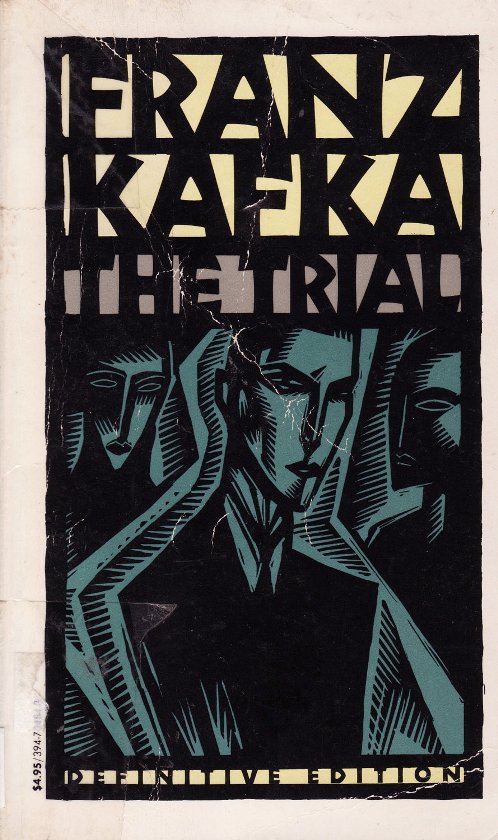
Except we have examples where ignoring the author’s wishes turns out pretty well. When Franz Kafka died he left his literary executor (and friend) Max Brod fairly specific instructions:

Dearest Max, my last request: Everything I leave behind me … in the way of diaries, manuscripts, letters (my own and others’), sketches, and so on, [is] to be burned unread

Brod did no such thing. As a result, we have all of Kafka’s novels, including The Trial, none of which were published before Kafka’s death.

franz-kafka-the-trial

A world without The Trial is barely fathomable (ironically), but had Brod did as instructed, we’d never know of it. Nabokov’s The Original of Laura was published against his wishes after he died. Even Mark Twain had a new collection of essays published almost a century after his death – against his wishes.

And so I find myself retreating from my bright-line rule of always doing what the author wants. After all, what’s the harm in ignoring those wishes? Yes, work might be released that the author wasn’t happy with, but the author isn’t going to be around to complain. A reputation could be diminished, I suppose, but authors have very little say in how the world perceives them when they’re alive and even less when they’re dead. Besides, does the posthumous release of a bad book by a great author devalue their prior work? It’s not a perfect analogy (since Harper Lee is still alive), but is To Kill a Mockingbird any less a masterpiece because Go Tell a Watchman was kind of ordinary? I don’t see how.

It’s a more complicated problem than I thought it was at first glance. Certainly, I don’t think it’s a legal issue. I’d oppose any law that required an author’s papers and unfinished works to become some kind of public good and exploited willy nilly. Nor would I support laws that would punish people like Brod for ignoring the wishes of their dead author friend. But, I have a hard time working up too much outrage when an author’s wishes are disregarded, so long as the person doing the second guessing is a close friend or family member. If they are all right with it, I’m in no place to complain. It’s kind of like jury nullification – I’m not a fan of promoting it, but I’m glad it exists for the rare occasions when it’s really necessary.

So I guess what I’m saying, to my literary heirs, if they ever get around to reading this – you’re on your own!

Even Fantasy Has to Make Sense

One of the repeated comments about this shortened season of Game of Thrones (which wraps up Sunday) is that show runners have really cranked up the pace, running from big event to big event instead of letting things play out over time. Part of that’s due to the nature of the season (it’s only seven episodes long) and part of it’s due to where we are in the story. Once we have the scope of this world in our heads it’s not a problem to handwave away some of the timing issues in order to barrel ahead toward the show’s conclusion.

But there are limits, and the limit seems to have been breached by this past week’s episode, “Beyond the Wall.” A quick, spoilerly, recap of the relevant bits:

Jon and company go north of The Wall to capture a zombie ice walker to take back to King’s Landing to prove to everybody this shit is real. After walking for a bit they come across the army of the undead and, for some reason, pick a fight. Jon sends Gendry running back to Eastwatch for help, which provokes a raven to be sent to Dragonstone, which leads Daenerys to fly up to save the day with all three dragons. All the while, Jon and crew are surrounded by the undead army (until it’s dramatically appropriate for it to attack, of course).

Putting to one side the sheer stupidity of Jon’s “strategy,” there’s a big whopping problem with the timing of all this. We only see the army of the undead hold off overnight before attacking, but surely it takes several days (at least) for the Gendry/raven/dragon transport system to deliver fiery death to them, right? It’s at least something that has kicked some people out of the story, pulling them past their flying snowman moment. Even the director of that episode admits the timeline is “getting a little hazy.”

But that’s not really what I’m interested in (although I’m one of those people). I’m more interested in some of the defensive comments made in response to complaints. There are several in the comments to this write-up over at io9 – they’re fairly typical:

While you’re focused on a believable timeline, does it ever cross your mind that you’re watching a show about fucking dragons.

***

I’m sure it would have been fun to watch seven guys stranded on a rock for another episode while they waited for the raven and the dragon’s trip back because the audience wanted a show about magical ice zombies to keep things realistic.

Someone even posted an image of the gold standard for this kind of thing, MST3K’s admonition that “it’s just a show, I should really just relax.”

People are free to accept any explanation (or none) for why something seems off in a show, movie, or book, but I have to take issue with the argument that because something is fantasy anything goes.

One of the cool things about writing fantasy is that you can, generally speaking, make up anything you want. People who can wield the power of the elements? No problem. Mythical talking beasts who aid intrepid adventurers in their quests? Bring it on. Nonetheless, there are still a couple of limits.

Primary is that to the extent the characters are human beings, they should behave like them. Maybe a guy can fly or perhaps he can summon huge storms with his mind, but he probably still gets hungry, tired, or would be pissed off if he found his girlfriend in bed with another guy. Unless there’s an in-world reason to the contrary, characters should behave like real people.

That leads into the second restriction – any fantasy story should follow the rules that it sets up for itself. Let’s say you have a world that includes a pegasus (or pegasi) and we’re told early on that, despite the wings, they can’t actually fly (they’re mystical ostriches). A pegasus cannot, sometime later, save the day by flying to the rescue. Not because it’s a known fact that a pegasus can fly, but because we’ve learned that in this world they can’t. Once your own rules go out the window the story isn’t grounded in anything.

That’s the problem Game of Thrones got into this past week. We’ve spent years getting used to the scope of its world, the sheer size of it. Characters stationed in different sections of the map were truly separated. It felt like a big place. Until the writers needed it not to be and pulled a dragon ex machina out of the hat (followed closely by a Benjen ex machina – ugh). Look, I get it – rapid transmission of information in a pre-modern fantasy world is a pain in the ass. Why do you think I had mind walkers (telepaths) in The Water Road? But if that’s the world you’re playing in, you’re stuck with it.

Saying “this is fantasy” gets you out of a lot of boxes as a writer, but it isn’t carte blanche to do whatever you want. Even in a world of dragons, frozen armies of the dead, and faceless men, stuff still has to make a basic kind of sense.

None of which is to say I’m not hella pleased with where things ended up after this episode. After all . . .

IceDragons

New Technology = Moral Panic

I’m reading Tom Perrotta’s new book Mrs. Fletcher, which is about a single mother navigating the modern world on her own once her brotastic son leaves for college. At one point she flashes back to a talk given to the local PTA addressing the then latest and greatest moral panic – Internet porn. It was delivered by a prosecutor, naturally, since history shows that the best reaction to any panic is to lock people in cages.

The panic over Internet porn is hardly the first situation where an emerging technology leads some people to think said tech is going to lead the world to hell in a hand basket. In fact, it’s a fairly predictable pattern that’s played out many times throughout history.

Slate has an article about the moral panic that surrounded the great technological breakthrough of . . . cheap paper.

Although the printing press had brought reading out of the monasteries and upper classes, the actual production of books didn’t ramp up all that much because of the lack of quality paper. People lower down the socio-economic ladder didn’t own books, they owned a book – usually a Bible.

That started to change in the 19th century:

The paper machine, invented in France in 1799 at the Didot family’s paper mill, could make 40 times as much paper per day as the traditional method, which involved pounding rags into pulp by hand using a mortar and pestle. By 1825, 50 percent of England’s paper supply was produced by machines. As the stock of rags for papermaking grew smaller and smaller, papermakers began experimenting with other materials such as grass, silk, asparagus, manure, stone, and even hornets’ nests. In 1800, the Marquess of Salisbury gifted to King George III a book printed on ‘the first useful Paper manufactured solely from Straw’ to demonstrate the viability of the material as an alternative for rags, which were already in ‘extraordinary scarcit’ in Europe.

Then, in the 1860s, came the real breakthrough – paper made from wood pulp. Upwards of 90% of modern paper is made from wood pulp or recycled pulp. This cheaper, more readily available paper led to the explosion of low-cost books for the masses. That’s why it’s called “pulp fiction.”

You know, things like this:

CrookedCity

NakedandAlone

And it was of the Devil:

Detractors delighted in linking ‘the volatile matter’ of wood-pulp paper with the ‘volatile minds’ of pulp readers. Londoner W. Coldwell wrote a three-part diatribe, ‘On Reading,’ lamenting that ‘the noble art of printing’ should be ‘pressed into this ignoble service.’ Samuel Taylor Coleridge mourned how books, once revered as ‘religious oracles … degraded into culprits’ as they became more widely available.

By the end of the century there was growing concern—especially among middle class parents—that these cheap, plentiful books were seducing children into a life of crime and violence.

* * *

Moralizers painted the books as no better than ‘printed poison,’ with headlines warning readers that Pomeroy’s brutality was ‘what came of reading dime novels.’ Others hoped that by providing alternatives—penny delightfuls or ‘penny populars’—they could curb the demand for the sensational literature. A letter to the editor to the Worcester Talisman from the late 1820s tells young people to stop reading novels and read books of substance: ‘[F]ar better were it for a person to confine himself to the plain sober facts recorded in history and the lives of eminent individuals, than to wander through the flowery pages of fiction.’

It’s easy now to look back at such panics and roll your eyes and the naive concern about cheap books or television or whatever kind of music kids are listening to at the time. But history, as they say, repeats itself. Rather than being smug in our modern superiority, maybe think twice the next time some panic is sweeping the nation. Try not to give future generations something to roll their eyes about.

ThinkoftheChildren