New Technology = Moral Panic

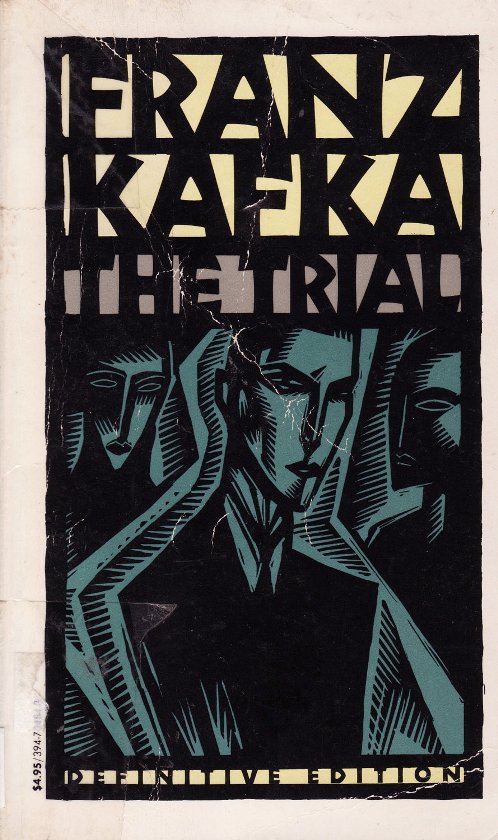
I’m reading Tom Perrotta’s new book Mrs. Fletcher, which is about a single mother navigating the modern world on her own once her brotastic son leaves for college. At one point she flashes back to a talk given to the local PTA addressing the then latest and greatest moral panic – Internet porn. It was delivered by a prosecutor, naturally, since history shows that the best reaction to any panic is to lock people in cages.

The panic over Internet porn is hardly the first situation where an emerging technology leads some people to think said tech is going to lead the world to hell in a hand basket. In fact, it’s a fairly predictable pattern that’s played out many times throughout history.

Slate has an article about the moral panic that surrounded the great technological breakthrough of . . . cheap paper.

Although the printing press had brought reading out of the monasteries and upper classes, the actual production of books didn’t ramp up all that much because of the lack of quality paper. People lower down the socio-economic ladder didn’t own books, they owned a book – usually a Bible.

That started to change in the 19th century:

The paper machine, invented in France in 1799 at the Didot family’s paper mill, could make 40 times as much paper per day as the traditional method, which involved pounding rags into pulp by hand using a mortar and pestle. By 1825, 50 percent of England’s paper supply was produced by machines. As the stock of rags for papermaking grew smaller and smaller, papermakers began experimenting with other materials such as grass, silk, asparagus, manure, stone, and even hornets’ nests. In 1800, the Marquess of Salisbury gifted to King George III a book printed on ‘the first useful Paper manufactured solely from Straw’ to demonstrate the viability of the material as an alternative for rags, which were already in ‘extraordinary scarcit’ in Europe.

Then, in the 1860s, came the real breakthrough – paper made from wood pulp. Upwards of 90% of modern paper is made from wood pulp or recycled pulp. This cheaper, more readily available paper led to the explosion of low-cost books for the masses. That’s why it’s called “pulp fiction.”

You know, things like this:

CrookedCity

NakedandAlone

And it was of the Devil:

Detractors delighted in linking ‘the volatile matter’ of wood-pulp paper with the ‘volatile minds’ of pulp readers. Londoner W. Coldwell wrote a three-part diatribe, ‘On Reading,’ lamenting that ‘the noble art of printing’ should be ‘pressed into this ignoble service.’ Samuel Taylor Coleridge mourned how books, once revered as ‘religious oracles … degraded into culprits’ as they became more widely available.

By the end of the century there was growing concern—especially among middle class parents—that these cheap, plentiful books were seducing children into a life of crime and violence.

* * *

Moralizers painted the books as no better than ‘printed poison,’ with headlines warning readers that Pomeroy’s brutality was ‘what came of reading dime novels.’ Others hoped that by providing alternatives—penny delightfuls or ‘penny populars’—they could curb the demand for the sensational literature. A letter to the editor to the Worcester Talisman from the late 1820s tells young people to stop reading novels and read books of substance: ‘[F]ar better were it for a person to confine himself to the plain sober facts recorded in history and the lives of eminent individuals, than to wander through the flowery pages of fiction.’

It’s easy now to look back at such panics and roll your eyes and the naive concern about cheap books or television or whatever kind of music kids are listening to at the time. But history, as they say, repeats itself. Rather than being smug in our modern superiority, maybe think twice the next time some panic is sweeping the nation. Try not to give future generations something to roll their eyes about.

ThinkoftheChildren

Gone Writin’ – Be Back in August

So here’s the thing about being a writer – once you finish up one project, you need to jump on the next one. Sure, you can give yourself a nice pat on the back and a week or so to enjoy success, but, sooner or later, the next book beckons.

WriteAtDawn

With The Water Road trilogy in the rear view, it’s time for me to start working on my next book in earnest. Guess what – I already have! I began the first book of my next series (tentatively called Empire Falls – and, yes, I am aware) last week. It’s going to be a steampunk story set in a world with one superpower teetering on the edge of collapse. I’m envisioning seven books (!), so I need to get cracking!

WriteAllTheThings

To help me build some momentum, I’m going on blog hiatus for the rest of July. That way I can pour all my typing and word-generation energy into the new book. Hopefully, when August rolls around, I’ll be knee deep in it and past the point of know return. Until then . . .

KeepWriting

The Exception That Proves the Rule

Years ago I wrote a review of an album by an obscure (even by prog standards) band. It was a middling album and I gave it a middling review. Fairly soon after I got a hateful email from one of the band members taking issue with the review. Aside from one factual thing I got wrong (which I changed) the rest was an odd mix of special pleading and attempts at sympathy. They put themselves out there, shouldn’t that count for something? Didn’t I care that another band member had just died and wasn’t it a shitty thing to do to write a less than positive review at that time (as if the obituary made it outside the band’s local area). It was an interesting experience.

And an understandable one. After all, once a creative person looses something on the world it’s inevitable that somebody, somewhere isn’t going to completely fall in love with it. Dealing with negative opinions of your work is just par for the course. If you can’t handle that, don’t publish books, release albums, or put your paintings on display for all to see.

Given that, the general wisdom in the writing world is that a writer absolutely, should not, never under any circumstances, respond to a review. Down that path lies madness. Even if there’s a clear error in there somewhere, it’s better to just let it go than be perceived as some thin-skinned artist whose feelings have been hurt. Because guess what? Nobody cares – unless they care enough to laugh at you.

Naturally, there’s an exception to that rule. At least if your Martin Scorsese.

Scorsese’s last film, Silence, wasn’t the critical darling and commercial success I’m sure he’d hoped for (full confession – haven’t seen the move, read the book a long time ago). In particular, a review in the Times Literary Supplement in the UK caught his eye. Scorsese decided to respond, both to correct a factual inaccuracy and to take issue with something the reviewer said.

“Bad move!” you cry! Not quite – as a result of Scorsese’s letter to the editor, he was invited to write an entire column unpacking the philosophical issue in the review he’d taken issue with. And, verily, there was no storm of shit produced by it. So how did he get away with violating this golden rule?

For one thing, he’s Martin Scorsese. He’s entitled to a little bit of leeway. Having said that, fame doesn’t prevent things going wrong, so there must be something else.

And it’s this – although Scorsese responded to a review, he didn’t complain about the review’s verdict of his work. He made two discreet points – one factual and irrelevant to the film’s merits, one philosophical that dealt with issues well beyond whether Silence was a good movie or not. In other words, he actually engaged, constructively, with what the critic said. He didn’t get defensive.

As I’ve said more than a few times – reaction to art is personal and nobody’s opinion of a piece of art can really be “wrong.” So it’s pointless to take negative reactions personally. Constructive engagement is one thing – hair-on-fire literary retaliation is entirely different.

Still, there’s a reason that the rule about responding to reviews is one that almost everyone can agree with. Think of it this way – if you’re tempted to write something about a negative review of your work, ask yourself, “am I Martin Scorsese?” Chances are, you aren’t. Act accordingly.

BookReview (Big)

In Defense of Worldbuilding

A while back over at Electric Lit, Lincoln Michel wrote a lengthy article called “Against Worldbuilding,”* in which he argues that authors and readers are so enamored by the details of literary worlds that they lose focus on the actual story being told. What he says isn’t wrong so much as it is a game of definitional Léger de main. Along the way, Michel engages in some low-key genre bashing.

Let’s get out of the way what Michel gets absolutely right – some writers get so wrapped up in the worlds they create, in the details and minutiae of them, that the story, characters, and all the other important stuff kind of disappear in a puff of imagination. This happens, no doubt (although I wonder how many writers follow the advice of one person Michel links to who thinks it’s important what shapes the tables are in a given world). The problem isn’t an overbuilt world per se, it’s the fact that, as Michel puts it, things turn out like “they were producing an encyclopedia instead of a story.”

Where Michel goes wrong is in deciding that such deep diving and navel gazing is what “worldbuilding” is. Also, that it’s something that’s limited to certain particularly pulpy genres like science fiction and fantasy.

But the fact is that every author – even writers of non-fiction – have to build worlds with their words. Hell, I have to do it when I write legal briefs, much less when I write fiction. That’s because unless you’re writing for the small subset of people who know exactly what you’re talking about you have to do some foundational work of explaining the place where your tale is taking place. As I said several years ago in a review of the first season of Mad Men:

What is more fascinating to me about Mad Men is the world these characters live in. When people talk about world building they usually are talking about sci-fi or fantasy writers, who build new universes and worlds from the ground up. But the truth is, every writer of fiction (whether on the page or screen) has to pay attention to world building. Thus, just because Mad Men is set in a real time and place from our recent past doesn’t mean the creators can shirk on the details that lend the world depth and credibility.

Another example that springs to mind is Karen Connelly’s The Lizard Cage. It’s a story about a political prisoner in Burma and what he has to do to survive. It’s not a translation – it was not originally written in Burmese. It was written in English, presumably for an audience in the English-speaking world. A world that, most likely, isn’t familiar with the horrors of a Burmese prison camp or the kind of Buddhist rituals that might help a person stay sane in such a place. There’s lots of worldbuilding going on there, there has to be if the story Connelly tells is going to have any kind of resonance. By contrast, I just started Liu Cixin’s The Three Body Problem and it drops you right in the middle of the Cultural Revolution without any worldbuilding at all – but it was originally written in Chinese, so I expect that audience didn’t need any of that heavy lifting.

Perhaps aware of this fact, Michel performs a little magic. He walls off “worldbuilding” in the genre ghetto and instead says what literary writers do is “worldconjuring.” That is:

Worldconjuring does not attempt to construct a scale model in the reader’s bedroom. Worldconjuring uses hints and literary magic to create the illusion of a world, with the reader working to fill in the gaps. Worldbuilding imposes, worldconjuring collaborates.

In other words, worldconjuring . . . builds worlds, it just does a better job of them. This is linguistic slipperiness not seen outside of Earthforce:

What Michel has done is taken something that is definitional and turned it into a qualitative judgment – it’s the same thing as people who say “rap isn’t really music” when what they really mean is “I don’t like rap.” Fair enough, but whether you like something or not doesn’t change what it actually is (see, also, the infamous Roger Ebert v. video games dust up or any endless circle jerk on what “prog” is). All Michel has done is give what he perceives as “good” worldbuilding a different name. It doesn’t change the fact that it’s the same damned thing.

As I said at the beginning, Michel’s real point is solid – for some writers (and readers), worldbuilding runs roughshod over everything else. That sucks. But when it doesn’t and it’s transporting and wondrous and visceral – it’s still worldbuilding. It’s just worldbuilding done write. Everybody who picks up a pen to tell a tale has to do it – here’s hoping we get it right more than we get it wrong.

* NOTE: Word really wants “worldbuilding” to be two words, but since that’s how Michel spelled it I’ll keep it that way.

Thoughts On a Con

Over Memorial Day weekend I got to participate in a con for the first time.

No, not this kind of con.

BusterKeaton_Convict_800

This kind.

Contraflow_steampunkersComicConWizardWorld_2014_Steampunk

Specifically, Vandalia-Con up in Parkersburg, which is specifically a steampunk-themed con.*

“But wait,” you say, “you don’t really do steampunk, do you?”

Well, actually: (1) I have; (2) I’m getting ready to do it again (details coming!); and (3) I figured that steampunk fans might be interested in gunpowder fantasy like The Water Road. At the very least, it would be an interesting fact finding mission. So what did I learn?

First, before I go any further, I want to say that everyone I interacted with at Vandalia-Con – from the organizers to the attendees to the other vendors – were great, friendly, fun people. As a clear outsider (a DC United jersey does not constitute steampunk cosplay) and newbie at all this I couldn’t have felt more at home.

To my eyes, this con was mostly about embracing the steampunk “lifestyle,” as opposed to the celebration of any particular work of steampunk fiction. Most of the other vendors were selling clothes, jewelry, and the like. Aside from a couple of presenters who also had some books for sale the only other person selling “content” was a small publisher of sci-fi and fantasy books.

And, oh, the fashion. I was impressed by the wide variety of detail applied to different costumes. Guys seem to have it easier than women. A vest and top hat will suffice for the fellas, while the ladies seem doomed to bustiers and bustles (and very tiny hats – for some reason). To each their own, I guess, but it looks very uncomfortable from where I’m sitting. But as I said – that was while in a not-at-all-chic DC United jersey (although it did get some love from one of the hotel staff, even if he is a Crew fan).

But the primary reason I was there was to try and sell some books and drive some people to my mailing list. On that front, the con didn’t really meet my expectations. As I said, I think most people there weren’t really interested in consuming content, but having fun dressing up and what not. Which is totally cool – but it’s not a great setup for an author trying to move some copies. I did sell a few (one woman – complete in bustier and bustle – bought a complete set of The Water Road trilogy) and got some mailing list sign ups, but not enough to offset the investment (hotel costs, mostly). But when considering what kind of event you’re going to, it’s worth trying to figure out what the audience of regular attendees is like – you may have brilliant widgets for sale, but if nobody’s really interested in widgets it won’t make much difference.

Unfortunately, that’s the kind of mercenary mentality I have to have these days. Which is a shame, because the weekend was a lot of (expensive) fun. Thanks for being my first, Vandalia-Con!

* Note that none of these photos – even the first one – were actually taken at Vandalia-Con. I can’t find any of those online and my phone pics didn’t turn out well enough to use. All images via Wikimedia Commons.

What I’ve Been Up To

With The Water Road trilogy wrapped up I figured this might be a good time to check in and let folks know what I’m doing, writer wise. The TLDR version – cranking through some short stories and trying to plan the next big project.

Short Stories

After the epic feel of The Water Road I decided to dig back into my bag o’ ideas and work up a couple of the shorter ones. This isn’t to suggest that returning to short stories is a way to “take it easy” or some such. Building worlds and characters in a few thousand words, versus hundreds of pages, can be a challenge in its own right. It’s a different discipline in the writing world, but one that’s very rewarding.

The first of the new stories is “To the Sound of Birds.” It was inspired by some very odd noises I heard during an autocross years ago. Animal noises, of a sort, coming from the woods across the street from the venue. The idea came to me then and I’d kicked it around for a while before I got a chance to sit down and finish it. I’m about to try and find it a home and let it loose upon the world.

The other isn’t quite finished, but should be in a week or so. It’s called “The Miracle at MarvoMart” and is about a guy who gets in over his head with a good thing that turns very bad. This one, too, came from an idea that occurred during an autocross – more precisely, during a bathroom break. I never set out to write a story set largely in a public men’s room, but that’s where I’ve ended up!

Aside from those two, I’ve also pulled out and polished a story I wrote a while ago in which the main character is this little girl:

MaiaTalkstoYou

Along with her two feline companions (at the time the story was written). It’s about what the animals get up to while their people aren’t around. It involves dragons and a whole unexplored world under the house. At one time it was going to be a series of stories, but I never got past the first one. An anthology popped up that I thought this story would be good for, so I sent it in. We’ll see if anything comes of it. Don’t worry, it’s for grownups – they curse and such.

I’m also working on one final story in The Water Road universe, set between The Endless Hills and The Bay of Sins. It would explain why, when two characters meet in The Bay of Sins, they are not particularly fond of one another.

The Next Big Thing

As I’ve said before I’m having a hard time figuring out what my next novel project will be. I have a lot of ideas, but none of them have roared up and demanded to be written right the fuck now (at least not yet).

One of the issues is that before I even think about ideas there’s a preliminary question to answer – should my next project be a standalone novel or the first in a new series? Some ideas lend themselves better to one or the other, but there are pros and cons to each choice. A stand alone novel probably sees the light of day sooner, but a series gives me the opportunity to really dig into a new world in detail. Until I make that decision, it’s hard to know where I’m headed.

As far as series ideas, the main one would be a several volume steampunkish fantasy set in a global superpower that’s slowly falling apart. I’ve done a lot of background work on it, so it’s probably the most “shovel ready.” Another series idea is to expand the universe of my short story “The Last Ereph” into a common setting for a bunch of unrelated stories. Finally, there’s a trilogy about the nature of magic I’ve been toying with.

The stand alone ideas are more wide ranging. For one thing, they include a couple of ideas that fall solidly into the science fiction category. I’ve written some short sci-fi, but my longer projects have all tended toward fantasy. I’d like to change that, so that might be a deciding factor. One of those idea is more serious, philosophical, and somewhat relevant to the current political climate. Another is more of a fun, planet-trotting adventure. As for fantasy ideas, one that I’m keen on doing (at some point) is my version of the standard fantasy quest, although it has a neat twist at the core of it (or so I think).

So that’s where I am. At least right now as I post this. From here on out – who knows?

Water Road Wednesday – Rand McNally Edition

Just when I thought I was done, then keep pulling me back in!

I’ve had more than one reader ask about whether there are any maps of Altreria, the land that’s the setting for The Water Road trilogy. Strictly speaking, in terms of something I’d be happy putting in the back of a published book – the answer is “no.”

However, in the spirit of sharing my work and showing how I do things – I’ve dug out a couple of hand-made maps from my notes. These are what I used to keep myself oriented in the world of The Water Road. At least at the beginning.

In the spirit of Michael Feldman, three disclaimers:

First, these are crude, hand drawn, and simply photographed. They’re not great quality, but I never expected anybody aside from me to see them. Judge accordingly.

Second, place names and such are noted in my horrific hand writing. Enter at your own risk (although I’ll be happy to translate, if asked).

Finally, I made these before I even started The Water Road and while I added to them on occasion afterwards, I didn’t change things on the map to match the text. As an example, “Port Keneally” became “Port Jaray” in the books (Keneally just didn’t feel right, when push came to shove – sorry, Mike).

With those disclaimers, here we go . . .

A map of the continent of Altreria itself:

AltreriaMap

A few highlights. The long blue ribbon running across the continent is, of course, The Water Road. The two north-south tributaries are the River Innis and the River Adon. The Guildlands are west of the Innis and the Kingdom of Telebria is to the east of the Adon. In between is the Confederation of the Arbor. North of the rivers are the Badlands. The little speck of land in the Bay of Sins is the island city of Tolenor. South of The Water Road, of course, are the Neldathi mountains.

And here’s a different view of the Neldathi mountains, with the great circuit of each clan drawn in:

NeldathiMap

For those scoring at home, here’s how the numbers match up to the clan:

  1.  Dost
  2. Haglein
  3. Chellein
  4. Volakeyn
  5. Mughein
  6. Kohar
  7. Akan
  8. Uzkaheyn
  9. Elein
  10. Sheylan
  11. Paleyn

This one also gives you a better idea of the names of the mountain ranges and Islander cities. Yes, many of them are named after musicians. Albandala, the city Antrey founds in The Water Road is somewhere near the Hogarth Pass.