NaNoWriMo is over, which means it’s time to take stock and see whether it was all worth it. Was it? Well, I did get this spiffy graphic:
Which means, yes, I “won” again this year. I’m particularly pleased since the month included not only Thanksgiving (which my wife and I host for the family, so lots of work) but a birthday weekend jaunt to New Orleans (thanks, honey!) and I still managed to keep to task and wind up with 50k+ words in the end.
I’m really happy with them, too. There are definitely things that need to get worked out in a second draft (I have notes, of course), but this story and this main characters and taking me to some different, interesting places. Alabrie, the city-state where the story is set, is shaping up to be a character all in itself.
It’s not done, of course, not even the first draft, but I can see the end of the tunnel. More than most books I had a real idea of what the entire story was before I sat down to write it. Still, much work still left to do.
It’s that time of year again! No, not when the lungs are clogged with clods of pumpkin spice, but when it’s just about National Novel Writing Month!
As I wrote a little while back I’ve got a new project ready to go for NaNoWriMo this year. I’ve got a few more days to put to finishing touches on my planning and then it’s off to the races on Monday. Needless to say, there won’t be any new posts for November, and maybe even into December if I’m on a roll.
People create for lots of different reasons. Some folks do it purely for the fun or catharsis of creation. Some do it as a vocation, if they’re good at it, enjoy it, and can hit the market just the right way. Others are trying to tap into something fundamental about humanity or probe deep into the eternal mysteries of the universe. And some just want to share their creation with the world and hope it brings a few people joy.
I fall into that last category. I write largely because I enjoy it, because it’s fun to tell stories, and I hope some other folks out there will enjoy reading them. I’m not trying to write the “great American novel” or plumb the depths of the human condition to help better understand my fellow people. All I’m really interested in is entertaining, maybe more thoughtfully sometimes, but that’s it.
Does that make me a hack?
I never thought so until recently. To my mind, “hack” was a pejorative term. Wikipedia, at least, agrees with me, defining a “hack writer” as a:
Term for a writer who is paid to write low-quality, rushed articles or books “to order”, often with a short deadline. In fiction writing, a hack writer is paid to quickly write sensational, pulp fiction such as “true crime” novels or “bodice ripping” paperbacks. In journalism, a hack writer is deemed to operate as a “mercenary” or “pen for hire”, expressing their client’s political opinions in pamphlets or newspaper articles. Hack writers are usually paid by the number of words in their book or article; as a result, hack writing has a reputation for quantity taking precedence over quality.
Putting to one side the unwarranted bias against “pulp” writing or romances inherent in that definition, it’s clear that being called a hack is insulting. It’s a charge that your insincere, only in it for the money, not making art but some kind of crass commercial product. If I was called a hack I’d be deeply offended, same as if someone in my professional life called me a shill or a mouthpiece.
But maybe I’m looking at things all wrong, if this Slate piece by Sam Adams is right. Titled “Bring Back the Hack,” it argues that movie studios should look to “hack” directors to helm their big-budget franchises rather than getting up-and-coming auteurs whose singularity tends to get squished in the franchise machine, anyway:
The problem here is two-pronged. The first is Hollywood’s penchant for sucking promising young directors into its maw, tempting them into selling their artistic souls to the franchise devil with medium-fat paychecks and the possibility of speaking to a larger audience. The second is that the movies frequently end up being lousy, extinguishing whatever hint of personality made the filmmaker attractive in the first place and revealing them to be hopelessly out of their depth when tasked with bending a massive studio movie to their will. You don’t get the unique stamp of an artist, but you also don’t get the frictionless craftsmanship that would be brought to the job by a seasoned old hand—in other words, a hack.
Adams seems to deem the primary feature of a “hack” as being that “you don’t know who they are.” He then launches into a discussion distinguishing workmanlike directors such as Jon Turtletaub and even John Huston from true auteurs. Later on, however, he sort of admits that “hack” isn’t really the word he’s looking for:
That’s where hacks come in. A hack—or, if you insist on a less prejudicial term, a craftsperson—isn’t out to make a movie their own. Their aim is to fulfill the task set before them. Like former cinematographer Jan de Bont and former costumer designer Joel Schumacher, they often entered the business from the lower ranks of the crew rather than as writer-directors, rising to the top with an understanding based in the practicalities of production. A hack is a perfect match for a formula film, whether it’s the latest IP extension or simply squarely in an established genre, because they don’t consider themselves better than the material.
This “craftsperson hack” category includes, for Adams, people like Ron Howard (who won Best Picture and Best Director Oscars for A Beautiful Mind) and Jon Favreau (who launched the most successful film series in history, not to mention The Mandalorian). If those guys are hacks then I suppose I’d be happy to be called one, though that term doesn’t feel right. Neither is somebody that’s on my list of favorite directors, the kind of people whose stuff I want to see just because they made it. But Adams cites Favreau’s going to battle with the studio to cast Robert Downey, Jr. for Iron Man, which hardly seems like a pliant, go-along-to-get-along kind of thing. Hell, if hacks can make stuff like Rush then sign me up.
At any rate, I don’t think the same kind of distinction can be made with writers. Name brands are a thing, after all, since people like to read more books from an author if they liked one of their books. That applies equally to deeply sublime stuff and more pulpy just-for-fun stuff. I suppose the closest thing you have in books is situations where some established author’s name continues to hold sway even though others are actually writing the books. Zombie comic strips come to mind, too, I suppose.
I tend to agree with Adams that bringing in somebody known for their personal vision in movies to direct the next comic book flick is kind of a waste. Regardless, I don’t think defining hack so broadly as to lose its meaning does anybody any favors. Leave to it the stain of uncaring make work, produced without any personal motivation.
I may be a lot of things, but I think I’m safe in saying I’m not a hack.
The more I write the more I realize that coming up with ideas isn’t the hard part. What’s hard is figuring out which ideas have legs and can become stories or books. Sometimes it takes some hard work to separate the wheat from the chaff, so to speak.
When Heroes of the Empire came out in June it brought to a close a long period of focusing on one world and one project. Since 2018, at least, when I started the first draft of Gods of the Empire, I’d basically lived in the world of the Unari Empire, building it out and telling the stories of my characters in it. The only reason I felt able to work on the sequel to Moore Hollow in the spaces between those books was that it meant returning to a world I already knew.
At the same time, I was gathering ideas like some thieving magpie, putting them away in various Word documents for a later date. I knew from the time I collected them that some had more substance than others, but I wasn’t quite prepared for how long it would take me to figure out which ones were which.
See, the thing with trilogies, at least for me, is that they are an implicit promise to the reader – I know how this ends and I’m going to finish it in good time. If I say “here’s my new book, it’s the first part of a trilogy,” rest assured that, barring some unforeseen circumstance, I’m working on those books for the next few years.
Which means, back in June, I got really excited about the idea of diving into a new world. Part of what makes writing fantasy so fun is you get to let your imagination wander and come up with strange new places, things, and people. Writing a trilogy means that you have to put that wandering on hold and I was happy to get my walking shoes back on (so to speak).
And I had a target – I wanted to start my next book during National Novel Writing Month. I’ve done that for several of my books. NaNoWriMo provides a great way to focus on writing for a month, even if what you’re left with on December 1 is only two-thirds or even one-half of a finished manuscript. That would give me a couple of months to build the world, flesh out the characters, and then figure out what was going to happen to them.
Easy, right? If only.
I actually had to go through my idea files pretty brutally, with virtual red pen and everything, and just get rid of stuff that didn’t really strike my fancy. Some of those were mere ideas (“surely there’s a fantasy story in the Scapa Flow incident, right? What about High Noon but with wizards!”) that were never going to become a real story. Others were things that I’d hung on to so long without developing that I figured their time had passed. Ultimately, they were ideas that I just didn’t see sprouting stories and I hadn’t faced up to that fact yet.
In the end I had about three dozen ideas that could become my next project, so I decided to so what my anal retentive self always does – start dividing and conquering them. I put each idea into one of four groups – Sci-Fi, Older Fantasy, Newer Fantasy, and Non-SF/Fantasy (yes, I’ve got a couple of those). The goal was to produce a “winner” in each group and then compare those four to each other. I almost worked – I wound up with five finalists because I couldn’t decide between the top to Newer Fantasy ideas.
I worked through each idea. I took a week and spent one day thinking through all the angles I could for every one. I did a PowerPoint presentation for my wife to get her feedback on the ideas. Good ideas that I at first thought were front runners fell by the wayside either because they weren’t as deep as I’d hoped or they just weren’t singing to me.
Finally, last week, I was in Richmond for court and had some time the night before to work through the final three (don’t worry, my colleague was doing the argument the next morning). I walked around my hotel room, talking to myself, arguing the pros of a particular idea then playing devil’s advocate and tearing it apart. After a couple of hours, and a really enormous calzone, I finally made a decision.
My next project has the working title The Fall. It’s inspired by the sad tale of Franz Reichelt, a Parisian tailor who met an infamous fate:
To use an awful pun, that’s the jumping off point for this project. It’ll be set in a similar kind of world, timeline wise, but include what I think is a really nifty magical element. This is my first time building a magic system for one of my novels, so I’m both anxious and excited about the prospect. Structurally I’m leaning toward doing something like Citizen Kane, where the main character is investigating someone’s life and we see it play out in flashbacks.
All in all, I’m really looking forward to diving into this.
Ending stories is hard – trust me. But figuring out the right place to start them can be just as hard. That’s true for all kinds of stories, but particularly fantasy or sci-fi stories where you have to build the whole world around the story you’re telling and the characters involved. By definition their world existed before their story did and will continue to do so once it’s over (barring apocalypse, of course).
Which explains the popularity of prequels. There’s so much backstory to dig through, most of it only hinted at, that there appears to be a rich environment to exploit. It must also seem like a fairly safe investment, since you’re dealing with, if not familiar and fan-favorite characters, at least events and histories in which the fans are already invested.
But there’s an inherent problem with prequels – they’re playing in a universe in which the future is already known to us. That can box writers in and sometimes make it difficult for the prequel to stand on its own as a piece of compelling drama, something we should care about for its own merits.
I thought a lot about this problem over the weekend as the wife and I (at her suggestion!) finally caught up with the Obi-Wan Kenobi series.
The six-episode series is set in the time between Rise of the Sith, with its culling of the Jedi, and the original Star Wars (aka A New Hope), a time during which, for all we knew, Obi-Wan was living off the grid on Tatooine keeping tabs on Luke Skywalker. Years pass, of course, so the idea that he didn’t get into anything worthy of telling a story about is pretty sad, but do the writers use that freedom to do something really interesting?
No, not really.
The inciting incident of the series is when Princess Leia is kidnapped on Alderaan (nice planet – too bad it goes boom) by, of all people, Flea. This is part of a plan to draw out Obi-Wan so some Jedi hunters can get him. Those Inquisitors are kind of interesting and could have been explored in some depth, but they have a boss and his name is Darth Vader. And so, the series largely revolves around maneuvering Vader and Obi-Wan into the same space.
As a result, we get two solid confrontations between them, the second of which would have felt like a pretty epic duel if it had any kind of stakes. It couldn’t, however, because of the prequel problem: both Vader and Obi-Wan survive to fight again in Star Wars, so neither can be killed or even seriously injured in ways that conflict with the “future.” Likewise, young Leia (who, as you might expect, is quite the scamp) is never in any real danger, as we know she survives unscathed. Indeed, the series punts her offscreen for the final episode mostly, as it rushes back to Tatooine for a confrontation between one of the Inquisitors and Luke’s family – which, again, we know will ultimately come to nothing.
It didn’t have to be that way. Using Leia’s kidnapping to lure Obi-Wan out of hiding was a solid idea. Imagine if she’d mostly stayed off screen (a MacGuffin, if you will) while he scrapped with and evaded Inquisitors and grew into his status as a hero. There’s actually a good character arc in the series, as Obi-Wan goes from trying to lay low and hide to being more engaged with the Rebellion. Isn’t that a cool enough story to tell? Do we need the Vader stuff? Do we need any suggestion that Leia or Luke will be harmed?
Star Wars knows how to do this. Rogue One is regarded by a lot of people as the best Star Wars movie since the original trilogy, even though we knew precisely how it was going to end. What made it work was that existing characters were largely absent and we got to know and care about a whole new cast so that when they made the necessary sacrifices to complete their mission it landed with some heft.
Ultimately, I think the prequel problem is a matter of characters rather than universes. After all, we read historical fiction all the time that involves real events. It’s not what happens to characters, it how it effects them, changes them, that matters. But when your prequel ties itself to characters who can’t change, that becomes a problem. I’ve dinged Star Trek – Strange New Worlds for tying itself too closely to characters steeped in Trek lore, rather than freely exploring people we know nothing about.
I’ve never really been interested in the idea of writing prequels. I had a prequel story, of a sort, for one of the characters in the Unari Empire trilogy that I almost wrote, but ultimately decided that all that was important about him was in one of the books already. Generally speaking, I’d rather go on and dive into a new world with new characters than revisit old ground.
For Your Eyes Only is my favorite James Bond flick.
Part of that is due to when I saw it, it being one of the first Bond movies I’d seen. But a big part of it due to the fact that the spine of the movie’s plot is a more plausible Cold War scenario than the Dr. Evil inspiring big bads Bond often faced.
In a nutshell, a British ship (disguised as a fishing trawler but really a spy ship) sinks off the Greek coast. On board was the Automatic Targeting Attack Communicator or ATAC, a computer that helps coordinate the UK’s ballistic missile fleet. Naturally the Soviets want to get their hands on it. Bond, aided by supreme Bond Girl Melina Havelock, tries to get it back for the Brits. In the end . . . well, the end is one of my favorites of all time:
So I was delighted to come across an episode of the All 80s Movies Podcast about For Your Eyes Only. I was surprised, though, when the guys on the podcast called the ATAC (which they hilarious mispronounce “AhhTAC” – it’s not like they don’t say it over and over again in the movie!) a “MacGuffin.” That didn’t jive with my idea of what a MacGuffin was and got me to thinking about it.
The term apparently dates to about 1930s or 1940s and was coined by a British screenwriter named Angus MacPhail, who worked a lot with Hitchcock. As defined by the OED, a MacGuffin is:
a particular event, object, factor, etc., presented as being of great significance to a character or characters, but in the end proving illusory.
Hitchcock would further explain that a “MacGuffin is the thing that the spies are after, but the audience doesn’t care” and, ultimately, “is actually nothing at all.”
It’s that last part that I always associated with the concept of a MacGuffin. A famous more recent example is the briefcase in Pulp Fiction, which multiple characters go to great lengths to possess, but we never learn what is inside, except for:
But I’m seeing lots of examples cited of things that are, to my mind, so substantial to be considered MacGuffins. Some cite all the things in the Indiana Jones movies (as in “Indiana Jones and the BLANK of BLANK”) as MacGuffins. This includes the Ark of the Covenant in the first movie – but they find the Ark, it melts some Nazis, and basically deus ex machina’s Indy’s escape. Is that a MacGuffin? Another list includes Colonel Kurtz from Apocalypse Now, a real human being with whom the main character significantly interacts, as a MacGuffin. That makes no sense to me. Likewise the Death Star plans in Star Wars – not only do they jump start the plot, but we see them after delivery and the info in them allows Luke to blow the place to shit!
Other examples hew closer to my conception of a MacGuffin. “Rosebud” in Citizen Kain, for example, since the important part of the story isn’t the damned sled but that rise and fall of Kain’s life. The Holy Grail in Monty Python and the Holy Grail is an even better example, since it motivates the action but is never seen or obtained by the characters.
While pondering all this I checked out one of the all-time great MacGuffin movies, which I’d never seen, The Maltese Falcon.
It definitely fits the mold of MacGuffin I have in my mind. The bird itself doesn’t show up until about 15 minutes from the end of the film and then, once it’s revealed to be fake, ceases to have any real meaning. Rather, the movie is about what the pursuit of this object (which Bogart’s Sam Spade calls “the stuff that dreams are made of”) changes and corrupts all who decide to pursue it. It could be anything – a Javanese lion, an Andalusian wombat – and the same story gets told. That the damned thing matters to the characters but doesn’t to the audience seems to be the whole point.
I suppose for me the question is how important the actual item is to the resolution of the story. If all it does it motivate people and the ultimate identity/characteristics of the thing doesn’t matter, I’d call that a MacGuffin. If it’s more important than that, probably not.
Where does that leave the ATAC? Since we see it in action, then see it recovered, then stolen, and then ultimately destroyed by the main character so the bad guys can’t have it, I’m definitely not getting MacGuffin vibes from it. It’s just too important to the movie, including the wider world of it. The world of The Maltese Falcon continues to spin regardless of how that petty crime is resolved, while the world of For Your Eyes Only gets considerably more dangerous if the ATAC falls into Soviet hands.
Ultimately, what qualifies as a MacGuffin is probably in the eye of the beholder. As a writer, it’s a useful tool to have in order to motivate characters. On the other hand, don’t lose sight of the fact that sometimes the little doohickey everybody is trying to get their hands on is pretty damned important in its own right.
A few weeks ago I had the chance to sit down with author M. Lynne Squires and talk about writing, reading, and the new book, Heroes of the Empire. Check it out:
When the film version of A Clockwork Orange was released in 1971 it was the subject of a lot of controversy due to its portrayal of violence and sex. As I observed years ago:
The telling of Alex’s story is replete with, well, sex and violence. Roger Ebert’s original (non-flattering) review notes an ‘X’ rating, but the DVD calls it ‘R.’ There’s lots of nudity, for example, but the only sex involved is a single scene that’s so sped up (to the tune of the William Tell Overture, no less) that it’s mostly a blur. A presumed rape happens off screen. And while there’s copious violence, there’s very little blood. It’s nothing compared to what comes out these days. And it helps showcase not only the brutality of Alex’s shallow world view, but the equally shallow world view of those that take their revenge on him.
It was such a thing that a British prosecutor cited it in court the next year amidst allegations of copycat violence. In 1973, the film was withdrawn from British release at director Stanley Kubrick’s behest, even though he didn’t think it was inspiring anything. It wouldn’t be released in the UK again until after Kubrick had died.
I thought about A Clockwork Orange when Elizabeth Gilbert (she of Eat, Pray, Love fame) announced on social media that she was withdrawing from publication a new novel that was due to come out in 2024:
Eat, Pray, Love author Elizabeth Gilbert is pulling her new novel from publication after Ukrainian readers expressed ‘anger, sorrow, disappointment and pain’ about her decision to set a book in Russia.
Gilbert’s The Snow Forest is a historical novel set in Siberia, and follows a family of religious Russian fundamentalists who have lived isolated and undetected for 44 years since retreating from the world in the 1930s.
When they are discovered in 1980 by a team of Soviet geologists, a scholar and linguist is sent to the family’s home to bridge the chasm between modern existence and their ancient, snow forest life.
A lot of the pushback to the book happened on Goodreads, as often happens even well in advance of a book coming out (and thus anybody actually reading it). By the time I got to the Goodreads page for the book (which is now completely gone) all the info about the book – the blurb, cover, etc. – had been taken down, so it was impossible to tell if there was something in the way the book was being sold that triggered the backlash or if it really was as simple as Ukrainians pushing back against a new book set in Russia.
Gilbert’s decision prompted a lot of discussion. Most of it’s been negative, as is perhaps inevitable in an era where “cancel culture” continues to weigh on peoples’ minds and books are being banned by state governments. This column from a former president of PEN American Center (a free speech advocacy group) gives a flavor:
But what’s equally unreasonable – and disturbing – is the precedent that Gilbert’s decision sets, the potential danger it poses to writers, to the future of literature, to the culture, and to our freedom of speech. What will happen if authors allow themselves to be bullied by their readers? What if the themes we write about, and how we write about them, are to become the subject of a general referendum? Should survivors of domestic abuse band together to prevent any future productions of Othello? Should we quit reading Anne Frank’s diary because it takes place in a country that was hospitable to Jewish refugees – until it wasn’t? Should animal rights activists campaign to have Moby-Dick banned for its portrayal of the horrors of the whaling industry? One can all too easily imagine what might have occurred had Nabokov submitted Lolita to the court of public opinion before it appeared in print.
All this after posing a series of hypotheticals about whether she should “build a bonfire in my backyard to consign Gogol, Tolstoy and Chekhov to the flames?”
This is, in a word, horseshit. There’s a conversation to be had about how to deal with Russian art, music, and literature at a time when the current iteration of Russia has invaded a neighbor without cause and there have been overreactions on that front. Likewise, the idea of telling writers that certain subjects are off limits for whatever reason is a bad thing and certain won’t be defended by me. But neither of those things are what’s happened here.
Gilbert wrote a book, which she clearly has a right to do. Once written does she then have a duty to publish it, regardless of any second thoughts on her part? That doesn’t make any sense. Writers and other creatives produce art all the time that they decide, for whatever reason, not to release to the public. You think I don’t have a novel or two buried in my closet that will never see the light of day? Free speech is not just about the right to talk or say something, it’s about the right to decide not to say it. Maybe Gilbert’s calculus is wrong on this occasion, but it’s hers to make. To use her decision as the jumping off point for a slippery slope that leads to book burning is ludicrous.
There’s a perception out there that unlike movies or TV series or albums that a novel is the product of a singular creative vision, the end result of one person sitting down at the keyboard and pounding out thousands of words. That’s romantic, but unrealistic. Most books that anybody would actually want to read go through the hands of editors, beta readers, and others before a final version is released. The book changes in that process. The author is ultimately responsible for making changes (or not), but the input of others is critical to a successful final product.
That’s all Gilbert did here. Had she run The Snow Forest past a few Ukrainian friends and they had said that now is perhaps not the time for a book like this and she’d stopped the publication process at that point it wouldn’t be news. It was only because a release date had been set and Gilbert withdrew the book in such a public way (to her credit) that this was a thing. That it was a thing, and a thing worth withdrawing the book over, is entirely Gilbert’s decision. Any other author is free to make the opposite one, if they choose.
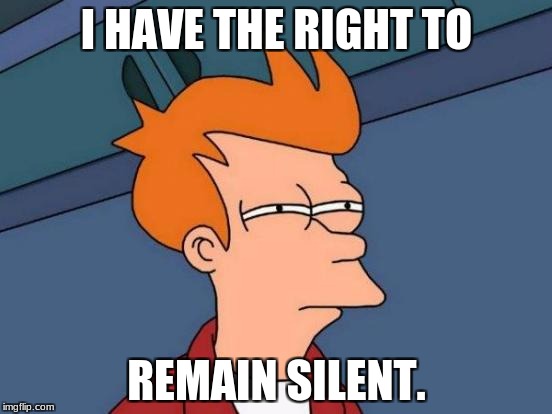
If the right to speak means anything it has to be paired with a right to remain silent – just like the right to practice a religion has to be paired with the right to practice none at all. The same is true of authors, musicians, painters, and any other creative person. I’d hope that’s something that, at the end of the day, we could all agree on.
Well, it’s been about a month since Heroes of the Empire dropped, so I figured it was time to get back at it. Here’s what’s coming up in my world to look forward to (or run away from!).
My first novel, Moore Hollow, was always intended to be a one-and-done affair.
However, I’ve had several readers ask about sequels, so I kept an open mind about returning to Ben Potter and his life if the opportunity presented itself. The opportunity came when I was revisiting an old National Novel Writing Month (NaNoWriMo) project about a West Virginia lawyer who got wrapped up in a case that touched on UFOs and shadowy Government conspiracies. I didn’t much care for how that story ended up, but I liked the character and thought it was good backstory.
I decided to take Ben and permanently relocate him to West Virginia. There he’ll dig into various paranormal events, some of which brush up against the legal system. When that happens, he and my old lawyer character will team up (or will they?). I think it’s got a lot of potential for some fun, independent stories that I can return to now and then.
The first of those is the so-far-cleverly-titled Untitled Moor Hollow Sequel. In spite of the useless title the book itself is pretty far along. I just completed a third draft and handed it to my lead beta reader. If all goes according to plan, I hope the book (complete with a title!) will come out early in 2024.
After that I’m going to focus on pulling together a new collection of short stories based on what I’ve written since The Last Ereph and Other Stories came out.
I’ve got a decent number of them, some very short, some already shared here, or published in anthologies here and there. It will include stories set both in the world of The Water Road and Moore Hollow (indeed, the sequel story to the untitled sequel is already written!). There may even be another story or two to round things out. Looking for a 2025 release date for that one.
But what of really new stuff? To be honest, I am chomping at the bit to dive into a new world with a bunch of new characters. The Unari Empire books have been my focus for several years so it’s time to turn my attention to one of those slight “ideas” that I’ve got laying around here and there. Plan is to have a new book ready to start writing for NaNoWriMo this year. What will it be about? Right now I have no fucking clue and that’s exhilarating.
I’m very happy to announce that Heroes of the Empire, the final installment of the Unari Empire trilogy will release on June 7 on Kindle and other eBook formats and then in paperback shortly thereafter.
The world is falling apart around Aton Askins. His childhood friend is rotting in a cell for a crime she didn’t commit. There are soldiers in the streets of Cye and an army of angry widows waiting outside the city. His mystery employer might be using him to gather artifacts of the ancient gods to build some kind of weapon. Now he’s been given one last job, one last artifact to find, supposedly on a mythical floating island halfway around the world. He needs to stay in Cye to help his friend, but he needs to finish his work so he has the money to take his family away from the city. Most of all, he needs to keep those he loves safe from what’s coming.
The Widows Army is restless and may be slipping away from Belwyn of Annanais. Stuck outside of Cye, unsure of what to do next, she needs to do something, anything, to make sure the promise she made to these women to find answers about their loved ones doesn’t go unmet. When an unlikely ally presents himself, she uses the opportunity to enter the city and finally find the evidence she needs to show the world the truth of the Port Ambs bombing. All the while, the currents of protestors and revolutionaries are threatening to overtake her.
Lives collide and the fate of an empire hangs in the balance in this thrilling conclusion to the Unari Empire Trilogy.