Author Interview – R.G. Yoho

Joining me this time is R.G Yoho – West Virginia native and Ohio resident with a deep connection to the West.

Who are you? Where are you? What kind of stuff do you write?

Hi there. My name is R.G. Yoho. Most people call me “Bob.” I was born in Parkersburg, WV, but, as a child, my father moved us to another cattle farm across the river from there, in Little Hocking, Ohio. I now live in another part of that huge metropolitan area of Little Hocking. And although I live in Ohio, I will ALWAYS be nothing other than a proud West Virginian. I have published three non-fiction works, one book of historical fiction, and five traditional Westerns.

What is it about Westerns that appeals to you? Particularly since you neither grew up nor live in the West?

What appeals to me? The short answer: I don’t know.

I will, however, state that the West has ALWAYS appealed to those who were born elsewhere. Many of the Old West’s most prominent figures were not originally from the West.

Annie Oakley was born in Ohio. Doc Holliday was from Georgia. James Butler Hickok and Wyatt Earp were from Illinois. Billy the Kid was from New York, Pat Garrett was from Alabama. Bat Masterson was born in Canada.

Perhaps my personal interest has a little something to do with growing up around cows. You cannot possibly understand our country’s Westward experience without knowing how critically important cattle were to the development and expansion of the West.

In the turbulent era of Reconstruction immediately following the Civil War, they weren’t only a major food source; cattle drives also drove the American economy. They led to the expansion of the railroads. Cattle provided employment for many poor Southerners, former Confederates and former slaves alike, both seeking to make a new life for themselves.

Cows and cowboys, they are so intertwined and crucial to the culture and the imagery of the American West. They are a part of the mythology, the symbolism, the rugged individualism, the heroism, and the reality of the West. And in a larger sense, they also largely defined the United States in the minds and eyes of the rest of the world. I particularly like that.

Arguably, the Western is the only uniquely-American form of literature. I am proud to be a part of it. There you have it. So much for the short answer.

Tell us about your most recent book, story, or other project.

My most recent work was Return to Matewan, which deals with the West Virginia coal mine wars of the early Twentieth Century. Despite the fact my books generally have a number of historical characters or incidents, this is the first one I would truly call historical fiction. The coal mine wars were an absolutely fascinating period in American and West Virginia history. In addition, the time period and the subject matter won’t make it a great departure from my Westerns.

Matewan cover-20150926-124650861

In what genre do you primarily write? Why did you choose that one?

First and foremost, I am a Western author. Even though my interests might occasionally take me in a different direction, I will always return to my first love, the Western.

My passion for them is a direct result of my dad’s influence. He started us off early on John Wayne films and television series, like Bonanza, Gunsmoke, and Rawhide. He rarely left for work without a Louis L’Amour paperback in his lunch bucket. I eventually read one of them, a book called Flint. It was then I became hooked on the genre.

Later, I realized that L’Amour wasn’t a young man and I wondered who would write books like that when he passed off the scene. I eventually reached the conclusion: Why not me?

Tell us briefly about your writing process, from once you’ve got an idea down to having a finished product ready for publication.

Ideas come easily to me. I have more of them than I have time to write them. But every book becomes extremely difficult in the pages from about 10-100. That is when I always want to quit and go on to the next project. After that, it is a piece of cake. It’s much like when I used to run half marathons; I always finished strong.

Unlike a lot of potential authors, I’m much better at finishing books than I am at starting them. Approaching the finish, I smell blood in the water. And when that happens, my wife often has to remind me that there are other things in life needing my attention.

Also, I revise constantly while writing. I only do one draft, if you can call it that. I constantly reread and rewrite a sentence or a paragraph until it suits me. I don’t move on until I’m satisfied it is the best I can write at that moment in time. By the time I’m ready to turn over the book to my publisher, I’m sick of it. I don’t care if I ever see it again. That feeling is gone by publication.

I understand what you say about pages 10-100 being a slog. So what do you do when you’re in that zone and need to keep yourself moving?

Perhaps the greatest benefit of having successfully completed a number of books is that there’s never really any doubt whether I can finish them. The question really involves whether or not I have the will to finish them.

Based on past experience, I know my writing progress won’t always be that stilted or difficult. The words will eventually flow like water if I only keep priming the pump.

In my own case, that means I need to park my rump in a chair and just write. Nothing meaningful was ever created without labor. And I’ve also noticed over the years that discipline often gives birth to inspiration. Some of my most inspired writing was done on the days when I started with absolutely nothing in mind; however, that is often when the struggling, wordless hours are suddenly transformed into a remarkable clarity of word and thought which is almost magical.

Once you truly understand or have personally experienced what I’m talking about, as a writer, you’ll forever hunger to recapture it. And if you are diligent in pursuing your gift, you most certainly will.

The way you describe your editing-while-writing process it sounds like you never actually read through a draft. How do you keep things straight for continuity purposes?

Unlike most of the authors I know, I never went to college to study writing. I am largely self-taught, which might not make me the best example to follow for method or technique. Maybe I never properly learned the things I shouldn’t do as an author. Maybe my writing advice should come with a warning: Do not try this at home!

I do read my books, mostly out loud, from start to finish at the end of the writing and editing process. While writing, I also read the chapters to my wife, who occasionally points out something I missed. Hearing them helps me to get a sense of the language and manner of speech, and also to recognize when it doesn’t sound right. And along the way, I make changes.

I will say that continuity isn’t a problem if you are constantly reading, re-reading, and rewriting a chapter. It tends to stay with you. And once I’ve passed Page 100 in a story, I have difficulty sleeping at night because I can’t wait to return to my story in the morning. At that point, continuity isn’t an issue; staying married is.

Who is the favorite character you’ve created? Why?

My favorite character would have to be Kellen Malone, who is the lead character in my ongoing series of Westerns. He’s just a man of great courage, character, and conviction, all qualities that I greatly admire in people.

He first appeared in Death Comes to Redhawk,  a stand-alone book, written almost twenty years ahead of penning the sequel. I liked Malone so much, when I returned to writing Westerns, I just had to revisit his character.

Perhaps best of all, I love his interplay, the spirited give and take between Kellen Malone and Joe Clements.

Books

You mention that you “returned to writing Westerns” when you decided to do a sequel for Kellen Malone. Was that more because you wanted to return to that genre or that character?

This, JD, is undoubtedly your toughest question for me to answer, because it forces me dwell on some things that I don’t much care to discuss.

Early in my writing career, sometime in the early 90’s, my literary agent had one of my Western manuscripts on the desk of a big New York publisher. But before we could actually sign a contract, they said the market for Westerns died. After that I became disheartened and stopped writing Westerns, perhaps one of the most foolhardy decisions I ever made. And that is why I say that you absolutely have to believe in yourself, above and beyond everyone else.

I did, however, publish my first book in 2001, but it wasn’t a Western. And my precious mother never lived to see me realize my great desire to see my Westerns in print. It remains one of my greatest regrets in life.

My return to Westerns was primarily my second attempt to enter the world of Western fiction. It began with a retooling of Death Comes to Redhawk, which reintroduced me to Kellen Malone. I wrote one entirely new scene for the book and refashioned the ending.

Revisiting Kellen Malone was like spending time with an old friend. And that experience made me want to spend more time with him. Obviously, this second attempt was much more successful for me.

You must understand that I penned Redhawk when my daughter was about 2-3 years old. My first Western was published when she was around 18-20. And when it was published, my daughter knew almost nothing about my Western writing past. She was just too young to remember and we never spoke about it.

We live with our lives as they are, not as how they might have been.

What’s the weirdest subject you’ve had to research as a writer that you never would have otherwise?

As a Western author, I am sure that my search history will probably be less bizarre than someone who writes other types of general fiction. But to answer your question, I would have to say: Serial killers in the Old West.

What’s the one thing you’ve learned, the hard way, as a writer that you’d share to help others avoid?

When it comes to your writing, listen to everybody. Lean on everybody. Learn from everybody, but don’t believe in anybody but yourself. You must determine and define for yourself what success looks like. Nobody else but you can map out the pathway for YOUR success. Trust your instincts. Make your own way. And don’t let anything or anybody stop you from getting there.

If you won $1 million (tax free, to keep the numbers round and juicy), how would it change your writing life?

It’s strange you asked this question, because my wife and I have often spoken about what it would take for me to leave right now. It’s a fun question to think about, but despite my time around cows and horses, I haven’t experienced any success at roping unicorns or rainbows.

The answer might be different if I was younger, but at this stage of my life, $1 million would absolutely guarantee that I would quit my full-time job. Half that much would do the same thing for me. I might even seriously consider it for a quarter of $1 million. But $1 million? You might be taking your life in your hands if you were standing anywhere between me and the gate!
And with those significant and time-consuming obstacles removed from my life, I could devote those same hours to writing more books. It would increase my production to no less than two books a year and perhaps three. I would also have the time and the money to make at least one additional trip out West per year, which would allow me much more time for research.

Perhaps best of all, I could devote all of this time to writing, without stealing any more time away from my wife, the most precious thing in my life, who will be celebrating our 35th  wedding anniversary in 2017.

You mention trips out West. Have those always been research? Vacation? A mix of both?

A number of years ago, I took my entire family on a vacation out West. Other than working trips for my employer, that was my first time in the West.  I loved it.

The Western Writers of America have their yearly conventions during the summer. They also rotate the events from city-to-city, state-to-state. Two years ago, we were in Lubbock, TX, and last year we were in Cheyenne, WY. This year is in Kansas City, MO, and Billings, MT, in 2018.

At the end of these conferences, I always try to take some days to research and explore the areas around our conventions sites. When it comes to writing, there’s just nothing that will compare to walking the places your characters walk. Even better  is when you have the chance to actually touch history, like when I sat down to breakfast at Buffalo Bill’s Irma Hotel in Cody, WY, eating upon the original cherry wood bar, a gift to Cody from Queen Victoria and shipped across the seas, after his Wild West Shows in Europe.

In Texas, I rented a horse and rode down into Palo Duro Canyon, the second largest canyon in the country. While in Wyoming, I drove across the state to Cody. I had the chance to ride on Cedar Mountain, which some say is haunted by spirits. Although Wild Bill Cody isn’t buried there, his 1906 will stated that it was the place he wished to be buried. And I can certainly understand the attraction it must have held for him.

I also attended the Tucson Book Festival a couple of years ago, and made my way down to visit Tombstone, the stomping grounds of Wyatt and Doc.

Now, whenever I go out West, I always try to see some of the area on horseback. It’s become something of a tradition with me. There’s probably not a better way to see the West than the way people of that time saw it, looking through the ears of a horse.

I absolutely love the West; I feel completely at home there. My publisher even stated that I was “born in the wrong century.” And if I have my way, I will eventually make my home somewhere around Tucson from January through March.

AuthorPic

 What’s the last great book you read or new author you discovered?

Ride the Wind.

Lucia St. Clair Robson isn’t by any means a new author or strictly a Western writer, but her work is certainly new to me. Moreover, I probably wouldn’t have begun reading her work had I not gotten the rare opportunity to know her.

Last year at the Western Writers Convention in Cheyenne, Wyoming, I learned Lucia was seeking a ride to Thermopolis and I was going all the way to Cody. I gave her a lift, which allowed me to spend no less than 5-6 hours with her that day. I gained another close friend and the experience forever transformed my ideas about historical fiction.

 What do you think you’re next project will be?

In my last Western, The Evil Day, one or more of the characters suffers a great loss. Those kinds of personal tragedies cannot help but make some profound changes in an individual’s life. They can also break him, perhaps beyond repair. I want to explore those changes—and their aftermath—for him and the other characters involved.

Connect With R.G. Yoho on Facebook or at his Website

Author Interview – Carter Taylor Seaton

Joining me this month is another local author, Carter Taylor Seaton. Carter has written a little bit of everything, with her latest release being a biography of a recently departed West Virginia political stalwart.

Who are you? Where are you? What kind of stuff do you write?

Hey there, I’m Carter Taylor Seaton, a gal born and bred in Huntington, West Virginia, as we like to say. After raising a family, I spent about ten years in Georgia before returning to Huntington be sure my grandchildren knew their Nana. I’ve written novels, essays, magazine articles, a non-fiction book, and a biography.

As a Huntington native who left the area then came back, how does that experience effect your writing (fiction, in particular)?

My ten years in Georgia specifically informed my second novel, amo, amas, amat…an unconventional love story. While I lived there many of my close friends were gay, but when I came back to West Virginia I was shocked to learn that folks here, in the main, still were quite homophobic. In general, I think most novelists will admit that their lives always creep into their work, whether or not it’s intentional. I certainly see that in my writing.

carterpic

Tell us about your most recent book, story, or other project.

My latest project is a biography of the late long-term congressman, educator, presidential advisor, and WV secretary of state, Ken Hechler. West Virginia University Press is releasing The Rebel in the Red Jeep in May.

Hechler’s been a presence in West Virginia for as long as I can remember – what’s something you learned about his life that you didn’t know before he asked you to write his biography?

Actually, I knew very little about him other than the fact that he’d held public office for so many years, so almost everything I learned through my research and during our time together was new to me. Yet, for someone whose life revolved around serious issues, I was surprised to learn he loved to sing. Although he didn’t have a very good voice, that fact didn’t stop him.

In what genre do you primarily write? Why did you choose that one?

I prefer fiction, but the non-fiction book, Hippie Homesteaders, was a project dear to my heart because I knew most of those transplanted artisans and musicians and realized no one had ever told their compelling stories. Ken Hechler actually approached me to write his biography. How could I say no to a living legend?

Why do you prefer fiction and are you hungering to get back to it after a couple of non-fiction books?

In a sense fiction is easier, which makes it more fun. Of course if you’d asked me that before I spent four years researching the biography on Hechler, I might have answered differently. I do enjoy the research non-fiction requires, but the footnoting and indexing are tedious to say the least. With fiction, there’s also research, but there’s no need to document it.

Tell us briefly about your writing process, from once you’ve got an idea down to having a finished product ready for publication.

My physical process depends on what I’m writing. If it’s fiction, it first involves a legal pad and a #2 pencil, then I enter it in the computer for edits and tweaks. If it is non-fiction, I start on the computer because all my research is there.

As a former English major, I’m also an outliner. Not one that’s set in stone, but regardless of the genre, I have to know where it is going. So I’m a ‘plotter,’ not a ‘pantser’ (one who writes by the seat of their pants.) The result of too many term papers, I expect.

I think I’m a bit compulsive about having one chapter as tight as possible before moving on. That means I don’t write an entire draft before I revise. I revise as I go. Works for me, but might not for others.

I proof by reading from the back to the front so I don’t get caught up in the story or the sentence structure. Here I’m looking for typos and omissions, not revision opportunities.

Who is the favorite character you’ve created? Why?

I very much liked Cassie, the next-door neighbor of the protagonist in amo, amas, amat…an unconventional love story. It’s set in the 80s just as the AIDS crisis is beginning. She’s a lesbian yet, unlike most homosexuals at that time, she never bothers to hide it. She becomes the catalyst for the protagonist’s moral awakening. I’m currently in love with AJ, the headstrong, potty-mouthed gal in the novel in progress.

What’s the weirdest subject you’ve had to research as a writer that you never would have otherwise?

Timothy Leary.

What’s the one thing you’ve learned, the hard way, as a writer that you’d share to help others avoid?

I’m not suggesting writers avoid it, but deciding to self-publish requires a level of marketing that is hard for someone who doesn’t know how to do it well. It takes a tremendous amount of time that could otherwise be devoted to more writing. I did it once, but as a career marketing professional in my former life, I was comfortable with taking on the marketing tasks.

How does the “after publication” period – marketing  and such – differ between self-publishing and trade publishing?

It differs greatly. When you self-publish, there’s no one else to support the marketing efforts. Publishers do a great behind-the-scenes job of getting your book into the hands of distributors and stores, in front of reviewers, and entered into contests. Some of that, particularly the need for reviews and contest entries is much more difficult for the author than it is for the publisher. That being said, you still have to put yourself out there doing lectures, book signings, or appearances regardless of how the book is published. Publishers may book some of those gigs for you, but in reality you still must do lots of that yourself. And be willing to go where your publisher sends you.

If you won $1 million (tax free, to keep the numbers round and juicy), how would it change your writing life?

It wouldn’t change it much. I might buy a new laptop so I can work in places other than my “chick cave.”

What’s the last great book you read or new author you discovered?

1Q84 by Haruki Murakami. I love the way he tells the story from two POVs and how they finally intersect.

What do you think you’re next project will be?

I’m already working on a multi-generational novel.

Tell us a little about your multi-generational novel (if you don’t mind).          

Actually, a house that has been in a family for nine generations is as much the protagonist as the young woman who learns she’s inherited it. She has the option of accepting the estate or not, but the stories within the story are told her to woo her into leaving her much loved but hard scrabble life in West Virginia to assume the role of mistress of this Virginia manor. Will she or won’t she?

Carter on Social Media

http://www.carterseaton.com

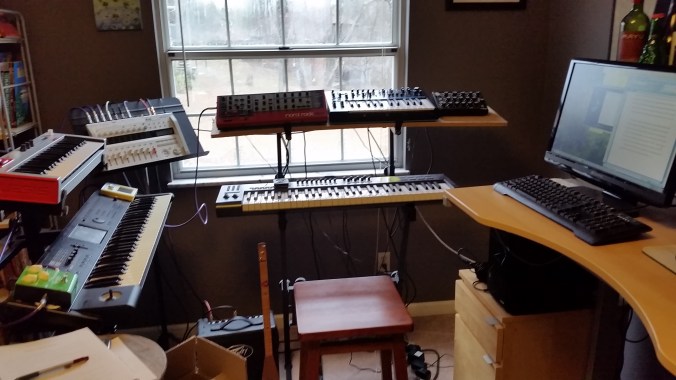
Where the Magic Happens

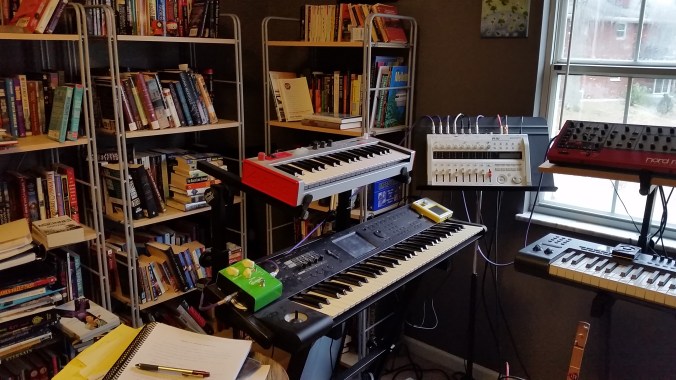
Recently one of the writers forums I’m on had people sharing pictures of their writing setups. It’s always interesting to see where everybody works, so I thought I’d share with the wider world.

studio2
As you can see, my writing station also doubles as noise making station. Essentially, my wife and I each have a room for our creative toys (she has a loom!), so all my stuff lives together.

studio3
Note the books in the background, overwhelming their once well organized shelves (books are an essential part of any writer’s toolkit). As for the noise makers on the left there, that’s a Korg M50 workstation on the bottom (with fuzz box and Korg Kaosilator perched on top), with an Alesis Micron virtual analog synth on top. Both of those (and all the other hardware) runs into the Zoom R16 mixer/recorder there in the angle.

studio1
The PC there is where the writing happens and where the noises get collected and shaped into something interesting (hopefully). Yes, wine is sometimes involved – why do you ask? These noisemakers are, on top, a Nord Lead 2X virtual analog synth (in rack form), a Novation Bass Station II virtual analog synth, and a Moog Minitaur analog synth. On bottom is a M-Audio MIDI controller that I use for the Nord and the software synths on the PC. I use the Novation to control the Minitaur these days.

It’s not the most elegant setup, or the most efficient (notice I don’t really have a place to sit), but it works. For me, anyway.

Author Interview – Patricia Hopper Patteson

Joining me this month is West Virginia author Patricia Hopper Patteson, whose new book Corrib Red comes out in March.

Who are you? Where are you? What kind of stuff do you write?

Hi, I am Patricia Hopper Patteson. I am what you might call a tenement rat from Dublin, Ireland. For the first few years of my life I grew up in what is now the trendy part of the city called Temple Bar. Way back, this area of the city was known for its sub-standard tenement flats. At age seven my family moved from the city to the suburbs. I came to Morgantown, West Virginia as a bride back in the 70’s and have been here ever since. I write non-fiction, short fiction and novels.

How does your transatlantic background inform your writing?

Having a transatlantic background (love that term) is like speaking two languages in a way. I behave differently depending on whether I’m here or in Ireland. Living abroad certainly affects how I write and what I write about. Interestingly, I received my undergraduate and graduate degree from [West Virginia University] as a non-traditional student. So my introduction to creative writing came from WVU. My core introduction to story-telling comes from my parents, who made up stories to tell us as young children.

This trilogy at the core is about emigration. About the Irish in earlier centuries who came to the US but never returned home. That’s what the first book is about—returning home. Whatever extra money the Irish had after they emigrated was sent home to help the family survive. Many emigrated out of necessity in a time when travel was difficult and money was scarce, unlike today where we have so many ways to stay connected to family and friends

Tell us about your most recent book, story, or other project.

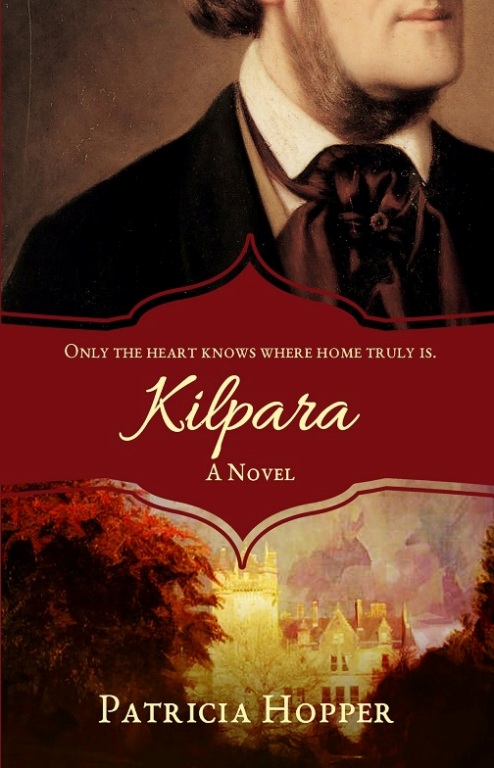
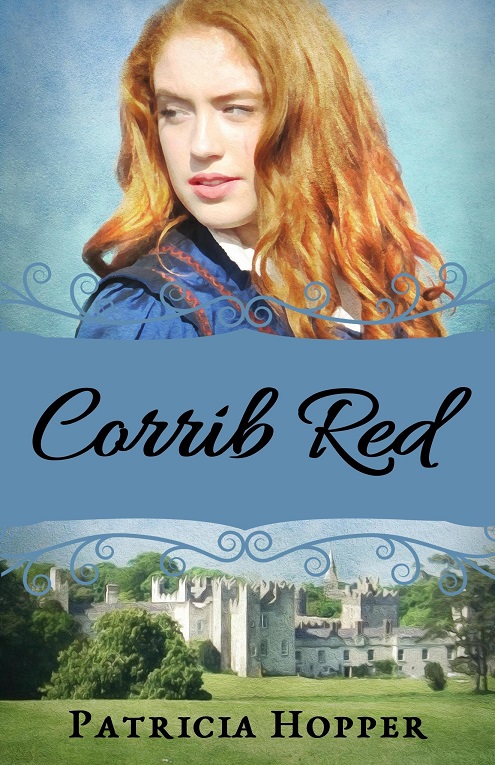
Kilpara is my first novel in a three-part historical nineteenth century family saga series. It takes place in both the US and Ireland and begins in Maryland in 1866 right after the Civil War. The second novel called Corrib Red is due out in March and is the second novel in the series. It takes place almost completely in Ireland and jumps a generation to two sisters who are coming of age and face the dilemma of choices available to them within the period constraints. The third novel in the series starts ten years later and takes place in both Ireland and The US. An illegitimate African-American daughter is central to this story that comes together in Ireland and throws the family off center.

kilpara_cover

I’m intrigued by the span of time you plan to cover in your family saga series. Was that always the plan, or did the specific stories you’re telling just work best in those periods?

The first book was initially two stories and everyone that read it said it should be two separate stories. So when I began fleshing out and editing Kilpara I found out I had enough material to make it a complete novel, so the story reads that way.

I love anything to do with the US Civil War and the first novel begins right after the US Civil War (1866). When I was growing up I never heard anything about the Irish in the US Civil War. I was surprised when I first went to Antietam and Gettysburg to learn how many Irish fought in that war. That’s why I chose that period.

I jump a generation for the second novel Corrib Red which takes place mostly in Ireland (1885). This is Parnell’s time, and I’ve always loved what he did for Ireland, and how tragic it was that he died young. Many Irish turned against him when they learned he was involved with a married woman, whom he later married before he died. His history gives great insight into the culture and mind-set of the time.

The third novel (in-progress) takes place about ten years later (1896). This was a time of cultural awareness in Ireland that later influenced history in the early part of twentieth century.

In what genre do you primarily write? Why did you choose that one?

Right now I’m primarily writing historical fiction, but I have other projects started like mystery, romance and young adult. I find historical fiction fascinating. Although the 19th century was a less complicated time, it’s hard to imagine living without the conveniences we have today. People were far more interactive because they had less distractions and outside commitments. Just think, women who could afford servants, spent much of their day changing clothes for different events, breakfast, lunch, walks, visitors, dinner. It seems exhausting by today’s standards especially now when you can just put on a pair of jeans and go. Women were also restricted by societal norms and were treated like property by the men they married.

corrib-red-front-cover

Tell us briefly about your writing process, from once you’ve got an idea down to having a finished product ready for publication.

The idea for the novel is the easy part. It’s developing a whole concept for a novel that’s the challenge. Once the concept for the beginning, middle and end begin to gel in my mind I start to outline the story.  I generally like to start the first couple of chapters to get a feel for the characters and story at the same time I’m fleshing out the outline. After the first couple of chapters I finish the outline completely so I have a guide. On this third novel I’m trying something new which is telling the story from two POVs and switching from first person to third person. To make this work I’m doing alternating chapters—so it’s a bit of a challenge. I go through many edits of the novel starting with content, then grammar and proofing. After about the third or fourth edit the book starts to take shape. The last thing I do is read the whole novel out loud.

What do you get out of that process that you don’t get from just reading it with a red pen in hand?

When I edit with a pen I hear the story in my mind. However, when I read the novel out loud, I hear each word I speak. I prefer it if I can get someone else to read the story out loud, because then I really hear things more. But that doesn’t always happen. When reading out loud I can hear words that are unnecessary, phases that may be too long, and ramblings that may need to be tightened, scenes that could use some tidying up, and the pacing. I work on all of these things during the editing phases, but reading out loud helps me find anything I may have missed.

Who is the favorite character you’ve created? Why?

I have two favorite characters in the family saga series, although I must say I like all of the characters. The two that are most challenging are Cecil and Aunjel.

Cecil is a 19th century sociopath and very evil. I always love to read about evil characters in novels and look for their redeeming qualities. Cecil doesn’t have any redeeming qualities. He thinks he’s above everyone and everything and takes revenge on anyone who goes against him in a major way.

Aunjel is one of the two main characters in book three of the series and she’s the daughter of Lilah, a light-colored African-American. Lilah has a mutual liaison with Ellis O’Donovan, an aristocrat and major character, in book one. Aunjel is the result of that liaison although Ellis doesn’t know about her until book three. Aunjel also grows up believing her biological father is an African-American. To create Aunjel I wrote a 13,000 word story about Lilah, Aunjel’s mother, and her background, so that I could better understand Aunjel and her challenges in the late 1800s

What’s the weirdest subject you’ve had to research as a writer that you never would have otherwise?

In book three of the series I send David Ligham, a fairly major character in book two, away to West Africa to negotiate a peace treaty with King Prempeh of the Ashanti tribe. This is fictional of course, but there was a lot of conflict going on between the British and the Ashanti tribe around that period. I read three books on the subject to write a few paragraphs.

What’s the one thing you’ve learned, the hard way, as a writer that you’d share to help others avoid?

There are many things a writer learns along the way that it’s hard to know where to begin. The importance of editing is the one thing that helps establish a writer and gets them recognized. Also, if you find another writer who you trust completely to read your novel, or short fiction, and give you honest feedback, this will help avoid weaknesses in your writing.

If you won $1 million (tax free, to keep the numbers round and juicy), how would it change your writing life?

It probably wouldn’t change things all that much. However, I would love to write a novel set around the Grand Canyon, and it would be nice to spend time there to research the area.

What’s the last great book you read or new author you discovered?

One author I had heard about, but hadn’t read any of his work is Ken Follett. I recently read The Man from St. Petersburg and thoroughly enjoyed the novel. In this novel Follett brings London to life in the early 1900s, and the characters and plot are intriguing.

 What do you think your next project will be?

I’d like to write a historical romance that takes place in present time, and I’d like to write a young adult mystery novel.

How would you write a historical romance that takes place in the present time? That sounds like a contradiction in terms.

Sorry about the contraction of terms. I may have been a bit lazy. It’s really a modern day romance with historical undertones.

For example a situation that takes place in today’s world that is parallel in some way to Abraham Lincoln’s unfortunate assassination. The male protagonist won’t be a president, more likely a congressman or a senator, or even a mayor. He will try to save a small town from being overrun by corrupt business associates. These associates want to move a gambling casino into the town as a front to launder illegal money. The female protagonist would be the conduit between the present and the past. She would discover a dress worn by Mary Todd Lincoln tucked away in her great-aunt’s attic. Every time she puts on the dress (or maybe just touches the dress) Mary Lincoln’s ghost appears to warn about danger. Mary’s ghost will help the female protagonist avert the assassination of the present day male protagonist. This of course pushes the male and female protagonists together.

This the long way to explain what I mean. It’s a story I’d like to write but haven’t figured out the complete concept yet.

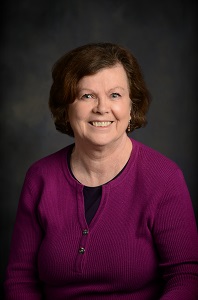
patricia_patteson-300-pixals

Patricia on Social Media

On the Web
On Facebook
On Twitter
On Linkedin

Get Kilpara at Amazon or Barnes & Noble

Learn more about Corrib Red at Cactus Rain Publishing

Over 70 Authors! 99-Cent Books! You Can’t Miss This!

janpromo4

To kick off the new year, I’ve joined with over 70 other writers of speculative fiction – fantasy, science fiction, horror, etc. – to spread the word about our 99-cent books.

For me that means The Water Road, of course, so if you haven’t checked it out yet this is the time. Be sure to look over the other offerings, too, because there’s bound to be something in there for just about everyone. The promo runs through January 14. See all the participating books here.

janpromo6

The Simple Power of “What If?”

Every work of fiction, or damned near every one, can been seen as an answer to a “what if?” question. What if a family has to uproot their entire existence because of climate change? What if most of a small town’s children are killed in a tragic accident? What if a young attorney’s cushy law firm is a front for the mob? On and on it goes.

The power of “what if?” is given particularly free reign in speculative fiction, since the question doesn’t have to conform itself to the real world. Stepping outside reality to ask the question can still lead to powerful insights into the real world, however.

Last week while putting laundry away I stumbled into a Twilight Zone marathon on TV. The episode I landed on, “I Am the Night – Color Me Black”, that takes a preposterously simple “what if?” question and uses it to drill down about the human condition. The opening narration lays it out:

Sheriff Charlie Koch on the morning of an execution. As a matter of fact, it’s seven-thirty in the morning. Logic and natural laws dictate that at this hour there should be daylight. It is a simple rule of physical science that the sun should rise at a certain moment and supersede the darkness. But at this given moment, Sheriff Charlie Koch, a deputy named Pierce, a condemned man named Jagger, and a small, inconsequential village will shortly find out that there are causes and effects that have no precedent. Such is usually the case—in the Twilight Zone.

In typical Twilight Zone fashion the supernatural event isn’t really the important part of the story. It’s how it throws everyone in the episode out of equilibrium and allows the filters of euphemism and manners to slip enough to see peoples’ true selves. Thus, not only do we have the deputy who’s certain (against the evidence) that Jagger is guilty, but we get the realization that Jagger is pretty much a douche, anyway. He may have been wronged, but that doesn’t make him right.

So the darkness lingers, until after the execution when we learn that it’s appearing all over the world, at locations like the Berlin Wall, Budapest, and a street in Dallas (keep in mind, the episode first aired four months after the Kennedy assassination). So, in less than half an hour, a simple question – “what if one morning the sun didn’t rise?” – leads us to, on the micro and macro scale, sober observations on human nature.

That’s the simple power of “what if?” when it comes to storytelling. It’s the prime mover, the thing that gets the ball rolling. It can upend the real world and give us a way to reflect on it all at the same time.

whatif1

What I’ve Been Up To

Hey folks. It’s been quiet ‘round these parts the past few weeks, but I assure you I am being a productive creative person! Guess it’s time for an update on what I’ve been up to:

  • As I said a couple of weeks back, editing continues on The Bay of Sins, though at a slower pace than I had initially hoped. No worries – release in early 2017 is for certain and that will bring The Water Road trilogy to a close.
  • Apex Magazine has resuscitated their flash fiction competition. It’s tied to a particular holiday, this one being Valentine’s Day and all that entails. Since people were allowed to submit up to three (250-word) stories, I came up with a kind of matched set of fantasy stories that hit the beginning, middle, and end of relationships. If none of them wind up appearing in Apex, I’ll post them here on Valentine’s Day for your reading pleasure. Apex, by the way, is a really cool magazine and could use your readership and support. Go check them out.
  • Earlier this month I had a chance to sit down with author Eliot Parker on his local TV show Chapters to talk about writing and such. Look for it now on Armstrong Cable if you’re in the Huntington area. I’ll pass along a YouTube link when it shows up there.
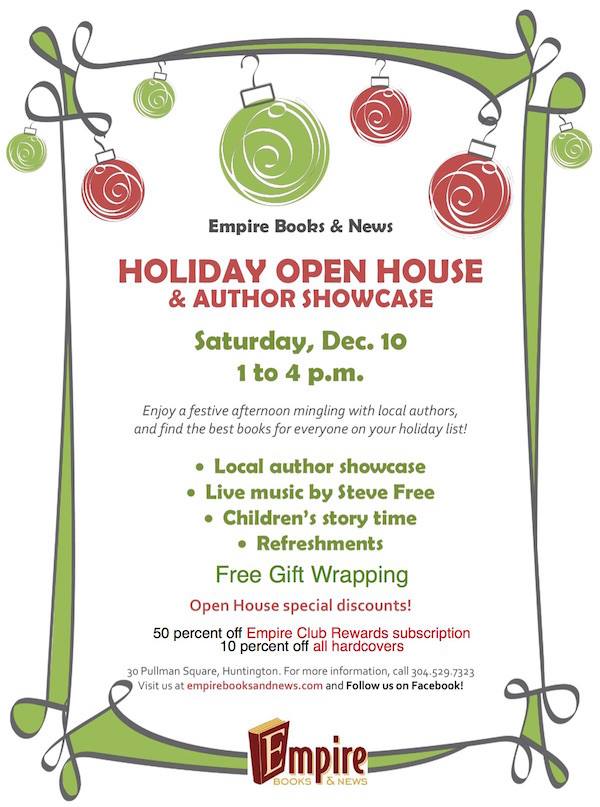
  • Next Saturday (December 10), I’ll be at Empire Books & News in Huntington for their big Holiday Open House and Author Showcase. It runs from 1-4, so stop by and get some great books by great local authors – including yours truly!

empire-promo

  • I have a short story about halfway finished, called “To the Sound of Birds.” It’s a good example of the answer to the “where do your ideas come from” question, as it sprang from noise I heard between runs at an autocross. Everything else is pure fiction (of course). Hope to have it done by the end of the year.
  • Beyond all that, with the end of the The Water Road on the horizon, I’ve started to turn my attention to figuring out what my next big project is going to be. Honestly – I haven’t a clue. I’ve got several ideas floating around, some for standalone books and others for potential series, but nothing’s reached out and commanded me to write it yet. Hopefully by the new year something wriggles to the top of the pile.

See? I’m keeping myself busy!

resized_business-cat-meme-generator-let-s-just-paws-for-a-moment-and-think-about-this-accomplishment-2dca00

Water Road Wednesday: Cover Reveal – The Bay of Sins

As we roll on towards the holidays, how about an early present? Or a slightly delayed treat, I suppose – it’s the cover for the third part of The Water Road trilogy, The Bay of Sins:

tbs-cover-900x1350

As with the first two volumes, The Water Road and The Endless Hills, this is another fabulous design from the folks at Deranged Doctor Designs.

Get caught up with the trilogy by picking up The Water Road and The Endless Hills now.

“All the Wishes” – Another Very Short Story

As he did last year, author Eric Douglas issued a challenge to write a 100-word story for Halloween. Not less than 100 words, not about 100 words – 100 words exactly. It’s much harder than you’d think, but I like what I came up with for this try.

Here it is – “All the Wishes”

There was a flash, like a Polaroid photograph had been taken just near Frankie’s face. When his sight returned, the sky was a solid, pale green, just as Frankie wished.

Floating above the battered brass lamp in the passenger’s seat was a misty apparition with vaguely Persian features. “You see?”

“All the wishes?” Frankie asked, grinning.

“Yes.”

“Anything I want?”

“Anything.” The apparition nodded what you might call its head. “I may someday ask a favor.”

Frankie put the car in drive and pulled away from the curb, potential wishes swimming through their mind.

What could go wrong?, Frankie thought.

Be sure and check out Eric’s website for links to all the other 100-word stories he got!

Happy Halloween!

funny-dog-picture-careful-what-you-wish-for

Water Road Wednesday: Faerl Vasil

I think it’s quite natural for a book series or trilogy to add characters as it goes along. Not only does it allow for the replacement of characters who either meet an early demise or simply aren’t involved anymore, it gives the writer a chance to shake things up. I’m not sure how often one of those characters who makes a late appearance was supposed to show up from the very beginning.

When I originally concieved of The Water Road it was as a book that old the stories of four characters. Two, of course, were Antrey and Strefer. The third was Renzi, who appears in The Endless Hills. The fourth was a Sentinel who, at the time, was named Faaip (after the odd track at the end of Tool’s Lateralus album).

Faaip was going to futilely chase Antrey through the Neldathi mountains and provide a separate point of view for what she did with the Neldathi. But it became clear the further I got into The Water Road that it was really the story of two women on parallel paths after each discovered a terrible secret. Renzi and Faaip just didn’t fit into that, so their stories got cut. Renzi’s became The Badlands War, a novella that should be out next year in some fashion.

Faaip was just forgotten until I started working on The Bay of Sins. I wanted a point of view character who was leading the search for Antrey once she leaves her exile. What better person to do it than the one who failed so miserably before? I changed the name to Faerl, surrounded him with a mind walker second in command and a few refugees from Renzi’s Rangers and turned him loose.

It makes it more interesting (I hope) to have someone with a past specifically related to Antrey chasing her rather than just some goon with orders to follow. It drives Faerl to do some hard things and, in the end, seals his fate before he even gets going. But saying more would ruin the story.


This is the final Water Road Wednesday post that deals with a person or place in the world of The Water Road trilogy. Now that the first two books are out (with the third on the way!) it’s gotten progressively harder to talk about such things without running into spoilers.

From here on out it’s all excerpts from The Bay of Sins, a cover reveal, and the release of the final book in the trilogy!

For more information on The Water Road and The Endless Hills check out the trilogy page here, which includes links to all my Water Road Wednesday posts this year.