Water Road Wednesday: It’s Here!

After years of writing and what seems like years of doing these Water Road Wednesday posts, I’m beyond excited (“berry ready to pop,” to steal a phrase from Mike Keneally) to say that The Water Road, the first volume of The Water Road trilogy, is now available for your reading pleasure:

TWR Cover

The Water Road is available in both eBook and paperback form from Amazon. For the rest of June, the Kindle version is only 99 cents! It’s also available for free (essentially) as a part of Kindle Unlimited.

Enjoy and remember – volume two, The Endless Hills, is only a few months away. And check back next week for another Water Road Wednesday!

Water Road Wednesday: Final Excerpt from The Water Road

For the third and final excerpt from The Water Road, we return to Antrey. In this scene, she’s escaped Tolenor and made her way into the mountains south of the Water Road itself. For the first time since she was a child, she encounters Neldathi in the flesh.

She jumped across the stream and made her way to the rocks, which clustered near the upstream corner. She sat down, slipped the bottle from her satchel, and took a long drink. What was once snow was now ice-cold water. She gulped it eagerly, knowing that the pool would provide a means to refill it.

Just as she took the last drink of water, Antrey heard a noise behind her, downstream, that sounded like a violent displacement of limbs and leaves. She turned and saw an elk dive out of the trees on the other side of the stream. Its great antlers were a tangled mess of underbrush ripped from the forest as it ran. Her eyes met those of the elk, which had stopped at the edge of the stream, gasping hard, its breath frosting in the chilled air. After a moment’s pause, it dropped its head and began to lap water from the stream.

Antrey closed her eyes for just a moment and heard the elk make a terrible screaming sound, like it was crying out in pain. It made her shudder and sent a bolt of pain shooting down her own spine. She opened her eyes and saw the elk, reared up on its hind legs, thrashing its head back and forth. There was an arrow in its neck, just above the shoulder. Antrey had not heard anything to indicate that anyone was around.

A salvo of three more arrows thwacked into the elk’s flank. It screamed again and tried to move away, upstream back to the trees, but it took only a few faltering steps before it collapsed in the snow. As it gasped for air, the white ground turned red with blood. The beast was trying desperately to live or calling out to die. Antrey wasn’t sure which.

Antrey was so transfixed by the elk’s plight that she forgot for a moment that the arrows meant that, after all this time, she was no longer alone. She did not hear the further rustling of the trees, but did see first one, then two, then half a dozen Neldathi emerge from the forest and approach the elk.

They were tall, with just the faintest tint of blue in their white skin. Were they naked, they would nearly blend in with the snowy ground. Each wore multiple layers of animal skins that obscured, but could not hide, that they were strong, powerful men. All had long black hair, which grew from a fringe of scalp at the back of their heads. It twisted in braids that ran halfway down their backs. About halfway down, the black color gave way to a pattern of red, black, and white strips. Three of them carried ornately carved bows, while two others had similar devices slung over their backs. They either had not noticed her or ignored her and approached the elk.

The other Neldathi, Antrey had thought initially, was unarmed. The tallest of the group, he strode towards the elk, reached inside the layers of his clothing, and pulled out a knife, bigger than anything Antrey had ever seen that was not called a sword. In a maneuver that showed years of practice and an abundance of skill, he knelt beside the elk, placed the great blade to its throat, and drew the knife across, ending the beast’s misery. All the while, he said something quickly under his breath.

Antrey had never seen anything like it in her life. When she was young she had never experienced a hunt or a kill, only the end result. The sight of such a brutally efficient killing shook her to the core. The bottle slipped from her hands and splashed into the pool underneath her. At the noise, the hunters turned and saw her.

The one that had killed the elk crouched motionless next to it, knife still in hand. The others moved away from the kill and sprang across the stream swiftly, switching their focus. They began to converge on her slowly, two from upstream in the direction of the elk, two others having circled around to come at her from the other direction. She lost sight of the fifth, but within moments she knew she was surrounded. Before it ever occurred to her to try and get away, five well-armed and curious Neldathi had blocked any means of escape.

She ignored the ones on her side of the stream and tried to make eye contact with the one by the elk. He appeared to be the leader of this hunting party or its senior member. Regardless, he was someone who commanded respect. Maybe by making contact directly with him she might open some line of communication, although she had no idea how to do that. At the very least, maybe he would put the knife away. The way he crouched there, casually displaying the bloody blade, made her think he meant to tell her that it might be her neck that was sliced open next.

As the others inched slowly closer to her, Antrey could feel their eyes on her, covering every inch of her with their eyes. One of them was close enough that Antrey thought he might have sniffed her, but she quickly dismissed that as a work of her imagination. That was something the barbarian Neldathi of the Altrerian culture would do, but made little sense upon rational examination. They would use every sense available to them, just as she would.

With each footstep that brought them closer, the snow crunched underfoot. Antrey’s heart raced the closer they came. It was calmed only somewhat when the one across the stream stood up, wiped the bloody blade of his knife on the elk’s carcass, and returned it to its sheath. When she heard a voice behind her, she nearly exploded.

As I said, that’s it for the excerpts from The Water Road. That’s because it finally comes out next Wednesday! After all these weeks of reading about it, isn’t it time you just read it for yourself? Head over to Amazon and pre-order your copy today (only 99 cents until the end of the month!).

TWR Cover (540x810)

Water Road Wednesday: Naath of the Isle of Amreh

The Islanders – the inhabitants of the Slaisal Islands in The Water Road trilogy, not the hockey team – are an odd bunch.* In a world that’s defined by where you were born and lines between such places are brightly drawn, the Islanders go a different way.

Physically, as well as culturally, they have a lot in common with other Altrerians, particularly those in the Triumvirate. They aren’t, for example all stand offish the way the Azkiri are. But they don’t really want any part in the political stuff, much less the military expeditions. Folks in the Triumvirate view the Islanders as essentially hiding behind the protection they provide – it’s not like the Neldathi are going to sail up to the Slaisals anytime soon. The Islanders just see it as somebody else’s problem.

The irony is that the Islanders deal with the Neldathi more than the Triumvirate does. They trade with them and built four cities along the Neldathi coast (along with one on the northern coast, on the edge of Azkiri territory). Yet, they don’t have any particular affinity for the blues – they just do business with them. In a world with a lot of walls between cultures, the Islanders don’t pay attention to any of them.

Which is where Naath comes in. Born on Amreh, one of the many Slaisal Islands, he decided at an early age to go to sea. It was either that or be a fisherman and he never had any particular love for sharp hooks and the smell of fish guts. It would be wrong to say he wanted to see the world, but that’s precisely what he ended up doing. The pull of home at the end of a long voyage was strong, but at the end of the day, Naath belonged on the deck of a ship plowing through the ocean.

At the time The Water Road begins he had risen to be second in command of a trade ship called Gentle Giant – yes, it’s a prog referrence!

It’s the final part of paying his dues that’s going to lead to him having a ship of his own, maybe more than one. That’s the plan, anyway. At least until he rows onto the shore of bay in Dost territory and meets Antrey Ranbren.

Then his future, especially at sea, becomes much less certain.

* Maybe the hockey team is, too, for all I know. I’m not much of a hockey fan.

Water Road Wednesday: Leave a Message at the Beep

Thank you for calling Water Road Wednesday. We’re sorry, but your desire to learn more about the world of The Water Road trilogy cannot be fulfilled at this time. The author has been called away to the industrial north to attend a gathering of those who fight the good fight (none of which involve Neldathi, the Triumvirate, or anything like that).

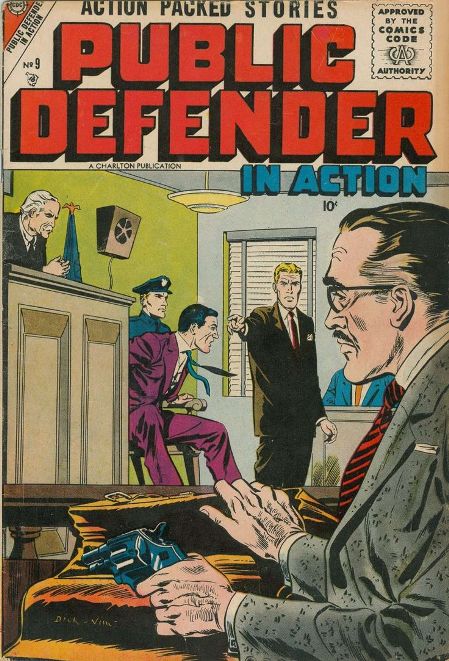
PDComic

Regular service will return next week.

Until then, go tell the author’s niece (also a writer) happy birthday – she’s 21 today!

Or, if you need some companionship, just talk to the answering machine:

Water Road Wednesday: “The Missing Legion”

The Water Road is the first part of the trilogy, of course, and the first thing I wrote in this universe. It’s not the first to see the light of day, however.

At some point in the past, I decided I wanted to write a ghost story. October was coming up, it was something I hadn’t done before, and I thought it would be fun. I was in the middle of revising The Water Road at the time, so I decided to set it in that world. I quickly settled on a story about a hunter (in pursuit of one of the cryptid beasts that stalk Alteria) who gets lost in the woods and gets more than he bargained for.

I knew I didn’t want to set it during the time of The Water Road, so I set it much earlier, even before the First Neldathi Uprising and the forming of the Triumvirate. Indeed, it’s a time when two great cities in the Arbor are at war.

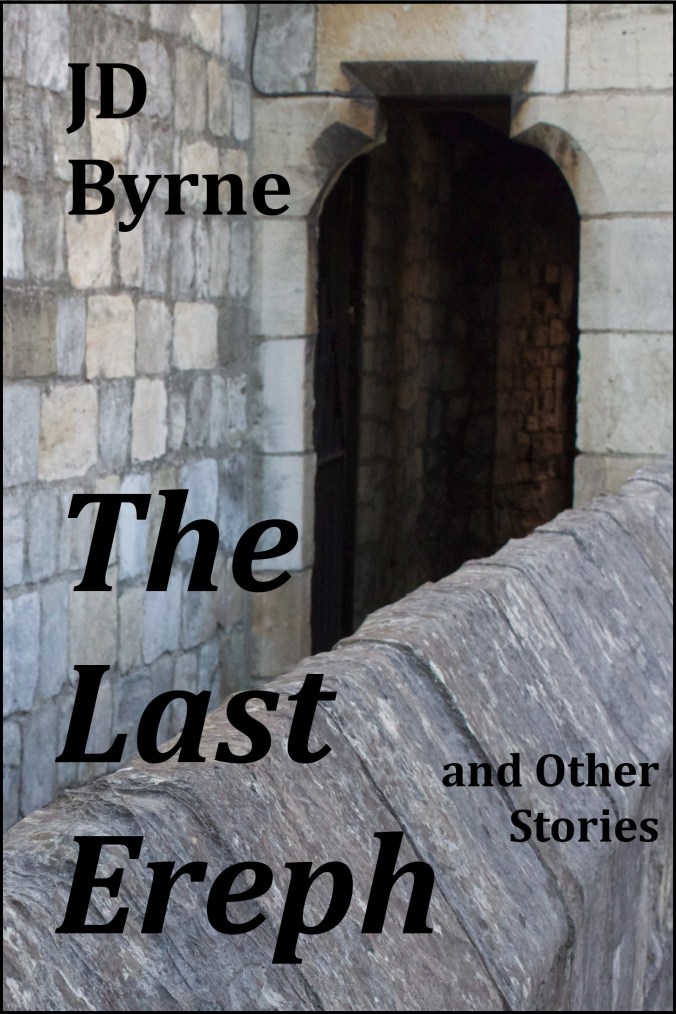
As for the ghost story itself, it’s influenced heavily by a section of Akira Kurosawa’s 1990 film Dreams that you can read about here. Or, you can just read “The Missing Legion,” which is part of my short story collection The Last Ereph and Other Stories. Here’s a snippet:

The corporal turned away and motioned for Taiman to get back on his horse. “You’re heading into the woods, you say?”

“Yes,” Taiman said.

“Are you sure you want to do that?”

“Absolutely,” Taiman said. “I’ve been chasing that beast for five days. If I can corner it in the woods, perhaps I can catch it alive.”

“Will that be worth it, you think?” the corporal asked.

“Of course,” Taiman said. “Why?  You’re not going to try and keep me from going, are you? Thought men in the Arbor valued free movement more than anything.”

“We will not stop you,” the corporal said. “But I would advise against going in, particularly if you don’t know the area. It’s very easy to get lost. Plus, they say things happen in those woods at night. Strange things, when the moons are full.”

Taiman chuckled and sighed. “Thank you for the warning.  Someday, the enlightenment that has come to the Guildlands will filter down to the Arbor as well. We no longer believe in superstitious nonsense. There are no strange things, only things that we do not understand. Besides, I am capable of handling any creature or person I might encounter. Now, if I may be on my way?”

The corporal told him how to best make his way around the camp and Taiman set off. He cursed the delay, but knew it had not spoiled his hunt. The beast had outrun him the day before, vanished from sight, but Taiman had held onto the trail. Barely.

His hopes rekindled when he spotted the beast through a telescope as it loped out of the trees in search of water. Once again he had a target to pursue. Taiman spurred his horse and charged off down river.

The Last Ereph and Other Stories is available at Amazon, including Kindle Unlimited, which means you can read it for free, essentially. Why wait?

Final Cover Idea (KDP)

Water Road Wednesday: Cover & Release Date!

I’ve spilled quite a bit of virtual ink over the past weeks (this is the 20th edition of Water Road Wednesday, by the way) talking about the world of The Water Road, some of the things that happen there and, most importantly, some of the people who inhabit it. Now’s the time to put something a little more concrete with all that.

I’m very pleased to reveal the cover for The Water Road:

TWR Cover (540x810)

It’s by Deranged Doctor Design, who will be doing the covers for The Endless Hills and The Water Road, too.

With a cover I can also announce that The Water Road will be released on June 22 – that’s right, on Water Road Wednesday! It will be available as an eBook exclusively from Amazon. Paperback will follow shortly thereafter (it’s harder to coordinate that).

Of course, there will be more info on the entire Water Road Trilogy as the year rolls on!

Water Road Wednesday: Goshen the Holy

A couple of weeks ago I talked about religion in the world of The Water Road. While it’s largely background for the story of The Water Road trilogy, there’s one character who brings the matter to the forefront and plays a key role.

Goshen, known at the time the story starts as Goshen the Holy, is, somewhat like Antrey, a person without a country. He has a clan heritage, but he was born and raised in one of the Islander cities, which gives him a completely different perspective on the world.

Primarily, Goshen has no clan. The Islander cities all have a small, permanent Neldathi population, some of whom stay with others of their own clan. But most of the urban Neldathi mix with those from other clans, at least occasionally. As a result, there are those, like Goshen, who are born and raised without any kind of loyalty to a clan and without the animosity that engenders to other clans.

In addition, because he wasn’t constantly on the move, he was able to learn to read and had access to books brought in by Islander traders. At an early age, he was drawn to the stories of the gods (and other mythological figures) that had been compiled by Altrerian anthropologists before the First Neldathi Uprising. What started as simple fascination turned into serious study and, eventually, a calling.

Goshen first realized that the gods worshipped by the Neldathi and those worshipped by the Altrerians before the Great Awakening were one and the same. The Neldathi interacted with them in a very different way, but their names and essences were the same. Going further, he discovered more and more similarities between how the various gods interacted with the world. This led him to a conclusion as bold and world shattering for a Neldathi as the Great Awakening had been for an Altrerian – the gods were all actually separate aspects of one, real, god.

Goshen’s digging brought him to the creation story of the Maker of Worlds, which solidified his beliefs. If one god made the world, why would She then leave it to be overseen by others? No, Goshen concluded, the Maker of Worlds is the only god and She interacts with her creation via the different gods of Neldathi mythology.

He realized that wasn’t going to be a popular opinion amongst the Neldathi, who valued their clan identities, of which their individual protector gods were a large part. Nonetheless, he went out among them without the colored stripes in his hair to signify his clan membership. Part of all the clans, but part of none, he wanted to bring them together.

Sooner than he’d thought possible, he’d have his chance.

Water Road Wednesday: Second Excerpt from The Water Road

In this scene, Strefer has run to the Triumvirate compound because of a buzz of rumors that something big has gone down there – very big. Sentinels are standing guard outside the Grand Council building as a crowd swells. She needs to get inside and find out what’s going on, but they’re not supposed to let anyone in.

Strefer stepped up and looked the Sentinel in the eyes.

“Who are you?” he asked, his voice a mixture of vigilance and weariness. He was tall and forceful, with fine light-green skin, most likely a Guilder. That was a stroke of luck, Strefer thought. His pikti was slung loosely across his back. The way he carried himself suggested he had been here a while.

Strefer opened the hand in which she had clutched her identifications and handed them to him. “My name is Strefer Quants. I’m with the Daily Register.”

He took the cards, gave them a quick glance, and handed them back to her. “Why should I care? You don’t think I’m going to let you in just because you work for some newspaper, do you?”

“Why not?” Strefer asked, slipping the cards back into her pouch. “Is there something in there you don’t want people to know about?”

The Sentinel shot back at her with a wry smile. “I am afraid I cannot comment,” he said, with affected formality.

“Do you see a notebook in my hand?” Strefer said, keeping the game going. It was one she would surely win. “I’m not asking you for any comment. I’m just asking if there is something going on up there that you’re trying to keep from the public.” She gestured towards the doors at the top of the marble steps.

“Perhaps I wasn’t clear, missus,” he said, the smile replaced by a glower as he stared down at her. “I have nothing to say about whether anything is happening inside here. Much less to the likes of you, notebook in hand or not.”

“Fair enough,” Strefer said in concession. She decided to try another approach. “But you’ll let me by so I can make my appointment, at least.”

“Appointment?” he asked, confusion sliding across his face like the shadow of clouds moving across the sky. “Appointment with who? And don’t say one of the Grand Council members. They would be in session now. And, at any rate, they don’t greet visitors.”

Score one for her, Strefer thought. She knew from talking with Tevis that interviews with members of the Grand Council were possible. Cutting them off completely meant something important had happened inside. “Of course it’s not with one of the Council members, who do I look like? No, it’s with,” she paused for a moment, grasping for a name. “Keretki,” she finally said, forced to pull a name out of thin air.

“Who?”

“Keretki,” Strefer said, knowing this was her hook. “You know, the policy coordinator for the Arborians? I have an appointment to meet with him to discuss some trade matters he has been dealing with during the session. I’m sure you’ve seen him around here.” She threw the last line in to dig a little at her adversary.

“No, missus, I don’t know him,” the Sentinel said. “But this isn’t my regular patrol.” Another useful bit of information. “Regardless, I can’t let you into the building right now.”

Strefer turned from amused to angry in a flash. “Now look here. My boss spent weeks setting up this interview, all right? The publisher back in Sermont even had to get involved. This interview will be the centerpiece of our coverage of the Council session for the next week or so. It’s very important. Not just to me, either, but Keretki, too. You know the Arborians, always sniping at each other over the smallest things. He has them all together on the same page for once and wants the public to know about it. Do you really want to be responsible for pissing off all those people?”

The Sentinel stood in silence, reaching for an answer that was not coming.

“It’ll be worth your trouble, I promise,” Strefer said. “Have you ever heard of Olrey, the publisher of the Daily Register? He has a reputation for airing his feuds in the press. He could make things very difficult for the Sentinels, the Grand Council, the…”

Exasperated, the Sentinel put up his hands. “All right, all right, fine. You win.”

“Thank you,” Strefer said, suddenly buoyant. “You’re a very reasonable man.”

But before Strefer could make it up the stairs, he put his hand on her chest to stop her. “Hold on a second. You get to go in, but there are two conditions. First, none of this conversation we’ve had here is going to show up in your paper, all right? I don’t…”

“Agreed,” she said, cutting him off. “Say no more. What’s the other one?”

“Second, the Grand Council chamber is off limits. Got it?”

“Absolutely,” she said. “Kerekti’s office is on the other side of the building, I think. I won’t be anywhere near the Grand Council chamber.”

With that, the Sentinel stood aside and let Strefer proceed up the stairs. There were another pair of Sentinels stationed by the front door, but they did nothing to halt her progress. Once inside, she made sure that neither of them were watching her, then she went to look for the Grand Council chamber.

Water Road Wednesday: Gods and Beings In Altreria

One of the fun things about writing fantasy is that you get to build worlds from the ground up. Since you’re not playing with reality necessarily you can do just about anything you want. It also means you have to do a lot of background sketching to fill in your world. John Scalzi once wrote that he tried to go two questions deep on world building, which makes a lot of sense. It’s important that your world be well rounded (pardon the pun), even when it comes to things that don’t necessarily drive the narrative.

Which is to say that when I was building the world of The Water Road I had to decide what role religion played in it. Even though I’m an atheist, religion fascinates me and I think part of any well developed fictional world would be religion (unless the complete absence thereof was what you wanted to explore). In fact, one of the first things I wrote for The Water Road is the Altrerian creation myth. It’s not actually in any of the books, so this seems as good a place as any to let it see the light of day:

In the time before time, the Maker of Worlds saw a void in the firmament of the heavens.  She decided that it must be filled, lest the other stars and planets be drawn into the void and lost forever.

So the Maker of Worlds cupped her hands and dipped them into the Lake of Eternity.  She brought the water up in her hands and breathed on the waters while molding it into a ball.  When the swirling churning waters had been shaped into a perfect ball, the Maker hung the ball in the firmament and filled the void.

But when the Maker of Worlds looked at the ball of swirling water in the firmament, she was not pleased.  She plucked the young planet out of the heavens and set it in front of her.  The Maker thought for a moment and pondered what was missing from her new creation.

After a time, the Maker took the sharpest knife she could find.  She took the blade in her left hand and held her right palm out over the swirling waters.  In one quick motion, the Maker of Worlds sliced across her outstretched palm and the blood of the Maker fell into the churning, swirling, and empty oceans.

As the blood of the Maker of Worlds fell into the oceans, it began to become solid.  The more the Maker bled, the larger the stain on the oceans would become.  Before long, the spots of blood began to come together and form The Land.  As the land formed, the churning seas beat upon it, breaking off small parts which became The Islands.

The Maker of Worlds healed her wound and surveyed The Land.  With her breath, the Maker calmed the rough seas.  With her lips, the Maker gave the new world a kiss of life – to The Land, to The Islands, and to the seas.  Weakened by her work, the Maker hung the now living planet back in the firmament, where she forgot about it.

Eons passed before the Maker of Worlds remembered her watery creation with the one continent upon it.  In the time that had passed, The Land had become full of life.  Not only animals and plants, but intelligent beings, who lived together in communities and created a society.  The Land was rich and plentiful, but its inhabitants still found things to fight about.  They constantly warred, on upon the other, seemingly without end.  When the Maker saw what had become of her world, she was depressed.  And she was angry.

In her anger, the Maker of Worlds lashed out at her creation.  She drove a single finger into the soil on the east side of The Land.  Then, she drug it across the entire breadth of The Land, changing it forever.  In the wake of the Maker’s finger came Great Basin Lake and The Water Road.  To the south of the river, great mountains heaved up from the soil, all the way south to the cold southern seas.  To the north, The Land cracked and two great rivers were formed as water rushed into the fissures.  The far north, beyond the reach of the waters, became barren, dry, and inhospitable.  The people of The Land were likewise shattered, north and south, divided by the Water Road into Neldathi and Altrerian.  Many multitudes died.

When the Maker of Worlds realized what she had done, she howled in pain.  After all, she was a creator, not a destroyer.  He had lashed out in anger because her children had disappointed her.  Her anger saddened and disgusted her.  As she held back tears, the Maker of Worlds took the wounded world and gently placed it back in the firmament.  She vowed never to touch it again and let her children be.

And then, history began . . .

The Neldathi and the Altrerians were both polytheistic and shared the same pantheon of deities, but interacted with them in different ways. The Altrerians treated the gods as a group, beings that were all involved in the order of the universe. By contrast, each of the Neldathi clans had one god as a protector and venerated him or her over the others. The Maker of Worlds, in spite of the creation myth, wasn’t really part of the pantheon.

At the time The Water Road begins there’s been a seismic shift in the way the Altrerians think of the gods. Sometime in the semi-recent past, a Great Awakening swept across the nations of the Triumvirate. Only this wasn’t an awakening of religious fervor, but the emergence of a consensus that the gods actually didn’t exist. How people dealt with this varied – in the Guilds religious belief and observances disappeared in a generation, while the Telebrians hung on to the traditional cultural aspects of belief while largely proclaiming not to believe anymore.

On top of that, among the Neldathi there’s also a new strain of religious thinking. A movement led by a man named Goshen preaches that the gods are all actually different aspects of the one actual god – the Maker of Worlds. He and his beliefs will play an important role in The Water Road.

Water Road Wednesday: The Neldathi of Kentucky?

I have a list of topics for these Water Road Wednesday posts. I sat down last December and wracked my brain to come up with everything I could talk about without going too far into what actually happens in the books. Never in my wildest dreams did I think I’d wind up with a post about the blue people of Kentucky.

Although the story began much earlier, it came to the attention of doctors in 1975 when a child in the hospital was being treated based on the blue color of his skin (“as Blue as Lake Louise”). Then, as:

a transfusion was being readied, the baby’s grandmother suggested to doctors that he looked like the ‘blue Fugates of Troublesome Creek.’ Relatives described the boy’s great-grandmother Luna Fugate as ‘blue all over,’ and ‘the bluest woman I ever saw.’

Turns out, genes were to blame:

The Fugate progeny had a genetic condition called methemoglobinemia, which was passed down through a recessive gene and blossomed through intermarriage.

* * *

Methemoglobinemia is a blood disorder in which an abnormal amount of methemoglobin — a form of hemoglobin — is produced, according to the National Institutes for Health. Hemoglobin is responsible for distributing oxygen to the body and without oxygen, the heart, brain and muscles can die.

In methemoglobinemia, the hemoglobin is unable to carry oxygen and it also makes it difficult for unaffected hemoglobin to release oxygen effectively to body tissues. Patients’ lips are purple, the skin looks blue and the blood is “chocolate colored” because it is not oxygenated . . ..

According to family tradition, Martin Fugate came to the area, in all his bluishness, in 1820. There he married a woman who carried a recessive gene for the condition. Four of their seven children were blue. Other families in the area showed signs of the condition, too, with one group being described as “bluer’n hell.” The Fugate family began to move away in the early 20th Century, as coal mining picked up in the area.

Although it’s a genetic condition (exacerbated by inbreeding), it can also be caused by exposure to certain chemicals. It’s one of those conditions that’s so rare no doctor ever sees it, but they all learn about it medical school.

Did the Fugates and their like really look like the Neldathi of The Water Road universe? Doubtful. But it’s kind of interesting that a clan-based group of mountain dwellers I pulled out of my imagination have a kind of real world equivalent. Truth, as they say, is never a match for fiction.