One Man’s Second Book Problem . . .

One person’s trash is another’s treasure, as the saying goes. I think the literary version of that might be that one person’s second book problem is another person’s interesting, deep dive into character lives.

Remember last year when I blogged about the second book problem – the tendency for middle books in trilogies to sag a little bit given their place in the middle of the overall narrative? At the time I was laboring under the assumption that most people would agree on when second books were problematic or not. A recent experience has convinced me otherwise.

A Gathering of Shadows is the second book in V.E. Schwab’s Shades of Magic trilogy.

gatheringofshadows

It’s set in a kind of alternate history world during the 19th century where there are actually four Londons existing in parallel worlds with different levels of magic (ours is “grey” London, which about sums up the magical nature of it). The first book in the series, A Darker Shade of Magic, has a lot of hopping between worlds as it spirals towards a universe-altering conclusion.

The second book, by contrast, is a lot more sedate. It takes place mostly in red London, where magic is like air and just about everybody makes use of it in some way or another. A kind of World Cup of magic called the Element Games brings together the two main characters, Kel and Lilah, who were separated at the end of book one. We get deep into the tournament and what it means politically in the world of red London. All the while, occasionally, we pop over to black London (where a magical incident years before basically turned it into a burned over hellscape) and see that something bigger is brewing.

To be honest, the brewing seemed like it was part of another book. I was really grooving on the tournament, the way it allowed us to get more into the heads of Lilah and Kel (and his brother, Rhyl), not to mention a couple of new characters. It seemed like the perfect use of a second book, to deepen both the world in which the story takes place and the people in it whom we are supposed to care about. Then the tournament wraps up a little early and the black London stuff comes crashing down on our heroes. It all happens so fast that I think it would have worked better as an expanded second part of the book or as a short, brutal epilogue to setup the final book in the series. Still, overall, a good read and I’m definitely on board for the conclusion of the trilogy.

And, don’t get me wrong, lots of people love this book (and the series). But there were more than a few super pissed fans of the first book who thought A Gathering of Shadows was just boring filler – until the very end, when the black London stuff comes calling. In other words, they felt just the opposite of the way I did about it (one reader said it was “is majorly afflicted with the infamous 2nd book syndrome”). One person even suggested that all the important things that happen in this book could be collapsed into the first chapter of the final volume of the trilogy.

Are those folks wrong? Yes and no. I think they’re wrong because books (or stories of any kind) do more than simply push the major plot along and there’s a lot of other stuff going on for most of A Gathering of Shadows, stuff that I happen to enjoy (a lot of books, beginnings of them, get described as “slow,” but I love the time spent settling into a place or getting to know characters). On the other hand, it isn’t wrong to say that by the end of A Gathering of Shadows not a lot has happened on the grand “fate of the worlds” scale on which the first book operated. I can understand the frustration, even if I don’t share it.

While this is another in a long line of examples of why all are is personal, it’s also an example of people wanting different things from extended works. A trilogy or series, by definition, invites readers in and lets them spend more time in a world than a single story. It’s not surprising that a writer might take that time to do things other than move the plot along. But it’s also no surprise that fans brought back to the world by a quick-paced first book might find a second one slow if it can’t match that pace.

Neither set of readers is wrong in their expectations (or their permissions), but neither is a writer “wrong” for taking one path over the other. It’s worth thinking about what people said about the first book before deciding to slow things down in the second. Maybe that’s the best way to tell the entire story you mean to tell, or maybe it’s a second-book trap you’re falling into. As with most things about writing, a little forethought can head off some disappointment down the road.

Weekly Read: 1632

I’ve never had so much to say about a book I decided not to finish.

I’d had 1632 on my “to read” list for quite a while. For one thing, it’s got a hell of a setup, an elevator pitch for the ages (more of that later). For another, the way author Eric Flint has let in other authors, and even fans, to help build and flesh out the world he created is a really interesting phenomenon. With that said, the book is clearly not for me, as I could only make it about a quarter of the way through before throwing in the towel.

As for that pitch – Begin with the fictional small town of Grantville, West Virginia, where a wedding reception is underway at the local high school. There is a literal blinding flash of light and, all of a sudden, the town – all the people in it, all its associated real estate and tech – is transported into rural Germany in the middle of the Thirty Years War. An explanation for this (alien art project gone awry!) is given in the prologue,* clearing that off the table. So what happens next?

There could be a struggle to survival and a town torn apart under the strain of such a weird event. Flint doesn’t go there, however. Instead, he focuses on how the Americans interact with their newfound neighbors. Some are hostile, of course – the Americans did land smack dab in the middle one of Europe’s bloodiest religious wars – but many are more than willing to join up with the Americans who are united in the idea to begin the American revolution just a little bit early.

I mention the unanimity because it highlights the biggest problem I had with 1632 – a lack of believable human tension. Put simply, the folks of Grantville, not to mention the folks who were just visiting for a wedding, adjust to their new reality way too easily. I can see not wanting to get bogged down in the nitty gritty of survival and Flint cleverly sidesteps this by allowing Grantville to have most of its modern technology remain workable.

That still leaves a lot of rich ground for drama with the relationships between the various characters, but there’s none of that in 1632. Since there’s very little stress about survival there’s really nothing to expose fissures that would already exist in such a community. I mean, in a rural West Virginia community right now there are people who would gladly persecute their neighbor for worshiping the same God in the wrong way so it’s unbelievable that none of the residents of Grantville succumb to the sectarian madness in which they’re dropped. In Grantville there are no old grudges, no low-level feuds that explode in a new context. People just get along too well. I know it’s a little stilly to complain about realism in a story based on time travel, but the lack of strife in this community just passes my flying snowman point.

The oddly low stakes were confirmed for me in a scene where the town gathers together in the high school to sort of take stock and elect leadership (without any serious challenge, naturally). One of the science folks (a teacher at the high school, IIRC) makes the obvious, but still devastating, point that they’re probably never going home. To this announcement there is pretty much no reaction. Nobody weeps. Nobody storms out, unable to face the truth. Even the few characters who we know came to Grantville from out of town to the wedding don’t seem bothered. This was, like the death of a semi-major character in Saturn Run, a scene that made me wonder why I should care about any of this. Ultimately, I decided that I didn’t.

In an afterward, Flint explains that he was sick of fiction, particularly of the speculative sort, that was negative and focused on the worst of humanity. He wanted to write a positive portrayal of common folk who, if mentioned at all in such stories, tend to get cast as ignorant hicks. I appreciate where he’s coming from and, as a native West Virginian, appreciate the fact that his characters don’t fall into traditional stereotypes about the state (except that lots of them are coal miners). But all that’s still possible while providing some tension and strife amongst the people. Flint swung too far the other way, making his Americans too good, noble, and respectable.

Not every story works for every reader. Flipping through the Goodreads comments on 1632 I see a lot of people who love the book (and its sequels) for the precisely reasons Flint set forth in the afterward. Good for them. But I also see a good number of people who feel about like I do. Such is life; such is art.

1632

* Regardless of my other thoughts on the book, this is a brilliant gambit. Get it out of the way early and make it clear that’s not what the story is really about. It also makes me want to dive into just what genre this is – sci-fi because aliens or fantasy because, well, there’s no real science involved? Just one more thing to think about.

Favorite Reads of 2018

Since it’s getting down to the wire – I’m not down with “Best of” lists that show up in October – I figured now was the time to give a shout out to my favorite books from 2018. Two important notes: (1) these are favorites, not necessarily bests or whatever; I just loved them, and (2) the key phrase is “that I read in 2018,” so it includes books from before 2018. With that said, here we go (in no particular order) . . .

Nemesis Games (2015)

Nemesis

I’ve basically been keeping one book ahead of where the TV version of The Expanse is, but with the next season on Amazon taking parts from both the fourth (Cibola Burn) and fifth (this one) books, I figured I had to get a little more down the road with this series. I read Cibola Burn this year, too, and while I got the criticisms some people had with it, I didn’t think it was this bad. In comparison to Nemesis Games, however, it was a wet patch on the road. To say “things change” in Nemesis Games is to severely undersell it. That the writing hive mind that is James S.A. Corey managed to explode the cast, sending them off in different directions before pulling them back together, is no small feat, either.
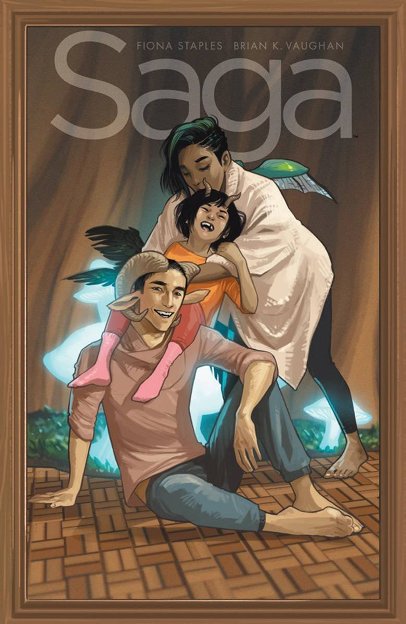
Saga, Vol. 9 (2018)

Saga9

Oh, boy, that last twist. The good news is that after nine volumes Saga continues to be inventive, thrilling, thoughtful, and capable of numerous gut punches. The bad news is that writer Bryan K. Vaughn and artist Fiona Staples are taking “at least” a year off from the series before getting back to work on it. Part of me thinks that’s a good idea, but part of me worries if this shunts Saga into the realm of great, unfinished stories. Given the way this one ended, I sure hope not.

If you’re not reading Saga yet, here’s why I think you should.

The Field of Blood: Violence In Congress and the Road to Civil War (2018)

FieldofBlood

Many people know that, in the run up to the Civil War, Senator Charles Sumner was beaten by one of his Southern colleagues with a cane, providing the perfect metaphor for the turmoil that would soon rip the nation apart. What most folks don’t know is that, while Sumner’s beating stood out for its brutality, it was merely different in degree, rather than in kind, from numerous other incidents of Congressional violence. One Congressman even died in a duel (not on the House floor, to be fair). Not just a colorful “you were there” history, The Field of Blood looks back at another time when the political norms broke down and things sound frighteningly familiar to modern ears.

Johannes Cabal the Necromancer (2009)

JohannesCabal

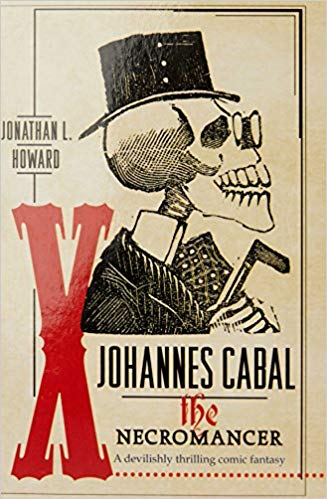
Pure fun. Well, pure darkly humorous fun, at the very least. Johannes Cabal sold his soul to the devil. To get it back, he’s have to deal in bulk, gathering 100 souls for the devil to replace his own, all while running a demonic travelling circus right out of the darker portions of Ray Bradbury’s psyche. This was probably the most fun I had with a book this year, partly because of what I’d just read before (see below), but also because there’s a sharp, dark wit that runs all the way through it.

Shattered Earth trilogy (2015-2017)

Broken

N.K. Jemisin’s trilogy – The Fifth Season, The Obelisk Gate, and The Stone Sky – made history early this year when it won the Hugo Award for best novel three years in a row, an unprecedented achievement. Is it that good? Absolutely. The Fifth Season, in particular, is a structural high-wire act that shouldn’t work, but completely does and leaves the reader knowing precisely why it was done. The other two books don’t quite reach that level, but the overall arc of the story and the characters that drive it is brilliant. Pretty heavy (I needed Johannes Cabal . . . to brighten me up a bit), but completely worth it.

I’ve written before about these books here and here.

The Cadaver King and the Country Dentist (2018)

CadaverKing

I wrote a review of this one here, so I won’t say much more. If you want to get really pissed off about what “justice” looks like in this country (and you should), this is the book for you.

Neuromancer  (1984)

Neuromancer

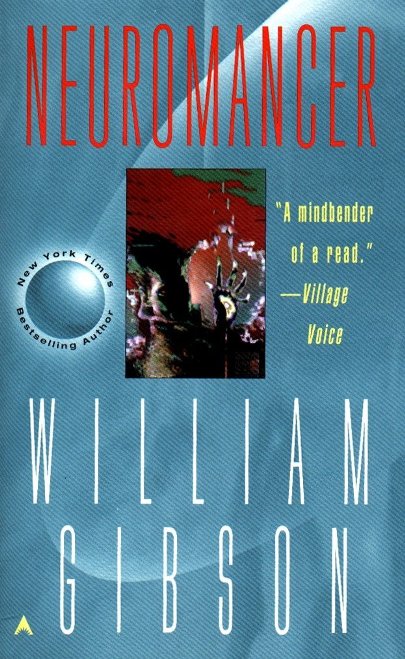
Yeah, I know, very late to the party on this one. My college roommate read it and, for some reason, I let it get away from me. Does it hold up? Pretty much, although it’s clearly a product of its time. As a foundational text for cyberpunk it’s something every sci-fi fan and writer should check out. That it continues to tell a gripping story while introducing a lot of ideas we now take for granted is icing on the cake.

Children of Time (2015)

ChildrenofTime

I gushed about this one right after I read it, so check out the details here. Suffice to say, any book that can make you care about the macro evolutionary development of sentient spiders is an achievement.

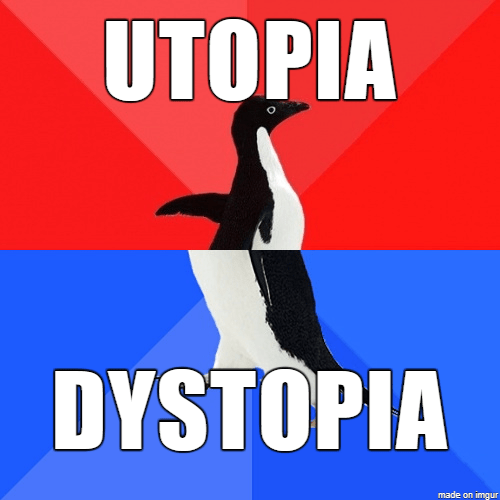
Dystopia Versus Utopia

I think I was first exposed to dystopia in fifth grade. Not that my fifth grade teacher was some kind of demon or sadist, mind you. But it was around that time that I read for the first time, in quick succession, 1984, Brave New World, and Anthem (not to mention discovered its musical adaptation). There’s something seductive and compelling about dystopias, warnings about how things can go so very wrong. I’ve dived back into them a lot over the years, on the screen and on the page.

I’ve had less experience with utopias. I’ve never read the Thomas More work that gave birth to the name, if not the concept. I did read Plato’s Republic in college, but it’s hard to look at that as really being utopic to modern eyes. The other utopian novel I really remember reading is Edward Bellamy’s Looking Backward. Written in 1888, it’s about a guy who sleeps for more than a century and awakes to find it a socialist paradise. Given what had actually happened by the time 2000 rolled around, it was a hilariously out of date prediction.

But I started thinking more about utopias as works of fiction recently after I read Island.

Island

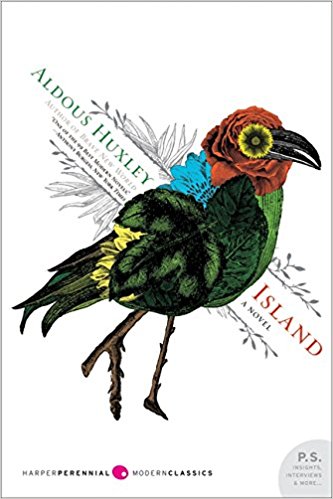
It’s Aldous Huxley’s last novel and a kind of rejoinder to Brave New World. It covers a lot of the same big ideas as the earlier dystopian novel, but in an (allegedly) positive way. There’s a chart in the Wikipedia entry for the book that does a good job of boiling down the comparison:

IslandChart

Whatever the charms of Pala, the fictional southeast Asian island nation that provides the backdrop for Island, it’s not a very engaging work of fiction. Nominally it’s about a Brit, Will, who washes ashore there (intentionally, it seems) and experiences all the island’s many facets while recovering from his injuries. Said facets are a blend Buddhism, western liberalism, and (to at least one person’s eyes) Scientology and make sense in a lot of ways. Still, Will just basically drifts from place to place and while some individual scenes are well executed (there’s a very expected death later on that’s really touching), there isn’t much of a story.

I think this might be a problem inherent to utopian stories. Dystopias are about struggle, usually individuals standing up to some kind of overwhelming force. It’s easy to empathize with those characters, to buy into their struggle. Likewise, it’s easy to see where the antagonists in such stories are coming from. Written well, they think they’re doing the right thing, too. It’s the basis of good conflict, which is what drama is all about. In utopias, by contrast, everyone is pretty much happy. There’s not much conflict and, thus, not much drama. The narrative can be interesting, maybe even occasionally compelling, but it’s hardly something that sucks you in as a reader.

Another issue with utopias is that they can often seem kind of dystopic, depending on your point of view. I mentioned Plato’s Republic earlier, in which he sketches out his version of an ideal society – one that is anti-democratic, requires a rigid class system, and squishes individuals for the benefit of the state – that sounds more like a dystopia to me. Huxley’s Pala sounds like a pretty nice place – tropical weather, mind expanding drugs, all the sex you can have, creative alternatives to criminal justice – but it’s not perfect. For one thing there are mynah birds constantly harping out slogans (“Attention! Here and now, boys!”) that would be aggravating to no end. For another, all this apparently comes from the top down, mandated via a government overhaul that happened a generation or two back. There’s no indication what happens when somebody dissents from this version of the perfect life, how that’s handled. The only naysayers are the soon-to-be ruler and his European mother who are so out of touch that it’s clear Huxley doesn’t want you to take them seriously.

But the thing that struck me the most as dystopic in Island comes near the end, when the main character is talking with a local child about Oedipus Rex. They have the play in Pala, but it has a happy ending, wherein two children from Pala enter the play and convince everyone not to kill or maim themselves because none of this is their fault. To the problem of Oedipus being married to his mother, they simply advice stop being married to her. It all reeks of one of those stories modified by a totalitarian regime to show Dear Leader giving wisdom to historical figures and changing history. It’s also bizarrely simple minded in terms of a “solution” to the problem.

In the end, what makes it most difficult for me to get into utopias is that they are, at bottom, dreams that we know will never come true. Dystopias, by contrast, always seem prescient and just over the horizon (the good ones, at least). It’s not for nothing the More’s term means “no place.” Huxley basically concedes this in Island, as the book ends with the island’s new ruler (the one with the European mother) joining forces with the neighboring nation’s strongman to begin a quest to “modernize” Pala. Even in fiction, such places can’t last long.

UtopiaDystopia

On Judging A Book By Its Cover

The old saw is that you shouldn’t just a book by its cover. That’s a good rule of thumb when you’re dealing with people or if your presented with new ideas, but when it comes to actual books it’s kind of silly. Truth is a cover can often be someone’s first impression of a book and it can say several things about its contents, from the level of professionalism involved to the genre to particular aspects of the story or characters a reader might find intriguing.

Take, for example, the cover of The Water Road:

TWR Cover

That cover, I hope, tells you several things. Most notably, that this is the first book in a trilogy, so it’s part of an epic story. The background image and script mark it as fantasy, but the crossed muskets mark it as a different kind of fantasy – this isn’t your traditional sword and sorcery story. Without reading word one, you’ve got some idea of what to expect going in.

I don’t always pay that much attention to covers as a reader, since I do most of my reading via Audible listening and I rarely have the full-sized book in my hand. Not that covers never make a difference – one of my recent reads, Johannes Cabal: Necromancer, I got purely because the cover on the shelf at the bookstore drew me in (it was darkly funny – highly recommended). So, anyway, the blurb usually controls, as it did for Autonomous, by Annalee Newitz. Here’s the first half:

Autonomous features a rakish female pharmaceutical pirate named Jack who traverses the world in her own submarine. A notorious anti-patent scientist who has styled herself as a Robin Hood heroine fighting to bring cheap drugs to the poor, Jack’s latest drug is leaving a trail of lethal overdoses across what used to be North America—a drug that compels people to become addicted to their work.

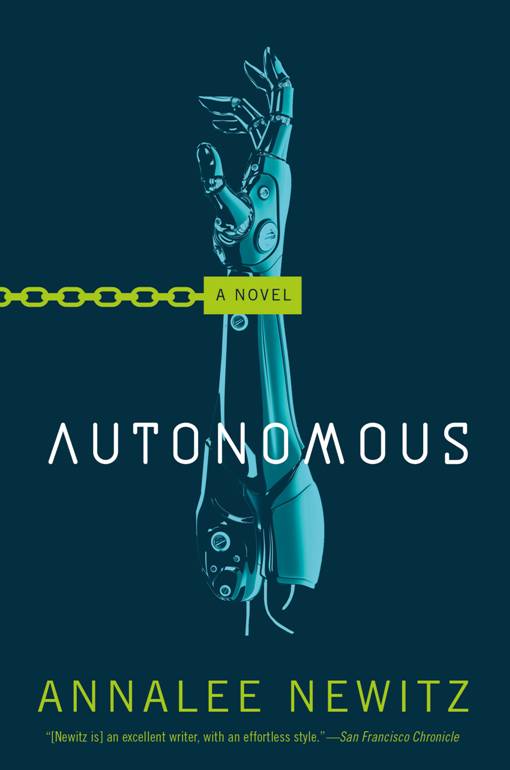
Pretty cool, huh? I loved the idea of a rogue drug maker slipping through the high seas like a 21st-century Captain Nemo. But here’s the cover for Autonomous:

Autonomous_Design by Will Staehle

Does that really match the blurb? It doesn’t and, turns out, for good reason. Autonomous (which is pretty good – I recommend it) really isn’t about Jack so much as it is the beings in her orbit, particularly the robots and other enhanced beings. The book is really about their place in the world and what it means to really be free (or not). Hence the title. Hence the mechanical arm in chains. Hence some of my disappointment with the book itself.

Which is to say that covers can be tricky things. We, as authors, want people to judge our books by them – judge them as worthy of picking up, of clicking on, of reading. But they’re also a first impression, something you only get one chance to make. The right cover is a high wire act, one that most of us aren’t comfortable performing without a net.

Weekly Read: How to Stop Time

Every time I finish reading a book or watching a movie I have a routine I call “doing my due diligence.” I hop on the Web and read up on what I’ve just finished, looking for critical reviews, viewer feedback, and any interesting interviews/analyses I can find. Rarely do I find a review headline that so completely nailed my feeling about book during this due diligence as I did after I finished How to Stop Time. As the Irish Times put it:

StopTimeHeadline

I mean, it can’t get much better for a writer than for a critic to say “the only thing wrong is there’s not more of it,” right? Always leave them wanting more, as the saying goes.

It’s not quite that clear cut when it comes to How to Stop Time, but it does get pretty close.

The central conceit of the book is a reverse of progeroid syndromes, actual conditions where people age rapidly, usually dying young. The main character here, Tom Hazard, has just the opposite problem – he only ages one year for every 14 that pass. He’s not immortal, but long lived and robustly healthy. Needless to say, it causes issues.

The book bounces back between “now,” where Tom is trying to lead a normal life as a history teacher (makes sense), and various points in his past. Thus we see (in the 16th century) Tom do the one thing that all nearly immortal souls make – falling in love. The scars of that love run deep, reaching into the “now” world as Tom tries to overcome them. Along the way he rubs elbows with some famous folks – works for Shakespeare, sails with Captain Cook, hangs out with Fitzgerald and Zelda – but mostly drifts kind of aimlessly.

Trying to give some structure to things, and help those like Tom stay off the radar (because there are others), is the Albatross Society, so named because the birds have long life spans. Hendrich, the leader of this group of “Albers” who’s been around so long he actually looks old, dictates the parameters of Tom’s life as a mean of protection, he says, although it’s never really clear if there’s much of a threat.

Which is part of the problem with How to Stop Time. While the flashbacks are all interesting and dive deep into Tom’s character, the actual story doesn’t really get going very far until well past the book’s midpoint, at which is careens into motion so fast that it’s hard to keep up. In truth, this seems like about half a book, rather than a full novel. Is the threat Hendrich repeatedly intones real? Could Tom really find love with a regular woman in the modern world? What about his daughter with that long-dead love, a woman who has the same condition as he? So many areas go unexplored as the book barrels to its finish.

So it’s not so much that How to Stop Time is so great from beginning to end that you just want more of the good stuff; it’s more that it feels incomplete. Which is a shame, because the run up is really good and the basic idea is executed really well. Still highly recommended, even if you might wind up saying “is that all?” when you’re done.

HowtoStopTime

Weekly Read: Saturn Run

As I think I’ve said before, one of my least favorite criticism of a book or movie is that it “has no plot.” Unless we’re talking about some really experimental stuff, every story has a plot because in every story SOMETHING happens. It might not be huge, it might not be life changing, but it’s something. What folks mean when they say that, I’ve decided, is not that “nothing happens,” but that “nothing happens that I care about.” In other words, the events of the story just wash over you and leave no residue.

It would be wrong to say nothing happens in Saturn Run, a collaboration between novelist John Sandford and Ctein (the first a long-time writer of thrillers, the second an artist, apparently). Quite a bit happens, given the setup and all, but I can safely say that nothing happens that I cared about, at least until the last quarter of the book or so. By that point, I couldn’t be roused to give much of a shit.

The setup is fairly standard – an alien ship appears in our solar system, is discovered by accident, and we humans head out to make first contact. What Saturn Run adds to the mix is a race to get there run by American and Chinese spacecraft, each taking different routes using different tech to make it to Saturn first. We spend almost all of the first three quarters of the book on the American ship (including its dealings with the American government back here on Earth), which wins the race. It’s reward? Being the first to a kind of interstellar truck stop full of fuel, science, and tech. Actual aliens are nowhere to be found.

The journey to get there is long and shot through with lots of technical data dumps, but precious little of concern actually happens. Partly this is down to the characters, who basically just function as pieces to move around as the plot requires. The closest thing to a main character, Sandy, begins as a skirt-chasing surfer waiting to inherit family money, only for us to learn he’s actually a kick ass solder suffering from PTSD; but he goes back to surfer mode on the trip while acting as the official expedition cinematographer (at which he’s also kick ass). None of this ultimately matters, since he has no motivation and we don’t care why he does anything he does.

In fact, it’s hard to care about anything that happens. For instance, before the American ship (named after Richard Nixon, a clever nod to his dealings with China) leaves Earth orbit there is a test of its system for dealing with excess heat built up by its drive system. The test goes wrong, but there’s no drama in this. The chief engineer explains calmly that this kind of thing happens, it’s why you test first, and it’s just a problem to be solved (and it is). This is a great attitude to have in the real world, but it sucks when it comes to fiction. If every problem gets solved without much consequence, why should I care about them? Same goes for the mysterious failure of half the drive system once they’re underway, which doesn’t matter because the ship already has enough momentum to get to Saturn before the Chinese.

Even when stuff happens to people there isn’t really much to it. The engineer? She dies mid trip due to another accident, just after she and Sandy have started sleeping together. Thanks to spiffy drugs and just the way this book is written this basically has no impact on anybody. It doesn’t even impact the ship in general, as her second chair engineer steps up and does a fine job. That kind of sums up this book in a nutshell to me – if a main character dies and nobody in the book cares, why should I? And don’t even get me started about the cat.

Things improve once the Chinese arrive on the scene, but not enough. For one thing, all of a sudden we begin to get POV scenes from the Chinese involving character’s we’ve never met through the rest of the book. I should care about them why? Kept at a distance they could have been vague bad guys with shady motivations, but we get enough into their heads to know what’s going on without any emotional investment to go along with it. The book builds some goodwill toward the end as it powers to a fairly cynical conclusion, but it weaves at the last moment and destroys that, too.

It’s entirely possible that I’m not the target audience for Saturn Run. It’s hard science fiction in the most literal sense – the space travel and what happens at Saturn are based on extrapolations from known science and are pretty realistic. There are no warp drives or teleporters here. In fact, there’s a half-hour afterword on the audiobook version diving deeply into the science involved. That I skipped it indicates that this book was never for me in the first place.

But there’s no reason why hard sci-fi, focused on known science and clever, plausible problem solving, can’t also be compelling drama. If you only care about the engineering challenges and how they’re met, this is the book for you. If you want characters that matter to you going through situations that have consequences that matter, I’d suggest looking elsewhere.

SaturnRun

Weekly Read: Kings of the Wyld

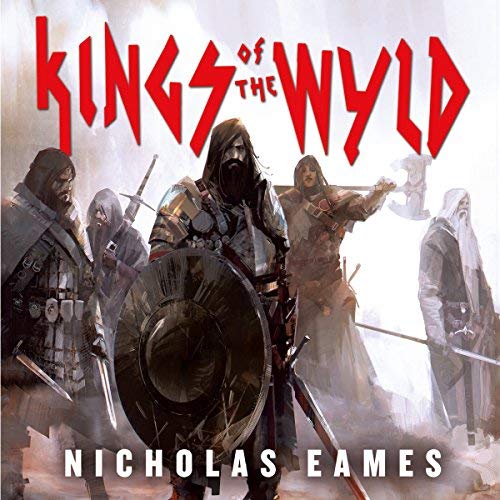
It’s a fairly standard setup for a fantasy story – a gang of unruly characters get together to journey across the land in order to fulfill some quest. But what if the gang is a band? I mean, what if a group of fantasy mercenaries was treated like a rock and roll band? That’s the great conceit of Kings of the Wyld.

The band, in this case, is called Saga. When the book begins the band has been broken up for a while and Clay is making ends meet as a city watchman, married with daughter. That all changes with Gabriel shows up in desperate need – his own daughter, now a mercenary herself, is stuck in a city besieged by various beasties and baddies on the other side of the world. He needs to get the band back together to save her.

What follows is a pretty fun read, although it comes off a little shallow. Part of the fun is that is that Nicholas Eames really leans into the “group of mercenaries as a band” idea. A lot of the names are references to music in our world – the wizard named Moog, the axe called Syrinx (a Rush reference, I’m guessing), and even Saga itself, which I think is a reference to the Canadian semi-prog band  The characters also play the parts. Moog is the keyboard player stand-in (naturally), weird and aloof and always in flowing robes (not capes? Rick Wakeman weeps somewhere). Gabriel is the nominal front man, the once pretty face up front. Clay plays the bass player roll, holding everything together. The bands also relate to each other like musicians, equal parts jealous of the others’ success and impressed by their prowess. Plus there’s a whole thread about how in Saga’s time bands had to go real feats of heroism, not empty, showy displays in huge stadiums. There’s even sleazy managers! That all works really well.

The actual plot doesn’t fare quite so well. It at times feels like an overgrown Dungeons & Dragons campaign, with the crew moving from one adventure to the next without any real weight to them. Characters change from friend to foe and back again because the plot requires it. At one point a character loses a limb, but then regrows it. There aren’t really any harsh consequences to face. Add to that the fact that the object of the quest – saving Gabriel’s daughter – seems painfully far away for most of the book, until suddenly it isn’t. To be fair, the book wraps up the story and doesn’t leave us hanging, but it comes off as rushed.

But the biggest issue, for me, is that the story sets up as a story of old guys getting back together to relive their former glories, but very few of them act like it. Nobody’s really lost a step when it comes to fighting, everybody heals quickly when needed. It’s a lost opportunity, since aging heroes aren’t often the main course in a fantasy epic.

All that being said, Kings of the Wyld is a fun read. The episodes themselves, while they don’t add up to much, are well done in and of themselves. The dialogue is quick and funny. And Eames manages to work in a staggering array of creatures and beasties for our heroes to interact with. It verges on overload, but it doesn’t cross the line. So if you’re a fantasy fan and want a familiar tale with a twist, this one’s for you. Sometimes it is good to get the band back together.

KingsoftheWyld

Weekly Read: Quick Hits

Books have been piling up a little bit (metaphorically – most of them are in electronic form) around here the past few weeks, so I wanted to take a brief moment to highlight some of the more interesting ones I’ve finished recently.

House of Penance

House of Penance

A graphic novel with a neat idea – a horror take on the famous Winchester Mystery House (link). Built by Sarah Winchester, widow of William Wirt Winchester of Winchester arms fame, the house is full of odd rooms and corridors. Stories have run rampant about why Winchester built it that way, continually adding onto it apparently without plan for years. House of Penance tells how she was trying to appease the spirits of all those killed by her husband’s guns. Like I said, neat idea, and the artwork is fabulous, but the story is really lacking. So little actually goes on, but the story is intent on remaining some kind of puzzle, that it doesn’t land like it could. Glad I read it, but not essential.

The Fifth Season

The_Fifth_Season_novel

While I don’t always agree with the picks for winners of the Hugo, Nebula, and other awards, I always look at the list of nominees as a good suggestion of books to check out. Among this year’s Hugo nominees is The Stone Sky, final part of a trilogy by N.K. Jemisin. I’d never read any of her stuff before, so I backtracked to the first book, The Fifth Season, only to find it won the Hugo, too. Good sign? Damned good. This is a phenomenal book, full of rich and different world building. Jemisin also had the guts to basically make this book all backstory for the main character, but it works so well you just have to admire it. Can’t wait to get to the next one!

The Enchanted

Enchanted

I’m fairly certain everything that happens in this book is a figment of the narrator’s imagination. He’s an inmate on death row in a very Southern gothic sounding prison (although the locale is never specifically identified). He calls it an “enchanted place” and weaves various tales of the people (and non-people) around him. Since there’s no bright line in it that confirms the book is set in a fantasy world, I can only read it (as an attorney who’s talked to hundreds of people in prison) as the extended coping mechanism of a deeply broken, troubled mind. That doesn’t make the book any less compelling. For all its oddity and “this can’t be real”-ness, it may be the best conception of what being locked in a cage is that I’ve ever read.

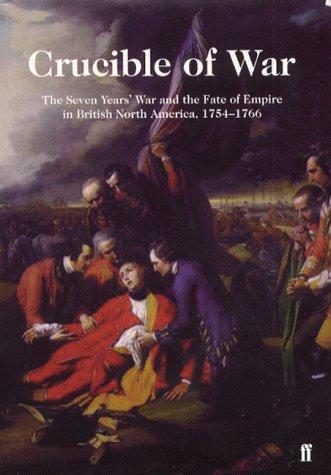
Crucible of War: The Seven Years War and the Fate of Empire in British North America, 1754-1766

Crucible of War

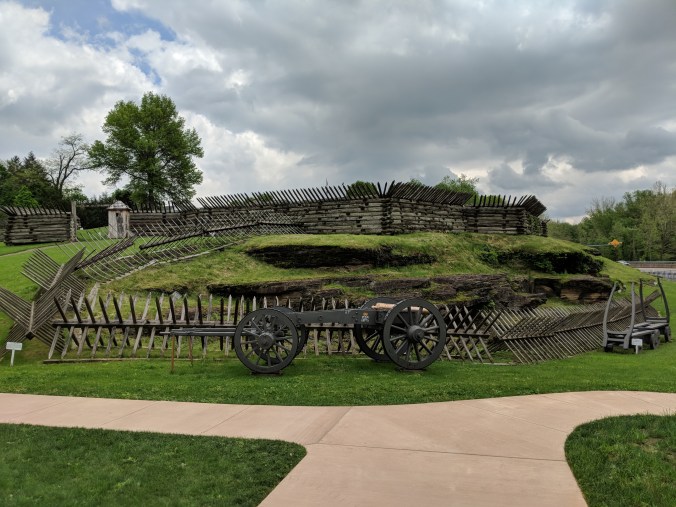
Who’s up for a dense, thick tome about a war most of you forgot about when you were in high school? I was because the wife and I recently took a side trip to Fort Ligonier outside Pittsburgh while we were on a trip.

Maker:0x4c,Date:2018-3-24,Ver:4,Lens:Kan03,Act:Lar01,E-Y

It was in this general area (though not this particular fort) where a young George Washington blundered into a massacre that launched what many consider the first “world war,” sparking conflicts from the Americas to Europe to Africa and India. What AUTHOR is mostly interested here is how the conflict that began in the backwoods of Pennsylvania really jump started the machinery of British Empire and, in the process, laid the foundations for the American Revolution. It’s fascinating stuff, but this is pretty dry, serious history – there aren’t any characters developed as through lines for the book, names and places are flung at you with great depth. It’s also, sadly, a good example of how some things in America never change.

Ten Books I Love

Remember that list of 10 albums that were particularly important to me I did? It evolved from a Facebook thing. Shortly thereafter, I started seeing other folks do the same for books. Sure enough, one of my friends tagged me and so I had to come up with a list of books (hers was seven, I bumped mine out to ten) that I “love.” Not necessarily meaningful or insightful, just favorites. With that in mind, let’s dive in (in no particular order) . . .

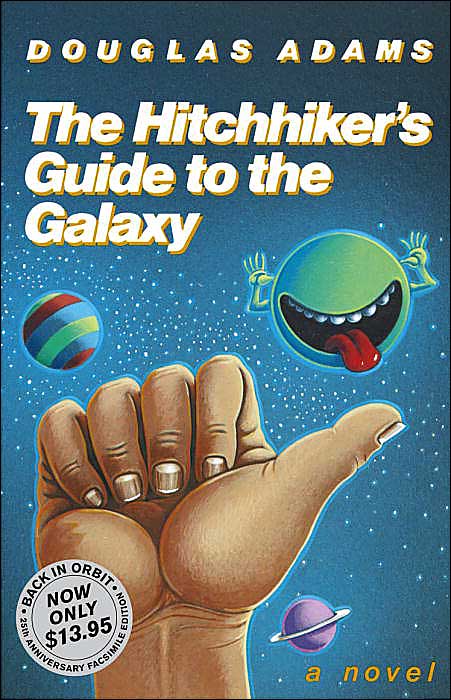
The Hitchhiker’s Guide to the Galaxy (1979)

HHGttG

This is almost a cheat, as the Guide has so many iterations and my favorite will always be the BBC television version (cheepnis and all). Still, I remember pouring through the book (and the other two in the original trilogy) that my brother had. Funny, thoughtful, clever, and an entirely different way to approach science fiction. It stuck to the same part of my brain as Monty Python.

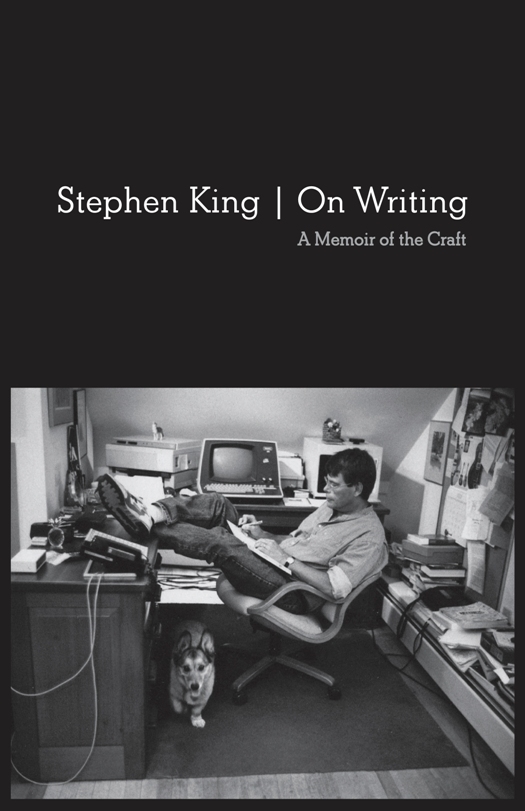
On Writing: A Memoir of the Craft (2000)

OnWriting

There are lots of books about writing (some of them actually written by writers!) and people will tell you not to rely on one of them if you’re trying to figure out how to be a writer yourself. As true as that is, the one that everyone seems to recommend is Stephen King’s memoir. For good reason – it’s a brutally honest, open exploration of what it means to be a writer. It doesn’t bury itself in inspirational bullshit, but it also doesn’t make writing seem like something that’s out of anyone’s reach. Reading about writing doesn’t end here, but it probably ought to start here.

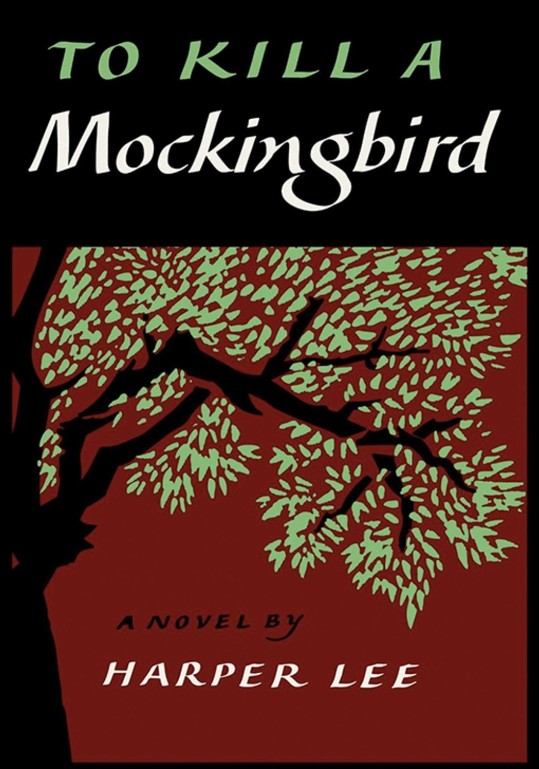
To Kill a Mockingbird (1960)

Mockingbird

Since I’m a defense lawyer by trade it’s practically required that I have great reverence for this one. I’d like to say I don’t, that I go against the cliché, but what would be the point? Atticus Finch is, in a lot of respects what lawyers aspire to be, particularly defense lawyers. He seems to resonate particularly with defenders since after a noble and capable defense, he still loses. That’s the life of a defense attorney, after all.

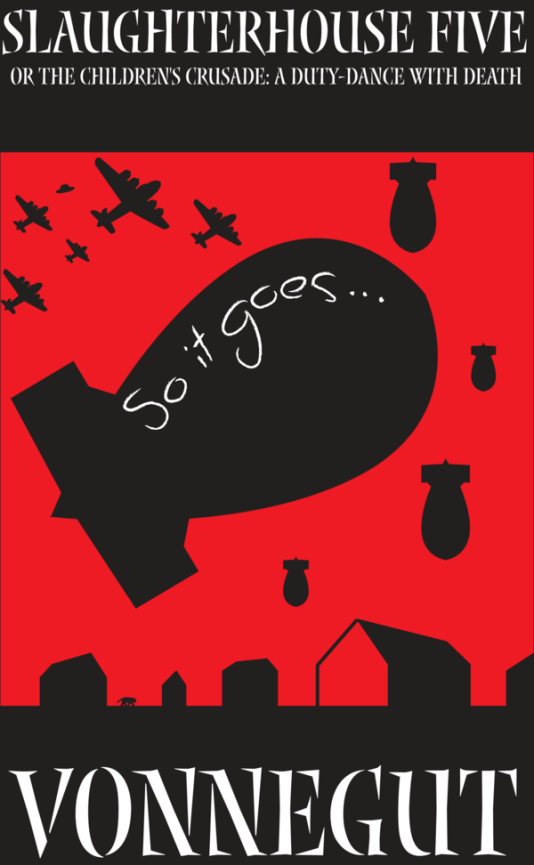
Slaughterhouse-Five, or The Children’s Crusade: A Duty-Dance With Death (1969)

 Slaughterhousefive

I’m not sure whether this was my introduction to Vonnegut (it might have been Galapagos or “Harrison Bergeron”), but it is the one that made me fall hard for his work. The dark humor and deep humanity that runs through his work speaks to me, I guess. Plus, he gave no fucks when it came to style and form – I mean, what kind of book is this anyway? Science fiction? Social commentary? Historical fiction? Who the fuck cares! It’s brilliant.

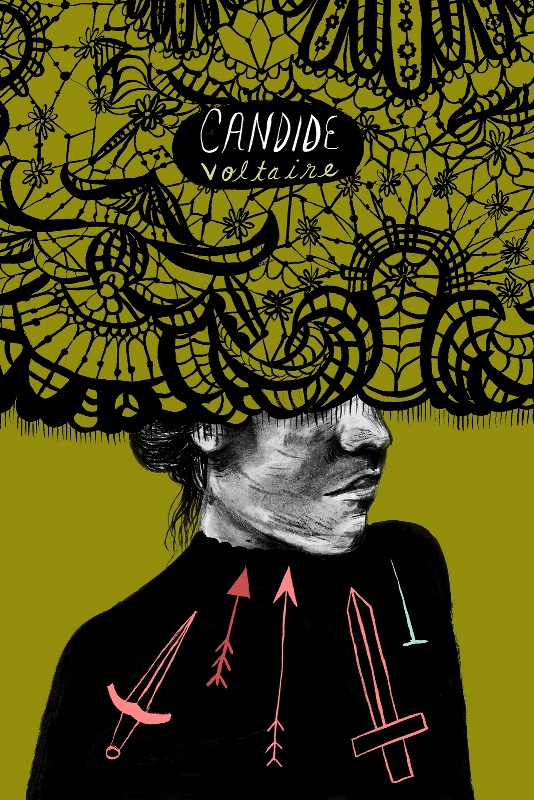
Candide: or, The Optimist (1759)

Candide

I am, at my core, a cynic. On my better days, I’d say I was a realist. Regardless, a bit reason why is Candide, which skewers the idea of this is the best of all possible worlds. Although the story is all about breaking down the titular character’s naiveté, it’s not depressing. It’s darkly comic (there that phrase is again) and liberating, as we see the scales fall from his eyes. While the ending isn’t one you’d call happy, it’s at least hopeful, in that it puts the power for our own happiness in our own hands. Besides, it’s inspired both a fabulous musical/operetta by Bernstein and a concept album by Rush!

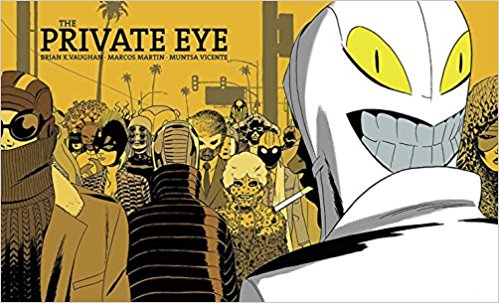
The Private Eye (2015)

PriavteEye

Usually when it comes to dystopias the world of the future is completely fucked. Some plague or aliens or nuclear war or whatever has returned life to a primitive state, with characters reduced to hunter gatherers as they try to rebuild society. The dystopia of The Private Eye, by contrast, looks pretty sweet. There’s technology, food is plentiful – it looks like what we think of as “the future.” So what’s the problem? The problem is that everyone stored their data in “the cloud” and one day, “the cloud broke.” From the simple idea that everybody’s data is loose in the world, Bryan K. Vaughn builds a stylish, neo-noir tale for the 21st century. And it looks amazing.

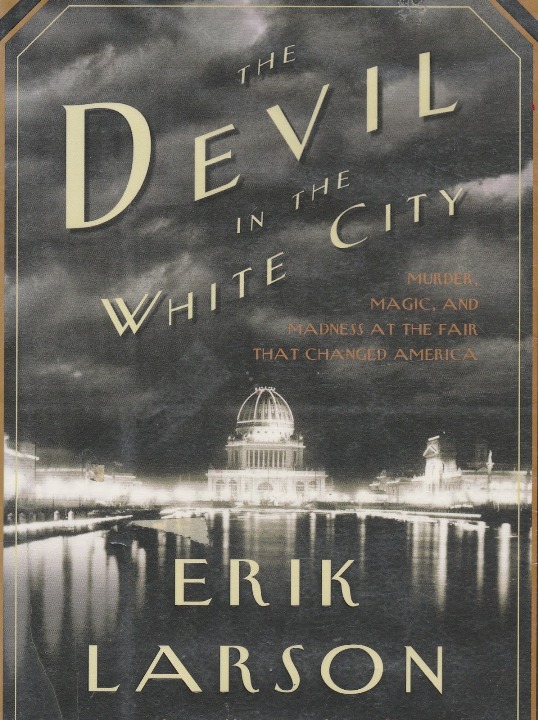
The Devil In the White City (2003)

Devil

History is supposed to be dull, a lifeless parade of facts, dates, and names that it can be hard to care much about. It’s not, really (my undergrad degree is in history – trust me!), but that’s the rep. Thankfully, a generation of writers producing “narrative nonfiction” have done a good job bringing the past to life. None is better than Erik Larson and, while all his books are good, this one is my favorite. It’s the story of a grizzly serial killer who uses the 1893 World’s Fair in Chicago as cover to lure his victims. That story alone would be good enough, but woven with the story of the fair itself and how it was developed really makes things pop.

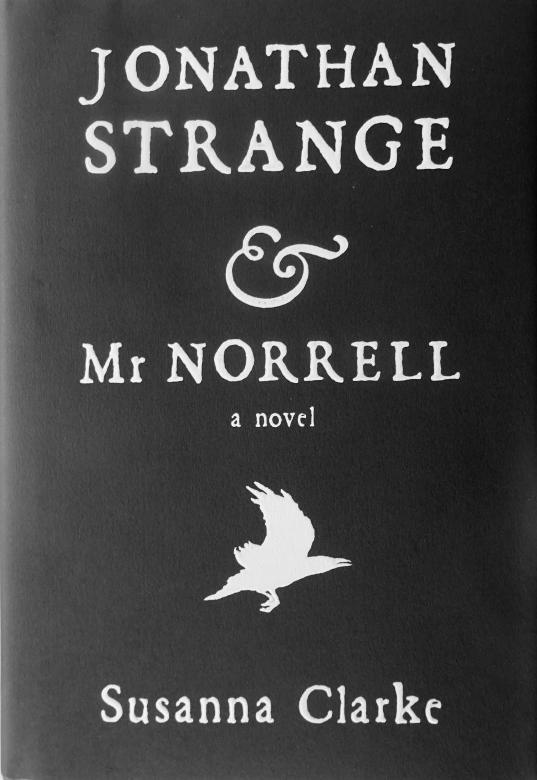
Jonathan Strange & Mr. Norrell (2004)

Strange

This is a horrible admission for a writer of fantasy, but I’m not a big fan of magic (hence the lack of any in The Water Road). There’s something random and unearned about it lots of times, where the people who wield magic do so by grace of birth or whatnot. What I deeply love about this book is that magic is all about knowledge and, more precisely, books. In fact, the way magic is learned and used in this book makes me think of how law was taught in the pre-modern age, when students apprenticed with members of the bar. Take all that, wrap it up in a magical history of England (and, oh by the way, the Napoleonic Wars), and it makes for an epic read.

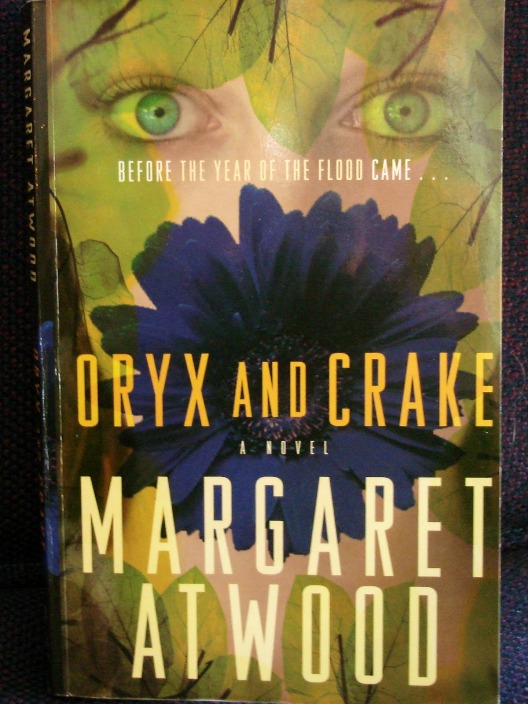
Oryx and Crake (2003)

Oryx

There are many ways of imagining the future. Only Margaret Atwood has come up with one that includes revolting, genetically engineered “chickens” called ChickieNobs:

’This is the latest,’ said Crake.

What they were looking at was a large bulblike object that seemed to be covered with stippled whitish-yellow skin. Out of it came twenty thick fleshy tubes, and at the end of each tube another bulb was growing.

‘What the hell is it?’ said Jimmy.

‘Those are chickens,’ said Crake. “Chicken parts. Just the breasts, on this one. They’ve got ones that specialize in drumsticks too, twelve to a growth unit.

‘But there aren’t any heads…’

‘That’s the head in the middle,’ said the woman. ‘There’s a mouth opening at the top, they dump nutrients in there. No eyes or beak or anything, they don’t need those.’[quote]

That sort of captures the whole feel of this book – at the same time horrible and morbidly funny. It’s a great beginning to a wonderful sci-fi (sorry, Margaret) trilogy.

UPDATE: Eagle eyed readers, or just those with all their digits, will notice I’m one short. Not sure how that happened, since I have the cover and everything, but, alas, I left out one of my absolute all time favorites! Better late, a they say . . .

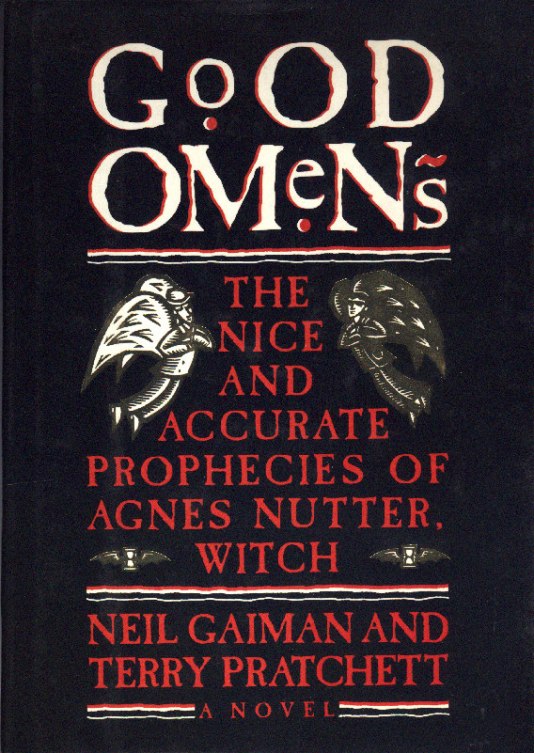
Good Omens (1990)

GoodOmens

Another bit of a cheat, as I get two favorite authors for the price of one – Neil Gaiman and Terry Pratchett. I think this was my first exposure to them on the printed page (I’d come across Gaiman via Babylon 5, of all places) and it melds their styles perfectly. It shouldn’t work, but it does. Hilariously funny and darkly compelling.