Weekly Read: The Water Knife

There’s a scene deep in Kevin Smith’s Dogma in which Rufus, the thirteenth apostle, explains to a credulous Bethany who she can be a descendant of Christ. “Mary,” she points out, “was a virgin.” Rufus explains that while it’s true Mary was a virgin when Christ was born, she was married to Joseph for an awful long time after that. Why assume she stayed a virgin? He concludes:

The nature of God and the Virgin birth, those are leaps of faith. But to believe a married couple never got down? Well, that’s just plain gullibility.

That scene popped into my head late in The Water Knife, the new novel by award winner Paolo Bacigalupi. It’s set in the American southwest, mostly Phoenix, Arizona, in a near future where climate change has displaced populations and fueled droughts that have made water the most precious commodity on earth. Life is pretty much lived to find water, either by scrambling with other refugees at a pump set up by the Red Cross or by being part of the upper crust that lives in high rise arcologies that are self contained recyclers of water.

It’s not the setup that’s the problem. Like any piece of science fiction there are certain things that are, to borrow Rufus’s term, “leaps of faith.” Bacigalupi isn’t leaping very far, to be honest. The world he creates is terrifyingly plausible, if not without its blind spots (the role of the federal government in all this, which still exists but allows states to war on each other, is never really explained). It’s rich, in a gritty, ugly sort of way and is fully convincing even if one might be able to pull at some of the details.

No the need for gullibility comes when the story requires us to believe that characters won’t behave like people or submit to the basic laws of biology.

There are three main characters in the book, united by a set of water rights with nearly mystical powers that could be a game changer for the whole Southwest. It’s pretty much a McGuffin, a genre appropriate version of Pulp Fiction’s glowing briefcase, but it does drive people to do some really awful things.

Before I go any further – this is really a brutal book. I’ve seen comments in various places from readers who just stopped and gave up at certain points. I don’t blame them. In addition to the horribles entailed in living in an arid, post-apocalyptic tableau choked with refugees and amoral operators, there are scenes upon scenes of pure savagery. In fact, each of the three main characters is brutalized pretty severely (and in detail). Yet they manage to shake it off, for the most part.

Said characters are Angel, the titular Water Knife, a local reporter named Lucy, and a teenaged Texas refugee named Maria. Angel is sent from Nevada to figure out what’s going down in Phoenix. Lucy is trying to do the same, hunting for a big story and trying to figure out what got a friend killed (and brutally tortured – detail we get second hand). Maria just wants to get out, constantly scrapping to figure out how to get north. They all orbit each other, though Angel and Lucy pair up about midway through the book for good.

And I mean “pair up” in the Biblical sense. The sexual activity between the two of them is so clichéd and obvious that it really disappointed me Bacigalupi went that route. Lucy has no reason to trust, much less desire, a man whose profession is strangling cities like Phoenix of their water (he has the book’s first scene, where he rides Apocalypse Now style in a chopper that attacks an Arizona city’s water plant). Nonetheless, she sleeps with him, because, why not?

She also betrays him, which sets up the true gullibility moment. As I said all three characters are brutalized (the women basically for fun, which says something). Angel’s turn comes when the car he’s sitting in is ambushed by his own people. He’s riddled with bullets and smacked in the head by an exploding airbag. Not only does that not knock him unconscious, he manages to crawl away, only to fall head-first into an empty swimming pool (an interesting recurring image of Phoenix). After all this, which should leave him bleeding profusely, concussed, and probably with a broken neck he’s miraculously saved by Lucy and some hand-waving med tech.

This is where, even in the oppressive Phoenix heat, my snowmen started flying. As I said, the other main characters also suffer horrible abuse and manage to shake it off, but not quite like this (a minor character is up and walking a few days after having his kneecap blown away!). Unless Angel is superman – and there’s been no suggestion he is – he shouldn’t survive. At the very least, he should be incapacitated for the rest of the book. After that, I simply couldn’t care what happened to these people.

That’s not true. I kind of didn’t care all that much about these people to begin with. Angel’s basically a gun for hire. Lucy wants a big story, but doesn’t seem all that motivated by anything else until the very end. Only Maria is really worth rooting for, which makes the rather abrupt ending work in a way that it probably shouldn’t have worked.

I loved The Windup Girl and have really enjoyed Bacigalupi’s short stories. Unfortunately, The Water Knife doesn’t measure up. That’s no crime, but it’s perhaps a missed opportunity. Worth a read, but not essential, and certainly not one to pick up if you’re looking to have your faith in humanity restored.

The Water Knife

As I Was Saying . . .

Talk about perfect timing.

Last week I republished a piece from my old blog in which I rejected the classification of art into “high” and “low,” the former being real and important and the latter being fluff and meaningless. That post was originally written in response to some stupid things said about music. How was I to know on the very same day someone would come along and provide an even better example from the world of books?

Jonathan Jones is an art critic for The Guardian, which should be a good indication that anything he says about books should be viewed with a grain of salt. I mean, he’s entitled to his opinion as much as any other reader, but he doesn’t really have any authority when it comes to books. Except that most amateur critics (myself included) at least clear the first hurdle – read about what you criticize, particularly if you’re going to talk shit about it.

Last week, Jones wrote a piece titled “Get Real. Terry Pratchett is not a literary genius.” It’s a provocative headline and, to be fair, probably wasn’t Jones’s (writers rarely get to pen their own headlines). In addition, while I and many others are big fans or Pratchett it’s perfectly okay not to be and to even think he’s overrated. As I’ve said before, all art is subjective and things either connect with you or they don’t. It’s not a crime to hold a minority opinion.

Having said that, you really can’t start your piece slagging off on an author like this:

It does not matter to me if Terry Pratchett’s final novel is a worthy epitaph or not, or if he wanted it to be pulped by a steamroller. I have never read a single one of his books and I never plan to. Life’s too short.

Jones does cop to “flick[ing] through a book by him in a shop,” but that’s hardly enough.

I’ll let Sam Jordinson at The Guardian take on Jones on the merits. I’m more interested in the way Jones sets up his argument, because it’s about more than Pratchett:

In the age of social media and eBooks, our concept of literary greatness is being blurred beyond recognition. A middlebrow cult of the popular is holding literature to ransom. Thus, if you judge by the emotional outpourings over their deaths, the greatest writers of recent times were Pratchett and Ray Bradbury. There was far less of an internet splurge when Gabriel García Márquez died in 2014 and Günter Grass this spring. Yet they were true titans of the novel. Their books, like all great books, can change your life, your beliefs, your perceptions. Everyone reads trash sometimes, but why are we now pretending, as a culture, that it is the same thing as literature? The two are utterly different.

In other words, there’s literature and there’s trash. Elitism doesn’t come any more stark than that, though I appreciate that Jones would at least allow everyone to read trash sometimes (if not, I’d never sell another book!).

Here’s a thought – maybe the passing of Pratchett or Bradbury caused more outpourings of grief because they were more popular that Márquez or Grass? It should not come as a huge shock that popular people are mourned more than others, regardless of why they’re popular. Popularity isn’t a marker of quality, anyway, so why does Jones care? Not to mention that history is riddled with artists (of various kinds) who died broke and unknown only to become regarded as masters years later.

I actually don’t disagree with Jones’s concluding thought that “we should stop this pretence that mediocrity is equal to genius.” But in this case, how the fuck would he ever know? He’s labeled Pratchett (and Bradbury and, one suspects, most others who write popular things) as mediocre without bothering to find out if they are.

In short Jonathan Jones – stick to art. And go fuck yourself.

The More the Merrier

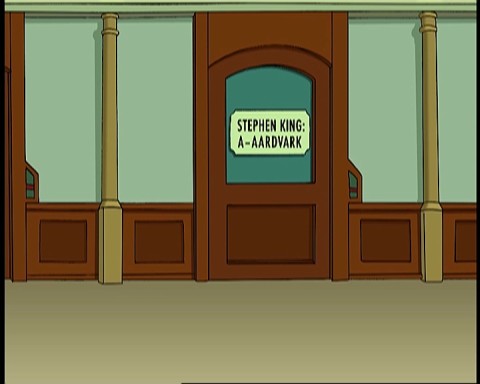
When I saw that Steven King had written a column in this weekend’s New York Times about profligate authors, my mind immediately went to this blink-and-you-miss-it joke from Futurama:

stephen-king-door

That was done in February 2001. He’s published 19 books since.

What I’m saying is that Steven King is amazingly productive when it comes to writing. He is also, of course, very very good at it. After all, here’s a guy who’s spent most of his life in the genre ghetto and had nonetheless won the National Book Award. He doesn’t need to do much more than point to that award to debunk the idea that quality is inversely proportional to quality.

So let’s ignore that – or rather take that point as given – and ask why the contrary holds true for so many people? Why do we tend to view people who put out lots of creative product – books, music, movies, you name it – aren’t as good?

One reason is that people figure that if you’re cranking out product at such a prodigious clip you must be scrimping on quality. It’s certainly possible that some creators would do that, releasing their stuff upon the world without a lot of editing or polishing. But it’s equally possible that whoever we’re talking about is just that prodigious. For some people writing is a hard slog, something that takes weeks and months to get right. Others are just able to pour forth things from the mind, tapping into a wellspring of creativity. We people in the first group aren’t fond of people in the second group, but that’s our petty problem.

The bigger issue, I think, is that the more someone produces the more their best stuff seems to get watered down, somehow. With only To Kill a Mockingbird on her resume Harper Lee was an undisputed master, a woman with a perfect batting average for writing classic American novels. Now that Go Set a Watchman has been released to less than thunderous applause, she’s batting 50 percent. Still really good, but somehow less impressive. Which is silly, because even if she followed up Mockingbird with a string of badly written shallow zombie mysteries Mockingbird itself is still what it is. But it takes some of the aura of inspiration off when somebody who hits a homerun their first time up at bat can only manage bloop singles (at best) for her other at bats.

Another issue is that the more product someone produces the more likely they are to experiment or move out of their comfort zone, potentially alienating existing fans. Steve Hackett’s had a pretty productive solo career (24 albums since 1975) that’s frequently jumped outside his progressive rock comfort zone to include a blues album and albums of orchestral material. As it happens, I’m not a huge fan of Hackett’s tangents, so I can see where someone’s overall opinion of an artist like him would dip at the perceived diminishing returns. But on the other hand, that’s silly because, no matter how many other albums he makes, Voyage of the Acolyte, Please Don’t Touch, Darktown, and several others will continue to be brilliant.

Which is to say that no matter how strange the creative mind may be, the minds of the people we create for can be even stranger. “Quality” is as much about perception as anything else and it’s nearly impossible to control how perfect strangers perceive you. If your muse only lets you grind out a new work every decade, don’t force it. But if your muse won’t shut up and helps you pop out something every month, don’t stifle it. Do what works for you.

Stephen King’s got your back – what more do you need?

Some Validation on War and Religion

A while back I wrote a review of Fields of Blood, Karen Armstrong’s lengthy (if shallow) tome about the history of war and religion. There, I wrote this:

Third, and most troubling for the entire book, is Armstrong wants to view religion’s role in violence as simply as the critics to which she is responding. If it’s not THE cause, she seems to argue, it is exonerated. She ignores (or breezes right past) the role religion can play in making killing of the other guy all right, even if the underlying cause isn’t religious. The American Civil War is an example of a war that was purely political, but both sides thought they were doing God’s work. Ever listened to the ‘Battle Hymn of the Republic’? It’s all about how righteous the Union cause was.

I normally wouldn’t bring something like that back up just for fun, but a recent article in The Atlantic backs me up on this, so I thought I’d pass it along.

Allen Guelzo looks at the issue of religion on the Civil War, using a pair of new books as a jumping off point. While he’s ultimately more interested in what the war did to religion (created a bunch of new skeptics), along the way he discusses a new book by Harvard’ Drew Faust about how religion fueled the war, on both sides:

Above all, it was a time when Christianity allied itself, in the most unambiguous and unconditional fashion, to the actual waging of a war. In 1775, American soldiers sang Yankee Doodle; in 1861, it was Glory, glory, hallelujah! As Stout argues, the Civil War ‘would require not only a war of troops and armaments … it would have to be augmented by moral and spiritual arguments that could steel millions of men to the bloody business of killing one another…’ Stout concentrates on describing how Northerners, in particular, were bloated with this certainty. By ‘presenting the Union in absolutist moral terms,’ Northerners gave themselves permission to wage a war of holy devastation. ‘Southerners must be made to feel that this was a real war,’ explained Colonel James Montgomery, a one-time ally of John Brown, ‘and that they were to be swept away by the hand of God, like the Jews of old.’ Or at least offered no alternative but unconditional surrender. ‘The Southern States,’ declared Henry Ward Beecher shortly after Abraham Lincoln’s election to the presidency, ‘have organized society around a rotten core,—slavery,’ while the ‘north has organized society about a vital heart, —liberty.’ Across that divide, ‘God is calling to the nations.’ And he is telling the American nation in particular that, ‘compromise is a most pernicious sham.’

But Southern preachers and theologians chimed in with fully as much fervor, in claiming that God was on their side. A writer for the Southern quarterly, DeBow’s Review, insisted that since ‘the institution of slavery accords with the injunctions and morality of the Bible,’ the Confederate nation could therefore expect a divine blessing ‘in this great struggle.’ The aged Episcopal bishop of Virginia, Richard Meade, gave Robert E. Lee his dying blessing: ‘You are engaged in a holy cause.’

The problem, of course, is that once you have God on your side, the other side isn’t just wrong or dangerous, they’re downright Satanic. It makes it more difficult to view the conflict in realistic, practical terms. As Guelzo puts it, “Holy causes that can never be overcome do not make provision for surrender.”

Which is where Armstrong went so wrong. Warfare is evil, even if it’s sometimes a necessary evil. Dragging religion into it, even if only to bulk up your side’s morale, doesn’t help matters and almost certainly is going to make things worse.

Weekly Read: The Armageddon Rag

It’s hard to believe that, in an era when A Song of Ice and Fire and it’s TV variant, Game of Thrones, are such cultural icons that there was a time when George R.R. Martin was a failed novelist. Commercially speaking, at least. After a handful of short-story collections and novels (including the very good Dying of the Light), The Armageddon Rag was such a flop when it came out in 1983 that (in Martin’s words) it “essentially destroyed my career as a novelist at the time.” He went to work in television for the next several years before he returned to novels and began working on A Game of Thrones. Is The Armageddon Rag that bad? Should it have been commercial suicide? Those, of course, are very different questions.

Let’s take the second one first. It might not have been suicide, but The Armageddon Rag must have been a hard book to sell. It’s kind of a murder mystery, but it’s also a music soaked reflection on the lost dreams of the 1960s. Did I mention it involves raising the dead and a subtle kind of deep, dark blood magic? You can see the issue. It’s fantasy, but it doesn’t really have that feel, but it’s certainly not “realistic.” I can see why it sank, regardless of quality (which gives me pause, given my upcoming novel about zombies that really isn’t a zombie story – get me?).

Which is as shame, because it is pretty good.

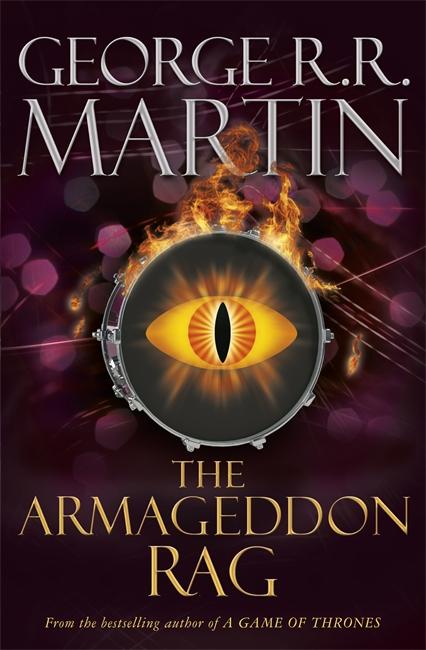
As I said, it starts with a murder mystery, in which our hero, Sandy, starts to investigate the grisly, ritualistic murder of the former manager of a band called The Nazgul (yes, it’s a Tolkien reference – check out the graphic on the bass drum on the cover below). They were a fast-rising proto-prog/hard rock band that’s career was cut short when, near the finale of a massive outdoor concert in New Mexico, their lead singer was shot and killed.

Sandy kicks off his investigation a dozen years later. But what starts as a mystery quickly swerves into a reverie for the 60s and the dreams of that era. Sandy puts from east coast to west (in his trusty RX-7), talking with the remaining members of the band as well as a group of his college friends, each of whom represents some version of the shattered hippie dream. There’s the sellout working in advertising, the burned out college professor, etc. The most poignant is a guy who’s controlling father (an Tom Clancy-type author referred to as Butcher Byrne *gulp*) basically drives him crazy and locks him away in the family mansion.

None of this has much to do with what appears to be the point of the story, which is why Martin deserves so much credit for making this bit fly by. Sandy’s road trip was probably my favorite part of the book.

Once Sandy hits the west coast, things take a turn. Sandy meets a guy who is planning a comeback for the resurrected Nazgul, one that is about more than just an 80s guy’s attempt to cash in on 60s nostalgia. This is where the blood magic starts to creep in. Sandy is wrapped up in this, of course, and, when push comes to shove and the band is raging through the title track one more time on that New Mexico mesa the fate of the world lies in Sandy’s hands.

Pity it takes so long to get there.

The first half of the book, which could have seemed too long and too untethered to the main story, flew by. Getting to know Sandy’s old friends was interesting, as was their different attempts to deal with the loss of their dreams and stick to their principles. It also contains a fantastic dream sequence while Sandy’s in Chicago that turns the 1968 protests into a real horror show.

The second half, by contrast, drags on as Sandy becomes the PR guy for the reborn Nazgul tour. We know early on this will all culminate with another concert in New Mexico and something is obviously going on, but we get length reports of multiple rehearsals and concerts that don’t really push things along all that much. Making things more frustrating is that as we grow closer to the climax we don’t get a much better idea of precisely why all of this is happening. It’s hard to see what new manager’s end game is. Perhaps that’s why, when the end finally comes, it sort of drops like a lump.

Having said all that, it’s still a pretty fun read. Martin obviously cares a great deal for the late 60s/early 70s music scene that the Nazgul would have inhabited and that shows through. The details of the band’s history, down to a discography and lots of song lyrics, are impressive, too. And it’s interesting to think about how even if music can change the world, whether it should.

The-Armageddon-Rag

What’s the Point of a Review?

I’ve been writing reviews since the days way before blogs, when we had to chisel words by hand on individual monitor screens. That means I occasionally write about reviews, as in this piece from early last year. Even as a published author, I still see a need for bad reviews!

My Friday Reviews are the descendant of one of the features of my original, hand crank operated, web page I had while I was in college and law school.  There I’d do reviews of just about every album I got, as part of a regular process of listening and figuring out what I thought about it.  I stopped doing those, largely because my reviews were winding up in one of two formats – gushing praise or harsh scorn.  If I didn’t really “feel” one of those, I didn’t even write up.  I’d like to think I do better now, but it’s helpful to be able to pick and choose.

I bring all this up because of an interesting two-person article in the upcoming issue of the New York Time Sunday Book Review which asks the question, “do we really need negative book reviews?”

Now, as a struggling writer, I kind of like the idea of doing away with negative reviews. Who wants to see their work torn to shreds, after all?  But I’m not certain that would really be the best thing.

Francine Prose makes the case for not writing negative reviews.  It’s pretty simple:

Even so, I stopped [writing negative reviews]. I began returning books I didn’t like to editors. I thought, Life is short, I’d rather spend my time urging people to read things I love. And writing a bad book didn’t seem like a crime deserving the sort of punitive public humiliation (witch-dunking, pillorying) that our Puritan forefathers so spiritedly administered.

From my reading of professional critics, that seems to be the best part of the job – when they find something in need of a champion, a book or film that won’t reach a wider audience without some cheerleading.  It must be more rewarding that writing what shit the latest Transformers movie is or whatever.  So I see the point.

On the other hand, however, that seems a bit too touchy-feely, doesn’t it?  To be fair, Prose (good name for a writer!) doesn’t argue for lying about the quality of books, just not writing reviews of bad things at all.  Which, come to think about it, might be even worse – being ripped apart is one thing, being ignored quite another.

Zoe Heller makes the case for negative reviews and it is, as well, pretty simple:

most writers do not write merely, or even principally, to escape from or console themselves. They write for other people. They write to have an effect, to elicit a reaction. That is why they scrap and struggle, often for years, to have their work published. Being sentient creatures, they are often distressed by what critics have to say about their work. Yet they accept with varying degrees of resignation that they are not kindergartners bringing home their first potato prints for the admiration of their parents, but grown-ups who have chosen to present their work in the public arena. I know of no self-respecting authors who would ask to be given points for ‘effort’ or for the fact that they are going to die one day.

Part of being an artist, at least one who shares his work with other people, is the need to deal with criticism.  My father is a first rate grammar-Nazi.  I have him read my fiction, even though it’s not the kind of thing he normally reads, because he will be precise and vicious with a red pen.  When my mother asked if I really wanted him to do that, I said, “because editors and agents will be kind and not point out those things?”  Being criticized is part and parcel of being a creative person.

Further, as Heller points out, reviews come with bylines and, hopefully, supporting argument as to whether a book is good or bad.  Real criticism goes miles beyond “it sucks” or even “it’s great!”  Critics who are savage just for the fun of it won’t garner a lot of respect or readers.

After all, as Prose admits, trying not to write a negative review is like trying not to eat too much at Thanksgiving.  You’re bound to find something that rubs you the wrong way, doesn’ work, and compels you to write about it.  Even if, as she also points out, in the end, nobody will really pay attention to what you have to say.

These days, when I write a review, I try to have something interesting to say about whatever the subject is. That’s why there isn’t a review posted every Friday.  Something’s got to strike my fancy somehow, either by being brilliant or flawed, but I won’t think twice about saying I think something sucks.  I just hope I have good enough reasons to make somebody else think, “yeah, all right.”  Agreement, of course, is not required.

So I think the answer is yes, we do need negative book reviews.  Whether we need “bad” reviews is, of course, a completely different question.

NOTE: This post was originally published on February 13, 2014.

Weekly Read: Kindred

It was completely coincidental – honestly – that I started reading/listening to Kindred when the latest national debate about the Confederate battle flag sprang up. Still, the timing was auspicious. In a world where 12 Years a Slave can bring the brutality and savagery of slavery into your living room it’s worth remembering that reading is the best way to really get inside someone else’s experience.

Dana is a modern (the book is set in 1976) African-American woman living with her husband in Los Angeles. They’re both writers, she having just sold her first short story (to The Atlantic – ah, how nostalgic!). Everything’s great until, one day, Dana is pulled back to a Maryland plantation in 1819, drawn there by the peril of a boy named Rufus Weylin. He’s drowning. Dana saves his life. Dana is then repeatedly drawn back to save Rufus at various times in his life.

But here’s the thing – Rufus’s father is a slave owner who has numerous people in bondage to work the plantation. Oh, and also? Rufus is Dana’s distant relation. Meaning, if he dies before he produces the offspring that is also Dana’s ancestor, she may die, too. As a result of all this, Dana eventually spends months on the plantation experience life as a slave.

Thus, Kindred is much less a time travel adventure than it is an attempt to give a modern reader a means by which he or she can experience a historical period. Aside from the generalized concern that if Rufus dies Dana might cease to exist (Back to the Future style) there’s little emphasis on the time travel itself. Butler was much more concerned with the day to day life of slaves, which Dana is able to both comment on and experience.

The experience, needless to say, is brutal. There are beatings. Families are destroyed as sons and daughters are sold away, usually to slave caravans heading for the deep south. There is a constant treatment of human beings not only as lower than their masters, but not really human at all. Rufus and his father routinely justify their conduct as merely dealing with property. It sounds as bad as it is.

What makes the litany of abuse even more profound is that Dana isn’t, really, a slave. After all, she’s not bought from someone else and nobody ever tries to exercise legal authority of her as such. Still, her position as an African-American – and a woman, to boot – leaves her with little agency over her own life when she is sucked back into the past. But it lets Butler play with the idea of how slaves (and others in similar positions) can find some agency in their own survival.

All of this works on many levels (as you can see here), but one that occurred to me is that Kindred works as a metaphor for the way we as a nation talk about our birth. Early on Dana explains the story of her family line, born from the taboo relationship between a white man and a black woman in the antebellum south. It’s presented in an idealized fashion, a story of true love defying the system and triumphing over long odds.

The truth, as Dana learns, is much messier. The man, Rufus, owned the woman, Alice. Not only that, Alice was actually born free but was brought into slavery by Rufus after she was caught running away with her husband. She is, for the rest of her life, property. Rufus rapes her, repeatedly, producing multiple children (including, eventually, Dana’s direct ancestor). He beats her. Her only way out is to kill herself. Love doesn’t even get on the field of battle, much less conquer all.

So, too, our view of the country’s founding. We like to think of the American Revolution as a bold strike against tyranny, a fight for freedom. While there’s some truth to that, it’s a freedom that’s limited to a fairly narrow group of people. Only about a third of American colonists supported Revolution, after all. Furthermore, after the lofty rhetoric of the Revolution itself, the Founders enshrined slavery in the Constitution, along with a certain bit of dysfunction that hampers us more than two centuries later. History is complex and messy, on a national level no less than the familial one. I doubt it’s a coincidence that Dana’s ordeal ends on July 4, 1976.

Since I was waffling on about genre here the other day, I should say a word about where Kindred fits in. I’m a bit surprise to see it repeatedly referenced as “science fiction.” Sure, time travel is a beloved sci-fi trope, but Butler doesn’t make any attempt to “science up” Dana’s travel. That’s not her focus, so why bother? Jo Walton at Toris right that this is “fantasy time travel, not science-fictional.”

Not that it really matters in the end. Butler is doing what the best sci-fi and fantasy writers do – using the tools of the genre to explore humanity itself. In this case, it’s to hold a mirror up to a shameful part of our past that continues to resonate decades after Kindred was first published.

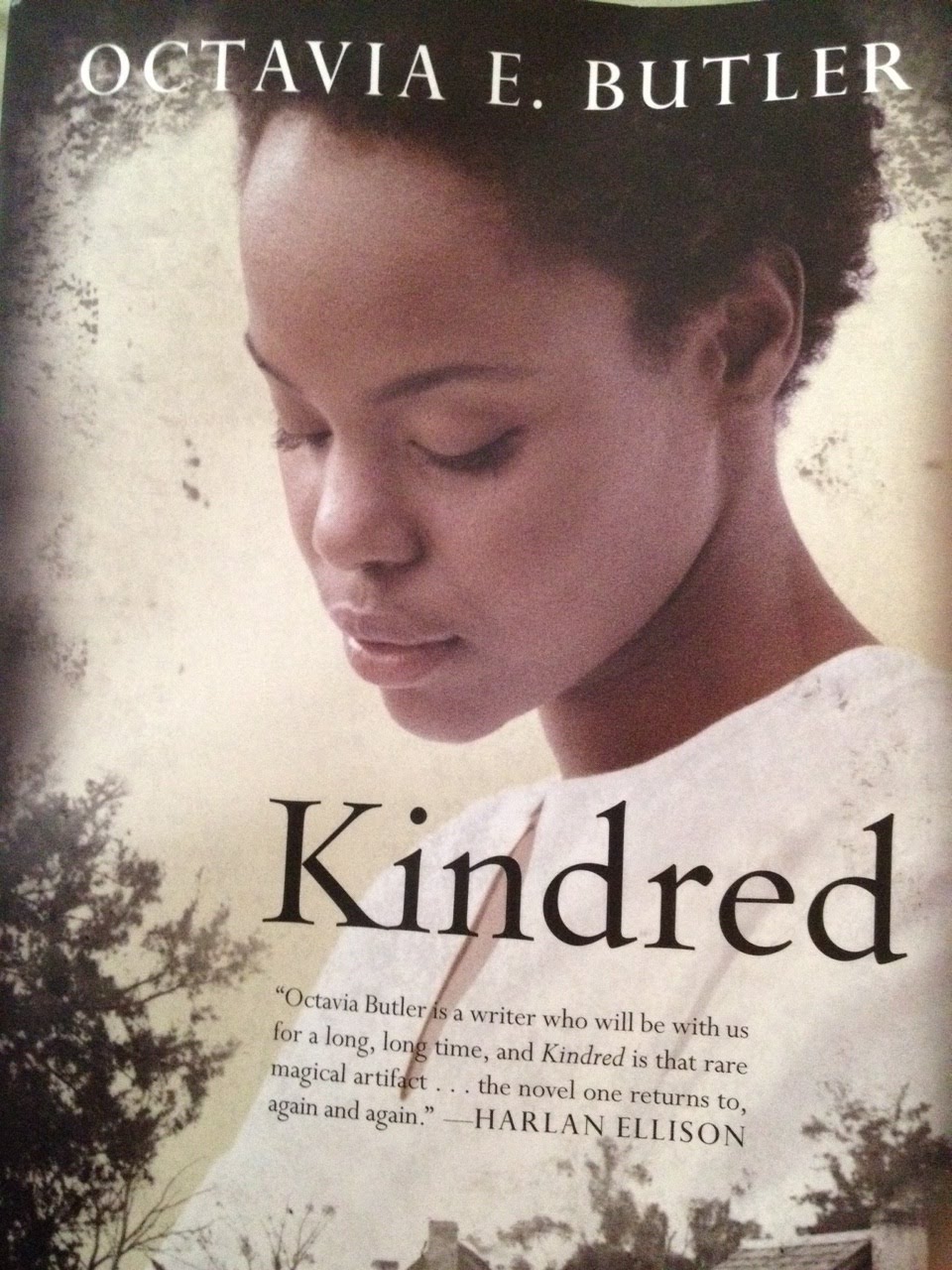
bc4c5-kindred2bbook2bcover

Genre Matters, If Only a Little

From time to time, I get a little riled up when it comes to issues of genre. I am, as you can tell, a genre writer. I am also, for the most part, a genre reader. Sci-fi and fantasy is what I like and I’ve got no problem admitting it. Nor do I have a problem with folks who don’t like it. Different strokes and all that.

However, it rubs me the wrong way when people use genre labels as a sign of inferiority. Particularly, it makes me grumpy when people see something that, in spite of all the genre trappings, is so elevated and wonderful that it cannot, under any circumstances, actually be a part of the genre itself. This all flared up back in March with the publication of Kazuo Ishiguro’s The Buried Giant.

Ishiguro is the Man Booker Prize winning author of (among other things) The Remains of the Day. He is “Literary” with a capital L. However, first with Never Let Me Go and now with his latest he’s come to play in what folks would generally recognize as the lands of science fiction and fantasy, respectively. But he really wishes they weren’t (I addressed this at my old blog after watching the film version of Never Let Me Go).

Ursula K. Le Guin fired the first shot, responding on an interview Ishiguro did with the New York Times. Here’s how she describes The Buried Giant:

[it] takes place in a non-historic just-post-Arthurian England. Everybody there has lost most of their longterm memory, due to the influence of the breath of a dragon named Querig.

Ogres and other monsters roam the land, but Querig just sleeps and exhales forgetfulness, until a pair of elderly Britons with the singularly unBriton names of Beatrice and Axl arrive with the knight Gawain and a poisoned goat to watch a Saxon named Wistan kill Gawain and then slice the head off the sleeping dragon.

Sounds pretty fantastic, right?

Ishiguro then says:

Will readers follow me into this? Will they understand what I’m trying to do, or will they be prejudiced against the surface elements? Are they going to say this is fantasy?

They probably will, Le Guin argues, with good reason and with no need of being ashamed. Yet Ishiguro, it seems, “takes the word for an insult.” More recently, in an interview with Neil Gaiman, Ishiguro expressed surprised at such a reaction, asking “why are people so preoccupied?” and wondering if genre labels were just something created by the publishing industry.

He’s certainly right that genres make things easier for the sellers of books – which includes authors, by the way. But they also make things easier for readers. If I read Book X and it falls into Genre 1, then maybe I might like to check out other things that fall into Genre 1, right? Sure, the genre definitions get fuzzy along the boundaries (go see any of the “what is progressive rock?” debates on the Web for proof!), but some guidance is better than none.

Admittedly, some genre signposts don’t tell you very much. Gaiman makes this point:

I think that there’s a huge difference between, for example, a novel with spies in it and a spy novel; or a novel with cowboys in it and a cowboy novel.

Can’t argue with that. The Big Lebowski isn’t a “cowboy movie” just because there’s a cowboy in it, after all. But it doesn’t really do much to tell you what it’s about. Likewise, a story with a detective as a main character could be lots of different things: mystery, police procedural, domestic drama, comedy, etc. But those two genres do have one thing in common – their stories exist in the real world.

Science fiction, fantasy, and (to a lesser extent) horror stories don’t take place in our world. That’s what makes them “speculative,” after all. Stories told in the real world have to confine to our world – if a key scene requires a character to get from one side of town to the other in 10 minutes she can’t just close her eyes, mumble some Latin, and teleport herself. But in the speculative genres anything is possible. The writer has to develop her world and its rules, but isn’t constrained by how the real world operates. It’s a Rubicon kind of thing – once you cross it, you can’t uncross it.

But genre has nothing to do with quality. There’s good science fiction and bad (cue Sturgeon), good fantasy and bad, good literary fiction and bad (keeping in mind the highly subjective nature of “good” or “bad”). If there’s a stigma about genre fiction it’s largely because writers like Ishiguro (and, at earlier times, Margaret Atwood) and his critics insist that his work is too good to be labeled as such.

That’s my great objection. I don’t care that Ishiguro or anyone else wants to come play with some of the trappings of genre fiction while not buying wholly into the genre’s tropes. It’s perfectly OK to come into our sandbox and play by yourself. That doesn’t obscure that you are, in fact, in the sandbox with us. Don’t insult our intelligence by arguing otherwise.

Weekly Read: The Revolutions

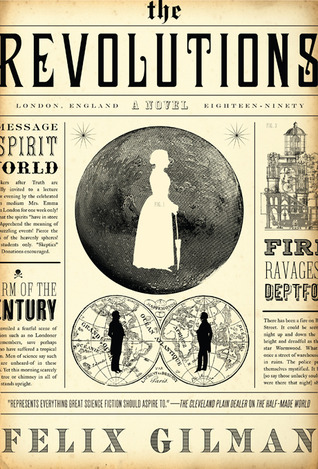
Arthur Shaw is not the most interesting man in the not-quite-historical Victorian London of Felix Gilman’s The Revolutions. That’s a problem, since he’s one of the main characters in the book. Thankfully, Shaw’s very mundanity – he needs a job and is willing to do just about anything for money – leads him into something very interesting indeed.

Oh, and there’s his fiancé, Josephine, who makes for a considerably more interesting companion.

This London is one where the kind of quasi-scientific spiritualism that was popular in our reality was not just popular, it was actually true. In particular, Arthur and Josephine find themselves bound up in a group trying to astral project to other planets, particularly Mars. Doing this requires not only the right people (sort of – the group gets less selective as things progress), but massive calculations produced by a massive machine with countless human parts. Babbage’s engine writ large.

The book takes a while to set all this up, which is either fascinating world building (for me) or dull sluggishness (for others). Things really kick into high gear when one of the astral flights is interrupted by Arthur, leaving Josephine trapped – in spiritual, if not physical form – on one of the moons of Mars.

What Gilman does next is a clever sleight of hand. The book focuses on Arthur for a bit and how he and the rest of the society plan to get Josephine back. Just when you think she might be nothing more than a damsel in need of rescue, the POV shifts and we’re treated to Josephine’s lengthy observation of (and, eventually, interactions with) the Martians and their society. This is the best part of the book, harkening back to the days of science fiction before science itself killed off the chance of finding life on Mars. Reminds me of some of the more esoteric parts of The Martian Chronicles.

Naturally, a rescue mission is mounted and while it has its own charms as an adventure story, it can’t match the peak that is Josephine’s experience with the truly alien. But all stories must end and I’d be lying if I said that the ending ruined all that came before.

So Arthur might be kind of dull. Don’t let that put you off. He’ll lead you into some very neat places.

Print

On Flying Cars and Flying Snowmen

Years ago John Scalzi wrote a post about how his wife, when it came to reading their daughter a favorite story, couldn’t get past the idea of a flying snowman. This didn’t make a whole lot of sense. As Scalzi pointed out she had no problem with a snowman who could come to life, wear clothes,
and talk with children, so why was flying a bridge too far?

The fact is, we all have a point beyond which we simply can’t suspend disbelief any longer. As a writer of fantasy and science fiction I’m doubly aware of that. Some people will happily turn their brains off to enjoy a good story, but if you trip that wire that goes beyond their comfort zone of disbelief, they’ll turn on you. There’s not much you can do about it, except recognize that we all do it and we all do it at different points. In other words, we all have our own flying snowman.

I bring this up not because of some great work of fantasy or science fiction, but because of the seventh movie in the Fast and Furious franchise, which has dominated the box office this year (up to this point). Although I’m a car guy (autocrossing them since 1999) I’ve never been a fan of the series. If I’m honest, I’m not a big fan of action flicks in general, so the automotive overlay does nothing for me. My wife, on the other hand, is a big fan, thanks to her action movie jones and an abiding longing for The Rock, so I took her to see the new one.

It’s not bad, for a big loud popcorn flick that doesn’t aspire to be much more than that. In particular there are some really amazing stunts and some good quips. Can’t ask much more than that. However, there are some points where I reached my flying snowman point. Ken Levine’s line is apparently in about the same place, although he got a bit more aggravated by it:

FURIOUS 7 is an absolute fucking mess! What the fuck was that?! No, seriously! There’s not a fucking frame of this stink burger that’s rooted in any reality. Roadrunner cartoons are more realistic. Is this what the action film genre has become? Mindless idiotic fucking stunts that defy all laws of gravity, physics, logic, and common sense? Hand-to-hand combat where the combatants beat the living shit out of each other and neither is even bruised? They crash through glass walls. No cuts. They hit each other with lead pipes. No blood. Their heads are smashed through concrete walls – not even a mild concussion. What the fuck was I watching? Nobody dies. Cars go over cliffs, roll over seventeen times, are twisted gnarled wrecks when they finally come to a rest 1,000 feet down the hill, and the passengers just wriggle out without so much as a scratch. At least Wile E. Coyote looks disheveled when he swallows a lit stick of dynamite that explodes in his stomach. Not Vin Diesel. Not Jason Stratham. Not the Rock. Creative license is one thing but this is fucking preposterous.

Now, to be fair, some of what Levine rages against as CGI fakery actually isn’t (see, for example, the flying cars of the title). But, he’s right. Furious 7 apparently doesn’t take place in the real world. My flying snowman moment came when Vin Diesel and Jason Statham not once but twice staged deliberate head-on collisions from which each walked away without even a bruise. There’s a fine line between “I can’t believe they did that!” and “I can’t believe they really did THAT?”

My wife concedes the point. She doesn’t argue for the reality of those things, but is more willing to set aside concerns and just enjoy the movie. She’s not wrong, but neither am I. I just can’t go that far. At least not for Fast & Furious.

Star Wars, on the other hand . . .

The defining image of the second trailer for The Force Awakens is the star destroyer crashed on the surface of what JJ Abrams swears is not Tatooine. When I saw that, there was a large part of my mind that immediately started into how impossible it was for a craft of that size to plummet through the atmosphere and crash land more or less intact. But another part thought it was about the coolest thing it had seen in years.

Guess which side wins? That’s because, when it comes to something I’ve loved since I was a kid, my flying snowman threshold is much higher. I’m willing to turn the more rational part of my brain off and just enjoy the awesomeness. Not every part, mind you.

Which is just to say, as a writer and a reader/viewer, you don’t necessarily need to know where the line is, but be aware that everybody has that line and you can’t hope to be certain you don’t cross it.