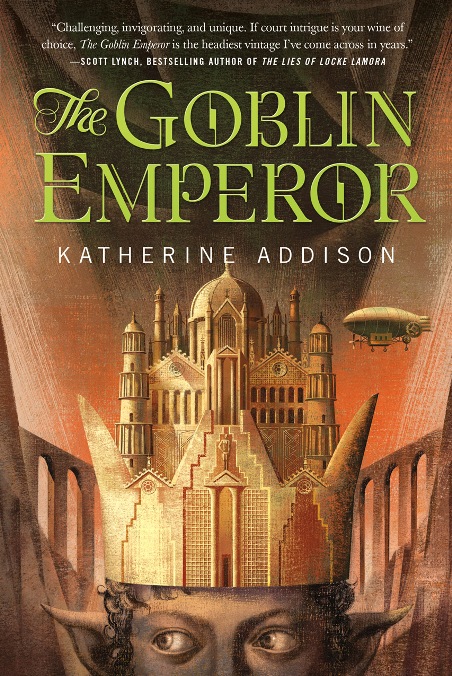
Weekly Read: The Goblin Emperor

I was really excited when I started The Goblin Emperor and found that the titular character was named Maia. After all, we’ve got one of those!

MaiaGoblin2.jpg
We’ve never figured out what the non-Chihuahua part of our Maia is, so I’ve taken to calling her Goblin Dog. Close enough.

The Maia of The Goblin Emperor is not part Chihuahua, but is part Goblin in an empire ruled by Elves. He’s the fifth (I think) son of the emperor, the result of a dalliance with a Goblin princess (who dies while Maia’s young). An assassination via airship crash (the tech level is one of the neat touches of The Goblin Emperor) eliminates not only the emperor but all his other heirs. The empire, thus, is forced to turn its eyes to Maia, who’s been raised in internal exile without any hint that he might one day wield power.

That’s the setup of The Goblin Emperor, but it’s a setup that never really pays off. You see, it’s not quite accurate to just say that the book is Maia’s story – he’s the title character, after all. No, the book is completely Maia’s story because his is the only point of view in the book. This is a serious problem because while some interesting things happen around Maia as emperor and even to him, he, himself, isn’t all that interesting.

As a for instance, the airship bombing that sets off the plot is investigated throughout the book and is resolved in the end. Rather than being on the ground with the person doing the investigating (an interesting character in his own right), we get the answers in a letter he writes to Maia explaining his findings. In other words, we aren’t shown the investigation – and all the interesting world building info that comes with it – we’re told about it. For a book with an assassination, a coup attempt, and a second attempted at regicide, it’s surprising dull.

That’s because the book is mostly about Maia easing into his role as emperor. What sets Maia apart from the traditional fantasy emperor is that he’s fundamentally a good guy and is trying to do the right thing, often in the face of traditional resistance (one review called him “one of the most lovable characters we’ve met in ages”). He treats his servants well (actually caring about their well being is a radical act) and he seems particularly tuned in to the desire of women to be something other than marriage fodder and breeding stock.

Having said that, Maia’s good nature is never given any real scope. Only near the end of the book does he finally realize that, as the emperor, he can do just about anything he fucking wants. He never tries to jump start any societal reform or really change things, even in light of the anti-tradition philosophy that powered the assassination. So, yes, Maia is good, but not very ambitious. Not for nothing but the major project he oversees during the book is the plan to build a bridge – not actually build it, mind you, just approve of its building.

The general lack of “oomph” in the story is a shame, because the world of The Goblin Emperor is interesting. For one thing it lacks humans, which is not very common in fantasy (I should know). For another while there are magical things that happen (the investigator of the airship explosion talks to the dead, in some fashion or another), there’s no capital M “Magic” involved (if you know what I mean). Finally, the folkways of the court that Maia has to navigate are interesting in their own right, they just don’t support much of an actual story. The writing is very lovely in spots, too.

Wikipedia slots this book under the heading of “fantasy of manners,” which I’m lead to believe is kind of like a “comedy of manners” but not necessarily with the comedy. I can see that. Such things are good background details for me, but ultimately I need more for a completely satisfying read. If you’re less in need of a driving plot, though, you’ll probably enjoy The Goblin Emperor much more than I did.

goblinemp_rev_comp_sm

Weekly Read: The Speed of Sound

Reviewing memoirs is a tricky thing. Essentially, it breaks down into answering three questions – Is the story of this person’s life interesting and worth reading about? Is the story told in such a way that elevates things beyond a simple “this is what happened” narrative? Does it say something profound about the world?

Thomas Dolby has the first part covered. If you only know him as the “She Blinded Me With Science Guy,” then his memoir The Speed of Sound: Breaking the Barriers Between Music and Technology will be a revelation. Only half the book is taken up with his music career. The other half deals with his second life as a Silicon Valley tech entrepreneur, a career that is probably reaching into the smart phone you’re using to read this.

Dolby’s music career is, in itself, pretty interesting as a cautionary tale of just how fickle the business is. Dolby found his first synth in the trash after being fired from his job at a produce shop. Via tinkering and experimentation he mastered the still relatively new tool and wound working with a lot of other people, either in their band or as a hired gun in the studio (the synths on Foreigner 4? All Dolby). Finally he was able to record his first album, The Golden Age of Wireless, which wasn’t doing much of anything until “She Blinded Me With Science” (not on the album itself, originally) broke big in the United States, thanks largely to MTV.

Wireless is now regarded as a classic and Dolby would spend the rest of the 1980s trying to replicate its success. That he didn’t owes less to the quality of music he was making than it does to commercial factors that were well beyond his control. The Flat Earth (which is brilliant), for example, tanked commercially largely due to the fact that his record label fired its main promo person (resulting in non-cooperation from his former contacts in the media) and picked a losing fight with MTV. Unable to back up the commercial success of Wireless, Dolby’s other albums sank like stones.

Which isn’t to say he got some interesting stories out of it. If nothing else, he wound up working with and rubbing elbows with lots of stars. There are anecdotes about David Bowie’s fear of flying (Dolby played with him at Live Aid), Michael Jackson’s nerdy interest in cutting edge music gear (Dolby’s “Hyperactive” was written for Jackson), and Eddie Van Halen’s (who played on Dolby’s album Astronauts and Heretics) lack of amusement about This Is Spinal Tap – because Van Halen thought it was about them! It’s all interesting, and fun, but it’s not very deep or dramatic. As I said, the downward slide of Dolby’s music career was due largely to factors outside of his control and since he was always a solo artist there aren’t any nasty inter-band dynamics to spice things up.

After four albums and lots of other session work, Dolby left the music business, but he didn’t leave the business of music. Always the tech head, Dolby was interested early on in making music a big part of the Internet experience (he refers to it as “sonicizing” the Web). He started a company that eventually became Beatnik. You probably don’t know it, but you likely use its tech every time your mobile phone rings (Dolby even had a role in selecting the ubiquitous “Nokia waltz”). The business world didn’t really suit Dolby, either (some of the ups and downs, caused by outside forces, echo what happened in his music career), so he eventually cashed out, returned with his family to the UK, and started making music again.

One of the disappointments with the book is the short shrift given to this last part of his career (that he’s turned yet another new page, teaching at Johns Hopkins University in Baltimore, is barely mentioned). In particular, I wanted to know something about the tour, the tech, and the conception of the tour that gave us The Sole Inhabitant, which is my favorite version of Dolby’s music. That’s par for the course, as the thing I wanted more of throughout was the nitty gritty of the music (I have the similar gripe about most music books or documentaries). We get a few tales of where songs came from (the genesis of “Wreck of the Fairchild” is particularly good), but little of the actual work of building up songs. Given Dolby’s nature as a tinkerer, rather than muse-inspired mouthpiece, I’d be interested in his process.

So, Dolby’s story is interesting, but that’s about all The Speed of Sound has going for it. The writing’s fine and pleasant, but nothing special. Dolby occasionally tells an anecdote that’s completely of its time, without meaningfully reflecting on it in any way (the Michael Jackson story ends with the appearance of neighborhood kids in their PJs, for example – this passes without comment). Likewise there’s nothing terribly profound in Dolby’s story. It’s a nice story about a guy who made a good life largely doing what he loves to do, which is mess around with music and tech stuff.  Good for him, certainly, but it doesn’t make for the meatiest of reads.

The bottom line is this – if you’re a fan of Dolby, or even just wonder what he’s been up to since he hit the “Where Are They Now?” file, The Speed of Sound is highly recommended. Otherwise, your time might be better spent elsewhere.

speedofsound

Weekly Read: Off to Be the Wizard

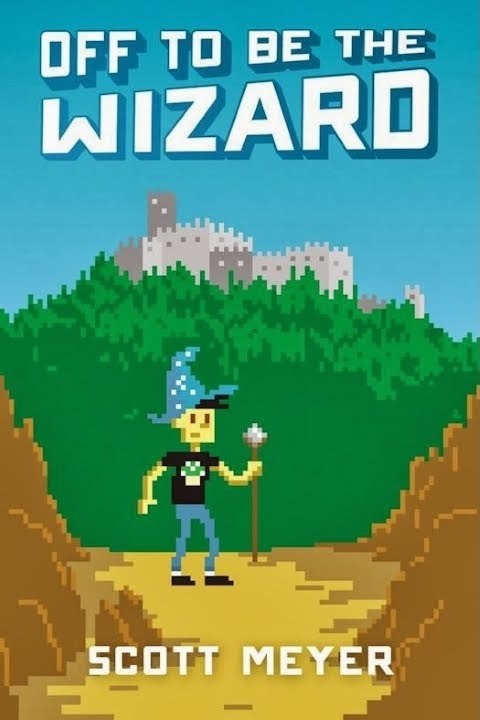
Off to Be the Wizard is a funny book. Very funny in some spots. It’s humor and general breeziness make it a quick read, but its charm can only carry it so far.

Martin is a computer geek. One night he discovers (on just about the very first page of the book – it works better than I expected) a text file, plays around with it, and discovers that chestnut sci-fi trope: that our world is really just a computer simulation, with parameters that can be endlessly modified. In short order he’s essentially practicing magic by summoning sums of money from thin air, teleporting, and travelling through time. It’s the first of those that gets him in trouble (damned Treasury agents) and cause him to flee not just to another place, but another time – medieval England.

At this point, I expected the story to turn into something like Doomsday Book, but with jokes, where Martin has to use his wits and “wizardry” to survive. Instead, Martin falls into a community of similar time travelers and spends most of the book interacting only with them. Aside from a few mentions here and there, the same story could have been told in the Old West, feudal Japan, or the prehistoric African plains. It’s a huge wasted opportunity and hints one of my main problems with the book.

That is, things are much too easy for Martin and his friends. Not only are they not subject to the vagaries of medieval life (aside from a wonderful running joke about stew), there isn’t even any real conflict happening until, about 3/4 of the way through the book, the author realizes there has to be. The resulting ending, with a big bad that comes out of nowhere and has a temporary menace that the rest of the book doesn’t justify, is too quick and perfunctory to mean much.

What that leaves is a bunch of Martin, mostly in the company of his older (and more interesting) mentor Phillip, learning how all the wizarding works. This provides some good chances for comedy, but the need to build up Martin’s need to pass “the trials” is undercut by there not actually being any. Aside from one run in with bullies, at no point does anything that might hint at a book-defining conflict pop up.

Along the way, anything that might complicate the wizards’ fairly easy life (typical time travel issues like changing the past/future, the ability to power computers in medieval England, etc.) get hand waved away. On the one hand, I like that – it’s a funny book, not a deeply thought out treatise on the potential hazards and difficulties of time travel. But still, having everything work out so easily almost renders the time travel pointless. No surprise, then, that Martin is never seriously pulled by a desire to return to his own time (to be fair, he’s never given a reason to be pulled).

That also keeps Martin from really interacting with the world he’s time travelled himself into. This is a particularly glaring missed opportunity because it really emphasizes the absence of women from the book. Martin’s mother gets a mention or two and there’s a crazy old woman with goat problems, but otherwise the only woman around is Gwen. She goes from a complete blank of a character (main defining feature – all the wizards want to do her) to,  magically, a big player when the plot finally cranks up. There’s no ground work laid for this and it comes completely out of the blue (deus ex vagina, perhaps?).

There are other women who have found the file and travelled back to this time, but they’ve all headed off to Atlantis, conveniently off screen (to be fair, the second book in the series goes there, so I’ve read). But that doesn’t explain why, in the day to day of living, Martin and his pals are able to avoid any contact with the opposite sex. It’s the kind of blind spot you’d expect in some of the foundational fantasy literature the book gently satirizes, but not something written in the second decade of the 21st Century.

That all sounds harsh, and maybe it is. But, like I said, being funny can take a book a long way and Off to Be the Wizard is funny. And in Philip, the wizard from a slightly older time who finds himself out of step with the more currently pop culturally savvy wizards (he knows not of The Simpsons, for instance), it has a really interesting, greatly drawn characters. Except for one thing – when, late in the book, he’s able to crank Genesis on his car stereo (yes, in medieval England – you’ll have to read the book), it’s completely out of character that it’s something from the poppy Phil Collins era (“That’s All,” to be specific – there’s a hilarious discussion of the video). I mean, come on! Surely “Watcher of the Skies” or the end of “Supper’s Ready” would have been more appropriate!

As I was saying – a fun book, a quick read with lots of laughs. However, its flaws stand out enough that I’m not interested in heading further into the series.

wizard

Weekly Read: A Darker Shade of Magic

According to Wikipedia there are over a dozen places (worth of note) across the globe called “London,” from Ontario to West Virginia to California to Kiribati, not to mention the big one in England. In spite of whatever differences those places have, they all share the fact that they are part of our world and bound by the laws of physics.

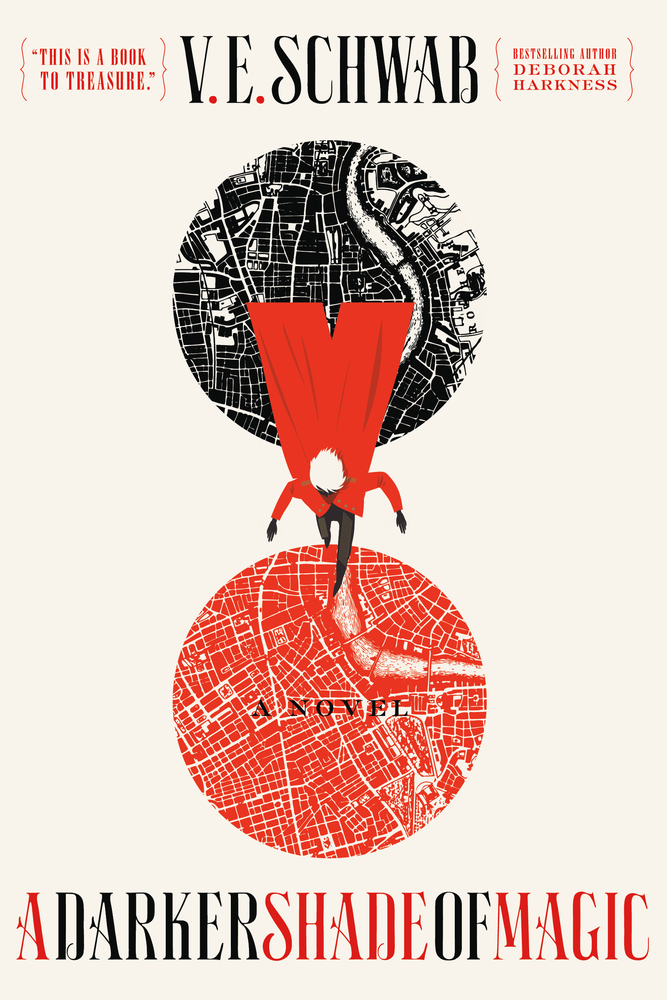
The Londons of A Darker Shade of Magic, not so much. They’re all in the same place as London, England, but all they really share in common is the name. Grey London (which is ours, I’m pretty sure) is dreary and dull, when it comes to magic. By contrast, magic thrives in Red London and is an important part of life there. It’s more of a power struggle in brutal White London. What magic did to Black London is, well, pretty awful.

A Darker Shade of Magic is the story of Kell, one of the few people with the ability to move back and forth between the various Londons. He serves as a courier, technically working for the king in Red London, but taking messages both ways. He also has a side gig, smuggling small objections from one London to the other. It’s in that capacity that he gets into trouble (isn’t that always the case?) and, in the process, threatens the safety of Red London and all those he cares about. Along the way he acquires a sidekick in Lilah, a pickpocket from Grey London with big dreams (she wants to be a pirate) and, we’re lead to believe, a bit of a secret when it comes to magic.

There are other characters, too, wonderfully drawn and (in some cases) downright frightening. Their interaction is the best thing about A Darker Shade of Magic, whether it’s slowly growing admiration of Lilah’s abilities by Kell, the attempts of Kell’s semi-brother Rhy to hit on her, or the way the king and queen of White London completely control a room (and a kingdom). It helps that the book takes the time to build these worlds up (the first third is, essentially, a travelogue as Kell moves from one London to the other) so that the characters seem like natural expressions of those places.

In fact, the scene setting is more interesting than the real plot, when it finally gets to it. Part of the issue is that there are dual threats that seem like they might be linked, but we never really find out if they are. They create a lot of havoc for our heroes, but it’s unclear to just what end. One thing I will note, however, is that while this is the first book of a series, it does tell a complete story, while managing to leave enough dangling to make you want to read more.

Where things go wonky is where magic plays a key role in the plot. That’s because the magic of A Darker Shade of Magic tends to morph to fit the needs of the plot. We’re initially told that what makes Kell (and his White London counterpart, Holland) special is that they alone can travel between the Londons, an increasingly rare skill. But by the end of the book Lilah and others are doing it, too, with no particularly good explanation. Also, at a critical moment near the climax of the book, game winning magic essentially becomes a Peter Pan “wish hard and it works” exercise. It’s kind of disappointing that for a story where magic is talked about so much and plays such a key role in things that it’s nature, scope, and impact doesn’t seem well thought out.

As big of a hole as that sounds for a book with the word “magic” in the title, it’s really not. The end destination may not live up to the hype, the journey is well worth it. As I said, this book tells a complete story and I could walk away from the series, satisfied, if a little disappointed. I’m not. Which should tell you something.

darkermagic

Author Interview – Patricia Hopper Patteson

Joining me this month is West Virginia author Patricia Hopper Patteson, whose new book Corrib Red comes out in March.

Who are you? Where are you? What kind of stuff do you write?

Hi, I am Patricia Hopper Patteson. I am what you might call a tenement rat from Dublin, Ireland. For the first few years of my life I grew up in what is now the trendy part of the city called Temple Bar. Way back, this area of the city was known for its sub-standard tenement flats. At age seven my family moved from the city to the suburbs. I came to Morgantown, West Virginia as a bride back in the 70’s and have been here ever since. I write non-fiction, short fiction and novels.

How does your transatlantic background inform your writing?

Having a transatlantic background (love that term) is like speaking two languages in a way. I behave differently depending on whether I’m here or in Ireland. Living abroad certainly affects how I write and what I write about. Interestingly, I received my undergraduate and graduate degree from [West Virginia University] as a non-traditional student. So my introduction to creative writing came from WVU. My core introduction to story-telling comes from my parents, who made up stories to tell us as young children.

This trilogy at the core is about emigration. About the Irish in earlier centuries who came to the US but never returned home. That’s what the first book is about—returning home. Whatever extra money the Irish had after they emigrated was sent home to help the family survive. Many emigrated out of necessity in a time when travel was difficult and money was scarce, unlike today where we have so many ways to stay connected to family and friends

Tell us about your most recent book, story, or other project.

Kilpara is my first novel in a three-part historical nineteenth century family saga series. It takes place in both the US and Ireland and begins in Maryland in 1866 right after the Civil War. The second novel called Corrib Red is due out in March and is the second novel in the series. It takes place almost completely in Ireland and jumps a generation to two sisters who are coming of age and face the dilemma of choices available to them within the period constraints. The third novel in the series starts ten years later and takes place in both Ireland and The US. An illegitimate African-American daughter is central to this story that comes together in Ireland and throws the family off center.
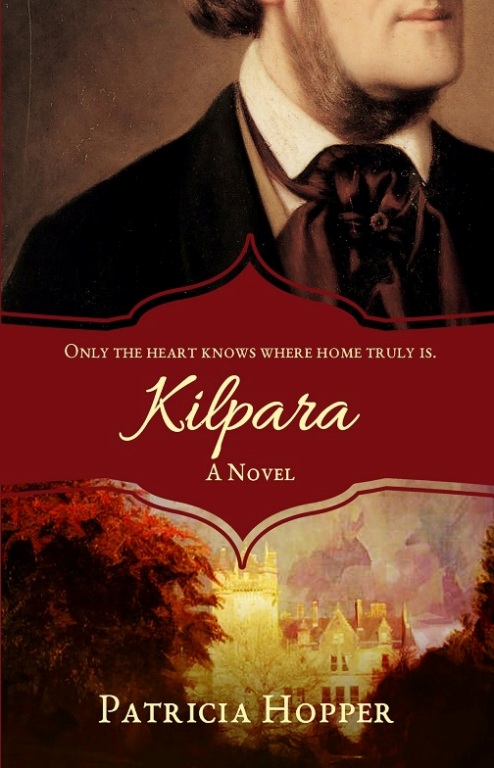
kilpara_cover

I’m intrigued by the span of time you plan to cover in your family saga series. Was that always the plan, or did the specific stories you’re telling just work best in those periods?

The first book was initially two stories and everyone that read it said it should be two separate stories. So when I began fleshing out and editing Kilpara I found out I had enough material to make it a complete novel, so the story reads that way.

I love anything to do with the US Civil War and the first novel begins right after the US Civil War (1866). When I was growing up I never heard anything about the Irish in the US Civil War. I was surprised when I first went to Antietam and Gettysburg to learn how many Irish fought in that war. That’s why I chose that period.

I jump a generation for the second novel Corrib Red which takes place mostly in Ireland (1885). This is Parnell’s time, and I’ve always loved what he did for Ireland, and how tragic it was that he died young. Many Irish turned against him when they learned he was involved with a married woman, whom he later married before he died. His history gives great insight into the culture and mind-set of the time.

The third novel (in-progress) takes place about ten years later (1896). This was a time of cultural awareness in Ireland that later influenced history in the early part of twentieth century.

In what genre do you primarily write? Why did you choose that one?

Right now I’m primarily writing historical fiction, but I have other projects started like mystery, romance and young adult. I find historical fiction fascinating. Although the 19th century was a less complicated time, it’s hard to imagine living without the conveniences we have today. People were far more interactive because they had less distractions and outside commitments. Just think, women who could afford servants, spent much of their day changing clothes for different events, breakfast, lunch, walks, visitors, dinner. It seems exhausting by today’s standards especially now when you can just put on a pair of jeans and go. Women were also restricted by societal norms and were treated like property by the men they married.
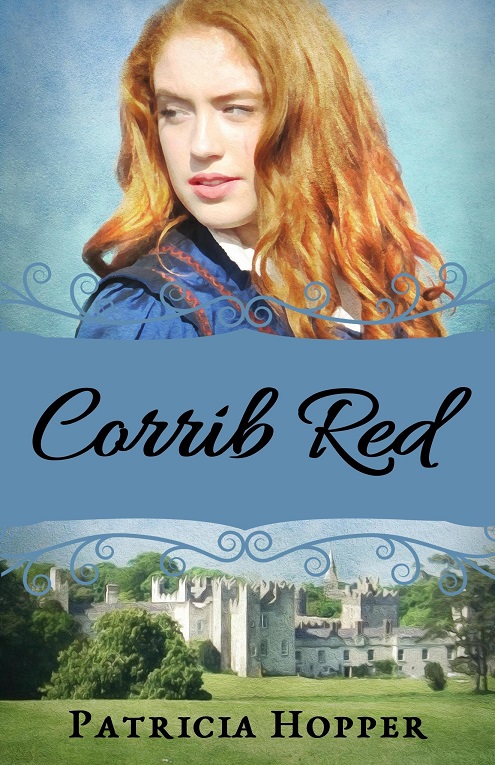
corrib-red-front-cover

Tell us briefly about your writing process, from once you’ve got an idea down to having a finished product ready for publication.

The idea for the novel is the easy part. It’s developing a whole concept for a novel that’s the challenge. Once the concept for the beginning, middle and end begin to gel in my mind I start to outline the story.  I generally like to start the first couple of chapters to get a feel for the characters and story at the same time I’m fleshing out the outline. After the first couple of chapters I finish the outline completely so I have a guide. On this third novel I’m trying something new which is telling the story from two POVs and switching from first person to third person. To make this work I’m doing alternating chapters—so it’s a bit of a challenge. I go through many edits of the novel starting with content, then grammar and proofing. After about the third or fourth edit the book starts to take shape. The last thing I do is read the whole novel out loud.

What do you get out of that process that you don’t get from just reading it with a red pen in hand?

When I edit with a pen I hear the story in my mind. However, when I read the novel out loud, I hear each word I speak. I prefer it if I can get someone else to read the story out loud, because then I really hear things more. But that doesn’t always happen. When reading out loud I can hear words that are unnecessary, phases that may be too long, and ramblings that may need to be tightened, scenes that could use some tidying up, and the pacing. I work on all of these things during the editing phases, but reading out loud helps me find anything I may have missed.

Who is the favorite character you’ve created? Why?

I have two favorite characters in the family saga series, although I must say I like all of the characters. The two that are most challenging are Cecil and Aunjel.

Cecil is a 19th century sociopath and very evil. I always love to read about evil characters in novels and look for their redeeming qualities. Cecil doesn’t have any redeeming qualities. He thinks he’s above everyone and everything and takes revenge on anyone who goes against him in a major way.

Aunjel is one of the two main characters in book three of the series and she’s the daughter of Lilah, a light-colored African-American. Lilah has a mutual liaison with Ellis O’Donovan, an aristocrat and major character, in book one. Aunjel is the result of that liaison although Ellis doesn’t know about her until book three. Aunjel also grows up believing her biological father is an African-American. To create Aunjel I wrote a 13,000 word story about Lilah, Aunjel’s mother, and her background, so that I could better understand Aunjel and her challenges in the late 1800s

What’s the weirdest subject you’ve had to research as a writer that you never would have otherwise?

In book three of the series I send David Ligham, a fairly major character in book two, away to West Africa to negotiate a peace treaty with King Prempeh of the Ashanti tribe. This is fictional of course, but there was a lot of conflict going on between the British and the Ashanti tribe around that period. I read three books on the subject to write a few paragraphs.

What’s the one thing you’ve learned, the hard way, as a writer that you’d share to help others avoid?

There are many things a writer learns along the way that it’s hard to know where to begin. The importance of editing is the one thing that helps establish a writer and gets them recognized. Also, if you find another writer who you trust completely to read your novel, or short fiction, and give you honest feedback, this will help avoid weaknesses in your writing.

If you won $1 million (tax free, to keep the numbers round and juicy), how would it change your writing life?

It probably wouldn’t change things all that much. However, I would love to write a novel set around the Grand Canyon, and it would be nice to spend time there to research the area.

What’s the last great book you read or new author you discovered?

One author I had heard about, but hadn’t read any of his work is Ken Follett. I recently read The Man from St. Petersburg and thoroughly enjoyed the novel. In this novel Follett brings London to life in the early 1900s, and the characters and plot are intriguing.

 What do you think your next project will be?

I’d like to write a historical romance that takes place in present time, and I’d like to write a young adult mystery novel.

How would you write a historical romance that takes place in the present time? That sounds like a contradiction in terms.

Sorry about the contraction of terms. I may have been a bit lazy. It’s really a modern day romance with historical undertones.

For example a situation that takes place in today’s world that is parallel in some way to Abraham Lincoln’s unfortunate assassination. The male protagonist won’t be a president, more likely a congressman or a senator, or even a mayor. He will try to save a small town from being overrun by corrupt business associates. These associates want to move a gambling casino into the town as a front to launder illegal money. The female protagonist would be the conduit between the present and the past. She would discover a dress worn by Mary Todd Lincoln tucked away in her great-aunt’s attic. Every time she puts on the dress (or maybe just touches the dress) Mary Lincoln’s ghost appears to warn about danger. Mary’s ghost will help the female protagonist avert the assassination of the present day male protagonist. This of course pushes the male and female protagonists together.

This the long way to explain what I mean. It’s a story I’d like to write but haven’t figured out the complete concept yet.

patricia_patteson-300-pixals

Patricia on Social Media

On the Web
On Facebook
On Twitter
On Linkedin

Get Kilpara at Amazon or Barnes & Noble

Learn more about Corrib Red at Cactus Rain Publishing

Weekly Read: The Liberation

It’s a good rule of thumb, although not an iron clad law, that the second part of a trilogy is never as good as the first part (Godfather Part Two, The Empire Strikes Back, and The Endless Hills are exceptions to the rule, of course). It’s hard to match the excitement of discovery you get from the first installment’s introduction of the characters and the world their moving around in. In addition, the second part is usually a bridge between the introduction and the climax. It’s a natural area for a bit of a letdown. The real issue is, how does the final installment stack up?

When I reviewed the first two parts of Ian Tregillis’s The Alchemy Wars last year, I noted that they followed the pattern. The Mechanical introduced us to a really cool world, a handful of interesting characters, and some big overarching questions about such minor things as free will and the nature of sentience. The Rising didn’t quite live up to that promise, focusing on some rousing action and pushing some of the more philosophical stuff to the side. Also, there was a whole section in the middle of the book that didn’t really seem to matter that much.

Well, remember what I said about middles and all that? Tregillis finishes up the trilogy with The Liberation, a rousing conclusion that, if anything, comes along just a little too quickly.

At the beginning of The Liberation, the Dutch Empire that has essentially conquered the world with its magically powered “clakkers” (clockwork people) has, to be kind, been put on its back foot. It’s not giving things away to say that The Liberation is about an oppressed people in revolt. What’s interesting is that it doesn’t present a simple good-guys-throw-off-their-yokes narrative. There are factions amongst the clakkers, deep philosophical divisions of the type that you’d find in most human uprisings. After spending most of The Rising in North America, the primary focus of The Liberation is the European mainland, particularly The Hague.

Having said that, there’s a key part of the story that plays out in North America (around the non-clakker enclave of New France). The stories in the New World and Old World play out in parallel, until, about two-thirds of the way in, we learn that one preceded the other. It’s a neat trick on Tregillis’s part, some temporal sleight of hand that allows the two stories to develop well on their own before the reader needs to know how they’re related.

It’s a bit of a shame, then, that when the end comes it comes very quickly. Not out of nowhere – the pieces are all moved into place quite well – but it doesn’t quite seem up to the task. I’m hesitant to complain because Tregillis has given us an ending, one that – just like the real world – wraps up most loose ends, but allows some questions to linger that will have to be answered in the future. It’s a fitting cap to an inventive and immersive read.

As far as I know, Tregillis doesn’t have any future plans for this universe. I hope I’m wrong, because I’d be really interested to see what’s happening in a generation or two.

tregillis_liberation-tp1

Over 70 Authors! 99-Cent Books! You Can’t Miss This!

janpromo4

To kick off the new year, I’ve joined with over 70 other writers of speculative fiction – fantasy, science fiction, horror, etc. – to spread the word about our 99-cent books.

For me that means The Water Road, of course, so if you haven’t checked it out yet this is the time. Be sure to look over the other offerings, too, because there’s bound to be something in there for just about everyone. The promo runs through January 14. See all the participating books here.

janpromo6

Now I’m Picturing Lil’ Antrey

I’m not a huge fan of dividing literature into “adult” and “kids,” if we’re being honest. Children develop at different rates and can handle different levels of complexity and subject matter as they grow up. I went through a stage in fifth grade where I read 1984, Anthem, and Brave New World all back to back to back. Pretty heady stuff for an 11-year old, but I was up for the challenge. At the least, I wasn’t harmed by the experience, even if I returned to those books with greater understanding once I was older.

That’s a long way of saying I think this is kind of silly:

’On the Road,’ with its recurring references to sex, drugs and domestic violence, might not seem like an ideal bedtime story for a child. But that’s precisely the point of KinderGuides, a new series of books that aims to make challenging adult literary classics accessible to very young readers.

Along with ‘On the Road,’ KinderGuides recently published picture book versions of Ernest Hemingway’s ‘The Old Man and the Sea’ and Truman Capote’s melancholy novella ‘Breakfast at Tiffany’s.’ (It skipped over the awkward question of whether Holly Golightly is a prostitute.) In one of its most ambitious and bizarre efforts, it released a cheerful take on Arthur C. Clarke’s opaque, mind-bending science fiction novel, ‘2001: A Space Odyssey,’ an allegory about the evolution of human consciousness that many adult readers find impenetrable.

Yes, somebody has come up with a series of defanged literary classics for children. To what end? There’s lots of great children’s and YA literature out there these days. And, as I said above, some kids will be ready for the classics earlier than others. There’s no harm in letting them have at any of the mentioned titles when the time is right.

So what, exactly, is the point? Maybe it’s a way for parents of young children to feel even more pride in their little one? After all, she’s not reading The Very Hungry Caterpillar, she’s reading On the Road. Only she isn’t, of course, or at least isn’t really getting the full picture. It’s a bit like the Kevin Kline character in A Fish Called Wanda who brags about reading philosophy but, when called upon it, shows he doesn’t understand a word of it. The kid doesn’t know any better, but at least the parents can feel like they’ve accomplished something.

Otherwise, this appears to be a blatant cash grab, a way to make money of those venal parents. I’m all for filling the demand of the market, but isn’t this, essentially, making money off the works of others? The producers of KinderGuides claim they avoid such issues because they’re “study guides as well as entertainment.” But doesn’t a study guide for something presume you’ve actually read it to begin with? It sounds like weapons grade bullshit to me (the article concedes that “[s]ome copyright experts dispute that logic” – you think?).

Regardless of the legalities, there’s something shady about bowdlerizing someone’s work to sell it to a market the writer never intended it for. On the Road is many things, but it is not a children’s book. Nor is Lady Chatterley’s Lover nor Slaughterhouse Five nor (if I can insert myself here) The Water Road. They were written for different purposes and audiences. That’s OK – even in the 21st Century there’s nothing wrong with telling kids that there are certain things they’re just not ready for yet.

no-children-round

Unless there’s a buck to be made. In which case, all bets are off.

Weekly Read: Angel Catbird (Volume 1)

Not long ago, when reviewing Margaret Atwood’s The Heart Goes Last, I wrote:

all that makes The Heart Goes Last frustrating and I certainly wouldn’t suggest it as a starting point for someone who’s never read Atwood before. But she’s too talented a writer to not score some points along the way, so I’d definitely say it’s worth it (it’s pretty brief, all things considered). Nobody succeeds every time, but few of us are lucky enough to stumble as interestingly as Atwood.

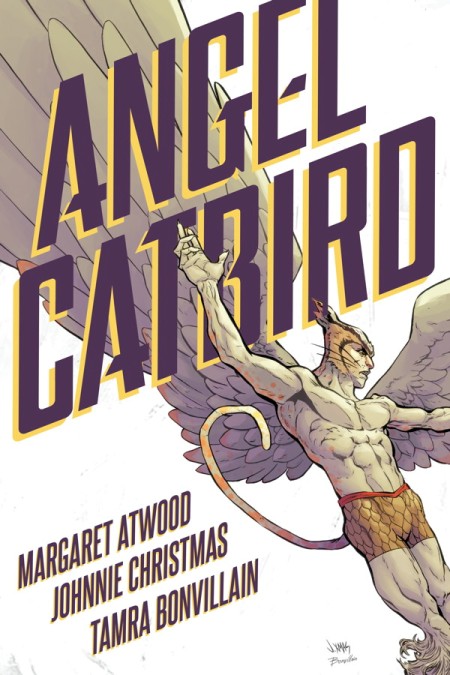
I’ve now been proven wrong. Angel Catbird, Atwood’s attempt at a graphic novel/comic book, isn’t an interesting stumble. It’s an ill-conceived mess.

In a lengthy introduction, Atwood addresses the question that must have come to most minds when this project was announced – why was a serious novelist (or a “nice literary old lady who should be resting on her laurels in her rocking chair, being dignified and iconic,” as she slyly describes herself) writing a comic book? There’s a pretty good reason, as it turns out. Atwood grew up reading comics and loved them. She even wrote a few in college. If becoming one of the most celebrated writers in the world doesn’t give you the freedom to indulge in a project just because, then what’s the point?

Unfortunately, that introduction (which also includes how Atwood found her collaborators and how they worked on the project) is by far the most interesting part of the book.

The story is pure comic book pulp, but done without any verve or irony. It tells how Strig Feleedus becomes, via a freak scientific accident that doesn’t make any sense (par for the course for superheroes, I guess), the titular hero, a man capable of transforming into a half cat half bird being. He learns the world is actually full of “half-animals,” men and women who can shift into cats, rats, or any number of other critters. There’s a straight from central casting villain, a love interest, and an internal conflict for our hero (his cat part wants to eat birds, his bird part doesn’t).

The attempts to mine this for humor only work a couple of times and the whole thing is too damned silly to take seriously. The pacing is so rushed (the actual comic only takes up not much more than half of this volume) that everything is just surface, with no hint of anything interesting lurking under the surface. Compounding the simplicity are the infographics that pop up on the bottom of every few pages providing interesting facts about feline well being. Working them into the story itself would have been fine (some are kind of relevant), but as is they stick out like a sore, lecturing thumb. On top of all that, the artwork, while fine, doesn’t do anything to distinguish itself. Saga this ain’t.

In the end, the reason for Angel Catbird’s failure is right there in that introduction. Comics and graphic novels have come a long way since Atwood’s youth, but Angel Catbird seems like a throwback to simpler times and simpler stories. It just can’t live up to the modern genre it wants to be a part of.

angelcatbird

Weekly Read: The Name of the Wind

Every book has highs and lows, pros and cons that lodge in your brain as you try and come to terms with it. Rarely do the two things break down as starkly for me as they did when I finished up Patrick Rothfuss’s The Name of the Wind.

First of the Kingkiller Chronicle, it’s the first day (of three – it’s a trilogy, you see) of Kvothe telling his life story. Including, presumably, how he turns into a killer of kings. Thus, the book isn’t just a story in itself, it’s a story of a story being told, which opens up a lot of interesting avenues for writing. There are also odd things happening in the “present” as the story is told (how’s about spider demons the size of wagon wheels!). In spite of all that, my thoughts are kind of black and white as to its flaws and strengths.

On the one hand, it’s really well written. I mean in the actually putting words on the page in a right order kind of way. Rothfuss’s prose is breezy and quick, but he slips in a lot of clever bits for the reader to catch (my favorite is the comparison of who lives in the high-dollar and low-dollar sections of the city of Tarbean). In other words, it makes for entertaining reading. In addition, Rothfuss takes an interesting approach to world building, avoiding large dumps of background info that the characters already know just to inform the reader about things. While this leaves some gaps in our understanding (These folks know about germ theory? How?), it allows Rothfuss to casually slip in details that don’t seem important to things but that show their relevance later on. See, for example, the whole issue of “dragons” and their dangerousness.

On the other hand, for a book that’s several hundred pages long (and more than a full day in Audible time) precious little of substance actually happens. In fact, main character and narrator Kvothe admits near the end that all that came before was “foundation” for the interesting stuff to come later (did I mention that the trilogy is, as yet, unfinished?). Naturally, that means there’s nothing like a self-contained narrative arc for this book, which is frustrating. In addition, along the way we’re treated to tale after tale of the hyper-competent Kvothe, the teenager (he’s only 16 when this book ends) who knows every useful skill under the sun and is never bested in any kind of competitive environment. To be fair, he suffers negative consequences as a result of all his success, but, still, a main character who always wins a series of largely meaningless things isn’t all that compelling.

What’s amazing is that, for those pretty substantial cons, The Name of the Wind was still an engaging read. I really enjoyed it. I didn’t mind that things had moved along so little by the end, although I was frustrated by the “and here’s the end” resolution (a final scene between Kvothe’s student and the person recording the tale helps a lot). It makes me hesitant to press on with the series (particularly given this review of book two), but only because I’m not certain Rothfuss can sustain the trick. Eventually all the spinning plates have to come down, either in a crashing cacophony or a controlled descent – whether that happens with Kvothe and his tale, we’ll have to wait and see. At the very least, I’ll wait until the third book comes out (I know – glass houses and all that).

The Name of the Wind seems to be a book that most people either love or hate, given the vacillating 5 and 1-star ratings at Goodreads. I can understand that. A lot of what the 1-star folks complain about I agree with, I just don’t think it overrides the good stuff. Highly recommended from me, even if with a bit of an asterisk.

POSTSCRIPT: Over dinner I came up with a good comparison for how I think of The Name of the Wind – like it was a concept album (Kvothe is a musician – he’d dig it). Something where the story doesn’t really hold together but the music’s so good you don’t care. So, maybe it’s like The Lamb? Or Subterranea? Either way, not bad company.

nameofthewind