Technical Brilliance Only Goes So Far

A few weeks ago my wife and I finally saw Mad Max: Fury Road, the movie that’s risen to the rarified air of awards talk genre pictures seldom see. It’s got an Oscar nod for Best Picture, after all. Although I’m not a huge fan of the old Mad Max flicks, I’m a sci-fi fan, fond of dystopia. My wife’s a big action movie fan. So we’re definitely in what might be the target audience for something like this. Nonetheless, when it was done, we turned to each other and asked:

“Is that it?”

Not that it wasn’t cool. The movie looks gorgeous and George Miller deserves a lot of credit for doing some really insane stunt work using real vehicles and people instead of wallowing in CGI overload. Who wouldn’t want a flamethrower guitar? Or keytar, maybe? I’m a keyboard player, after all. And, yes, it was cool to see such overt feminist overtones in a movie that comes out of a very masculine tradition.

But is that enough?

The best explanation I’ve read as to why Fury Road deserves consideration as one of the best movies of 2015 is from this article by Amanda Marcotte over at Salon. Her argument seems to boil down to it being a great technical achievement:

“Mad Max” is more than just a really good movie. It’s also a wildly innovative movie, one that plays with the very idea of filmmaking itself. The director, George Miller, tore up the book on how to make a movie, taking huge risks in doing so, and ended up making the movie that people could not stop talking about this year.


“Mad Max” barely has a script. There was heavy storyboarding, but in terms of a traditional script for actors to work from, nope. Instead, they filmed for months in the desert, collecting 480 hours of footage (which is three weeks, if you watch non-stop), which was pounded and then refined into a coherent story in the editing bay, with Margaret Sixel, Miller’s wife, at the helm.

As a result, she argues, it’s an

artistic experiment toying with how to use the tools of film-making to tell a story in an entirely different way than we’re used to

that happens to be “fun” and “moving.”

Therein, I guess, lies the rub. I’ll give Fury Road the “fun” label – it certainly wasn’t an experience I wish I hadn’t had when it was over. But I don’t get “moving” from it and, in retrospect, can see where the fact that it “barely has a script” is perhaps a main reason why. It’s not the film is incoherent (which is a credit to the editing work), it just doesn’t make much sense.

The talk about Fury Road reminds me a little of the buzz last year around Boyhood. It, too, was a great movie making experiment, filmed over years in order to capture the main character aging into adulthood. However, I remember, amidst the plaudits, that some critics dared to suggest that, at the end of the day, the finished product wasn’t all that captivating. Still, the audacity of its making carried it a long way.

Technical achievement is worth celebrating, but it’s not the be all and end all of art. Progressive rock, more than most subgenres of popular music, values instrumental mastery – it lionizes people who can play. That being said, there’s still something to be said for avoiding the “too many notes” trap). A flurry of sound might be impressive, but is it interesting or moving? Not necessarily.

So it goes with literature. Clever wordplay and narrative structure that defies common sense can be daring experiments and produce new ways of telling stories. But at the end of the day, if the story itself doesn’t connect with readers, it’s a lot of flash that, in the end, doesn’t produce much heat.

Same thing with movies. Fury Road is, without a doubt, technically impressive. I just didn’t get a lot out of it beyond that. To be truly great, as so many think Fury Road is, demands more.
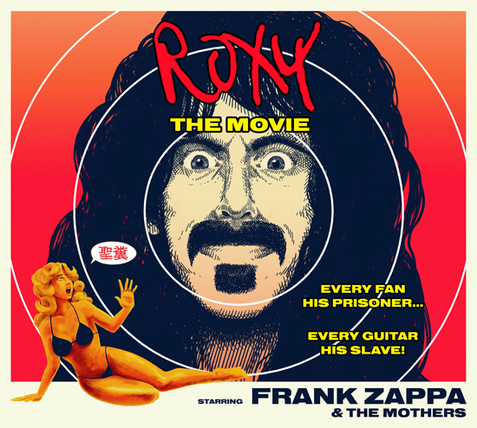
Weekly Watch: Roxy: The Movie

If there was a holy grail for Frank Zappa fans, it was this.

For several days in December 1973, Zappa and the Mothers as they existed at that time – a group some consider his best ever and included George Duke and Chester Thompson (the drummer one) – hit the stage at LA’s Roxy Theater for a set of shows where not only the sound but the pictures were all recorded. Thus Zappa’s explanation in the intro for “Penguin In Bondage” that he’s “circumlocuting” a particular topic “in order to get this text on television.” The shows served as the basis for Roxy and Elsewhere, a partly live album that many (including yours truly) consider Frank’s best.

But there was supposed to be a movie, too, filmic evidence of Zappa and crew at the height of the their powers. As it happens, it was doomed from the start:

Unbeknownst to anyone on the crew, the audio recording device suffered an internal malfunction within two minutes of the very first show. There was no way for anyone to know about it until the film had been shot, processed, and delivered to the editor. Since the production schedule was so short, they didn’t process any of the film until all of the shows were ‘in the can.’ When the editor went to align the picture and sound . . . it became apparent that the program stayed in sync for all of five seconds.

That’s from the liner notes from Roxy: The Movie, which has, for years, been just out of reach for Zappa fans. Now it’s has finally seen the light of day after being a tantalizing mirage for my entire lifetime. Is it worth the wait?

Yes and no. In all honesty, it would be impossible for the movie to live up to the expectations that decades have piled upon it.

For one thing, it’s not just a video document of Roxy and Elsewhere. If anything, it shows just how much of that album is studio work, versus live. That’s not a bad thing – Zappa never held closely to the distinction between “live” albums and “studio” albums (even his 1988 tour releases that preach about there being no overdubs have tracks cobbled together ex post from multiple sources). But it does lend the sense that something’s missing, that there’s a stripped down feeling to some of the material.

For another thing, Zappa being Zappa there are some things that just don’t work on the night and are much better elsewhere. Primarily that’s “Inca Roads,” which gets a low-energy lounge version here that pales beside the one recorded later in Helsinki (memorialized on You Can’t Do That On Stage Anymore, Volume 2). And the marvelous side-long suite from Roxy and Elsewhere feels truncated without “Village of the Sun” leading into the other two parts.

If that sounds awfully negative, it shouldn’t. This is still a great document of a Zappa concert with the man in his prime. He rules not just the stage but the entire venue, directing musicians and audience alike. You get to experience the entirety of “The Be-Bop Tango (Of the Old Jazzman’s Church)” in its entirety, complete with what can barely be referred to as “dancing.” And the other two parts of that side following “Village”? Brilliant. Napoleon Murphy Brock getting sexed up during “Dummy Up”? A little more disturbing!

Another thing that’s fascinating to watch is the multitude of percussion on display. The band for this gig had eight members (Frank included), of which three were full time bangers of things – Ruth Underwood, Chester Thompson, and Ralph Humphrey. Hell, Zappa even through in with the pounding at one point. What’s amazing is that by seeing who’s doing what, as opposed to just hearing the end product, you’re able to see how the parts play off one another and what they each bring to the table. So many times you see a band with two drummers and wonder what’s the point. Not so here.

So if you’re new to Zappa and coming to things with an open mind, that mind will be blown by Roxy: The Movie. It’s a document of man at the height of his powers, leading what’s considered to be one of his best collections of musicians, and having a hell of a good time to boot. That it can’t quite live up to what people like me had hoped it could be is on us, not Frank.

RoxyCover

Unmasking Judas

Since the time I wrote this post in 2014, Big Big Train staged a set of fairly rare live gigs which, thankfully, were recorded. They’ve been sharing the results on YouTube, the second of which was “Judas Unrepentant.” Sounds like a good enough excuse for me to repost this. Watch, listen, read, and enjoy!

It took a while for Big Big Train’s The Underfall Yard, released in 2009, to grow on me.  It’s successor, English Electric Volume One still hasn’t*, for whatever reason, with the exception of one track.  It’s a song about something that always strikes me as fascinating – art forgery.

“Judas Unrepentant” is about a guy who forges art, but does it in a very clever way.  Rather that churn out reproductions of known classics, he has a different scheme:

Establishing provenance
Acquiring old frames with Christie’s numbers
Then Pains a picture in the same style
Specializing in minor works by major artists

It’s quite brilliant, actually.  Reminds me of a story I heard Rick Nielsen of Cheap Trick tell about their early days – where every other bar band played the radio hits by Zeppelin or The Who, they’d learn the B-sides nobody paid much attention to, so it sounded like original material (although they never passed it off that way).

I always wondered if the song was completely fictional or inspired by a real forger.  Last night, I think got the answer, thanks to a 60 Minutes piece on Wolfgang Beltracchi.  As the setup explains:

Wolfgang Beltracchi is a name you may never have heard before.  Very few people have. But his paintings have brought him millions and millions of dollars in a career that spanned nearly 40 years. They have made their way into museums, galleries, and private collections all over the world.  What makes him a story for us is that all his paintings are fakes. And what makes him an unusual forger is that he didn’t copy the paintings of great artists, but created new works which he imagined the artist might have painted or which might have gotten lost. Connoisseurs and dealers acknowledge that Beltracchi is the most successful art forger of our time — perhaps of all time. Brilliant not only as a painter, but as a conman of epic proportions.

Now, the song is not Beltracchi’s story.  For one thing, the song indicates that its hero wanted to get caught:

His time bombs are in place
And anachronisms
Clues pointing to the truth
If ever they are X-rayed

It’s clear from the story that Beltracchi didn’t want to get caught, which he did.  He was sentenced to six years in prison and his wife/codefendant to four.  As for how he got caught?

But then in 2010, he got busted by this tube of white paint.

The Dutch manufacturer didn’t include on the tube that it contained traces of a pigment called titanium white. That form of titanium white wasn’t available when [Max] Ernst would have painted these works and Beltracchi’s high ride was over.

Which is interesting, because in the song, our hero:

Wrote legends in lead white
to trick the experts
And hoodwink the trained eye

Coincidence?  Could be.  But Beltrachhi’s story must have been in the news in Europe sometimes before “Judas Unrepentant” was written, so it makes sense that one served as inspiration for the other.

One thing I will say for the song is that is provides something the 60 Minutes piece doesn’t, which is answering why go through all trouble?  Beltracchi is a staggeringly talented guy.  Presumably he could have been a successful artist under his own name, so why all the fraud?  “Judas Unrepentant” has an answer:

He’s painting revenge
Embittered by lack of success

* * *

Expressing contempt
For greedy dealers
Getting rich
At the artist’s expense

Revenge as the long con.  I like it, although it all comes to a tragic end, sadly.

I think what makes art forgets so interesting is that they tend to poke a finger in the eye of the art world, challenging its aesthetic bona fides and pointing out how, so often, people only care about the name attached to a work, not the work itself.  To that end, I applaud this collector:

This $7 million dollar fake Max Ernst is being shipped back to New York.  Its owner decided to keep it even after it had been exposed as a fake. He said it’s one of the best Max Ernsts he’s ever seen.

Because, in the end, the important thing shouldn’t be whether the signature on the bottom makes your friends jealous, but whether the art moves you and makes you think about it.

* The similarly named English Electric by OMD, however, grabbed me right away, for what it’s worth.

This post originally appeared at my old blog on February 24, 2014.

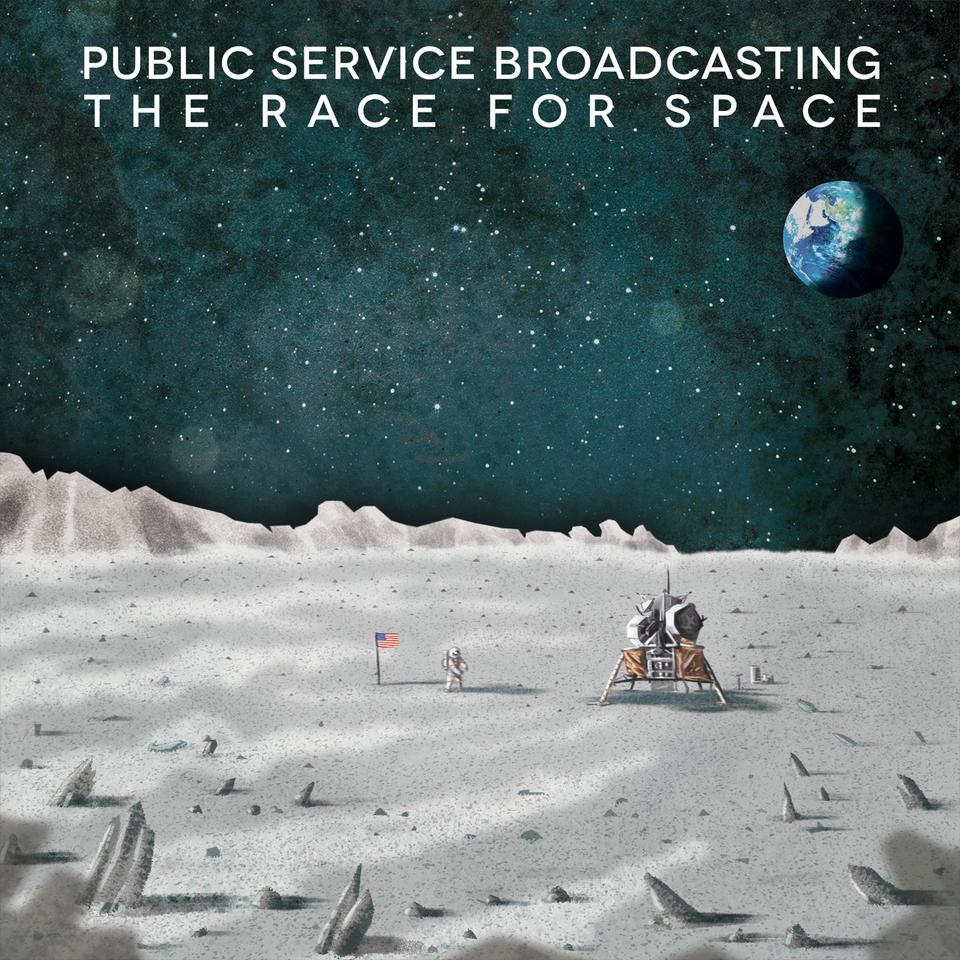
Weekly Listen: The Race for Space

I’ve always had a soft spot for concept albums. There are such things as instrumental ones – Camel’s The Snow Goose comes to mind (along with every piece of orchestral program music ever) – but lyrics are usually a key part of playing out the concept. Words are important – but what if you use the words of others?

On the one hand, Public Service Broadcasting is an electronic (mostly) pop duo that makes interesting, textured, music. But what really makes them stand out for the crowd is what they do with the words of others.

Using samples of speech isn’t a new thing, particularly with electronic music. My favorite examples are the conspiracy theorist preacher in The Orb’s “Salt”, who punctuates every statement by yell “fact!” and the more subdued, but just as loony, guy in Mogwai’s “Repelish” who explains why Led Zeppelin really wants you to go to hell.

PSB goes beyond that. They use speech samples to tell a story, to weave a narrative through an album that reflects a particular concept. It’s more than a trick or a fascinating experiment. It takes the whole project, which would probably be pretty good in the first place, and pushes it into greatness.

As you might have guessed from the title, The Race for Space is about the space race, in particular the glory years leading up to the moon landings. It starts with the title track, which is just John F. Kennedy’s famous speech (“we choose to go to the moon in this decade . . .” – you know the one) and some lush, slowly growing choral chords. But it serves as a statement of intent, of just what exactly you’re in for going forward.

From there on out, tunes jump from various space race milestones, both Soviet and American. The best of the bunch are “Sputnik,” which has a broad post-rock kind of feel, punctuated by lots of burbling synth goodness (mimicking the “bleep bleep” of the “new Russian moon,” as the narration says), and “Go!,” which takes the go/no go calls of the various departments checking in during the Apollo 11 landing. They way they’re edited together to work perfectly with the driving beat catches the excitement of one of humanity’s great achievements.

Of course, some of the milestones are a little less celebratory. Specifically, “Fire in the Cockpit,” which deals with the fire in the Apollo 1 capsule, is mostly a dirge with very serious explanations of what happened layered on top. Other tracks are more subdued and reflective, like “The Other Side” and “Valentina.” There’s even a bizarre change of pace horn-laden jam for “Gagarin.”

I learned about The Race for Space from Prog magazine. At first, it doesn’t seem like a natural fit. Aside from a bit of “E.V.A” where the rhythms get tricky, there’s nothing here that sounds “proggy.” But on the other hand, it’s a completely original and interesting album from start to finish, unafraid to head down whatever particular rabbit whole strikes its fancy. If that ain’t prog, I don’t know what is.

RaceforSpaceUS

RaceforSpaceCCCPjpg

Why I Love The Knick

One of the side effects of living in the Golden Age of Television is that there’s so much good stuff out there it’s just a fact of life that some really good shows get overlooked. Take, for example, The Knick, which is two episodes into its second season run. Helmed by Steven Soderbergh (and created by Jack Amiel and Michael Begler), the show has all the hallmarks of being one of those everybody-talks-about it cable shows. Only it isn’t.

I can fathom a couple of reasons for this. For one thing, Friday nights have never been great for struggling TV series (ask Joss Whedon). For another, Cinemax has yet to have its critical and cultural breakout series like HBO and Showtime have. People might be forgiven for still thinking of it as Skinamax first and foremost, which probably doesn’t help the show’s profile.

Which is a shame, because The Knick‘s become one of my favorite shows on TV right now. Part of that’s down to the wonderful world building that’s inherent in a show that’s set in 1900-1901 (I discussed something similar in an old review of Mad Men). But part of it’s down to one element of the show that’s a complete and utter anachronism – the score.

Cliff Martinez – a long-time Soderbergh collaborator – could have taken the safe route and used music of the period (or new music styled to sound like the music of the period) as a means to deepen the world building. Instead, the score is entirely electronic, full of burbling sequencers and noises that weren’t even contemplated in 1901, much less actually heard. It shouldn’t work, but it does, and brilliantly.

I think that’s because the story of The Knick is one of cutting edge advancements in science, even if it’s science that’s more than 100 years old and sometimes hilariously wrong. Even though electronic music has been around in popular culture for decades it still sounds vaguely “futuristic.”

But it also allows Martinez to do things in service of the story telling that would be impossible with a more traditional score. Brandon Nowalk, writing about the latest episode at the AV Club, describes one example. It involves a regular character’s father, a preacher, who comes to visit from home (which is West Virginia, if I’m not mistaken). Naturally, he winds up preaching:

He talks about the diversity of New York City and how all its exotic peoples have as much to learn from them, good God-fearing Christians, as they do from the exotic peoples. Okay, he speaks in tongues a few times. It’s a ballsy move after calling actual Earth languages he’s overheard on his visit “strange tongues from Babel.” He claims it’s God speaking through him. And then composer Cliff Martinez, whose work is often beyond my ability to express, ramps up the theremin sounds like it’s a classic sci-fi horror scene. AD invites the congregation to sing, and we pan back to Lucy, joining in with everyone else without hesitation. Soon the spooky sounds drown out the singing so we’re watching a silent group move in unison to the oooh-OOOH of the theremins and thump-thump-thump of the beat. There’s no clue in Lucy’s performance as to what could be the matter, but maybe that mindless conformism is the point, a demonstration of AD’s power. It’s a thrilling scene that somehow remains essentially elusive.

You can see that scene for yourself here. It’s just one example, but it’s a really good one. And while that’s only one aspect of a show that’s really hitting on all cylinders, it’s the one that most clearly sets it apart from its peers.

Weekly Read: Machine Man

A few weeks ago I wrote a review of the new 3rDegree album, Ones and Zeroes Volume 1, which is about great leaps forward in life extension technology, overseen by a powerful corporation, that ultimate results in the uploading of human consciousness into a computer. I have no idea of the guys in the bad are familiar with Max Barry’s Machine Man, but they really ought to talk.

Two key refrains from Ones and Zeroes kept running through my head while reading Machine Man. One is the plea, “tell me what it means to be human?” The other is the observation that “life is needing more.” Good science fiction, of course, deals squarely with “what it means to be human” and Barry does just that in Machine Man.

Dr. Charles Neumann – Charlie to those lesser beings he allows to get within speaking distance – is a research engineer at Better Future, the kind of soulless, mega corporation that would have to have a name like that (it reminds me, over and over, of Veridian Dynamics from the all-too-short-lived series Better Off Ted). One day he loses a lower leg in an industrial accident. He gets a prosthetic leg, but isn’t much taken with it (he’s much more taken with the protheticist, Lola). As an engineer is apt to do he starts  tinkering, building a better fake leg. So good, in fact, that he decides he’s really being held back by his other “good” leg. So off it comes.

Rather than being locked away in an asylum or left penniless and unemployed because of his antics, Better Future sees Charlie as a visionary, someone who can open up a whole new market for them selling medical products to people who aren’t actually sick. It’s a neat setup, but one that only really works because of a decision Barry makes that is both fascinating and limiting.

Machine Man is told entirely from Charlie’s point of view. We are in his head (or whatever passes for his head) from beginning to end. This works really well in putting us  inside the mind of someone who comes up with a nice justification for a desperate act and follows that down the rabbit hole. On the other hand, it means we’re stuck with Charlie. In addition to being kind of a dick (we will tell you what’s wrong with everything, including you), Charlie is incredibly naive. He never thinks twice about the broader problems that Better Future’s plans may cause – indeed, he frequently protests that he only ever wanted to build parts for himself and fuck anybody else. That allows Better Future to have a hold over Charlie that a more thoughtful character would be able to shake. It’s not fatal to the book, but it is kind of aggravating.

To Barry’s credit, the devotion to Charlie’s POV means there are no bits of the narrative that devolve into a pro/con argument about Charlie’s augmentation. The argument is there, but it’s more subtle and comes from his interactions with Lola and the fact that we can’t get away from his very selfish and limited view of the world. It’s argument by example, rather than rhetoric, and works pretty well.

Which makes Machine Man seem like a dour trek. In fact, it’s very funny. Darkly funny, but still. The opening chapter, in which Charlie’s resolve to find his cell phone (without which he’d be lost) leads to the loss of his leg, is hilarious. It gets less so the further things go, but Barry never lets go of the fact that he’s telling a story that is absurd and getting more so the longer it goes on.

It’s not perfect. It’s just not believable that the goings on in Charlie’s lab – his army of assistants undergo quit the transformation – could have stayed contained within Better Future in the YouTube age. Someone would have talked or tweeted or Instagrammed and all hell would have broken loose. Barry gets away with a setting that’s almost hermetically sealed from the rest of the world. And it goes on a bit too long, with the emotional punch of a potential ending giving way to a happier conclusion.

Nevertheless, it’s a good read. One that’s bound to put music in your head, whether it’s this:

or this:

MachineMan

The More the Merrier

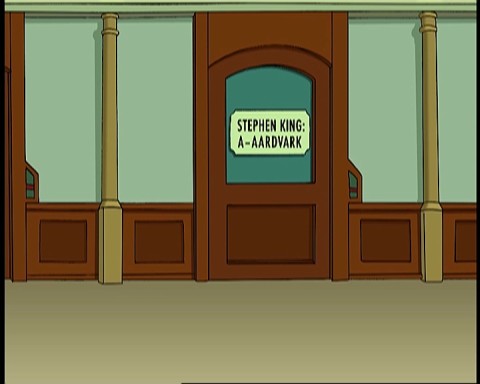
When I saw that Steven King had written a column in this weekend’s New York Times about profligate authors, my mind immediately went to this blink-and-you-miss-it joke from Futurama:

stephen-king-door

That was done in February 2001. He’s published 19 books since.

What I’m saying is that Steven King is amazingly productive when it comes to writing. He is also, of course, very very good at it. After all, here’s a guy who’s spent most of his life in the genre ghetto and had nonetheless won the National Book Award. He doesn’t need to do much more than point to that award to debunk the idea that quality is inversely proportional to quality.

So let’s ignore that – or rather take that point as given – and ask why the contrary holds true for so many people? Why do we tend to view people who put out lots of creative product – books, music, movies, you name it – aren’t as good?

One reason is that people figure that if you’re cranking out product at such a prodigious clip you must be scrimping on quality. It’s certainly possible that some creators would do that, releasing their stuff upon the world without a lot of editing or polishing. But it’s equally possible that whoever we’re talking about is just that prodigious. For some people writing is a hard slog, something that takes weeks and months to get right. Others are just able to pour forth things from the mind, tapping into a wellspring of creativity. We people in the first group aren’t fond of people in the second group, but that’s our petty problem.

The bigger issue, I think, is that the more someone produces the more their best stuff seems to get watered down, somehow. With only To Kill a Mockingbird on her resume Harper Lee was an undisputed master, a woman with a perfect batting average for writing classic American novels. Now that Go Set a Watchman has been released to less than thunderous applause, she’s batting 50 percent. Still really good, but somehow less impressive. Which is silly, because even if she followed up Mockingbird with a string of badly written shallow zombie mysteries Mockingbird itself is still what it is. But it takes some of the aura of inspiration off when somebody who hits a homerun their first time up at bat can only manage bloop singles (at best) for her other at bats.

Another issue is that the more product someone produces the more likely they are to experiment or move out of their comfort zone, potentially alienating existing fans. Steve Hackett’s had a pretty productive solo career (24 albums since 1975) that’s frequently jumped outside his progressive rock comfort zone to include a blues album and albums of orchestral material. As it happens, I’m not a huge fan of Hackett’s tangents, so I can see where someone’s overall opinion of an artist like him would dip at the perceived diminishing returns. But on the other hand, that’s silly because, no matter how many other albums he makes, Voyage of the Acolyte, Please Don’t Touch, Darktown, and several others will continue to be brilliant.

Which is to say that no matter how strange the creative mind may be, the minds of the people we create for can be even stranger. “Quality” is as much about perception as anything else and it’s nearly impossible to control how perfect strangers perceive you. If your muse only lets you grind out a new work every decade, don’t force it. But if your muse won’t shut up and helps you pop out something every month, don’t stifle it. Do what works for you.

Stephen King’s got your back – what more do you need?

Stick Your High Art Where the Sun Don’t Shine!

Another blast from the past . . .

OK, not really. I’ve got nothing against what most people think of as “high” art – I enjoy quite a bit of it – I just object to the classification. Regardless of how well-meaning or merely taxonomic it strives to be, it carries an implied judgment of “low” art as being, somehow, not worth as much. By further implication, it suggests that those who enjoy or make “low” art are somehow lesser than those who deal with “high” art.

I bring this up because of a recent essay over at the New York Times philosophy blog by Gary Gutting (with an assist from Virginia Woolf) about the divergence. Along the way, he appears to argue that musical worth, at least (it’s unclear if his metrics would apply to literature, film, or visual arts) can actually be quantified and judged objectively.

Along the way, he lays down this assertion:

Centuries of unresolved philosophical debate show that there is, in fact, little hope of refuting someone who insists on a thoroughly relativist view of art. We should not expect, for example, to provide a definition of beauty (or some other criterion of artistic excellence) that we can use to prove to all doubters that, say, Mozart’s 40th Symphony is objectively superior as art to ‘I Want to Hold Your Hand.’ But in practice there is no need for such a proof, since hardly anyone really holds the relativist view.

* raises hand *

I’m not sure how many of us there are, but I for one will proudly admit to being a relativist on the quality of art. Someone’s interaction with art is so personal, so bound up in the quirks of our own experiences, that it’s impossible to convert that interaction to some kind of objective measurement. For the record, I’m not ignoring the objective fact of consensus – that I like something a majority of the world can’t stand doesn’t make them right and me wrong, but it does mean I’m swimming against the current.

Anyway, back to the philosopher, who continues:

We may say, ‘You can’t argue about taste,’ but when it comes to art we care about, we almost always do.

Well, yeah, people will argue about things that matter to them, be it art, politics, or sports. Just because we do doesn’t mean the arguments can be won on some kind of objective scale. Humans will argue about anything!

He goes on:

You may, for example, maintain that the Stones were superior to the Beatles (or vice versa) because their music is more complex, less derivative, and has greater emotional range and deeper intellectual content. Here you are putting forward objective standards from which you argue for a band’s superiority. Arguing from such criteria implicitly rejects the view that artistic evaluations are simply matters of personal taste. You are giving reasons for your view that you think others ought to accept

Several things strike me as wrong about this.

The most important one, I think, is that Gutting is conflating the manner in which someone defends a preference with the actual basis upon which that preference rests. I’ve listened to an awful lot of music in my four decades on the planet, from the most popular radio hits to the most obscure wind band compositions. A lot of those I’ve listened to because of “hey, if you liked X, you’ll like Y, too” recommendations. I’m not sure they’re worth any more than a coin flip when it comes to predicting whether I’ll like it or not. Some things move me, some things don’t. The same is true for everybody, isn’t it?

More likely, these “objective” standards upon which Gutting relies are not the considerations we have when we decides something moves us, but post-hoc rationalizations to try and explain why that thing moved us. At the end of the day, I can’t really say why I prefer Marillion to Magma.* I suppose I could dig into the construction of the various songs and come up with some reasons for it, but they’d be meaningless. Most of the time, I’d rather listen to Brave than Udu Wudu. But sometimes not, you know? I can’t really tell you why.

Gutting’s reference to “objective” standards make me think of people who argue about whether one athlete is better than another when they’re separated by decades. Yes, statistics will be trotted out to support argue that Pele is better than Lionel Messi (or vice versa), but they don’t prove anything. Too many years have passed, the game has changed, etc. Ultimately, we have our favorite in mind before the argument begins and scramble to find some justification for it. If it was as simple as “consult these objective measurements” there’d be nothing to argue about.

Another flaw in Gutter’s presentation is assuming that those things he lists are “objective” to begin with. I’ll give him a pass on complexity for now (although more of that later), but the others have not just some, but large amounts of, subjectivity inherent in them. Whether something is “derivative” is a value judgment, in the end. Any musician is influenced by other music she’s heard and is, to some point, derivative of what’s come before. What’s the dividing line for being too derivative? What if it’s a parody, pastiche, or homage, anyway? Even more untethered from objective measurement are a piece’s “emotional range” and “intellectual content.”

As for complexity, how to measure it and what it means isn’t readily apparent. “Complex” generally implies some amount of difficulty, but any musician will tell you that sometimes playing something “simple” precisely and with musicality is more difficult than playing something that’s a tangled flurry of notes. Furthermore, that something is more complex doesn’t make it inherently more likely to connect with the listener. Quite the opposite, in fact. Returning to the Marillion/Magma example, few would argue if you called Magma’s more complex, but that wouldn’t lead inexorably to a conclusion that it was superior. For some folks it would be, for some folks it wouldn’t. For some people, there is a point where there are simply too many notes.

For another thing, using complexity as some sort of taxonomic tool fails to conflate like with like. Of course a three-minute song recorded in the early days of multitrack recording by four guys is less “complex” than a half-hour long symphony written to be performed by a full orchestra made up of dozens of people. So what? How does that help us judge either piece? It’s like saying desert is less nutritious than the main course – it utterly misses the point.

Someone in the comments to Gutter’s piece trotted out Duke Ellington’s aphorism:

There are simply two kinds of music, good music and the other kind

But even that’s not quite right – there’s what you like and what you don’t; what moves you and what doesn’t; what you want to hear and what you don’t. That a lot of people agree with you, or a consensus develops down through history that a particular work is a masterpiece doesn’t change that.

At the end of the day, as I said, art is personal. To label some of it “high” and some of it “low” throws up class barriers where none really exist. People like what they like. Sometimes, they like the same stuff you do. Sometimes they don’t. Deal with it.

* Before I get any angry letters in Kobaïan, I dig Vander’s bunch when I’m in the mood. Don’t take it personally.

This post originally appeared at my old blog on July 18, 2013

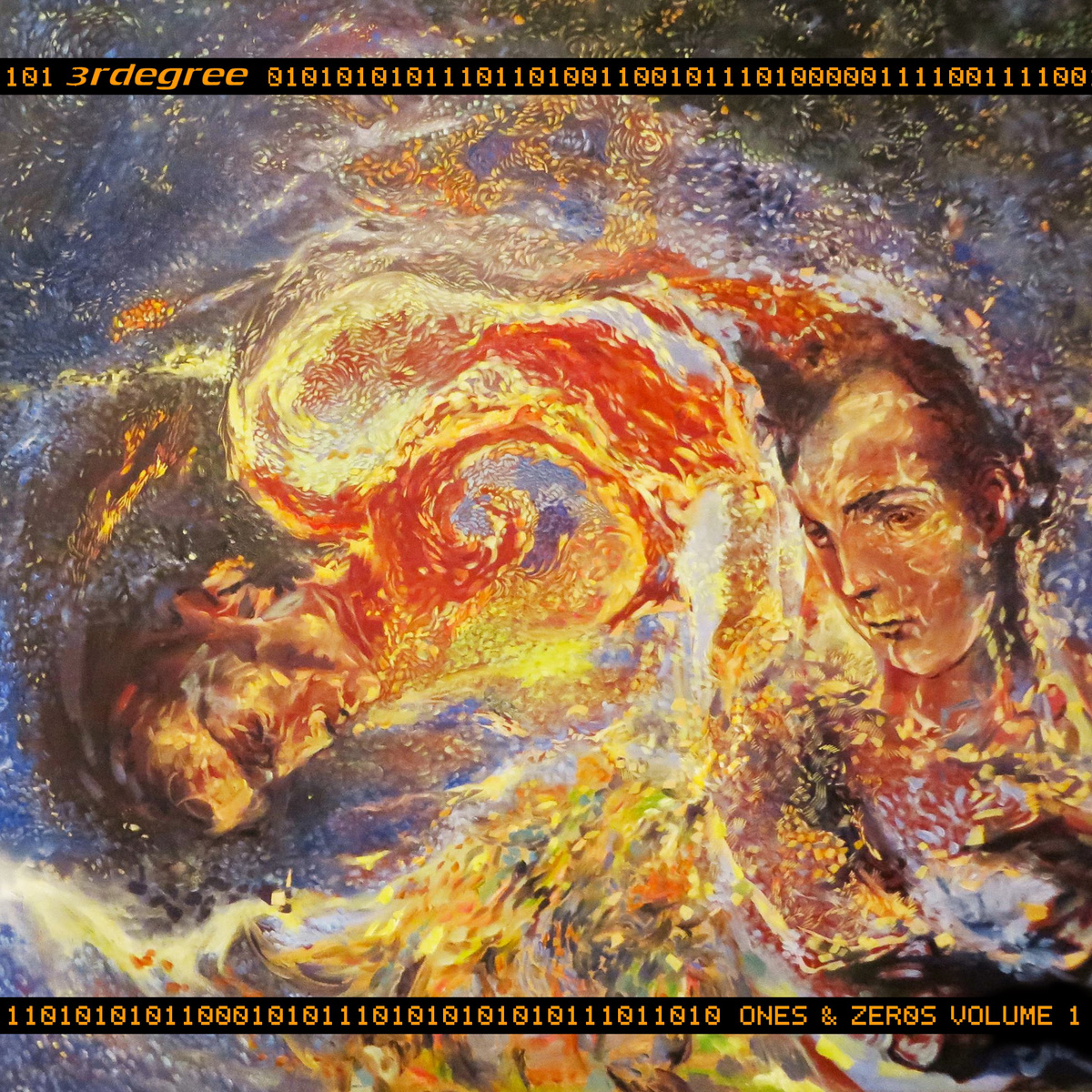
Weekly Listen: Ones and Zeroes: Volume 1

Since roaring back to life with 2008’s Narrow-Caster, 3rDegree has gone from strength to strength. Their 2012 effort, The Long Division, is one of my favorite albums. Does Ones and Zeroes: Volume 1 measure up and keep pushing the band forward? It’s too early to tell, but it keeps revealing great things on every listen.

The Long Division had a strong theme running through lots of it, but Ones and Zeroes goes a step further by being a full on concept album (part one of at least two, if I remember correctly). The concept revolves around a shady corporation, Valhalla Biotech, that sells a variety of life extension technology. As set forth in the band’s press release, the album “isn’t so much science fiction as it is a futurist album, expounding upon current trends in technology and leading them to their logical conclusion.” As regular readers know, just saying something isn’t science fiction doesn’t make it so. Ones and Zeroes is as sci-fi as they come, using advances in technology to explore our own humanity.

On the album that deals mostly with the question of what it means to be human? More particularly, what does it mean to be alive? If, as we hear over and over again, “life is needing more,” then the ultimate goal is to extend life forever. Along the way Valhalla goes from stocking “elixir centers” that extend “expiration dates” to realizing the dream of Ray Kurzweil – the uploading of the human mind into a computer where it could, theoretically, live forever.

Along the way, the band explores the various issues that would arise in this situation. There’s concern that this expensive tech will further class divides (there’s a voice over about the world’s oldest man watching his son die of old age) along with the idea that this might all be allowed under the theory that somebody will get there eventually (the Chinese, most likely), so “we” (whoever “we” are) might as well get there first. Most hilariously, the idea of a megacorp in charge of all this leads to the fact that, in “Life at All Cost,” the company tries to sell upgrades while peeling apart and scanning a client’s brain.

All in all, I get a strong Blade Runner vibe from Ones and Zeroes. Valhalla reminds me a bit of the Tyrell Corporation, whose motto, after all, was “More Human Than Human.” Is that where we are at the end of Volume 1? Seems that way. In addition, the need for more life echoes the demand of replicant Roy Batty that he “wants more life” as he kills his creator. So the concept has a lot of areas to explore and I’m sure I haven’t touched them all (I’m notoriously bad at sussing out album concepts).

But this is an album after all and none of that matters if the music is subpar.

Good thing that the music is up to 3rDegree’s usual high standards. The band has always walked a fine line between melodic accessibility and prog complexity, a mixture they’ve refined over the years. The result is a group of tunes that are instantly appealing but reveal depth and interesting details upon further listens. Believe me, once you’ve heard “This Is the Future” it will stick in your head (I dare you not to sing the backup vocals in the chorus!). Not to mention it makes the cheery yet disturbing voice overs of “We Regret to Inform You” go down easy!

If you look at the credits you’ll see no fewer than three guitarists were involved on this album. Lest you fear it’s an onslaught of power chords and shredding six strings, they’re actually fairly restrained. In fact, I’m not sure all three of them are brought to bear on any one track. There are some nice acoustic spots and George Dobbs gets plenty of room to lay out some nice synth solos.

There’s nothing on Ones and Zeroes that jumps out at me the way a few tracks did on The Long Division. But it works better as a whole, as befits a concept album. It’s a mess of awfully good music wrapped around an interesting idea. And the best thing? It’s only the first part!

OnesandZeroes

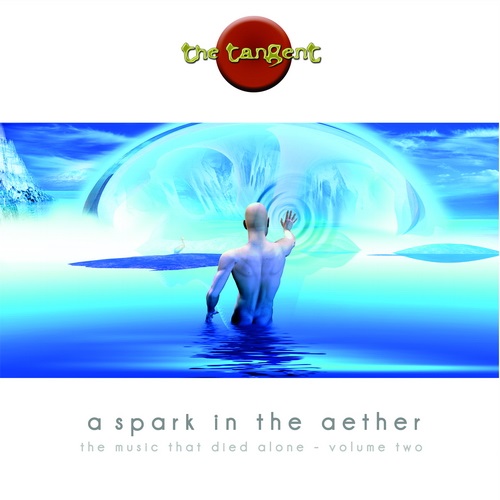
Weekly Listen: A Spark In the Aether

The subtitle for The Tangent’s latest album – it’s eighth – is “The Music That Died Alone Volume 2,” referencing the title of the band’s debut. Of course, the music it’s talking about – progressive rock – has never died, even if it did (to paraphrase Frank Zappa) “smell funny” for a while. But it’s thriving today, if not commercially than artistically. That’s due, in no small part, to The Tangent.

As the name suggests, The Tangent grew out of what was supposed to be solo project by keyboardist Andy Tillison. It grew into a real band for a few albums and has since morphed into a kind of revolving cast of players carrying on the band’s proggy project. Tillison is the central character (duties having expanded at times to include lead vocals and guitar), driving The Tangent on with his desire to bring fresh slabs of classic prog to the 21st Century.

Tillison’s never been coy about this. The first album uses a Hatfield and the North song (incorrectly titled, but whatever) in the middle of an epic. A Place in the Queue has a liner notes directing unsuspecting young readers toward Tales from Topographic Oceans (the prog equivalent to luring children into your van with candy). Hell, he even wrote a novella to go along with Not As Good As the Book which involves a far flung future and, naturally, Yes. Tillison is prog down to his bones.

On A Spark In the Aether, he lets it all out. Not only musically, but lyrically as well. Witness the epic “Codpieces and Capes,” which takes on the general slagging that prog has taken from the music press, concluding that those who fobbed it off as pretension were “so wrong” (but, in a bit of humor, “they were probably right about the rug.”). That being said, the album covers lots of ground, from the rocking title track, to jazzy ambience, and even some funky bits here and there.

The centerpiece of this album, however, is “The Celluloid Road,” which is a view of modern American through the lens of someone who’s never actually set foot here (although that doesn’t accurately describe Tillison). In other words, it’s less about how we actually are than how we project ourselves to be to the rest of the world via film and TV. It’s always interesting to hear how the rest of the world views us. In this case, it’s how the rest of the world views the way we view ourselves. It’s both amusing and a little disheartening. Said funky bits show up here in the “San Francisco” section (which mostly deals with it being destroyed in various movies – and this was written before San Andreas!).

This isn’t a Tangent masterpiece, but I’m enjoying it a lot more than Le Sacre du Trevail, which I found to be really dire and depressing. There’s nothing wrong with a bit of fun. So come on in and prog your brains out. Don’t forget to bring your cape!

TTiStif