Is the ATAC a MacGuffin?

For Your Eyes Only is my favorite James Bond flick.

Part of that is due to when I saw it, it being one of the first Bond movies I’d seen. But a big part of it due to the fact that the spine of the movie’s plot is a more plausible Cold War scenario than the Dr. Evil inspiring big bads Bond often faced.

In a nutshell, a British ship (disguised as a fishing trawler but really a spy ship) sinks off the Greek coast. On board was the Automatic Targeting Attack Communicator or ATAC, a computer that helps coordinate the UK’s ballistic missile fleet. Naturally the Soviets want to get their hands on it. Bond, aided by supreme Bond Girl Melina Havelock, tries to get it back for the Brits. In the end . . . well, the end is one of my favorites of all time:

So I was delighted to come across an episode of the All 80s Movies Podcast about For Your Eyes Only. I was surprised, though, when the guys on the podcast called the ATAC (which they hilarious mispronounce “AhhTAC” – it’s not like they don’t say it over and over again in the movie!) a “MacGuffin.” That didn’t jive with my idea of what a MacGuffin was and got me to thinking about it.

The term apparently dates to about 1930s or 1940s and was coined by a British screenwriter named Angus MacPhail, who worked a lot with Hitchcock. As defined by the OED, a MacGuffin is:

a particular event, object, factor, etc., presented as being of great significance to a character or characters, but in the end proving illusory.

Hitchcock would further explain that a “MacGuffin is the thing that the spies are after, but the audience doesn’t care” and, ultimately, “is actually nothing at all.”

It’s that last part that I always associated with the concept of a MacGuffin. A famous more recent example is the briefcase in Pulp Fiction, which multiple characters go to great lengths to possess, but we never learn what is inside, except for:

But I’m seeing lots of examples cited of things that are, to my mind, so substantial to be considered MacGuffins. Some cite all the things in the Indiana Jones movies (as in “Indiana Jones and the BLANK of BLANK”) as MacGuffins. This includes the Ark of the Covenant in the first movie – but they find the Ark, it melts some Nazis, and basically deus ex machina’s Indy’s escape. Is that a MacGuffin? Another list includes Colonel Kurtz from Apocalypse Now, a real human being with whom the main character significantly interacts, as a MacGuffin. That makes no sense to me. Likewise the Death Star plans in Star Wars – not only do they jump start the plot, but we see them after delivery and the info in them allows Luke to blow the place to shit!

Other examples hew closer to my conception of a MacGuffin. “Rosebud” in Citizen Kain, for example, since the important part of the story isn’t the damned sled but that rise and fall of Kain’s life. The Holy Grail in Monty Python and the Holy Grail is an even better example, since it motivates the action but is never seen or obtained by the characters.

While pondering all this I checked out one of the all-time great MacGuffin movies, which I’d never seen, The Maltese Falcon.

It definitely fits the mold of MacGuffin I have in my mind. The bird itself doesn’t show up until about 15 minutes from the end of the film and then, once it’s revealed to be fake, ceases to have any real meaning. Rather, the movie is about what the pursuit of this object (which Bogart’s Sam Spade calls “the stuff that dreams are made of”) changes and corrupts all who decide to pursue it. It could be anything – a Javanese lion, an Andalusian wombat – and the same story gets told. That the damned thing matters to the characters but doesn’t to the audience seems to be the whole point.

I suppose for me the question is how important the actual item is to the resolution of the story. If all it does it motivate people and the ultimate identity/characteristics of the thing doesn’t matter, I’d call that a MacGuffin. If it’s more important than that, probably not.

Where does that leave the ATAC? Since we see it in action, then see it recovered, then stolen, and then ultimately destroyed by the main character so the bad guys can’t have it, I’m definitely not getting MacGuffin vibes from it. It’s just too important to the movie, including the wider world of it. The world of The Maltese Falcon continues to spin regardless of how that petty crime is resolved, while the world of For Your Eyes Only gets considerably more dangerous if the ATAC falls into Soviet hands.

Ultimately, what qualifies as a MacGuffin is probably in the eye of the beholder. As a writer, it’s a useful tool to have in order to motivate characters. On the other hand, don’t lose sight of the fact that sometimes the little doohickey everybody is trying to get their hands on is pretty damned important in its own right.

Just like obscenity, you know it when you see it.

Weekly Watches & Reads – UK History Edition

In May, my wife and I took a much delayed (thanks COVID!) vacation to the United Kingdom, hitting London, the Scottish Highlands and Isle of Skye, and Edinburgh over the course of a couple of weeks.

As is my wont, the trip inspired me to come home and read/listen/watch various things about that part of the world. Here are some quick thoughts.

The whole of the UK is steeped in history and it occurred while I was there that I knew precious little of it, particularly when it came to Scotland. I remedied that by digesting the entirety of Scotland: A History from Earliest Times, by Alistair Moffat.

Never was a book so aptly named, given that it spends a good hunk of its epic runtime (23+ hours in audiobook format) covering the geological history of Scotland before human beings even enter into it. Honestly, I wish the book would have condensed that considerably, since Moffat then covers basically all of Scottish human history (my other criticism is that he goes too close to current, lapsing from history to journalism in the end). As a result, it has a kind of bird’s eye view of things, without a whole lot of detail, but for someone like me who didn’t have a great idea of Scottish history, it was just about perfect. Particularly interesting to me was how Sir Walter Scott (who has a huge memorial in Edinburgh, pictured above) essentially created the modern conception of being “Scottish,” drawing on Highland things that had mostly been suppressed previously.

One of this historical things about which I knew nothing at all before we hit Scotland were the Jacobite Risings that happened there in the 17th & 18th Centuries. The last, started in 1745, was particularly prominent, in spite of the fact that it ended in bloody defeat for the rebels at the Battle of Culloden. We visited the battlefield and I wanted to get a better sense of the battle, so I read/listened to a book with the title Culloden, by Trevor Royle, which you’d think would do the trick.

Except that the full title is Culloden: Scotland’s Last Battle and the Forging of the British Empire. The Culloden part is, maybe, one third of the book, although perhaps it doesn’t need much more than that (it took place on wide open terrain and was over in about an hour – Gettysburg it was not). The rest is about how many of the officers and men at Culloden went on to fight Britain’s imperial wars around the world, with a decent focus on North America. It was interesting, in its own way, but not quite what I was looking for.

My thought was Culloden would be a good subject for a movie, so I was surprised that there weren’t many out there dealing with it directly (as opposed to using it as some kind of background). I finally found one called Chasing the Deer that I was able to watch on YouTube.

I was drawn to this partly because one of the actors is Fish, original lead singer of Marillion and successful solo artist in his own right. I knew he’d done a little bit of acting (this was his only feature film) so that made certain I had to check it out. It was well done in terms of tone and accuracy, but the small budget came through and the script wasn’t great (neither, sad to say, was Fish, although he was about par for the course with the rest of the cast). It did give you some idea of what the actual battle was like, however, so that counts for something.

My final bit of reading when I got home was Devil-Land: England Under Siege 1588-1688, by Clare Jackson.

We were in Westminster Abbey and I saw Oliver Cromwell’s tomb (well, slab of tile under which he’s buried) and realized I’d never really dug into Cromwell or the English Civil Wars. This book looked like just the thing to fill that gap. It’s just as long as Scotland, but only focused on about 100 years, after all. Still, I was disappointed that this was also pretty high-level history, without a lot of detail about life on the ground. In addition, the Civil Wars didn’t get any singular treatment and were just events along the way that happened to involve the royals that were really the focus of the book. There was no discussion of any political philosophy underlying the Republicans or Royalists. What is clear to me, however, is that this period was hugely influential on the American Founding Fathers, as you can pick precise parts of the Constitution that seem designed to prevent atrocities and injustices that happened during this era.

Speaking of Westminster Abbey, part of what we took in there were the tombs of Elizabeth I and Mary Queen of Scots. Somewhere along the way I found out there was a fairly recent movie about the pair, cleverly titled Mary Queen of Scots, with Saoirse Ronan in the title role and Margot Robbie as Elizabeth.

As the title suggests this is a Mary-forward portrayal of events and does give you a sense of the era (the claims of historical inaccuracy, based on my reading, are mostly down to interpretation rather than outright incorrectness). That said, it’s fairly dull for the most part, skipping large periods of time in order to cover all of Mary’s time in Scotland, but precious little of her time as a prisoner in England. And as much as I love David Tennant, one of John Knox’s rants on how wicked women are was enough. Nice bit of synergy, though – I started Devil-Land just after we saw this and it starts with the execution of Mary, so it was a nice transition.

Much less period, and not at all historical, but definitely getting points for Highland isolation is Calibre, from 2018.

Calibre is the story of two buddies, one of whom is getting ready to become a father, who jaunt into the Scottish wilderness for a hunting trip. They wind up in a very small town filled with very creepy people who are full of unheeded warnings. A tragic accident happens and the guys get stuck in town without an easy way out. The movies deals in tropes, to be sure (the “small town creepy hick” cliche transcends oceans), but the atmosphere is really well maintained and the acting is quite good. Like I said, nothing historical, but does give you a sense of what it’s like in the middle of nowhere Scotland (see also “Loch Henry,” one of the episodes of the new season of Black Mirror).

Spending a few days in a foreign land is hardly enough time to get a sense of the place. What it can do, at least for me, is spark a deeper interest in the area’s history and culture, such that it will always be something that captures my interest. I figure British history is a rabbit hole I’m going to plumet down into for a good long while to come.

Weekly Watch: The Man Who Shot Liberty Valance

Sometimes the ideas the animate a movie are better than the movie itself.

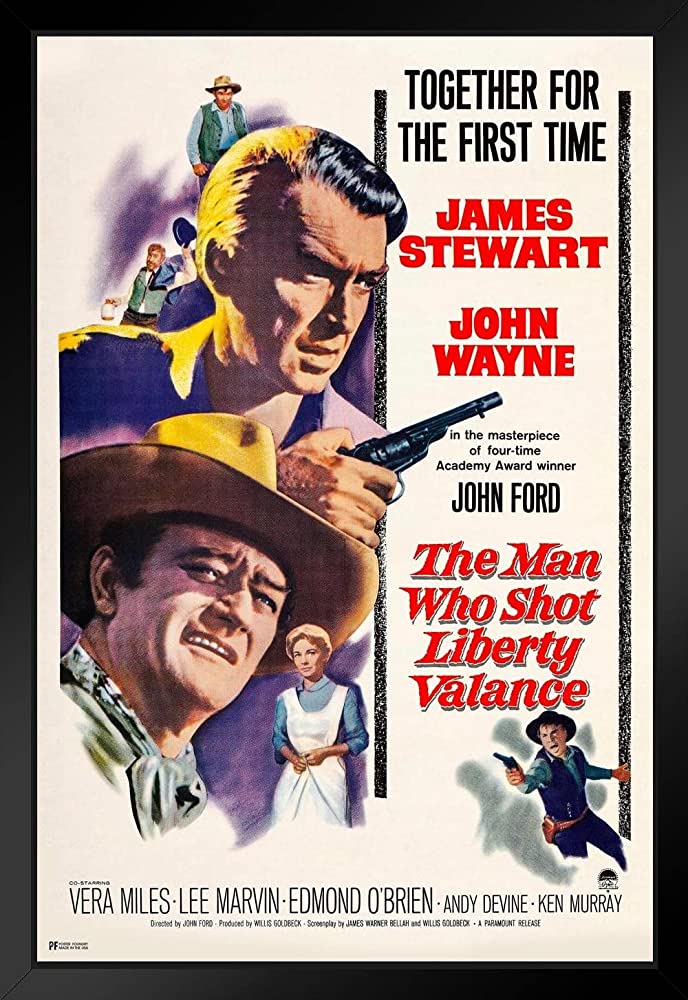
As with many films of the 1930s-1960s I’ve seen recently, I stumbled into The Man Who Shot Liberty Valance on Turner Classic Movies.

Not only that, it was part of a slate of movies programmed by Steven Spielberg, so there was a little intro discussion between he and Ben Mankiewicz about the film. It was the last of the great westerns directed by John Ford (a huge influence on Spielberg, among others) and they talked about how it confronted issues about the transition of the West as a conflict between an older regime built on violence and self-sufficiency to a new order based on the rule of law. As a lawyer, and someone with a degree in history, that sounded like something I should just eat up. Damned if the actual movie didn’t get in the way of that.

The “old” West is represented by none other than John Wayne, whose performance here spawned a million impressions punctuated by the word “pilgrim.” He plays a rancher, Tom Doniphon, who has made a hardscrabble living out of the land and thinks everyone needs to be capable of using a gun to protect themselves (he is, naturally, a crack shot). The “new” West is represented by Jimmy Stewart as Ransom Stoddard, a lawyer from the east who believes in bringing civilization to the West. They go back and forth about the best way to handle the titular Liberty Valance (Lee Marvin), a local brigand who furthers the interests of big cattle ranchers who don’t want the unnamed territory to become a state.

That setup is fine so far as it goes, but Ford doesn’t really do a lot with it in the end. Stoddard’s stagecoach is robbed on its way into town by Valance. When Stoddard complains to the town marshal about it he dodges responsibility by pointing out that it occurred outside of town and therefore outside of his jurisdiction. But we later see Valance do all sorts of criminal things right in the middle of town and not only does the marshal do nothing, Stoddard never demands that he do so. Stoddard never tries to take the job and be the law. Hell, we never actually see him practicing any kind of law in the movie (he does some school teaching, though). No, what does Stoddard do? He pretty quickly gets himself a gun and starts practicing how to shoot.

It’s no great spoiler that Valance winds up on the wrong end of a gun (it’s right there in the title, people), although it’s a little unclear precisely who “the man who shot Liberty Valance” is, in the end. Both Doniphon (from the shadows, we later learn) and Stoddard shot AT him, but it’s unclear who hits him and which shot is the fatal one. Regardless, what is beyond clear is that Stoddard fully joins in the game of dealing with Valance through violence, leaving any real pretense of the law behind. And it’s Stoddard who gets the honor of being that man, even if he doesn’t really want it (which is a really interesting conflict that could have been explored more deeply).

So the movie kind of fizzles in its portray of the “old” versus “new” West, but how is it otherwise? Well, it’s a tale of two movies.

The first, which focuses on the leads – Wayne, Stewart, Marvin, and Vera Miles as the love interest – is pretty good. All those performances are good and the have good scenes together. Marvin, in particular, is really menacing as Valance (and has a young Lee Van Cleef as a sidekick). The love triangle between Stoddard, Doniphon, and Miles’ character is underbaked (Doniphon is building an addition onto his house for her, but she doesn’t have any apparent desire to move in), but, hey.

The other movie is the weirdest feast of overacting I’ve ever seen. There are multiple characters – the Cowardly-Lion-esque town marshal, the drunk town doctor, the (also drunk) newspaper publisher – who perform so broadly that had they wandered off this set onto the one for Blazing Saddles Mel Brooks would have told them to tone it down. If you’ve seen the episode of Futurama where Zoidberg’s uncle directs a “serious” movie but demands that the background actors run around throwing pies at each other, you’ve got the picture. Big ideas can be great drivers of a story, and fiction can be a fantastic way to explore how people grapple with those big ideas. But the idea is not the story. The story is the characters in it, what they do, and why they do it. The biggest and most important idea can be felled by a poorly executed story. That’s what’s the most frightening for us creative types – the big ideas are the easy part, but there’s so much left to do once you’ve hit on one.

But What Is a Happy Ending?

As the Tears for Fears song goes, everybody loves a happy ending. That said, what makes an ending a happy one? Does that depend on the person doing the reading or watching? And does it matter whether we’re looking at a more meta or personal level?

I stumbled into these questions recently after finishing Paul Tremblay’s The Cabin at the End of the World, which became the movie Knock at the Cabin, directed by M. Night Shyamalan and released last year. It was the movie promos that made me want to read the book (I’ve not had good luck with Shaymalan’s movies over the years) so I was always interested in how the adaptation went. The endings of the book and movie differ quite a bit and raise some interesting questions about what constitutes a “happy” ending.

Needless to say, the post from here on out is going to be spoiler heavy, so if you don’t want to know about any of this, head away now.

The plot of the book and film are pretty close, until a certain point. They both start with a young girl playing outside a remote country cabin where she and her two fathers are on vacation. She’s approached by a large, friendly guy who winds up having three friends with him. He gives the family a startling ultimatum – the end of the world is upon us and the only way to stop it is for one of the family members to be sacrificed. It’s sort of a horror/mythical take on Sophie’s Choice.

Naturally, the family refuses to kill one of their own and the tension ramps up from there. The interlopers start to kill each other and there’s some evidence from the outside world (via TV) that maybe it really is the end of days. Tragedies are happening and the big dude in charge may or may not know of them in advance. In the book, at least (I haven’t seen the movie yet), it’s left very vague whether the intruders are religious fanatics, simply nuts (but I repeat myself), or are really telling the truth.

Here’s where things part ways, significantly, between book and movie. In the book there is a struggle over a gun that leaves the little girl dead. Eventually the dads escape (all the intruders die) and they confront the question of sacrificing one of themselves just in case the world is really ending (one is now more of a believer than the other). Ultimately they decide not to, essentially concluding that any kind of God that would require such a thing isn’t worth obeying, and they walk off into a brewing storm that may or may not just be a storm. In the movie, by contrast, the girl is not shot and one of the dads decides to sacrifice himself to save the world on her behalf. The girl and her remaining father leave and find evidence that the sacrifice really is stopping the world from ending.

Per this interview with the LA Times (via), Tremblay explains that while he generally likes the movie, he prefers his ending to Shaymalan’s. No big surprise there. Endings are hard and if you get what you think is a good one you’re kind of protective of it. But what really interested me was Tremblay’s explanation as to why:

I think the movie’s ending is way darker than my book. I don’t mean to say this flippantly. But politics aside, on a character level, the idea of, “What are Andrew and Wen going to do now”? Not only did they just kill Eric – how will they go on with that knowledge – but also with the knowledge that this supreme being that controls the universe was so unremittingly cruel to them? I would never write a sequel . . . but I’m actually weirdly interested in a story of what Wen and Andrew do now.

He further explains:

at a certain point in telling the story it didn’t matter to me if the apocalypse was happening because the story to me became, “What were Eric and Andrew going to choose?”

That was the story: their choice. Their ultimate rejection of fear and cruelty, whether or not the apocalypse is happening. What has happened in the cabin and what they’re presented with is wrong; it’s immoral, and they refuse. And I find that hopeful . . ..

This is weird on its face. The movie ending is clearly the happier one, right? The little girl lives. While one of her dads decides to sacrifice himself (which is honestly where I thought the book was going) at least we know it wasn’t in vain and it really did save the world. For a story full of psychological terror that seems like the best possible outcome.

But I think that framing depends on whether you look at the story from a personal or meta level. On a meta level this story is the trolley problem on steroids. Forget five strangers on the tracks versus one, we’re talking about survival of life on Earth – billions of people – against the life of one person who is, to you, particularly beloved. By pure utilitarian calculus this is a fairly easy call (the needs of the many, as Spock would say). Of course, that presumed that the apocalypse is really happening and the requested sacrifice could really stop it.

A similar dilemma animated the season finale of The Last of Us (and the end of the game, so far as I’ve read), in which Joel was faced with Ellie being operated on in a way that would kill her but that might lead to a cure for the pandemic that was ravaging humanity. Rather than give it much thought, he broke very bad (badder than before, at any rate) and killed anyone who got between he and Ellie. He saved her, thus potentially condemning the rest of the people on the planet.

Is that a happy ending? It sure is for Joel, who doesn’t have to go through the trauma of losing (in essence) another daughter. Is it for Ellie? Hard to tell, since she didn’t really get much choice in the matter (either way). Is it for humanity? If it was going to lead to a cure, fuck no, but if it wasn’t?

My point isn’t to take sides (although I have my preferences, like anybody), but to point out that any on person’s conception of a “happy” ending might not match someone else’s. In a way, that’s a great thing for writers. Endings are hard and the knowledge that people can interpret a particular ending so differently means it’s folly to try and please people. But in another, it means more to think about when trying to shoot for a happy ending.

As always, the best course is to think hard about what you’re going to do and why you want to do it. That way at least you’ll have a satisfactory conclusion to the story you want to tell.

Is Art the Stuff Nobody Needs?

We’ve all sat through movies, or slogged through books, that are too damned log. Did Uncut Gems really need two hours of shouty Adam Sandler? Wouldn’t 90 minutes have done the trick? Do any of the Song of Ice and Fire books need those long descriptions of food?. Couldn’t most of those Netflix true crime documentary series be cut to a feature length doc rather than four or five TV episodes? Isn’t in the obligation of the creators of these entertainments to be as efficient as possible?

Not so fast, argues author Lincoln Michel. Last month he made a strong argument that it’s the “unnecessary” stuff that makes art worth doing. I’m not sure that he’s completely correct, but he’s certainly not wrong.

Michel references people who complain about scenes of sex or violence, or, most hilariously, “those damn whale chapters” in Moby Dick, because “they don’t move the plot along.” Dubbing these folks “consumers” rather than readers, he suggests that their “ideal story seems to be a Wikipedia plot summary.” This might have many causes, from a modern obsession with efficiency to artists seeking short cuts to satisfy an increasingly fragmented audience.

For Michel, this is not a good thing:

Yet I would like to humbly suggest this thinking is entirely wrong. The unnecessary is most necessary part of art. Art is exactly the place to let your eye linger on what fascinates it. Art isn’t an SEO optimized app or a rubric for overworked teachers to grade five-paragraph essays. Art is exactly the space—perhaps the last space left—where we can indulge, explore, and expand ourselves. If we can’t be weird, extraneous, over-the-top, discursive, and hedonistic in our art, where can we be?

While recognizing that the seemingly extraneous stuff can have meaning in the work (by deepening understanding of a character, for instance), Michel goes so far as to claim that “I don’t believe art has ‘a point.’” In other words, for Michel, art is about the journey itself, not the destination and the tangents and dead ends that are explored along the way are as much a part of that as the jaunt down the proverbial Yellow Brick Road.

I like a lot of what Michel is saying here. I write fiction, but I also write briefs and other legal arguments in my day job and in that role, there is no doubt, brevity counts. Lawyers are famously long winded, I know, but you really want to convince the judge (or law clerk) reading your brief in the most efficient way possible, so you trim down the issues, trim down the facts to the bare minimum.

Fiction can certainly be different than that, but does it have to? I’m reading a book right now (no names – I’m not finished yet and it might turn around on me) that has a great idea at its center and would make for a really good short story or novella, but as a novel there’s just too much padding. What should be tense and horrific is instead kind of dull and plodding.

In a way it reminds me of the bloat albums went through when CDs took over as the main music format back in the 1990s. Whereas single LPs couldn’t handle much more than 45 minutes of music without quality issues, CDs can run all the way up to almost 80 minutes (a time chosen, apocryphally, so as to allow for the inclusion of all of Beethoven’s Ninth Symphony on one disc) and lots of artists took advantage of that. Here recently we’ve seen albums shrink again, back to where they were in the LP days and that seems generally like a good move.

That said, some of my favorite albums of that era are full to bursting and I wouldn’t have it any other way. Marillion’s Brave trimmed down to fit on one LP would be a travesty. I wouldn’t shave a moment off of the early Mike Keneally albums, all of which push the boundaries of CD capacity. And to the extent that other albums have filler, that doesn’t really diminish from the enjoyment I get from the really good stuff.

Heck, progressive rock writ large could be thought of as a celebration of what is “unnecessary” for rock music. Rock and roll, after all, is supposed to be direct, to the point, and emotionally blunt. Prog flouted that ideal, most obviously in songs that sprawled across entire albums sides (or more!), rather than be limited to 3 minutes or so. It’s that embrace of the excess, the unnecessary, that I love about prog.

That said, there’s an awful lot of lengthy prog that does nothing for me at all, same as books or anything else. Michel recognizes this, following his discussion of a favorite novel of his that is “plotless and essentially character-less” with the recognition that “[o]f course, it might not be interesting to you. If you don’t enjoy an artist’s vision, that is of course well and fine.” The problem, he argues, is transferring that personal dislike to objective truths about the quality of a work.

With that I agree 100%. As I’ve said here before, the reaction to art is inherently personal and what is one person’s work of genius is another’s pretentious twaddle. Where I part company, I guess, with Michel is that when I hear people say something is boring or slow or has unnecessary parts what I’m hearing is that the art, whatever it is, isn’t working for them and isn’t interesting to them. Because I don’t think there are objective truths about art I don’t take any one person’s reaction to any particular piece of it as being an attempt to deliver any truth other than their own. So I wouldn’t be as hard on people who think parts of books or movies or whatever are “unnecessary” because, to them, they are.

What’s most important, in the end, is that, as Michel concludes, there are spaces where artists and those who experience art can be free to be as excessive and unnecessary as they want to be. Not every work of art is for every taste and that’s not only okay it’s fucking fantastic. Find what you love and dive into it, then hope whoever is making it is willing to explore the unnecessary or the “boring” because when they do it you might think it’s the best thing ever. And creators – keep in mind that not everybody is willing to follow you down your creative cul de sacs – but I bet some folks will.

Weekly Watch: “Night of the Living Dead”

At the recent DualCon in Charleston, through sheer serendipity, my table wound up being next to that of John Russo, co-writer (along with director George Romero) of Night of the Living Dead, the horror film from which essentially the entire modern zombie genre sprang. After hearing him talk about the movie on a panel we did it occurred to me that I’d never actually seen the flick. Naturally, the wife and I remedied that situation that very evening.

The story of Night of the Living Dead is even more amazing than the movie itself, although it holds up pretty well after all these years. Made for about $100,000 by first-time film makers (Romero, Russo and others had a production company that made commercials and other short pieces in and around Pittsburgh – Romero even directed some segments of Mr. Rogers!) it grossed about $30 million worldwide, making it one of the most profitable movies ever made.

The movie itself takes a fairly common setup and ramps the dread up to 11. As Russo explained during our panel, he thought of Night of the Living Dead as the 1939 movie Stagecoach, “but with zombies instead of Indians” and that seems right. You take a group of disparate people with few prior ties to each other, put them in a stressful situation, and see whether they pull together and triumph or splinter and fail.

If the movie is not just that story, but a metaphor for society at large as it faces existential threats then we, in the words of Thinking Plague, “are so fucked.” Once the group is gathered in an isolated house while the zombie horde (sorry, “ghouls” – the movie never uses the Z word) approaches, the battle lines are draw over whether to remain on the main floor or barricade themselves in the basement. The arguments both ways are the kind that can never be right or wrong – the main level has multiple points of entry for the ghouls, but also multiple ways out; the basement is more secure, but if they break through that door you’re dead.

My first thought upon viewing was that Ben, the main character and the prime supporter of the main level argument, was proven wrong, because he winds up in the basement when the horde overwhelms the house, anyway. The more I think about it, though, I don’t think that’s the case. Less important than where they make their stand is that they make it together, is what I’m thinking now. That even he is killed, in the end, and not by the ghouls, makes for a very bleak viewing experience and comment on human nature.

Aside from the side effects of its low budget (beyond its role in launching the modern zombie genre, Night of the Living Dead is one of the foundational films of the modern independent film scene) it doesn’t feel “cheap” (this is not a Zappa-esque “Cheepnis” situation). The script uses radio and TV news reports, often playing in the background, to broaden the story without losing the focus on our characters and their locale. That also helps setup the very end, too. I also enjoyed the soundtrack, which is typical orchestral bombast, save for when the zombies are the focus, when is switches to a very cutting edge soundscape of synthesized throbs and scratches.

But my final takeaway from Night of the Living Dead is irony. My first novel, Moore Hollow, is a kind of zombie story. The backdrop is that a crooked West Virginia politician around the turn of the 20th century actually tried to raise the dead so they would vote for him. In the novel, a disgraced English journalist with family ties to the West Virginia coal fields comes to track down the mystery. The zombies aren’t monsters, but more a problem to be dealt with and, perhaps, damned souls who need protection. I gave him the last name “Potter” completely oblivious to the Harry Potter connection.

His first name? “Ben.” Just like the main character in pop culture’s foundational zombie text. Sometimes the creative mind really does some wild things.

On Practicing Law In Someone Else’s Sweet Hereafter

I’ve written about The Sweet Hereafter, Atom Egoyan’s 1997 film, a couple of times before. It made my list of favorite movies last year and I added it to a list of other great lawyer movies compiled by the ABA.

As I said in the favorite movie post:

his is my favorite movie about being a lawyer, even though there’s no dramatic courtroom climax or wronged client who needs defended. Instead, it’s about the toll it takes on a person’s psyche to make a living by inserting yourself into the tragedies of others.

With the recent passing of Russell Banks, who wrote the novel upon which the film was based, I thought it was a good time to actually read the damn thing and see how they compare. I did this secure in the knowledge that I had read, somewhere, that Banks  himself admitted that this was one of those rare situations where the film improved on the book. Naturally, I can’t find that anywhere online. Regardless, is it true? After reading the novel and rewatching the movie, I can’t say for sure.

At bottom, both are about a small town called Sam Dent (upstate New York in the book, somewhere in Canada in the movie) where a school bus accident led to the death of most of the town’s children. Into this tragedy comes a big-city lawyer named Mitchell Stephens, who tries to sign up grieving parents for a lawsuit against someone, somewhere that was really responsible for the accident. His plans are foiled when one of the kids who survived the crash, but is now paralyzed, Nicole Burnell, lies in a deposition that the bus driver had been speeding. She does this either to get back at her father who has molested her, in sympathy with those in town who don’t want anything to do with lawsuits, or both. All the while, Stephens deals with phone calls from his estranged daughter, a long-term drug addict who has just learned she’s HIV positive (maybe).

One major difference between the two is that the novel really has no main characters. It’s told in a series of first-person monologues by the bus driver, Delores Driscol; Billy Ansel, who lost his two twins and runs the local garage where the wreck of the bus is stored; Stephens; and Burnell. Each character interacts with others, but the shifts of focus make it impossible for any of them to be the narrative spine of the story. The movie, by contrast, clearly makes Stephens the main character, the agitator/irritant who gets into town and stirs up stuff (whether that’s “trouble” or “justice” depends on your point of view).

There are a couple of places where the book’s shifting POV makes for really interesting comparisons. At one point, Stephens and Ansel talk after Stephens shows up to take pictures/video of the wrecked bus. In the movie, this plays as Stephens trying, quite unsuccessfully, to sign up another parent for his lawsuit (this is how it’s read in law review articles, of which there are many), but in the book we know that he’s actually doing the opposite – he wants Ansel pissed and wanting no part in the lawsuit so when he testifies as a witness (Ansel was behind the bus when it crashed) he’ll be unbiased. Legally, I’m not so sure that makes sense (and it backfires spectacularly), but it certainly changes the way we see Stephens. Likewise, being in Nicole’s head makes her outright anger at her father more palpable and her ultimate betrayal more emotional and spiteful than the cold, calculated move it appears in the film.

There’s two big changes from the book that the movie makes, one more important than the other for figuring out what the story is trying to say. The smaller change is a storyline where Stephens is on a plane and meets an old friend of her daughter to whom he’s able to deal out all the information about his daughter’s troubled life. This is a pretty good way of getting at a lot of stuff that’s in Stephens’ head in the book and doesn’t really impact the overall arc of things.

The bigger change is the ending. In the film, after the lawsuit falls apart, it jumps to Stephens getting into a cab at the airport, where he sees that Delores is driving one of the shuttle busses. In the book, by contrast, there’s a lengthy coda from her point of view in which she learns what Nicole said about her and, therefore, what the town now thinks of her. It culminates in a demolition derby at the county fair that plays out like a kind of sacrifice (it involves one of Delores’ old cars) after which things seem to slide back towards normal. I don’t think it really works (and Delores does wind up driving tourist vans, although fairly nearby), but it’s certainly different.

Do these changes makes the movie better? I’m not going to go that far. I prefer the film, but I came to it first and there’s some bias because of that. Also, while Egoyan arguably exercised a messy ending dealing with the fallout from Nicole’s perjury, the end of the movie works better (I think) than the book. Mostly, the experience reinforced my thought that literature and visual media are different things driving at different goals. One isn’t really better than the other, they’re both different and it’s great that we can explore the same story in multiple ways.

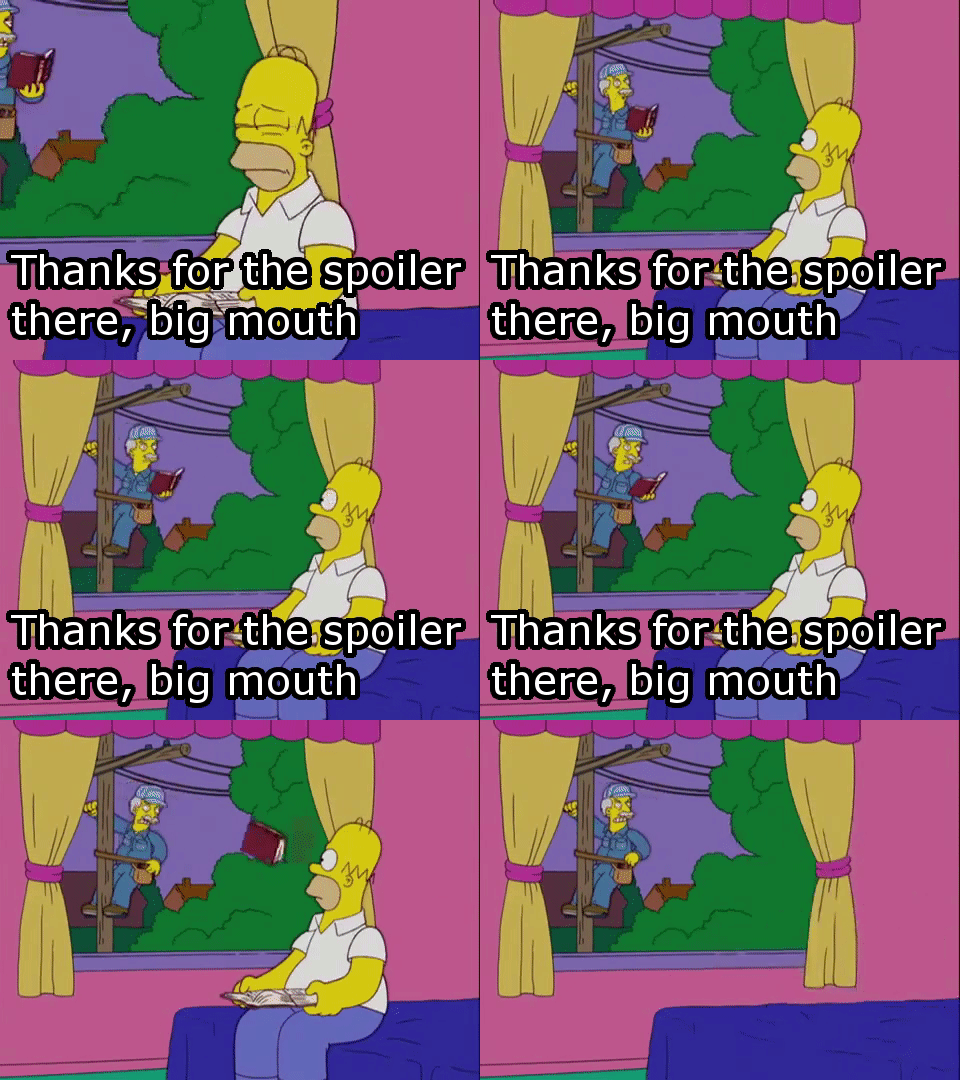
So where does that leave my love for The Sweet Hereafter as a lawyer’s story? The film version of Stephens continues to hit harder. While the book gets us into his head, Ian Holm’s portrayal of Stephens as emotionally running on fumes resonates more. In the deposition scene, as Nicole’s perjury spills out, the look on Holm’s face is one that any lawyer knows well. Remember this scene from The Simpsons?

It’s the same thing with Stephens. You can tell the very moment his case, all the work he’s put into it, all the hours away from home, goes up in smoke. All due to something entirely beyond his control. We’ve all been there pal.

That, in the end, is why The Sweet Hereafter resonates so much as a lawyer movie. We may all aspire to be Atticus Finch, but we recognize more of ourselves in Mitchell Stephens then we’d like to admit.

Weekly Watch/Read Quick Hits

Sometimes, you just want to say a little about some interesting things . . .

Operation Nemesis: The Assassination Plot that Avenged the Armenian Genocide, by Eric Bogosian

On March 15, 1921, a man named Soghomon Tehlirian stepped up to a former high-ranking Turkish official, Talaat Pasha, and shot him dead. At his trial, Tehlirian told of how he had witnesses the murder of his family as part of the Armenian Genocide and had taken the chance to kill Pasha for his role in it (he’d been convicted of his complicity in absentia after World War I). Actor and writer Eric Bogosian thought that story would make a great movie and started writing a screenplay, only to find in his research that Tehlirian didn’t act alone, but was one part of a wide ranging conspiracy called Operation Nemesis to seek some measure of justice for those killed during the genocide. Bogosian wound up writing this book, which is plenty fascinating, but doesn’t quite live up to its goal of getting deep inside the conspiracy, focusing mostly on Tehlerian and his particular act. Fun fact – Bogosian was in Atom Egoyan’s brilliant Ararat, which is partly about making a movie about the Armenian Genocide – he plays the screenwriter.

The Bishop’s Wife

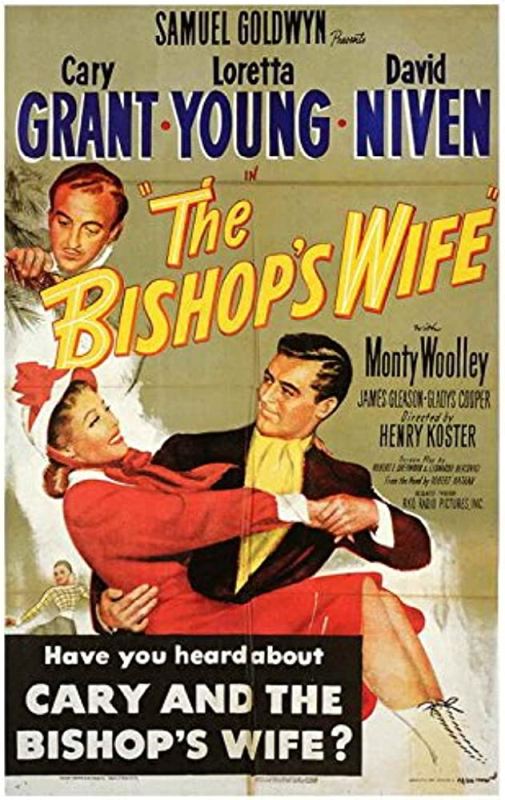
Every holiday season my wife TiVos just about every Christmas movie she can find and I’m always interested in something that’s older that I haven’t seen before. This one (from 1947) is one of the weirder holiday movies I’ve ever seen. Cary Grant plays an angel who comes to the aid of the titular bishop, mostly by wooing his wife (in some markets it was billed Cary and the Bishop’s Wife so as to not seem too religious). I’m not kidding. The bishop makes promises to do all sorts of thing with his wife, but has to cancel to go beg for money to build a pointless cathedral, so Cary steps in and does it all. I kind of like the theory floated by gpph at Rate Your Music that Cary might actually be a demon, more than an angel – that probably would have been a better movie! Still, this is a Christmas movie with precious little of “there’s only one proper way to celebrate Christmas and we’ll beat you over the head with it until you conform,” so that’s a major plus in my book.

Sea of Tranquility

I really really loved Emily St. John Mandel’s Station Eleven (and her recent work to get her divorce cited on her Wikipedia page) and so was a little disappointed with Sea of Tranquility. It starts really well, laying out multiple timelines and a singular bit of weirdness that appears to link them all. When things lose steam, for me, is when we get deep into the time travel stuff at the book’s core, which I just don’t find that compelling (it’s wrapped around the “what if we’re living in a simulation, man?” speculation and at least comes to the correct answer – who cares!). That said, Mandel is just great on a scene level and there are really excellent bits here and there that make it worth the (relatively short) read.

Reservation Dogs

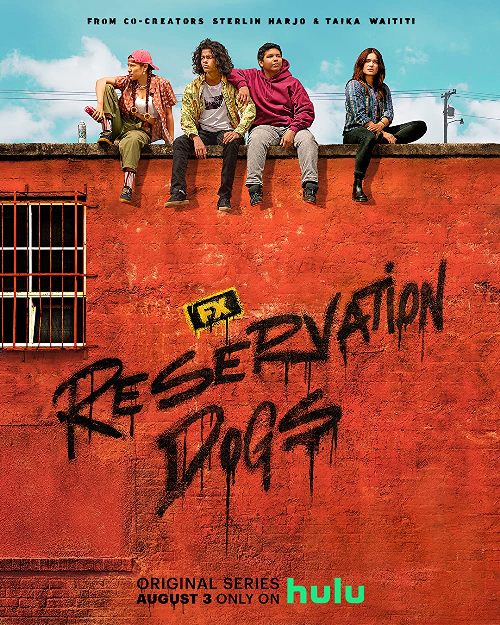
This Hulu series (18 episodes over two seasons so far) has been on our radar for a while, but we only got around to actually digging into it recently. Thankfully, it’s as brilliant as the reviews made it out to be. It’s about four Native American teenagers on a reservation in Oklahoma dealing not only with the regular realities of life, but also the suicide of their best friend, which hangs over the series thus far. If that makes it sound depressing and serious it can certainly be serious (and touching – a scene in the second season finale made me choke up), but it’s hilariously funny in other parts, as well.

Does Size Matter?

Get your minds out of the gutter, folks, I’m talking about books here.

A while back I came across this column:

The argument is as the headline states it – that novels used to be longer and the fact that people don’t read long novels anymore is a problem. I don’t find it a very compelling argument, for several reasons.

The jumping off point for this observation was the then-looming 100-year anniversaries of two very famous long books – James Joyce’s Ulysses and Marcel Proust’s In Search of Lost Time (its English translation, anyway). The overwhelming mood of the column is a “they just don’t make ‘em like the used to” and wouldn’t things be better if modern popular culture supported such massive works? Fiction, the author argues, helps build empathy for others and generally leads to a more civilized, less violent society. I don’t disagree (although the cynic in me says look at the 20th Century), but I’m not sure book length makes much of a difference.

Joyce and Proust are odd standard bearers for this argument, too, given that they’re ultimately more talked about then read. Were either best sellers in their time? The author labels them “gravely under-read,” so presumably not. “Proust” has enough pop culture currency to be a solid basis for a silly sketch about trying to summarize his work, but how many people have any idea what it says? As for Joyce, even the author of this column concedes that there are parts of it that are “skippable,” which sounds like a concession that Ulysses is just too damned long.

More to the point, the column ignores or downplays evidence that consumers of media (in whatever form) are more than happy to give over lots of time to various works. He bemoans the fact that Netflix allows viewers to watch things a increased speeds, “as if 90 minutes is now considered an unreasonable amount of time to spend watching a 90-minute movie.” This is slightly out of touch, as the ballooning of movie lengths is pretty regularly commented on. As for Netflix itself, a recurring criticism of its popular documentary shows is that they take what should be a feature-length story and stretch it over hours and hours. Yet people still dive in.

There’s a glancing mention of popular fiction, specifically a recognition that the Harry Potter books that kids eat up are lengthy, but then regret that “between youth and middle age, out enthusiasm for chunky novels recedes.” But is that true? Fantasy and science fiction are two of the most popular fiction genres and they often produce true door stoppers. Per this graphic from Electric Lit Ulysses is 265,000 words, which is a bunch. But A Game of Thrones, which has sold scads of copies, is 292,000 and it’s the shortest book in that series. Eye of the World, the first of the Wheel of Time series is nearly 306,000 words. Again, it’s sold loads.

Both of those are the first installments of a lengthy series, of course, which gets another overlooked truth of the modern book market – readers really like long, mutli-volume works they can dive into and immerse themselves in. Those series run into the millions of words. In Search of Lost Time, of course, was itself a series of seven books (topping out at just over 1.2 million words – Martin’s at 1.7 with A Song of Ice and Fire and isn’t done yet!). Going back to movies, what does it say that the most successful popular film series of our era tells a complete, interwoven story, over two-dozen-plus movies (not to mention related TV series)? It’s not an indication that people aren’t willing to devote considerable attention to media that moves them.

I’m not trying to equate popular novel series or the Marvel movies with two classics of world literature, but the thesis of this column isn’t that people aren’t reading the right kind of books (although that’s implied), but that they’re not reading ones that are long enough. But that’s simply not true. In whatever form you consume you media – book, film, or TV – people eagerly consume epic stories all the time.

There’s a musical analogy here, too. Progressive rock is famous for artists who indulge in lengthy songs, including side-long epics like “Supper’s Ready” or “Close to the Edge.” It’s to the point that some newer artists think length is as important as anything else when it comes to prog. But the truth is that Gentle Giant did more interesting things in 4 minutes than many bands can do in 20. The only issue should be how long should a particular song – or book or movie – be to get the job done? Sometimes it’s short, sometimes it’s not.

Or, as the old saying goes:

2022 – My Year In Media

Looking back on the various media items I consumed the past year – I really need to keep better track of some of them – I was looking for some kind of trend or meaning for what stuck with me. Alas, there really isn’t any, so here’s just a collection of interesting things, both new for 2022 and new to me for 2022.

Music

I didn’t get to sample a whole lot of “new” music in 2022, but it’s unlikely that any would have perched higher in my soul than Marillion’s latest, An Hour Before It’s Dark.

Grappling with COVID-induced lockdowns and fears (which vocalist/lyricist Steve Hogarth initially said they weren’t going to do), the album manages to both dredge up some of the worst of it and still end on a beautiful, hopeful note. It’s not as great an album as Fuck Everyone And Run, but that’s not much of a criticism. That the band has been at it so long and is still so good is either inspirational or enough to make you give up. Either way, I can’t wait for the next one.

In terms of “old” stuff, the complete out-of-the-blue find I had in 2022 was Norwegian band Suburban Savages and their 2021 release Demagogue Days.

Stylistically they’re hard to pin down, with a foot each in surreal Canterbury-style progressive rock and the other in the more avant garde side of things. There’s also a lot of great synth work, which naturally attracts my ears. The title track may be the catchiest use of 7/4 since “Solsbury Hill,” too!

Movies

The wife and I still haven’t seen a movie in the theater since COVID hit (more out of inertia more than anything else, I think), so I didn’t get to see a lot of “new” movies in 2022, although we did get to catch up on several big-name flicks over the holidays, most of which (Nope, Glass Onion, etc.) were solidly “meh” in my mind. The standout from 2022, for my money, is The Wonder.

It’s a small, quiet film about an English nurse in post-famine Ireland who is brought in to observe a teenage girl who allegedly is surviving without eating anything. It’s no spoiler to say she’s not what she appears, but the way those around her deal with it are fascinating. The movie has a creepy atmosphere that doesn’t really read “horror,” but makes it feel that way anyway.

For some reason, in 2022, I decided to regularly take a look at the offerings on Turner Classic Movies. As a result, we wound up watching a lot of movies from the 1930s and 1940s, classics that I’d never seen before. Top of the heap for me was Double Indemnity, the 1944 noir classic directed by Billy Wilder.

It’s a pretty sleazy tale for the middle of Code-era Hollywood, but everybody gets theirs in the end, so I suppose that’s justice. All I know is that it’s a ball to watch the plotting and scheming unfold. You can see the DNA in a lot of modern thrillers in it.

I also wanted to give some love to a pair of documentaries I saw this year that dealt with overlooked aspects of music history.

The first, which hardly needs my approval (it won an Oscar, after all), is Summer of Soul, directed by musician Questlove.

It’s about a series of concerts held in Harlem during the summer of 1969, the same year as Woodstock (which overshadowed these shows in the popular conscience). A lot of them were recorded for proposed TV specials that never really happened, so there was a rich treasure trove of performances from the likes of BB King, Stevie Wonder, and Nina Simone. But the movie also gives a lot of context for why these concerts were such a big deal at the time, along with modern feedback from several attendees (and a few performers).

The other gets at the overlooked contributions of women to the development of early electronic music, Sisters With Transistors.

It focuses on real pioneers, including Delia Derbyshire (responsible for the Dr. Who theme, the assembly of which is amazing) and Wendy Carlos (of Switched on Bach fame), so lots of cool archival footage.

TV/Streaming

Looking back I’ve already written a lot about some TV shows in the past year, with some thoughts on the finale of Better Call Saul, the first season of Star Trek: Strange New Worlds, and the fascinating documentary series The Most Dangerous Animal of All. I wanted to highlight a few others, too.

First, exiting the stage along with Better Call Saul was, for me, the best sci-fi series of its generation, The Expanse.

As it happens, I read the first book in the series (which I highlighted in my list of favorite recent books last year) before the TV show started so I was already primed to like it, but the adaptation was really excellent. Maybe it lacked swoopy spaceships, but it had compelling characters dealing with real human issues against a backdrop of an existential threat to our species. They didn’t even bowdlerize Avasarala!

One that both came and went in 2022, in that it won’t get a second season, is Archive 81.

Based on a podcast (which does continue past this only season), it’s about a guy hired to digitize a series of videotapes that pull him into a mystery/conspiracy involving a cult and a huge apartment fire decades before. It’s creepy and atmospheric and the cult aspect actually works better than I thought it would. I think the season could stand on its own, but there was clearly an expectation of more given the ending. Oh well.

Hopefully, since we’ve already gotten two (short) seasons, we won’t be denied more of Slow Horses.

Based on the books by Mick Herron, the series is about a clutch of essentially exiled British intelligence agents who either are, or are perceived to be, useless fuck ups. Until somebody thinks they might be useful and then the shit hits the fan. I read the first book before diving into the series and the adaptation was incredibly faithful, right down to Jackson Lamb’s championship flatulence.

Books

I loved Susanna Clarke’s Jonathan Strange & Mr. Norrell when it came out and had kind of given up on getting anything else from her when Piranesi appeared in 2020.

It took me a couple of years to get to it, perhaps worried that the slighter volume wouldn’t measure up to its predecessor. I shouldn’t have worried. It’s a beautiful, expertly crafted book and completely different from Strange & Norrell. If you’ve heard people praise Clarke’s work by find the first book’s length a bit daunting, start here. You won’t be disappointed.

After Salman Rushdie was cowardly attacked in New York in August I finally decided to jump into The Satanic Verses.

It was, admittedly, a lot, with a narrative that jumps all over the place in terms of time, place, and tone. Beyond that, Rushdie isn’t exactly sparse with words, spinning sentences that sometimes seem to wrap around you two or three times before the period comes. I found it challenging and exhilarating all at once.

Finally, 2022 was the year I finished up the saga of necromancer Johannes Cabal, with The Brothers Cabal and The Fall of the House of Cabal.

I had a couple of quibbles (I don’t find the fictional nations in the middle of otherwise recognizable Europe very compelling), but overall it was a great ending to the tale of one of my favorite characters. Johannes is deeply cynical, but also funny and honest. You may not like him, but it’s hard to argue with him (to borrow a phrase from Clerks, “he’s blunt, but he makes a point”). The story of his brother, Horst’s, struggles with being a vampire were a fresh take on that theme.

Podcasts

In spite of hosting one, I haven’t really been a podcast listener until this year. For the most part I cherry pick episodes here and there on things that interest me, but there are a couple that became more regular listens this year.

The more entertaining of the two is Discord and Rhyme.

It’s a podcast in which a rotating cast of young(ish) music writers gather to talk through one of their favorite albums. What drew my attention when I was scanning through the back episodes was how many of them involve progressive rock (and adjacent) bands. It’s heartening to hear people not raised in the early 1970s who genuinely like that kind of music (most of them have parents to blame). But even on other albums what works the best is that they’re all coming from a place of love (or at least like) for particular albums, so the talk is engaging, informative, and enthusiastic. It’s much more fun to praise something you love than to tear down something you don’t.

The more aggravating of the two was Hoaxed.

A six-episode podcast, it dives into an incident from the UK in 2014 in which two children accused their father of being part of a cult of devil-worshiping pedophiles. Shades of the 1980s Satanic panic when the kids recant and it turns out that they were put up to it by their mother and her very odd boyfriend. That’s enough to hook you, but the story goes on to cover the backlash against the community when the charges fell apart and whether anybody will ever be held accountable for the damage done. It’s like a QAnon story in miniature. All right – bring on 2023!