“The Invited Guest” – A Short Story

It’s that time of year again. Author Eric Douglas has invited other writers to do some short fiction for Halloween. In years past he’s put a 100-word requirement (not a limit, a requirement) on the stories, but this year he didn’t put any shackles. You can read my entries from the past two years here and here. I set out to write something about 1000 words.

Enjoy – “The Invited Guest”

“How could this happen?” Sarah Jane said, head in hands.  She was sitting in a high backed chair next to the fire. Across from her, on the love seat, was the Devil.

He looked like a man of nondescript middle age, with a perfectly tailored black suit. Only his tie contained the faintest hint of red. She knew something was up because of his walking stick, black with an ever shifting pattern of flames. Then he removed his hat, a black fedora. The small horns were a dead giveaway.

Sarah Jane slumped back in her chair. “Why? How?”

“Could have something to do with that,” the Devil said, pointing to the crumpled paper bag next to Sarah Jane’s chair.

“My sandwich?” She’d just finished a supreme club sub from Tony’s down the street.

He nodded, eyes twinkling. “Did you, by chance, toss a portion of it in the fire?”

“Yeah, just the heel,” she said, then paused. “Wait a second.”

The Devil’s eyebrows rose.

She dug through her memories, deep into her youth. “My grandmother.”

“Was she was from the ‘old country’?” The Devil made air quotes.

Sarah Jane nodded. “When I was really young she would always hand out this crazy advice. ‘It’s bad luck if you spill salt and then don’t throw it over your shoulder. You’ll have good luck if you eat grapes after midnight.’ That kind of thing.” She thought some more, then started nodding. “And she said something about throwing bread into the fire.”

The Devil clapped his hands together. “There you have it.”

“But I didn’t want to summon you.”

“Makes no difference,” the Devil said. “I did not make the rules, believe it or not.”

“Well, I’m sorry to have wasted your time. You can go now.”

A slow, slippery grin stretched across the Devil’s face. “That is not how this works.”

A sudden chill ran from Sarah Jane’s feet to her head and back again.

“You see, once I have been summoned, there is only one way to make me leave.”

“Which is?” she asked, slowly enunciating each word.

“We need to come to an arrangement,” the Devil said, sounding very reasonable.

“Arrangement?”

“Yes.” He flicked some dust of his hat with his fingers. “Typically when someone summons me they want something big, bold, possibly dangerous. For that they are willing to trade their soul.”

“Whoa, back up, Scratch,” she said, hands raised. “I like my life as it is. I certainly don’t want something so much as to trade you my soul for it.”

The Devil raised a hand, palm open. “Like I said, I did not make the rules. I have to get something from you.”

“But I don’t want anything.”

“Yes you do.” The Devil sat back in his chair and examined his nails.

Sarah Jane chose her words carefully, “I need to pay you to go away?”

The Devil nodded.

“That’s insane! You can’t just show up in someone’s home and then not leave until they give you something!”

He raised a finger. “I did not just show up, woman. I was summoned. That it was without intent is irrelevant. If you want me to leave, you will pay.”

Sarah Jane wracked her brain. “But it shouldn’t cost me much, right?”

“What?” The Devil was caught by surprise.

“I mean, all I want is you gone and, let’s face it, you’re going to need to be somewhere else sooner or later.”

“I suppose that’s right, but . . .” he started.

Sarah Jane ignored him and kept going. “So it’s not really fair to take my entire soul just to get you to do something you’re going to do anyway.”

The Devil sat, mouth open for a moment. “I can play this game longer than you. You’ve got a boyfriend? What will you do if he comes over?”

She shrugged, not concerned that the Devil knew that. “I think Phil would enjoy this. He’s seen all the almost every movie about you, even Crossroads.”

The Devil rolled his eyes, then leaned forward, elbows on knees. “Look, you’ve got to give me something. A part of your soul, just a small bit.”

“Like what?” Sarah Jane asked. “Ten minutes ago if somebody had told me I had a soul I’d have said they were full of shit, but I’d have said the same thing about you, too. No offense.”

“None taken.” He leaned back and looked at the ceiling, deep in thought for a few seconds. Finally, he said, “do you like movies as much as Phil?”

“Sure,” she said, lying just a bit. This was the Devil, after all. “I’m more of a book girl, but I like movies.”

“Very well,” the Devil said. He rose and suddenly was twice as tall, glowering down at her. “I take from your soul the ability to react emotionally to motion pictures,” his voice deepened, “for the rest of your life!” The last phrase boomed around the room.

“Does that mean you’ll go away?” she asked.

The Devil shrank back to regular size. “I keep my bargains.”

“All right, then,” she said, standing and shooing him away with her hands. “Off with you, then.”

The Devil turned and began walking back into the next room. “You think this is a joke. It’s not,” he said over his shoulder.

“Whatever,” she said as she watched him disappear into the darkness.

~~~~~

They walked out into the chill evening. The marquee above them glowed in slow, shallow pulses.

Phil was sniffling. “How can you not be crying? It’s so sad! The way their village was destroyed? How the twins got separated, but only the girl found her mother in the end?”

“It’s just a movie,” Sarah Jane said. She cursed the Devil in her mind.”

“Just a movie,” Phil said, looking at her through bleary eyes. “What are you, some kind of soulless monster?”

“Something like that,” she said, looking up the block. “Let’s go get a sub.”

And remember, any invited guest is better than the other kind:

Be sure to check out Eric’s website for links to all the other stories.

Happy Halloween!

Soul

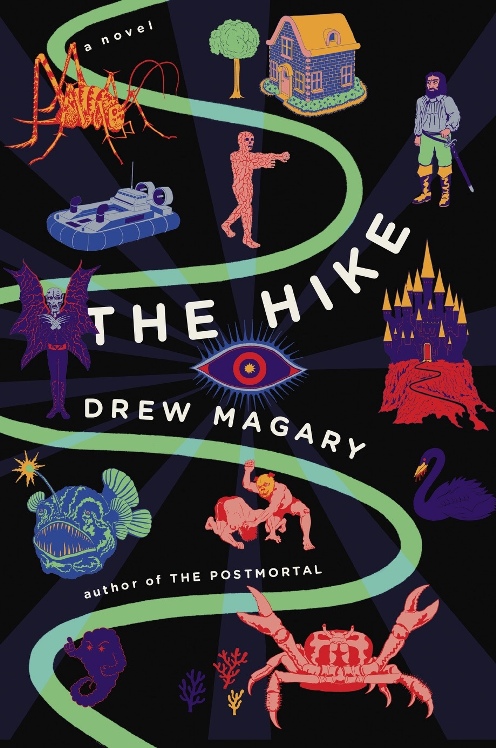
Weekly Read: The Hike

There’s a long tradition of stories were a regular person is thrown into some weird alternate world, one where the rules of real life don’t apply. The person has to battle through this world without understanding what’s really going on until, hopefully, they find their way out again. A problem with this evergreen template is that, eventually, the storyteller has to explain what’s going on. Rarely do the explanations match what happened along the way.

The Hike falls into that trap. It plunges its main character head first into a bizarre, alien, and frightening world that throws challenges at him apparently at random. It’s no spoiler to say that we eventually find out who’s doing this, but not really why. It’s an awfully soft landing after such a long journey.

But, oh, what a journey it is.

Ben is a businessman of some kind (it’s not really important) on a business trip. He checks into a third-rate hotel in the Pennsylvania wilderness and, with some time to kill before a meeting, decides to take a hike. From there things get – interesting. Almost immediately there’s a dead girl and killers chasing Ben while weaning the torn off faces of Rottweilers. Ben evades them, but finds he can’t get back to anything that looks familiar. With that, the saga is on.

It’s hard to describe what follows, and the surprise of it is part of the joy, so I won’t bother. Safe to say that Ben faces a series of trials that play out like an early role playing video game – success at each “level” is often dependent on figuring out what to do with objects that mysteriously appear when necessary. The struggles get harder as the journey goes along, while Ben occasionally has to deal with frightening episodes from his past.

Ben goes at this mostly alone, although he meets a wide variety of beings as he progresses along his path. At times he gets some companionship, in the form of a talking crab (who refuses to give his name and addresses Ben as “Shithead”) and a 15th-century Spanish explorer (who hates anybody who isn’t Spanish, particularly the English). That these relationships actually pays off in ways beyond being purely entertaining (the crab is really funny) is a testament to how good The Hike is.

Which is not to say it’s perfect. The book falls foul of the regular problem with stories of this sort in that the explanation of this weird world doesn’t hold a candle to the world itself. I’m not saying it doesn’t make sense, it’s just not very satisfying (admittedly, I’m not sure what would be). Also, while the final twist gives a little bit of sting to the tale, I don’t buy the reading that so many people have that Ben learned a great lesson through all this. He never really got into the world as an escape from real life, was never seduced by the promise of something different and exciting. He always wanted to go home to his wife and kids.

Then again, doesn’t everybody (well, maybe not the kids part)?. Which is why it’s hard to fault The Hike for not wowing you at the end, given all the wow you get out of the journey.

Untitled-4.indd

Speculative Fiction and the “Real” World

A little while back I reviewed The Spaceship Next Door and while I enjoyed it there was something about it that bothered me. It kept picking at my writer brain until I finally figured it out. It’s a small thing and nothing at all to change my earlier recommendation (TLDR – go read it), but it’s still something worth pondering.

Spaceship . . . was released at the end of 2015. It’s safe to say it was written sometime in the year or two before that. At the very least, we’re not talking about a book that sat in a trunk for decades before it saw the light of day. By all indications, it takes place in the time in which it was written, which is to say pretty much right now. There are smart phones, ubiquitous wi-fi, and other trappings of second decade of the 21st Century. And we’re clearly talking about 21st Century America, as the book is set in Massachusetts (albeit in a fictional town).

The book also has a considerable military presence, as one might imagine for a story where a spaceship suddenly lands in the countryside and then sits around for a bit. There’s more than one soldier who is a minor character and other characters interact with even more Army folks.

This is where something started bugging me. If we’re dealing with military matters in a world that’s otherwise our own – why is there almost no mention of Iraq or Afghanistan?

I’m not saying that any book set in modern America has to comment on our never-ending military adventures (full disclosure – Moore Hollow doesn’t). Nor do I expect a domestically set sci-fi tale to dive deeply into the matter. Still, it’s a little weird that, aside from one brief mention late in the book, they never come up. There’s at least one scene where one of the soldiers (maybe the general – I can’t remember) is talking about what a good posting this is. A quick “beats dodging IEDs in Baghdad” or something similar would have worked.

This is the risk that comes from writing fiction set in the “real” world, but I can’t put my finger on why this particular aspect of it irked me. It didn’t bother me that the president (who shows up near the end) isn’t Obama (or any other actual US president), so why does the military thing? I can’t say. Maybe, for this kind of thing, this is my flying snowman moment, even if it’s not so serious as to destroy my suspension of disbelief.

There’s probably no wrong way or right way for a writer to handle a situation like this. But at the very least, writers should be aware of the issue and give it some consideration – is there something in your not-quite-real world that’s going to make people cock their heads and bit and wonder, “huh?” We want our stories to be immersive, not confusing, after all.

Or maybe I’m just a moron.

sloth-dat-reality

Even Fantasy Has to Make Sense

One of the repeated comments about this shortened season of Game of Thrones (which wraps up Sunday) is that show runners have really cranked up the pace, running from big event to big event instead of letting things play out over time. Part of that’s due to the nature of the season (it’s only seven episodes long) and part of it’s due to where we are in the story. Once we have the scope of this world in our heads it’s not a problem to handwave away some of the timing issues in order to barrel ahead toward the show’s conclusion.

But there are limits, and the limit seems to have been breached by this past week’s episode, “Beyond the Wall.” A quick, spoilerly, recap of the relevant bits:

Jon and company go north of The Wall to capture a zombie ice walker to take back to King’s Landing to prove to everybody this shit is real. After walking for a bit they come across the army of the undead and, for some reason, pick a fight. Jon sends Gendry running back to Eastwatch for help, which provokes a raven to be sent to Dragonstone, which leads Daenerys to fly up to save the day with all three dragons. All the while, Jon and crew are surrounded by the undead army (until it’s dramatically appropriate for it to attack, of course).

Putting to one side the sheer stupidity of Jon’s “strategy,” there’s a big whopping problem with the timing of all this. We only see the army of the undead hold off overnight before attacking, but surely it takes several days (at least) for the Gendry/raven/dragon transport system to deliver fiery death to them, right? It’s at least something that has kicked some people out of the story, pulling them past their flying snowman moment. Even the director of that episode admits the timeline is “getting a little hazy.”

But that’s not really what I’m interested in (although I’m one of those people). I’m more interested in some of the defensive comments made in response to complaints. There are several in the comments to this write-up over at io9 – they’re fairly typical:

While you’re focused on a believable timeline, does it ever cross your mind that you’re watching a show about fucking dragons.

***

I’m sure it would have been fun to watch seven guys stranded on a rock for another episode while they waited for the raven and the dragon’s trip back because the audience wanted a show about magical ice zombies to keep things realistic.

Someone even posted an image of the gold standard for this kind of thing, MST3K’s admonition that “it’s just a show, I should really just relax.”

People are free to accept any explanation (or none) for why something seems off in a show, movie, or book, but I have to take issue with the argument that because something is fantasy anything goes.

One of the cool things about writing fantasy is that you can, generally speaking, make up anything you want. People who can wield the power of the elements? No problem. Mythical talking beasts who aid intrepid adventurers in their quests? Bring it on. Nonetheless, there are still a couple of limits.

Primary is that to the extent the characters are human beings, they should behave like them. Maybe a guy can fly or perhaps he can summon huge storms with his mind, but he probably still gets hungry, tired, or would be pissed off if he found his girlfriend in bed with another guy. Unless there’s an in-world reason to the contrary, characters should behave like real people.

That leads into the second restriction – any fantasy story should follow the rules that it sets up for itself. Let’s say you have a world that includes a pegasus (or pegasi) and we’re told early on that, despite the wings, they can’t actually fly (they’re mystical ostriches). A pegasus cannot, sometime later, save the day by flying to the rescue. Not because it’s a known fact that a pegasus can fly, but because we’ve learned that in this world they can’t. Once your own rules go out the window the story isn’t grounded in anything.

That’s the problem Game of Thrones got into this past week. We’ve spent years getting used to the scope of its world, the sheer size of it. Characters stationed in different sections of the map were truly separated. It felt like a big place. Until the writers needed it not to be and pulled a dragon ex machina out of the hat (followed closely by a Benjen ex machina – ugh). Look, I get it – rapid transmission of information in a pre-modern fantasy world is a pain in the ass. Why do you think I had mind walkers (telepaths) in The Water Road? But if that’s the world you’re playing in, you’re stuck with it.

Saying “this is fantasy” gets you out of a lot of boxes as a writer, but it isn’t carte blanche to do whatever you want. Even in a world of dragons, frozen armies of the dead, and faceless men, stuff still has to make a basic kind of sense.

None of which is to say I’m not hella pleased with where things ended up after this episode. After all . . .

IceDragons

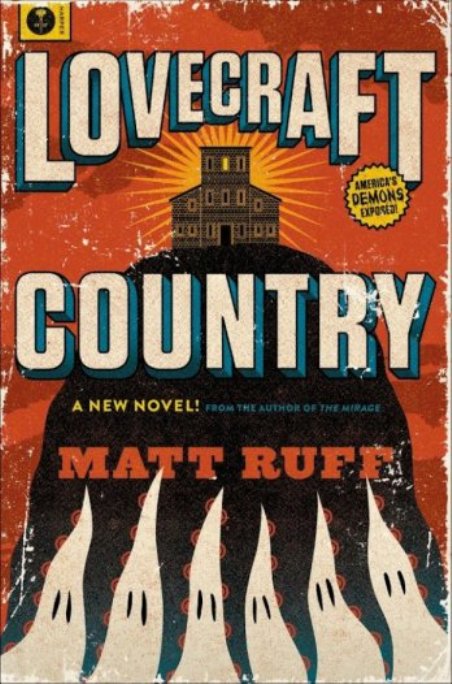
Weekly Read: Lovecraft Country

Matt Ruff’s Lovecraft Country is less a novel than it is a collection of linked short stories built around a brilliant conceit. That is, the main characters in the stories are all from an extended African-American family (family and friends) living in Chicago in the 1950s. That is to say, the stories are shot through with everyday racism that will make your toes curl. But they’re also shot through with magic, nasty creatures, and mysterious rites. Who better to deal with such supernatural horrors than people who have to deal with horrific treatment on a daily basis just based on the color of their skin?

I should say, at this point, that I’m not particularly familiar with Lovecraft’s work (I’ve got a book of his on in my ever expanding “to read” pile, though). I have a vague sense of what it’s about, but it’s only a surface understanding. That’s to say that I’ve read some criticism from people about Lovecraft Country that isn’t, well, sufficiently Lovecraftian. That wasn’t a concern for me going in and it certainly isn’t a concern now that I’ve read the book.

In this “Big Idea” piece over at John Scalzi’s blog, Ruff explains that Lovecraft Country started as a TV pitch (and, indeed, it’s been picked up by HBO with Jordan Peele and JJ Abrams involved) and knowing that now I can see it. Each story serves like an episode, telling a tale that stands alone but pushes forward an overall plot that comes to fruition in the season finale (aka, the final story). It’s a bit frustrating initially because the first story (the title track, if you will) winds up really quickly, especially when you’re expecting it to be just the beginning of a much longer story.

So that first story does what a good pilot does – introduces the main characters and explores some of the world they’re walking around in. The closest thing to a “main” character the book has is Atticus Turner, a veteran returning to Chicago to a collection of family and friends that will, one by one, be drawn into this weird world. Atticus is the link between the African-American characters and the main white character, Caleb Braithwhite. Braithwhite is the latest in a long line of secret-society sorcerers who are trying to control the world. He and Atticus are distant relations – Braithwaite’s ancestor owned one of Atticus’s ancestors, whom he also raped. That makes Atticus a critical part of Braithwaite’s scheme to control the society and its secrets.

That being said, this isn’t Braithwaite’s story. He lurks above the main characters, pulling strings and trying to use them to his advantage. In that way, the book makes a powerful point about the lives African-Americans lead in a racist society. As bright, clever, and determined as they are, they’re really not in control of their own destinies. That they’re able to turn those tables, somewhat, makes the point land even harder.

This being, essentially, a short story collection, it rises and falls from tale to tale. All of them have some kind of interesting creepy thing going on – a haunted house, a “devil doll,” a comatose woman providing a “change” for one of the characters – but they don’t all work as well. The cream of the crop for me is “Hippolyta Disturbs the Universe.”

Hippolyta is one of a pair of sisters close to Atticus’s family and someone who, had she not been a black woman in 1950s American, would have become an astronomer. As it is, Hippolyta retains her fascination with the stars and occasionally shows up at observatories just to help out. That leads her to one particular observatory in Wisconsin that’s tied into the history of the secret society. As a result, she discovers a portal to another world and, briefly, takes us there. What she finds on the other side is another sad commentary on how people of privilege treat those who have none. It’s both a serviceable monster story and an interesting commentary.

It will be interesting to see how Lovecraft Country translates to the small screen. On the one hand, it’s built for it, given its episodic nature. On the other hand, since each story has a different main character it might be hard to keep such a dispersed focus (a “star” playing Atticus would, presumably, not want to spend as much time on the sidelines as he does). It will also be interesting to see if some issues of appropriation come up as the book gets a wider audience. Ruff certainly appears to be a white guy telling an inherently African-American story. He did it well from my perspective – but I’m another white guy. Particularly the fate of Hippolyta’s sister might raise some eyebrows.

Regardless, this was an enjoyable trip into Lovecraft Country. I’ll gladly go again.

lovecraftcov

The River (and Hollow and Ereph) Is Wide

Well have I got some news for you, dear readers.

For the past couple of years the eBook versions of all my books have been available exclusively through Amazon (including via Kindle Unlimited). I’ve decided to try something different and expand my reach a bit, so I’m happy to announce that starting right now, everything – The Water Road trilogy, Moore Hollow, even The Last Ereph and Other Stories – is now available all across the Internet at places like Barnes & Noble, iBooks, and Scribd.

So if you’re a non-Kindle eBook fan, here’s where to get everything:

The Water Road Trilogy

The Water Road

Kindle | Paperback (Amazon)
Barnes & Noble
Kobo
iBooks
Inktera
Scribd
Playster

The Endless Hills

Kindle | Paperback (Amazon)
Barnes & Noble
Kobo
iBooks
Inktera
Scribd
Playster

The Bay of Sins

Kindle | Paperback (Amazon)
Barnes & Noble
Kobo
iBooks
Inktera
Scribd
Playster

Moore Hollow

Kindle | Paperback (Amazon)
Barnes & Noble
Kobo
iBooks
Inktera
Scribd
Playster

The Last Ereph and Other Stories

Kindle | Paperback (Amazon)
Barnes & Noble
Kobo
iBooks
Inktera
Scribd
Playster

In addition, if you buy any of my books in paperback, you’ll get a Kindle version absolutely free!

As for the inspiration for the title of this post – take it away Nick!

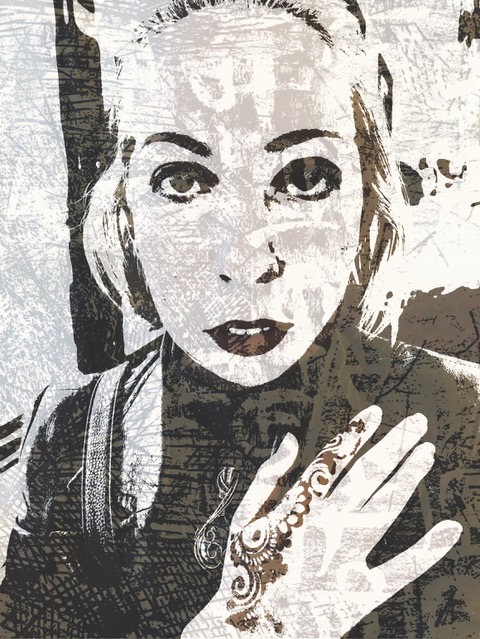
Author Interview – Brhi Stokes

This time we head all the way down under to talk with urban fantasist Brhi Stokes.

Who are you? Where are you? What kind of stuff do you write?

My name is Brhi Stokes, I’m an Australian author with an upcoming novel to be released within the next month or two. I write short stories and novels, predominately.

Tell us about your most recent book, story, or other project.

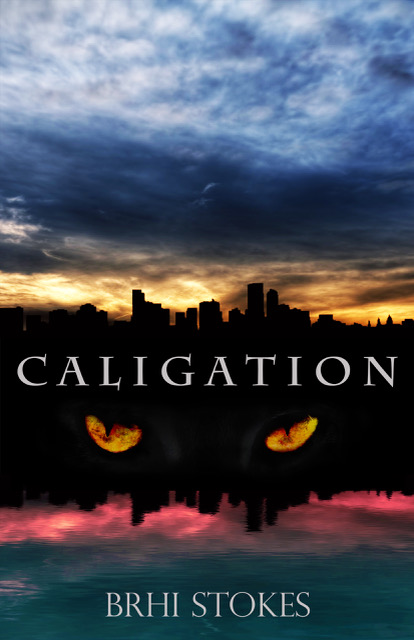
I am currently finalizing a novel for release, Caligation.

Caligation follows the story of Ripley Mason, university dropout and newly-fledged hitchhiker, as he travels north from his home. When he awakens after a car accident, he find himself in a strange city filled with horrific beasts and a population of people with strange abilities. In a desperate attempt to figure out where he is or how he can find his way home, he becomes embroiled in the dealings of the Cavanetti mob; an organization of dangerous men and women with preternatural powers. He quickly finds himself in over his head and his search for home becomes a race against time.

Cover

 In what genre do you primarily write? Why did you choose that one?

My favourite genres are sci-fi and fantasy, both modern and traditional, and I’ve written stories that fill both. I definitely have a soft spot for urban fantasy and thoroughly enjoy writing it; the idea that there’s something hidden away in our mundane world absolutely fascinates me. However, I have also been dabbling in young adult fantasy (a more traditional medieval-style fantasy setting) lately, as well.

Tell us briefly about your writing process, from once you’ve got an idea down to having a finished product ready for publication.

I’ve tried several different writing processes. My first novel-length work was written from scratch and I found it very difficult to go back through edits without a guide. Caligation was a setting I had in my head for years and had been struggling to find a proper narrative for. Eventually, I came up with the idea and made use of the Snowflake method, so that I had everything ready to go (including an excel spreadsheet of every ‘scene’ before I tried writing it). I found that I quite like this method as you start small (at one sentence) and work your way up so that, by the end of your process, you already have your summary and blurb.

For my latest endeavour, however, I used a combination (and I think this is my preferred method). I put pen to paper and wrote out the first few scenes, letting ideas form naturally as I wrote. Then, I began to jot down a few ideas I had for the world in a separate document. As I wrote, more ideas for plot came to me so I had, essentially, two documents to work on simultaneously: the story itself, and a separate file with information. In the information file, I wrote down a brief summary of every scene as I wrote it, along with the plan for the plot. That way, it was much easier to re-arrange scenes, figure out what was going on and generally be able to keep track of a plot outline.

I go through several editing phases, preferring them to take a year or longer as I find that taking long breaks from a finished work really helps my editing process. I usually do a general read-through for plot and consistency, then a line edit (for style and form), and then a copy edit (for grammar and spelling errors). Then I hold off for a bit, maybe a month or so. After that, I re-read and see if it’s still up to par and ensure every line sounds perfect. Then, I get other authors and readers to give it a read-through (ideally, one general read for cohesion and plot, and then a copy edit). There’s a few more of those edits (me, then other, then me, etc) until I’m completely satisfied.

That’s when I start organizing publication.

What is the “Snowflake method”? I’ve seen that referenced a couple of times here and there but never gotten a good explanation.

The snowflake method was developed by a man named Randy Ingermanson. The basic concept is that you write it out like a snowflake – you start with a very small idea and you grow and expand it out in each direction until you have a completed work. It consists of ten steps where you start very simply: step 1 tells you to write out a one-sentence summary of your book, for example. Then, as the steps progress, you add to that. You build on the sentence until you have a paragraph, that moves into three paragraphs with each detailing the classic “problem, characters make problem worse, characters resolve problem” dynamic as it suggests. I found it interesting because you really end up with a well-planned book – one of the steps involves making an excel file of every ‘scene’ in the book that you use when writing. It also suggests character-building exercises and so on. It’s a hard topic to delve into without me explaining the entire process, but I hope that helps clear it up a little.

I probably won’t use the entire method again, myself, and it definitely doesn’t work for everyone. However, it is a great place to start if you’re completely lost, and I will definitely incorporate some of its method in my future book-planning.

AuthorPic

You mention having the setting of Caligation for a while before you found a proper narrative for it. I think that’s a common issue with sci-fi/fantasy writers – you come up with a nifty idea for a world to set a story in but no actual story. Is the story you wound up writing for Caligation something that you decided to stick in that world or did it derive from the world itself that you had built?

I had to alter the setting a bit to work as a book, rather than a roleplay site, but I definitely ended up making a story for Caligation, rather than making a story to insert into Caligation. I actually struggled a little bit at times because I would use the main character, Ripley, too much as a vehicle for showing off the world, rather than engaging with his emotions and feelings. It took a lot of thought and editing of the first draft to remedy this, but I am definitely glad I recognized the problem early on.

It was a difficult task, trying to make a compelling story that fit into the world and interacted with it in a meaningful way. Originally, I was thinking of just having a story in the world, but then I didn’t get to explore some of the stranger aspects of the place, because a character in the world would be used to them. It was a lot of fun having someone unfamiliar with the world there and able to question it, and I think it serves to assist the reader in answering questions that never would have been answered if the main character was from Caligation.

Who is the favorite character you’ve created? Why?

This is tricky question. A lot of the characters I have in Caligation were based on an old role-playing site I created (and from where the idea formed) so a few of them have been sitting in my head for eight or nine years.

I’d say at the moment, though, I’m having the most fun with one of the characters in the YA fantasy I’m playing around with. The story follows a young woman who is placed in the tutelage of one of the five masters of the magical domains: Master Adimai. Adimai is a cold, stern and generally rather unfriendly man with a dark sense of humour. He fits into your general haughty, jerk mage trope and I’m very fond of writing him. The story is from the perspective of the young woman so I have a lot of fun writing their interactions because a lot of what Adimai says and does is not really very well understood by her. Having a bit more insight into his mind, for me, makes it very amusing when she gets the wrong idea, or is generally just confused or upset by him. Plus, writing jerks is fun.

I’m intrigued by the city of Caligation. Since you mention urban fantasy I’m assuming it’s a modern place? Or is it a kind of “lost city” in the middle of the outback? Or is it in some other place completely?

As the tagline on my site describes, Caligation is “…a city where spiraling gothic towers meet modern glass monoliths. Where the slums of the South are stalked by indescribable beasts.” Ripley notices that it seems to shift from being reminiscent of the 20s, to the Victorian era. It’s a wild mix of both, with technology not quite as advanced as ours and strange fashion. Modern towers mingle alongside old factories and gothic churches, while cars drive down cobbled streets and rotary phones hang in old street boxes.

It’s unclear to Ripley where the city is, but he seems to realize quite quickly that it’s not in his homeland. He actually considers it being some ancient, lost city in the outback (as you queried) but dismisses the thought.

What’s the weirdest subject you’ve had to research as a writer that you never would have otherwise?

Nothing too exciting, I don’t think. A lot of anatomy stuff for the things I wrote when younger. Nothing out of the ordinary, I’m afraid.

What’s the one thing you’ve learned, the hard way, as a writer that you’d share to help others avoid?

Don’t be afraid to put down a piece of writing you’ve spent years on and just let it go. It sucks, and it’s hard, but sometimes you just need to move on from it and start again with something new. I did that with my first novel, one I’d written as a teenager (and gotten halfway through the sequel). I tried very hard to beat that dead horse, to the extent that I rewrote the entire 100,000+ word book to try and fix it. It didn’t work and, in the end, I had to move on. I actually stopped writing for a few years after that, but I’m back into it, now. So, that: learn when to let go and don’t let it put you off writing.

If you won $1 million (tax free, to keep the numbers round and juicy), how would it change your writing life?

To be honest, I’d probably keep doing what I’m doing as far as work and writing amount goes. I’d get a little more experience in publishing then probably use the funds to set up an indie publishing company. I love editing other people’s work, so I’d probably offer those sorts of services, too.

What’s the last great book you read or new author you discovered?

I love anything by Neil Gaiman, and I recently finished Norse Mythology, which I would definitely recommend. But if you’re looking for an urban fantasy that’s not quite as well known, I would definitely recommend the Watch series by Sergei Lukyanenko. He’s a Russian author with a fantastically translated writing style and a great setting.

What do you think you’re next project will be?

I smashed out about 30,000 words at the end of last year in the space of about a month (the YA fantasy). It’s not my usual genre, and certainly not something I had expected to write, but I would love to be able to get back into it and finish it. If it does end up being published and becoming a series, it will focus on five young men and women who have recently graduated from the royal university of their kingdom and are placed in the tutelage of the five masters of the magical domains. Unfortunately for the young graduates, their plans are sent awry when the king decrees that they will be taught by the master of their weakest domain, instead. Neither masters nor students are particularly happy with the arrangement and the year of study will be both a trial and a great learning experience.

Ideally, each of the five books will focus on a different student, master and domain. So far, I’ve been  writing book one: The Element of Chaos which follows Seraphine as she struggles to hone her acuity with the chaotic domain, under the teachings of Master Adimai.

Visit Brhi online here.

In Defense of Worldbuilding

A while back over at Electric Lit, Lincoln Michel wrote a lengthy article called “Against Worldbuilding,”* in which he argues that authors and readers are so enamored by the details of literary worlds that they lose focus on the actual story being told. What he says isn’t wrong so much as it is a game of definitional Léger de main. Along the way, Michel engages in some low-key genre bashing.

Let’s get out of the way what Michel gets absolutely right – some writers get so wrapped up in the worlds they create, in the details and minutiae of them, that the story, characters, and all the other important stuff kind of disappear in a puff of imagination. This happens, no doubt (although I wonder how many writers follow the advice of one person Michel links to who thinks it’s important what shapes the tables are in a given world). The problem isn’t an overbuilt world per se, it’s the fact that, as Michel puts it, things turn out like “they were producing an encyclopedia instead of a story.”

Where Michel goes wrong is in deciding that such deep diving and navel gazing is what “worldbuilding” is. Also, that it’s something that’s limited to certain particularly pulpy genres like science fiction and fantasy.

But the fact is that every author – even writers of non-fiction – have to build worlds with their words. Hell, I have to do it when I write legal briefs, much less when I write fiction. That’s because unless you’re writing for the small subset of people who know exactly what you’re talking about you have to do some foundational work of explaining the place where your tale is taking place. As I said several years ago in a review of the first season of Mad Men:

What is more fascinating to me about Mad Men is the world these characters live in. When people talk about world building they usually are talking about sci-fi or fantasy writers, who build new universes and worlds from the ground up. But the truth is, every writer of fiction (whether on the page or screen) has to pay attention to world building. Thus, just because Mad Men is set in a real time and place from our recent past doesn’t mean the creators can shirk on the details that lend the world depth and credibility.

Another example that springs to mind is Karen Connelly’s The Lizard Cage. It’s a story about a political prisoner in Burma and what he has to do to survive. It’s not a translation – it was not originally written in Burmese. It was written in English, presumably for an audience in the English-speaking world. A world that, most likely, isn’t familiar with the horrors of a Burmese prison camp or the kind of Buddhist rituals that might help a person stay sane in such a place. There’s lots of worldbuilding going on there, there has to be if the story Connelly tells is going to have any kind of resonance. By contrast, I just started Liu Cixin’s The Three Body Problem and it drops you right in the middle of the Cultural Revolution without any worldbuilding at all – but it was originally written in Chinese, so I expect that audience didn’t need any of that heavy lifting.

Perhaps aware of this fact, Michel performs a little magic. He walls off “worldbuilding” in the genre ghetto and instead says what literary writers do is “worldconjuring.” That is:

Worldconjuring does not attempt to construct a scale model in the reader’s bedroom. Worldconjuring uses hints and literary magic to create the illusion of a world, with the reader working to fill in the gaps. Worldbuilding imposes, worldconjuring collaborates.

In other words, worldconjuring . . . builds worlds, it just does a better job of them. This is linguistic slipperiness not seen outside of Earthforce:

What Michel has done is taken something that is definitional and turned it into a qualitative judgment – it’s the same thing as people who say “rap isn’t really music” when what they really mean is “I don’t like rap.” Fair enough, but whether you like something or not doesn’t change what it actually is (see, also, the infamous Roger Ebert v. video games dust up or any endless circle jerk on what “prog” is). All Michel has done is give what he perceives as “good” worldbuilding a different name. It doesn’t change the fact that it’s the same damned thing.

As I said at the beginning, Michel’s real point is solid – for some writers (and readers), worldbuilding runs roughshod over everything else. That sucks. But when it doesn’t and it’s transporting and wondrous and visceral – it’s still worldbuilding. It’s just worldbuilding done write. Everybody who picks up a pen to tell a tale has to do it – here’s hoping we get it right more than we get it wrong.

* NOTE: Word really wants “worldbuilding” to be two words, but since that’s how Michel spelled it I’ll keep it that way.

Thoughts On a Con

Over Memorial Day weekend I got to participate in a con for the first time.

No, not this kind of con.

BusterKeaton_Convict_800

This kind.

Contraflow_steampunkersComicConWizardWorld_2014_Steampunk

Specifically, Vandalia-Con up in Parkersburg, which is specifically a steampunk-themed con.*

“But wait,” you say, “you don’t really do steampunk, do you?”

Well, actually: (1) I have; (2) I’m getting ready to do it again (details coming!); and (3) I figured that steampunk fans might be interested in gunpowder fantasy like The Water Road. At the very least, it would be an interesting fact finding mission. So what did I learn?

First, before I go any further, I want to say that everyone I interacted with at Vandalia-Con – from the organizers to the attendees to the other vendors – were great, friendly, fun people. As a clear outsider (a DC United jersey does not constitute steampunk cosplay) and newbie at all this I couldn’t have felt more at home.

To my eyes, this con was mostly about embracing the steampunk “lifestyle,” as opposed to the celebration of any particular work of steampunk fiction. Most of the other vendors were selling clothes, jewelry, and the like. Aside from a couple of presenters who also had some books for sale the only other person selling “content” was a small publisher of sci-fi and fantasy books.

And, oh, the fashion. I was impressed by the wide variety of detail applied to different costumes. Guys seem to have it easier than women. A vest and top hat will suffice for the fellas, while the ladies seem doomed to bustiers and bustles (and very tiny hats – for some reason). To each their own, I guess, but it looks very uncomfortable from where I’m sitting. But as I said – that was while in a not-at-all-chic DC United jersey (although it did get some love from one of the hotel staff, even if he is a Crew fan).

But the primary reason I was there was to try and sell some books and drive some people to my mailing list. On that front, the con didn’t really meet my expectations. As I said, I think most people there weren’t really interested in consuming content, but having fun dressing up and what not. Which is totally cool – but it’s not a great setup for an author trying to move some copies. I did sell a few (one woman – complete in bustier and bustle – bought a complete set of The Water Road trilogy) and got some mailing list sign ups, but not enough to offset the investment (hotel costs, mostly). But when considering what kind of event you’re going to, it’s worth trying to figure out what the audience of regular attendees is like – you may have brilliant widgets for sale, but if nobody’s really interested in widgets it won’t make much difference.

Unfortunately, that’s the kind of mercenary mentality I have to have these days. Which is a shame, because the weekend was a lot of (expensive) fun. Thanks for being my first, Vandalia-Con!

* Note that none of these photos – even the first one – were actually taken at Vandalia-Con. I can’t find any of those online and my phone pics didn’t turn out well enough to use. All images via Wikimedia Commons.