2024 – My Year In Books

Happy New Year! It’s the time when I take a look back at the year just past and highlight some of my favorite, or just most interesting, media I consumed (not necessarily new, but at least new to me). First up, naturally, let’s talk about books . . .

I thought I read a bunch of books in 2024 until I compared notes with my wife who read twice as many! She consumes books like food and hasn’t fallen prey to the siren song of podcasts like I have, so she has more focused. Still, I read nearly fifty books in 2024 (in addition to publishing one!) and some were particular favorites.

My Effin’ Life by Geddy Lee (2023)

Rush is my “first favorite band,” the one that initially seeded in me the need to hear everything they did, new or old. No surprise, then, that I’d jump at the chance to read bassist/vocalist/keyboardist Geddy Lee’s memoir. It is, of course, heavy on the history of Rush, particularly the early days, but it exceeds the typical rock doc book in a couple of ways. One is Lee’s exploration of his heritage – his parents survived the Holocaust then met as refugees in Canada – which is fascinating. The other is his recounting of the final days of the band and the death of drummer Neil Peart. Recommended for Rush fans for sure, but even those who might only know “Tom Sawyer” from the radio will dig it.

The Book Eaters by Sunyi Dean (2023)
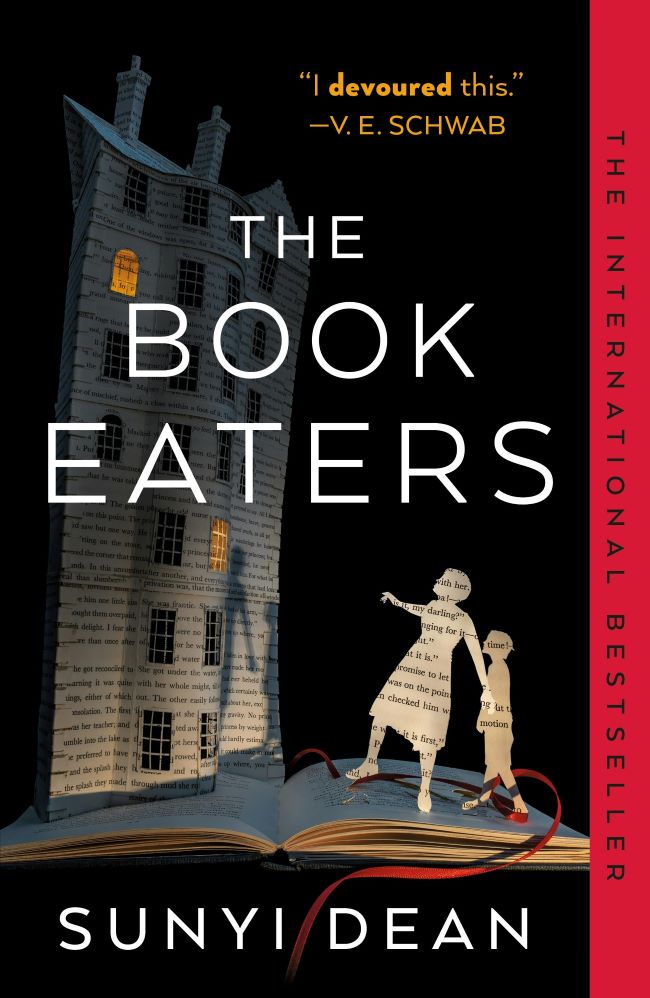
It’s a great pitch for a book – what if there were people (well, maybe not quite “people”) in the world who survived by eating books, taking in all the stories or knowledge written therein? What I expected from The Book Eaters was a fairy tale about the nourishing nature of books and words, something ethereal and mystical. What I got instead was a really cool spin on vampires (not all these “people” eat books) and problems of family and belonging. Rarely can you say the book delivered something completely different than expected and was all the better for it.

Stillwater #1 by Chip Zdarsky, Ramón Pérez, & Mike Spicer  (2021)

Lots of stories question whether the idea of immortality is a good one, but usually on the scale of the individual? What if there was entire town where no one aged or could die? Like, if somebody jumps off a building and spalts on the sidewalk that’s not the end of things? That’s the setup of Stillwater. The first volume introduces up to someone who managed to get out as a child, only to be lured back. Naturally, things aren’t as grand as one might think they’d be in a town stripped of death. Can’t wait to see where it goes.

Desperate Remedies: Psychiatry’s Turbulent Quest to Cure Mental Illness by Andrew Scull (2024)
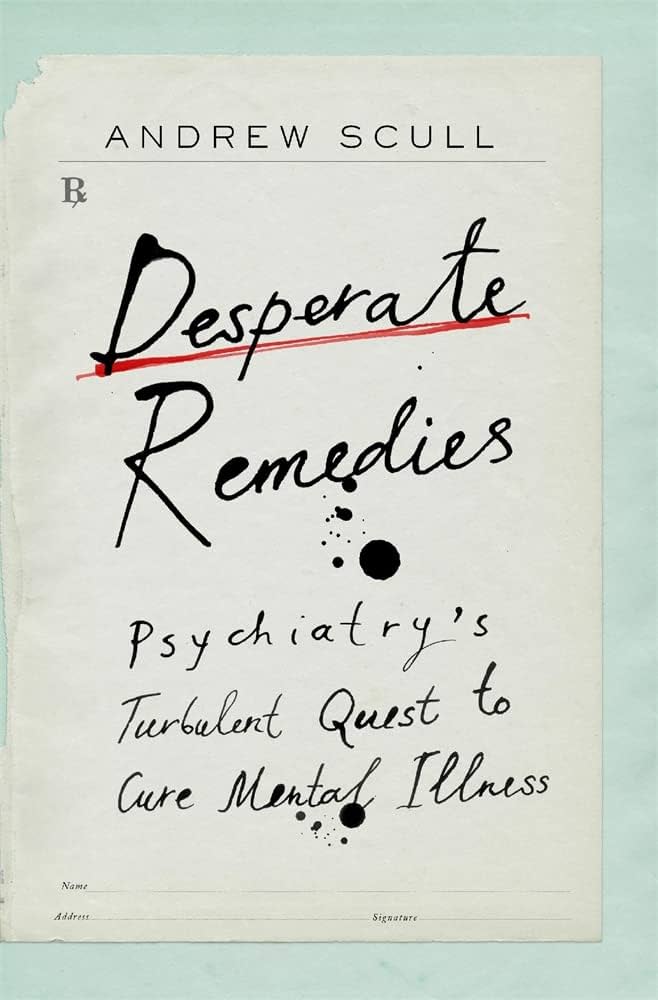
The only thing more depressing I read in 2024 came out of the daily news. This survey of the history of relatively modern attempts to treat mental illness is fascinating for showing how we have lurched from one theory of mental illness to the next, each with its own miracle cures that never seem to actually come to fruition. What comes through is that, even today, we don’t have a good handle on what actually causes mental illness (in its various forms) and that makes it nearly impossible to treat. Like I said, depressing stuff, but it does at least provide some hope that we’ll keep bashing away at the problem.

A Thread of Violence: A Story of Truth, Invention, and Murder by Mark O’Connell (2023)

There’s a version of this book – telling the story of a murderer in 1980s Ireland whose friendship with the Attorney General threatened to bring down the government – that’s a straightforward telling of the tale, which needs little pumping up to be really interested. This isn’t that book. Rather, what makes O’Connell’s angle interesting is that his grandparents lived next door to where the killer was apprehended and he’d always felt the shadow of that incident lurking over him. His conversations with the killer, who still doesn’t quite seem to grasp what he’s done, dive into issues of identity and memory that are fascinating.

Jonathan Strange & Mr. Norrell by Susanna Clarke (2004)
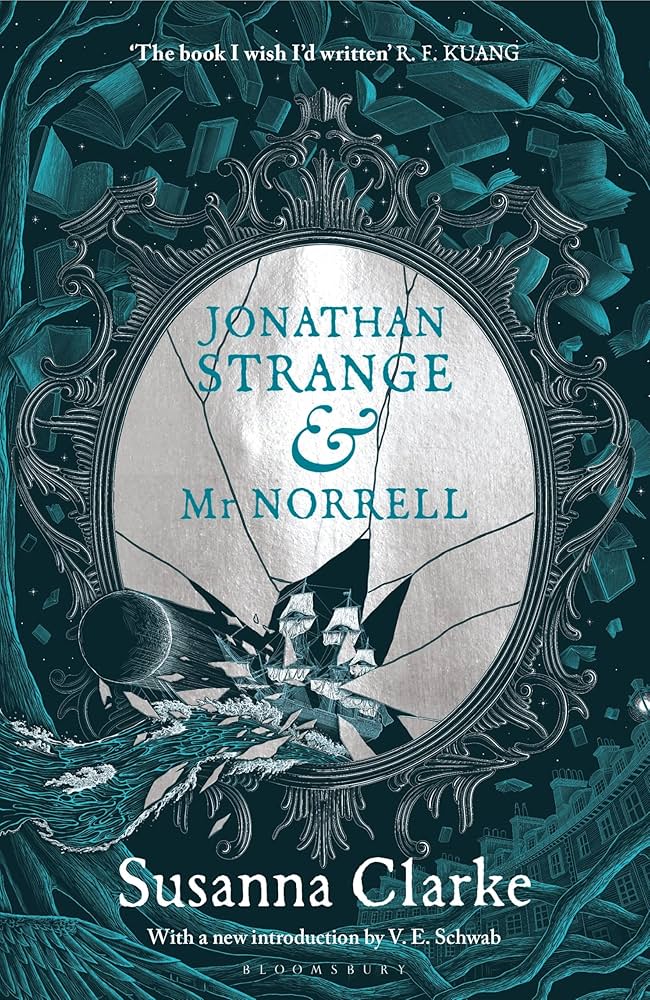
This is kind of a cheat, as I read and loved this when it first came out two decades ago. That anniversary led to a new edition and lots of coverage, so I decided to dive back into it and see if it held up after all this time. Happily, it does. I was a little worried that, with lots of writing under my belt, I might feel more picky about things, but it turns out I just admire Clarke’s work all the more. It’s so immersive, just pulling you into the world that she builds slowly and steadily. I went in willing to consider this one of the great books of the century and left being certain that’s the case.

2023 – My Year in Music & Books

Now that the new year is well and truly underway, it’s finally time to take a look back at 2023 (I loathe the “best of the year” lists that start popping up in October). This year I’ve decided to split my thoughts in two, leading off with books and music this week, with movies, TV, and podcasts coming next week.

BOOKS

Going back through my Goodreads data for the past year I was shocked to see that I only read one “new” book that was actually released in 2023, John Scalzi’s Starter Villain.

It’s about what you’d expect from Scalzi these days, a fun, quick read that succeeds in doing what it sets out to do, which is entertain. The setup involves an everyman who finds out that his deceased uncle was part of a Dr. Evil-style collection of global supervillains and he’s been picked to take his place. There are a lot of hilarious ideas (not just talking cats as you might expect from the cover, but talking dolphins with labor issues) and snappy dialogue, but I kind of wish the main character had been a little more seduced by the “dark side.” He never really has to grapple with whether to be a villain. Nonetheless, recommended if you’re into that kind of thing.

What of older books I read last year? There were several good ones.

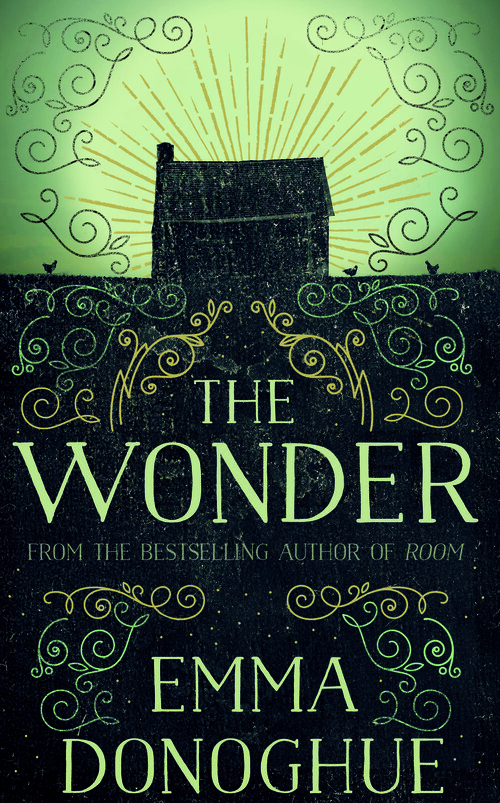
The first is kind of a cheat, as I mentioned the film adaptation in my round up last year, The Wonder by Emma Donoghue, from 2016.

Lately I’ve taken to watching a movie or TV series based on a book and then going back and reading to book to see how they compare. I’m of the “books and movies/TV shows are different” camp, without one being better than the other, necessarily. That said, the novel here has some interesting layers, thanks to the point of view, that the movie couldn’t really get into. As someone who, in my day job, sometimes has to meet delusional people on their own ground in order to represent them, the struggle of the rational, scientific main character here to connect with the religiously-minded family she’s inserted into really worked for me.

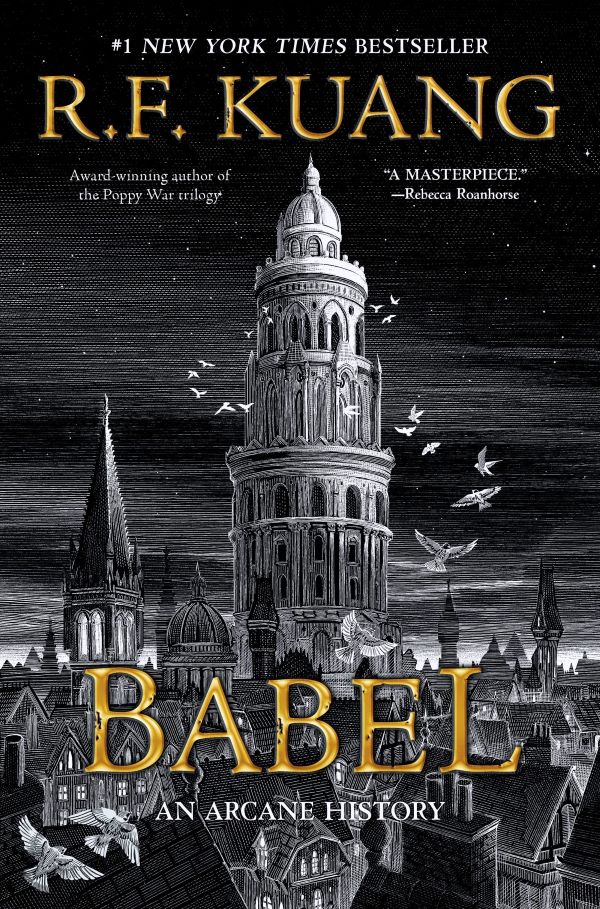
The other most interesting work of fiction I read last year was R.F. Kuang’s Babel, from 2022:

I wrote a bit about it here. The more distance I’ve had from it the more I liked it, which is always a good sign. Plus, the magic system Kuang uses there informed the one I have in my current WIP, so it was definitely an influence.

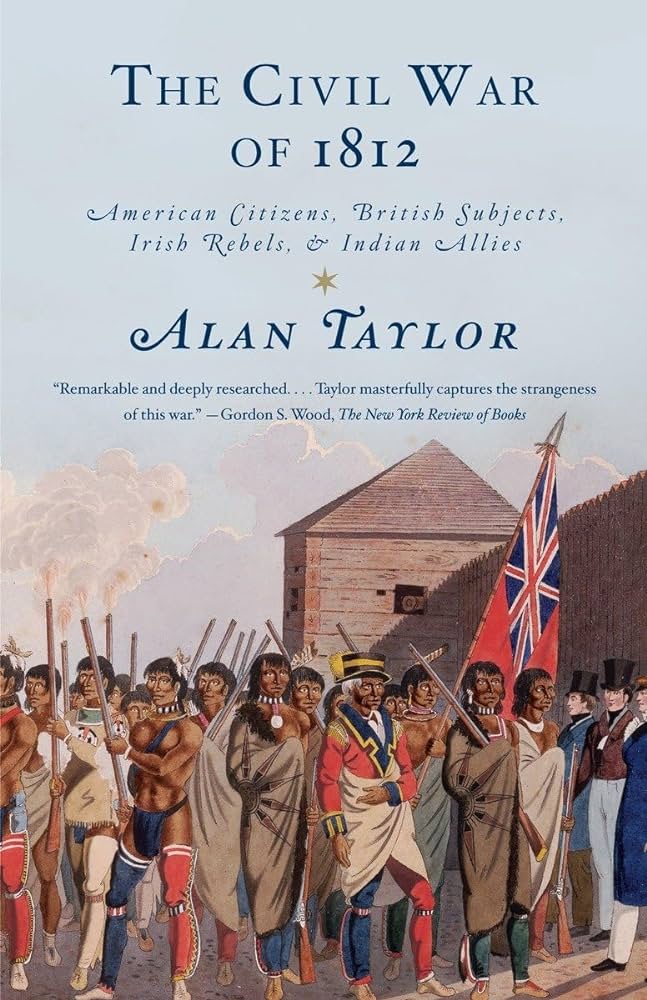
As for nonfiction, I had several runs of multiple books on the same topic – World War I, the French Revolution & Napoleonic Wars, the recent history of Israel/Palestine – one of which was the War of 1812, generally considered an “unknown” war here in the United States. My favorite read of that bunch was The Civil War of 1812, by Alan Taylor (from 2010).

Taylor’s thesis is that the United States’ northern border with Canada (still a British colony at that point) was really more of a concept than a reality at the time, with a large population of British loyalists from the US fleeing into Canada after Revolutionary War. As a result, there were families pit against each other, former business partners, etcetera, in what was a really nasty conflict. A different perspective, which is always important for history.

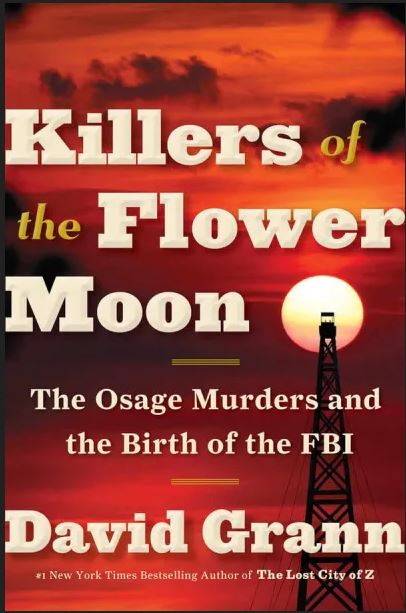
The other non-fiction highlight for me was David Graan’s Killers of the Flower Moon from 2017.

Of course, this was because of the impending release of Martin Scorsese’s film adaptation, which I haven’t been able to see yet. I know the movie’s not organized in the same way as the book and for good reason. For two-thirds of its time Killers is an interesting exploration of murder cases of the Osage and the struggle for oil money. It’s in the last third, however, that we see that the story Graan has told thus far isn’t unique or extraordinary – it was very much business as usual all across Osage territory. It was a slow motion ethnic cleansing and it happened within the lifetimes of many. 

MUSIC

Thankfully, 2023 itself was  little more robust when it comes to music, as there were several excellent releases that caught my attention from the year.

The first of those is the long-awaited new solo album from Mike Keneally, The Thing that Knowledge Can’t Eat.

This is the kind of album Keneally hasn’t done for a while, just a collection of songs that shows off his amazing range as a player, writer, and arranger. I mean, the thing starts out with a song that’s just layered vocals and sparse piano about the beauty of logos. From there it shifts through art pop, metal riffing (with a Steve Vai guest appearance), and even Zappa-esque big band (with an assist from the Metropole Orkest). What’s more, it all works together. It reminds me of the great Gentle Giant albums where each track sounded different from the others but they all sounded like they belonged together. Appropriately enough, the drummer on the last track, “The Carousel of Progress,” is none other than Malcom Mortimore of . . . Gentle Giant.

The other new album that really grabbed me, to my surprise, is Steven Wilson’s The Harmony Codex.

I probably liked his prior effort, The Future Bites, than most people, but it was really uneven. And when individual tracks from The Harmony Codex started coming out they didn’t particularly grab me. I’m glad I still got the album, but this really is an album that needs to be digested in one sitting. Like the Keneally album it covers a lot of stylistic ground, with the electronic elements blended in more successfully than The Future Bites. This was really a pleasant surprise and it pleases me when someone with so much out there, like Wilson, can still surprise me.

As for “new to me” albums, well, I’m a sucker for great band names (likewise, I’m happy to buy a bottle of wine simply because of a cool label), so when I stumbled across The Helicopter of the Holy Ghost on Bandcamp there was no doubt I was going to check them out.

What I found was a sad, but hopeful, backstory. In 2001, musician Billy Reeves was in a car wreck, which resulted in him spending two weeks in a coma. In 2017, Reeves’ brother gave him a pair of mini-discs that had been in the car with demos Reeves had been working on – only now he had no memory of them at all. Bringing in other musicians to help complete the work, those demos became The Helicopter of the Holy Ghost’s album Afters. As you might expect, the music has a melancholy quality that reminds me in some spots of Robert Wyatt’s solo work. Lots of piano and lush vocals push things along. Good with headphones (or earbuds).

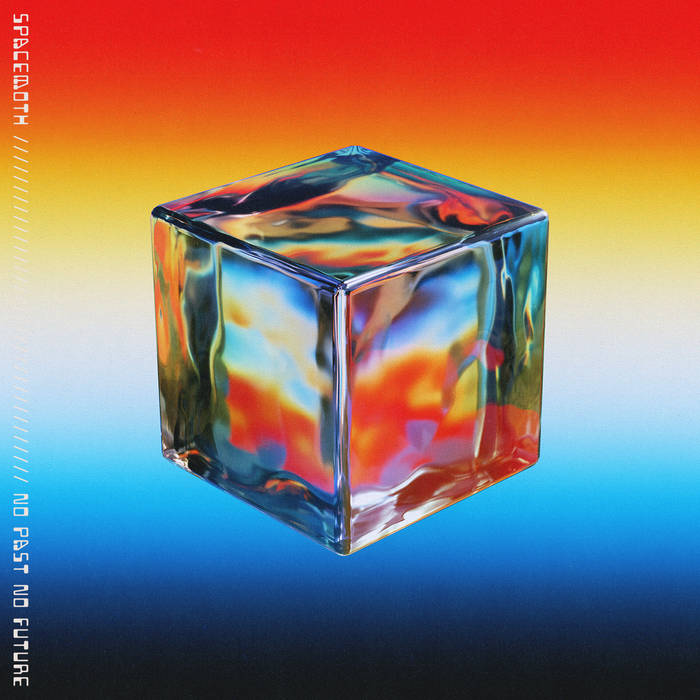
My other Bandcamp surprise for the year was another grower, No Past No Future by Spacemoth.

It starts out as a very noisy, buzzy synth-pop/psychedelic record, which is cool in its own right, but goes on to mellow and stretch out a bit in the second half. By the time we reach the title track and the end you’re in a completely different headspace, although the buzzy edge remains. Very cool and another real album that deserves consideration as such.

That’s it for sounds and words. Next up, them newfangled moving pictures!

Some Thoughts on “2001”(s)

One of my favorite podcasts is Mary Versus the Movies, in which the titular Mary watches a popular movie from the 1980s she’s never seen and then discusses it with her co-host/husband (I think that’s who he is). It’s a fun setup, as each episode starts with what she thinks the movie is about before watching it, which is sometimes hilariously wrong.

On a recent episode the subject was 2010: The Year We Make Contact, the sequel to 2001: A Space Odyssey, directed by Peter Hyams. Of course, it’s impossible to talk about a sequel without talking about what came before, but that’s doubly true of 2010 and 2001, which are completely different types of movies. It’s like comparing OK Computer to Kid A – it’s as much about what the sequel is not compared to the first one as anything. For what it’s worth, I think 2010 is a pretty solid flick, but it pales in comparison to Kubrick’s masterpiece.

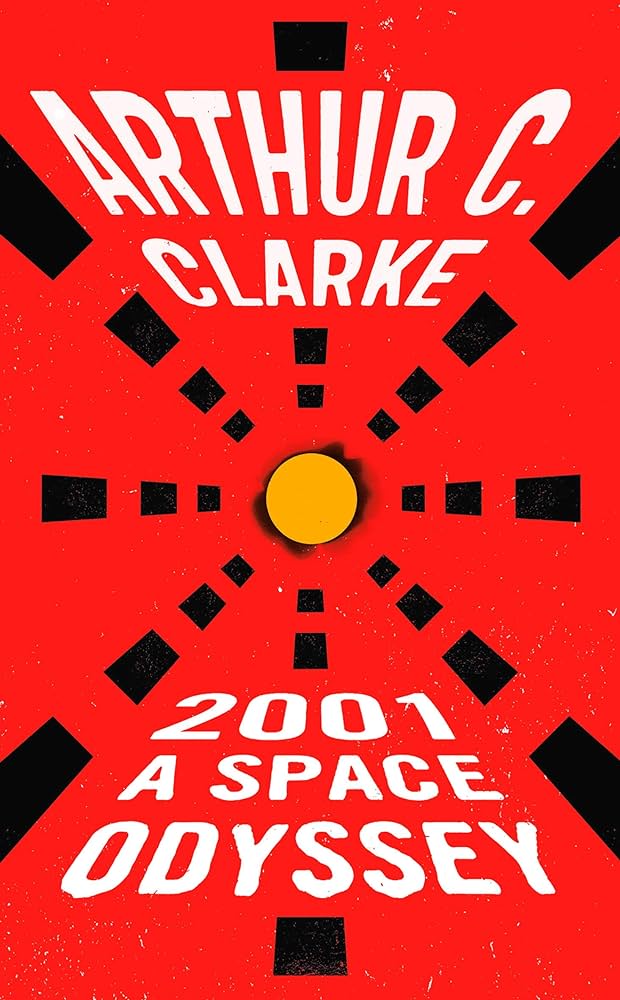
Part of the discussion these movies, inevitably, involved their relation to the books of the same name. That brought to front of mind that I’d never actually read Arthur C. Clarke’s novel 2001: A Space Odyssey. Seemed like as good a reason as any to get it from Audible and give it a listen.

Kubrick is one of my favorite directors and 2001 one of my favorite movies of his, so it was impossible for me to read Clarke’s version of 2001 with completely fresh eyes. It also defies the usual analysis of looking to how the movie “adapted” the book since, in this case, the movie and book developed on parallel tracks – neither was an adaptation of the other. Which is particularly odd since, in terms of what happens, they track each other pretty closely.

The biggest difference from book to movie is the destination of Discovery’s journey. In the book they’re headed to Saturn, but in the movie it’s Jupiter. Apparently the change was due to the effects folks not being able to make Saturn’s rings convincing, so Kubrick moved the destination to Jupiter (ironically, the novel of 2010 – upon which that movie really was based – retconned the story to have them go to Jupiter). There are other minor differences – the monoliths aren’t all black and have particular measurements, we learn why HAL went apeshit, etc. – but for the most part the book is as faithful to the movie as it could be, given the circumstances.

Which is both a blessing and a curse. A blessing because they kind of play into each other and can help folks grasp what’s going on. It’s a curse because that means the main difference between book and movie is the execution and, on that score, Clarke simply can’t compare.

I’ve read some Clarke before, including Rendezvous With Rama, which is another one of his classics. It’s got a great idea at the core – an alien object enters the solar system and a research crew goes out to meet it. The book is basically their exploration of this vast ship. I found it pretty dull, without any real character development or emotional pull into the story. The exploration itself was, I’m sure, rigorously scientific and accurate, but for me there was no “there” there.

A lot of 2001 feels the same way. There are long stretches where Clarke describes the nature of space travel and how everything works that were probably fascinating back in the 1960s when this was all new but didn’t do anything for me. For instance, there’s a chapter where the Discovery crew tries to closely observe a passing asteroid – there’s no threat or danger, no chance that something will go wrong, just a chance to exercise some scientific curiosity. That’s a great thing! It just doesn’t make for compelling fiction, necessarily.

Of course, a lot of the movie is fairly slow and not exactly action packed, but the visual and audio work Kubrick does makes that work, creating a sense of deepening isolation as Discovery plows further on. Clarke tells us the numerical details of that isolation, but doesn’t show it in a way that creeps into your bones. That said, some of what works best for me about Clarke’s writing comes in the parts that are hardest to conceive of being written on the page, namely the stuff with the apes in the beginning and the whole “journey into the infinite” in the end.

Another area where the novel falls down are characters. None of them are particular interesting and exist mostly to talk about Clarke’s tech stuff and move the plot along. The movie isn’t much better, but it has one redeeming aspect in this area – HAL.

In both the book and movie HAL slowly goes crazy and starts killing people. As I said, the book tells us why (2010, the movie, does that, too), which takes some of the mystery and terror out of it. HAL comes across as a problem to be solved (and fairly quickly, at that) rather than a sentient, malevolent being.

The movie’s HAL, on the other hand, is one of the most chilling characters every to grace a movie screen. Not for nothing did HAL rank 13th on the American Film Institute’s list of greatest movie villains. The cold precision with which HAL goes through everything makes what he does so terrifying. Yet, the scene where Bowman shuts HAL down and he starts to sing is heartbreaking. Those scenes on the written page just don’t pop in the same way (I’m not sure any writer could have made them compete).

As for the endings, well, I think it depends on what you want out of your fiction. Clarke’s ending makes much more “sense,” in that he largely lays out precisely what’s happening, and it’s done fairly well. Again, though, it’s hard to top the movie’s visual/aural mindfuck that spits you out on the other side more bamboozled than before. Probably because I came to the movie first I prefer the ambiguity. It has that “what the fuck?” quality I talked about a few weeks ago that I dig in art sometimes.

It’s generally a fool’s errand to look at a book and a movie based on it (or vice versa) and determine which one is “better.” The written word and film are different mediums that reach the soul in different ways. What works well on the page might not on the screen (and vice versa). That’s doubly true with 2001. I can’t say the movie is “better” than the book, but I can say I prefer it. It transports me in a way Clarke’s prose doesn’t and leaves more of a lasting impression. Still, I’m glad to have read the book, if only to again realize how fruitless such comparisons are.

And neither of them are as groovy as Mike Keneally’s “2001,” anyway.

2022 – My Year In Media

Looking back on the various media items I consumed the past year – I really need to keep better track of some of them – I was looking for some kind of trend or meaning for what stuck with me. Alas, there really isn’t any, so here’s just a collection of interesting things, both new for 2022 and new to me for 2022.

Music

I didn’t get to sample a whole lot of “new” music in 2022, but it’s unlikely that any would have perched higher in my soul than Marillion’s latest, An Hour Before It’s Dark.

Grappling with COVID-induced lockdowns and fears (which vocalist/lyricist Steve Hogarth initially said they weren’t going to do), the album manages to both dredge up some of the worst of it and still end on a beautiful, hopeful note. It’s not as great an album as Fuck Everyone And Run, but that’s not much of a criticism. That the band has been at it so long and is still so good is either inspirational or enough to make you give up. Either way, I can’t wait for the next one.

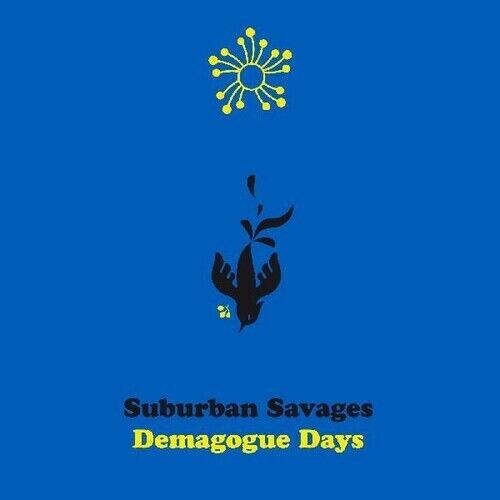
In terms of “old” stuff, the complete out-of-the-blue find I had in 2022 was Norwegian band Suburban Savages and their 2021 release Demagogue Days.

Stylistically they’re hard to pin down, with a foot each in surreal Canterbury-style progressive rock and the other in the more avant garde side of things. There’s also a lot of great synth work, which naturally attracts my ears. The title track may be the catchiest use of 7/4 since “Solsbury Hill,” too!

Movies

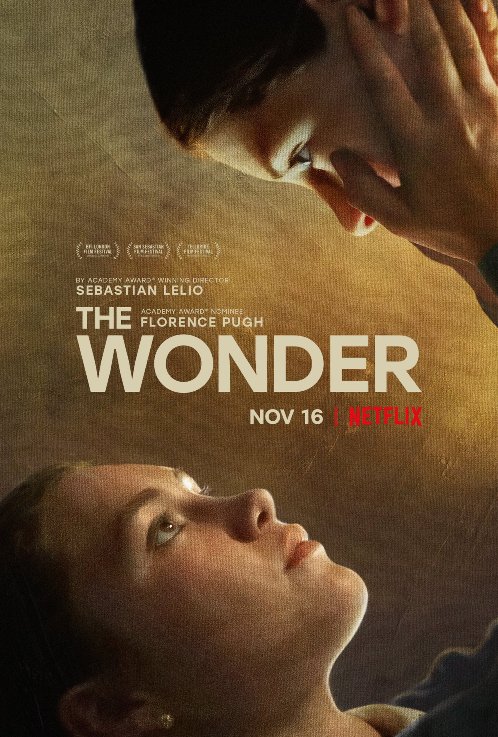
The wife and I still haven’t seen a movie in the theater since COVID hit (more out of inertia more than anything else, I think), so I didn’t get to see a lot of “new” movies in 2022, although we did get to catch up on several big-name flicks over the holidays, most of which (Nope, Glass Onion, etc.) were solidly “meh” in my mind. The standout from 2022, for my money, is The Wonder.

It’s a small, quiet film about an English nurse in post-famine Ireland who is brought in to observe a teenage girl who allegedly is surviving without eating anything. It’s no spoiler to say she’s not what she appears, but the way those around her deal with it are fascinating. The movie has a creepy atmosphere that doesn’t really read “horror,” but makes it feel that way anyway.

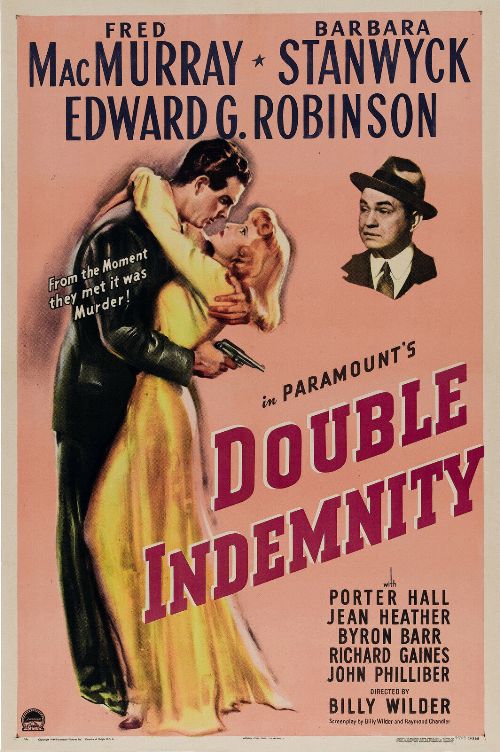
For some reason, in 2022, I decided to regularly take a look at the offerings on Turner Classic Movies. As a result, we wound up watching a lot of movies from the 1930s and 1940s, classics that I’d never seen before. Top of the heap for me was Double Indemnity, the 1944 noir classic directed by Billy Wilder.

It’s a pretty sleazy tale for the middle of Code-era Hollywood, but everybody gets theirs in the end, so I suppose that’s justice. All I know is that it’s a ball to watch the plotting and scheming unfold. You can see the DNA in a lot of modern thrillers in it.

I also wanted to give some love to a pair of documentaries I saw this year that dealt with overlooked aspects of music history.

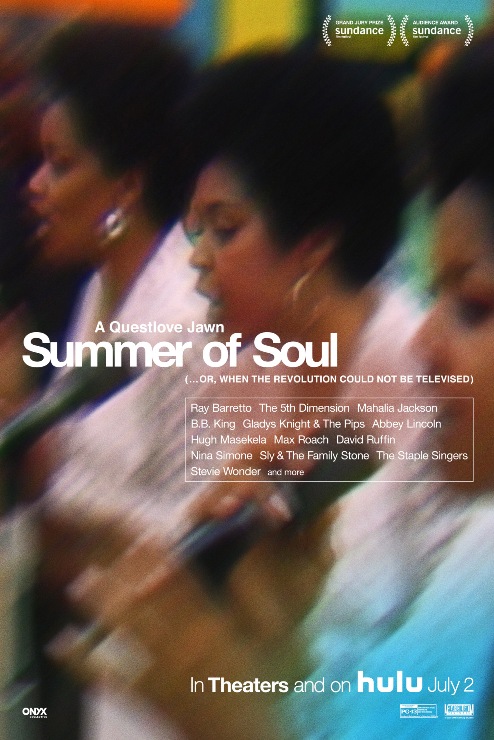
The first, which hardly needs my approval (it won an Oscar, after all), is Summer of Soul, directed by musician Questlove.

It’s about a series of concerts held in Harlem during the summer of 1969, the same year as Woodstock (which overshadowed these shows in the popular conscience). A lot of them were recorded for proposed TV specials that never really happened, so there was a rich treasure trove of performances from the likes of BB King, Stevie Wonder, and Nina Simone. But the movie also gives a lot of context for why these concerts were such a big deal at the time, along with modern feedback from several attendees (and a few performers).

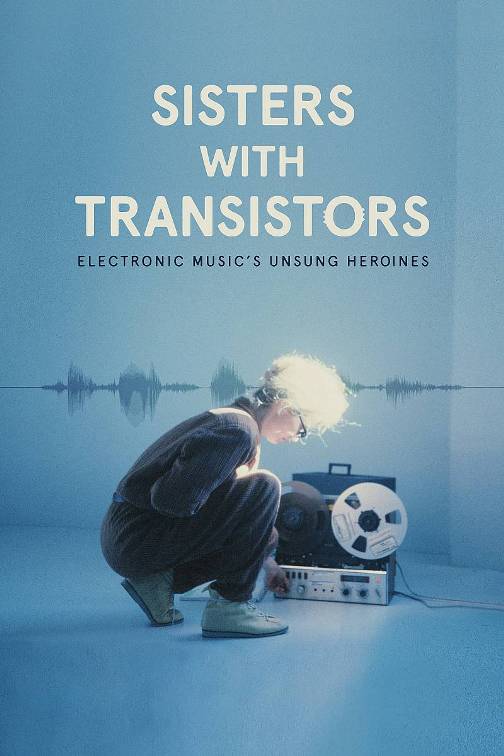
The other gets at the overlooked contributions of women to the development of early electronic music, Sisters With Transistors.

It focuses on real pioneers, including Delia Derbyshire (responsible for the Dr. Who theme, the assembly of which is amazing) and Wendy Carlos (of Switched on Bach fame), so lots of cool archival footage.

TV/Streaming

Looking back I’ve already written a lot about some TV shows in the past year, with some thoughts on the finale of Better Call Saul, the first season of Star Trek: Strange New Worlds, and the fascinating documentary series The Most Dangerous Animal of All. I wanted to highlight a few others, too.

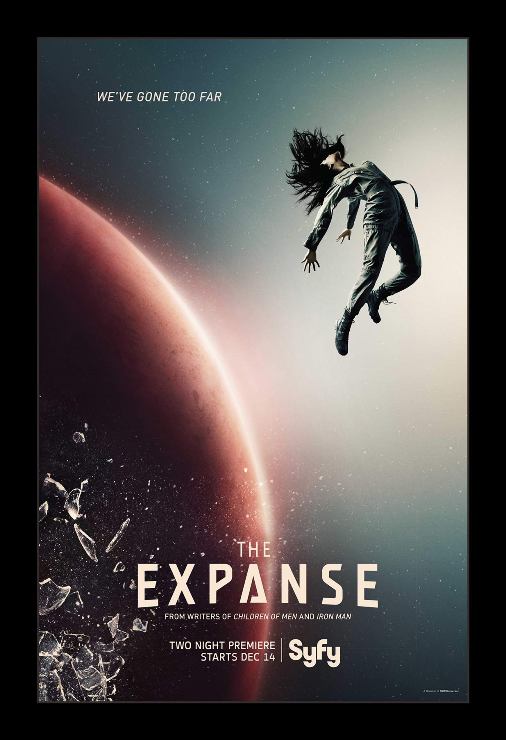
First, exiting the stage along with Better Call Saul was, for me, the best sci-fi series of its generation, The Expanse.

As it happens, I read the first book in the series (which I highlighted in my list of favorite recent books last year) before the TV show started so I was already primed to like it, but the adaptation was really excellent. Maybe it lacked swoopy spaceships, but it had compelling characters dealing with real human issues against a backdrop of an existential threat to our species. They didn’t even bowdlerize Avasarala!

One that both came and went in 2022, in that it won’t get a second season, is Archive 81.

Based on a podcast (which does continue past this only season), it’s about a guy hired to digitize a series of videotapes that pull him into a mystery/conspiracy involving a cult and a huge apartment fire decades before. It’s creepy and atmospheric and the cult aspect actually works better than I thought it would. I think the season could stand on its own, but there was clearly an expectation of more given the ending. Oh well.

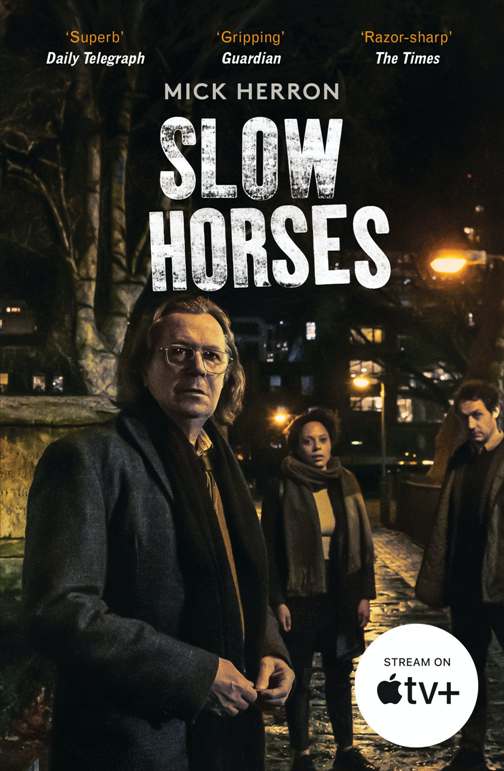
Hopefully, since we’ve already gotten two (short) seasons, we won’t be denied more of Slow Horses.

Based on the books by Mick Herron, the series is about a clutch of essentially exiled British intelligence agents who either are, or are perceived to be, useless fuck ups. Until somebody thinks they might be useful and then the shit hits the fan. I read the first book before diving into the series and the adaptation was incredibly faithful, right down to Jackson Lamb’s championship flatulence.

Books

I loved Susanna Clarke’s Jonathan Strange & Mr. Norrell when it came out and had kind of given up on getting anything else from her when Piranesi appeared in 2020.

It took me a couple of years to get to it, perhaps worried that the slighter volume wouldn’t measure up to its predecessor. I shouldn’t have worried. It’s a beautiful, expertly crafted book and completely different from Strange & Norrell. If you’ve heard people praise Clarke’s work by find the first book’s length a bit daunting, start here. You won’t be disappointed.

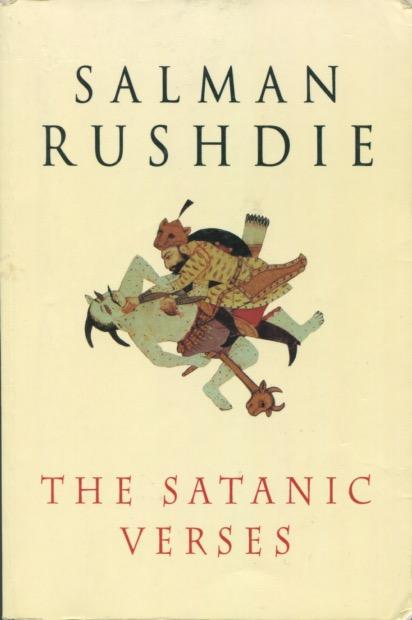
After Salman Rushdie was cowardly attacked in New York in August I finally decided to jump into The Satanic Verses.

It was, admittedly, a lot, with a narrative that jumps all over the place in terms of time, place, and tone. Beyond that, Rushdie isn’t exactly sparse with words, spinning sentences that sometimes seem to wrap around you two or three times before the period comes. I found it challenging and exhilarating all at once.

Finally, 2022 was the year I finished up the saga of necromancer Johannes Cabal, with The Brothers Cabal and The Fall of the House of Cabal.

I had a couple of quibbles (I don’t find the fictional nations in the middle of otherwise recognizable Europe very compelling), but overall it was a great ending to the tale of one of my favorite characters. Johannes is deeply cynical, but also funny and honest. You may not like him, but it’s hard to argue with him (to borrow a phrase from Clerks, “he’s blunt, but he makes a point”). The story of his brother, Horst’s, struggles with being a vampire were a fresh take on that theme.

Podcasts

In spite of hosting one, I haven’t really been a podcast listener until this year. For the most part I cherry pick episodes here and there on things that interest me, but there are a couple that became more regular listens this year.

The more entertaining of the two is Discord and Rhyme.

It’s a podcast in which a rotating cast of young(ish) music writers gather to talk through one of their favorite albums. What drew my attention when I was scanning through the back episodes was how many of them involve progressive rock (and adjacent) bands. It’s heartening to hear people not raised in the early 1970s who genuinely like that kind of music (most of them have parents to blame). But even on other albums what works the best is that they’re all coming from a place of love (or at least like) for particular albums, so the talk is engaging, informative, and enthusiastic. It’s much more fun to praise something you love than to tear down something you don’t.

The more aggravating of the two was Hoaxed.

A six-episode podcast, it dives into an incident from the UK in 2014 in which two children accused their father of being part of a cult of devil-worshiping pedophiles. Shades of the 1980s Satanic panic when the kids recant and it turns out that they were put up to it by their mother and her very odd boyfriend. That’s enough to hook you, but the story goes on to cover the backlash against the community when the charges fell apart and whether anybody will ever be held accountable for the damage done. It’s like a QAnon story in miniature. All right – bring on 2023!

On Fictional History and Fictional Places

Fiction is fake, by definition. Otherwise it would be nonfiction, right? Any character you create doesn’t exist in the real world if you’re writing fiction, even if you’re writing about a historical figure. Still, a lot of fiction takes place in what we think of as the “real” world. What happens when the real world isn’t enough and you decide to create enclaves of pure fiction within it? Well, then things get interesting.

I had a chance to ponder this recently thanks to a couple of things I consumed that leaned heavily into fictional history and fictional places. Neither quite worked and I’m not sure if all that non-existent history or fake places weren’t part of the problem.

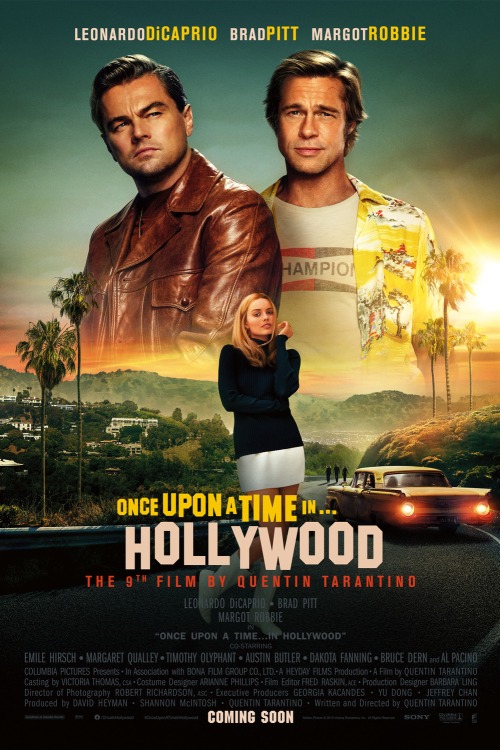
As for fake history, I finally had a chance to see Once Upon a Time . . . in Hollywood, the latest Quentin Tarantino epic. I’m a fan of most of his stuff, and while I found a lot to admire about Once Upon a Time . . . (Brad Pitt, in particular, is as good as everybody said he was), there’s some interesting alternate history in it that didn’t really work for me.

Hollywood

Sitting alongside the story of a TV star on the downside of his career (Leo DiCaprio) and his buddy/stunt man (Pitt) in 1969 Los Angeles is the story of Sharon Tate. Tate, as you’ll recall, was married to Roman Polanski at the time (hilariously portrayed as looking almost exactly like Austin Powers and not yet a rapist) and would be brutally murdered by members of the Manson Family that August. Spoiler alert, I guess – in the world Tarantino builds, that doesn’t happen. Instead, the would-be murderers go to the house next door, where Dicaprio’s character lives and Pitt’s is on acid, and are violently dispatched with a combination of the world’s best pit bull and a flame thrower (which somehow makes sense). The movie ends with everybody else getting on with their lives, the spirit of the 1960s not yet brutally ended.

The odd thing about all this is that it seems backwards. Usually when we’re talking alternate history the pivot point – where it diverges from our reality – is at or near the beginning of the story. The rest of it is exploring the “what if this happened?” question. For a timely example, the HBO adaptation of Philip Roth’s The Plot Against America begins as Charles Lindberg runs for, and wins, the presidency in 1940 on an isolationist platform bolstered by anti-Semitism. What happens next is what we’re going to find out in the next few weeks.

The closer comparison with Once Upon a Time . . . is Tarantino’s prior bit of historical revisionism, Inglorious Basterds. In that one a group of Jewish American Army soldiers during World War II put Hitler down in a bloody, fiery way. It’s clearer wish fulfillment, in my opinion, since everybody knows Hitler was a monster. It also leans heavily on the speculative fiction trope of time travelling to kill Hitler, so it makes more intuitive sense. There’s certainly some wish fulfillment in Once Upon a Time . . . – of course it’s a better world where murder victims aren’t actually murdered and the would-be killers get instant justice – but the way it comes about makes less sense. There’s nothing explaining why the Manson kids go to the wrong house and neither the DiCaprio nor Pitt characters do anything other than react to a home invasion – they aren’t heroes who intentionally foil a plot. I just don’t get the point of the exercise.

It’s easier to see the point of using completely made up geography in fiction, but even that can be tricky. Full disclosure – I’ve done it myself (Moore Hollow is set in a fictional West Virginia county), so I’m not against the idea. It does honk me off a little bit when it comes out of nowhere, though.

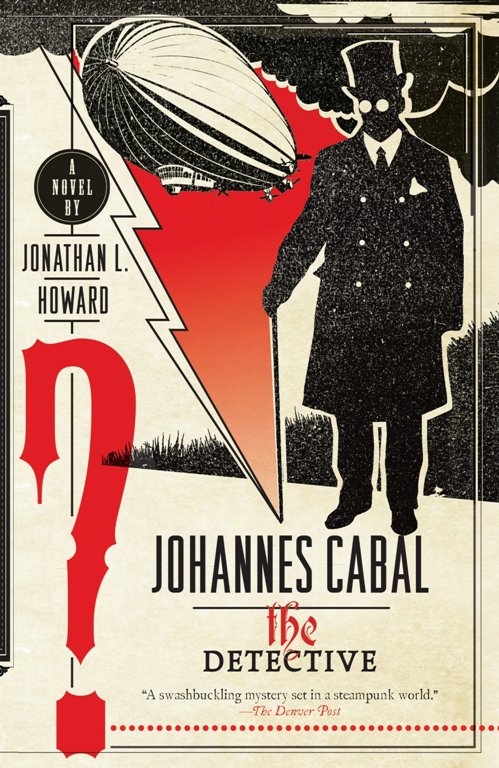
One of my great finds of last year was Johannes Cabal the Necromancer, a darkly funny book about a guy trying to conquer death by bringing people back from it. In that book the titular hero (I use the term loosely) has to obtain 100 souls for Satan in order to win his own back, with the devil providing a nightmarish carnival train to aid in the process. As I said, it’s funny in a dark, sarcastic kind of way (in some ways it puts me in mind of a horror version of Hitchhiker’s Guide to the Galaxy) and, so far as I can remember, takes place entirely in our world. Not our real world, obviously (see, bringing people back from the dead, Satan, souls, etc.), but at least it looks like ours. It all happens in the UK, with Cabal’s family coming from Germany.

Imagine my surprise when I dove into the sequel, Johannes Cabal the Detective, and found out that it takes place entirely in a pair of made up countries somewhere in Europe (with a third thrown in for good political measure).

CabalDetective

I understand why the author did this – the story requires particular political and military maneuvers that don’t fit established history and it’s hard to manipulate real places to do your fictional building. Nonetheless, it’s kind of a shock to have these made up places thrown at you without warning. Had the first book mentioned them or been set in them it would have been different. That neither Cabal nor his sidekick have any connection to these places doesn’t help the story, but that’s a separate issue.

Of course, there are entire genres of fantasy that take place in worlds that have no relation to this one. The Water Road trilogy takes place on another world entirely (with no human beings!), as does Gods of the Empire and its sequels. But with those you know going in what you’re getting into. Changing the game midstream seems like a miscalculation to me. The question with everything, whether it’s fake history or made up locations, is what works best for the story? What best serves the character? Sometimes the answer to both is something completely new and unexpected. But sometimes it’s not.

Plus ca change . . .

There has always been controversial art. The reasons change – whether it’s the frank depiction of sex, or violence, or challenges to religious or political orthodoxy – but the fact that words or images piss people off is as old as time. We tend to think there’s more of it going around these days because social media tends to amplify controversies when they emerge. Just because the cacophony is louder doesn’t mean it’s any kind of major change in society.

This was driven home to me by a recent article in The Atlantic. Though the current title is “The First Novelist Accused of Cultural Appropriation,” the title that shows on the browser tab, which more accurately captures the theme of the piece, is “Could My Father Have Published ‘Nat Turner’ Today?” Bucking the usual rule of headline questions, the answer, from the story itself, appears to be yes.

Some background first. The literary controversy of the year so far has been American Dirt, a novel by Jeanine Cummins. With a major push from its publisher, and a spot on Oprah’s list, it was poised to be the breakout title of the year.

AmericanDirt

It’s about a woman and her son fleeing Mexico after a drug kingpin murders the rest of their family and, ultimately, their experiences as migrants heading to the United States. This article does a good job of highlight the resulting controversy, which ranged from questions of cultural appropriation (Cummins is neither Latina nor a migrant) to how writers of color are locked out of the publishing industry to the fact that, maybe, the book just isn’t that good at what it wants to be (this is an interesting takedown along those lines ).

The merits of the arguments about the book aren’t really important. What you need to know is that some people took issue with what was set to be a wildly popular book (there was a film deal before it was even published) and weren’t silent about it. Thanks to social media, blogs and what not their complaints reached a fairly wide audience.

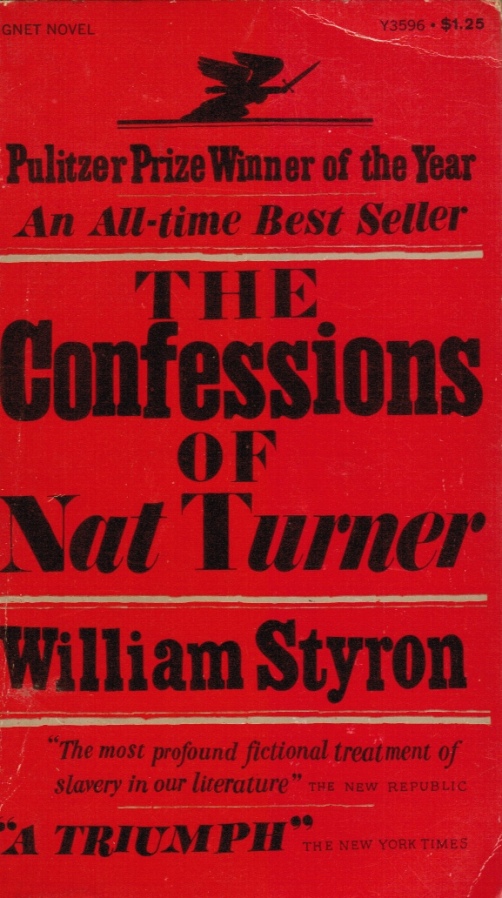
Back to the Atlantic piece. The subject is The Confessions of Nat Turner and the “My Father” in the title is William Styron – the author of the article is his daughter, Alexandra. The Confessions of Nat Turner came out in 1967. Turner, of course, was the leader of a slave revolt in antebellum Virginia. The book is a fictional narrative of Turner as told to a prosecutor who will try Turner after the revolt. It won the Pulitzer Prize, so it must be pretty good.

NatTurner

Nonetheless, it led to some controversy, driven largely by the fact that Styron wasn’t black, much less a slave. How could he write a narrative from the standpoint of one? If it’s a familiar objection, it’s worth looking at how familiar the arc of reaction to the book is to what happened with American Dirt.

First, there was a swell of praise from traditional sources:

Through much of 1967, he was at ease, enjoying the swell of prepublication buzz for Nat Turner. The Book-of-the-Month Club (the Oprah’s Book Club of its time) paid my father the highest price for a novel in the company’s history. The paperback, serial, and foreign rights sold in a frenzy. Hollywood came calling. That July, when riots erupted in Newark, New Jersey, and in Detroit, newspapers asked him to help white America understand what was happening. By October, when the first reviews appeared, Nat Turner was a juggernaut. ‘Magnificent,’ The New York Times declared. “A new peak in the literature of the South,’ Time wrote. ‘It will endure as one of the great novels by an American author in this century,’ the Los Angeles Times predicted. In November, my father was awarded an honorary degree by Wilberforce University, a historically black institution in Ohio.

At this point, as Styron’s daughter points out, with one exception “no black writers were invited to critique Nat Turner in any major national publication.” Slowly, however, those overlooked voices started rising:

The first signs of black dissent appeared by the new year. Articles in, among other publications, The New Leader, The Negro Digest, and Freedomways condemned the novel and the white media that endorsed it. Around the same time, an ugly spat erupted in The Nation between my father and the Marxist scholar of African-American history, Herbert Aptheker. (They both behaved like self-important assholes.) In February, The New York Times ran the first of several pieces exposing an angrier vein: ‘Styron’s Nat Turner, the house nigger,’ declared the professor Michael Thelwell, ‘is the spiritual ancestor of the contemporary middle-class Negro … [the] type with whom whites including Mr. Styron feel most comfortable.’ The writer William Strickland groused that the novel was ‘the worst thing that’s happened to Nat Turner since he was hanged.’ My father’s critics took issue with the book’s dialect and character development, with what he put in (a master who teaches Nat to read, motive for the rebellion separate from bondage) and what he left out (a black wife, unyielding conviction). But probably his greatest crime, as my father reflected 25 years later in an essay for American Heritage, was ‘apparent from the book’s first sentence: How dare a white man write so intimately of the black experience, even presuming to become Nat Turner by speaking in the first person?’ In June 1968, the backlash reached its zenith when Beacon Press published William Styron’s Nat Turner: Ten Black Writers Respond. The book generated its own front-page notices, and kept the Nat Turner dispute alive well into the summer.


The backlash led to the film (to star James Earl Jones) to be shelved.
None of this is to say that the detractors of American Dirt or Nat Turner had the right of it. Maybe they do, but I’ve never read either book, so I don’t know. My point is that the experience of Nat Turner that Styron’s daughter lays out sounds almost exactly like what happened with American Dirt. Maybe the controversy didn’t burn so brightly, since it didn’t have social media to fan the flames, but it still burned pretty good.

Which is only to observe, as the song says, the more things change, the more they stay the same. Anyone who writes a book (or makes a movie or paints a picture) risks blowback, whether the blowback is warranted or not. The arts are simultaneously vague and subject to so many interpretations, yet stir such deep passions. It will be a change when new books are written that don’t provoke any negative reaction. Human nature being what it is, I don’t see that happening any time soon.

Favorite Reads of 2018

Since it’s getting down to the wire – I’m not down with “Best of” lists that show up in October – I figured now was the time to give a shout out to my favorite books from 2018. Two important notes: (1) these are favorites, not necessarily bests or whatever; I just loved them, and (2) the key phrase is “that I read in 2018,” so it includes books from before 2018. With that said, here we go (in no particular order) . . .

Nemesis Games (2015)

Nemesis

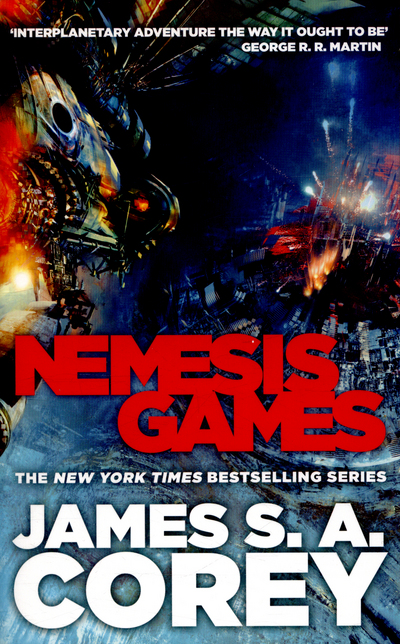
I’ve basically been keeping one book ahead of where the TV version of The Expanse is, but with the next season on Amazon taking parts from both the fourth (Cibola Burn) and fifth (this one) books, I figured I had to get a little more down the road with this series. I read Cibola Burn this year, too, and while I got the criticisms some people had with it, I didn’t think it was this bad. In comparison to Nemesis Games, however, it was a wet patch on the road. To say “things change” in Nemesis Games is to severely undersell it. That the writing hive mind that is James S.A. Corey managed to explode the cast, sending them off in different directions before pulling them back together, is no small feat, either.

Saga, Vol. 9 (2018)

Saga9

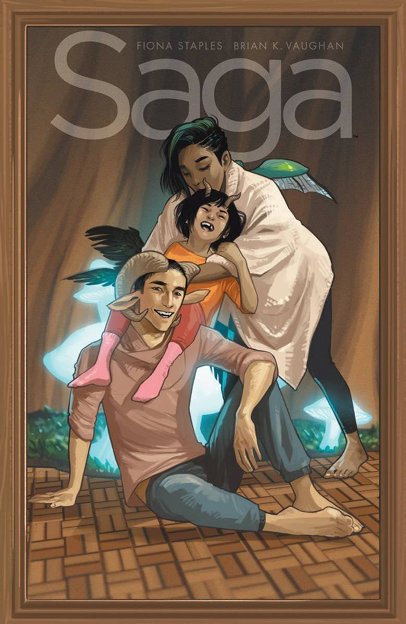
Oh, boy, that last twist. The good news is that after nine volumes Saga continues to be inventive, thrilling, thoughtful, and capable of numerous gut punches. The bad news is that writer Bryan K. Vaughn and artist Fiona Staples are taking “at least” a year off from the series before getting back to work on it. Part of me thinks that’s a good idea, but part of me worries if this shunts Saga into the realm of great, unfinished stories. Given the way this one ended, I sure hope not.

If you’re not reading Saga yet, here’s why I think you should.

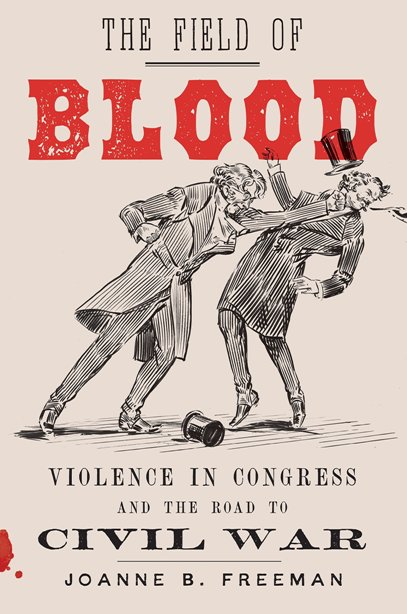
The Field of Blood: Violence In Congress and the Road to Civil War (2018)

FieldofBlood

Many people know that, in the run up to the Civil War, Senator Charles Sumner was beaten by one of his Southern colleagues with a cane, providing the perfect metaphor for the turmoil that would soon rip the nation apart. What most folks don’t know is that, while Sumner’s beating stood out for its brutality, it was merely different in degree, rather than in kind, from numerous other incidents of Congressional violence. One Congressman even died in a duel (not on the House floor, to be fair). Not just a colorful “you were there” history, The Field of Blood looks back at another time when the political norms broke down and things sound frighteningly familiar to modern ears.

Johannes Cabal the Necromancer (2009)

JohannesCabal

Pure fun. Well, pure darkly humorous fun, at the very least. Johannes Cabal sold his soul to the devil. To get it back, he’s have to deal in bulk, gathering 100 souls for the devil to replace his own, all while running a demonic travelling circus right out of the darker portions of Ray Bradbury’s psyche. This was probably the most fun I had with a book this year, partly because of what I’d just read before (see below), but also because there’s a sharp, dark wit that runs all the way through it.

Shattered Earth trilogy (2015-2017)

Broken

N.K. Jemisin’s trilogy – The Fifth Season, The Obelisk Gate, and The Stone Sky – made history early this year when it won the Hugo Award for best novel three years in a row, an unprecedented achievement. Is it that good? Absolutely. The Fifth Season, in particular, is a structural high-wire act that shouldn’t work, but completely does and leaves the reader knowing precisely why it was done. The other two books don’t quite reach that level, but the overall arc of the story and the characters that drive it is brilliant. Pretty heavy (I needed Johannes Cabal . . . to brighten me up a bit), but completely worth it.

I’ve written before about these books here and here.

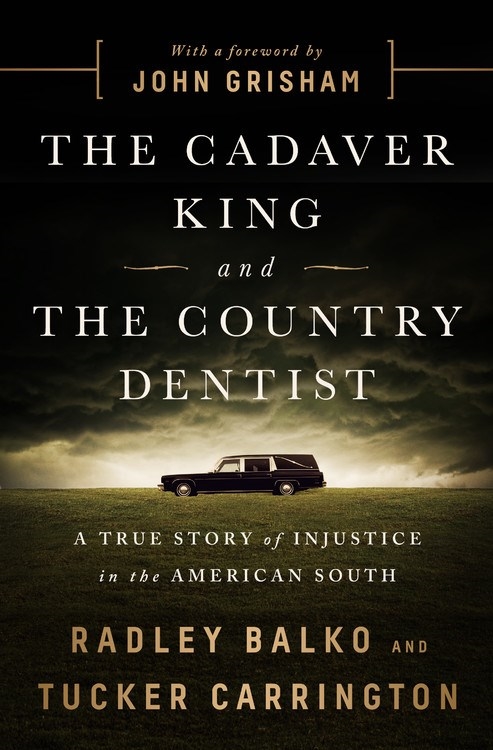
The Cadaver King and the Country Dentist (2018)

CadaverKing

I wrote a review of this one here, so I won’t say much more. If you want to get really pissed off about what “justice” looks like in this country (and you should), this is the book for you.

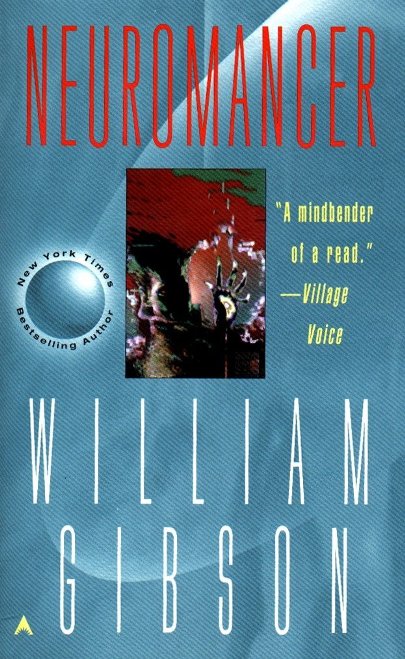
Neuromancer  (1984)

Neuromancer

Yeah, I know, very late to the party on this one. My college roommate read it and, for some reason, I let it get away from me. Does it hold up? Pretty much, although it’s clearly a product of its time. As a foundational text for cyberpunk it’s something every sci-fi fan and writer should check out. That it continues to tell a gripping story while introducing a lot of ideas we now take for granted is icing on the cake.

Children of Time (2015)

ChildrenofTime

I gushed about this one right after I read it, so check out the details here. Suffice to say, any book that can make you care about the macro evolutionary development of sentient spiders is an achievement.

Come See Me! Learn From Me(?)

I wanted to let folks know about a couple upcoming appearances I’ll be making – getting out of the office and into the bright light (hopefully) of day!

First, on October 26 and 27 I’ll be at the West Virginia Book Festival at the newly renovated Charleston Convention Center (formerly known as the Civic Center). I’ll be in the marketplace both days (11:30 to 6:30 on Friday, 8 to 5 on Saturday) selling books, signing them, and just generally chatting people up. In addition to the marketplace there’s the annual used book sale, lots of workshops and such, and loads of great authors. Come check it out.

2010_Bookfest_Logo

Then, on November 17, I’ll be part of the West Virginia Writers fall conference in Flatwoods, West Virginia. I’ll be doing a pair of workshops:

Lines in the Speculative Sand – When Genre Matters in Fantasy & Science Fiction (and When It Doesn’t): Is my story fantasy? Is it science fiction? Does it even matter? Dive into the weird world of speculative fiction and learn some of the rules of the road (so you can go break them if you want).

Law 101 for Writers – Getting It Right When Your Character Goes to Court: Into every character’s life a little law must fall. Even if you’re not writing legal thrillers, there’s lots of reasons for characters to wind up in court. Learn some tips and discover some valuable resources to make your legal writing feel real.

There will be lots of other workshops, too, from marketing on the cheap to short play writing to ekphrastic poetry (I had to look it up, too). Something for just about every writer, in other words. Find out how to register at the WVWI website.

WVWI Fall-conference-2018-624x540

At Long Last, the Entire Saga of The Water Road In One Handy Package

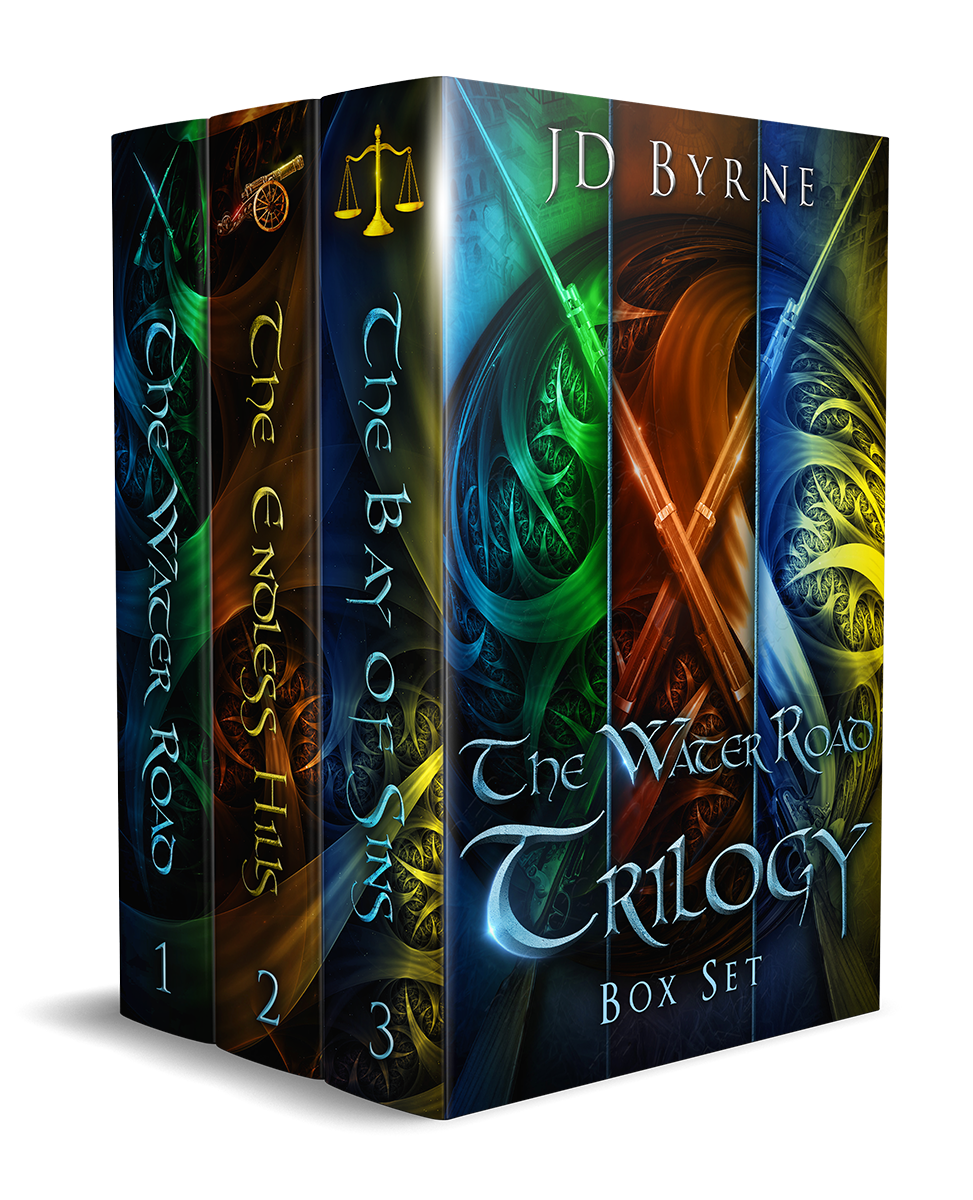
Very happy to announce that how, instead of buying three separate books to digest the entire story of Antrey, Strefer, and The Water Road, you can now get them in one convenient package. Presenting The Complete Water Road Trilogy box set:

2017-525 3d render on transparent Website.png

This is the series readers have called “magnificent,” “excellent,” “exciting,” and “engrossing.”

This version is only available in eBook format. And for April, it’s on sale for just 99 cents! Get one in your preferred format at the links below.

Amazon
Barnes & Noble
Kobo
iBooks
Scribd

In Praise of Not Finishing Books

As a writer, the idea of people starting to read a book but not finishing it intuitively honks me off. After all, the author went through the trouble to create an entire package that, at least on some level, appealed to you – give them a chance to redeem whatever fault you’ve found in the end! But if I’m honest, as a reader, I’d push back against that – hard.

I wouldn’t be alone. A few years ago eBook platform Kobo (on which all my books are available, by the way), released some data that compared their best seller list with the list of books that readers most often finished. Not surprisingly, some of the best sellers were also some of the least finished. I love the cynical take on this from The Guardian, with respect to Donna Tart’s The Goldfinch (2014’s Pulitzer Prize winner: 37th best selling, only finished by 44% of readers):

Most-unfinished book of the year isn’t a title anyone would hope to win. But her core fans probably read the book to the end, as did a whole raft of new readers, which propelled her up the bestseller charts. And those readers who didn’t finish it still paid for it, so Donna Tartt can mop up those tears with crisp tenners, which will surely ease the pain.

Still, it’s a bit disheartening to know that so many people couldn’t even finish what you’ve written.

Alas, I occasionally find myself in that category as a reader. Even though I see every book I read (or listen to) as a learning experience when it comes to writing, sometimes I still can’t stick it out to the end (witness my “unfinished” shelf at Goodreads, to which I just had to add Jim Butcher’s The Aeronaut’s Windlass, alas). Thus I’m on board with this piece over at Electric Literature that, without shame, promotes non finishing books:

There are many factors that go into whether or when a reader finishes a book. I imagine many people’s reading habits are, like mine, scattered. I have at least a dozen in-progress books on my nightstand — and several more on my phone and e-reader. Readers stop reading a book they enjoy when they put it down and forget to come back. Readers finish books they hate when they are assigned it for book clubs or else they want to hate-read and laugh about with their friends. (Certainly a large percentage of Fifty Shades readers fall into that second category.) Just as a half-read book isn’t necessarily a failure, a completed book is not necessarily a success.

This makes a lot of sense. I said before, in other contexts, that reaction to art is inherently personal. What rocks one person to the core of the their soul will make another yawn. That’s neither right nor wrong, it’s just the way things work. So there’s really no reason to expect everybody to love a book so much that everyone who starts it finishes it. As the saying (attributed to James Joyce) goes:

LifeTooShort

Ultimately, the job of keeping a reader engaged with a book is the author’s. It’s a responsibility we should take seriously. But we shouldn’t forget that readers come to our works in all kinds of ways and for all sorts of reasons. No book is going to connect with all of them, just like some books you’ve read didn’t connect with you. We have to accept that sometimes saying “this isn’t for me” and moving on is best for everybody involved.

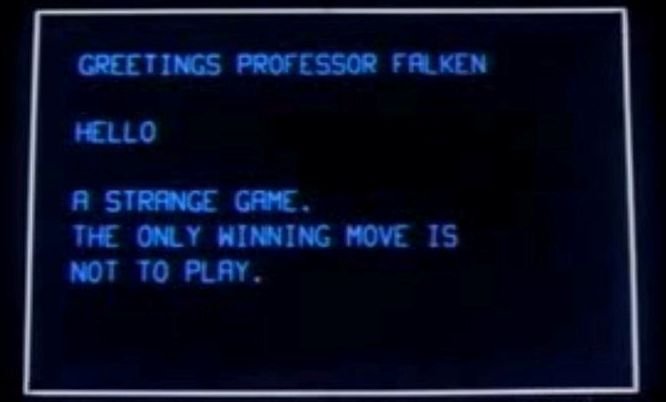
Remember the lesson of the WOPR:

WOPR

It applies to books, too.