My Black Pages

One of the little bits of world building for the Unari Empire books that I had fun with was thinking through the newspaper situation in Cye. Given the steampunk(ish) setting, it’s the most plausible form of mass media and how it’s regulated says interesting things about the world. Hence, the “real” newspapers are known by how closely aligned they are with the Imperial regime, since to officially publish they need a literal seal approval.

When it came time to write Widows of the Empire I needed to expand my thinking a bit and figure what underground papers might look like and what they might be called. I settled on small papers crammed with type, so much that each page looked nearly black. Naturally, characters refer to them as the “black pages.”

This is not an accident.

Readers of The Water Road and its sequels know that I use a lot of musical references in my books. Lots of places in that series are named after musicians, the more obscure the better! The “black pages” are no different, as I’ve stolen the name from a song (or a few) by Frank Zappa.

Frank originally wrote “The Black Page” as a percussion feature, kind of on a dare. After an orchestral session, drummer Terry Bozio related that some of those players talked about the fear of facing “the black page,” prompting Frank to write his own. The song evolved from a short piece for drums and percussion into a song for a full band, in various guises.

In this video, musician Doug Helvering works through the first two versions of the song, with excerpts from the score to prove the that the song was well named:

A decade after that second version, the song morphed again, into a “New Age Version” that was performed on Zappa’s final tour:

Even laid back, it’s kind of a bear.

Names can be tricky for fantasy and science fiction writers. My suggestion – take inspiration wherever you can, even if it’s in an insanely complex song.

Why Not Just Write Fantasy?

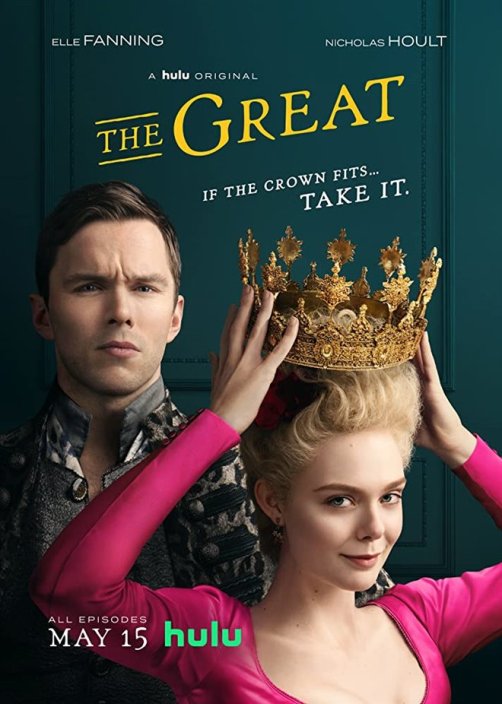
Over the winter my wife and I discovered The Great*, the Hulu series about (very loosely) the early reign of Russian empress Catherine the Great.

While I’m not certain the series quite lives up to the title, it is very entertaining and, in spots, riotously funny. What it definitely lives up to is the little asterisk the end of the title (as displayed in the opening credits, at least), which notes it is either “An Occasionally True Story” (season one) or “An Almost Entirely Untrue Story” (season two).

This post is very much not going to take the show’s creators to task for playing fast and loose with history, particularly since they admit it up front. Truth is, literature and theater and film/TV is full of examples of historical persons or events remolded for dramatic purposes. I know Salieri didn’t really work Mozart to death (they were pretty good buds!), but I still love Amadeus. Dollars to donvts Julius Caesar did not turn to Brutus and “et tu, Brute?” him in real life, but Shakespeare makes it work.

But as a writer, I wonder about the choices other writers made when playing with history. History is full of lots of interesting story fuel, after all. I’ve used some of it myself. I’ve said before that the idea for the basic arc of The Water Road trilogy came from seeing an “on this day” thing on Wikipedia about the anniversary of Napoleon’s return from exile to start the Hundred Days. I thought that sounded like something out of a fantasy series – a vanquished foe returning to the world to wreak further havoc – and wheels started turning in my head.

What never occurred to me was the make the story about Napoleon. I didn’t want to tell his story, but another one that might have echoes of his. Being a fantasy writer that’s not an issue, but with more traditional fiction things can get complicated. After all, a made up character doing made up things is the grist of fiction – sometimes everything even happens in made up places. But a made up town or neighborhood is one thing, what about a made up country?

I got to thinking about this again due to this piece in the New York Times about the recent glut of true-crime limited series that are all over streaming services. Things like Netflix’s Inventing Anna and Hulu’s The Dropout (both pretty good, though I’d go with the latter) are telling true-crime stories of recent vintage that, in most cases, have been thoroughly aired in other settings (Inventing Anna came out of a long-form magazine piece, The Dropout from a podcast of the same name). I don’t agree that just because these stories have been told in other mediums means the fictionalized TV versions are superfluous (not everybody consumes podcasts), but the author makes an interesting point:

Now, it is absolutely true that real life does not always give you neat “Rosebud” explanations; real people are often simply jumbles of unresolved contradictions. But that’s one reason we have drama: to make emotional, if not literal, sense of this kind of figure. (Hence Orson Welles reimagined William Randolph Hearst as Charles Foster Kane.)

Indeed, it seems much easier if you want to tell a story about a particular kind of person to do it with a fictional character rather than a real-life one. Legal issues aside, it allows you to mold and shape the story as dramatic (or comedic!) stakes dictate, without worrying about people complaining that you’re not “getting it right.” After all, fantasy only has to be compelling, not accurate.

So why not, if you want to tell a story that pretty much set in a fantastic version of a historical place, why not make it fantasy? What’s the pull of using a historical figure whose actual history you’re going to discard anyway? I suppose it’s easier to market a series about Catherine the Great (who’s not that well know in the US, anyway) with an ahistorical twist than it is to sell a bloody, bawdy, fantasy series nobody’s heard of before.

As I said, it’s silly to get bent out of shape about The Great’s lack of rigorous historicity. They’re doing something much more fun and not even hiding the fact. Nonetheless, it does make you think.

Come, join us in our fantasy worlds. The water’s fine – unless that’s not what you want! Huzzah!

Hey Kafka (Or, Ruminations on Dead Authors and Duties Owed to Them)

Five years ago I wrote a post about dealing with requests from writers to destroy their unfinished (or other) work upon their death. It was sparked by the destruction of the recently passed Terry Pratchett’s hard drive by running it over with a steamroller, per his desire. As I wrote then:

The comments I read when the news came out was mostly amusement and pleasure at Pratchett’s wishes being so scrupulously honored. After all, if he was so specific as to how his literary executor was to deal with his unfinished work he must have felt fairly passionately about it never seeing the light of day. Who could argue that the right thing to do is precisely what the author wants?

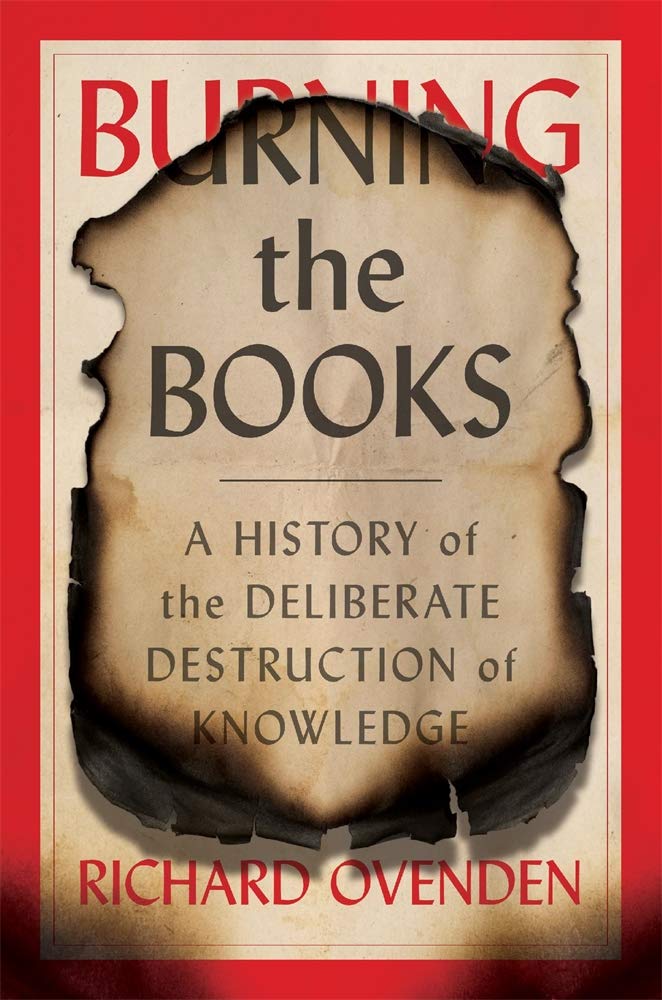
I got to thinking about this again reading Richard Ovenden’s Burning the Books: A History of the Deliberate Destruction of Knowledge.

What I thought was going to be a particularly timely look at the social or political factors behind drives to ban books was actually a love letter to libraries and archives and the need for society to protect and support the collection and retention of knowledge. No great surprise, I suppose, given that Ovenden is the librarian at the famed Bodlean Library at Oxford.

In a couple of chapters, Ovenden discusses particular situations where authors either took affirmative efforts during their lives to destroy their unfinished work or asked executors/family to do the destroying once they were dead. In some instances (like Franz Kafka) it was unfinished work, where some others involved personal papers like letters or notes. Ovenden’s point of view is clearly that any loss of this information is a cultural travesty and implies that the heroes here are people who go against the wishes of their friends/loved ones and preserve their work anyway.

I get that, on the one hand. Destroyed knowledge is pretty much gone, after all, without any hope of getting it back. The world is undeniably richer for having Kafka’s unfinished work or the papers of someone like Sylvia Plath that gives insight into a writer’s life and process. But whose decision is it to make that determination?

The author’s wishes deserve at least some consideration, right? Maybe because in one side of my life I’m a writer and in another I fight battles to vindicate the Fourth Amendment and rights to privacy (usually unsuccessfully, alas), but airing things the original author never wanted to see the light of day seems like a violation. I’m not sure the world is entitled to anything the author doesn’t want to show it.

As is happens, after Burning the Books, I decided to read one of the most famous posthumously published works, Kafka’s The Trial.

I’d had it in my collection for a while but never got around to it. I’m glad I did, just to have been able to say I’ve read it. As a lawyer, you’d think it would be required reading, although the deep secret buried in The Trial is that there never is an actual trial that takes place. I sort of know that’s the point, but I expected a little bit more procedural chicanery – the kind of stuff that happens in regular courtrooms that get dubbed “Kafkaesque.”

The Trial definitely feels unfinished. My understanding is that the first and last chapters were actually written and designated as such by Kafka, but the rest was assembled by his executor, Max Brod, after his death. That said, it does have a memorable ending, so it doesn’t just peter out. I also found the atmosphere to be more dreamlike than nightmarish. The main character, K, is more frustrated and aggravated by the situation than he is terrified. In a way that makes it worse.

While there is no trial per se in The Trial, lawyers and the court system come off pretty badly. The part that stuck with me the most is a scene where K is in the court building and passes a group of litigants just huddled around not doing much of anything. It’s explained that they’re waiting for rulings in their cases, some of them for years, and that all they can do is continue to wait. That put me in mind of several of my clients who have watched their cases languish in court, just waiting for the judge to make a decision. They’d rather the judge get it wrong but actually get it done – at least then they could move on to the next phase of things.

My ultimate conclusion about The Trial is that I think K was dead the entire time. The suddenness of the accusation, the ultimate futility of fighting the charges, and the references to K needing to defend his entire life make me think that he’s in some kind of limbo (from which he’s ultimately released in the end). The way “the law” is discussed, too, sounds more like a religious concept than a purely legal one. It doesn’t ultimately matter, but it’s what jumped to mind while reading it.

Since I was on a Kafka kick, I decided to wrap things up with a book that dove more deeply into the battle over his literary legacy, Kafka’s Last Trial, by Benjamin Balint.

The titular trial here took place in Israel in this century and was a battle over where Kafka’s literary legacy would have its home. It stems from how Brod dealt with Kafka’s literary estate and whether it should be retained by the descendents of his secretary or should be taken into the National Library of Israel as a cultural treasure of the Jewish people (or even in an archive in Germany). The legal wrangling isn’t that interesting (it turns on technical distinctions between different kinds of gifts – you can read up on it here), but the question of legacy is really fascinating. There’s an entire chapter dedicated to the issue of whether Kafka was a German writer (though he lived in what is now the Czech Republic) who happened to be Jewish, or a Jewish writer who happened to write in German and what the answer to that question means.

Of course, that issue could be hashed out regardless of whether Brod had destroyed Kafka’s unfinished works as asked (assuming Kafka became a big enough name without it). And it would have avoided an awful lot of expensive litigation generations later. So, in the end, is it better to encourage executors, friends, and families to abide by the wishes of the writers who trust them to do so?

I’m inclined to think so, but I also think that the question may be moot. After all, once a writer is dead he or she isn’t going to know what their executors do one way or the other. One pleasant thing about death is you don’t have to worry about your reputation. Weighing all the considerations, maybe Brod was on to something in the first place.

Who Does Your Main Character Work For?

A little white back, my wife and I saw The East, a 2013 film starring and co-written by Brit Marling:

Marling’s character infiltrates an off-the-grid terrorist organization that’s been striking out at corporations that have gotten out of hand. One is responsible for an oil spill, another for despoiling a town’s water supply, and a third for releasing a drug onto the market that has horrible side effects. Part of what makes the movie interesting is that Marling isn’t a cop or a crusading journalist, but rather an agent for a private security firm. It made me think about the importance of who your main character works for in a story and what it means for their development (or lack thereof) as a character.

A lot of stories are about main characters solving some kind of mystery, figuring out the solution to some problem. It’s no surprise, then, that lots of stories have main characters whose jobs require them to solve those mysteries – cops, private detectives, journalists. It gives them not just a motivation for getting into the problem in the first place but a destination as well – an arrest, the confirmation of a dark secret, an expose article. But it can also give them interesting limitations, blinders, or obstacles to overcome.

The natural job for a character like Marling’s in The East would be a cop of some variety – a person tasked by society with taking down bad guys. A person who should, at least in theory, be motivated to serve justice and help people. We’ve seen that story before, however, so making Marling’s character a private security operative boxes her in interesting ways since she’s not working for society in general, but for specific clients.

There is a scene, for instance, where she winds up in a middle of a plot the group is pulling that will poison dozens of people at a drug exec’s party. When she realizes that and calls her boss for guidance, she’s gently reminded that the drug company is not their client, so she shouldn’t try to stop what’s happening, just keep gathering info for the client that actually hired her. It creates an extra amount of tension over what she’s going to do and why, which I thought worked pretty well.

I’ve been thinking about this as I work on the sequel to Moore Hollow.

Yeah, so, I’m doing a sequel to Moore Hollow, the first of many, I think (currently now being worked on around the final volume of the Unari Empire trilogy, Heroes of the Empire).

For the books going forward, Ben Potter, the disgraced journalist who is the main character of Moore Hollow, permanently relocates to West Virginia and throws himself into investigating the area’s rich tradition of beasties, legends, and general weirdness. In the second book, though, he hooks up with a lawyer to help represent a particular client. That will give him different motivations and restrictions than his normal work as a paranormal journalist. I hope to explore how those roles are different as the series goes forward and Ben sometimes does and sometimes doesn’t work with that attorney.

Of course, those choices don’t always work for every reader/viewer. Consider this view, from a review of The East:

Yet the biggest issue with The East is that Batmanglij and Marling so thoroughly rig the script in the environmentalists’ favor. By casting Marling as a corporate spy instead of a government agent, it sets up a fatally compromised situation where her bosses have the same profit motive as the companies being jammed. So choices that might be made in the name of justice are instead a matter of loyalty to one set of values that’s clearly more compromised than the other. Environmental activists like the ones in “The East” live by a code, but the same can’t be said of Sarah’s employer. Going native is easy when you don’t have to follow the letter of the law.

But for me, it’s precisely that lack of direction that makes the character (and her journey) interesting. In the end, I think she finds a lot of commonality between her employer and the would-be do-gooders.

What I’m saying is that, oftentimes, our main characters born out of what they’re going to do in our story. Still, it’s useful to think about the context in which they’re going to do it, which includes how they’re making a living. It can open up some interesting storytelling avenues.

On Time Jumps

As it happens, I wound up reading Leviathan Wakes, the first book of The Expanse series not too long before the TV show began. As a result, as the TV series went on I read the next book in the series just before the new season dropped. Now that the TV show has finished, after six seasons, and the book series has wrapped up, after nine volumes, I decided to plow through and finish the books in one go.

The first of the last three (The Expanse is sort of three linked trilogies, really), Persepolis Rising¸ starts with a pretty audacious gambit – it skips the story forward three decades.

Before we dive in further, let me specify just what I mean when I say “time jump.” I’m talking about a narrative (either within a single work or across multiple ones) where there are large breaks during which a large period of time passes. I’m not talking about the usual passage of time – most sequels or new seasons don’t pick up right after the prior one, after all. Nor am I talking about flashbacks or flashforwards or stories about characters who, to borrow a phrase, have come “unstuck in time.” I’m talking about situations where the main narrative is still driving forward, but it’s like somebody’s picked up the needle and we’ve skipped some tracks.

It’s a bold gambit because, presumably, the world of the story continues to exist during the time that’s skipped over. Things change, just as they do in regular life over years. Picking up months or years in the future should be a means of exploring how those changes impact the characters.

A good example of this I recently read is Middlegame by  Seanan McGuire.

In the world of Middlegame, an alchemist in the modern United States is using semi-fraternal twins as a means to bring about the presence of a great power he wants to tap into. The book is the story of two twins, Roger and Dodger (the rhyming names are quite intentional) who, in spite of attempts to keep them apart, keep finding themselves over the years. The book proceeds in hunks (while also skipping around in time), first when the two are young kids, then when they’re college students, and then grown adults. Between hunks, years pass and it matters. Not only do the characters change, but their relationship to each other does, too, partly because of the passage of time.

Another good somewhat recent example is the jump in time between seasons two and three of the Battlestar Galactica reboot. At the end of one season Gaius Baltar is installed as president. At the beginning of the next a year has passed and we can see what “President Baltar” really means – everything goes to shit and the Cylons return! The time skip moves the plot along while providing the writers a good way to show what went on in the interim and the impact it’s had on the characters.

Sadly, Persepolis Rising doesn’t handle the time jump nearly as well. I understand the bind  James S.A. Corey (actually Daniel Abraham and Ty Franck working in collaboration) was in – the story needed to jump ahead decades in order to play out, but what to do with the characters you’ve spent six books lovingly developing? The answer here is mention a few extra aches and pains and leave it at that. For the crew on the Rocinante, thirty years passing was just like thirty minutes.

Which is supremely disappointing! The five folks on the ship are in exactly the same shape they were in at the end of Babylon’s Ashes: Holden and Naomi are still together, Amos and Clarissa have their weird connection, and Bobbie and Alex have whatever they’ve got. Alex has, in the intervening decades, been married and divorced again, but the only outgrowth of that is a son off screen he occasionally worries about. There’s no aggravation/shifting of loyalties that have occurred over three decades of doing the same damned thing in the same damned (small) place.

All of this violates what I’m officially dubbing Rufus’ Rule of Gullibility, which I discussed in a book review many years ago:

There’s a scene deep in Kevin Smith’s Dogma in which Rufus, the thirteenth apostle, explains to a credulous Bethany who she can be a descendant of Christ. ‘Mary,’ she points out, ‘was a virgin.’ Rufus explains that while it’s true Mary was a virgin when Christ was born, she was married to Joseph for an awful long time after that. Why assume she stayed a virgin? He concludes: ‘The nature of God and the Virgin birth, those are leaps of faith. But to believe a married couple never got down? Well, that’s just plain gullibility.’

I just can’t believe that five people could live in such close quarters for three decades and nothing changes. This fall I’ll will have been in my current job for just twenty years and there has been a consistent churn of turnover among my coworkers the entire time. And we don’t have to worry about the rigors of space travel! It’s just not plausible that things stay the same all those years (after all, as the song says, things change).

Which is a shame, because where the crew ends up by the finale works really well and changes the game up significantly. That’s not to say that the book doesn’t have other flaws – the bad guys aren’t nearly as interesting as those in prior books and the POV bad guy, particularly, is a dweeb – but it’s still a really good read about characters we’ve come to care about.

Time jumps can be a valuable tool when writing, but you have to ask yourself two questions if you’re going to play around with them. First, why do you think the story needs to jump ahead so much? Second, what are the effects on the characters moving that far forward? If you don’t have good answers to both of those questions, probably start rethinking.

My Fantasy Confession

If you’re reading this, you probably know that as an author I primarily write fantasy stories. As I’ve said before, I love that fantasy basically has no rules and, so long as the world you build makes sense on the page, you can do anything you want. Given that, I figure it’s time that I came clean about my deep, dark secret as a fantasy writer:

I have never read a word by J.R.R. Tolkein.

It’s not that I have anything personal against ol’ JRR. I’ve seen all the movies! Not the super-extended versions that take entire years to watch, but all the ones as released in theaters. I enjoyed them, too (well, the actual Lord of the Rings ones). But if I’m honest, the Tolkien link that has the most meaning to me is the fact that Marillion was originally called Silmarillion, before changing their name early on to avoid any legal problems.

Nor was this a case of conscious avoidance of Tolkien’s work as a reader. I just never really was that interested in diving into it. When I was young and first encountered traditional fantasy books it was the first couple of Narnia books and, particularly, Lloyd Alexander’s The Chronicles of Prydain, which I really enjoyed. But once I finished those my tastes turned more towards science fiction.

I wasn’t until I was in my thirties that I really dug back into reading fantasy, thanks mostly to my wife, who introduced me to Neil Gaiman and George R.R. Martin. While both of them would, assuredly, note the influence of Tolkien on their work, their stuff (or at least the stuff that appealed to me) isn’t very Tolkienesque. Gaiman’s work like American Gods and the Sandman series showed me that “fantasy” was a much broader thing than stories about wizards and goblins and the like. A Song of Ice and Fire draws deep on Tolkien-style world building, but does so in the service of a story that’s more about political maneuvers and human failings than it is about grand quests.

That part of the fantasy world hasn’t appealed to me that much lately. I’ve got nothing against a good quest – I’ve got a quest story percolating I hope to write one day – but I was more drawn to weird worlds and things that didn’t require the explanation/technobabble of science fiction. That’s where I found my inspiration to tell stories in worlds that aren’t our own, but aren’t necessarily filled with magic.

Am I missing out on something? Possibly. Am I going to try and rectify that situation? Not necessarily. I read for pleasure and so I’m not likely to decide to read something as homework just because most others might. Hell, I write for pleasure, too (that others enjoy the end product is a bonus), so I can’t see taking the time to force feed any particular author’s work.

The bottom line is I know enough about Tolkien to understand the memes and spot the references in progressive rock songs. Right now, that’s all I need. Plus I got to play the first movement of this in high school:

Doesn’t that count for something?

Widows of the Empire: A Second Excerpt

One more week until Widows of the Empire comes out! Here’s a second excerpt, in which Belwyn, stuck in exile in Annanais, finally receives a particularly stubborn caller.

That the Temple of Rend meant something to Belwyn didn’t mean she had an idea of what this particular acolyte wanted with her. She’d made the gesture to rebuild the temple in Cye after the explosion that led her to Cotber and started her examination of Port Ambs. Hagan had made all the arrangements and Belwyn hadn’t given it much thought. It had been a spur-of-the-moment thing, a decision made in the wake of sorrow washing over her for people who had lost a place where they could worship. Just because she didn’t need such a space didn’t mean she couldn’t appreciate the loss.

She wracked her brain, trying to remember if the temple had reached out to her. Maybe they had contact with Hagan, but she couldn’t conjure any memory of meeting with them. She hadn’t expected to, but why not? It would have been impolite not to acknowledge their benefactor. What if they didn’t know? Belwyn couldn’t remember telling Hagan to make the donation anonymously, but she might have. If that was the case, how would any acolyte know about her role?

She was sitting in the courtyard, after lunch, when Neven approached.

“It’s time, Lady,” Neven said, gesturing toward the formal receiving room.

Belwyn followed, pushing down a lump in her throat. A guard, one of Brixton’s men, opened the door for them. Neven waved Belwyn through, then followed behind her.

There were three people waiting for them in the room. Two were Brixton’s guards, who were making a display of their rifles, holding them in their hands, ready for action. They looked menacing, not the generally easygoing men who rarely did anything with their guns but sling them over their shoulders. In between them stood a man in a long, grey robe, complete with a hood that partially hid his face. Belwyn could see just a scrap of a beard poking out from underneath. He was hunched and looked frail, particularly between the two guards.

“Is this necessary?” she asked Neven, while gesturing toward the guards. “This is a man of the gods, after all. Can we not treat him with some dignity?”

Neven gave a signal and the two guards shouldered their rifles and left the room. “It was merely a precaution, Lady.”

After the guards left, Belwyn gestured for the man to sit on one of the stuffed chairs by the window, which he did slowly, shuffling with short steps. Belwyn sat down across from him while Neven took up her place a few feet away. Either she, or one of her underlings, had to be close enough during meetings to make sure no one told Belwyn something inappropriate.

“Lady Belwyn,” the acolyte said with a slight bow, his voice rough and low.

“You have me at a disadvantage, sir, since I do not know your name,” she said.

“You may call me Gendil, Lady, if it pleases.”

She smiled. “I once had a horse named Gendil. I was very fond of him.”

“A favorable coincidence, Lady.”

The was an uncomfortable silence. “What is it I can do for you, Gendil? I understand you come from the Temple of Rend in Cye. Is that right?”

“That is why I am here, Lady,” he said, “but I am not from the temple in Cye.” He paused, glancing over at Neven.

Belwyn followed his gaze, sensing an opportunity. “Is there a problem with Neven?”

“I’ve spoken with her many times,” Gendil said, “but what I have to say is only for your ears, Lady.”

Belwyn turned to Neven. “I think you can see that there is no risk or danger here, Neven. Can you leave us alone for five minutes?”

“You know I can’t, Lady,” Neven said.

“Your people have made exceptions before,” Belwyn said. It wasn’t strictly true. She’d managed to get her handlers out of the room for moments here and there, but never this blatantly. She hoped the thought would throw Neven off her guard just enough.

“Not with my permission,” she said.

Belwyn shrugged. “Regardless, nothing untoward has come of it. You can keep Britxon’s men on the other side of the door, for all I care, but surely five minutes to indulge this gentleman isn’t too much to ask.”

Gendil shifted in his seat toward Neven, like the effort of doing so was almost too much for him to bear. “Madam, if I may. What I wish to discuss with Lady Belwyn is of a sacred nature. The rules of my order emphasize confidentiality in personal interactions. I understand if you must be present, but do know that it will be an imposition upon my faith.”

Belwyn looked at Neven with pleading eyes. Gendil’s evocation of religious dogma made her skin crawl, but the idea that he wanted to talk to her alone was intriguing. Not to mention, the sooner Neven left the room, the sooner she could be done with this. After all, the man had appeared for two weeks straight and was unlikely to take “no” for an answer. “Five minutes?”

Neven looked like she was going to fire off a cable to Chakat about this, to try and get out of this assignment. But Belwyn had seen that look before, a look of resignation. “Very well. I wouldn’t want to interfere with a religious exercise. I’ll be back in three minutes.”

Belwyn waited for the door to be securely shut behind Neven before saying, “Thank you for coming to see me, Gendil, but I have to warn you, I’ve never had much use for the gods.”

Gendil straightened and pulled back the hood of his robe. “How could I ever forget that, Lady.”

It took her a moment, but once she studied the eyes, she knew. Belwyn put her hands over her mouth to contain the scream of excitement that welled inside her. She took a deep breath, then whispered, “Hagan!”

He nodded. “Yes, Lady.”
Widows of the Empire
Out November 10
Preorder now for Kindle or other eBook formats

Happy Halloween! Have Some Free Stories!

For several of the past few years I’ve written some spooky short fiction for Halloween (originally at the urging of fellow West Virginia author Eric Douglas). I was planning to do the same this year, but preparing Widows of the Empire for release on November 10 has really kept me from getting it started. So, here in once place, are links to the stories I’ve written before. Grab a drink, turn off the lights and set a candle ablaze and (in the words of Count Floyd) prepare to have the pants scared right off of your legs . . . or wherever you wear them!

“Shift Change” (2020)

Last year, the year of the plague, was hard on everybody, demons included. Picture something like the opening of an episode of Hill Street Blues, but not quite, and you’ll have the right idea. Everybody’s got a job to do.

“The Invited Guest” (2017)

Devil summoning is a an old trope, but I thought I’d have some fun with it. This arose, if I’m remembering it right, from a factoid I learned about raising the devil by tossing a heel of bread over your shoulder into a fire. Probably won’t work (playing a tri-tone while you do won’t help). The title is a riff on a Marillion song, naturally.

“All the Wishes” (2016)

This is the second of two stories that Eric mandated be precisely 100 words long – not up to 100, exactly 100. It’s a fun, if frustrating, exercise. This story is about wishing well (or not).

“Quotas” (2015)

The first of the 100-word stories, it shares some thematic connection with “Shift Change.” Apparently I’m interested in how demons make a living.

Happy Halloween everybody!

Have some Rush in your plastic jack-o-lantern for the walk home.

Widows of the Empire: The Southern Islands

As we continue hurtling toward release day for Widows of the Empire, I wanted to return to the issue of geography that we touched on a couple of weeks ago. In that post I talked about the geography of the Unari Empire itself, but this time I want to journey a little further afield.

Gods of the Empire all took place on the single, large continent that dominates much of Oiwa’s northern hemisphere. Aside from that one, across which the Empire sprawls, there are two other smaller continents to the west, sort of Australia sized. The nations there have formed the Western Alliance in the years since the Port Ambs bombing and Chakat’s becoming Emperor, as a way to check his global reach.

The southern hemisphere of Oiwa is an entirely different kettle of fish, as it’s composed entirely of islands. A couple of them are largish, but nothing so grand as to earn the label “continent.” As a result, the Southern Islands (as they’re generally referred to when lumped together) are wildly diverse and independent, without any of the kind of trans-national alliances you find up north. That’s allowed Chakat to roll in with ships and Imperial Marines and cause more than a little havoc in these islands without any real consequences.

Like Ruttara Key, not much more than a speck on the map in the far southern part of the hemisphere. Sure, it would be a perfect place for some of the Port Ambs plotters to hide out, but it was also home to hundreds of ordinary people just trying to live their lives. They saw their fishing boats sunk, their villages burned, and people indiscriminately shot for doing nothing at all. At one point no one on Oiwa had heard of the place. Not so any more.

The closest you get to an alliance to rival the Western Alliances is the Relevan League, based around the city of Releva. A commercial and shipping up in the northeastern part of the islands, it’s kind of the jumping off point for travelers from the north. It’s as large as Cye, but spread up and down the coastline instead of packed into a grid of urban streets and with clear skies, given the lack of industries. Of course, everything smells of fish which, as one observer notes, is “overwhelming.”

The Southern Islands are also full of small islands, not much more than rocks jutting out of the water, that hold unknown treasures, such as ancient lost cities. Or places like the Grim Islands, so named because there’s nary any vegetation or life on them, but they do provide a good hiding place for pirates and other rabble rousers.

Given that there are thousands of islands in the south, it’s not possible to chart all of them. That’s created a fertile territory for explorers, seeking to make their name and their fortune. One of the most famous is Stanley Glass, who has won renown for several discoveries in the Southern Islands. His finds are so spectacular that they let most people overlook the horrible toll his expeditions typically take on his crew. Long-term employment isn’t in the cards when you sail with Glass – so why is Aton so willing to sign on?

Widows of the Empire
Out November 10
Wherever fine ebooks are sold

Widows of the Empire: Excerpt

Continuing on with some posts about the upcoming Widows of the Empire, here’s an excerpt from the book in which Aton goes to meet a persistent potential new client and gets quite the shock:

Aton realized that he never really liked The Ferry. It was conveniently located in Cye, a good place to get business or meet someone, but it wasn’t the kind of place he liked to hang out. Aside from slamming down a drink after a job was over, he rarely came here just for the sake of it. Now, finally, he knew why.

The place was crowded. Not because there were so many people here, but because of how the room was laid out. The long, curving bar was enormous. Tables in the middle of the room were arranged haphazardly. In addition, the bare wood interior amplified every voice in the place. Even though there were only a handful of people here, the din was distracting. He was amazed he was ever able to conduct business here. He maneuvered the obstacle course of tables and chairs to make it to his old spot in the back corner.

While he didn’t miss The Ferry, Aton could admit to himself that he missed being downtown. The new house was lovely and bucolic, but it was also quiet and isolated. He’d grown up in Cye and was used to the noise, the crowds, and the occasional stench. It’s why he’d toyed with the idea of finding a small office somewhere nearby in case he needed to handle anything that came up in the city. Truth was, however, the only business he would do was with Laffargue, and that happened at the Voisine. An empty office was an expense that didn’t make any sense.

He had arrived half an hour early, supposing that Vesper wouldn’t show until their arranged meeting time. Whatever his talents, Vesper didn’t strike Aton as one who thought of worst-case scenarios and alternatives. Like a dog with a bone, he was relentless and driven, but not particularly creative. Being early allowed Aton to control the terrain, like a general pushing his troops to secure high ground before a battle. Maybe he was overthinking it, but better to be over prepared.

He passed the time scanning the crowd. It was like any skill, one he had to practice for it to be sharp when it was needed. There was part of him that wanted to find Okun there, although he had no idea what he’d say to him. He was here for work, after all, and maybe Okun would be, too. There would be no reason for them to just have a drink together. The issue never came up, as the big, bald man never made an appearance.

Aton was just about to start clock watching when he saw Vesper slip in the front door. He looked around a few times, less like he was trying to find Aton than like he was getting the lay of the land. After a moment he held the door open and a person walked in the door. Shorter than Vesper, shorter even that Aton, the individual was wearing a deep blue floor-length cloak with the hood drawn up around the face. Aton thought it was a tad dramatic, but everyone had their quirks.

Vesper led his client through the room, slamming his leg into a chair about halfway through.

Aton suppressed a laugh.

He reached Aton’s table and tipped his cap. “Mr. Askins, glad to see you here.”

“I made a deal, didn’t I?” Aton said. He waved at Vesper to stand aside. “So who is this mystery client?”The figure behind Vesper stepped forward and lowered the hood of the cloak.

“Oh, shit,” Aton said, deflating. “Ethyna.”

Widows of the Empire
Out November 10
Wherever fine ebooks are sold