Water Road Wednesday: Je Suis Napoleon!

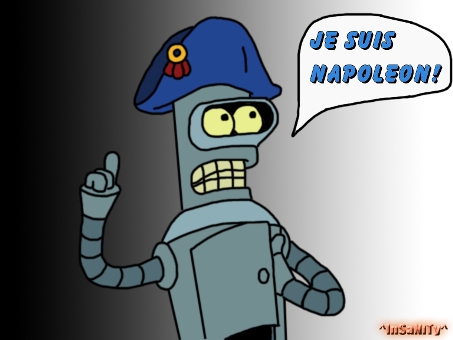
“Wait a second,” I hear you saying. “I thought you wrote fantasy and the like. What’s Napoleon got to do with The Water Road?”

A fine question, one that comes down to that dreaded word (by some) – inspiration. As I’ve written before, ideas come from all over, often when you’re not expecting them. The key is having that flash of creativity in your brain that makes you think, “there’s a story there” when you see it.

One of my regular stops on the Internet is Wikipedia’s front page. It’s got several blocks of featured articles, one of which is a “today in history” thing. It lists about a half dozen historical events, in addition to a few holidays. I usually skim it, see nothing all that interesting, and move on.

One day, one of the events listed was either the date that Napoleon left Elba to return to France or the date he arrived in France. Either way, it was the start of the Hundred Days, which would end at Waterloo and with Napoleon’s second exile (it stuck that time). Now, this was not news to me – my undergrad degree was in history and the area that most interested me was 19th-century Europe and the rise of the nation states. Yet, somehow, for some reason, something struck me that had never struck me before.

Which was this – Napoleon’s arc of ravaging Europe, being defeated, being exiled, then returning for a sequel – sounds just like the bad guy in a fantasy series! After all, why kill or adequately imprison the villain if you need him for the rest of the trilogy? Honestly, it’s almost on the level of a James Bond villain’s diabolical scheme to kill Bond that, of course, always fails. Hanging would have been quicker and easier, but not left open the sequel!

Which is not to say that The Water Road trilogy is based on the life of Napoleon or that it tracks his defeat, exile, return, and defeat again. But that was one of the jumping off points. Things, naturally, got more complicated from there. That’s one of the great things about writing fantasy – when an idea comes along, the only thing that limits you as a writer is your imagination.

je_suis_napoleon_by_insanity540

Water Road Wednesday: What Is a “Water Road” Anyway?

Welcome to 2016, the year of The Water Road! Every Wednesday I’ll be providing some previews, background, and “behind the scenes” information on my upcoming fantasy saga, due for release beginning in the spring. Let’s start with the logical place – what is a “water road”?

To begin with the Water Road is a river. Not just any river, mind you, but one that is the primary geographical feature of Altreria. It runs almost the entire width of the continent and is navigable all the way. It divides the two races that live in Altreria – the Altrerians live to the north, the Neldathi to the south. They’re related, but very different.

Next, The Water Road is the name of a book, my next novel and first in a trilogy. It’s a story about two women from opposite sides of that river who discover a shocking secret about the way the Altrerians and the Neldathi have treated one another. What they do after (independently) learning this secret changes their world forever.

As I said, that’s the first volume in a trilogy, which is also called (zing me for lack of creativity here), The Water Road Trilogy. It’s composed of The Water Road, The Endless Hills, and The Bay of Sins. In addition, there will be two shorter works that fit in between the novels, The Badlands War and The Trails of the Arbor. More on those stories, the world in which they’re set, and the people who inhabit them as the year goes on.

Finally, it’s a excellent song of very fine album of the same name (that is, The Water Road), by UK proggers Thieves’ Kitchen. It’s got a dark, brooding quality to it (it’s all the strings and Mellotron), but the theme that pops up here and there really soars, particularly when the guitar player gets a hold of it. It’s not an inspiration for the books, but the name stuck in my head. Credit where credit’s due.

TKTWR

All Vocabulary Is Good Vocabulary

There’s no point in lying – I’m fond of profanity. I don’t trot it out all the time (I’ve managed to never let expletives fly in a legal brief, for instance), but I don’t lock it away as something evil, wicked, or never to be said. It creeps into my writing sometimes (much to the consternation of my mother-in-law – but she came around!).

More than anything else, I’ve always thought that deciding not to use certain words because they were “bad” is just silly. I take the position Henry Drummond, the William Jennings Bryant doppelganger in Inherit the Wind, does:

I don’t swear just for the hell of it. Language is a poor enough means of communication. I think we should use all the words we’ve got. Besides, there are damn few words that anybody understands.

Sometimes “fuck” really does say it all in a way that something more elevated just can’t. It always aggravates me when courts bowdlerize cursing in opinions if they’re quoting something a defendant said – if it’s important enough to report, it’s important enough to report accurately!

But what really drives me nuts is the superiority that those who forgo cursing wield over the rest of us, particularly the argument that cursing is a sign of a limited vocabulary. The implication, of course, is that we’re just simple minded beasts, not refined human beings.

Turns out that might be complete fucking bullshit!

A bigger vocabulary is a bigger vocabulary — no matter whether you are quoting Shakespeare or cursing like a sailor.

This is the takeaway from a study recently published in the journal Language Sciences, which finds that fluency in ‘taboo words’ is correlated with having a larger vocabulary in general.

As the article points out, this goes against common sense (which, in my experience, is mostly wrong anyway) and some prior research, but it seems solid:

These findings suggest the idea that ‘fluency is fluency,’ as the researchers write. People who could recall a lot of bad words also tended to be more eloquent in general. In other words, swearing is not necessarily a sign that a person has a limited vocabulary or can’t think of anything better to say.

Some other interesting findings include that the amount of cursing isn’t linked to how religious people are and that the foul-mouthed tend to be more neurotic and less agreeable, but also more open to new experiences. In other words:

swearing is mostly a vehicle for expressing strong emotion – anger, frustration, derogation, surprise and elation — among people who care less about who they might offend. Cursing is an intense, succinct and powerful way of expressing yourself, even if some people find it unpleasant.

Fuckin’ A. Couldn’t have said it better myself.

6a00d83455b3db69e201348592ed04970c-800wi

Back In the Saddle

Hey, everybody! Did you miss me? Now that November’s become December, it’s time to get back to blogging. First us, here’s what I’ve been up to for the past thirty days:

NaNo-2015-Winner-Banner

That’s right, my National Novel Writing Month campaign was a smashing success, with a grand total of 66.744 words written for The Bay of Sins. I got into a groove right away and averaged about 2200 words a day, about 500 more than necessary to meet the 50,000 words in a month goal. Not bad, considering I have a day job and everything.

Actually, this is by far the best year I’ve ever had. I’ve usually struggled across the 50k line on the 29th or 30th. My previous best was when I did the first draft of The Water Road and hit 55,000 in the month. So 66,744 is a hefty improvement.

What made it easier this year? For one thing, The Bay of Sins is the final part of a trilogy, so it’s all downhill. I’m working with characters I know well (for the most part) and in familiar locales, so the learning curve that usually goes with a new story is pretty much gone. For another, this is the first thing of this length I’ve sat down to write since releasing stuff out into the world this year. That makes it easier, believe it or not.

Having said that, there’s much more to go before The Bay of Sins is finished. Hopefully, I’ll knock out the rest of this draft before Christmas.

Look for way more info about The Water Road – the entire series – with Water Road Wednesdays, coming in 2016!

“Quotas” – A (Very) Short Story

I’ve written stories that are lots of different lengths. Moore Hollow’s a novel, albeit a fairly short one. The books of The Water Road trilogy, on the other hand, will all clock in at over 110,000 words a piece. Then, of course, in The Last Ereph and Other Stories there are stories ranging from just over four pages to nearly twenty.

But I’ve never written a story in 100 words before. Until author Eric Douglas (who interviewed me way back in April), issued a challenge to write a 100-word story for Halloween. Not less than 100 words, not about 100 words – 100 words exactly. Holy hell, was it hard! I had to bag my first attempt, but I really like what I wound up with.

Here it is – “Quotas”

“Nothing personal,” the demon said, squatting in a fetid cloud of hot vapor. “Just business.”

“You’re trying to take my soul!” I tried to back up, but the tunnel wall blocked any escape.

“It’s nothing to do with you. Trust me.” The demon waved an oozing appendage at him.

“You’re a demon!”

“Then don’t.” The demon shrugged, in the way it would if it had shoulders. “Can’t stop some things, regardless.”

“Like?”

“Death. Taxes. Such as it’s the end of the month,” the demon said, long forked tongue slipping over its calloused, slimy lips. “You know. Quotas.”

The demon sprang.

Happy Halloween!

Schary---Spooky-Devil-Cat--------Devil-Kitteh---Omg-And-Its-Not-Even-Halloween---Sounds-Like-Every-C

Be sure and check out Eric’s website for links to all the other 100-word stories he got!

The Incredible Shrinking Second Draft

I have a weird way of handling second drafts, maybe a unique way.

It grew out of my day job, in which I sometimes have to synthesize argument originally made by other lawyers into a final brief. I quickly decided that just dumping someone else’s words into a brief and doing a quick edit wouldn’t work – we all have a different voice, after all. Just dumping was inelegant at best and headache inducing at worst.

Instead, I take the section provided by someone else and rewrite it in my own voice. The final product includes the same information, the same argument. But it sounds of a piece with what came before and what comes after. That’s the theory, at least.

I imported that system into my fiction writing. I take the first draft, print it out (usually as a PDF these days), then work my way back through it, rewriting from word one. That allows me to do a couple of things. Most importantly, it allows me to focus on the words themselves, the really bottom level grunt work of writing. That’s because I already know what happens to whom and where, so I don’t have to worry about plot stuff.

The other thing it does is it lets me fill in gaps that occurred in the first draft. Sometimes they’re gaps I didn’t realize at the time but that, as I go through it again at a brisker pace, make themselves known. Other times it’s because I was stuck on the first draft and didn’t want things to grind to a halt completely and I left myself a note to add something or expand something.

Either way, the usual has been for the manuscript to grow in the second draft. Moore Hollow was just over 50,000 words in the first graft, but grew to about 65,000 in the end. The Water Road, the first volume of the trilogy I have schedule for next year, grew from about 110,000 words to 135,000 in the end.

Which is what makes my experience with The Endless Hills kind of odd. This is the second book of The Water Road trilogy, and it wound up with about 127,000 words in the first draft. But after the second draft (which I finished last weekend), it’s actually dipped a bit, to 123,000. And that’s including a couple of new scenes or chapters that I had left behind in the first draft.

What the heck happened? A couple of things, both of them good (I hope).

First, I’ve become very sensitive about using dialog tags and trying to clean them out of my writing. For those not in the know, dialog tags are those things like:

“This is a dialog tag,” JD said, to nobody whatsoever.

There’s frequently skirmishes on writers forums about the need for them at all and whether, if you use them, you should just stick to “said” and let that be that. Earlier on I went the John Scalzi route and tried to use “said” exclusively and all the time. I think it goes back to my legal writing where ambiguity about who is speaking could be lethal to a legal argument. But for fiction tags can sometimes get in the way, particularly if you’ve only got a two-way conversation going on. So I took a lot of that stuff out on the second draft.

Second, I’ve also been trying to pare down my writing as a I go forward. Trying to do more with less, I guess you’d say. I’ve never been the most verbose of writers, but I’m not exactly Hemmingway brief, either. I think I’m getting better about tightening things up without sacrificing what’s important.

One of the things more experienced writers will tell you (if you listen) is that writing is as much craft as art. Becoming a better writer is partly down to learning how to do things better, from a mechanical point of view. Sitting down and writing something ten years after you started writing completely should be easier and be a better product when it’s finished.

At least that’s what I’m hoping!

Chasing the Dragon (After a Fashion)

There’s a thing long distance runners experience, a euphoria that comes over when they are almost completely exhausted, when they push through “the wall.” It’s called a runner’s high. It’s something I’ve heard about but never experienced – long distance anything, much less running, isn’t really my thing. But I think writers go through something similar.

I first noticed this in my day job. Doing appellate work for criminal defendants takes a certain kind of mindset. You’re representing people who have already been convicted (in most cases pleaded guilty) and been sentenced. The entire criminal justice system is now designed to keep those results in place – only about three percent of criminal cases in my circuit are reversed in appeal in some fashion.

Sitting down to work on an appeal, then, comes with a lot of negative baggage. Sometimes you don’t have any good issues to raise, but the client wants the appeal and you have to do the best with what you have. Other times you have what you think are good issues, but in the back of your mind know that the chances of success are still between slim and none.

That means when you start writing, you’re mostly thinking “this is shit. It’s pointless and it’s not going to work.” But somewhere along the line, usually a few days out from the deadline when the brief is all you’ve been working on for a couple of days, something happens. You start to believe in what you’re arguing. That argument that seemed hopeless before now seems pretty damned clever. In the push to finish the damned thing you now figure you’ve got a shot at winning.

You don’t, not really, but you think you do. It’s a writer’s high. You get so deep into it that any trace of doubt you once had is gone. It’s a pretty good buzz (and it usually wears off by the time you drive home).

Writing fiction can work in the same way.

I’ve been working on the second draft of the second volume of The Water Road, trilogy, The Endless Hills. It can be a slog. A few paragraphs here, a couple of pages there. If I get an hour or so on a weekend or day off I can maybe make it through a chapter and it feels like real progress. But because I’m focusing on more mechanical things sometimes the actual story seems obscure. Throw in breaks to get Moore Hollow published and promoted and I wonder if I’m doing anything worthwhile.

A couple of weekends ago, a bunch of things coalesced to give me lots of time to write. For one thing I didn’t have any other functions that weekend. For another, it was grey and rainy most of the weekend, so there was hardly a desire to go out (or, even worse, a need to do yard work). So I cloistered myself away in my studio and got to work.

Over several hours, spread across two days, I cranked through more than fifty pages of manuscript, about 8000 words. It’s not a huge chunk of the book (the first draft was 127,000 words), but it was enough – it covered several chapters – to get me back into the story a bit. It helped that I was working through the climax of the book, a bloody engagement between two armies called the Battle of Tivol Market. The rubber, so to speak was meeting the road.

Around mid afternoon on Sunday I had about reached my limit. I had other things I wanted to do (the pull of the PS3 and a room full of synths can be strong), but I also knew I needed to keep going. But powered by interesting electronic burbles from Bandcamp, I pushed on. After too long, the writer’s high started to kick in.

Not only did the actual writing get easier, like I had crested a rise and started to run downhill, but it seemed better. Connections between characters, the flow of the action (spread across four different POVs), and the endgame all came into focus. Just like when I reach this point in a brief and I think I might win, I started to think this was pretty good!

Maybe it isn’t (more editing is needed, of course). But it feels good, regardless, to suddenly have something flowing from your fingers that seems to be working! It gives you confidence to keep going, to keep plugging away, word after word, even when it seems like drudgery.

That’s my dragon to chase. Gotta get back at it.
The More the Merrier

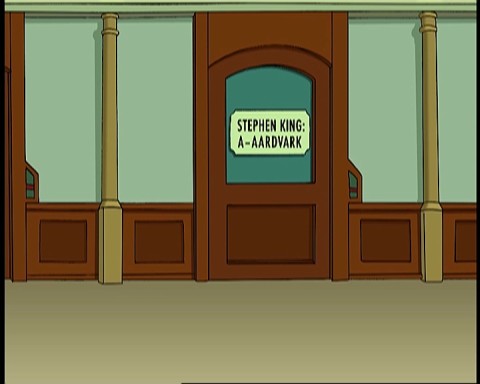
When I saw that Steven King had written a column in this weekend’s New York Times about profligate authors, my mind immediately went to this blink-and-you-miss-it joke from Futurama:

stephen-king-door

That was done in February 2001. He’s published 19 books since.

What I’m saying is that Steven King is amazingly productive when it comes to writing. He is also, of course, very very good at it. After all, here’s a guy who’s spent most of his life in the genre ghetto and had nonetheless won the National Book Award. He doesn’t need to do much more than point to that award to debunk the idea that quality is inversely proportional to quality.

So let’s ignore that – or rather take that point as given – and ask why the contrary holds true for so many people? Why do we tend to view people who put out lots of creative product – books, music, movies, you name it – aren’t as good?

One reason is that people figure that if you’re cranking out product at such a prodigious clip you must be scrimping on quality. It’s certainly possible that some creators would do that, releasing their stuff upon the world without a lot of editing or polishing. But it’s equally possible that whoever we’re talking about is just that prodigious. For some people writing is a hard slog, something that takes weeks and months to get right. Others are just able to pour forth things from the mind, tapping into a wellspring of creativity. We people in the first group aren’t fond of people in the second group, but that’s our petty problem.

The bigger issue, I think, is that the more someone produces the more their best stuff seems to get watered down, somehow. With only To Kill a Mockingbird on her resume Harper Lee was an undisputed master, a woman with a perfect batting average for writing classic American novels. Now that Go Set a Watchman has been released to less than thunderous applause, she’s batting 50 percent. Still really good, but somehow less impressive. Which is silly, because even if she followed up Mockingbird with a string of badly written shallow zombie mysteries Mockingbird itself is still what it is. But it takes some of the aura of inspiration off when somebody who hits a homerun their first time up at bat can only manage bloop singles (at best) for her other at bats.

Another issue is that the more product someone produces the more likely they are to experiment or move out of their comfort zone, potentially alienating existing fans. Steve Hackett’s had a pretty productive solo career (24 albums since 1975) that’s frequently jumped outside his progressive rock comfort zone to include a blues album and albums of orchestral material. As it happens, I’m not a huge fan of Hackett’s tangents, so I can see where someone’s overall opinion of an artist like him would dip at the perceived diminishing returns. But on the other hand, that’s silly because, no matter how many other albums he makes, Voyage of the Acolyte, Please Don’t Touch, Darktown, and several others will continue to be brilliant.

Which is to say that no matter how strange the creative mind may be, the minds of the people we create for can be even stranger. “Quality” is as much about perception as anything else and it’s nearly impossible to control how perfect strangers perceive you. If your muse only lets you grind out a new work every decade, don’t force it. But if your muse won’t shut up and helps you pop out something every month, don’t stifle it. Do what works for you.

Stephen King’s got your back – what more do you need?

State of Play – July 2015 Edition

When I started these posts I intended to do one every month, but events got the better of me in June. Thankfully, that was because I was finishing up and releasing “The Destiny Engine,” so I think that’s a fairly good excuse.

Also, I got to take part in the first ever West Virginia Writer’s event at Tamarack down in Beckley.

JDB@Tamarack

Big thanks to Elliot Parker for setting up the whole thing, to the folks who stopped by to talk and buy a book during the day, and the souls out in the hall who couldn’t help but overhear as I read “To Watch the Storms” just before lunchtime.

So what about the books then?

Available Now!

The Last Ereph and Other Stories – a collection of ten stories of fantasy and science fiction.

“The Destiny Engine” – a short story with a steampunk take on a classic Grimm Brothers tale.

Coming Soon!

Moore Hollow, my debut novel, is inching closer to being ready to be loosed upon the world. It’s been edited and formatted for both eBook and print versions. It still needs a cover, which may prove a bit of a challenge. Still, if all goes according to plan it should be out October 5.

In the Works!

As I mentioned the other day I had a new short story pop up in the last week or so. Don’t know when it will be finished or where it might go once it is.

The big project in the works continues to be the second volume of The Water Road trilogy, The Endless Hills. Still chugging through a second draft, making copious notes for a third. Everything’s still on schedule for 2016 to be the year of The Water Road.

Ideas Are Everywhere

One question that writers, and other creative types (I’m assuming), routinely get asked is “where do you get your ideas?” For some reason many writers find this frustrating. I suspect that’s not because the question itself is annoying, but because the answer so rarely satisfies the person asking it. The fact is that there are no muses who whisper in the ears of writers, nor do words generally flow out without effort. Writing, like most creative endeavors, is hard work. For laypersons, it takes a bit of a shine off the process, I imagine.

But in reality, it makes the question of inspiration all the more interesting, because it can come from anywhere. Allow me to provide a recent example.

My office is in the market for a new lawyer and we’ve interviewed several candidates over the past few weeks. One applicant who was in private practice was explaining the size and scope of their firm and mentioned that, in addition to offices in several large cities there was “one guy up in Alaska.” It was hyperbole, no doubt (and good for a laugh), but it put the idea in my head of a solitary lawyer toiling away in the wilds of Alaska. What sent them there? Was it where the firm misfits went? Was it the shit assignment you had to go through to make partner.

Of course, I write speculative fiction and don’t (generally) write about lawyers. I turned the idea over in my head for a few days and started writing. Alaska became a rock in space called Orsini and the law firm became “the company,” but the central question – what would send a person all the way out there? – remains (and gets answered). It’s got the working title “Retirement Party,” but the more I live with that the less I like it. Hopefully it’ll see the light of day in a little while.

That’s only one example. Inspiration really is everywhere – it’s up to you to do something with it when it tickles that part of your brain that makes you ask “what if?” or wonder “why?”

Like I said – the hard part’s taking the inspiration is doing something with the idea once you get it. So let me get back to it . . .