Things Change

Sometimes I think this should be the theme song of writers:

I mean, even the most devoted planner would have to admit that no lengthy project finishes precisely the way it was planned. Things always change. As my ancestor (why not?) once said, “the best laid schemes o’ Mice an’ Men / Gang aft agley.”

I’ve written before about my current work in progress, The Orb of Triska. My intention was for it to be the first of a seven-book series called Empire Falls. Good news! Editing continues apace and I’m really liking where things are going. But, as I said . . . things change.

The plan was for each book in the series to be about the length of Moore Hollow. At about 85,000 words it’s long enough, but not nearly as long as most fantasy novels these days. All of The Water Road books are north of 130,000, for comparison (for another comparison, A Game of Thrones weighs in at 292,000 – and it’s the shortest of that series!). I thought more, shorter books would work better for this story and planned out each volume accordingly.

Then, between editing passes, I started thinking about it again. The series is going to follow three characters and the stories for two of them didn’t really break into that many parts. It was more like three parts. And the other character, who had a more discrete series of adventures, could be easily reworked into three parts, too. In other words, the bones for another trilogy are there. So, I decided to retool a bit.

Empire Falls the proposed seven-book series is dead. Long live The Unari Trilogy! Each of those will be about the length of The Water Road novels. I don’t think anything major will have to be left out, but everything should flow a lot better in three bigger chunks.

That’s where I am these days. You have to be flexible as a writer. Sometimes the best way to do something isn’t the way you thought it should be done in the first place.

Change

On American Dystopia and the Great White North

Dystopian fiction can be tricky. Assuming you’re setting it on Earth, you either need to have the whole world go to hell, which isn’t all that probable, or the shit show is more localized, in which case you have to address how the rest of the world interacts with the place where the story is set. I’ve been set to thinking about this a bit thanks to two recent bits of television.

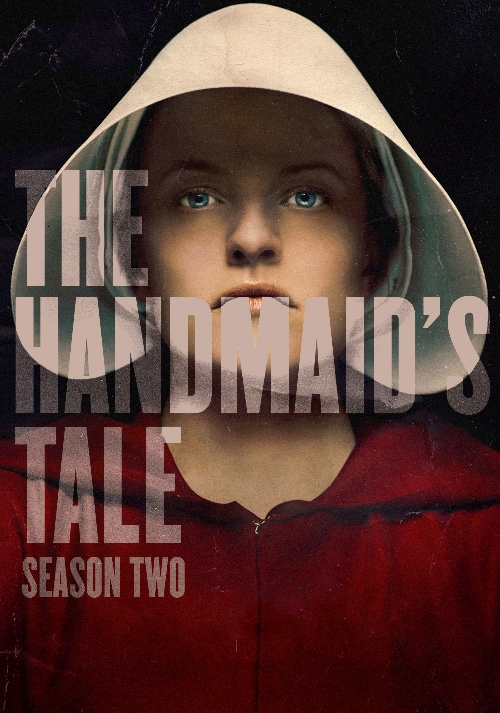
Margaret Atwood’s The Handmaid’s Tale is as localized as dystopia can get. It’s told entirely from the point of view of the titular handmaid, June, and doesn’t concern itself at all with the outside world. Gilead is what she experiences; nothing more.

The TV adaptation probably couldn’t have worked if it maintained that rigorous POV, so it wisely broadened its world from the get go. In the first season, therefore, we learned that June’s husband and her best friend managed to escape to Canada, where there’s a growing population of expats from the area that used to be New England. But we don’t really know what that means in a global socio-political sense.

HandmaidS2

That was evident in the recent episode “Smart Power,” where Commander Fred and his wife, Serena, take a diplomatic trip to the Great White North. They’re received professionally, if coolly, in the manner you’d expect for delegates from a nation with which the Canadians have at least some normal relations. But do they? We don’t really know. Things are complicated when an American agents of some kind offers Serena a new life in Hawaii, one where she actually gets to control her destiny.

All this is a bit confused because we don’t really know how Gilead relates to the rest of the world – or what the rest of the world thinks of Gilead (once some info leaks out during the Commander’s visit, we quickly find out, at least partly). How big is Gilead? We know it’s centered in New England, but what of the rest of the United States? Does Canada recognize it as an independent nation? If so, why? What does the United States look like?

None of these were really important in the book, since it was June’s story above all else. But by broadening the focus (something that had to happen for the TV series to continue), these questions become relevant and I’m not certain the show’s brain trust really has the answers.

The recent HBO adaptation of Farhernheit 451 suffered even more acutely from this problem. It makes explicit the story’s setting (Cleveland) and, via an implausible update that involves the works of humanity encoded into DNA, sets up an endgame where Montag has to help someone escape to Canada to rendezvous with some scientists. We’re never told if that’s just because that’s where they are or because Canada is the safe area we always assume it to be.

F451

This is particularly important to Farhernheit 451 given its semi-hopeful ending of an underground group dedicated to actually memorizing great works of literature to ensure they don’t disappear.* That still happens, but it’s now supplemented with the DNA thing. But if Canada is a safe haven, if it exists outside of the dystopia the United States has become – then why the need to preserve all knowledge? Isn’t it safe elsewhere in the world?

To a certain extent this is an issue with any speculative fiction worldbuilding. Writers need to have some idea what happens beyond the bounds of their stories, since those things should influence those stories in some ways. But it’s compounded dystopian fiction set in the “real” world because readers and viewers presume the world is as it is in real life, unless we’re told otherwise. That can lead to confusion, or at least some disappointments.

* Kudos to the writers for updating the preserved works to include writers who are women and people of color (and even some women of color!). However, the impact is a bit muted since only the minority characters are memorizing the work of minority authors.

Birth of an Idea

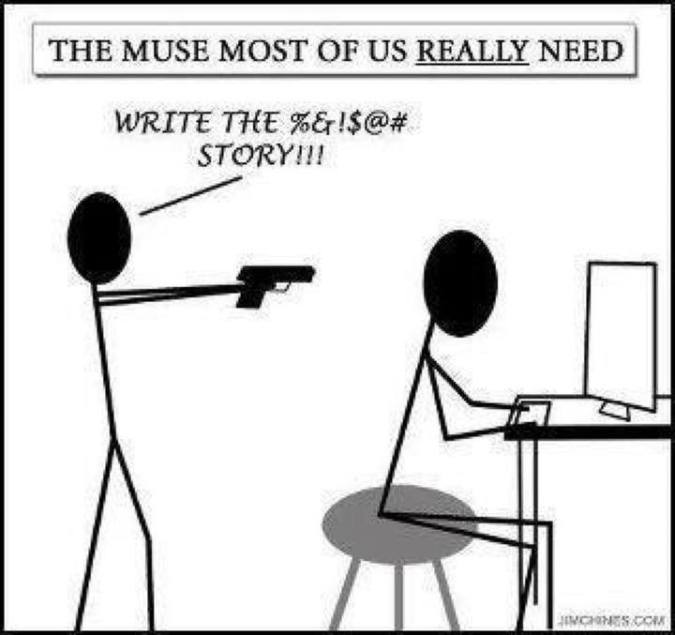
Some authors hate the “where do you get your ideas?” question. I’ve never really figured out why. I can see why readers might be disappointed with the answers, since they’re much more mundane than they might hope. There is no communication with the muse, no blinding flash of insight, just a keen eye and brain that perpetually asks, “what if?” And the realization having a pen handy is almost always a good idea:

So in service of explaining how that works, I thought I’d describe the process I recently went through were a new story idea crystallized in my mind. It’s as good an example as any of the truth that inspiration is out there everywhere, if you know what to do with it.

Right now in my lawyer day job I have a case pending in the court of appeals where one of the issues involves whether my client had served too much time in prison and might be entitled to credit for that. In my brief I made a couple references to him “banking time.” When the Government responded, for some reason, it turned the word around and repeatedly referenced a “time bank,” which it argued didn’t really exit (it does).

Beyond the fury at the allegation I was making shit up, the phrase “time bank” got lodged in my brain. There was something about it that seemed absurd and specific in a way that “banking time” didn’t.

With “time bank” lodged in my brain like a stepped-on Lego, I went into brainstorming mode, which to my neighbors looks like mowing my yard. I do some of my best thinking about writing while I mow, since it’s not like my mind is taken up with other things. So I turned over this concept in my mind, over and over again – what, precisely is a “time bank”? And how would it differ from a memory bank?

I came up with three different ideas, one sort of modern science fictional, one utterly fantastical, and one kind of in between. Thinking them over I found myself drawn the first, the modern one, and began thinking about how characters might interact with this “time bank.”

The working title is “Down and Out at the Time Bank,” a tale of a poor schmuck who gets in way above his head, but probably comes out of it just fine. Short story or something longer? Don’t know yet, as I’ve got to put it on the back burner while I work on other things. But it’s there, lurking in my ideas file, waiting for me to come back to it.

So, thank you, unnamed Assistant United States Attorney. You’ll win the case in the end (‘cause y’all almost always do), but at least you gave me something worthwhile I can take away from it.

And that, ladies and gents, is where story ideas come from!

On Death In Fiction

Riffing on the two sides of the debate in the wake of Infinity War – either all those deaths don’t matter because we know they’re coming back or it matters because the people in universe don’t know that. What do writers owe their readers?

This post was inspired by events that take place in Avengers: Infinity War. If you’ve not seen it yet and want to remain unspoiled, be warned, I’ll be talking about major stuff that happens.

Spoilers

With that said . . .

Holy shit, that movie killed a lot of people. I’m not even talking about anonymous nobodies, set dressing to be collateral damage for the big final battle. I’m talking beloved characters, some major, deaths that could be universe shattering, even if we, as savvy modern media consumers do better.

The deaths basically come in bunches. Loki and Heimdahl meet their end at the very beginning, while Gomorra is sacrificed about midway. But the big shit hits the fan when bad guy Thanos gets all the Infinity Stones and snaps his fat fingers, disappearing half the beings in the universe. Among those who disappear into dust (like vampires on Buffy . . ., but they float up to hebbin, rather than down to the ground) are Black Panther and Spider Man. Serious shit.

Or is it? It doesn’t take a crystal ball to see that there’s no way Marvel is going to let all those characters stay dead. The MCU is an impressive feat of storytelling, but it’s first and foremost a money-making property. Black Panther and Spider Man already have other movies in the pipeline – you think they’re going to dump those for the sake of the story? Fat chance.

Which has led to an interesting discussion on line about the end of the movie. On one side are the people who say these deaths (at least the dusty ones, maybe the others) don’t really mean anything because we, the audience know they aren’t permanent. On the other are people who insist that they do have meaning because the other characters in the MCU don’t know these characters will come back and so it’s a big deal for them. Who’s right?

Maybe neither, at least completely. Some of it depends on what the creator is trying to do. If it’s just shock the audience, it’s a pretty hollow means to do so, but that’s not the only thing you accomplish when you kill a character.

Go back to the aforementioned Buffy the Vampire Slayer. Buffy dies at the end of the fifth season, sacrificing herself to save the world (again). It’s no shock that the next season of the show was not a Buffy free zone – she came back from the dead in the first two episodes. That was to be expected. But the show worked through that in very interesting ways. Most importantly, Buffy’s friends thought by bringing her back they pulled her from hell, when in fact she was in heaven (or at least at peace). In other words, it mattered for the rest of the season (and the show, really) that Buffy had died and then gotten better. It wasn’t a simple reset button.

To pull a somewhat vague, non-spoilerly, example from my own writing, I have a book where a major character dies at the end. That death resonates through the next book, motivating what other characters do. I didn’t kill that person off just for a “gasp” moment or to make sure readers know that nobody in that world is safe.

On the other hand, the recently completed season of Agents of Shield ended with an emotional death that, it turns out, really wasn’t, except the people in the universe completely knew it (even if viewers, myself included, were scratching their heads for a bit). That’s just cheap manipulation and is a hollow exercise.

Then there’s always the Deadpool take – announce you’re going to die in the opening credits, show said death twice, have a prolonged death scene later in the film, then wink it away post-credits. But would you expect anything less from that fucker?

Which path will the next Avengers movie take? Too soon to tell, of course (except, I think it’s safe to say, not the Deadpool avenue), but one hopes it’s closer to the Buffy example.

The bottom line, as a writer, is that death, like anything else when it comes to plot, is a tool. As with any tool, it can be used well or poorly. But given the emotional heft that death can have, folks should think long and hard about deploying it as a simple plot point. As with all things – think it out first.

Lessons Learned from Swimming Blindly Through the Aural Seas

When I write I have some idea of where I’m going. As you can see from my experiment with trying to go free form, I need some structure when I write. Nonetheless, when I write I’m acting with intention and purpose – I see where I want to go and try to get there.

When I make music, it’s almost completely the opposite. Essentially, music comes about in one of two ways. First, I get a flash of inspiration when a riff or rhythm or something pops into my head (and, hopefully, onto the computer). Second, I take whatever winds up on “tape” and fiddle around with it, adding things, taking things away, and generally just figuring out what works. I very rarely come to a song idea with a clear conception of what the end product should be.

In other words, when I write, it’s like setting out to sea in a boat, with charts, a destination, and a plan on how to get there. When I make music, it’s more like diving in head first and seeing where the tide sees fit to deposit me. Swimming blindly, if you will.

That’s not to say that the drifting, searching musical creation doesn’t require making choices. Sometimes, those choices are relevant when it comes to thinking about writing, too.

I’ve been thinking about this lately after finishing a new song with the deviously serious title of “Dummy Tickle” (it’s embedded below). I have no idea where that title came from, because this song, all not-quite-four minutes of it, began five years ago.

Which brings me to lesson number one I’ve learned from making music – creativity takes time.

The DAW I use has a metadata field that lets you put just about anything you want in it. I always put (1) when I started the song; (2) when I finished “writing” it; and (3) when I got it in final form (mixed down, etc.). It’s a very rare thing when a song goes from idea to completion in a week or a month. Usually it takes a while, but not five years.

What was I doing with “Dummy Tickle” for five years? I’d like to say I tried out dozens of different things to try and bring the basic idea (that lazy, bouncy bass line and equally laid back melody) to bigger, better life. Nothing really clicked, nothing seemed right. I let it go for a while, but every time I went back and listened to unfinished tracks I thought “there’s something there” and marked it down as something to finish.

Finally, a few weeks ago, something clicked. I don’t know precisely what or why then – maybe a session of playing with the puppies trigger up some kind of endorphin rush or something. How couldn’t they?

Pups
Anyway, the damn burst and I started making progress. It just took some time to get there. Patience really is a virtue, especially when it comes to creative things.

Still, it wasn’t a matter of just banging out a few more notes and being done with things. I was in need of ideas for a transition, a middle section, and started playing around with a couple of chord progressions.

Then I hit on the second lesson I’ve learned from “Dummy Tickle” – sometimes, simpler is better.

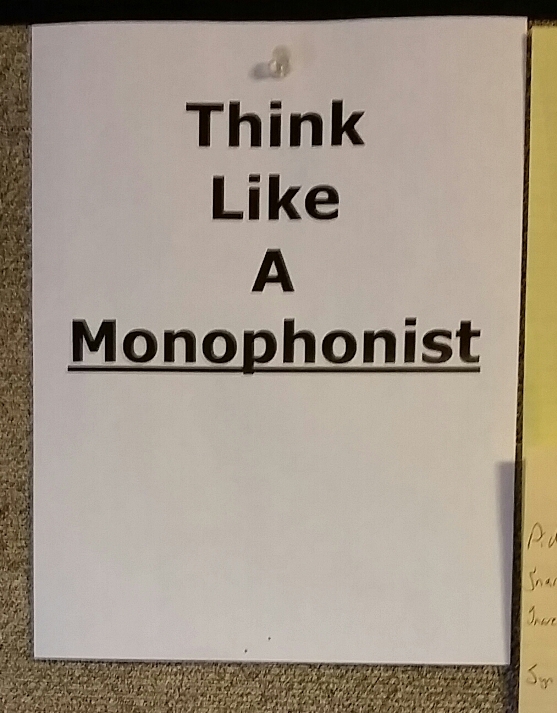
I have a sign tacked to the wall in my studio:
Monphonist Pic

I put it up when I realized that a lot of the early electronic music I like – from ethereal Tangerine Dream to the synth-pop of The Human League and OMD – was done by people with access only to monophonic synthesizers (that is, ones that can make only one sound at a time). That is, they can only make one note at a time. By contrast, without even getting into the virtual synths in my arsenal, I can bring to bear 150 voices! At once! I only have 10 fingers, after all.

My point is I tend to think in chords, even thought single notes are often what’s called for. After struggling to find the right sequence for this song, I backed off and gave it a fresh look. And I looked at my sign. The heart of this song was that simple bass line, the simple melody. Don’t mess that up by building it up unnecessarily. Take the simple route. Thus, that middle section was composed entirely of monophonic lines weaving together – as was the rest of the song.

None of this is Earth shattering. Still, as creators sometimes it’s easy to get wrapped up in the vision of more – more words, more notes, more colors – until you disappear up your own backside in search of your next complexity fix. Sometimes you have to step back and think about what works for the song, book, or whatever it is you’re making. Some of them are just simple little things that don’t have airs on being anything more.

“Dummy Tickle” is like that. A little goof of a tune, a good mood wrought by bouncy synths. Enjoy!

In Praise of Not Finishing Books

As a writer, the idea of people starting to read a book but not finishing it intuitively honks me off. After all, the author went through the trouble to create an entire package that, at least on some level, appealed to you – give them a chance to redeem whatever fault you’ve found in the end! But if I’m honest, as a reader, I’d push back against that – hard.

I wouldn’t be alone. A few years ago eBook platform Kobo (on which all my books are available, by the way), released some data that compared their best seller list with the list of books that readers most often finished. Not surprisingly, some of the best sellers were also some of the least finished. I love the cynical take on this from The Guardian, with respect to Donna Tart’s The Goldfinch (2014’s Pulitzer Prize winner: 37th best selling, only finished by 44% of readers):

Most-unfinished book of the year isn’t a title anyone would hope to win. But her core fans probably read the book to the end, as did a whole raft of new readers, which propelled her up the bestseller charts. And those readers who didn’t finish it still paid for it, so Donna Tartt can mop up those tears with crisp tenners, which will surely ease the pain.

Still, it’s a bit disheartening to know that so many people couldn’t even finish what you’ve written.

Alas, I occasionally find myself in that category as a reader. Even though I see every book I read (or listen to) as a learning experience when it comes to writing, sometimes I still can’t stick it out to the end (witness my “unfinished” shelf at Goodreads, to which I just had to add Jim Butcher’s The Aeronaut’s Windlass, alas). Thus I’m on board with this piece over at Electric Literature that, without shame, promotes non finishing books:

There are many factors that go into whether or when a reader finishes a book. I imagine many people’s reading habits are, like mine, scattered. I have at least a dozen in-progress books on my nightstand — and several more on my phone and e-reader. Readers stop reading a book they enjoy when they put it down and forget to come back. Readers finish books they hate when they are assigned it for book clubs or else they want to hate-read and laugh about with their friends. (Certainly a large percentage of Fifty Shades readers fall into that second category.) Just as a half-read book isn’t necessarily a failure, a completed book is not necessarily a success.

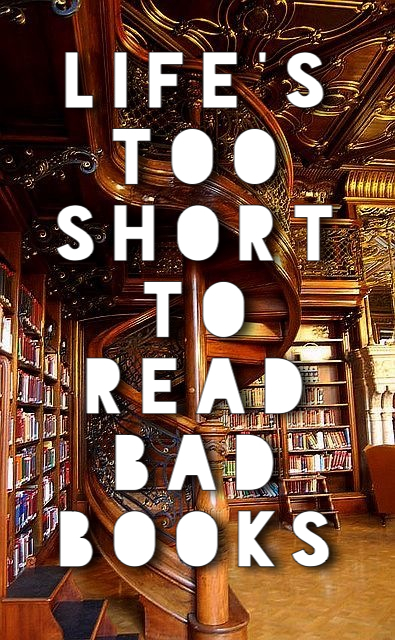
This makes a lot of sense. I said before, in other contexts, that reaction to art is inherently personal. What rocks one person to the core of the their soul will make another yawn. That’s neither right nor wrong, it’s just the way things work. So there’s really no reason to expect everybody to love a book so much that everyone who starts it finishes it. As the saying (attributed to James Joyce) goes:

LifeTooShort

Ultimately, the job of keeping a reader engaged with a book is the author’s. It’s a responsibility we should take seriously. But we shouldn’t forget that readers come to our works in all kinds of ways and for all sorts of reasons. No book is going to connect with all of them, just like some books you’ve read didn’t connect with you. We have to accept that sometimes saying “this isn’t for me” and moving on is best for everybody involved.

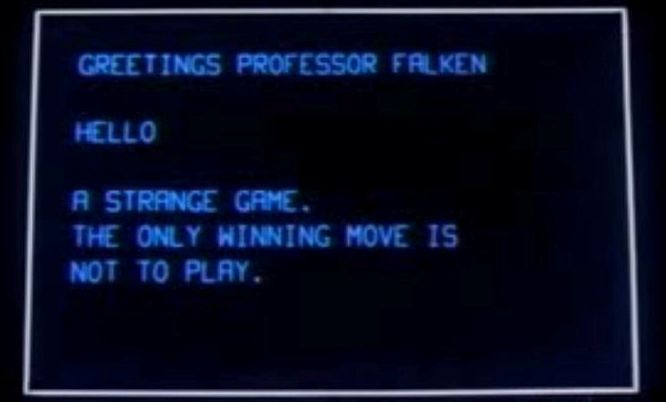
Remember the lesson of the WOPR:

WOPR

It applies to books, too.

Rethinking The Room?

A few months ago I wrote a post where I explained why The Room – or, more particular, the fandom that’s grown up around it – drove me nuts. I wrote:

But from what I’ve read from people who have made The Room a cult favorite it’s not because they see it as an undervalued gem. Nor does it appear to fall into the “so bad its good” category, as everybody involved takes the thing completely seriously. No, it seems that people just really enjoy watching an artist fail, enjoy watching a horrible product because it’s horrible.

I’m not about to join the fan club, but I’ve had a rethink about it, thanks to this piece over at Electric Literature. Called “Why We Love Bad Art,” John Sherman, riffing on Susan Sontag, goes straight to The Room and makes an interesting case:

Not all failure is equal, and the nature of artistic failure depends on the nature of the attempt.

***

The Room is an awful movie, but it’s trying to be a great film, and this generates its basic charm. By extension, Wiseau is an awful filmmaker trying to be a great one, and his blindness to his own deficiencies is what allows him to be canonized in the so-bad-it’s-good tradition. Whether due to narcissism or a lack of taste, or both, pure Camp cannot fathom its own shortcomings.

I can see that. Art that fails, but does so nobly with great passion, has something in it to be admired. By contrast, something that’s a cold and calculated attempt to make something popular or financially lucrative that fails is just shit. I get that. I’m not sure I really get that vibe from most of the people I’ve heard talk (or read about) The Room.

Sherman mentions Mystery Science Theater 3000 and how it made a whole thing out of taking pot shots at bad movies. I’m not sure the analogy works, however, as most of what MST3K (in any variant) took on were only worth watching because of the jokes being made at its expense. Sure, in at least some instances the folks involved had a soft spot for one of those movies, but for the most part they savaged them because they sucked. There’s a difference between “so bad it’s good” and “so bad we can enjoy making fun of it.”

And so we return to the distinction I made in the original post, between loving something even though common opinion is that it’s bad versus not admitting you love it because it’s bad. Art doesn’t always find the audience the creator intended, but maybe it always, eventually, finds an audience of some kind? Perhaps people should just let themselves love it and not think too much about it.

Like I’ve been doing!

Fry

The Fate of The Messenger

Last month you’ll recall I talked, in rather gushing form, about The Messenger, my project for National Novel Writing Month last year. It was a bold experiment in terms of craft – I was flying by the seat of my pants, rather than working in my more plotted out way – and in terms of style – it was to be a sci-fi romp, something a bit more fun and light than my normal stuff. November was great – I “won” NaNo – and December was all about finishing the thing up.

Well, let me tell you, December sucked. In the words of my perhaps ancestor Robert, things gang aft agley. Hard.

I expected progress to slow down some, without the motivation of NaNo breathing down my neck. For about two weeks I did pretty well, but soon enough my lack of planning caught up with me. Mind you, I didn’t even know how this story would end when I started it, which is startlingly rare for me. Even if the middle bits are squishy I usually start with an idea of the beginning and the end. The more I pushed into The Messenger the more I realized I didn’t know where it was going.

I also started to worry more and more about continuity in the story. Things are always a little out of whack with first drafts, but usually I have copious notes to fall back on. Here I didn’t and it made it easy to get stuck in particular scenes, since I had to dig back through what I’d already written to try and tie things up. More often than not I was finding that I couldn’t tie them up, not in this draft anyway.

So, just as things were getting a little grim, the Christmas break showed up. I was off the entire time between Christmas and New Year’s Day, as was the wife, so plenty of time to finish up The Messenger, right? First I got sick (Merry Xmas, huh?), then the wife took her turn. Any motivation I had for writing dried up quickly. All the doubts I was having about whether I could finish this draft piled on and, as sometimes happens, The Messenger became a smoking crater. It’s dead, at least as a complete first draft.

What does that mean going forward?

Well, for one thing, it means The Messenger is on the back burner for the time being. Hopes of having a solid draft just in need of polishing are out the window. It will take some serious work to get right, work that I’ll be putting in on The Orb of Triska and its sequels for the near future.

For another, it means my experiment with pantsing proved one thing conclusively – I can’t do it. I went out, performed without a net, and fell flat on my face. Oh well, lesson learned.

Another lesson learned is that, maybe, writing big space-based science fiction isn’t for me. I never intended for it to he “hard” sci-fi. In fact, it has a disclaimer at the beginning about how it’s more “Dr. Who than Dr. Asimov” and sticklers looking for strict scientific accuracy should look elsewhere. Nonetheless, when you start flinging characters (of various species) across the galaxy things to worry about pile up. It’s entirely possible that The Messenger may wind up as a fantasy, rather than spacey sci-fi, story.

I still like the basic story of The Messenger. I like some of the things I created to fill in the universe in which it was told. None of that’s going to go to waste, but I can’t say it’ll wind up being what I intended it to be going in. That’s the frustrating joy of writing – almost all the time you wind up with something other than what you intended.

Failure

Writing Resolutions for 2018

Happy New Year, everybody!

Happy-New-Year-Memes

I figured now was as good a time as ever, and this as good a place as any, to set out some goals for the 2018 writing year. I’ve done the same in the past in private and it’s a good way to crystallize my plans, even if they don’t all come off in the end. So, what’s on the agenda for this year?

The Water Road Box Set

Now that The Water Road trilogy is complete, it only makes sense to put together an omnibus version that combines all three books in one convenient package.

2017-525 Front Page Box Set

The plan is to make the box set a Kindle exclusive, thus returning The Water Road trilogy to Kindle Unlimited. The individual books would still be available from Amazon and all other outlets.

Interviews

Last year I decided to try and do some interviews with other writers. I’ve done a few and thought they were fun and interesting and wanted to see if I could repay the favor. I wound up doing 19 interviews with all kinds of writers from all over the world. It was such a rewarding experience that I’m going to do more this year. I’ve already got about a half dozen people lined up.

More Short Stories

I’ve got a couple of finished short stories that need to find homes, so I’ll keep trying to shop those around. I’ve also got a pretty decent backlog of short story ideas, so while I’m polishing longer works I’m planning to knock out a few new short stories. Someday, down the road, there will be enough to make releasing a second collection of short stories a reality. It will include a couple of stories set in the universe of The Water Road.

Speaking of collections, look for The Last Ereph and Other Stories to get a spiffy new cover (done by someone who is not me) sometime this year, too.

Orb of Triska Polishing

Last year, you’ll recall, I finished the first draft of a novel in a new series, The Orb of Triska. My main job for 2018 will be getting that polished up and finished. Once that happens, I’m not quite sure what the next step will be. I may get it ready for publishing, with an eye toward releasing it in 2019. I may sit on it until another book or two (of the planned seven) is done. Or I may shop it around to see if any agents/publishers are interested. A lot will depend on when it’s “done” and how I’m feeling about it then.

Write The Scepter of Maril

Regardless of what becomes of The Orb of Triska one goal for later in the year is to start work on the second book in the Empire Falls series, The Scepter of Maril. If all goes well, it should be my NaNo project for 2018.

I think that about covers it. If you’re wondering about a certain other project I’ve talked about before – I’ll have some info about that in a couple of days.