Is Hate Reading Really a Thing?

I’ve long understood that there’s such a thing as “hate watching,” particularly for TV shows. On the one hand, I get it – it’s a way to keep in the conversation about a popular show, even if you don’t like it. On the other hand, what’s the point? We’re living in the era of peak TV and if you don’t like one series there are bound to be others out there that are more worth spending your time with.

Now I’m wondering if hate reading had become a thing, which makes even less sense.

I came across this recently after I finished up the fourth volume of Brian K. Vaughn’s Y: The Last Man. The series, about the literal last man on Earth (a pathogen of some kind killed every male – human or otherwise – on the planet) navigating a world run by women, is fairly acclaimed, but not everybody digs it. That’s perfectly OK (all art appreciation is personal, after all). But by the fourth of five volumes, you’d figure the people still reading are pretty much fans.

When I finish reading something I head over to Goodreads and see what other folks think of it. It’s interesting to see where my opinion fits and whether I like or loathe something for the same reason other folks do. In the case of Y, I was drawn to a 3-star review, because I often find “negative” review more interesting that positive ones. Still, I was a bit perplexed by the opening:

After hating deluxe editions 1, 2 and 3, I wasn’t expecting much from this one, but it turned out to be marginally better.

Talk about damning with faint praise. The reviewer concludes that she was “looking forward to” finishing volume five and “not having to read a Brian Vaughn comic again.”

What the hell? I mean, I can see reading the first book in an acclaimed series, not being all that impressed, but deciding that you should give the second book a try to see if it gets better. It’s like buying an album by a band that’s new to you and deciding, even though you don’t like it much, to get another just to make sure you’re not missing anything (I speak from experience – I have a habit of buying the wrong album when I try a new band). But that’s a far stretch from “hating” something. If you hated the first one, and certainly the second one, why waste your time with any others?

I suppose Brian K. Vaughn is coming to her home and holding a gun to her while she reads his comic (maybe he uses a service – give me referral, Brian!)? Otherwise I can’t figure how anyone anywhere is ever “forced” to read a book they don’t want to read. That’s something you can only force yourself to do, for whatever strange reason you might want to subject yourself to displeasure.

Far be it from me to discourage reading for any reason, even if it’s just to get a good hate on. All I’m saying is that life is too damned short to read bad books, watch bad movies, or listen to bad music. If you read a book and hate it, I can guarantee that there are countless books you could read next that aren’t that book’s sequel. Take a chance on a new author, a new series. What’s the worst that can happen?

badbooks

Attributed to James Joyce. He was onto something.

Now I’m Picturing Lil’ Antrey

I’m not a huge fan of dividing literature into “adult” and “kids,” if we’re being honest. Children develop at different rates and can handle different levels of complexity and subject matter as they grow up. I went through a stage in fifth grade where I read 1984, Anthem, and Brave New World all back to back to back. Pretty heady stuff for an 11-year old, but I was up for the challenge. At the least, I wasn’t harmed by the experience, even if I returned to those books with greater understanding once I was older.

That’s a long way of saying I think this is kind of silly:

’On the Road,’ with its recurring references to sex, drugs and domestic violence, might not seem like an ideal bedtime story for a child. But that’s precisely the point of KinderGuides, a new series of books that aims to make challenging adult literary classics accessible to very young readers.

Along with ‘On the Road,’ KinderGuides recently published picture book versions of Ernest Hemingway’s ‘The Old Man and the Sea’ and Truman Capote’s melancholy novella ‘Breakfast at Tiffany’s.’ (It skipped over the awkward question of whether Holly Golightly is a prostitute.) In one of its most ambitious and bizarre efforts, it released a cheerful take on Arthur C. Clarke’s opaque, mind-bending science fiction novel, ‘2001: A Space Odyssey,’ an allegory about the evolution of human consciousness that many adult readers find impenetrable.

Yes, somebody has come up with a series of defanged literary classics for children. To what end? There’s lots of great children’s and YA literature out there these days. And, as I said above, some kids will be ready for the classics earlier than others. There’s no harm in letting them have at any of the mentioned titles when the time is right.

So what, exactly, is the point? Maybe it’s a way for parents of young children to feel even more pride in their little one? After all, she’s not reading The Very Hungry Caterpillar, she’s reading On the Road. Only she isn’t, of course, or at least isn’t really getting the full picture. It’s a bit like the Kevin Kline character in A Fish Called Wanda who brags about reading philosophy but, when called upon it, shows he doesn’t understand a word of it. The kid doesn’t know any better, but at least the parents can feel like they’ve accomplished something.

Otherwise, this appears to be a blatant cash grab, a way to make money of those venal parents. I’m all for filling the demand of the market, but isn’t this, essentially, making money off the works of others? The producers of KinderGuides claim they avoid such issues because they’re “study guides as well as entertainment.” But doesn’t a study guide for something presume you’ve actually read it to begin with? It sounds like weapons grade bullshit to me (the article concedes that “[s]ome copyright experts dispute that logic” – you think?).

Regardless of the legalities, there’s something shady about bowdlerizing someone’s work to sell it to a market the writer never intended it for. On the Road is many things, but it is not a children’s book. Nor is Lady Chatterley’s Lover nor Slaughterhouse Five nor (if I can insert myself here) The Water Road. They were written for different purposes and audiences. That’s OK – even in the 21st Century there’s nothing wrong with telling kids that there are certain things they’re just not ready for yet.

no-children-round

Unless there’s a buck to be made. In which case, all bets are off.

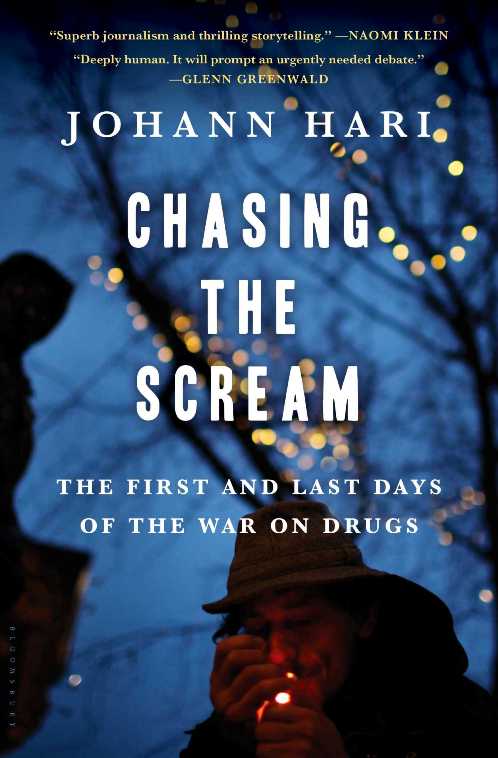
Weekly Read: Dreamland and Chasing the Scream

I read these two books back to back because they seemed to go together. One is a sober telling of how an epidemic swept the nation, landing right in my back yard (the book itself swept through my office earlier this year). The other is a passionate call to arms about the War on (Other Peoples’) Drugs. Both are essential reading.

The Dreamland in Dreamland, by former crime reporter Sam Quinones, is a public pool in Portsmouth, Ohio. For decades it was a hub of life in the town, ever expanding. It’s decline was tied to the region’s decline as a manufacturing hub. As jobs went away and poverty grew, addiction to powerful new opioid painkillers, and then heroin, ravaged the region. Dreamland was the perfect metaphor, withering away to merely a memory.

In Dreamland the book, Quinones lays out the perfect storm of factors that led to the opioid epidemic, which continues to claim lives all over the industrial Midwest and Appalachia. It’s made of three strands. The first is a revolution in the medical conception of pain, especially long term, chronic pain, and that it could and should be treated with powerful drugs. The second is the search for a safe drug to meet that need, which eventually led to Oxycontin. The third is slow expansion of a particular kind of heroin distribution operation from a particular small town in Mexico, Xalisco. As the “Xalisco Boys” operation spread into regions not generally thought of as “heroin country” (like West Virginia), they found a fertile ground of addicts already hooked on Oxycontin and looking for a cheaper, better fix.

Each strand has some particularly interesting stories to tell, although they’re not all of equal interest. The retail heroin distribution of the Xalisco Boys is, in fact, quite interesting – unlike the violent drug gangs who sell stepped-on product as a means to enhance the bottom line, the Xalisco Boys competed simply by selling a better product for less money. No violence and a focus on customer service. It makes getting heroin like ordering a pizza – an analogy to which Quinones returns over and over again. That’s the book’s main failing – it treads over the same ground repeatedly, particularly when it comes to the Xalisco Boys.

The other two strands weave together more effortlessly, particularly since they share a common root. In the 1980s a doctor published a “report” – really just a one-paragraph letter to the editor of a medical journal – that his practice hadn’t shown that patient who received powerful pain killers became addicted to them. This became the basis for Oxycontin advertising that opioid medications weren’t addictive, which recent history has shown to be completely false.* In the post-truth era of President Trump and “fake news,” it says something that the basis for Oxycontin’s development and sales was so poorly vetted because there was no profit to be gained in confirming it (because there never was in debunking it).

That’s one interesting linkage between the sellers of Oxycontin and the Xalisco Boys that Quinones hints at, but doesn’t quite make. Both are driven in what they do by the most basic of motives in a capitalist society – not just to make a profit, but to make as much of it as possible. That’s what drove the Xalisco Boys to look for untapped heroin markets. That’s what drove the Oxycontin peddlers to skip past the possibility of addiction and push doctors to prescribe the pills for damned near everything. The bottom line can be damned scary thing.

Dreamland is far from perfect. As stated above, it’s redundant, even beyond the stories of the Xalisco Boys. It’s also pretty dry writing, although it gets the point across. More important, Quinones gives short shrift to the fact that Oxycontin and other powerful pain killers are, for some patients, their only means of dealing with their pain. It also falls into a familiar pattern – of drug dealing bad guys (of various kinds) and good guy cops fighting to stop them – without providing any insight as to whether that’s a battle worth fighting.

Where Dreamland is a sober telling of an important modern story, Chasing the Scream is a polemic, a call to wake up to the failure of the War on (Some Peoples’) Drugs after more than a century. Dreamland should depress you – Chasing the Scream should piss you off.

Chasing the Scream is journalist Johann Hari’s chronicle of his attempt to figure out how the drug war began and where it’s headed. He travels the world, from his native UK to North America and elsewhere seeking answers about policy, addiction, and alternatives to prohibition. If in the end he doesn’t come up with a singular policy proposal to end the drug war, Hari at least convinces that it’s a war that needs to end (full disclosure – 15+ years of criminal defense practice convinced me of this long ago).

One thing he collects along the way are a cast of rich, memorable characters, from the transgendered former dealer in New York City and the former addict who transformed a particularly seedy portion of Vancouver to an addict who died in prison, cooked alive in the Arizona sun, and a mother whose pursuit of justice for her daughter in Mexico just produced further violence. Most key to the Hari’s book, however, is Harry Anslinger.

Anslinger was the head of the Federal Bureau of Narcotics (the spiritual predecessor to the modern Drug Enforcement Agency) for more than three decades and was, to Hari’s telling, the paradigmatic drug prohibition enforcer. He saw addicts as less than human, used racial and ethnic hatred to stir up panics to grow the power of his office, and was an overall asshole (the “scream” of the title refers to a trauma of Anslinger’s early childhood). Along with jazz great Billie Holiday (one of Anslinger’s high profile targets) and gangster Arnold Rothstein (the prototypical violent drug lord), Anslinger’s ghost hovers over the entire book as the project he started, the War on (Other Peoples’) Drugs expands and is entrenched.

Anslinger is Hari’s antagonist and he spends most of the book looking at the impact of his drug war on those caught up in it and challenging the assumptions underlying it. Of particular importance, he emphasizes the psychological model of addiction over the pharmaceutical model, presenting evidence that most drug users consume their product of choice without much problem, like most people drink alcohol without becoming alcoholics. Along the way he suggests that the scientific literature is clear about the limited addictive power of opioid pain killers, for instance, a claim that Quinones severely undermines.

Compelling as the stories of those caught up in the drug war are, the more interesting bits of Hari’s book are his examination of questions of drug use more generally, and addiction in particular, that shows the entire is more nuanced that Anslinger-style prohibitionists allow. For example, he discusses studies of drug use by non-humans, which is apparently fairly common. Elephants in Vietnam, for instance, generally steered clear of poppy fields until the United States bombing campaign drove them to seek escape from their terror.

It also allows Hari to get into various experiments with alternatives to strict drug prohibition. That includes programs in the UK and elsewhere that allowed addicts to get drugs legally, via prescriptions doled out by a state monopoly. Far from turning into drug fueled free for alls, this allowed addicts to function in everyday society and didn’t lead to more drug use. It also cut off a powerful marketing tool for drug dealers, as the addicts are their best customers. It’s no coincidence that part of the Xalisco Boys scheme that Quinones documents is how they used addicts in a new market to help them advertise and otherwise find customers.

Hari also explores broader legalization and decriminalization programs, such as those in Uruguay and Portugal. Though showing their success, Hari doesn’t dive deeply enough into the Portugal experiment, in particular, for it’s unclear how the law squares legal use and possession of drugs with criminal distribution – the drugs being used have to come from somewhere, after all. More interesting is his examination of the different arguments used by the people backing marijuana legalization in Washington and Colorado in the past few years. The disconnect (WA – drug prohibition is worse that pot being legal, even if it’s bad; CO – pot isn’t bad at all, being less harmful than alcohol) shows that even folks who see the end of the drug war in sight don’t necessarily agree on how to get to that point.

In the end, Hari doubles back to Anslinger for a stinger that brings the rot at the core of the drug war home. The stinger is – Anslinger himself was a drug dealer. He provided for a sitting United State Representative who was an addict to get a safe supply of heroin at a pharmacy (paid for by Anslinger’s agency, no less). The final irony? It was Joseph McCarthy, infamous red scare scam artist. It’s the ultimate example of the hypocrisy that leads me to call the drug war the “War on (Other Peoples’) Drugs,” because it’s rarely about the powerful and connected that are targeted, but the outcast and the hopeless. The war on drugs, ultimately, is a war on them.

Chasing the Scream, as I said, is a call to arms. Unfortunately, Hari may not be the best person to lead the charge, given his prior history with plagiarism and Wikipedia sock puppet scandals. It gives people an instant reason to disagree with anything he says, from snarky internet commenters to book critics (but see, as we lawyers say).

Dreamland is a flawed book, but essential to understanding one of modern American’s great tragedies. Chasing the Scream is the polemic of a flawed messenger about one of mankind’s great modern mistakes. Both are necessary and highly recommended.

dreamland

drugs0118

* UPDATE: This article from Slate goes into more detail on the one-paragraph phenomenon and how it’s not an uncommon occurrence in scientific journals.

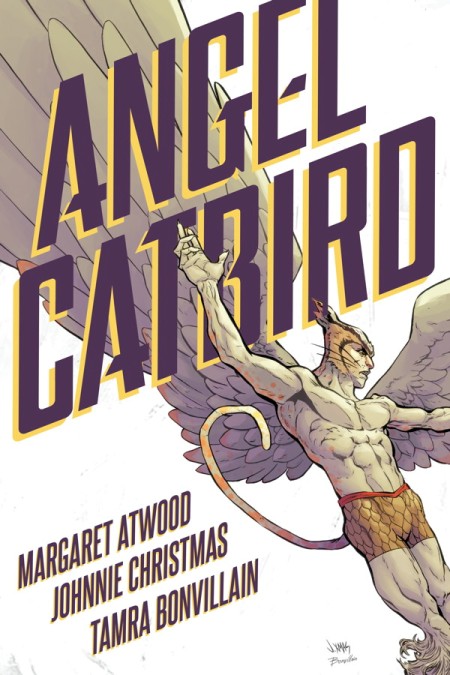
Weekly Read: Angel Catbird (Volume 1)

Not long ago, when reviewing Margaret Atwood’s The Heart Goes Last, I wrote:

all that makes The Heart Goes Last frustrating and I certainly wouldn’t suggest it as a starting point for someone who’s never read Atwood before. But she’s too talented a writer to not score some points along the way, so I’d definitely say it’s worth it (it’s pretty brief, all things considered). Nobody succeeds every time, but few of us are lucky enough to stumble as interestingly as Atwood.

I’ve now been proven wrong. Angel Catbird, Atwood’s attempt at a graphic novel/comic book, isn’t an interesting stumble. It’s an ill-conceived mess.

In a lengthy introduction, Atwood addresses the question that must have come to most minds when this project was announced – why was a serious novelist (or a “nice literary old lady who should be resting on her laurels in her rocking chair, being dignified and iconic,” as she slyly describes herself) writing a comic book? There’s a pretty good reason, as it turns out. Atwood grew up reading comics and loved them. She even wrote a few in college. If becoming one of the most celebrated writers in the world doesn’t give you the freedom to indulge in a project just because, then what’s the point?

Unfortunately, that introduction (which also includes how Atwood found her collaborators and how they worked on the project) is by far the most interesting part of the book.

The story is pure comic book pulp, but done without any verve or irony. It tells how Strig Feleedus becomes, via a freak scientific accident that doesn’t make any sense (par for the course for superheroes, I guess), the titular hero, a man capable of transforming into a half cat half bird being. He learns the world is actually full of “half-animals,” men and women who can shift into cats, rats, or any number of other critters. There’s a straight from central casting villain, a love interest, and an internal conflict for our hero (his cat part wants to eat birds, his bird part doesn’t).

The attempts to mine this for humor only work a couple of times and the whole thing is too damned silly to take seriously. The pacing is so rushed (the actual comic only takes up not much more than half of this volume) that everything is just surface, with no hint of anything interesting lurking under the surface. Compounding the simplicity are the infographics that pop up on the bottom of every few pages providing interesting facts about feline well being. Working them into the story itself would have been fine (some are kind of relevant), but as is they stick out like a sore, lecturing thumb. On top of all that, the artwork, while fine, doesn’t do anything to distinguish itself. Saga this ain’t.

In the end, the reason for Angel Catbird’s failure is right there in that introduction. Comics and graphic novels have come a long way since Atwood’s youth, but Angel Catbird seems like a throwback to simpler times and simpler stories. It just can’t live up to the modern genre it wants to be a part of.

angelcatbird

Weekly Read: The Name of the Wind

Every book has highs and lows, pros and cons that lodge in your brain as you try and come to terms with it. Rarely do the two things break down as starkly for me as they did when I finished up Patrick Rothfuss’s The Name of the Wind.

First of the Kingkiller Chronicle, it’s the first day (of three – it’s a trilogy, you see) of Kvothe telling his life story. Including, presumably, how he turns into a killer of kings. Thus, the book isn’t just a story in itself, it’s a story of a story being told, which opens up a lot of interesting avenues for writing. There are also odd things happening in the “present” as the story is told (how’s about spider demons the size of wagon wheels!). In spite of all that, my thoughts are kind of black and white as to its flaws and strengths.

On the one hand, it’s really well written. I mean in the actually putting words on the page in a right order kind of way. Rothfuss’s prose is breezy and quick, but he slips in a lot of clever bits for the reader to catch (my favorite is the comparison of who lives in the high-dollar and low-dollar sections of the city of Tarbean). In other words, it makes for entertaining reading. In addition, Rothfuss takes an interesting approach to world building, avoiding large dumps of background info that the characters already know just to inform the reader about things. While this leaves some gaps in our understanding (These folks know about germ theory? How?), it allows Rothfuss to casually slip in details that don’t seem important to things but that show their relevance later on. See, for example, the whole issue of “dragons” and their dangerousness.

On the other hand, for a book that’s several hundred pages long (and more than a full day in Audible time) precious little of substance actually happens. In fact, main character and narrator Kvothe admits near the end that all that came before was “foundation” for the interesting stuff to come later (did I mention that the trilogy is, as yet, unfinished?). Naturally, that means there’s nothing like a self-contained narrative arc for this book, which is frustrating. In addition, along the way we’re treated to tale after tale of the hyper-competent Kvothe, the teenager (he’s only 16 when this book ends) who knows every useful skill under the sun and is never bested in any kind of competitive environment. To be fair, he suffers negative consequences as a result of all his success, but, still, a main character who always wins a series of largely meaningless things isn’t all that compelling.

What’s amazing is that, for those pretty substantial cons, The Name of the Wind was still an engaging read. I really enjoyed it. I didn’t mind that things had moved along so little by the end, although I was frustrated by the “and here’s the end” resolution (a final scene between Kvothe’s student and the person recording the tale helps a lot). It makes me hesitant to press on with the series (particularly given this review of book two), but only because I’m not certain Rothfuss can sustain the trick. Eventually all the spinning plates have to come down, either in a crashing cacophony or a controlled descent – whether that happens with Kvothe and his tale, we’ll have to wait and see. At the very least, I’ll wait until the third book comes out (I know – glass houses and all that).

The Name of the Wind seems to be a book that most people either love or hate, given the vacillating 5 and 1-star ratings at Goodreads. I can understand that. A lot of what the 1-star folks complain about I agree with, I just don’t think it overrides the good stuff. Highly recommended from me, even if with a bit of an asterisk.

POSTSCRIPT: Over dinner I came up with a good comparison for how I think of The Name of the Wind – like it was a concept album (Kvothe is a musician – he’d dig it). Something where the story doesn’t really hold together but the music’s so good you don’t care. So, maybe it’s like The Lamb? Or Subterranea? Either way, not bad company.

nameofthewind

Weekly Read: We Stand On Guard

There’s an episode of Futurama where Fry and Bender are sent off to a far away planet to battle a species of alien ball things (they joined the Army for the discounts, but “war were declared”). The dramatic pivot – if such a thing could exist in an episode that included Zapp Brannigan, the disembodied heads of Richard Nixon and Henry Kissinger, and a running gag about M*A*S*H – is when Fry learns that the planet wasn’t just a rock, but the home planet of the aliens. In other words, we were the invaders, the bad guys.

That, largely, is the big idea behind We Stand On Guard, in which a small band of guerillas in the Canadian wilderness fight back against marauding invaders from . . . the United States. It’s an interesting idea and in the hands of Bryan K. Vaughn – of Saga, The Private Eye, and many others fame – you’d think it would be more interesting. As it is, the six-issue run is too short to do anything all that original and, in the end, it turns into a better executed version of Red Dawn. With, you know, Canadians.

You see, in 2112 (a Rush reference, surely?), somebody bombs the White House. In response, we blow the ever loving shit out of Canada. You may think what happened in the South Park Movie was bad, but that’s just peanuts to what we do in We Stand On Guard. Fairly quickly thereafter we’re thrown into the story of Amber who, along with her brother, survived the initial onslaught and lived to fight another day. The story flips back and forth between the present (2124) and the past as Amber and her brother escape advancing American forces.

Why does any of this happen? It’s not really clear, even by the end of things. Sure, some Canadian general confesses to the White House thing, but it’s clear he’s been beaten (at least) and so I suspect this isn’t supposed to be the final word on things. Why we freaked the fuck out and razed our long-time peaceful neighbor doesn’t even get a cursory explanation. We’re out for Canadian water, but whether that’s a happy accident of the invasion or the goal of it is never clear.

Which is a shame, because beyond the initial setup the story plays out like any where the main character joins a plucky band of resistance fighters. It’s bloodier than most, but in the end the good guys win (at least for now) because, you know, they have to. As my brother is fond of saying, “because it’s in the script.” The brief run time doesn’t allow for any of the characters to get defined beyond archetypes or for any kind of interesting world building that doesn’t directly relate to the story We Stand On Guard is rushing to tell.

We Stand On Guard has a lot going for it, anyway. The art’s quite good, clean and vivid. And Vaughn has come up with some really awful ways to get people to talk. Let’s just say that in a hundred years we’ve become even more fluid with our “enhanced interrogation techniques.” And, say what you will about the short nature of the book, that means it doesn’t drag at all. It’s fast paced pretty much from the get go.

Which is precisely the problem. It’s an odd thing to say, but this would have been better had there been more of it. The Private Eye got ten “issues” (since it was originally released in digital format only I’m not sure how they compare to regular comic issues) and that seems about the minimum needed to tell a story set in a new world populated by new people. Maybe there’s a comics equivalent to a director’s cut out there, somewhere, that would fill in some of the blanks.

westandonguard

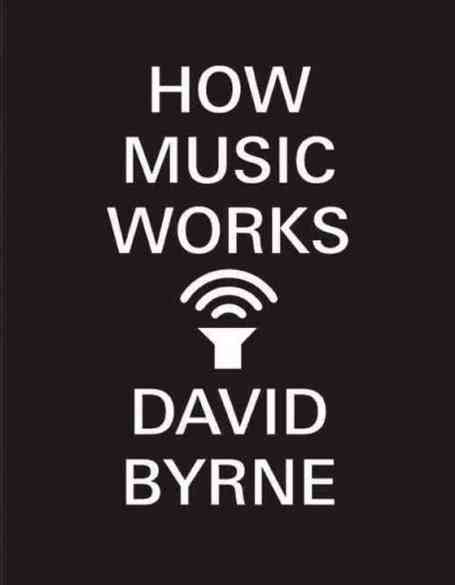
Weekly Read: How Music Works

Usually I write a review just after I finish a book, when it’s fresh in my memory and I’m inspired to say something about it. I finished this book two months ago and instantly wrote most of below. Then things happened and it kind of got away from me. I’ve returned to it several times, but can’t really muster up the enthusiasm to put the finishing touches on it. But it’s got some value, I think, so I present it here with this disclaimer. Given the book at issue, think of it as a demo version of a song that never got finished.

Book titles can be tricky things. We fictions writers have it easy, since we can do almost anything and it works, more or less (I lean towards using locations that are important to the story, hence Moore Hollow and The Water Road). Nonfiction writers have to be careful, though, because a title of a nonfiction book is almost a promise, a declaration of what kind of book the reader is getting into.

How Music Works is not a very good title for the book to which it’s attached. The title promises something like a pop science treatment on sound, how it’s produced and how it rattles around in our brains. Instead, as written by musician David Byrne (no relation, although I sometimes refer to him as “Uncle David” in an attempt to sound cool) of Talking Heads fame, it’s much more wide ranging and, yet, more personal overview of what shapes music that you listen to. It’s often interesting on its own terms, even if its terms it doesn’t want to recognize.

In the introduction, Cousin David says that the book isn’t about him, but he does use experiences  from his own career to illuminate certain subjects. And while it’s true that this isn’t just a rock star bio, Byrne nonetheless spends an awful lot of time canvassing his lengthy career. That’s not necessarily a bad thing – he knows of what he speaks. But it limits the discussion in a lot of places. He could have dived deeper into certain issues by seeking out interviews with others. For  example, he talks about how technology has changed the way music is recorded and that lots of professional recording is now done in home studios. He admits that some folks still prefer the big studio treatment, but doesn’t go into why and whether it’s something that’s going to live on.

Byrne’s probably at his best when he’s discussing the ways in which technology has changed the  way music is consumed. It’s not a new theory – that music was once mostly consumed as live performance, either by professionals or amateurs in the home, whereas now it’s mostly consumed in recorded form – but he gives it a comprehensive airing. It’s an interesting thing to ponder, to wonder how different music is when it’s something you do, rather than just something you experience.

In fact, my favorite part of the book is a chapter titled “Amateurism.” It’s less a celebration of mediocrity than it is celebrating the idea of people making art for themselves. It’s not an either or thing – Cousin David wouldn’t suggest nobody buy music from “professionals” anymore. But actually making music, even if you know it’s nowhere near “perfect” or worth sharing with a wide audience, can be very rewarding. Speaking for myself, I love actually making music (insert shameless plug), even if hardly anybody actually listens to it.

Having said that, it’s in this chapter that Byrne says something that’s gotten him in trouble. In talking about “high” art versus “low,” he writes:

I never got Bach, Mozart or Beethoven – and don’t feel any worse for it.

A lot of people, exemplified by this guy in the Amazon reviews, read this as Byrne shitting on classical music, deriding it as a means to lift up popular music. I don’t read it the same way.

Instead, I think he’s calling into question the idea of segregating music (and other forms of art) into “high” and “low,” which then tends to inform society’s ideas of what is worthy of support and what isn’t. He’s not wrong that lots of popular forms of music tend to have subversive elements (or at least are believed to be). It’s also true that the newly rich look to institutions of “high” art as a means of buying their way into high society. Notably, he doesn’t call for such things to stop or be illegal or anything like that. He just wonders what it might be like if a newly minted billionaire might decide to support a rock or hip-hop club that developed new acts, rather than sign up as a symphony patron.

I’ve never been a fan of tagging some music as “serious,” which, by definition, means the rest of it isn’t. Tell me Robert Fripp, perched on a stool near the back of a King Crimson stage barely visible, isn’t being serious about the music. Tell me that that a blues player, like the late BB King, who sweats his very soul into what he plays, wasn’t serious about his music. Hell, tell me that Frank Zappa, in the middle of some kind of stage buffoonery that looks like pure silliness, wasn’t deadly serious about his music. You can’t. Music, like most art, is as serious as you want to make it, but that doesn’t have a damned thing to do with whether you’re playing in a symphony hall or a greasy dive.

More than anything else, I just don’t see the great sin in saying “I never got” a piece of art or music and refusing to feel bad for it.

how music works

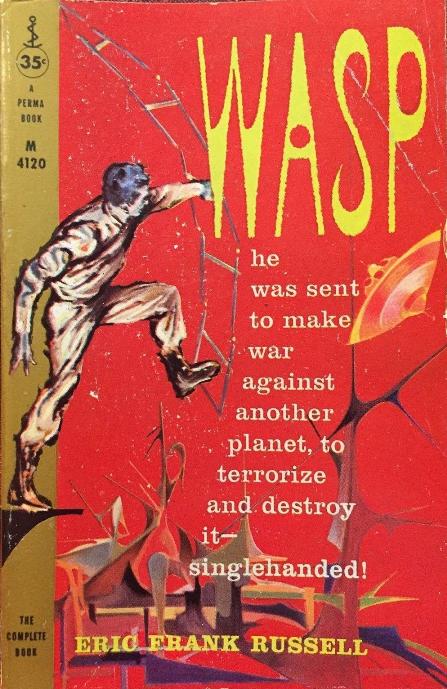
Weekly Read: Wasp

Ready an older book can be tricky – and I’m not even talking about Chaucer or Voltaire here. On the one hand, a recognition of the fact that the book arose from a different time, a different social context, is necessary to give it a benefit of the doubt sometimes, to explain why it doesn’t quite fit with modern expectations. On the other hand, sometimes you can defer too much and paper over that a book just isn’t very good with the explanation that, at one time, people must have thought it was.

Wasp, which was first published in 1957, has a brilliant idea at its core – a single operative is dropped behind enemy lines with instructions to wreak havoc among the populace, drawing resources and attention away from the front lines. The analogy the title makes is to when a wasp gets into a car, freaks out the driver, and kills all on board in an accident. It could have easily been written as a Cold War thriller, a James Bond kind of thing, but one side in Wasp is on Earth and the other on Jaimec, near Sirius, and the war is an interstellar one.

The wasp in this case is James Mowry, who had the good fortune to have been born on the enemy planet and raised there until he was a teenager. As a result he gets drafted for this dangerous assignment (he’s not a career spy). After some montage-like training, he’s dumped on an outlying planet, given lots of resources, and let loose. He does precisely what he’s supposed to do, with the expected results.

Which is the biggest problem with Wasp, something that doesn’t really have anything to do with when it was written. Mowry is just too good at what he does, particularly considering his lack of espionage background. Yes, he gets into scrapes with the secret police, but there’s never really much danger. There’s no real antagonist, no dogged cop trying to hunt Mowry down that makes it seem like he’s really at risk.

Nothing goes wrong until almost the very end when his cache of goods is found and he’s effectively cut off from communicating with Earth (don’t whine about spoilers – did I mention 1957?). Had this happened in the middle of the book, throwing Mowry out of his comfort zone and forcing him to deal with some serious problems, it would have been a welcome twist. As it is, he survives what’s left of the book in quick fashion before he’s picked up (in an admittedly twisted coda) by Earth forces.

That wouldn’t be too problematic if there was something interesting going on inside Mowry. Given his background, one might think he would have some sympathy from the Sirians. In spite of their secret police, they don’t seem all that different from what we know of the Terrans (Mowry, after all, is impressed against his will and sent to indiscriminately blow up stuff – hardly noble) and surely Mowry made a friend while he was growing up? More immediate, he doesn’t forge any kind of connection with the people he uses in his scheme. Everybody is a pawn being moved around the board, even Mowry.

The lack of depth draws sharper focus to the anachronisms of the story. For one thing, there are no women involved. I don’t mean there are no notable female characters, I mean there are no women anywhere at all (As Jo Walton put it, “[t]his is an old fashioned book, written before women were invented.”). Par for the course in 1957, but glaringly unrealistic to modern eyes. For another, there isn’t any attempt to extrapolate future tech, aside from space travel and communications, such that Jaimec looks and sounds almost exactly like 1950s America. A typewriter features prominently at one point. With a better story and deeper, more interesting characters, it would be easy to overlook.

Lots of people make a lot of Mowry being a “terrorist.” No less a luminary than Terry Pratchet said of Wasp he “can’t imagine a funnier terrorists’ handbook.” Neil Gaiman, at one point, owned the film rights. He was working on a script when 9/11 happened and he abandoned it because audiences wouldn’t be ready for a movie where the terrorist is the good guy (although, given his lack of depth, he functions more as a psychopath than a good guy).

I’m not sure that’s an accurate characterization of Mowry and what he does. For one thing, he’s an agent of a state at war inflicting damage on the other state with which is at war (presumably openly declared). That’s straight up warfare, even if carried out in a slightly unconventional way. For another, most of Mowry’s targets are military or government related, even if there’s some collateral damage. Compared to carpet bombing, lacing the countryside with landmines, and atomic weapons, however, it’s damned precise. If Mowry had  brain in his head I’d think that perhaps the author was trying to make a larger point.

There’s something to be said for quick dumb fun. Wasp is certainly quick and, in spots, it’s kind of un in a subversive kind of way. But it’s pretty dumb and doesn’t think very highly of its characters. It’s intriguing central idea deserved a better execution.

Wasp-1959

On Not Finishing Books

Last week I did something about which I’m not proud. I created a new bookshelf in my Goodreads profile, one for “unfinished” books. And I put two books on it.

Generally, when I start something, I like to finish it. That’s particularly true of artistic things, which can sometimes change radically as they go along. When I get a new album I listen to is all the way through, several times, even if it’s not clicking with me. I want to give it a fair chance. I don’t think I’ve ever walked out on a movie, even while watching at home. It’s only a couple of hours, after all.

But books can be different. After all, they take more time and (in some cases) effort than albums or movies. That’s particularly true for me because I do a lot of my “reading” in the car, via audiobooks. It can take me weeks (if not a month) to get through a decent length novel. Given that, is it OK to bail on a book before I reach the end?

Maybe the better comparison is with TV shows. Most of them involve a considerably larger investment of time than a movie, if we’re talking about shows that go on for seasons. Given that, I don’t think I’ve ever felt bad deciding, after watching a couple of episodes, that a show’s not for me. After all, if two or three hours of (to pick a random example) Orange Is the New Black doesn’t really do much for me, why should I sit through 48 more hours of it?

But books are different, right? I’m a writer for fuck’s sake! Shouldn’t I be more dogged in my determination to finish a book I start? Shouldn’t I be willing to take one for the team, to do what I’d hope any reader would do with one of my books?

I don’t think so. It comes down to time, really. It’s not quite like this:

FinishBooks

But it’s close. The thing is, the books I’ve decided to give up on aren’t “bad.” I don’t (to borrow a phrase from an Absolute Write forum thread) throw them across the room with great force. I want to finish them, but my heart just isn’t in it. I read for pleasure, just like I write because I enjoy it. If it starts to feel like work, something’s wrong. I already work in my life without literature adding to the load.

That the books I don’t finish can’t be labeled as “bad” (if any art can ever be so labeled) is obvious just by looking at them.

The first, the one that prompted the shelf construction, is The Grace of Kings by Ken Liu.

Grace_of_Kings_cover

Liu is decorated with sci-fi and fantasy awards for his short fiction and he recently translated the Hugo-winning The Three Body Problem from Chinese, the first novel in a non-English language to win the award. Plus, he’s a lawyer and I always like reading books by lawyers who don’t write legal thrillers.

The Grace of Kings is Liu’s first novel at it’s a neat setup. It’s an epic fantasy with an Asian background, rather than European, complete with the steampunk touch of airships (Liu calls it “silkpunk”). It involved a ruthless empire and the unlikely heroes who bring it down and the aftermath of their revolution. Should be right up my alley, but it just didn’t work for me. The last straw was the interesting back story of a minor character that came across like a Wikipedia entry – all the facts, none of the drama of the story. Others love it, so I’m sure I’m missing out, but I thought it was time to move on.

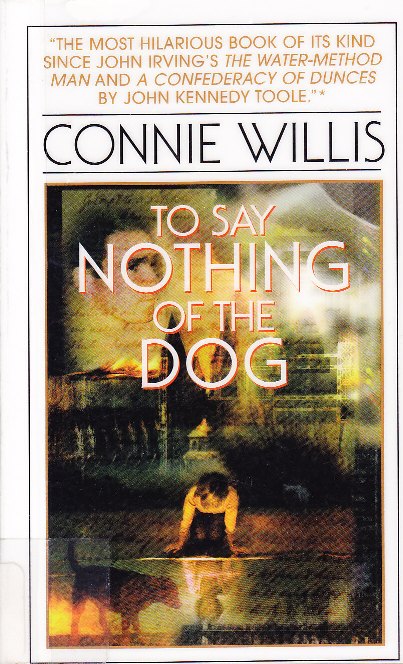
The other book on that shelf really pains me, as it’s To Say Nothing of the Dog by Connie Willis.

nothingdog

I first experienced Willis’s world of Oxford historians who do field research via time travel in “Fire Watch,” which I thought was great. I moved on to Doomsday Book which I truly love. In both the entire process of time travel was dangerous and subject to cock ups that could put the traveler’s life in danger. It was, as the kids say, serious bizness.

To Say Nothing of the Dog is set in the same world and involves the same kind of travel. Except it’s a comedy and, in the part I read, makes hay with an historian using the machine to travel back in time to escape a particularly annoying donor to the college. It just seemed . . . wrong. It would be like if the first book in the Hitchhiker’s Guide to the Galaxy series was a serious, violent space opera about rampaging Vogons. Bad poetry, towels, and mice running the universe after that just wouldn’t seem right. So it was my own dissonance that caused me to give up on To Say Nothing of the Dog.

Thus, to those two books, and the others that will inevitably wind up on my “unfinished” shelf, I say – it’s not you, it’s me. Really, truly. But life’s short and I just have to move on. At least I still feel kind of bad about it.

Weekly Read: The Relic Master

As it happens, the afternoon after I finished Christopher Buckley’s The Relic Master I stumbled across Blazing Saddles on TV. While watching it for the umpteenth time, I had an epiphany about comedy and violence.

Trust me, these two things go together.

The Relic Master is the story of Dismas, who works for a pair of high placed Germans in the 16th century, scouring the world for holy relics. These baubles – from a piece of a saint’s fingernail to the boat of St. Peter – are supposed to cure the sick and help the sinful atone for being, well, basically for being human.

Dismas tries to scam one of his patrons (with an assist from Albrecht Durer – yes, that one), but gets caught. As penance, he (and Durer) are tasked with stealing another holy relic, the Shroud of Chambery – better known today as the Shroud of Turin. A road trip ensues, terminating in an extended stay in Chambery that, let’s just say, doesn’t go as planned.

It’s a heist story, and a fairly amusing one. It’s never quite as funny as it wants to be (aside from a version of the Last Supper that’s beautifully farcical), but it’s generally fun, quick moving, and interesting. Dismas (who may or may not have been a real person) lived in interesting times (see Luther, Martin – relics play large role in the indulgence trade) and intersects with several interesting historical figures, none of which actually changes history as we know it.

Where does Blazing Saddles come in? Early in the movie there’s a scene where the railroad company sends a gang of thugs to Rock Ridge to scare off the population. Violence, rape, and murder are all on offer and, if presented in any way realistically, would be horrible. But it’s not. There’s no blood, nobody dies, and the attack ends with a nearly pantomime attack on a little old lady who still manages to crack a one liner. A subsequent church bombing is, literally, all smoke.

Why is that important? Because it means the movie never loses sight of what it is, of its tone. It’s a comedy first and foremost. One that’s got something to say about serious stuff, but in terms of action, it’s profoundly silly.

The Relic Master, by contrast, wants to be light and funny most of the time, but twice it dips into serious violence that just ruins the mood. The first is when Dismas’s initial caper goes bad and he’s tortured by his wronged patron. This is all off stage, thankfully, although that results in a heretofore unutilized POV shift. Torture is rarely funny (Vogon poetry should be involved), and the kind the Dismas experiences certainly isn’t It leaves him physically altered (a plot point of which Buckley makes good use later), although doesn’t appear to do that much emotional damage. Regardless, it’s a downer.

The second is near the end, when the other scheme starts to go to shit, with bloody consequences. At one point Dismas references eleven dead bodies in a room. And someone gets their throat cut on stage. None of this is particularly necessary and, again, it’s a real downer. There’s something to be said for dark comedy (think Tarrantino), but that doesn’t seem to be what The Relic Master is going for the other 85% of the time.

The sudden shifts in tone keep The Relic Master from being a completely satisfying read. Whether that’s an outgrowth of making Dismas a former mercenary, and thus possessed of certain skills, I don’t know. Protagonists of capers often work better if they’re talkers, not fighter. While Dismas is clever in his own right, he does fall back on old habits.

Still, a mostly fun, quick read, set during an interesting time. You could do worse.

the-relic-master