What Makes A Compelling Main Character?

Last week I started a book. The two main characters were from a different race and were essentially vampires, although they weren’t called that. It was kind of a romance, kind of coming of age, but it involved a lot of sex and murder, without any hint of conscience or consequence. Nor was there any other character trying to put a stop to it.

I didn’t finish the book.

I decided to bail because I couldn’t get into either of the main characters at all. It wasn’t that they were bad or did evil things – I don’t need the protagonist of every book to be a flawless hero (read The Water Road if you don’t believe me). But there has to be something there and it made me start to think about what we expect, as readers, from our main characters.

Stories are all about characters. Regardless of how inventive the world building or how labyrinthine the plot, if the people who are living in that world and doing those things don’t connect with readers than it’s kind of a wasted exercise.

Do main characters have to be good heroes who strive to do right and seem like really fun/nice people to be around? That’s certainly one way to go. Having your main character be someone who’s easy to root for makes it easy for readers to be swept away in their story. Those kinds of characters tend to be kind of dull, though, since they’re always doing the right things for the right reasons. Still, people generally want good to triumph over evil, so it’s one approach to take.

A more subtle approach would be to have a main character who has flaws and sometimes makes bad decisions, but who’s heart is basically in the right place. This is where most main characters fall, I think. Since I referenced The Water Road before I’d say that’s where Antrey belongs. She does a horrible thing, but spends the rest of the trilogy trying to make up for it and learn from it.

But what about bad guys? Anti-heroes? Can’t people identify with main characters who are generally doing wrong? Of course! It’s a much trickier situation.

One of my favorite main characters I’ve come across recently (and who I’ve mentioned recently) is Johannes Cabal, necromancer and start of the series that bears his name. Nobody would accuse Cabal of being a good guy – in fact, a lot of his troubles come from the fact that he’s fundamentally involved in wicked shit (when your first book involves making a second deal with the devil, you’re working overtime). Why do I like him? For one thing, he’s funny. He gives very few fucks about the people he comes across. That, I think, is key to having a main character who’s a bad guy – if they’re fun to watch do what they do, even if it’s evil, it’s easier to be on their side, so to speak. Also, deep down in Cabal’s core, he’s trying to do a good thing – cure the human race of the disease of death. It’s a laudable goal, even if the only way to get there is to slog through darkness.

Another way you can make a main character who does bad thing someone to root for is make their antagonist even worse. The wife and I stumbled across Freaks this weekend on Netflix. Neither a remake of the Tod Browning classic or an adaptation of the Marillion tune, it’s about a little girl with powers and a father trying to protect her. Not “evil,” particularly, but since the kid has no idea of her powers or personal boundaries she does some seriously bad things. That said, the government agency charged with hunting these people down was even worse. It’s easy to wish for a bad, but perhaps redeemable, character against someone who just wants to exterminate them.

I suppose the bottom line for any main character (or any character, really) is that readers have to be interested in them. Maybe not love them, but at least be curious about them and where they’re going. It’s easy to buy in with heroes and people trying to do good. But even people wandering around doing evil have to be interesting. If they’re not, why waste your time reading about them?

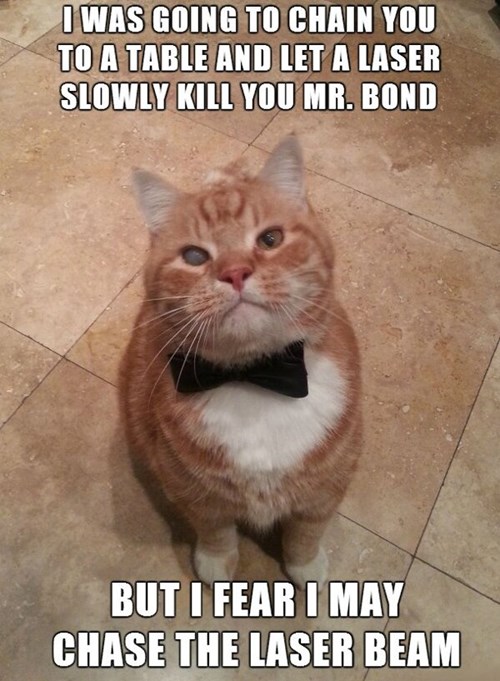
BondCat

Plus ca change . . .

There has always been controversial art. The reasons change – whether it’s the frank depiction of sex, or violence, or challenges to religious or political orthodoxy – but the fact that words or images piss people off is as old as time. We tend to think there’s more of it going around these days because social media tends to amplify controversies when they emerge. Just because the cacophony is louder doesn’t mean it’s any kind of major change in society.

This was driven home to me by a recent article in The Atlantic. Though the current title is “The First Novelist Accused of Cultural Appropriation,” the title that shows on the browser tab, which more accurately captures the theme of the piece, is “Could My Father Have Published ‘Nat Turner’ Today?” Bucking the usual rule of headline questions, the answer, from the story itself, appears to be yes.

Some background first. The literary controversy of the year so far has been American Dirt, a novel by Jeanine Cummins. With a major push from its publisher, and a spot on Oprah’s list, it was poised to be the breakout title of the year.

AmericanDirt

It’s about a woman and her son fleeing Mexico after a drug kingpin murders the rest of their family and, ultimately, their experiences as migrants heading to the United States. This article does a good job of highlight the resulting controversy, which ranged from questions of cultural appropriation (Cummins is neither Latina nor a migrant) to how writers of color are locked out of the publishing industry to the fact that, maybe, the book just isn’t that good at what it wants to be (this is an interesting takedown along those lines ).

The merits of the arguments about the book aren’t really important. What you need to know is that some people took issue with what was set to be a wildly popular book (there was a film deal before it was even published) and weren’t silent about it. Thanks to social media, blogs and what not their complaints reached a fairly wide audience.

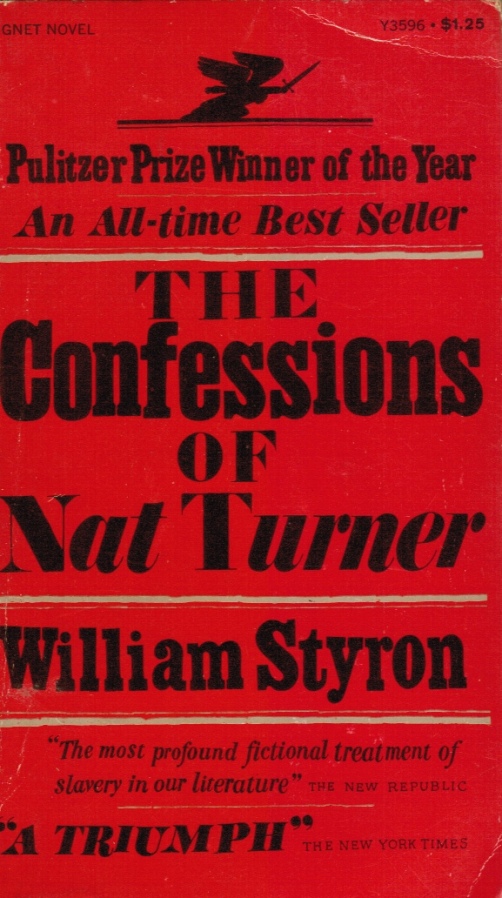
Back to the Atlantic piece. The subject is The Confessions of Nat Turner and the “My Father” in the title is William Styron – the author of the article is his daughter, Alexandra. The Confessions of Nat Turner came out in 1967. Turner, of course, was the leader of a slave revolt in antebellum Virginia. The book is a fictional narrative of Turner as told to a prosecutor who will try Turner after the revolt. It won the Pulitzer Prize, so it must be pretty good.

NatTurner

Nonetheless, it led to some controversy, driven largely by the fact that Styron wasn’t black, much less a slave. How could he write a narrative from the standpoint of one? If it’s a familiar objection, it’s worth looking at how familiar the arc of reaction to the book is to what happened with American Dirt.

First, there was a swell of praise from traditional sources:

Through much of 1967, he was at ease, enjoying the swell of prepublication buzz for Nat Turner. The Book-of-the-Month Club (the Oprah’s Book Club of its time) paid my father the highest price for a novel in the company’s history. The paperback, serial, and foreign rights sold in a frenzy. Hollywood came calling. That July, when riots erupted in Newark, New Jersey, and in Detroit, newspapers asked him to help white America understand what was happening. By October, when the first reviews appeared, Nat Turner was a juggernaut. ‘Magnificent,’ The New York Times declared. “A new peak in the literature of the South,’ Time wrote. ‘It will endure as one of the great novels by an American author in this century,’ the Los Angeles Times predicted. In November, my father was awarded an honorary degree by Wilberforce University, a historically black institution in Ohio.

At this point, as Styron’s daughter points out, with one exception “no black writers were invited to critique Nat Turner in any major national publication.” Slowly, however, those overlooked voices started rising:

The first signs of black dissent appeared by the new year. Articles in, among other publications, The New Leader, The Negro Digest, and Freedomways condemned the novel and the white media that endorsed it. Around the same time, an ugly spat erupted in The Nation between my father and the Marxist scholar of African-American history, Herbert Aptheker. (They both behaved like self-important assholes.) In February, The New York Times ran the first of several pieces exposing an angrier vein: ‘Styron’s Nat Turner, the house nigger,’ declared the professor Michael Thelwell, ‘is the spiritual ancestor of the contemporary middle-class Negro … [the] type with whom whites including Mr. Styron feel most comfortable.’ The writer William Strickland groused that the novel was ‘the worst thing that’s happened to Nat Turner since he was hanged.’ My father’s critics took issue with the book’s dialect and character development, with what he put in (a master who teaches Nat to read, motive for the rebellion separate from bondage) and what he left out (a black wife, unyielding conviction). But probably his greatest crime, as my father reflected 25 years later in an essay for American Heritage, was ‘apparent from the book’s first sentence: How dare a white man write so intimately of the black experience, even presuming to become Nat Turner by speaking in the first person?’ In June 1968, the backlash reached its zenith when Beacon Press published William Styron’s Nat Turner: Ten Black Writers Respond. The book generated its own front-page notices, and kept the Nat Turner dispute alive well into the summer.


The backlash led to the film (to star James Earl Jones) to be shelved.
None of this is to say that the detractors of American Dirt or Nat Turner had the right of it. Maybe they do, but I’ve never read either book, so I don’t know. My point is that the experience of Nat Turner that Styron’s daughter lays out sounds almost exactly like what happened with American Dirt. Maybe the controversy didn’t burn so brightly, since it didn’t have social media to fan the flames, but it still burned pretty good.

Which is only to observe, as the song says, the more things change, the more they stay the same. Anyone who writes a book (or makes a movie or paints a picture) risks blowback, whether the blowback is warranted or not. The arts are simultaneously vague and subject to so many interpretations, yet stir such deep passions. It will be a change when new books are written that don’t provoke any negative reaction. Human nature being what it is, I don’t see that happening any time soon.

Weekly Read: “A Problem From Hell”: America and the Age of Genocide

There is no such thing as a magic word.

As a writer, much less a writer of fantasy, that’s a hard thing to remember some times. But the reason words can hold sway in fantasy is precisely because the story being told isn’t set in the real world. Here in reality, even that most magic of all words – “Abracadabra!” – only has power because the magician uttering it has convinced the audience to buy into the trick their performing (as someone in The Prestige points out, the audience wants to be fooled).

Pro se litigants in the criminal justice system often think words have some kind of magic power. If only they can find the right sentence in a Supreme Court decision then the judge will have to overturn their conviction or vacate their sentence! I’ve seen it over and over in my years practicing law. That the law is rarely that clear and that their ultimate fate is left in the hands of another human being, with all their flaws and biases, can be hard to accept.

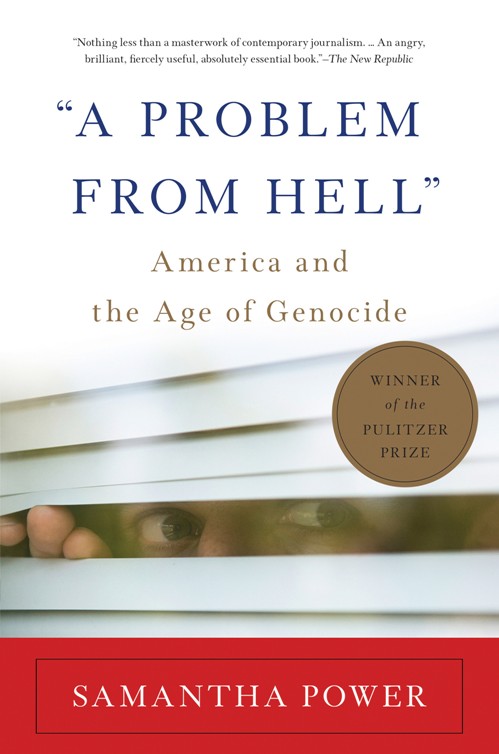
I thought about that a lot while reading A Problem from Hell. Samantha Powers’ 2003 Pulitzer Prize winner is an exhaustive examination of how the United States did (or, more often, did not) respond to genocidal crises that arose in the 20th Century, from the Armenian Genocide during the First World War through the multiple rounds of horribles in the former Yugoslavia.

Power spends a good amount of time on Raphael Lemkin, a Polish Jew who fled at the earliest inklings of the Holocaust. He eventually came to the United States and made it his life’s work to create some international law that would address the systematic destruction (or attempted destruction) of an entire people. It was Lemkin who coined the term “genocide” and helped shape the Genocide Convention that was passed by the newly formed United Nations in 1948.

Make no mistake – this was a big deal. After the Holocaust and the Nuremburg Trials it wasn’t a given that the international community would make a fairly unified statement that genocide was a crime against humanity. And yet, the fact that there was a name for such horrors (along with a legalistic definition) didn’t magically change behaviors. Not only did further atrocities occur, but the international community, now committed to the idea of “never again,” nonetheless let it happen repeatedly.

One reason is that once the atrocity has a name, it gives the parties involved a way to argue that this particular set of killings or expulsions doesn’t rise to that level. In other words, if it’s not “genocide,” then there’s much less incentive to do something about it. That’s because, very often, there are other considerations in play than just stopping someone from doing evil. At best there’s the fact that exactly how to deal with genocide while it’s underway is always hard to figure out. In fact, Powers, for all her catalogs of what the United States didn’t do, doesn’t offer many alternatives, aside from the use of military force. That can be a hard ask in the 21st Century (not for nothing, but Powers’ book was written just as 9/11 happened and before US quagmires in Iraq and Afghanistan). At worst, the people doing all the killing are allies, even if we’re reluctant about calling them that (US policy towards the Khmer Rouge was basically driven by “yeah, but they hate the Vietnamese, too” thinking).

As a result, a lot of time is wasted on terminology. So long as perpetrators can drag out the question of whether something is genocide or not, the killings go on and their plan comes closer to fruition. Since there are no magic words, what’s the point in wasting time making sure we’re using the right one? That dance of nomenclature is one of the themes of Powers’ book.

One of the others is how bipartisan US politics was when it came to dealing with genocide. The champions of ratifying the Genocide Convention – which the US didn’t do until 1988 – came from both parties. Indeed, in classic American fashion, the final ratification wasn’t a triumph of principle, but a political gambit to deflect from a scandal.

The other thread that I found really interesting in all of these genocides is how unready the world is to believe it’s happening. Part of that is down to people just not wanting to believe something so horrible is going on. There’s an anecdote about Lemkin trying to convince a Supreme Court Justice (I forget who, specifically) that the Holocaust is happening and the Justice’s response is, basically, “I can’t believe you – I just can’t wrap my head around the barbarity of it.” Beyond that, though, there’s two related lenses through which people look at these situations that keep prompt responses from happening.

The first is that information about atrocities often comes first from people who survive them, mostly refugees fleeing to other places. Repeatedly, authorities downplay the reports of refugees until they reach such a critical mass that they can’t be ignored. While we know more and more about how unreliable eyewitness accounts can be, it can be all too easy to let prudence and caution roll over into dug in skepticism. The second is that there are repeated examples of the outside world doubting atrocities are taking place because it’s not a logical thing for the perpetrators to do. Who would risk the opprobrium of the international community by trying to kill off or otherwise destroy an entire population? But, of course, history shows that perpetrators usually get away with it, at least to a certain extent. And for true believers, what’s the big deal about after-the-fact punishment if you succeeded in your goal?

Ultimately the problem of how to deal with genocide is the problem of international law at its most acute. Put simply, international law only works as well as the nations committed to it allow it to work. There is no outside force, no world police, to enforce promises nations make to one another if those nations aren’t willing to enforce them. One of the provisions of the Genocide Convention was to allow one state to take another to an international court to stop an ongoing genocide. It took until 2019, when The Gambia took Myanmar to the International Court of Justice on behalf of the Rohingya, for that to happen and it’s still not clear whether the court’s ruling will really have any impact.

It would be great if words were magical, but the hard truth of history is that they aren’t. It takes more than a label to get people and nations to do the right thing, even if it should be as simple as stepping up and saying, “stop killing defenseless people.” That’s why something like genocide really is a “problem from hell.”

FromHell

When The Gimmick Gets In the Way

Last year I wrote about some stories I’d come across that were told in a non-traditional that really worked well. I suppose turnabout is fair play – sometimes the gimmick just gets in the way of the story.

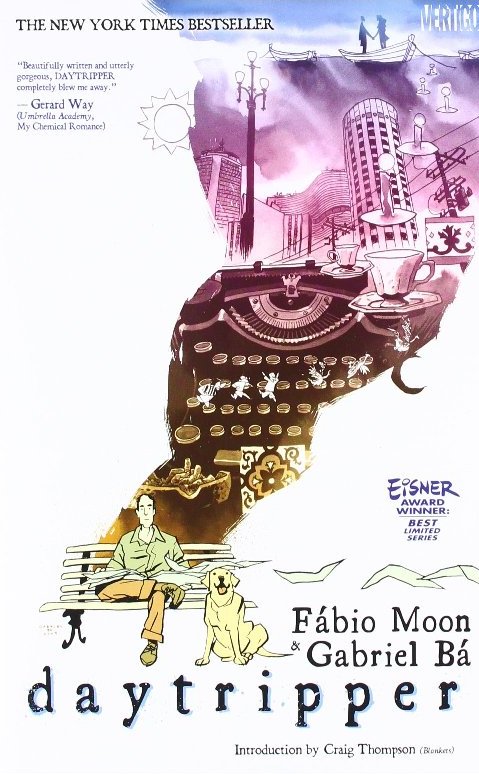
Daytripper is a beautifully put together graphic novel. In each chapter it tells the story of Bras, a writer (first of obituaries, later of novels), as he experiences certain turning point days in his life. It gets a little treacly and really hits you over the head with the “wonder of the everyday” stuff, but some of the individual pieces are good and the art is uniformly excellent.

Daytripper

Here’s the thing – at the end of every chapter, at the end of every vignette – Bras dies. Most of the time he does so in sudden, horrible ways, since they happen at all times of his life, from childhood on up. That’s an interesting way to structure a story, provided you do something with it. Creators Fabio Moon and Gabriel Bá don’t, however. There’s no overarching fantastic of magical realist element that gives the repeated deaths meaning. Everything just resets and we get another version of Bras – one blissfully unaware of his prior fates – to live out another last day.

Without that, the gimmick overwhelms the rest of the book. As readers, we know what’s coming at the end of every chapter. It becomes a macabre game, wondering just how Bras is going to snuff it this time, with methods ranging from the mundane (traffic accident) to the ridiculous (murdered by an old friend living in a shack in the desert). Meanwhile, frustration builds as you wonder just what the point of all this, beyond the hammering home of the tired old cliché about living every day as if it’s your last.* This is clearly a minority view when it comes to Daytripper, so take it with a gram of salt.

My point is this. It’s possible to tell perfectly good stories in the traditional, third-person POV, past tense, linear kind of way (at least I hope it is!). It’s also possible to deviate from the expected in order to throw your readers off, make them engage with the story in a different way, or what have you. But the gimmick has to serve something. Making readers struggle through a non-linear story just because you can isn’t clever, it’s just mean. If I, as a reader, am going to have to put together the puzzle pieces, the final picture better be worth it.

* I’ve never understood the wisdom of this. If it was really my last day on Earth, I wouldn’t worry about mundane shit like paying bills or going to work. But if I lived my ongoing life that way I’d quickly be homeless, unemployed, and (I suspect) divorced. Recognizing this isn’t likely to be your last day and you need to plan accordingly is part of being an adult.

Weekly Read – Quick Hits

While I was off doing NaNo and writing a book last month I was also consuming a few (that’s much easier). Here’s some thoughts about the ones I finished . . .

The Raven Tower by Ann Leckie

Leckie broke out in 2013 with Ancillary Justice, a Hugo-winning sci-fi epic that I really enjoyed. She takes odd approaches to characters and settings that make the stories more interesting. I wasn’t as thrilled with the sequel, Ancillary Sword, but when I heard she wrote a fantasy novel, I had to check it out. As I expected, it’s got quite a different feel to it – the main character is, honestly, a rock. OK, so it’s a god embodied in a rock, but still. The rock god stuff works better than the human story until the two begin to intertwine. The ending really knocked my socks off, even though I predicted it. My usual is to love the openings of books and be let down by the finish – this was just the opposite.

A word on the audio version – if  you sometimes listen and sometimes read, I’d definitely recommend reading this one. The narrator for the audiobook (who also did the Ancillary novels) is horrible, imposing difficult to understand dialects on just about every character and turning the main non-rock character into a whining child.

RavenTower

The Terror by Dan Simmons

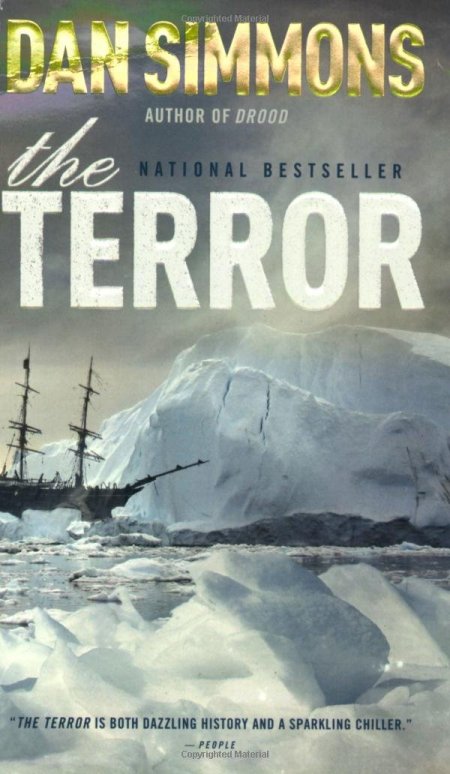
In high school when I started The Grapes of Wrath I had to take a break after the first chapter and go get a drink – Steinbeck’s description of the Dustbowl was so vivid I was literally parched. Long stretches of The Terror are like that, too, but with bitter cold in the place of thirst. Simmons takes the unknown fate of a doomed Arctic expedition and spins a tale that’s both historical fiction and bleak horror. Yes, there’s a monster involved, but the real evil lies in the hearts of men, naturally. It’s a little too long and doesn’t stick the landing (a hard right turn into native mythology), but there are some superbly vivid and disturbing set pieces along the way that make it worthwhile.

TheTerror

The Calculating Stars by Mary Robinette Kowal

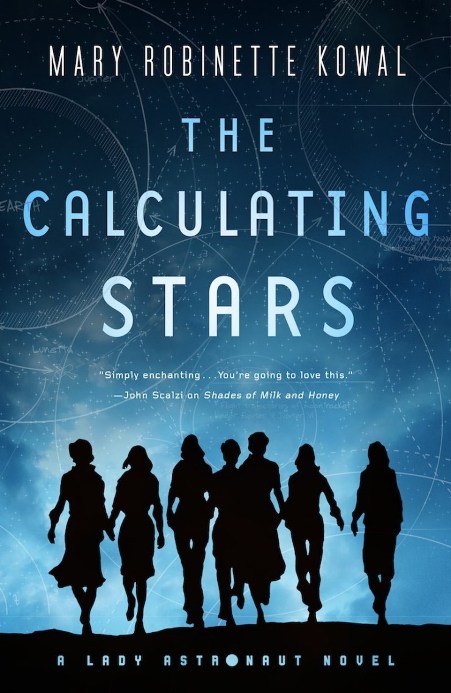
I wanted to like this book a lot more than I did. It’s got a great setup – in an alternate 1950s (Dewey really did defeat Truman, for some unexplained reason) a meteorite slams into the East Coast near D.C., killing millions and wrecking the economy. But it gets worse – the main character, a “calculator” at this world’s version of NASA figures out that the impact will cause climate issues that will render the planet uninhabitable. This jumpstarts the space program and leads to said main character becoming the first woman in space (this is not a spoiler – this is essentially a prequel to a short story written about this character years ago). The story is interesting enough, but it’s frustratingly narrow, since the POV is focused only on the main character. One suspects there’s so much else going on in this world as it comes to grips with the situation that would be interesting to explore. Also, while I thought it was great that the main character’s husband was perfectly loving and supportive, the repeated rocketry-punned sex stuff got really old really quick.

CalculatingStars

The Last Policeman by Ben H. Winters

This is almost like the flip side of The Calculating Stars. In this book, the asteroid hasn’t hit Earth yet, but it’s coming and, as a result, everything’s gone to shit. The main character is a young cop in New Hampshire trying to convince anyone who will listen that the “hanger” found in a pirate McDonald’s bathroom is a real murder, not just yet another suicide. The investigation plays out against the background of impending calamity and what it does to society and the human psyche. That was by far the most interesting part of the book, which unfortunately was mostly pushed back in favor of a fairly lackluster mystery. As with The Calculating Stars, the POV being limited to the main character means we get fascinating glimpses of the wider world, but never really get to engage with it.

LastPolice

I’d recommend any of these, depending on what kind of story tickles your particular fancy. Obviously I really liked the first two, while the others were just OK. Still, they’re both award winners, so who am I to say?

Weekly Read: Espedair Street

There are worse reasons to read a book.

A few weeks ago Fish, original lead singer of Marillion and solo artist in his own right, put up a link to a news story from the 1990s. It was part of a regular series (apparently) about how famous people met each other. In this case, the other famous person was author Iain Banks. As a fan of both guys I naturally went to read the article. Imagine my surprise when someone else I love popped up:

Back in 1990, I was walking away from my lawyer’s office in London, disconsolate over the way my foolish litigation against my record company was going. I was drowning my sorrows with the novelist Neil Gaiman, and he asked if I’d ever read Espedair Street, the Iain Banks novel about Weird, a very tall Scottish rock star. I hadn’t, and Neil said: ‘‘You’ve got to read it – the hero of that book is you!’

Naturally I had to read the book, so I downloaded Espedair Street from Audible (not all of Banks’ stuff is available there, sadly) and dove in. It probably never had a chance of living up to the expectations that arose from this particular singularity of my geekdom.

The book is the story of Danny Weir, aka “Weird, bass player and songwriter for a band called Frozen Gold that broke big in the mid 1970s. Weird tells the story in flashback from his life in the 1980s living as a recluse in an old church filled with stockpiled goods from the Eastern Bloc (they don’t really trade in currency, he explains at one point). He has adventures in the modern worlds as he relates the band’s rise and fall.

Since Banks is a great writer the book is a good read just on the basic level of words – there are wonderful words on display here. And Weird is, for the most part, a pretty good guy to hang around with, moderately clever but never taking himself (or his success) so seriously that it goes to his head. Having said that, his story itself is kind of dull. It’s basically a series of anecdotes that could be pulled from any rockumentary kind of thing from that era. Weird comes off as the kind of guy who would be a frequent guest on talk shows because he’s always likely to whip out some tale from the past that’s outrageous enough to laugh at but not horrible. They are, at the least, entertaining.

The problem is that, eventually, things turn serious and the narrative can’t really support it. The band breaks up after one lead singer dies in a stage accident you could see happening to Spinal Tap (or in South Park), while the other is murdered by a Christian zealot during the “modern day” narrative. Weird blames himself for both, even though they weren’t his fault, so he turns into even more of a sulker, until he decides to pursue a long lost love (who, of course, welcomes him with open arms). It just all adds up to a nice read, but nothing more.

And, I have to say, the musical nature of things are more than a bit confused. Weird (and therefore Banks) occasionally drop the word “progressive” in talking about Frozen Gold’s music. There’s even a reference to the band releasing a double-LP all instrumental concept album – which is just about as prog as it gets! But the timeline doesn’t quite fit (the band is just getting signed about the time prog peaked commercially) and when contemporaries are name dropped it’s the standard classic rock fare – Zeppelin, the Stones – rather than, say Yes or King Crimson. Frankly, the idea that a new prog band hitting it big in the late 1970s is as out there as anything that appears in Banks’ Culture novels.

Was the combination of Banks and Fish, with the assist from Gaiman, the brilliance I’d hoped for? No, but it was still a pretty good read. That’s all you should really expect, right?

EspedairStreet

Weekly Read – The Great War

Ever just fall down a rabbit hole and disappear into a topic for a while? For the past couple of months I’ve been reading nothing but books on the First World War. I hadn’t been driven to do so during the 100th anniversary observances over the past few years, so what dragged me in? Would you believe me if I said it was an interest in genre fiction?

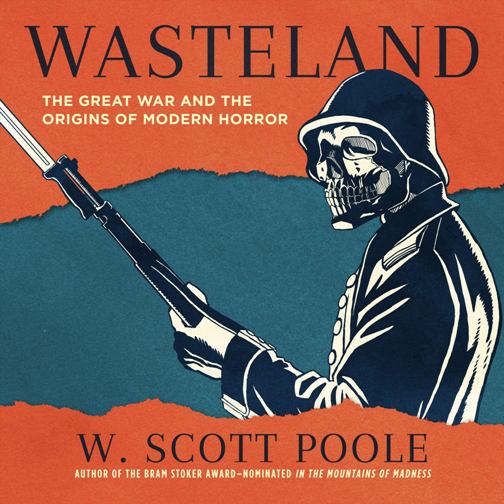
Wasteland: The Great War and the Origins of Modern Horror is exactly what it sounds like – an exploration of how men (mostly) who fought in World War I impacted the development of horror, particularly in the nascent motion picture industry.

Wasteland

Many of the early classic horror films – from Nosferatu through Bride of Frankenstein – have connections that date back to the carnage of World War I. Wasteland does a good job of surveying the various developments in the arts as people began to process the industrial scale of death that the war brought, different in orders of magnitude from anything before. Plus, I had no idea Salvador Dali was such an asshole!

Reading Wasteland made me realize that, aside from some broad brush strokes I picked up in school, I really didn’t know much about World War I, so I decided to dive into some of the history of it. Where better to start than the beginning, right?

On June 28, 1914, a Serbian nationalist name Gavrilo Princip shot and killed Archduke Ferdinand of Austria (and his wife), heir to the throne of Austria-Hungary. Most people know that as the “start” of the war, but the truth is much more complex (and interesting). In fact it was a month before hostilities broke out, a month during which diplomatic wheels were constantly in motion. That month, the “July Crisis,” is the focus of July 1914: Countdown to War, which exhaustively covers the debates, maneuverings, and petty squabbles of parties all over Europe as the continent slouched towards war.

Coutdown

What was most amazing to me (aside from the fact that in a large number of states a hereditary autocrat was actually in charge – 100 year ago!) is how little emotional investment the various players had in Ferdinand’s death. Certain his own father didn’t seem all the broken up, as did most of the power brokers in Austria-Hungary, who saw him as a potential reformer and were happy to be rid of him. Only German Kaiser Wilhelm really seemed broken up about it. So what Ferdinand’s death just a cynical crisis used to give everybody an excuse to go to war? No, the roots of the war date back into the 19th century (who knew the integrity of an independent Belgium was so important?), but what is clear is that everybody involved had a plan if war was coming and once they committed to them, the die was pretty much cast.

Moving on from the start of the war, my next read was A World Undone: The Story of the Great War, 1914 to 1918.

WorldUndone

Rather than getting bogged down in the details of a particular battle of campaign, the book provides a swift (if lengthy) overview of the war on all fronts. Sometimes it’s a little too much overview. For example, the chapter on Gallipoli mentions how a British force could have taken advantage of something had it moved quickly, but it took four weeks – we never learn why. Unfortunately for me, it spends the first section (of six) on the July Crisis, so it was a little redundant for me. More disappointing, it didn’t deal in similar detail with what happened after the war and during the various peace talks. In between, though, it’s a depressingly fascinating catalog of the various failures of the parties to figure out something to do other than grind millions of people through useless battle after useless battle. You’d think, for example, that generals and politicians could put aside petty personal differences in the face of existential threats to their country (one of the interesting recurring themes is how the propaganda of the war made pursuing peace settlements hard – who wants to make peace with the devil?), but, alas, people are people, even in the middle of the Great War.

Since A World Undone didn’t touch much on what happened after the war I decided that I needed one more book to finish things up. Rather than dive into a book about the peace conferences and treaties (of which the Treaty of Versailles was just one) I went with The Vanquished: Why the First World War Failed to End. Provocative title, no?

Vanquished

The point of The Vanquished is that the war destabilized Europe and the Middle East to such an extent that the “peace” actually constituted a lot of revolutionary violence and civil wars. Most of it was in Eastern Europe (don’t forget that Russia got out of the war once the czar was deposed) and the places that had been carved out of the late Ottoman Empire like new-fangled countries Iraq and Jordan. Of course, Germany didn’t escape unscathed by all this, setting the stage for the rise of Hitler. Even countries on the winning side, like Italy, fell to popular revolution.

On the one hand he First World War wrought huge changes in the world. It swept away the last vestiges of most European monarchies, at least as the people who actually ran their countries. It launched the United States into place as a major international player. And, technologically, it introduced a host or horrible things to modern warfare. But, in a lot of ways, it didn’t change much. Or, more accurately, it left so much unresolved that the Second World War was almost inevitable.

I’ve got a better handle on that now, thanks to all this reading. I can’t say it restored any of my faith in humanity, though. I recommend all these books – but maybe not to read all in one go.

Favorite Reads of 2018

Since it’s getting down to the wire – I’m not down with “Best of” lists that show up in October – I figured now was the time to give a shout out to my favorite books from 2018. Two important notes: (1) these are favorites, not necessarily bests or whatever; I just loved them, and (2) the key phrase is “that I read in 2018,” so it includes books from before 2018. With that said, here we go (in no particular order) . . .

Nemesis Games (2015)

Nemesis

I’ve basically been keeping one book ahead of where the TV version of The Expanse is, but with the next season on Amazon taking parts from both the fourth (Cibola Burn) and fifth (this one) books, I figured I had to get a little more down the road with this series. I read Cibola Burn this year, too, and while I got the criticisms some people had with it, I didn’t think it was this bad. In comparison to Nemesis Games, however, it was a wet patch on the road. To say “things change” in Nemesis Games is to severely undersell it. That the writing hive mind that is James S.A. Corey managed to explode the cast, sending them off in different directions before pulling them back together, is no small feat, either.

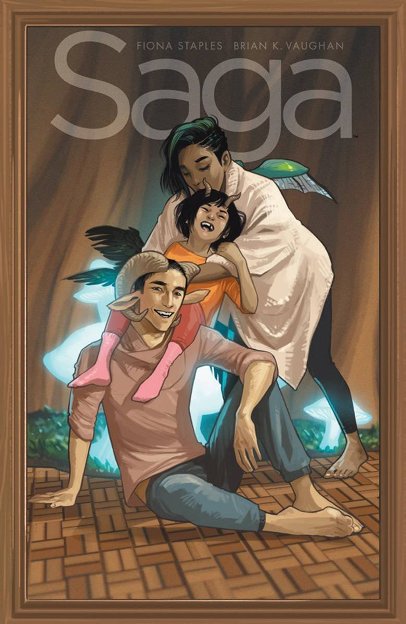
Saga, Vol. 9 (2018)

Saga9

Oh, boy, that last twist. The good news is that after nine volumes Saga continues to be inventive, thrilling, thoughtful, and capable of numerous gut punches. The bad news is that writer Bryan K. Vaughn and artist Fiona Staples are taking “at least” a year off from the series before getting back to work on it. Part of me thinks that’s a good idea, but part of me worries if this shunts Saga into the realm of great, unfinished stories. Given the way this one ended, I sure hope not.

If you’re not reading Saga yet, here’s why I think you should.

The Field of Blood: Violence In Congress and the Road to Civil War (2018)

FieldofBlood

Many people know that, in the run up to the Civil War, Senator Charles Sumner was beaten by one of his Southern colleagues with a cane, providing the perfect metaphor for the turmoil that would soon rip the nation apart. What most folks don’t know is that, while Sumner’s beating stood out for its brutality, it was merely different in degree, rather than in kind, from numerous other incidents of Congressional violence. One Congressman even died in a duel (not on the House floor, to be fair). Not just a colorful “you were there” history, The Field of Blood looks back at another time when the political norms broke down and things sound frighteningly familiar to modern ears.

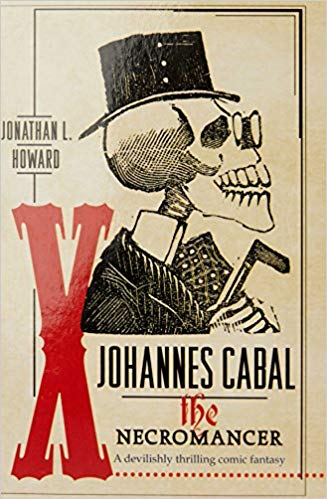
Johannes Cabal the Necromancer (2009)

JohannesCabal

Pure fun. Well, pure darkly humorous fun, at the very least. Johannes Cabal sold his soul to the devil. To get it back, he’s have to deal in bulk, gathering 100 souls for the devil to replace his own, all while running a demonic travelling circus right out of the darker portions of Ray Bradbury’s psyche. This was probably the most fun I had with a book this year, partly because of what I’d just read before (see below), but also because there’s a sharp, dark wit that runs all the way through it.

Shattered Earth trilogy (2015-2017)

Broken

N.K. Jemisin’s trilogy – The Fifth Season, The Obelisk Gate, and The Stone Sky – made history early this year when it won the Hugo Award for best novel three years in a row, an unprecedented achievement. Is it that good? Absolutely. The Fifth Season, in particular, is a structural high-wire act that shouldn’t work, but completely does and leaves the reader knowing precisely why it was done. The other two books don’t quite reach that level, but the overall arc of the story and the characters that drive it is brilliant. Pretty heavy (I needed Johannes Cabal . . . to brighten me up a bit), but completely worth it.

I’ve written before about these books here and here.

The Cadaver King and the Country Dentist (2018)

CadaverKing

I wrote a review of this one here, so I won’t say much more. If you want to get really pissed off about what “justice” looks like in this country (and you should), this is the book for you.

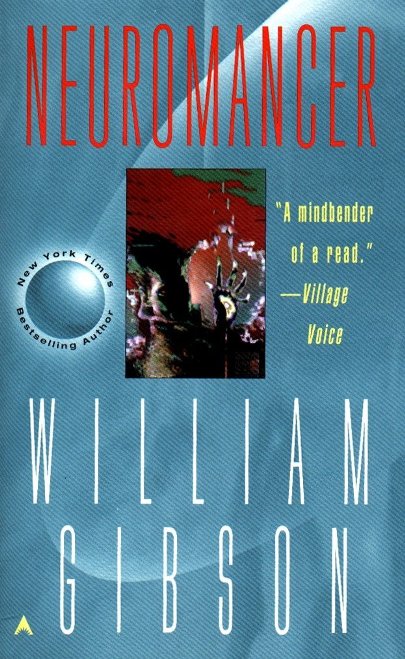
Neuromancer  (1984)

Neuromancer

Yeah, I know, very late to the party on this one. My college roommate read it and, for some reason, I let it get away from me. Does it hold up? Pretty much, although it’s clearly a product of its time. As a foundational text for cyberpunk it’s something every sci-fi fan and writer should check out. That it continues to tell a gripping story while introducing a lot of ideas we now take for granted is icing on the cake.

Children of Time (2015)

ChildrenofTime

I gushed about this one right after I read it, so check out the details here. Suffice to say, any book that can make you care about the macro evolutionary development of sentient spiders is an achievement.

Dystopia Versus Utopia

I think I was first exposed to dystopia in fifth grade. Not that my fifth grade teacher was some kind of demon or sadist, mind you. But it was around that time that I read for the first time, in quick succession, 1984, Brave New World, and Anthem (not to mention discovered its musical adaptation). There’s something seductive and compelling about dystopias, warnings about how things can go so very wrong. I’ve dived back into them a lot over the years, on the screen and on the page.

I’ve had less experience with utopias. I’ve never read the Thomas More work that gave birth to the name, if not the concept. I did read Plato’s Republic in college, but it’s hard to look at that as really being utopic to modern eyes. The other utopian novel I really remember reading is Edward Bellamy’s Looking Backward. Written in 1888, it’s about a guy who sleeps for more than a century and awakes to find it a socialist paradise. Given what had actually happened by the time 2000 rolled around, it was a hilariously out of date prediction.

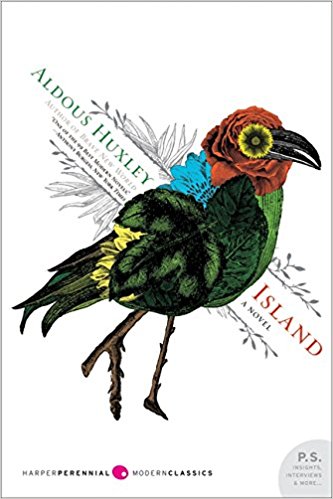
But I started thinking more about utopias as works of fiction recently after I read Island.

Island

It’s Aldous Huxley’s last novel and a kind of rejoinder to Brave New World. It covers a lot of the same big ideas as the earlier dystopian novel, but in an (allegedly) positive way. There’s a chart in the Wikipedia entry for the book that does a good job of boiling down the comparison:

IslandChart

Whatever the charms of Pala, the fictional southeast Asian island nation that provides the backdrop for Island, it’s not a very engaging work of fiction. Nominally it’s about a Brit, Will, who washes ashore there (intentionally, it seems) and experiences all the island’s many facets while recovering from his injuries. Said facets are a blend Buddhism, western liberalism, and (to at least one person’s eyes) Scientology and make sense in a lot of ways. Still, Will just basically drifts from place to place and while some individual scenes are well executed (there’s a very expected death later on that’s really touching), there isn’t much of a story.

I think this might be a problem inherent to utopian stories. Dystopias are about struggle, usually individuals standing up to some kind of overwhelming force. It’s easy to empathize with those characters, to buy into their struggle. Likewise, it’s easy to see where the antagonists in such stories are coming from. Written well, they think they’re doing the right thing, too. It’s the basis of good conflict, which is what drama is all about. In utopias, by contrast, everyone is pretty much happy. There’s not much conflict and, thus, not much drama. The narrative can be interesting, maybe even occasionally compelling, but it’s hardly something that sucks you in as a reader.

Another issue with utopias is that they can often seem kind of dystopic, depending on your point of view. I mentioned Plato’s Republic earlier, in which he sketches out his version of an ideal society – one that is anti-democratic, requires a rigid class system, and squishes individuals for the benefit of the state – that sounds more like a dystopia to me. Huxley’s Pala sounds like a pretty nice place – tropical weather, mind expanding drugs, all the sex you can have, creative alternatives to criminal justice – but it’s not perfect. For one thing there are mynah birds constantly harping out slogans (“Attention! Here and now, boys!”) that would be aggravating to no end. For another, all this apparently comes from the top down, mandated via a government overhaul that happened a generation or two back. There’s no indication what happens when somebody dissents from this version of the perfect life, how that’s handled. The only naysayers are the soon-to-be ruler and his European mother who are so out of touch that it’s clear Huxley doesn’t want you to take them seriously.

But the thing that struck me the most as dystopic in Island comes near the end, when the main character is talking with a local child about Oedipus Rex. They have the play in Pala, but it has a happy ending, wherein two children from Pala enter the play and convince everyone not to kill or maim themselves because none of this is their fault. To the problem of Oedipus being married to his mother, they simply advice stop being married to her. It all reeks of one of those stories modified by a totalitarian regime to show Dear Leader giving wisdom to historical figures and changing history. It’s also bizarrely simple minded in terms of a “solution” to the problem.

In the end, what makes it most difficult for me to get into utopias is that they are, at bottom, dreams that we know will never come true. Dystopias, by contrast, always seem prescient and just over the horizon (the good ones, at least). It’s not for nothing the More’s term means “no place.” Huxley basically concedes this in Island, as the book ends with the island’s new ruler (the one with the European mother) joining forces with the neighboring nation’s strongman to begin a quest to “modernize” Pala. Even in fiction, such places can’t last long.

UtopiaDystopia

Weekly Read: Saturn Run

As I think I’ve said before, one of my least favorite criticism of a book or movie is that it “has no plot.” Unless we’re talking about some really experimental stuff, every story has a plot because in every story SOMETHING happens. It might not be huge, it might not be life changing, but it’s something. What folks mean when they say that, I’ve decided, is not that “nothing happens,” but that “nothing happens that I care about.” In other words, the events of the story just wash over you and leave no residue.

It would be wrong to say nothing happens in Saturn Run, a collaboration between novelist John Sandford and Ctein (the first a long-time writer of thrillers, the second an artist, apparently). Quite a bit happens, given the setup and all, but I can safely say that nothing happens that I cared about, at least until the last quarter of the book or so. By that point, I couldn’t be roused to give much of a shit.

The setup is fairly standard – an alien ship appears in our solar system, is discovered by accident, and we humans head out to make first contact. What Saturn Run adds to the mix is a race to get there run by American and Chinese spacecraft, each taking different routes using different tech to make it to Saturn first. We spend almost all of the first three quarters of the book on the American ship (including its dealings with the American government back here on Earth), which wins the race. It’s reward? Being the first to a kind of interstellar truck stop full of fuel, science, and tech. Actual aliens are nowhere to be found.

The journey to get there is long and shot through with lots of technical data dumps, but precious little of concern actually happens. Partly this is down to the characters, who basically just function as pieces to move around as the plot requires. The closest thing to a main character, Sandy, begins as a skirt-chasing surfer waiting to inherit family money, only for us to learn he’s actually a kick ass solder suffering from PTSD; but he goes back to surfer mode on the trip while acting as the official expedition cinematographer (at which he’s also kick ass). None of this ultimately matters, since he has no motivation and we don’t care why he does anything he does.

In fact, it’s hard to care about anything that happens. For instance, before the American ship (named after Richard Nixon, a clever nod to his dealings with China) leaves Earth orbit there is a test of its system for dealing with excess heat built up by its drive system. The test goes wrong, but there’s no drama in this. The chief engineer explains calmly that this kind of thing happens, it’s why you test first, and it’s just a problem to be solved (and it is). This is a great attitude to have in the real world, but it sucks when it comes to fiction. If every problem gets solved without much consequence, why should I care about them? Same goes for the mysterious failure of half the drive system once they’re underway, which doesn’t matter because the ship already has enough momentum to get to Saturn before the Chinese.

Even when stuff happens to people there isn’t really much to it. The engineer? She dies mid trip due to another accident, just after she and Sandy have started sleeping together. Thanks to spiffy drugs and just the way this book is written this basically has no impact on anybody. It doesn’t even impact the ship in general, as her second chair engineer steps up and does a fine job. That kind of sums up this book in a nutshell to me – if a main character dies and nobody in the book cares, why should I? And don’t even get me started about the cat.

Things improve once the Chinese arrive on the scene, but not enough. For one thing, all of a sudden we begin to get POV scenes from the Chinese involving character’s we’ve never met through the rest of the book. I should care about them why? Kept at a distance they could have been vague bad guys with shady motivations, but we get enough into their heads to know what’s going on without any emotional investment to go along with it. The book builds some goodwill toward the end as it powers to a fairly cynical conclusion, but it weaves at the last moment and destroys that, too.

It’s entirely possible that I’m not the target audience for Saturn Run. It’s hard science fiction in the most literal sense – the space travel and what happens at Saturn are based on extrapolations from known science and are pretty realistic. There are no warp drives or teleporters here. In fact, there’s a half-hour afterword on the audiobook version diving deeply into the science involved. That I skipped it indicates that this book was never for me in the first place.

But there’s no reason why hard sci-fi, focused on known science and clever, plausible problem solving, can’t also be compelling drama. If you only care about the engineering challenges and how they’re met, this is the book for you. If you want characters that matter to you going through situations that have consequences that matter, I’d suggest looking elsewhere.

SaturnRun