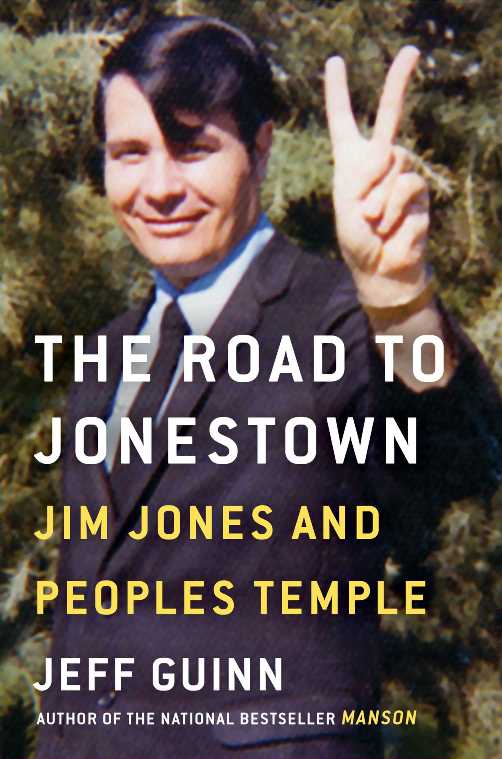
Weekly Read: The Road to Jonestown

There’s a passage in Jeffrey Toobin’s book on Patty Hearst where, after the heiress is captured, her kidnappers demand the Hearst family set up a from scratch program to feed the poor. Various groups come out of the woodwork to try and run the program, including Peoples Temple, the cult led by Jim Jones that, a few years later, would mostly die out in the Guyanese jungle. Toobin presents it as a freakish aside, the intersection of two infamous historical figures. After reading Jeff Guinn’s The Road to Jonestown it becomes clear that there wasn’t anything freakish about it – Jones and his followers could have pulled it off.

That is, perhaps, the most interesting thing about Guinn’s book, which takes a deep dive into the founding of Peoples Temple and the founding, if you will, of Jim Jones. Born poor in rural Indiana Jones gravitated toward two things when young – social justice and fire-breathing religion. Neither of his parents were religious, but he had a neighbor who was constantly on the prowl to recruit souls for Christ and she exposed Jones to her church. He took to preaching and honed a miracle-working approach in Indiana that would serve him well for decades. It was also the spark of the dark charisma that would lead to so many more than 900 dead in Guyana.

Fact is, Peoples Temple got things done for people who were too often left behind by society. Jones and his followers helped drive desegregation in Indianapolis. Both there and later in California they ran nursing homes, drug treatment programs, and, yes, food giveaways. All those programs were successful (at least as successful as other similar programs) and properly run.

The problem was that, from the beginning to the end, Peoples Temple was always the fiefdom of Jim Jones. All the good work came at the expense of a staggering cult of personality that merged with Jones’s rising paranoia (aided, no doubt, by a cocktail of drugs he used to work and sleep) to make for one of the more frightening cults in recent history. Jones was Father, at the very least, and perhaps God herself (or some reincarnation of past holy figures, like Buddha or Jesus) and the only one who could save his people from the destructive world around them.

At first the destruction was nuclear war. That was reason Jones moved Peoples Temple from Indianapolis to California, setting up shop in a rural area north of San Francisco that supposedly was far enough away from primary targets that, with favorable winds, residents could survive a nuclear attack. That fear didn’t keep Jones from barnstorming around the country on a fleet of busses doing revival shtick, however.

The threats quickly became more personal. There were defectors from Peoples Temple, people who either saw Jones for the con man he was or simply grew tires of giving everything they made and owned to the organization. To Jones each was a potential villain, providing fodder to the press or authorities about what went on in the increasingly secretive group. Journalists started to close in, too. The final straw was a group of former members who focused on getting other family members, including children, out of the group who, they claimed, were being held against their will.

Although Jonestown itself had been founded earlier, these existential threats are what drove Jones and most of his followers there well before the settlement was ready to support them. Harsh conditions, piled on top of Jones’s paranoia and iron grip over his followers, soon degraded into homicidal/suicidal tendencies. Jones simulated an attack on the compound and later staged a mock suicide, just to make sure everyone reacted in the proper fashion. By the time San Francisco-area Congressman Leo Ryan arrived in November 1978, the keg was set to blow. Ryan and several others were murdered at a nearby airport, while Jones led the mass of his followers in Jonestown to their death via a mix of cyanide and Flavor-Aid (not Kool-Aid, to set the record straight).

More than 900 people died in Jonestown and there’s always been some controversy over what label to apply to it. Jones called it “radical suicide” (?), but given that at least a third of the dead were children it’s easy to say that many of the deaths were flat out murders. Beyond the children there’s evidence that some adults were held down and injected with poison, rather than having drunk it on their own. Still, hundreds of people, at least, appear to have willingly laid down their lives when Jones said so.

The big question, of course, is why? Guinn doesn’t do much evaluation of the aftermath of Jonestown or bring in any kind of experts to attempt to explain it. Instead, he lets the work he’s already done, showing how Peoples Temple developed, do the work. What he shows is that people really believed in Jones. Some believed in his commitment to social justice. Others came at it from a more religious angle, drawn in by the healings and such that Jones performed on the revival circuit. Because once your religion has primed you to believe miracles exist, why would you doubt the con man that actually says he performs them? Regardless, they believed in Jones and the outside world gave them just enough reason to buy into his paranoid rants. More than anything else, they let Jones come to define their world, to the exclusion of any critical thinking or close examination of what he was doing.

It’s hard not to think of Donald Trump while reading The Road to Jonestown. Not because Trump is going to lead us into ritual suicide (with a side of murder) anytime soon (we hope), but because of the freakishly similar way Trump and Jim Jones interacted with the outside world. To Jones’s followers he was the only person who could solve their problems and save them from the injustices of the world. Trump during the campaign repeatedly expressed similar sentiments. Jones never failed – he was only failed by underlings or thwarted by shadowy outside forces. Likewise, Trump never backs a loser and is constantly doing battle with the “deep state” or “fake news.” More than anything else, Jones and Trump share a complete aversion to dealing with reality. That way lies madness, as Jones and others have proven.

Hopefully, we’re not all on the road to Jonestown again, without quite realizing it.
RoadtoJonestown

Weekly Read: Station Eleven

Usually when a book is set in a post-apocalyptic world, it’s telling one of two stories. Either it’s the story of the fall – how did society get into this fucking mess? – or it’s the story of the gritty challenge to survive just after the fall. Few stories contemplate what might happen a decade or two later, once basic survival is figured out. What then?

That’s the brilliant conceit of Station Eleven.

Sometime in the near future a global pandemic called the Georgia Flu (named after the country, not the state) roars across the planet killing off 99 percent of humanity. Using a time skipping narrative worth of an early (aka “good”) Atom Egoyan flick, Station Eleven tells the interlocked stories of several survivors trying to make sense of an empty world about twenty years in the future.

Note the word “survivors.” These aren’t just people lucky enough to be immune or otherwise avoid the flu. These characters have made it a couple of decades in this new world and have become competent at getting by. If they hadn’t, they’d be dead. Instead, they’re able to devote themselves to larger questions. How important is art and culture in a post-apocalyptic world? Pretty damned important is the answer, one I’m not compelled to argue with. It would have been nice if “art” meant something beyond Shakespeare and classical music, but it is a limited sample, after all. If there’s a Travelling Symphony out there in a wastelands doing King Lear and playing Mozart, I’d like to think there’s a band knocking around playing King Crimson and Zappa, too.

The other big question that rears its head over and over again is how much these people should remember the world as it was and try to pass along information about that world. Two decades on there are adults, either born shortly after the flu or who were young children when it happened, who know nothing of electricity and the Internet and flying aircraft. Is telling them about what they’re missing inspirational, something to make them rebuild? Or is it calcifying nostalgia, dragging them down? Theories are floated and arguments are made, but nothing’s decided. How could it be?

The time-skipping structure works really effectively. The goal isn’t to reveal some big secret, to build to a Shamalan-style “a ha!” moment. Instead it’s a way of drawing connections between characters, even as they become spread around the modern world. It leads to some disjointed spots – there’s one character in particular, front and center in the beginning just before the flu hits, whose story doesn’t really seem a part of the rest – but otherwise it’s a treat.

Where the book falls down a bit is in the overall arc of the story. As I said, there are no big moments and the closest thing to a bad guy is dispatched cleverly, but without it feeling like it’s the moment it should be. That and one section set among survivors at an airport (later turned into a “museum of civilization”) that drags on too long keeps Station Eleven from being knock out of the park great.

This isn’t a gritty survival story. It’s not a whodunit about why the world came to an end. It’s a lyrical, atmospheric, meditation on what it means to be alive in a world where so many others aren’t. Big thoughts, ones worth pondering for a bit.

Also, it led to perhaps the greatest Goodreads Q&A I’ve ever seen:

Station11Q

Needless to say, that’s not at all what this book is about. Good thing, too.

Station11

Weekly Read: Blood in the Water: The Attica Prison Uprising of 1971 and Its Legacy

On September 9, 1971, inmates at the Attica Correctional Facility in upstate New York (not too far from Buffalo) took control of part of the prison. For the next four days they negotiated with authorities over a list of grievances, at times with the help of notable civilians such as attorneys and journalists. After reaching an impasse, authorities stormed the prison on September 13, killing 43 people – including 10 correctional officers who had been taken hostage. It’s no wonder that the events at Attica galvanized the nation and quickly worked their way into pop culture:

What’s interesting is how different people refer to those events. Some call them a riot, with all the connotations that word brings – senseless violence, brute force, unfocused rage. Others, such as historian Heather Ann Thompson in her Pulitzer-winning book, Blood in the Water, refers to the events as an uprising – an event where a repressed group of men sought change in the only manner available to them. Which camp you fall into probably says a lot about your politics in general.

Which is appropriate because politics is a driving force in Thompson’s book, beginning with the political aspirations of New York’s governor at the time of the uprising, Nelson Rockefeller. He wanted to be president and couldn’t afford to be seen as “soft” on crime or criminals (it’s no surprise that Nixon backed his play at Attica). In addition, he viewed the uprising as the tail end of leftist activism from the 1960s and worried that if the Attica uprising wasn’t suppressed it could spawn an actual revolution.

The inmates didn’t do the most they could to dissuade Rockefeller from this position. Although their long list of demands dealt mostly with conditions at Attica or within the criminal justice system in general, there were (at least at some points) demands for a plan to take anyone who wanted to go to Africa and other broadly political requests.

Having said that, the negotiations made progress. The sticking point turned out to be amnesty for those involved in the uprising. Rockefeller insisted he didn’t have the power to do it (doubtful) and all rested with the local prosecutor. The inmates, for their part, didn’t seem to realize that once one of the correctional officers who had been attacked in the early stage of the uprising had died there was little chance of a blanket amnesty, anyway.

That authorities eventually stormed the prison to regain control wasn’t a surprise. What was surprising was how it was done, with a collection of state troopers, correctional officers, and National Guard troops armed to the teeth. Similar, if smaller, uprisings in other New York facilities (including New York City’s infamous Rikers Island jail) had been put down without the use of firearms and the associated loss of life. Authorities went into Attica with guns blazing, however, and left a horrific toll in their wake.

Thompson’s great achievement in Blood in the Water is taking those four days of the uprising and laying out what happened in serious detail. She also provides a great deal of context for the uprising, placing it as one of a series of such things around the country, not just a sudden, confusing spasm of violence. It’s an important portrait of a watershed event in American history painstakingly pieced together.

Once the uprising is put down, however, the book begins to lag. Initially the response of the state is familiar to anyone in 2017 watching the news when an unarmed black man is gunned down by police. First, authorities lie – in this case, by claiming that the 10 hostages who died during the retaking where killed by inmates, often in ways that involved mutilation. Second, authorities dehumanize the inmates – everyone involved at Attica was a murderer or rapist or similar kind of thug. In truth, many were there for minor parole violations and other non-violent offenses. Third, when the truth comes out – medical examiners refused to be silenced about what actually killed the hostages – the authorities downplay, obfuscate, and at no point apologize or formally correct the record.

It’s no surprise, then, that litigation about Attica – criminal and civil – dragged out for decades. Thompson deploys the same attention to detail to that litigation, but to less effect. There are so many trials with so many different players that the narrative becomes scattered. Also, there are things that jumped out to my lawyer eye that deserved further detail. For example, there were mutual defense groups set up to help defend the Attica inmates during their criminal trials. Such a setup is rife with ethical issues (conflicts of interest, primarily), but Thompson never addresses them. Another example is when there’s a ruling by the judge in one inmate’s case that, we’re told, profoundly impacted several others, but there’s no discussion of the ruling itself.

What Thompson’s exhaustive stroll through the litigation does is drive home just how much the apparatus of the “state” – meaning both the New York and federal governments – were determined not to really find out what went down at Attica. Most obviously that’s borne out by how the New York players obfuscated when it came to the facts, but it’s smaller things, too. There’s the fact about how the state tried to lock the families of the guards who had been injured and held hostage into taking small workers’ compensation payouts rather than actually suing anybody. Or there’s the ultimate brush off – the federal judge handling one of the civil cases went on vacation while the jury was deliberating. It doesn’t paint a good picture of a society coming to grips with a horrific event.

For all its cachet as a touchstone in the culture, it’s amazing that it took until last year for a definitive history of the Attica uprising to be written. For that Thompson deserves all the praise she’s gotten. That the entire story isn’t as gripping as those four days in September of 1991 isn’t her fault. For that part alone, I highly recommend Blood in the Water.

Attica

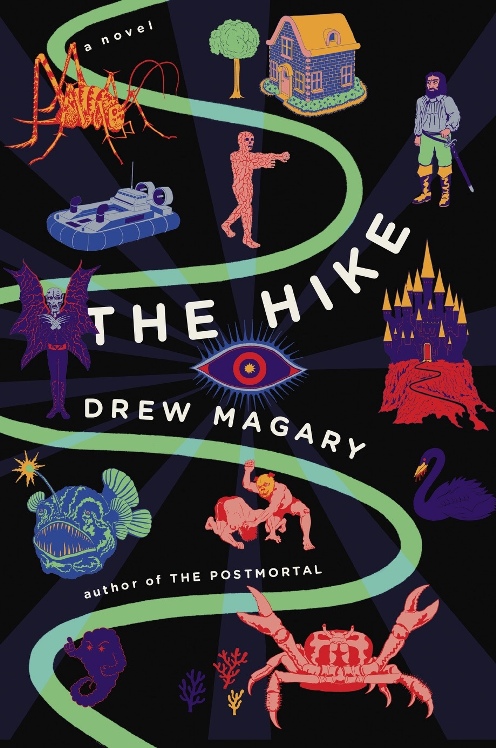
Weekly Read: The Hike

There’s a long tradition of stories were a regular person is thrown into some weird alternate world, one where the rules of real life don’t apply. The person has to battle through this world without understanding what’s really going on until, hopefully, they find their way out again. A problem with this evergreen template is that, eventually, the storyteller has to explain what’s going on. Rarely do the explanations match what happened along the way.

The Hike falls into that trap. It plunges its main character head first into a bizarre, alien, and frightening world that throws challenges at him apparently at random. It’s no spoiler to say that we eventually find out who’s doing this, but not really why. It’s an awfully soft landing after such a long journey.

But, oh, what a journey it is.

Ben is a businessman of some kind (it’s not really important) on a business trip. He checks into a third-rate hotel in the Pennsylvania wilderness and, with some time to kill before a meeting, decides to take a hike. From there things get – interesting. Almost immediately there’s a dead girl and killers chasing Ben while weaning the torn off faces of Rottweilers. Ben evades them, but finds he can’t get back to anything that looks familiar. With that, the saga is on.

It’s hard to describe what follows, and the surprise of it is part of the joy, so I won’t bother. Safe to say that Ben faces a series of trials that play out like an early role playing video game – success at each “level” is often dependent on figuring out what to do with objects that mysteriously appear when necessary. The struggles get harder as the journey goes along, while Ben occasionally has to deal with frightening episodes from his past.

Ben goes at this mostly alone, although he meets a wide variety of beings as he progresses along his path. At times he gets some companionship, in the form of a talking crab (who refuses to give his name and addresses Ben as “Shithead”) and a 15th-century Spanish explorer (who hates anybody who isn’t Spanish, particularly the English). That these relationships actually pays off in ways beyond being purely entertaining (the crab is really funny) is a testament to how good The Hike is.

Which is not to say it’s perfect. The book falls foul of the regular problem with stories of this sort in that the explanation of this weird world doesn’t hold a candle to the world itself. I’m not saying it doesn’t make sense, it’s just not very satisfying (admittedly, I’m not sure what would be). Also, while the final twist gives a little bit of sting to the tale, I don’t buy the reading that so many people have that Ben learned a great lesson through all this. He never really got into the world as an escape from real life, was never seduced by the promise of something different and exciting. He always wanted to go home to his wife and kids.

Then again, doesn’t everybody (well, maybe not the kids part)?. Which is why it’s hard to fault The Hike for not wowing you at the end, given all the wow you get out of the journey.

Untitled-4.indd

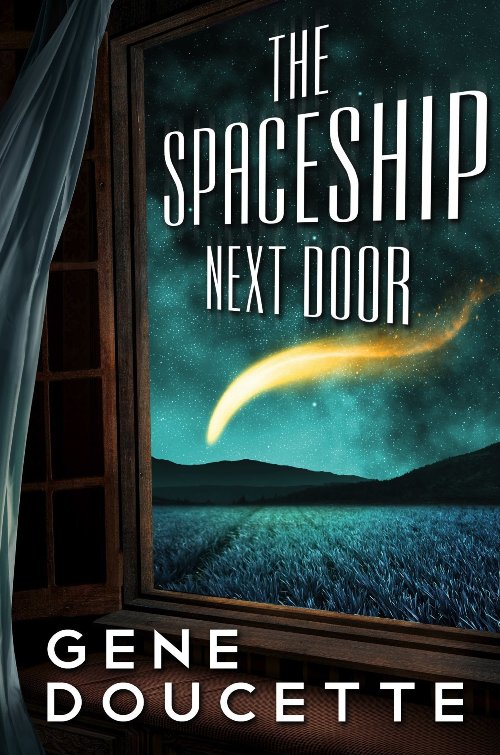
Weekly Read: The Spaceship Next Door

I have a soft spot for books that deal in tropes that don’t conform to reader expectation. After all, I wrote a whole book about zombies where never a brain is eaten. The Spaceship Next Door, therefore, hooked me early on with a great twist on one trope, before throwing in a second for free along the way.

The hook is this – one night a spaceship from another planet lands in rural Massachusetts. Then – nothing happens. There’s no alien invasion. There’s no dire warning about what we’re doing to the planet, ala The Day the Earth Stood Still. There’s not even a massive overreaction by the government, although the town of Sorrow Falls essentially succumbs to a velvet-glove version of martial law. Mostly, the ship just sits there and makes people wonder what the hell is going on.

Three years after landing, something finally does happen.

Much like the ship, the book isn’t in too much of a hurry to get to that thing. Some will complain that this makes the book slow, but I think it’s time well spent with 16-year old Annie Collins, who is kind of the town’s goodwill ambassador to the outside world. She’s given the task for shepherding around a “reporter” (actually a government scientist – he fools nobody), which allows us not only to meet a bunch of characters, but dive deep into the history of Sorrow Falls. To the book’s credit, this doesn’t result in a whole bunch of characters who are nothing more than walking quirks. They all seem real, if a bit off.

I should mention the second trope, because it’s what pops up when things start happening. In a word – zombies. Except, really, they’re not. But they behave kind of like zombies (no brain eating!). Annie and her government guy even have a funny conversation where they try to come up with a better term, but nothing really works. Besides, the zombies tie back in to what the ship is doing (naturally), which lets the book continue its twisty way with first contact stories.

The Spaceship Next Door isn’t perfect. The ending gets a little jumbled and there’s a bit of hand waving at the final post (one of the final chapters is tilted “Deus Ex Machina,” so it’s not like you aren’t warned). Even in light of that, it’s a quick, fun read with a couple of really good laughs sprinkled in. If you like your tropes a little twisted, I highly recommend this one.

SpaceshipNextDoor

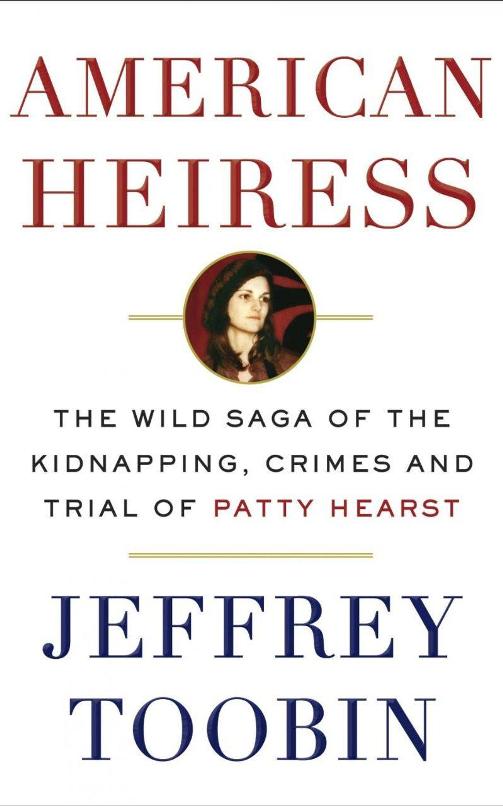
Weekly Read: American Heiress

As they say, truth is stranger than fiction. One of the problems with writing fiction is that readers expect it to make sense, for characters to behave in ways that are believable and compelling. Writers telling true stories aren’t saddled with such issues. Jeffrey Toobin’s latest, American Heiress, tells one of those stories that, if labeled fiction, would have readers rolling their eyes in disbelief.

The basic parameters of the Patty Hearst case are fairly well known. She was kidnapped from the apartment she shared with her then-fiancé in Berkley, California, by a group calling itself the Symbionese Liberation Army. She was held for months, during which time she turned from captive to comrade. As a professed member of the SLA she participated in bank robberies and lead a life on the run. It all came to an end with an arrest, conviction, and lengthy federal prison sentence.

Toobin’s book breaks down, basically, into three parts. Part one covers Hearst’s background, the kidnapping itself, and her turn to bank robber. This part is a bonkers story with a lot of different angles playing into it – not just Hearst and her kidnappers, but also her family and the law enforcement officers working the case. Then there’s Hearst’s fiancé, who famously told the kidnappers to “take anything you want” when they broke in. As Toobin jokes (multiple times), they did.

Events after the kidnapping played out in a way that seems unbelievable today. The Hearst family – who, at this point, were nowhere near as wealthy as people thought – agreed to an SLA demand to set up a broad food giveaway for the poor. The operation, created almost overnight, had to fight off local grifters (including Jim Jones) and led to riots. The fiancé, whom the family never liked, tried to help in his own way, but only led to his reputation being shredded.

This part makes you hope that the American Crime Story crew, who turned Toobin’s The Run of His Life into The People v. OJ Simpson for FX, has the rights to this book. There are so many characters (the list of famous people who had some connection to all this is impressive – Jane Pauley, Kevin Kline, Lance Ito, and, later on, Bill Walton) acting in so many bizarre ways that Ryan Murphy’s sensibilities would be well served. Appropriately enough, this part wraps up after the SLA members split up and Hearst and her two comrades watched the other half dozen perish in a scene that played out like a mini-Waco – gunfight followed by immolation.

The rest of the book doesn’t quite live up to the first part. The middle section drags a bit as Hearst and the others go on the lamb. Mostly it’s because we lose the multiple angle approach that brought so many characters into play. Still, there’s a particularly odd idyll in the Pennsylvania woods (which has given me a great story idea) and it’s important to the story as a whole.

Part three covers the Hearst’s eventual arrest and trial. One would think that Toobin, being a lawyer, would focus mostly on this, but he gives it a brief, compelling summary, during which one thing becomes clear – Toobin has no regard for Hearst’s lawyer, F. Lee. Bailey. In Toobin’s telling, Bailey was a swaggering, swashbuckling self promoter for whom practicing law was almost an afterthought. He had a deal to write a book about the trial before it even started and spent several nights during trial flying back and forth to Las Vegas to speak at legal seminars. To boot, while Bailey’s reputation was built on winning big cases – Sam Sheppard (aka The Fugitive) and the Boston Strangler – he, like any criminal defense lawyer, lost more than he won. For Hearst, he lost.

Hearst’s trial – she was charged with bank robbery and carrying a firearm in relation to it – boiled down to one issue: did she willingly engage in this criminal conduct after becoming a SLA member, or was she a kidnap victim who had been brutalized, terrorized, and brainwashed to the point where she did whatever she was told in order to survive? It’s clear that Toobin agrees with the jury that convicted her that Hearst was a fully fledged revolutionary by the time of the robbery. What’s really troubling is that while it seems like Hearst did shift into the role of SLA comrade, she shifted out of it just as easily. Given that all this happened while she was barely an adult (she was 19 at the time of the kidnapping, 21 when convicted), I wonder what modern research in the brain development of young adults might shed some light on whether such swings of outlook are really that out of the realm of normal.

Whatever steam the book loses after the first part Toobin finds when he gets righteous in the conclusion. After her conviction was affirmed on appeal and the trial court denied a habeas claim (contrary to what Toobin says, ineffective assistance of counsel claims are routine and often completely baseless), Hearst’s family started a massive effort to get her sentence commuted. It was, eventually, but Jimmy Carter. The staggering bipartisan group that pushed for clemency included famous hardliners such as John Wayne and Carter’s opponent in the upcoming election, Ronald Reagan. Part of it, Toobin argues, is that once Jim Jones led his group in a mass suicide (and murder of Congressman Leo Ryan, a vocal supporter of Hearst), it became much easier to believe Hearst’s story of brainwashing. In the end, she only served about two out of the seven years to which she was sentenced.

But it didn’t stop there. Flash forward to the end of the 1990s and Hearst is now seeking something unprecedented – getting a pardon from a second President after first gaining a commutation. There was no consensus this time – part of the opposition was the then United States Attorney in San Francisco, a guy named Robert Mueller. But Carter and his wife appealed directly to Bill Clinton, who pardoned Hearst on his last day in office.

Toobin, who clearly believes Hearst was a willing participant in her criminal activity, makes the obvious point – only Patty Hearst had the resources and name recognition to get clemency twice, in spite of the evidence against her. People who have done a lot less have gone to prison for a lot longer and not gotten any sniff of clemency. But those people were the ones the SLA said it was fighting for. They weren’t wealthy heiresses.

Toobin’s book is well worth reading. Even if the back half can’t live up to the entertainment value of the first part, there’s a lot of interesting info in here. Toobin does a good job of setting the context for all this (You think we’ve got political strife today? How do several years with 2500 bombings across the country sound?). There’s also some original research, as Toobin got his hands on previously unseen letters Hearst and her lover/co-defendant wrote to each other after their arrest (as couriered by Hearst’s first lawyer). I’m not sure it all makes sense in the end, but so what? It’s real life – it doesn’t have to.

PS – For an interesting perspective on the book, check out this column from Andrew O’Heir, who grew up in the San Francisco area while all this was going on.

ToobinHearst

Weekly Read: Mrs. Fletcher

Mrs. Fletcher – the latest from Tom Perrotta – is a frustrating little book.

I say “little” because it clocks in at just over 8.5 hours in the unabridged Audible version. I’m used to reading massive tomes that routinely have three or four parts of that length. So even though it’s perfectly novel-sized, it seems like something’s missing.

“Little” is also an apt description because so little of actual consequence happens in the book. It’s not that the book is plotless (I hate it when people complain that a book or movie has “no plot” – unless you’re indulging in seriously experimental shit, it certainly does), it’s just that it never gets to the point of making you really feel like you needed to drop in on the lives of these characters.

The main character is the titular Mrs. Fletcher (Eve to her friends), a single mother who, as the novel starts, is sending her son Brendan off to college. How Eve deals with her new status as an empty nester is what drives the book, as she tries to come to grips with her life. She goes back to school, taking a class at a local community college. She continues to work as the director of the local seniors’ center.

And she discovers Internet porn. In a big honking way. This is due to someone (her son’s college roommate, most likely) who sends her an anonymous text telling her she’s a MILF. It’s not right to say she becomes addicted, but it does change her way of looking at the world and sets her up for what seems like it will be the book’s dramatic conclusion, which never actually happens.

Along the way we jump into the head of several others in Eve’s orbit. There’s her son, a dull, uncurious bro who finds himself completely out of his depth at college. There’s her work underling, with whom things get entirely too complicated. There’s also the professor of her class, a transitioned transgender woman teaching a class on society and gender roles. All of these give Perrotta a lot of chance to dive into hot button issues of the day, but he mostly skips over them. The professor, for instance, gives one of the regular lectures at the senior center Eve runs and while it doesn’t go well, we only learn of the real fallout of it later in passing. We do, at least, get some really moving background on the professor.

That’s really my biggest beef with Mrs. Fletcher. I like Perrotta’s style – darkly humorous, but in a subtle way – but the parts don’t really amount to a compelling whole. At one point Eve has a protracted back and forth with one of her son’s former classmates that seems to be spiraling to something horrible, the kind of something that a disaffected teen would see as the only option. It never gets there and we’re not given any good reason why it doesn’t. It’s like Perrotta puts a bunch of plates in the air and then, flush with the success, just walks away and lets them drop. That’s borne out in the painfully rushed happy ending, a tacked-on resolution that seems like it was added in the shadow of an onrushing deadline.

My only prior experience (on the printed page) with Perrotta was The Leftovers, which I read on a plane to Cambodia after the first season of the HBO show. I liked it a lot, not just for the dark comedy (which the show didn’t really nail until after the first season, ironically), but for how Perrotta subverted the expectations of the genre. Any other speculative fiction story about the world after a mass disappearance would focus, at least somewhat, on trying to figure out what actually happened, why everybody went missing. Nobody in The Leftovers does that and it works brilliantly – this is about regular people left behind, no heroes. Nothing much happens.

But now I’m wondering if that’s just Perrotta’s shtick. It’s almost as if Mrs. Fletcher is a kind of dry run, a little bit of world and character building for something that’s going to have a broader scope. Wouldn’t you know it – it is! Maybe Eve and friends will get a little more substance when they hit the small screen.

MrsFletcher

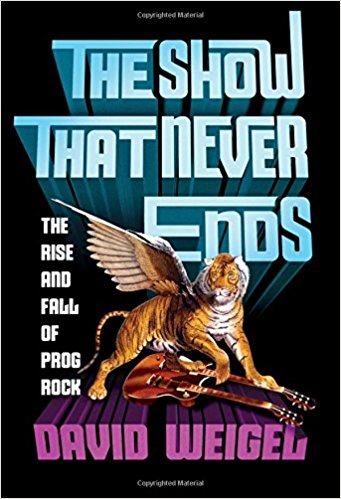
Weekly Read: The Show That Never Ends

If one knew nothing about progressive rock – “prog,” as it’s usually called these days – one could do worse than the new book by (of all people) political reporter Dave Weigel. Weigel is clearly a fan and that helps an awful lot with a book that is otherwise fairly shallow and doesn’t provide a great deal of insight into what makes prog (or prog fans) tick.

What Weigel provides is a brisk trip through prog’s history, starting with its roots in 1960s psychedelia. Actually, he goes back even further, to Franz Liszt and the superstar he was (some of the fan behavior from those days wouldn’t be out of place if it happened today). In a fun bit of synergy, Yes keyboardist Rick Wakeman would later provide the soundtrack for the bonkers Ken Russell film (is there any other kind?) Lisztomania (Liszt himself was played by Roger Daltrey, because why not?). This is good background and I’m glad Weigel devoted a chapter to it.

Most of the book focuses on prog’s commercial heyday, from about 1969 to 1974 – roughly the time during which King Crimson (in its many permutations) were around. Crim, and particularly Robert Fripp, is one of the touchstones to which Weigel returns again and again, along with David Allen of Gong and a few others. This starts out well enough, as a way to track the commercial and artistic development of the genre using specific examples, but things get awfully spread out by the late 1970s. By that point, as Weigel tries to keep track of the careers of everybody who passed through Crim or Yes the book becomes a collection of quick anecdotes that don’t really tie together. It might have worked better to tell the story of the genre through one person deeply embedded in it (Bill Bruford – with connections to Crim, Yes, Genesis, National Health and so many others – would be a good choice).

Prog is usually thought of as a distinctly English thing, and it’s true that most of the genre’s heavyweights come from (or are at least closely associated with) the UK. However there was a vibrant scene around the world that deserves attention. To my pleasant surprise, Weigel examines this, albeit briefly, through some usual suspects (Rush, Kansas) and some more esoteric ones (Italian bands like Premiata Forenria Marconi). Still, there are odd gaps, including the complete absence of discussion of Frank Zappa, aside from his influence on early proggers like Soft Machine.

I was also pleasantly surprised that Weigel continued the prog story past the 1970s. He quickly discusses Marillion and the rise of neo-prog in the 1980s as well as Dream Theater and the development of prog-metal in the 1990s. It’s not a deep dive, so he doesn’t capture the real breadth of the modern prog scene, but he at least recognizes that it’s here. The book is subtitled “The Rise and Fall of Prog Rock,” which may rankle fans, but it’s the truth – the genre boomed for a few years in the 1970s then nosedived in terms of popularity. That it’s still kicking at all today is kind of a miracle.

Given all the ground that Weigel covers, it’s a shame that he falls into the trap of spending too much time trying to describe the music. Zappa famously said that writing about music is like “dancing about architecture” – it’s damned near impossible. Weigel’s descriptions fall flat and, in some instances, don’t even match what he’s talking about. I don’t know what he’s thinking of when he’s talking about the first track on Yes’s Tales from Topographic Oceans, but it sure as hell isn’t “The Revealing Science of God (Dance of the Dawn).” The beginning of “Dance on a Volcano” gets attributed to the wrong guitar player and then he talks about synth chords being played when there are none about (Tony Banks didn’t go polyphonic with synths until Duke, I think).

There are some other Weigel just gets bizarrely wrong. He calls a nascent Keith Emerson project in the early 1980s the “rump of Yes” (presumably he was thinking of Chris Squire and Alan White’s foray with Jimmy Page?). In discussing what the King Crimson guys were up to before Fripp assembled the mighty “double trio” in the mid 1990s, he explains how Adrian Belew had toured the world with Peter Gabriel. That, of course, was Tony Levin (for all the people Belew’s played with I don’t think he’s every worked with Gabriel – something which needs to happen!). Along with the misdescribed music there’s enough here to wonder how much else Weigel gets wrong.

As usual, I didn’t actually read The Show That Never Ends, I listened to it via Audible. Normally even a less than stellar reader doesn’t get to me, but the reader for this book was particularly poor. For one thing, in some instances where Weigel is quoting someone, the reader tries to do accents. This is a bad move to begin with (he doesn’t sound anything like the actual people involved), but it’s compounded by not being consistent – sometimes he tries an accent, sometimes he doesn’t. For another, the reader has multiple issues pronouncing words. OK, so he doesn’t know a Moog synth from a toaster oven, but there’s plenty of video of and about Bob Moog where you can learn how to pronounce the man’s name! Given the amount of time Weigel devotes to Moog’s synths (mostly via Keith Emerson), that’s inexcusable. Then there’s things from song lyrics – “syrinx” (from Rush’s “2112”) and “Rael” (the main character in Genesis’s The Lamb Lies Down on Broadway) come to mind – that he gets wrong. And I won’t even begin to speculate on how “fugue” comes out “fuh-guh.” It’s just awful.

As I said, if you’re a prog neophyte there’s a lot to recommend in The Show That Never Ends. It’s a story told by someone with affection for the music, which isn’t always the case. But you’ll probably get deeper and more interesting reflections on the music by going someplace like Progressive Ears or Progarchives and poking around. Whatever you do, stay the hell away from the audiobook.

ShowThatNeverEnds

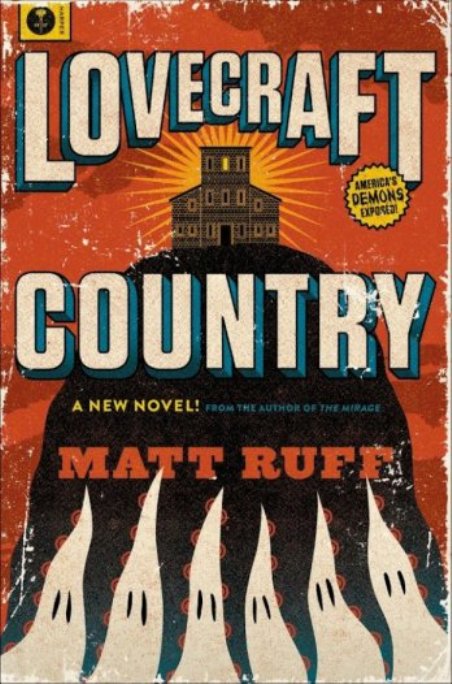
Weekly Read: Lovecraft Country

Matt Ruff’s Lovecraft Country is less a novel than it is a collection of linked short stories built around a brilliant conceit. That is, the main characters in the stories are all from an extended African-American family (family and friends) living in Chicago in the 1950s. That is to say, the stories are shot through with everyday racism that will make your toes curl. But they’re also shot through with magic, nasty creatures, and mysterious rites. Who better to deal with such supernatural horrors than people who have to deal with horrific treatment on a daily basis just based on the color of their skin?

I should say, at this point, that I’m not particularly familiar with Lovecraft’s work (I’ve got a book of his on in my ever expanding “to read” pile, though). I have a vague sense of what it’s about, but it’s only a surface understanding. That’s to say that I’ve read some criticism from people about Lovecraft Country that isn’t, well, sufficiently Lovecraftian. That wasn’t a concern for me going in and it certainly isn’t a concern now that I’ve read the book.

In this “Big Idea” piece over at John Scalzi’s blog, Ruff explains that Lovecraft Country started as a TV pitch (and, indeed, it’s been picked up by HBO with Jordan Peele and JJ Abrams involved) and knowing that now I can see it. Each story serves like an episode, telling a tale that stands alone but pushes forward an overall plot that comes to fruition in the season finale (aka, the final story). It’s a bit frustrating initially because the first story (the title track, if you will) winds up really quickly, especially when you’re expecting it to be just the beginning of a much longer story.

So that first story does what a good pilot does – introduces the main characters and explores some of the world they’re walking around in. The closest thing to a “main” character the book has is Atticus Turner, a veteran returning to Chicago to a collection of family and friends that will, one by one, be drawn into this weird world. Atticus is the link between the African-American characters and the main white character, Caleb Braithwhite. Braithwhite is the latest in a long line of secret-society sorcerers who are trying to control the world. He and Atticus are distant relations – Braithwaite’s ancestor owned one of Atticus’s ancestors, whom he also raped. That makes Atticus a critical part of Braithwaite’s scheme to control the society and its secrets.

That being said, this isn’t Braithwaite’s story. He lurks above the main characters, pulling strings and trying to use them to his advantage. In that way, the book makes a powerful point about the lives African-Americans lead in a racist society. As bright, clever, and determined as they are, they’re really not in control of their own destinies. That they’re able to turn those tables, somewhat, makes the point land even harder.

This being, essentially, a short story collection, it rises and falls from tale to tale. All of them have some kind of interesting creepy thing going on – a haunted house, a “devil doll,” a comatose woman providing a “change” for one of the characters – but they don’t all work as well. The cream of the crop for me is “Hippolyta Disturbs the Universe.”

Hippolyta is one of a pair of sisters close to Atticus’s family and someone who, had she not been a black woman in 1950s American, would have become an astronomer. As it is, Hippolyta retains her fascination with the stars and occasionally shows up at observatories just to help out. That leads her to one particular observatory in Wisconsin that’s tied into the history of the secret society. As a result, she discovers a portal to another world and, briefly, takes us there. What she finds on the other side is another sad commentary on how people of privilege treat those who have none. It’s both a serviceable monster story and an interesting commentary.

It will be interesting to see how Lovecraft Country translates to the small screen. On the one hand, it’s built for it, given its episodic nature. On the other hand, since each story has a different main character it might be hard to keep such a dispersed focus (a “star” playing Atticus would, presumably, not want to spend as much time on the sidelines as he does). It will also be interesting to see if some issues of appropriation come up as the book gets a wider audience. Ruff certainly appears to be a white guy telling an inherently African-American story. He did it well from my perspective – but I’m another white guy. Particularly the fate of Hippolyta’s sister might raise some eyebrows.

Regardless, this was an enjoyable trip into Lovecraft Country. I’ll gladly go again.

lovecraftcov

Weekly Read: Perdido Street Station

My feelings about Perdido Street Station, China Mieville’s sprawling steampunky saga of a strange city and it’s even stranger inhabitants, can be summed up in the way I feel about one character in the book, Yagharek.

Yagharek is a part-man, part-bird creature with a fascinating back story and, were his story to be presented in a standalone short story, I think I’d love it. But within the context of the larger novel, it occurs to me that, aside from a couple of plot-goosing things that could be given to other characters, Yagharek’s story could be excised from the book without losing anything.

A lot of Perdido Street Station is that way. There’s so much going on in New Crobuzon that it would be a shame if Mieville just ignored it. After all, there’s not just magic and steampunk technology, but a host of non-human races (many based on folk creatures from around our world), creatures that can slip the very fabric of existence, and even a sentient trash heap! Like Yagharek they’re all interesting in their way, but the time we take observing these things doesn’t really pay off in the larger story.

That story itself is one that makes a hard shift about halfway through the book. Until that point it’s largely the story of Isaac, a renegade scientist (it’s via Isaac we meet Yagharek), and his artist lover Lin, who has the head of a scarab beetle but the body of a woman. Isaac works on Yagharek’s assignment to return him to flight, while Lin accepts a commission from a powerful (and powerfully weird) organized crime figure. Along the way we  learn some of the politics of New Crobuzon and generally get to know the world.

Around halfway one of Isaac’s beasties goes bad and the city is terrorized by a group of slake moths, giant creatures that hypnotize with the shifting patterns in their wings and then suck the victim’s dreams from their minds. The result is a shell of a person who is still alive, but hardly living. The book turns into a monster hunt for Isaac and others (Lin is absent, for the most part, being brutalized off screen for no good reason). The mechanics of the hunt are interesting (see, above, the sentient trash heap) but it doesn’t quite live up to the promise of the first part of the book.

All this might make it sound like I didn’t enjoy Perdido Street Station. I did, but it can be very frustrating at times. There’s something of a perfect storm where Mieville’s imagination running wild (and overtime) matches up with his purple prose and love for description. There’s a scene where one character meets his state handlers in a seedy brothel. Naturally, we get a long, loving description of said brothel (and its bizarre employees) that has no relevance to the meeting the character is going to and doesn’t reappear later in the story.

To a certain extent, Perdido Street Station reminds me of Bryan K. Vaughn’s Saga, which is also overflowing with imaginative locales, creatures, and technologies. Maybe it’s because we get to see all that stuff it’s easier for me to process. In print it sometimes gets to be too much.

Which makes the reading difficult, but not necessarily unrewarding. In fact, if you’ve got the patience for a deep dive into a world where everything doesn’t need to be all that important, Perdido Street Station is the book for you. There’s more that’s interesting and bizarre and wondrous than there is frustrating and (perhaps) pointless. Recommended, even if I do so with caveats.

Perdido