Author Interview – John Triptych

This time we’re headed to Asia to chat with science fiction & thriller writer John Triptych.

Who are you? Where are you? What kind of stuff do you write?

Hi, I’m John and I write science fiction and thriller novels. Right now I live out in Asia because I’m planning to settle here permanently. I’m a semi-retired businessman who decided to write novels because it’s always been my dream to be an author.

Why did you relocate to Asia and do you think your new surroundings will impact your fiction?

I worked as an expat, traveling and living in different parts of the world for almost 20 years so the area was pretty familiar to me. I also found the cost of living is much, much lower, and I didn’t have to work as hard yet still maintain my lifestyle if I stayed in the US. There’s plenty of American retirees living in the Third World and they live like kings!

As far as my surroundings having a say in my writing … it’s very strange in that I actually write more about the US ever since I’ve moved away, so while I’m in another part of the world, I still write about things I’ve experienced before.

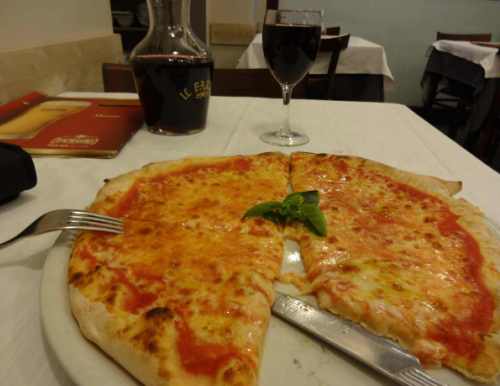
Pizza as Author Pic

I ask writers to send me a picture – John sent me a picture of a genuine Roman pizza!

Tell us about your most recent book, story, or other project.

I’m currently finishing up the first book in a new series called Alien Rebellion. Its set a few hundred years in the future, and there’s a human colony on an alien planet that’s undergoing some … drastic changes to put it lightly. It’s sort of like a cross between James Cameron’s Avatar movie and the anthropological science fiction of Ursula K Le Guin, and a bit of James Clavell too.

In what genre do you primarily write? Why did you choose that one?

I primarily write science fiction. I like writing in this genre because there are no limits to your imagination. You can create entire worlds from scratch and I love doing that. I have a background in tabletop role-playing games and even as a kid I loved to create my own little worlds, sort of like a self-centered demigod.

Tell us briefly about your writing process, from once you’ve got an idea down to having a finished product ready for publication.

I start out with nothing more than a concept. From there I think of an initial scene and start writing. I don’t plot in advance and I just create the story and characters on the fly. I’m a two-finger typist so it takes me a long time to write (and I stop every now and then to do research on the internet too whenever an idea pops up) but I still somehow get it done!

Once the manuscript is finished I go through it a few times before submitting it to the editor. After she sends it back to me I go through it again to see if we’ve both missed any errors. I also contact the cover artist and give them my idea on what the cover ought to look like.

The moment I am happy with everything I send it to the formatter to put it all together.

How deep does your “concept” go? Does it include the universe in which you’re going to tell the story, or just the basic 1-sentence hook? The idea of writing sci-fi off the cuff without a lot of preparation gives me hives!

The whole concept revolves a lot on instinct and feel for me. My background in playing RPGs and constant daydreaming seems to have affected a strange sense of deja-vu when I write, and everything just comes together somehow. I can’t fully explain the process, but I try to imagine myself living in that world, down to the smallest detail, and everything starts to gel to the point where I am overwhelmed by details.

It’s almost like a strange awareness of being able to project yourself into a whole different universe. You start to imagine what a table looks like in that place, and how stuff works, as well as the other little things that add to it.

Who is the favorite character you’ve created? Why?

The protagonist of my Ace of Space series: Stilicho Jones. I like writing him because he is my alter ego. Stilicho is a mercenary who is out for himself and he’s a smart aleck to boot. Some readers get turned off by his smugness but I love writing him since he jokes around a lot, and it helps because I felt my earlier novels were all too grim.

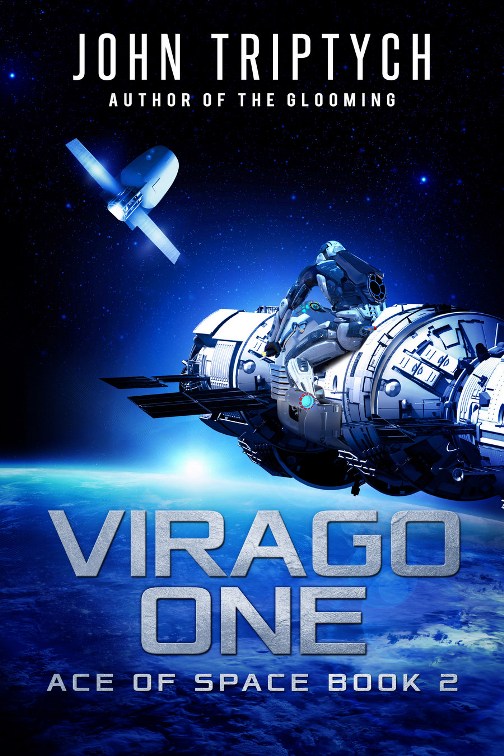
Ace of Space Cover

What’s the weirdest subject you’ve had to research as a writer that you never would have otherwise?

My Wrath of the Old Gods series is a mythological post apocalyptic storyline about the ancient pagan gods returning to modern day earth and causing all sorts of mayhem, so I had to research some very obscure deities because I wanted to get to the root of all these mythological stories and strip away popular misconceptions in order to get into what the old pagans gods were really like.

One of these gods I stumbled upon was a Hebrew god (or demon) named Peor (or Ba’al Pe’or, depending on the sources), literally the god of defecation! I added him into the third book of the series since there’s a subplot with one of the main characters trying to escape from hell. Great fun!

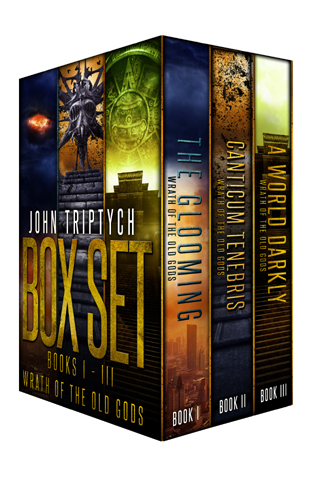
Wrath of Old Gods box

What’s the one thing you’ve learned, the hard way, as a writer that you’d share to help others avoid?

Hoo boy! I’ve learned a lot of things. One is you have to find a good editor. It’s not easy, but it will save you a lot of hassles in the end. Don’t be cheap, because good editors cost money.

Could you give an example of a time where an editor’s feedback really improved your finished work?

One of my editors is very good- she does a two step editing process. The first is that she just reads through the story, much like a beta reader, and looks for inconsistencies with the plot, characters, etc. and then sends me back the manuscript for rewriting. I go through her list of suggestions (like why would a character do this when he did this before, or that was a bad line, change it, etc.).

Once I’ve made my changes, then I send it back to her- after which she looks for grammatical errors, spelling and stuff. Once all that is done she sends it back to me again. All in all, she makes me realize about things I didn’t think about the first time over, and it has dramatically improved the quality of my work, though I still have a ways to go!

If you won $1 million (tax free, to keep the numbers round and juicy), how would it change your writing life?

Not much, to be honest! I’m semi-retired in the tropics and I live a fairly easy life. The books I’ve written have given me enough earnings to take care of my daily expenses so money isn’t too much of an issue. I guess one change would be is that I will probably take more international trips to do field research lol.

What’s the last great book you read or new author you discovered?

I don’t read a whole lot of indie books, and I always make it a habit to browse in the nearby used bookstores for some old tried and true stuff. A recent good book I’m currently reading is A Stranger is Watching by Mary Higgins Clark. It’s a classic suspense thriller that’s been made into movies more than once. I read a lot of books in different genres because of my varied tastes.

What do you think you’re next project will be?

An epic space opera series with some hard sci-fi elements. I’m currently doing research to make sure the space battles will have a bit of realism to them, but at the same time I’ve thought up an epic storyline that should interest most readers. Hopefully I will finish the first book sometime next year!

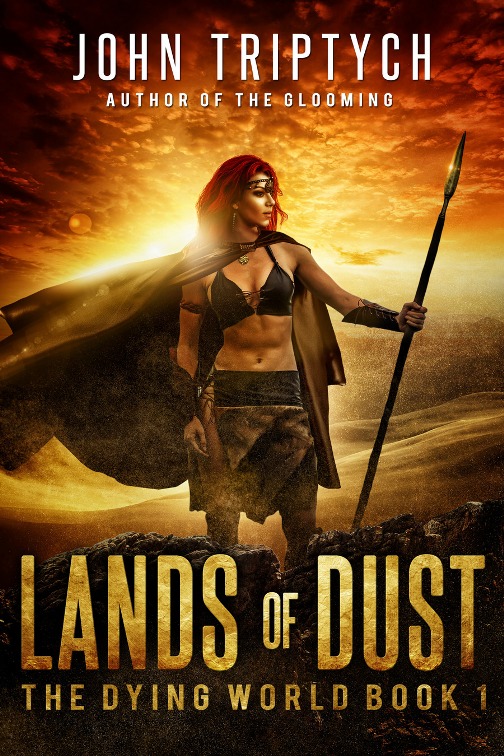
I am also writing more sequels to my hard sci-fi series Ace of Space, and my planetary romance series The Dying World. So plenty of the new and the usual too. I like variety.

2016-343 eBook John Triptych, Lands of Dust B01- small

Catch up with John on his blog, Amazon, Twitter, or Facebook.

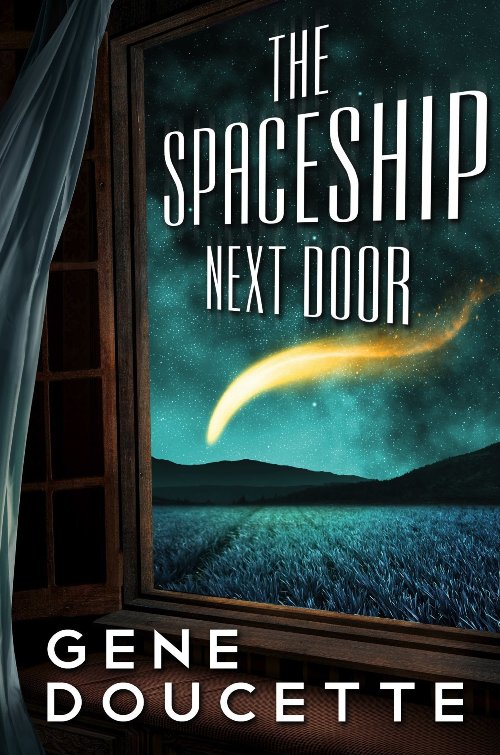
Weekly Read: The Spaceship Next Door

I have a soft spot for books that deal in tropes that don’t conform to reader expectation. After all, I wrote a whole book about zombies where never a brain is eaten. The Spaceship Next Door, therefore, hooked me early on with a great twist on one trope, before throwing in a second for free along the way.

The hook is this – one night a spaceship from another planet lands in rural Massachusetts. Then – nothing happens. There’s no alien invasion. There’s no dire warning about what we’re doing to the planet, ala The Day the Earth Stood Still. There’s not even a massive overreaction by the government, although the town of Sorrow Falls essentially succumbs to a velvet-glove version of martial law. Mostly, the ship just sits there and makes people wonder what the hell is going on.

Three years after landing, something finally does happen.

Much like the ship, the book isn’t in too much of a hurry to get to that thing. Some will complain that this makes the book slow, but I think it’s time well spent with 16-year old Annie Collins, who is kind of the town’s goodwill ambassador to the outside world. She’s given the task for shepherding around a “reporter” (actually a government scientist – he fools nobody), which allows us not only to meet a bunch of characters, but dive deep into the history of Sorrow Falls. To the book’s credit, this doesn’t result in a whole bunch of characters who are nothing more than walking quirks. They all seem real, if a bit off.

I should mention the second trope, because it’s what pops up when things start happening. In a word – zombies. Except, really, they’re not. But they behave kind of like zombies (no brain eating!). Annie and her government guy even have a funny conversation where they try to come up with a better term, but nothing really works. Besides, the zombies tie back in to what the ship is doing (naturally), which lets the book continue its twisty way with first contact stories.

The Spaceship Next Door isn’t perfect. The ending gets a little jumbled and there’s a bit of hand waving at the final post (one of the final chapters is tilted “Deus Ex Machina,” so it’s not like you aren’t warned). Even in light of that, it’s a quick, fun read with a couple of really good laughs sprinkled in. If you like your tropes a little twisted, I highly recommend this one.

SpaceshipNextDoor

Author Interview – E.M. Swift-Hook

This time we’re off to the north of England to talk with space opera writer E.M. Swift-Hook.

Who are you? Where are you? What kind of stuff do you write?

I am E.M. Swift-Hook, I live in the North East of England and I write books and stories which are woven around the characters who live in them.

 Tell us about your most recent book, story, or other project.

The last book I released was a collaborative project in alternate history called Dying to be Roman . It is a murder mystery whodunit, set in modern day Britain, but in a world where the Romans never left.

Roman Cover

In what genre do you primarily write? Why did you choose that one?

Primarily, I write space opera. I am not sure that I so much chose it as it chose me. Like most space opera (Star Wars and so forth), it is set in a science fantasy universe, and that allows wonderful scope to explore new and interesting possible settings for stories. I think it is probably the most liberating and extensive genre there is.

What makes space opera stand apart from other science fiction (especially space based)?

Space opera is focused on the people and how they live with the technology around them, rather than on a clever concept of intriguing physics or technology in its own right. I write character driven stories so my science-fiction is always pulled towards space opera and it human (or alien) interest.

How does someone who writes space opera get involved in a mystery involving a still extant Roman Empire?

Well, that was more a ‘who’ than a ‘how’. Jane Jago is a fabulous author and she and I began collaborating on a couple of ideas and Dying to be Roman came out of that. We both wanted to go for something in a genre we had not written before and alternate history was one we found held interest for us both and which neither of us had tried before.

Tell us briefly about your writing process, from once you’ve got an idea down to having a finished product ready for publication.

I usually get an idea in the form of a scene – a conversation between two characters, an event happening, an intriguing opening or climactic conclusion. This provides me with the impetus to think more about the characters involved and what they are up to. If the story is still seeming like a good one after a few weeks of hanging around at the back of my mind, I will sit down and record what I have for it and shape up a rough timeline of what I think will happen. Sometimes the events on the timeline will be very vague like ‘big scene here’ and sometimes quite detailed.

Then comes the writing, during which the original timeline events may be changed many times. Once the first draft is down I try to wait a week or so before ploughing into editing. I will run checks for my ‘bad’ words, for typos, for excessive descriptors, punctuation etc. When I have the book as clean as I can get it I will ask a people to read it and use their helpful feedback to do the final polishing and shaping. Then, as I am technically challenged, I send the whole lot off to my son who does the magic to put it on Amazon.

Who is the favorite character you’ve created? Why?

This is incredibly hard to answer as whichever character I am writing as tends to claim the crown for the duration. I think it is a bit like being a parent, they are all my favourites. That said the ones I spend most time with in the nine volumes that is Fortune’s Fools, probably win out. Avilon, for being the most intriguing to write through several incarnations; Jaz, for completely pulling me out of my usual style and approach and Durban – well, for being Durban, intense, puckish, fallible and contradictory,

What’s the weirdest subject you’ve had to research as a writer that you never would have otherwise?

I was not science trained and have had to delve deep into the world of quantum physics and relativity for the background to Fortune’s Fools and believe you me there is nothing weirder!

Since you mentioned not having a background in science – as a writer of science fiction, do you ever worry about not getting it “right?” Or do you trust the reader to suspend disbelief enough to overlook any minor flaws?

I do a heck of a lot of research and I have a local friend who is a mathematical physicist who is usually able to help when I hit issues. Thanks to him I have a Kaon Gravity Generator and a BEC based gravity shield for ships to take off from a planet without needing massive amounts of fuel. I also post questions on the SciFi Roundtable Facebook group where the people are always very happy to offer insights.

Haruspex

What’s the one thing you’ve learned, the hard way, as a writer that you’d share to help others avoid?

I’m going to cheat and go for two – one I learned myself and one I learned vicariously. Firstly, if you want to make money use your time and energy to get the qualifications you need to get a highly paid job instead of spending that time writing. If you write, do it because you love it and you want to – do not expect to ever sell a single copy of your books. If you do, bonus. But to begin with get anyone who is willing to read your work and tell you what they think. Give it away to beta readers, join review groups and give it away to garner reviews.

Secondly, I have seen other authors convinced their work is the best writing ever and become offended if anyone suggests something to improve it. Don’t be so precious. You are never as good as you think you are as a writer and the criticism others give you should be very carefully considered. If you don’t listen to those who well-wish you enough to take the time to read your books when you are an unknown, if you argue with your readers, if you continually reject advice from others, you will never improve.

If you won $1 million (tax free, to keep the numbers round and juicy), how would it change your writing life?

I would be able to afford top-flight editing for my books and pay for a well-known cover artist to package them. I would also have the money to hire a marketing team to advertise them. All that would probably improve the number of people who read my books.

What’s the last great book you read or new author you discovered?

That is tough. there are some stunning indie authors out there who may never get the recognition they deserve. If you have the time check out Chrys Cymri – I wish I could write as well as she does.

What do you think you’re next project will be?

I still have two books to finish writing in the Fortune’s Fools series and more Dai and Julia books planned with my co-author of Dying to be Roman, Jane Jago. After that my next big project will probably be an historical one set in Seventeenth Century England at the time of the Civil War. I am toying with how much fantasy will sneak in and a twist, maybe, of alternate history. The first book will be called The Cat’s Head and I have written some scenes already. You will be able to read one on the Working Title Blogspot in a couple of weeks time.

Learn more about E.M. at Amazon, on Twitter, on Facebook, or on the blog she shares with Jane Jago.

Will I Care Once I’m Dead?

Thinking about future projects the other day – ideas that are well enough developed that I can see a book coming out of them – I figured that I have material for about 20 books locked away in my brain. Even at a pace of one a year that means a long haul going forward. Let’s face it – chances are that I’ll be in the middle of writing some book when I die. What should happen to it and any others that might be semi-started?

The issue is back in the news recently thanks to the amusingly public way that the late great Terry Pratchet’s unfinished works were handled. Per his request, his hard drive (which contained as many as 10 works in progress) was destroyed – by being crushed by a steamroller.

The comments I read when the news came out was mostly amusement and pleasure at Pratchet’s wishes being so scrupulously honored. After all, if he was so specific as to how his literary executor was to deal with his unfinished work he must have felt fairly passionately about it never seeing the light of day. Who could argue that the right thing to do is precisely what the author wants?

Destruction isn’t the only option, of course. Robert Jordan, author of the massive Wheel of Time series, realized he wouldn’t live to see the completion of the series, so he provided a trove of notes and left the final few books to be completed by Brandon Sanderson. I can’t speak to the quality of Sanderson’s work and whether he did a good job with Jordan’s baby, but, again, it’s hard to complain when the people involved do just what the author wanted them to.

The legal-rule side of my personality says this is precisely how it should work. An author (or her designee) is the master of her own work, after all. If she never wants the world to see it, or only wants the world to see it with certain conditions, that’s her right. If she wants to take any potential masterpieces to the grave, that’s no problems.

Except we have examples where ignoring the author’s wishes turns out pretty well. When Franz Kafka died he left his literary executor (and friend) Max Brod fairly specific instructions:

Dearest Max, my last request: Everything I leave behind me … in the way of diaries, manuscripts, letters (my own and others’), sketches, and so on, [is] to be burned unread

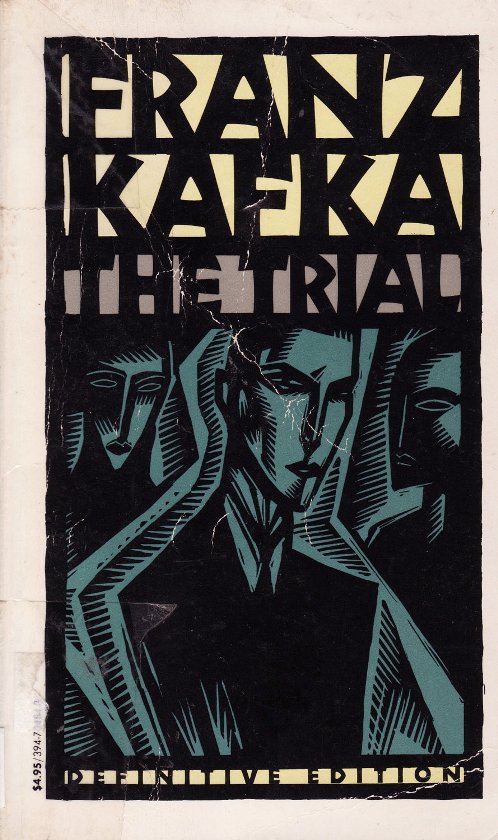
Brod did no such thing. As a result, we have all of Kafka’s novels, including The Trial, none of which were published before Kafka’s death.

franz-kafka-the-trial

A world without The Trial is barely fathomable (ironically), but had Brod did as instructed, we’d never know of it. Nabokov’s The Original of Laura was published against his wishes after he died. Even Mark Twain had a new collection of essays published almost a century after his death – against his wishes.

And so I find myself retreating from my bright-line rule of always doing what the author wants. After all, what’s the harm in ignoring those wishes? Yes, work might be released that the author wasn’t happy with, but the author isn’t going to be around to complain. A reputation could be diminished, I suppose, but authors have very little say in how the world perceives them when they’re alive and even less when they’re dead. Besides, does the posthumous release of a bad book by a great author devalue their prior work? It’s not a perfect analogy (since Harper Lee is still alive), but is To Kill a Mockingbird any less a masterpiece because Go Tell a Watchman was kind of ordinary? I don’t see how.

It’s a more complicated problem than I thought it was at first glance. Certainly, I don’t think it’s a legal issue. I’d oppose any law that required an author’s papers and unfinished works to become some kind of public good and exploited willy nilly. Nor would I support laws that would punish people like Brod for ignoring the wishes of their dead author friend. But, I have a hard time working up too much outrage when an author’s wishes are disregarded, so long as the person doing the second guessing is a close friend or family member. If they are all right with it, I’m in no place to complain. It’s kind of like jury nullification – I’m not a fan of promoting it, but I’m glad it exists for the rare occasions when it’s really necessary.

So I guess what I’m saying, to my literary heirs, if they ever get around to reading this – you’re on your own!

Weekly Read: American Heiress

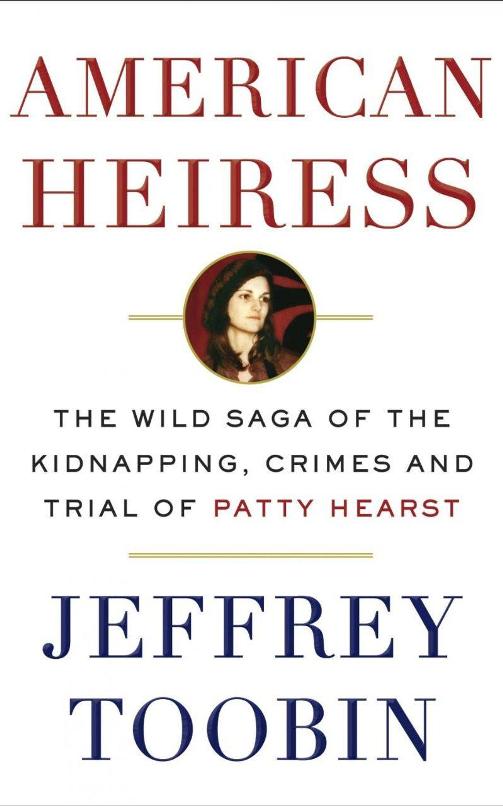
As they say, truth is stranger than fiction. One of the problems with writing fiction is that readers expect it to make sense, for characters to behave in ways that are believable and compelling. Writers telling true stories aren’t saddled with such issues. Jeffrey Toobin’s latest, American Heiress, tells one of those stories that, if labeled fiction, would have readers rolling their eyes in disbelief.

The basic parameters of the Patty Hearst case are fairly well known. She was kidnapped from the apartment she shared with her then-fiancé in Berkley, California, by a group calling itself the Symbionese Liberation Army. She was held for months, during which time she turned from captive to comrade. As a professed member of the SLA she participated in bank robberies and lead a life on the run. It all came to an end with an arrest, conviction, and lengthy federal prison sentence.

Toobin’s book breaks down, basically, into three parts. Part one covers Hearst’s background, the kidnapping itself, and her turn to bank robber. This part is a bonkers story with a lot of different angles playing into it – not just Hearst and her kidnappers, but also her family and the law enforcement officers working the case. Then there’s Hearst’s fiancé, who famously told the kidnappers to “take anything you want” when they broke in. As Toobin jokes (multiple times), they did.

Events after the kidnapping played out in a way that seems unbelievable today. The Hearst family – who, at this point, were nowhere near as wealthy as people thought – agreed to an SLA demand to set up a broad food giveaway for the poor. The operation, created almost overnight, had to fight off local grifters (including Jim Jones) and led to riots. The fiancé, whom the family never liked, tried to help in his own way, but only led to his reputation being shredded.

This part makes you hope that the American Crime Story crew, who turned Toobin’s The Run of His Life into The People v. OJ Simpson for FX, has the rights to this book. There are so many characters (the list of famous people who had some connection to all this is impressive – Jane Pauley, Kevin Kline, Lance Ito, and, later on, Bill Walton) acting in so many bizarre ways that Ryan Murphy’s sensibilities would be well served. Appropriately enough, this part wraps up after the SLA members split up and Hearst and her two comrades watched the other half dozen perish in a scene that played out like a mini-Waco – gunfight followed by immolation.

The rest of the book doesn’t quite live up to the first part. The middle section drags a bit as Hearst and the others go on the lamb. Mostly it’s because we lose the multiple angle approach that brought so many characters into play. Still, there’s a particularly odd idyll in the Pennsylvania woods (which has given me a great story idea) and it’s important to the story as a whole.

Part three covers the Hearst’s eventual arrest and trial. One would think that Toobin, being a lawyer, would focus mostly on this, but he gives it a brief, compelling summary, during which one thing becomes clear – Toobin has no regard for Hearst’s lawyer, F. Lee. Bailey. In Toobin’s telling, Bailey was a swaggering, swashbuckling self promoter for whom practicing law was almost an afterthought. He had a deal to write a book about the trial before it even started and spent several nights during trial flying back and forth to Las Vegas to speak at legal seminars. To boot, while Bailey’s reputation was built on winning big cases – Sam Sheppard (aka The Fugitive) and the Boston Strangler – he, like any criminal defense lawyer, lost more than he won. For Hearst, he lost.

Hearst’s trial – she was charged with bank robbery and carrying a firearm in relation to it – boiled down to one issue: did she willingly engage in this criminal conduct after becoming a SLA member, or was she a kidnap victim who had been brutalized, terrorized, and brainwashed to the point where she did whatever she was told in order to survive? It’s clear that Toobin agrees with the jury that convicted her that Hearst was a fully fledged revolutionary by the time of the robbery. What’s really troubling is that while it seems like Hearst did shift into the role of SLA comrade, she shifted out of it just as easily. Given that all this happened while she was barely an adult (she was 19 at the time of the kidnapping, 21 when convicted), I wonder what modern research in the brain development of young adults might shed some light on whether such swings of outlook are really that out of the realm of normal.

Whatever steam the book loses after the first part Toobin finds when he gets righteous in the conclusion. After her conviction was affirmed on appeal and the trial court denied a habeas claim (contrary to what Toobin says, ineffective assistance of counsel claims are routine and often completely baseless), Hearst’s family started a massive effort to get her sentence commuted. It was, eventually, but Jimmy Carter. The staggering bipartisan group that pushed for clemency included famous hardliners such as John Wayne and Carter’s opponent in the upcoming election, Ronald Reagan. Part of it, Toobin argues, is that once Jim Jones led his group in a mass suicide (and murder of Congressman Leo Ryan, a vocal supporter of Hearst), it became much easier to believe Hearst’s story of brainwashing. In the end, she only served about two out of the seven years to which she was sentenced.

But it didn’t stop there. Flash forward to the end of the 1990s and Hearst is now seeking something unprecedented – getting a pardon from a second President after first gaining a commutation. There was no consensus this time – part of the opposition was the then United States Attorney in San Francisco, a guy named Robert Mueller. But Carter and his wife appealed directly to Bill Clinton, who pardoned Hearst on his last day in office.

Toobin, who clearly believes Hearst was a willing participant in her criminal activity, makes the obvious point – only Patty Hearst had the resources and name recognition to get clemency twice, in spite of the evidence against her. People who have done a lot less have gone to prison for a lot longer and not gotten any sniff of clemency. But those people were the ones the SLA said it was fighting for. They weren’t wealthy heiresses.

Toobin’s book is well worth reading. Even if the back half can’t live up to the entertainment value of the first part, there’s a lot of interesting info in here. Toobin does a good job of setting the context for all this (You think we’ve got political strife today? How do several years with 2500 bombings across the country sound?). There’s also some original research, as Toobin got his hands on previously unseen letters Hearst and her lover/co-defendant wrote to each other after their arrest (as couriered by Hearst’s first lawyer). I’m not sure it all makes sense in the end, but so what? It’s real life – it doesn’t have to.

PS – For an interesting perspective on the book, check out this column from Andrew O’Heir, who grew up in the San Francisco area while all this was going on.

ToobinHearst

Author Interview – Diana Pishner Walker

For this interview we hop down the rabbit hole with children’s author Diana Pishner Walker.

Who are you? Where are you? What kind of stuff do you write?

 I am a WV author from Fairmont, WV originally from Clarksburg, WV.I have been writing for about 5 years now and have 4 published books. The first was a self- published memoir and the last 3 have been children’s books with an Italian American theme.

Tell us about your most recent book, story, or other project.

My latest book is the second in a series entitled Hopping to America,  A Rabbit’s Tale of La Befana. It is going to be a play at the Vintage Theater Company in August and performed also at the WV Italian Heritage Festival over Labor Day weekend on the children’s stage. The first in the series is Hopping to America, A Rabbit’s Tale of Immigration and is now being sold on the shelves of Ellis Island and the Statue of Liberty gift shops.

Cover1

What is “Le Befana”?

Diana answered with a quote from her book:

La Befana has been an Italian tradition for centuries. La Befana, an old witch, was too busy cleaning her house to go with the three wise-men on Christmas Eve. When she realized the mistake she had made, she gathered up a bag of gifts and set out in search of the baby Jesus by herself. Even though she followed the same star as the wise men, she couldn’t find the stable with the Christ Child and to this day, Italian legend states that she still travels the world on a broom stick, wearing tattered clothing still searching. On January 6th the feast day of Epiphany, Italian children believe that La Befana will reward them with candy and presents or lumps of coal if they have not been on their best behavior by coming down their chimneys and filling their stockings.

In what genre do you primarily write? Why did you choose that one?

Children’s books primarily and it’s a great story as to how it all began.

What’s the great story of how you began writing children’s’ books (you knew I had to ask)?

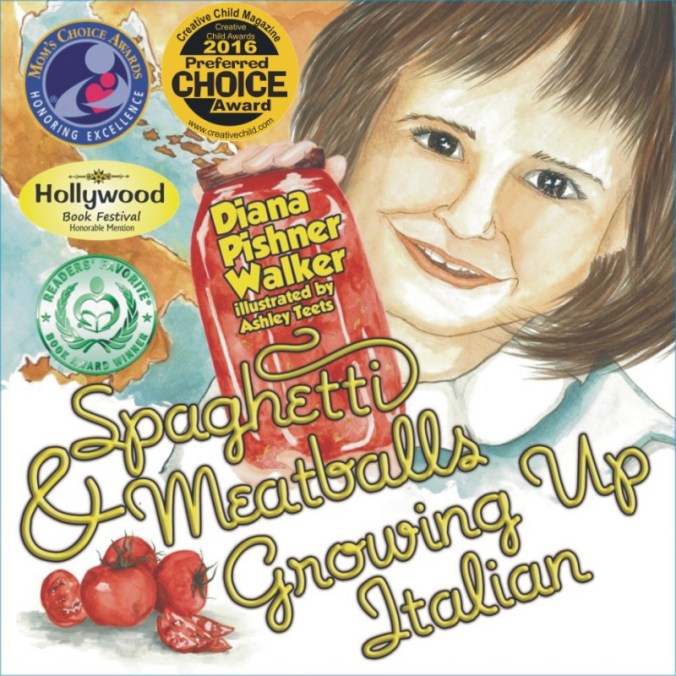
I began to write children’s books after I received a phone call from a woman who is very involved with literature of all sorts and lived in my home town. I had already self- published a memoir. The phone call encouraged me to write a story about my childhood and growing up Italian. I just began to write about my life as a child and came up with Spaghetti and Meatballs Growing up Italian. This book has won several national and a few international awards.

Tell us briefly about your writing process, from once you’ve got an idea down to having a finished product ready for publication.

Basically on paper..type ..edit …type. The ideas are all family oriented and based on personal experience. So it just comes out of my head whenever a memory comes to me and then onto paper.

My children’s books are all published by the same publishing company Headline Books. So after I submit my publisher, illustrator and I work together.

How does your collaboration with your illustrator work? Do they produce their own images based on your words, do you have specific instructions for what things should look like, or something in between?

My illustrator is amazing! Her name is Ashley Teets. It’s almost as if I picture it in my head and she draws it. We work very well together and just seemed to click from the beginning. She has illustrated all 3 of my children’s books. The first one she drew from family pictures that I had taken her. The cover picture of Spaghetti and Meatballs really looks like me! When I first saw the pictures she drew for that one I went to tears.

Cover3

Who is the favorite character you’ve created? Why?

My favorite character is a young bunny named Joby. The why is because he was first created by my mother.

Tell me more about Joby and how he or she came to be created by your mother and wind up in your books.

I came across a few lines at the bottom of an old Christmas card list that belonged to my mom after she had passed about a rabbit named Joby. I have no idea where she came up with the name. No one in the family is named Joby. My mom always wanted to be a children’s book author but did not pursue it. I took this as a sign and created the story for her.

What’s the weirdest subject you’ve had to research as a writer that you never would have otherwise?

Weirdest subject? Pepperoni rolls!

What’s the one thing you’ve learned, the hard way, as a writer that you’d share to help others avoid?

The one thing that I have learned the hard way is that you can NOT edit enough.

If you won $1 million (tax free, to keep the numbers round and juicy), how would it change your writing life?

A million? I would move my family near the beach, which I think is a great place to write. I would also love to be able to help young talented writers get a start…it is expensive starting out.

What’s the last great book you read or new author you discovered?

The last great book I read is The Hunger Saint by Olivia Kate Cerrone. It takes place in the coal mines in Sicily.

What do you think you’re next project will be?

My next project is already started, third book in my Hopping to America series. The bunnies in my stories have come to America and experienced their first Christmas and next I would like to write about a wedding.

Cover2

The Simple Joys of Verisimilitude

My wife was born and grew up in Wyoming (she had stops in Hawaii and Pittsburgh before I lured her to West Virginia). She’s not big on “hometown pride” or anything, but it does make her cranky sometimes when Wyoming is depicted in popular culture and they get stuff wrong.

This weekend we saw Wind River, the new movie with Jeremy Renner and Elizabeth Olsen. It’s set in Wyoming, mostly on the Wind River Indian Reservation. It’s not quite the part of the state where my wife grew up, but she knows the area (the main town involved is one she knows) and it’s one of the reasons we wanted to see the flick. It’s also gotten really excellent reviews, and deservedly so. Definite recommendation from me.

Anyhow, about midway through the film the Renner character delivers some important back-story. The movie is tense and atmospheric and, so, for an hour or so we’ve been leading up to horrible things happening. The character’s soliloquy eventually comes to this line (approximately): “the autopsy couldn’t give a definitive cause of death because the coyotes had gotten to her pretty good.”

Coyotes. You know, like this:

Only Renner doesn’t say “Keye-oh-tay,” like most people would. Instead, he pronounces it “keye-oht.”

This is an emotional gut punch moment, so I wasn’t surprised when my wife grabs my arm and leans over. “He said keye-oht! He got it right!” she whispers excitedly. Here, in this moment of deep character development, my wife is connecting with the character using the right local vernacular. It was all I could do to keep from laughing during a very not funny scene.

Getting the little parts right like that will often go unnoticed. If I’d been watching it without a Wyoming native right beside me, I wouldn’t have given it a second thought. But sometimes it matters, if only to a few people. It’s worth getting that kind of stuff right for them.

Even Fantasy Has to Make Sense

One of the repeated comments about this shortened season of Game of Thrones (which wraps up Sunday) is that show runners have really cranked up the pace, running from big event to big event instead of letting things play out over time. Part of that’s due to the nature of the season (it’s only seven episodes long) and part of it’s due to where we are in the story. Once we have the scope of this world in our heads it’s not a problem to handwave away some of the timing issues in order to barrel ahead toward the show’s conclusion.

But there are limits, and the limit seems to have been breached by this past week’s episode, “Beyond the Wall.” A quick, spoilerly, recap of the relevant bits:

Jon and company go north of The Wall to capture a zombie ice walker to take back to King’s Landing to prove to everybody this shit is real. After walking for a bit they come across the army of the undead and, for some reason, pick a fight. Jon sends Gendry running back to Eastwatch for help, which provokes a raven to be sent to Dragonstone, which leads Daenerys to fly up to save the day with all three dragons. All the while, Jon and crew are surrounded by the undead army (until it’s dramatically appropriate for it to attack, of course).

Putting to one side the sheer stupidity of Jon’s “strategy,” there’s a big whopping problem with the timing of all this. We only see the army of the undead hold off overnight before attacking, but surely it takes several days (at least) for the Gendry/raven/dragon transport system to deliver fiery death to them, right? It’s at least something that has kicked some people out of the story, pulling them past their flying snowman moment. Even the director of that episode admits the timeline is “getting a little hazy.”

But that’s not really what I’m interested in (although I’m one of those people). I’m more interested in some of the defensive comments made in response to complaints. There are several in the comments to this write-up over at io9 – they’re fairly typical:

While you’re focused on a believable timeline, does it ever cross your mind that you’re watching a show about fucking dragons.

***

I’m sure it would have been fun to watch seven guys stranded on a rock for another episode while they waited for the raven and the dragon’s trip back because the audience wanted a show about magical ice zombies to keep things realistic.

Someone even posted an image of the gold standard for this kind of thing, MST3K’s admonition that “it’s just a show, I should really just relax.”

People are free to accept any explanation (or none) for why something seems off in a show, movie, or book, but I have to take issue with the argument that because something is fantasy anything goes.

One of the cool things about writing fantasy is that you can, generally speaking, make up anything you want. People who can wield the power of the elements? No problem. Mythical talking beasts who aid intrepid adventurers in their quests? Bring it on. Nonetheless, there are still a couple of limits.

Primary is that to the extent the characters are human beings, they should behave like them. Maybe a guy can fly or perhaps he can summon huge storms with his mind, but he probably still gets hungry, tired, or would be pissed off if he found his girlfriend in bed with another guy. Unless there’s an in-world reason to the contrary, characters should behave like real people.

That leads into the second restriction – any fantasy story should follow the rules that it sets up for itself. Let’s say you have a world that includes a pegasus (or pegasi) and we’re told early on that, despite the wings, they can’t actually fly (they’re mystical ostriches). A pegasus cannot, sometime later, save the day by flying to the rescue. Not because it’s a known fact that a pegasus can fly, but because we’ve learned that in this world they can’t. Once your own rules go out the window the story isn’t grounded in anything.

That’s the problem Game of Thrones got into this past week. We’ve spent years getting used to the scope of its world, the sheer size of it. Characters stationed in different sections of the map were truly separated. It felt like a big place. Until the writers needed it not to be and pulled a dragon ex machina out of the hat (followed closely by a Benjen ex machina – ugh). Look, I get it – rapid transmission of information in a pre-modern fantasy world is a pain in the ass. Why do you think I had mind walkers (telepaths) in The Water Road? But if that’s the world you’re playing in, you’re stuck with it.

Saying “this is fantasy” gets you out of a lot of boxes as a writer, but it isn’t carte blanche to do whatever you want. Even in a world of dragons, frozen armies of the dead, and faceless men, stuff still has to make a basic kind of sense.

None of which is to say I’m not hella pleased with where things ended up after this episode. After all . . .

IceDragons

Hello Ironton!

Did you know that every summer Ironton, Ohio hosts the Rally on the River, a festival of bikers and rock n’ roll? Neither did I! I do now because Consigned Books is having a local author event in conjunction with it and I’ll be a part of it.

ConsignedBooks

Consigned Books sells used books, music, and DVDs. In addition, it features new books from various local authors. The event runs from Noon to 4:00 this Saturday – giving you plenty of time to stop in before Metallica tribute band The Four Horsemen take the stage that night!

Drop by and say howdy.

Weekly Read: Mrs. Fletcher

Mrs. Fletcher – the latest from Tom Perrotta – is a frustrating little book.

I say “little” because it clocks in at just over 8.5 hours in the unabridged Audible version. I’m used to reading massive tomes that routinely have three or four parts of that length. So even though it’s perfectly novel-sized, it seems like something’s missing.

“Little” is also an apt description because so little of actual consequence happens in the book. It’s not that the book is plotless (I hate it when people complain that a book or movie has “no plot” – unless you’re indulging in seriously experimental shit, it certainly does), it’s just that it never gets to the point of making you really feel like you needed to drop in on the lives of these characters.

The main character is the titular Mrs. Fletcher (Eve to her friends), a single mother who, as the novel starts, is sending her son Brendan off to college. How Eve deals with her new status as an empty nester is what drives the book, as she tries to come to grips with her life. She goes back to school, taking a class at a local community college. She continues to work as the director of the local seniors’ center.

And she discovers Internet porn. In a big honking way. This is due to someone (her son’s college roommate, most likely) who sends her an anonymous text telling her she’s a MILF. It’s not right to say she becomes addicted, but it does change her way of looking at the world and sets her up for what seems like it will be the book’s dramatic conclusion, which never actually happens.

Along the way we jump into the head of several others in Eve’s orbit. There’s her son, a dull, uncurious bro who finds himself completely out of his depth at college. There’s her work underling, with whom things get entirely too complicated. There’s also the professor of her class, a transitioned transgender woman teaching a class on society and gender roles. All of these give Perrotta a lot of chance to dive into hot button issues of the day, but he mostly skips over them. The professor, for instance, gives one of the regular lectures at the senior center Eve runs and while it doesn’t go well, we only learn of the real fallout of it later in passing. We do, at least, get some really moving background on the professor.

That’s really my biggest beef with Mrs. Fletcher. I like Perrotta’s style – darkly humorous, but in a subtle way – but the parts don’t really amount to a compelling whole. At one point Eve has a protracted back and forth with one of her son’s former classmates that seems to be spiraling to something horrible, the kind of something that a disaffected teen would see as the only option. It never gets there and we’re not given any good reason why it doesn’t. It’s like Perrotta puts a bunch of plates in the air and then, flush with the success, just walks away and lets them drop. That’s borne out in the painfully rushed happy ending, a tacked-on resolution that seems like it was added in the shadow of an onrushing deadline.

My only prior experience (on the printed page) with Perrotta was The Leftovers, which I read on a plane to Cambodia after the first season of the HBO show. I liked it a lot, not just for the dark comedy (which the show didn’t really nail until after the first season, ironically), but for how Perrotta subverted the expectations of the genre. Any other speculative fiction story about the world after a mass disappearance would focus, at least somewhat, on trying to figure out what actually happened, why everybody went missing. Nobody in The Leftovers does that and it works brilliantly – this is about regular people left behind, no heroes. Nothing much happens.

But now I’m wondering if that’s just Perrotta’s shtick. It’s almost as if Mrs. Fletcher is a kind of dry run, a little bit of world and character building for something that’s going to have a broader scope. Wouldn’t you know it – it is! Maybe Eve and friends will get a little more substance when they hit the small screen.

MrsFletcher