Thoughts From an Experimental NaNoWriMo

Right – so where were we?

Oh, yeah, National Novel Writing Month, also known as NaNoWriMo. Did I have a good month? I’d say I did.

NaNo-2017-Winner-Twitter-Header

The book I started for NaNo, The Messenger, is different for me in a lot of ways. For one thing, it’s pure space-based science fiction. While I’ve written some near-future sci-fi short stories, I’ve not done anything this long or, well, spacey. For another, I started the project having done very little prep work. So to be past 50k words and looking at another month’s writing (at least) to finish it is making me a little giddy.

HappyPuppy

Not an actual picture of the author. Think metaphorically, people!

Let me explain why.

Writers generally like to divide themselves into two groups – plotters and pantsers (putting to one side the ones who don’t accept either label). Plotters, as you might imagine, are people who do a lot of work before they actually start writing a first draft. They outline, develop characters, build worlds and all that kind of stuff before ever sitting down to write “it was a dark and stormy night.” (LINK). Pantsers are the complete opposite – they do little prep before writing and are, as the name implies, flying by the seat of their pants. In truth, I think most people are a little of both. Anybody who writes exactly the same book they planned to write or really sits down with a completely empty noggin and pours out a book are few and far between.

I tend to be a plotter. Lots of that is down to writing fantasy and the heavy lifting of world building. I like to get that stuff out of the way so I can let the story develop against a fairly fixed backdrop. Still, things never go precisely as planned, even when (as with The Bay of Sins, my last NaNo project) you lay out all the chapters you think you’ll need from the beginning. I suspect it’s something like attorneys say about oral arguments – there’s the one you plan to make, the one you actually make, and the one you wished you’d made after the fact.

So The Messenger was a very different experience for me. I had about a page of notes, compiled from thinking about the story over the years, but it was lacking lots of important things. Like, for instance, the names of the main characters or any of the names of the planets or alien races they’d encounter along their way. As for the way? I had an idea of how things began, but after that? I decided to let it see where it went. I’m glad I did, because I don’t think I would have come up with some of these things ahead of time.

It’s particularly interesting to do this one right after finishing the first draft of The Orb of Triska. That has a lot of work done on it before I started writing and I always felt like I knew where I was going. I think that first draft is a much better, more coherent final product, but, of course, neither one of them are “finished” after a first draft. It will be interesting to see how the final products compare once they’ve been polished up.

So that’s how I spent my November.

Also, we got new puppies:

ZariaKalindi

Zaria (L) and Kalindi (R) are ready for their album cover.

How you all been?

November Plans

Folks may know that November is National Novel Writing Month or NaNoWriMo. The idea is to write 50,000 words in a month, which is technically long enough to be classified as a novel (although most modern novels are much longer). I’ve done it several times, the last time being 2015 when I used it to start The Bay of Sins. After being otherwise involved last year, I’ve decided to jump back in for NaNoWriMo 2017.

NaNo2017

That means a couple of things.

First, it means that the first book of my new steampunk series, Empire Falls, is done! Well, the first draft is, at any rate. The Orb of Triska was fun to write and came fairly quickly, clearing the decks to let me jump into something fresh for NaNo. So I’ll put it to the side and get cracking on something different for me – a space opera adventure! It’s based on an idea I’ve had for a while, so I’m excited to get working on it. You can track my progress here:

Second, it means that traffic on the blog will be very light this month. I’ll have a couple of interviews, but other than that I don’t plan for much to be happening ‘round these parts until December. You’ll have to entertain yourselves.

Wish me luck!

WriteAllTheThings

Speculative Fiction and the “Real” World

A little while back I reviewed The Spaceship Next Door and while I enjoyed it there was something about it that bothered me. It kept picking at my writer brain until I finally figured it out. It’s a small thing and nothing at all to change my earlier recommendation (TLDR – go read it), but it’s still something worth pondering.

Spaceship . . . was released at the end of 2015. It’s safe to say it was written sometime in the year or two before that. At the very least, we’re not talking about a book that sat in a trunk for decades before it saw the light of day. By all indications, it takes place in the time in which it was written, which is to say pretty much right now. There are smart phones, ubiquitous wi-fi, and other trappings of second decade of the 21st Century. And we’re clearly talking about 21st Century America, as the book is set in Massachusetts (albeit in a fictional town).

The book also has a considerable military presence, as one might imagine for a story where a spaceship suddenly lands in the countryside and then sits around for a bit. There’s more than one soldier who is a minor character and other characters interact with even more Army folks.

This is where something started bugging me. If we’re dealing with military matters in a world that’s otherwise our own – why is there almost no mention of Iraq or Afghanistan?

I’m not saying that any book set in modern America has to comment on our never-ending military adventures (full disclosure – Moore Hollow doesn’t). Nor do I expect a domestically set sci-fi tale to dive deeply into the matter. Still, it’s a little weird that, aside from one brief mention late in the book, they never come up. There’s at least one scene where one of the soldiers (maybe the general – I can’t remember) is talking about what a good posting this is. A quick “beats dodging IEDs in Baghdad” or something similar would have worked.

This is the risk that comes from writing fiction set in the “real” world, but I can’t put my finger on why this particular aspect of it irked me. It didn’t bother me that the president (who shows up near the end) isn’t Obama (or any other actual US president), so why does the military thing? I can’t say. Maybe, for this kind of thing, this is my flying snowman moment, even if it’s not so serious as to destroy my suspension of disbelief.

There’s probably no wrong way or right way for a writer to handle a situation like this. But at the very least, writers should be aware of the issue and give it some consideration – is there something in your not-quite-real world that’s going to make people cock their heads and bit and wonder, “huh?” We want our stories to be immersive, not confusing, after all.

Or maybe I’m just a moron.

sloth-dat-reality

Aliens For the Defense!

The first novel-length project I finished (which shall molder in box in my close forevermore) grew out of the fact that criminal defense attorneys routinely have their clients try and tell them whopper stories about “what really happened.” My personal favorite is a colleague’s client who explained that he tested positive for cocaine because he was helping a buddy move a couch and when he picked it up a cloud of white powder erupted and flew up his nose. My book took that phenomenon and aliened it up a bit (it involves the Flatwoods Monster).

Now, in my wife’s home state of Wyoming, somebody is trying to sell something similar, but I doubt any court (or defense attorney) is going to be buying. The defendant was arrested for being drunk in public, but he had a good reason:

Police say a central Wyoming man they arrested for public intoxication claimed he had traveled back in time to warn of an alien invasion.

* * *

The man told police he was only able to time travel because aliens filled his body with alcohol. He noted that he was supposed to be transported to the year 2018, not this year.

I suppose time travel isn’t an exact science, even for aliens But don’t worry, the invasion isn’t until 2048, so we’ve got time to prepare.

In the meantime, might I suggest an expert witness should this gentleman decide to go to trial?

Aliens

Author Interview – John Triptych

This time we’re headed to Asia to chat with science fiction & thriller writer John Triptych.

Who are you? Where are you? What kind of stuff do you write?

Hi, I’m John and I write science fiction and thriller novels. Right now I live out in Asia because I’m planning to settle here permanently. I’m a semi-retired businessman who decided to write novels because it’s always been my dream to be an author.

Why did you relocate to Asia and do you think your new surroundings will impact your fiction?

I worked as an expat, traveling and living in different parts of the world for almost 20 years so the area was pretty familiar to me. I also found the cost of living is much, much lower, and I didn’t have to work as hard yet still maintain my lifestyle if I stayed in the US. There’s plenty of American retirees living in the Third World and they live like kings!

As far as my surroundings having a say in my writing … it’s very strange in that I actually write more about the US ever since I’ve moved away, so while I’m in another part of the world, I still write about things I’ve experienced before.
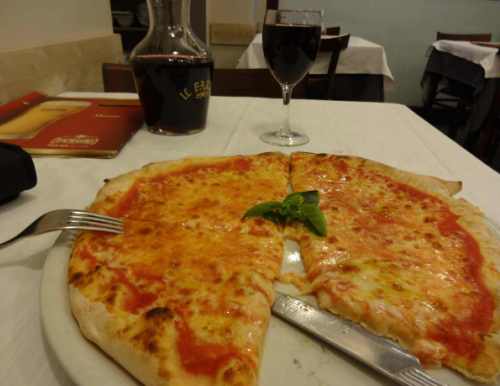
Pizza as Author Pic

I ask writers to send me a picture – John sent me a picture of a genuine Roman pizza!

Tell us about your most recent book, story, or other project.

I’m currently finishing up the first book in a new series called Alien Rebellion. Its set a few hundred years in the future, and there’s a human colony on an alien planet that’s undergoing some … drastic changes to put it lightly. It’s sort of like a cross between James Cameron’s Avatar movie and the anthropological science fiction of Ursula K Le Guin, and a bit of James Clavell too.

In what genre do you primarily write? Why did you choose that one?

I primarily write science fiction. I like writing in this genre because there are no limits to your imagination. You can create entire worlds from scratch and I love doing that. I have a background in tabletop role-playing games and even as a kid I loved to create my own little worlds, sort of like a self-centered demigod.

Tell us briefly about your writing process, from once you’ve got an idea down to having a finished product ready for publication.

I start out with nothing more than a concept. From there I think of an initial scene and start writing. I don’t plot in advance and I just create the story and characters on the fly. I’m a two-finger typist so it takes me a long time to write (and I stop every now and then to do research on the internet too whenever an idea pops up) but I still somehow get it done!

Once the manuscript is finished I go through it a few times before submitting it to the editor. After she sends it back to me I go through it again to see if we’ve both missed any errors. I also contact the cover artist and give them my idea on what the cover ought to look like.

The moment I am happy with everything I send it to the formatter to put it all together.

How deep does your “concept” go? Does it include the universe in which you’re going to tell the story, or just the basic 1-sentence hook? The idea of writing sci-fi off the cuff without a lot of preparation gives me hives!

The whole concept revolves a lot on instinct and feel for me. My background in playing RPGs and constant daydreaming seems to have affected a strange sense of deja-vu when I write, and everything just comes together somehow. I can’t fully explain the process, but I try to imagine myself living in that world, down to the smallest detail, and everything starts to gel to the point where I am overwhelmed by details.

It’s almost like a strange awareness of being able to project yourself into a whole different universe. You start to imagine what a table looks like in that place, and how stuff works, as well as the other little things that add to it.

Who is the favorite character you’ve created? Why?

The protagonist of my Ace of Space series: Stilicho Jones. I like writing him because he is my alter ego. Stilicho is a mercenary who is out for himself and he’s a smart aleck to boot. Some readers get turned off by his smugness but I love writing him since he jokes around a lot, and it helps because I felt my earlier novels were all too grim.
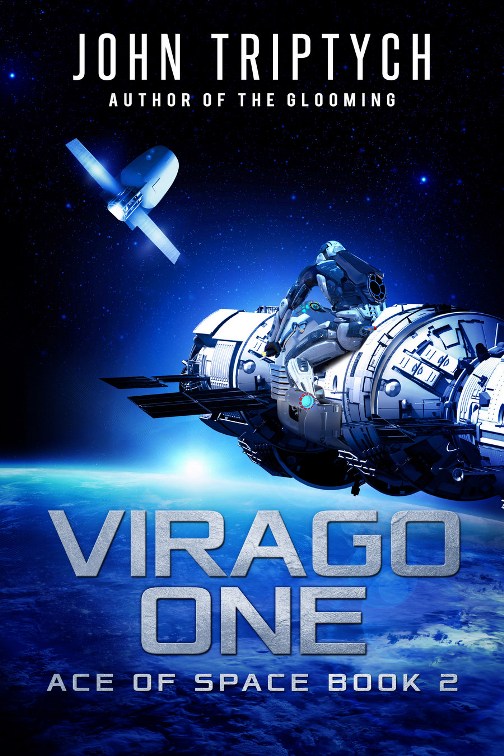
Ace of Space Cover

What’s the weirdest subject you’ve had to research as a writer that you never would have otherwise?

My Wrath of the Old Gods series is a mythological post apocalyptic storyline about the ancient pagan gods returning to modern day earth and causing all sorts of mayhem, so I had to research some very obscure deities because I wanted to get to the root of all these mythological stories and strip away popular misconceptions in order to get into what the old pagans gods were really like.

One of these gods I stumbled upon was a Hebrew god (or demon) named Peor (or Ba’al Pe’or, depending on the sources), literally the god of defecation! I added him into the third book of the series since there’s a subplot with one of the main characters trying to escape from hell. Great fun!
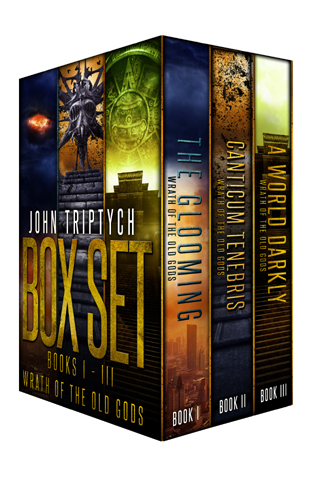
Wrath of Old Gods box

What’s the one thing you’ve learned, the hard way, as a writer that you’d share to help others avoid?

Hoo boy! I’ve learned a lot of things. One is you have to find a good editor. It’s not easy, but it will save you a lot of hassles in the end. Don’t be cheap, because good editors cost money.

Could you give an example of a time where an editor’s feedback really improved your finished work?

One of my editors is very good- she does a two step editing process. The first is that she just reads through the story, much like a beta reader, and looks for inconsistencies with the plot, characters, etc. and then sends me back the manuscript for rewriting. I go through her list of suggestions (like why would a character do this when he did this before, or that was a bad line, change it, etc.).

Once I’ve made my changes, then I send it back to her- after which she looks for grammatical errors, spelling and stuff. Once all that is done she sends it back to me again. All in all, she makes me realize about things I didn’t think about the first time over, and it has dramatically improved the quality of my work, though I still have a ways to go!

If you won $1 million (tax free, to keep the numbers round and juicy), how would it change your writing life?

Not much, to be honest! I’m semi-retired in the tropics and I live a fairly easy life. The books I’ve written have given me enough earnings to take care of my daily expenses so money isn’t too much of an issue. I guess one change would be is that I will probably take more international trips to do field research lol.

What’s the last great book you read or new author you discovered?

I don’t read a whole lot of indie books, and I always make it a habit to browse in the nearby used bookstores for some old tried and true stuff. A recent good book I’m currently reading is A Stranger is Watching by Mary Higgins Clark. It’s a classic suspense thriller that’s been made into movies more than once. I read a lot of books in different genres because of my varied tastes.

What do you think you’re next project will be?

An epic space opera series with some hard sci-fi elements. I’m currently doing research to make sure the space battles will have a bit of realism to them, but at the same time I’ve thought up an epic storyline that should interest most readers. Hopefully I will finish the first book sometime next year!

I am also writing more sequels to my hard sci-fi series Ace of Space, and my planetary romance series The Dying World. So plenty of the new and the usual too. I like variety.
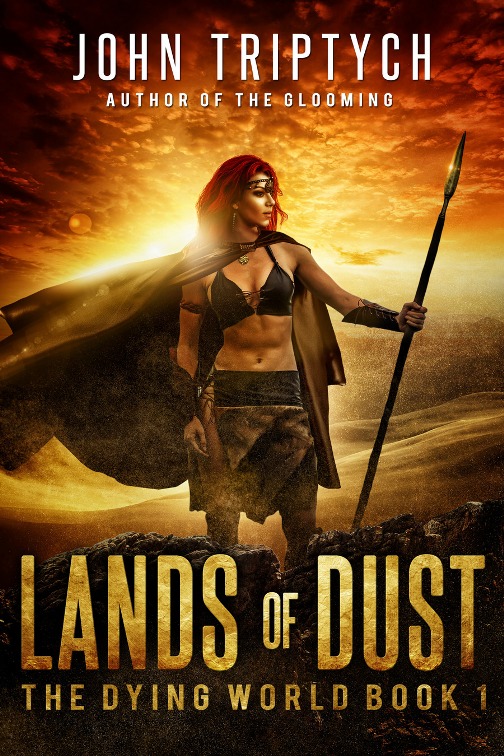
2016-343 eBook John Triptych, Lands of Dust B01- small

Catch up with John on his blog, Amazon, Twitter, or Facebook.

Will I Care Once I’m Dead?

Thinking about future projects the other day – ideas that are well enough developed that I can see a book coming out of them – I figured that I have material for about 20 books locked away in my brain. Even at a pace of one a year that means a long haul going forward. Let’s face it – chances are that I’ll be in the middle of writing some book when I die. What should happen to it and any others that might be semi-started?

The issue is back in the news recently thanks to the amusingly public way that the late great Terry Pratchet’s unfinished works were handled. Per his request, his hard drive (which contained as many as 10 works in progress) was destroyed – by being crushed by a steamroller.

The comments I read when the news came out was mostly amusement and pleasure at Pratchet’s wishes being so scrupulously honored. After all, if he was so specific as to how his literary executor was to deal with his unfinished work he must have felt fairly passionately about it never seeing the light of day. Who could argue that the right thing to do is precisely what the author wants?

Destruction isn’t the only option, of course. Robert Jordan, author of the massive Wheel of Time series, realized he wouldn’t live to see the completion of the series, so he provided a trove of notes and left the final few books to be completed by Brandon Sanderson. I can’t speak to the quality of Sanderson’s work and whether he did a good job with Jordan’s baby, but, again, it’s hard to complain when the people involved do just what the author wanted them to.

The legal-rule side of my personality says this is precisely how it should work. An author (or her designee) is the master of her own work, after all. If she never wants the world to see it, or only wants the world to see it with certain conditions, that’s her right. If she wants to take any potential masterpieces to the grave, that’s no problems.

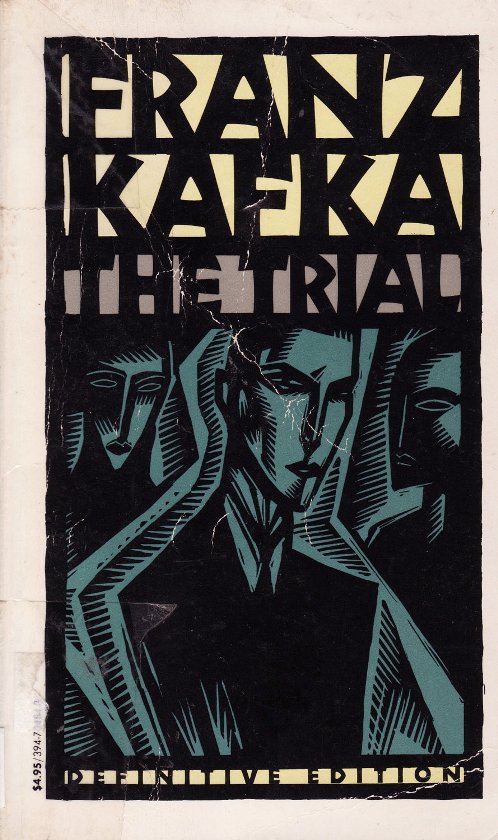
Except we have examples where ignoring the author’s wishes turns out pretty well. When Franz Kafka died he left his literary executor (and friend) Max Brod fairly specific instructions:

Dearest Max, my last request: Everything I leave behind me … in the way of diaries, manuscripts, letters (my own and others’), sketches, and so on, [is] to be burned unread

Brod did no such thing. As a result, we have all of Kafka’s novels, including The Trial, none of which were published before Kafka’s death.

franz-kafka-the-trial

A world without The Trial is barely fathomable (ironically), but had Brod did as instructed, we’d never know of it. Nabokov’s The Original of Laura was published against his wishes after he died. Even Mark Twain had a new collection of essays published almost a century after his death – against his wishes.

And so I find myself retreating from my bright-line rule of always doing what the author wants. After all, what’s the harm in ignoring those wishes? Yes, work might be released that the author wasn’t happy with, but the author isn’t going to be around to complain. A reputation could be diminished, I suppose, but authors have very little say in how the world perceives them when they’re alive and even less when they’re dead. Besides, does the posthumous release of a bad book by a great author devalue their prior work? It’s not a perfect analogy (since Harper Lee is still alive), but is To Kill a Mockingbird any less a masterpiece because Go Tell a Watchman was kind of ordinary? I don’t see how.

It’s a more complicated problem than I thought it was at first glance. Certainly, I don’t think it’s a legal issue. I’d oppose any law that required an author’s papers and unfinished works to become some kind of public good and exploited willy nilly. Nor would I support laws that would punish people like Brod for ignoring the wishes of their dead author friend. But, I have a hard time working up too much outrage when an author’s wishes are disregarded, so long as the person doing the second guessing is a close friend or family member. If they are all right with it, I’m in no place to complain. It’s kind of like jury nullification – I’m not a fan of promoting it, but I’m glad it exists for the rare occasions when it’s really necessary.

So I guess what I’m saying, to my literary heirs, if they ever get around to reading this – you’re on your own!

Even Fantasy Has to Make Sense

One of the repeated comments about this shortened season of Game of Thrones (which wraps up Sunday) is that show runners have really cranked up the pace, running from big event to big event instead of letting things play out over time. Part of that’s due to the nature of the season (it’s only seven episodes long) and part of it’s due to where we are in the story. Once we have the scope of this world in our heads it’s not a problem to handwave away some of the timing issues in order to barrel ahead toward the show’s conclusion.

But there are limits, and the limit seems to have been breached by this past week’s episode, “Beyond the Wall.” A quick, spoilerly, recap of the relevant bits:

Jon and company go north of The Wall to capture a zombie ice walker to take back to King’s Landing to prove to everybody this shit is real. After walking for a bit they come across the army of the undead and, for some reason, pick a fight. Jon sends Gendry running back to Eastwatch for help, which provokes a raven to be sent to Dragonstone, which leads Daenerys to fly up to save the day with all three dragons. All the while, Jon and crew are surrounded by the undead army (until it’s dramatically appropriate for it to attack, of course).

Putting to one side the sheer stupidity of Jon’s “strategy,” there’s a big whopping problem with the timing of all this. We only see the army of the undead hold off overnight before attacking, but surely it takes several days (at least) for the Gendry/raven/dragon transport system to deliver fiery death to them, right? It’s at least something that has kicked some people out of the story, pulling them past their flying snowman moment. Even the director of that episode admits the timeline is “getting a little hazy.”

But that’s not really what I’m interested in (although I’m one of those people). I’m more interested in some of the defensive comments made in response to complaints. There are several in the comments to this write-up over at io9 – they’re fairly typical:

While you’re focused on a believable timeline, does it ever cross your mind that you’re watching a show about fucking dragons.

***

I’m sure it would have been fun to watch seven guys stranded on a rock for another episode while they waited for the raven and the dragon’s trip back because the audience wanted a show about magical ice zombies to keep things realistic.

Someone even posted an image of the gold standard for this kind of thing, MST3K’s admonition that “it’s just a show, I should really just relax.”

People are free to accept any explanation (or none) for why something seems off in a show, movie, or book, but I have to take issue with the argument that because something is fantasy anything goes.

One of the cool things about writing fantasy is that you can, generally speaking, make up anything you want. People who can wield the power of the elements? No problem. Mythical talking beasts who aid intrepid adventurers in their quests? Bring it on. Nonetheless, there are still a couple of limits.

Primary is that to the extent the characters are human beings, they should behave like them. Maybe a guy can fly or perhaps he can summon huge storms with his mind, but he probably still gets hungry, tired, or would be pissed off if he found his girlfriend in bed with another guy. Unless there’s an in-world reason to the contrary, characters should behave like real people.

That leads into the second restriction – any fantasy story should follow the rules that it sets up for itself. Let’s say you have a world that includes a pegasus (or pegasi) and we’re told early on that, despite the wings, they can’t actually fly (they’re mystical ostriches). A pegasus cannot, sometime later, save the day by flying to the rescue. Not because it’s a known fact that a pegasus can fly, but because we’ve learned that in this world they can’t. Once your own rules go out the window the story isn’t grounded in anything.

That’s the problem Game of Thrones got into this past week. We’ve spent years getting used to the scope of its world, the sheer size of it. Characters stationed in different sections of the map were truly separated. It felt like a big place. Until the writers needed it not to be and pulled a dragon ex machina out of the hat (followed closely by a Benjen ex machina – ugh). Look, I get it – rapid transmission of information in a pre-modern fantasy world is a pain in the ass. Why do you think I had mind walkers (telepaths) in The Water Road? But if that’s the world you’re playing in, you’re stuck with it.

Saying “this is fantasy” gets you out of a lot of boxes as a writer, but it isn’t carte blanche to do whatever you want. Even in a world of dragons, frozen armies of the dead, and faceless men, stuff still has to make a basic kind of sense.

None of which is to say I’m not hella pleased with where things ended up after this episode. After all . . .

IceDragons

I’m Back – Come Say Hi!

Hey, gang – did you miss me?

As promised, I’ve been knee deep in The Orb of Triska, first book in the Empire Falls series, for the past month. Much progress has been made. I’ve already conjured up a pair of characters I had no idea I needed, but now really love. Alas, there’s much more work to be done.

I’m not just back on the blog – I’m back in real life, too! Come see me this weekend at the Lewisburg Literary Festival in America’s best small town – Lewisburg, WV:

LewisburgLF

I’ll be in the Festival Bookstore in the Greenbrier County CVB building on Washington Street on Friday and Saturday. Stop by and say hi!

Gone Writin’ – Be Back in August

So here’s the thing about being a writer – once you finish up one project, you need to jump on the next one. Sure, you can give yourself a nice pat on the back and a week or so to enjoy success, but, sooner or later, the next book beckons.

WriteAtDawn

With The Water Road trilogy in the rear view, it’s time for me to start working on my next book in earnest. Guess what – I already have! I began the first book of my next series (tentatively called Empire Falls – and, yes, I am aware) last week. It’s going to be a steampunk story set in a world with one superpower teetering on the edge of collapse. I’m envisioning seven books (!), so I need to get cracking!

WriteAllTheThings

To help me build some momentum, I’m going on blog hiatus for the rest of July. That way I can pour all my typing and word-generation energy into the new book. Hopefully, when August rolls around, I’ll be knee deep in it and past the point of know return. Until then . . .

KeepWriting

The Exception That Proves the Rule

Years ago I wrote a review of an album by an obscure (even by prog standards) band. It was a middling album and I gave it a middling review. Fairly soon after I got a hateful email from one of the band members taking issue with the review. Aside from one factual thing I got wrong (which I changed) the rest was an odd mix of special pleading and attempts at sympathy. They put themselves out there, shouldn’t that count for something? Didn’t I care that another band member had just died and wasn’t it a shitty thing to do to write a less than positive review at that time (as if the obituary made it outside the band’s local area). It was an interesting experience.

And an understandable one. After all, once a creative person looses something on the world it’s inevitable that somebody, somewhere isn’t going to completely fall in love with it. Dealing with negative opinions of your work is just par for the course. If you can’t handle that, don’t publish books, release albums, or put your paintings on display for all to see.

Given that, the general wisdom in the writing world is that a writer absolutely, should not, never under any circumstances, respond to a review. Down that path lies madness. Even if there’s a clear error in there somewhere, it’s better to just let it go than be perceived as some thin-skinned artist whose feelings have been hurt. Because guess what? Nobody cares – unless they care enough to laugh at you.

Naturally, there’s an exception to that rule. At least if your Martin Scorsese.

Scorsese’s last film, Silence, wasn’t the critical darling and commercial success I’m sure he’d hoped for (full confession – haven’t seen the move, read the book a long time ago). In particular, a review in the Times Literary Supplement in the UK caught his eye. Scorsese decided to respond, both to correct a factual inaccuracy and to take issue with something the reviewer said.

“Bad move!” you cry! Not quite – as a result of Scorsese’s letter to the editor, he was invited to write an entire column unpacking the philosophical issue in the review he’d taken issue with. And, verily, there was no storm of shit produced by it. So how did he get away with violating this golden rule?

For one thing, he’s Martin Scorsese. He’s entitled to a little bit of leeway. Having said that, fame doesn’t prevent things going wrong, so there must be something else.

And it’s this – although Scorsese responded to a review, he didn’t complain about the review’s verdict of his work. He made two discreet points – one factual and irrelevant to the film’s merits, one philosophical that dealt with issues well beyond whether Silence was a good movie or not. In other words, he actually engaged, constructively, with what the critic said. He didn’t get defensive.

As I’ve said more than a few times – reaction to art is personal and nobody’s opinion of a piece of art can really be “wrong.” So it’s pointless to take negative reactions personally. Constructive engagement is one thing – hair-on-fire literary retaliation is entirely different.

Still, there’s a reason that the rule about responding to reviews is one that almost everyone can agree with. Think of it this way – if you’re tempted to write something about a negative review of your work, ask yourself, “am I Martin Scorsese?” Chances are, you aren’t. Act accordingly.

BookReview (Big)