Now that 2026 is in full swing and we’ve thawed out here in West Virginia, I thought it would make sense to bring everybody up to speed on my writing life these days.
First, of course, there’s the new story in the Lesser Cryptids of Appalachia anthology, which you can read more about here.
Second, I’m still working on getting The Fall whipped into shape. It’s going through my writers’ group right now, which will take another few months (we take turns doing chunks of everybody’s project). My hope is that it’s through that process and ready to be put into final form by the end of the year. Here’s hoping for a 2027 release. I’m excited for everybody to see it.
Finally, I’m happy to announce that I’ve started working, in earnest, on book three of the Paranormal Appalachia series. In this yet-untitled book Ben Potter has to confront his unusually deep feelings about ghosts. And maybe find love. The inspiration for the story is the tale of the Greenbrier Ghost, about which I’ll say more later.
Of course, I’ll endeavor to keep updating the blog here weekly (I do have a few other things lined up to talk about), but if I miss a week, now you know why!
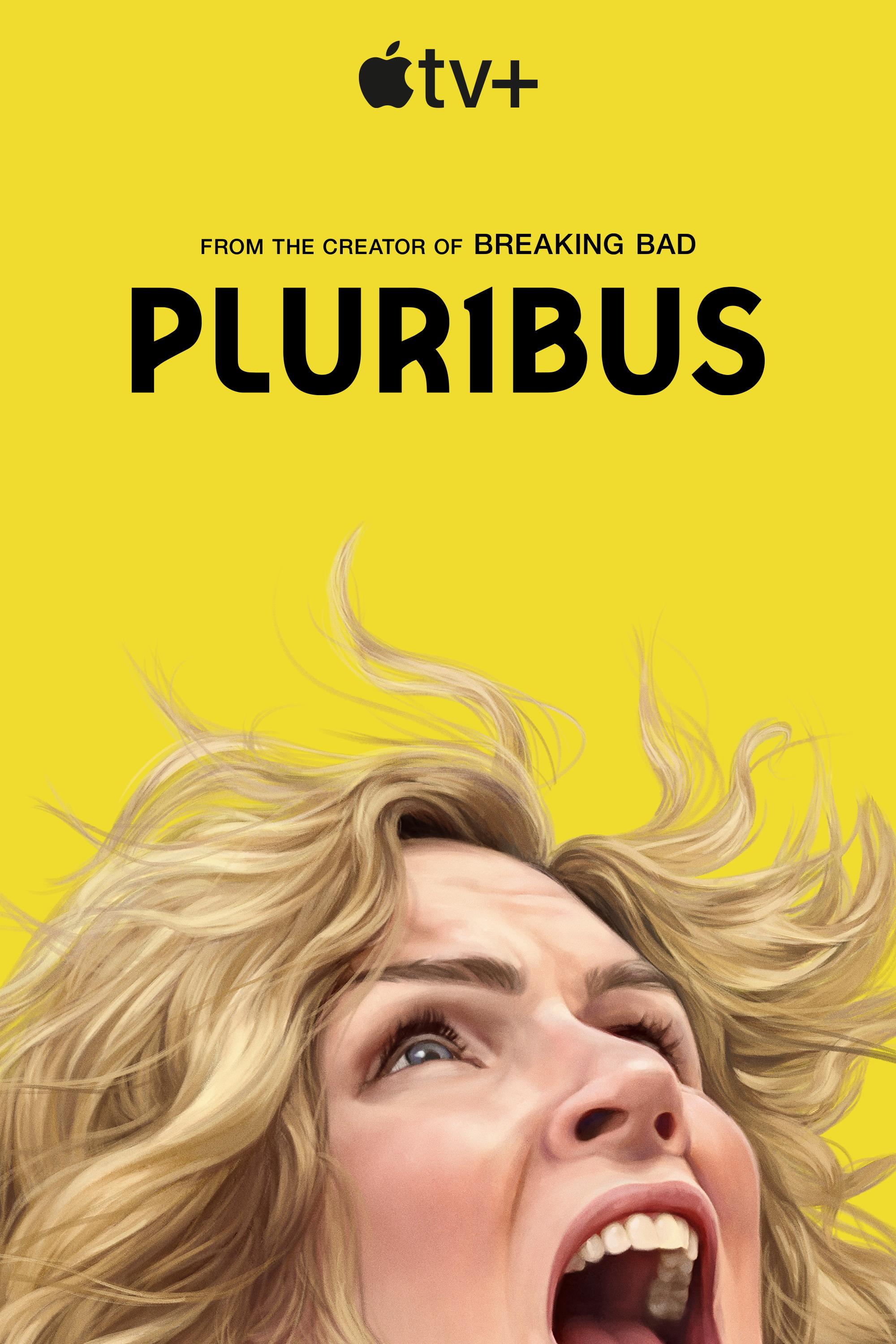
As I mentioned last month, one of my favorite TV shows from last year was Pluribus, from Breaking Bad/Better Call Saul creator Vince Gilligan.
Rhea Seahorn (also of Better Call Saul) stars as Carol, a best-selling but unfulfilled romantacy author who turns out to be one of about a dozen people in the world who can resist an alien virus-type-device that transforms the rest of Earth’s population into a gigantic hive mind. Some people also can’t survive the transformation process, including Carol’s wife.
None of this can constitute spoilers, by the way – it all happens in the first episode. Some of what I talk about below falls into that category, however, if you care about those kinds of things.
So Carol begins the story not just literally cut off from what is now the human experience but in grief. She’s angry about what she’s lost personally and acts on that anger. She’s not, at this point, all that tuned in to what it might mean for humanity to be a big hive mind (good or bad). Carol’s pain and anger is personal, small, and, in some ways, petty.
To her surprise, this puts Carol at odds with the rest of the dozen or so folks who haven’t been absorbed yet. While she’s pushing for fighting back, they’re largely OK with it. Not for nothing do they have connections to this new hive mind, in the form of loved ones or friends who are part of it (or are they?). Carol is all alone and that loneliness is what largely drives her.
This does start to change about midway through the season. She accepts the help that the hivemind can offer (there’s a fabulous scene where a wave of drones show up to restock a Whole Foods just so she can go shopping). She accepts the presence of a companion, a woman sent to her by the hive mind because she resembles the hero from Carol’s books (the version she always wanted to write, anyway). There’s even a kind of romantic connection that develops. None of this suggests that Carol has fundamentally changed who she is or what she thinks about the hivemind, but she’s learning to live with it.
Things come to a head when Manousos, another of the unabsorbed who had locked himself away in Paraguay, makes the long trek to New Mexico to find Carol, whose early radio pleas for help indicate she’s a kindred spirit. Always more radical than Carol, he’s chagrined to learn, when he shows up, that she appears to have lost whatever fighting spirit she once had. When he starts trying various ways to injure hivemind members (and perhaps restore their individuality) she objects.
Yet, that’s not where the end of the first season leaves us. Manousos stays in New Mexico while Carol and her companion jaunt around the world, the kind of bucket-list vacation you’ll never get to take in real life. It’s during that that she learns that the hivemind’s ultimate goal of assimilating her (along with the others) could be done without her consent. This snaps Carol out of it and she returns to the Albuquerque cul-de-sac and Manousos just in time for a crate containing an atomic bomb to be delivered. End season one.
So, in a way, Carol ends the season just where she began – committed to acting against the hivemind and, maybe, saving humanity. I saw a lot of complaints online after the season finale to the effect of “she’s the same she was from the beginning, what was the point?” It made me chuckle, since that seems to miss the entire point of the season.
To a certain extent a season of TV, or a book, is a journey you send characters on. In many instances you’re literally getting them from Point A to Point B, whether those are actual physical locations (a quest from home to a far away land) or something internal (an emotionally wounded person learning to love, etc.). But sometimes, the journey looks like it brings the character back to where they began, only the character has changed.
I hate to fall back on cliche, but sometimes the journey itself is more important than the destination. While end-of-season Carol seems like she’s basically in the same place as start-of-season Carol – s resist the hivemind! – she’s there for a different reason. Earlier Carol was reacting largely from ignorance. She wasn’t interested in listening to the few other people in her situation about whether the hivemind was good and, perhaps, worth joining voluntarily. End-of-season Carol has some perspective one what the hivemind can offer, albeit a limited one.
Carol, as a person, has grown over the course of the season. She went from essentially lashing out from pain and grief to finding a resolve to fight because of what joining the hivemind would mean to her. So while her ultimate goal appears to be the same now as at the beginning, the motivation is different. That matters, at least in fiction.
That will probably not content those who didn’t enjoy the first season of Pluribus. It was definitely a slow burn (probably helped that we binged it at the end of the season), but it was going somewhere and it was important that Carol get there. Does that make for a compelling season of TV? Not for everybody, but I was definitely down for it.
So, I said I’d be back in the start of December, and, well, I sort of am? But only to say that this is it for the year.
I did get the short story finished up for the new Henlo Press anthology. It’s called “OOPS Is In Effect” and is, as they say in Hollywood, very loosely inspired by real events. It’s a fun one and I’ll let y’all know when and where you can read it.
As for books, I decided that rather than start another project I would double back up on The Fall. I’ve gotten some very useful feedback on it which has made me rethink an important part of it. Essentially, I’m retooling the first several chapters to setup the conflict better and deepen the main character’s connection to the titular event.
As a result, I’ve decided to keep my nose to that grindstone for the rest of the year. So, Happy Holidays and all that jazz and I’ll see you in January (seriously!) with my annual favorites of the year posts.
It’s that time of the year again. Even though National Novel Writing Month is officially dead, I still think of November as a month to lay other things aside and focus on writing, so that’s what I’m going to do. Things will be silent for a while around here as I, hopefully, make some progress on a couple of projects.
First will be a short story for the third volume of Old Bones, the journal of the Henlo Press. The inspiration is worms. I think I’ve got a fun angle on it.
Then I’m planning to dive into my next novel (The Fall is still percolating through the editing process, don’t worry!). At this point it will probably be the sequel to The Triplets of Tennerton, as the prep work for it is largely done. That said, who knows if something else might catch my fancy in the next couple of weeks before November starts?
Tune back in around the start of December to find out!
Last weekend, at the Writer’s Block event hosted by Henlo Press, I had a discussion with a potential customer that threw me for a loop. Surveying my books, she asked, “which one is your favorite?” It’s a harder question than you’d think and one I’d never put any real thought into.
The cliched answer for an artist is to say that their newest project (either the just-released one they’re promoting or the one that’s about to come out) is their favorite, which I suppose makes some sense. The latest work is the one into which you’ve most recently poured your heart and soul. It’s very front of mind. And, of course, it’s new and shiny and you want people to buy it?
But, in my experience at least, the latest project is often your least favorite, at least in some ways. It’s also the one you’ve just sweated over and bled for, the one you’ve wrestled into a final form that is “done” but you think could probably be better if you just spent another week/month/year/decade working on it. Once I’m done with a book I’m sort of “and good riddance!”, at least for a little while.
A year on from the release of The Triplets of Tennerton that feeling has pretty much gone away. I’m quite proud of it and think of it as my “best” work, given that it’s the culmination of everything I’ve learned and practiced over the past 15 years or so of writing fiction. But is that the same thing as being my “favorite”? It’s a hard question.
Without doubt, Moore Hollow would be an easy choice for favorite, since it was my first novel (I love The Last Ereph for being its gawky, awkwardness and it being the real first book, but it’s not in consideration for “favorite”). It was, after all, the proof that I could do this and got me out there talking to people about stories I was telling, which is awesome! That said, Moore Hollow (and Triplets) are both more or less set in the “real” world.
It wasn’t until The Water Road (and its sequels) that I dove head first into the kind of ground-up world building that’s been a part of so many stories I’ve loved over the years. If Moore Hollow was proof I could write a novel, The Water Road was proof I could create a world and bring readers into a place that only existed in my mind. I was able to tell a full, compelling story of a world that doesn’t exist, filled with “people” who aren’t even human, and that doesn’t include typical fantasy magic. How could that not be my favorite?
But then again, the Gods of the Empire and its sequels showed I could do it all again! I can’t speak for other creators, but I kind of always feel, in the back of my head, that when I finish one book that I might never finish another. So being able to put The Water Road trilogy to bed and turning to a completely different world and build it up from scratch made me feel pretty good. It was a different experience doing it with what I’d learned from The Water Road in my head. So that trilogy is maybe tighter and more put together than the first?
All this goes to show that I can’t actually name a favorite book and, in fact, it’s not a great question to ask a creative person. Would you ask me to choose a favorite between these two?
Of course you wouldn’t!
The better question, if you’re ever in the same position as my potential reader this weekend, is “which would you recommend?” That turns the focus from what I think to what you, the reader, is looking for. You like semi-mysteries with a dash of the paranormal and a smart-ass protaganist? I’ve got that. Epic fantasy, with deep political and social world building, but not worried about the absence of magic or human beings? That, too. Something steampunky? Lemme show you these.
Because, ultimately, it doesn’t matter what I think or feel about my own work. It’s about how best I can match you up with a new book you’re going to love.
Years ago – I mean years ago – I remembered Roger Ebert describing Michael Bay’s Pearl Harbor in this withering way:
“Pearl Harbor” is a two-hour movie squeezed into three hours, about how on Dec. 7, 1941, the Japanese staged a surprise attack on an American love triangle.
At the time I thought that was just a good burn on a bad, schlocky, blockbuster (surely less entertaining than the commentary track for whichever Kevin Smith film it was where they bust on co-star Ben Affleck relentlessly for it), but the more I think about it, Ebert’s observation identifies a key difficulty when it comes to historical fiction – are you telling a story about a historical event or about people in a historical time who might be impacted by it?
That dilemma hit me recently as I read a pair of books built around a period of local history known as the West Virginia Mine Wars. They take very different approaches to the material which left one much more successful than the other, at least for me.
The first was Rednecks, by Taylor Brown.
“Rednecks,” for those not familiar, was the term used to describe striking miners who would tie a red bandana around their necks (it was derogatory at first, then adopted by the miners). The book Rednecks acts almost as a kind of sequel to the great John Sayles’ film Matewan, starting with the “Matewan Massacre” that was the culmination of the film. It then tells of the events that led to the Battle of Blair Mountain, the largest armed conflict in the United States since the Civil War (so far, at least).
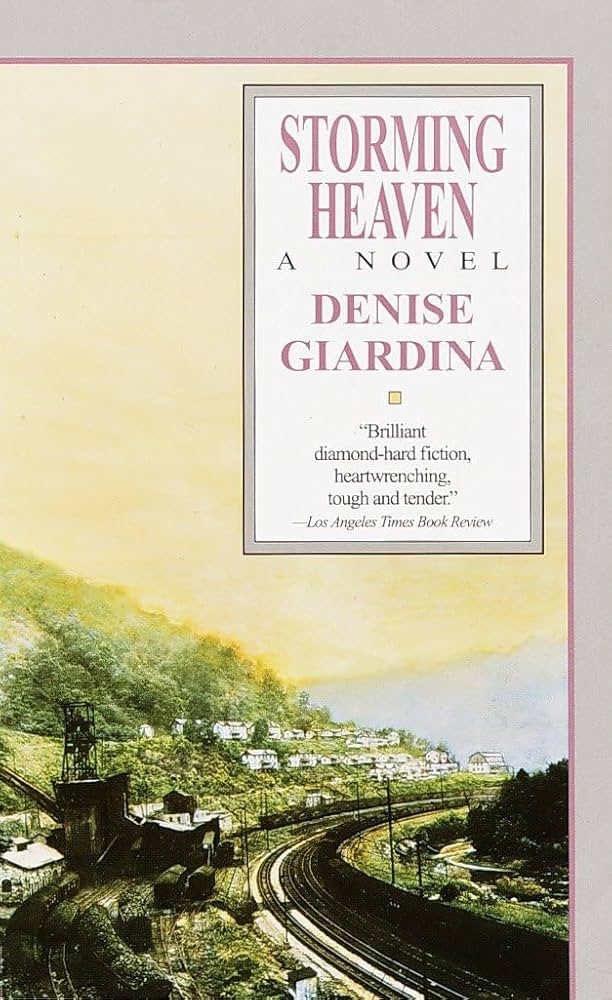
The second book was Storming Heaven, by Denise Giardina.
While it ends in roughly the same place as Rednecks, Storming Heaven covers the whole of the Mine Wars period, starting with the railroads coming into the West Virginia/Kentucky border area in the 1890s and buying up property using sketchy methods.
Beyond that, the two books differ in whose story is being told. The main characters in Rednecks are a local doctor (of Lebanese extraction, apparently inspired by one of the author’s ancestors) and a miner, both fictional, but lots of the smaller roles are filled by real people – Mother Jones, Sid Hatfield, and such. We get chapters from their points-of-view and some big speeches that are probably historically accurate. The downside is that they tend to drain the momentum of the main characters’ stories and can come off like one of those “you are there!” books for young readers.
By contrast, in Storming Heaven all the characters are fictional. They do occasionally interact with real people and some are fictional takes on real people – Sid Hatfield, for instance, gets a doppelganger who is also assassinated on the courthouse steps. In fact, the book takes place in a couple of fictional counties (one in West Virginia, on in Kentucky), but manages to interact with the “real world” enough to retain a sense of realism.
The result is that Rednecks feels like a book that was written to bring knowledge of a particular historical event to the public via fiction. That’s a noble pursuit and it’s certainly a mode of fiction that does a lot of work across literature, film, and TV. What it doesn’t really feel like is a story of people, characters, who feel alive and real in their own. I was far more engaged with Rednecks when it focused on the fictional doc and miner than when it leaned on actual historical figures.
Storming Heaven, by contrast feels like a fully fleshed out work of fiction that happens to be set during a particular historical period. I didn’t care about the characters because of the events they were living through, I cared about them as individuals. In the process, I think you get a better feel for what the historical period was like. No doubt, Rednecks is a lot more granular in terms of how Blair Mountain went down, but Storming Heaven hits harder emotionally, even with less historical detail.
I did an interview recently where I said that the most important element in good writing is building interesting characters. If you don’t care about the people to whom the events of the story are happening nothing else really matters. I think details of events are better left to non-fiction, to the work of historians and journalists. Historical fiction works best when it’s trying to capture the feeling of what it meant to live during the time period involved.
Or you can do what I do and plunder history for ideas and turn them into fantasy or sci-fi stories. Then there’s no worry about getting history “right” because the history is whatever you think it should be!
Nothing substantive this week as I’m finishing up a short story for submission to an anthology about lesser-known cryptids of Appalachia. No spoilers, but I can at least mention the beastie that’s involved:
Just before I went on hiatus courts in two separate lawsuits by creatives against generative AI companies handed down similar decisions indicating that AI isn’t going anywhere anytime soon. Both concluded that using existing copyright-protected works to train AI engines falls under the doctrine of “fair use.” As one article explained:
The doctrine of fair use allows the use of copyrighted works without the copyright owner’s permission in some circumstances.
Fair use is a key legal defense for the tech companies, and Alsup’s decision is the first to address it in the context of generative AI.
AI companies argue their systems make fair use of copyrighted material to create new, transformative content, and that being forced to pay copyright holders for their work could hamstring the burgeoning AI industry.
Anthropic told the court that it made fair use of the books and that U.S. copyright law “not only allows, but encourages” its AI training because it promotes human creativity. The company said its system copied the books to “study Plaintiffs’ writing, extract uncopyrightable information from it, and use what it learned to create revolutionary technology.”
Copyright owners say that AI companies are unlawfully copying their work to generate competing content that threatens their livelihoods.
Alsup agreed with Anthropic on Monday that its training was “exceedingly transformative.”
You can read more about the nuances of the various cases here. And this column points out how restrictive copyright can be when a real human being wants to use something that’s currently protected.
While I’m not a party to either suit, I do know that some of my books (likely scraped from pirate sites) are included in at least one collection that’s used for AI training, so I do have some skin in the game. In light of that, I wanted to say a few more words about AI and make some public promises about it.
Part of the trouble we’re having with AI is down to the fact that the law has never really grappled with the nature of computer power in the 21st Century. The pro-AI argument for training on existing works is that it’s the same thing that humans do – all artists and creators are building their own work on whatever they’ve read or seen or heard before. Nobody could seriously argue that a young would-be writer who borrows a bunch of books from friends or families and then writes their own story was fucking with anybody’s copyright. The problem with AI is that it can do that on a massive scale that the law can’t quite fathom.
It’s somewhat similar to what’s happened with criminal records and arrest reports over the past few decades. Those things were always (for the most part) public and accessible to anyone who had the time and desire to go to the courthouse and wade through files to find them. But who actually did, outside of people doing it for a living? Now it’s just a matter of a quick Web search to see if your neighbor was arrested for DUI over the weekend. The law is mostly concerned with the public/private dichotomy, without factoring in accessibility.
Years ago, the Supreme Court was confronted with how to deal with GPS trackers placed on cars and whether they implicated the Fourth Amendment. Generally speaking, to assert a Fourth Amendment violation you have to have a “reasonable expectation of privacy” in the place that was searched. By definition, there’s no such expectation when you’re out in public, so there’s never been a problem with the police following people who they suspect of something (but lack the probable cause necessary to arrest them). GPS trackers take that and multiply the amount of data available exponentially in a way that flesh-and-blood cops could never handle. Rather than confront this head-on in the case, the Court took a step back and concluded that the actual placement of the tracker was the problem. We’re still trying to figure out what mass data means when it comes to the Fourth Amendment.
It’s the same with AI and it’s doubtful the law is going to get itself in gear anytime soon. With that said, I have a few promises I’ll make to readers when it comes to AI:
I will not knowingly allow my work to be used for AI training. A good chunk of the AI discourse when it comes to creators is the copyright angle, but even if the AI companies came up with arrangements to compensate creators for the use of their work in training there are still huge issues with generative AI. It’s horrible for the environment. Its products are the worst kind of unimaginative slop. It’s bad for the soul – creativity is a large part of what makes us human and we best not be willing to outsource it to machines. Count me out, regardless of potential reward.
I will not knowingly use generative AI in my writing or music. This should come as no surprise, particularly in light of my NaNoWriMo post linked above, but I won’t knowingly use generative AI in my work. There are other AI variants that are much more common and less problematic (like spell check) that I have always used and will continue to use, but every idea that gets put on a page or in a song is only going to come from my own head – for better or worse! Otherwise, what’s the point?
I will not knowingly work with others who use generative AI. I am happy to say that Deranged Doctor Designs, who have done the (current) covers for all my books, are committed to going forward without resorting to generative AI in their work. I will strive to ensure the same with anybody else I work with in the production process.
All this may be pointless, standing on the tracks of “progress” while the train inevitably barrels over me. I may be shouting into the void (I did use to have a blog called Feeding the Silence so it wouldn’t be the first time). As one snappy commenter put it:
But there’s an inherent problem with prequels – they’re playing in a universe in which the future is already known to us. That can box writers in and sometimes make it difficult for the prequel to stand on its own as a piece of compelling drama, something we should care about for its own merits.
I was specifically talking about Obi-Wan, the Star Wars prequel series that covers the time leading up to the original Star Wars movie. It has a kidnapped Leia in danger and multiple show downs between the younger Obi-Wan and Darth Vader, but there was a lack of tension since we knew that all of them have to make it into Star Wars in one piece.
Ironically, I contrasted that with another Star Wars prequel:
Star Wars knows how to do this. Rogue One is regarded by a lot of people as the best Star Wars movie since the original trilogy, even though we knew precisely how it was going to end. What made it work was that existing characters were largely absent and we got to know and care about a whole new cast so that when they made the necessary sacrifices to complete their mission it landed with some heft.
I say “ironic” because having finished up the second (and final) season of Andor I realized how much of a prequel problem that show had in the end.
It shouldn’t have been a surprise, of course, given that Andor is a prequel of a prequel – Rogue One. What was surprising is that the issue wasn’t so much knowing who was “safe” draining the tension. It was that the series was so set on getting to Rogue One that it dashed along from event to even without leaving a lot of time to breathe and develop characters more.
By modern streaming standards Andor had a long run – only two seasons, but 12 episodes each, which feels positively indulgent compared to some (looking at you The Last of Us). While the first season was basically a straight running chronology, the second seasons breaks the episodes into four three-episode hunks, with each hunk separated by a year or more.
As a result, what at first felt like a slow burn character study of Andor and the people in his orbit turned into a sprint through important events necessary to get him to the beginning of Rogue One.
Does this mean that the sprint wasn’t rewarding? In a lot of ways it was. Apparently Ghorman and its fate is something that’s come up in other Star Wars properties, but I knew nothing about it, so the whole development there I thought was really well done. When the final hammer comes down it does feel earned, even if you wanted to know more about some of the locals before we saw them cut down.
Not too long ago I wrote about how, sometimes, form dictates how fiction turns out. I didn’t think about it then but “prequel” is another kind of form that forces creators to do certain things in certain ways. That’s not an inherently bad thing, but just as I talked about with the formal restrictions in that piece, it makes a difference in the end product.
Would Disney have ever let Andor play out over four or five seasons to dive really deeply into who all these people were (between Andor and Rogue One I still have no solid idea of Saw Gerrera or what exactly he’s up to)? Probably not. For all its quality and praise, my understanding is that Andor is not one of the Mouse’s hottest streaming properties. Without that time would it have been better not to rocket through years of things happening just to make sure we get to where we need to get? Maybe, but that was always the assignment and it’s impossible to say that Andor failed in it. What I am fairly certain of is that if the same folks had been given the freedom to tell a Star Wars story that didn’t have to plug into an existing narrative at some point the end result probably would have been even more rewarding
Many many years ago, there was a Bloom County cartoon in which Opus learns of new companies that allow you to freeze-dry a deceased pet and keep them around forever. His reaction was a tad overwrought:
Or at least I always thought it was. More and more, however, it’s becoming clear that we can’t just let the dead be dead, we’ve got to keep bringing them back to serve various agendas.
The most alarming recent case came out of a court in Arizona. Christopher Pelkey was killed during an incident of road rage and Gabriel Horcasitas convicted of his manslaughter. It’s pretty common in such cases to have victims (or family members of victims) give statements to the judge before sentencing about what has been lost due to whatever crime the defendant committed.
Horcasitas’ sentencing went a step further:
Ms. Wales, 47, had a thought. What if her brother, who was 37 and had done three combat tours of duty in the U.S. Army, could speak for himself at the sentencing? And what would he tell Gabriel Horcasitas, 54, the man convicted of manslaughter in his case?
The answer came on May 1, when Ms. Wales clicked the play button on a laptop in a courtroom in Maricopa County, Ariz.
A likeness of her brother appeared on an 80-inch television screen, the same one that had previously displayed autopsy photos of Mr. Pelkey and security camera footage of his being fatally shot at an intersection in Chandler, Ariz. It was created with artificial intelligence.
“It is a shame we encountered each other that day in those circumstances,” the avatar of Mr. Pelkey said. “In another life, we probably could have been friends. I believe in forgiveness and in God, who forgives. I always have and I still do.”
Reporting on the hearing has been really bad – that article quotes the defense attorney as stating (perhaps correctly) that given the wide latitude judges have at sentencing that there’s probably nothing legally wrong with it, but he also says that an appellate court might find it to be reversible error – but it’s unclear whether an objection was lodged, so who knows? Regardless, Pelkey’s reference to forgiveness beyond the grave didn’t seem to move the judge any – Horcasistas got the maximum sentence.
I can sympathize with using AI to bring a dead loved one back to life to hear them make their own plea for justice (I also think it’s ghoulish and I’ve never been a big fan of victim impact statements, but at least feel for those involved). That’s a lot harder to do when it’s part of a cynical cash grab at the expense of a dead person’s reputation.
BBC Maestro is the British broadcaster’s version of Masterclass, in which you pay to access video lectures by big names in their given fields. When it comes to mystery fiction is there a bigger name than Agatha Christie? Ah, but she’s dead. That’s no longer a problem! Thanks to the “magic” of AI and some desperate descendants:
Agatha Christie is dead. But Agatha Christie also just started teaching a writing class.
“I must confess,” she says, in a cut-glass English accent, “that this is all rather new to me.”
* * *
She has been reanimated with the help of a team of academic researchers — who wrote a script using her writings and archival interviews — and a “digital prosthetic” made with artificial intelligence and then fitted over a real actor’s performance.
“We are not trying to pretend, in any way, that this is Agatha somehow brought to life,” Michael Levine, the chief executive of BBC Maestro, said in a phone interview. “This is just a representation of Agatha to teach her own craft.”
Bullshit. Anyone could take Christie’s writings, including drafts, notes, and other non-published works, and base a writing class on it. Such a class would probably be quite useful! But it wouldn’t bring in the bucks the way having “Agatha” actually tell it to you. People are attracted to the name, which is the whole point in using it in the first place. Add in the likeness and it’s like she’s in the room with you (are the space bees, as well?).
It reminds me of the Frank Zappa hologram tour that hit the road a few years ago. A band full of Zappa alumni played live, occasionally joined by a holographic projection of Frank playing along. It was a sad gimmick. It should have been enough of a draw to hear some amazing music played live (in front of your ears!) by amazing musicians, but that wouldn’t have been enough of a draw. But Zappa there in hologram form? Well, it did sell some tickets, although the fact that it’s been largely forgotten about hints at its impact (meanwhile, Dweezil and others continue to do the man’s music justice on the live stage around the world).
Nearly 40 years after his death, Orson Welles is back — as a disembodied AI-generated voice in location-based storytelling app Storyrabbit.
Storyrabbit, from podcast company Treefort Media, inked a partnership with the Orson Welles Estate to launch “Orson Welles Presents.” The app now features the unmistakable voice of Welles, digitally re-created using Storyrabbit’s AI technology, as an option for users to hear stories about specific locations. Using the Welles voice is free in the app until June 1, after which it will cost $4.99/month.
I mean, the idea for the app is kind of neat – it provides you with short info blurbs about specific locations based on where your phone is – but what value is added by having not-Welles give you the info? Surely the into itself is what you want, right? Maybe you don’t want it read by Gilbert Gotfried, but surely any of the numerous voice over actors or audiobook narrators out there could do the job, right?
I love history – that was my undergrad degree before I went to law school. I love the history of art, too. I’d give a lot to have been able to talk with Kurt Vonnegut or see Frank Zappa play live, but that’s never going to happen. An AI simulacrum of either of them isn’t the same thing – it’s a modern construct based largely on who we think those people were, not who they really were.
The dead are gone. They can leave us incalculable gifts, but what they can’t leave is their presence. Animating their virtual corpses in pursuit of a buck (or pound) demeans them – and us as well. Maybe Opus had it right all along.








 JD Byrne